
Autodesk, a Timeline
In January 1982 a group of programmers met in Mill Valley, north of San Francisco, and pooled $59,030 of their own money to start a software company. This video follows Autodesk from that meeting to September 2026.
Mike Riddle's Interact became AutoCAD, shown at COMDEX in Las Vegas in November 1982 at $1,000 a copy. By 1985 it ran on 31 different desktop computers; by 1986 on Unix workstations too, and in seven languages. Localisation began with European dealers, moved in-house to Autodesk's European Software Centre at Marin, Neuchâtel, Switzerland (opened 13 November 1991), and after Neuchâtel closed in 2018 went to the new EMEA headquarters in Dublin.
The platform timeline: DOS, CP/M and a dozen early PCs; Sun, Apollo, IBM, SGI and HP workstations; a Mac version in 1992 that Autodesk dropped; Release 14 (1997) for Windows only; AutoCAD for Mac again from 15 October 2010, and native on Apple silicon from March 2023.
Carol Bartz took over in 1992; 3D Studio, Discreet Logic, Alias and Revit took Autodesk into animation, visual effects and BIM; Carl Bass moved it to the cloud and to subscriptions (1 February 2016). Under Andrew Anagnost came PlanGrid and Innovyze, a 2024 audit committee investigation that found no restatement, Starboard Value, job cuts in 2025 and 2026, fiscal 2026 revenue of $7.21 billion, the $3.6 billion MaintainX purchase and agentic AI at Autodesk University 2026.
And what became of the founders: John Walker (Fourmilab; died in Neuchâtel on 2 February 2024), Mike Riddle (EasyCAD, FastCAD), Kern Sibbald (Bacula), and the four who recorded their story for the Computer History Museum in 2020.
No figure appears without its date and source. Photographs are public domain or CC0, from Wikimedia Commons, credited on screen: Suspiciouscelery (CC0); Vintageibmmt (public domain); Evergreen Systems (public domain); NACA (public domain); NASA Johnson Space Center (public domain); Lamune at English Wikipedia (public domain); Benoît Prieur (CC0); The White House, Pete Souza (public domain); DylanGLC2017 (CC0).
Educational documentary. Not financial or investment advice.
Tags
Chapters
- Friends and a pot of cash
- AutoCAD on every machine
- The draughting board dies
- Speaking the user's language
- A software centre in Neuchâtel
- Workstations, Macs, then Windows only
- Bartz and beyond flat drawings
- Subscriptions, cloud and the Mac again
- Leaving Neuchâtel for Dublin
- Buying the building site
- Autodesk in 2026
- What became of the founders
Video notes
1. Friends and a pot of cash
Almost every building, bridge and machine designed in the last forty years began as a drawing on a computer screen. For a very large share of them, the program that made the drawing came from one company. It started with a group of programmers meeting in a small town north of the Golden Gate Bridge, with a plan to sell software at a time when hardly anyone did.
This video follows Autodesk from that first meeting to September twenty twenty-six. It follows the drawing program that made the company, and the many kinds of computer it ran on. It follows the offices that translated it for the rest of the world, including one beside a Swiss lake. And it ends with what became of the people who started it.
The man who called the meeting was a programmer named John Walker. With a friend, Dan Drake, he had an idea that sounded odd at the time. Personal computers were new, and cheap ones were starting to appear on office desks. Walker thought a group of good programmers could write software for those machines, sell it in boxes, and share the profits between them.
He wrote his plans down in a series of numbered memos, which he called Information Letters. The founders received them, and years later so did the staff and the shareholders.
The very first of those letters set out the idea in one sentence: "We are planning to organize a business in which all the founders will have an 'equity stake'". An equity stake is a share of ownership. The people writing the software would own the company that sold it.
The founders first met as a group on the thirtieth of January, nineteen eighty-two. At first they called themselves Marin Software Partners. That April, the company's papers were filed with the state, and it became Autodesk, Incorporated.
Each founder bought shares with their own money. By July, the sale of shares and options had raised fifty-nine thousand and thirty dollars. Accounts differ on how many founders there were, from thirteen to eighteen depending on who is counted. Sixteen is the figure most often given.
Most of them had worked together before, at a software firm called Information Systems Design. Their first address was Walker's own house in Mill Valley. The founders brought several programs to the group, and one of them was about to matter far more than all the others put together.
2. AutoCAD on every machine
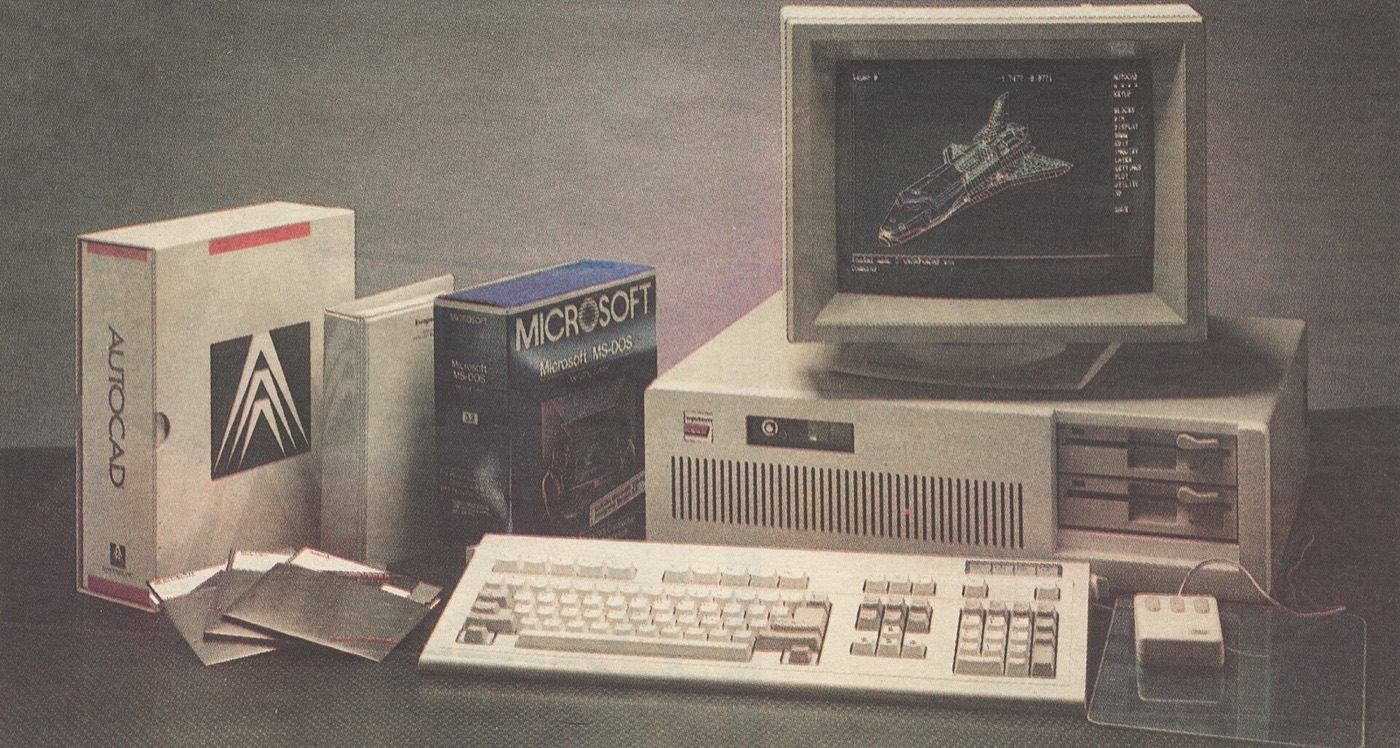
That program came from a founder named Mike Riddle. He had written a drawing program called Interact. It let a computer produce the kind of technical drawing an engineer or an architect would otherwise make by hand, with a pencil and a ruler.
This is what the letters CAD stand for: computer-aided design. It means drawing and designing on a computer instead of on paper. In the early nineteen eighties, serious CAD systems ran on large, expensive computers, and most drawing offices could not afford one.
By May nineteen eighty-two, the company had a formal agreement with Riddle. It took over his drawing package, renamed for a while MicroCAD, and in return it paid him royalties on every copy sold. The founders reworked the package for personal computers, and it became AutoCAD.
In August, the founders decided which machines to write it for first: the Scion Microangelo, the IBM Personal Computer and the Victor nine thousand. The price would be one thousand dollars a copy. In November, they took AutoCAD to COMDEX, the big computer trade show in Las Vegas. By the next year, their advertising listed a dozen makes of personal computer.
That choice, to run on everything, became the company's plan. In those years there was no single standard desk computer. Each maker built its machine differently, and a program written for one would not run on another without being rewritten.
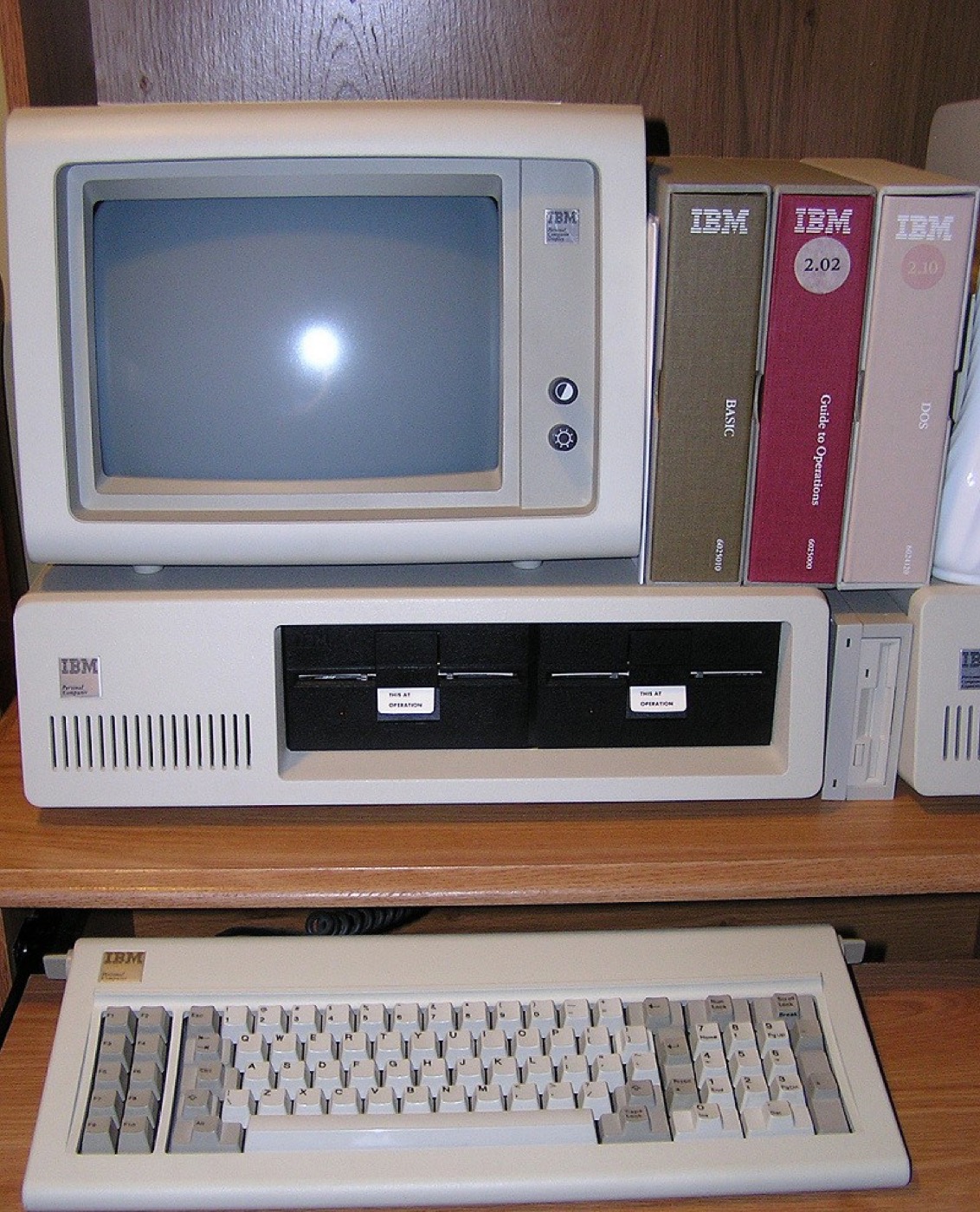
This is the machine that won: the IBM Personal Computer, with its green-on-black screen. IBM's machine, and the many copies of it that other makers soon built, became the standard office computer. AutoCAD was ready for it from the start.
The company wrote down its thinking in nineteen eighty-five, when it first sold shares to the public: "AutoCAD's support of all major computers and graphics hardware is central to the Company's perception of the market and to its strategy". Graphics hardware here means the screens, printers and plotters that draw the lines, and the tablets used to trace them.
The same document gave the count. AutoCAD ran on thirty-one different desktop computers. It worked with close to a hundred graphic input, display and output options, the devices that put a drawing in and got it out again.
This is what AutoCAD looked like on one of those IBM copies, a PowerPak two eight six from nineteen eighty-seven, running the plain text system called MS-DOS. A drawing office no longer needed a machine the size of a wardrobe. It needed a desk, a personal computer and a box of software.
3. The draughting board dies
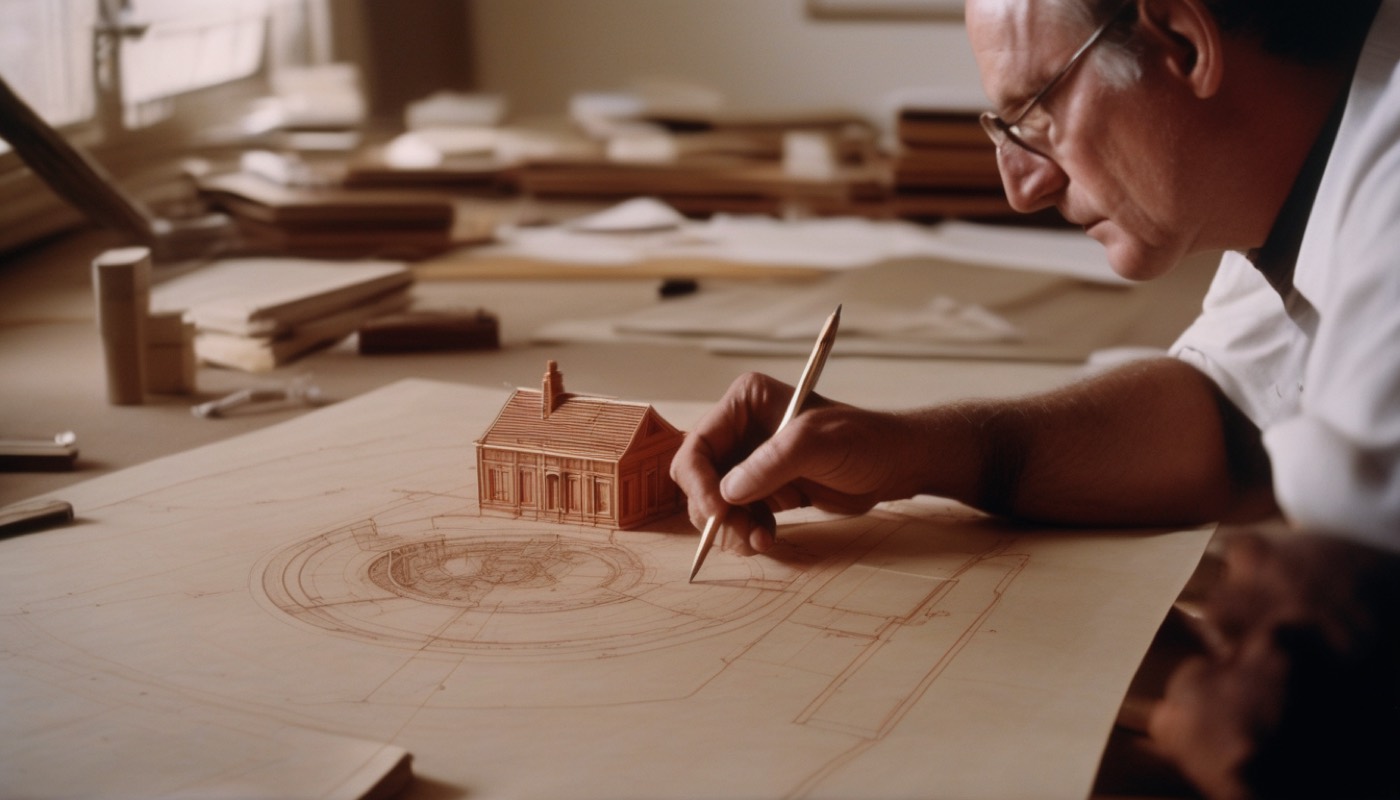
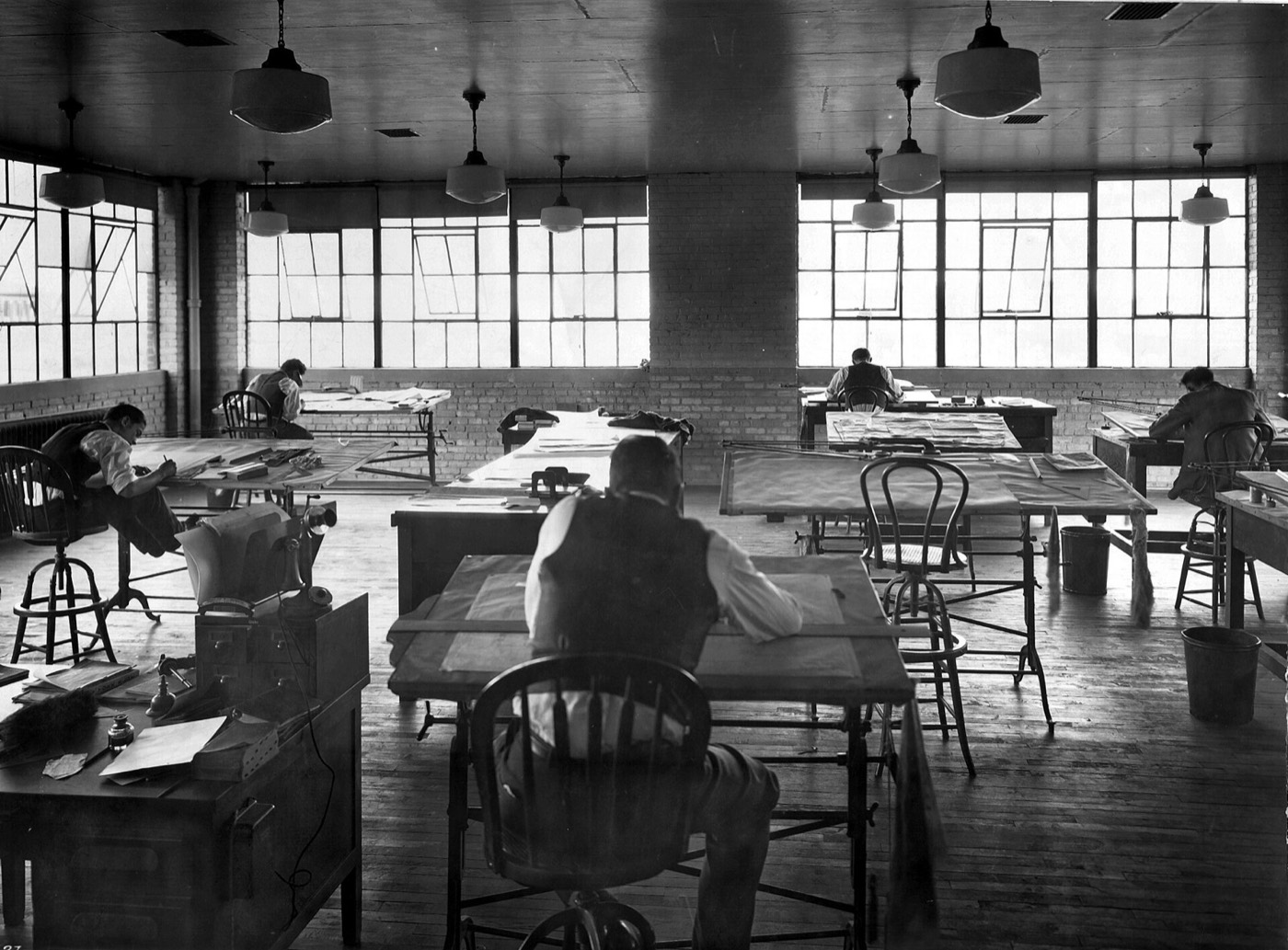
To see what AutoCAD replaced, go back to the drawing office as it had worked for most of the twentieth century. Every technical drawing was made by hand, one line at a time.
A drawing office ran on a short list of tools. There was vellum, a tough, see-through paper that could be copied. There were graphite pencils, ink pens and a brush to sweep away the dust from the eraser. And there were T-squares, triangles and scales, used on a tilted drafting board.
Drawing was slow, but drawing was not the hardest part. Changing a drawing was. An engineering firm's account of the period says making changes was time consuming and could be costly.
This photograph shows a drafting room at NACA, the American research agency for aircraft that came before NASA. It is row after row of drafting boards. Every line on every sheet here was drawn, checked and corrected by hand.
AutoCAD changed the rule. On a screen, a line could be moved, copied or erased. A door could be drawn once and placed a hundred times. A change to a plan meant editing a file, not scraping at vellum or starting the sheet again.
The program spread quickly. Walker wrote in March nineteen eighty-five that Autodesk had shipped more than seventeen thousand copies of AutoCAD. That June, the company's shares were first sold to the public, on the NASDAQ market. A year later, it counted more than sixty thousand installed users.
The share sale gave the young company money to grow in every direction at once. According to the CAD industry analyst David Weisberg, it raised a little more than ten million dollars.
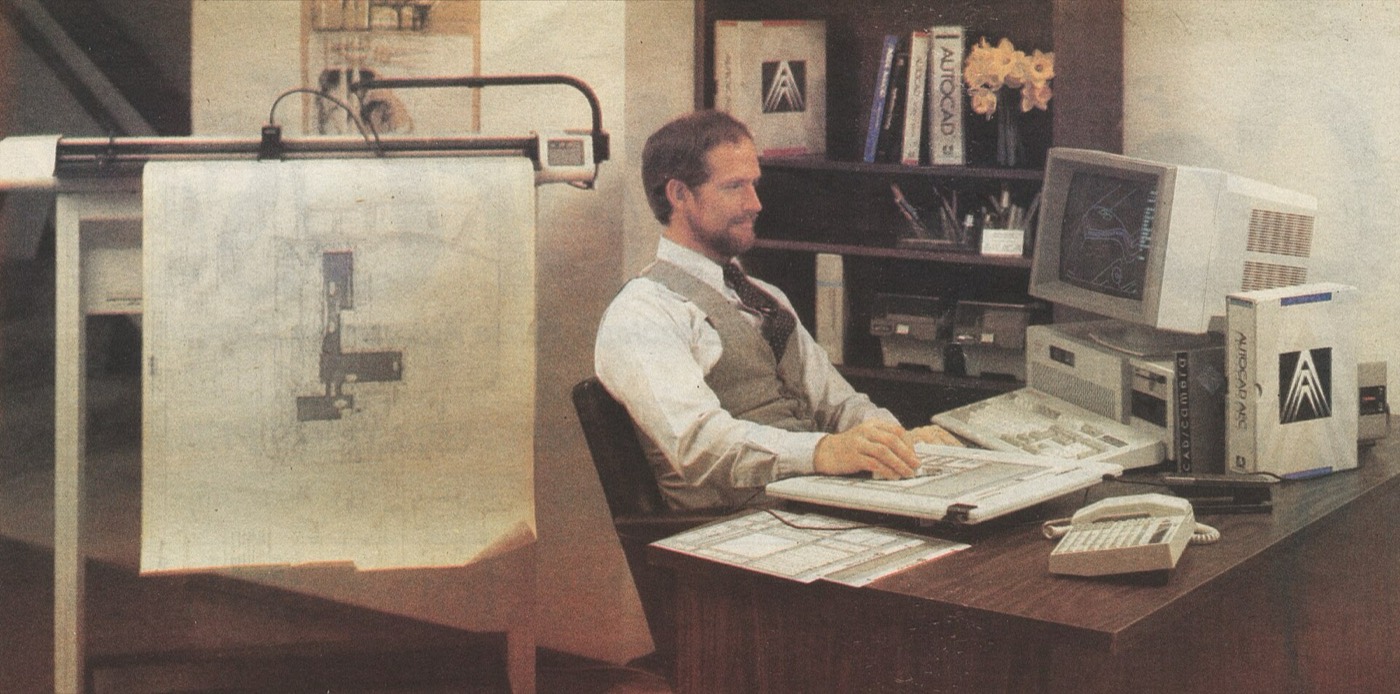
A photograph from the late nineteen eighties shows the new way of working. A man at a desk works on a drawing of a school building in AutoCAD, with the paper sheet hung up beside him. A box of AutoCAD sits on the desk and on the shelf behind him.
Over the following years the drafting board gave way to the screen, in one office after another. The people did not disappear. The draughtsman became the CAD operator, and the drawing itself became a file.
4. Speaking the user's language
A drawing program is full of words. There are menus, commands, error messages and a thick manual. An engineer in France or Italy did not want to learn a program in English before starting work.
Adapting software for another country is called localisation. It means translating every menu, message and manual, and adjusting whatever else differs from place to place. The program underneath stays the same. One AutoCAD became many editions, one for each language.
Autodesk started early, and it started with dealers, not offices. The first people selling AutoCAD outside America were small businesses that took it on, translated it and sold it in their own countries.
In August nineteen eighty-two, before AutoCAD had even been shown at COMDEX, Walker's letters record a dealers' meeting in London. Rudolf Künzli and Richard Handyside were there. One of the first European dealers, Lars Moureau, later wrote that he began from a garage in Sweden.
Moureau also noticed which computer was selling AutoCAD in his market. In those first years, he wrote, AutoCAD on the Victor was still outselling the IBM machine, though its lead was shrinking.
The translations followed quickly. At a company meeting in June nineteen eighty-three, Künzli reported that the French manual would be ready in two weeks, and the Italian version was being translated. By March nineteen eighty-five, AutoCAD came in French, German, Swedish and Italian editions, with Spanish and Japanese to follow.
A year later, in a speech of March nineteen eighty-six, Walker listed seven language editions. They were English, French, German, Swedish, Italian, Japanese and Spanish. Back at that meeting in June nineteen eighty-three, one of the Europeans, Richard Handyside, had reported about sixty dealers found.
For a company in a small American town, that was a great deal of the world to reach. The translating, though, was still done by people spread across many countries. The next step was to bring the work in-house, and for that, Autodesk went to Switzerland.
5. A software centre in Neuchâtel
In May nineteen ninety-one, John Walker left the United States for Switzerland. He joined a colleague and fellow founder, Kern Sibbald, as the second employee of a new Autodesk office. It was called the European Software Centre, and it was in the canton of Neuchâtel. A canton is one of the states that together make up Switzerland.
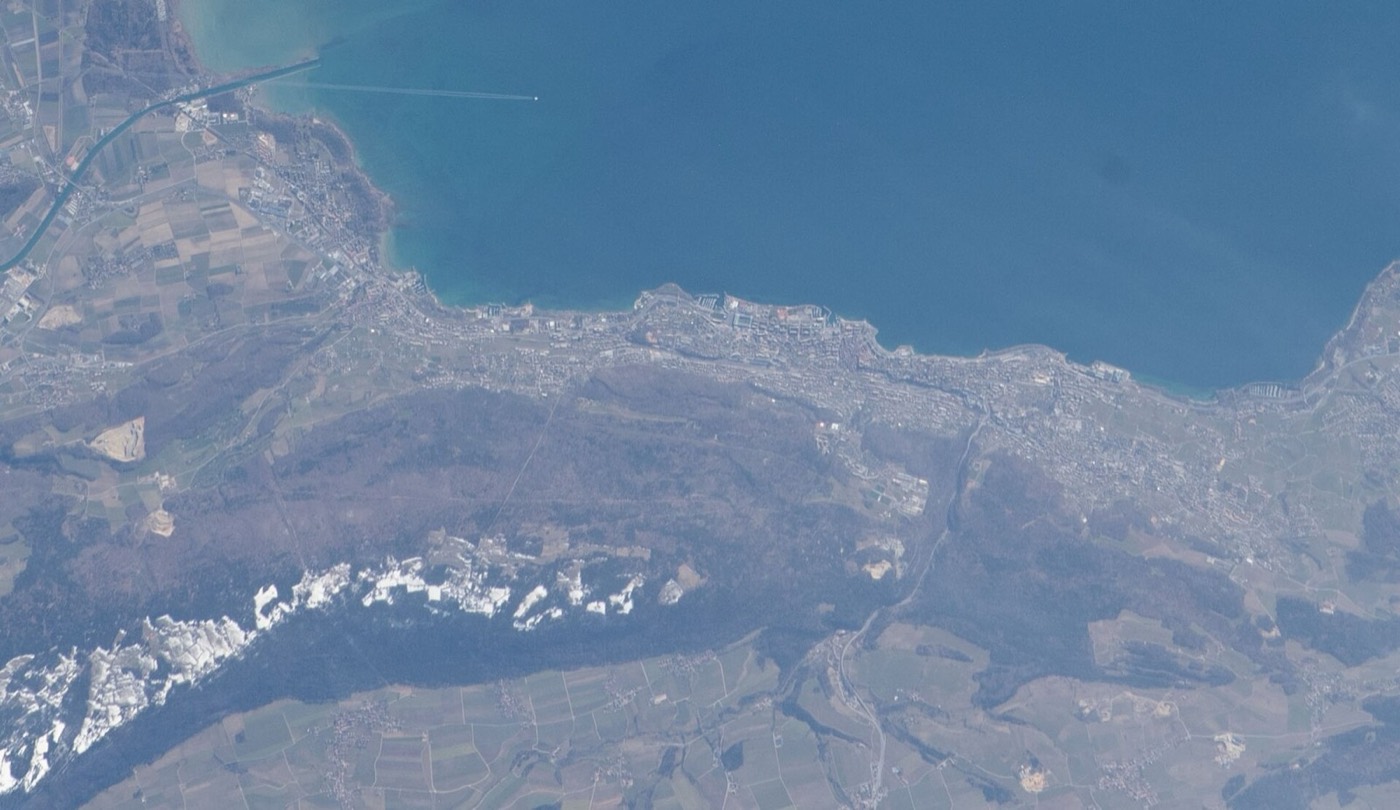
The office was not in the town of Neuchâtel itself, but in Marin, a village at the eastern end of the lake. Walker said so in his opening speech. The canton's capital, Neuchâtel, is a few kilometres along the shore to the west.
Walker gave that speech in French, and later published his own English version. He described the new centre simply: "There, a small group of technologists are building Autodesk's next generation of products". He added that the centre had already contributed to products that would be sold around the world the following year.
By November, seven people were working there. On the thirteenth of November, nineteen ninety-one, the centre was formally opened, in the chamber of the cantonal parliament inside Neuchâtel's castle. Its first full year of work was nineteen ninety-two, and by March of that year Walker could say what it was for.
This view from the International Space Station shows Lake Neuchâtel, with the town of Neuchâtel and the village of Marin on its northern shore. For more than a quarter of a century, this shore was where AutoCAD learned to speak other languages.
In an interview in March nineteen ninety-two, Walker explained the move: "Now we have a software center in Neuchatel, where I work, and we're moving a substantial amount of our new software development and localization there". Until the year before, he said, all of Autodesk's development had been done in the United States.
So the translation of AutoCAD, and much of its new development, now had a home beside a Swiss lake. In February nineteen ninety-nine, Autodesk registered a Swiss company in Neuchâtel, called Autodesk Development. Its stated purpose was to design, develop and sell software.
Swiss public broadcasting later described Neuchâtel as Autodesk's European headquarters. At its largest, the site had up to two hundred and fifty employees. Local radio reported that Autodesk had a tax exemption there for all those years.
6. Workstations, Macs, then Windows only
While the translators worked on the words, the programmers were still carrying AutoCAD from one kind of computer to another. By the mid nineteen eighties, the most powerful desks in engineering were not personal computers at all. They were workstations.
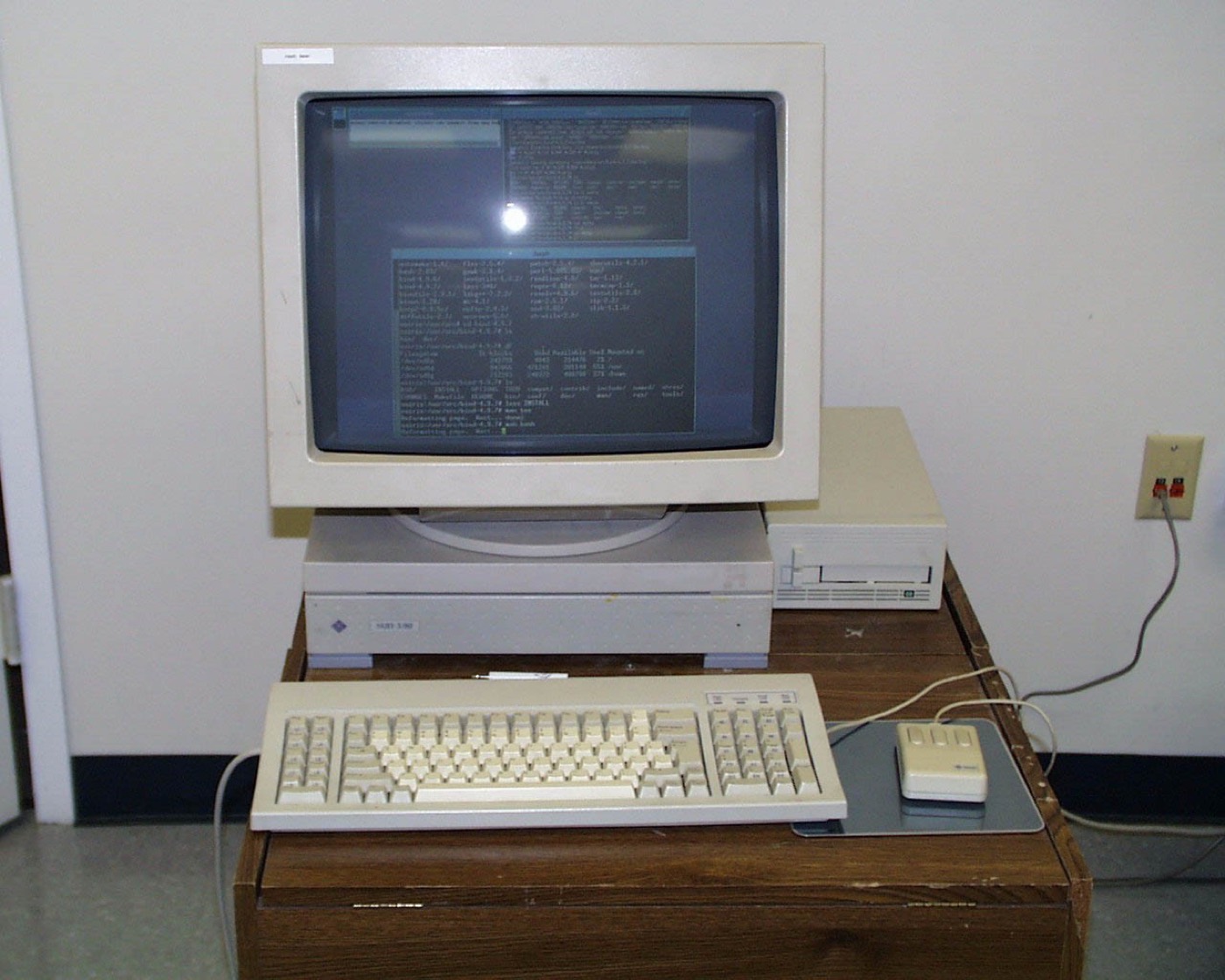
A workstation was a powerful single-user computer, usually running an operating system called Unix. An operating system is the basic software that runs a computer and lets programs use it. In March nineteen eighty-six, Walker said AutoCAD ran on Unix on Sun and Apollo workstations, on IBM's own RT workstation, and on Digital's VAXstation.
This is a Sun workstation from the late nineteen eighties. Machines like this sat on the desks of engineers and scientists. Silicon Graphics and Hewlett-Packard made them too, and each had its own version of Unix.
For a few years AutoCAD ran on all of them. Then the lanes began to close. Release twelve, in June nineteen ninety-two, was the last for Sun's older system. Release thirteen, in November nineteen ninety-four, was the last for IBM's AIX, Sun's Solaris, Silicon Graphics' IRIX, Hewlett-Packard's HP-UX, and for plain DOS.
Release fourteen came out in February nineteen ninety-seven. It ran only on Microsoft Windows. Fifteen years after promising to run on everything, AutoCAD ran on one family of systems.
The Apple Macintosh had its own short story inside this one. Walker's records show that in late nineteen eighty-seven, Autodesk committed to making a drawing program for the Mac.
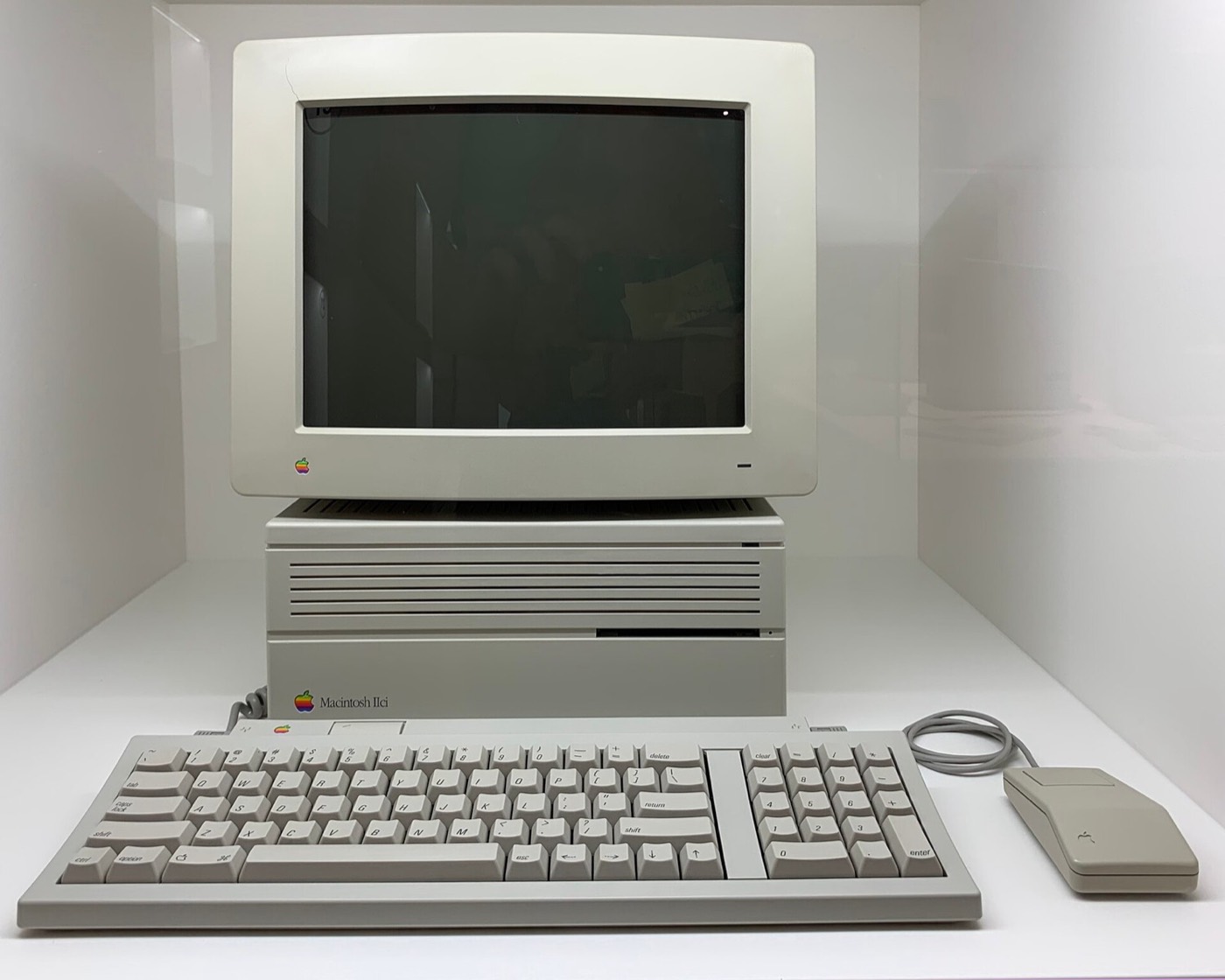
This is a Macintosh from nineteen eighty-nine, the kind of machine that story was about. By the fifteenth of February, nineteen eighty-eight, Walker had AutoCAD running on a Macintosh two, and the plan changed to moving AutoCAD itself across. According to the version history, a Mac edition shipped in March nineteen ninety-two.
It did not last. The CAD writer Steve Johnson later wrote that the last of the original Mac versions was Release twelve, a product of nineteen ninety-two. Autodesk had relied on Apple to help pay for the work. When Apple cut back that help, Johnson wrote, "Autodesk killed it off as an unprofitable distraction".
So by the late nineteen nineties, the program that once ran on thirty-one computers ran on Windows alone. For drawing offices, that settled the question of what computer to buy for more than a decade.
7. Bartz and beyond flat drawings
The founder had not stayed in charge for long after the share sale. In November nineteen eighty-six, Walker handed the job of president to Al Green. In June nineteen eighty-eight, he gave up the chairman's title as well. In October nineteen ninety-one, Green decided to retire, and the board began to search for a new chief executive.
Walker went on writing Information Letters all the same. In April nineteen ninety-one, just before he left for Switzerland, he wrote one called The Final Days, a long warning to the company's managers.
It opened its case bluntly: "Today Autodesk is king of the mountain, but it is poised precariously". He wrote that he did not believe the management was preparing the company to come out of the coming period stronger.
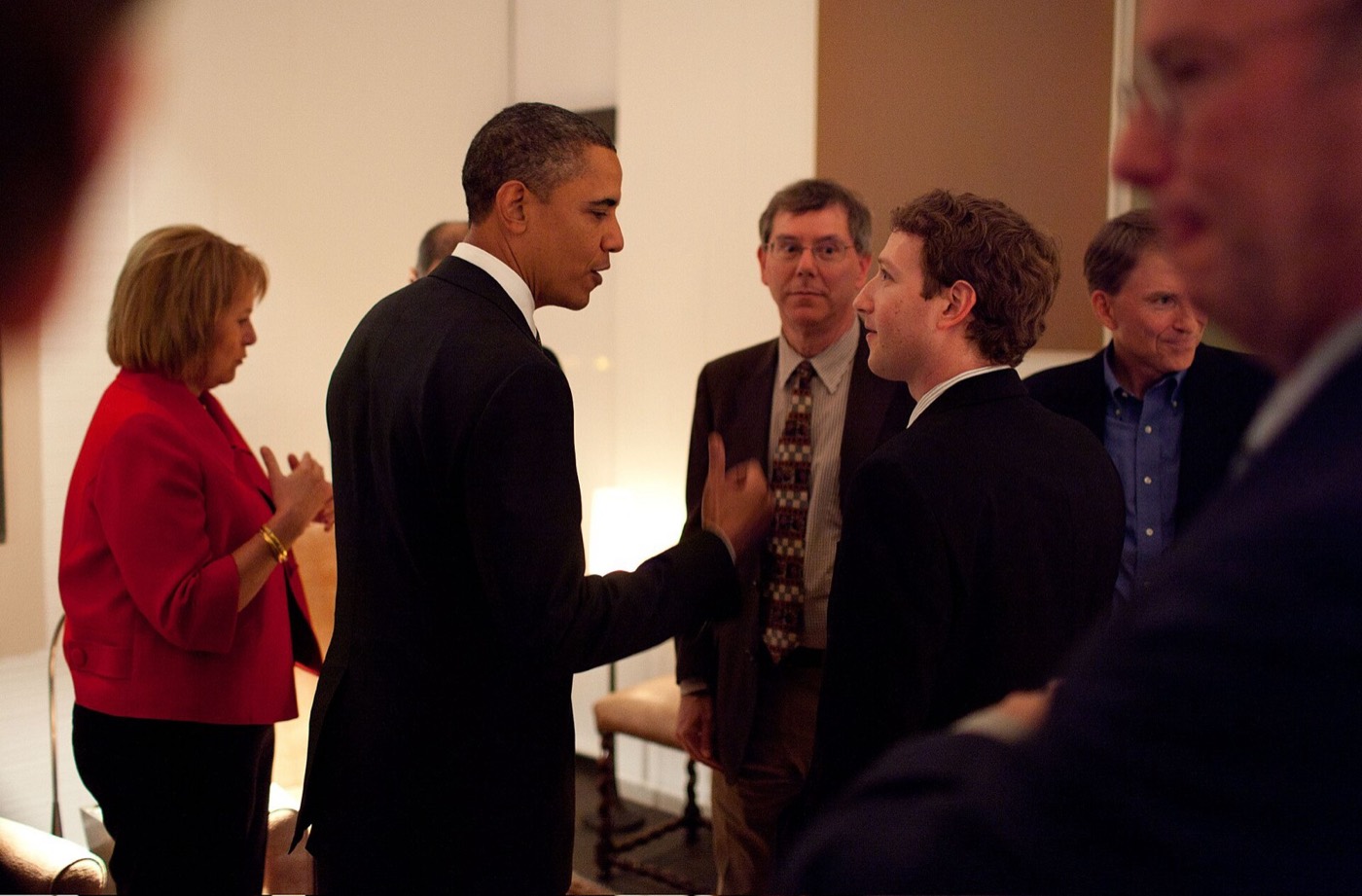
On the fourteenth of April, nineteen ninety-two, Autodesk announced that Carol Bartz would become its new president and chairman. She led Autodesk for fourteen years, until the end of April two thousand and six. This official photograph shows her on the far left, in February twenty eleven, when she was running Yahoo.
The company's home moved as it grew. From Walker's house in Mill Valley it went to an office on the same town's Shoreline Highway, and in March nineteen eighty-four to Sausalito. In nineteen ninety-four it moved into a new building in San Rafael. In twenty twenty-two it left San Rafael for San Francisco.
Under Bartz, Autodesk also moved beyond flat drawings. AutoCAD drew in two dimensions, meaning lines on a flat sheet, like the paper it replaced. The company now moved into the third dimension, and into businesses that had nothing to do with drawing offices.
It began with 3D Studio, published on the thirty-first of October, nineteen ninety, and built for Autodesk by an outside team, the Yost Group. It let an artist build objects in three dimensions, light them, and turn them into pictures or animation. In nineteen ninety-six it became 3D Studio MAX.
In August nineteen ninety-eight, Autodesk agreed to buy Discreet Logic of Montreal, which made systems for visual effects in cinema and television. The deal was worth about five hundred and twenty million dollars in Autodesk shares. It was completed in March nineteen ninety-nine. In October two thousand and five came Alias, the maker of the animation program Maya, for one hundred and eighty-two million dollars in cash.
By the time the Alias deal was completed, in January two thousand and six, the total paid had come to about one hundred and ninety-seven million. Alias also made StudioTools, used by the designers who shape cars and consumer products.
The most important purchase of the period was also one of the smaller ones. On the first of April, two thousand and two, Autodesk completed its purchase of Revit Technology, for one hundred and thirty-three million dollars in cash. In a Revit model, the building is stored once, as a single model of walls, floors, doors and windows. Every drawing is a view of that model, so moving a wall changes every plan that shows it.
Autodesk gave the idea a name in a white paper that same year: "Building information modeling is Autodesk's strategy for the application of information technology to the building industry". Building information modelling, usually shortened to BIM, turned the building from a pile of drawings into data. The drawings are produced from it.
8. Subscriptions, cloud and the Mac again

Carl Bass became Autodesk's chief executive on the first of May, two thousand and six, succeeding Carol Bartz. He ran the company for almost eleven years. Under him, Autodesk changed how it sold its software, and which computers it would run on.
The first surprise was the Mac. On the fifteenth of October, twenty ten, Autodesk put a new AutoCAD for Mac on sale. It came with a free companion app, AutoCAD WS, for viewing and editing drawings on an iPhone or an iPad. The technology site AppleInsider called it a return after an eighteen-year break.
The Mac had changed while AutoCAD was away. Apple's computers now used the same kind of Intel processor as Windows machines, and the phone and the tablet had arrived. A drawing no longer had to stay on one desk.
The same thinking reached the rest of the company. In September twenty eleven, Autodesk launched Autodesk Cloud, a set of web-based services. The cloud here means software and files kept on the company's own computers and used over the internet. In June twenty thirteen came Fusion three sixty, a program for designing products, built for the cloud from the start.
Then came the biggest change of all. For more than thirty years, Autodesk had sold software the way shops sold books. A perpetual licence meant you paid once, and that version was yours for ever. A subscription works like a magazine. You pay every year, you always get the latest version, and when you stop paying, you stop using it.
On the fourth of February, twenty fifteen, Autodesk announced the switch. The announcement quoted Andrew Anagnost, then one of its senior executives: "How the world is designed and made is changing, and how software is delivered is changing as well". From the first of February, twenty sixteen, new customers of most desktop programs could only subscribe.
The switch cost Autodesk money at first. In the year to January twenty sixteen, its revenue was about two and a half billion dollars. A year later it was about two billion. The money had not gone. It was arriving in smaller pieces every year, instead of all at once.
In February twenty seventeen, Carl Bass stepped down, and in June the board named Andrew Anagnost chief executive. He has led Autodesk ever since.
The Mac story had one more turn. In March twenty twenty-three, Autodesk released AutoCAD for Mac twenty twenty-four, built to run natively on Apple's own chips, the M1 and M2. The news site MacRumors reported that this could make it up to twice as fast as the version before. From many platforms, to Windows alone, AutoCAD had come back to more than one kind of computer.
9. Leaving Neuchâtel for Dublin
Anagnost had been chief executive for five months when he made his first big cut.
On the twenty-second of November, twenty seventeen, Autodesk's board approved a worldwide restructuring, a plan to reorganise the company, close some offices and cut jobs. It would remove about thirteen per cent of the workforce, roughly one thousand one hundred and fifty jobs. A week later, Autodesk confirmed that the plan included closing Neuchâtel, where two hundred and thirty-two people worked.
The news reached some of those people far from home. Kean Walmsley, who worked for Autodesk in Neuchâtel for many years, heard it on a company call while working in India.
On his blog, Walmsley wrote that he felt sad above all to be saying goodbye to so many close friends and colleagues. "Autodesk Neuchatel has really been a family to me for many years", he wrote. He added that it was going to be painful to close this chapter.
The office closed its doors on Friday the thirty-first of August, twenty eighteen, according to the Neuchâtel radio station RTN. Only about ten people stayed with the company in Switzerland, moving to another Autodesk office. By then, Autodesk's new base for Europe, the Middle East and Africa was already growing in Dublin.
The work moved from a Swiss lake to an Irish city. The Irish technology site Silicon Republic reported that by January twenty nineteen, one hundred and seventy people had joined Autodesk in Dublin. Their work included finance, sales operations and localisation, the same job of translating Autodesk's software that Neuchâtel had once taken on.
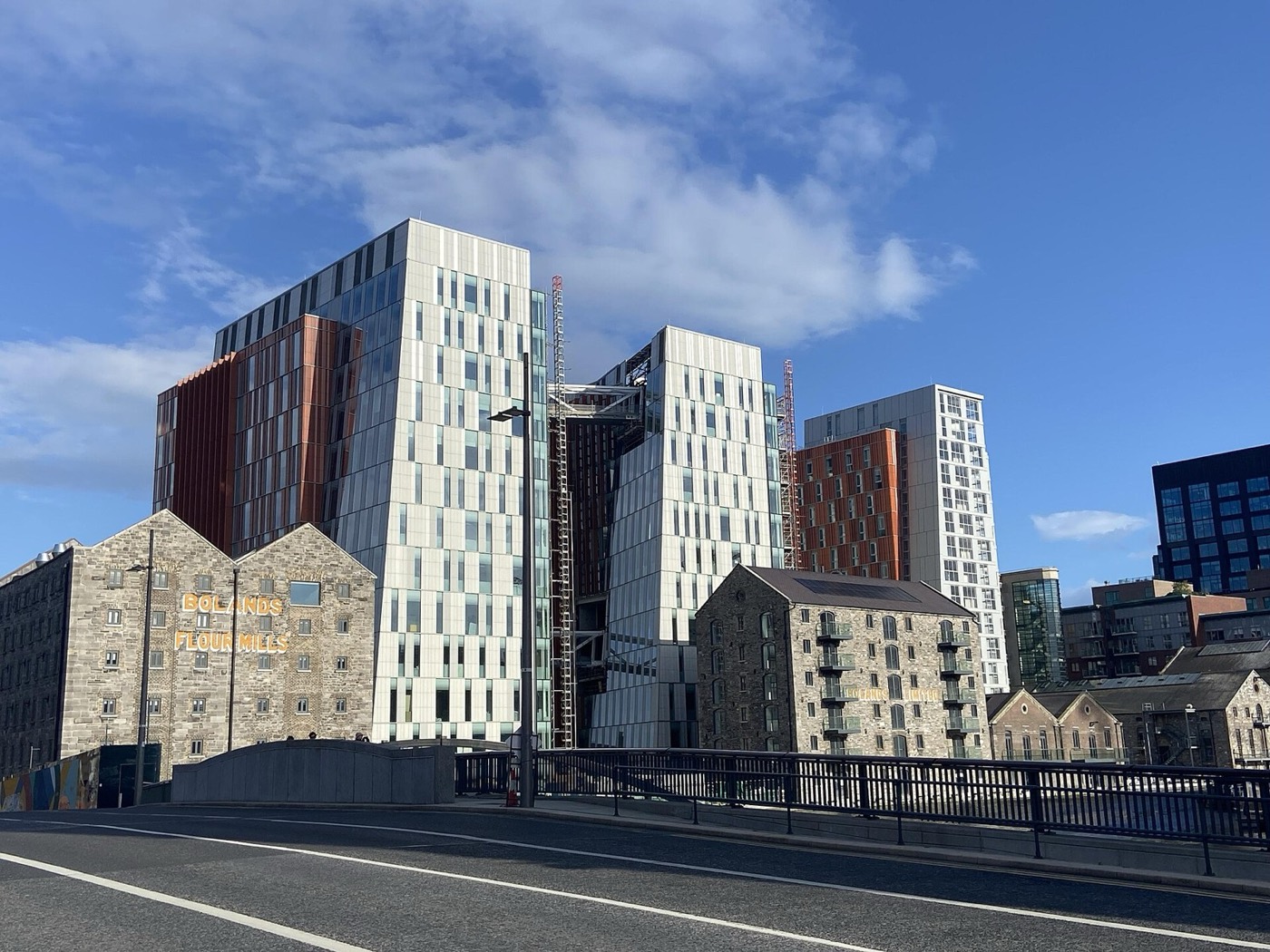
This is Dublin's docklands, the city's modern office district, photographed in twenty twenty-three. Autodesk's Dublin headquarters, at Windmill Lane, opened officially in January twenty nineteen. The photograph shows the district, not Autodesk's own building.
Anagnost explained the move to the Irish business news site Fora, and his reason was people. "It was getting harder and harder to find the talent we needed in Neuchâtel", he said. He said Ireland's tax structure helped, and that Neuchâtel had favourable tax arrangements as well. But the difficulty of getting people there had been overwhelming.
The Swiss company, Autodesk Development, outlived the office by several years. On the thirty-first of January, twenty twenty-five, a meeting of its owners voted to dissolve it. It is now in liquidation, which means its affairs are being settled before it is removed from the register.
10. Buying the building site

Design is only the start of a building's life. After the architect come the contractors, who price the job, order the materials and build it, and after them the owners, who run the building for decades. Under Andrew Anagnost, Autodesk set out to follow the building from the drawing office on to the construction site.
It did so by buying companies. The biggest of the building-site purchases was PlanGrid, announced on the twentieth of November, twenty eighteen, for eight hundred and seventy-five million dollars. PlanGrid put project plans, progress photos and punch lists on a tablet, on site. A punch list is the list of small faults that must be fixed before a job is signed off.
More followed. BuildingConnected, where contractors collect bids, came a month after PlanGrid. Spacemaker, which uses artificial intelligence to compare layouts for new developments, came in November twenty twenty. In February twenty twenty-one, Autodesk agreed to buy Innovyze, which models water networks, for about one billion dollars.
Put together, the purchases describe a chain: plan, bid, build and run. Autodesk now sold software for every link.
Then, in early twenty twenty-four, trouble came from inside the company.
In March twenty twenty-four, the board's audit committee, the directors who oversee the accounts, opened an internal investigation. It looked at how Autodesk handled its free cash flow, the cash a business brings in after paying for equipment and buildings. Autodesk told the market regulator of its own accord, and delayed its annual report.
On the thirty-first of May, twenty twenty-four, Autodesk published the results. It had pushed customers to pay for several years up front, or to pay early. But the company said "there will be no restatement or adjustment of any audited or unaudited, filed or previously announced" financial statements. A restatement is when a company reissues past accounts because they were wrong.
Then an activist investor arrived, a fund that buys a large stake and pushes publicly for changes. In June twenty twenty-four, CNBC reported that Starboard Value had built a stake worth about five hundred million dollars. The fight over the board ran into the next year. On the twenty-fourth of April, twenty twenty-five, the two sides settled, two new directors joined, and Anagnost stayed on.
Job cuts came in two rounds. In February twenty twenty-five, Autodesk said it would cut about one thousand three hundred and fifty jobs. That was about nine per cent of its staff. In January twenty twenty-six, about one thousand more jobs went. That was roughly seven per cent, most of them in sales.
In an email to staff, Anagnost gave the main reason as the end of a change to how the company sells. He wrote that "these changes are not driven by the external environment or an effort to replace people with AI". He promised the cuts would not become a yearly event.
11. Autodesk in 2026

This is what four decades of Autodesk's sales look like, year by year. In the year to January nineteen eighty-six, sales were about thirty million dollars. The line rises through the nineteen nineties, dips in the recession of the late two thousands, dips again during the switch to subscriptions, and then climbs steeply.
In the year to January twenty twenty-six, sales reached seven point two one billion dollars. That was eighteen per cent more than the year before.
Ninety-seven per cent of that revenue was recurring, meaning subscriptions and other payments that come back every year. Free cash flow was about two point four billion dollars. The switch that cost Autodesk money a decade earlier is now the reason its income is so predictable.
On the twenty-eighth of May, twenty twenty-six, Autodesk agreed to buy MaintainX for about three point six billion dollars in cash. MaintainX makes mobile software that maintenance teams use to manage work orders, inspections and records of the equipment they look after. The deal was completed on the third of August.
With MaintainX, the chain from the building site gets one more link. Autodesk's software now reaches from the first sketch of a building or a machine to its upkeep, years after it was built.
At the end of August, Autodesk reported its results for the quarter to the end of July. Revenue was two point oh five billion dollars. That was sixteen per cent higher than a year earlier. For the full financial year, which ends next January, it expects revenue of between eight point three and eight point three five billion dollars.
Investors were less impressed than the numbers suggest. Shares fell about five per cent in late trading that evening, after Autodesk trimmed the middle of its forecast for free cash flow.
Then, on the fifteenth of September, Autodesk University opened in Las Vegas, the same city where AutoCAD had first been shown. The company's announcement led on its AI helper: "Autodesk Assistant is generally available today across many Autodesk products". It also previewed agentic AI, meaning AI that carries out a series of tasks for the user rather than only answering questions.
Autodesk said the next, more capable version of its assistant would come later, with its availability and pricing to be announced next year. For a company that sells software by the seat, one licence for each person who uses it, that is a double-edged idea. If the software does more of the work, each customer may need fewer seats.
12. What became of the founders
The company is now far larger than the people who started it. So what happened to them?
John Walker resigned from Autodesk in nineteen ninety-four and stayed in Neuchâtel. He kept a personal website he called Fourmilab, a play on the name of the physics laboratory Fermilab and the French word for ant. There he published his programs, his essays and his history of the company, The Autodesk File.
Walker died on the second of February, twenty twenty-four, after a fall at home. He was seventy-four. His family's announcement was posted on his own Fourmilab forum a few days later.
Mike Riddle, whose Interact became AutoCAD, ended his royalty deal in a dispute. In January nineteen ninety-two he sold his royalty rights in AutoCAD back to the company. Walker's history gives the price as eleven million, eight hundred and seventy-five thousand dollars, and says Riddle dropped a lawsuit against Autodesk as part of the deal.
Riddle went on to write cheaper drawing programs of his own. EasyCAD, in nineteen eighty-five, was the first CAD program sold for under five hundred dollars, according to the trade magazine Design World. FastCAD followed in nineteen eighty-seven. In two thousand and eight, the CAD Society gave him its lifetime achievement award.
Kern Sibbald, who opened the office in Neuchâtel with Walker, worked on AutoCAD until nineteen ninety-five. He then turned to free, open-source software. In January two thousand he started Bacula, a program that backs up computer networks, and he led it for years.
Four of the founders told their own story together. In October twenty twenty, Dan Drake, David Kalish, Duff Kurland and Greg Lutz recorded an oral history for the Computer History Museum. They talked about their years at Information Systems Design, and how a group of colleagues became a company.
The case for forwards is strong. The founders' bet, a drawing program on every desk, came true. Drawing moved from vellum to data, and designers, builders and owners can now share one model. And the translators carried it into many languages, far beyond the town where it began.
The case for backwards is real too. Customers who once owned their software now rent it. The office beside the Swiss lake is gone, and thousands of jobs went in two rounds of cuts. And AutoCAD, which once ran on almost anything, spent thirteen years on Windows alone.
Autodesk's founders set out to sell software to people who draw. Forty-four years on, the company is betting that its software will do more and more of the drawing itself. Whether that is forwards or backwards may depend less on Autodesk than on the people who use it.
Sources and credits
Photo credits (Wikimedia Commons)
- A 1987 PowerPak 286 IBM-compatible PC running AutoCAD on MS-DOS: Suspiciouscelery, CC0 - https://commons.wikimedia.org/wiki/File%3APowerPak_286_running_AutoCAD_on_MS-DOS_%281987%29.jpg
- IBM 5150 Personal Computer with monochrome display, the kind of cheap PC AutoCAD first ran on: Vintageibmmt, Public domain - https://commons.wikimedia.org/wiki/File%3AIBM_5150_PC.JPG
- Man digitising a school building drawing in AutoCAD, Evergreen Systems advert, 1987: Evergreen Systems, Public domain - https://commons.wikimedia.org/wiki/File%3AMan_using_AutoCAD_%281987%29.jpg
- NACA drafting room with drawing boards, what CAD replaced: NACA, Public domain - https://commons.wikimedia.org/wiki/File%3ANACA_Drafting_Room_-_GPN-2000-001839.jpg
- Lake Neuchatel, Neuchatel and Marin-Epagnier seen from the International Space Station, 2020: Earth Science and Remote Sensing Unit, NASA Johnson Space Center, Public domain - https://commons.wikimedia.org/wiki/File%3AISS062-E-40229_-_View_of_Switzerland_-_Lake_Neuch%C3%A2tel_-_Neuch%C3%A2tel_-_Chaumont_du_Signal_%28mountain%29_-_Hauterive_NE_-_Marin-Epagnier_%28cropped%29.jpg
- Sun 3/80 Unix workstation, late 1980s: Lamune at English Wikipedia, Public domain - https://commons.wikimedia.org/wiki/File%3ASun_3-80.jpg
- Apple Macintosh IIci (1989), Apple Museum Prague: Benoît Prieur, CC0 - https://commons.wikimedia.org/wiki/File%3AApple_Museum_%28Prague%29_Macintosh_IIci_%281989%29.jpg
- Carol Bartz (far left), Autodesk CEO 1992-2006, then Yahoo! CEO, at a dinner with President Obama, Woodside CA, Feb 2011: The White House, Public domain - https://commons.wikimedia.org/wiki/File%3APresident_Barack_Obama_talks_with_Facebook_founder_and_CEO_Mark_Zuckerberg.jpg
- Bolands Quay, Dublin Docklands, 2023 (Dublin's office district; not Autodesk's own building): DylanGLC2017, CC0 - https://commons.wikimedia.org/wiki/File%3ABolands_Quay%2C_Dublin_Docklands_%282023%29.jpg


Primary sources
- John Walker, 'The Autodesk File', 5th edition, 2017 (fourmilab.ch) - Information Letters 1, 2, 4, 5, 7, 12 and 14; 'August 1982 Meeting', 'June 1983 Meeting', 'Piece of Cake', 'Number One', 'Initial Public Offering', 'Silverado' speech (1986), 'Technological Leadership' (1988), 'European Software Centre', MicroTimes interview (26 March 1992), 'The View from Sweden' (Lars Moureau), Trivia Quiz..
- David Weisberg, Autodesk history, Shapr3D, 27 March 2023 - Riddle royalties and buy-out, IPO proceeds (attributed on air).
- Reid Middleton blog, 'How Drafting Has Changed over the Years', 17 November 2015 - manual drafting tools.
- RTS, 29 November 2017; swissinfo.ch, 30 November 2017; RTN, 31 August 2018 - Neuchâtel: up to 250 staff, 232 at closure, closed 31 August 2018, tax exemption.
- Moneyhouse / Swiss Official Gazette of Commerce - Autodesk Development Sàrl registered 1 February 1999, dissolved 31 January 2025.
- Kean Walmsley, 'The end of an era for Autodesk Switzerland', Through the Interface, December 2017.
- Jonathan Keane, Fora (and TheJournal.ie), 17 January 2019 - Dublin EMEA headquarters, 170 jobs, Anagnost quotation.
- befores & afters, 'A visual history of 3ds Max', 4 June 2020; Tech Monitor, 20 August 1998 (Discreet); AWN, October 2005 (Alias).
- Autodesk SEC filings (EDGAR): 10-K405 2000; 8-Ks of 16 April 2002 (Revit), 13 and 18 January 2006, 7 February and 19 June 2017, 22 November 2017, 20 November and 20 December 2018, 27 February 2025, 24 April 2025, 22 January 2026 (CEO email), 26 February 2026 (Q4 FY2026), 3 August 2026 (MaintainX), 27 August 2026 (Q2 FY2027); 10-Ks for fiscal 2019, 2021 and 2026; XBRL revenue data.
- Autodesk white paper, 'Building Information Modeling', 2002.
- CG Channel, 27 September 2011 (Autodesk Cloud); Fusion 360 release, 25 June 2013; PR Newswire, 17 November 2020 (Spacemaker).
- CNBC, 16-17 and 22 June 2024 (Starboard); SiliconANGLE, 27 August 2026 (share reaction).
- North Bay Business Journal, 24 August 2022 - San Rafael headquarters and move to San Francisco.
- Steve Johnson, 'Apple - Autodesk history revisited', cadnauseam.com, 6 September 2010.
- AppleInsider, 'AutoCAD returns to the Mac after 18 year hiatus', 15 October 2010; Autodesk release 'Autodesk Brings AutoCAD Back to the Mac' (2010, via Electronic Specifier).
- MacRumors, 'AutoCAD for Mac 2024 Gains Native Apple Silicon Support', 28 March 2023.
- Silicon Republic, Autodesk EMEA headquarters in Dublin, 17 January 2019.
- Digital Engineering 24/7, David Cohn, 16 February 2024; Fourmilab SCANALYST, 7 February 2024 (John Walker's death).
- Design World, 'Mike Riddle wins CAD Society lifetime achievement award', 2 April 2008.
- FOSDEM 2007 speaker biography, Kern Sibbald.
- Computer History Museum, 'AutoDesk oral history panel' (Drake, Kalish, Kurland, Lutz), catalogue 102792114, recorded 15 October 2020.
- Autodesk press release, 'Autodesk Advances Agentic AI in Its Three Industry Clouds', Las Vegas, 15 September 2026.
Not regulated financial advice.