
Chip War: Can Export Controls Actually Stop China?
In August 2022, the US told Nvidia it could no longer sell its best chips to China without a licence. China's answer wasn't to go without — it was a cut-down chip that slipped just under the new line. So Washington tightened the line. China built around that too.
This video traces that loop from 2022 to September 2026: the BIS rules that defined a 'controlled' chip by its processing performance and performance density; Nvidia's A800, H800 and H20, each engineered to sit just under a moving threshold; the May 2025 ban on chip-design software sold to Synopsys, Cadence and Siemens EDA's Chinese customers, and its reversal seven weeks later as part of a trade deal; and the H20 and H200 chips that came back in August and December 2025 — not after a change in what they could do, but in exchange for a 15% and then 25% cut of the revenue to the US government.
It follows China's own answer too: Huawei's Ascend 910C, built by the foundry SMIC, with yield climbing from about 20% to around 40% in under six months, and a 2026 production target roughly double the year before. And it covers the one chokepoint that has never had a workaround — ASML's EUV lithography machines, barred from China since 2019.
The video closes on three bills moving through the US Senate in September 2026, and the open question underneath all of it: are these controls still holding anything back, or have four years of tightening, loosening and tightening again turned the policy into a licensing business?
Every figure is on screen with its source and date.
Educational documentary. Not financial or investment advice.
Tags
Chapters
- The loop
- Three chokepoints
- 2022: the first squeeze
- The cut-down chip, round one
- 2023: the net closes
- The cut-down chip, round two
- The software ban and its reversal
- The reversal: H20 comes back
- The reversal: H200 follows
- China's answer
- The lithography chokepoint
- September 2026: the pendulum swings back
- Do controls work?
- What happens next
Video notes
1. The loop

In August 2022, the US government told Nvidia it could no longer sell its best chips to China without a licence. China's answer was not to go without. It was to build a cut-down chip that slipped just under the new line.
So Washington tightened the line. China built around that too. Then, for a while, Washington stopped tightening the line and started selling access to it instead, for a price.
This video follows that loop from 2022 to now: a rule tightened, a workaround found, the rule tightened again. More than once, the rule was later relaxed — in exchange for money, not any new finding about security. By September 2026, a fresh round of bills in the US Senate was trying to tighten it once more.
That is the shape of this video. Not one decision, but a cycle, repeating for four years and still running.
The question underneath the whole cycle is simple to ask and hard to answer. Do these controls actually hold back a rival's technology — or do they just speed up the very self-sufficiency they were built to prevent? This video does not promise a clean answer. It lays out the evidence from both sides, in order, and lets you weigh it.
2. Three chokepoints
Before the story, it helps to know exactly what an export control on a chip restricts, because "the chip" is really three separate things.
The first chokepoint is the chip itself. Chip speed is usually measured in TOPS — trillion operations per second, a count of how many basic calculations a chip can do every second. US rules measure a chip two ways: its raw speed, and that speed divided by the chip's physical size, called performance density. A chip can be controlled for being fast, or for being small and fast at once.
The second chokepoint is the machine that prints the chip's circuits onto silicon in the first place. That machine is made almost nowhere but one company in the Netherlands: ASML.
Printing a chip's circuit pattern onto silicon using light is called lithography. ASML's most advanced machines use light so short in wavelength — extreme ultraviolet, or EUV — that it can print features a few atoms wide. A step down from that, deep ultraviolet, or DUV, light prints slightly coarser patterns, and that is the machine China still has some access to.
The third chokepoint is software: the programs engineers use to actually lay out a chip's billions of connections before it is ever built. A small handful of companies make nearly all of it. Control any one of those three things, and in theory you control who gets to build the next generation of chips.
3. 2022: the first squeeze

The loop starts on 26 August 2022. Nvidia told its own shareholders, in a filing with US regulators, that the government had just imposed a new licence requirement on exporting its chips to China. The chips named were the A100 and the forthcoming H100, effective immediately.
Nvidia's own words, from that filing: the government had "imposed a new license requirement, effective immediately." That was the first beat of the loop. A licence arrived overnight, on chips that were already shipping.
The licence covered exports to China and Russia, of the A100 and H100 and the systems built around them.
Six weeks later, the government went much further. On 7 October 2022, the Commerce Department's Bureau of Industry and Security — BIS — issued a sweeping new rule. It covered the chips themselves, the tools that make them, and the knowledge behind them.
BIS wrote the rule using two measures of its own: Total Processing Performance, a count of raw speed, and Performance Density, that speed divided by the chip's size. Cross either line and a licence is required. A chip is controlled if its processing performance reaches 4,800. It is also controlled at a lower speed of 1,600, if it is dense enough to pass 5.92 on the density test. Those exact numbers, not the rounder "TOPS" figures often quoted in the press, are what the rule itself says.
4. The cut-down chip, round one

Nvidia did not stop selling chips to China. It built new ones, designed to sit on the legal side of that line.
On 7 November 2022, barely a month after the new rule, Nvidia launched the A800 — the same chip as the A100, with one change. NVLink is Nvidia's own fast link for joining several of its chips together so they work as one. On the A100 it ran at 600 gigabytes a second; on the A800, Nvidia cut it to 400, just enough to land under the new threshold.
A version of H100 called the H800 followed the same idea around March 2023, with its own link speed cut down to match.
This was the first clear example of a pattern the whole video will keep returning to. Nvidia did not slow its China-bound chips down across the board. It found the one measurement the rule actually checked, and trimmed exactly that — while leaving almost everything else about the chip untouched.
5. 2023: the net closes

The workaround did not last a year. On 17 October 2023, BIS rewrote the rule again, this time closing the exact gap the A800 and H800 had used.
The new rule added a third test on top of the old two: whether a chip is designed or marketed for use in a data centre at all. A chip built for that purpose could now be caught even if its link speed had been throttled down, because the throttling no longer mattered. The loophole Nvidia had used for barely a year was gone.
The same month, a second chokepoint tightened as well. From 1 September 2023, the Dutch government required a licence to export ASML's most advanced deep ultraviolet lithography machines — the ones just below EUV in capability — closing off the next place Nvidia's chipmaking partners might have turned.
6. The cut-down chip, round two
Nvidia tried the same trick again, under the new, tighter rule. In November 2023 it launched the H20, alongside two smaller chips called the L20 and L2, engineered to sit under the 2023 thresholds specifically.
The H20 was Nvidia's answer to a tighter net: built from the start to pass BIS's new three-part test, not to dodge an old two-part one. For a year and a half, it was the most capable chip Nvidia could legally sell into China.
Then, on 9 April 2025, the government told Nvidia a licence was now required for H20 exports too. Five days later, on 14 April, it told Nvidia plainly: that licence would not be coming, for the foreseeable future.
Here is what makes this moment different from everything before it. The 2022 and 2023 rules had each closed a specific technical loophole. This time, the same chip — not a workaround, the actual chip built to comply — was simply blocked outright. A control had now been tightened twice on one product.
7. The software ban and its reversal

Two chokepoints down. In May 2025, Washington reached for the third: the software used to design a chip before it is ever built.
On 23 May 2025, BIS told three companies they would need licences to keep selling chip-design software into China. Those three companies were Synopsys, Cadence, and Siemens EDA. Chip-design software like this is often called EDA software. Between them, those three companies make nearly all of the software the global chip industry actually designs chips with. Without it, a Chinese engineer cannot easily lay out a new chip's billions of connections at all.
It did not last two months. On 2 July 2025, as part of a broader trade move with China that also eased Chinese limits on rare-earth exports, the United States lifted the software restriction entirely.
This is the first reversal in the loop that was not a security finding being updated — it was one restriction being traded for a concession somewhere else entirely. The software ban and the rare-earth easing were two different fights, settled together, in the same negotiation.
8. The reversal: H20 comes back

Three months after the H20 was blocked outright, it came back — on different terms than any chip control before it.
In August 2025, the government granted Nvidia a new licence to resume selling the H20 to China. The condition was new too: fifteen per cent of that China revenue would now go straight to the US government. Nvidia went on to report roughly sixty million dollars in H20 sales under the new licences.
Here is Jensen Huang, Nvidia's chief executive, recognised by President Trump at the White House AI Summit in July 2025, the same summer this deal came together. Huang had spent years arguing publicly that keeping Nvidia out of the Chinese market only pushed Chinese buyers toward Chinese chips faster.
This was the moment that argument started to show up in policy. A chip control had been lifted for a price, not for a change in what the chip could do.
9. The reversal: H200 follows

Four months later, the same logic reached further up Nvidia's product line.
On 8 December 2025, the Trump administration allowed Nvidia to sell its H200 chip into China. The H200 is a step up from the H20, and the revenue-share rate rose from fifteen to twenty-five per cent. It was the first chip-control relaxation of a chip more capable than the one it followed, rather than a restoration of the same product.
The Commerce Department was reportedly discussing similar revenue-share terms for AMD and Intel at the same time, though no matching deal had been finalised by that date.
Trace the sequence so far. A licence rule, in 2022. A loophole, closed in 2023. A chip, blocked outright in 2025. And by the end of that same year, a more capable chip than the one just blocked, approved for sale — for a cut of the revenue. The direction of travel had reversed completely, twice, inside about three years.
10. China's answer
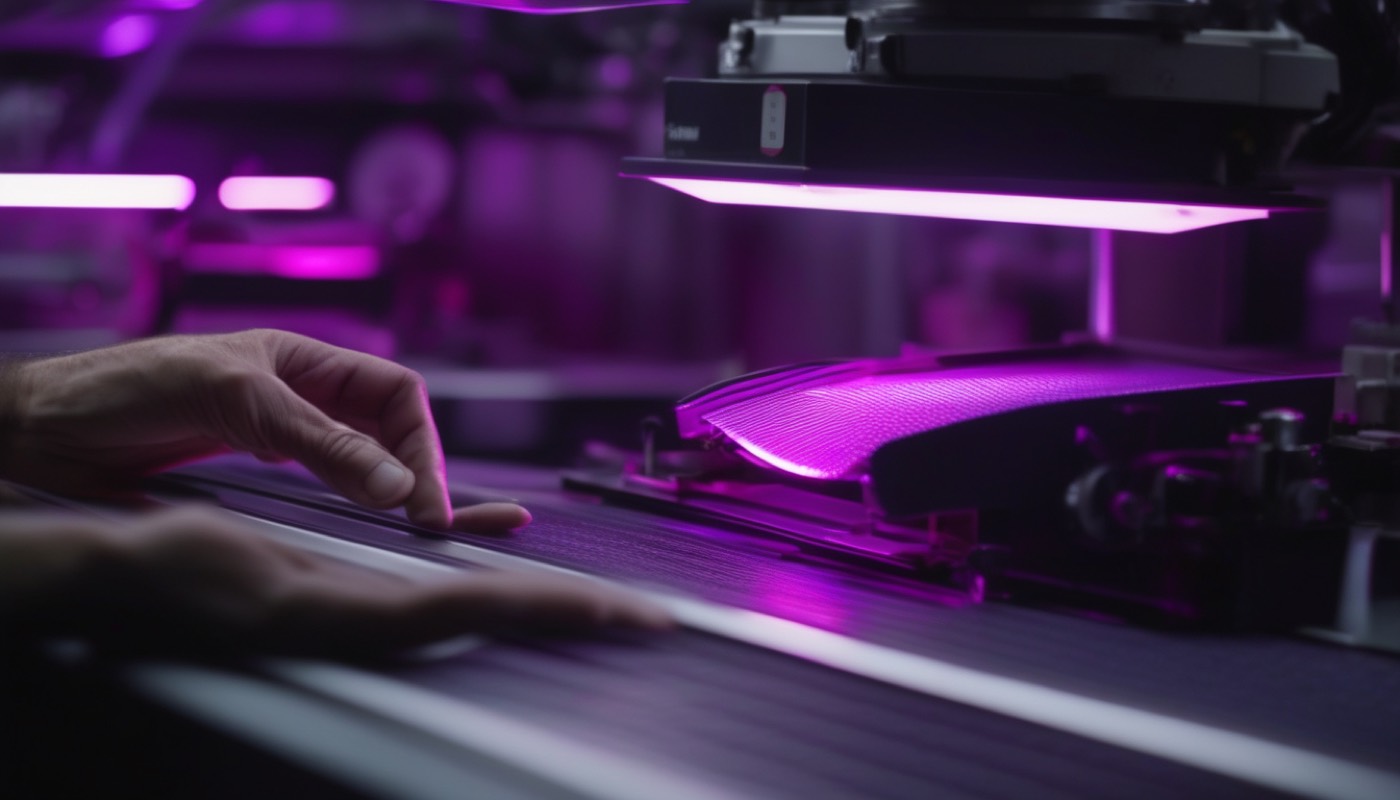

While Washington tightened and loosened its own rules, China was not simply waiting to see which way the pendulum swung. It was building a replacement.
Huawei's Ascend 910C is its answer to Nvidia's China-market chips. It is made not by Huawei itself but by SMIC — a foundry, a company that owns the factory and builds chips to other companies' designs. In this case, those designs are Huawei's own.
Early reporting in late 2024 put the 910C's manufacturing yield — the share of chips that come off the line actually working — at only about twenty per cent.
By late February 2025, that yield had climbed to around forty per cent, according to industry reporting, a jump the same reporting says finally made the production line profitable to run.
Huawei is now reportedly aiming for roughly six hundred thousand Ascend 910C chips in 2026 — roughly double what it built the year before. A yield climbing fast, and a production target climbing with it, is exactly the outcome an export control is supposed to prevent.
SMIC builds the 910C on a process roughly equivalent to a 7-nanometre chip, using deep ultraviolet light printed over the silicon multiple times to make up for not having access to EUV machines at all.
Here is Shenzhen at night, the city where Huawei is based, photographed from the International Space Station. The lights below are a city that has become the centre of China's effort to build an advanced chip industry without American or Dutch machines.
11. The lithography chokepoint

Of the three chokepoints this video opened with, one has never had a workaround.
ASML's EUV lithography machines — the ones that print the very finest circuit patterns — have been barred from export to China since 2019, under both US and Dutch policy. No Chinese workaround for that machine exists yet. That single rule is the reason SMIC is still stuck printing its circuits with the older, cruder deep ultraviolet light, pass after pass, rather than EUV's one clean exposure.
The same two-step tightening the chip chokepoint went through also happened here. From 1 September 2023, the Dutch government required licences for ASML's advanced DUV systems. Then, on 1 January 2024, it partially revoked licences already granted for two specific advanced models bound for China, under American pressure.
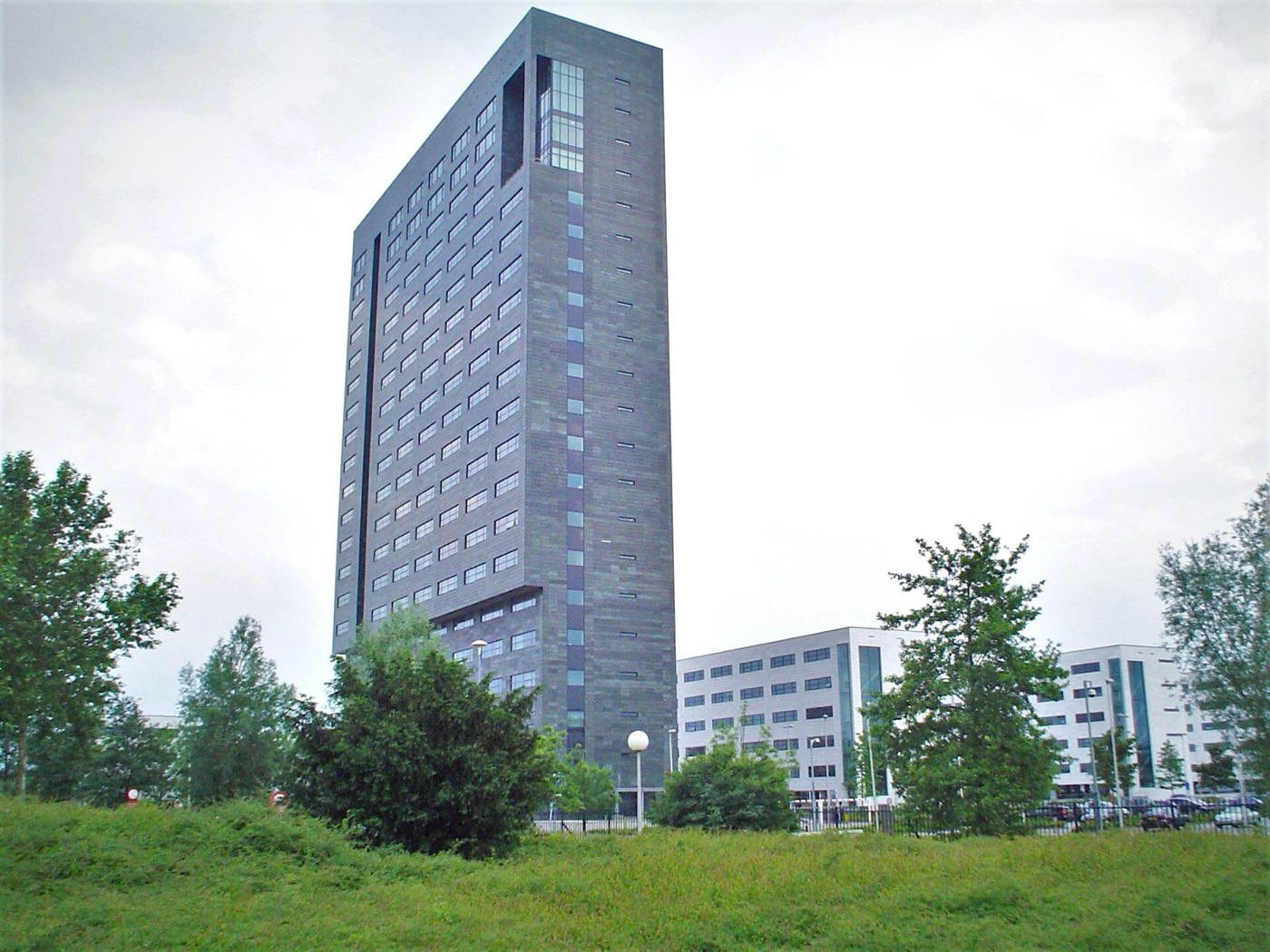
Here is ASML's headquarters in Veldhoven, in the Netherlands. This one site on Earth makes the machines every other chokepoint in this video depends on. No chip, however cleverly redesigned, and no software workaround, changes what that one factory decides to ship.
12. September 2026: the pendulum swings back


By September 2026, the pendulum in Washington was swinging back toward tightening again.
Three bills were folded into the Senate's defence policy bill for the next fiscal year that month. The Chip Security Act would require shipped advanced chips to carry location-tracking, to catch any that get diverted. And the AI Overwatch Act would let Congress itself review and block the Commerce Department's chip export decisions.
The MATCH Act would press allied governments — the Netherlands and Japan among them — to match America's own equipment restrictions.
This is Senator Jim Banks, the lead sponsor of the Chip Security Act, one of the three bills moving through the Senate that September.
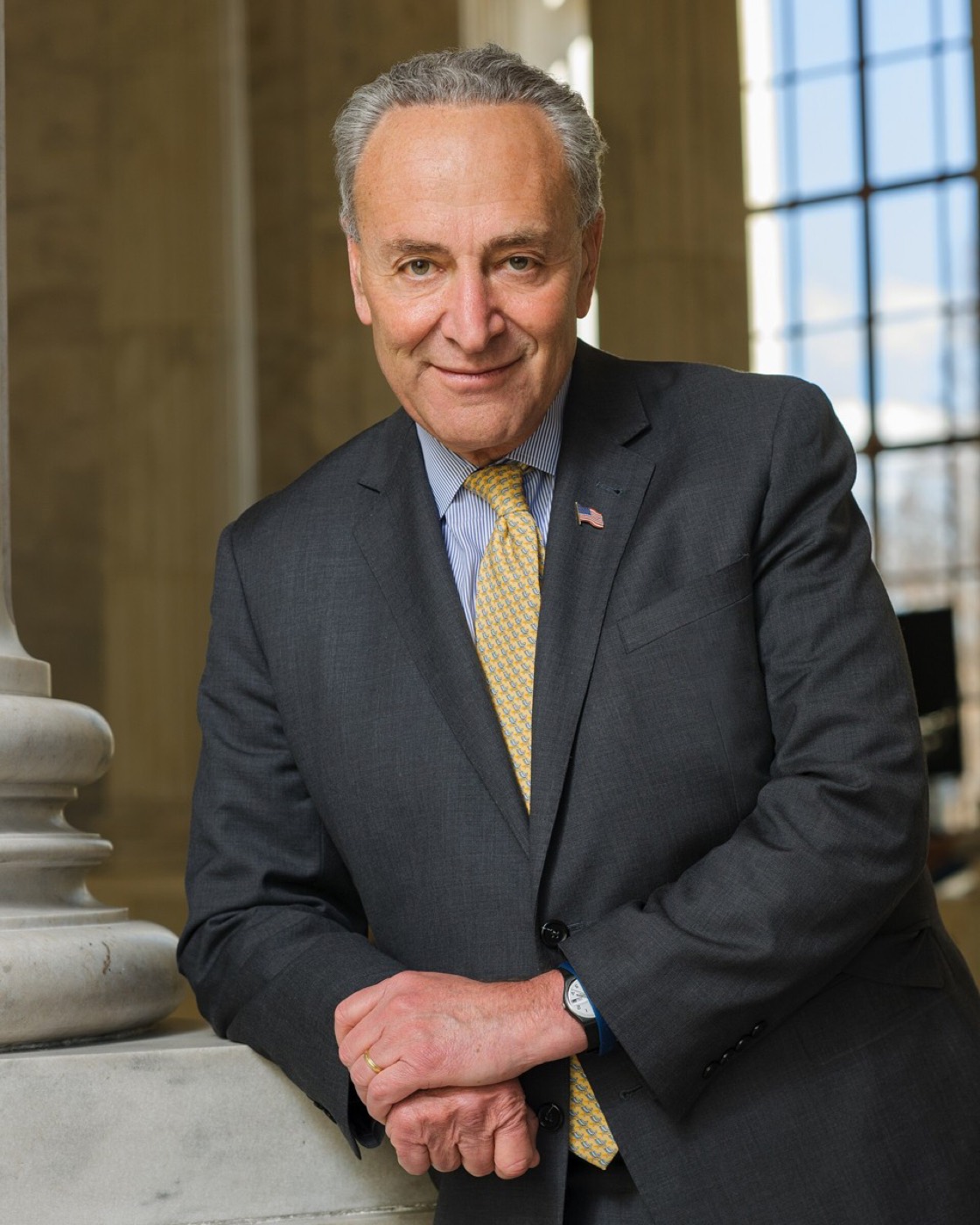
On 17 September 2026, Senate Democratic leader Chuck Schumer took to the floor and called blocking Chinese Communist Party access to cutting-edge chip technology "non-negotiable."
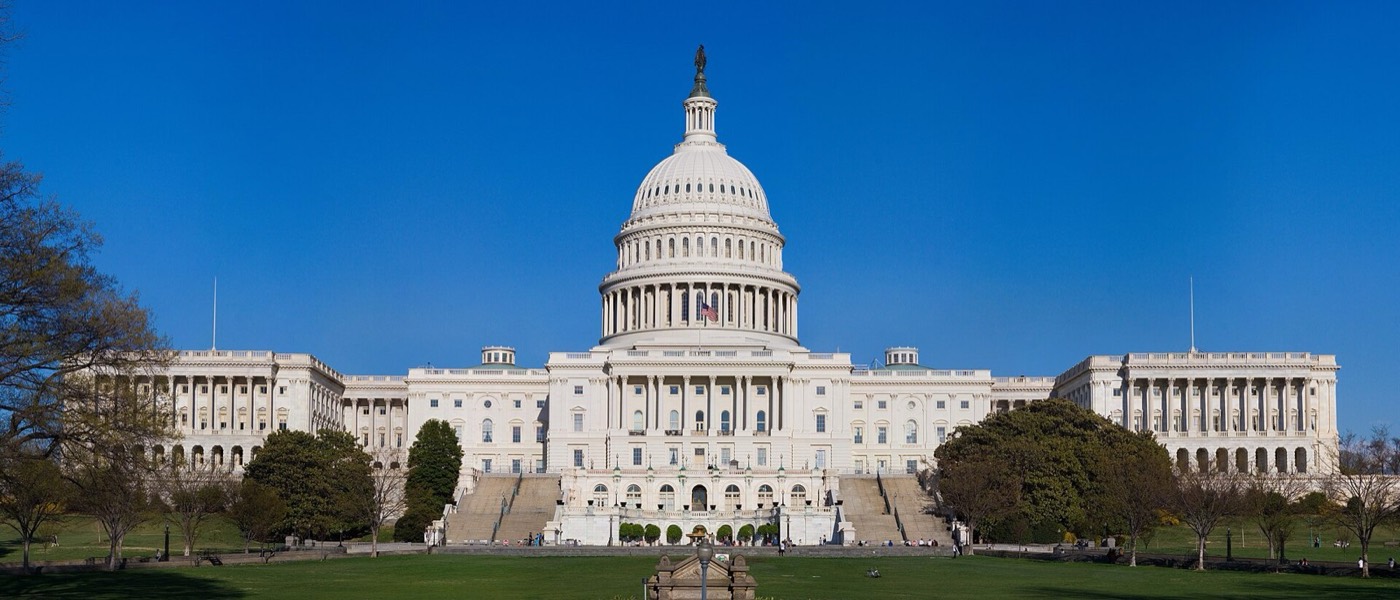
Here is the US Capitol, where that floor speech was delivered, and where the three bills were being negotiated into the defence bill that same month.
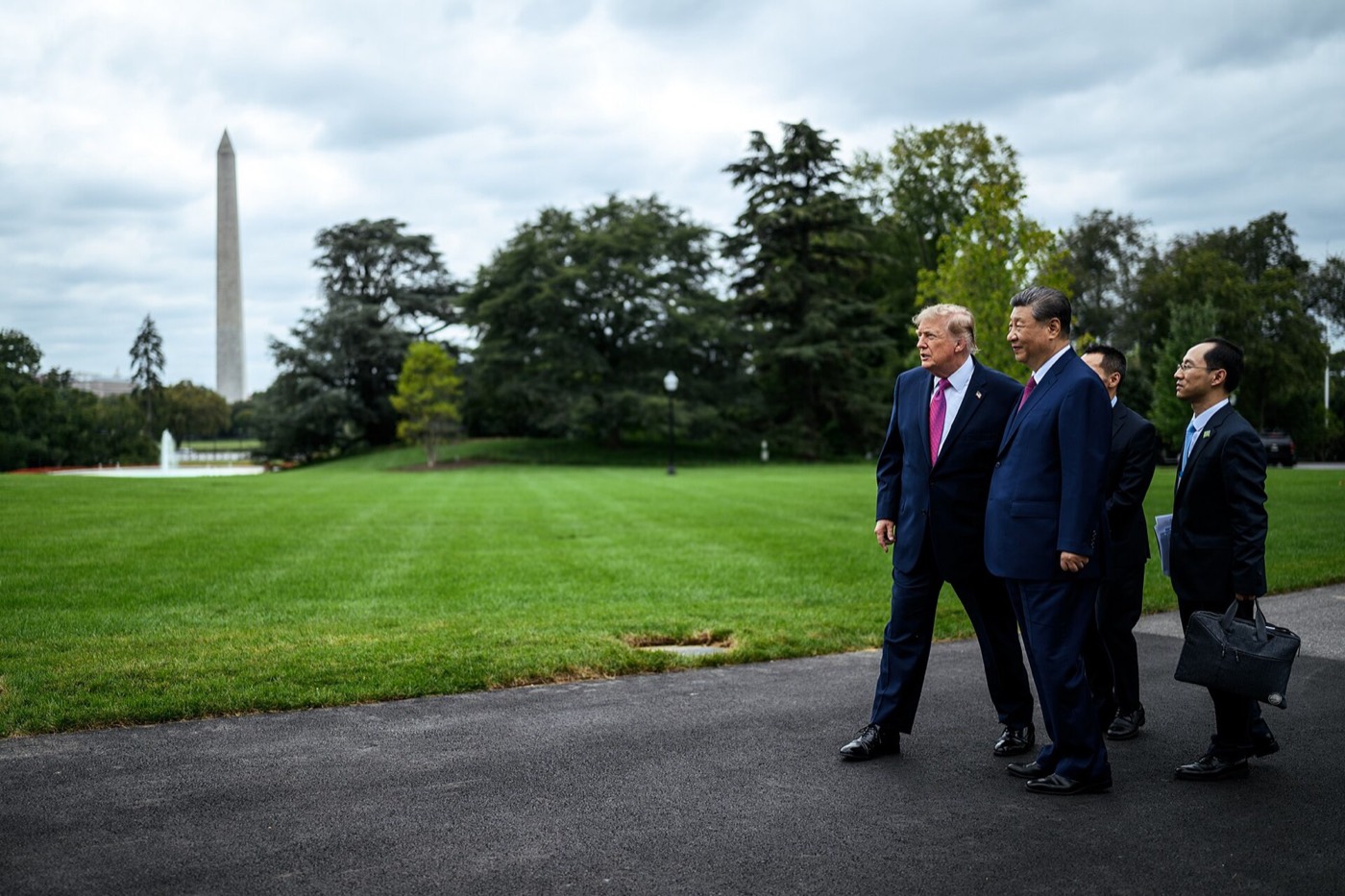
Schumer's timing was not an accident. He spoke a week before Chinese President Xi Jinping was due in Washington for a state visit.
Here is Chuck Schumer, in his official Senate portrait — the man who spent that week arguing that whatever came out of the Trump-Xi meeting should not include any loosening of chip controls.
The visit itself ran from 23 to 25 September 2026. According to US trade officials quoted afterward, chip export policy was not formally on that summit's agenda at all.
Here is President Trump and President Xi together at the White House during that September 2026 visit. Chip controls were reportedly not the subject of their talks — but they were the subject of everything happening in the Senate at the same time, just down the road.
China's own government had already made its position clear months earlier. In June 2026, a Commerce Ministry spokesperson said America's use of export controls had damaged global semiconductor supply chains — language Beijing had also used against an earlier round of House bills back in April.
13. Do controls work?
So: four years, three chokepoints, and a loop of tightening, loosening and tightening again. Has any of it actually worked?
The case that it has: SMIC's yield gains came slowly, from a low base, and China still has no EUV machine of its own. Every Chinese chip in this video was built around a US or Dutch restriction, not past it — none of them matches Nvidia's most capable hardware. By that measure, the chokepoints have genuinely held something back.
The case that it has not: a yield climbing from twenty to forty per cent, with output targets doubling the year after, is not a stalled programme. It is a programme that found its footing under pressure, built partly because American chips became harder to buy. By that measure, the controls may have simply handed China's own suppliers the market Nvidia was forced to give up.
Both of those things can be true about the exact same four years. The controls may have slowed China's absolute capability — while also guaranteeing that whatever China does build next, it builds without needing anyone else's permission again. Both verdicts begin in the same place: a line drawn in Washington, crossed again in Shenzhen. This video does not pick a winner between those two readings. The evidence for each sits in the chapters you have just watched.
14. What happens next

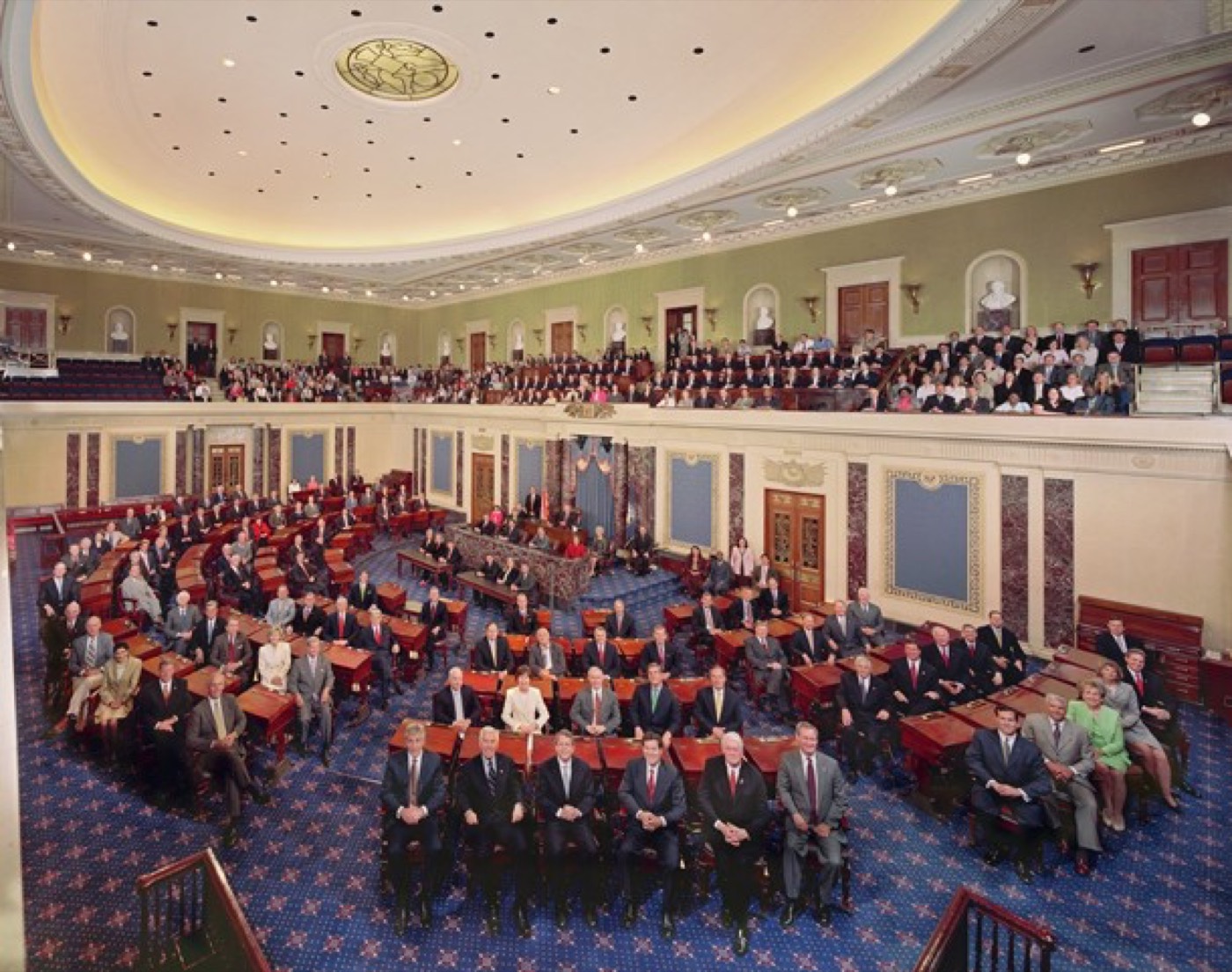
Three bills are still moving through the Senate as this video is finished. Whether they pass, and in what form, is not yet decided.
Here is the floor of the US Senate chamber, where that decision will eventually be made. By September 2026, chip policy had been folded into a much larger defence bill, alongside everything else a modern military budget now has to cover.
Meanwhile, the chips already moving — the H20 and H200 — are moving on a revenue share, not a security clearance. That is not a controls regime tightening. It is closer to a licensing business, with the US government now taking a cut of exactly the sales it once tried to stop outright.
So here is the open question this video leaves you with. Is Washington still running an export-control regime at all? Or has four years of tightening, loosening and tightening again turned it into something closer to a toll booth — charging for passage, instead of blocking the road?
Sources and credits
Photo credits (Wikimedia Commons)
- Jensen Huang, Nvidia CEO, at the White House AI Summit, July 2025: The White House, Public domain - https://commons.wikimedia.org/wiki/File%3ANvidia_CEO_Jensen_Huang_is_recognized_by_President_Donald_Trump_during_remarks_at_the_White_House_AI_Summit_at_Andrew_W._Mellon_Auditorium_in_Washington_%2854677035268%29.jpg
- President Trump and Chinese President Xi Jinping at the White House, September 2026: The White House, Public domain - https://commons.wikimedia.org/wiki/File%3APresident_Donald_J._Trump_and_Chinese_President_Xi_Jinping_look_at_Marine_One_on_the_new_helipad_on_the_South_Lawn_of_the_White_House_%28P20260924DT-3014%29.jpg
- Chuck Schumer, Senate Democratic Leader, official portrait: U.S. Senate Photographic Studio/Jeff McEvoy, Public domain - https://commons.wikimedia.org/wiki/File%3AChuck_Schumer_official_photo.jpg
- Jim Banks, US Senator, official Senate portrait: United States Senate, Public domain - https://commons.wikimedia.org/wiki/File%3AJim_Banks_Official_Senate_Portrait.jpg
- United States Capitol, Washington DC: Noclip, Public domain - https://commons.wikimedia.org/wiki/File%3ACapitol_Building_Full_View.jpg
- US Senate chamber, Washington DC: unknown, Public domain - https://commons.wikimedia.org/wiki/File%3AUS_Senate_Session_Chamber.jpg
- ASML corporate headquarters, Veldhoven, Netherlands: A ansems, Public domain - https://commons.wikimedia.org/wiki/File%3AASML_headquarters_Veldhoven.jpg
- Shenzhen, China, at night (ISS photograph): NASA Johnson Space Center, Public domain - https://commons.wikimedia.org/wiki/File%3AThe_city_lights_of_Hong_Kong_and_Shenzhen_%28iss072e399613%29.jpg


Primary sources
- Nvidia Corporation, Form 8-K, SEC filing, 26 Aug 2022 - the first licence requirement on A100/H100 exports to China.
- US Bureau of Industry and Security (BIS), Commerce Department, interim final rule, effective 7 Oct 2022 - the TPP/PD thresholds (ECCN 3A090).
- CSET, 'BIS 2023 Update Explainer' - the 17 Oct 2023 rule closing the bandwidth loophole.
- Electronics Weekly and ASML Holding NV statements - Dutch DUV licensing from 1 Sep 2023 and the partial revocation of 1 Jan 2024.
- The Register, 9 Nov 2023 - the H20/L20/L2 launch.
- Nvidia Corporation, Form 8-K, SEC filing, 9 Apr 2025 - the H20 licence requirement and indefinite hold.
- Synopsys Inc., Form 8-K, SEC filing, 23 May 2025, and Form 10-Q disclosure of the 2 Jul 2025 reversal.
- Fortune, 10 Aug 2025, and CNBC, 11 Aug 2025 - the H20 restoration and 15% revenue share.
- Bloomberg, 8 Dec 2025, and TechPowerUp - the H200 approval and 25% revenue share.
- TrendForce, 22 Nov 2024, and DigiTimes, 25 Feb 2025 - Ascend 910C yield figures.
- Invezz and Huawei Central, reporting Bloomberg's figures, 29 Sep 2025 - the 2026 production target.
- Punchbowl News, congress.gov (S.1705) and the American Resilience Institute - the three Senate bills folded into the FY2027 NDAA.
- CNBC, 24 Sep 2026 - the Trump-Xi Washington summit and its agenda.
- China State Council Information Office press room (corroborated via ichongqing.info), 4 Jun 2026 - the Commerce Ministry's statement on export controls.
Not regulated financial advice.