
Could China Blockade Taiwan Without Firing a Shot?
For decades the scenario planners worried about most was an invasion: landing craft, paratroopers, tanks on a beach. That is no longer the scenario military planners rate as most likely. This video explains why a blockade, or a quieter 'quarantine', has become the more likely way China could try to force Taiwan's hand - and why it is far harder for other countries to treat as a clear act of war.
It starts with the nearest precedent anyone has: the 1995-96 Taiwan Strait Crisis, when Chinese missile tests near Taiwan brought two US carrier battle groups into the strait. It then sets out what a full PLA blockade actually means under the law of naval warfare (a recognised act of war), against a coast-guard and maritime-militia-led 'quarantine' that a 2024 CSIS China Power Project report maps as sitting in a genuine legal grey zone - and a third option, modelled in a 2026 peer-reviewed study, of missile strikes on ports alone cutting Taiwan's imports to roughly 15% of normal without a single ship being boarded.
It covers the 2026 pattern of PLA aerial sorties and median-line crossings around Taiwan, including a PLA helicopter's apparent first crossing in July 2026, and Taiwan's own Han Kuang 2026 exercise rehearsing a blockade response. And it covers Taiwan's answer: a 2026-2033 special defence budget of roughly NT$1.25 trillion (about US$36 billion) funding more than 200,000 drones and over 1,000 uncrewed surface vessels, including a named order of more than 2,000 Anduril Altius drones - an asymmetric bet that cheap, numerous drones can make any blockade attempt far more costly, following lessons from Ukraine.
It closes on the hardest problem of all: a 2024 CSIS survey found only 13% of US experts and 9% of Taiwan experts 'completely confident' the US would intervene militarily against a quarantine - because, unlike an invasion, a quarantine gives the rest of the world no single moment that is obviously the start of a war.
No figure appears without its date, unit and source. No claim is made about the outcome of any future PLA action.
Educational documentary. Not financial or investment advice.
Tags
Chapters
- Not tanks on a beach
- 1995-96 as the baseline
- What a full blockade means
- The quarantine alternative
- Why the law matters here
- Blockade by fire
- The median line creep
- Justice Mission and the drills
- Taiwan's answer: mass drones
- Asymmetric defence logic
- Could the world even call it war
- The scenario planners actually fear
Video notes
1. Not tanks on a beach
For decades, the nightmare scenario for Taiwan was always the same picture: landing craft on a beach, paratroopers over the hills, tanks rolling off a ramp. That picture still gets drawn. It is no longer the one military planners rate as most likely.
Planners increasingly judge a blockade, not a full invasion, as the more likely way China could try to force Taiwan's hand. This video explains why that judgment has shifted, what a blockade actually means in practice, and how Taiwan is trying to answer it.
An invasion is loud, visible and instantly recognisable as war. A blockade, as this video will show, can be almost none of those things.
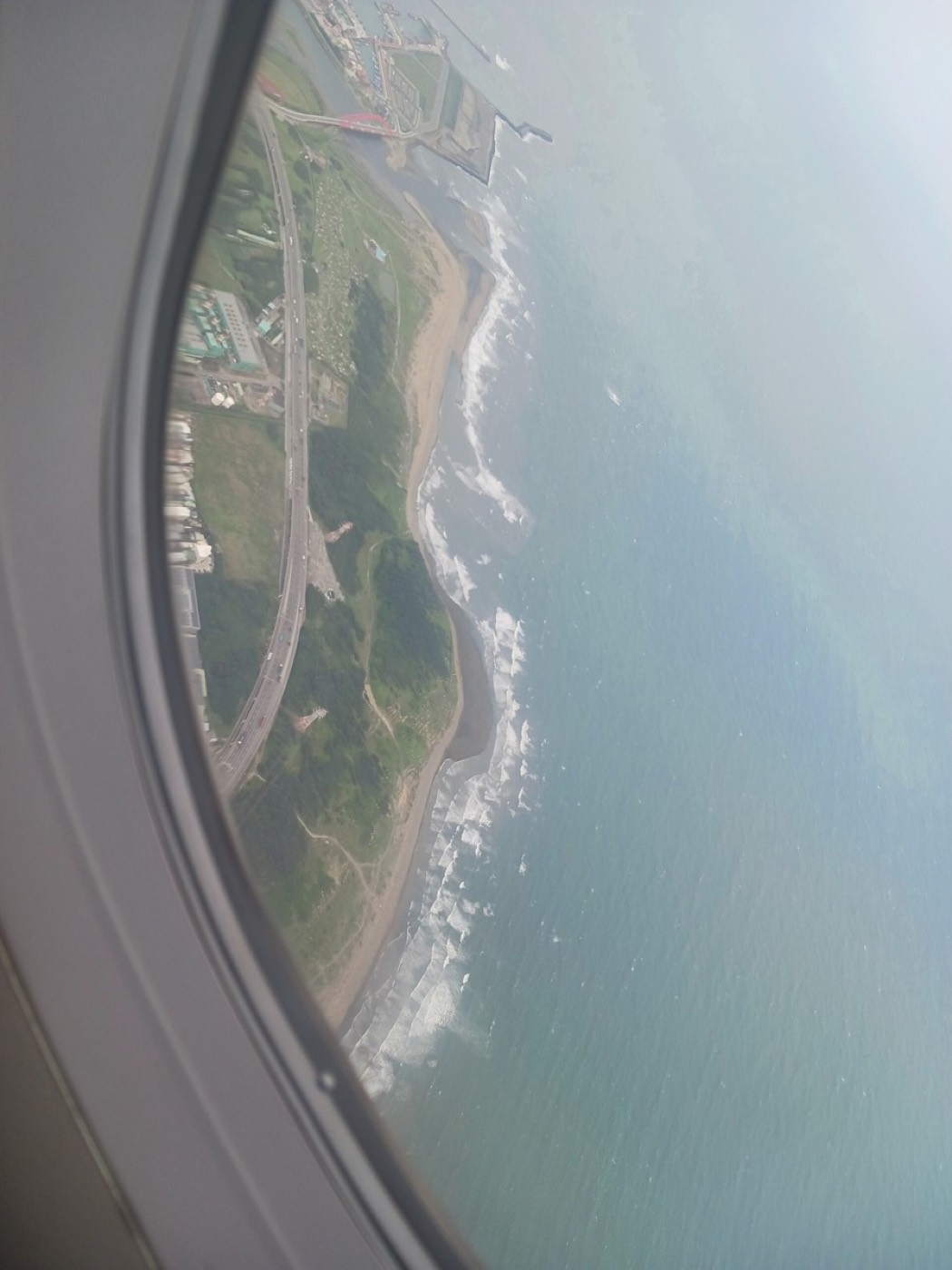
This aerial view shows the Taiwan coastline that a full invasion would have to cross. Steep, narrow and heavily defended, it is one reason planners now spend more time studying ways to pressure the island that never require a single soldier to land on it.
So before this video gets to drones, budgets and legal grey zones, it starts with the nearest thing to a precedent anyone actually has.
2. 1995-96 as the baseline

China has used missiles near Taiwan to send a political message before, and planners still measure new drills against what happened then.
In July 1995, China fired six missiles into waters north of Taiwan, followed by a second round of tests in August and a third round in March 1996, this time aimed at waters close to Taiwan's two main ports. The timing was deliberate: Taiwan was weeks from holding its first direct presidential election.
The United States did not stay out of it.
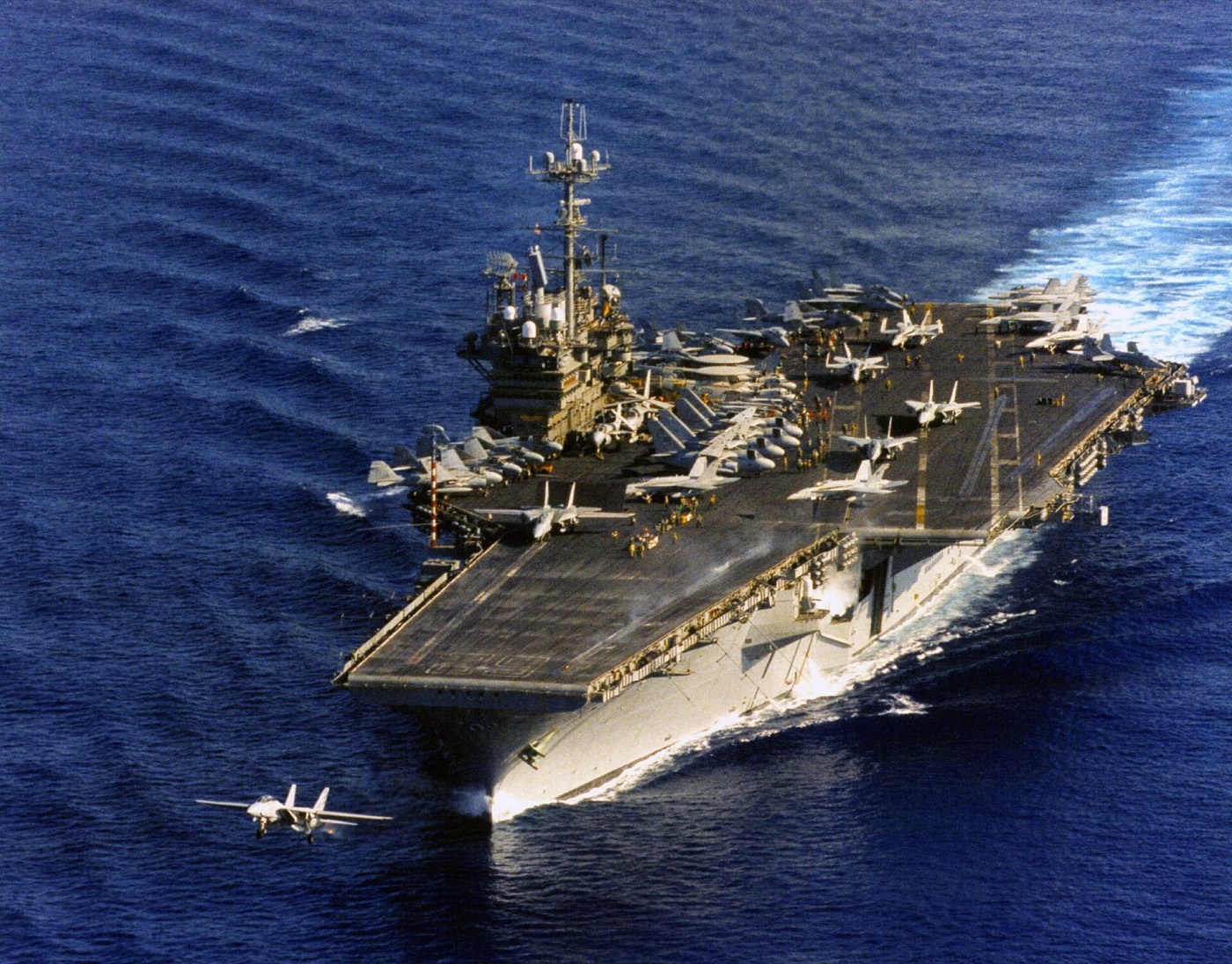
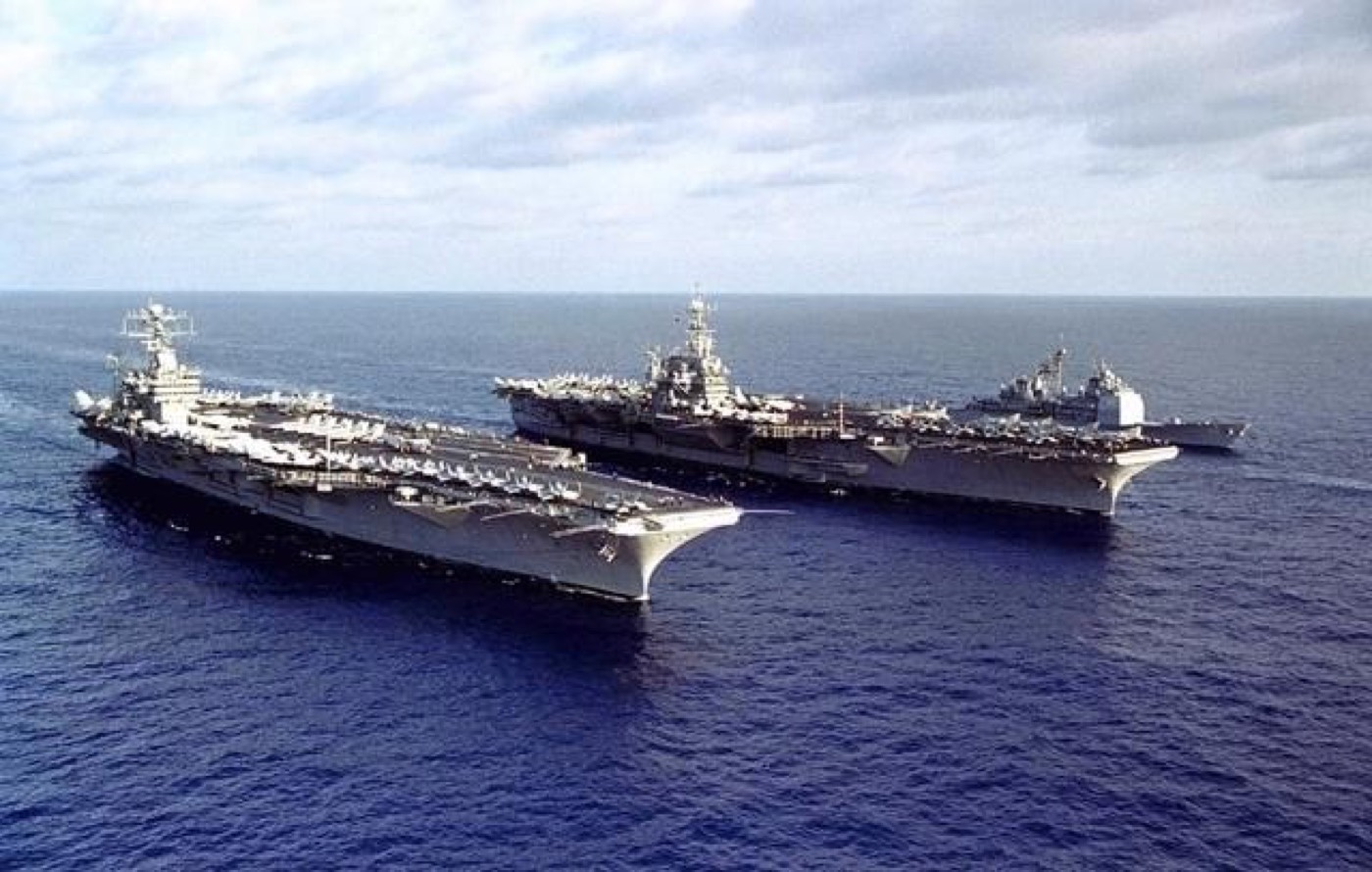
This is the USS Independence, one of two US aircraft carriers sent toward the Taiwan Strait in March 1996, after the US had already moved a carrier group through the strait the previous December. It was the largest American military deployment to the region since the Vietnam War.
The missile tests themselves fell within a narrow strip of water off Taiwan's own coast, while Washington's response arrived from across the Pacific Ocean. That distance is exactly why a visible naval reply was possible in 1996, and exactly why China's planners would prefer options that avoid giving anyone that same clear picture today.
Sending carriers worked, in the narrow sense that the crisis ended without a shot exchanged between the two militaries. That is exactly why the comparison matters now.
The USS Nimitz and USS Independence carrier groups together gave Washington an unmistakable, visible answer to a visible provocation. A naval blockade or a missile cordon today would be just as visible. A quarantine run by coast guard ships, as later chapters explain, is built to avoid giving anyone that same clear moment to respond to.
Three decades on, the missiles were the easy part to recognise. What came later is not.
3. What a full blockade means
Start with the version that is not in dispute: a full military blockade.
A full blockade means the PLA's navy and air force forming a cordon around Taiwan, sealing its ports and airspace to incoming and outgoing traffic. It is overtly military, it is visible on radar and on the water, and under international law it is a recognised act of war. Nobody who enforces one can later argue it was something else.
That clarity is also its weakness, from Beijing's point of view.
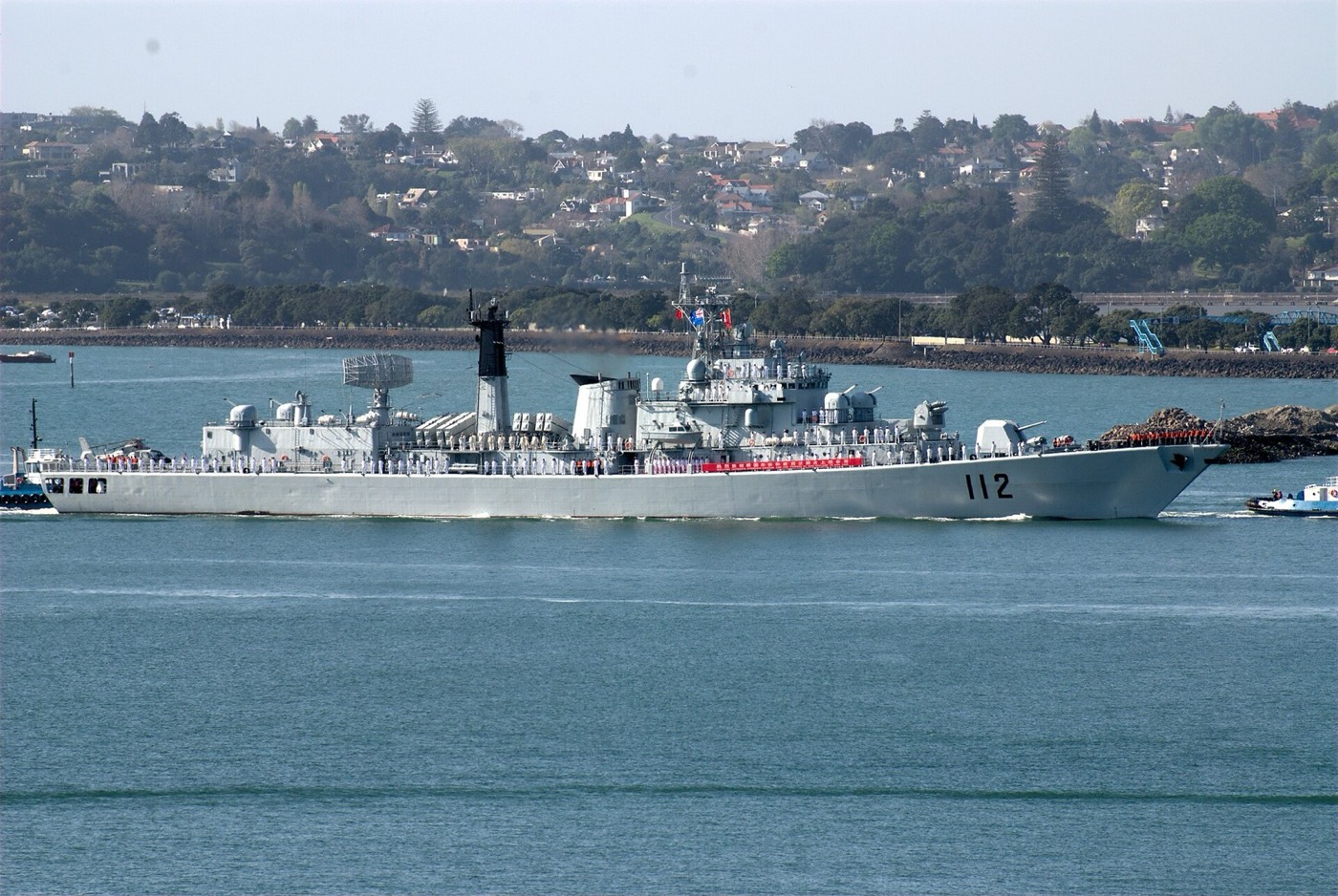
A ship like this Luhu-class destroyer, Harbin, is the kind of PLA Navy vessel that would enforce a full blockade's cordon. Its presence alone announces what is happening. Every state watching would have to decide, immediately, whether that counts as the start of a war.
A blockade this plain invites a response this plain. That is precisely the problem China's planners appear to be working around.
4. The quarantine alternative
If a full blockade is too obviously an act of war, the alternative is to look less like one while doing much of the same job.
A quarantine puts China's coast guard and maritime militia in the lead instead of its navy, boarding and inspecting ships bound for Taiwan rather than sinking or turning away everything outright. The PLA stays in support, out of the first wave of contact. The effect on shipping can still be severe, even while the operation looks like law enforcement rather than war.
Inspection, not combat, is the entire point of the design.
A tanker stopped, boarded and delayed for inspection has still been denied its schedule, its insurance and its route — without a single shot being fired at it. Multiply that across the ships Taiwan actually depends on, and the economic effect can resemble a blockade's, while the legal picture stays deliberately unclear.
That deliberate blur is not an accident of planning. It is the whole point of choosing a quarantine over a blockade, and it is worth pausing on exactly why the law treats the two so differently.
5. Why the law matters here
Under international law, calling something an act of war is not just rhetoric — it changes what other countries are entitled to do in response.
A full military blockade is treated under the law of naval warfare as an act of war, which gives other states a clear legal basis to respond, including militarily, if they choose to. A quarantine led by coast guard and law-enforcement vessels is argued by some legal analysts to sit below that threshold, in a genuine grey zone the current rules were not written to resolve quickly.
Taiwan's own contested status makes the grey zone greyer still.
Because China does not recognise Taiwan as a separate state, some legal scholars argue China could frame any such operation as an internal law-enforcement matter rather than an international act of war at all — a framing other governments would have to decide, case by case, whether to accept.
That is not a footnote. It is the reason allies would face a genuinely harder decision than they did in 1995-96, a problem this video returns to directly later on.
6. Blockade by fire
There is a third option that needs neither ships at sea nor boarding parties: missiles aimed at the ports themselves.
A peer-reviewed 2026 study modelled China using fewer than five hundred missile strikes on Taiwanese ports, spread across a hundred days, to cut the island's imports to roughly fifteen per cent of normal. No ship would need to be boarded, and no PLA vessel would need to risk itself anywhere near a Taiwanese coastline.
The logic is blunt: you do not need to stop every ship if you can simply wreck the place they are sailing to.
This kind of campaign links three things in sequence: missile strikes on a handful of named ports, the loss of cranes, fuel storage and loading berths at each one, and a nationwide drop in cargo actually moving through them. Break any one port badly enough, and ships simply stop being able to unload there at all.
Call it a blockade, a bombing campaign, or neither — the study's point is that the outcome looks much the same to anyone running out of imported fuel and food.
7. The median line creep
Long before any of that, there is a quieter signal: the informal centre line of the Taiwan Strait, and how often China's aircraft now cross it.
Monthly PLA aircraft sorties around Taiwan fell for three months running at the start of 2026, then rebounded through the spring. Dispersed, routine crossings have been replacing the large, one-off shows of force the world used to notice more easily.
Smaller and more frequent is not the same as less serious.
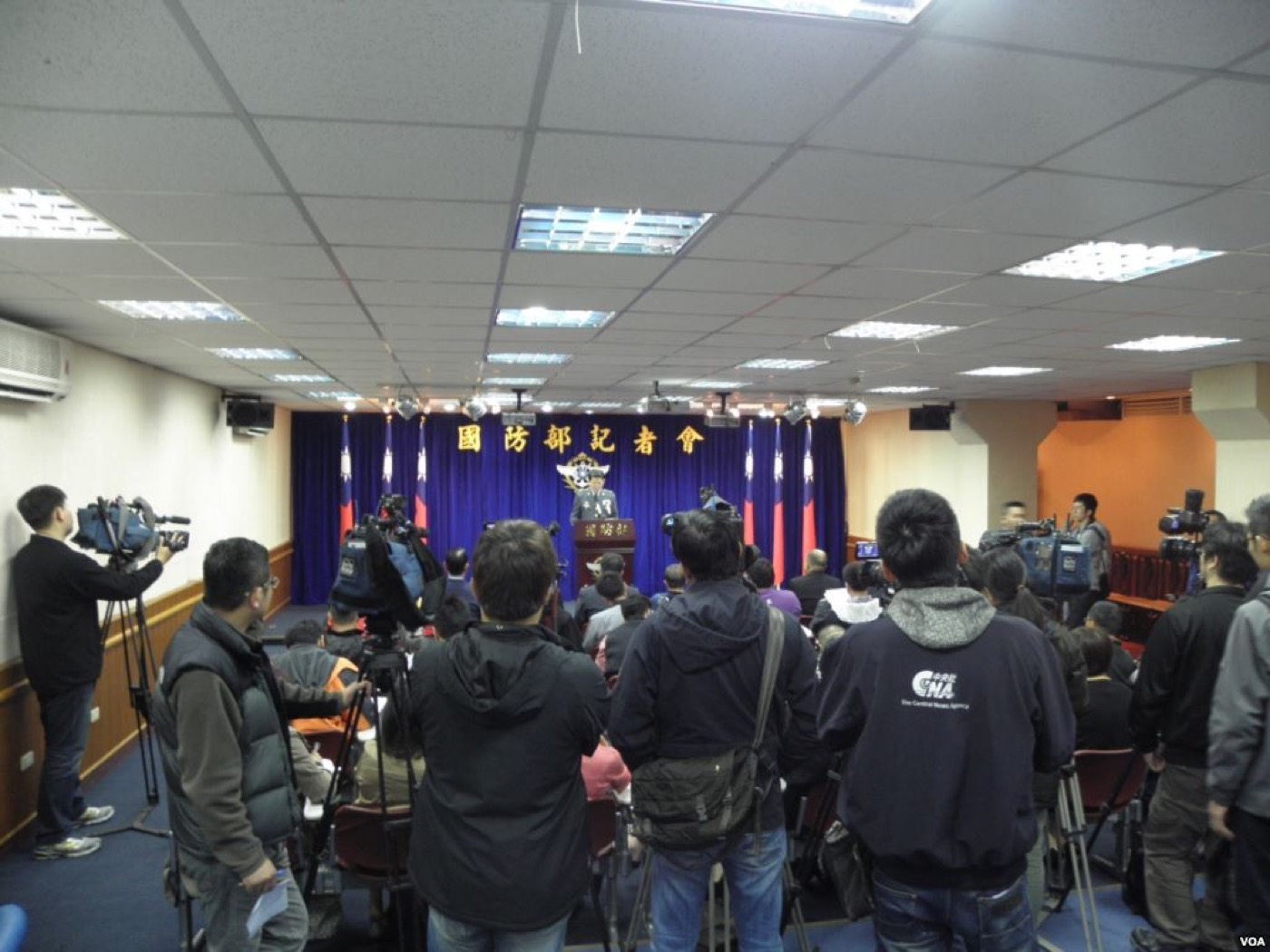
This Ministry of National Defense briefing room, in Taipei, is where Taiwan's military reports each day's crossings to the public. In July 2026, officials disclosed something new even by this pattern: a PLA military helicopter had crossed the median line and lingered on Taiwan's side of the strait for several hours, alongside a PLA drone — apparently the first time a helicopter has done that.
A helicopter lingering for hours is not a one-off incident. It reads, to the people who track this daily, like a rehearsal for something routine.
8. Justice Mission and the drills
Rehearsal is the right word, because Taiwan's own exercises are now built around the same scenario.
Since late 2025, Taiwan security analysts have labelled a recurring pattern of PLA exercises "Justice Mission" — drills that combine a simulated blockade, law enforcement-style boarding of shipping, and long-range strike elements in the same exercise. The pattern lines up closely with the blockade, quarantine and blockade-by-fire options this video has already described.
Taiwan's own military has started rehearsing the other side of exactly that scenario.
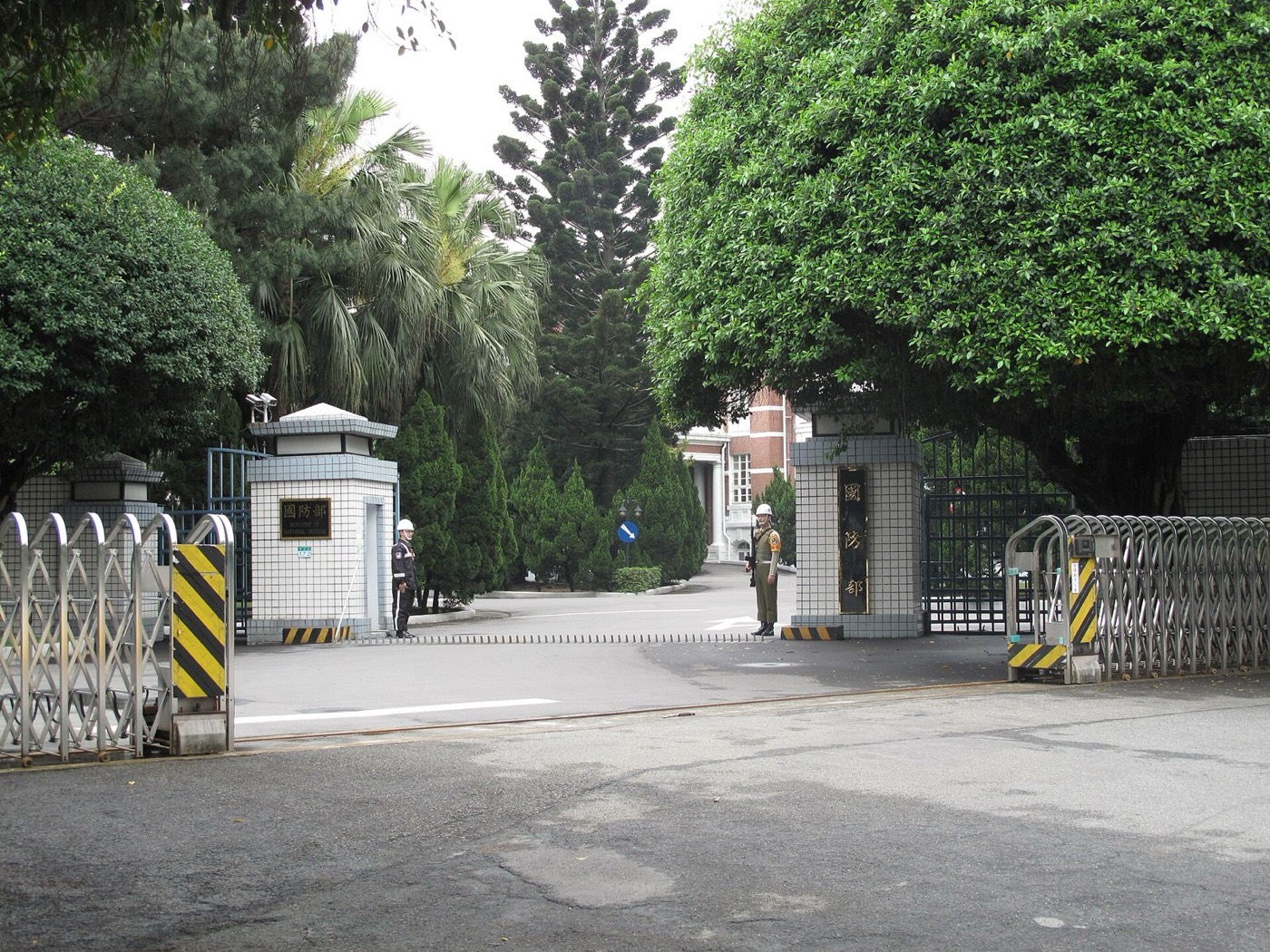
At this Ministry of National Defense headquarters gate in Taipei, officials confirmed that Taiwan's annual Han Kuang exercise, held across ten days in August 2026, included a drill simulating a PLA naval blockade, with navy and coast guard vessels escorting a convoy through the island's eastern waters. The exercise also added large-scale civilian drills, including air-raid alerts and a deliberate mobile network slowdown, for the first time at that scale.
Both sides, in other words, are now practising the same scenario from opposite ends of it.
9. Taiwan's answer: mass drones
Taiwan's answer to all of this is not a bigger navy. It is a much larger number of much smaller, cheaper machines.
In January 2026, Taiwan's Ministry of National Defense disclosed a special defence budget running from 2026 to 2033. It totals roughly one point two five trillion New Taiwan dollars, about thirty-six billion US dollars. More than two hundred thousand drones and over a thousand uncrewed surface vessels are funded inside that budget, alongside new systems built specifically to counter enemy drones.
Some of that money is already turning into named contracts, not just plans.
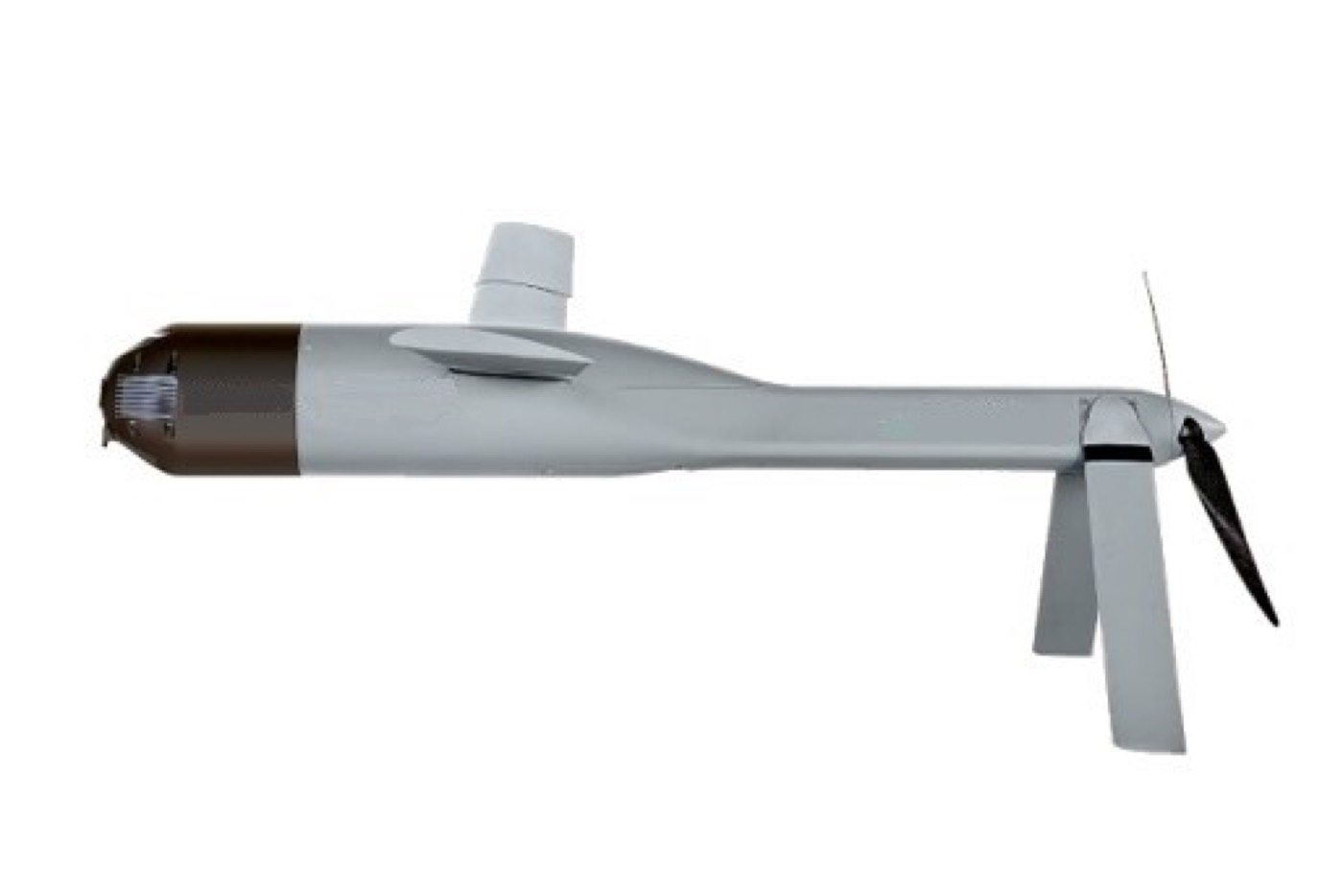
This is the Anduril Altius, one of more than two thousand such drones Taiwan agreed in August 2026 to buy from the American company Anduril. The order splits into loitering munitions, which strike a target directly, and reconnaissance drones, which fly ahead to find one. Deliveries begin by the end of 2026, with the full order complete by 2033.
Two different kinds of drone, bought in the same contract, doing two different jobs — and that split is the clue to the strategy behind all of it.
Of that Anduril order, one thousand five hundred fifty-four are the strike version and four hundred seventy-eight are the reconnaissance version: roughly three strike drones bought for every one built purely to find a target. The ratio says Taiwan expects to need many more machines that can hit something than machines that merely watch for it.
A navy this size was never going to be built in time. A drone fleet this size, Taiwan's planners are betting, can be.
10. Asymmetric defence logic
The idea behind buying thousands of cheap drones instead of a handful of expensive ships is not new, and it did not originate in Taiwan.
Cheap, numerous drones work by saturating an opponent's defences: there are simply too many targets to shoot down all of them, and each one that does get through costs the defender far more to stop than it cost the attacker to send. Ukraine's war has demonstrated exactly that trade-off against far larger, costlier military hardware.
Applied the other way around, the same logic becomes a deterrent rather than a weapon.
If thousands of cheap, expendable drones can make any PLA ship or aircraft near Taiwan a target, the calculation facing China changes. A blockade stops looking cheap and low-risk, and starts looking like the kind of operation that could lose equipment every single day it continues.
That is the entire bet behind Taiwan's drone budget: not to win a symmetric war, but to make every option this video has described more expensive to attempt.
11. Could the world even call it war

Raising the cost to China is one half of deterrence. The other half is whether anyone outside Taiwan would actually act on what they were watching.
A 2024 CSIS survey of security experts found only thirteen per cent of surveyed US experts, and nine per cent of Taiwan experts, "completely confident" that the United States would intervene militarily against a quarantine. Confidence that other allies would join a US-led response was lower still.
An invasion gives outside governments one clear moment to decide. A quarantine gives them none.
With tanks on a beach, there is a single moment that is obviously the start of a war. A quarantine offers no such moment — only a slow accumulation of delayed ships, inspected cargo and turned-away traffic, each incident individually arguable and none of them, on its own, clearly worth going to war over.
That is precisely the gap the current rules of war were never built to answer quickly, and it is the gap this video's last chapter comes back to directly.
12. The scenario planners actually fear
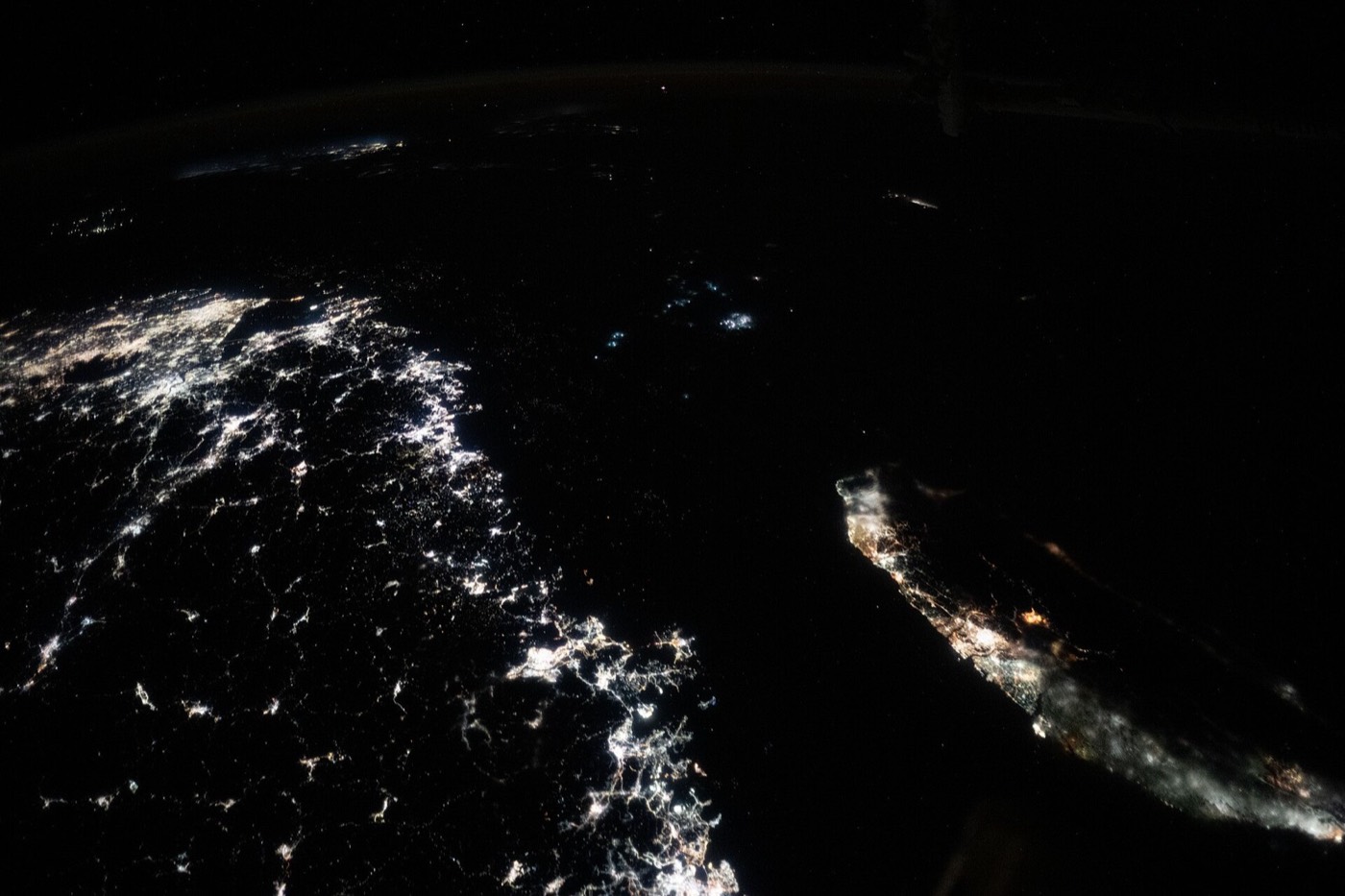
Pull every thread in this video together, and the picture planners are actually worried about looks nothing like the old one.
This satellite image shows the Taiwan Strait itself: the narrow stretch of water separating China's southeast coast from Taiwan, and the space in which every option this video has described — a full blockade, a quarantine, missile strikes on ports, and record numbers of median-line crossings — would actually play out.
Not a beach landing. Ships and aircraft, simply turned away, one at a time.
That is the scenario the people who plan for this now spend most of their time on: not a dramatic invasion anyone would instantly recognise, but a slow, deniable squeeze that never quite forces the rest of the world to agree on what is happening, let alone what to do about it.
So the question this video opened with comes back changed. Deterrence around Taiwan has not obviously failed — but the likeliest crisis may already have moved to a form of pressure the current rules of war were never built to answer, and whether deterrence holds against that kind of pressure is still an open question.
Sources and credits
Photo credits (Wikimedia Commons)
- USS Independence (CV-62), the US carrier deployed to the Taiwan Strait during the 1996 crisis: U.S. Navy, Public domain - https://commons.wikimedia.org/wiki/File%3AUSS_Independence_%28CV-62%29_underway_at_sea_on_10_March_1996.jpeg
- USS Nimitz and USS Independence carrier battle groups together, the two carrier groups the US sent to the Taiwan Strait in the 1996 crisis: U.S. Navy photo by Photographer's Mate 2nd Class Chris Ware., Public domain - https://commons.wikimedia.org/wiki/File%3ANimitz_with_Independence.jpg
- PLA Navy Luhu-class destroyer Harbin (112), a People's Liberation Army Navy warship of the type that would enforce a blockade cordon: Karora, Public domain - https://commons.wikimedia.org/wiki/File%3APeople%27s_Liberation_Army_Navy_LUHU_Destroyer%2C_Harbin_%28DDG112%29.jpg
- Republic of China Ministry of National Defense press conference, Taipei: 美國之音 申華, Public domain - https://commons.wikimedia.org/wiki/File%3AROC_Ministry_of_National_Defense_press_conference_20130326.jpg
- Ministry of National Defense (Republic of China) headquarters gate, Boai Road, Taipei: 美國之音 申華, Public domain - https://commons.wikimedia.org/wiki/File%3AMinistry_of_National_Defense_%28Republic_of_China%29_on_Boai_Road%2C_Taipei_City_20130114.jpg
- Anduril Altius 600 loitering munition/drone, the type of attack drone central to Taiwan's mass-drone procurement: REDSTONE ARSENAL, Public domain - https://commons.wikimedia.org/wiki/File%3AAnduril_Industries_Altius_600.jpg
- Aerial view of the Taiwan coastline: Jidanni, CC0 - https://commons.wikimedia.org/wiki/File%3A20230509_Taiwan_coast.jpg
- Satellite image of the Taiwan Strait separating mainland China's southeast coast from Taiwan: NASA Johnson Space Center, Public domain - https://commons.wikimedia.org/wiki/File%3AThe_Taiwan_Strait_separates_China%27s_southeast_coast_from_Taiwan_%28iss072e435710%29.jpg


Primary sources
- Inside Unmanned Systems, 'Taiwan Plans Massive Drone and C-UAS Expansion in New Special Defense Budget', 20 Jan 2026, reporting Taiwan MND's 19 Jan 2026 Legislative Yuan briefing - NT$1.25 trillion (~US$36bn) special defence budget, 2026-2033, >200,000 drones, >1,000 USVs. Cross-checked against Taiwan News reporting of the same briefing.
- The Defense Post, 'Taiwan to Acquire More Than 2,000 Altius Drones From Anduril', 28 Aug 2026 - 1,554 Altius-700M and 478 Altius-600ISR drones, ~NT$26.9bn (~US$847M) contract, deliveries Q4 2026 to June 2033.
- The Defense Post, 'Taiwan to Deploy Escort Ships in Simulated Chinese Blockade', 28 Jul 2026; Al-Monitor / Asharq Al-Awsat (Aug 2026); FAPA briefing, 10 Aug 2026 - Han Kuang 2026 (42nd iteration, 5-14 Aug 2026), blockade-response drill and first large-scale civilian resilience component.
- Taiwan Security Monitor, Schar School, George Mason University, 'Strait Snapshot' posts, Jan-Jun 2026, compiling Taiwan MND daily activity reports - monthly PLA aerial sortie counts (270/190/173/229/274/208) and the 'Justice Mission' exercise pattern since Dec 2025.
- Focus Taiwan, 21 Jul 2026 - a PLA military helicopter's apparent first crossing of the Taiwan Strait median line, alongside a PLA drone, July 2026.
- Bonny Lin, Brian Hart, Matthew P. Funaiole, Samantha Lu, Truly Tinsley, CSIS China Power Project, 'How China Could Quarantine Taiwan: Mapping Out Two Possible Scenarios', chinapower.csis.org / csis.org, 2024.
- Kerby Davis and Eugene Gholz, 'Blockade by Fire: China's Potential to Blockade Taiwan Using Missile Attacks on Ports', International Security, Vol. 50, No. 4 (Spring 2026), pp. 176-231, MIT Press / Belfer Center - the <500 missiles / 100 days / ~15% import figure.
- 'Third Taiwan Strait Crisis' chronology, cross-checked against GlobalSecurity.org's Taiwan Strait reporting - the 1995-96 missile tests and US carrier deployments.
Not regulated financial advice.