
District Heating: Can Waste Heat Warm a City?

A data centre or a cement works throws away heat all day, every day, just by running. District heating is the century-old idea of catching that warmth and piping it, as hot water, into homes instead - and this video follows it from Birdsill Holly's 1877 steam system in Lockport, New York, through to the plans the UK government funded in September 2026.
It explains the mechanism in full: the insulated supply and return pipes, the heat exchanger that keeps a building's own water separate from the network's, and why low-temperature waste heat often needs a heat pump - and the electricity to run it - before it is hot enough to use at all.
Then two real examples, deliberately at different stages. In Aalborg, Denmark, Aalborg Portland's cement works has piped surplus heat into the city's network since the early 1990s; its own 2025 reporting says that heat reached more than 15,000 households that year, with existing equipment able to cover around 30,000. In Espoo and Kirkkonummi, Finland, Fortum's heat plants are running today on heat pumps and electric boilers - the waste heat from the data centres being built beside them is only scheduled to start flowing from 2027, with Fortum's own forecast (not yet delivered) putting it at about 40% of a 2 TWh annual demand for 250,000 users.
The video also follows the money and the risk: who actually pays to dig up a street (including named September 2026 UK government grants for schemes in Bradford, at Marble Arch in London, and in Solihull), what decides whether a dense city or a scattered suburb makes the economics work, and what it means that a heat network customer has only one possible supplier - and, from 27 January 2026, new Ofgem authorisation conditions covering exactly that dependence.
It closes on the project that made this video timely: London's planned Strategic Heat Main, backed by £41 million of the government's £90 million September 2026 package, which plans to carry heat recovered at Cory Group's Belvedere energy-from-waste plant along the River Thames by electric barge from 2028, years before any permanent tunnel is built. Funded, not built - and a real test of the conditions the whole video sets out.
No figure is presented as delivered when it is a forecast or a stated capacity, and no claim is made that recovering a factory's or data centre's waste heat erases that source's own separate emissions.
Educational documentary. Not financial or investment advice.
Tags
Chapters
Video notes
1. A city throwing warmth away

On 23 September 2026, the UK government made a heat-networks funding announcement. It promised ninety million pounds for new and upgraded ones. A district heating network — often just called a heat network — carries hot water from a shared source through insulated pipes into homes and other buildings across a city.
This video explains how that warmth actually gets from its source to a radiator, and what decides whether building the pipes to carry it is worth it. It follows heat recovered from factories and data centres, raised to a useful temperature where it has to be, and delivered across a city. It also asks who pays for the network, and what happens when a household depends on one supplier for its heat.
The biggest single piece of news behind this video is a project that has not been built yet.
Forty-one million pounds of that funding is going to a new project called the London Strategic Heat Main. It is run by the waste company Cory Group, from its energy-from-waste plant at Belvedere, in the London borough of Bexley. From 2028, electric barges are planned to carry heated water about twenty-five kilometres along the River Thames towards central London, filling storage tanks on riverside pontoons while a permanent tunnel is built underneath the river itself.
The plan could eventually supply heat to networks serving up to six hundred and fifty thousand homes, and the government says the funding could help unlock around five billion pounds of further investment. None of that is built yet — the barges begin in 2028 at the earliest, and the tunnel underneath the river is a longer project still. But the funding announcement is why this video exists now, and the city it is really about has been quietly throwing heat away for far longer than that.
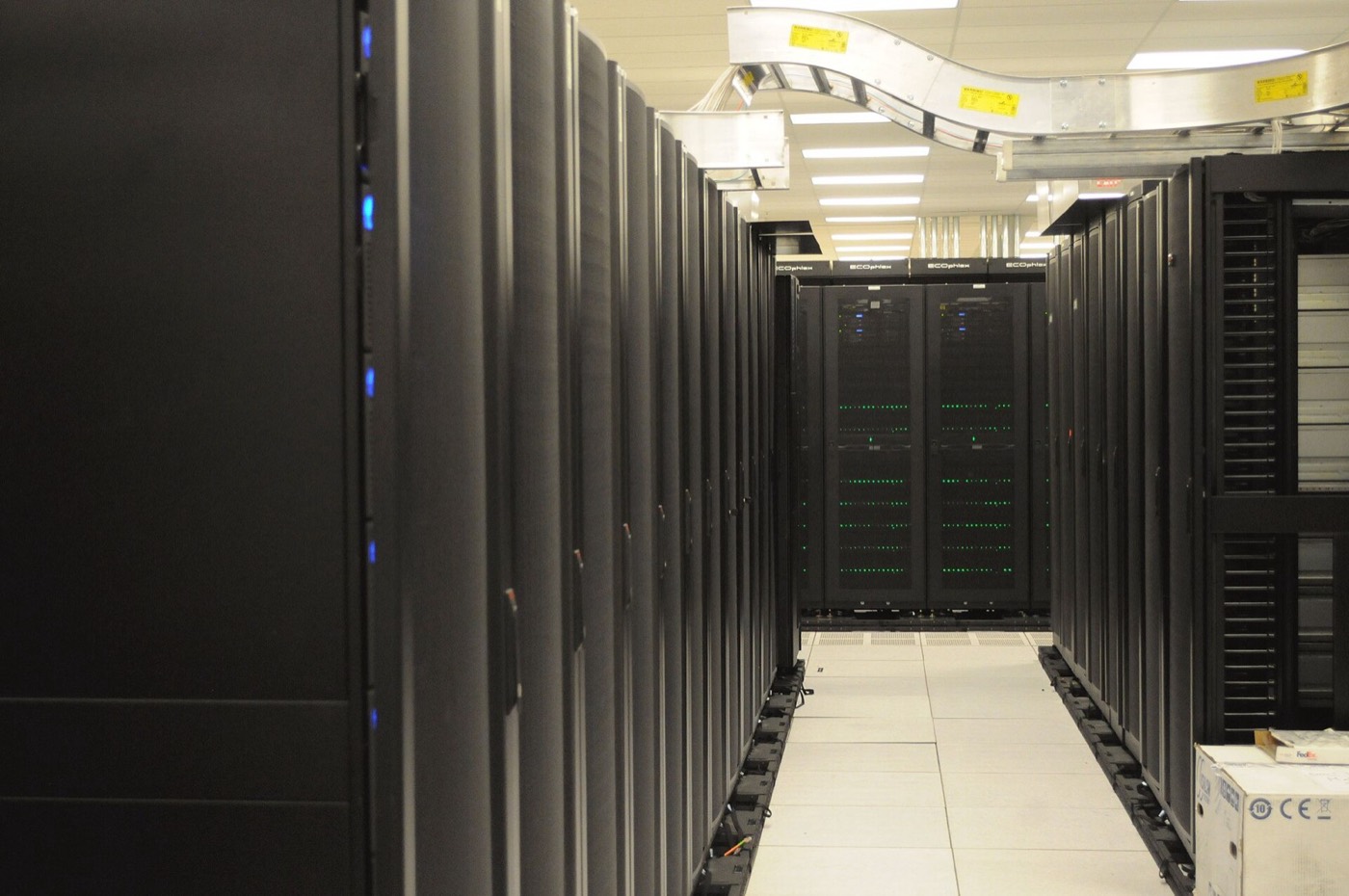
Inside buildings like this one, racks of servers run hot enough to need constant cooling, day and night, all year round. Every one of those fans and chillers is throwing away heat that the building worked to produce in the first place.
The same is true of a cement works, a steel mill, or an industrial laundry. Each one produces heat as a side effect of doing something else, and that heat normally disappears straight into the air or into a river.
Globally, district heating meets only about ten per cent of the heat demand of the world's buildings, and roughly ninety per cent of what it does supply still comes from fossil fuels, according to the International Energy Agency. Data centres are a small but growing part of the alternative: the IEA estimates that seventy to eighty per cent of their waste heat could be recovered using heat pumps. A heat pump uses a small amount of electricity to take heat from somewhere cool and raise it to a useful temperature, the same trick a refrigerator uses the other way around.
Those are global averages. Inside any one building that is actually running hot, the heat is immediate, and it is real.
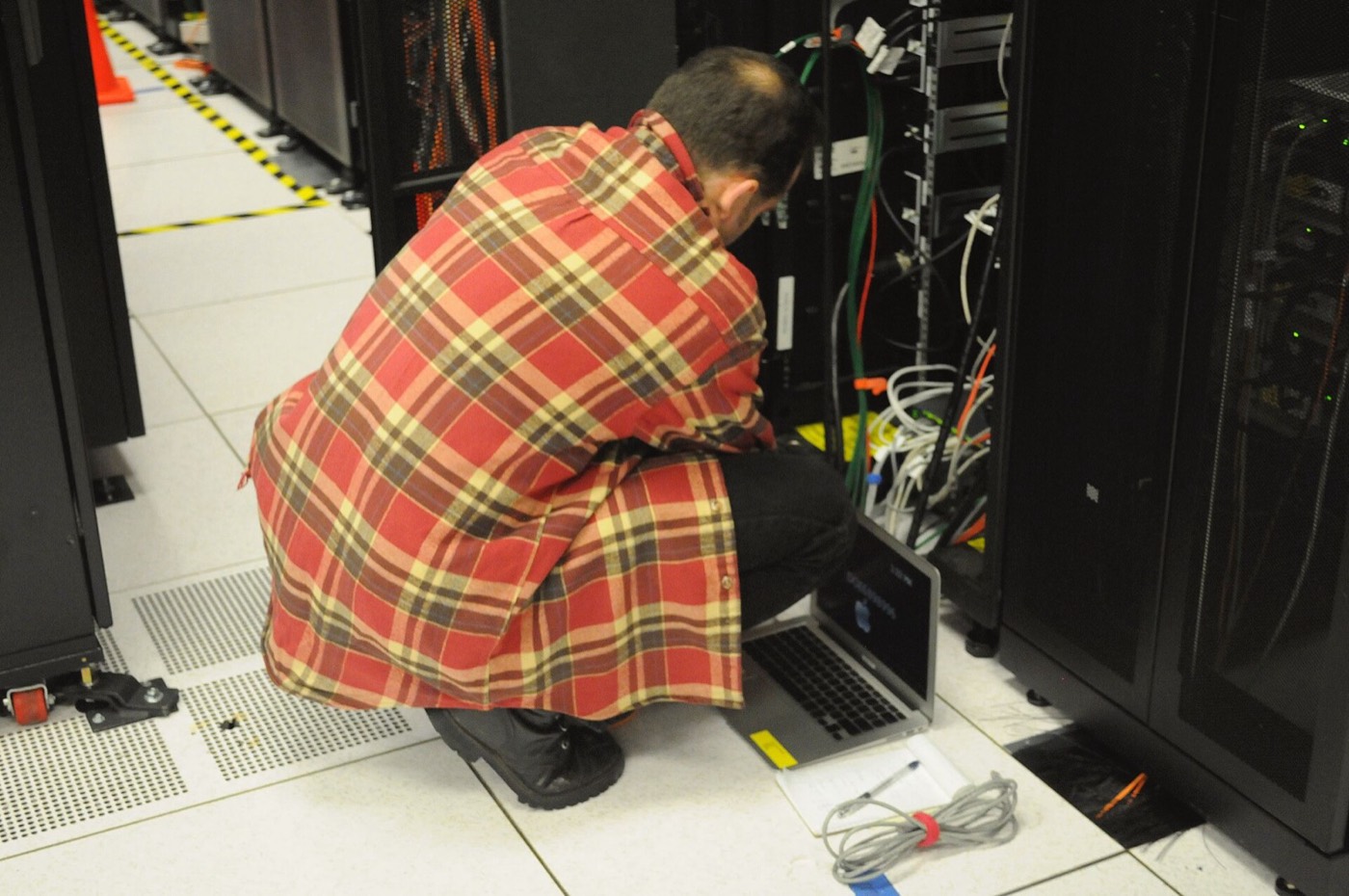
A technician checking a server rack like this one is working beside a machine that never stops generating warmth. None of that warmth goes to waste because anybody wants it to — it goes to waste because, for most buildings, there has never been a pipe close enough to carry it anywhere useful.
That is the practical question a city throwing away its own warmth has to answer: not whether the heat exists, but whether anyone is close enough, and connected enough, to use it. The rest of this video follows that question from its oldest solution to its newest one.
2. An old idea with new sources


District heating did not begin with a data centre, or even with a factory. It began with one inventor's idea about how to heat several buildings from one boiler.
In 1877, the engineer Birdsill Holly founded the Holly Steam Combination Company in Lockport, New York. It was the first system in the United States built specifically to heat many separate buildings from one central plant. It moved steam, not hot water, through insulated pipes to a cluster of buildings nearby. Holly's basic idea survived; his choice of steam mostly did not. Almost every network built since, including every other example in this video, moves hot water in a closed loop instead.
That same principle — one shared source, many buildings — eventually spread far beyond steam, and far beyond one inventor's own company.
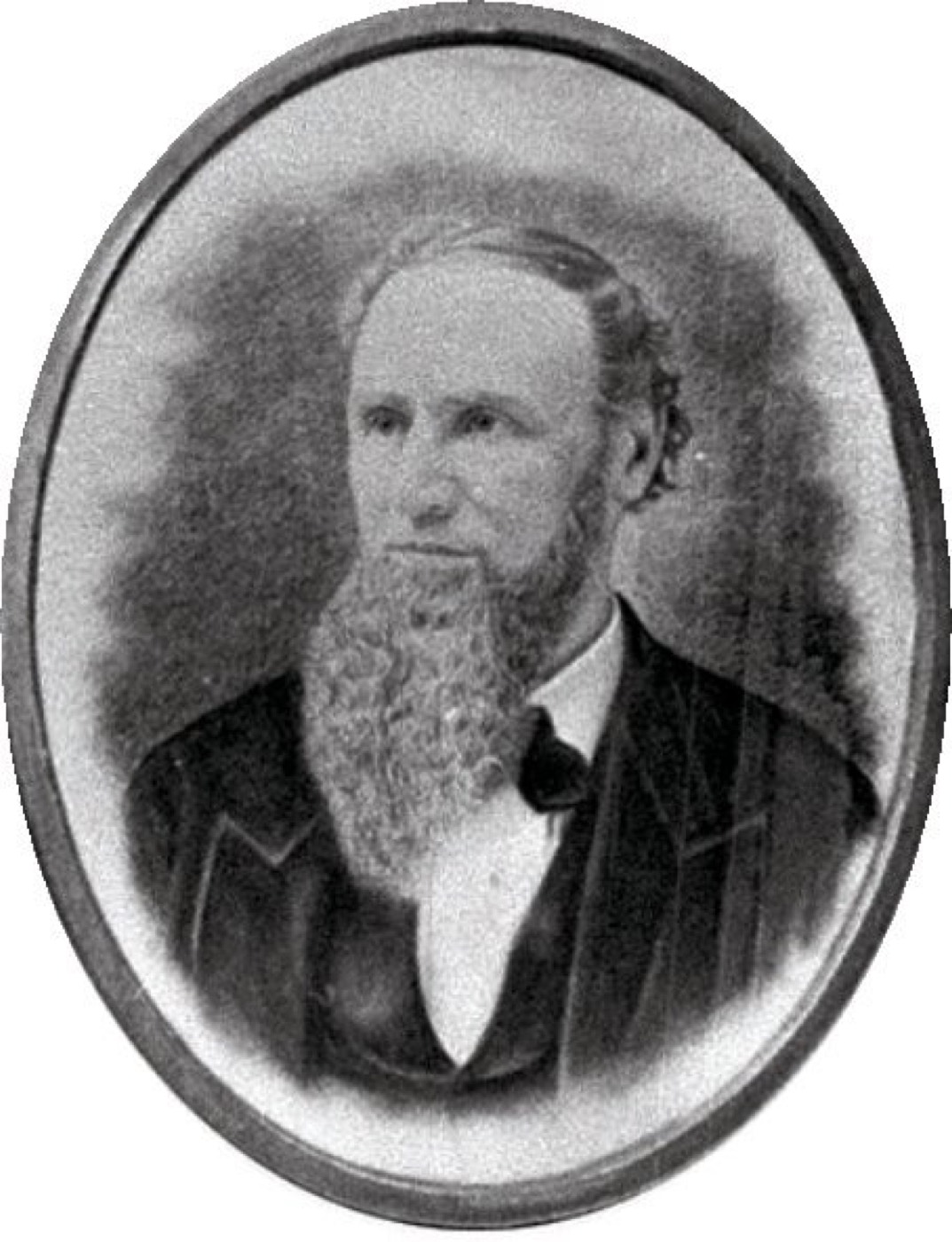
This is Birdsill Holly, the engineer behind that first system. More than 150 patents followed from his original idea, and systems based on his design spread to cities across the country within a few years.
That single idea did not stay in Lockport for long.
Holly went on to patent more than 150 improvements to his heating and water systems, and copies of his district steam design spread to cities across the country within a few years of that first network switching on.
His own company's buildings still stood in Lockport, New York, where the whole idea started.
This is the Holly Manufacturing Company's works in Lockport, New York, photographed around 1880, not long after Holly's steam system first proved the idea could work at the scale of a town rather than a single building.
What changed after Holly is not the idea. It is almost everything else about how the heat is produced.
The same basic idea now runs on very different sources, and in very different places: a cement works in Denmark, two heat-pump plants in Finland, and the original steam system back in Lockport, New York, in the United States. Since the 1990s, Denmark's Aalborg Portland cement works has piped its own surplus heat into Aalborg's district network. In 2026, two heat plants in Finland are running on heat pumps and electric boilers alone, with server heat scheduled to join them in phases from 2027.
Every one of those steps still ends at the same kind of radiator Holly's buildings had — just carrying hot water now, not steam.
3. The journey to a radiator
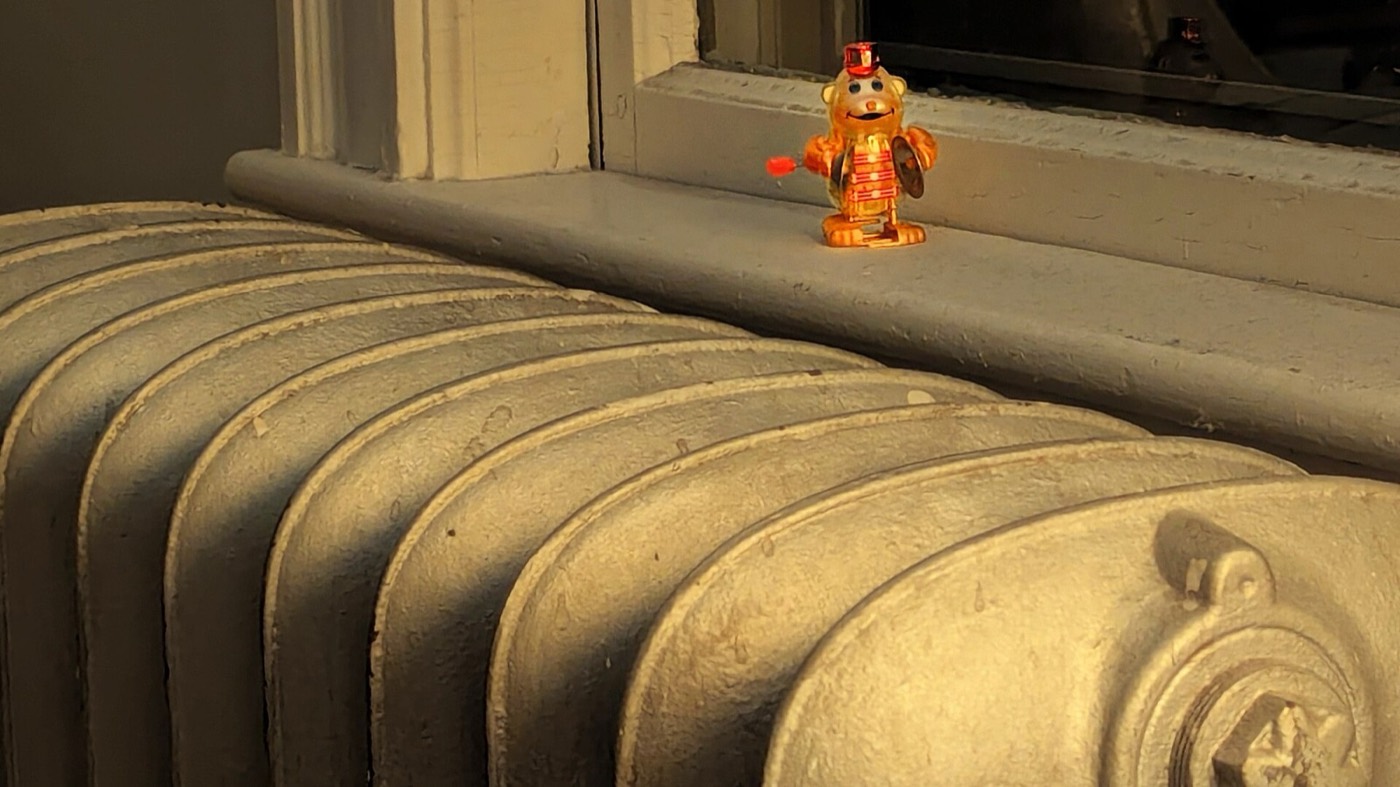
Once heat is recovered, it still has to get to an actual radiator, through a network of pipes most people never see.
Hot water leaves the heat source along a supply pipe, often insulated and buried, and travels to a heat exchanger inside each building. A pump keeps the water moving, and a meter records how much heat that building actually uses. After giving up its heat, the same water travels back along a separate return pipe, cooler than when it left, ready to be reheated and sent out again.
None of that water ever actually enters a customer's own plumbing.
The heat exchanger is the point where the network's water and the building's own water meet without mixing. One side carries the network's hot water; the other carries the building's own central-heating water, warmed by contact rather than by sharing a single pipe.
That separation is what lets a single network serve thousands of buildings, each with its own ordinary radiators inside.
A radiator like this one has no idea whether the heat reaching it came from a boiler in the basement or from a cement works on the other side of a city. By the time the water gets here, it behaves exactly like heat from any other source.
The pipes and the pump are the easy part to picture. What is harder to picture is why the heat sometimes needs an extra push before it can even leave the source.
4. Warm is not always hot enough
Not every source of waste heat is hot enough to use straight away.
Heat below about 100 degrees Celsius — from a data centre's cooling water, for example — is often too cool for a network running at a higher temperature. A heat pump closes that gap: it takes in the low-temperature heat, uses electricity to compress it, and releases it again at a higher, more useful temperature. The bigger that gap, called the temperature lift, the more electricity the heat pump needs to close it.
That is the whole economic argument for recovering heat from somewhere nearby, rather than somewhere merely available.
Here is a simple, illustrative example — not a measurement from any real project. Picture three units of recovered heat and one unit of electricity going in. With a heat pump running at that assumed efficiency, four units of heat come out the other side, before any pipe losses. A smaller temperature lift makes that efficiency easier to reach, which is why nearby, low-grade heat is usually worth more than heat that is hotter but much further away.
Whatever the arithmetic, the heat still has to survive the journey across a city before any of this matters.
5. Factory heat in Aalborg
Aalborg, in Denmark, is one of the clearest working examples of factory heat actually reaching homes.
Aalborg Portland's cement works, at Rørdal on the edge of the city, has piped its surplus heat into Aalborg's district network since the early 1990s, through an agreement with the municipally owned utility, Aalborg Forsyning. The cement kilns were built to make cement, not heat — the warmth is a side effect that used to simply disappear.
By 2025, that side effect had become a measurable part of the city's heating.
In 2025, Aalborg Portland's own reporting says its surplus heat supplied district heating to more than fifteen thousand households in Aalborg. With its existing equipment, the company says it could cover up to around thirty thousand households a year — meaning today's actual delivery is only part of what the same equipment could already do.
That gap between delivered heat and available capacity is not a flaw — but it does point at the dependence underneath this whole arrangement.
A network built around one factory's surplus heat depends on that factory staying open, on its production schedule, and on the terms of its contract with the city. A planned shutdown for maintenance, a change in production, or a renegotiated contract can all affect how much heat actually reaches the network, whatever the installed capacity says is possible.
A single factory, however reliable, is still a single point the whole network leans on. A spread of smaller, newer sources looks different — and Finland's data centres are where that version of the idea is actually being tested.
6. Data centres: promise and delivery

Finland offers a newer, and more cautious, version of the same idea.
Fortum runs two heat plants south-west of Helsinki: Hepokorpi, in Espoo, and Kolabacken, in Kirkkonummi. Together, they serve a district that also includes the neighbouring town of Kauniainen. As of May 2026, both plants are already running — but not yet on the heat the data centres beside them will eventually produce.
What those plants actually run on today is not server heat at all.
Right now, both plants are heating the network with air-to-water and water-to-water heat pumps, backed up by electric boilers for the coldest periods. The data centres standing beside them are still being built. Only once those data centres are running will their waste heat start to flow into the same network — in phases, from 2027.
Fortum itself is careful to describe what that eventually adds up to as a forecast, not a result.
Once fully running, Fortum expects data-centre waste heat to cover about forty per cent of the area's total yearly heat demand of two terawatt-hours. That demand serves two hundred and fifty thousand heat customers in the area. All of that is Fortum's own forecast for a system that, as of this video, has not yet recovered a single watt of server heat.
Promise and delivery, in other words, are running on two different clocks here — and the gap between them is exactly the gap this video keeps coming back to.
7. What escapes along the route

All of that recovered heat still has to survive a trip across a city before it reaches anyone's radiator.
A district heating pipe is built in layers. At the centre is a carrier pipe, carrying hot water out to buildings and cooler water back. Around that sits a thick layer of foam insulation, and around the whole assembly is a protective outer casing, usually buried directly in the ground.
How much heat that construction actually loses depends on a handful of practical factors, not on any single fixed percentage.
Longer pipe runs lose more heat than short ones, simply because there is more pipe for the heat to escape through. Thinner or ageing insulation loses more than well-maintained insulation. And the bigger the gap between the hot water leaving the source and the cooler water returning, the faster heat escapes along the way.
None of those factors can be reduced to one number that applies to every network — which is exactly why this video will not invent one. What can be said with more confidence is that steady, continuous waste heat and a city's actual demand for warmth almost never match, especially once winter arrives.
8. The winter problem
Factories and data centres produce heat at a fairly steady rate, all year round. Homes do not want heat at a steady rate at all.
In summer, a network often has more recovered heat available than its customers need, and that surplus can be sent into a storage tank instead of going to waste. In winter, demand spikes well above what the steady waste-heat supply can cover on its own, and a backup boiler — usually burning gas — has to fill the gap.
That backup is not a footnote. Globally, it is still most of how district heating actually works.
Worldwide, the International Energy Agency estimates that roughly ninety per cent of district heating supply still comes from fossil fuels, much of it exactly this kind of backup and peak-demand capacity. Recovered waste heat is real, and it genuinely displaces some of that fossil fuel — but in most networks today, it is the smaller half of the mix, not the larger one.
So the winter problem is not really about whether waste heat exists. It is about who, and what, covers the gap on the coldest night of the year — and that question runs straight into who actually pays to build the network in the first place.
9. Who pays to dig up a city?
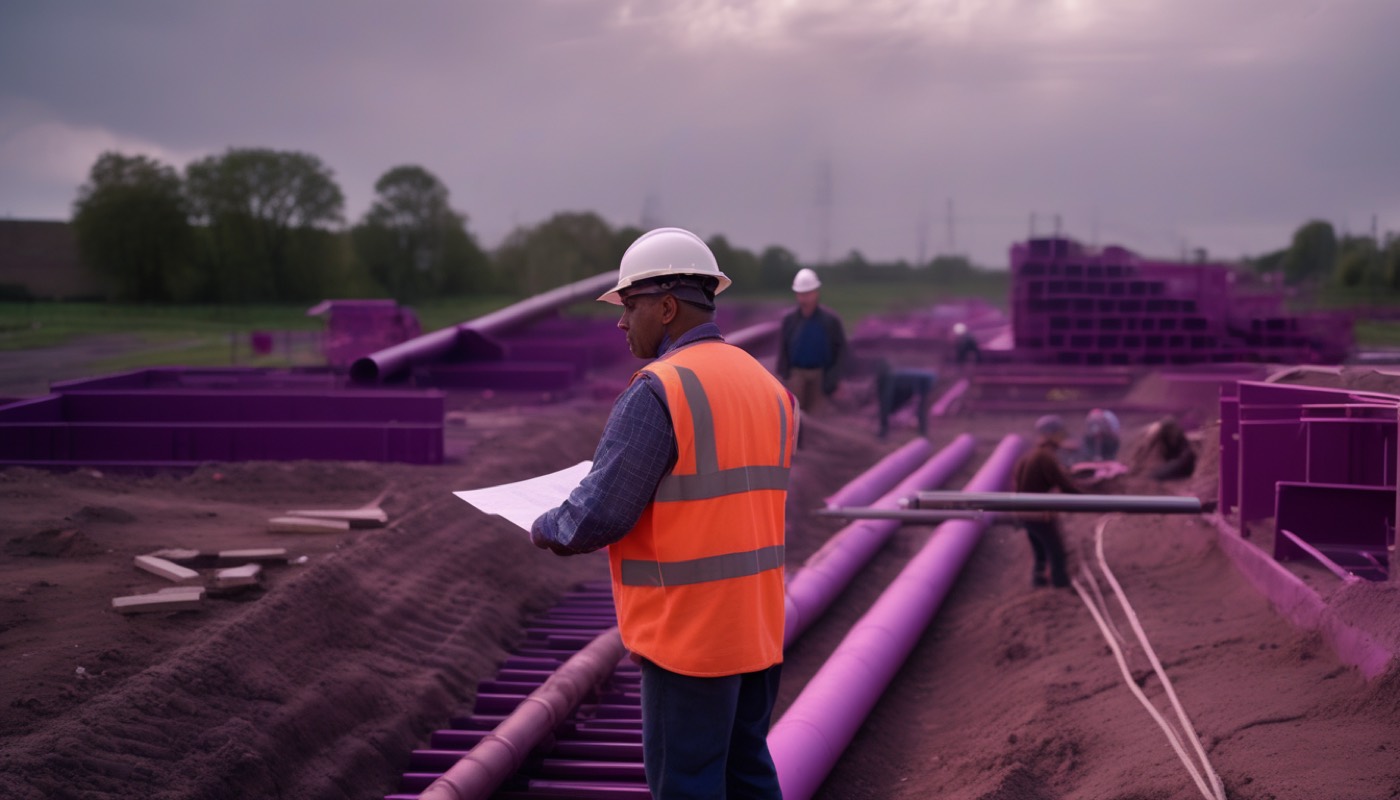
Before any of this heat reaches a home, somebody has to pay to dig up the street it runs under.
Building a heat network means trenching streets to lay the pipes, connecting each building to that pipework, and often upgrading the building's own heating system so it can use the network's water temperature. Financing all of that, usually years before most of the bills it is meant to cover start arriving, is its own separate problem.
Governments have been trying to close that financing gap directly, rather than leaving it entirely to network operators.
The UK's September 2026 funding round included grants for schemes in Bradford, Marble Arch in London, and Solihull. Bradford's grant alone was worth nearly ten million pounds. The other two grants, shown here, were smaller, but each covers planning and construction costs that would otherwise land entirely on customers' bills.
Even with grants like these, the cost of connecting any one building still depends enormously on what is already around it.
A dense block of flats can share one trench and one connection point among many customers, so the cost per home is relatively low. A scattered suburb needs just as much trench, pump capacity and planning for every extra home it reaches, so the cost per home climbs the further apart those homes are. Density, more than any other single factor, decides whether a heat network makes financial sense at all.
Paying to build the network is only half the financial story. The other half is what happens to the household's bill once the network is actually switched on, and the operator is the only choice they have.
10. One network, one supplier

On an ordinary gas or electricity bill, a household unhappy with its supplier can usually just switch to another one. On a heat network, there has traditionally been no equivalent choice at all.
The operator who builds the pipes is usually also the only possible supplier, for as long as a building stays connected. Great Britain's regulator, Ofgem, published fair-pricing and cost-allocation guidance for heat networks on the thirteenth of January 2026. From the twenty-seventh of January 2026, relevant heat network suppliers and operators have had to meet new authorisation conditions covering fairness, billing and how complaints are handled.
Neither piece of regulation promises every household a specific saving.
Ofgem's guidance sets out principles for allocating a network's costs fairly between its customers, and standards for how operators must treat them — it does not guarantee that any particular household will pay less than it did before. What it does guarantee, for the first time, is somewhere to complain to if the single supplier a household depends on gets something wrong.
That single-supplier dependence cuts the other way too, when something actually goes wrong.
If a conventional gas boiler fails, a household can call any qualified engineer it chooses. If the single pipe serving a whole street fails, every connected home loses heat at once, and every one of them is waiting on the same operator to fix the same piece of shared infrastructure before anyone's heating comes back.
New rules make that dependence more accountable than it used to be. They do not remove the dependence itself.
11. When shared heat earns its place

So, is a shared heat network a step forwards, or just a costly new dependence?
Shared heat earns its place when four things line up. A heat source close enough that the pipes do not lose most of what they carry. Housing dense enough to share the cost of digging the street. A source reliable enough that one factory's maintenance schedule cannot leave a street cold. And a regulator holding the single supplier to account.
None of that is a verdict for every household. It is a set of conditions worth checking before signing up to one.
London's planned Strategic Heat Main, the project that opened this video, is a real test of exactly those conditions. It has a genuinely large, steady heat source, and a dense city to share the cost across. And, for the first time here, it has a regulator watching how fairly that single supplier treats its customers. Whether it actually delivers on schedule, from 2028 onward, is a question this video cannot yet answer, because nobody can.
Waste heat is real, the pipes to carry it are expensive, and the only honest answer is that whether it is worth it depends on the city underneath them.
Sources and credits
Photo credits (Wikimedia Commons)
- Birdsill Holly (1820-1894), inventor of the Holly steam district-heating system: Unknown authorUnknown author, Public domain - https://commons.wikimedia.org/wiki/File%3ABirdsill_Holly.jpg
- Holly Manufacturing Company, Lockport, New York, circa 1880: Unknown authorUnknown author, Public domain - https://commons.wikimedia.org/wiki/File%3AHolly_Company_1880.jpg
- Server racks at a data centre (NERSC) - generic illustrative, not a named project: Derrick Coetzee from Berkeley, CA, USA, CC0 - https://commons.wikimedia.org/wiki/File%3AFront_of_server_racks_at_NERSC.jpg
- Technician working on a server rack (NERSC) - generic illustrative, not a named project: Derrick Coetzee from Berkeley, CA, USA, CC0 - https://commons.wikimedia.org/wiki/File%3ATechnician_with_laptop_working_on_server_rack_at_NERSC.jpg
- Domestic radiator - generic illustrative for the home end of the heat loop: Daderot, CC0 - https://commons.wikimedia.org/wiki/File%3ARadiator_-_Arlington%2C_MA.jpg


Primary sources
- ASME, Engineering History Landmark #122, 'Holly District Heating System', and 'Birdsill Holly, Jr.' (published 7 May 2012), asme.org - the 1877 Holly Steam Combination Company, Lockport, New York, and the steam-vs-hot-water distinction.
- IEA, 'Opportunities for district heating in the changing energy landscape', published 8 December 2025 - the ~10% global building heat demand figure, the ~90% fossil-fuelled supply figure, and the 70-80% data-centre waste-heat recoverability figure.
- Aalborg Portland, ESG Report 2025, published April 2026 - 'more than 15,000 households' in 2025, the ~30,000-household existing-equipment capacity, and the Rørdal/Aalborg Forsyning relationship.
- Fortum, 'Fortum has started heat production at two large data centre sites in Finland', published 6 May 2026 - the Hepokorpi (Espoo) and Kolabacken (Kirkkonummi) plants, current heat-pump and electric-boiler operation, the phased 2027 start for Microsoft data-centre heat recovery, and the ~40%/2 TWh/250,000-user forecast.
- DESNZ, 'Families set to save money through new and upgraded heat networks', published 23 September 2026 - the £90m total, the £41m Thames project, and the named Bradford, Bexley and Greenwich, Marble Arch, Solihull and network-efficiency grants.
- InfraPPP World, 'Cory Group Secures £41.6m Funding for London Strategic Heat Main', published 25 September 2026 - cross-check naming Cory Group, its subsidiary RHN Developments Limited, the Belvedere energy-from-waste plant, and the 2028 electric-barge plan.
- Ofgem, 'Heat networks regulation: fair pricing and cost allocation', dated 13 January 2026 - cost-allocation principles, with no guaranteed household saving.
- Ofgem, 'Heat networks regulation: consumer protection guidance', dated January 2026 - the 27 January 2026 date relevant suppliers and operators became subject to the authorisation conditions.
Not regulated financial advice.