
Heat Pumps: How They Work and What Holds Them Back
A gas boiler makes heat by burning fuel. A heat pump makes none - it moves heat that already exists in outdoor air or the ground, using electricity to drive the move rather than burn it.
This video explains the mechanism in full: the four-step refrigerant cycle (compression, condensation, expansion, evaporation), and the Coefficient of Performance, or COP - the ratio of heat delivered to electricity used. The IEA puts a typical heat pump's COP at around four, three to five times a gas boiler's efficiency. But COP falls as the weather gets colder: UK field-trial data (Energy Systems Catapult's Electrification of Heat project, around 740 air-source heat pumps) found a median COP of 2.80 year-round, dropping to 2.44 on the coldest days.
Then the tradeoffs that decide whether the physics translates into a good result: air-source versus ground-source (cost and space against stability), why flow temperature forces a choice between bigger radiators and underfloor heating, and the building fabric question - where the same field trial found only about 15% of homes needed an insulation upgrade before installation, against the standard warning that heat pumps need a gutted house first.
Then the economics: typical UK installation costs, the UK's Boiler Upgrade Scheme grant (£7,500, rising to £9,000 off-gas-grid), and why that grant targets the upfront cost rather than the running cost. And the number that actually decides the bill: UK electricity priced at roughly three to five times the cost of gas per unit through 2026, a gap a heat pump's COP has to clear before it saves money as well as energy.
Finally, the European Heat Pump Association's report of 28 September 2026: residential heat pump sales up 11% across 12 European countries in the first half of 2026, to about 1,163,000 units. This video reports EHPA's own account of why - including a quote from its director general - as the trade body's own claim, not as settled proof the economics are solved everywhere.
Every figure is dated and sourced. A contested or self-interested claim is reported as such.
Educational documentary. Not financial or investment advice.
Tags
Chapters
Video notes
1. Moving heat, not making it

A gas boiler makes heat. It burns fuel, and that burning is the entire point — chemical energy becomes heat, and the heat warms your water and your radiators.
A heat pump does something stranger. It does not make heat at all. It moves heat that already exists outside the building, in the outdoor air or the ground, and carries it indoors. It uses electricity to drive that move, rather than burning anything as fuel.
That sounds impossible on a freezing day, when the air outside feels like it has nothing left to give. But even cold air is far above absolute zero, the temperature at which all heat is gone. It still holds plenty of heat, just at too low a temperature to be useful on its own — and a heat pump's whole job is to take that low-grade heat and concentrate it into something hotter and useful.
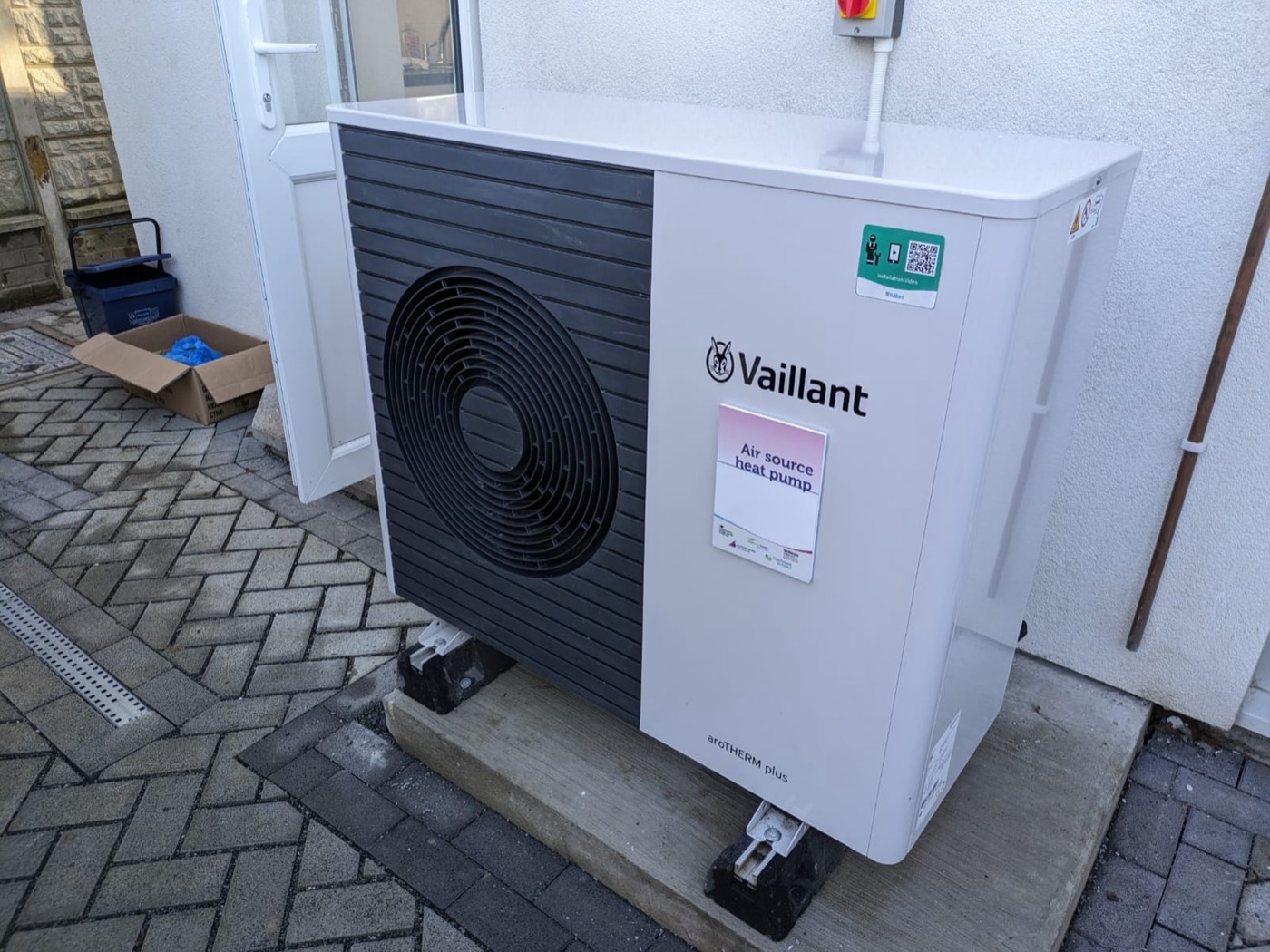
The machine that does the concentrating usually sits outside the house, in a box about the size of a large suitcase.
This is an air-source heat pump, fitted to a home in the UK. Its fan draws outdoor air across a coil inside the casing, and from there the heat begins a four-step journey that turns a cold outdoor draught into hot water for the radiators.
That journey is called the refrigerant cycle, and it is the mechanism behind every heat pump built.
2. The refrigerant cycle
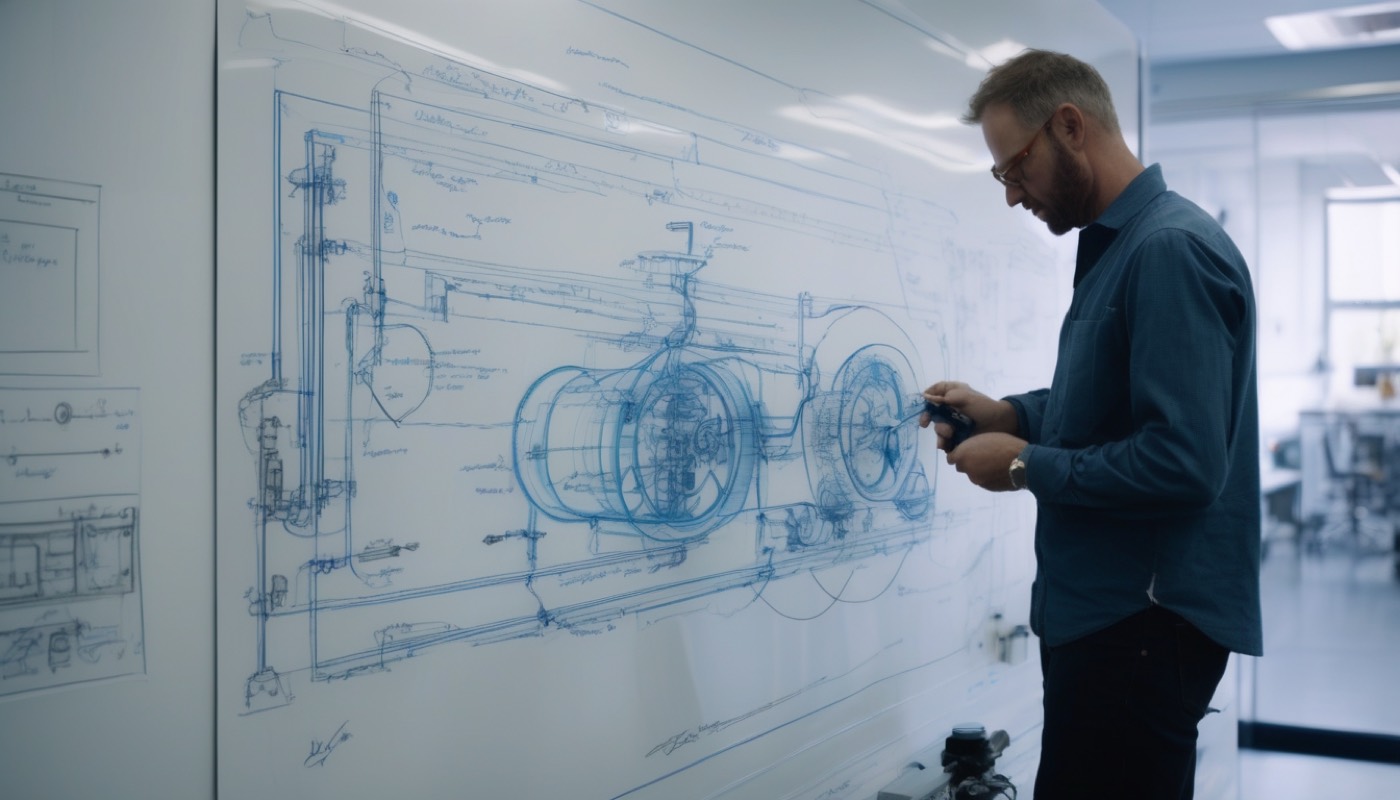
Inside every heat pump is a sealed loop of fluid called a refrigerant — a substance chosen because it boils and condenses at unusually convenient temperatures, so it can soak up heat from cold air and give it up again somewhere hotter.
The loop has four steps. Compression squeezes the refrigerant gas, and squeezing a gas heats it. Condensation lets that hot gas give up its heat to your water or air, turning it back to liquid. Expansion lets the liquid suddenly spread out, which cools it sharply. Evaporation lets the now-cold liquid absorb heat from the outdoor air and turn back to gas, ready to be compressed again.
Run that loop continuously, and heat flows in one direction only: from cold outdoor air, through the refrigerant, into your home.
Nothing in that loop burns anything. The compressor is the only part that needs much electricity, and squeezing a gas is a far smaller job than generating the same heat by combustion. That gap, between the electricity a compressor uses and the heat the whole loop delivers, is the entire reason a heat pump can outperform a boiler.
That gap has a name, and it is the next thing this video explains.
3. Coefficient of Performance
The ratio between the heat a heat pump delivers and the electricity it consumes is called the Coefficient of Performance, or COP for short. A COP of four simply means four units of heat reach your home for every one unit of electricity the machine uses.
The International Energy Agency puts a typical household heat pump's COP at around four, and describes heat pumps generally as three to five times more energy efficient than a gas boiler. A gas boiler burning fuel directly delivers at most one unit of heat for each unit of energy it consumes — it cannot do better than that, because combustion does not concentrate anything.
But COP is not a fixed number stamped on the machine. It depends on how far the heat pump has to lift the temperature, from whatever the outdoor air offers up to whatever the house needs.
Field data from the UK's Electrification of Heat trial, monitoring around 740 air-source heat pumps, found a median COP of 2.80 across the whole year. On the coldest days, that median fell to 2.44. The colder the outdoor air gets, the bigger the lift a heat pump has to perform, and the worse its COP becomes.
That is the hard case for cold climates: the days when a home needs the most heat are exactly the days a heat pump is least efficient at providing it.
4. Air-source vs ground-source
Not every heat pump draws its heat from the air. A ground-source heat pump draws heat from pipes buried in the ground instead, where the temperature stays far steadier through the year than the air above it does.
That steadier source gives a ground-source heat pump a more stable COP through winter, because the ground does not swing with the weather the way outdoor air does. An air-source unit's performance rises and falls with the season; a ground-source unit's performance barely moves.
Stability has a cost, and the two technologies trade it very differently, starting with how much space each one needs.
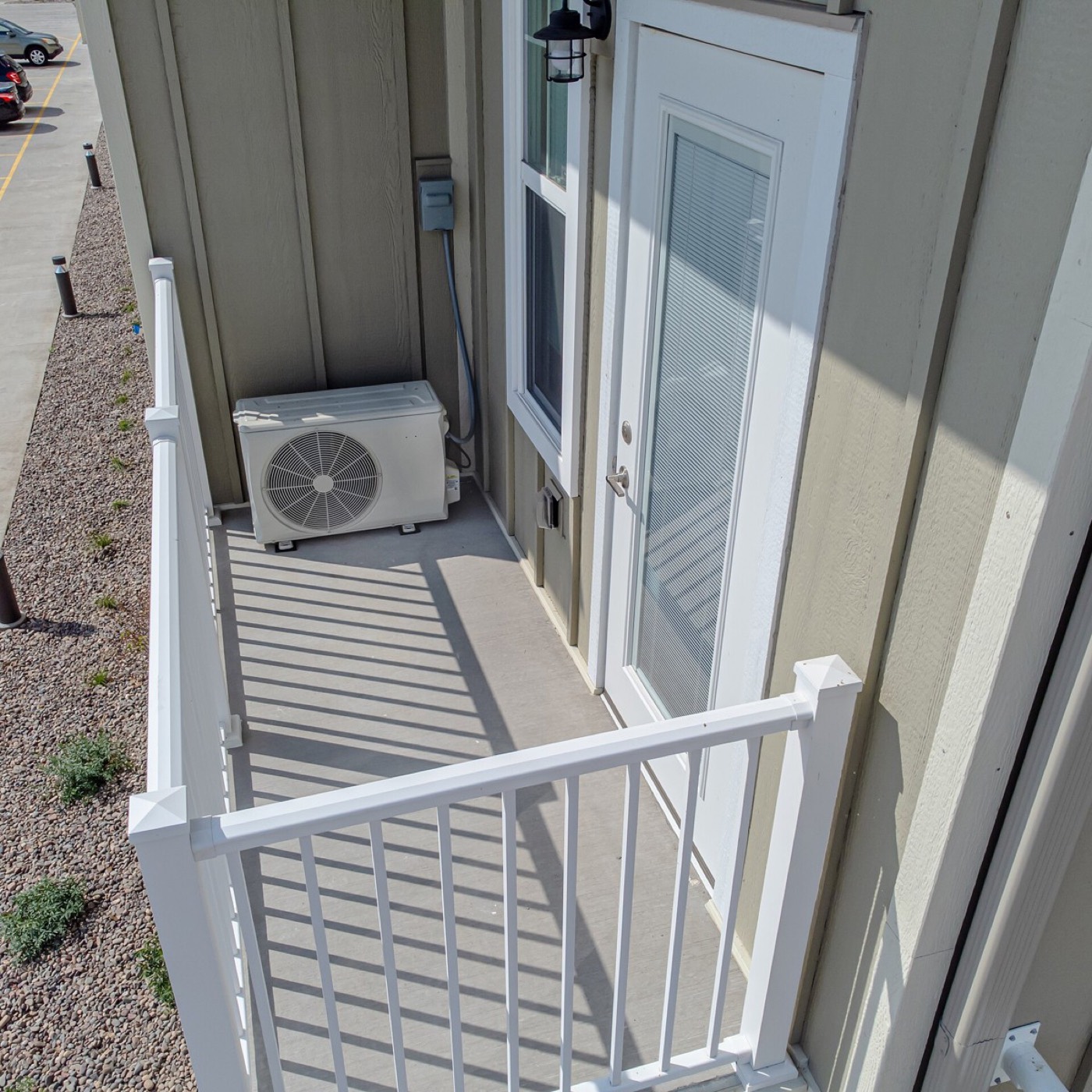
This air-source heat pump, mounted on a balcony, needs no land at all beyond the wall it hangs from. That is the single biggest reason air-source units outsell ground-source ones by a wide margin: nearly any home can fit one, and nearly no home has to be dug up for it.
A ground-source system cannot make that claim, because its heat comes from underground pipework that has to go in somehow.
TheEcoExperts' UK cost guide, updated in February 2026, gives typical installed costs before any grant. An air-source installation usually runs £8,000 to £16,000. A ground-source trench system usually runs £17,000 to £36,000, and a vertical borehole around £49,000.
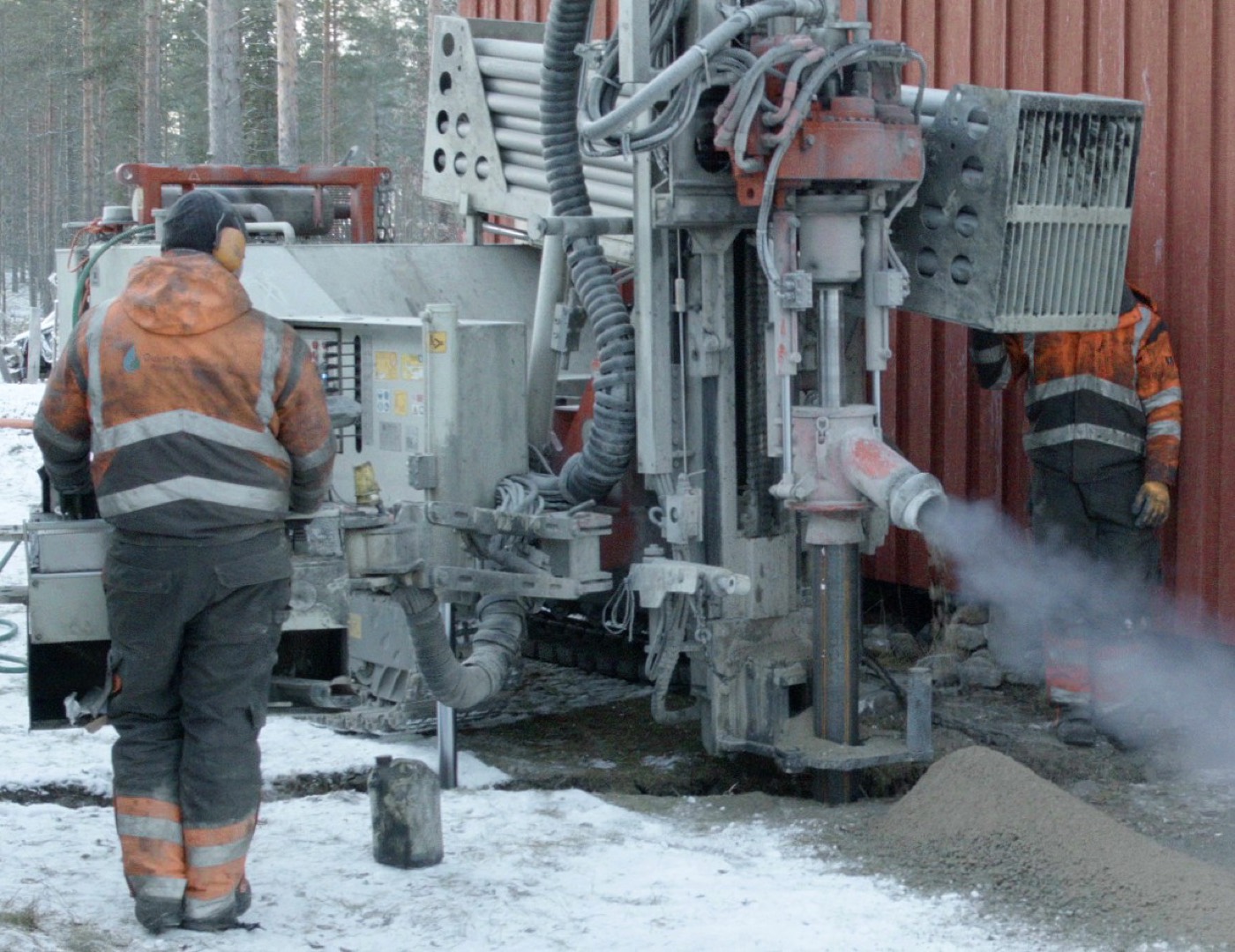
Drilling that borehole, shown here, is what the higher figure buys: a shaft bored straight down to reach ground that holds a steady temperature all year, rather than a trench dug sideways across a garden.
A trench needs a garden big enough to dig up; a borehole needs neither garden nor trench, only a drilling rig and a hole deep enough to reach stable ground temperature. Either way, a ground-source installation costs more and disturbs more of the property than an air-source one does — which most homes never need to accept, because air-source performance is usually close enough.
That tradeoff, cost and disruption against stability, is the choice behind every air-source versus ground-source decision.
5. Why flow temperature matters

The water a heating system circulates is called its flow, and the temperature it leaves the boiler or heat pump at is its flow temperature. An old gas boiler typically runs its flow at around seventy degrees Celsius.
A heat pump works best at a much lower flow temperature — often around thirty-five degrees for underfloor heating, or forty-five to fifty-five degrees for radiators. Reaching for that same seventy degrees a boiler used costs a heat pump dearly, because the bigger the lift from outdoor air to flow water, the worse its COP gets, exactly as the last chapter described.
That lower flow temperature is efficient, but it clashes with equipment sized for a boiler's much hotter water — starting with the water itself.
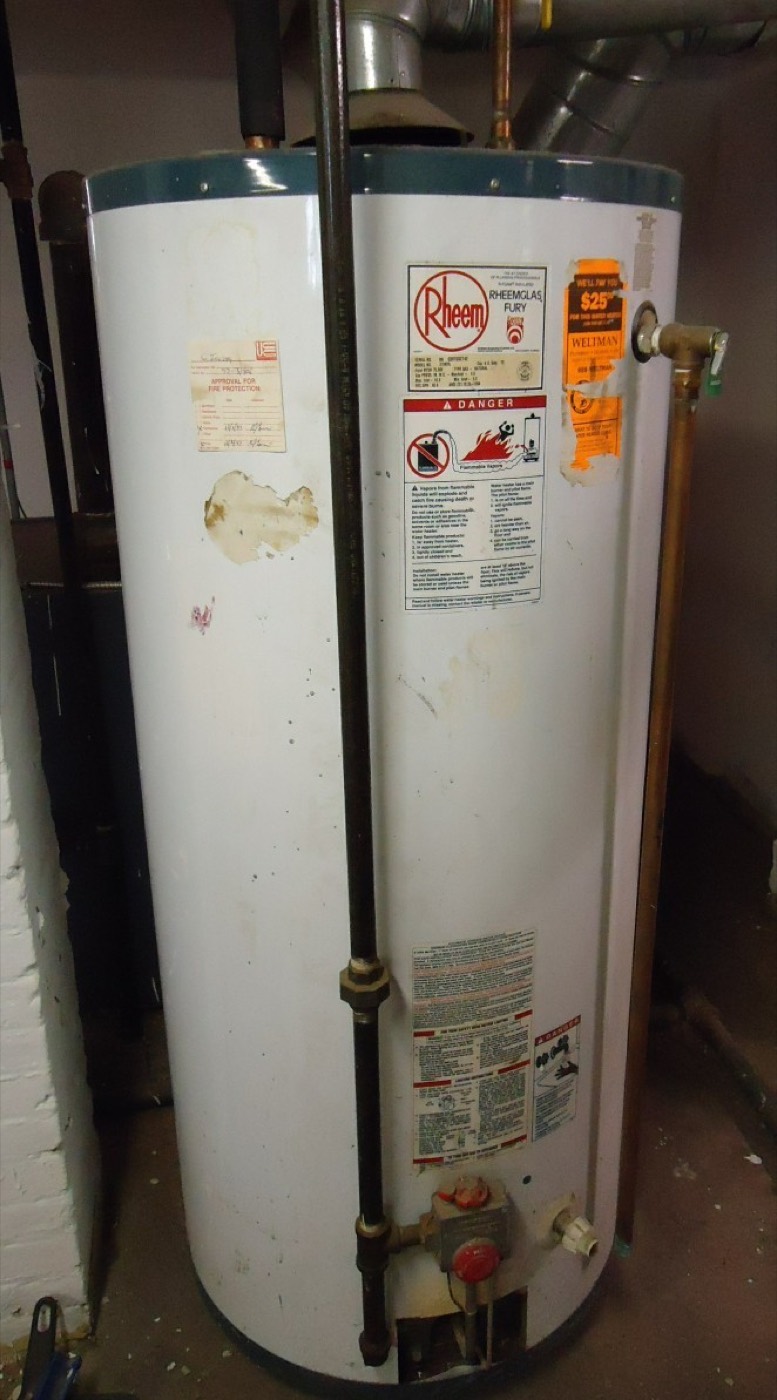
This cylinder stores the hot water a heat pump has already heated, ready for taps and showers. Because the heat pump delivers that water at a lower temperature than a boiler would, the cylinder typically needs to be larger, so there is enough stored heat ready when it is wanted.
Radiators face the same problem, and it shows up the moment the heating is switched on.
A radiator sized for seventy-degree water gives out far less heat at forty-five degrees, because a cooler radiator simply radiates less — it is not a fault in the radiator, just the physics of a cooler surface. The fix is more surface area, not more heat: a bigger radiator, or underfloor heating, which spreads the same warmth across an entire floor instead of a few metal panels.
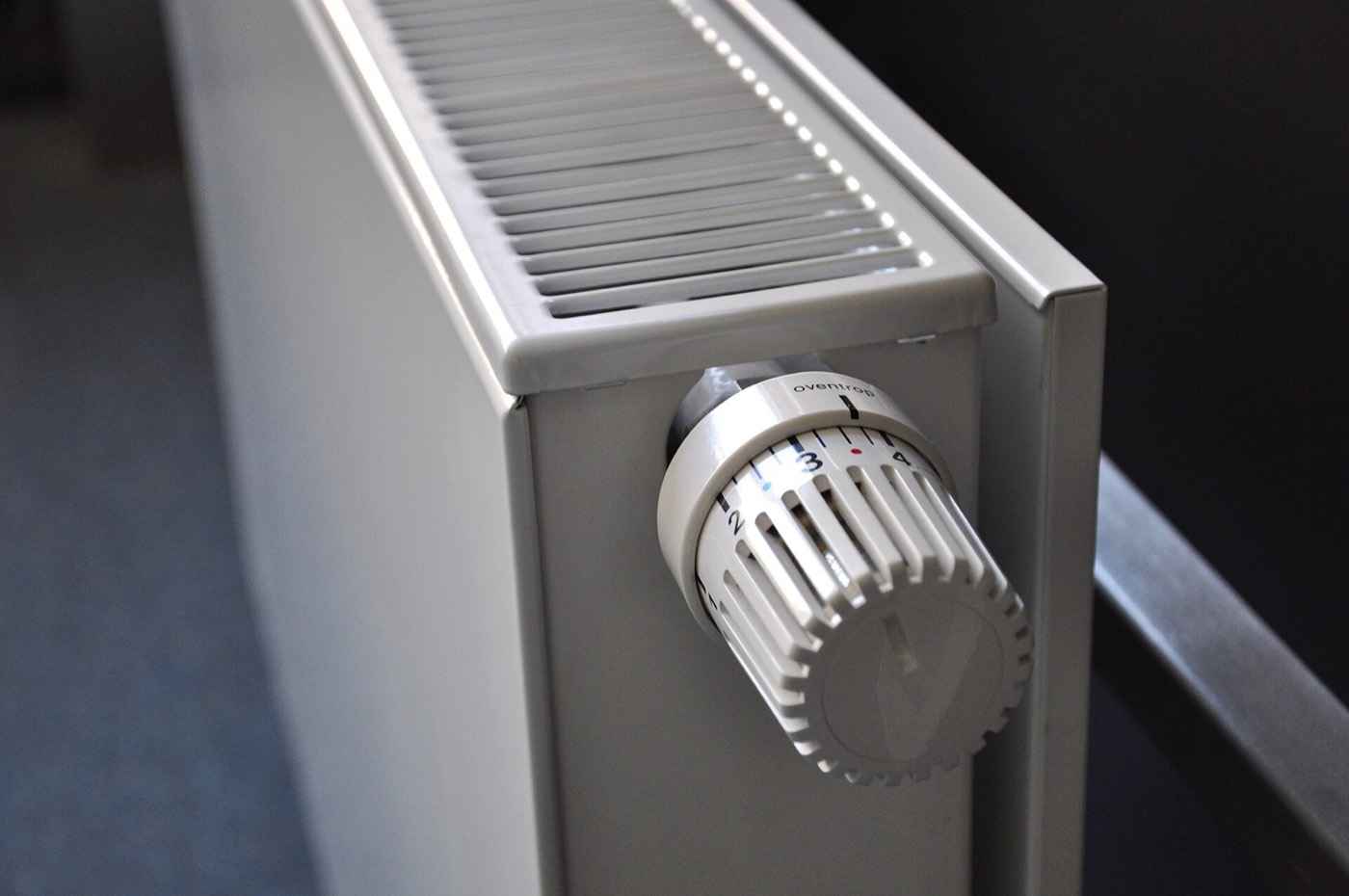
This ordinary home radiator is exactly the kind of fitting a heat pump installation often has to replace or enlarge. Either fix keeps the heat pump's flow temperature low and its COP high, while still keeping the house warm. Neither comes free, and both add to the installation job described in the next two chapters.
That is why a heat pump installation often means new radiators or new flooring, not just a new box on the wall outside.
6. The building fabric problem

None of that engineering helps if the heat leaks straight back out. A heat pump installed in a draughty, poorly insulated home has to run harder and longer to hold the same temperature, and its efficiency suffers for it.
That is the standard warning about heat pumps: fit one in a leaky house, and the owner gets a disappointing bill and blames the machine rather than the walls. It is a real risk, and it is why insulation upgrades are often recommended alongside a heat pump installation.
But the same UK field trial that measured COP also measured how often that upgrade was actually needed.
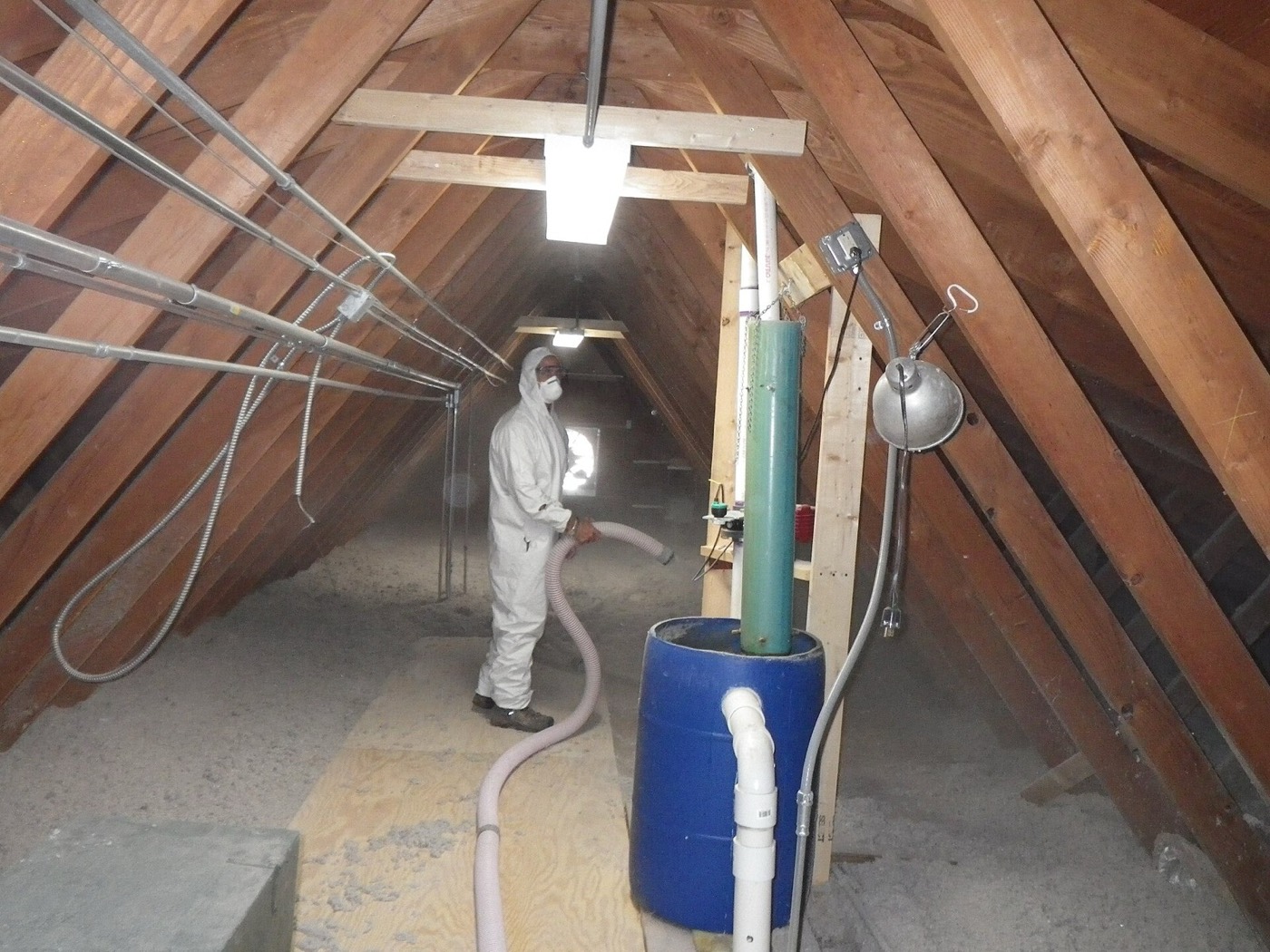
Of the roughly 740 heat pumps monitored in the Electrification of Heat trial, only about 15% of homes needed an energy-efficiency upgrade first, loft insulation being the most common. The trial's measured average performance factor across the whole scheme was 2.81 — close to the "around four" headline figure, not far below it.
This is loft insulation being blown into an attic — the single most common fix the trial needed, and a modest one, not a gutting of the house.
So the building fabric problem is real for some homes and not for most of them in this trial, which is a more useful finding than a blanket warning either way. A heat pump is not a gamble that only pays off after a full renovation; for most homes in this data, it worked without one.
That is a more encouraging finding than the standard warning suggests, though it is not a guarantee for every house.
7. Installation cost and subsidy

Whatever a heat pump saves on running costs, it asks for more money up front than a boiler does. Heatable's UK pricing data, drawn from two thousand customer quotes gathered in the first half of 2026, puts a figure on a straightforward boiler swap. The median cost of a gas combi replacement came to £2,300.
A heat pump costs several times that before any help. The UK's Boiler Upgrade Scheme offers £7,500 towards an air-source or ground-source heat pump. That rises to £9,000 for a home with no gas connection, or £5,000 towards a biomass boiler instead.
That grant exists for one stated reason, and it is worth being precise about what that reason is.
The scheme's own guidance says the grant targets the upfront cost of installation, not the ongoing cost of running the machine. That distinction tells you what the government believes is actually stopping people from switching: the size of the bill on day one, not the size of the bill every winter after.
Even with the grant applied, the gap to a boiler swap often does not close completely.
After the grant, an air-source installation can still cost roughly £500 to £8,500, against a median £2,300 for the boiler it replaces. The Boiler Upgrade Scheme narrows that gap. It does not close it.
Closing the running-cost side of the equation depends on a different number entirely: the price of electricity against the price of gas.
8. The electricity-to-gas price gap

An efficient machine does not automatically produce a cheap bill, because electricity and gas are not priced the same.
Under Ofgem's price cap for January to March 2026, UK electricity cost 27.69 pence per unit. Gas cost 5.93 pence per unit over that same quarter.
That gap in pence per unit is the whole obstacle, once it is turned into a ratio.
That is electricity priced at about four point seven times the cost of gas, for the same amount of energy delivered. A heat pump's COP has to clear that ratio before it saves money as well as energy — a COP of four against a gap of four point seven is close to breakeven, not a clear win.
Through the rest of 2026, that ratio moved, but it never came close to disappearing.
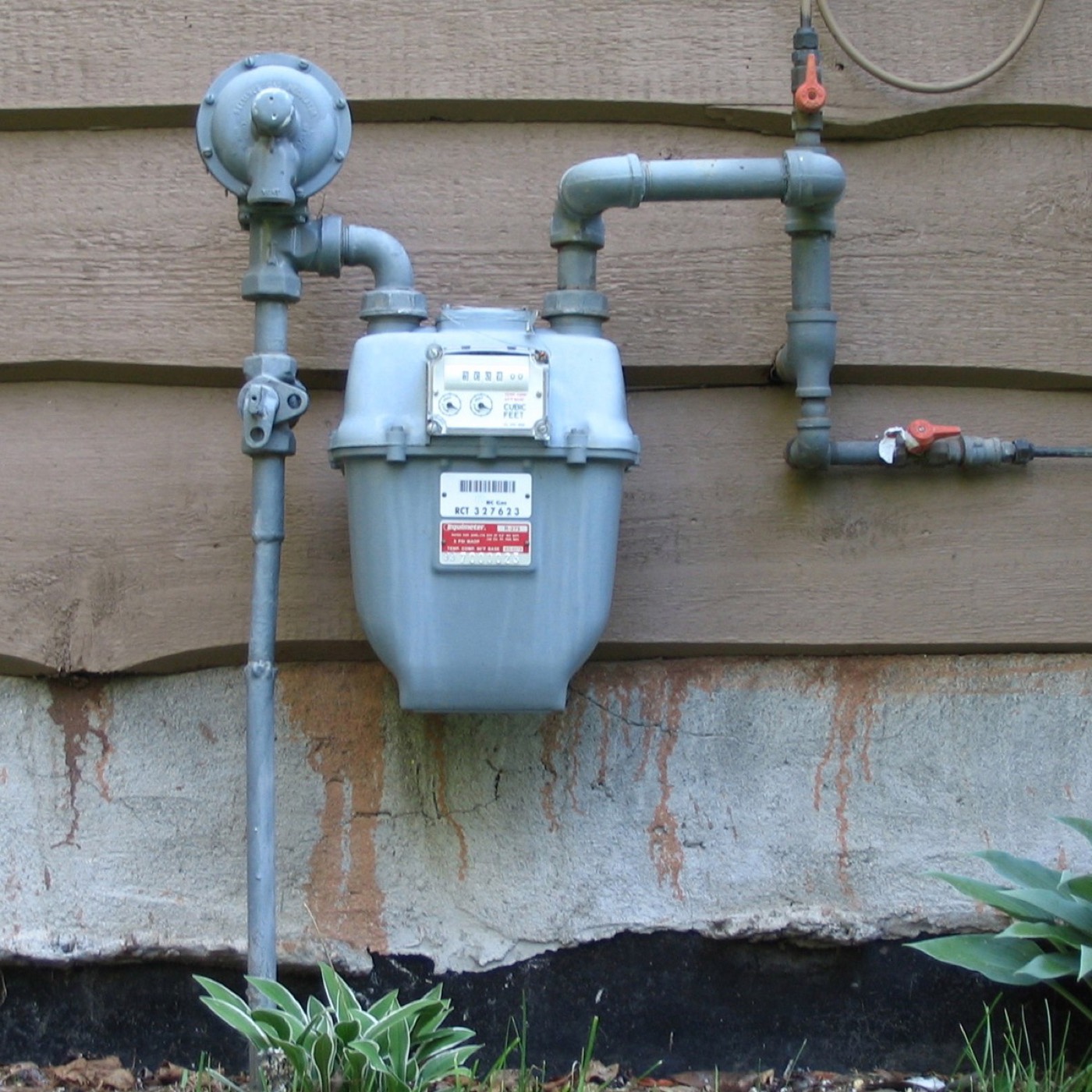
Ofgem's later 2026 price caps put the gap at roughly three to five times across the year, as gas prices moved more than electricity prices did. The residential gas meter shown here measures the side of that comparison a heat pump is trying to replace.
So the physics of the refrigerant cycle is not the obstacle standing in the way of cheaper heating. The price of the electricity that drives it is.
9. What the 2026 sales numbers show
Against that backdrop, the European Heat Pump Association published fresh sales figures on 28 September 2026. Across 12 European countries, residential heat pump sales rose 11% in the first half of the year.
Units sold rose from 1,048,000 to 1,163,000, year on year. That is the association's own count, covering its own 12 member countries, not an independent audit.
EHPA offered its own explanation for the rise, and it is worth testing rather than taking on trust.
EHPA's director general, Paul Kenny, said: "Europe is ending its addiction to a toxic, costly drug from dodgy suppliers – gas." The association points to two things: Iran's closure of the Strait of Hormuz in February 2026, which pushed oil and gas prices up, and a European Commission push to lower electricity taxes relative to gas.
That explanation travels from the Gulf to Brussels: a strait near Iran where fuel prices rose, and a policy push from the European Commission's own capital, both feeding into one sales report covering Europe.
That is a trade body's own account of its own good news, and it deserves the same scrutiny any other interested party's claim would get.
The release gives no country-by-country breakdown, so this video does not claim the 11% rise was even across all 12 countries — that figure was never reported, and inventing an even spread would be reporting something nobody measured. A rise driven partly by a fossil-fuel price spike is not the same as a rise driven by heat pumps becoming cheaper to run.
An industry having a good half-year is not, by itself, proof that the economics this video has just walked through have been solved.
10. Moving forward, or still held back?
Put the pieces together, and neither a simple victory lap nor a simple dismissal fits what this video has actually found.
The physics is not in question: a heat pump moves several units of heat for every unit of electricity it uses, and no boiler can match that. What is still unsettled is everything around the physics — whether the home is insulated well enough, whether the radiators and flow temperature suit the machine, whether the upfront cost and the day's electricity price leave the owner better off.
Those are not permanent barriers, and some of them are visibly narrowing.
Grants are narrowing the upfront cost gap, and in at least one region this year, policy is starting to narrow the electricity-price gap as well. A rise in sales during a period of high gas prices shows people responding to cost — not proof that heat pumps have become the obviously cheaper choice everywhere, but a sign the conditions are moving.
Whether heat pumps are moving home heating forwards, or are being held back by everything around them, depends less on the refrigerant cycle than on decisions still being made about electricity, insulation and who pays for the switch.
Sources and credits
Photo credits (Wikimedia Commons)
- Air-source heat pump outdoor unit (Vaillant aroTherm retrofit, Southend, UK): Southend-on-Sea Borough Council, UK, CC0 - https://commons.wikimedia.org/wiki/File%3AAir_Source_Heat_Pump_-_Vailliant_aroTherm_Plus_on_a_terraced_house.jpg
- Air-source heat pump unit mounted on a balcony: Wikideas1, CC0 - https://commons.wikimedia.org/wiki/File%3AHeat_pump_on_balcony.jpg
- Drilling a borehole for residential ground-source geothermal heating, Northern Finland: Olli Niemitalo, CC0 - https://commons.wikimedia.org/wiki/File%3AGeothermal_drilling_for_residential_heating.jpg
- Domestic hot water storage cylinder/heater: Tomwsulcer, CC0 - https://commons.wikimedia.org/wiki/File%3AHot_water_heater_with_pipe.jpg
- Home radiator: ri, CC0 - https://commons.wikimedia.org/wiki/File%3ARadiator-250558_1280.jpg
- Blowing cellulose insulation into a home attic: USFWS Mountain Prairie, Public domain - https://commons.wikimedia.org/wiki/File%3AInsulating_attic_%2849525467656%29.jpg
- Residential gas meter: RadRafe, Public domain - https://commons.wikimedia.org/wiki/File%3AGas_meter.JPG


Primary sources
- International Energy Agency, 'The Future of Heat Pumps' (2022), 'How a heat pump works' - typical household COP around 4; heat pumps 3-5x more energy efficient than a gas boiler. iea.org/reports/the-future-of-heat-pumps/how-a-heat-pump-works..
- Energy Systems Catapult, 'Electrification of Heat Demonstration Project' field-trial data (monitoring November 2020 to August 2022, around 740 UK air-source heat pumps) - median COP 2.80 year-round, 2.44 on cold days; trial average seasonal performance factor 2.81; about 15% of installs needed an energy-efficiency upgrade first. Cross-checked via UK Collaborative Centre for Housing Evidence coverage of the same trial.
- European Heat Pump Association, press release, 28 September 2026, 'Post-Hormuz: heat pump sales climb 11%' - residential sales across 12 European countries (Austria, Belgium, Switzerland, Denmark, Finland, France, Germany, Italy, Netherlands, Norway, Portugal, Sweden) rose from 1,048,000 (H1 2025) to 1,163,000 (H1 2026); quote from director general Paul Kenny; EHPA's own stated drivers (Strait of Hormuz closure, February 2026; EU electricity-tax policy push). No country-by-country breakdown given. ehpa.org/news-and-resources/press-releases/post-hormuz-heat-pump-sales-climb-11/..
- UK government (DESNZ) and Ofgem, Boiler Upgrade Scheme guidance - £7,500 grant for air-source/ground-source/water-source heat pumps; £9,000 for off-gas-grid properties (until 31 March 2027); £5,000 for biomass boilers; £2,500 for air-to-air heat pumps (added April 2026). gov.uk/apply-boiler-upgrade-scheme; ofgem.gov.uk/environmental-and-social-schemes/boiler-upgrade-scheme..
- Ofgem, Energy Price Cap, quarterly GB typical Direct Debit unit rates published through 2026 - electricity 27.69p/kWh and gas 5.93p/kWh (Jan-Mar); rates moving the electricity-to-gas ratio between roughly 3.3x and 4.7x across the year's four quarters. ofgem.gov.uk/energy-price-cap..
- TheEcoExperts.co.uk, heat pump cost guide, updated 25 February 2026 - UK installer-cost-survey ranges: air-source £8,000-£16,000, ground-source trench £17,000-£36,000, ground-source borehole around £49,000 (all before grant); air-source after the £7,500 grant roughly £500-£8,500. Named as a market survey, not a government figure.
- Heatable.co.uk, 'New Boiler Cost 2026' - median quoted price for a standard gas combi boiler replacement, £2,300, based on 2,000 customer quotes gathered January-June 2026.
Not regulated financial advice.