
HVDC: Why Power Grids Are Turning to Direct Current
Why does China run a power line eleven hundred kilovolts strong for over three thousand kilometres, while the cable joining Britain and France to each other took two years to fully repair after a single fire? Both are high-voltage direct current, or HVDC - the technology this video explains from its 1880s false start to the subsea cable now under construction across Australia's Bass Strait.
It starts with the plain physical problem: alternating current, the kind that reaches almost every home, loses energy over long distances to effects that direct current does not suffer. René Thury proved a working DC alternative in Italy in 1889 and scaled it to a 200-kilometre line between Moûtiers and Lyon by 1906 - using spinning motor-generator sets, decades before any electronic valve existed. It lost anyway, because AC's rival technology, the transformer, has no moving parts to wear out.
It explains what finally brought DC back: mercury-arc valves, then thyristors, letting engineers convert AC to DC and back with no moving parts at all - the basis of every converter station described in this video, including real ones at Manitoba Hydro's Bipole II station and the Pacific DC Intertie's Sylmar terminus. It explains why DC loses less over distance (the skin effect, and DC's full use of a conductor's cross-section), and where the roughly 500-kilometre crossover sits between AC's cheap connections and HVDC's cheaper running cost.
It covers the second reason HVDC exists beyond distance: joining AC grids that cannot be wired together directly, illustrated by Japan's own 50Hz/60Hz split grid. It covers State Grid's Changji-Guquan line - at plus-or-minus 1,100kV over 3,293 kilometres and up to 12 gigawatts, the longest and most powerful HVDC line built, energised January 2019. It covers the 15 September 2021 fire at the IFA interconnector's Sellindge converter station, which spiked UK wholesale prices more than twentyfold in hours and took roughly two years to fully repair - a converter station is a single point of failure for an entire link. And it covers Marinus Link, the Tasmania-Victoria subsea project Hitachi Energy is building with grid-forming converters that can help stabilise a wind-heavy grid, not just carry power across it, with construction now under way.
It closes on what HVDC has not replaced: the ordinary AC distribution network still carries almost all of electricity's last few kilometres into homes and factories. HVDC solves two specific, narrower problems - long distance, and joining grids that otherwise could not connect - and nothing in this video claims it does more than that.
Educational documentary. Not financial or investment advice.
Tags
Chapters
- The problem with long-distance power
- A forgotten 1880s fix
- Why DC lost the first round
- The valve that brought DC back
- Inside a converter station
- Why DC loses less over distance
- Where the crossover point is
- The subsea trick: joining mismatched grids
- China's record-breaking lines
- When the link breaks
- Marinus Link: grid-forming DC in Australia
- What DC will and won't replace
Video notes
1. The problem with long-distance power
Electricity does not travel for free. Every wire that carries it loses a little of that power as heat, and the longer the wire, the more it loses.
This video explains why that loss matters enough to change how whole countries build their power grids. It covers a forgotten 1880s technology that tried to solve the problem a century early, the valves that finally made the modern solution work, and the record-breaking lines and subsea links running today because of it.
For most of the grid, that loss barely matters. A local power line runs a few kilometres from a substation to a street, and the energy wasted along the way is small enough to ignore.
The ordinary electricity grid runs on alternating current, or AC, which reverses direction many times a second. A long AC line loses more power than that same distance would suggest, because of effects that only show up in a current that keeps switching direction. Move enough power far enough on AC, and those extra losses start to cost real money.
That is the problem this video is about: moving power hundreds of kilometres costs more than it looks like it should. For well over a century, engineers have been looking for a way to transmit that power as direct current, or DC, instead. DC is a current that flows steadily in one direction, like power from a battery, rather than reversing direction the way AC does.
2. A forgotten 1880s fix
Long before modern electronics existed, one engineer built a working long-distance DC transmission system — and it predates everything else in this video by decades.
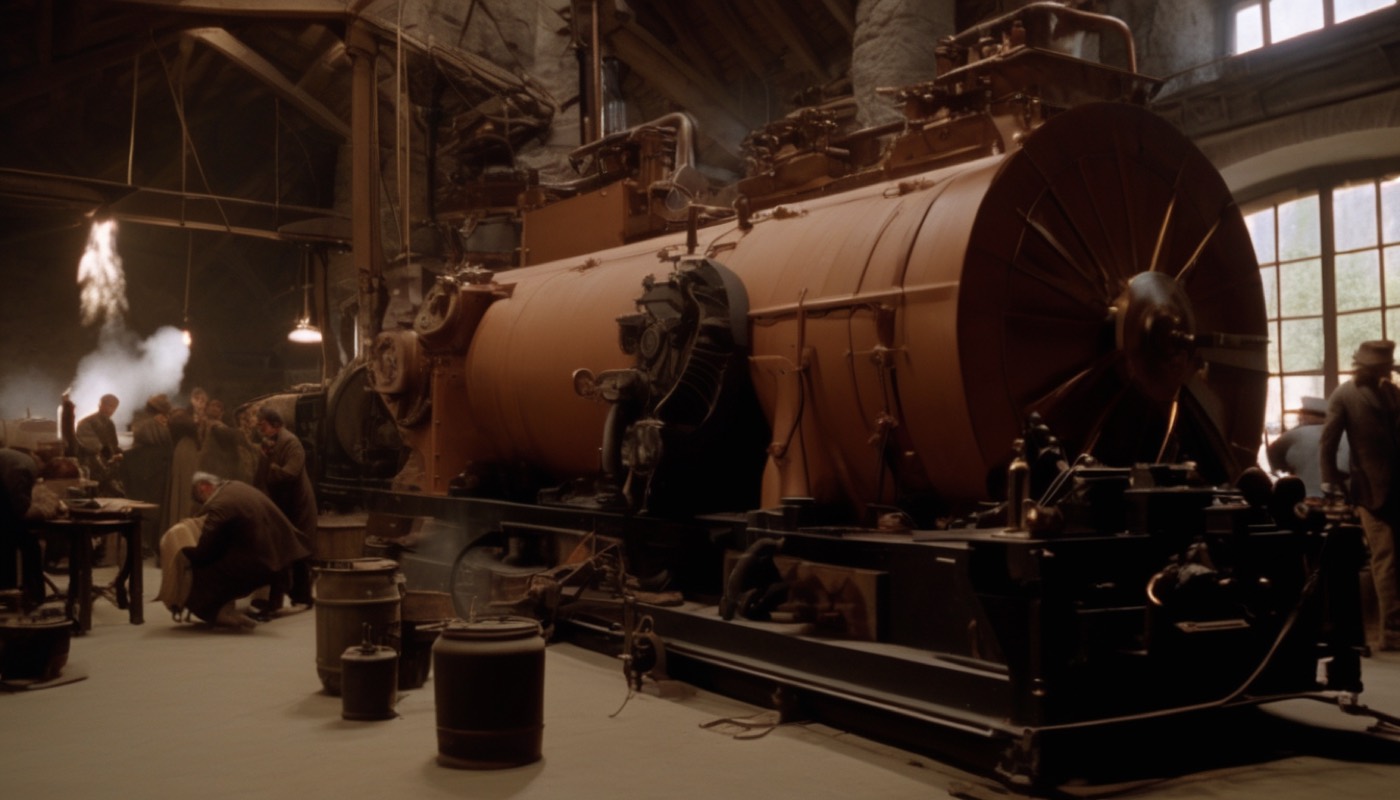
This is René Thury, the Swiss engineer who built it. His system used motor-generator sets: a motor at one end turned a generator, the generator's output fed a line running at high voltage, and at the far end another motor-generator set converted the power back down for ordinary use. No transistor, no vacuum tube, no electronic valve of any kind — just spinning machinery, doing the whole job mechanically.
Thury's first working installation went into service in Italy in 1889. It moved 630 kilowatts of direct current at 14,000 volts. The line ran 120 kilometres. It worked, and it kept working.
Thury's most ambitious system ran between Moûtiers and Lyon, in France. It carried 8,600 kilowatts at up to 150,000 volts. The line ran 200 kilometres, operating from 1906 to 1936. Nothing else of its kind would come close to that distance or that power again for decades.
That Moûtiers–Lyon line is worth sitting with for a moment, because of exactly where its power came from and where it went.
The Moûtiers–Lyon system carried hydroelectric power out of a valley in the French Alps and into the industrial city of Lyon, across a route of 190 kilometres of overhead line and 10 kilometres of underground cable. It was the clearest proof the nineteenth century ever produced that high-voltage DC transmission could work at real distance and real scale.
Thirty years later, that proof had been quietly abandoned — and the next chapter explains why.
3. Why DC lost the first round
Thury's system worked, but working was never going to be enough on its own. It also had to be cheap to run, and that is where motor-generator DC fell apart.
Every motor-generator set was a machine with moving parts: bearings that wore down, brushes that sparked and needed replacing, armatures that had to be rewound. None of that happened on its own. Each Thury station needed skilled staff on site, all the time, just to keep the rotating machinery from failing.
Across the same decades, a much simpler rival was getting cheaper every year.
A transformer has no moving parts at all — just coils of wire wound around an iron core — so it can step AC voltage up or down almost indefinitely, with almost no maintenance. Once transformers were good enough to send AC a long way efficiently, DC's one real advantage stopped mattering as much, and AC's lower running cost won nearly every grid being built.
By the 1930s, AC had become the obvious default almost everywhere, and the Moûtiers–Lyon line was shut down. Direct current did not disappear from the engineering literature, though — it was waiting for a part that did not need to spin.
4. The valve that brought DC back
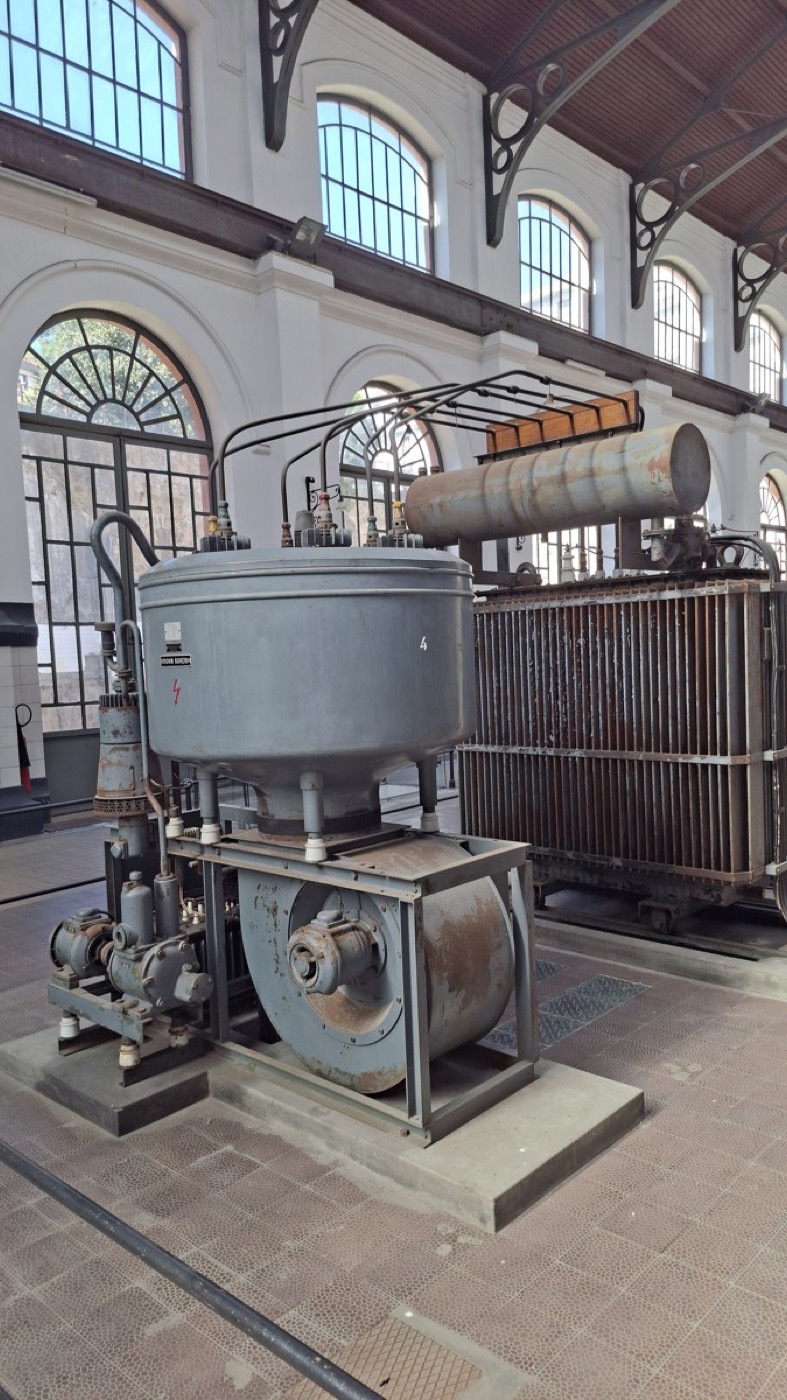
What DC needed was a way to convert between AC and DC with no moving parts at all — something that could do electronically what Thury's motors and generators had done mechanically.
This is a mercury-arc valve, the device that first did that job. Inside its sealed glass or steel housing, an electric arc jumps through mercury vapour, and that arc conducts current in one direction only. Wire enough of these valves together and you can rectify incoming AC into DC — or run the process backwards, turning DC into AC again — with nothing mechanical moving at all.
Mercury-arc valves made HVDC practical again from the middle of the twentieth century on. From the 1970s onward, they were themselves replaced by a solid-state part that did the same job more reliably: the thyristor. A thyristor is a silicon switch that conducts current only one way, and only once it is triggered by a small control signal.
The whole trick, in both the old valve and its silicon successor, is to build a wall of one-way switches. Line them up correctly and switch them in sequence. Alternating current naturally reverses, but it comes out the other side flowing in one direction only — which is direct current. Run the same switches in the opposite sequence, and the process reverses: DC comes in, AC goes out.
That one-way switching is the whole reason HVDC survived into the modern grid at all. Without a solid-state way to convert current with no moving parts, Thury's good idea would have stayed a museum piece.
5. Inside a converter station
Every HVDC line needs a building at each end that does this conversion, and it is worth seeing what that building actually contains.
This is a converter station, cut away to show what is inside. It has four parts. An AC switchyard connects the station to the ordinary alternating-current grid. A valve hall holds the stacked thyristor valves doing the actual conversion. Transformers step the voltage up or down to match each side. And the DC line or cable is where the converted power finally leaves the building. Power flows through all four parts in one direction at one end of a line, and in reverse at the other.
A station built around thyristors like this is called a line-commutated converter, or LCC — the older and still most common HVDC technology, well suited to moving huge amounts of power over very long distances.
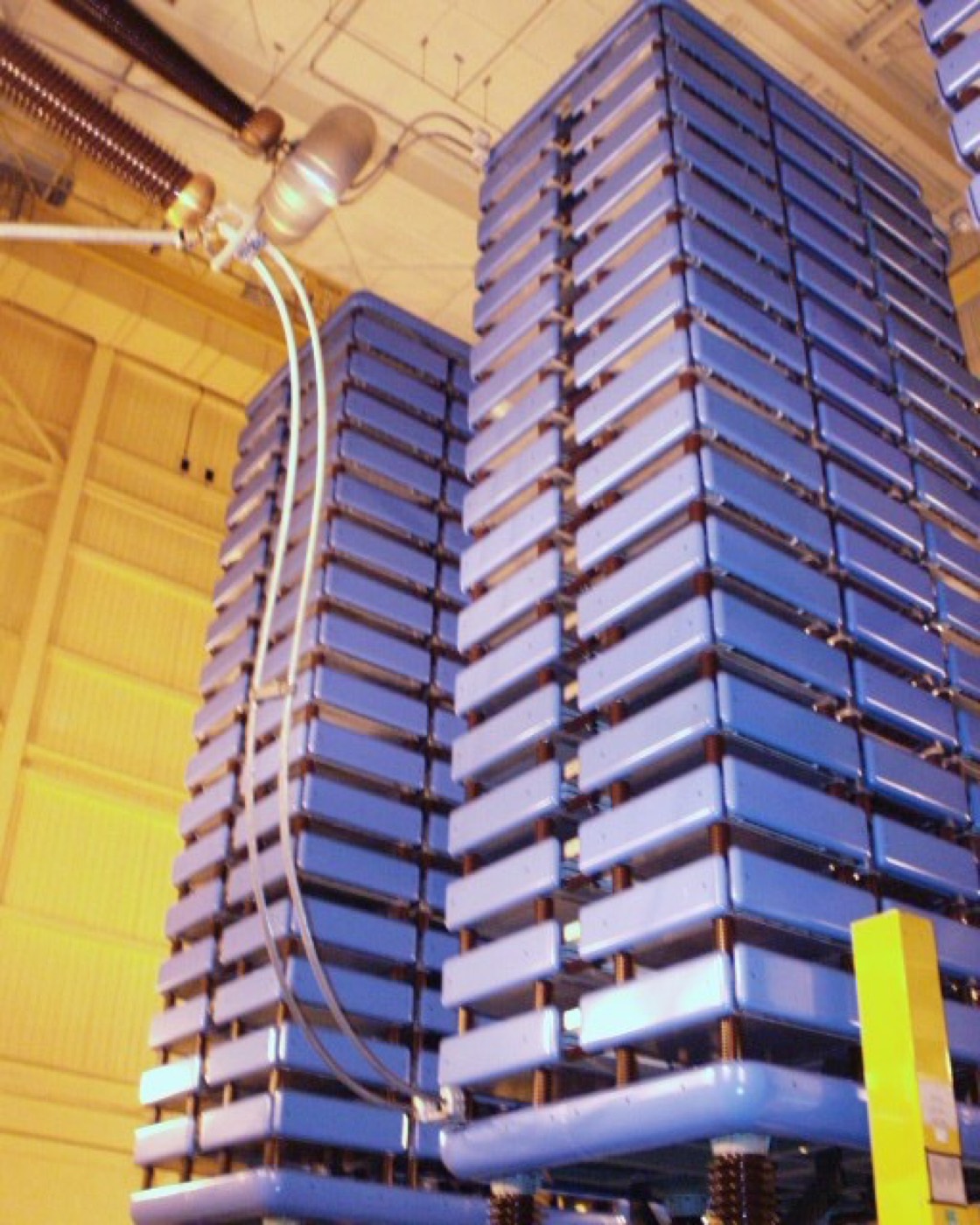
This thyristor valve, from a Manitoba Hydro converter station in Canada, shows what the valve hall actually looks like up close: towers of stacked silicon switches, each one handling a slice of the current passing through the station. A large converter station can need dozens of these towers working together.
A newer kind of converter station, built with a different silicon switch called an IGBT instead of a thyristor, is called a voltage-source converter, or VSC. It is more flexible than an LCC — useful for linking grids that are hard to synchronise — and it comes back later in this video, at the newest HVDC project it describes.
Two real converter stations sit thousands of kilometres apart. One is Manitoba Hydro's Bipole II station, in Canada. The other is the Pacific DC Intertie's converter station at Sylmar, California — the southern end of one of the oldest long-distance HVDC lines in North America. Different countries, different decades, the same basic job at each end.
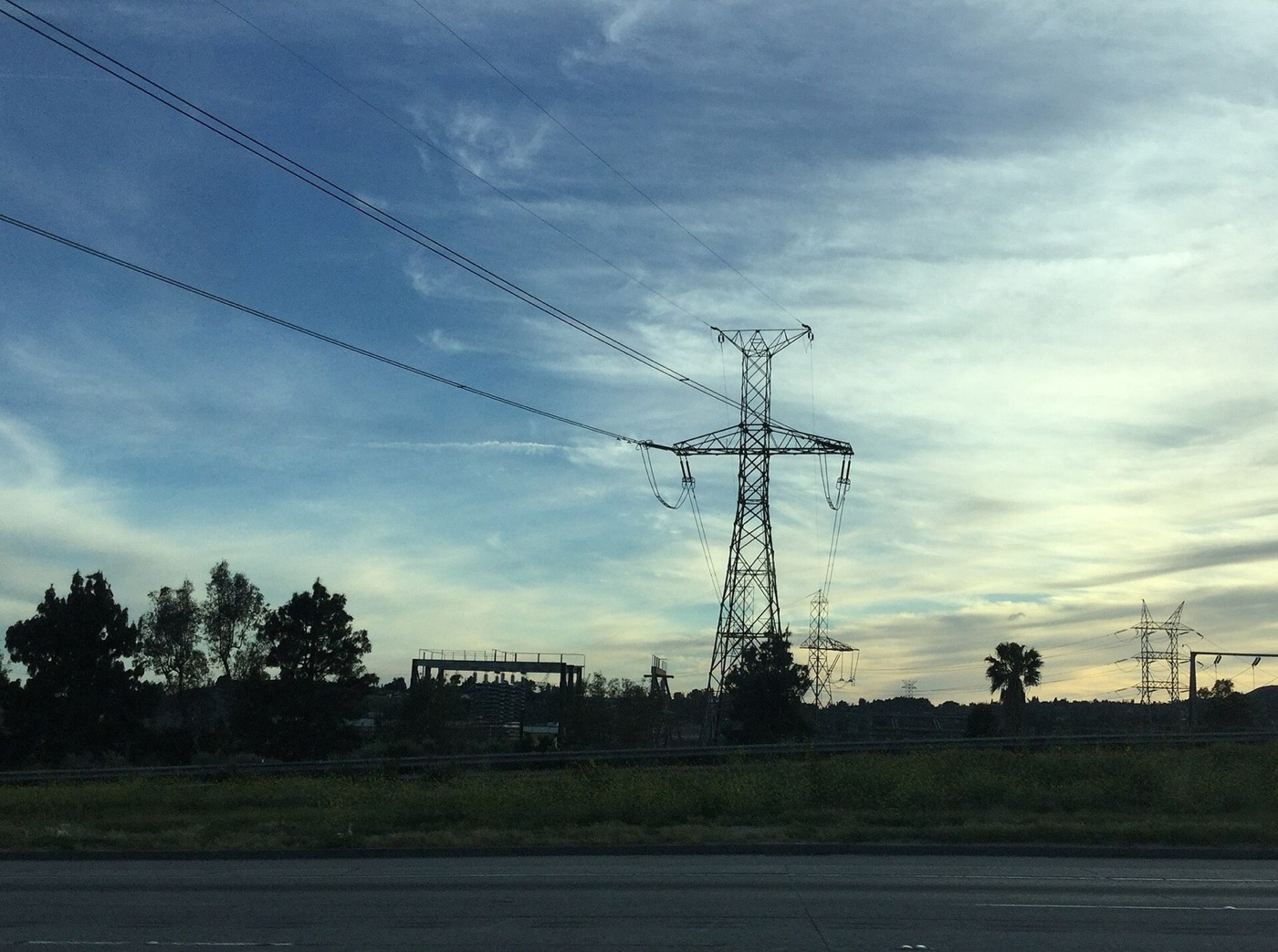
This is that Sylmar converter station, on the edge of Los Angeles — the southern terminus of a line that has carried hydroelectric power down from the Pacific Northwest since the 1970s. Everything this chapter described — switchyard, valve hall, transformers, DC exit — is built into this one site.
So a converter station is not a single device. It is a small factory built around one job: turning AC into DC at one end of a line, and DC back into AC at the other.
6. Why DC loses less over distance
Converting power at both ends costs money and costs some of the power itself. So it is worth asking plainly what that cost actually buys — and the answer sits in the wire itself, not the stations at either end.
Alternating current keeps reversing direction, and that reversal pushes the current toward the outer surface of a conductor instead of letting it use the whole cross-section — an effect called the skin effect. AC also loses power to the changing magnetic field it creates around the line itself. Direct current does neither: it flows steadily, uses the conductor's full cross-section, and creates no changing field to lose energy into.
Add those two effects together over a few hundred kilometres, and they are enough to cut total transmission losses on a long DC run by something like half compared with carrying the same power the same distance on AC.
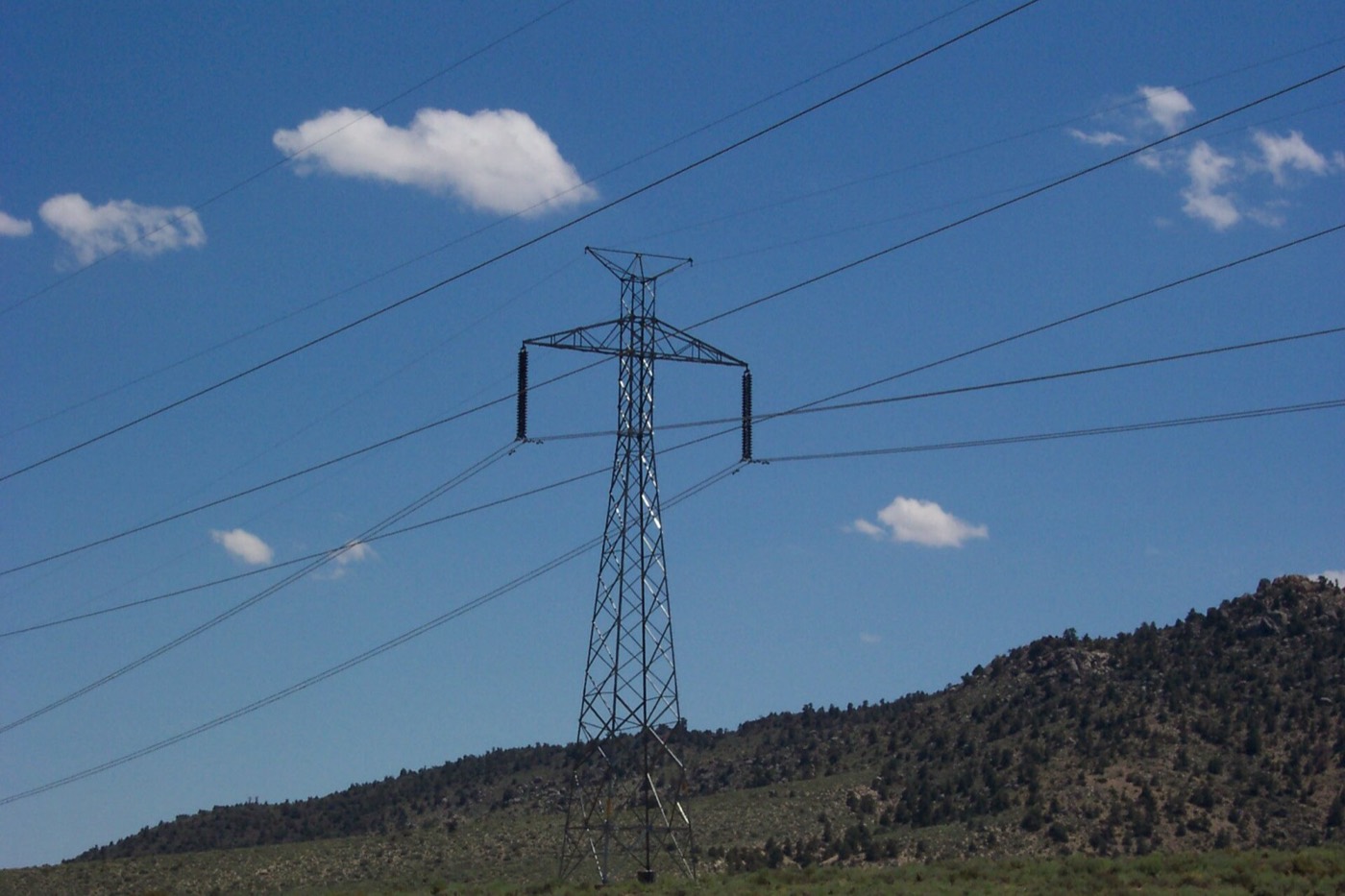
This transmission tower carries the Pacific DC Intertie near Benton, California. One line, one voltage, no reversing current. It runs south for hundreds of kilometres, with nothing for the skin effect to act on.
The Pacific DC Intertie runs the length of the US West Coast, carrying hydroelectric power out of the Pacific Northwest and down into Southern California. Its northern end sits near Celilo, Oregon. Its southern end is the Sylmar converter station, on the edge of Los Angeles, more than thirteen hundred kilometres away.
That is the whole physical case for direct current over distance: convert it twice, at real cost, and the wire in between simply wastes less of what you put into it.
7. Where the crossover point is
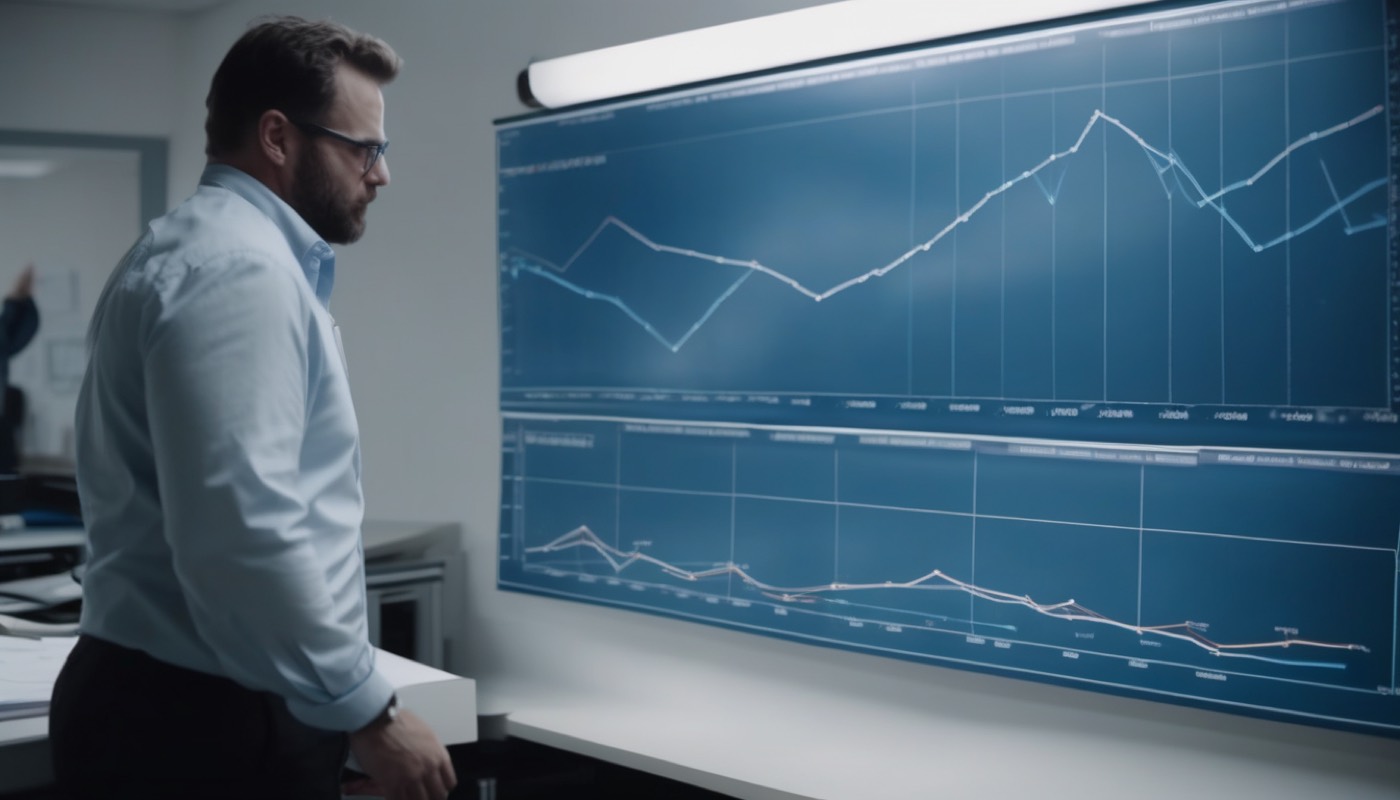
None of that makes HVDC automatically the better choice. Converting AC to DC and back costs money up front, in the converter stations themselves, so the real question is where the distance savings catch up with that upfront cost.
An ordinary AC line is cheap to connect — it needs no converter stations at all — but keeps losing a growing share of its power the further it runs. An HVDC line needs two expensive converter stations before it carries a single watt, but then loses much less power per kilometre than AC does. Short lines favour AC's cheap connections; long lines eventually favour DC's cheaper running cost.
Put those two cost curves on the same chart, and for a large transmission corridor they cross at roughly the same distance almost everywhere HVDC gets built.
That crossover sits at roughly five hundred kilometres for a large overhead transmission corridor — shorter still for an undersea or underground cable, where HVDC's advantage starts much sooner. Past that rough distance, HVDC's lower running losses tend to outweigh the cost of its converter stations.
That single rough number — about five hundred kilometres — is the reason almost every project in the rest of this video runs further than that, not less.
8. The subsea trick: joining mismatched grids

Distance is not the only reason to reach for HVDC. There is a second job only a DC link can do at all: joining two AC grids that cannot simply be wired together.
Two AC grids have to match almost exactly to connect directly — same frequency, same phase, rising and falling in step with each other. A DC link sidesteps that requirement completely: it converts one grid's AC into DC, carries it across, and converts it back into the second grid's own AC, on its own schedule. The two grids never have to agree on anything.
Japan is the clearest real example of why that matters. Its eastern regions run on a 50-hertz AC grid, and its western regions run on 60 hertz. That split dates back to equipment choices made in the 1890s. HVDC frequency-converter stations are what let power move between the two halves of one country at all.
An interconnector — the general name for any dedicated power link joining two separate grids or two countries — only has to match frequency and phase if it is built as AC. Build it as DC instead, and a mismatch that would make a direct AC connection impossible simply stops being a problem.
That is the second reason HVDC spread beyond long-distance transmission: it is not just a cheaper way to move power far, but sometimes the only way to move it between two grids that disagree with each other at all.
9. China's record-breaking lines
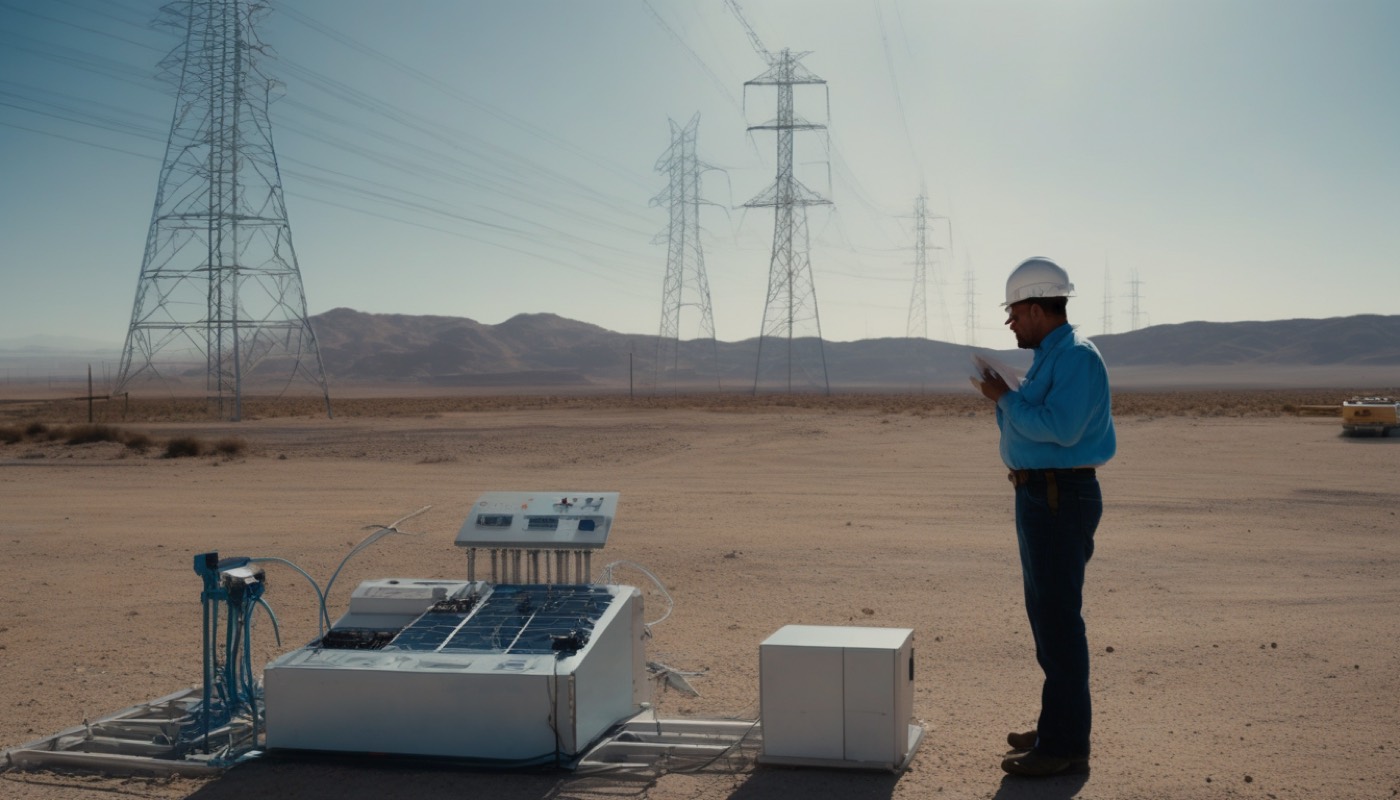
Put distance and scale together, and China's grid has built the most extreme example anywhere in the world.
State Grid Corporation of China's Changji–Guquan line runs at plus or minus 1,100,000 volts of direct current. It stretches 3,293 kilometres, and carries up to 12 gigawatts of power. It is the longest and most powerful HVDC line ever built, energised in January 2019.
To put that distance in context, it is worth seeing where that power actually starts and finishes.
The Changji–Guquan line begins in Xinjiang, in China's far west, crossing desert and mountain terrain, and ends in Anhui province, near China's crowded eastern coast. It carries electricity generated near China's coal and wind resources in the west to the industrial demand of the east, a route longer than London to Tehran.
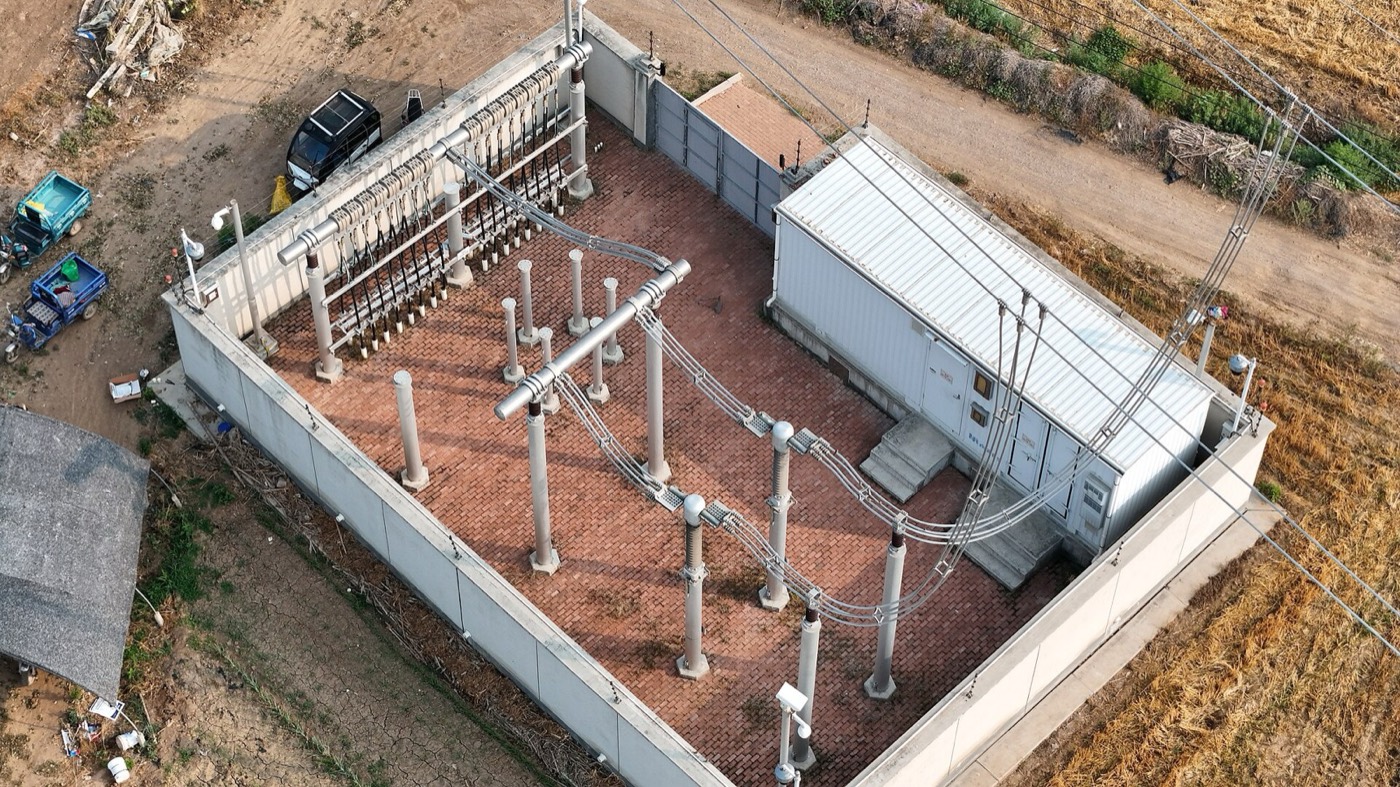
China runs dozens of these ultra-high-voltage DC lines, not just the one record-holder, and the grounding equipment at their converter stations tells its own small part of that story.
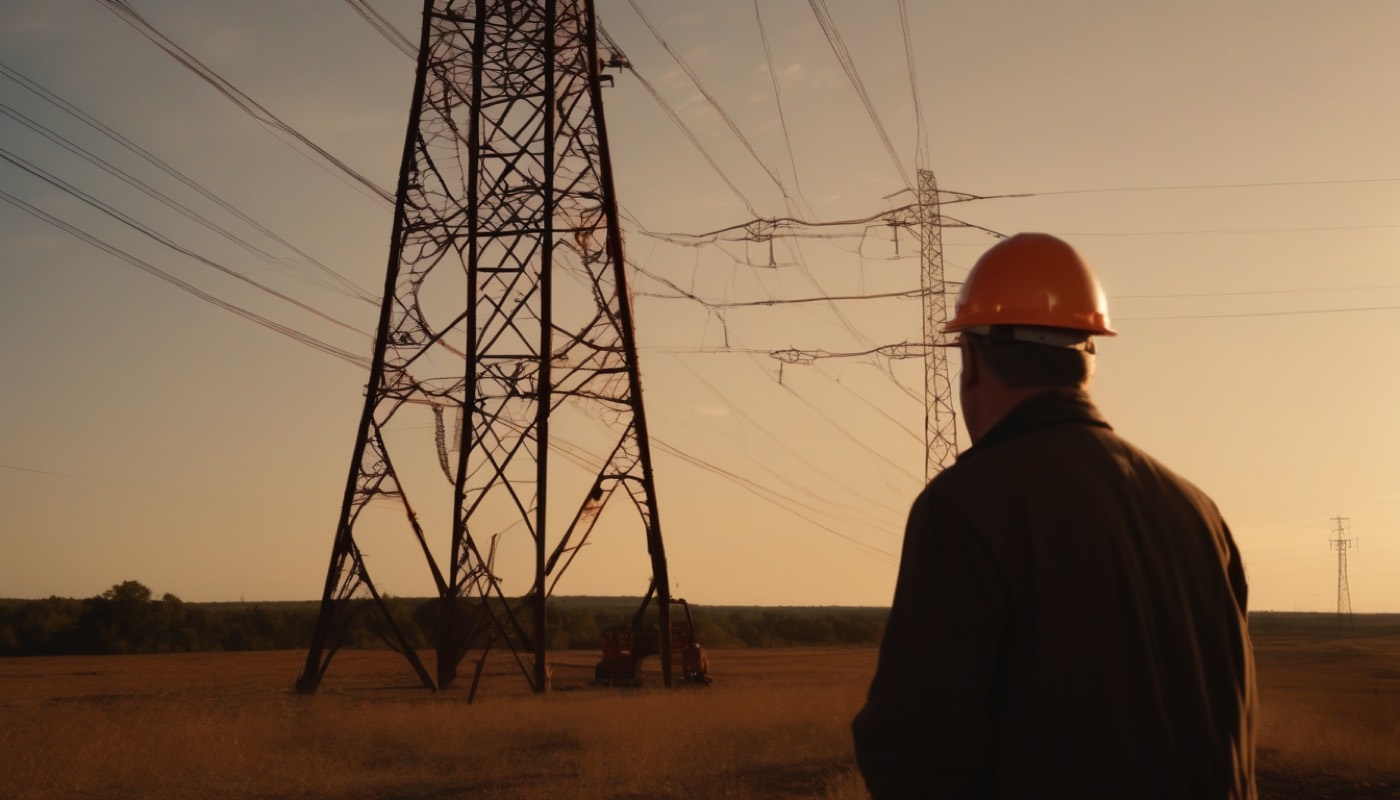
This is the grounding electrode at the Yinan converter station, part of a separate ultra-high-voltage DC project running at plus or minus 800,000 volts between Shanghaimiao and Shandong. It is not the Changji–Guquan line itself, but it shows the same kind of infrastructure — on a slightly smaller scale — repeated across China's grid many times over.
No other country has built ultra-high-voltage DC at anything like this scale, and that gap is now a deliberate feature of how China's grid is designed, not an accident of geography.
10. When the link breaks
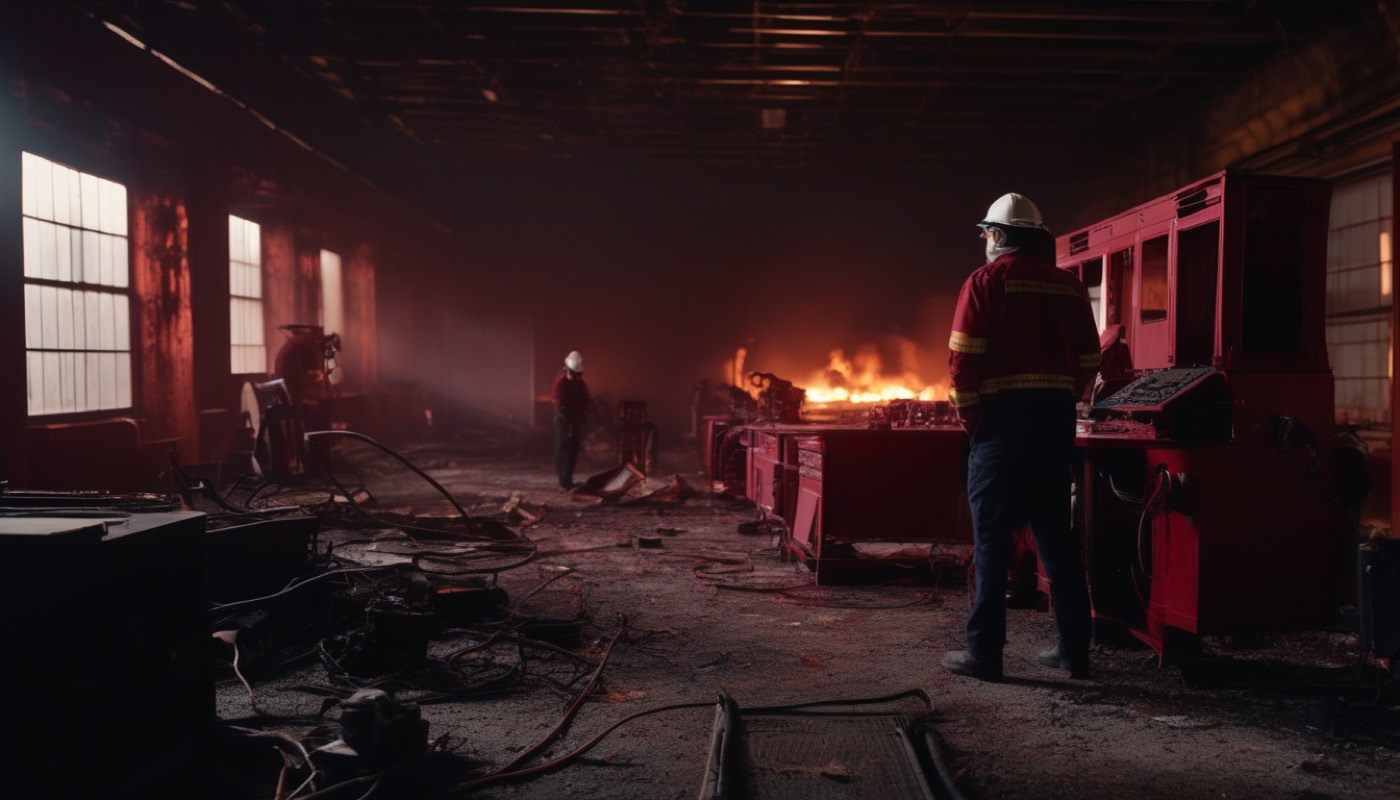
A converter station is not just expensive — it is also a single point of failure for the entire link it belongs to, as one 2021 fire in Kent proved.
The IFA interconnector links Britain's and France's power grids across the English Channel. It runs from a converter station at Sellindge, in Kent, to a landing point near Calais, on the French coast. At 00:18 on the fifteenth of September 2021, a fire broke out at Sellindge. It knocked the entire link offline immediately — rated at 2 gigawatts, with no power flowing across it at all.
The effect on prices was almost instant, because losing a 2-gigawatt link removes a meaningful slice of Britain's available supply all at once.
On the evening of the fire, Britain's day-ahead wholesale electricity price spiked to £2,500.01 per megawatt-hour — against an average of £106.83 per megawatt-hour the previous month. A single converter station fire moved the whole country's wholesale price by more than twentyfold in a matter of hours.
It would be easy to assume a link like that comes back quickly once repaired. This one did not.
Half the IFA interconnector's capacity returned in late October 2021, a few weeks after the fire. The full 2 gigawatts was not restored until around October 2023. That is roughly two years after a single converter station fire first took the link down.
So a converter station is not a detail hidden behind the headline figures elsewhere in this video. When it fails, it can take years, not days, to put back.
11. Marinus Link: grid-forming DC in Australia
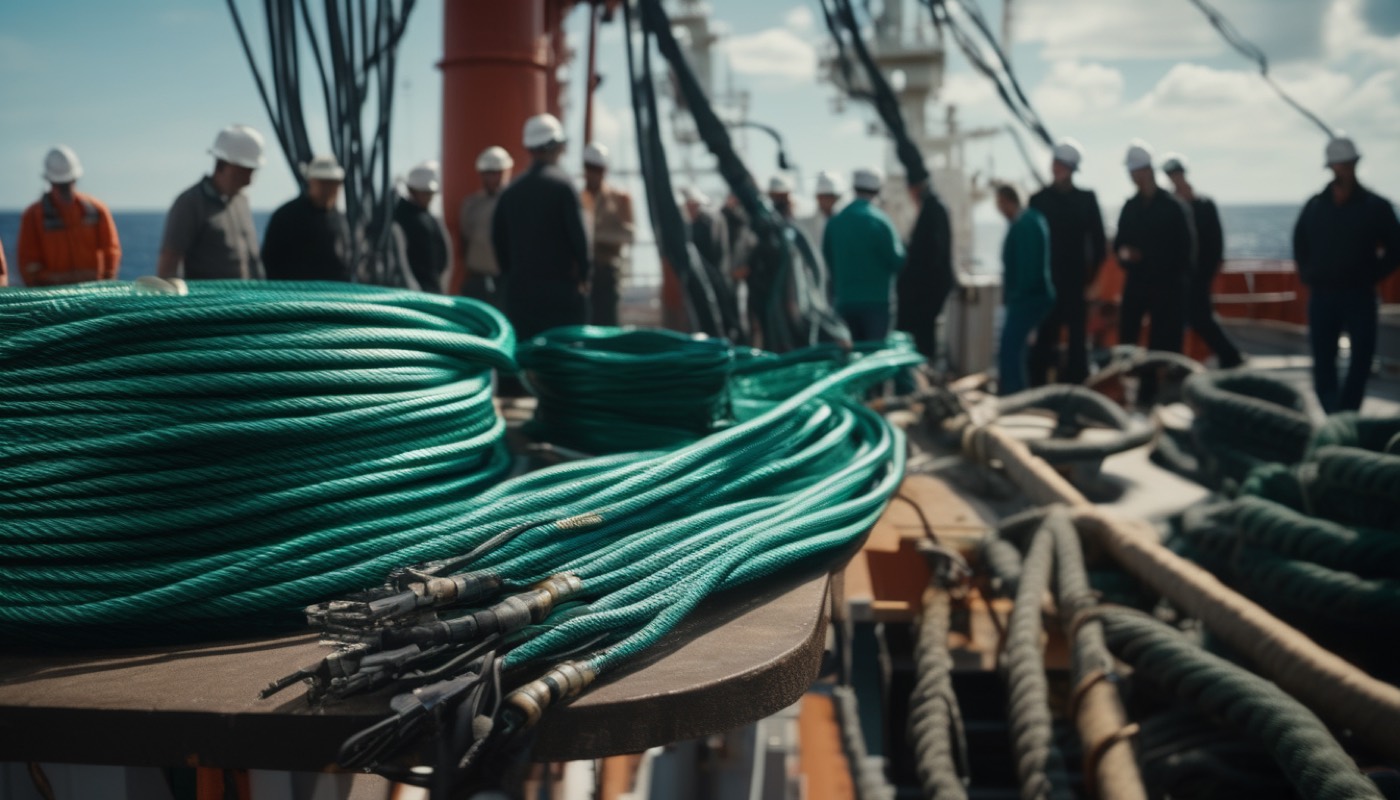
The newest HVDC project in this video is not trying to beat a distance or capacity record at all. It is trying to do something no converter station in the rest of this video does.
Marinus Link will run 345 kilometres between Tasmania and Victoria, across the Bass Strait. That route is 255 kilometres of subsea cable, plus 90 kilometres of underground cable on land. The subsea cable runs at 320,000 volts, with a converter station at each end. Stage One will carry 750 megawatts — enough power for roughly 750,000 homes. Construction is underway, running from 2026 to 2030.
What makes Marinus Link different is the kind of converter station Hitachi Energy is building for it.
Marinus Link uses voltage-source converters capable of running grid-forming: instead of simply carrying power, like every converter station described earlier in this video, a grid-forming converter can help set the grid's own frequency and voltage, the way a traditional large power station does. Hitachi Energy describes this as an Australian first for a link of this kind.
A grid-forming converter matters because Tasmania is adding large amounts of wind power — up to 3 gigawatts of new capacity, by Hitachi Energy's own figures. Wind turbines, unlike old-fashioned spinning generators, do not naturally help stabilise a grid's frequency on their own. A DC link that can lend some of that stability back is doing more than moving electrons from one state to another.
12. What DC will and won't replace

After ten chapters of converter stations and record-breaking lines, it is worth being precise about what HVDC has actually taken over — and what it plainly has not.
Nothing in this video replaces the ordinary AC distribution network that gets electricity the last few kilometres into homes and factories. That job stays cheap, simple and almost entirely AC, because transformers do it well and no converter station is needed over such short distances. HVDC exists for the much narrower job of moving bulk power over long distances, or joining grids that otherwise could not connect at all.
Picture the whole grid as two layers doing two different jobs, and the division is easy to see at a glance.
Local AC distribution still carries the overwhelming majority of electricity's final few kilometres, unchanged by anything in this video. HVDC sits above that layer, solving two specific problems: moving huge amounts of power efficiently over long distances, and linking grids that an AC connection could never join. One technology did not replace the other — each ended up doing the job the other one is bad at.
From a Swiss engineer's spinning machines in 1889, through mercury and silicon, to a grid-forming cable under the Bass Strait a century and a half later, the problem has stayed exactly the same: moving power a long way always costs something. HVDC is simply the modern answer to how much of that cost can be avoided.
Sources and credits
Photo credits (Wikimedia Commons)
- Rene Thury, Swiss engineer who built the early motor-generator HVDC transmission system: Unknown authorUnknown author, Public domain - https://commons.wikimedia.org/wiki/File%3ARene_Thury.jpg
- Mercury-arc rectifier (Brown Boveri AL36c), Massarelos Power Station, Porto: Novoklimov, CC0 - https://commons.wikimedia.org/wiki/File%3ABrown_Boveri_AL_36_c_mercury-arc_rectifier_at_Massarelos_Power_Station%2C_Porto_01.jpg
- Thyristor valve, Manitoba Hydro Bipole II HVDC converter station: Wtshymanski at English Wikipedia, Public domain - https://commons.wikimedia.org/wiki/File%3AManitoba_Hydro-BipoleII_Valve.jpg
- Pacific DC Intertie converter station at Sylmar, California: Northwalker, CC0 - https://commons.wikimedia.org/wiki/File%3APacific_DC_Intertie_at_Sylmar_California.jpg
- Pacific DC Intertie transmission tower, Path 65, near Benton, California: Vidor, Public domain - https://commons.wikimedia.org/wiki/File%3APacificIntertie.jpg
- Grounding electrode at the Yinan converter station, Shanghaimiao-Shandong +/-800kV UHVDC project, China: WPTO, CC0 - https://commons.wikimedia.org/wiki/File%3A%E4%B8%8A%E6%B5%B7%E5%BA%99-%E5%B1%B1%E4%B8%9C%C2%B1800%E5%8D%83%E4%BC%8F%E7%89%B9%E9%AB%98%E5%8E%8B%E7%9B%B4%E6%B5%81%E8%BE%93%E7%94%B5%E5%B7%A5%E7%A8%8B%E6%B2%82%E5%8D%97%E6%8D%A2%E6%B5%81%E7%AB%99%E6%8E%A5%E5%9C%B0%E6%9E%81.jpg


Primary sources
- Wikipedia, 'High-voltage direct current' (Thury system section) and 'René Thury' - the 1889 Italy installation (630kW, 14kV DC, 120km).
- Wikipedia, 'Lyon-Moutiers DC transmission scheme' - 8,600kW, up to 150kV DC, 200km, operated c.1906-1936, ~70% end-to-end efficiency.
- Bloomberg, 'China Links Up World's Longest, Most Powerful Power Line' (2 January 2019), corroborated by NS Energy Business - Changji-Guquan, +/-1,100kV, 3,293km, up to 12GW, energised January 2019.
- S&P Global Commodity Insights, news coverage of the Sellindge converter station fire and IFA interconnector outage (September-October 2021) and follow-up 'Full return of IFA 1 power cable link between UK, France delayed' (23 December 2022).
- Hitachi Energy, 'Marinus Link: Hitachi Energy's grid-forming HVDC technology drives Australian renewable energy superhighway' (2 October 2026, hitachienergy.com), fetched live 11 October 2026, with a second corroborating Hitachi Energy item dated the same day.
Not regulated financial advice.