
Nuclear Waste: The 70-Year Search for a Permanent Home
Deep inside an island on Finland's west coast, a tunnel drops more than four hundred metres into bedrock 1.9 billion years old. It is called Onkalo, and in August 2026 Finland's safety regulator, STUK, concluded there is no radiation or nuclear-safety obstacle to granting it an operating licence - a judgement that covers a span of at least 100,000 years and as long as a million. If the Finnish government grants that licence, Onkalo becomes the world's first operating permanent repository for spent nuclear fuel.
This video asks why that took seventy years. It starts with the first civilian reactors - Calder Hall in 1956, Shippingport in 1957 - and the cooling ponds that were always meant to be a temporary stop for their spent fuel. It follows the US National Academy of Sciences' 1957 recommendation for deep salt-bed disposal through its one real success, the Waste Isolation Pilot Plant (authorised 1979, opened 1999, but limited to military waste), and its defining failure: Yucca Mountain, named by political fiat in 1987, licensed for study in 2008, and defunded in 2010 over local political acceptance rather than any safety finding - the US Government Accountability Office's own words. That collapse is why American spent fuel still sits in dry casks at reactor sites decades later.
It explains what any repository actually has to do - isolate waste behind three independent barriers, canister, buffer and host rock, for over 100,000 years - and shows that the politics of picking a site were never unique to America: Germany suspended its Gorleben site in 2000 and abandoned it in 2012 for a fresh national search, and France filed its own construction licence application for Bure in January 2023, still awaiting a decision.
Finland took a different route: an 1994 law requiring the waste stay in Finland, a site choice ratified by Parliament 159 votes to 3 in 2001, and Sweden's KBS-3 method of copper canisters and bentonite clay, adopted and built into Onkalo between 2004 and 2015. Posiva's president and CEO, Ilkka Poikolainen, called the August 2026 assessment a milestone - and the Finnish government's own decision to grant the licence is still pending.
The verdict: not that Finland has fully solved it yet, but that it is the first country in seventy years to get close.
Educational documentary. Not financial or investment advice.
Tags
Chapters
- A 70-year-old unsolved problem
- The first reactors, the first waste
- Salt, science, and the first answer
- America tries and fails: WIPP and the salt beds
- Yucca Mountain: politics overtakes science
- Why waste still sits at the reactor
- What a repository actually has to do
- Europe's parallel struggles: Germany and France
- Finland chooses differently: Olkiluoto and KBS-3
- Building Onkalo
- 2026: the licence decision
- Why Finland matters to everyone else
Video notes
1. A 70-year-old unsolved problem
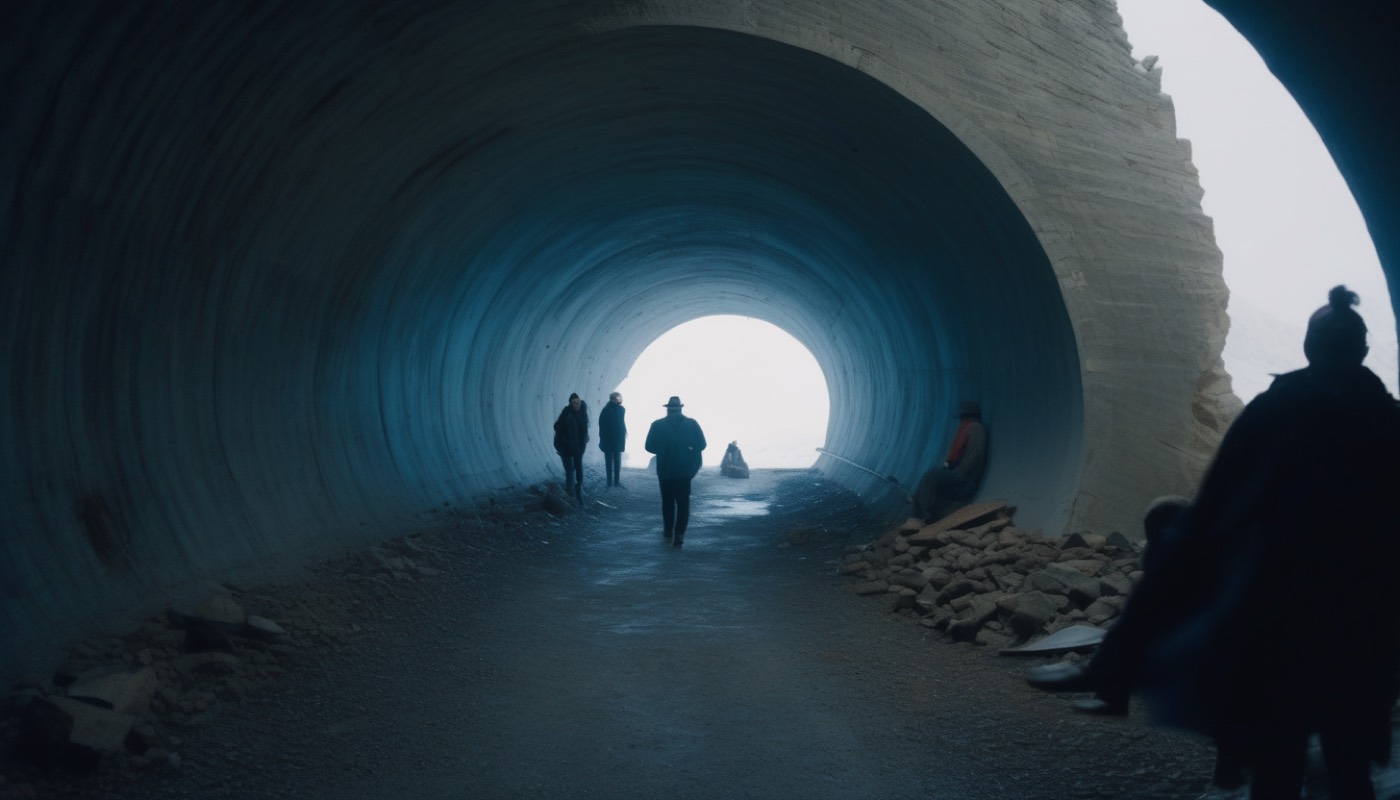
Deep inside an island on Finland's west coast, workers are finishing a tunnel that drops more than four hundred metres into rock older than almost anything on Earth. It is called Onkalo, and in 2026 Finland's safety regulator said it could be sealed and used.
If that happens, Onkalo becomes the world's first operating permanent repository for spent nuclear fuel. No country has reached that point before.
In August 2026, Finland's safety regulator finished checking Onkalo against a standard few projects on Earth are ever asked to meet. Posiva, the company building it, hopes to start sealing waste inside it within the decade.
That single fact raises an obvious question, and this video exists to answer it.
Civilian nuclear power has been producing electricity, and spent fuel, for seventy years. So here is the question this video asks: after seven decades, does any country actually know where that waste goes for good? Finland may be about to answer yes. Everyone else is still working on it.
To understand why that answer took seventy years, we have to start at the beginning, with the reactors that made the waste in the first place.
2. The first reactors, the first waste
Civilian nuclear power began in the 1950s, and almost nobody involved in it was thinking about what would happen to the waste a century later.
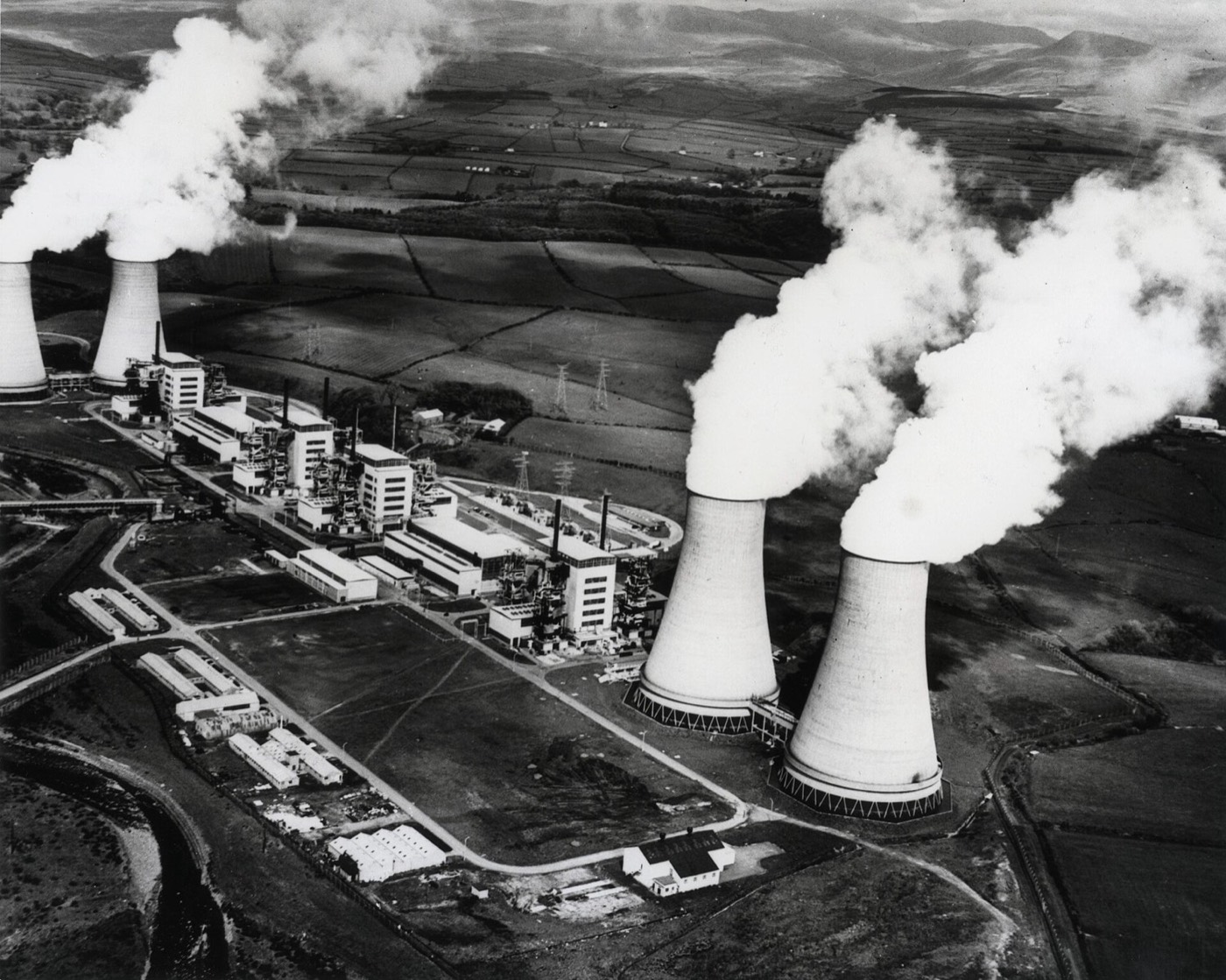
This photograph shows Calder Hall, in Cumbria, England, opened by Queen Elizabeth the Second in October 1956. It was the world's first nuclear power station built to supply electricity on a commercial scale, though its first job was producing material for weapons, with electricity as a useful by-product.
A little over a year later, the United States opened a station built the other way round, for electricity first.
Spent fuel coming out of a reactor is still extremely hot and highly radioactive, so every reactor site, from the start, needed somewhere to put it straight away. That somewhere was a cooling pond: a deep pool of water right next to the reactor, where the fuel could sit safely while it lost heat and radioactivity. Nobody expected it to stay there for decades. It was meant to be the first stop on the way to somewhere permanent, not the destination.
That assumption — that a real answer was coming soon — turned out to be the most expensive assumption in the whole story.
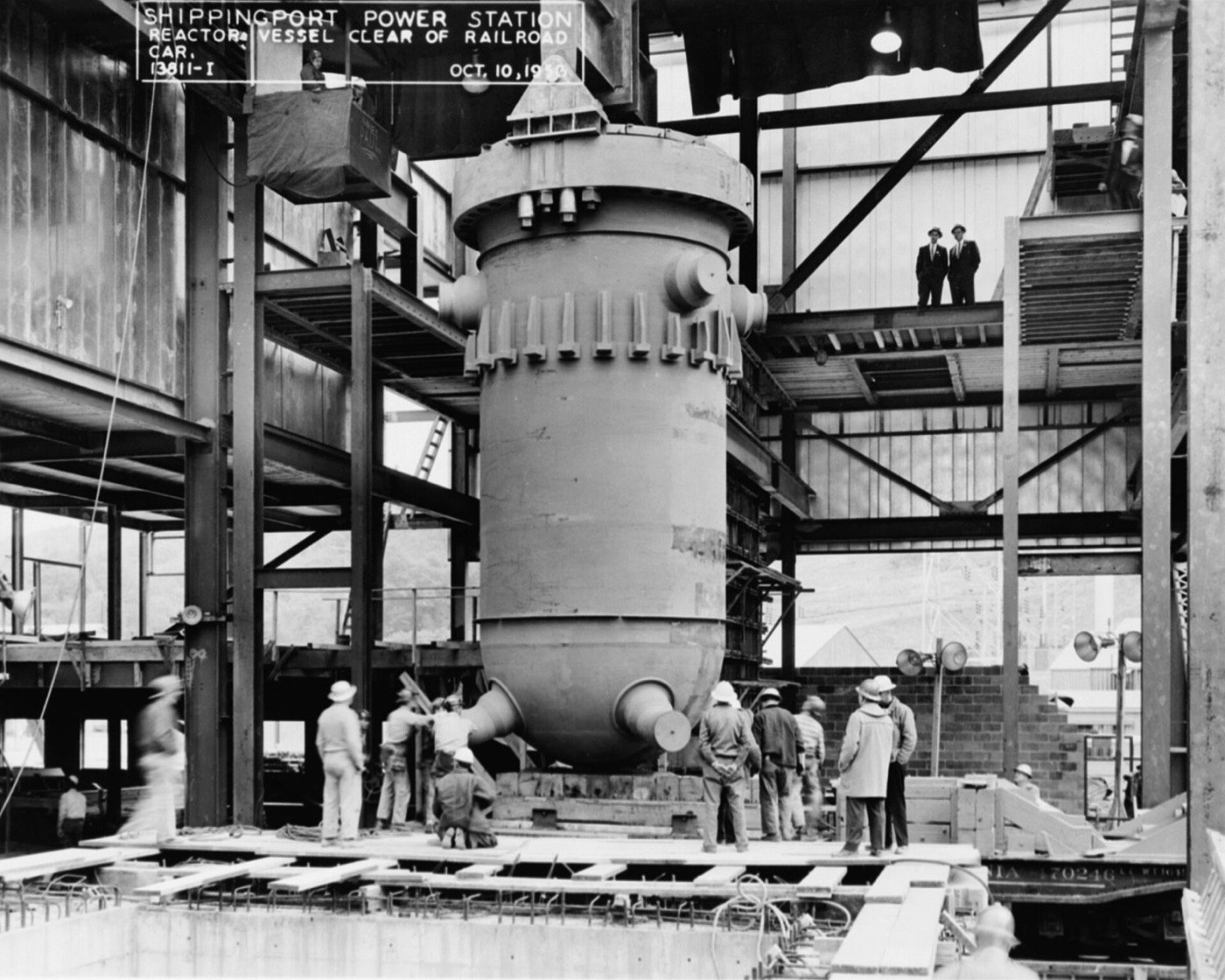
This photograph shows the Shippingport Atomic Power Station in Pennsylvania, which opened in December 1957 as the first full-scale nuclear plant built specifically to generate civilian electricity. Its spent fuel went into a cooling pond too, exactly like Calder Hall's, on the understanding that a permanent disposal site would eventually take it away.
Calder Hall sits on England's north-west coast. Shippingport sits on a river bend in Pennsylvania, more than five thousand kilometres away. Both began producing electricity within fourteen months of each other, and both sent their spent fuel into a cooling pond, because nobody anywhere had built anywhere else for it to go.
That permanent site needed a scientific answer first, and scientists had already started looking for one.
3. Salt, science, and the first answer
In 1957, the same year Shippingport opened, the United States National Academy of Sciences gave the nuclear industry its first real answer to the waste question.
A panel of scientists and engineers looked at where radioactive waste could sit safely for tens of thousands of years, and settled on something nobody outside the field expected: ordinary salt, buried deep underground. Salt beds that are hundreds of millions of years old have survived that long because groundwater never reached them and dissolved them away. Bury waste inside one, and the same property that kept the salt dry for millions of years should keep water away from the waste.
That recommendation did more than suggest a material. It set the template everyone would copy.
Salt has a second useful property: under pressure, it behaves almost like a very slow liquid, flowing to fill any gap around a buried container over time. The United States Atomic Energy Commission picked up the National Academy's recommendation and made deep salt-bed disposal the official priority for American radioactive waste. Science had given politics a map. What happened next is a story about whether politics followed it.
4. America tries and fails: WIPP and the salt beds
The salt-bed idea's first real test came in New Mexico, and it is worth being precise about what it actually solved.
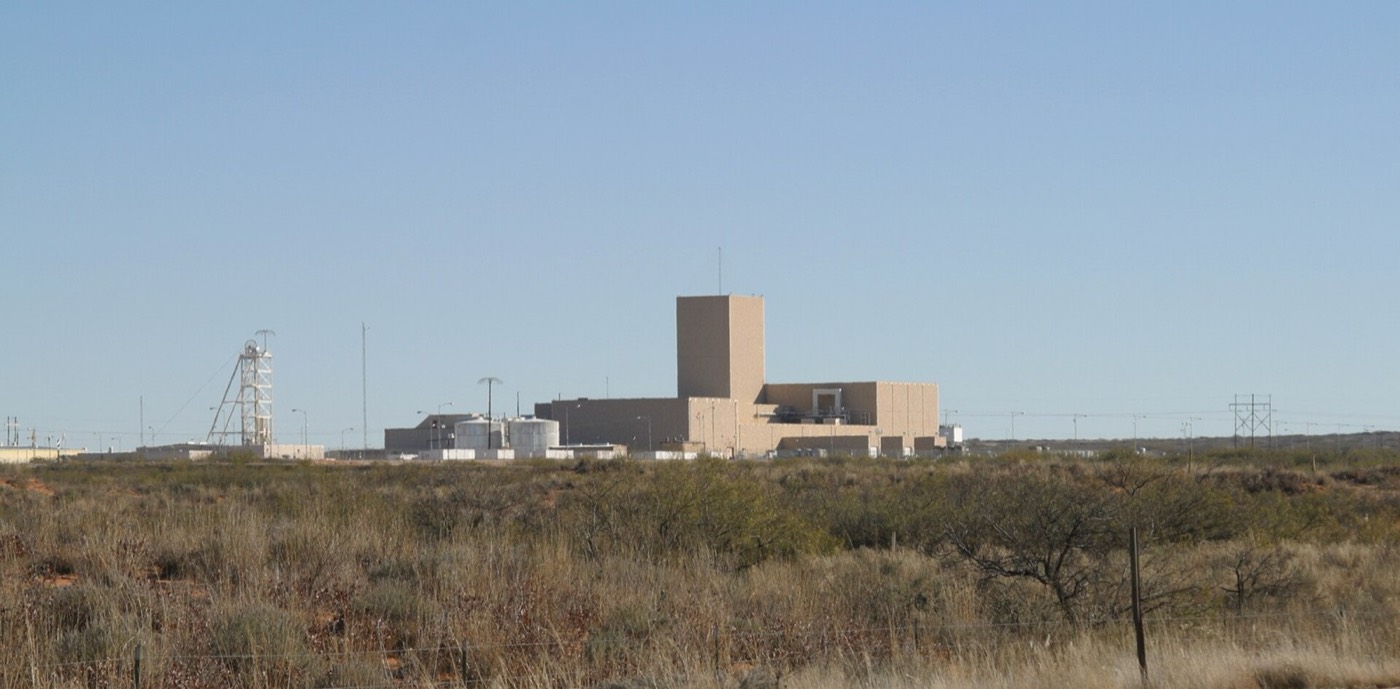
This photograph shows the Waste Isolation Pilot Plant, built into salt beds near Carlsbad, New Mexico — the project that put the National Academy's 1957 recommendation into the ground. Congress authorised it in 1979, specifically to handle defence-related radioactive waste rather than the fuel from civilian power stations.
Nearly two decades passed between that authorisation and the first waste actually arriving.
The facility was certified safe for long-term waste disposal in 1998, and in March 1999 the first shipment of waste arrived from a nearby national laboratory. By 1999, the Waste Isolation Pilot Plant was open and operating, licensed to hold its waste safely for ten thousand years.
That is a genuine success story, and it is also a trap, because of what the plant was never allowed to take.
The Waste Isolation Pilot Plant has never been approved to hold spent fuel from civilian power stations. It takes only transuranic waste — material left over from weapons production — under a limit Congress set in 1979 and never lifted. The salt-bed method worked. It just was not solving the problem this video is about.
So the civilian question was still open, and the United States tried to answer it a second time, somewhere else entirely.
5. Yucca Mountain: politics overtakes science
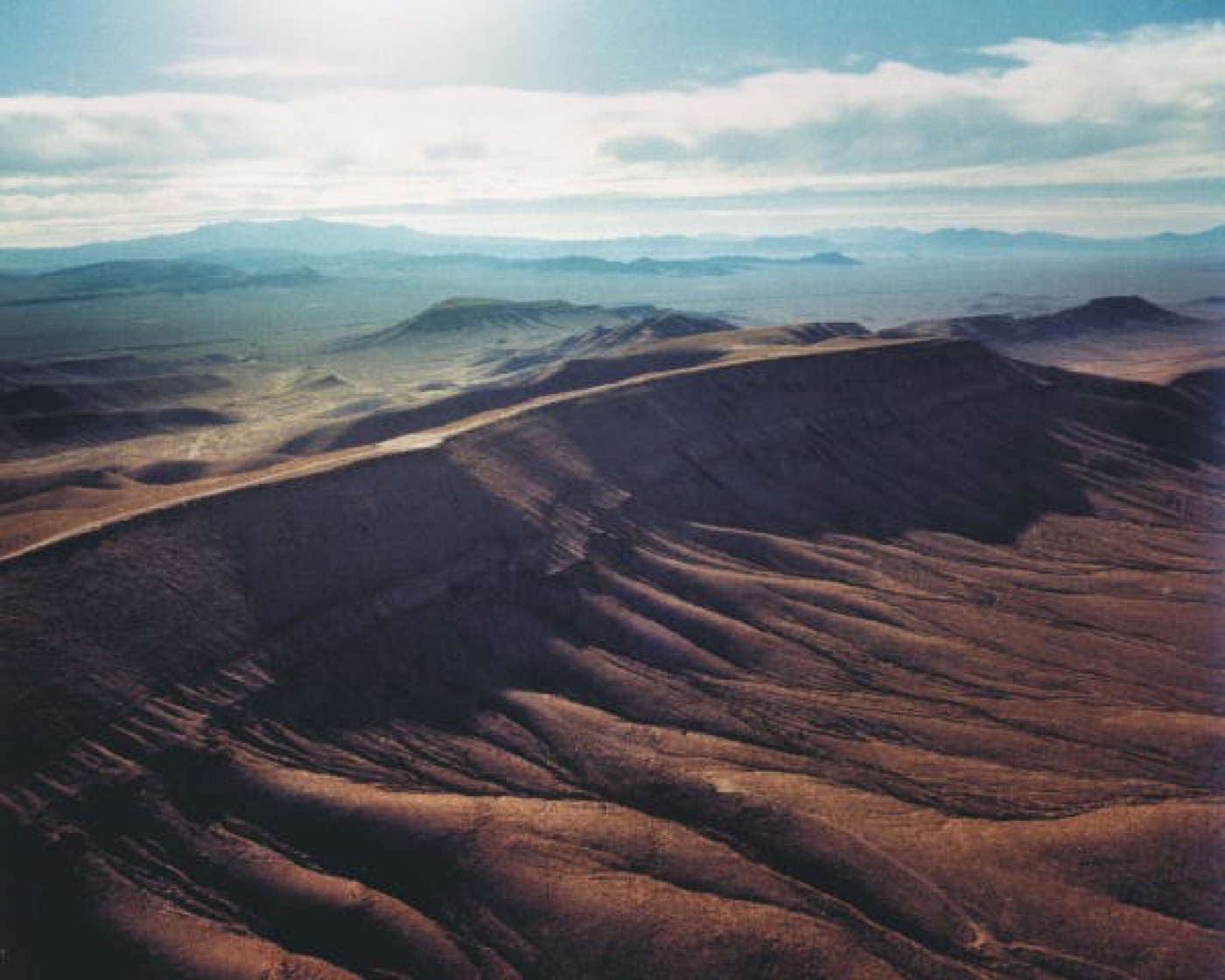
In 1982, American law told the Department of Energy to find and build a civilian repository, through a process of comparing candidate sites. Five years later, Congress changed its mind about how that process should work.
This photograph shows Yucca Mountain, in the Nevada desert, the single site Congress named by law in 1987 rather than selecting through comparison. It is the only site in this video that a legislature picked directly, ahead of any side-by-side study.
Lay the Yucca Mountain dates out in order. Congress named the site by legislative fiat in 1987. The Department of Energy filed its licence application with the Nuclear Regulatory Commission in 2008, after decades of study. And in 2010, under the Obama administration, the department tried to withdraw that application and stopped funding the project.
The withdrawal was not even clean. A licensing board rejected the formal paperwork, but the money and the effort stopped anyway, and nothing has restarted it since.
"Yucca Mountain is not a workable option because of a lack of public acceptance by the people of Nevada." That is the reason the Department of Energy itself gave for walking away — not a safety finding, a political one. The United States Government Accountability Office reported on exactly this collapse, and that sentence is theirs, not a journalist's paraphrase.
Yucca Mountain is the clearest example in this video of a repository failing for reasons that had nothing to do with geology. With nowhere left to send it, America's spent fuel did not go anywhere. It stayed exactly where it was made.
6. Why waste still sits at the reactor
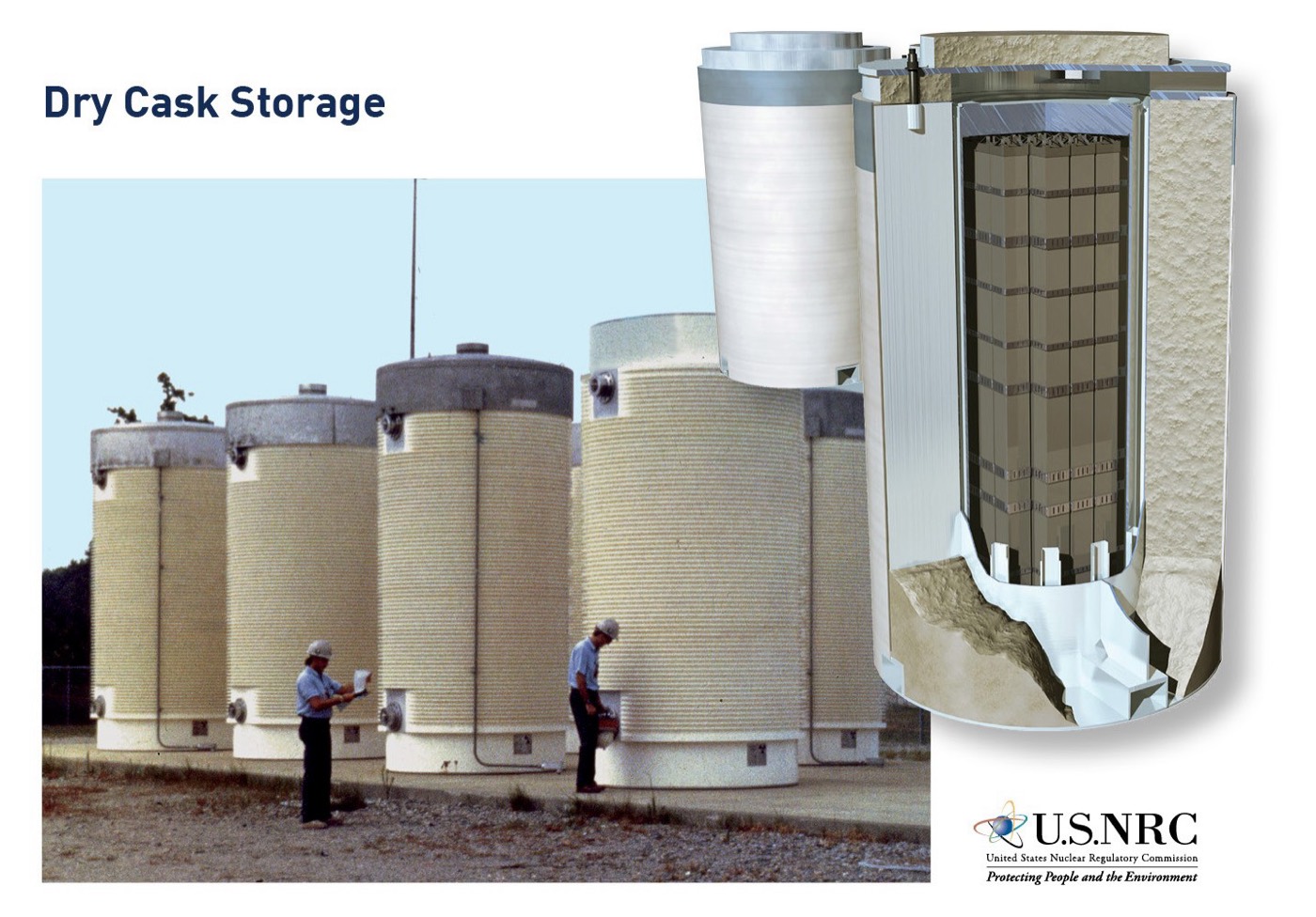
Here is the plain consequence of Yucca Mountain's collapse: spent fuel across the United States is still sitting at the power stations that produced it, decades after some of those stations started running.
This photograph shows dry cask storage: sealed steel-and-concrete containers standing in a yard at a reactor site. Fuel moves into a dry cask once it has cooled enough in its pond, and the cask is designed to hold it safely in the open air for many years. It was built as a stop-gap, something to use only until Yucca Mountain or a successor opened.
That stop-gap has now been running for longer than the plan it was standing in for.
Dry cask storage at American reactor sites was meant to be temporary, bridging the gap until a federal repository opened. With no repository, it has now lasted longer than many of the reactors it serves will ever operate, and in several cases, longer than the reactor itself has run. "Temporary" is doing a lot of work in that sentence, and it has been for forty years.
America's experience raises an engineering question the rest of this video has to answer properly: what would an actual repository have to do that a cask in a yard cannot?
7. What a repository actually has to do
Set the politics aside for a moment, because underneath it there is a genuine engineering problem, and it is a hard one.
Spent nuclear fuel stays dangerously radioactive for a very long time — a repository has to isolate it for more than one hundred thousand years, and some assessments look as far out as one million years. No human structure has ever been asked to hold anything safely for that long, so the engineering answer is not to rely on one single barrier.
Instead, every serious repository design, in every country this video covers, uses the same basic strategy.
A sealed metal canister holds the fuel itself. A buffer material packs tightly around that canister. And the host rock, whatever it is, surrounds both. If one of those three fails, the other two are still there, so no single mistake or crack can let radioactivity reach the surface. Every country that has tried to solve this problem, from the salt beds of New Mexico to the bedrock of Finland, has built around that same three-layer idea.
Different countries chose different rock for that outer layer, and that choice is where most of this story's politics actually happened.
8. Europe's parallel struggles: Germany and France
Germany and France both tried to find a permanent site decades ago, and both show that the politics of picking one spot are not just an American problem.
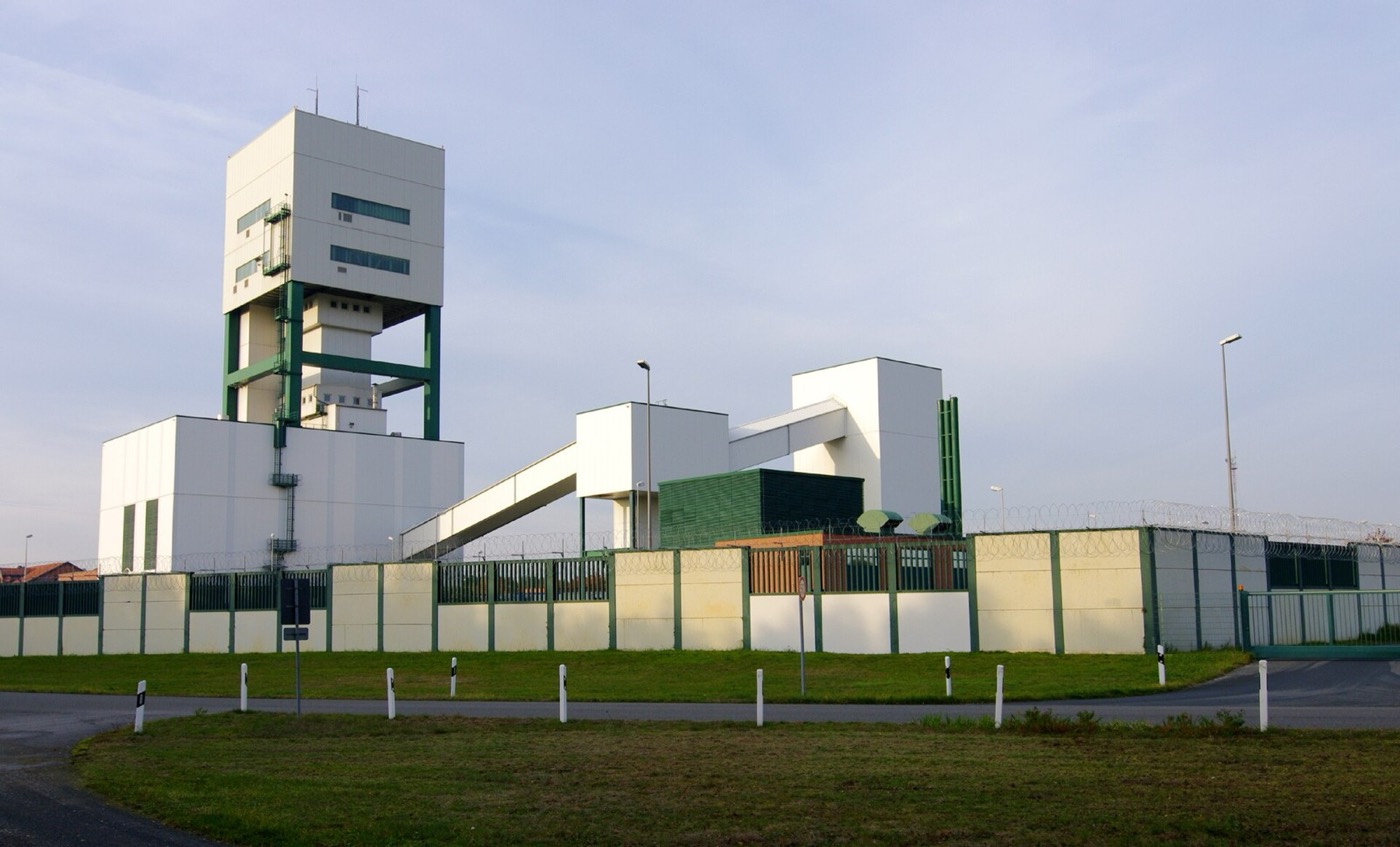
This photograph shows the exploration mine at Gorleben, in Lower Saxony, Germany's candidate site since the 1970s. Germany worked on it for decades, under successive governments, before anything was finally decided.
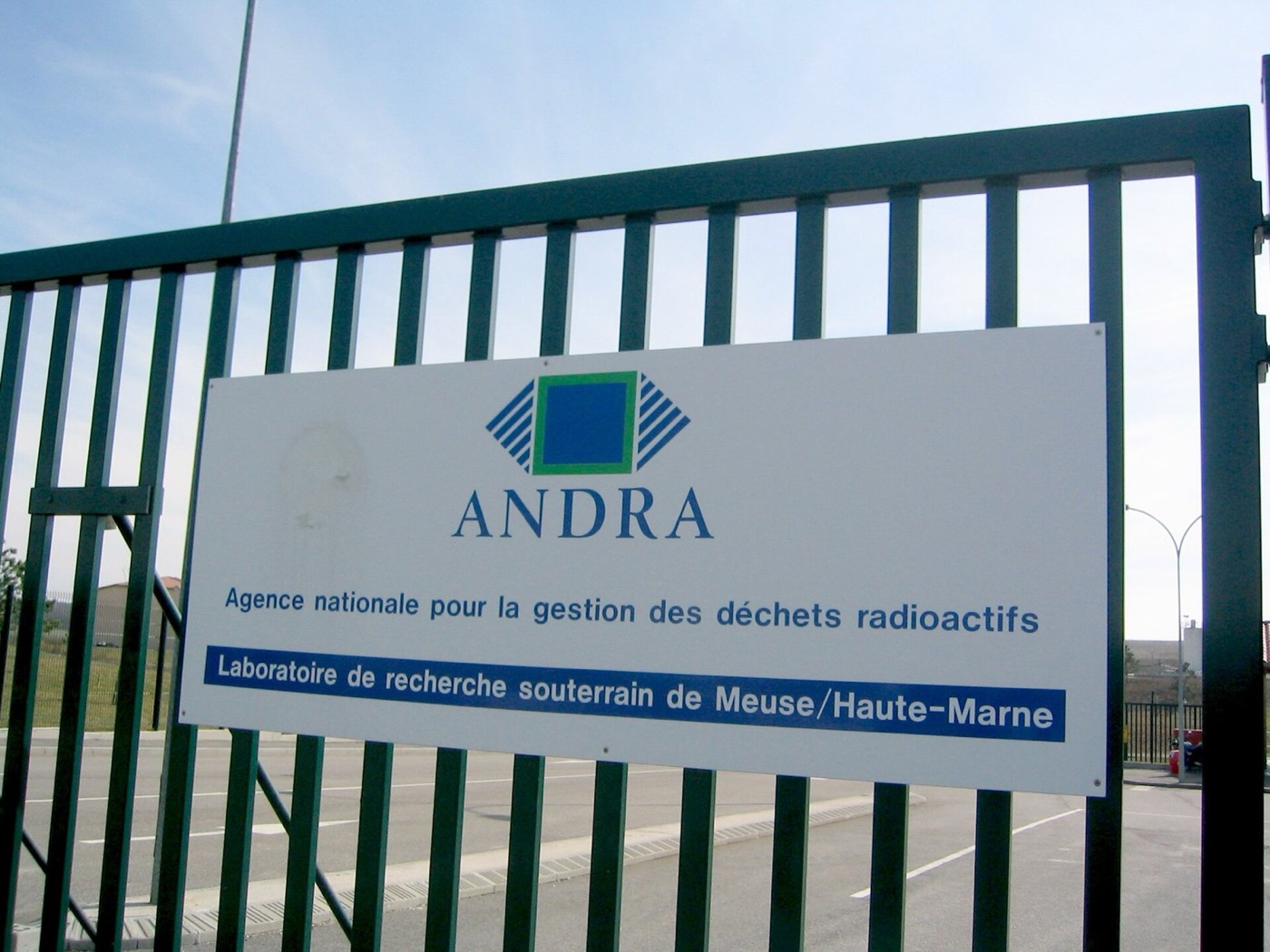
Lay both countries' dates out together. France chose Bure as its site in 1998. Germany suspended Gorleben under a political moratorium in 2000. Exploration restarted there in 2010, but by the end of 2012, Germany abandoned Gorleben for good and went back to a fresh, nationwide search. France, meanwhile, filed its construction licence application for Bure in January 2023 — a filing roughly ten thousand pages long, still under review.
This photograph shows the entrance to Andra's underground research laboratory at Bure, the French site that has spent twenty-five years studying its rock before asking permission to build anything permanent there.
Gorleben sits in northern Germany, inland from the coast. Bure sits further south-east, inland and away from the coast. Neither country has reached a licence to operate a repository. Both spent decades finding out that choosing a site is as hard as engineering one.
One country took a noticeably different approach to that choice, and it is the one this video is really about.
9. Finland chooses differently: Olkiluoto and KBS-3
Finland decided early that it would not export its problem, and that decision shaped everything that followed.
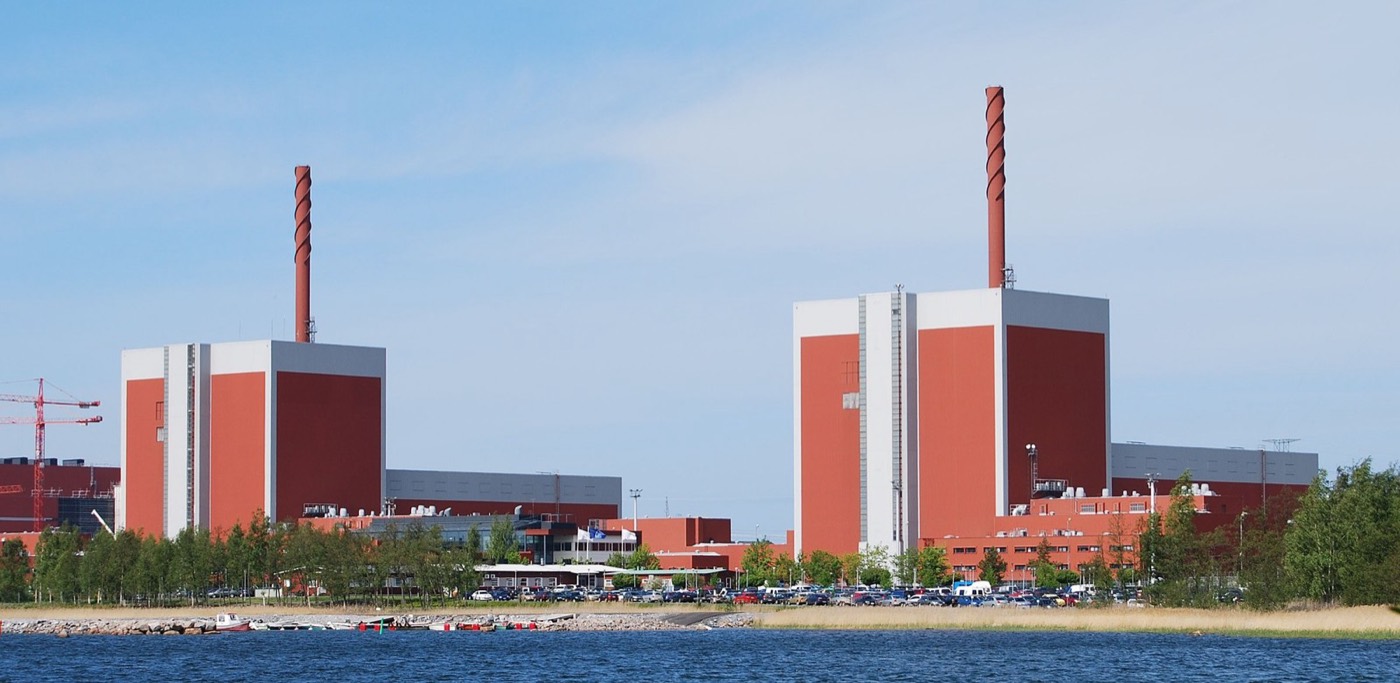
This photograph shows Olkiluoto, the small Finnish island where two nuclear power stations already stood when the search for a waste site began. In 1994, Finland's Nuclear Energy Act was changed to require that all nuclear waste made in Finland stay in Finland. Nothing is imported, nothing exported, and nothing left for another country to manage.
With that rule in place, Finland still had to choose exactly where on its own territory the waste would go, and it did that in stages, with the local community's agreement built in from the start.
Posiva proposed Olkiluoto in 1999. The host municipality approved it in January 2000. Finland's government made its decision that December. Parliament ratified it in May 2001. The margin was 159 votes to 3. Four steps, each one public, each one a chance to stop — and none of them did.
Finland also borrowed its engineering answer rather than inventing one from scratch.
Sweden's nuclear waste company, SKB, spent decades developing a disposal method called KBS-3: a copper-and-iron canister, wrapped in a clay buffer called bentonite, buried in solid crystalline rock. Posiva adopted that same method for Finland's own repository. Neither country started from zero. Finland took Sweden's engineering and built the site to use it.
That site is Onkalo, and it took another two decades to actually build.
10. Building Onkalo
Choosing Olkiluoto in 2001 was the easy part. Turning it into a working repository took most of the following twenty-five years.
Lay the Onkalo construction dates out in order. Posiva began excavating the access tunnel in 2004. It submitted its application for a construction licence in 2012. And in November 2015, Finland's Ministry of Economic Affairs and Employment granted that licence, after the safety regulator's own review came back positive.
That licence let Posiva finish the tunnel down to the depth where the actual disposal chambers sit.
Onkalo's disposal tunnels sit around four hundred to four hundred and fifty metres underground, carved into crystalline bedrock the Geological Survey of Finland dates at about 1.9 billion years old. That rock has sat undisturbed for roughly forty per cent of the age of the planet. It is, by a wide margin, the oldest and most stable material any country in this video chose to bury its waste in.
Eleven years after that construction licence, Finland reached the step every other country in this video has been trying, and failing, to reach.
11. 2026: the licence decision
On the tenth of August 2026, Finland's safety regulator, STUK, published its verdict on Onkalo.
"The safe final disposal of spent nuclear fuel has been a key challenge ever since nuclear power began to be used for electricity generation in the 1950s. Now the solution is closer to implementation than ever before." That is Posiva's own president and chief executive, Ilkka Poikolainen, describing what the regulator's assessment means.
STUK's own conclusion was just as direct, and it covered an almost unimaginable stretch of time.
STUK concluded there was no radiation or nuclear-safety obstacle to granting Onkalo an operating licence, after assessing its safety over a period of at least one hundred thousand years, and as long as one million. Posiva is seeking a licence that would let it keep operating into roughly 2070.
That assessment is a milestone, but it is not yet the final word — one decision still remains, and it belongs to politicians rather than engineers.
The regulator's assessment is not the operating licence itself. Finland's government still has to make the final call on granting it, and at the time of this video, that call had not yet been made. Seventy years after Calder Hall, the decision has finally reached the one body that can actually say yes.
If that yes comes, Finland will not just have solved its own problem. It will have changed the terms for every other country still trying to solve theirs.
12. Why Finland matters to everyone else
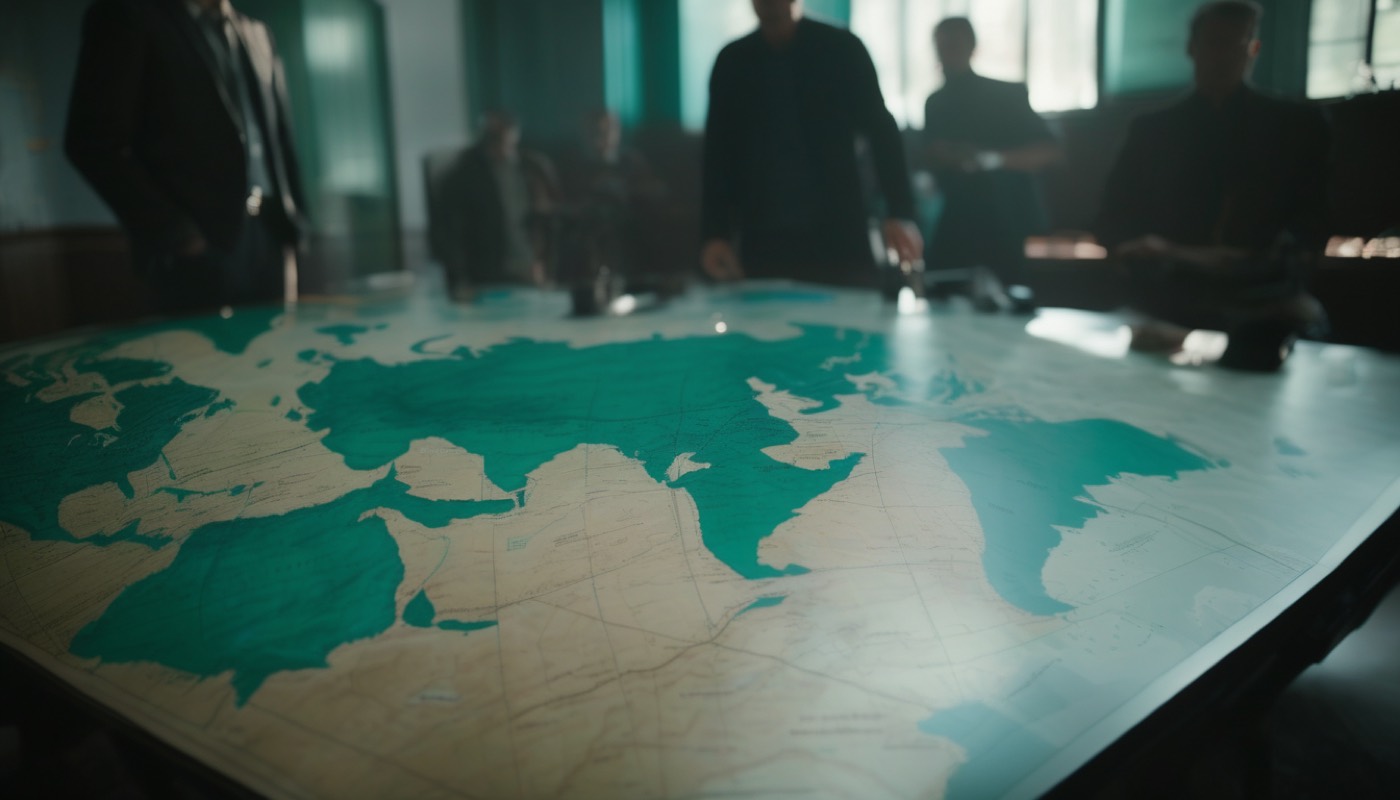
Put the four places in this video next to each other, and the pattern is impossible to miss.
The United States named Yucca Mountain in Nevada by political fiat, filed for a licence, and then walked away. Germany moved its search away from Gorleben to a fresh national hunt that is still running. France filed its own licence application for Bure and is still waiting on an answer. Finland is the only one of the four approaching an actual operating licence for its own site, Onkalo.
None of that makes Finland cleverer than the others. It makes Finland further along a process every one of them is still inside.
This video began with a question: after seventy years of civilian nuclear power, does any country actually know where the waste goes for good? Finland has not fully answered it yet either — the government's decision is still pending. But for the first time since the first civilian reactors switched on, one country is close enough to a real answer that every other country searching for one is watching to see how it is done.
The back end of the nuclear fuel cycle was the part nobody solved first. Seventy years on, somebody is finally close.
Sources and credits
Photo credits (Wikimedia Commons)
- Calder Hall nuclear power station, UK - world's first commercial nuclear power station, opened 1956: ENERGY.GOV, Public domain - https://commons.wikimedia.org/wiki/File%3ACalder_Hall_nuclear_power_station_%2811823864155%29.jpg
- Shippingport Atomic Power Station, Pennsylvania - world's first full-scale civilian atomic power plant, 1956: Nuclear Regulatory Commission from US, Public domain - https://commons.wikimedia.org/wiki/File%3AShippingport_Atomic_Power_Station_-_Oct._10%2C_1956_%2814492222700%29.jpg
- Waste Isolation Pilot Plant (WIPP), New Mexico salt beds: Leaflet, Public domain - https://commons.wikimedia.org/wiki/File%3AWaste_Isolation_Pilot_Plant_2004.jpg
- Yucca Mountain, Nevada - site of the cancelled US nuclear waste repository: unknown, Public domain - https://commons.wikimedia.org/wiki/File%3AYucca_Mountain_2.jpg
- Dry cask storage of spent nuclear fuel at a US reactor site: Nuclear Regulatory Commission from US, Public domain - https://commons.wikimedia.org/wiki/File%3ADry_Cask_Storage_of_Spent_Nuclear_Fuel_%2836801710635%29.jpg
- Gorleben exploration mine, Germany - suspended site for a planned nuclear waste repository: User:Fice, Public domain - https://commons.wikimedia.org/wiki/File%3AGorlebenNuclearWaste3.jpg
- Andra underground research laboratory entrance at Bure, Meuse, France - Cigeo project site: Ji-Elle, Public domain - https://commons.wikimedia.org/wiki/File%3ABure-ANDRA.JPG
- Olkiluoto Nuclear Power Plants 1 & 2, Eurajoki, Finland - site adjacent to the Onkalo repository: kallerna, Public domain - https://commons.wikimedia.org/wiki/File%3AOlkiluoto_1%262.jpg


Primary sources
- American Nuclear Society, Nuclear Newswire, 'Onkalo SNF repository passes safety assessment', ans.org/news/2026-08-10/article-8280, 10 August 2026.
- US Government Accountability Office, Report GAO-11-229, 'Commercial Nuclear Waste: Effects of a Termination of the Yucca Mountain Repository Program and Lessons Learned', 8 April 2011 - the 2008 licence application, the March 2010 withdrawal request, the Licensing Board's rejection of it, and DOE's own stated reason ('lack of public acceptance by the people of Nevada'), quoted verbatim.
- US Department of Energy, Waste Isolation Pilot Plant history timeline, wipp.energy.gov/historytimeline.asp - the 1979 congressional authorisation, 1998 EPA certification, and 26 March 1999 first waste shipment, confirmed via World Nuclear News and energy.gov corroboration.
- National Academies Press, 1957 report on radioactive waste disposal (OpenBook archive) - the National Academy of Sciences' recommendation of deep salt-bed disposal, and the US Atomic Energy Commission's resulting priority.
- Bundesgesellschaft fur Endlagerung (BGE), Germany, press and retrospective material, 2018-2019 (bge.de), corroborated via World Nuclear News, 'Exploration to resume at German repository site' - the 2000 Gorleben moratorium, 2010 restart, and end-of-2012 abandonment for a fresh nationwide search.
- Agence nationale pour la gestion des dechets radioactifs (Andra), France - the 1998 Bure site selection and the 16 January 2023 Cigeo construction licence application filing, confirmed via World Nuclear News, 'Application for French repository accepted for review', 2023. The licence decision remains pending; this video does not claim it was granted.
- OECD Nuclear Energy Agency, Finland country profile; Posiva Oy, 'Selecting the Site: the Final Disposal at Olkiluoto' - the 1994 Nuclear Energy Act requiring domestic-only disposal, and the 1999-2001 Olkiluoto site-selection sequence (Posiva proposal 1999, municipal approval January 2000, government decision December 2000, Parliamentary ratification 159-3 in May 2001).
- Wikipedia, 'Onkalo spent nuclear fuel repository', corroborated via IAEA conference material (conferences.iaea.org) and NEI Magazine - the 2004 start of access-tunnel excavation, the 2012 construction-licence application, and the 12 November 2015 licence grant by Finland's Ministry of Economic Affairs and Employment.
- UK National Archives / gov.uk, 'Atomic Achievement' and '60 years since the day that changed the nuclear industry' - Calder Hall's 17 October 1956 opening, and its primary purpose as weapons-material production with electricity as a by-product.
- EBSCO Research Starters, 'First U.S. Commercial Nuclear Plant Opens'; Nuclear Regulatory Commission historical photograph record - Shippingport's 2 December 1957 opening as the first full-scale civilian-electricity nuclear plant.
Not regulated financial advice.