
Offshore Wind: Engineering the Sea's Biggest Machines
A single modern offshore turbine has blades longer than a football pitch and can power thousands of homes. This video explains how these machines are built, installed on the seabed or floated, and connected to the grid, and why their cost rose sharply after 2022 before falling again.
It follows the size of a single turbine growing thirty-fold in thirty years, from Denmark's 1991 Vindeby wind farm to the Vestas V236-15.0 MW, a production turbine with a 115.5-metre blade and a tip height of about 261 metres. It explains swept area, direct-drive and geared drivetrains, the engineering limits on further growth, monopile and jacket foundations, and floating turbines from Hywind Scotland (2017) onward.
It then follows the money: the UK's zero-bid 2023 auction, Orsted's 2025 cancellation of Hornsea 4, and the UK's record January 2026 Allocation Round 7 - 8.4 GW awarded at about 91 pounds per megawatt-hour fixed-bottom and 216.49 pounds per megawatt-hour floating. It closes on the Netherlands' return to subsidised tenders for IJmuiden Ver Gamma-A, contrasted with Germany's still-running zero-subsidy He Dreiht project, and asks whether the price can keep falling.
Educational documentary. Not financial or investment advice.
Tags
Chapters
Video notes
1. The machine that outgrew the ship
A single blade, 115.5 metres long. Longer than a football pitch, tip to root. Bolted to a hub two hundred and sixty-one metres above the water, on a tower built to stand in the open sea for thirty years without anyone climbing it more than a few times a year.
That is the Vestas V236, the largest turbine now in commercial service, and in this video it is the machine that raises an uncomfortable question. Every part of it got bigger for a reason: a bigger rotor catches more wind, so fewer turbines are needed for the same power, so fewer foundations, fewer cables, fewer ships. But the ship that lifts the blade, the factory that casts it, the port that stores it and the grid that carries its power all have limits of their own, and several of them are now close to being reached at once.
Two numbers carry the whole of this chapter's claim. A blade of 115.5 metres, and a tip height of about 261 metres — taller than most skyscrapers most people have stood beside. Both numbers describe one production turbine, the Vestas V236, not a concept design.
So the question this video asks is not whether offshore wind works. It plainly does; it already powers millions of homes.
The question is whether the machine and the market that built it can keep growing the way they have for the last thirty years, or whether both have started running into a wall. This video answers both halves of that question in turn — the engineering first, then the money.
2. From Vindeby to V236
Offshore wind started small, on purpose. In 1991, off the Danish island of Lolland, a Danish energy company put up eleven turbines in shallow water, in a project called Vindeby. Each one generated 450 kilowatts — enough for a few hundred homes between all eleven.
Vindeby was decommissioned for cost reasons in 2017, after twenty-five years of use. The first offshore wind farm ever built ran for a quarter of a century before it was quietly dismantled, one turbine kept as a museum piece.
From there, the size of a single turbine grew roughly thirty-fold in thirty years. Vestas announced its 15-megawatt V236 design in 2021, and by 2023 a prototype had reached its full rated output for the first time.
One V236 now generates more power alone than the entire eleven-turbine Vindeby farm did as a whole. That climb, from 450 kilowatts in 1991 to 15 megawatts little more than thirty years later, is the story the rest of this video has to explain.
Newer wind farms built in the years between Vindeby and the V236 already looked nothing like it, with dozens of turbines standing well out to sea rather than a handful close to shore.
3. Anatomy of a giant turbine
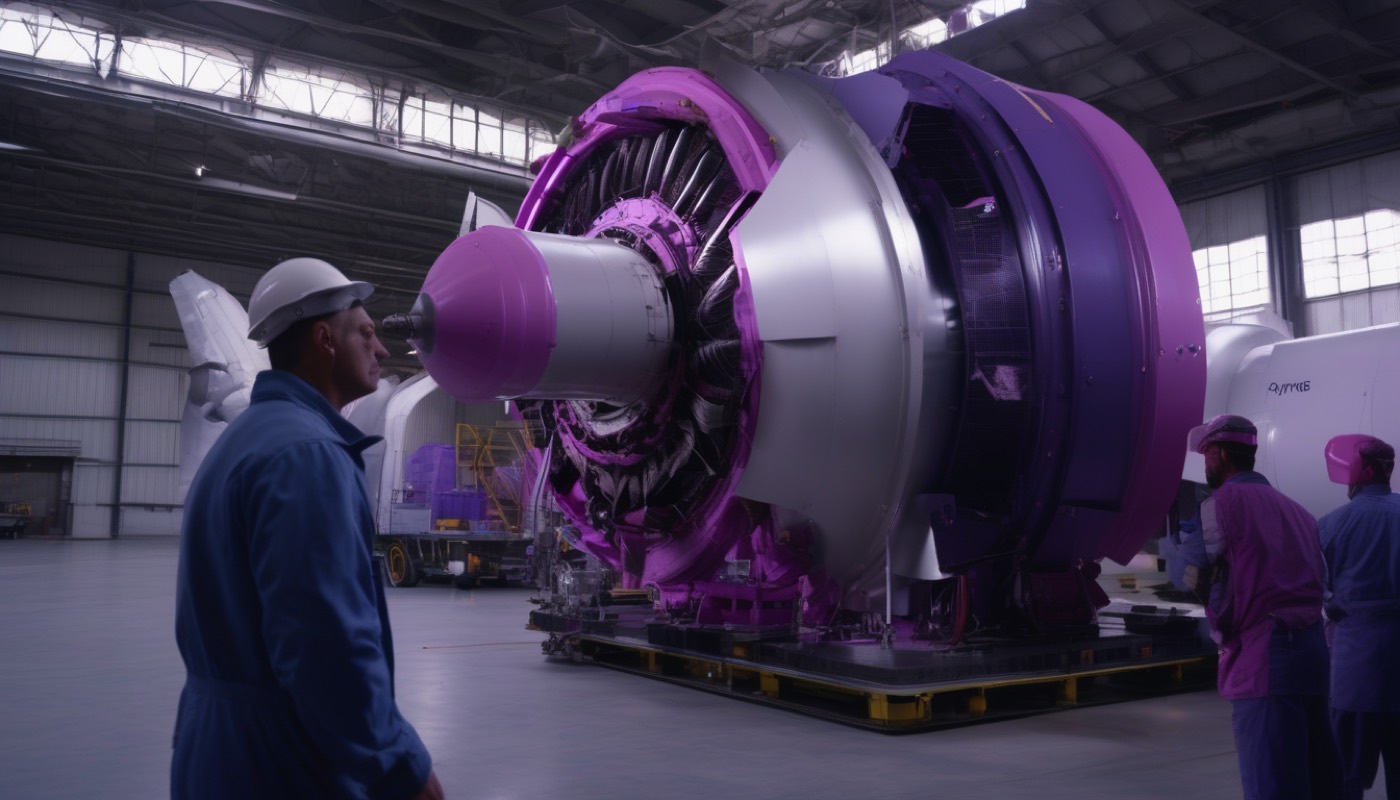
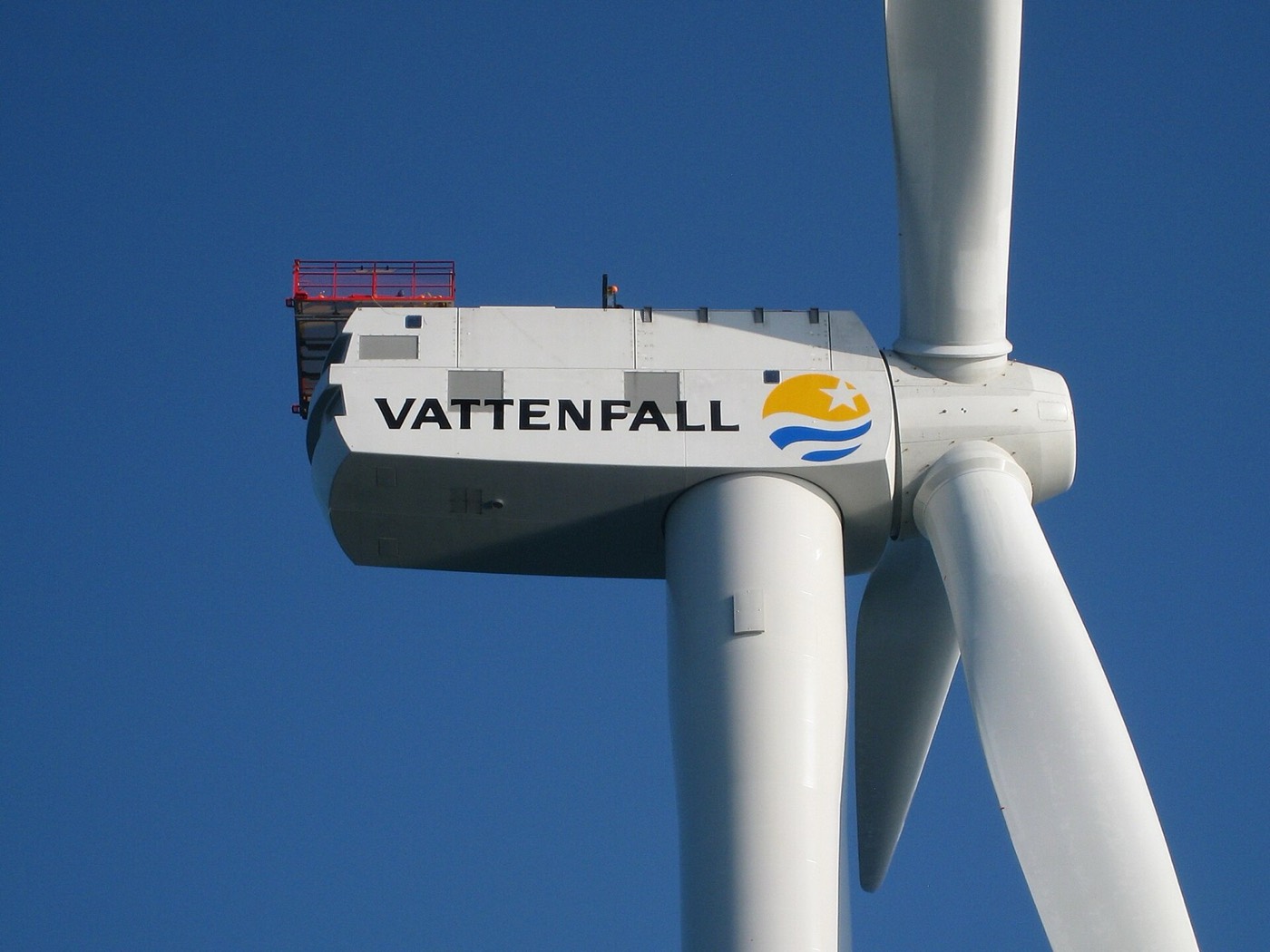
Inside the fibreglass shell of the nacelle — the housing that sits on top of the tower — a turbine does one simple job in one of two different ways.
Wind turns the rotor, and the rotor turns a shaft that has to drive a generator, which is what actually makes the electricity. A geared turbine puts a gearbox between the slow-turning rotor and a fast-spinning generator, the way a bicycle's gears let a slow pedal stroke spin a fast wheel.
A direct-drive turbine skips the gearbox entirely: a much larger generator turns at the same slow speed as the rotor itself, trading a heavy generator for one less part that can wear out at sea, where a repair means sending a ship.
Power output does not come from the blade's length on its own. It comes from swept area — the full circle the spinning blades trace through the air — because a bigger circle catches more wind.
That relationship, more swept area for more power, is the single idea behind every larger turbine this video looks at. A turbine twice the diameter sweeps roughly four times the area, for not much more than twice the material.
4. Why bigger is harder
Bigger is not free. Four separate limits meet at once on a blade this size.
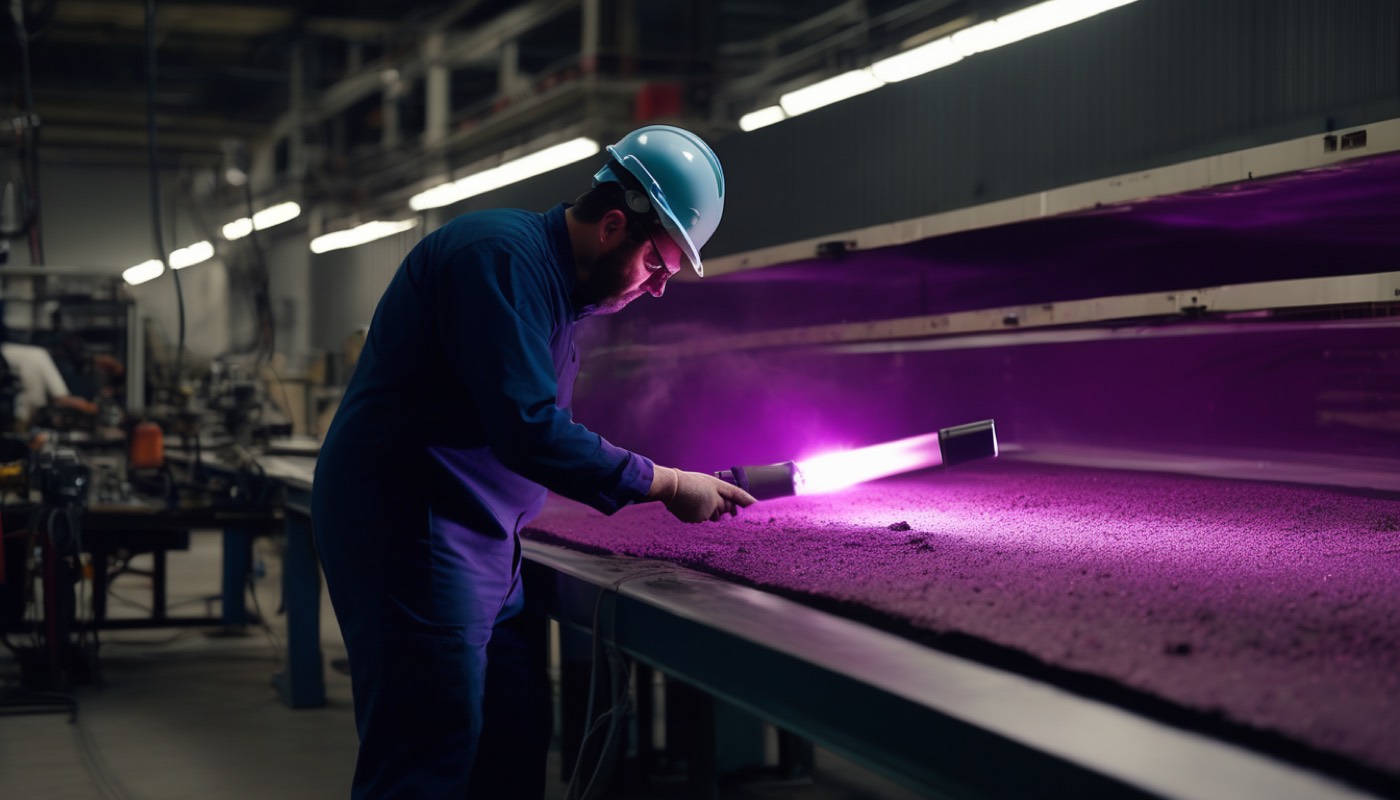
The blade itself is a single moulded composite structure, cast in one piece and cured under heat over days, and a crack inside it can be invisible from outside. Getting it from the factory to the coast means a purpose-built ship or barge, because no road can carry something longer than a football pitch around a bend.
At the tip, the blade is also moving fast — tip speeds on the largest turbines approach the speed of sound in places, which is why offshore turbines spin more slowly than they look like they should from a distance. And every bearing carrying that rotor's weight has to survive millions of slow, heavy revolutions in salt air without being opened up for service.
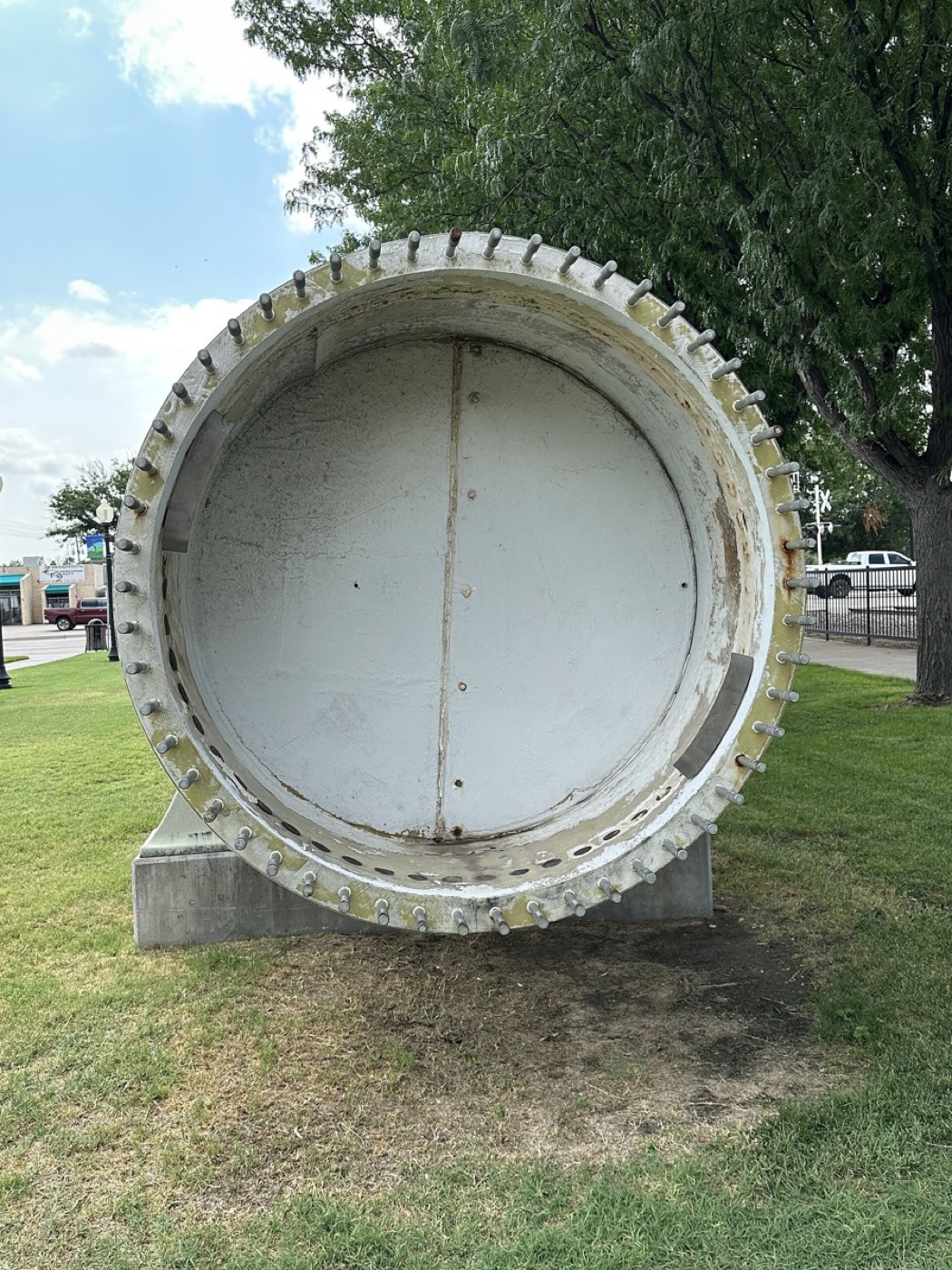
The blade root — the thick, reinforced base where the blade bolts to the hub — carries the full bending load of 115.5 metres of lever arm every time the wind gusts. It is built far heavier than the slender tip most people picture, because it is where a blade this size is most likely to fail first.
None of those four limits is unsolvable on its own. Together, they are why turbine size has slowed rather than stopped: the V236 has held the size record for several years now, not months.
5. Fixed to the seabed
Most offshore turbines built so far stand on one of two kinds of foundation, driven or bolted into the seabed itself.
A monopile is the simplest kind: a single hollow steel tube, often five or six metres across, hammered or vibrated into the seabed like a very large nail. It works well in water up to around 40 metres deep.
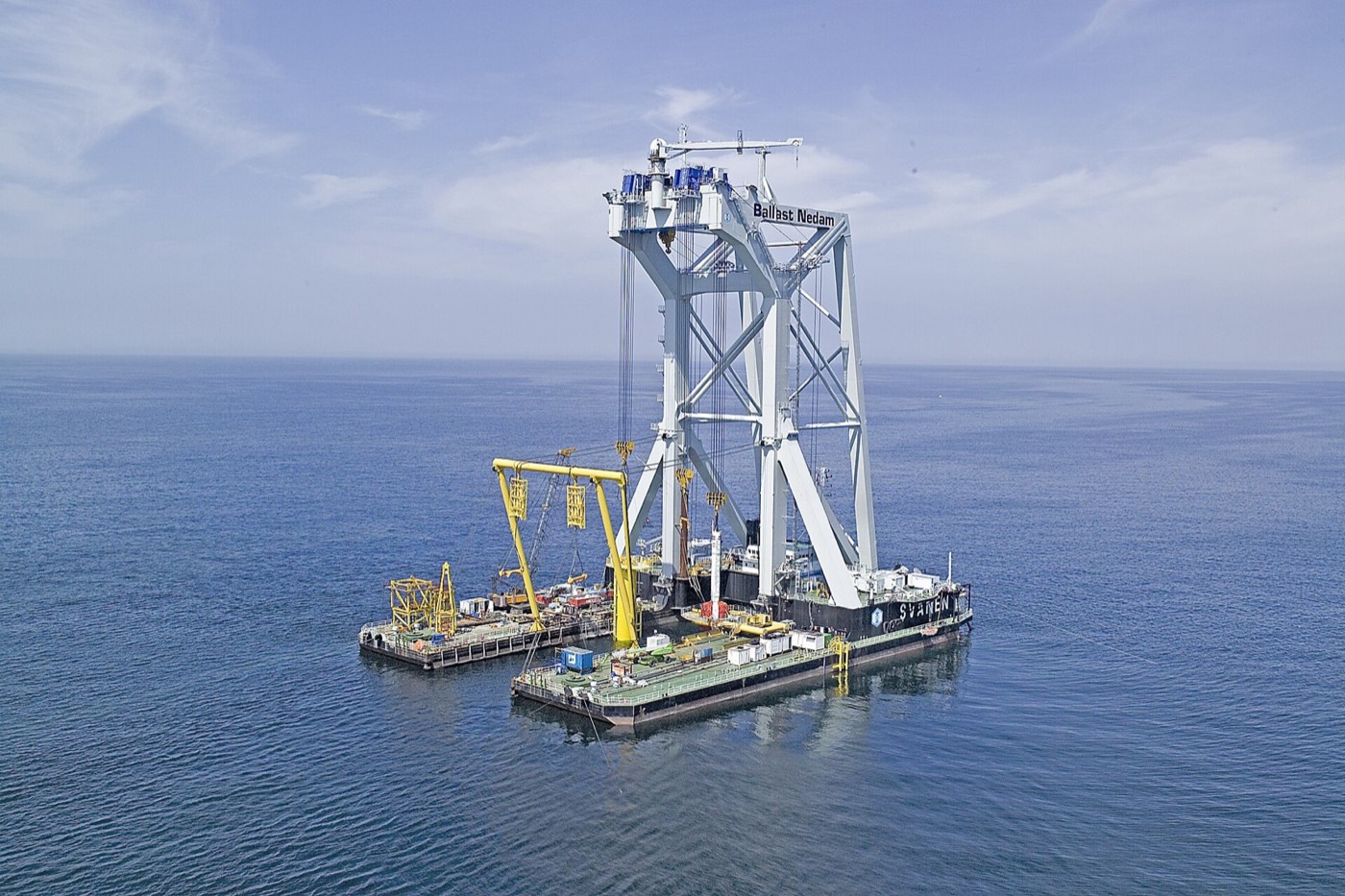
Go deeper, or the seabed gets harder, and a jacket foundation takes over — a lattice of steel legs, like a small oil platform, spreading the turbine's weight across several points instead of one. Both are installed by specialist vessels.
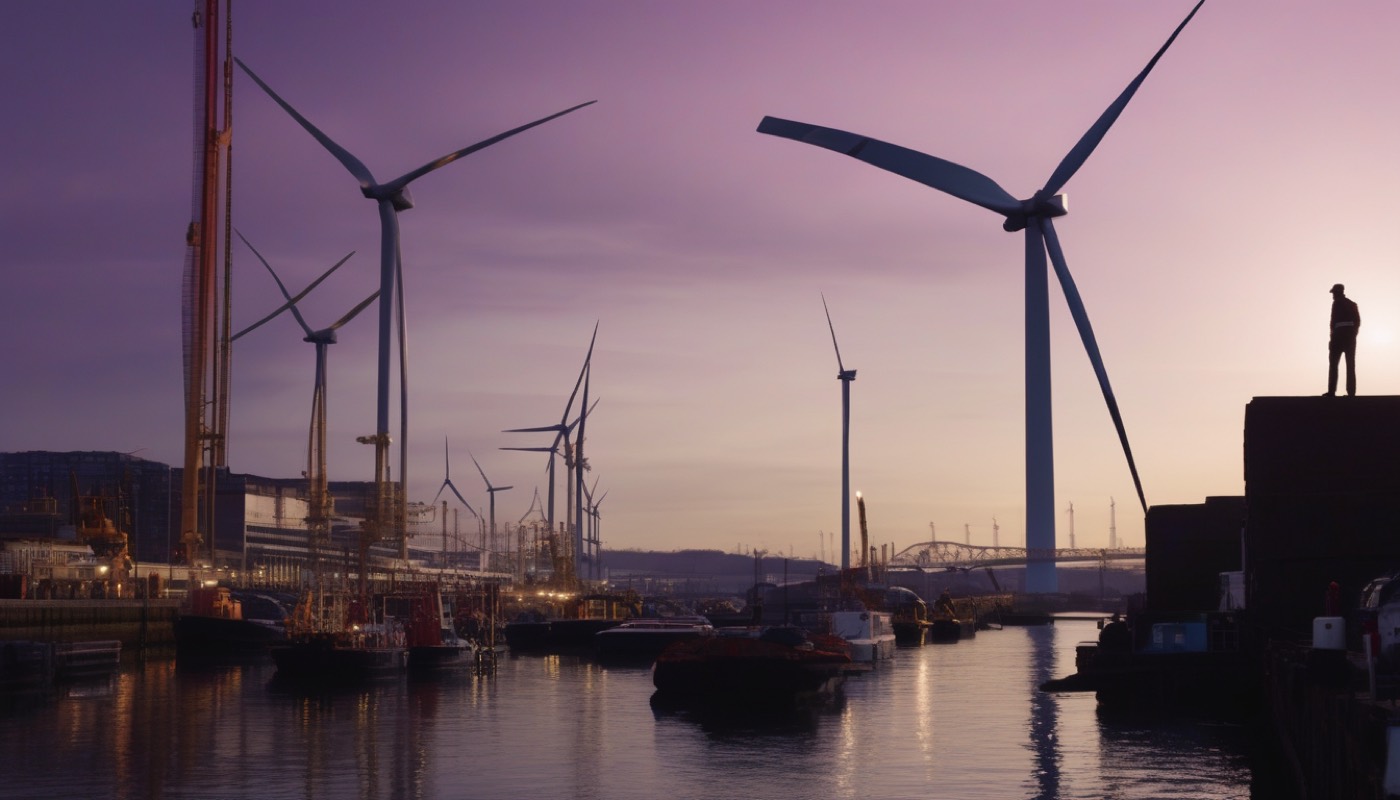
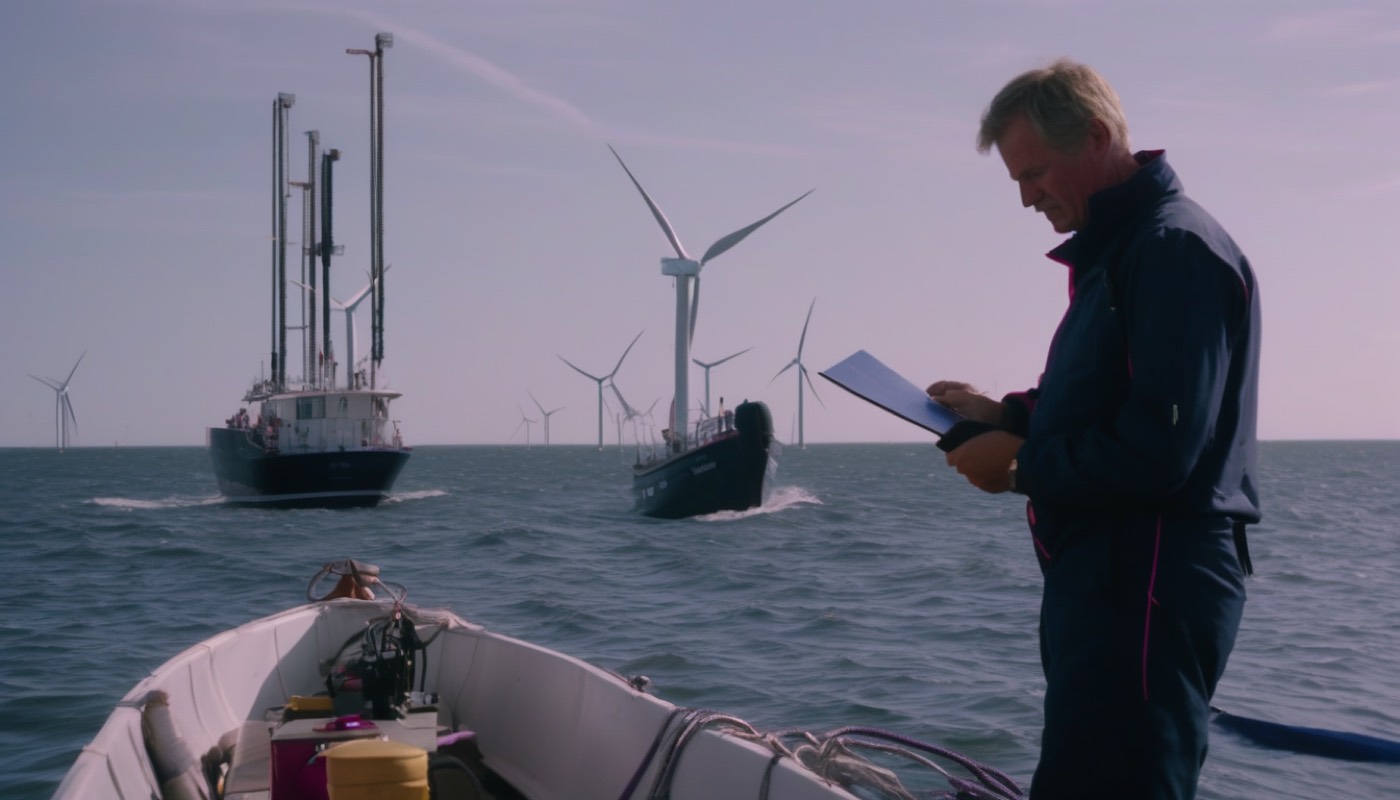
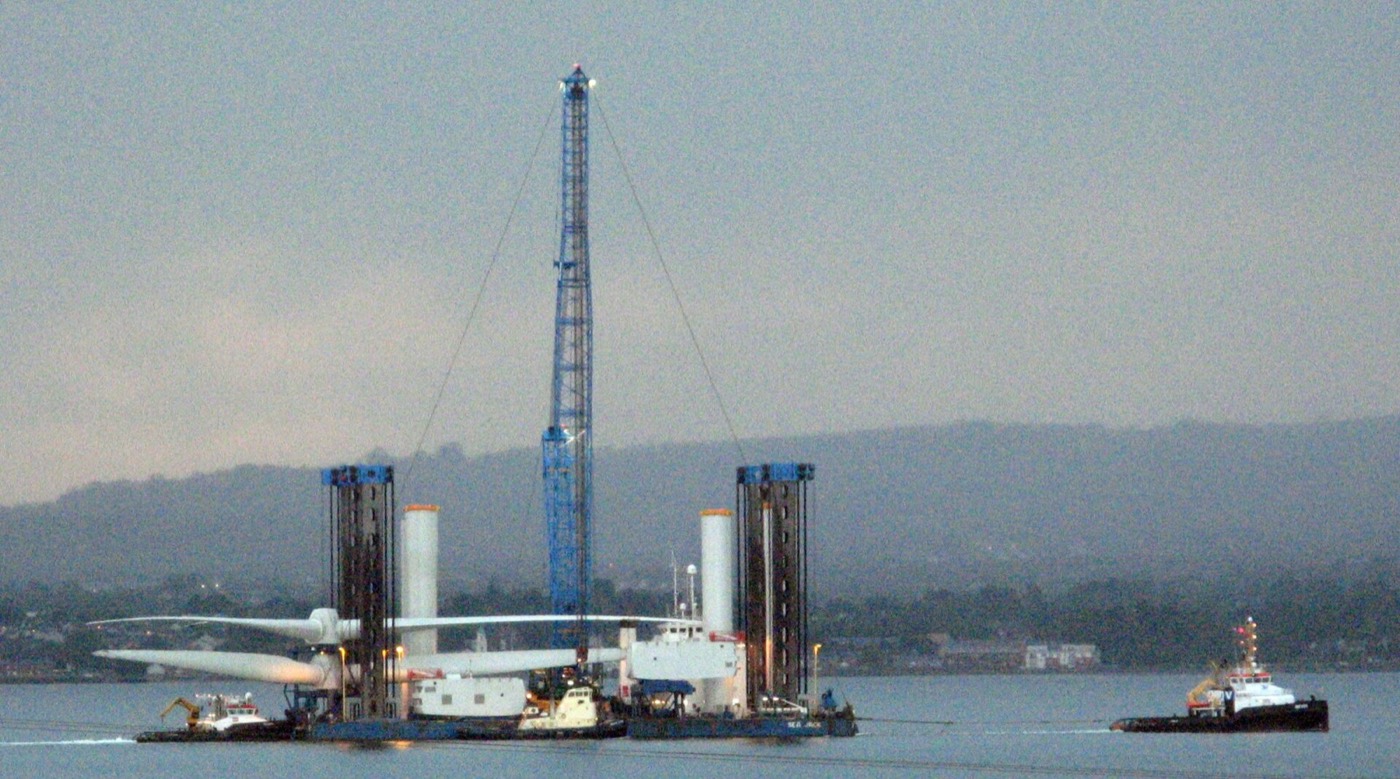
This vessel is a jack-up type, and it is not an ordinary ship. It lowers legs to the seabed and lifts its own hull clear of the water, so nothing is rocking while a crane holds a tower section high in the air.
This second vessel carries a tower balanced upright on its own deck rather than jacking up on legs. Either way, the goal is the same: holding still enough, in open water, to place a structure weighing hundreds of tonnes within centimetres of where it needs to sit.
Both foundation types do the same job in the end: turn a tower and a rotor that catches enormous wind loads into something the seabed can be trusted to hold for thirty years.
6. Floating turbines
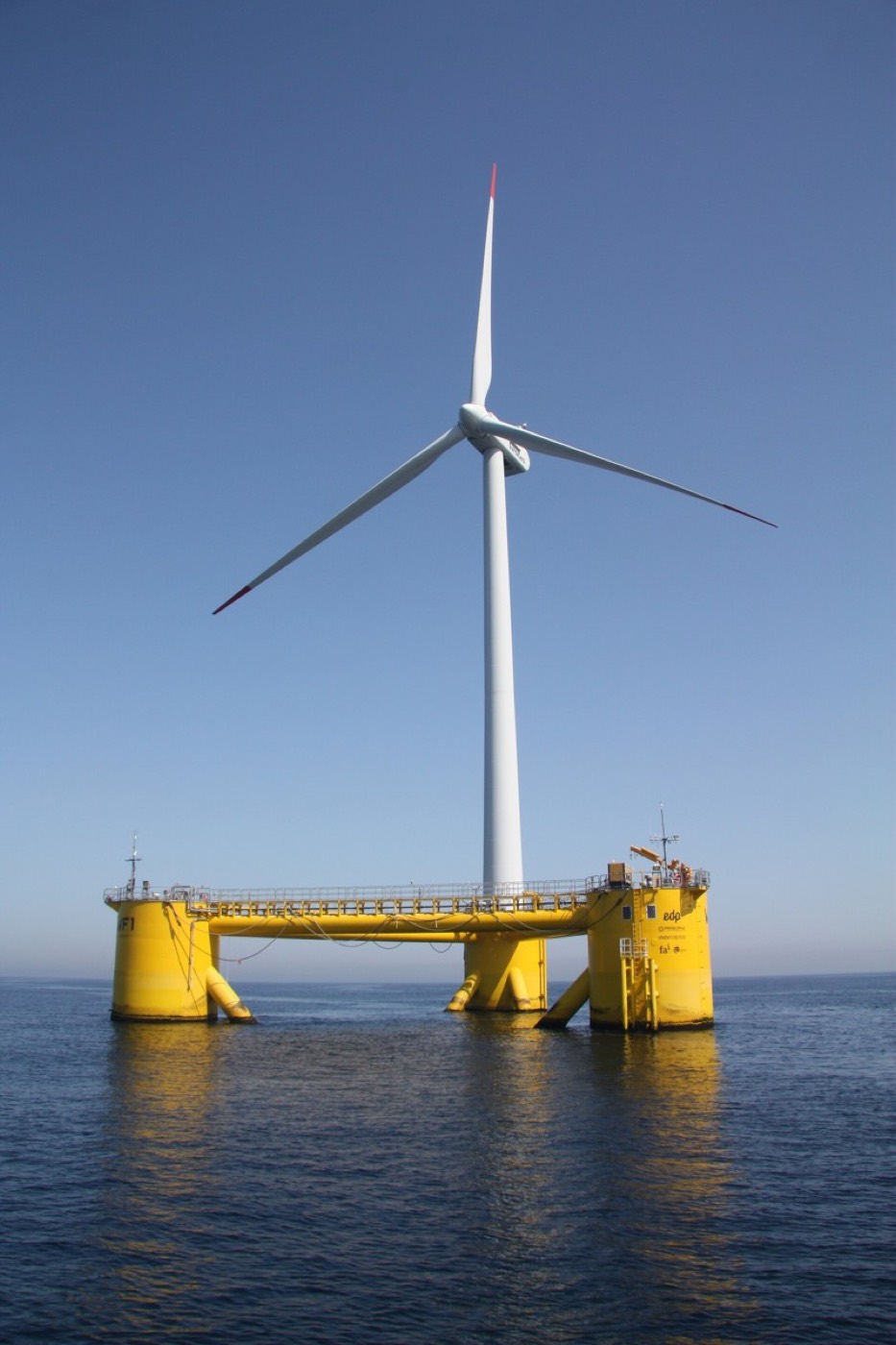
Beyond about 60 metres of water, driving a foundation into the seabed stops being practical, and the turbine has to float instead.
A floating turbine sits on one of two common hull shapes. A spar is a long, weighted cylinder that hangs mostly underwater, keeping the turbine upright through ballast low down, and a semi-submersible spreads its buoyancy across several smaller floats joined by a frame instead.
Either way, mooring lines anchored to the seabed hold the whole structure roughly in place while letting it move gently with the swell.
Three foundation types, ordered by the water they are built for. A monopile suits seabed depths up to around 40 metres, a jacket foundation extends that to around 60 metres, and beyond that, floating becomes the only practical choice.
This early floating foundation carries a much smaller turbine than the V236 — a test design proving the concept rather than a production giant. Hywind Scotland, the first commercial floating wind farm, began generating in 2017.
The world's first floating wind farm, Hywind Scotland, has been running since 2017, five turbines moored off Peterhead generating 30 megawatts between them. It has also been the best-performing offshore wind farm in the UK by one measure, which suggests floating can outperform fixed foundations on the right site.
7. Getting power to shore
None of this matters if the electricity cannot get to land, and that turns out to be its own engineering problem.
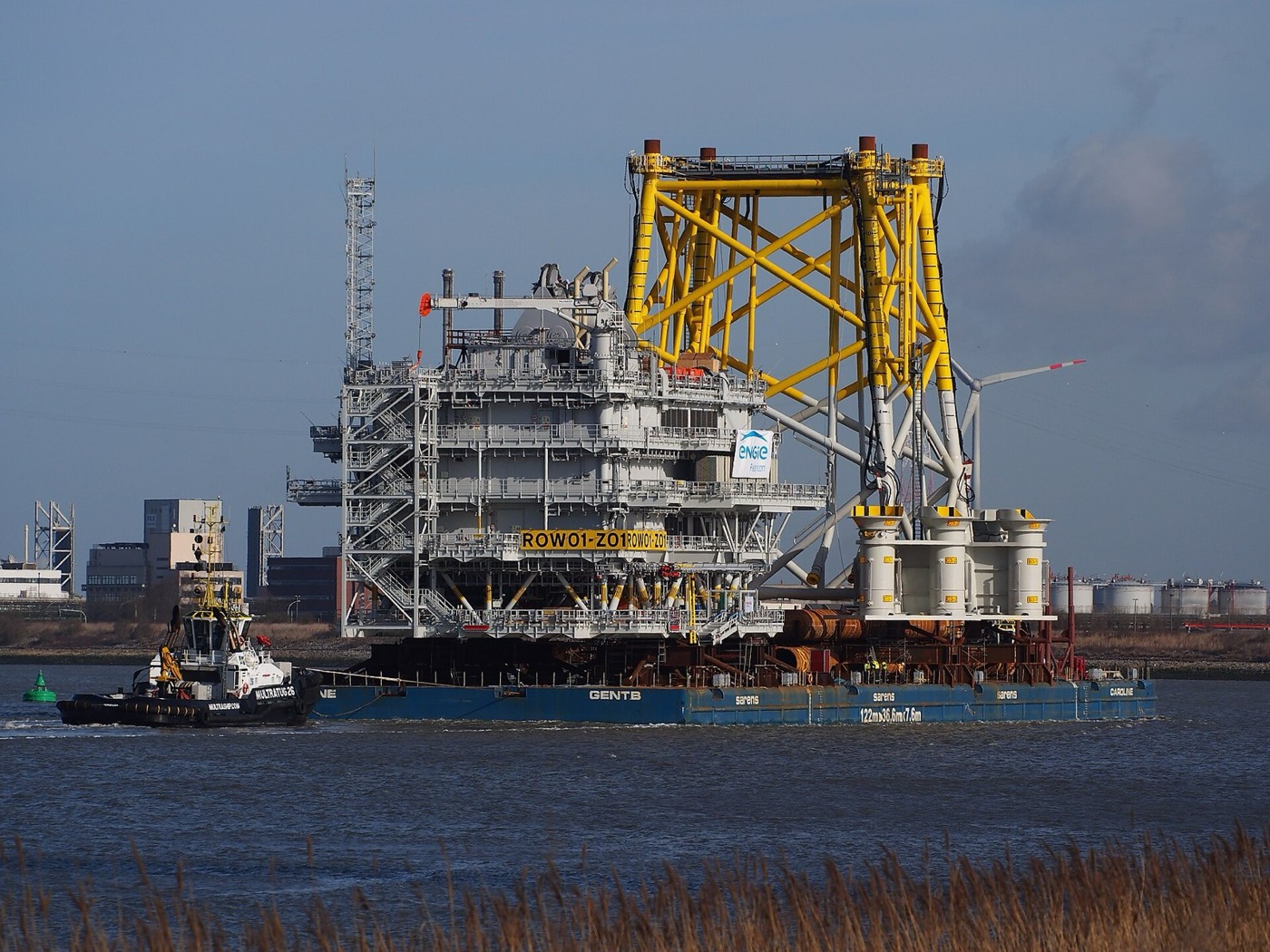
Cables run from each turbine to an offshore substation — a platform that gathers the power from dozens of turbines and steps its voltage up for the journey to shore. For short distances, that power travels as alternating current, the same form used in a home.
Past a certain distance, the cable losses in alternating current become too large, and the power is converted to direct current instead for the crossing, then converted back once it reaches land — a link known as HVDC, high-voltage direct current.
This offshore substation sits on its own platform in open water, and it looks like an industrial building rather than a turbine. Every turbine in the wind farm feeds into it before the power goes anywhere near the shore.
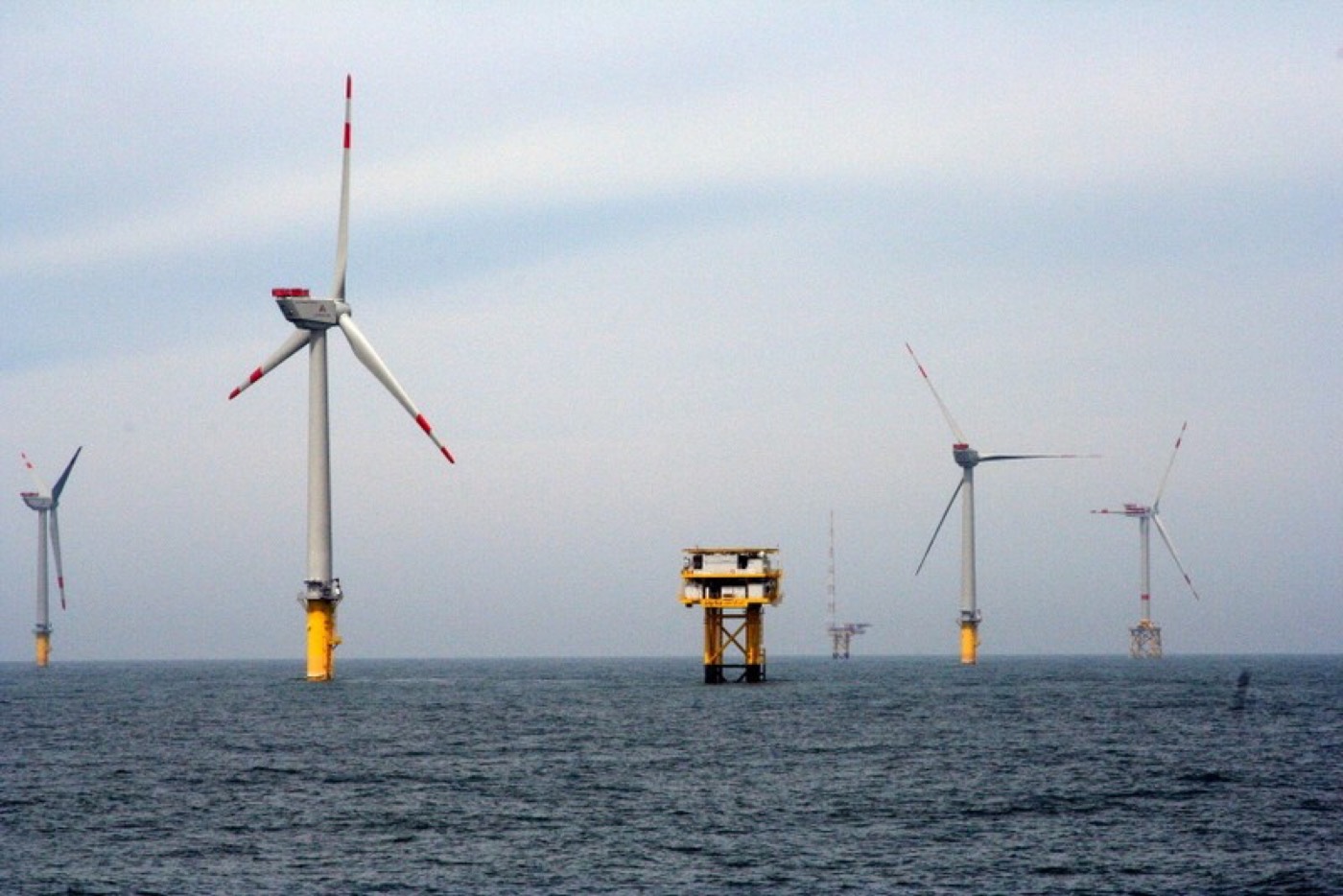
This second substation stands beside its own row of turbines closer to shore, an earlier design doing the same job at a smaller scale. Both exist for the same reason: gathering power offshore is cheaper than running a separate cable from every turbine.
Onshore, the cable still has to join the wider electricity grid, and that last step has become a bottleneck of its own: new wind farms now often wait years in a queue simply for a connection point to become free.
8. The supply-chain squeeze
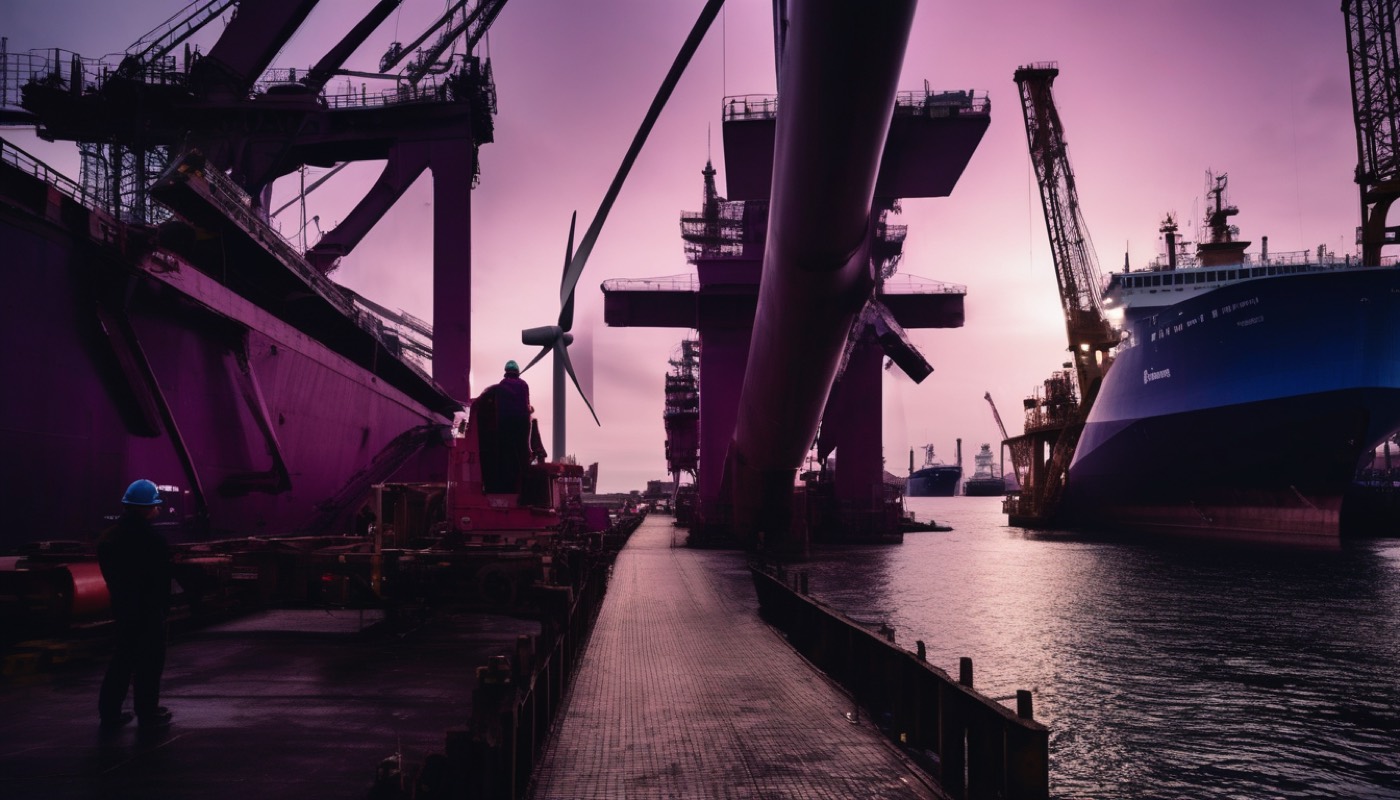
Even a turbine design that works perfectly cannot be built faster than its supply chain allows, and several parts of that chain are now the limit.
Specialist installation vessels able to lift a modern turbine's components are expensive to build, and there are not many of them, so a delay on one project ripples into the next one waiting for the same ship.
Large bearings and subsea cable are made in a small number of factories worldwide, each with years of backlog. And the manufacturing base itself has shifted: Chinese turbine makers, once focused on their home market, now build some of the largest turbines in the world, and are starting to compete for contracts outside China.
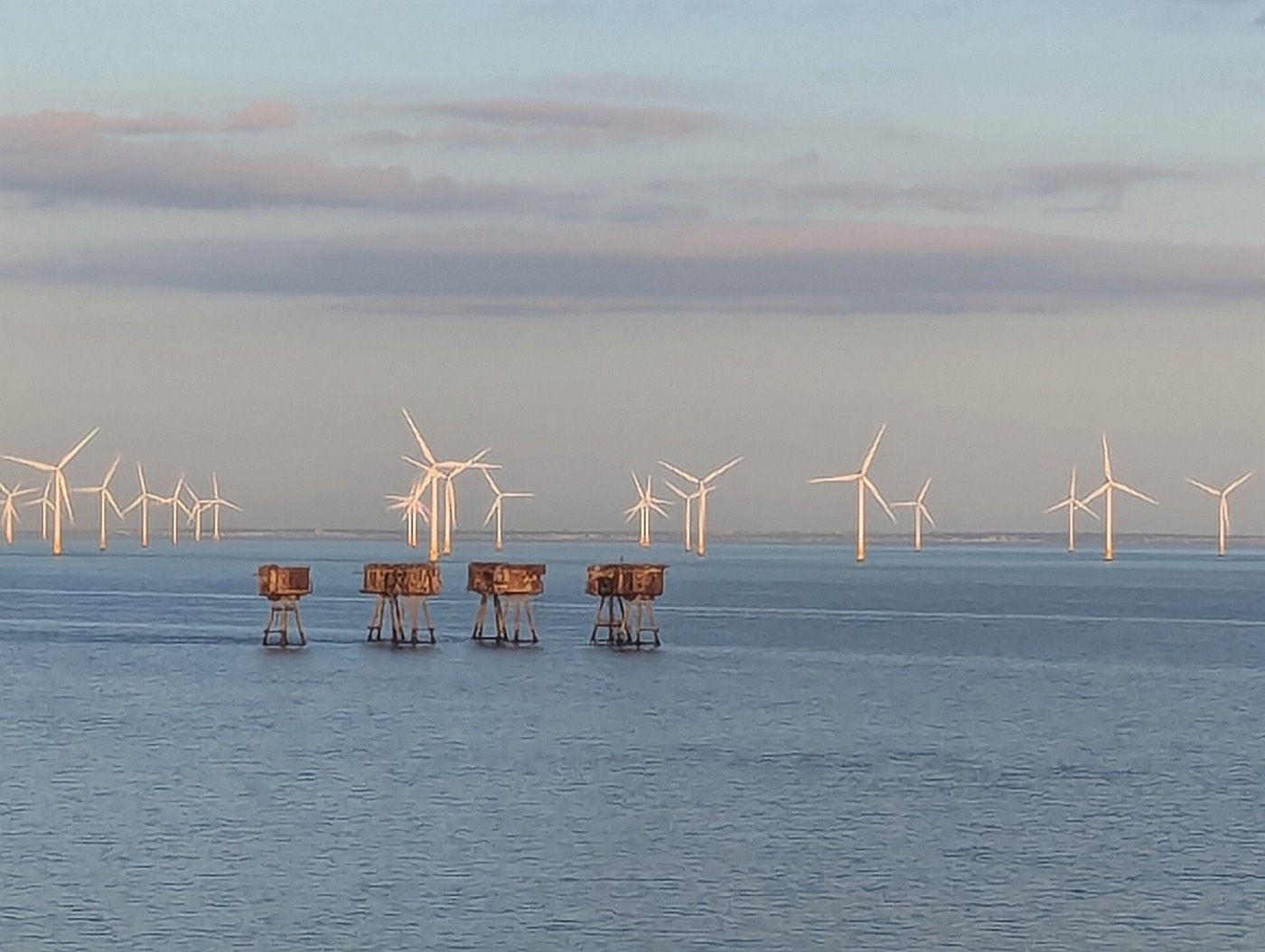
These turbines, still under construction, show what a wind farm looks like mid-build — towers and nacelles standing in open water years before every foundation is filled. A single missed vessel booking can push a stage like this back by months.
None of these bottlenecks stops offshore wind being built. They do set its pace, and that pace is now as much a question of ships and factories as of wind and water.
9. Why costs jumped after 2022
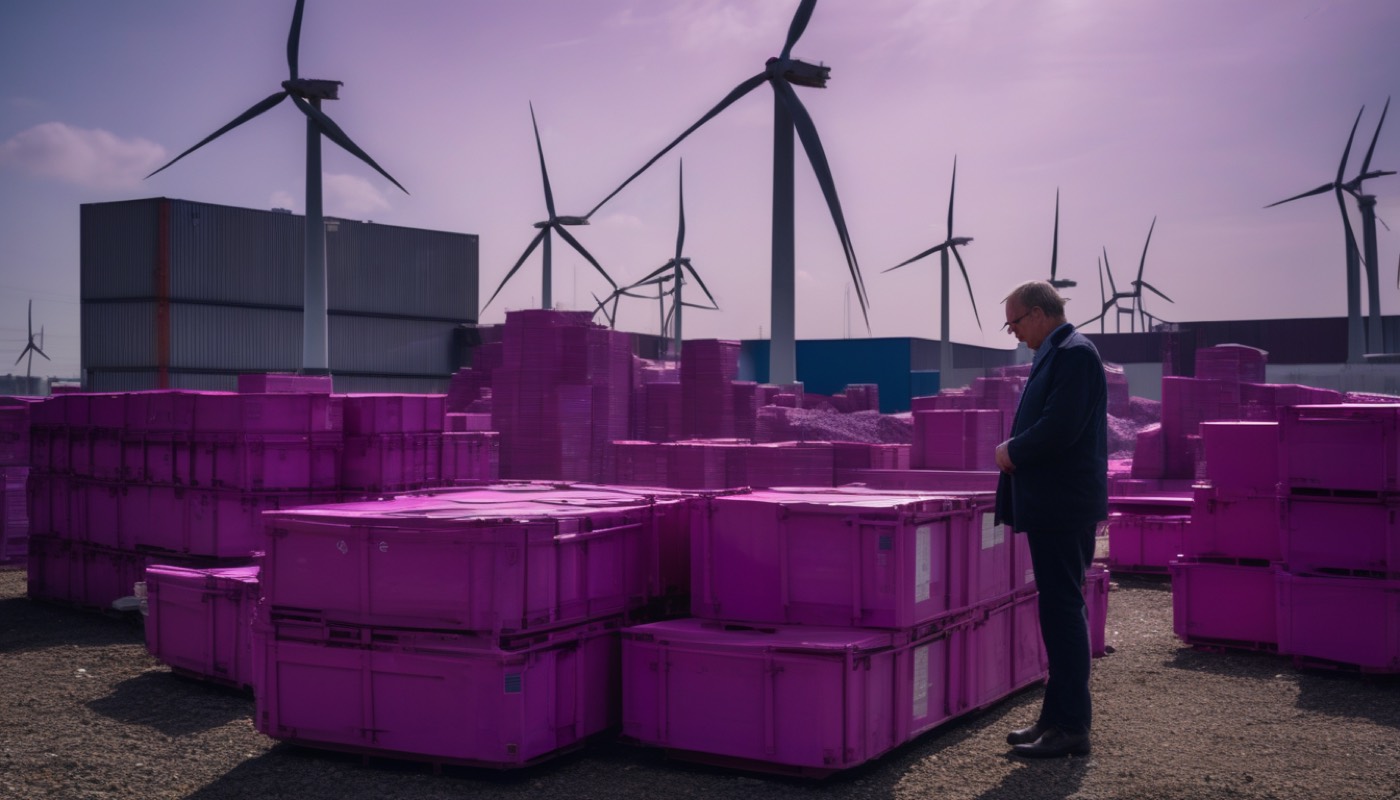
For a decade, offshore wind's price fell steadily, auction after auction. Then, after 2022, it reversed, hard.
Steel prices rose, and interest rates rose too — which matters enormously for a project that borrows heavily upfront and is paid back over decades. The same vessels and factories from the last chapter became scarcer and more expensive to book, pushing construction costs up across the whole industry at once.
In the UK, the result showed up starkly in 2023: an auction round offering a fixed price of £44 per megawatt-hour for new offshore wind received not a single bid, because developers said it was below what the projects would cost to build.
Ørsted, one of the largest offshore wind developers in the world, cancelled its Hornsea 4 project in 2025, citing exactly this combination. "Adverse macroeconomic developments, continued supply chain challenges, and increased execution, market and operational risks have eroded the value creation" is how the company put it in its own announcement.
The lesson of that period was not that offshore wind had stopped working. It was that an auction fixing a price years in advance, in a market where costs were moving fast, can simply fail to attract anyone to bid.
10. UK AR7: the record auction
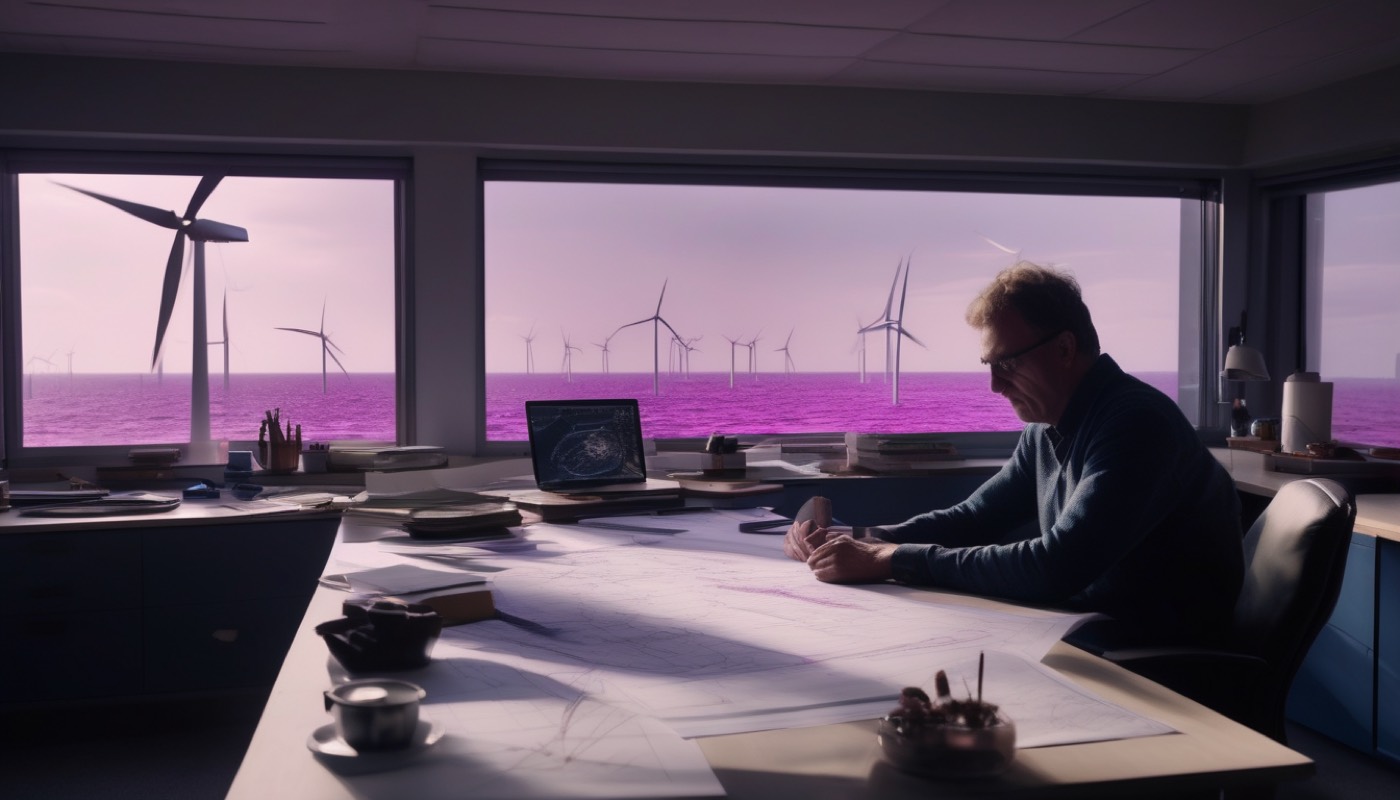
On 14 January 2026, the UK published the results of its seventh Contracts for Difference auction round for offshore wind, and this time the numbers went the other way entirely.
8.4 gigawatts of new offshore wind capacity was awarded across eight projects, comfortably the largest single round the country has run. The government had doubled the budget available beforehand, to about £1.8 billion, and this time developers turned up in force.
The winning fixed-bottom price came in at around £91 per megawatt-hour. Two floating wind projects, Pentland and Erebus, secured a separate price of £216.49 per megawatt-hour between them.
£91 a megawatt-hour for fixed-bottom, £216.49 for floating — two very different prices in the same auction. Floating technology is still younger, built in smaller volumes, and carries mooring and cabling costs a fixed foundation does not.
A single company, RWE, picked up about 6.9 gigawatts of the total on its own — a reminder that even a record auction rewards developers able to build at scale, not every company able to bid.
11. Netherlands and the subsidy return
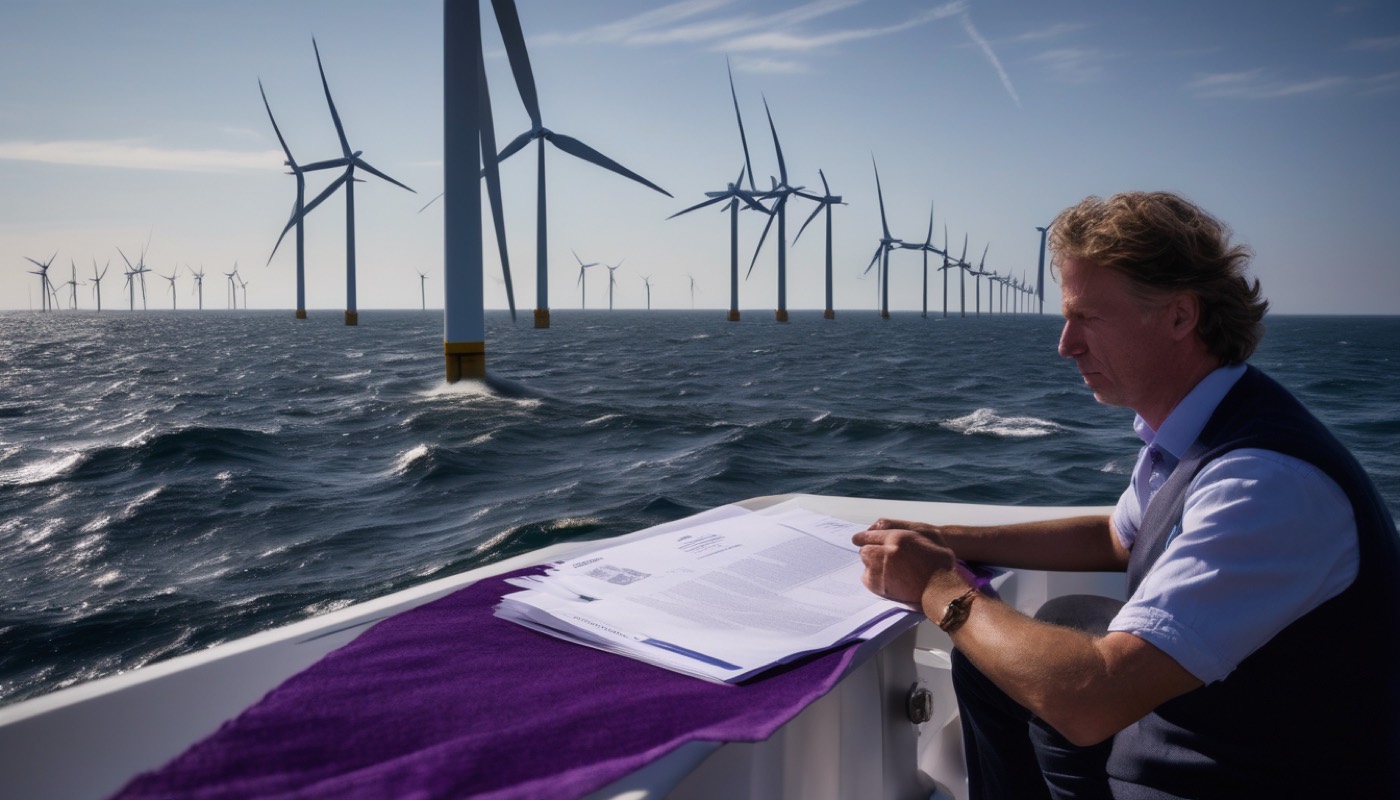
Not every country got here the same way. Earlier Dutch offshore rounds were awarded with no subsidy at all — developers bid to build and simply sell the power at whatever the market paid, betting that falling costs would make that work. For years, it did.
That confidence has now cracked. The Netherlands' next major site, IJmuiden Ver Gamma-A, roughly one gigawatt in scale, has reopened its tender with a subsidy ceiling on offer, raised in June 2026 from €104 to €117 per megawatt-hour because the zero-subsidy model had stopped attracting bids.
Germany, next door, still has a large project running on the old zero-subsidy logic. EnBW's He Dreiht wind farm, finishing construction in 2026, was won years ago with a bid of precisely nothing.
Two neighbouring countries, two different answers, in the same year: the Netherlands reopening subsidy for its next round off its own coast, Germany still finishing a site off its coast built on the promise that no subsidy would ever be needed again.
This wind farm, off the Dutch coast, was itself built under the earlier zero-subsidy rounds. It stands as the model the Netherlands is now stepping back from for its next site.
Whichever model wins out, the direction of travel matters more than either government's preference: after a decade of prices falling with no help at all, more of Europe's newest offshore wind is again being bought with public money behind it.
12. Can the price keep falling?
So: has offshore wind hit its limits, or is this simply where a young industry finds its footing?
Both things this video has shown are true at once. The physical machine is close to several real ceilings — blade transport, tip speed, bearing life, vessel capacity — and none of them is going to be solved by a cleverer marketing plan.
And the price has already shown it can move sharply in either direction within a few years, driven as much by interest rates and steel as by the turbine itself.
The honest verdict this video reaches: offshore wind is neither guaranteed to keep getting cheaper nor doomed to stay expensive. Both the UK's record-cheap fixed-bottom price and its far higher floating price were set in the same auction, on the same day, for the same reason — one technology is mature, and the other is not yet.
What happens next depends less on any single engineering breakthrough than on whether the supply chain, the grid queue and the ships this video has walked through can grow as fast as the machines they are built to carry.
Sources and credits
Photo credits (Wikimedia Commons)
- Vattenfall REpower 5M turbine at Ormonde offshore wind farm (nacelle and blades): Davagh, CC0 - https://commons.wikimedia.org/wiki/File%3AVattenfall_Wind_Power.jpg
- Base of a wind turbine blade (blade root): Nolabob, CC0 - https://commons.wikimedia.org/wiki/File%3AWind_Turbine_Blade_Base.jpg
- HLV Svanen installation vessel at Egmond aan Zee offshore wind farm: Ballast Nedam : Edwin van de Brug, Public domain - https://commons.wikimedia.org/wiki/File%3AHLV_Svanen_at_OWEZ.jpg
- SeaJack wind turbine installation vessel, Belfast Lough: Michael Parry, CC0 - https://commons.wikimedia.org/wiki/File%3ASeaJack%2C_Belfast_Lough_2011.jpg
- WindFloat floating foundation with Vestas V80 turbine, Povoa de Varzim, Portugal: U.S. Department of Energy from United States, Public domain - https://commons.wikimedia.org/wiki/File%3AWindfloat_floating_offshore_foundation%2C_P%C3%B3voa_de_Varzim%2C_Portugal_431_019_006_%2829566439002%29.jpg
- Offshore substation ROW01-Z01 on the Sarens barge Caroline: Alf van Beem, CC0 - https://commons.wikimedia.org/wiki/File%3AElectrical_offshore_substation_ROW01-Z01_on_Sarens_barge_Caroline.jpg
- Alpha Ventus REpower 5 MW offshore turbines and substation: ENERGY.GOV – Photo credit: Gary Norton / U.S. Department of Energy, Public domain - https://commons.wikimedia.org/wiki/File%3AREpower_5_Megawatt_Offshore_Wind_Turbines_and_Energy_Substation_%2812815633564%29.jpg
- Borssele offshore wind farm, Dutch coast: Thorstentbln, CC0 - https://commons.wikimedia.org/wiki/File%3AOffshore-Windpark_Borssele_in_der_Abendsonne_1.jpg
- London Array turbines under construction, North Sea: William Hall, Public domain - https://commons.wikimedia.org/wiki/File%3ALondon_Array_02.jpg
- Kentish Flats offshore wind farm: Back ache, CC0 - https://commons.wikimedia.org/wiki/File%3AKentish_Flats_Offshore_Wind_Farm.jpg


Primary sources
- Orsted (formerly DONG Energy), Vindeby decommissioning history; Tethys (PNNL) wind project database - Vindeby, 1991, 11 turbines, 5 MW total.
- Equinor, Hywind Scotland project page and 5-years-of-operations release - Hywind Scotland, commissioned October 2017, 30 MW, 54% 5-year capacity factor.
- Carbon Brief, World Oil and hostile.eco on UK Allocation Round 5 (2023) - zero offshore wind bids at a GBP44/MWh cap.
- Orsted, company announcement, 8 May 2025 - discontinuing Hornsea 4, with the quoted line on eroded value creation.
- DESNZ, Contracts for Difference Allocation Round 7 results (gov.uk, 14 Jan 2026); Carbon Brief AR7 Q&A; ORE Catapult AR7 analysis; Westwood Energy AR7 analysis; renews.biz floating-wind report; offshorewind.biz AR7 coverage - 8.4 GW, GBP91/MWh fixed-bottom, GBP216.49/MWh floating (Pentland 92.5 MW, Erebus 100 MW), budget doubled to ~GBP1.8bn, RWE ~6.9 GW.
- RVO (Netherlands Enterprise Agency), IJmuiden Ver Gamma-A permit page; offshorewind.biz, 16 June 2026 - subsidy ceiling raised EUR104 to EUR117/MWh, application window 26 Nov-10 Dec 2026.
- EnBW, He Dreiht press material - 960 MW, zero-subsidy bid, commissioning completing 2026.
Not regulated financial advice.