
Phosphate: The Fertiliser Rock One Country Controls
One country holds most of the world's known reserves of a rock that modern farming cannot do without, and cannot make more of.
Nitrogen fertiliser can be synthesised from thin air - that is what the Haber-Bosch process does, scaled to industry by 1913. Phosphorus cannot. It has no gas phase to capture; it exists only as apatite, a mineral locked in rock, and the only way to get it out is to mine it. The US Geological Survey says it plainly: there are no substitutes for phosphorus in agriculture.
Farming's dependence on mined phosphate built up over more than a century - from Pacific guano on Nauru, discovered in 1900, through Florida and Tennessee rock, to the reserves that turned out to dwarf them all, in Morocco. The US Geological Survey's February 2026 survey puts Morocco's share of world reserves at about 68.5%, more than two thirds, mined, processed and exported almost entirely through one wholly state-owned company, OCP.
OCP's reach runs from the mine to the finished fertiliser bag, including rock from the Bou Craa mine in Western Sahara, moved by a roughly 100km conveyor belt to the port at Laayoune - a trade Western Sahara Resource Watch and others contest as resting on disputed territory. OCP is also mid-way through a $14 billion investment programme (2025-2027), $5.25 billion of it in 2026 alone, aiming to lift output from about 12 million tonnes to 20 million tonnes a year by the end of 2027.
That scale matters more than usual right now. China's own export restrictions, in force from December 2025, cut Chinese phosphate fertiliser exports to their lowest level since 2013, pushing import-dependent buyers - India, Brazil, and others - toward Moroccan supply. Facing its own tight domestic supply, the United States suspended its antidumping and countervailing duties on Moroccan phosphate fertiliser on 29 June 2026, for eight months.
The video asks what that concentration means for countries with no phosphate reserves of their own, and what - recycling, new deposits, efficiency - could actually loosen one country's grip on a rock the whole food system runs on.
Every figure is dated and sourced; a draft reserve-share figure and an unverifiable export-restriction percentage were each corrected or cut on re-reading the primary sources. This video does not take a side on Western Sahara's disputed status.
Educational documentary. Not financial or investment advice.
Tags
Chapters
- A rock the food system runs on
- Why phosphorus can't be made from air
- From guano to rock: how farming got hooked
- One country, most of the reserves
- OCP: the state company that runs the rock
- Bou Craa and the Western Sahara question
- Scaling up: Jorf Lasfar, Safi, and $5.25bn in 2026
- China's exit and the price shock
- Washington blinks: the 2026 duty suspension
- What near-monopoly pricing power looks like
- Food security on a single rock
- Can the dependence be broken?
Video notes
1. A rock the food system runs on
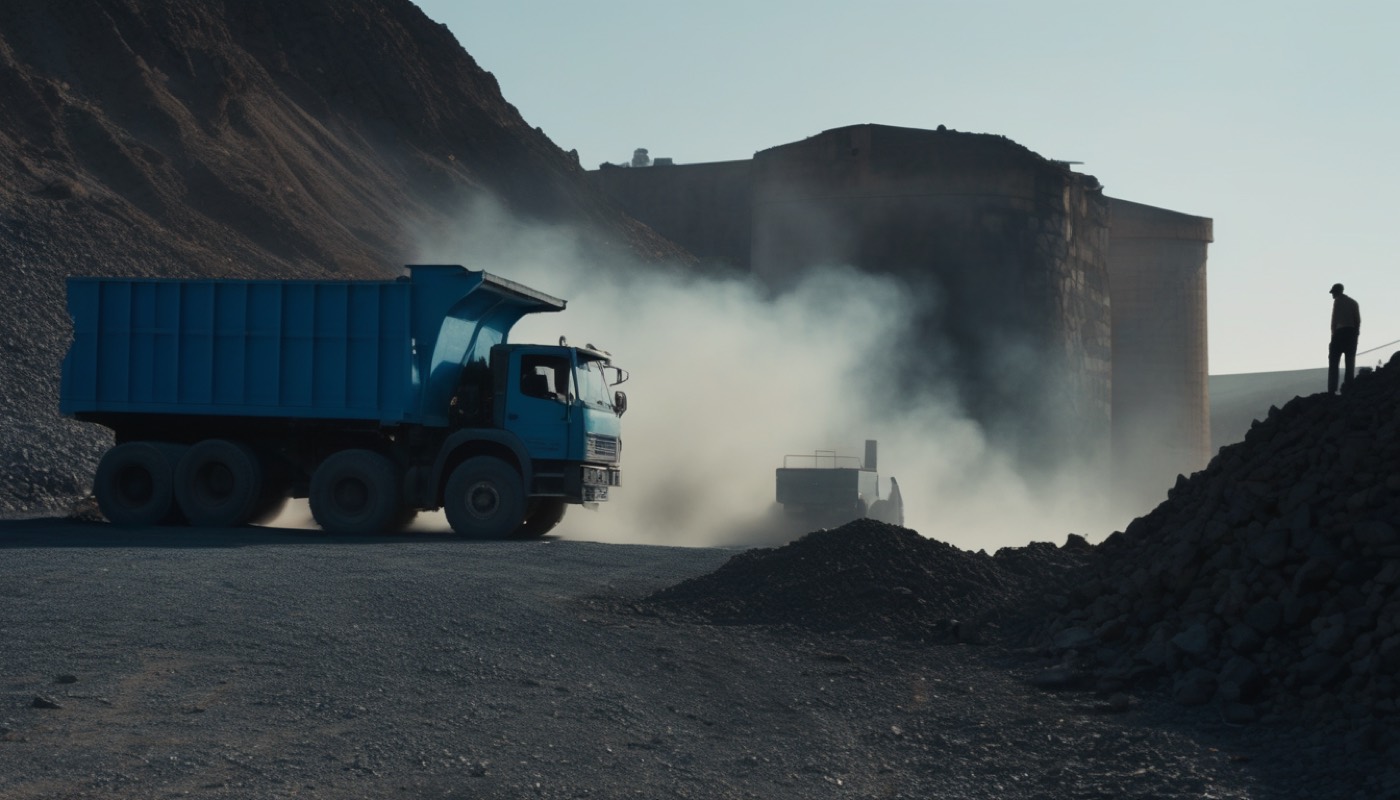
Every crop that feeds a person needs three nutrients above all others: nitrogen, potassium, and phosphorus. Nitrogen comes from the air. Potassium is common in rock all over the world. Phosphorus does not work that way, and this video is about what follows from that one difference.
Phosphorus reaches a field as phosphate rock, mined from the ground, ground into powder, and treated with acid to make it usable by plants. There is no other source. The United States Geological Survey, the US government's own mineral agency, puts it plainly in its most recent survey.
The US Geological Survey's Mineral Commodity Summaries, published in February twenty twenty-six, states it as a flat fact: "There are no substitutes for phosphorus in agriculture." Not a shortage risk. Not a price concern. A statement that nothing else does this job.
That single sentence is the reason the rest of this video matters. A crop short of nitrogen can often still grow, slowly. A crop with no phosphorus barely grows at all, because phosphorus builds the plant's roots and carries its energy inside every cell.
The rock itself is called phosphate rock, and the mineral inside it is called apatite. Mining pulls the rock from open pits. Grinding turns it to a fine powder. Treating it with acid converts that powder into phosphoric acid, the ingredient that goes into the bags of fertiliser spread on fields worldwide.
So before anything else in this video — the history, the politics, the single company that dominates this trade — hold onto that one mechanical fact. Every bag of phosphate fertiliser on Earth started as rock that someone had to dig up. Nobody has ever made phosphorus any other way.
2. Why phosphorus can't be made from air
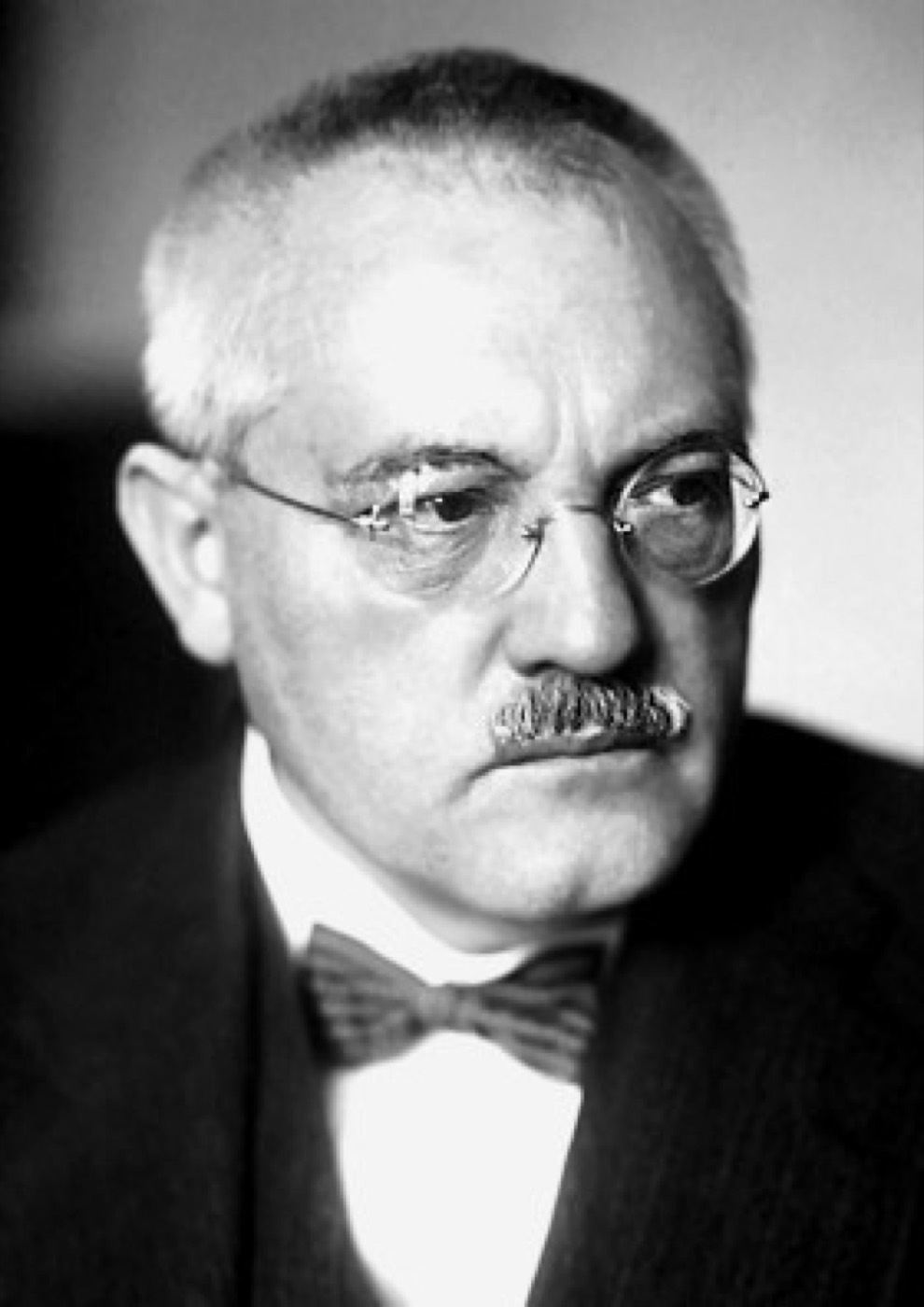
Modern farming is only possible because of a nutrient that was once a hard limit on how many people the land could feed. Nitrogen was that limit, until a German chemist solved it. Phosphorus was never solved the same way, and the reason is physics, not effort.
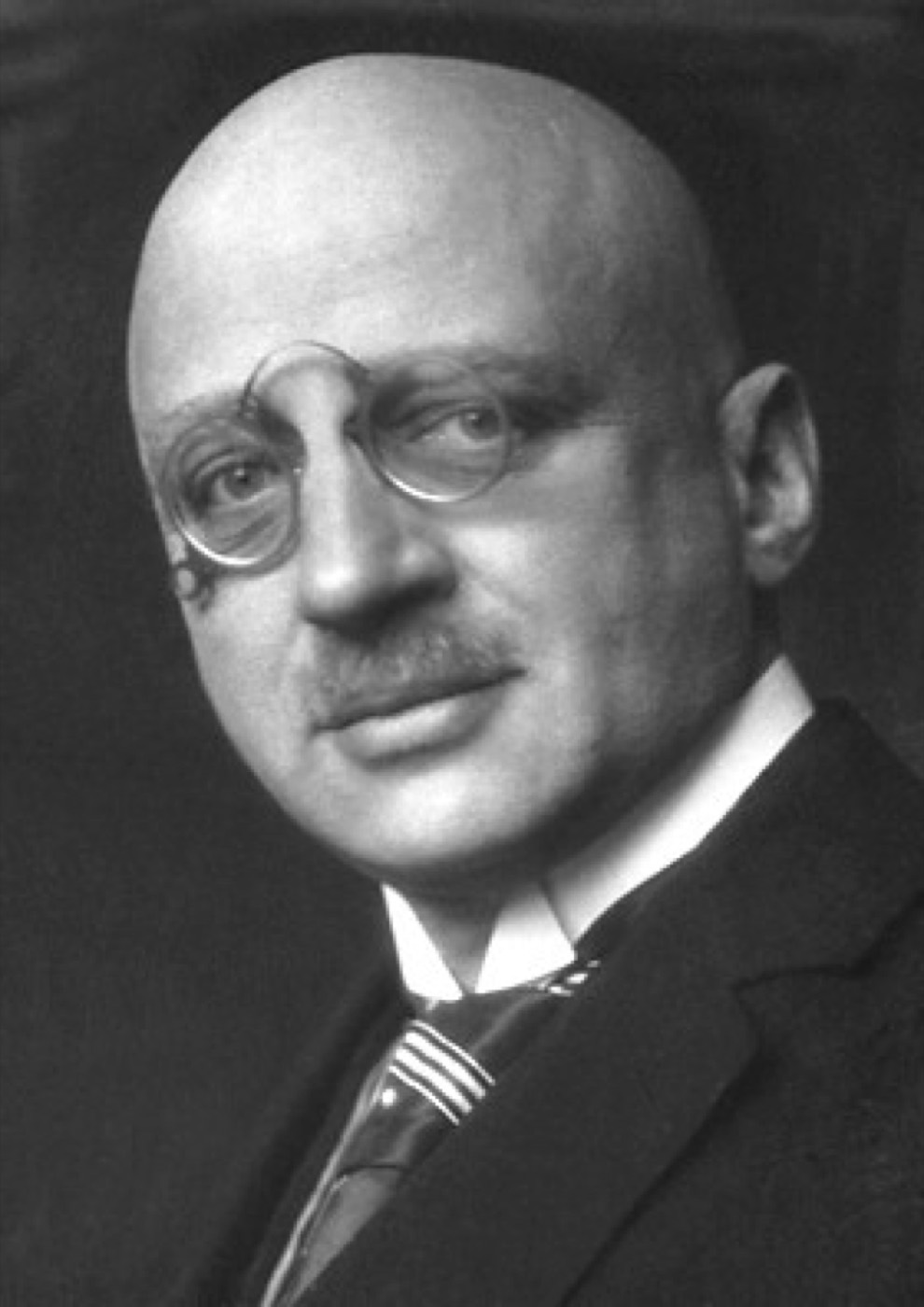
In July nineteen oh nine, the chemist Fritz Haber succeeded in fixing nitrogen from the air in his laboratory — forcing nitrogen gas and hydrogen gas to combine into ammonia under high pressure and heat. By nineteen thirteen, the engineer Carl Bosch, working for the German company BASF, had scaled that reaction into an industrial plant. The two names are now joined: the Haber-Bosch process.
Nitrogen works this way because it floats freely in the air as a gas, making up most of the atmosphere around us. Haber and Bosch simply had to catch it and force it into a form plants could use.
Phosphorus has no gas phase to catch. It never floats free in the air the way nitrogen does. On Earth, it exists almost entirely locked inside solid rock, in a mineral called apatite, and the only way to get it out is to mine that rock and process it. There is no atmosphere to fix, and no equivalent of the Haber-Bosch process waiting to be discovered.
That is the whole of the asymmetry this video follows. Nitrogen fertiliser can, in principle, be made anywhere there is air, water, and enough energy. Phosphorus fertiliser can only be made where there is phosphate rock, which is why who owns the rock matters so much more than who owns a chemical plant.
Carl Bosch, pictured here, later won a Nobel Prize in Chemistry for scaling Haber's discovery into an industry. Haber won his own Nobel Prize for the original synthesis. Both prizes were for solving nitrogen. Neither man, nor anyone since, has found a parallel shortcut for phosphorus.
3. From guano to rock: how farming got hooked
Before mined phosphate rock, farmers depended on something stranger: centuries of accumulated seabird droppings, baked hard by the sun on remote Pacific islands. That substance is guano, and it was once valuable enough to fight wars over.
A prospector named Albert Ellis discovered a rich phosphate deposit on the small Pacific island of Nauru in nineteen hundred. The Pacific Phosphate Company began mining it from nineteen oh six, and shipped its first cargo the following year. For decades afterward, Nauru's guano-derived rock went straight onto farmland across the Pacific.
Nauru was not the only early source. In the United States, Florida and Tennessee held large phosphate rock deposits of their own, and became centres of mining as the twentieth century's farming boomed.
From nineteen twenty, a joint British, Australian and New Zealand body called the British Phosphate Commission ran phosphate mining on Nauru, continuing until nineteen eighty-one. Florida and Tennessee, meanwhile, supplied much of the United States' own farmland. Both sources were finite, and by the middle of the twentieth century, both were being overtaken by far larger deposits found in Morocco.
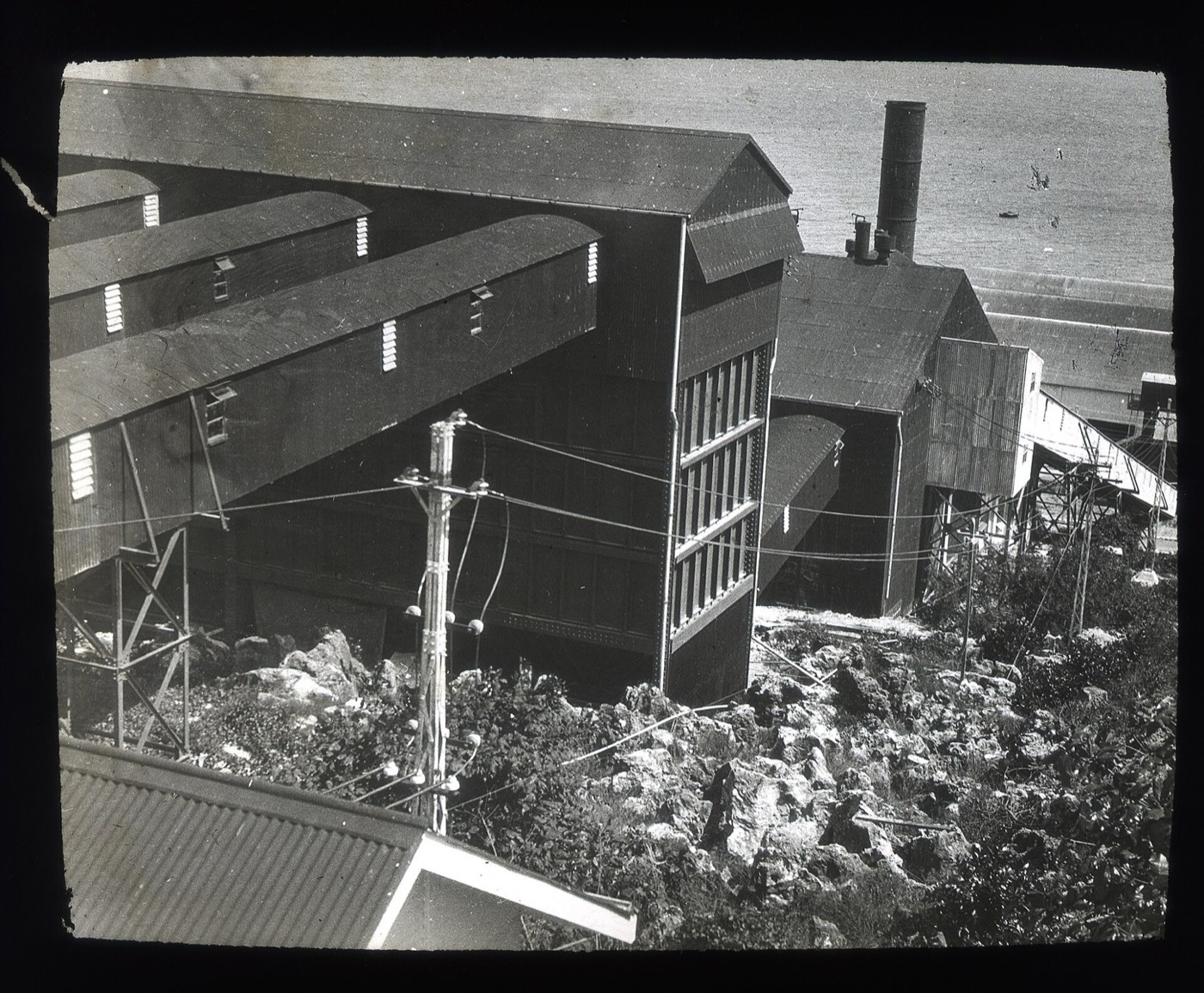
This photograph shows the Nauru phosphate plant in the early twentieth century — small-scale, island-bound, and nothing like the industrial complexes that followed. Nauru's reserves were small, an island's worth rather than a continent's. Florida and Tennessee's were larger, but still nowhere near what geologists would soon find in Morocco.
That shift — from an island's guano to an American state's rock to a North African nation's reserves — set up the situation this video is actually about. Farming did not choose dependence on one country. It simply followed where the largest deposits turned out to be.
4. One country, most of the reserves
Here is the number that this whole video turns on. According to the US Geological Survey's February twenty twenty-six survey, the world holds about seventy-three billion tons of phosphate rock reserves. Morocco alone holds about fifty billion tons of that total.
Morocco's share works out to roughly sixty-eight and a half per cent of the world's known phosphate rock reserves — more than two thirds, in one country. China holds under five per cent. Egypt and Algeria each hold under four per cent. The United States, despite still mining its own rock, holds under one and a half per cent.
No other essential farming input is concentrated anywhere close to this tightly. Oil has several large producers competing with each other. Phosphate rock reserves do not look like that at all.
Plotted on a map, the gap is stark. Morocco and the territory it administers hold the overwhelming majority of the world's reserves. China, Egypt, Algeria, and the United States each hold a share in the low single digits. Everyone else on Earth shares what little is left.
It is worth being precise about a figure that gets rounded carelessly elsewhere. Some reports round Morocco's share up to roughly seventy per cent. The primary USGS table gives sixty-eight and a half. This video uses the number from the source, not the rounder one that is easier to say.
5. OCP: the state company that runs the rock
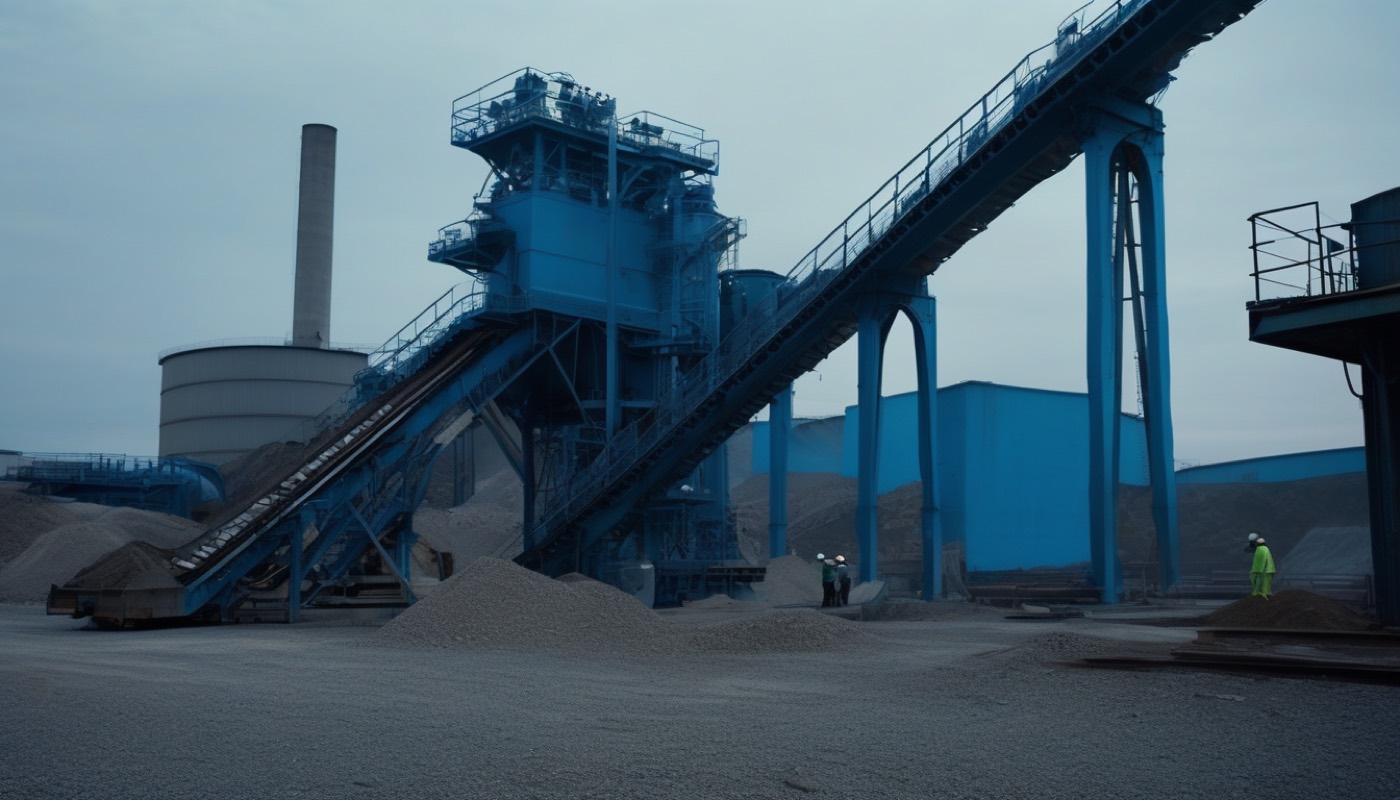
A reserve in the ground is not the same as control over a market. What turns Morocco's rock into global leverage is a single company that owns almost the entire chain from the mine to the finished bag of fertiliser.
That company is OCP — wholly owned by the Moroccan state. OCP mines the rock, grinds it, turns it into phosphoric acid, and manufactures the finished fertiliser, mostly at two giant industrial complexes, Jorf Lasfar and Safi. Almost nothing of that phosphate leaves the country without passing through OCP's own hands at some stage.
That full vertical integration is unusual. Most mining companies sell rock or a raw concentrate and let someone else refine it. OCP does the entire job itself, which means it sets the terms at every stage rather than just one.
Because OCP mines the rock, runs the chemistry, and ships the finished product, it holds pricing power that no single company in a more fragmented industry could have. When OCP decides how fast to expand, or which customers to prioritise, there is no competing domestic producer pulling in the opposite direction.
A state-owned monopoly over the world's largest reserve of an irreplaceable farming input is, on its own, an unusual kind of power. The next chapters look at where that power is being tested hardest — starting with the part of the trade that is also the most disputed.
6. Bou Craa and the Western Sahara question
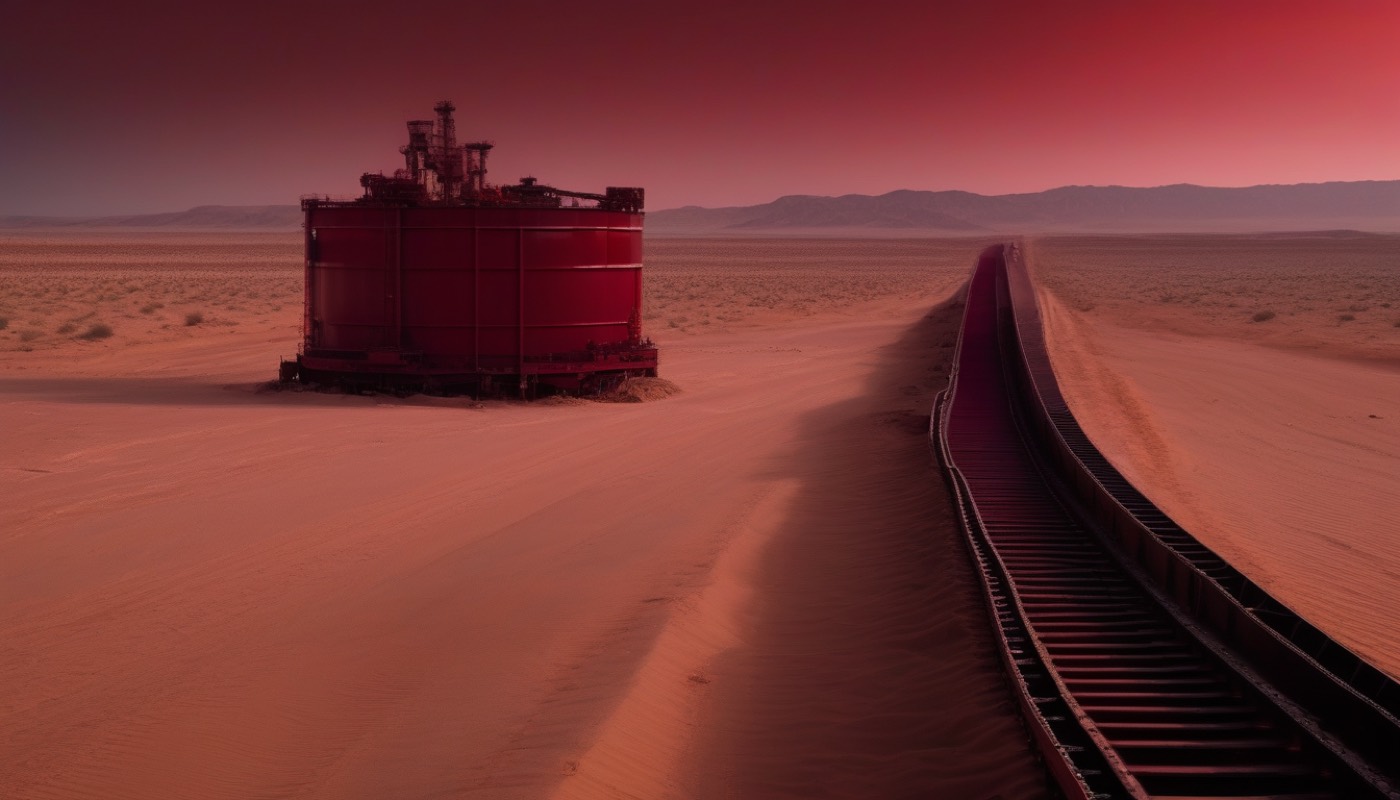
Not all of OCP's phosphate comes from inside Morocco's internationally recognised borders. A meaningful share comes from a single mine, in a territory whose status the world has never fully settled.
Here is where that rock actually travels. The Bou Craa mine sits deep in Western Sahara, a territory Morocco administers but whose sovereignty remains disputed internationally. From the mine, a conveyor belt roughly a hundred kilometres long carries the rock to the port at Laayoune, where it is loaded onto ships.
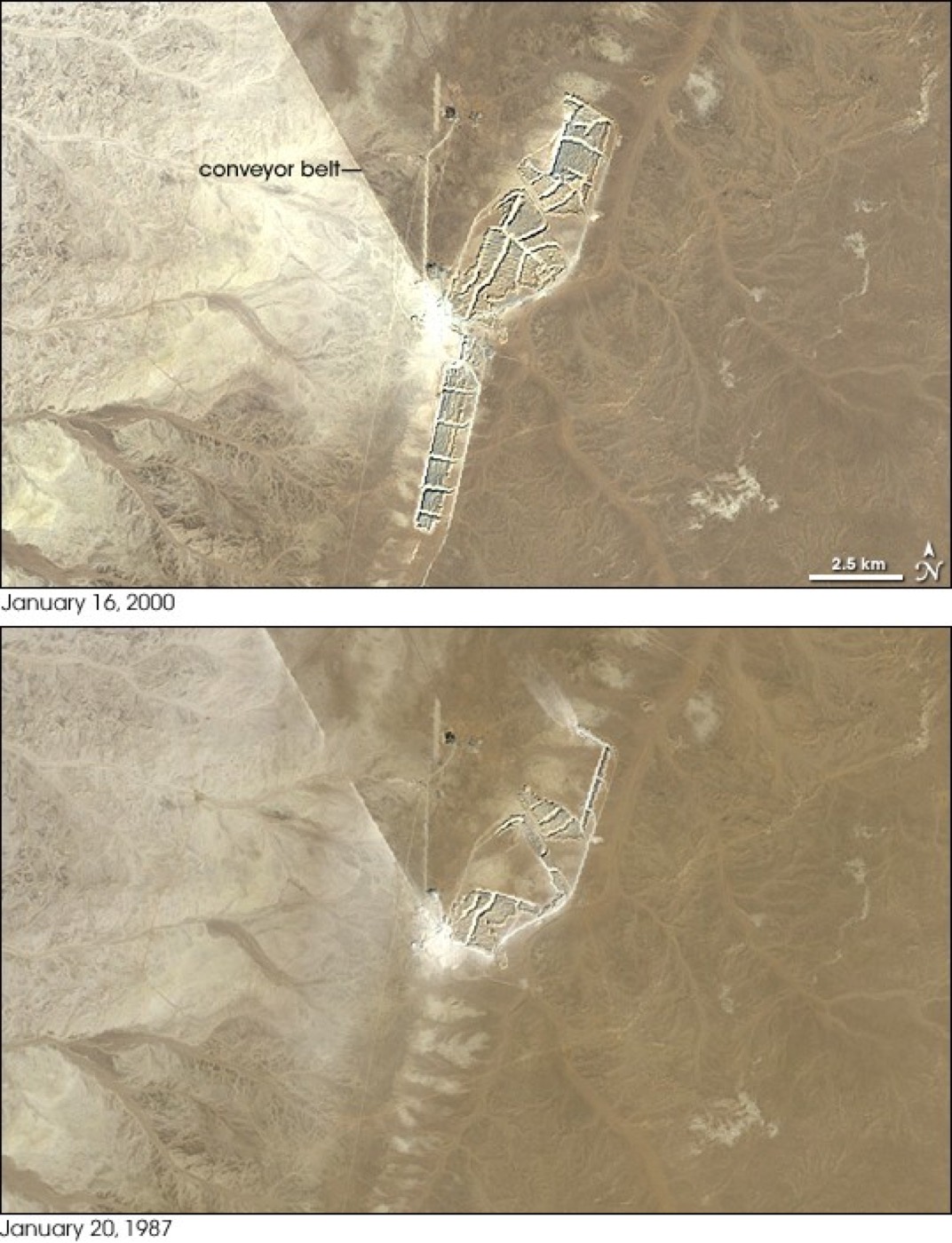
Satellite images make the scale obvious in a way that ground photographs cannot.
This Landsat satellite photograph shows the Bou Craa mine itself — the pits where OCP's subsidiary, Phosboucraa, extracts the rock before it ever reaches the conveyor belt.
That belt is the real engineering feat. It can move roughly two thousand metric tons of rock an hour. Bou Craa's mine has a total extraction capacity of about four million tons a year — a small share next to Morocco's main reserves, but a visible and symbolic one.
Western Sahara's status has never been resolved: Morocco administers the territory, and the United Nations has not recognised that as a final settlement. Groups including Western Sahara Resource Watch argue that mining and exporting the territory's resources without the consent of its people breaches international law. This video states that dispute; it does not resolve it.
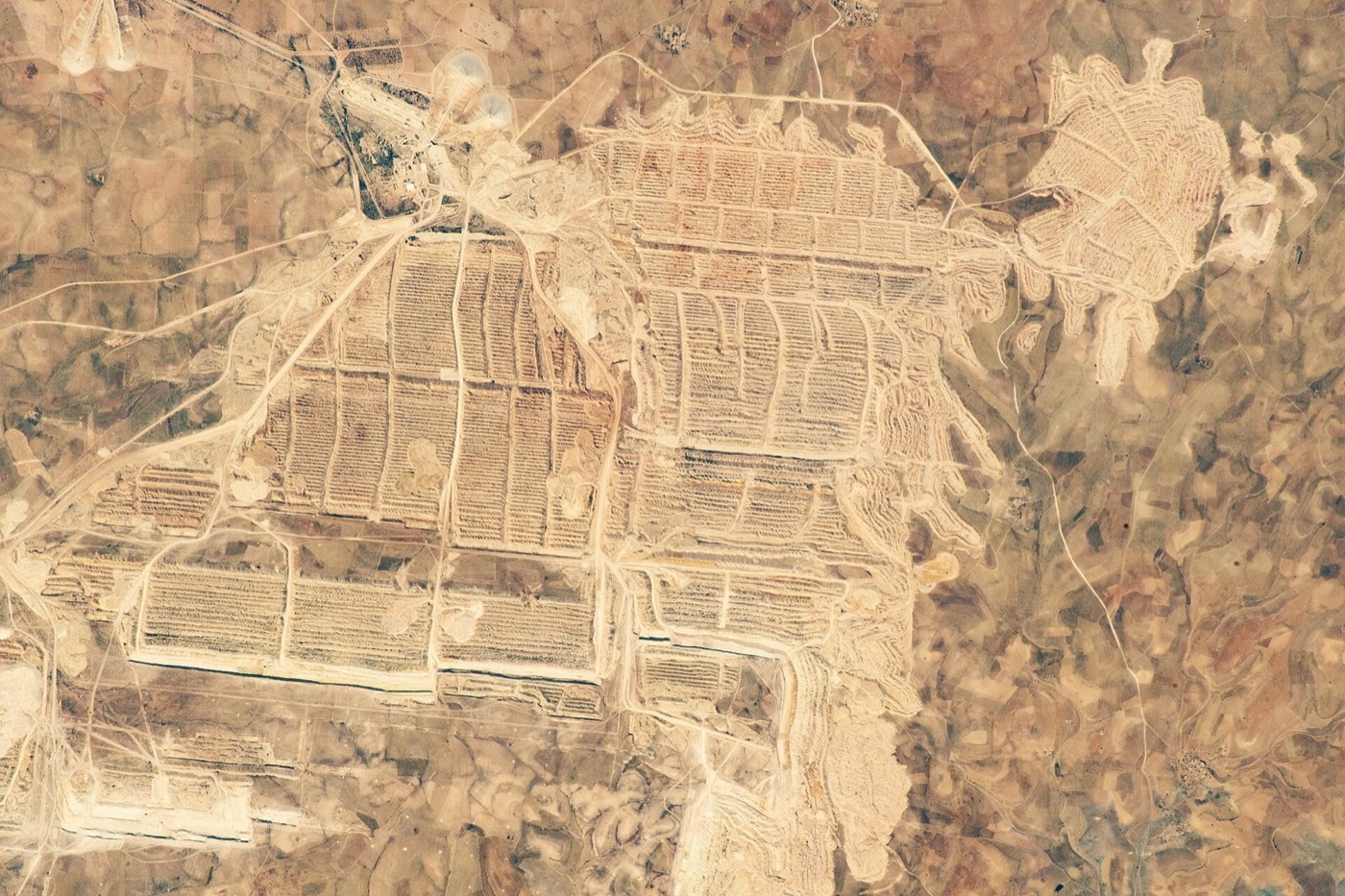
This photograph, taken from the International Space Station, shows the wider stretch of the Western Sahara coast. The conveyor belt crosses a hundred kilometres of this desert on its way to Laayoune's port, with phosphate rock riding above it the entire way.
So even before OCP's reserves inside Morocco proper are counted, part of its supply chain already sits on contested ground — a fact that follows the rock all the way to the ships that carry it abroad.
7. Scaling up: Jorf Lasfar, Safi, and $5.25bn in 2026
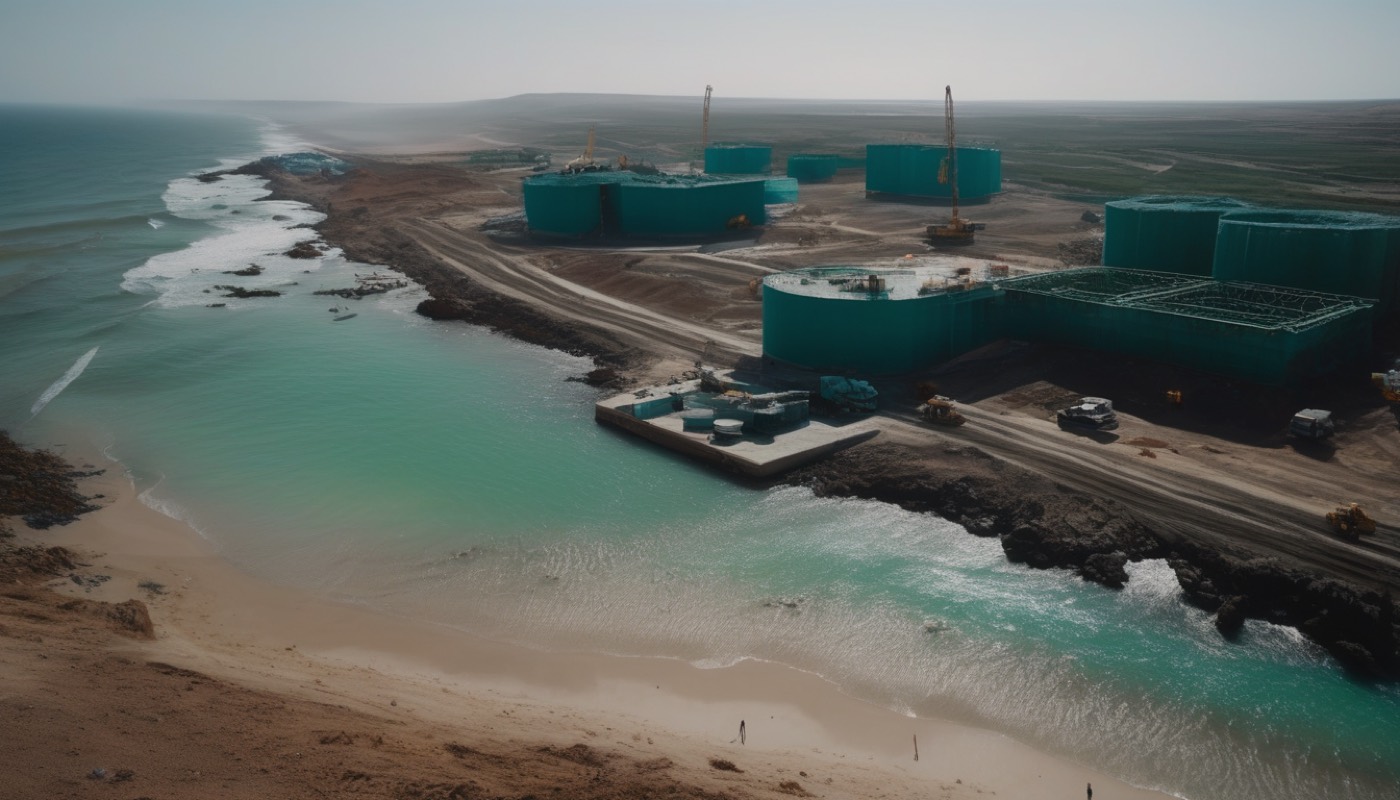
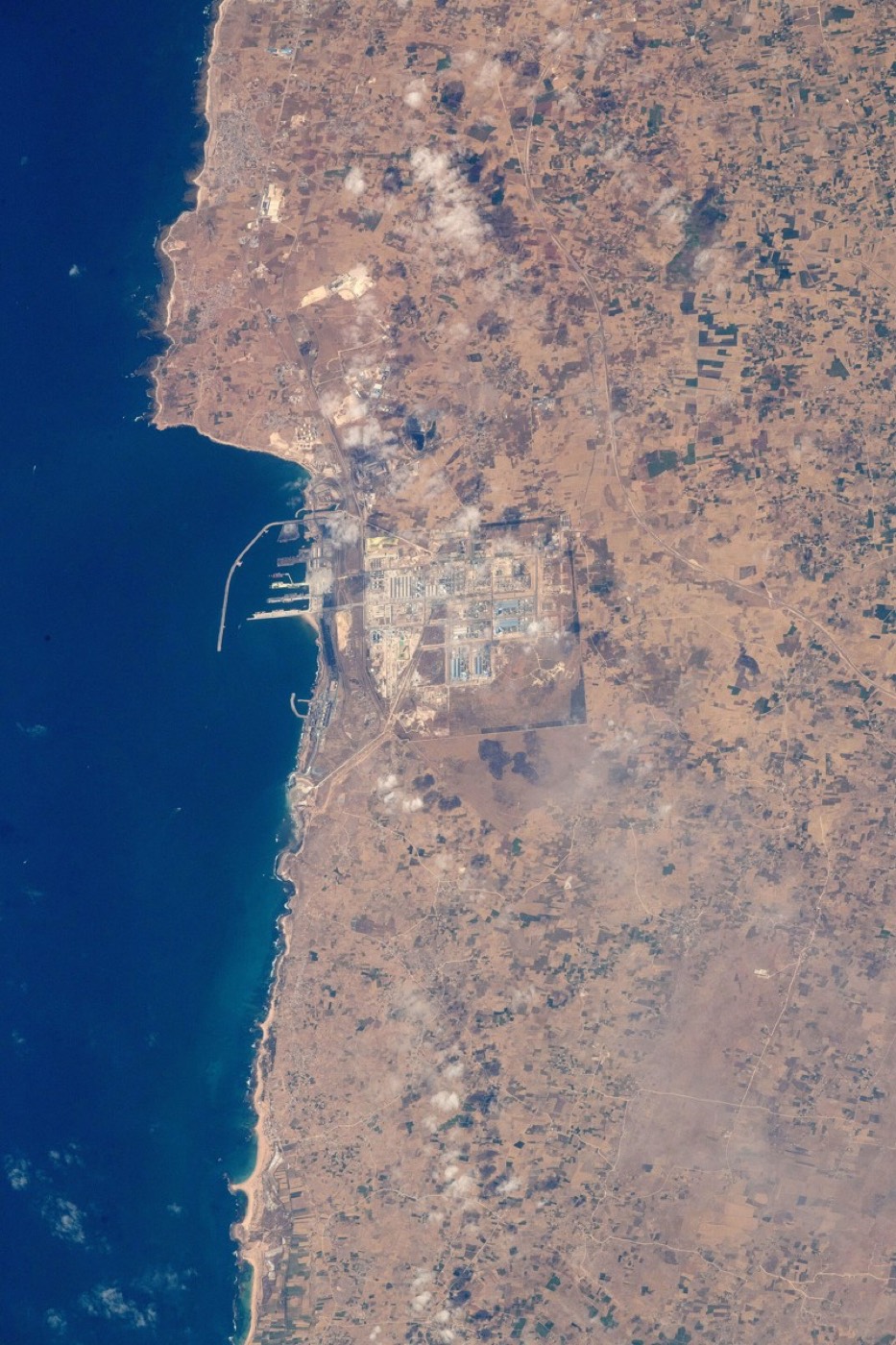
OCP is not standing still on its current output. It is in the middle of the largest expansion in its history, aimed squarely at this decade's rising demand.
OCP is spending five point two five billion dollars in twenty twenty-six alone. That single year's spending is part of a wider programme, fourteen billion dollars in total. It runs from twenty twenty-five through twenty twenty-seven.
The target of that spending is a specific jump in output, not just a general expansion.
In twenty twenty-four, OCP produced about twelve million tons of finished fertiliser a year. The programme's goal is twenty million tons a year by the end of twenty twenty-seven. That is close to double the output of just three years earlier.
Almost all of that new capacity is being built at two sites that already anchor Morocco's chemical industry.
Jorf Lasfar and Safi are OCP's two main industrial hubs, both on Morocco's Atlantic coast. Jorf Lasfar is the larger of the two and is where most of the new SP2M expansion capacity is being added; Safi runs an older but still substantial share of the processing.
The spending runs across three years — twenty twenty-five, twenty twenty-six and twenty twenty-seven — and the output target lands at the end of that final year. Every stage of the plan, from financing to construction to the fertiliser actually shipping, has been reported with the same three-year horizon.
This photograph from the International Space Station shows the port of Jorf Lasfar itself — the loading point that most of OCP's expanded output will eventually pass through on its way to customers overseas.
Whatever happens in the trade disputes covered in the next two chapters, OCP is betting that the world will want more phosphate fertiliser, not less, and is building capacity on that bet right now.
8. China's exit and the price shock
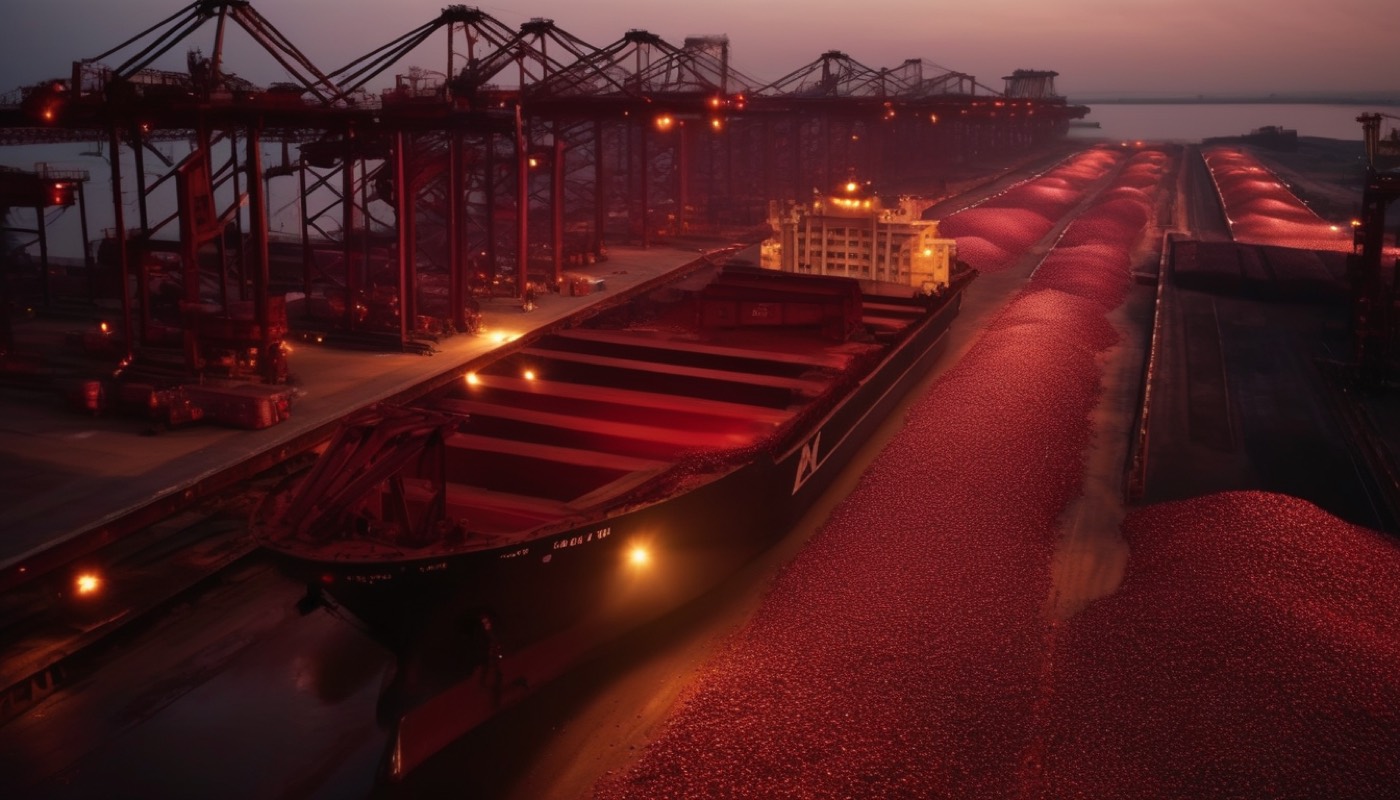
Morocco is not the only large phosphate producer. China mines far more phosphate rock than Morocco does. But over the past year, China's own government pulled a large share of that rock off the export market entirely.
China's National Development and Reform Commission announced, on the eleventh of December twenty twenty-five, that phosphate fertiliser exports would be suspended "in principle" until August twenty twenty-six, to protect the country's own farmers ahead of spring planting. The policy was about keeping Chinese-grown rock for Chinese fields, not about global supply at all.
The effect outside China was immediate, even though the policy was never aimed at anyone outside it.
Chinese exports of the two most common phosphate fertilisers fell to about five point three million tons across all of twenty twenty-five. That was eighteen per cent below the year before, and the lowest annual total since twenty thirteen.
China was, for decades, one of the two or three countries every phosphate-importing nation could rely on, alongside Morocco and Russia. With a large share of that supply withdrawn from December twenty twenty-five through the suspension's August twenty twenty-six target, buyers across Asia and Latin America had one fewer major supplier to turn to.
India, Brazil, and buyers across Southeast Asia and sub-Saharan Africa were named repeatedly in trade reporting as the countries pushed hardest toward Moroccan product once China pulled back. None of them produce enough phosphate rock of their own to replace what China had been selling them.
With one major supplier restricting exports, the country holding most of the world's reserves gained something it did not have to ask for: buyers with fewer alternatives than they had a year earlier.
9. Washington blinks: the 2026 duty suspension
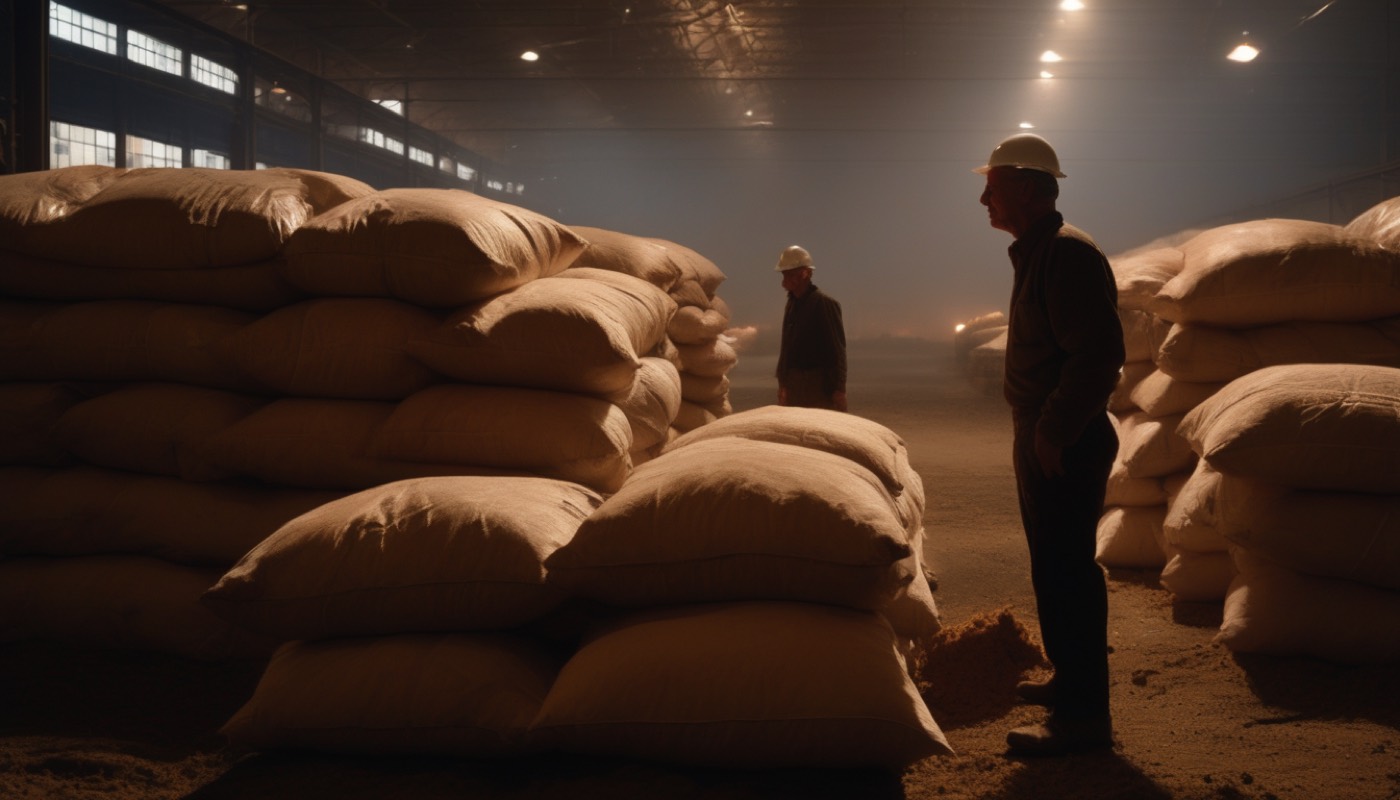
The United States found itself on the sharp end of that same squeeze. It has its own phosphate mines, and its own trade defences against Morocco — but, for once, it had a reason to drop one of them.
The United States has mined its own phosphate rock for decades, mostly in Florida, Idaho, North Carolina, and Utah. But it still imposed countervailing duties against Moroccan phosphate fertiliser from twenty twenty-one, after the fertiliser company Mosaic filed a petition in twenty twenty, arguing that OCP received unfair government support.
Those duties were never fixed at one rate. They moved as the US recalculated the alleged subsidy.
The duty on Moroccan phosphate fertiliser started at nineteen point nine seven per cent in twenty twenty-one. It fell sharply within two years. Then it climbed back to sixteen point eight one per cent by November twenty twenty-four. That swing of double digits happened in under four years, just before the suspension that follows.
Then, facing exactly the tight domestic supply the last chapter described, Washington changed course.
On the twenty-ninth of June, twenty twenty-six, the United States suspended its antidumping and countervailing duties on Moroccan phosphate fertiliser. The suspension covers mainly ammonium phosphate and superphosphate products, for eight months or until the supply emergency ends, whichever comes first. The stated reasons were to increase domestic availability, improve competition, and lower the cost of crop inputs for American farmers.
The map here is simple but says everything about the leverage at stake: a trade barrier built specifically against one supplier, lifted the moment that supplier's product became too important to keep taxing.
A country that spent five years defending its farmers against Moroccan imports spent eight months undoing that defence, because no other supplier could fill the gap in time.
10. What near-monopoly pricing power looks like
Step back from any single policy and the pattern across the last three chapters becomes the point. A supplier that holds most of the world's reserves, and has spare capacity when a rival's exports are restricted, does not need to do anything dramatic to benefit.
Near-monopoly pricing power rarely looks like a single dramatic price hike. It looks like a supplier that can set a floor under prices because buyers have nowhere else to go. It looks like choosing which customers get priority shipments when supply is tight. And it looks like being the supplier left standing whenever somebody else's exports are disrupted, whatever the reason.
None of that requires OCP to break any law, or even to act differently from how any sensible business would act with the reserves it holds. The leverage comes from the shape of the market, not from any single decision OCP makes.
That is also why near-monopoly power is hard to legislate against directly. The last chapter's trade duty, aimed squarely at one supplier, had to be suspended within eight months because it hurt domestic buyers more than it hurt that supplier. A dominant producer can simply wait out most countermeasures.
11. Food security on a single rock
Pull the camera back further, and the stakes stop being about one country's trade policy and start being about who can feed themselves at all.
A handful of countries hold almost all the world's phosphate rock. Morocco is by far the largest holder. China, Russia, Egypt, Algeria, and the United States share much smaller amounts between them.
Everyone else has to import phosphate fertiliser, or the rock to make it, because they have no deposits of their own. That includes major farming nations such as India and Brazil, and most of sub-Saharan Africa.
That dependence is not a hypothetical risk sitting in the background. It is the daily condition of agriculture in countries that between them feed well over a billion people.
No country without phosphate reserves has a backup plan if its usual supplier has a bad year. India, Brazil, and most of sub-Saharan Africa buy phosphate fertiliser on whatever terms the handful of exporting countries offer, because growing food without it is not an option open to them.
Put plainly: a nutrient that every major crop needs, that cannot be synthesised, and that is concentrated in a small number of countries, is about as structurally risky as a food system's dependence can get.
12. Can the dependence be broken?
So is there a way out — a path back to a food system that does not rest on one country's rock? There are three real candidates, and none of them is close to replacing mined phosphate rock yet.
Phosphorus that has already been mined does not disappear after a crop is harvested — it ends up in manure, in sewage, and in food waste. Recovering it from those three streams and returning it to farmland is called phosphorus recycling, and it is already technically proven at a small scale in several countries.
The limiting factor is not the chemistry. It is the scale and the cost of collecting a nutrient that is spread thinly across millions of individual farms, animals, and households, compared with digging it out of one concentrated deposit.
Beyond recycling, two other paths are being tried. New phosphate deposits are being explored in several other countries, though none found so far rivals the scale of the dominant reserve. And farmers are being pushed toward using phosphorus more efficiently, wasting less of it per ton of crop grown.
None of those three paths is likely to replace mined phosphate rock within the next few decades. What they can do is gradually reduce how much leverage any single reserve-holder has. That is a slower and less satisfying answer than most people want, but it is the honest one.
So, forwards or backwards: can a food system that depends on one country's rock reserves keep feeding a growing world? For now, the honest answer is that it already does, every single day. The only real alternative on the table is to need a little less of that rock, one farm at a time, for as long as it takes.
Sources and credits
Photo credits (Wikimedia Commons)
- Bou Craa phosphate mine, Western Sahara (satellite photograph): NASA Landsat image, Public domain - https://commons.wikimedia.org/wiki/File%3ABou_Craa_mine.jpg
- Western Sahara including the Bou Craa mine area, seen from the International Space Station: Earth Science and Remote Sensing Unit, NASA Johnson Space Center, Public domain - https://commons.wikimedia.org/wiki/File%3AISS056-E-32453_-_View_of_Western_Sahara.jpg
- Port of Jorf Lasfar, Morocco, seen from the International Space Station: NASA, Public domain - https://commons.wikimedia.org/wiki/File%3AISS-56_Morocco%2C_Port_of_Jorf_Lasfar.jpg
- Phosphate processing plant, Nauru, early 20th century: Special Collections from Callaghan NSW, Australia, Public domain - https://commons.wikimedia.org/wiki/File%3APhosphate_plant%2C_Nauru_%289626739450%29.jpg
- Fritz Haber, chemist who developed nitrogen fixation (Haber-Bosch process): The Nobel Foundation, Public domain - https://commons.wikimedia.org/wiki/File%3AFritz_Haber.png
- Carl Bosch, engineer who scaled the Haber-Bosch process industrially: Nobel Foundation, Public domain - https://commons.wikimedia.org/wiki/File%3ACarl_Bosch.jpg


Primary sources
- USGS, Mineral Commodity Summaries, Phosphate Rock chapter, February 2026 edition, pubs.usgs.gov.
- OCP Group investment programme, reported via africa.com (19 June 2026), millingmea.com ('Morocco's OCP Group invests US$14B to expand operations'), and fertilizerdaily.com (29 August 2026, SP2M expansion) - the $5.25bn/2026, $14bn/2025-27, and 12 to 20 million tonne figures.
- S&P Global Commodity Insights, 'Trump suspends import duties on Moroccan fertilizer for eight months', 30 June 2026; KPMG TaxNewsFlash, June 2026; Morocco World News, 29-30 June 2026 - the 29 June 2026 duty suspension and its stated reasons.
- KPMG TaxNewsFlash, June 2026, and access.trade.gov determination summary - the 2020 Mosaic petition, the 2021 countervailing duty order, and the 19.97%/2.12%/16.81% duty-rate history.
- SunSirs, 'The Logic Behind China's Phosphate Fertilizer Export Suspension' - the 11 December 2025 NDRC announcement and the August 2026 target.
- fertilizerdaily.com / StoneX / CRU reporting - 2025 Chinese MAP/DAP export volume (about 5.3 million tons, down 18% from 2024, lowest since 2013) and the shift of import-dependent buyers toward Moroccan supply.
- Wikipedia, 'History of Nauru' and 'British Phosphate Commission', cross-checked against teara.govt.nz (Albert Ellis) and britishempire.co.uk - the 1900 discovery, 1906-07 first mining and shipment, and the 1920-1981 British Phosphate Commission.
- BASF company history ('Carl Bosch') and famousscientists.org - the 1909 Haber ammonia synthesis and the 1913 Bosch industrial scale-up.
Not regulated financial advice.