
Starting a Business While Working Full-Time
A practical route to starting a small business while keeping a full-time job. Make one clear offer, protect employment boundaries, talk to potential customers and learn from a manageable paid test.
The video covers time, costs, cash, UK records and conditional tax rules, including the current Making Tax Digital schedule. Success can mean extra income, creativity, flexibility or building something of your own. Examples are illustrative; no earnings or quitting deadline is promised. Sources and dates are in the accompanying fact sheet.
Educational documentary. Not financial or investment advice.
Tags
Chapters
Video notes
1. Start small, keep your stability

The working day ends. There is dinner to make, a message to answer, and an idea that keeps returning. Perhaps you could sell something of your own. The difficult part is finding a way to test that idea without gambling the stability you already have.
A small business begins with a problem, a paying customer, and work you can deliver. Those parts belong together. A useful idea still needs someone willing to pay, and a sale still needs to fit your life.
Keeping a job can give you room to learn slowly. It does not remove risk or create spare energy. It means the first experiment does not have to replace your salary. That changes the question from whether you could become an entrepreneur to what you could reliably offer next.
The first goal is learning while keeping your stability. Test a bounded offer before making a larger commitment. You are looking for evidence of demand and a pace you can sustain.
GOV.UK confirms that someone can be employed and run a business at the same time. Your employment terms still matter, and we will come to those shortly. There is no need to decide now whether this will become your main work.
Imagine the first month ending with a clearer understanding of a customer, a completed job, and an honest account of the effort involved. That can be useful progress. A quiet start leaves room to discover whether the work deserves more of your time.
2. Make one clear offer

Start with something a customer can picture receiving. Helping businesses with marketing is broad. Making a small batch of social-media posts for an independent café is clearer. The buyer can ask what arrives, when it arrives, and what it costs.
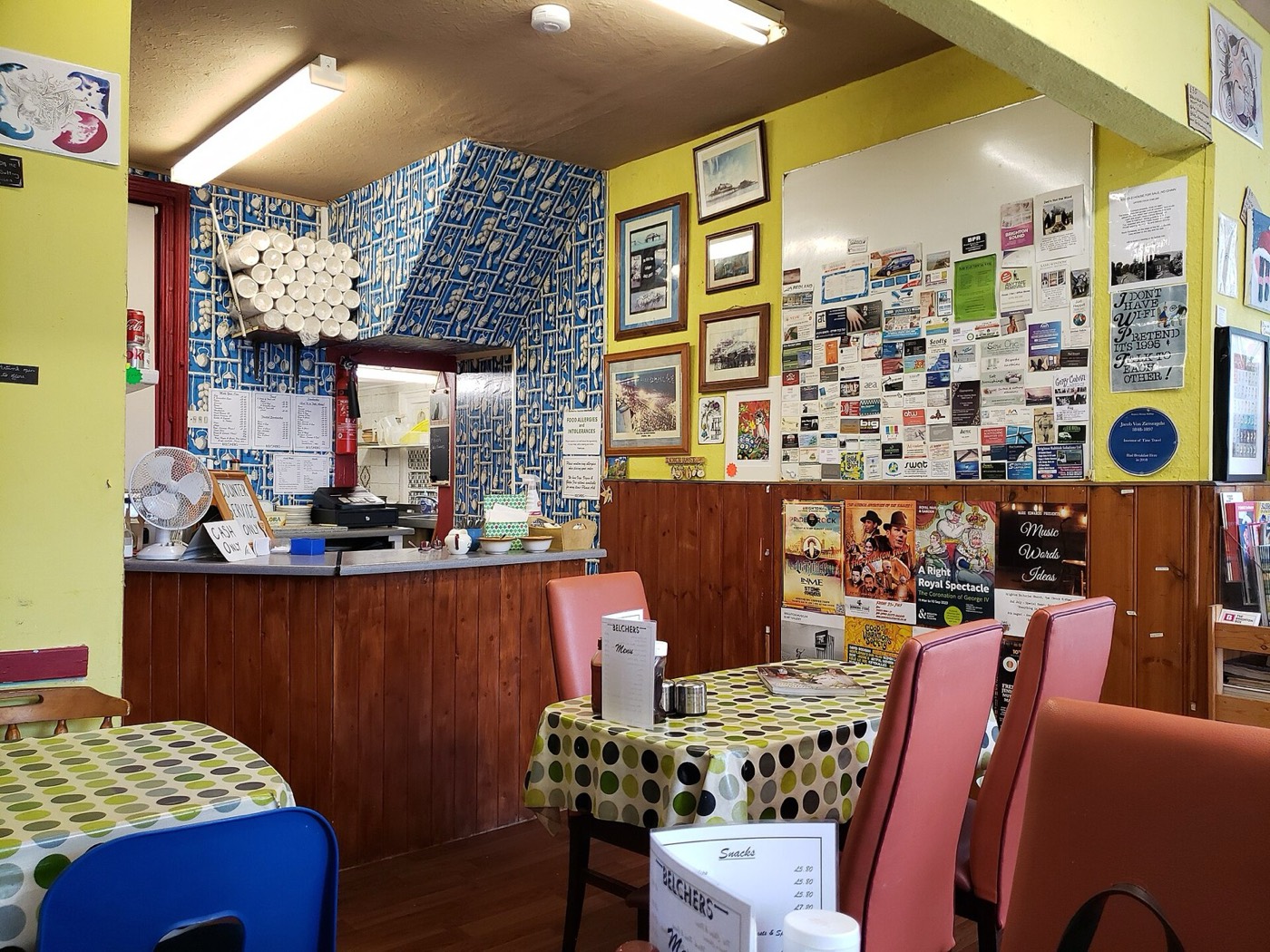
This is Café Belchers in Brighton, photographed in July twenty twenty-three. It is an illustrative café setting, not a business we are claiming to have helped. Picture an owner who has fresh food to promote and little time to prepare posts.
Your offer might describe approved photographs, short captions and a delivery date. Ask which task the owner actually wants taken off their hands. The photographs could already exist, or you could agree to take them separately. Do not promise customer growth you cannot control.
The same principle works for a two-hour wardrobe edit, a personalised celebration cake, or bookkeeping for a tradesperson. Each offer names a task the customer recognises. These are invented starting points, not verified success stories or promised earnings.
A wardrobe edit might end with selected outfits and a list of gaps. A cake order needs an agreed design and collection arrangement. Bookkeeping means keeping financial records organised, and it brings professional responsibilities we will cover later.
A clear offer connects a customer to a specific task and a defined result. The task is what you do; the result is what they receive. Keeping that connection visible makes the offer easier to discuss and deliver.
Choose the example that matches skills you already have and work you can do responsibly. You can improve the offer later. For now, the customer needs a small decision they understand, rather than a complete catalogue of everything you might eventually sell.
3. Protect your employment

Before approaching customers, read your employment contract and workplace policies. Look for rules on outside work, competing activities and conflicts of interest. A conflict can arise when your business interests pull against your responsibilities at work. Find out whether permission is required.
Check outside-work rules, conflicts, confidentiality and ownership. Confidentiality means protecting information entrusted to you. Ownership includes rights over work you create, so clarify the boundary before building an offer around something connected to your job.
Acas describes restrictions on working for another employer and legal exceptions for zero-hours and certain low-income workers. Those exceptions are not blanket permission for every full-time employee to start any business. If a term is unclear, ask for clarification or appropriate advice before relying on your interpretation.
Keep your business time and tools separate from your employer's. Use your own equipment, permitted software and independent contacts. Employer files and confidential information stay with the employer, even when a shortcut would make the new work easier.
A separate folder is useful, but the underlying question is whose resources and information you are using. Do not recruit customers from a confidential contact list. Do not do paid customer work during hours you owe to your employer. Record any required approval clearly.
Working after hours does not settle ownership by itself. The Intellectual Property Office says an employer normally first owns copyright created in the course of employment, unless an agreement says otherwise. Copyright is the right controlling the copying and use of creative work.
Other rights and contractual duties can matter too. A business built around your day-job responsibilities needs particular care. Protecting this boundary is part of protecting your stability, and it is easier to resolve before an order arrives than after a disagreement.
4. Talk to potential customers

An offer becomes more useful when it meets an actual situation. Begin with conversations about recent events. Ask what was difficult, how the person dealt with it, and whether they spent money solving it. Listen before explaining the service you would like to sell.
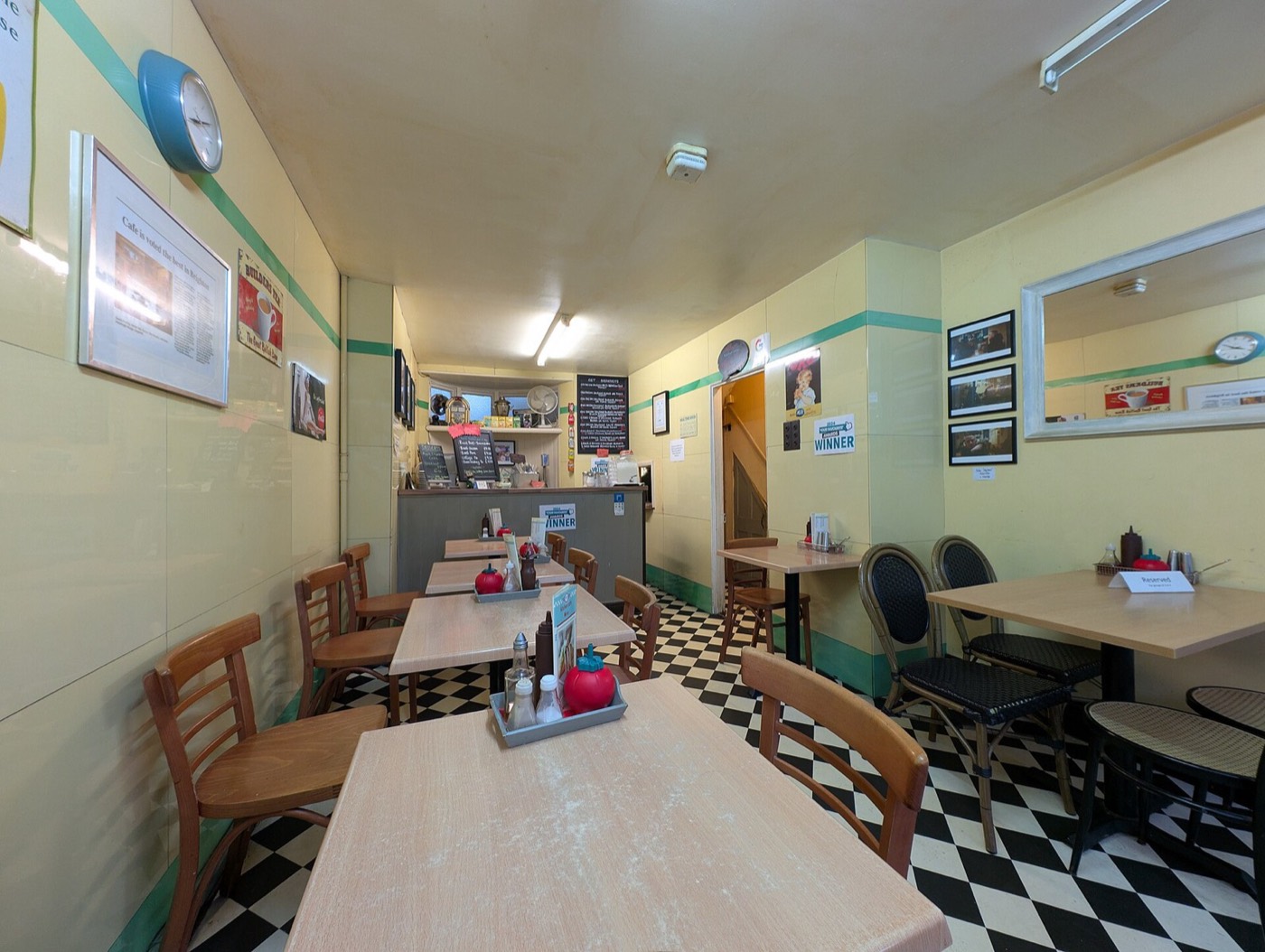
This photograph shows Kitchen Cafe in Brighton in January twenty twenty-five. It illustrates a place where a customer conversation might happen. We are not reporting an interview with its owner or claiming that this café needs the service.
For our imagined café owner, ask about the last time they wanted to announce something online. Who prepared the post? What delayed it? Was the problem photography, writing, approval, or simply remembering to publish? The answers can point to quite different offers.
Ask about the last problem, the current solution and any actual spending. A remembered event gives you something concrete to examine. A polite expression of interest gives you much less to work with.
Avoid turning every conversation into a sales pitch. Someone might already have a solution they value. Someone else might dislike the task but have no budget for help. Both answers are useful. They keep you from treating every inconvenience as a business opportunity.
Connect what you heard to a small paid test, then use delivery to collect feedback. That feedback returns to the offer and changes the next attempt. The loop is learning from a customer, rather than guessing alone.
Buy what is necessary for safe, lawful delivery. Expensive branding, a large website or a cupboard full of stock can wait until there is a reason for them. A modest offer explained clearly can reveal more than weeks spent polishing a business nobody has been asked to buy from.
5. Make the first sale manageable

A pilot is a small trial of the service with a real customer. Make it small enough to complete alongside your job. Write down the work, the price, the deadline, the customer's responsibilities and what happens if they ask for changes.
Agree the deliverables, price and deadline before beginning. Deliverables are the things you promise to hand over. Clear limits make it easier for the customer to judge the result and for you to know when the work is finished.
For the café example, approval of the words and images may be part of the customer's role. Explain whether you prepare files or also publish them. Agree how payment works. A trial should teach you what delivery costs, without becoming an open-ended promise to keep helping.
A cake business needs the relevant registration and safety checks before trading. Food Standards Agency guidance requires registration at least twenty-eight days before trading in England, Wales and Northern Ireland. Check local guidance, including the applicable Scottish rules, before setting a start date.
The registration guidance distinguishes England, Wales and Northern Ireland from its separate Scottish signpost. The map locates those parts of the United Kingdom. Use the guidance that applies where you will operate, rather than assuming every linked process is identical.
A home kitchen and a small order do not remove responsibilities for hygiene or allergens, the ingredients that can trigger allergic reactions. For bookkeeping, HMRC includes professional bookkeeping within accountancy services covered by money-laundering supervision rules. These rules help prevent criminal money being disguised as legitimate business income.
Check who must supervise a bookkeeping service and whether an exception applies before offering it. A professional body may supervise the work, or HMRC registration may be required. A small pilot is still professional work with responsibilities.
Payment tests something that likes and encouragement cannot: whether someone will part with money for this offer. Delivery tests another part: whether you can keep the promise. One completed sale is evidence to examine, not proof of lasting demand. Ask what was useful and what would make the next purchase easier.
6. Make your week visible

A calendar reveals promises that enthusiasm can hide. Put the job, travel, household work and existing commitments in first. Leave space for sleep, rest and people you care about. The remaining time is the starting point for your experiment.
Here is an optional week: ninety minutes on each of two evenings. Add two hours at the weekend, and the total is five hours. This is an invented illustration, not a minimum workload or a promise of what you can earn.
Those hours have to cover more than making the product. Customer messages, preparation, purchasing and records also take time. You might use an evening for conversations, another for delivery preparation, and the weekend for the agreed work. Fit administration inside the plan rather than pretending it disappears.
Leave a buffer for administration and unexpected delays. Keep rest and relationships visible too. A plan that only works when nothing goes wrong is a fragile promise to make to a paying customer.
Notice what the work does to the following morning. If every business evening steals sleep, the cost reaches your job and home life. A smaller offer, a later deadline or fewer orders can be a practical response. The schedule should help you make those choices early.
Match the order to the hours you can actually give it. If delivery consumes the available time, the next order must wait or change. Capacity means the amount of work you can reliably complete, not the amount you wish you could accept.
Review the rhythm after delivery. Some work can be grouped together, while other tasks require a customer to respond. A sustainable week respects both. There is no reward for creating a second full-time job accidentally, especially if the project stops being something you want to do.
7. Know your costs and cash

Record money coming in and the costs of earning it. Materials are only the beginning. Platform fees, insurance, marketing, software and professional advice can matter. Track them even when the amount looks small. Repeated small payments can change whether an offer is worthwhile.
Cash flow is money entering and leaving over time. A sale leads to an invoice, but only payment puts that money in your account. Meanwhile, supplies and other bills may need paying before the customer pays you.
Keep business money distinguishable from personal spending. A separate account can make that easier; check its terms for business use. This is an organisational habit, not a claim that every sole trader must open the same type of account. A sole trader runs the business personally rather than through a separate company.
Here is an invented example using invoice-based accounting. Start with three hundred pounds invoiced and subtract one hundred pounds of costs. That gives two hundred pounds before tax and other costs. That is the result on paper, not necessarily money available to withdraw.
Now ask what has actually moved. The accounting example recognises the sale before all the money arrives. Many small UK businesses instead use cash-basis accounting, where income and expenses are recorded when paid. We are using the comparison to explain timing, not to calculate a tax return.
Suppose only one hundred and fifty pounds has arrived. After paying the hundred pounds of costs, fifty pounds remains in cash. The unpaid invoice still matters, but it cannot pay today's bill.
Keep room for future bills and tax as well. Even money already in the account can have a job waiting for it. Reviewing both the result of the work and the timing of payments helps you avoid spending funds you will soon need for the business.
8. Keep records and allow for tax

Start the record system with the first transaction. Keep invoices, receipts and a readable record of payments. Salary does not make business income tax-free. The amount due depends on your circumstances, so use current guidance or qualified advice to estimate a suitable reserve.
The rules in this chapter concern the United Kingdom. The map locates that jurisdiction beside the Republic of Ireland, which has its own tax system. These are not rules to apply unchanged wherever a viewer lives.
For a UK sole trader, HMRC requires records of business income and expenses for the tax return. Self Assessment is the system for reporting income and calculating tax owed. Records normally need keeping for at least five years after the relevant January submission deadline.
The trading allowance is up to one thousand pounds of annual gross trading income. Gross means before expenses, not profit. Eligibility has exclusions, including income from your employer, and other circumstances can still require a return.
When gross trading income exceeds that amount, registration for Self Assessment is generally required by the fifth of October in the following tax year. If you claim the allowance when calculating taxable profit, you cannot also deduct actual expenses. Compare the permitted choices using the guidance rather than assuming both apply.
The trading allowance began in twenty seventeen. Making Tax Digital for Income Tax started for eligible people in twenty twenty-six, above fifty thousand pounds of qualifying income. The scheduled threshold falls to thirty thousand pounds in twenty twenty-seven. It falls to twenty thousand pounds in twenty twenty-eight.
Qualifying income here is combined gross self-employment and property income, not salary. The relevant earlier tax year determines when you start. Making Tax Digital means keeping digital records and sending updates through compatible software. Check HMRC's eligibility tool and exemptions rather than buying software solely because you have a job and a new project.
HMRC's September twenty twenty-six update says it is starting to sign up eligible people who have not already joined. That concerns people required to use the system, not every new side business. Read any HMRC notice and check what action applies to you.
The useful habit is simple: record money as you go, reserve what you may owe, and put your applicable deadlines somewhere visible. Clean records make a modest business easier to understand. They also let you see whether it is providing the benefit you hoped for.
9. Learn from each attempt

After an enquiry, a sale or a refusal, write down what happened while you remember it. An enquiry is a question from a possible customer, not an order. Keep that distinction visible when judging how much demand you have.
Follow the enquiry through sale or no sale, then review the result. A delivered order gives feedback on both the offer and the work. A refusal can point back to an unclear promise, an unsuitable customer or a concern about price.
Do not assume price explains every refusal. A café owner might understand the service but prefer preparing posts themselves. Another might want photography rather than captions. Ask when it is appropriate, and accept that some people will not answer. Missing feedback is not evidence for the explanation you prefer.
Review clarity, customer fit, price, delivery effort and time. These are different questions, even when they affect the same sale. Separate them before deciding which part of the offer needs attention.
Compare what you expected with what you delivered. Did approval take longer than preparation? Did a customer ask for something outside the agreement? Did you enjoy the work once it became a promise? Your own experience belongs beside the customer's response.
Change one part of the offer and watch the next attempt. If you change the customer, price and service together, the result is harder to interpret. A focused adjustment gives you a clearer question to test.
You may discover that the offer is worthwhile but the schedule needs changing. You may find that people value a smaller part of it. You may decide the project is not a good fit. Each conclusion can save time and money if it comes from evidence you have honestly recorded.
10. Define success and grow gradually

The business does not have to end with a resignation letter. Extra income can be enough. So can creative work, greater flexibility, the possibility of a future career change, or the satisfaction of building something you own. Decide which benefit you are actually seeking.
Success can mean income, flexibility, creativity or ownership. Those goals do not all demand the same business. A project that meets your chosen goal deserves to be judged against that goal, rather than somebody else's growth story.
If extra income matters most, examine what remains after costs and the time spent earning it. If creativity matters, notice whether customer work still provides it. If you hope to change careers eventually, use early orders to learn about the work before making a larger decision.
Let repeated demand meet available capacity before expanding. More enquiries may justify another test; reliable repeat orders may justify a larger commitment. Neither tells you to promise more work than your life can support.
Growth can be a clearer offer, a better process, or a price that reflects the work. It can also mean staying deliberately small. Buying equipment or reducing employment hours is a bigger decision than accepting a manageable pilot. Give those decisions their own evidence and financial planning.
The next step is a clear offer, a protected boundary and a manageable test. Deliver it, record what happened, and use what you learned. That is a repeatable way to build without deciding the whole future at once.
At the end of an ordinary working day, the idea can still be there. Now it has a shape you can examine. A customer, a promise, a place in the week, and money you understand. Start at that scale, then let experience tell you what deserves to come next.
Sources and credits
Photo credits (Wikimedia Commons)
- Independent café interior: Café Belchers, Brighton, photographed 24 July 2023; illustrative setting, not a customer success story: Andy Li, CC0 - https://commons.wikimedia.org/wiki/File%3AInterior_of_Caf%C3%A9_Belchers_2023-07-24.jpg
- Independent café interior: Kitchen Cafe, Brighton, photographed 29 January 2025; illustrative customer-conversation setting: Andy Li, CC0 - https://commons.wikimedia.org/wiki/File%3AInterior_of_Kitchen_Cafe_2025-01-29.jpg


Primary sources
- GOV.UK / HMRC, Working for yourself, checked 5 October 2026.
- Acas, Terms restricting a worker’s actions, 1 July 2026.
- IPO, Ownership of copyright works, 19 August 2014.
- HMRC, trading allowance and business record guidance, checked 5 October 2026.
- HMRC, MTD eligibility, 26 March 2026; qualifying income, 11 September 2026; MTD collection, checked 5 October 2026.
- FSA, Food business registration, 25 June 2026.
- HMRC, accountancy money-laundering supervision, checked 5 October 2026.
- British Business Bank, Getting your business ready for finance, undated, checked 5 October 2026.
- Joe’s issue #223 scope, 5 October 2026; invented examples and editorial guidance.
Not regulated financial advice.