
Tandem Solar: Can Two Layers Beat Silicon?
A perovskite-silicon tandem solar cell has already beaten the efficiency ceiling a single silicon layer can reach on its own - the Shockley-Queisser limit, worked out in 1961. Certified lab tandem cells have reached 35.5% (LONGi, independently certified by ESTI, 14 July 2026), well above silicon's own best single-junction result of 27.30% and above the general single-junction ceiling of about 33.7%.
This video explains how a tandem cell works - a thin perovskite top layer tuned to high-energy light, over an ordinary silicon cell catching what passes through - and why perovskite, with its tunable bandgap and low-temperature, liquid-based growth, became silicon's chosen partner. It covers the real, named reasons perovskite is not yet a finished product: degradation under moisture, heat, UV light and ion migration, met so far only by encapsulation and ongoing compositional research.
On 18 June 2026, Oxford PV and Fraunhofer ISE announced a full-size tandem module using matrix-shingled interconnection, reaching 25.6% efficiency at 491W (rooftop) and 546W (bifacial) - well below the lab record, and the video explains why that gap matters. LONGi itself said in June 2026 that it has no active plan to mass-produce its record cell, citing unresolved manufacturing yield, encapsulation, stability and cost. Tandem modules are tested against the same IEC 61215/61730 standards used for silicon, with Oxford PV's own warranty climbing from 10 years today toward 20 by 2028 - still short of silicon's 25-year standard.
The video closes by weighing where the extra efficiency actually matters: barely at all on a land-rich utility-scale farm like Topaz Solar Farm, California, but potentially a great deal on a space-limited roof like a small veterinary hospital installation in Littlestown, Pennsylvania.
No figure appears without its date, unit and source. No claim is made that a tandem panel is a mature consumer product today.
Educational documentary. Not financial or investment advice.
Tags
Chapters
- One junction, one ceiling
- Stacking two absorbers
- Why perovskite is the partner of choice
- The record-efficiency chase
- The durability problem
- From cell to full-size module
- Manufacturing yield and cost
- Testing for twenty-five years in a box on a roof
- Where the extra efficiency actually matters
- A practical step forward, or an expensive detour?
Video notes
1. One junction, one ceiling
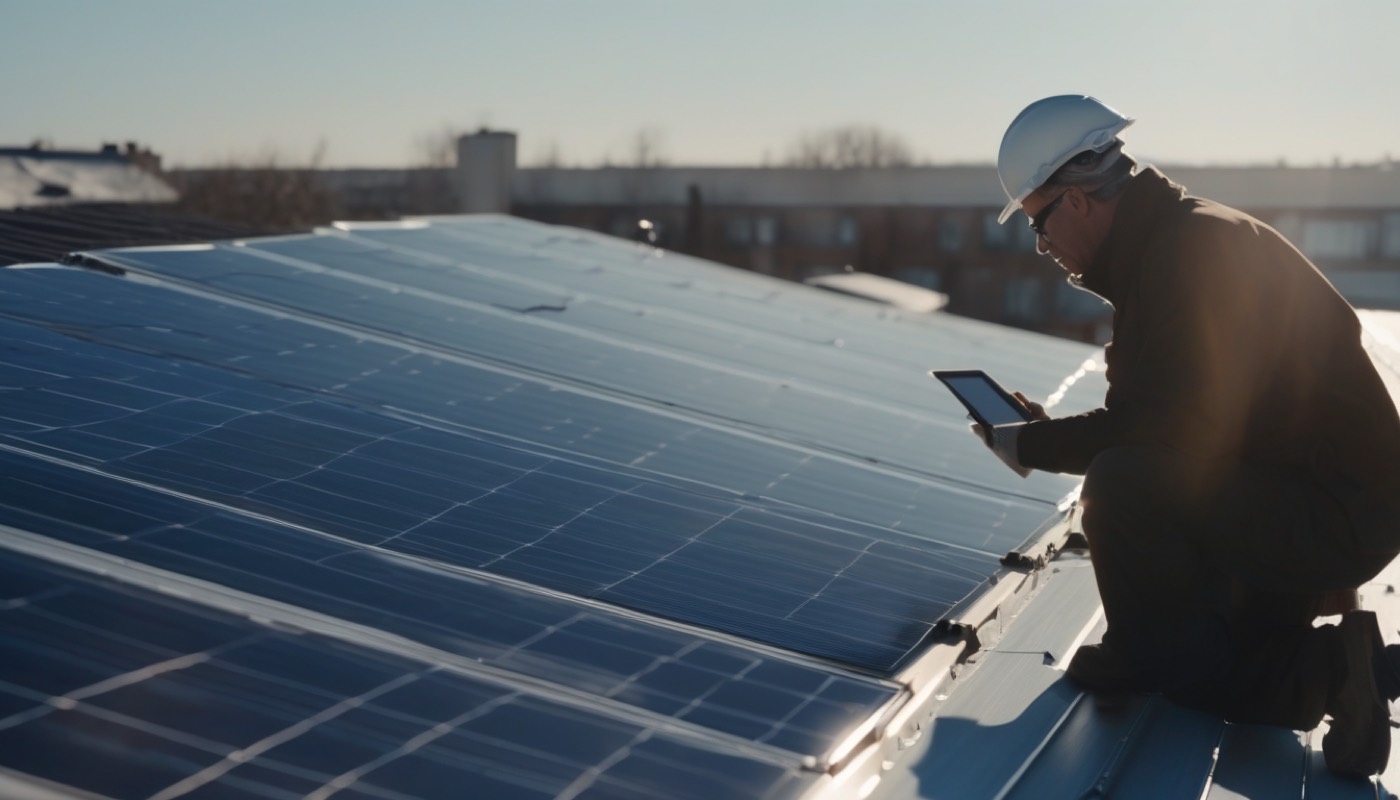
A solar panel turns light into electricity, but it cannot use all the light that lands on it. Every silicon solar cell, the kind on almost every roof today, is built around a single light-absorbing layer. And that single layer has a hard ceiling on how much of the sunlight hitting it can ever become electricity.
That ceiling has a name: the Shockley-Queisser limit, worked out by two physicists in 1961. It sets the highest efficiency any single-layer solar cell can reach, for a given bandgap — the specific slice of light's energy that layer is tuned to absorb. For silicon's own bandgap, the limit works out to somewhere between twenty-nine and thirty-three per cent, depending on which assumptions are used.
Commercial panels do not even reach that ceiling. They run lower, for ordinary engineering reasons — reflection, resistance, heat.
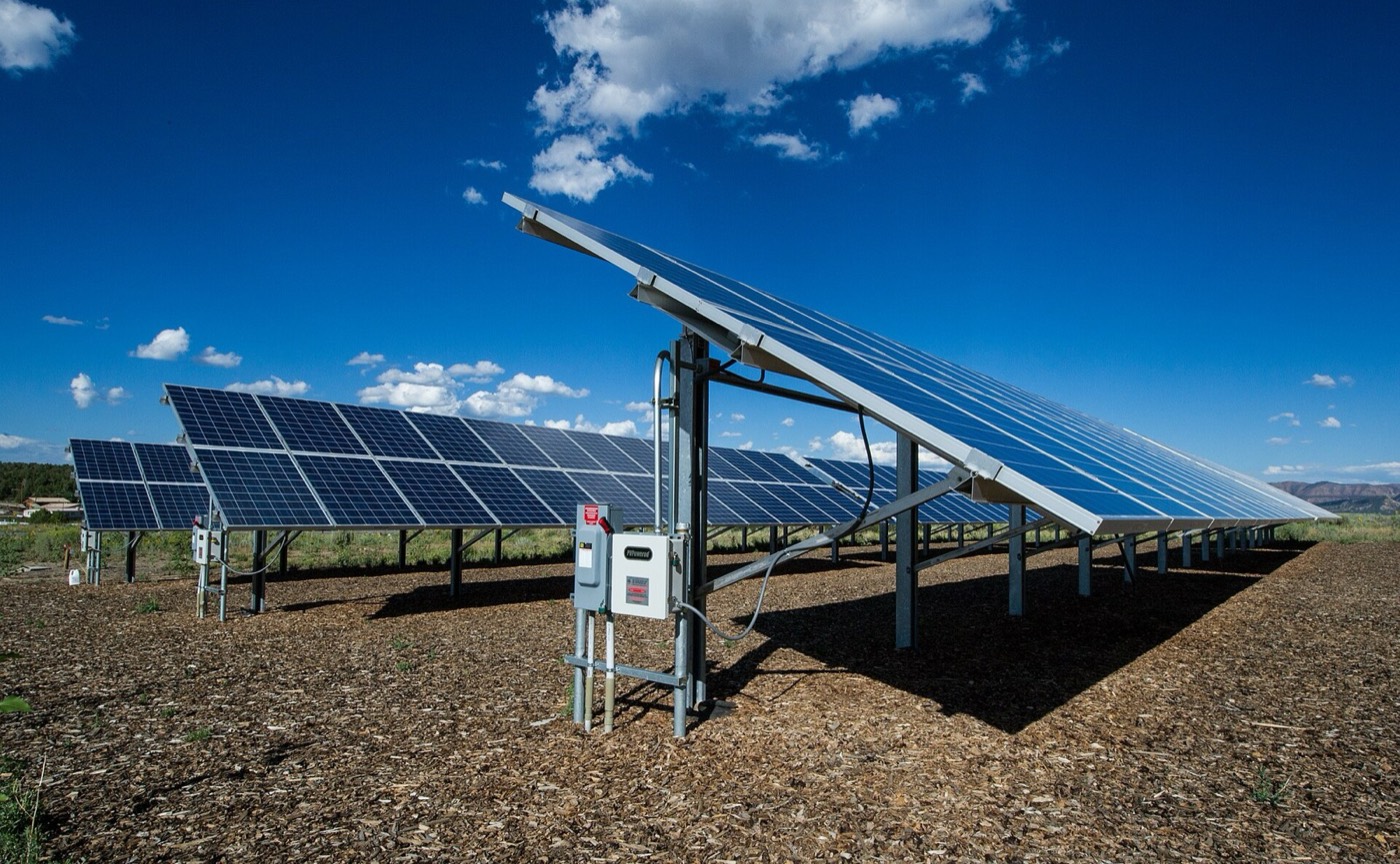
Most silicon panels already installed on roofs run at around twenty to twenty-two per cent efficient. This commercial silicon array, built for a visitor centre in Colorado, is typical of that generation. The newest product lines being sold in 2026 have pushed higher, into the mid-twenties — but every one of them is still built around that same single light-absorbing layer, and that layer still has the same ceiling above it.
So the question this video follows is simple to state and hard to answer: can a second layer, tuned to a different slice of the light, be added underneath or on top — and made to survive, and made cheap enough to sell?
2. Stacking two absorbers

The answer solar researchers have settled on is not a better single layer. It is two layers, stacked, each tuned to a different part of sunlight. That stack is called a tandem cell.
A tandem cell puts a thin top layer, made from a material called perovskite, over an ordinary silicon cell underneath. The perovskite layer is tuned to absorb the higher-energy blue and green light first. Whatever light it lets through — the lower-energy red and infrared light — passes down to the silicon layer, which absorbs that instead. Two layers, two different slices of the light, doing work that one layer alone cannot do.
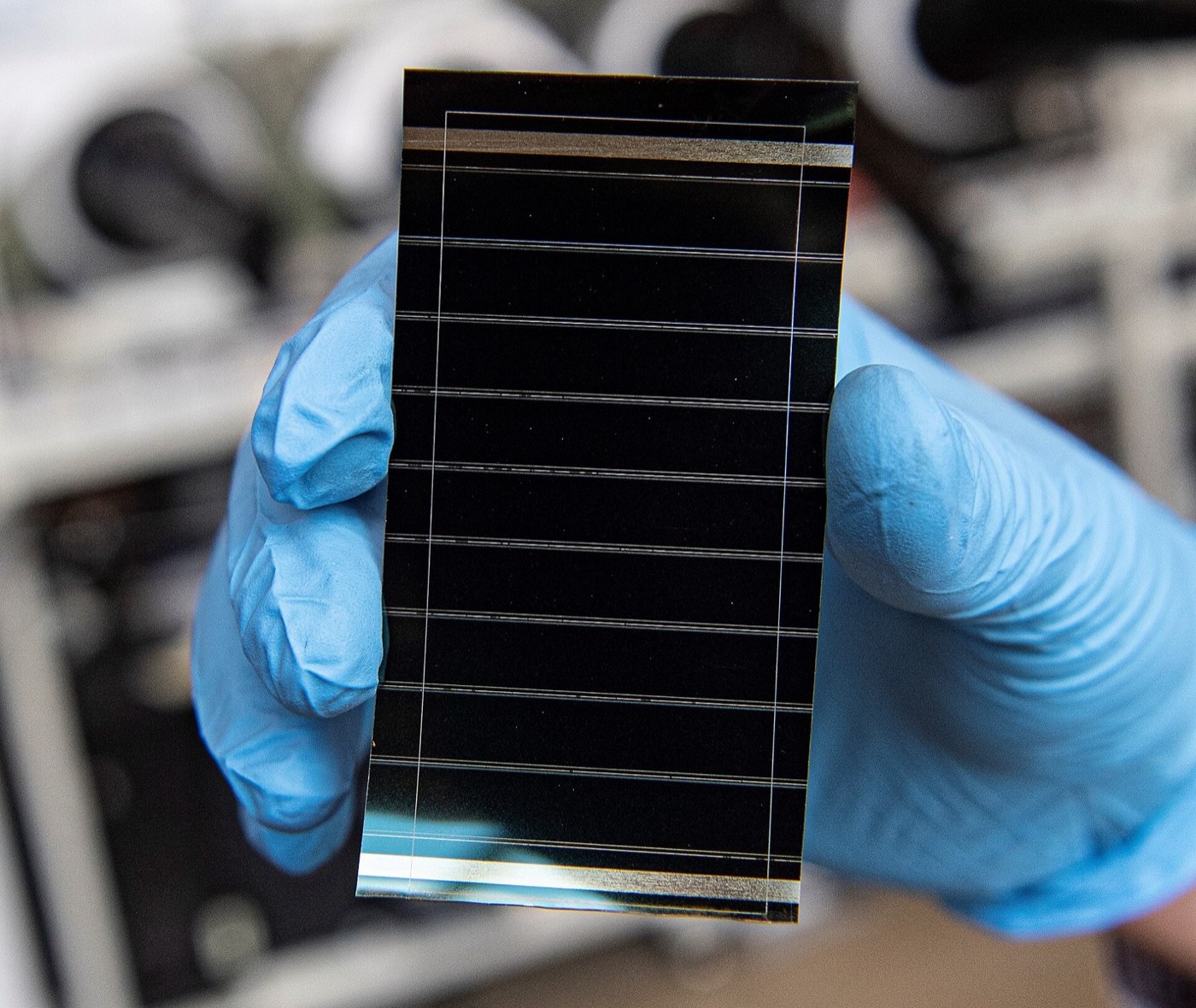
Researchers can hold a single one of those perovskite layers in a gloved hand, the way this cell is being held, long before it is built into anything sellable.
This perovskite solar cell, photographed at a US national laboratory, shows how thin the top layer actually is — a few thousandths of a millimetre of crystal, grown directly onto the silicon cell beneath it. Splitting the light this way, between two absorbing layers instead of one, is the entire reason a tandem cell can beat the single-layer ceiling described earlier in this video.
Two layers working together can, in principle, catch more of the spectrum than either one could alone. The question is why perovskite, specifically, won the job of being the top layer.
3. Why perovskite is the partner of choice
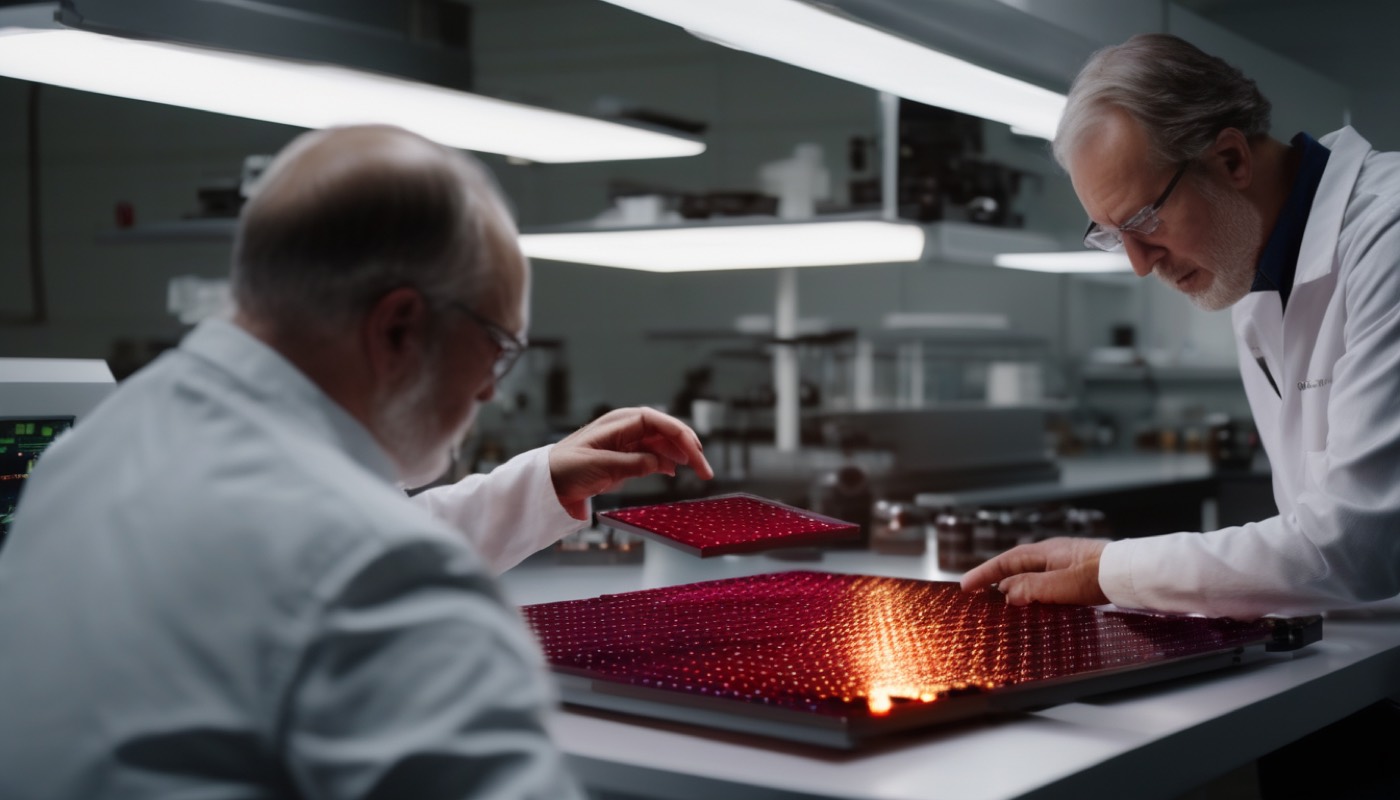
Silicon did not get a tandem partner by accident. Perovskite has two properties that make it an unusually good match.
First, perovskite's bandgap — the slice of light's energy it is tuned to absorb — can be adjusted simply by changing the chemical recipe. That means researchers can tune the top layer to catch exactly the part of the spectrum silicon underneath is worst at using. Second, a perovskite layer can be grown from a liquid, spread thinly and dried, at close to room temperature — nothing like the extreme heat silicon itself requires.
Making the silicon half of that stack is a far slower, far hotter process.
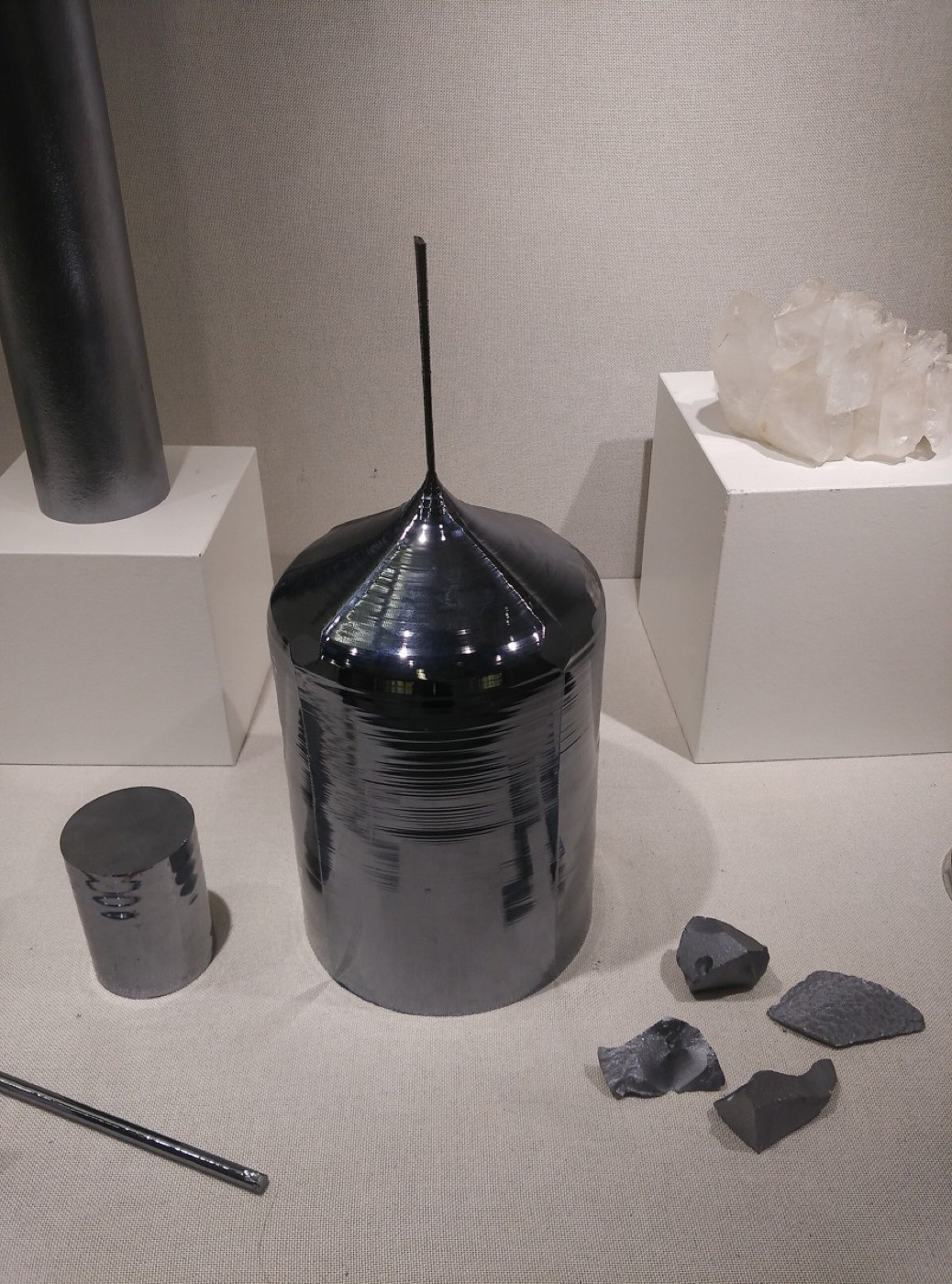
This is a monocrystalline silicon ingot, the solid cylinder a silicon wafer is sliced from. Growing one like it means melting raw silicon above one thousand four hundred degrees Celsius and pulling a single, defect-free crystal out of the melt over many hours. Perovskite's low-temperature, liquid-based growth is cheap and fast by comparison — which is exactly why it looked, at first, like the easy half of the stack to build.
That same property — easy, fast, cheap to make — turns out to come with a cost attached, and the next chapter is that cost.
4. The record-efficiency chase

Laboratories track solar-cell efficiency the way other fields track a world record: a specific device, independently tested, with a number attached. For tandem cells, that number has moved fast.
A tandem cell first beat the general Shockley-Queisser figure for a single layer in 2023, independently certified at just under thirty-four per cent. Three more certified records followed, each from the same manufacturer and each checked by a different, named testing institute. By the middle of 2026, the certified figure stood at thirty-five and a half per cent — the highest efficiency any solar cell of this kind has reached under independent test.
That number is real, and it is also easy to misread as something closer to a finished product than it is.
The record cell behind that figure — thirty-five and a half per cent — is a laboratory device, not a panel anyone can buy. It is small enough to measure precisely in a test chamber, built under conditions a factory line cannot yet repeat at speed. The gap between a record cell like this and a sellable roof panel is exactly what the rest of this video is about.
So the record chase answers one question — what is physically possible — while leaving a much harder one standing: what can actually be built, and kept working.
5. The durability problem

Silicon cells on a roof are expected to keep working for twenty-five years. Perovskite, the newer half of the tandem stack, has a much shorter track record — and some specific ways of failing that silicon does not share.
Perovskite degrades under four separate conditions: moisture getting in, heat, ultraviolet light, and something called ion migration — charged atoms inside the material slowly drifting out of place under heat or an electric field, which breaks down the crystal from within. Some perovskite recipes start decomposing above about eighty-five degrees Celsius, releasing gas and leaving behind a different, non-functioning compound. None of that is reversible once it happens.
The response to all four causes is the same two-part strategy, and neither part is finished yet.
Encapsulation — sealing the perovskite layer away from moisture, oxygen and UV light, usually between layers of glass or polymer — is the main defence researchers are building. Alongside it, chemists keep adjusting the perovskite recipe itself, searching for a mixture that simply resists heat and light better in the first place. Both are active, ongoing research, not a solved problem sitting on a shelf.
That is the honest state of the technology: a real weakness, a real set of responses to it, and no finished answer yet.
6. From cell to full-size module

Everything so far has described a cell — a device small enough to hold. Turning many cells into one full-size panel, without losing efficiency along the way, is its own separate problem.
On the eighteenth of June 2026, Oxford PV and Fraunhofer ISE announced a full-size tandem module built using matrix-shingled interconnection — overlapping rows of cell strips, bonded together so the whole panel surface is covered with almost no gap. That design also makes the panel far more tolerant of partial shade, because a shadow falling on one strip does not block the current path the way it can in an ordinary panel. The two companies reported a rooftop version at four hundred and ninety-one watts, and a bifacial version at five hundred and forty-six watts. Both were measured at twenty-five point six per cent efficiency.
That is well below the record lab cell from the last chapter — and the people who built it were pleased about it for a specific reason.
Fraunhofer's Stefan Glunz said of the joint module, "We are delighted to be able to combine two high-tech approaches from Europe in this PV module." The point being celebrated was not a new efficiency record. It was proof that a tandem cell and a shading-tolerant interconnection scheme could be combined into one working, full-size panel at all.
Twenty-five point six per cent, in a sellable module shape, is a different and smaller number than thirty-five point five per cent in a lab cell — and closing that gap, cheaply, is the next problem.
7. Manufacturing yield and cost

A factory line that already makes silicon cells cannot simply bolt a perovskite layer on top without consequences. Adding a second deposition step, newer and less proven than silicon's, changes how many cells come off that line actually working.
The share of cells coming off a production line that meet specification is called yield. LONGi, the manufacturer holding the current tandem efficiency record, said in June 2026 that it had no active plan to mass-produce its record cell. Its own stated reasons were large-area deposition, manufacturing yield, encapsulation, long-term stability and cost — the same list this video has now covered, point by point, from the company actually trying to build the thing.
Cost and efficiency are not separate questions in this industry; they move together.
In the silicon industry, every one-point gain in cell efficiency has been estimated to cut system cost by more than five per cent, because the same roof area produces more power. That relationship is exactly why tandem's extra efficiency is valuable — and exactly why a lower yield, or a more expensive process, can erase that value before it reaches a customer's roof.
So the honest summary of this chapter is not that it cannot be built. It is that nobody building it yet claims to have solved manufacturing it cheaply.
8. Testing for twenty-five years in a box on a roof

A silicon panel's twenty-five-year warranty rests on decades of real roofs, in real weather, going back generations. A tandem panel cannot wait that long to be trusted, so it is tested differently.
Tandem modules go through the same standard tests already used on silicon modules: a long soak in heat and humidity, and repeated cycling between a deep freeze and a hot day. One perovskite manufacturer, GCL, announced in June 2025 that a commercial module had passed those same tests at three times the standard length. That is a harsher laboratory test, not a lived field record — no tandem panel has actually been on a roof for anything close to twenty-five years, because the product is too new.
Warranties are climbing to match, but slowly, and the company making that climb says so itself.
Oxford PV's own roadmap, published in January 2026, climbs year by year: ten years of warranty now, rising step by step toward the end of this decade. Even by then, on the company's own published schedule, the target still falls short of the twenty-five years silicon modules are already warrantied for. A longer warranty matters because developers price a panel over its whole working life, not just its first year on the roof.
A climbing warranty is evidence of progress. It is not yet evidence of the multi-decade field record silicon already has.
9. Where the extra efficiency actually matters
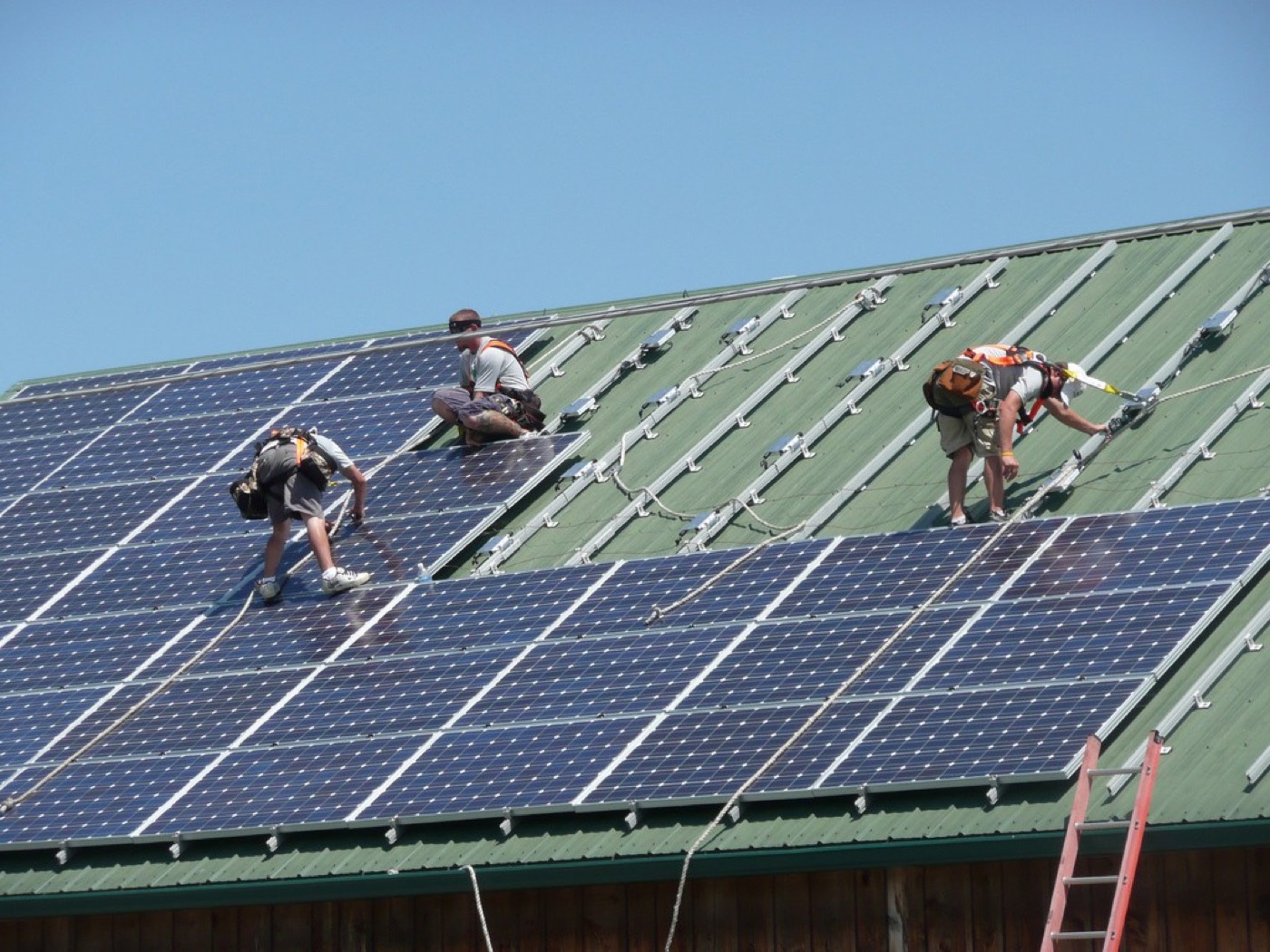
Not every roof needs the extra few percentage points tandem cells offer. Where it helps depends entirely on how much space is available.
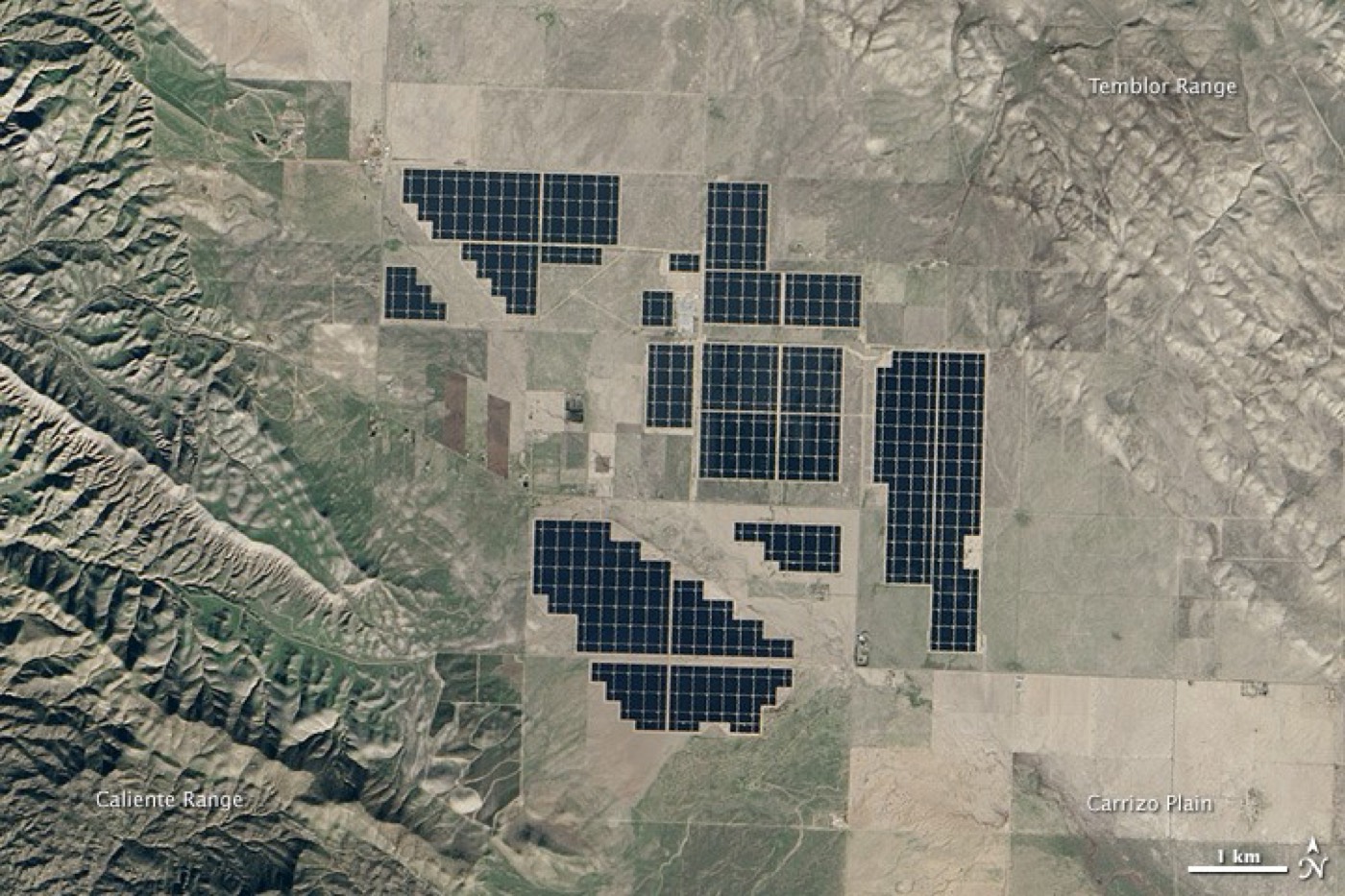
This is Topaz Solar Farm, a utility-scale installation in California. Land here is cheap and plentiful, and panels are simply spread across open ground. Squeezing a few extra points of efficiency out of each one barely changes the economics, when there is room to add another row of ordinary panels instead.
A small rooftop tells the opposite story, because the roof itself is the limit.
Topaz Solar Farm, in California, and a small rooftop in Littlestown, Pennsylvania, sit at opposite ends of this trade-off. One site has all the open land it could want. The other has exactly the roof it has got, and no way to add more.
At a site like that Pennsylvania rooftop, every extra point of panel efficiency is extra power with no extra roof needed — and that is precisely the case tandem cells are built to make.
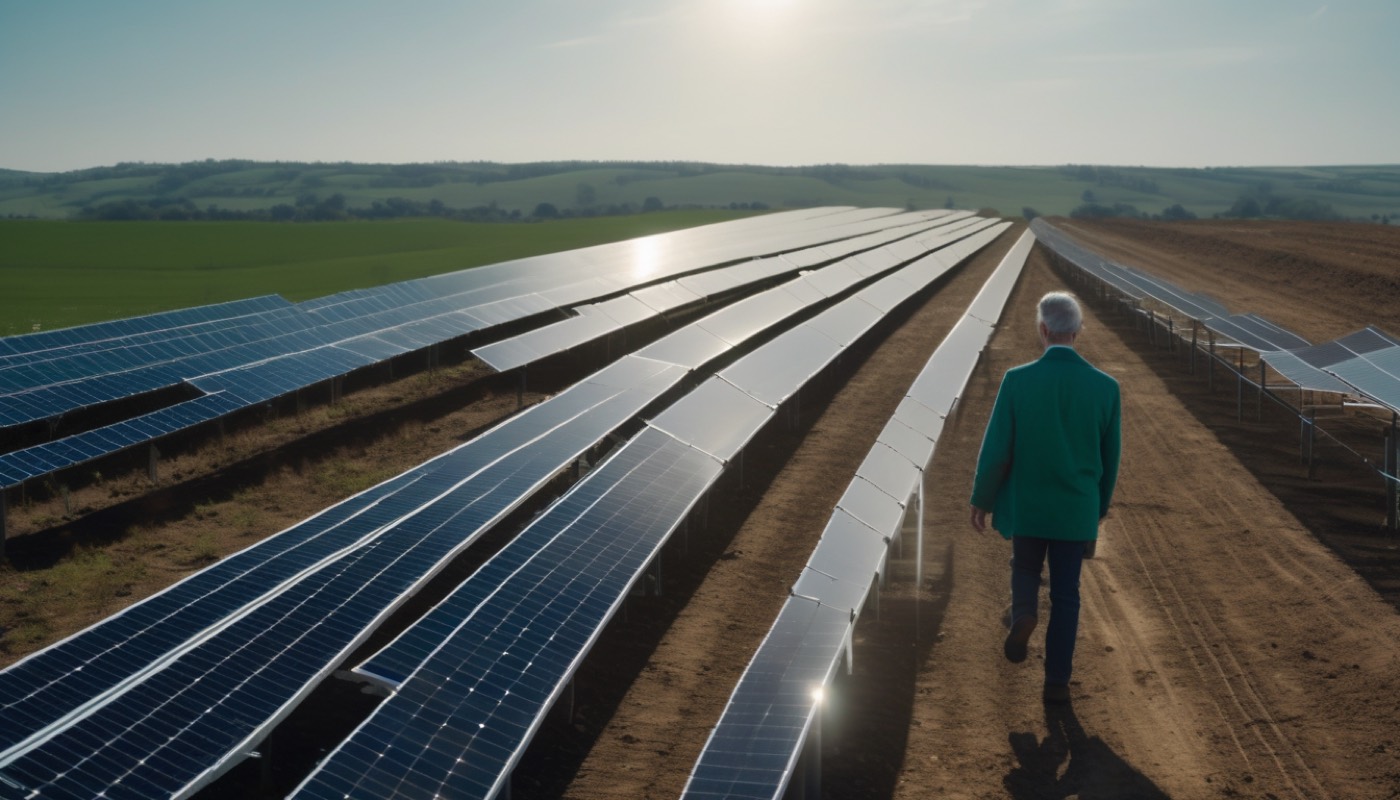
This small-scale installation, at a veterinary hospital in Littlestown, Pennsylvania, sits on a fixed, limited roof. A higher-efficiency panel there produces more electricity from the exact same space — which is why space-constrained sites like this one, not open desert, are where tandem's extra efficiency is worth paying for first.
So the same technology can matter enormously on one roof, and barely at all on a solar farm a few hours' drive away.
10. A practical step forward, or an expensive detour?

Put the whole story together, and two things are true about perovskite-silicon tandem solar cells at once.
The laboratory record now stands well above anything a single silicon layer can reach — a genuine, repeatedly certified physical result. Against that, manufacturing yield, encapsulation and long-term field durability remain unsolved by the record-holder's own account, and no tandem panel has yet earned silicon's multi-decade field history. Both of those facts come from this video's own sources, not from guesswork.
What tips the balance, in either direction, is not a single number.
Two figures carry the weight of this video's whole argument. A record lab cell has reached thirty-five point five per cent; a sellable full-size module has already reached twenty-five point six per cent. Closing that gap takes three things. The module has to catch up to the lab cell's efficiency, durability has to be proven on real roofs rather than only in a test chamber, and the cost has to come down to match silicon's. From there, tandem solar becomes an ordinary product, or it stays a premium niche for roofs that cannot spare the space.
That is not a verdict this video can hand down on its own. It is the honest distance still standing between a record-setting cell and a panel anyone can buy.
Sources and credits
Photo credits (Wikimedia Commons)
- Perovskite solar cell held in a gloved hand, NREL/US DOE: Dennis Schroeder / National Renewable Energy Laboratory, Public domain - https://commons.wikimedia.org/wiki/File%3APerovskite_solar_cell.jpg
- Monocrystalline silicon ingot (museum specimen): ArticCynda, CC0 - https://commons.wikimedia.org/wiki/File%3AMonocrystalline_silicon_ingot.jpg
- Commercial silicon photovoltaic array, Mesa Verde Visitor and Research Center, Colorado (NREL): Dennis Schroeder - NREL Photographer, Public domain - https://commons.wikimedia.org/wiki/File%3ASolar_panels_in_the_desert.jpg
- Topaz Solar Farm, California Valley - utility-scale PV installation (NASA Earth Observatory): Earth Observatory image by Jesse Allen, using EO-1 ALI data provided courtesy of the NASA EO-1 team. Caption by Adam Voiland., Public domain - https://commons.wikimedia.org/wiki/File%3ATopaz_Solar_Farm%2C_California_Valley.jpg
- Small-scale solar installation, Littlestown Veterinary Hospital, Pennsylvania (USDA): US Department of Agriculture, Public domain - https://commons.wikimedia.org/wiki/File%3ASolar_installation_%281191%29.jpg


Primary sources
- Oxford PV press release, 'Perovskite-silicon solar cells meet matrix-shingled interconnection', 18 June 2026 (oxfordpv.com) - matrix-shingled module figures (491W/25.6% rooftop, 546W/25.6% bifacial) and the Glunz/Crossland quotes.
- pv-magazine, 'LONGi sets new world record with 35.5% efficient perovskite silicon tandem cell', 15 July 2026 - the 35.5% record, its certification by ESTI, the record trail back to 2023, and LONGi's own June 2026 statement on manufacturing barriers.
- pv-magazine, '25 is the new 23', 8 June 2026 - commercial silicon module efficiency tiers at SNEC 2026.
- pv-magazine, 'Tandem cell or tandem module?', 14 May 2025 - Oxford PV/Huasun/GCL module-level figures and warranty terms.
- pvtime.org, Oxford PV module efficiency and warranty roadmap report, 19 January 2026.
- perovskite-info.com, GCL triple-strength IEC accelerated-aging test report, 9 June 2025.
- Solar Power World, LONGi's 27.30% single-junction silicon HBC cell record, 8 May 2024.
- Wikipedia, Shockley-Queisser limit, summarising Shockley & Queisser's 1961 calculation.
- RSC Advances (2025), a Stanford University PhD thesis, and an Edith Cowan University stability mini-review, on perovskite degradation mechanisms (moisture, heat, UV, ion migration) and encapsulation.
Not regulated financial advice.