
The Data Centres Drinking the Drought
This video explains why cooling a data centre takes water at all (chips generate heat, and evaporating water is the cheapest way to remove it at scale), why the industry's preferred cooling towers trade electricity savings for water consumption (10-35% less electricity than dry air-cooling in summer), and how a single hyperscale campus can draw as much water a day as a small town - a few hundred thousand gallons to over a million.
It then follows the fight state by state. In Texas, a Houston Advanced Research Center study projects data centre water use rising from 49 billion gallons in 2025 to as much as 399 billion gallons by 2030, while the state's own 2027 draft water plan barely accounts for the industry. In Fayette County, Georgia, a QTS (Blackstone-owned) data centre drew nearly 30 million gallons through two unbilled or unauthorised connections, retroactively billed $147,474 with no fine, while nearby residents faced falling water pressure during a drought emergency. In Buckeye, Arizona, developer Tract's roughly 2,000-acre, $20 billion data centre complex plans to self-supply groundwater, exploiting an exemption from Arizona's 2023 moratorium on new housing that draws on the same reserve.
Regulators have started pushing back: Arizona now requires data centres over 20 megawatts in the Phoenix area to reach zero net water use within three years, and in July 2026 Ohio's EPA withdrew a proposed blanket wastewater permit for data centres after more than 7,000 public comments. The video also carries the industry's own defence - named efficiency claims from Skybox Datacenters and Lancium - and is explicit that those figures are company-reported and have not been independently audited.
Educational documentary. Not financial or investment advice.
Tags
Chapters
- The hidden half of the AI bill
- Why a server farm needs water at all
- The cooling tower trade-off
- How much water one campus drinks
- Texas: the numbers racing ahead of the plan
- Georgia: the 30 million gallons nobody billed
- Arizona: drilling around the drought rules
- Regulators start pushing back
- Who pays when the well runs dry
- The industry's defence: efficiency gains
- Can the AI boom have both power and water
- The bill comes due
Video notes
1. The hidden half of the AI bill
Every new AI data centre arrives with one number already attached to it: how many megawatts it will draw from the grid. That number gets debated, protested and argued over in public meetings. A second number, measured in gallons, almost never does.
US data centres directly used an estimated 17.4 billion gallons of water in 2023, just cooling their own servers. The Environmental Protection Agency expects that figure to climb to somewhere between 38 and 73 billion gallons by 2028.
That second number is water, and it is not optional. A data centre does not just need electricity to run its servers; it also needs water to stop them overheating, and a single large campus can use as much water in a day as a small town does.
This video follows that collision across three states already feeling it: Texas, Georgia and Arizona. All three are deep in drought, and all three are racing to host more AI infrastructure than almost anywhere else on earth.
Those are also the states where the fight is sharpest, because a data centre's thirst and a farmer's thirst are now drawing from the very same pipe.
Here is the order this video takes it in. First, why cooling a data centre needs water at all, and why the industry's favourite method trades electricity for it. Then the numbers, state by state. Then the fight over who pays when the water runs short, and whether the industry's own answer, efficiency, is enough.
So: can a region keep both the lights on and the water running? Or does hosting the AI boom mean choosing one over the other? That is the question underneath everything that follows.
2. Why a server farm needs water at all
A computer chip does not look like it is doing physical work. But every calculation it performs gives off heat, and a data centre runs tens of thousands of chips at once, all day, every day.
Heat has to go somewhere. In most large data centres, the fastest and cheapest way to remove a huge amount of it is to deliberately evaporate water — the same principle as sweat cooling skin, done at an industrial scale.
That process has a name: evaporative cooling. Hot water from the servers passes over a stream of water, some of it evaporates, and evaporating water carries heat away with it as it turns to vapour.
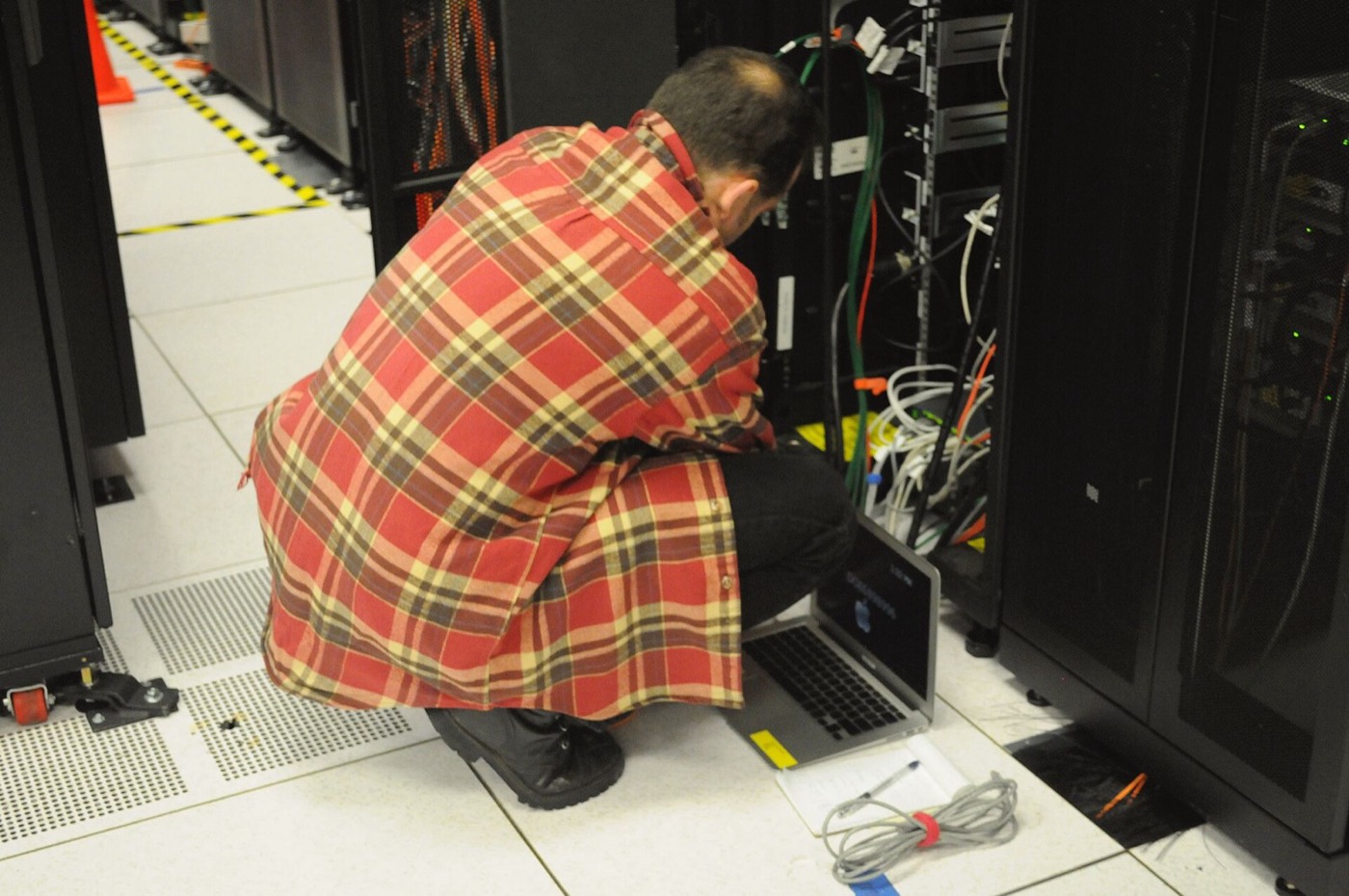
This is what that looks like inside a real facility: a technician working among the racks and cabling that produce the heat in the first place.
Plain air conditioning — just blowing air across the equipment, with no water lost to evaporation — can also do the job. It uses no water at all. It uses noticeably more electricity to move the same amount of heat, which is the trade-off this video turns to next.
3. The cooling tower trade-off
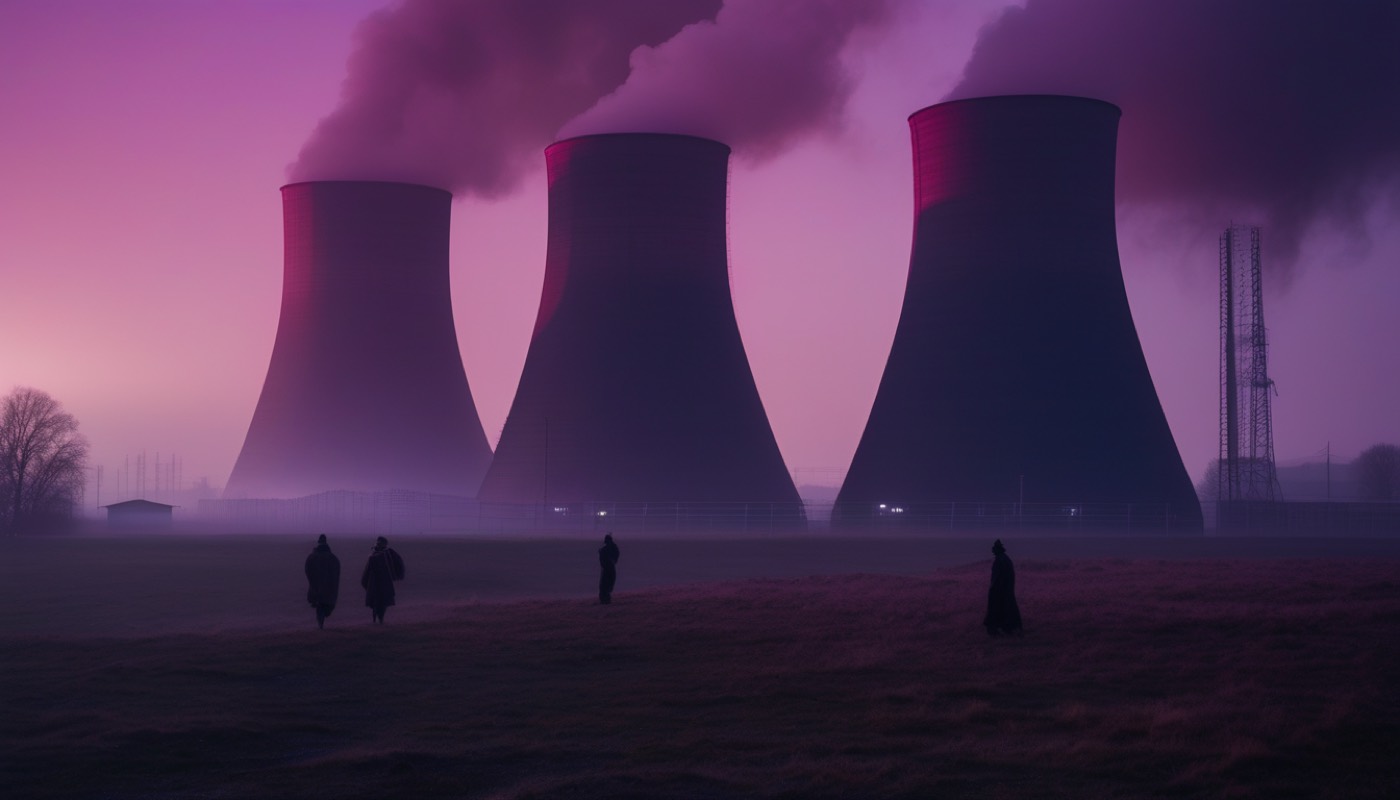
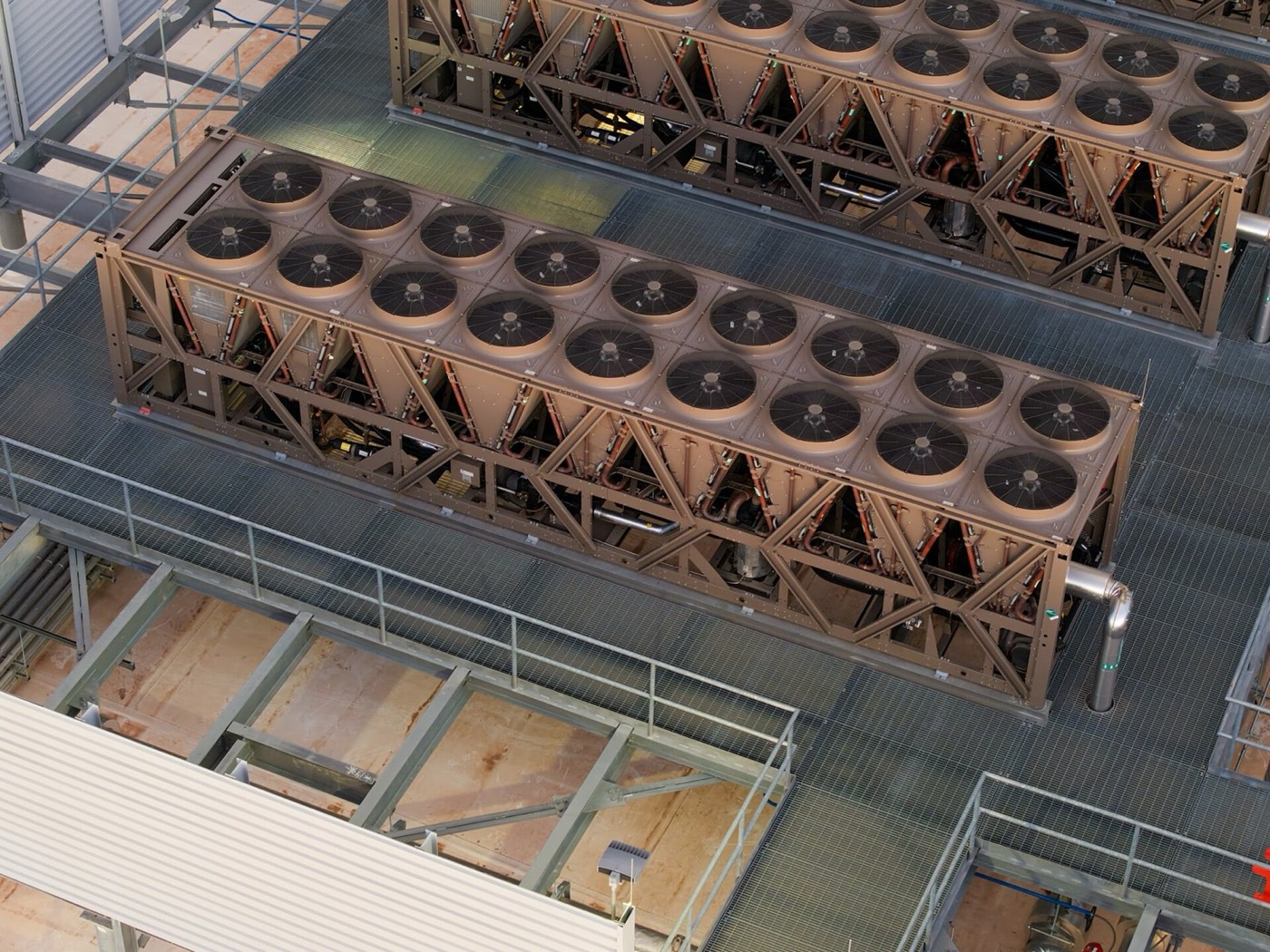
Industry figures put the gap at 10 to 35% less electricity for evaporative cooling than for a dry, air-cooled system, in peak summer conditions. That gap is why most large operators have chosen to save on power, at the cost of water.
The place that trade happens is the cooling tower: a tall structure, often louvred or finned, where warm water from inside the building trickles down through moving air. Some of it evaporates straight into the sky.
This is a cooling tower at a real data centre — the structure most of the industry's water actually leaves through.
The tower's open top is where the water turns to vapour, and the heat leaves with it.
Every gallon that evaporates there is gone for good. It does not come back down as rain nearby, and it does not return to the local supply the way water used for a shower eventually does.
4. How much water one campus drinks
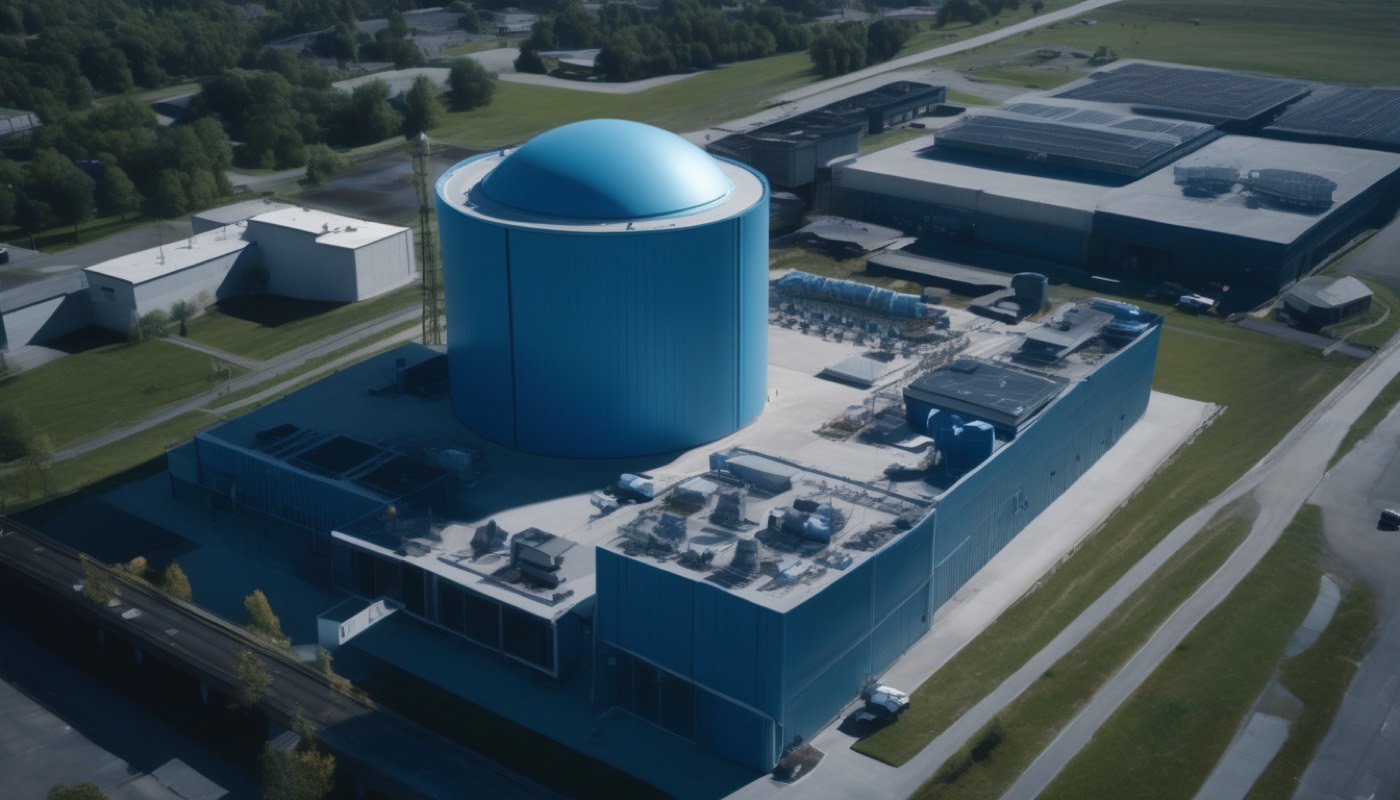
A single hyperscale data centre campus can use anywhere from a few hundred thousand gallons of water a day to more than a million.
Put that next to an ordinary small town's entire municipal water supply, and the two numbers can land in the same range.
That is not a one-off outlier. A mid-sized campus, using roughly 300,000 gallons a day, is in effect drinking what about a thousand households do. The largest campuses can draw several times that.
A mid-sized data centre campus can use water on roughly the same scale as a thousand homes, every single day.
None of that water is wasted, in the sense of being misused — it is doing the job it is there to do. The question this video keeps returning to is simply whether there is enough of it to go around.
5. Texas: the numbers racing ahead of the plan
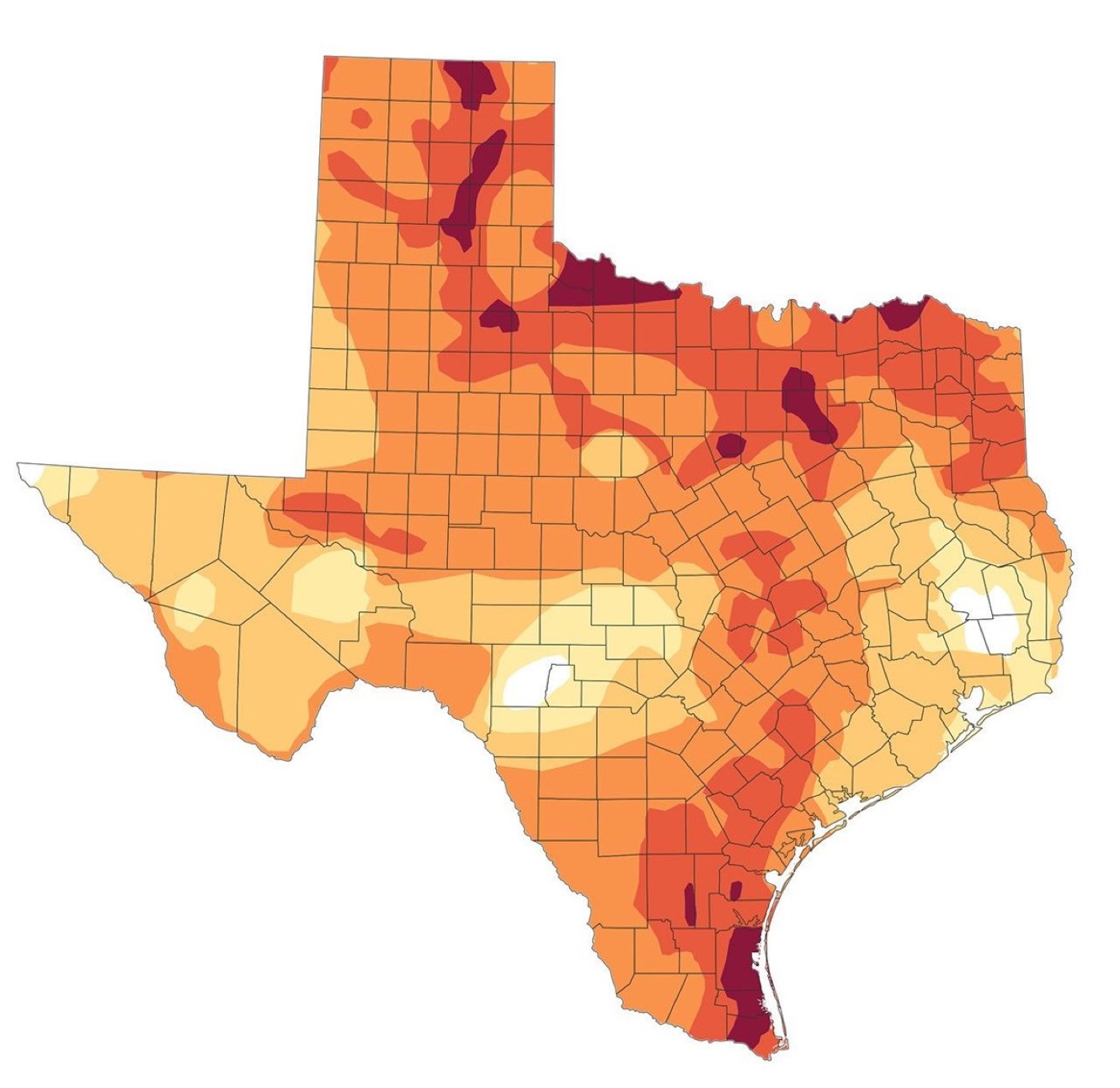
Texas is where the scale of this is easiest to see, because one state-backed research group has actually tried to measure it.
A Houston Advanced Research Center study puts Texas data centre water use at 49 billion gallons in 2025. By 2030, it projects that figure could reach as much as 399 billion gallons a year, roughly 6.6% of all the water Texas expects to use.
That is not a typo repeated for effect. It is close to an eightfold jump in five years, in a state where drought is already the normal condition rather than the exception.
Texas's own 2027 draft State Water Plan was prepared in Austin. It is built mostly on older data, much of it from 2020, while the Houston-based researchers above were already measuring a very different number.
The plan's own authors said the figures on data centres were too limited to plan around in detail.
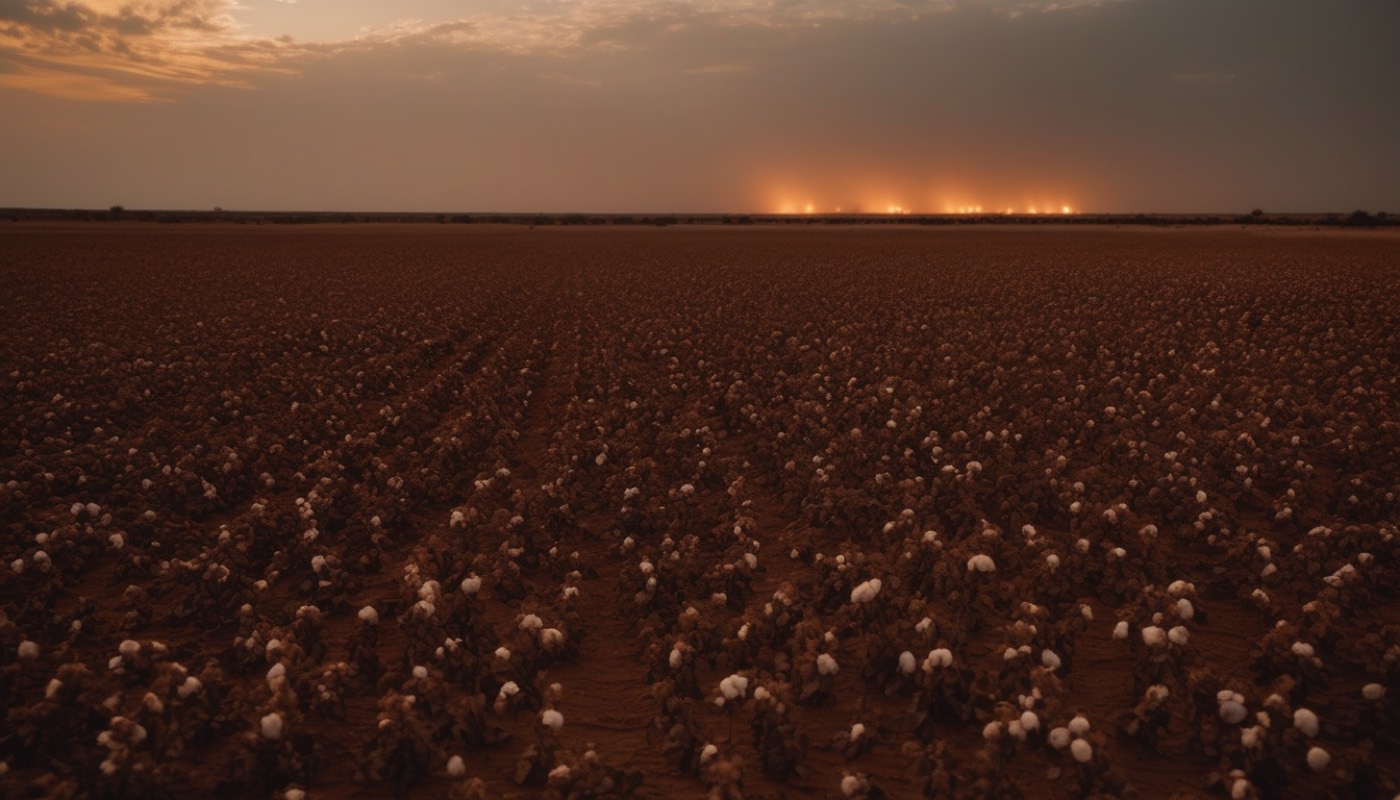
This is what that drought already looks like on the ground: parched cotton country in the Texas High Plains, in the same autumn these projections cover.
"They're using up the water that was allocated to their population for the future," says water policy analyst Margaret Cook, describing what happens when a community approves a data centre without knowing how much water it will actually draw.
That is the shape of the Texas problem: real numbers climbing fast, inside a state plan that was finished before anyone thought to ask the question properly.
6. Georgia: the 30 million gallons nobody billed
In Fayette County, Georgia, the problem was not a missing plan. It was two pipes nobody was watching.
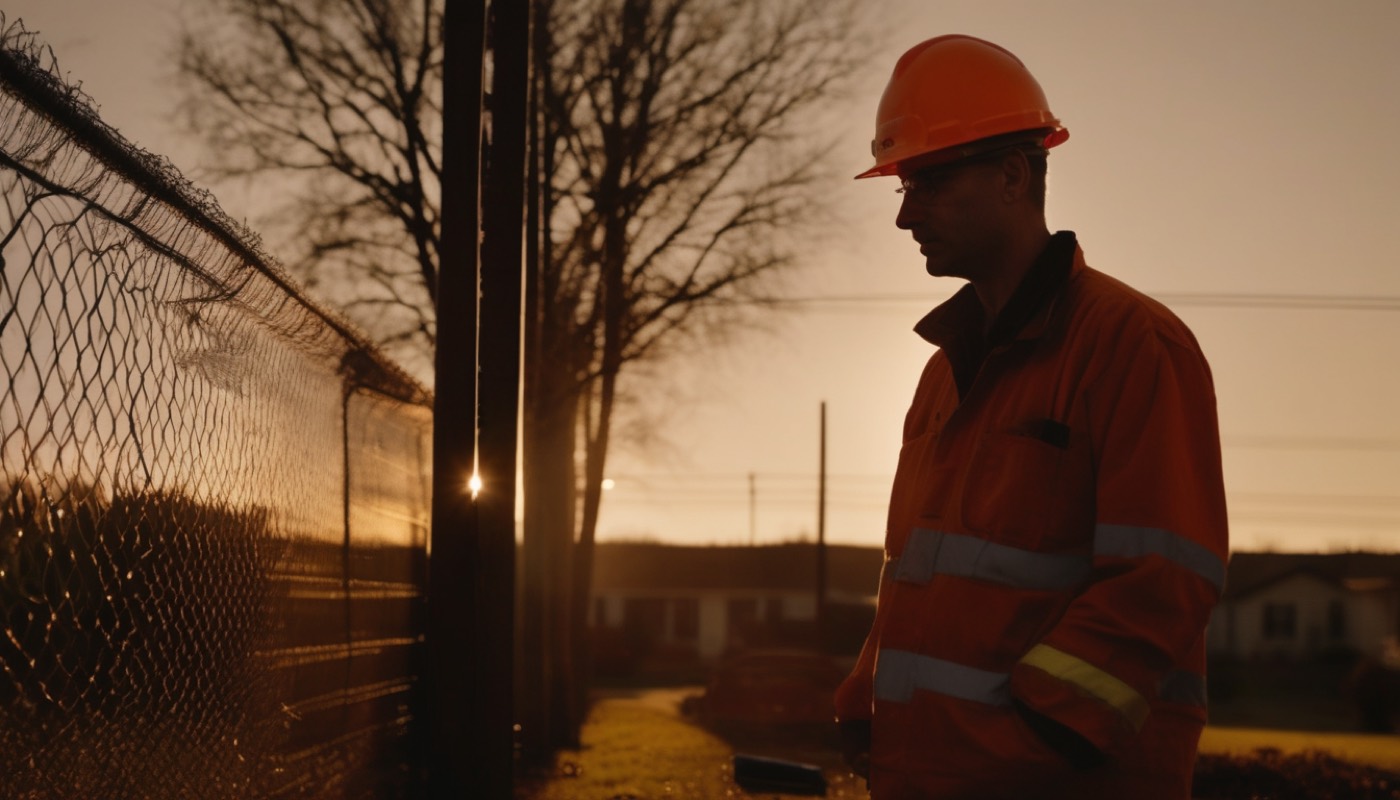
A QTS data centre, owned by the investment firm Blackstone, drew water through two separate connections to the county system. One had been installed without the utility's knowledge. The other was never linked to a billing account.
Between them, those two connections let nearly 30 million gallons of water flow to the data centre with no bill attached. That went on for months, while the county told nearby residents to cut back during a declared drought emergency.
Those unbilled gallons flowed from the county's own water system straight into the QTS campus, while a nearby neighbourhood called Annelise Park reported falling water pressure.
The county eventually sent QTS a retroactive bill — one written after the water was already used — for $147,474, in a letter dated 15 May 2025. No fine was ever added on top of it.
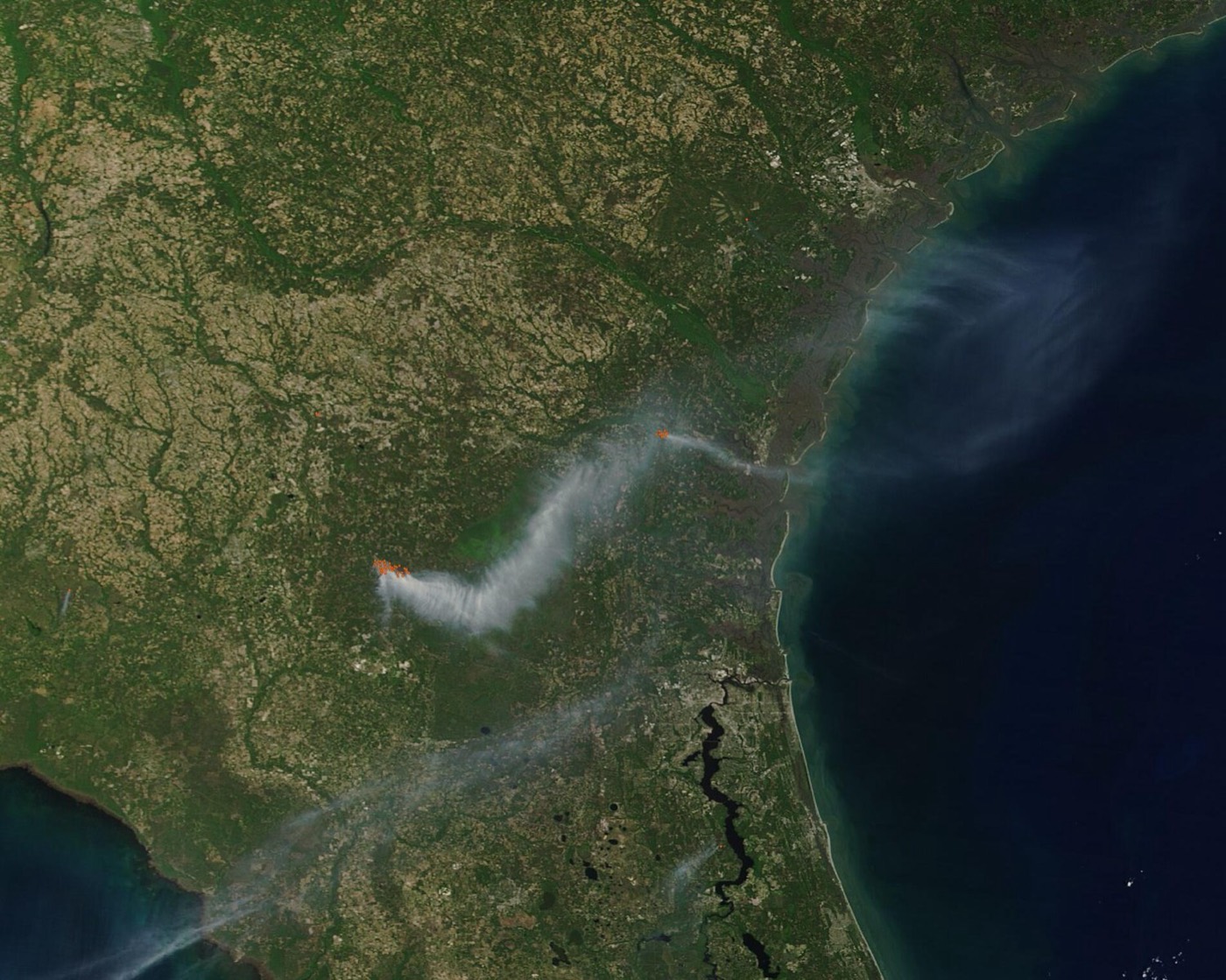
Drought-driven wildfires were already burning across Georgia that same spring, which is the backdrop this missing water went unnoticed against.
The county and the company do not even agree on how long it went on. Fayette County's own estimate is about four months; QTS says the real figure is nine to fifteen months.
The county's water director later said she did not want to damage a "partnership" with the utility's largest customer, which is part of why no penalty followed.
7. Arizona: drilling around the drought rules
Arizona's version of this story is not an accident. It is a gap in the law, used exactly as written.
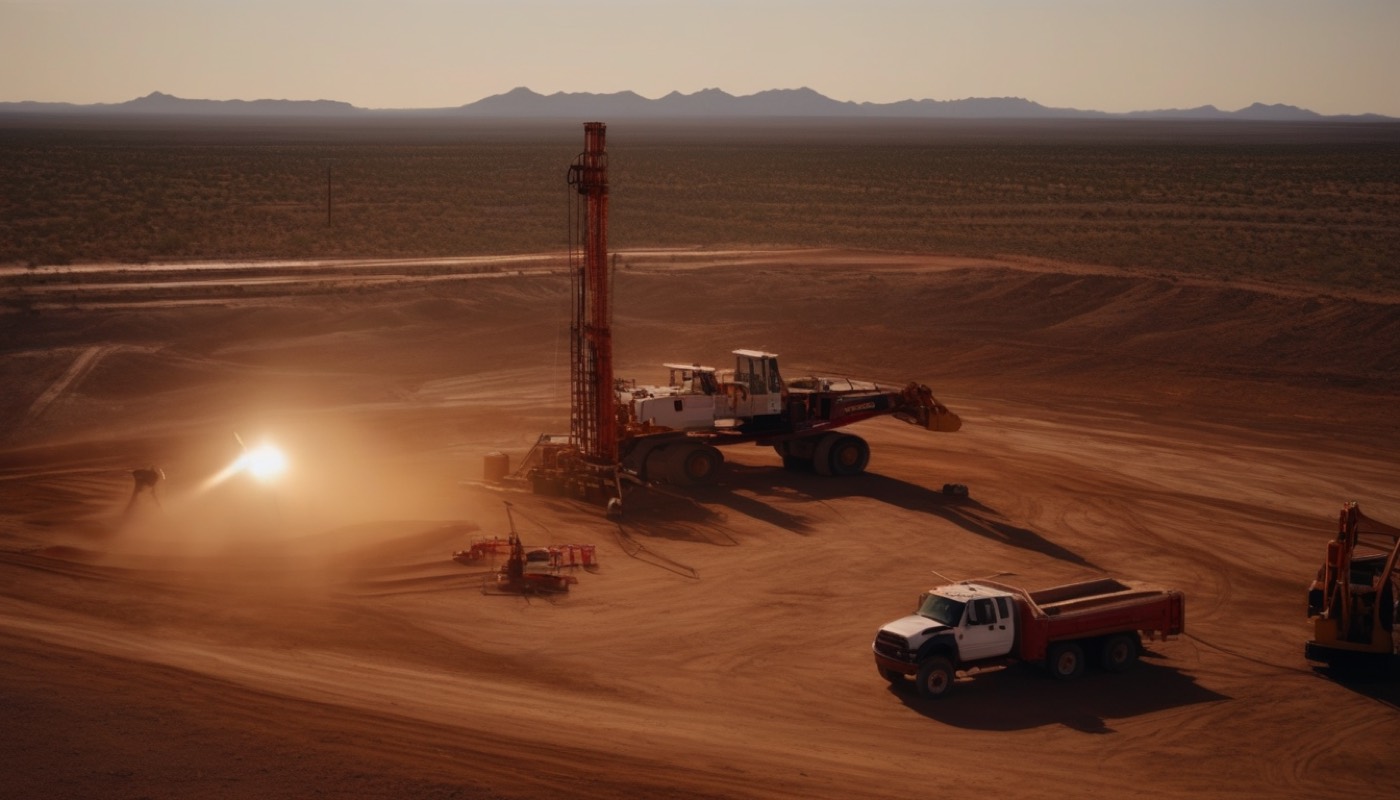
In Buckeye, Arizona, a developer called Tract is building a data centre complex on roughly 2,000 acres, just outside the zone where new housing is restricted.
Tract plans to self-supply its own water, by drilling groundwater wells on-site — water pumped up from an underground reserve, rather than delivered by the city.
Those wells are capped at 2,000 acre-feet of groundwater a year. An acre-foot is the measure engineers use for a large volume of water, enough to flood a football-pitch-sized area a foot deep. Over a fifteen-year build-out, the whole complex is valued at an estimated $20 billion.
In 2023, Arizona placed a moratorium — a temporary ban — on new groundwater-dependent housing outside Buckeye's existing service area, specifically to stop unchecked pumping from a shrinking underground reserve. That moratorium does not apply to industrial users, including data centres.
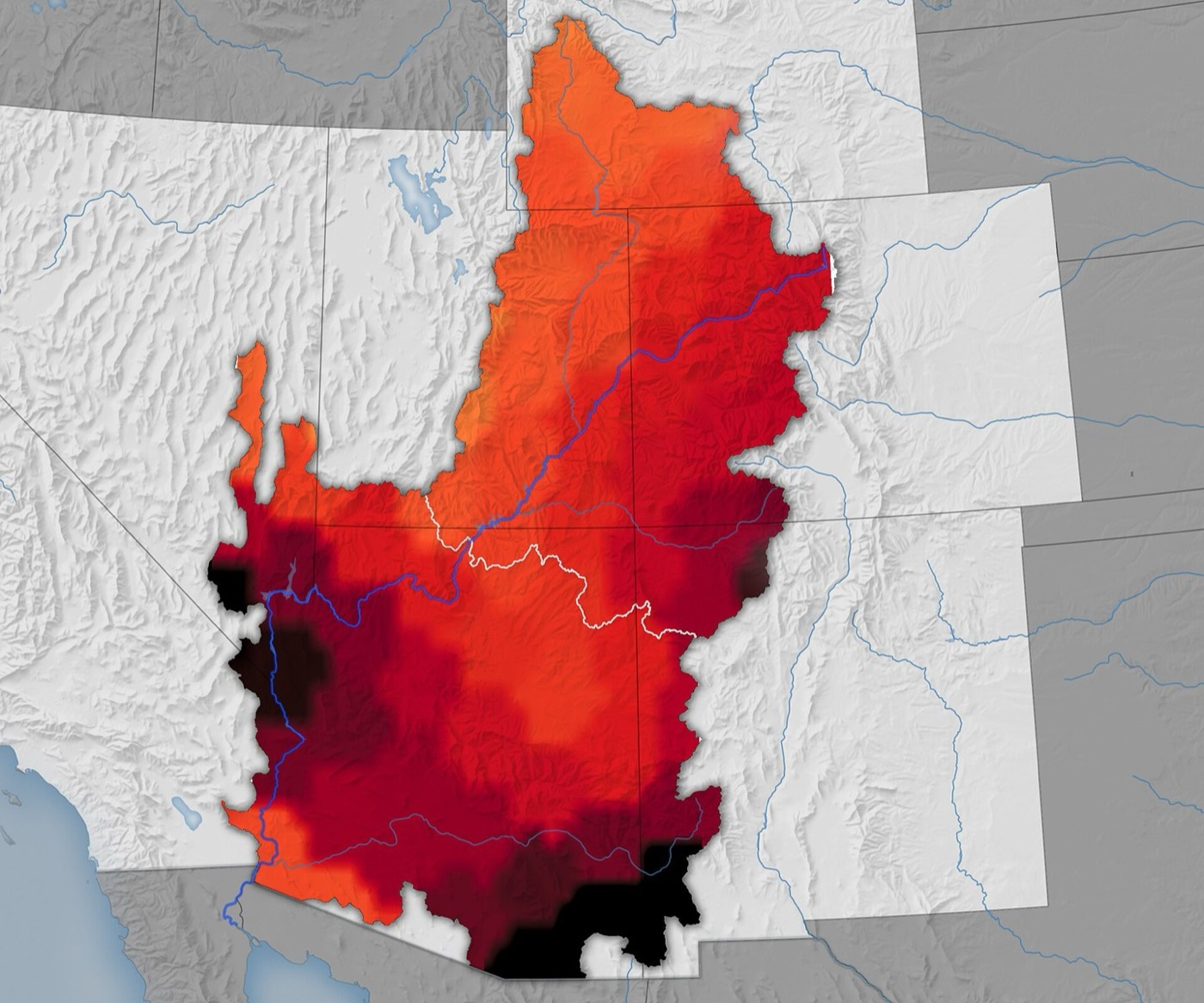
This is what that shrinking reserve already looks like from orbit: satellite measurements of groundwater draining out of the wider river basin Arizona's aquifers belong to.
So the same underground reserve the state is trying to protect from new homes stays open to a data centre campus the size of a small city. That is the loophole, in one sentence: the rule exists, and this project is simply not the kind of thing it was written to stop.
8. Regulators start pushing back

Not every regulator has let the loophole stand. Two, in two different states, moved against it within months of each other.
Arizona's water regulator now requires any data centre over 20 megawatts in the Phoenix metro area to reach zero net water use within three years of opening.
That means every gallon it draws for cooling must be offset or returned, so its net draw comes out at zero. That is a real constraint, not a target companies can quietly miss.
Phoenix, Arizona and the state of Ohio moved on the same problem from two different directions, within months of each other in 2026.
In July 2026, Ohio's EPA withdrew a proposed blanket permit for data centre wastewater, after more than 7,000 public comments opposed it. That permit would have let data centres release used water into Ohio's rivers and streams under lighter state review than other industries get.
The agency said it will issue permits to data centres individually from now on, reviewing each one's wastewater discharge on its own, rather than approving a whole industry under one rule at once.
Two different fixes, aimed at two different parts of the same problem: one at how much water a data centre is allowed to take, the other at what it is allowed to put back.
9. Who pays when the well runs dry
Step back from the individual states, and the pattern underneath all of them is the same.
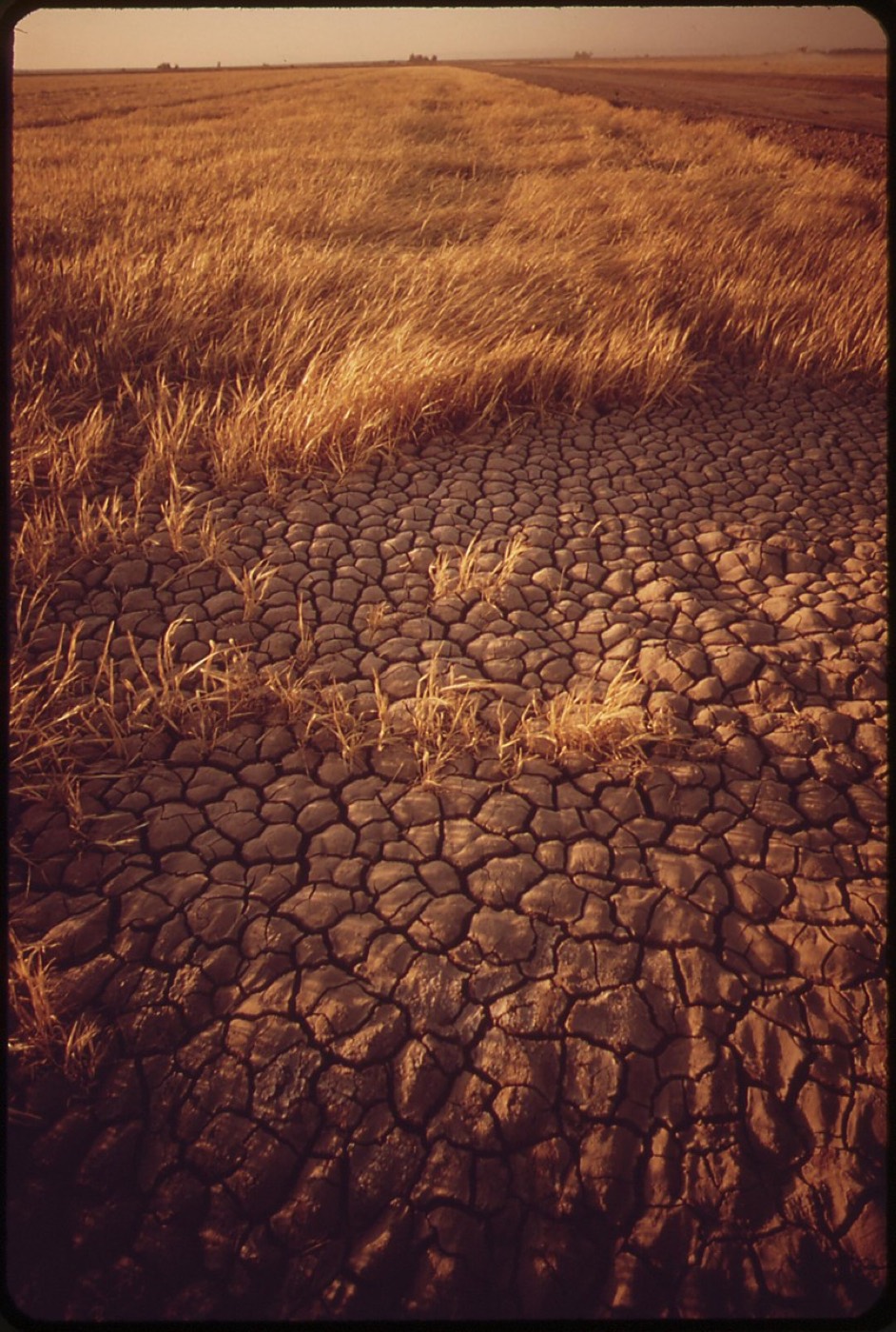
This is what a well running dry has looked like for decades, long before any data centre existed: cracked, drought-dried earth where irrigation and heat have already taken the water away.
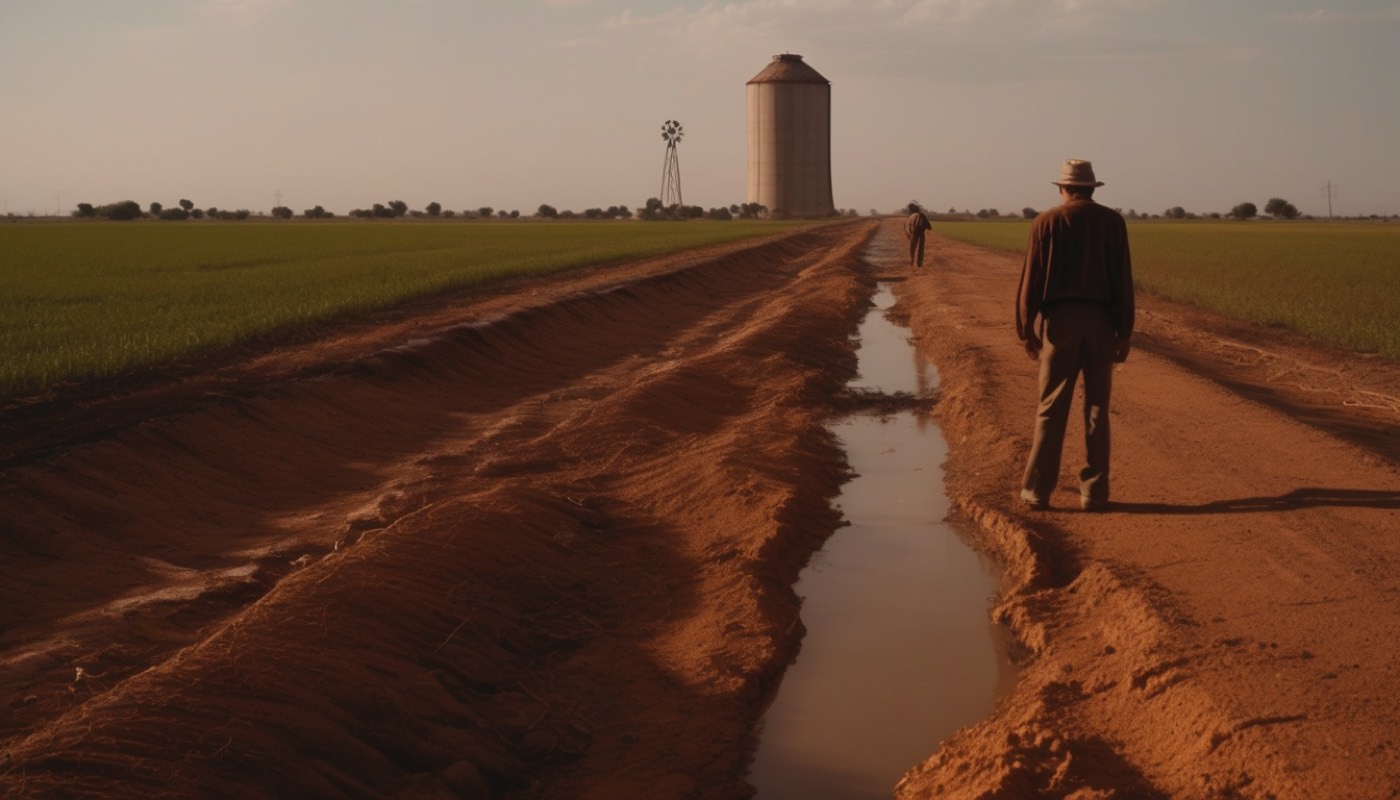
Farmers, residents and utilities are drawing on the same groundwater and surface supplies as the data centres moving into their counties. In a drought, there is not enough of that supply for everyone to draw on at once.
Farmers, residents and utilities compete for the same water a data centre draws on — and in a drought, not everyone can have all they ask for.
One county's falling water pressure, and one state's shrinking underground reserve, are the same shortage showing up two different ways.
A farmer's well and a data centre's well often reach into the very same underground reserve. When one pumps harder, the level available to the other falls.
The bill for a data centre's water does come due. It is simply not always the data centre that pays it first.
10. The industry's defence: efficiency gains
The companies building these campuses do not dispute the numbers above. They argue the industry has already moved past them.
Skybox Datacenters says its newer facilities draw about 30,000 gallons of water once, to fill a sealed cooling system, rather than continuously evaporating water the way an open tower does. The company says it has not used evaporative cooling since 2016.
Lancium says its Abilene, Texas campus is allocated 500 gallons of water a minute by the city, but recently used only about 20.
A sealed system is filled once and then simply recirculates; an open cooling tower loses water to evaporation every single day it runs.
Those two companies also say that, across roughly 800 megawatts of large data centres already running in Texas, only about one in five still uses evaporative cooling at all. That single change is the biggest water saving available to this industry.
No outside audit of those company-reported figures has been found. They are each company's own account of its own facility, not an independently measured number.
In the same period, the Texas Water Development Board put 85% of the state in drought. Whether the industry's own fix has spread as far as these two companies say is a separate question, and this video is not in a position to answer it from their numbers alone.
11. Can the AI boom have both power and water

Put the whole story back together, and three different fixes are already being tried, not just argued about.
One: closed, sealed cooling systems, filled once rather than topped up continuously. Two: recycled or non-potable water — water already used once, or water nobody would want to drink anyway — sourced instead of fresh supply. Three: permitting that counts a data centre's water before approving it, rather than after.
None of those three is universal yet. Most data centres running today were built before any of them were required anywhere.
Arizona's zero-net-water rule and Ohio's move to individual permits are both examples of the third fix already arriving, state by state, rather than nationally.
Each of the three fixes removes water from the equation in a different place: the cooling system itself, the source the water comes from, or the permit that decides how much is allowed in.
Put all three fixes together, consistently, and the build-out and the water supply underneath it might both survive. Applied patchily, state by state, they only catch up to where the industry already is.
That second outcome — patchy, after the fact — is what has actually happened so far.
12. The bill comes due
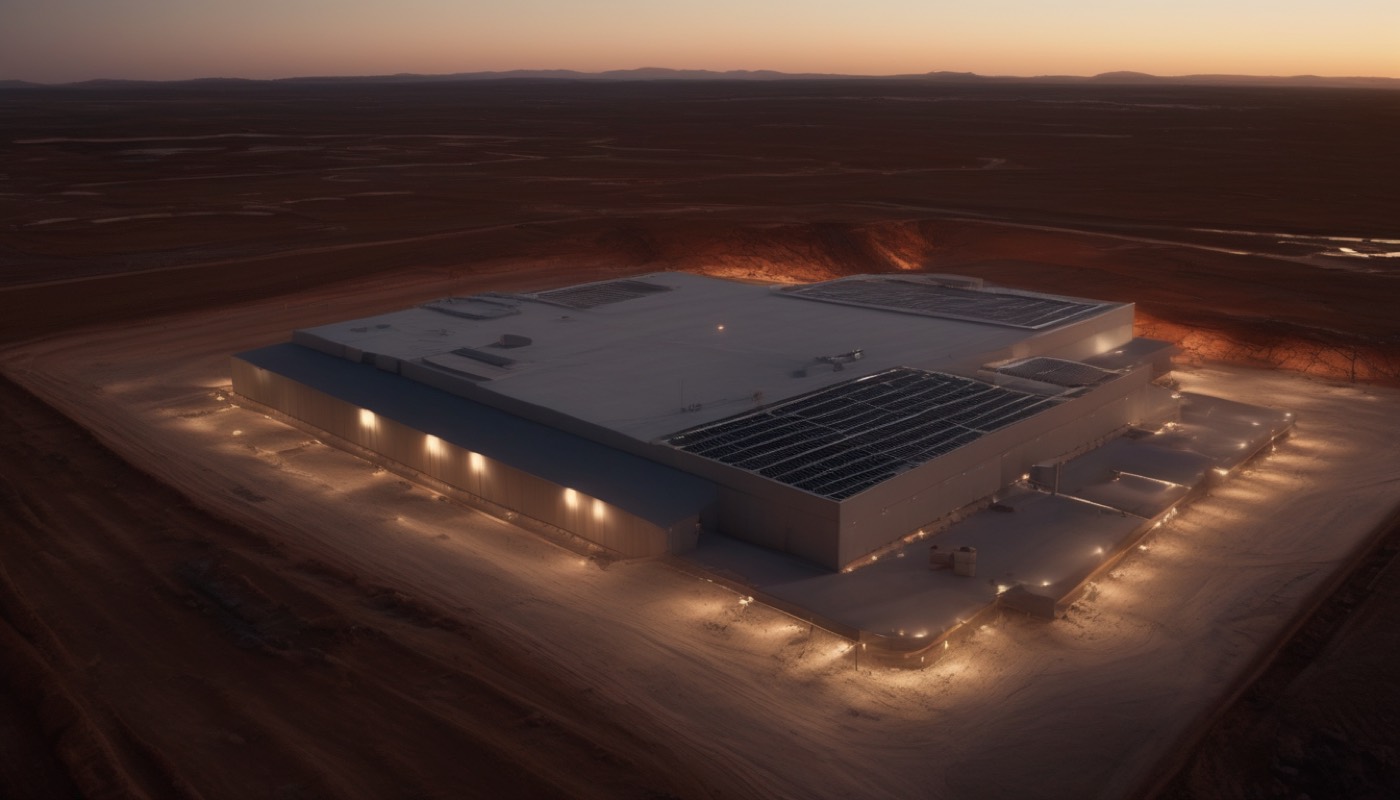
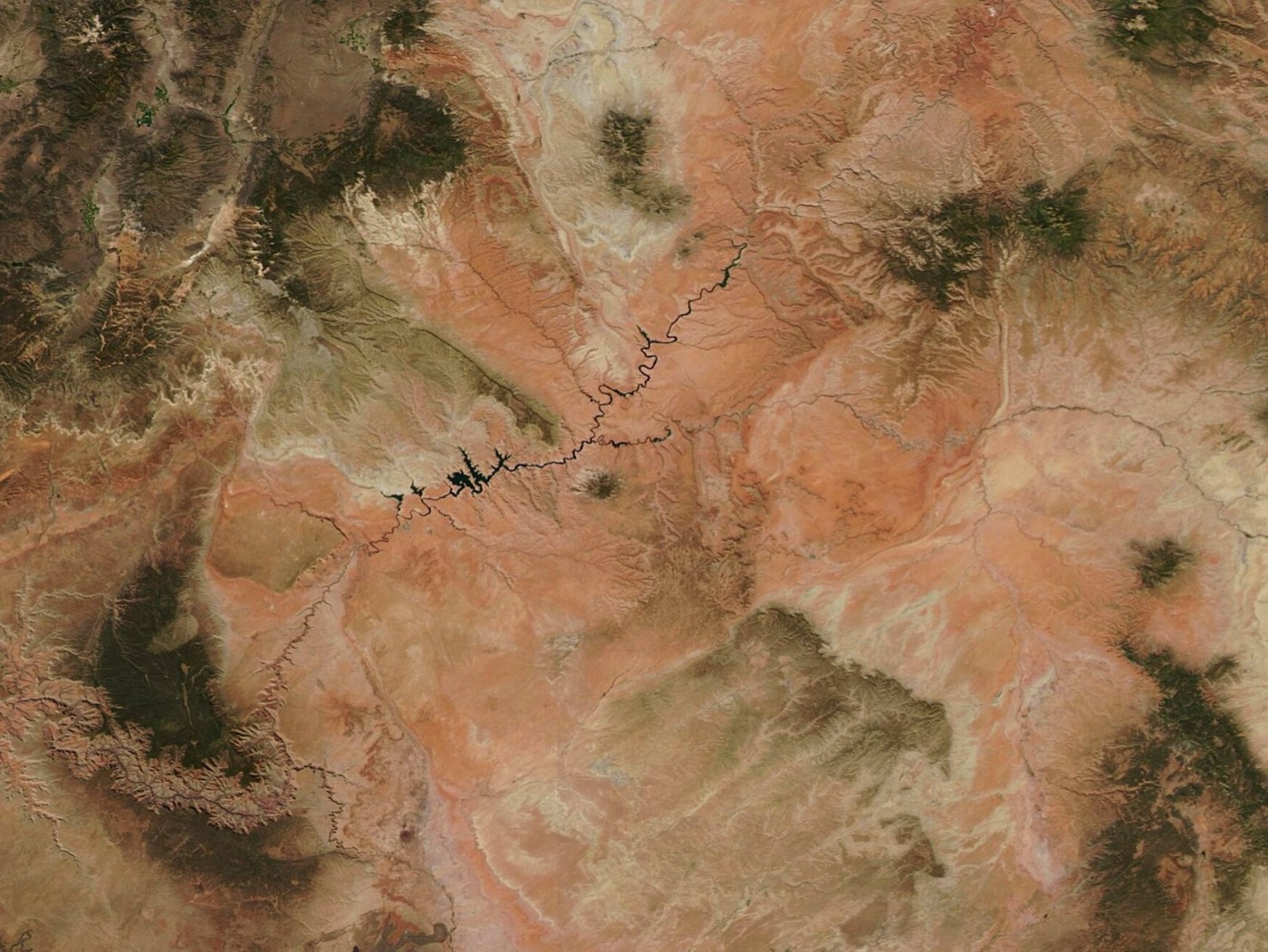
A region that runs short of electricity can usually buy more, build more, or import it from a neighbour down the line. A region that runs short of water during a drought has none of those options on the same timescale.
That is why water, not electricity, may turn out to be the harder limit on how far the AI build-out can actually go.
It is also why the places paying first are the places least able to absorb it: Fayette County, Georgia; Buckeye, Arizona; and the whole of drought-stressed Texas.
None of those three is a data centre, and none of them is the city where the AI being cooled is actually used.
The lights are staying on in all three places. Whether the water does too is still being decided, drought by drought, state by state — and mostly, so far, after the fact.
Sources and credits
Photo credits (Wikimedia Commons)
- Server rack at NERSC (National Energy Research Scientific Computing Center) data center: Derrick Coetzee from Berkeley, CA, USA, CC0 - https://commons.wikimedia.org/wiki/File%3ATechnician_with_laptop_working_on_server_rack_at_NERSC.jpg
- Data center cooling tower: Rsparks3, CC0 - https://commons.wikimedia.org/wiki/File%3AData_center_cooling_tower.jpg
- Texas drought conditions, High Plains, October 2026 (NASA Earth Observatory / US Drought Monitor): NASA Earth Observatory / Lauren Dauphin, Public domain - https://commons.wikimedia.org/wiki/File%3AFighting_Drought_in_Texas_Cotton_Country_%281473102_-_texasdrought_usdm_20260929_lrg%29.jpg
- Drought-driven wildfires across Georgia, April 2026 (NASA MODIS): MODIS Land Rapid Response Team, NASA GSFC, Public domain - https://commons.wikimedia.org/wiki/File%3APineland_Road_and_Highway_82_Fires%2C_Georgia_%28MODIS_2026-04-24%29.jpg
- Declining groundwater storage in the Colorado River Basin / Arizona (NASA satellite gravity data): NASA Earth Observatory images by Wanmei Liang, using data from Abdelmohsen, K., et al. (2025), boundary data from Colorado River Basin GIS Open Data Portal, and, Public domain - https://commons.wikimedia.org/wiki/File%3AArizona%E2%80%99s_Declining_Groundwater_%28154567_-_waterstorage_grc_2024_lrg%29.jpg
- Cracked, drought-dried earth from irrigation and intense dry heat (DOCUMERICA, 1972): Charles O'Rear, No restrictions - https://commons.wikimedia.org/wiki/File%3ACracked-earth--a-result-of-irrigation-and-intense-dry-heat-may-1972_7152566781_o.jpg
- Drought along the Colorado River, the Southwest's shared water supply (NASA MODIS): MODIS Land Rapid Response Team, NASA GSFC, Public domain - https://commons.wikimedia.org/wiki/File%3ADrought_Along_the_Colorado_River_%28MODIS_2021-09-29%29.jpg


Primary sources
- US Environmental Protection Agency - national data centre direct water consumption estimate (17.4bn gallons, 2023) and 2028 projection (38-73bn gallons), reported via Bloomberg Law and subsequent coverage, May 2026 onward.
- Houston Advanced Research Center - Texas data centre water demand study (49bn gallons 2025, up to 399bn gallons by 2030, ~6.6% of state water use), reported by the San Antonio Current, 30 July 2025 (fetched and).
- E&E News, 'Texas water plan ignores data center surge' and 'Texas green-lights water plan lacking data center forecasts', 2026, cross-checked against Community Impact's reporting on the same 2027 draft Texas State Water Plan.
- San Antonio Current, 30 July 2025 - water policy analyst Margaret Cook's quoted view on data centres and future water allocation.
- E&E News, 'Georgia residents seethe over 30M gallons of missing water', 7 May 2026 (fetched and), cross-checked against TechSpot and Ubergizmo - the QTS/Blackstone Fayette County unbilled water figures, the $147,474 retroactive bill (letter dated 15 May 2025), the absence of any fine, and the disputed four-month/nine-to-fifteen-month timeline.
- Circle of Blue / Water Desk, 'Data centers a small, but growing factor in Arizona's water budget', cross-checked against KTAR, ABC15 and DataCenterDynamics coverage of Tract's Buckeye, Arizona development - the ~2,000-acre/2,069-acre campus, ~$20 billion valuation, 2,000 acre-feet/year groundwater cap, and the 2023 housing groundwater moratorium exemption.
- Datacentres.com Research, 'Phoenix water usage scrutiny: data centres', 8 April 2026 - Arizona's zero net water consumption requirement for data centres over 20MW in the Phoenix metro area within three years of commissioning.
- Ohio Capital Journal, 'Ohio citizens showed power by stopping state EPA approval for data center pollution of waterways', 29 July 2026, cross-checked against NBC4/WCMH-TV, ABC6 and Circle of Blue - the withdrawal of the proposed blanket NPDES-style wastewater permit after 7,000+ public comments, and the move to individual permits.
- The Driller, 'Texas data center developers play offense on water, claiming huge cuts in usage', 2026 (fetched and) - Skybox Datacenters' and Lancium's named, company-reported efficiency figures, and the Texas Water Development Board's 85% drought figure for the same period.
- Han, Li, Wierman and Ren, 'Small Bottle, Big Pipe: Quantifying and Addressing the Impact of Data Centers on Public Water Systems', arXiv 2603.02705, submitted 19 March 2026 (v2), citing Equinix's 'Water-Energy Tradeoff' sustainability material - the 10-35% evaporative-vs-air-cooled electricity figure.
Not regulated financial advice.