
The Helium Shortage: Chips, MRIs and a War in the Gulf
In February 2026, a war broke out near the Persian Gulf. Weeks later, a memory-chip factory in South Korea slowed down. This video explains why those two events are connected by one colourless, odourless gas: helium.
Helium was first seen in sunlight in 1868, by Jules Janssen and Norman Lockyer, and not isolated on Earth until 1895, by William Ramsay. It has the lowest boiling point of any element and never reacts with anything it touches, which is why it is the only practical coolant for MRI magnets and, increasingly, for semiconductor fabs. It cannot be manufactured - it only exists as a trace by-product of natural gas, so supply depends entirely on geology.
The United States built a federal helium reserve at the Bush Dome near Amarillo, Texas, starting in 1925, then privatised it in 1996. Today, almost the whole world's supply comes from the US, Qatar's Ras Laffan complex and Russia's Amur plant, with Algeria a smaller fourth source. Qatar alone supplies roughly 30-35% of the world total.
Semiconductor fabs overtook medical imaging as the largest consumer of helium within the last two years, needing it for wafer cooling and extreme ultraviolet lithography. The 2017 Qatar blockade was an early warning, cutting about 30% of world supply for three weeks. In 2026, Iranian strikes on Ras Laffan and the closure of the Strait of Hormuz did it again, doubling prices and exposing Samsung and SK Hynix - roughly 65% Qatar-sourced - far more than Japan's fabs. Samsung, hospitals and laboratories are now running helium-reuse systems, and Russia's Amur plant is ramping up, but neither closes the gap on its own.
Educational documentary. Not financial or investment advice.
Tags
Chapters
- The gas that stopped the machines
- An element found on the sun first
- Why nothing else works
- A by-product, not a resource
- America's buried reserve
- Three countries, almost the whole supply
- From party balloons to patient scans
- The chip industry's quiet takeover
- 2017: the first warning
- 2026: Ras Laffan and the Strait
- Who gets rationed first
- Recycling the unrecyclable gas
- What it would take to fix this
Video notes
1. The gas that stopped the machines
In February twenty twenty-six, a war broke out near the Persian Gulf. Weeks later, a chip factory in South Korea slowed down, on the other side of the world. Those two events were not a coincidence. They were connected by one colourless, odourless gas: helium.
Helium cools the giant magnets inside MRI scanners. It also cools and cleans the machines that make the memory chips inside your phone and your laptop. Almost a third of the world's helium comes from a single country, Qatar, pulled out of gas fields deep under the Gulf.
Qatar's main helium export complex, called Ras Laffan, sits on the Gulf coast. The factories of Samsung and SK Hynix, two of the world's largest makers of memory chips, sit in South Korea, thousands of miles away by sea. When the gas stopped moving between those two places, the factories felt it within weeks.
So this video asks one question. Is the world's most chip-hungry decade running forwards, on a gas supply more fragile than the chips it depends on? Or is that fragility now holding the whole decade backwards?
2. An element found on the sun first

Before anyone used helium to cool a magnet, people found it in the Sun.
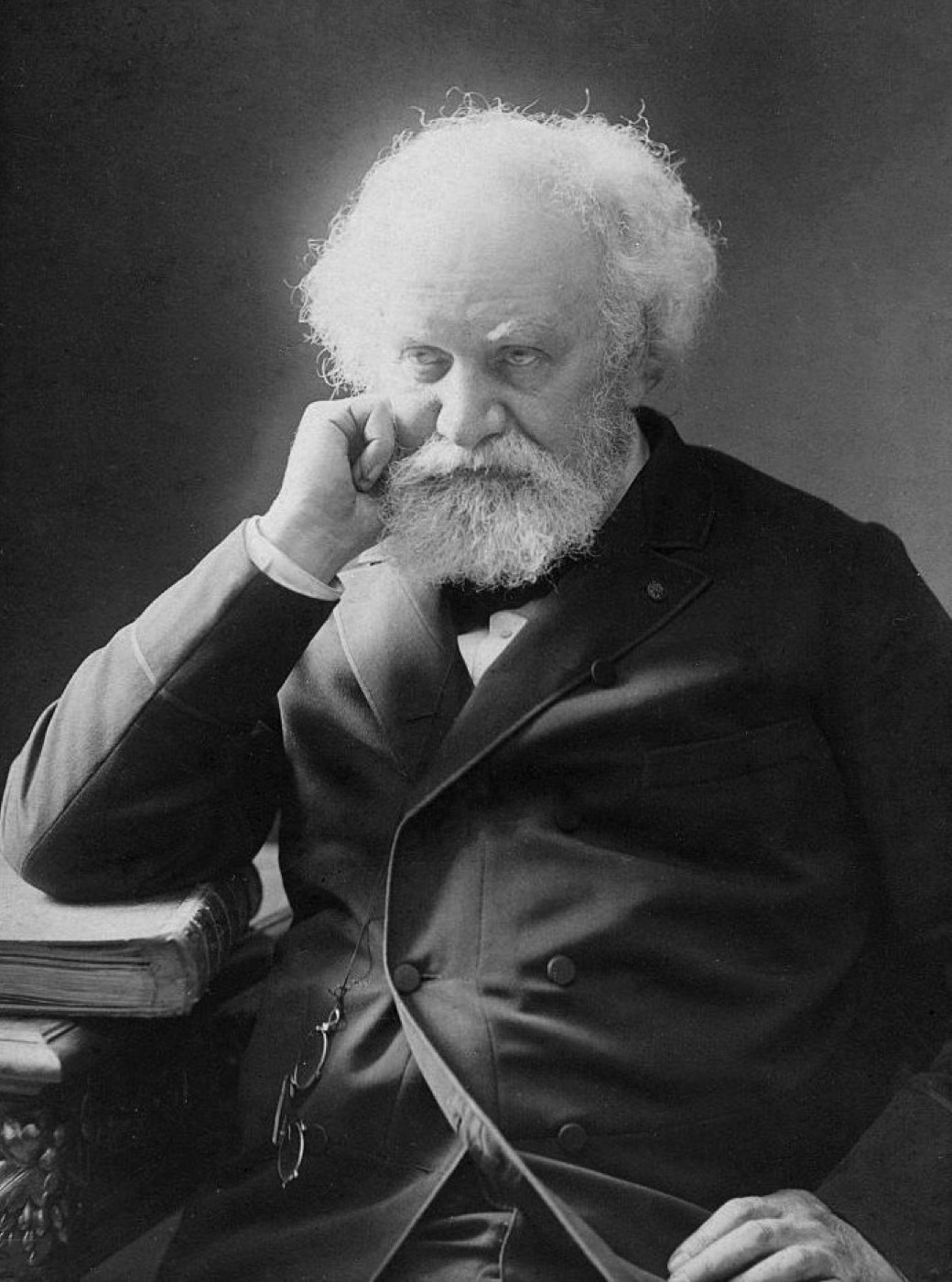
On the eighteenth of August, eighteen sixty-eight, the French astronomer Jules Janssen watched a total solar eclipse from Guntur, in India. Using an instrument called a spectroscope, he saw a bright yellow line in the Sun's light that matched no element then known.
A spectroscope spreads light out the way a prism does, into a spread of thin coloured lines. Every element leaves its own pattern of lines in that spread, like a fingerprint. The line Janssen saw, and that Lockyer would soon see too, matched no fingerprint anyone had catalogued.
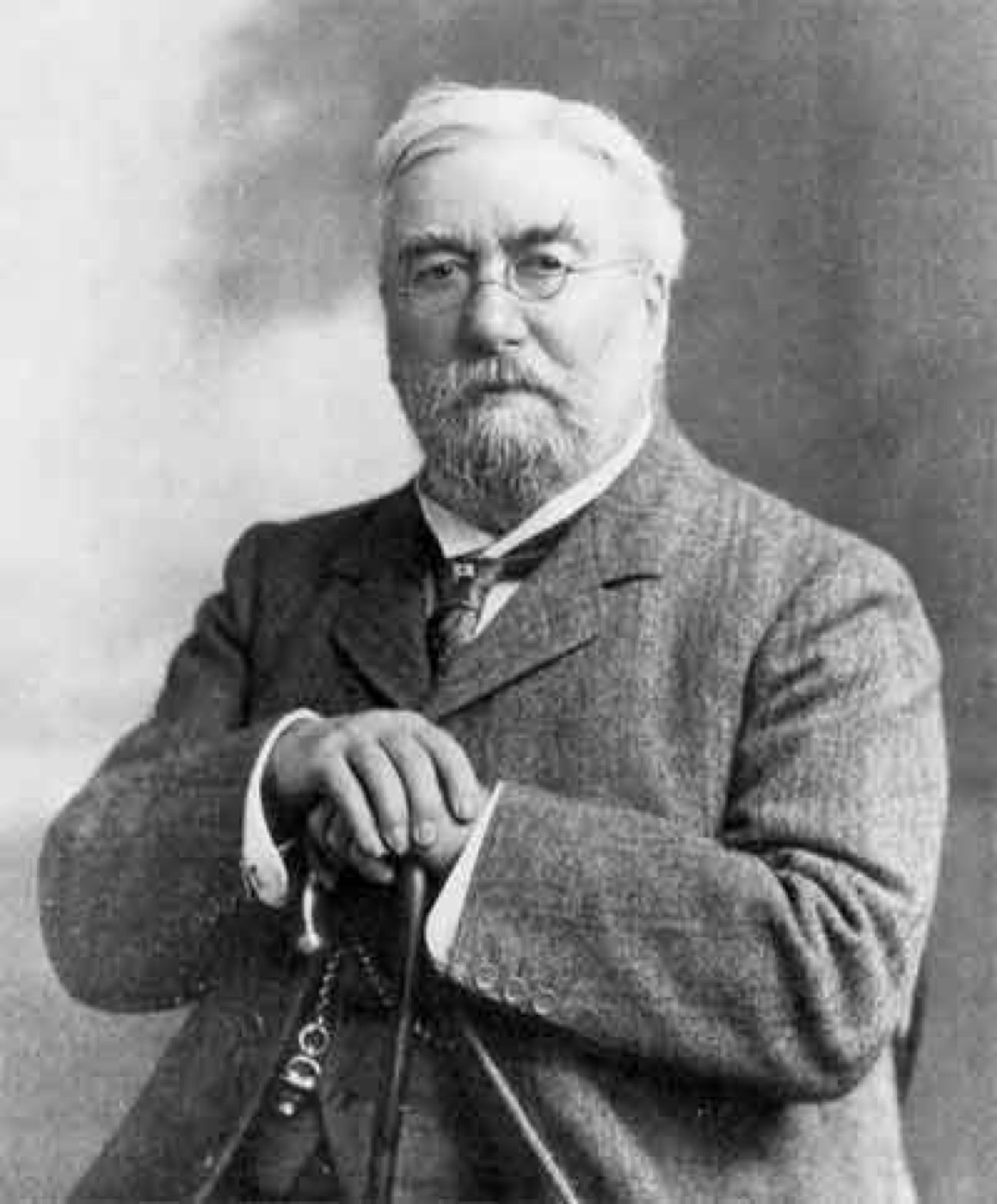
That same year, the English astronomer Norman Lockyer studied the Sun's light independently, from England, and saw the identical yellow line. He proposed that it came from an element nobody had yet found on Earth, and he named it helium, after helios, the Greek word for the Sun.
Janssen made his observation from Guntur, in India. Lockyer made his, independently, from England.
Helium's path from sunlight into a laboratory took twenty-seven years. Eighteen sixty-eight was the year both astronomers saw it in sunlight. Eighteen ninety-five was the year it was finally held in a test tube.
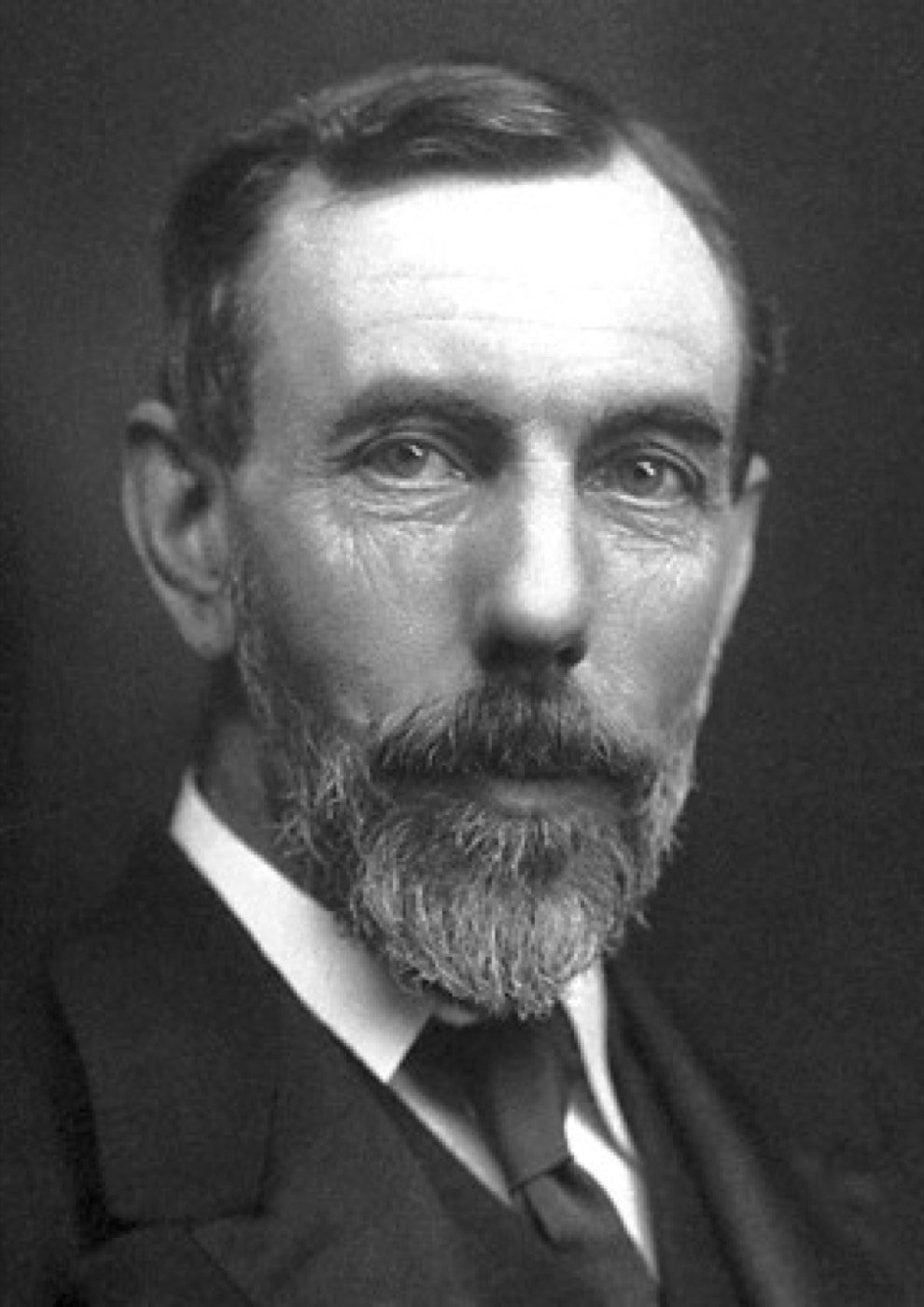
In eighteen ninety-five, the Scottish chemist William Ramsay dissolved a uranium-bearing rock called cleveite in acid. Once he had stripped out the oxygen and nitrogen mixed into the resulting gas, what remained showed that same yellow spectral line. Helium existed on Earth after all.
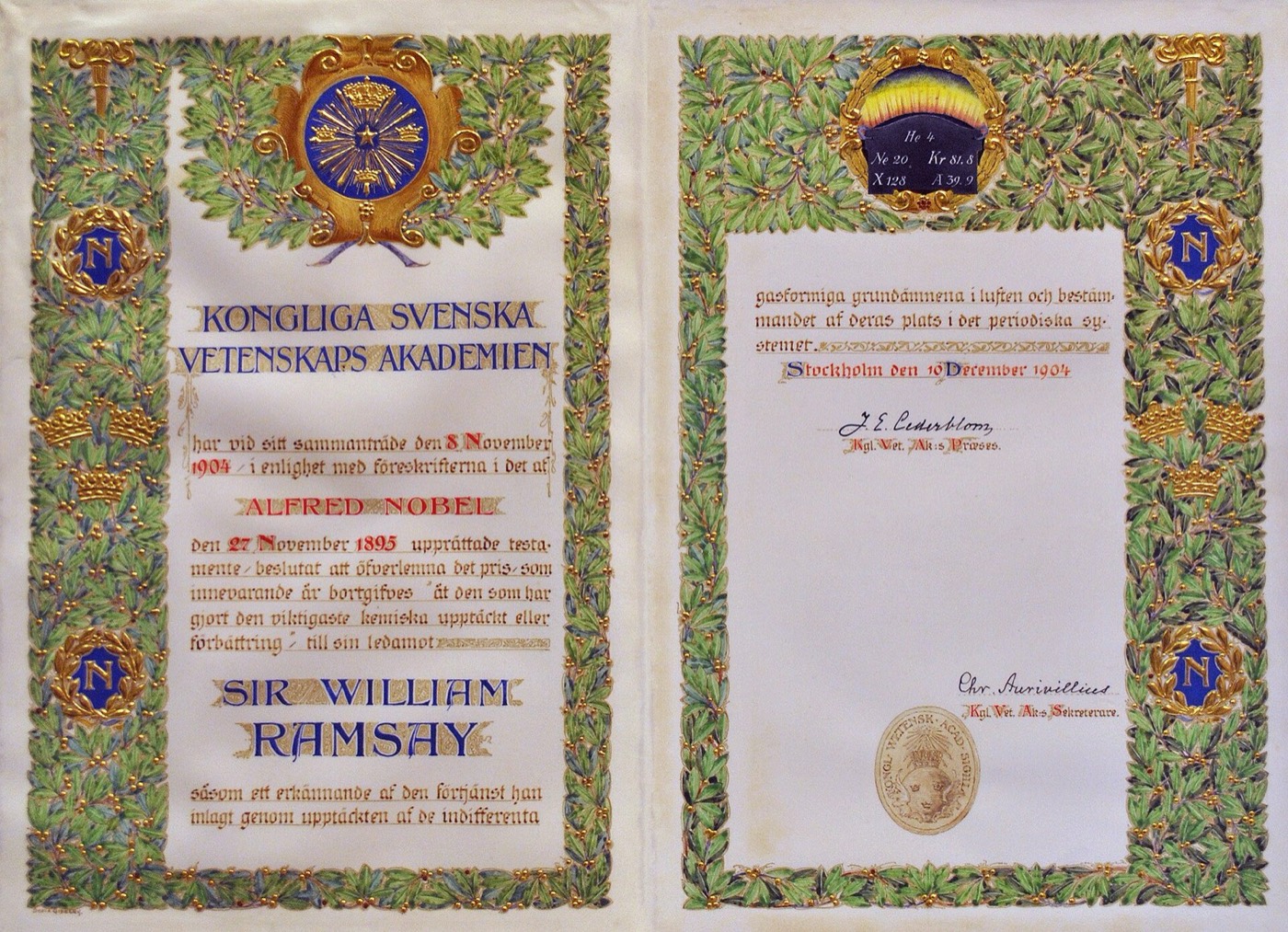
Ramsay did not stop there. Over the years that followed, he and his collaborators identified neon, argon, krypton and xenon: a family of gases, named for how rarely any of them react with anything else.
That work on the unreactive gases won Ramsay the Nobel Prize in Chemistry. This is his medal.
A gas found first in starlight, and only later dug out of the ground, behaves exactly the way that origin suggests. It is almost impossible to pin down, and almost nobody has very much of it.
3. Why nothing else works
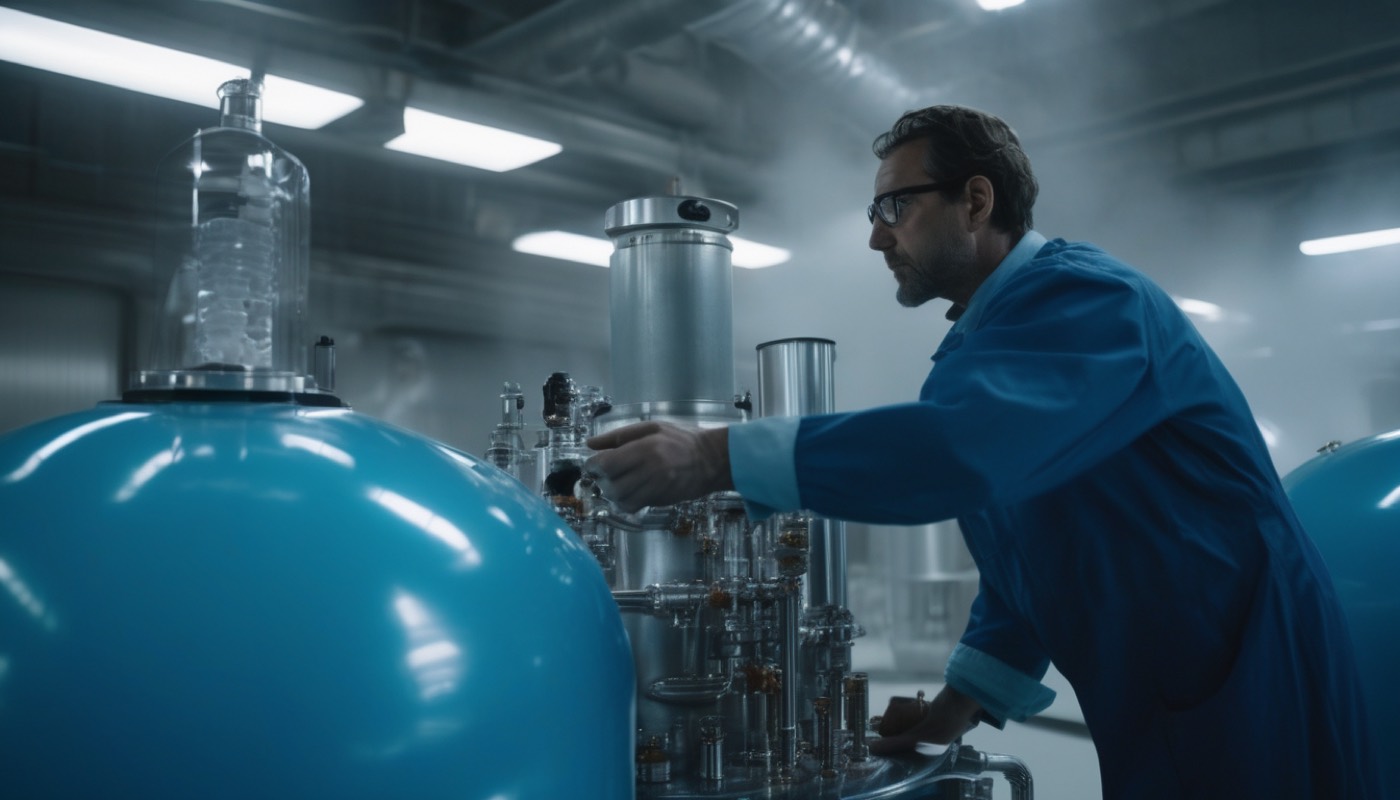
Helium is not useful because it is rare. It is useful because of what it does at extreme cold, and because of what it refuses to do at any temperature.
Every other common gas turns to liquid, and then to solid, long before it gets anywhere near as cold as helium can go. Helium's boiling point is about minus two hundred and sixty-nine degrees Celsius, the lowest of any element, and even then, under ordinary pressure, it resists freezing solid entirely.
That extreme cold is exactly what certain magnets and manufacturing steps need, and nothing else supplies it.
Hydrogen is almost as cold, but it is explosive, which rules it out near sensitive equipment. Nitrogen is cheap and inert, but its boiling point is far too high for the coldest jobs. Helium is both cold enough and safe enough, and there is no substitute waiting in reserve.
4. A by-product, not a resource
Helium cannot be manufactured in a factory from simpler materials. It only exists because, billions of years ago, radioactive rock underground slowly produced it, and some of it became trapped alongside pockets of natural gas.
A gas well drilled for natural gas sometimes brings helium up with it, mixed in as a tiny trace. At a processing plant, the raw gas is cooled and separated into its parts. Methane is piped off for fuel, heavier hydrocarbons are drawn out separately, and in a few fields enough helium is left over to be worth extracting and liquefying on its own.
This matters because it means nobody can simply decide to produce more helium. Supply depends entirely on which natural gas fields happen to hold it, and on whether the companies that own those fields choose to capture it rather than vent it into the air. A gas field with no helium in it will never yield any, however many wells are drilled.
So the question of where the world's helium comes from is really a question of geology, decided long before anyone built a single plant.
5. America's buried reserve

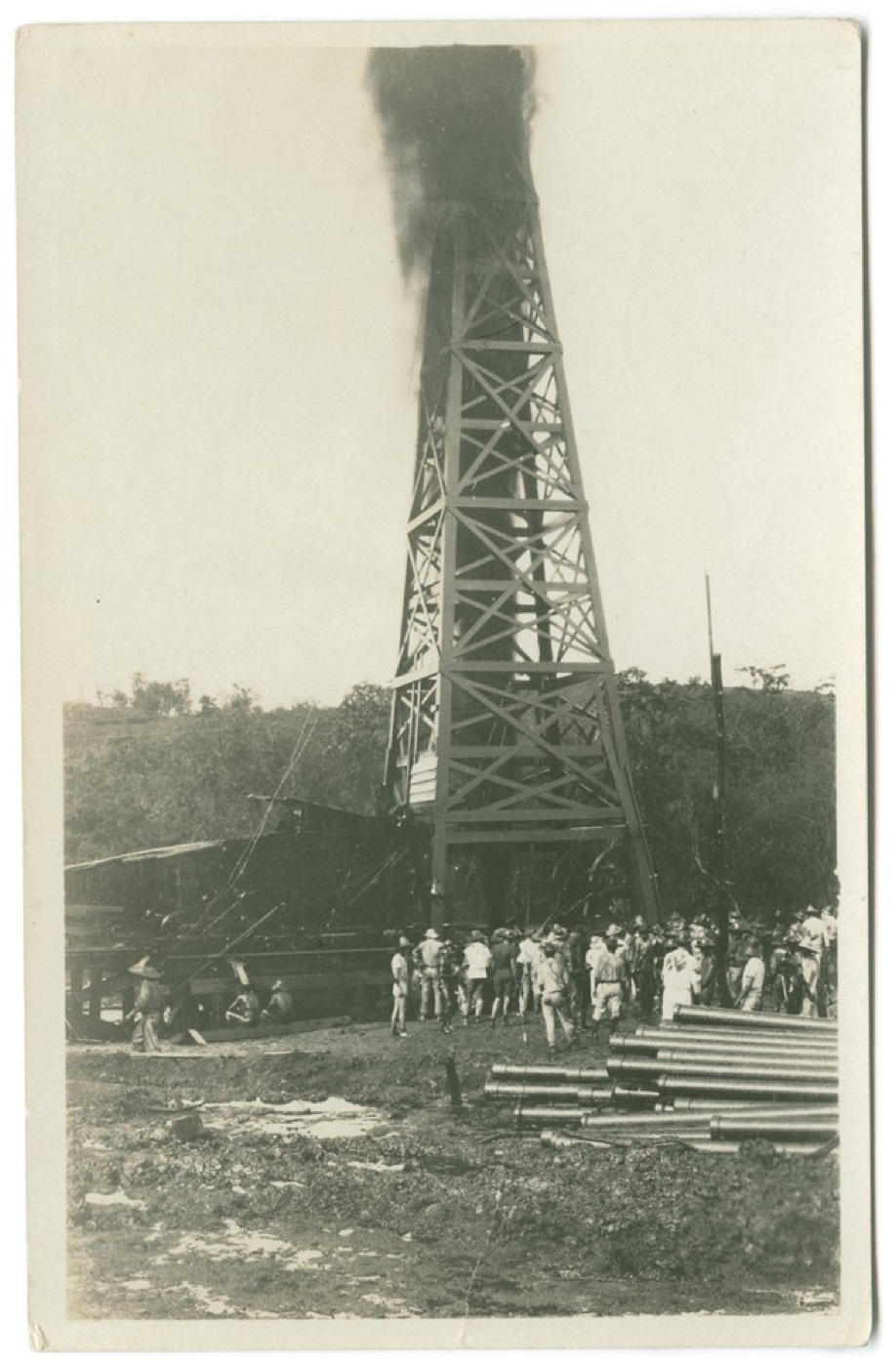
For most of the twentieth century, one country held almost all the helium anyone knew how to extract: the United States.
The nineteen-twenties oil boom that produced America's early helium was centred on East Texas, hundreds of miles from where the government later built its reserve, near Amarillo.
This nineteen-twenties photograph shows an oil and gas drilling rig in East Texas, during the boom that also produced America's early helium. Wells like this one, drilled for oil and gas, sometimes struck gas rich enough in helium to be worth keeping.
The United States Congress created a federal helium programme in nineteen twenty-five, worried that the military's airships would need a reliable supply. In nineteen twenty-nine, the government built a storage site near Amarillo, Texas. It was called the Bush Dome, a natural rock reservoir where surplus helium was pumped back underground to save for later. By nineteen ninety-six, with the Cold War over and the stockpile enormous, Congress passed the Helium Privatization Act, ordering the reserve sold off and the helium market handed back to private companies.
Decades later, the Bush Dome is still there, and still pumping, though it is no longer the government's alone to manage.
6. Three countries, almost the whole supply

Today, the United States still produces helium, but it is no longer alone.
Three countries supply almost the world's entire helium demand. The United States remains the oldest producer, still drawing on gas fields around the Bush Dome. Qatar's Ras Laffan complex, on the Gulf coast, has grown into the single largest exporter. Russia's Amur plant, newly built in the country's far east, is the newest major source. Algeria's Hassi R'Mel field adds a smaller, fourth supply.
Each of those four places sits a very long way from the others, and every one of them depends on a natural gas field that happens to hold helium, rather than on any helium-specific decision. If any one of the three largest goes offline, there is no fourth large source waiting to fill the gap quickly.
7. From party balloons to patient scans

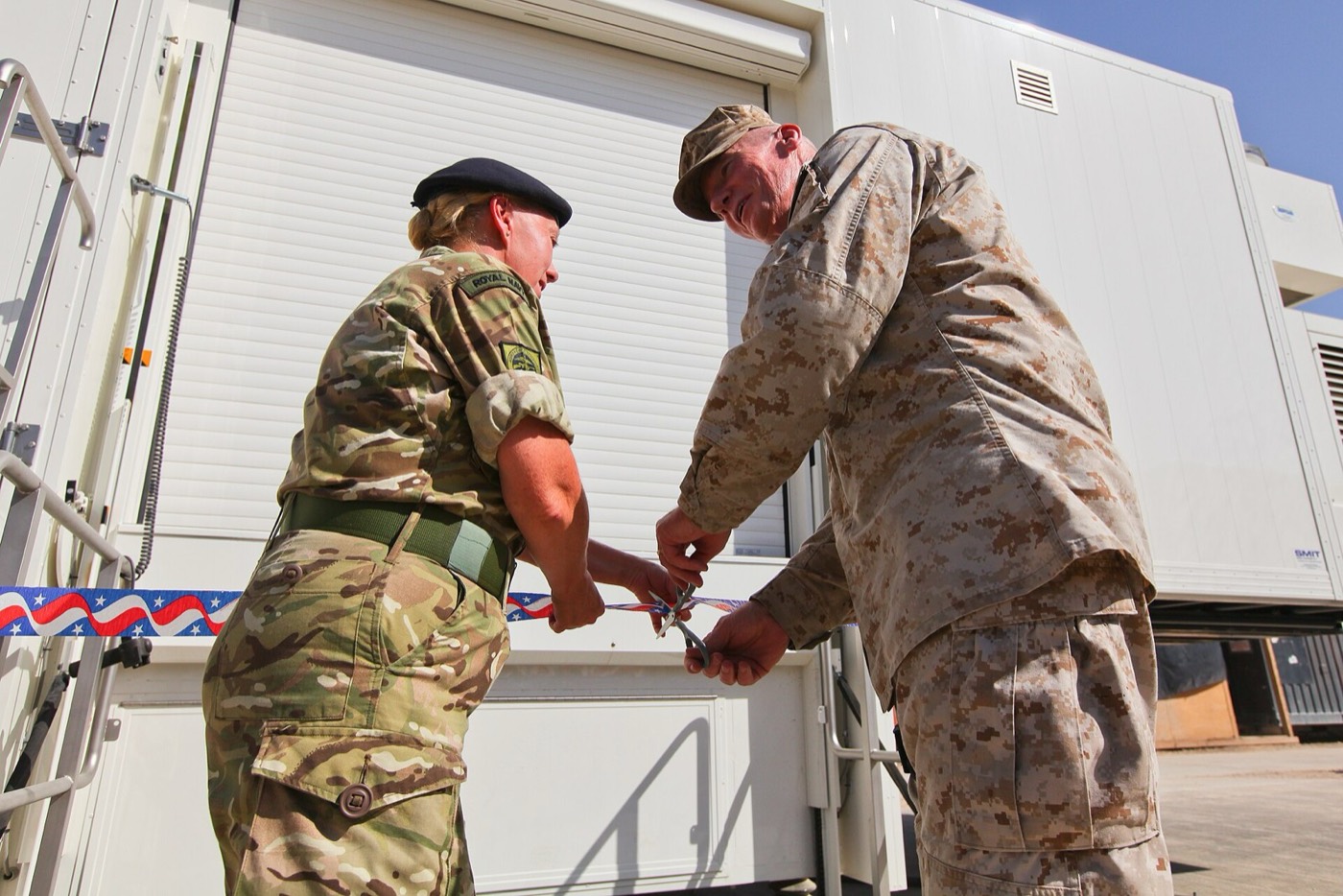
For a long time, helium was mostly famous for balloons: party balloons, and the airships of the early twentieth century. That changed when doctors needed to keep a very large magnet very cold.
This is an MRI machine in a hospital. Inside its casing is a ring-shaped magnet strong enough to image the inside of a human body, made from coils of wire that, cooled enough, carry electric current with no resistance at all. Engineers call that state superconducting. Liquid helium, held at close to minus two hundred and sixty-nine degrees Celsius, is what keeps the coils that cold.
Strip the MRI machine down to its layers, and helium sits at the very centre. An outer casing holds the patient table and the electronics. Inside that sits an insulating vacuum layer, to keep outside heat from creeping in. And inside that sits the coil itself, bathed in liquid helium, which is what makes the whole machine work.
A technology used to scan sunlight had become the technology that scans the human body.
8. The chip industry's quiet takeover
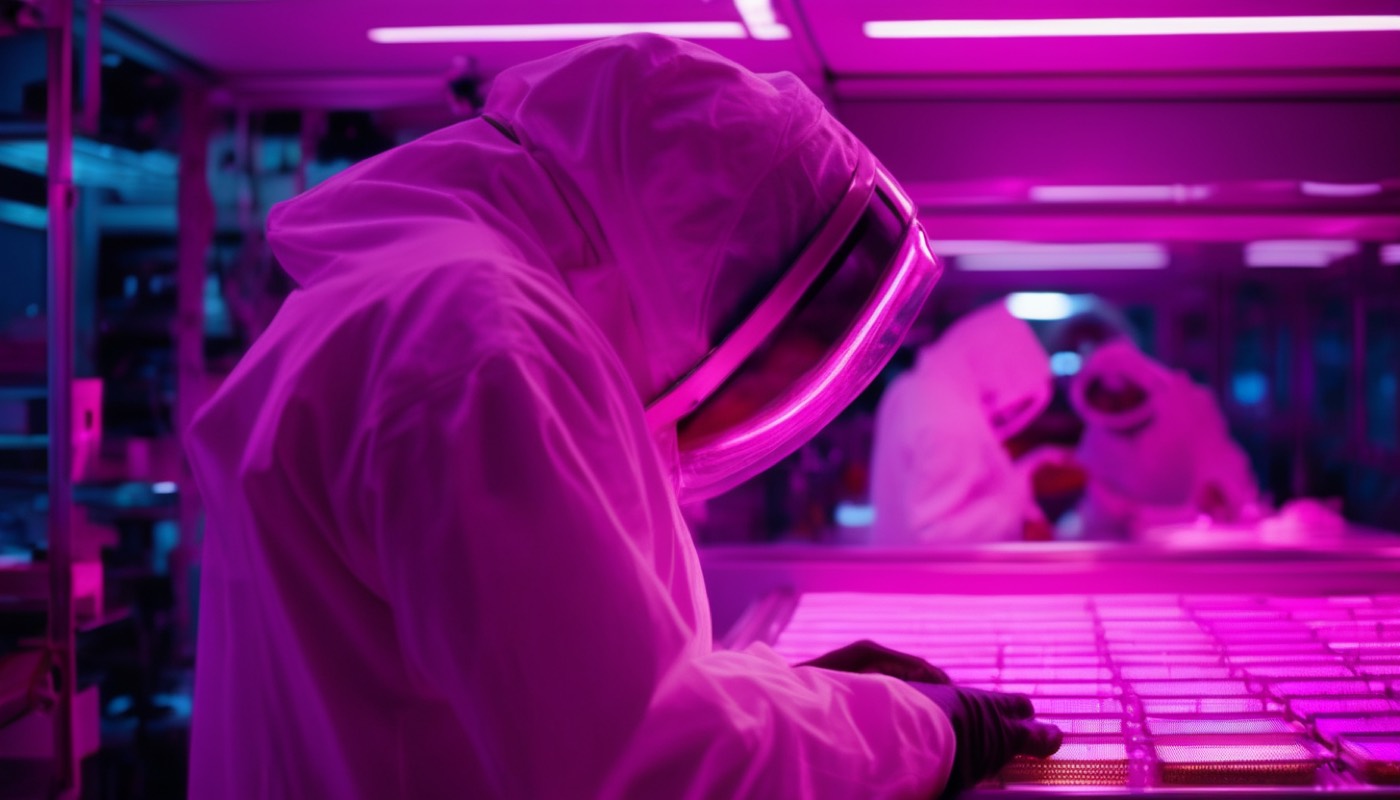
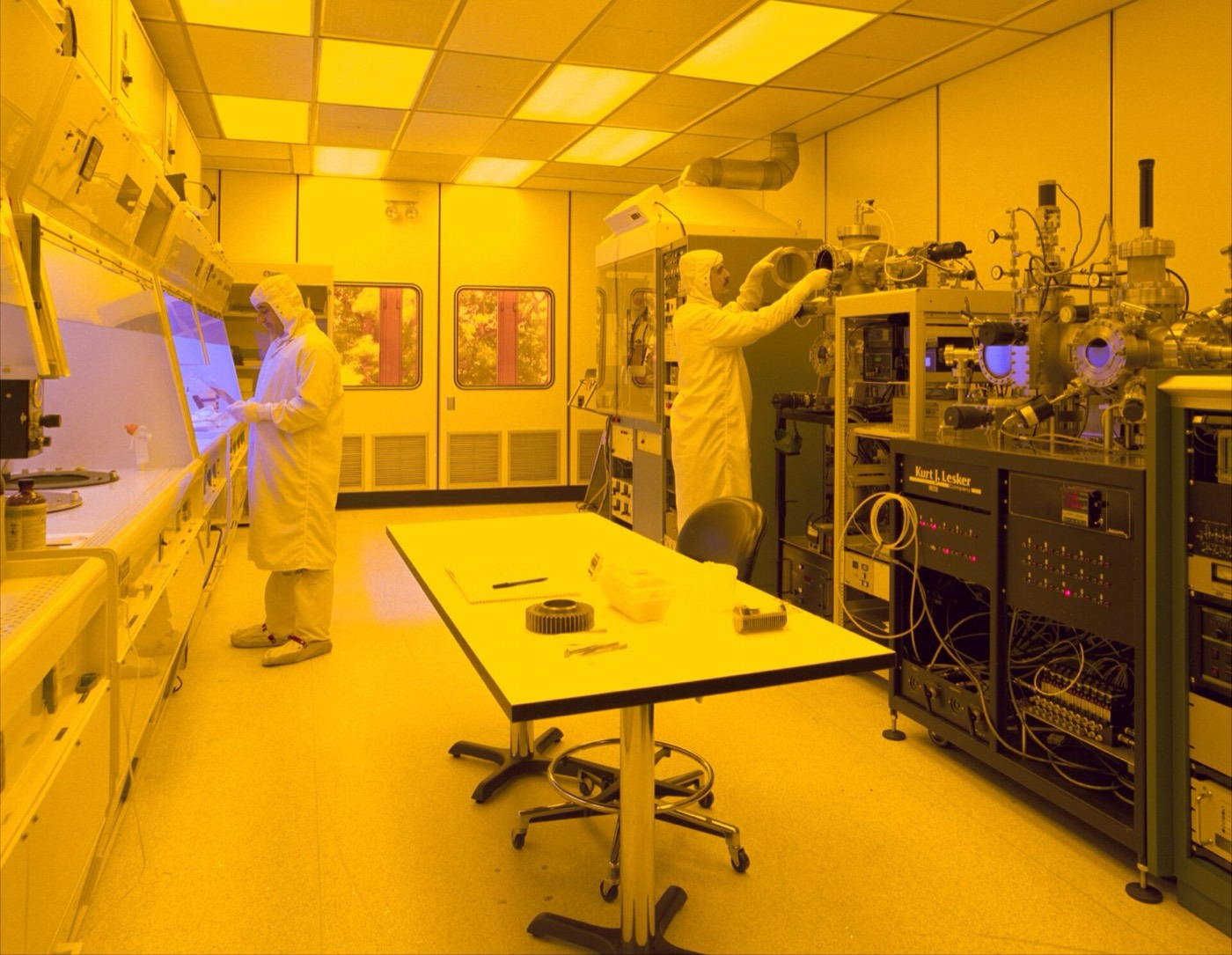
For decades, hospitals were assumed to be helium's biggest customer. That assumption is now out of date.
Industry researchers at TECHCET, who track the chip supply chain, have reported that semiconductor manufacturing overtook medical imaging as the world's largest user of helium within the last two years. Chip factories, often called fabs, now account for roughly a quarter of all the helium used worldwide.
This clean room is where chips are made. The wafer is the disc of silicon that many chips are made on at once, and it has to be kept extremely cold and extremely clean at several stages. Helium cools the wafer during some etching steps. It is also used in lithography: printing the pattern of a circuit onto silicon with light. The most advanced version is called extreme ultraviolet lithography. It uses a very short wavelength of light to print the finest patterns, and its lenses and mirrors depend on a controlled helium atmosphere to work.
A hospital can often postpone a scan. A chip factory cannot simply pause a production line that has already started, which is part of why this shortage hits fabs so hard.
9. 2017: the first warning
The twenty twenty-six crisis was not the first time the world discovered how exposed helium supply really is.
In June of two thousand seventeen, Saudi Arabia and several other neighbours of Qatar cut diplomatic ties with it and closed their land borders, in a dispute that had nothing to do with helium. Qatar was then the world's second-largest helium producer.
Liquid helium spoils within about a month if it cannot be shipped. So the blockade forced both of Qatar's helium plants to shut, taking roughly thirty per cent of world helium production offline for about three weeks.
That gap was the first clear demonstration of a single point of failure. One country's helium plants, closed for weeks by a political dispute, moved a market used by hospitals and factories everywhere. It pushed some buyers toward early recycling efforts, years before twenty twenty-six made the same lesson impossible to ignore.
10. 2026: Ras Laffan and the Strait

By early twenty twenty-six, Qatar's helium plants were larger and the world depended on them more than ever. Then the war reached them directly.
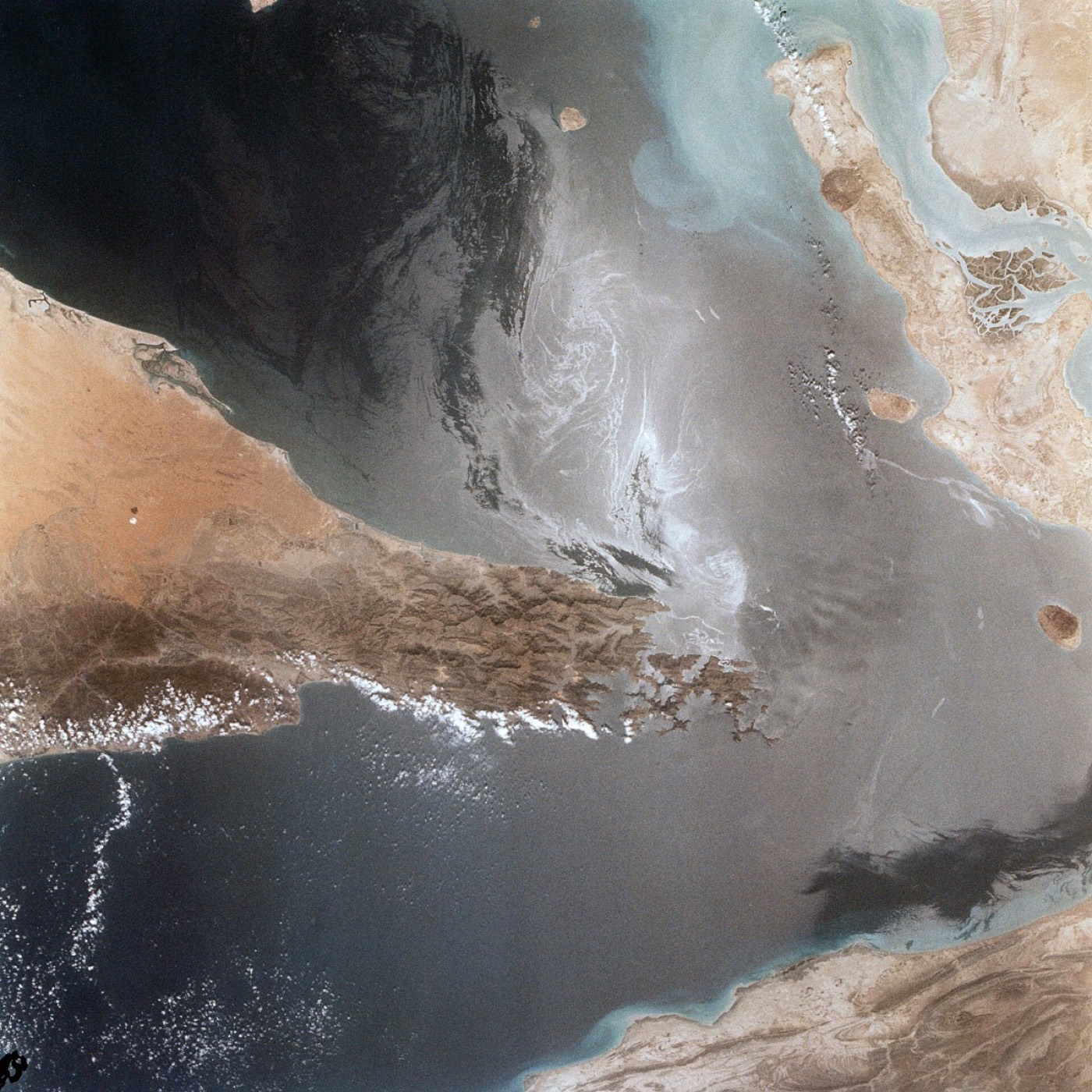
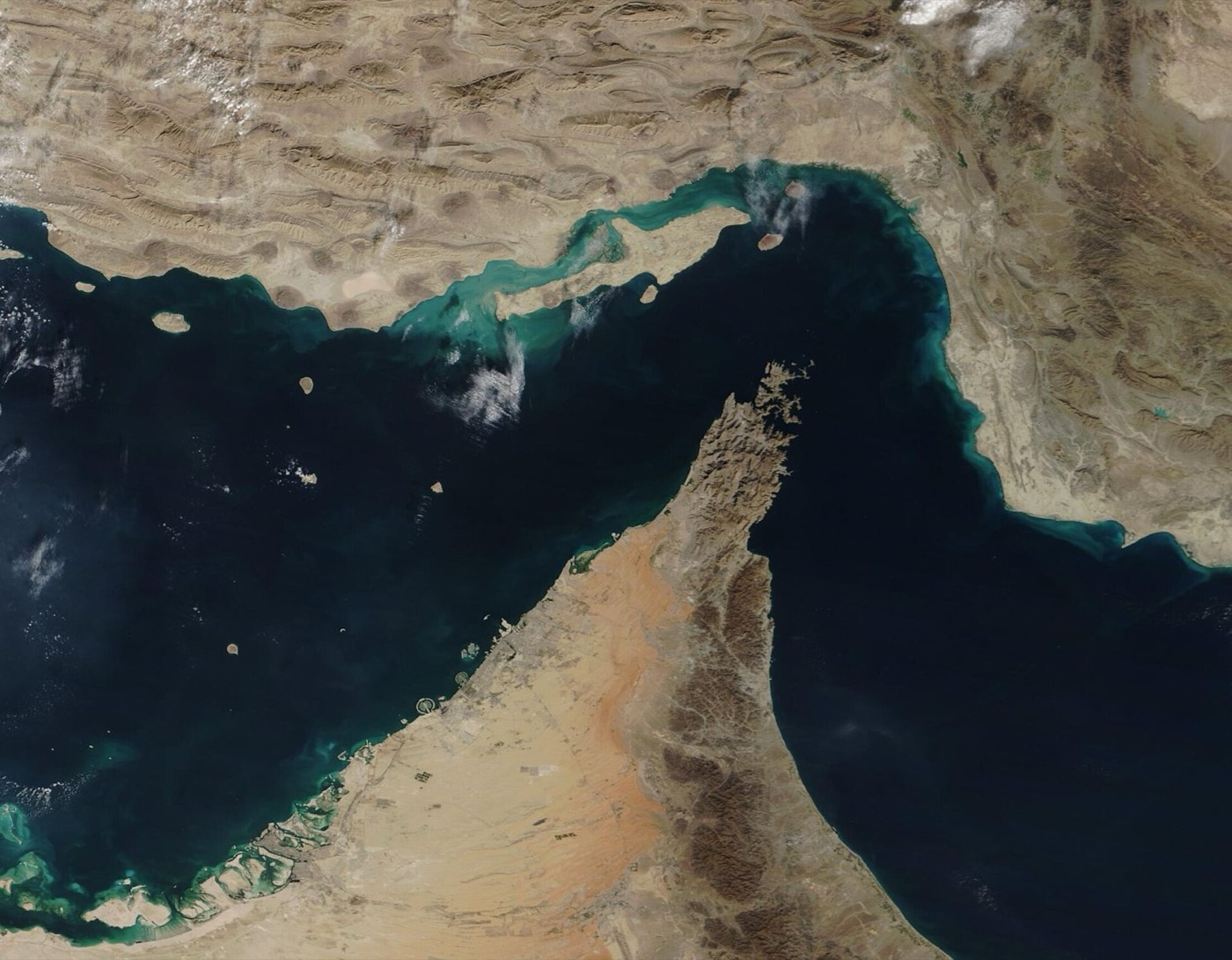
Ras Laffan sits on Qatar's Gulf coast, and the Strait of Hormuz lies between Iran and the Arabian peninsula - the only sea route out.
On the twenty-eighth of February, two thousand twenty-six, the United States and Israel launched a military campaign against Iran. Qatar halted production at Ras Laffan on the second of March, and declared force majeure, a legal term for being unable to meet contracts because of events outside its control, on the fourth. On the eighteenth and nineteenth of March, Iranian missiles struck the Ras Laffan complex directly, causing extensive damage.
This satellite photograph, taken from the Space Shuttle, shows the Strait of Hormuz, the narrow sea passage that every tanker leaving Ras Laffan has to sail through. In April twenty twenty-six, the strait closed to normal shipping. Qatar's gas could no longer get out even if the plants had kept running.
Repairing the physical damage at Ras Laffan is expected to take three to five years. Even once shipping resumes, Qatar's own officials said it would take weeks to months for deliveries to return to normal.
This second satellite image, made by NASA's MODIS instrument, shows the same strait from directly overhead. Every ship carrying Qatari helium to Asia, Europe or the United States has only this one route out.
Prices for helium doubled worldwide within weeks of the closure.
11. Who gets rationed first
When Qatar's helium stopped moving, it did not hit every customer equally.
South Korea and Japan drew on very different suppliers before the war: South Korea mostly from Qatar, Japan mostly from the United States.
South Korea had sourced about sixty-five per cent of its helium from Qatar in the year before the war, which made Samsung and SK Hynix, its two biggest memory-chip makers, especially exposed. Japan was better protected: it had sourced most of its helium from the United States, with only around thirty-seven per cent from Qatar.
Governments and companies had built up some cushion in advance. South Korea had around four months of semiconductor-grade helium in reserve. Taiwan's TSMC held just over two months. Japan's existing stock was expected to last only into early May.
12. Recycling the unrecyclable gas
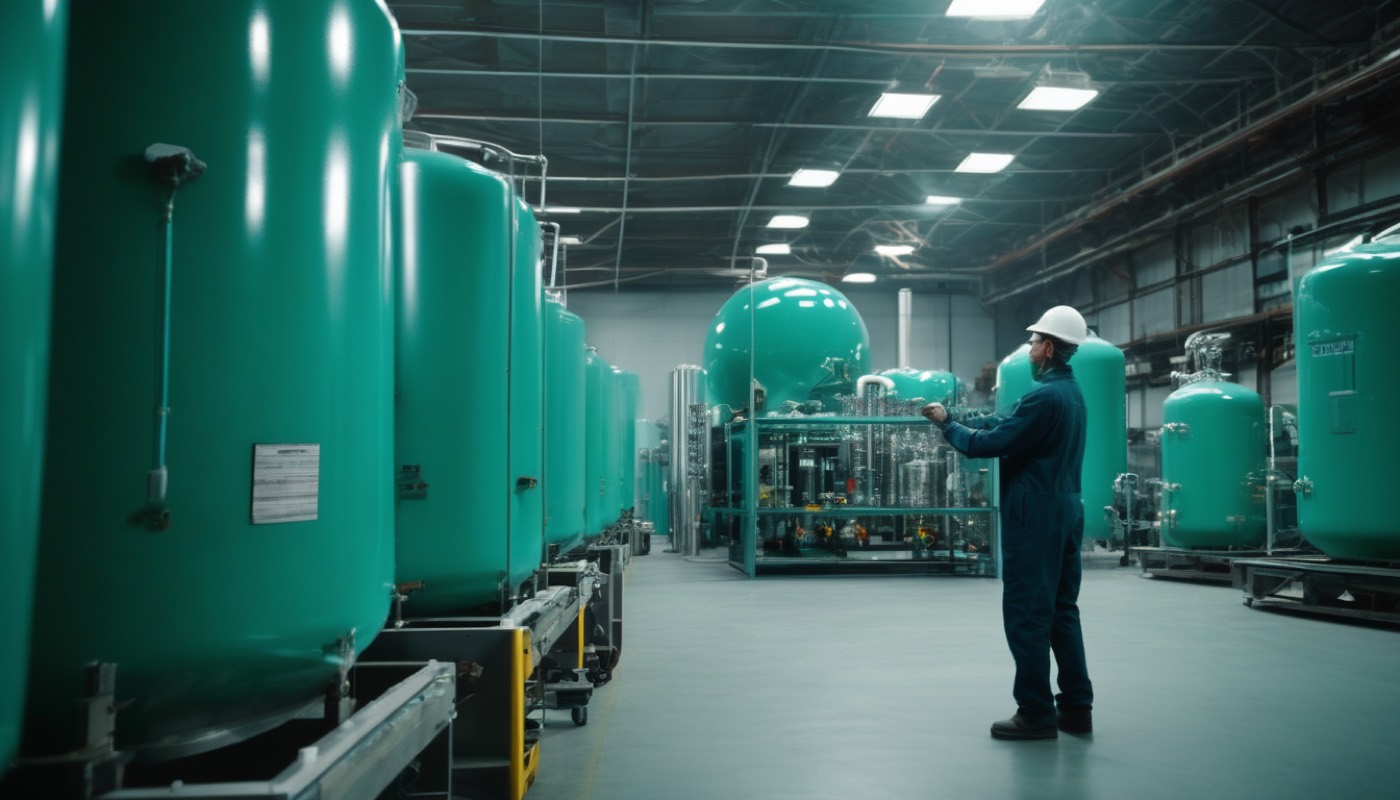
Helium cannot be manufactured, so when supply is tight, using what you already have again becomes the next best thing.
Samsung now runs a helium reuse system on some of its production lines. Used helium, instead of being vented away after one pass through a chip-making tool, is captured, filtered to remove contamination, and fed back into the process. The company began rolling this out in 2025, before the twenty twenty-six crisis made it essential rather than merely efficient.
Hospitals and laboratories are doing something similar with MRI machines: capturing the helium boil-off that used to simply escape, and recondensing it rather than buying a fresh supply every time. None of this makes the recycled gas new. It only means less fresh helium has to be dug up to begin with.
13. What it would take to fix this

So does this crisis get fixed by digging more helium, or by needing less of it?
Russia's Amur plant increased its output in 2025. It rose by about a third, to sixteen point six million cubic metres, as more of the plant's production trains came on line. Its full design capacity is roughly sixty million cubic metres a year, so even that increase left it well short of what it was built for.
Three things are moving at once, and none of them is certain on its own. New supply, like Amur's remaining capacity and new US projects, is still years from full output. Recycling and reuse, in fabs and hospitals, lowers how much fresh gas each customer needs. And every new plan can be undone by the next unplanned shutdown, in a market with only a handful of large suppliers.
This video began with a war disrupting a chip factory on the other side of the world. The honest answer to whether the chip-hungry decade is heading forwards or backwards is that it depends on which of those three things moves faster, and on whether anyone builds a fourth major source before the next one goes offline.
Sources and credits
Photo credits (Wikimedia Commons)
- Jules (Pierre Jules César) Janssen, who detected helium in the sun's spectrum in 1868: Unknown authorUnknown author, Public domain - https://commons.wikimedia.org/wiki/File%3AJules_Janssen_3.jpg
- Norman Lockyer, who independently detected helium in the solar spectrum in 1868 and named the element: not indicated, Public domain - https://commons.wikimedia.org/wiki/File%3ALockyer-Norman.jpg
- William Ramsay, who first isolated helium on Earth in 1895: Elliott & Fry, Public domain - https://commons.wikimedia.org/wiki/File%3AWilliam_Ramsay.jpg
- William Ramsay's Nobel Prize medal: Sofia Gisberg (1854-1926), Public domain - https://commons.wikimedia.org/wiki/File%3AWilliam_Ramsay%27s_Nobel_Prize.jpg
- 1920s East Texas oil drilling rig and crowd, the gas-field era that led to the US Helium Act and the Bush Dome reserve near Amarillo: SMU Central University Libraries, No restrictions - https://commons.wikimedia.org/wiki/File%3ACrowd_surrounding_oil_well_drilling_rig_in_East_Texas_%287795918194%29.jpg
- Strait of Hormuz, NASA Space Shuttle photograph: NASA, Public domain - https://commons.wikimedia.org/wiki/File%3ASTS004-37-716_-_Strait_of_Hormuz.jpg
- Strait of Hormuz, NASA MODIS satellite image, 2020-12-04: MODIS Land Rapid Response Team, NASA GSFC, Public domain - https://commons.wikimedia.org/wiki/File%3AStrait_of_Hormuz_%28MODIS_2020-12-04%29.jpg
- MRI machine in a hospital, US military photo, Helmand, 2011: Cpl. Timothy Solano, Public domain - https://commons.wikimedia.org/wiki/File%3AHelmand%27s_largest_hospital_introduces_new_MRI_capabilities_111015-M-DF801-013.jpg
- Semiconductor manufacturing clean room: Uploaded by Duk 08:45, 16 Feb 2005 (UTC), Public domain - https://commons.wikimedia.org/wiki/File%3AClean_room.jpg


Primary sources
- Exiger, 'Iran War Disrupts One-Third of Global Helium Supply' (exiger.com/perspectives, 2026) - the war timeline, Ras Laffan strikes, force majeure, repair estimates, price doubling.
- AGBI, 'US helium distributor hit after Qatar suspends LNG output' (agbi.com, March 2026) - Qatar's production halt and force majeure declaration.
- TrendForce, 'Decoding Impact: Asia Chipmakers Move to Tackle Helium Strain as Intel Gains Relative Buffer' (trendforce.com, 8 April 2026) - South Korea/Japan sourcing shares, national reserve months, Samsung's Helium Reuse System.
- TASS, 'Gazprom notes significant rise in demand for helium amid Middle East crisis' (tass.com/economy/2167207, 2026) - Amur plant's 2025 output and Markelov quote.
- Public Radio Tulsa / Prairie Public, 'Strait of Hormuz closure deflates global helium supply' (3 April 2026) - the Hormuz closure.
- labroots.com (28 June 2017), manufacturing.net and gep.com (June-July 2017) - the 2017 Qatar blockade and its ~30% production cut.
- US Department of the Interior, 'Federal Helium Program' and 'BLM Helium Program' pages (doi.gov) - the 1925 Helium Act, the Bush Dome reservoir, and the 1996 Helium Privatization Act.
- sciencenotes.org, 'Today in Science History - Discovery of Helium', and solarwatch.app, 'Helium Was Discovered During an Eclipse' () - the 1868 solar discovery and 1895 isolation.
- A 2026 helium-supply-chain summary citing TECHCET/Scientific American reporting (kunalganglani.com) - semiconductor manufacturing overtaking MRI as the largest helium consumer.
Not regulated financial advice.