
The Transformer Shortage Holding Back the Grid
A power transformer has no moving parts and burns no fuel, yet the grid needs one at almost every step between a power station and a home - and new ones now take years to deliver, not months. This video explains how a transformer works (stepping voltage up for efficient transmission, then down again in stages), how one is actually built (a grain-oriented electrical steel core, hand-wound copper coils, an oil-filled tank), and why the US grid is now short of them.
Every American-made transformer core traces back to one mill - Cleveland-Cliffs' Butler Works in Pennsylvania - which in July 2026 also took on a $400 million, five-year US defence contract competing for the same steel. Demand for power transformers has risen more than 100% since 2019, and over 270% for the largest generator step-up units, driven by data centres, renewables, EV charging and heat pumps. Average lead times reached 128 weeks for power transformers and 144 weeks for generator step-up units in a 2025 survey, with the largest units quoted at up to four years by May 2026; prices are up 77% since 2019. The supply shortfall was estimated at 30% for power transformers and 10% for distribution transformers in 2025, narrowing to roughly 15% and 8% in 2026.
Meanwhile, a modelled US government estimate puts roughly half to just over half of the country's distribution transformers past their typical 33-year design life. Hitachi Energy, Siemens Energy and Cleveland-Cliffs are all building new capacity - in South Boston, Virginia; Charlotte, North Carolina; and Weirton, West Virginia - but none of it arrives before 2026 at the very earliest, and most not until 2027 or 2028. On 26 August 2026, a new executive order restricted imports of bulk-power equipment tied to 24 countries, chiefly China, just as imports had been filling an estimated 80% of US power transformer demand. Not everyone agrees there is a shortage at all: this video also carries a named industry sceptic's dissenting, quoted view.
No figure appears without its date, unit and source. No claim is made about any outcome - a plant opening, a rule being finalised - beyond what each cited source itself states and dates.
Educational documentary. Not financial or investment advice.
Tags
Chapters
- The four-year wait
- What a transformer does
- Every step from station to street
- How one is built
- The steel bottleneck
- Demand surges
- The numbers: lead times, prices, shortfall
- An ageing fleet
- Few factories, long build-outs
- A new complication: the import ban
- Is there really a shortage?
- Conclusion: the grid cannot be built faster
Video notes
1. The four-year wait
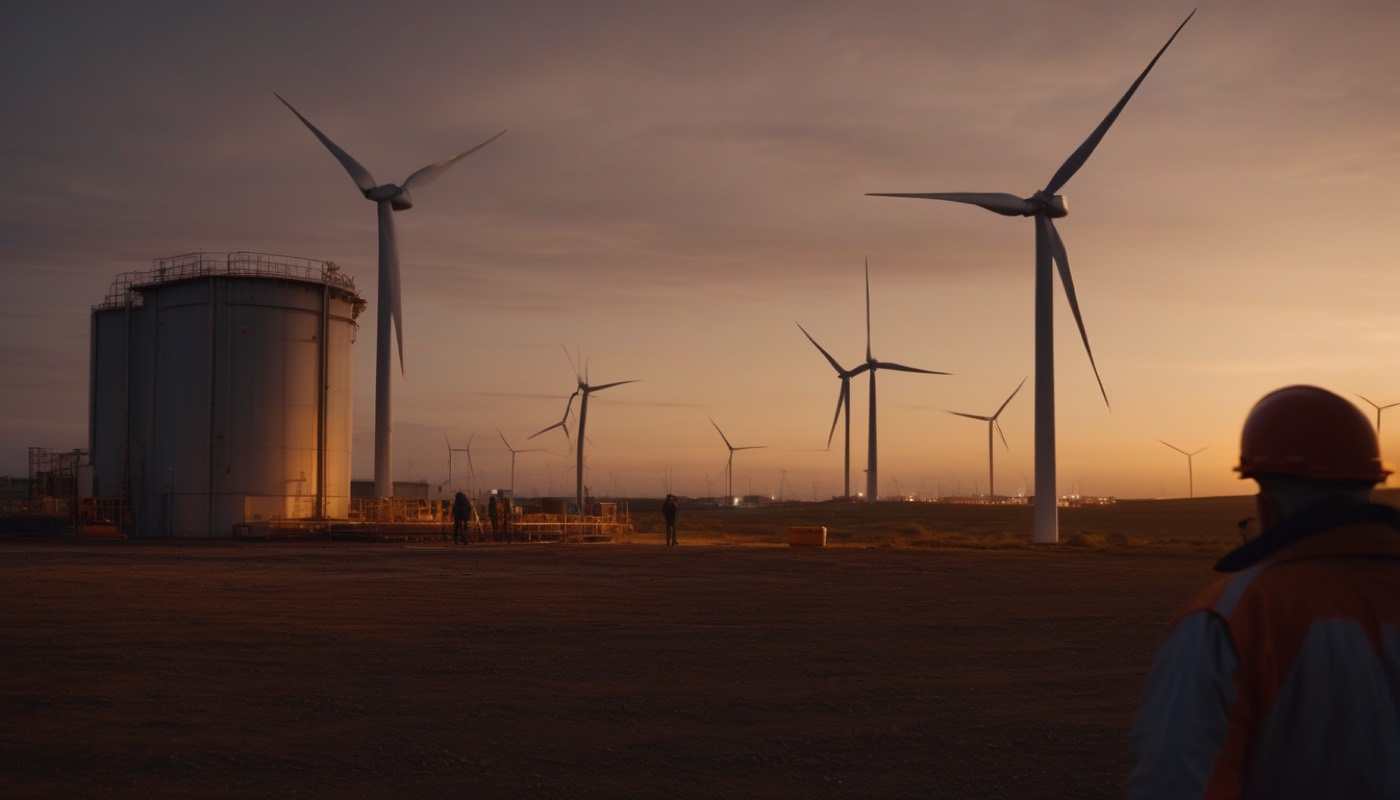
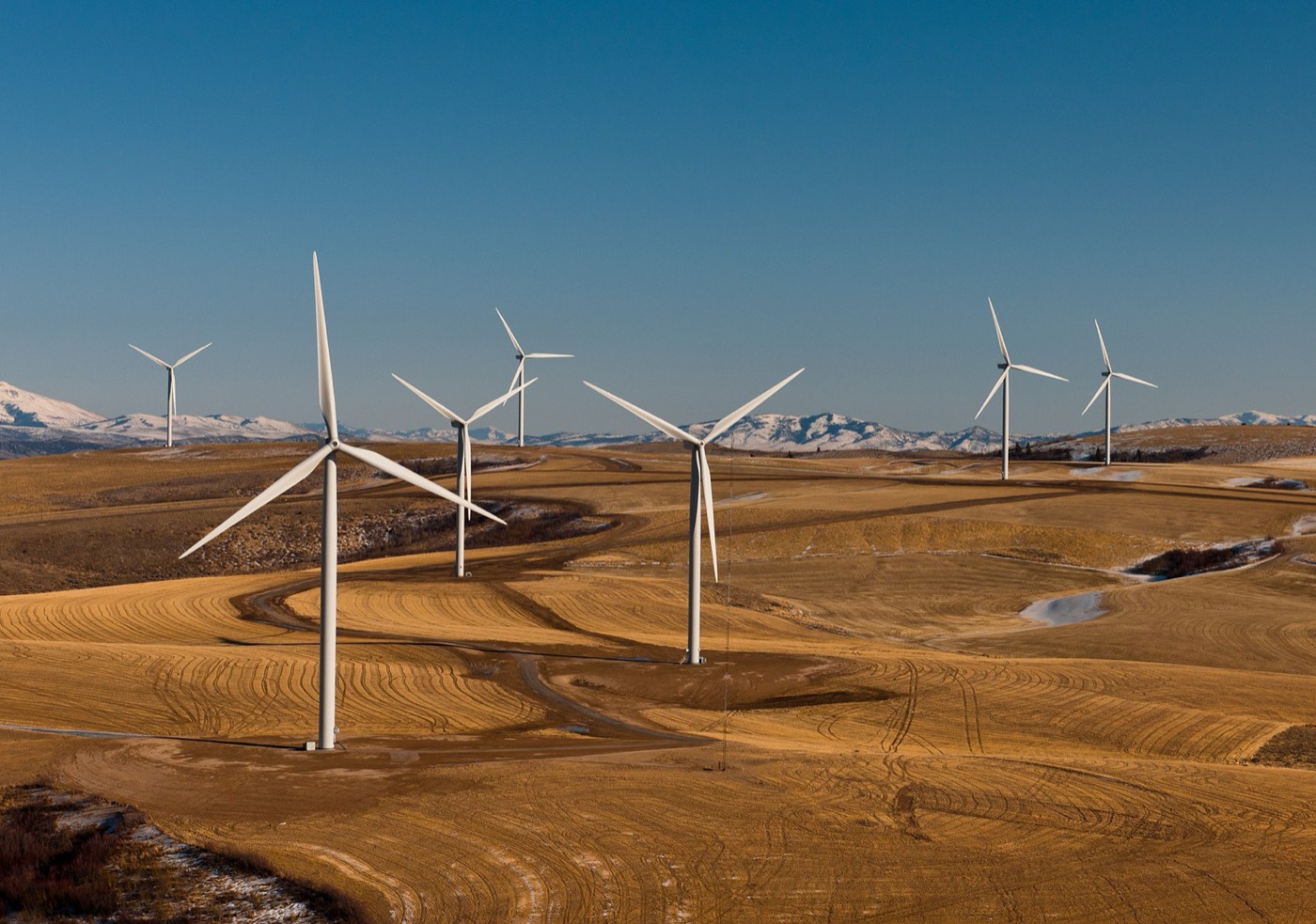
A wind farm finishes construction in Idaho. The turbines turn, the cables are laid, and the power is ready to flow. But the one piece of equipment that actually connects it to the wider grid will not arrive for years.
That piece of equipment is a transformer — a device that changes the voltage of electricity so it can move safely between a power line, a substation and a home. This video explains how a transformer works and why the grid needs one at almost every step. It also covers how one is actually built, and why so many of them now take years to deliver, not months.
The same wait is turning up everywhere: at data centres, at new housing developments, and at ageing substations that simply need replacing.
This wind farm, in Power County, Idaho, sits finished and waiting for exactly that kind of equipment. Almost everything about it is already built. The grid connection that lets its power actually reach anyone is not.
So the question this video answers is not whether the grid can expand to meet rising demand. It is whether a single piece of hardware can be built fast enough to let it.
2. What a transformer does

A transformer has no moving parts and burns no fuel. It is two coils of wire, wound around a shared iron core, and it changes the voltage of the electricity passing through it.
Power leaves a power station at a very high voltage, because a higher voltage carries the same power at a lower current. A lower current wastes less energy as heat over long distances. That power is then stepped down again, in stages, because ordinary household wiring could not survive the voltage it travelled on.
A transformer, in other words, is the device that makes long-distance power transmission possible, without burning most of the power off as heat along the way.
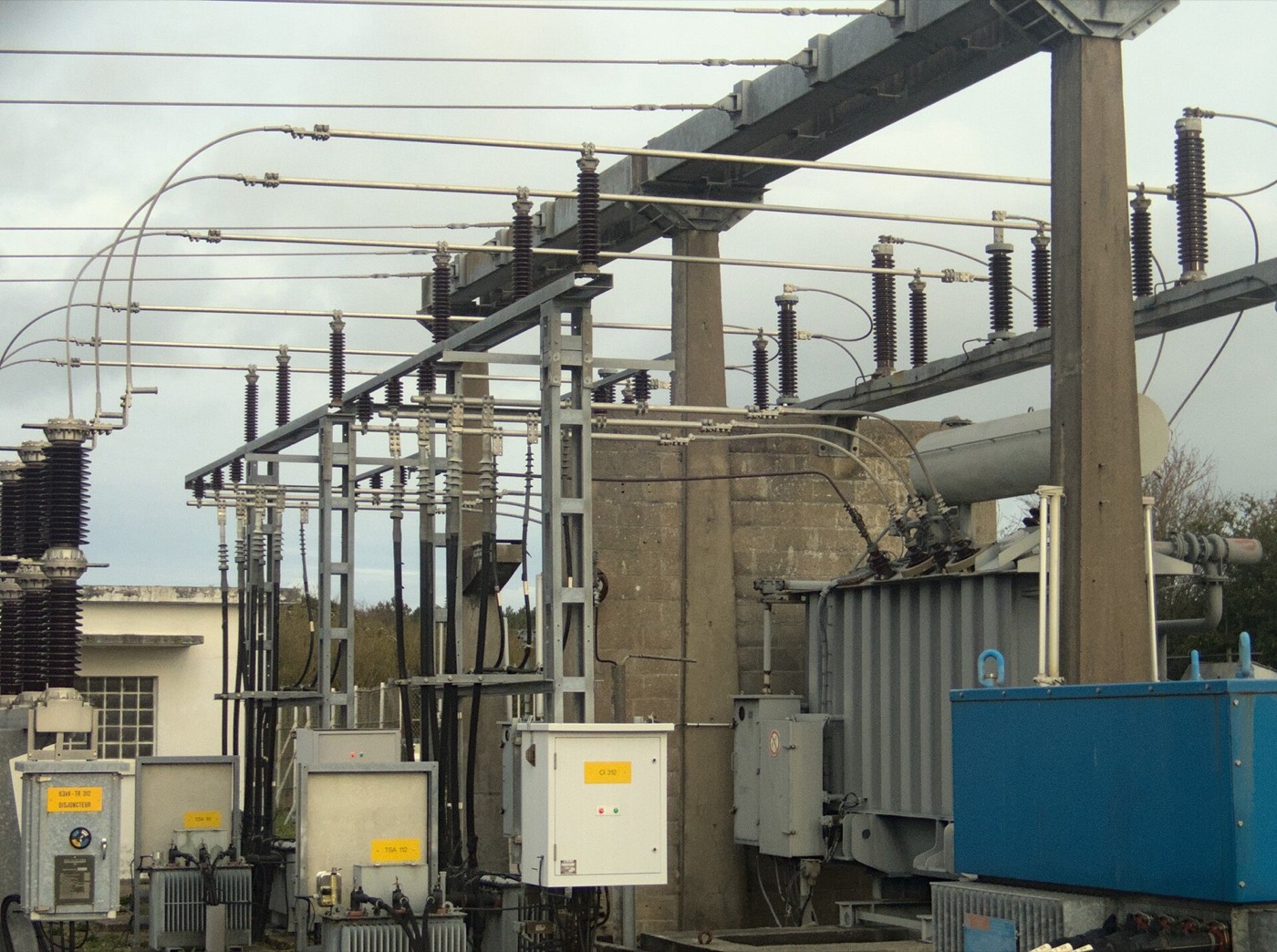
At a substation like this one, high-voltage power lines connect into a transformer that steps the voltage down for the next stage of its journey. The same basic design — coils, a core, nothing moving — does this job everywhere on the grid, whether it is sized for a city or for a single street.
That single design, repeated at wildly different sizes, is what the rest of this video is actually about.
3. Every step from station to street
Electricity does not travel from a power station to a house through one transformer. It passes through several, each a different size, cost and job.
This is a generator step-up transformer, sized to push a power station's entire output onto the transmission network at its highest voltage. It is one of the largest and most expensive transformers on the grid. Losing one can take an entire power station offline until a replacement arrives.
From there, the voltage comes down in stages, and so does the size of the transformer doing the work.
Ranked by voltage, the order runs the same way every time. First comes the generator step-up unit, right at the power station. Next is a large power transformer, at a transmission substation. Then a smaller substation transformer, feeding one local area. And finally, a distribution transformer, on a pole or a pad outside a home. Each step down in voltage is also a step down in size and cost — though, as this video goes on to show, not nearly a large enough step down in price.
That last, smallest size is the one most people have actually stood underneath.
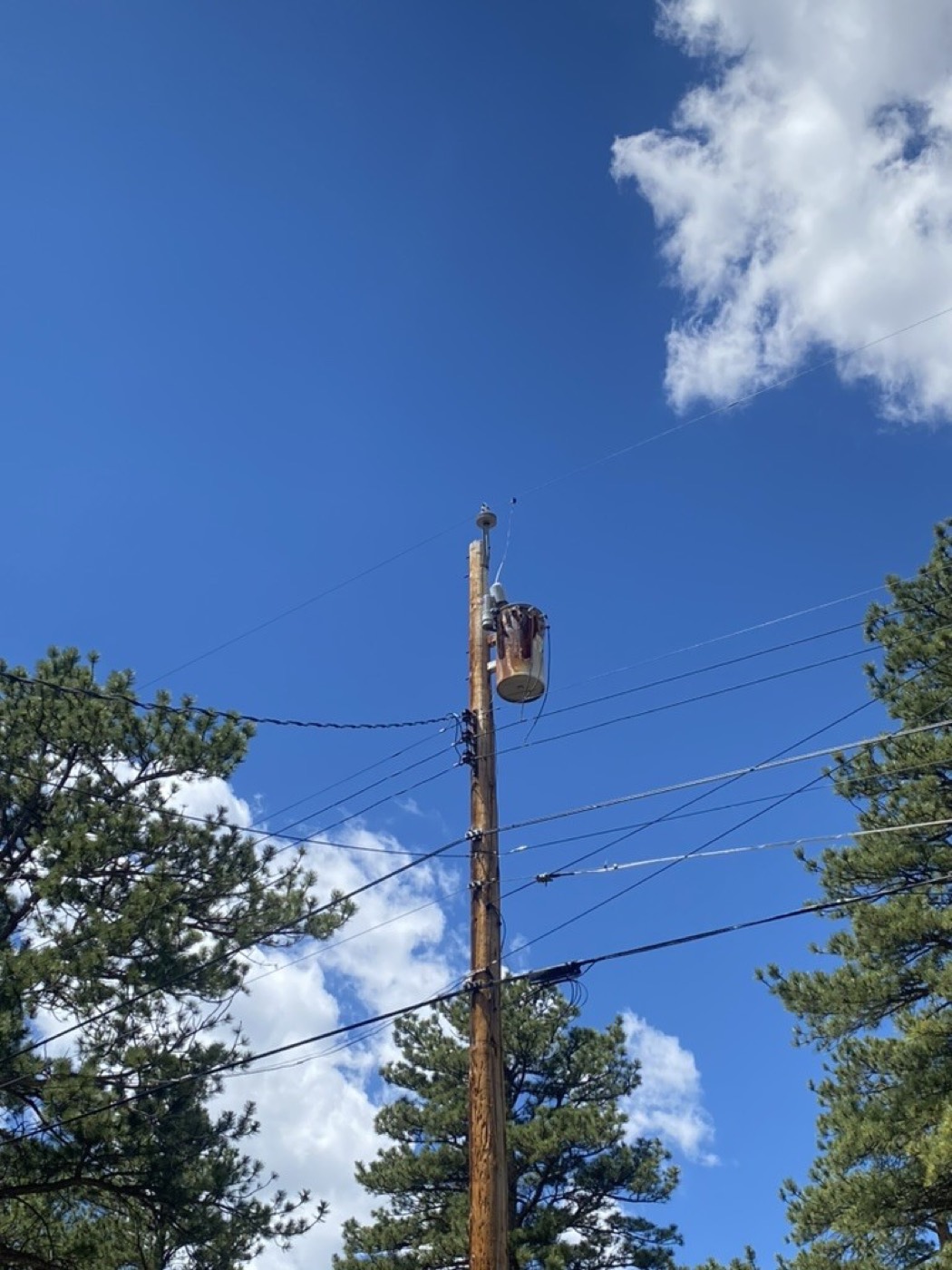
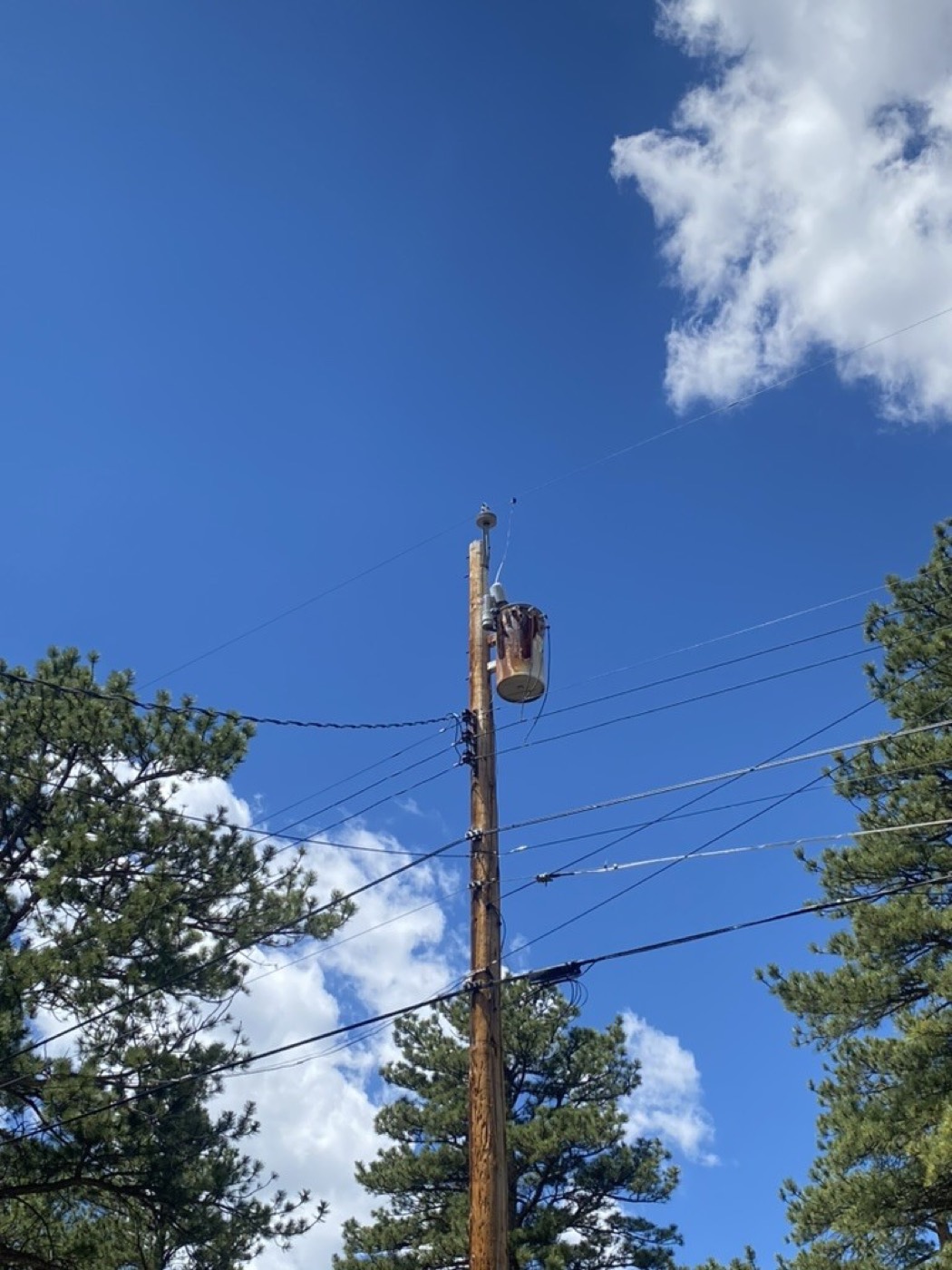
This is a pole-mounted distribution transformer, the grey canister fixed partway up a utility pole outside most American homes. It is the final transformer in the chain, stepping voltage down one last time before it reaches a house's own wiring.
Every one of those four sizes is a different manufacturing problem, and the biggest of them is also the hardest to build.
4. How one is built

A large power transformer is not stamped out on a production line. It is built almost entirely by hand, one at a time.
Its core is made from grain-oriented electrical steel — a silicon steel alloy rolled so its internal grain lines up in one direction, letting a magnetic field pass through with far less energy lost as heat. Copper wire is wound around that core, by hand, to form two separate coils. The whole assembly then goes into a steel tank and is submerged in oil, which cools the windings and insulates them at the same time.
That combination — a precisely rolled steel core, hand-wound copper coils, and an oil-filled tank — has not changed in its basics for a hundred years.
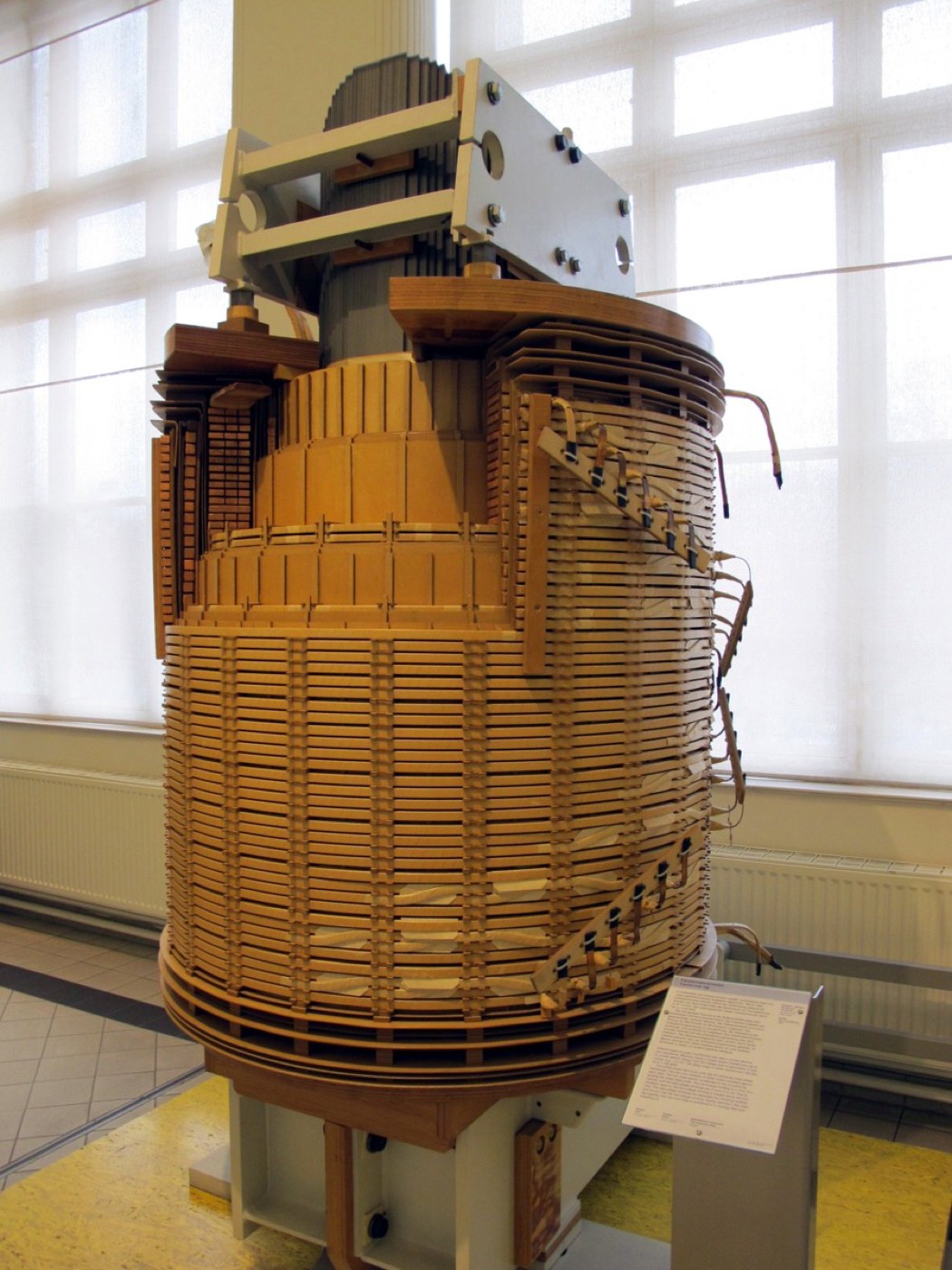
Here, a transformer's core and windings are shown cut open: the layered steel limb at the centre, and the copper coils that were wound around it. Building and testing one of these, at the largest sizes, takes months rather than days. That is exactly why factory capacity matters so much more here than it does for almost any other piece of hardware.
And the steel at the centre of that core turns out to be the tightest bottleneck of all.
5. The steel bottleneck
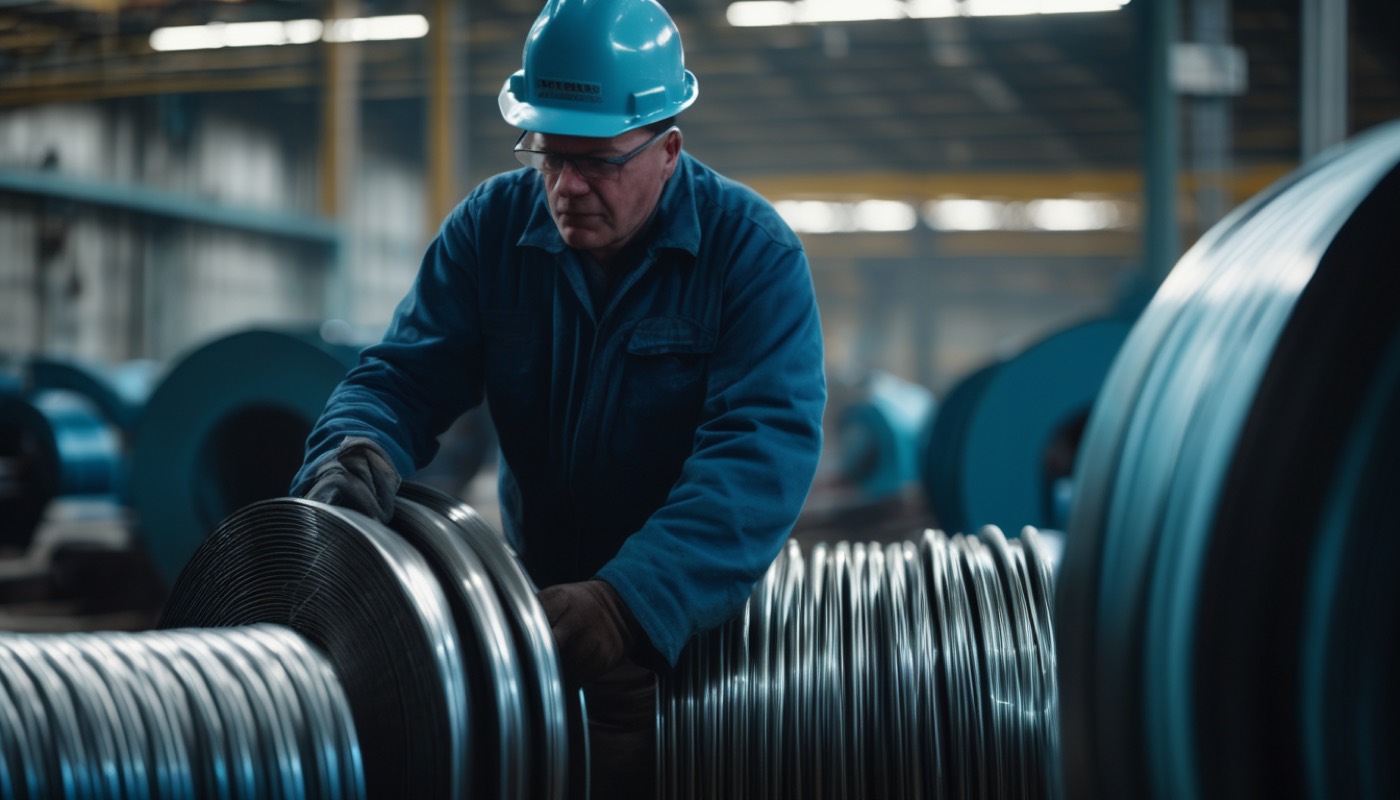
Every American-made transformer core traces back to a single source, because grain-oriented electrical steel is not an easy material to make, and only one company in the country makes it.
Cleveland-Cliffs is the only producer of grain-oriented electrical steel in the United States, making it at Butler Works in Pennsylvania and a second plant in Zanesville, Ohio. Together, the two sites report capacity of up to two hundred and fifty thousand net tons a year. A government-backed expansion at Butler Works is on track for 2028 — meaning real new capacity is still years away.
That single mill's output does not only go to the civilian grid, either.
In July 2026, the US Defense Logistics Agency gave Cleveland-Cliffs a new contract, worth up to four hundred million dollars. It covers roughly fifty-three thousand tons of this same steel, delivered over five years, to the Army, Navy, Air Force, Marine Corps and Space Force. Cleveland-Cliffs won it because it is currently the only domestic producer that meets the government's own specification.
One mill, one country's worth of supply, and now a second, competing customer with its own multi-year contract.
6. Demand surges

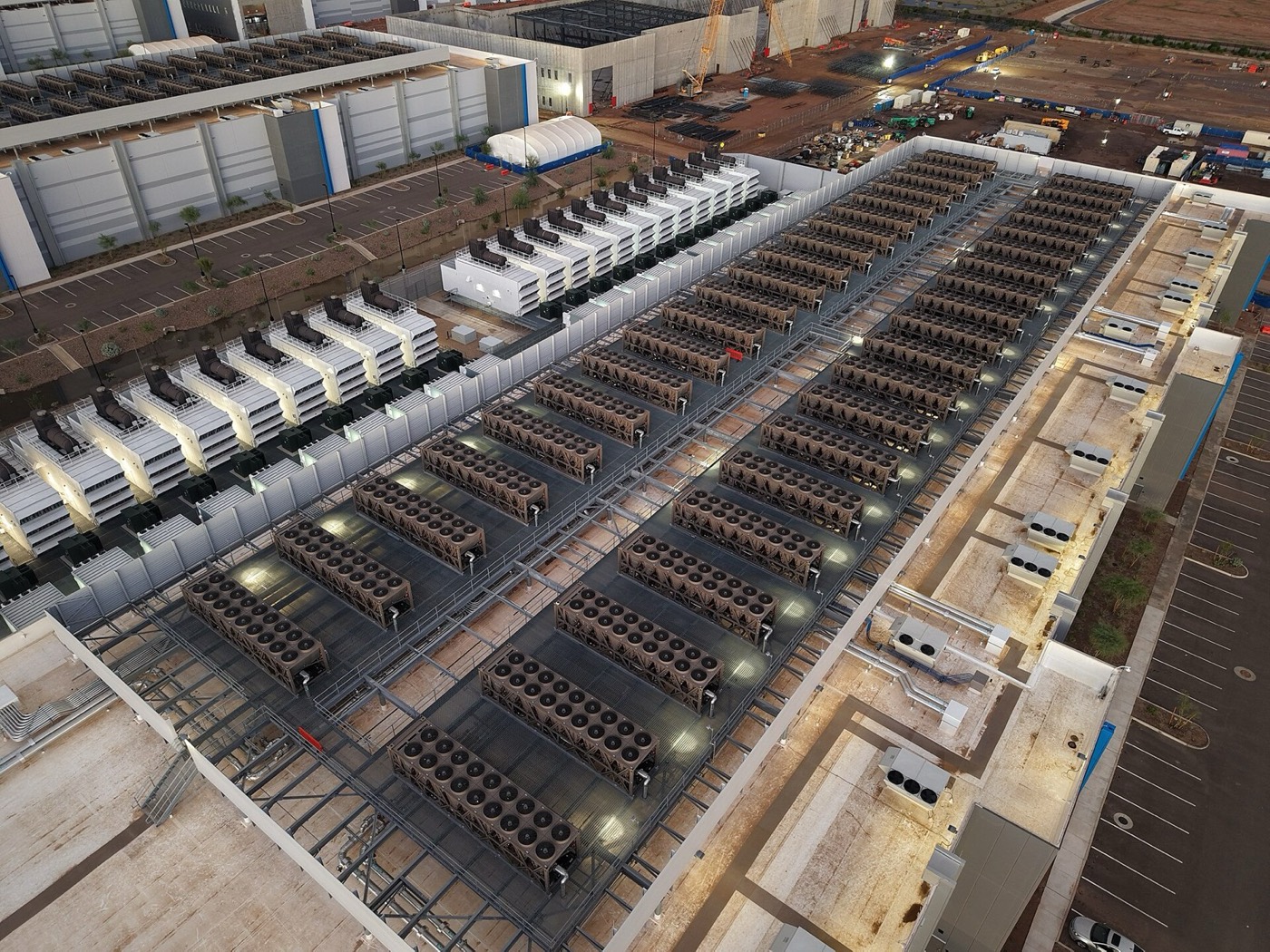
None of this would matter if demand for transformers had stayed flat. It has not.
Since 2019, US demand for power transformers has risen by over a hundred per cent, and demand for the largest generator step-up units has nearly quadrupled. Four forces are driving it: data centres built for artificial intelligence, new wind and solar farms that each need their own step-up transformer, electric vehicle charging, and heat pumps replacing older heating systems.
Data centres are the newest and fastest-growing piece of that demand.
A data centre like this one is finished, roofed, cooled and wired, long before the transformer that will actually carry its power is delivered. Its cooling towers and backup generators do not need a years-long wait. Its grid connection does.
So the industry is not just busier than it used to be. It is being asked to do several times more of exactly the hardest kind of work it does.
7. The numbers: lead times, prices, shortfall

Put a number on that squeeze, and the picture gets sharper still.
A 2025 industry survey measured average US lead times for power transformers at one hundred and twenty-eight weeks. The largest generator step-up units averaged even longer, at one hundred and forty-four weeks. By May 2026, the biggest high-voltage units were being quoted at up to four years.
Prices have moved in the same direction.
Power transformer prices are up seventy-seven per cent since 2019. By 2025, the shortfall for power transformers was estimated at thirty per cent. Distribution transformers were short by about ten per cent that same year. By 2026, the power-transformer gap had narrowed to roughly fifteen per cent. The distribution gap, that same year, was down to about eight per cent. The gap is closing, but it has not closed.
A narrowing shortfall is still a shortfall, and it is sitting on top of equipment that is already old.
8. An ageing fleet
While new transformers queue up for factory space, the ones already installed keep getting older.
A government-funded model estimates that roughly half to just over half of the country's distribution transformers are already older than thirty-three years. That is past the typical design life for this equipment, and the fleet itself runs into the tens of millions. It is a modelled estimate, not an actual nationwide count, because no one has ever physically inventoried every transformer's age.
Even as a modelled figure, it points the same direction as everything else in this video.
A large share of the fleet keeping the lights on today is already near, or past, the age it was designed to run for. Replacing it competes for the exact same scarce factory capacity as every new connection this video has already described.
An ageing fleet and a demand surge are drawing on the same thin supply of new hardware at once.
9. Few factories, long build-outs
Fixing a shortage this specific means building more factories, and factories take years, not months.
Hitachi Energy is building a new large power transformer plant in South Boston, Virginia. It is worth four hundred and fifty-seven million dollars. That is part of a one-billion-dollar investment Hitachi Energy announced in September 2025. The plant is due to open in 2028.
Siemens Energy is building one too, further south.
Siemens Energy's plant in Charlotte, North Carolina, started as a smaller project and then grew. It became a four-hundred-and-twenty-one-million-dollar investment once it was expanded, in February 2026. The plant is due to finish around June 2027.
Cleveland-Cliffs is also expanding beyond its steel mills, into finished transformers themselves.
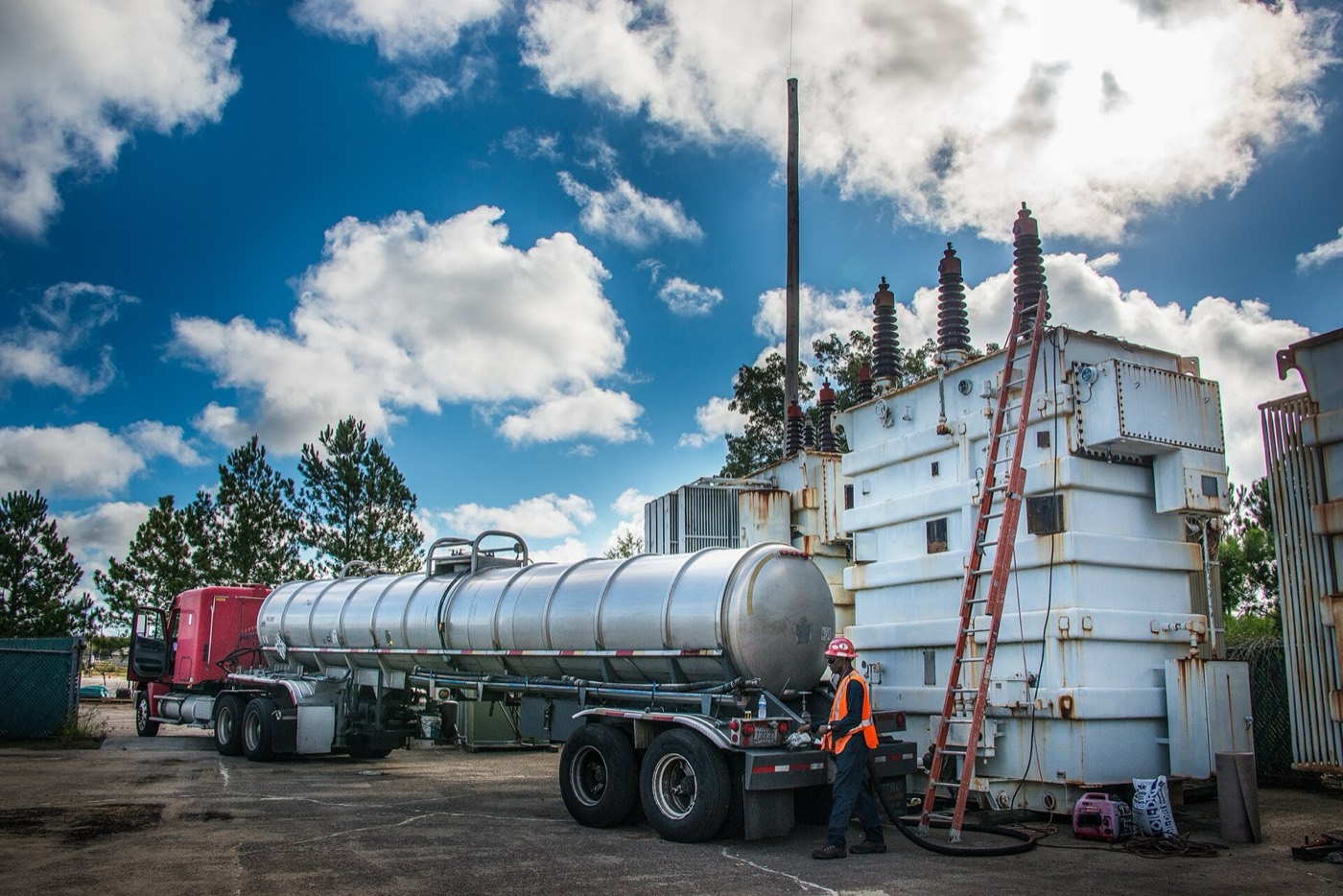
This large oil-filled power transformer being removed for replacement shows the scale of what these plants are built to produce. Cleveland-Cliffs' own distribution-transformer plant, built into this former steel mill site in Weirton, West Virginia, has consistently been targeted to open sometime in the first half of 2026.
Every one of those dates lands in the back half of this decade, years after the shortage was first widely reported. That gap is the plain reason this cannot be fixed any faster than it already is.
10. A new complication: the import ban

Until now, imports have quietly filled most of the gap that American factories could not. A new order threatens that too.
Imports supplied an estimated eighty per cent of US power transformer demand in 2025, almost all of the equipment covered by this video's shortage figures. On the twenty-sixth of August 2026, the US government signed a new executive order. It restricts imports, transfers and installations of bulk-power equipment — including power transformers. The restriction applies to equipment tied to a list of twenty-four countries, chiefly China.
The order does not take effect in a vacuum; it has a clock attached to it.
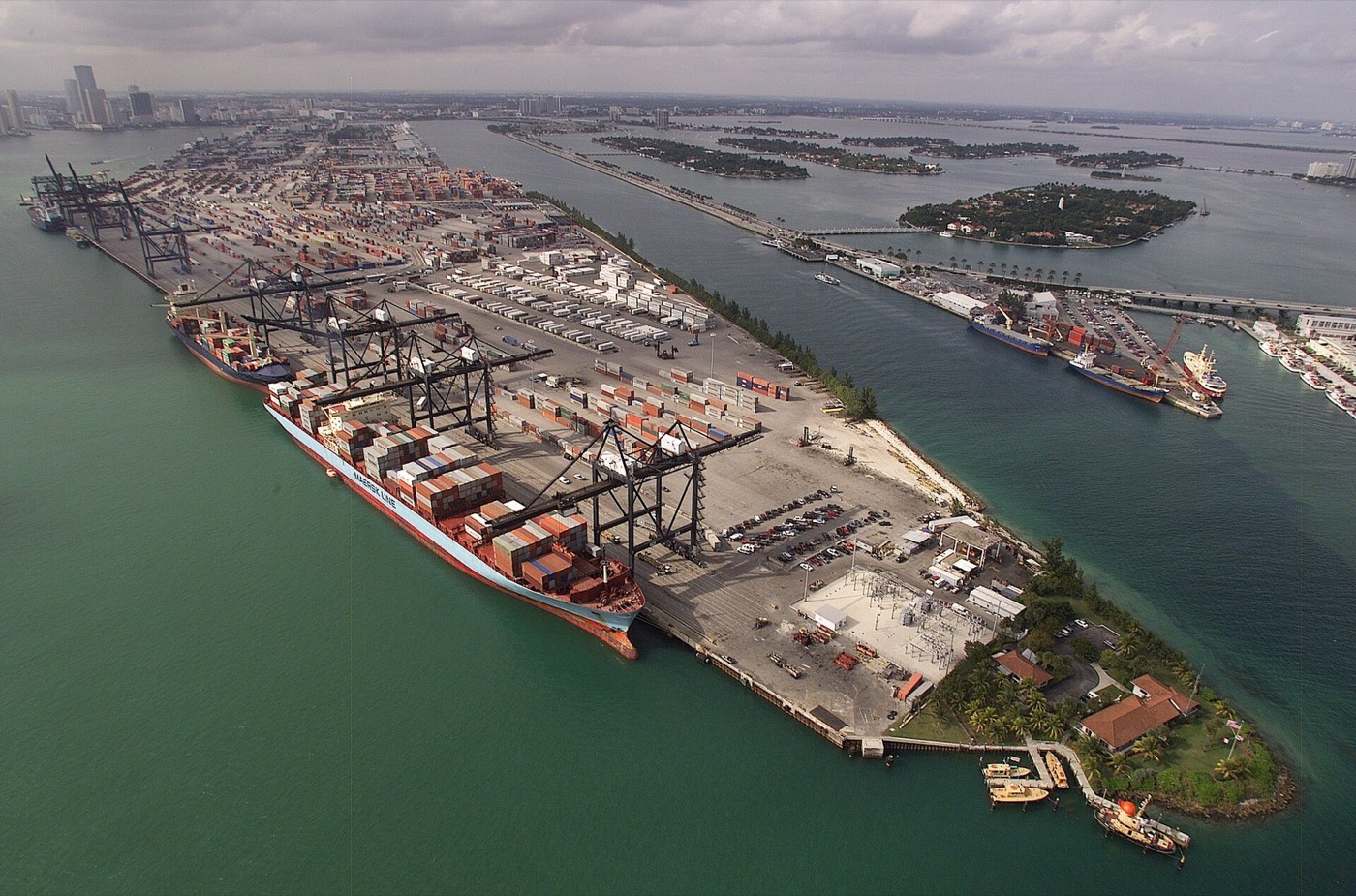
The Department of Energy has until the twenty-fourth of December 2026 to publish the detailed rules that will decide exactly what the order blocks. Equipment covered by the restriction accounted for more than twenty-two billion dollars of US imports since the start of 2025, nearly all of it shipped in through ports like this one.
So the main relief valve for this shortage is now, itself, partly closed off — just as the narrowest part of the shortfall was starting to ease.
11. Is there really a shortage?

Not everyone in the industry agrees that "shortage" is even the right word for this.
Patrick Tarver runs the electrical supplier Bolt Electrical. He told one trade publication, in 2026, "There is not a shortage." He says he can deliver a standard substation-class transformer, across all voltage classes, in little over a year. That claim is far faster than the multi-year figures reported elsewhere in this video.
His explanation for the gap is not about factories at all.
Tarver's argument is that utilities default to a short list of familiar large suppliers, instead of asking around more widely, and that scarcity gets used to justify higher prices along the way. He is one named critic, quoted directly, against a much larger body of industry survey data, not a rebuttal of it.
Even if he is right that some of the wait is self-inflicted, nothing in his account explains away the factories, the steel, or the ageing fleet already covered in this video.
12. Conclusion: the grid cannot be built faster

Put all of it together, and one piece of hardware turns out to be the limit on almost everything else the grid is trying to do.
A transformer only comes from a handful of factories, fed by one domestic source of the steel at its core, built one at a time by hand. Demand for it has more than doubled since 2019. The fleet already installed is ageing out at the same time new supply is scarce, and a new import restriction has just narrowed one of the few routes utilities had around the bottleneck.
None of that is a reason to expect collapse — but it is a reason to expect delay.
Wind farms, data centres and new housing are not short of power, or of plans. They are short of one specific, slow-to-build device standing between a wire and a wall socket. Until more factories open, years from now, that is the piece deciding how fast the grid can actually move. It can go forwards, or it can be held back by exactly the part nobody notices until it is missing.
That is why the grid cannot simply be built faster than the transformer that connects it.
Sources and credits
Photo credits (Wikimedia Commons)
- Wind farm, Power County, Idaho, awaiting grid connection: ENERGY.GOV, Public domain - https://commons.wikimedia.org/wiki/File%3APower_County_Wind_Farm_002.jpg
- Data centre roof with cooling towers and backup generators: Rsparks3, CC0 - https://commons.wikimedia.org/wiki/File%3AData_center_roof.jpg
- Transformer connections at a high-voltage substation: PtiBzh, CC0 - https://commons.wikimedia.org/wiki/File%3APont-l%27Abb%C3%A9_high-voltage_substation_14_-_Transformer_connections.jpg
- 750 kV high-voltage power transformer at a substation: Novoklimov, CC0 - https://commons.wikimedia.org/wiki/File%3AHigh-voltage_transformer_750_kV_%D0%A2%D1%80%D0%B0%D0%BD%D1%81%D1%84%D0%BE%D1%80%D0%BC%D0%B0%D1%82%D0%BE%D1%80_750_%D0%BA%D0%92.jpg
- Pole-mounted distribution transformer: Rsparks3, CC0 - https://commons.wikimedia.org/wiki/File%3A120-208V_split-phase_distribution_transformer.jpg
- Electric transmission tower: Foto3821, CC0 - https://commons.wikimedia.org/wiki/File%3AElectric_transmission_power_tower.jpg
- Power transformer limb with cut-away windings, core and copper visible: unknown, Public domain - https://commons.wikimedia.org/wiki/File%3ATMW_50971_Transformatorschenkel_eines_Leistungstransformators_mit_aufgeschnittenen_Wicklungen.jpg
- Large oil-filled power transformer being removed, Savannah River Site: Savannah River Site, Public domain - https://commons.wikimedia.org/wiki/File%3AN_Area_Oil_Transformer_Removal_%2835044459944%29.jpg
- Former Weirton Steel mill site, Weirton WV, during 2023 demolition (site of Cleveland-Cliffs' new distribution-transformer plant): Governor Jim Justice, Public domain - https://commons.wikimedia.org/wiki/File%3ADemolition_of_the_Weirton_Steel_mill_structures_in_2023_%2852713645561%29.jpg
- Container port with cargo ships, Port of Miami: James R. Tourtellotte, Public domain - https://commons.wikimedia.org/wiki/File%3AAerial_photograph_of_the_Port_of_Miami_Container_Port.jpg


Primary sources
- POWER magazine, 'Transformers in 2026: Shortage, Scramble, or Self-Inflicted Crisis?' (powermag.com, 2026), citing Wood Mackenzie's Q2 2025 survey - lead times (128/144 weeks), price increases (77% power transformers since 2019), 2025 shortfall (30% power, 10% distribution), 2019-era demand growth (119% power transformers, 274% generator step-up units), and Patrick Tarver's (Bolt Electrical) quoted sceptic view.
- pv magazine USA, 'U.S. transformer market faces severe supply constraints as lead times extend to four years' (11 May 2026) - four-year lead times for the largest units; cross-checked demand-growth figures (274% GSU, 116% substation transformers, 2019-2025).
- Wood Mackenzie press release, 'US executive order banning Chinese bulk-power equipment set to worsen critical transformer shortage' (woodmac.com, 2 September 2026) - 2026 shortfall (15% power, 8% substations), $22bn import exposure, >10 MVA market growth.
- Wood Mackenzie, 'Power transformers and distribution transformers will face supply deficits of 30% and 10% in 2025' (woodmac.com, 2025), cross-checked via pv magazine USA and Transformers Magazine.
- US DOE / NREL, 'Distribution Transformer Demand: Understanding Demand Segmentation, Drivers, and Management Through 2050' (2024), reported via T&D World (2024) and reliamag.com's 2026 sourcing review - the ~50-55% ageing-fleet estimate, explicitly carried as a model, not a census.
- Cleveland-Cliffs company materials on the Butler Works DOE-backed GOES expansion; Yahoo Finance / Steel Market Update, 'Cleveland-Cliffs' $170M Butler Works project survives federal review, on track for 2028' (2026).
- Hoodline, 'Cleveland-Cliffs snags $400 million defense steel deal to keep transformers on' (2 July 2026), cross-checked against AIST and SteelOrbis reporting of DLA contract SP8000-25-D-0008.
- Cleveland-Cliffs press release, Weirton, WV distribution-transformer plant (22 July 2024), and Weirton Daily Times follow-up (March 2025).
- Hitachi Energy press materials on its September 2025 $1 billion US investment and $457 million South Boston, Virginia plant, cross-checked across Data Center Dynamics, TechRepublic, impomag.com and the Virginia Governor's office.
- Siemens Energy press release on its Charlotte, NC transformer plant, cross-checked against Carolina Journal (February 2026).
- US DOE, 'Declaring a National Emergency to Secure the United States Bulk-Power System' (energy.gov/node/4860229) - Executive Order 14421, signed 26 August 2026, cross-checked against Steptoe, Hunton, DWT, Cooley and Orrick client-alert summaries.
- ECMag, 'DOE reevaluates Biden-era efficiency rules for distribution transformers', and Utility Dive, 'DOE mulls changes to Biden-era transformer rule, raising utility concerns' (both 2026) - the June 2026 DOE Request for Information on the 2024 amorphous-steel efficiency rule.
Not regulated financial advice.