
What Ofsted Actually Looks For in a Lesson
An Ofsted inspector sits in on a lesson in an English school - and the lesson itself is never given a grade. Ofsted said so plainly in 2015, and its guidance current from 7 September 2026 says the same thing, while also ruling out a preferred teaching method, required lesson plans, and any fixed quota for marking.
This video follows one worked, fictional Year 4 fractions lesson to show what a 'learning walk' actually checks: how today's content connects to what pupils already know and where it is heading next, how a teacher's explanation, practice and check for understanding differ from mere classroom activity, how one pupil with extra support is included under Ofsted's wide definition of inclusion, and how a moment of disruption is weighed against a school's wider pattern of behaviour - never settled by a single lesson.
It traces the guidance back through four moments: Sean Harford's 2015 mythbusting post that individual lessons are not graded, the 2019 education inspection framework built around curriculum, the renewed framework that began on 10 November 2025 with five separate grades and a met/not-met safeguarding judgement, and the operating guidance in use from 7 September 2026. It shows how pupils' work and conversations are read together rather than alone, how primary reading, secondary subject sampling and early-years observation differ, and how classroom evidence is tested against leaders' own account of the school and a closing team discussion before it becomes a judgement about the whole school.
It closes on Ofsted's own current denials, quoted directly: no individual teacher or lesson grades, no preferred teaching method, no required lesson plans, and no scrutiny of marking frequency or volume. This video covers maintained schools and academies in England only; Scotland, Wales and Northern Ireland run their own separate inspection systems.
Educational documentary. Not financial or investment advice.
Tags
Chapters
Video notes
1. The inspector enters
An Ofsted inspector walks into a classroom, sits near the back, and starts watching. Nothing that happens in that one lesson gets a grade of its own, and that single fact surprises a lot of people, including plenty of teachers.
This video covers inspection of maintained schools and academies in England only. Scotland, Wales and Northern Ireland each run their own separate inspection systems, under different inspectorates. Everything that follows uses Ofsted's guidance exactly as it stood on 7 October 2026.
So if an inspector is not grading the lesson, what exactly are they doing in that room? That is the question this video answers, one classroom visit at a time.
A maintained school is funded by the government and run by the local council. An academy is funded directly by central government and run by its own trust. Between them, those two kinds of school make up almost every state-funded school in England.
Those are the schools this video is about, under the guidance Ofsted inspectors use for every one of them.
2. How we got here
None of this started in 2026. Ofsted's rules about what a lesson visit is for have been building for over a decade, through several rounds of change.
Four moments trace this story. In June 2015, Ofsted first said plainly that it does not grade individual lessons. In September 2019, a new education inspection framework took effect, built around curriculum rather than lesson-by-lesson judgement. In November 2025, a renewed framework began, replacing one overall grade with five separate grades for different areas. And from September 2026, the operating guidance inspectors actually use was updated again.
Each of those four moments changed what inspectors look for in a classroom, and the version in use today is the only one this video follows.
Back in 2015, Ofsted's then director of education, Sean Harford, published a blog post correcting a rumour that had spread through schools. In it, he wrote that "we absolutely do not grade individual lessons." That line is just as true today as it was then, eleven years on.
So before curriculum frameworks, renewed grades, or any of today's detail: one thing has been settled since 2015, and it is the one thing this video keeps returning to.
3. What a visit is for
A learning walk is Ofsted's own name for exactly what it sounds like: inspectors moving from classroom to classroom, watching lessons, building a picture of the school as they go.
Ofsted's current guidance puts three things at the centre of every learning walk. The first is the curriculum: what a school has chosen to teach. The second is the teaching inspectors actually see, in the room. The third is pupils' achievement, the evidence that the teaching is actually landing.
Other evidence, about pupils' personal development or about how well leaders run the school, still feeds into the wider inspection. It is just not what a single learning walk is centred on, and that is the distinction this video keeps coming back to.
Ofsted's national director of education, Lee Owston, drew the line even more clearly in a June 2026 blog post. Learning walks now focus first on curriculum and teaching, and on achievement, the evidence of whether pupils are learning what is intended. Everything else inspectors see, including behaviour and personal development, still shapes the inspection; it simply is not the learning walk's own centre.
That order, curriculum and teaching first, with everything else informing the picture around it, is the one every chapter after this one follows.
4. The lesson within the curriculum

Picture a fictional Year 4 classroom, partway through a maths lesson on fractions. Nothing about this class is real, no real school, no real pupils, no real teacher, but it is useful for showing what an inspector is actually looking at.
An inspector watching this fractions lesson is not just watching today. They are asking where it sits in a sequence: what these pupils already know from earlier lessons, what today's lesson adds to that, and what it is building toward next term and next year. A single lesson, on its own, answers none of that.
So the inspector's questions reach backwards and forwards from this one lesson, into the curriculum that surrounds it.
In the fictional lesson, pupils already know how to divide a whole number by another whole number, which was covered weeks earlier. Today's lesson uses that to introduce fractions as a different way of dividing something up. And next term, the same pupils will use fractions to work with decimals, so today's lesson has to actually hold up under that weight.
That three-part shape, prior knowledge, today's content, and later learning, is what the curriculum actually is: not a list of topics, but a sequence.
5. Teaching and pupils' learning
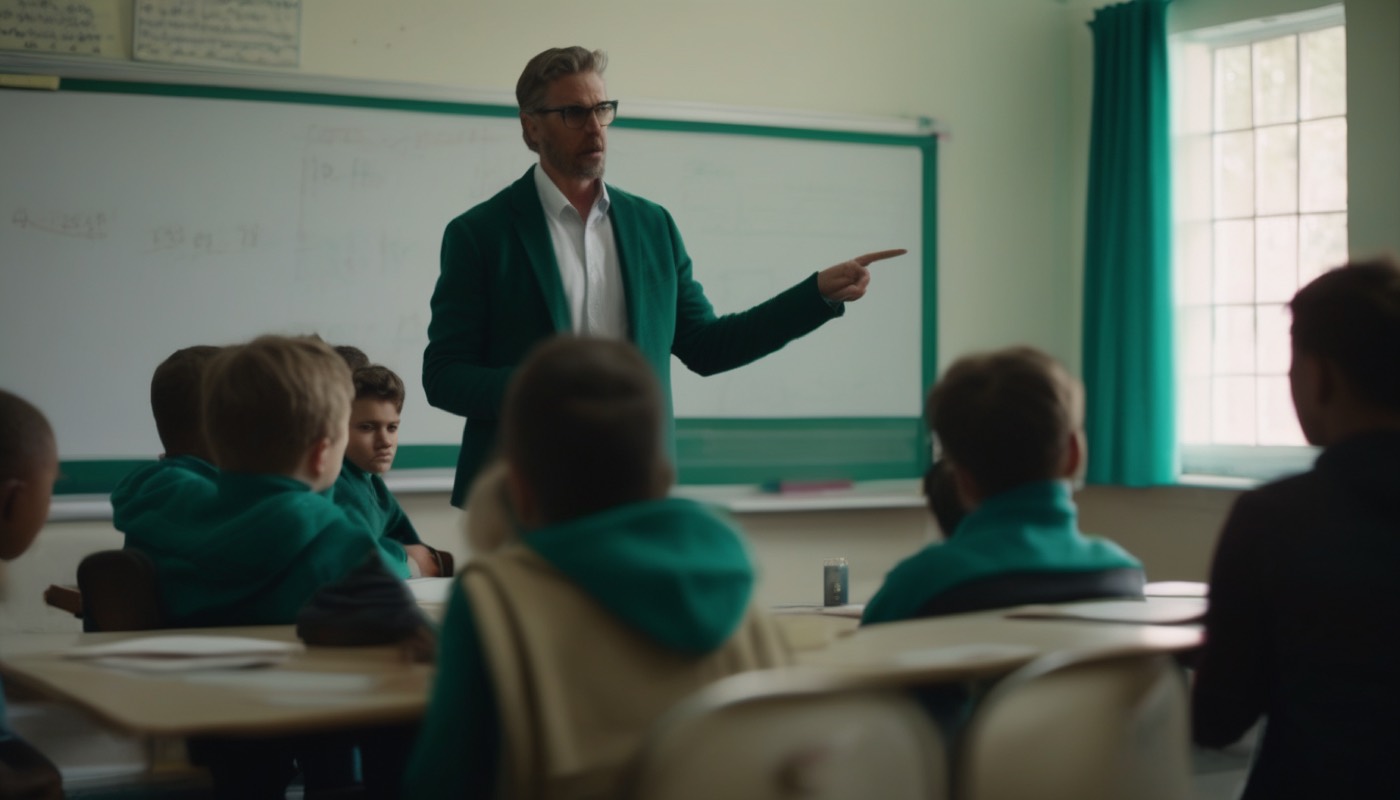
Back in the fictional fractions lesson, the teacher explains a method, the pupils practise it, and the teacher checks who has actually understood. That sequence is standard in good teaching, explain, practise, check, and it is also exactly what an inspector is watching for.
Here is the distinction that matters most in this chapter. Pupils look busy throughout nearly any lesson, writing, talking, moving between tasks. That visible activity is not the same thing as evidence that they are learning. An inspector is trying to see past the activity, to whether understanding is actually forming.
Busy is easy to see from the back of a room. Learning is not, and that gap is why an inspector looks for more than just activity.
That chain has a clear order in the fictional lesson. The teacher explains the method for turning a whole into fractions. Pupils then practise it on their own examples. And only after that does the teacher check who has actually understood, not before, and not instead of it.
Explanation, then practice, then a genuine check on understanding: that is the shape of teaching this video follows through every example after this one too.
6. Inclusion in the room
Now add one more pupil to the fictional classroom: a child with a diagnosed learning difficulty, accessing the same fractions lesson with extra support from a teaching assistant. How that one pupil experiences the lesson is part of what inspectors are trying to understand.
Ofsted defines inclusion widely. It covers pupils who are disadvantaged, pupils with special educational needs and disabilities, SEND for short, and pupils known, or previously known, to children's social care. It also covers any other barrier to a pupil's learning or wellbeing that is not on that list.
That wider definition is deliberate: a narrow one would miss plenty of pupils who need exactly this kind of attention.
To check this fairly across a whole school, inspectors pick a sample of pupils before they arrive, a minimum of around six, deliberately including children from those groups. The fictional pupil with support in this chapter is exactly the kind of case that sample is built to include.
Case sampling, as Ofsted calls it, is how one fictional pupil's experience connects to a real judgement about a real school.
7. Behaviour and belonging
Lessons do not always run smoothly. In the fictional classroom, imagine one pupil becoming disruptive midway through the fractions lesson, talking over the teacher, refusing to settle back to the task.
What the inspector notices is not just the disruption itself, but how the adults in the room respond to it. A calm, practised response that gets the lesson back on track quickly tells inspectors something different from a response that struggles to regain control.
One incident, on its own, proves very little either way; it is the pattern across a school that actually matters.
A single disrupted lesson does not settle how a whole school handles behaviour, any more than one calm lesson proves the opposite. Inspectors weigh what they see in this room against conversations with staff and pupils elsewhere in the school, and against the school's own record of incidents over time.
Belonging, in other words, is read across the whole school, never off the back of a single classroom moment.
8. Work and conversations
Evidence does not stop when the lesson ends. Inspectors also look at pupils' actual work, and talk to pupils about what they have just done, to see whether the two line up with what the lesson looked like.
In the fictional lesson, that might mean looking at a pupil's fractions workbook, and separately asking that same pupil to describe, out loud, what a fraction actually is. If the workbook looks fine but the pupil cannot explain the idea, that gap is itself useful evidence.
A page of correct answers and a confident explanation are two different kinds of evidence, and inspectors want both, not just one.
One page of work, or one pupil's answer, settles nothing on its own. Inspectors build the picture from work and conversations across a sample of pupils and subjects, compared against what they have already seen on the learning walk itself.
Work, conversation, and the lesson itself: three kinds of evidence, triangulated into one picture, never read alone.
9. Different ages, different evidence
Everything so far has used one fictional Year 4 maths lesson, but a real inspection covers pupils from nursery age to sixteen or eighteen, and evidence looks different at each stage.
In primary schools, learning walks lean heavily on reading. Inspectors listen to lower-attaining pupils read aloud from a book they have not seen before, and talk to staff about how phonics is taught in the earliest years. In secondary schools, by contrast, inspectors agree a small group of subjects to sample in advance, rather than trying to sample every subject at once.
The method changes with the age group; what it is checking, how well pupils are actually learning, does not.
In an early-years setting, a three or four-year-old rarely produces work in a book the way an older pupil does. So inspectors spend more time simply watching: how staff interact with children during play, and what those interactions reveal about the quality of early learning.
Three ages, three methods, one same underlying question: is this pupil actually learning what they need to.
10. From classroom to school judgement
By now, inspectors have watched lessons, looked at work, and talked to pupils across a school. None of that, by itself, is the final judgement.
Inspectors test what they have seen against other evidence. They talk to school leaders about why things are done the way they are. And they watch what pupils are actually like outside lessons altogether, at break, at lunch, moving between classrooms.
Leaders' own account of the school, and pupils' behaviour when nobody is specifically watching a lesson, both get weighed in.
At the very end, the inspection team holds its own reflection meeting, comparing notes across everyone who visited classrooms that day. The question at that meeting is simple: does what we each saw actually add up to one consistent, typical picture of this school, or does it not?
That is the actual route from one classroom, to a judgement about an entire school.
11. Separate guidance from assumptions
After ten chapters of how this actually works, it is worth stating plainly what Ofsted's current guidance says it will not do in a lesson, because the myths around this are old, and they are stubborn.
Ofsted's own guidance, current from September 2026, says inspectors do not grade individual teachers or lessons. They do not prefer any particular method of planning, teaching or assessment. And they do not require a school to show them individual lesson plans.
Three separate myths, three separate denials, all from the same current document.
The same guidance is just as direct about marking. It states plainly: "We do not use work scrutiny to evaluate teachers' marking. We do not specify the frequency, type or volume of marking and feedback." No school needs a particular marking policy to satisfy an inspector, because there is no particular policy being checked for.
Marking, lesson plans, teaching style, individual grades: four assumptions, and Ofsted's current published guidance rules out every one of them.
Sources and credits
Primary sources
- Ofsted. 'School inspection operating guide for inspectors', updated 28 August 2026, for use from 7 September 2026. Fetched directly 11 October 2026 - scope statement, case sampling (minimum of approximately 6 pupils), reviewing pupils' work/early years, primary reading and secondary subject-sampling learning walks.
- Ofsted. 'Inspection information for state-funded schools', updated 28 August 2026, for use from 7 September 2026. Fetched directly 11 October 2026 - 'We do not grade individual teachers or lessons', no preferred method, no required lesson plans, no marking-scrutiny quota (all quoted verbatim).
- Ofsted. 'Education inspection framework 2025', updated 18 September 2026, for use from 10 November 2025. Fetched directly 11 October 2026 - five-grade evaluation scale and separate met/not-met safeguarding judgement; no overall effectiveness grade from that date.
- Ofsted / Lee Owston. 'What you need to know about the September 2026 updates to education inspections', educationinspection.blog.gov.uk, published 12 June 2026. Fetched directly - learning walks' focus on curriculum/teaching and achievement; inclusion defined widely (disadvantaged, SEND, known to social care, other barriers).
- Ofsted. 'Summary of changes' (school inspection toolkit). Fetched directly 11 October 2026 - background only for the 2026 update timeline in chapter 2, not quoted on screen.
- Ofsted / Sean Harford. 'Ofsted mythbusting: dispelling the rumours around inspection', educationinspection.blog.gov.uk, published 10 June 2015. Fetched directly - 'we absolutely do not grade individual lessons' (quoted verbatim).
- Ofsted. 'Education inspection framework (EIF)', originally published 14 May 2019, updated 18 September 2026. Fetched directly - the EIF came into effect 2 September 2019.
Not regulated financial advice.