
Xerox PARC: A History
In 1970, Xerox - flush with photocopier profits - opened a research lab in Palo Alto with almost no instructions beyond inventing the paperless office of the future. Over the next decade, Xerox PARC built the personal computer, the graphical user interface, Ethernet, the laser printer, the first WYSIWYG editor, and the Smalltalk programming language that introduced object-oriented programming. Xerox sold almost none of it.
This video tells PARC's story chapter by chapter: Jacob Goldman and George Pake's 1970 founding; Bob Taylor's recruitment of researchers from Doug Engelbart's lab at SRI and the best university computer science departments; the 1973 Alto, the first computer built for one person; the graphical interface of windows, icons and a mouse that came with it; Robert Metcalfe and David Boggs's 1973 Ethernet; Gary Starkweather's 1971 laser printer; the Bravo and Gypsy editors that gave the world WYSIWYG; and Alan Kay's Smalltalk.
Then the turn: the $16,595 Xerox Star of 1981 sold only about 25,000 units, while the Alto was never sold at all. In December 1979, Steve Jobs led Apple engineers into PARC as part of a stock-for-access deal, and what they saw became the basis of the 1983 Lisa and the 1984 Macintosh - and, through them, Microsoft Windows. The video closes with PARC's afterlife: researchers who left to found 3Com and Adobe, and PARC's own 2002 spin-off as an independent Xerox subsidiary.
Every figure carries its date and source, traced in the accompanying fact sheet. No AI-generated image depicts any of the named, real people in this story; the six photographs used are free-to-use images of Starkweather, Metcalfe, the Alto, the Star, the Lisa and the Macintosh.
Educational documentary. Not financial or investment advice.
Tags
Chapters
- A copier company bets on the future
- Building the dream team
- The Alto: a computer for one person
- Windows, icons and a mouse
- Ethernet links the machines
- The laser printer and the paperless promise
- WYSIWYG: what you see is what you get
- Smalltalk and a new way to program
- A company that couldn't sell its own future
- The 1979 visit
- From Lisa to Macintosh to Windows
- PARC's afterlife
Video notes
1. A copier company bets on the future
In nineteen fifty-nine, Xerox began selling a photocopier that changed how the world handled paper, the nine-fourteen. Its revenue grew fast after that. By nineteen sixty-six it had passed five hundred million dollars, nearly all of it from that one machine, which is sometimes called the most successful product of its era.
This video tells the story of Xerox's Palo Alto Research Center, the laboratory the company built with that money in nineteen seventy. It covers the computer PARC invented for one person at a time, the graphical interface, the network, and the laser printer. It covers the editor that showed a page exactly as it would print, and the programming language that treated the screen itself as a set of objects. It also covers what Xerox did with all of it, and what Steve Jobs did instead.
The idea was not as strange as it sounds. Xerox earned money on every page a leased copier produced, which meant a genuinely paperless office was a threat to its own business. Several histories of the company note that bluntly: the people founding a lab to invent the paperless office worked for a company that made its money from paper.
Xerox's head office was on the other side of the country, in Rochester, New York. Jacob Goldman, the company's chief scientist, wanted the new laboratory kept apart from Xerox's day-to-day business, so that basic research could happen without the pressure of a quarterly result. George Pake, the physicist chosen to run it, pushed for Palo Alto, near Stanford University, and that is where PARC was built.
Xerox's directors approved the idea, and Goldman's planning began in nineteen sixty-nine. On the first of July, nineteen seventy, the Xerox Palo Alto Research Center -- PARC for short -- opened its doors. It had one instruction and no product to ship: invent the office of the future, on paper or off it.
PARC's budget was lavish by any standard, and its mandate was almost entirely undefined. The one thing it still needed was people good enough to fill that mandate with something real.
2. Building the dream team
A laboratory with money and no plan needs one thing above all: people who already know how to build the future, not just talk about it. Xerox put that job in the hands of a man who had never built a computer himself.
Bob Taylor had run the office at the Pentagon's Advanced Research Projects Agency, ARPA, that funded computer science across American universities. ARPA is a government agency that pays for early research years before it could ever turn a profit, and in the nineteen sixties it funded most of the computer science that mattered.
One of the people ARPA had funded was Douglas Engelbart, at the Stanford Research Institute, a few miles from where PARC would be built. Engelbart's lab had already shown a working mouse and a screen split into windows, in a famous demonstration in nineteen sixty-eight. Taylor did not recruit Engelbart himself. He wanted engineers who built things, not another visionary. But he did recruit Bill English, who had built that mouse and run the demonstration.
English then recruited more of his old colleagues from Engelbart's lab. Fifteen of them crossed from the Stanford Research Institute to PARC's Computer Science Lab, bringing their habits and their half-finished ideas with them.
Taylor filled the rest of the lab from the best university computer science departments in the country. Alan Kay, Butler Lampson, Charles Thacker, Robert Metcalfe, Charles Simonyi and David Boggs all joined PARC's Computer Science Lab in its first few years. Within that one building, Xerox had assembled a concentration of computing talent that no single company has matched since.
What that lab did with itself over the next few years is the rest of this video.
3. The Alto: a computer for one person
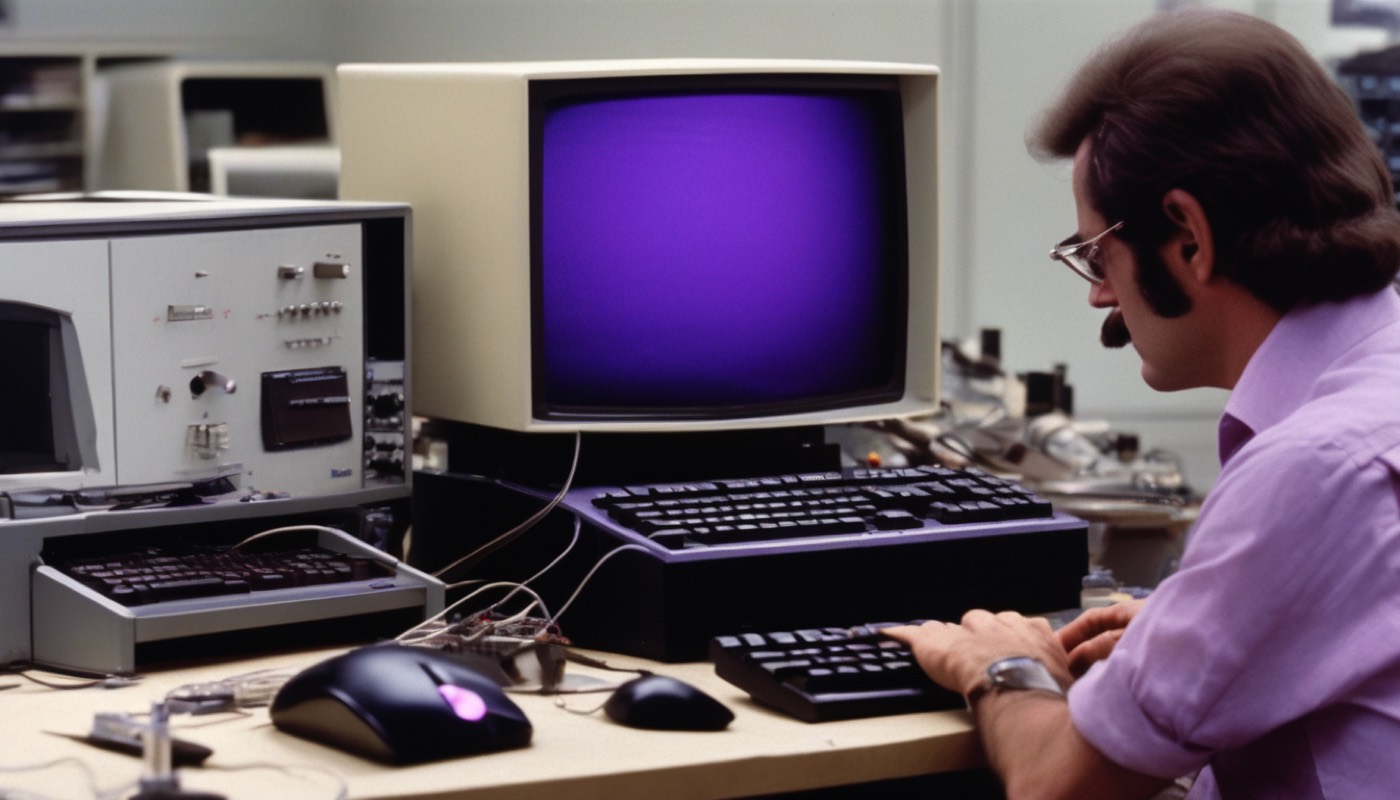
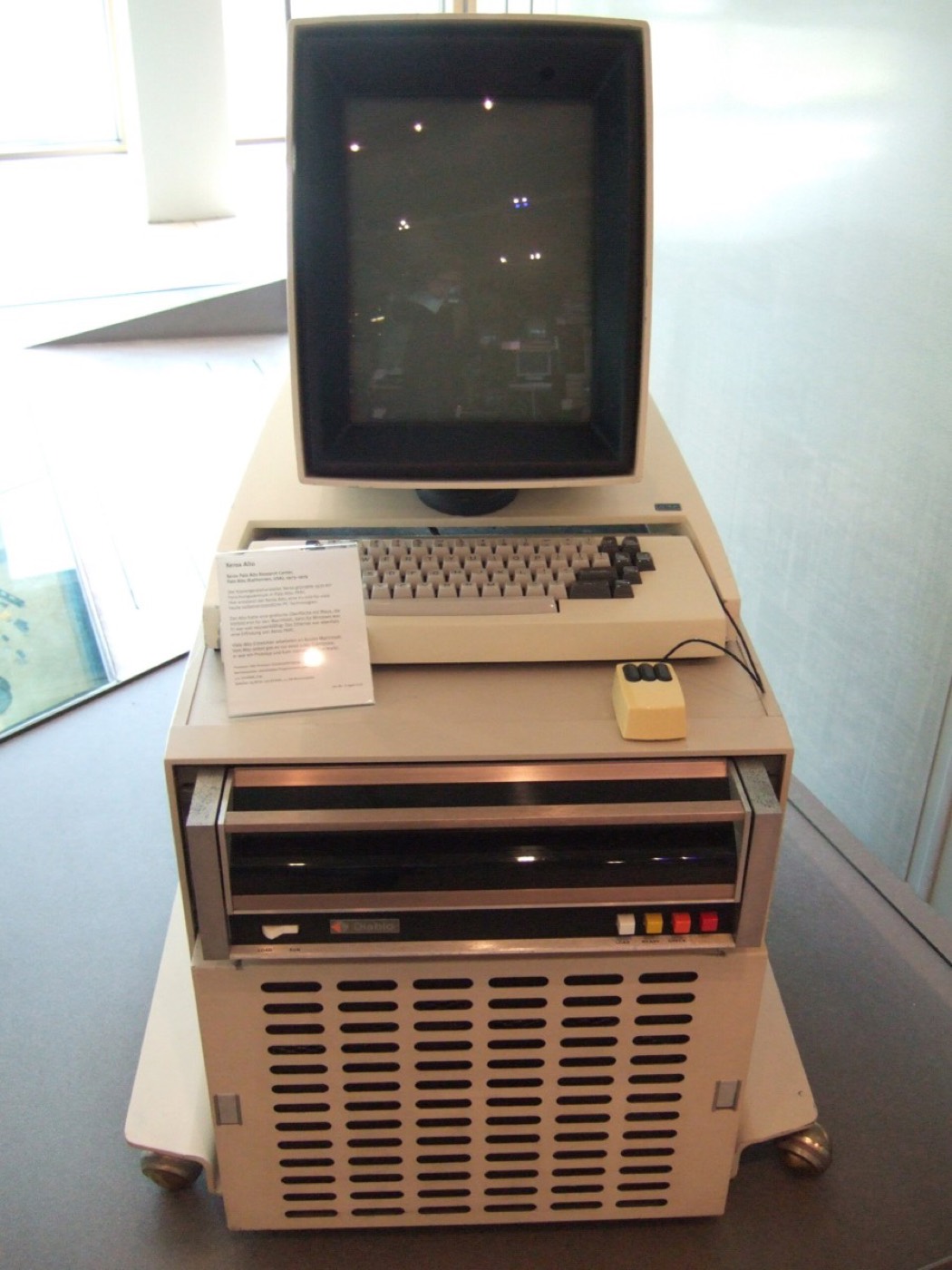
Until the early nineteen seventies, using a computer meant sharing one. A room-sized mainframe served dozens of people at once, through a terminal that was really just a keyboard and a screen connected to someone else's machine down the hall.
In nineteen seventy-two, PARC's Butler Lampson proposed something different: a computer for one person, sitting on that person's own desk. Charles Thacker led the engineering, and the first Alto was running by the first of March, nineteen seventy-three. The company built about one hundred and twenty of that first version between nineteen seventy-three and nineteen seventy-five. It then built around two thousand of a second version, through nineteen eighty-one, and gave most of them to Xerox staff and a handful of universities.
That arrangement is the one every computer since has copied. A screen you look at directly. A keyboard and a pointing device right in front of you. All of it answering to you alone, with nobody else's job sharing the same machine at the same moment.
The photograph on screen is a surviving Alto, its cabinet open beside its screen and keyboard. Xerox never sold it to the public. It had a screen, a keyboard, and a three-button mouse, all driven by a processor and memory housed in a cabinet about the size of a small refrigerator.
The diagram on screen shows how the pieces connected. The screen and keyboard sat on the desk, in front of the person using the machine. Cables ran from both of them into the cabinet beside the desk, which held the processor, the memory, and the disk that stored a user's files. The mouse plugged into the keyboard's cable and controlled a pointer on the screen.
One machine on every desk was already a radical idea. The thing on its screen was about to be stranger still.
4. Windows, icons and a mouse
A single-user computer is not automatically an easy one to use. What made the Alto different was not just that it had a screen -- mainframe terminals had screens too -- but what kind of screen it was.
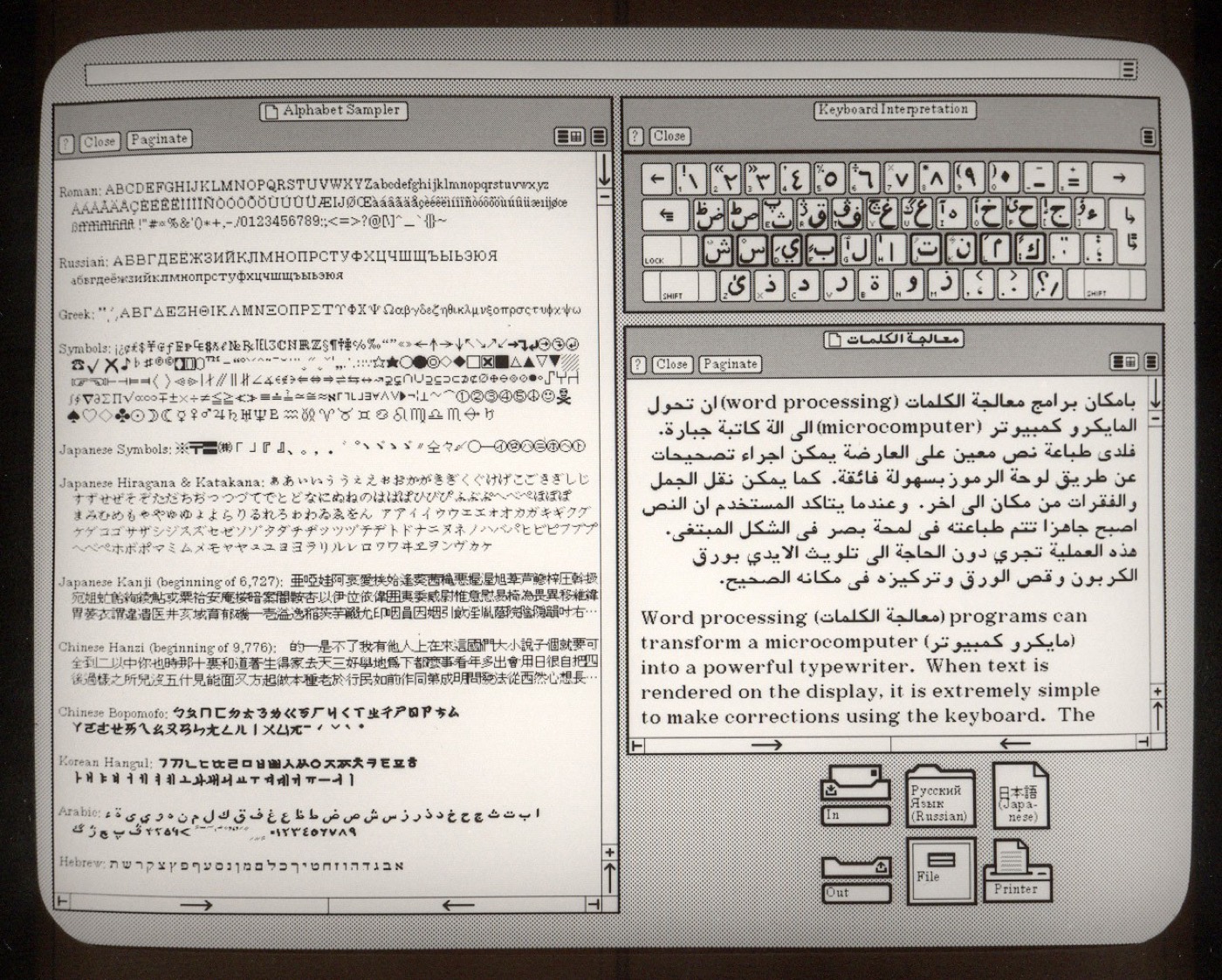
Older terminal screens could only display fixed characters, laid out in rows, like a typewriter. The Alto's screen was bitmapped: every one of its hundreds of thousands of tiny dots could be switched on or off individually, under the computer's control. That meant the screen could draw anything -- not just letters, but shapes, pictures, and several documents' worth of text, each shown in its own rectangle.
Those rectangles are windows, and PARC researchers built the first working version of them, each one able to overlap the others, just like sheets of paper on a real desk.
Researchers gave each window a small picture standing for whatever it held, called an icon, so a person could find a file by its picture rather than its name. A new menu would pop up wherever it was needed, instead of sitting fixed at the top of the screen. And all of it was controlled by the mouse Bill English had already built at Engelbart's lab, now pointing at windows and icons instead of splitting a screen in two.
Windows, icons, menus and a pointer -- the shorthand researchers still use is WIMP -- had never worked together on one working computer before. It would take another company, a decade later, to put a name on it that the public would remember.
5. Ethernet links the machines
A computer built for one person still has to talk to every other computer on the same floor, or it is just an island with a disk drive. PARC had dozens of Altos within a few years, and no good way to connect them.
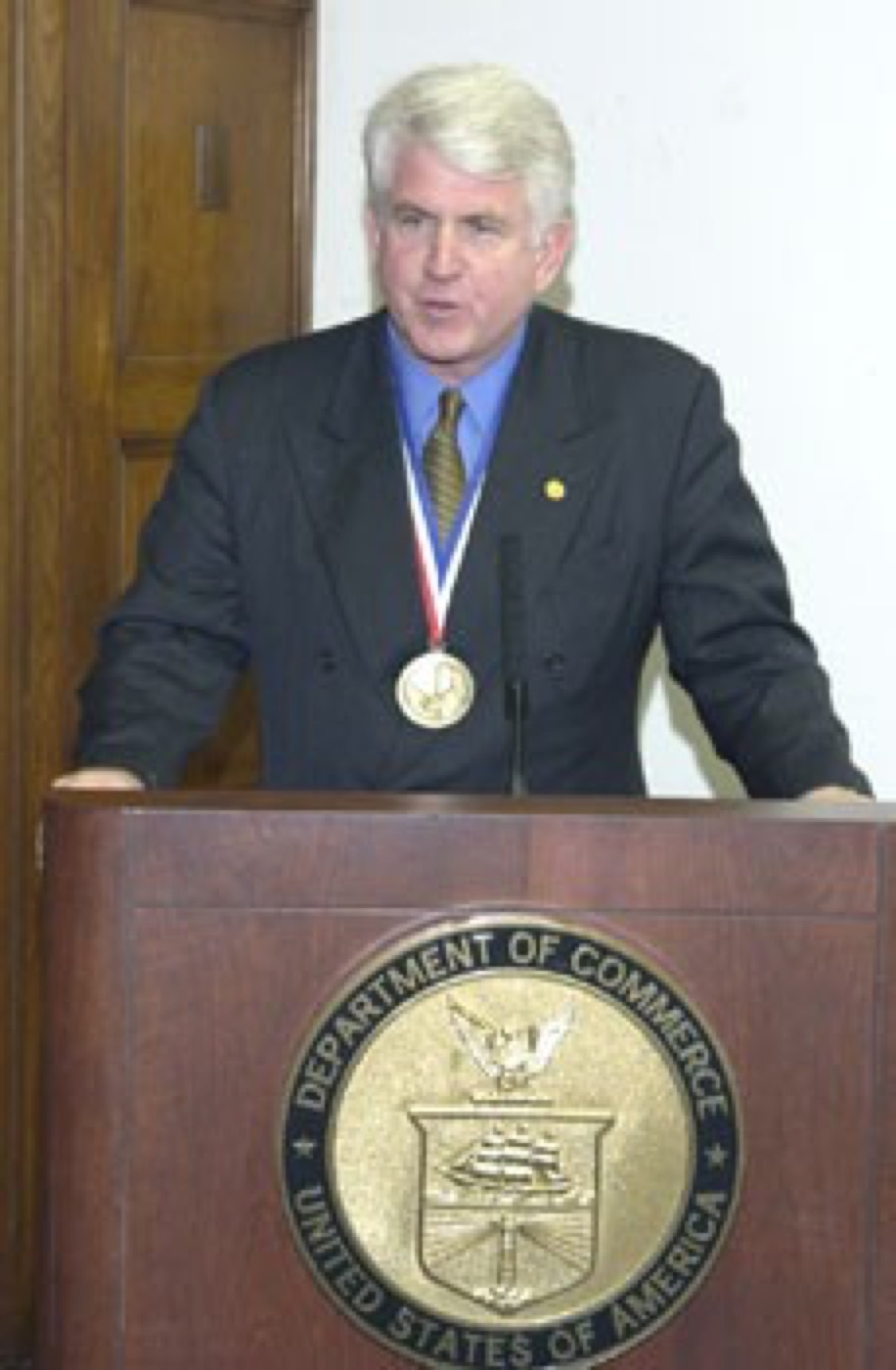
Robert Metcalfe, shown here, was given the job of linking the Altos to each other and to PARC's laser printers. Working with David Boggs, he based the design on a radio network from Hawaii that let multiple stations share one channel by listening before they transmitted. Metcalfe wrote up the idea in a memo on the twenty-second of May, nineteen seventy-three, and called it the Ether Network.
Every machine on the network listened to the shared cable before sending anything, and backed off and tried again if two machines spoke at once. It was a simple rule, and it worked at a scale nobody had tried before.
The diagram on screen shows the shape of it: a line of Altos, all connected to the same cable, with a shared laser printer and a shared file server at the end of it. On the eleventh of November, nineteen seventy-three, that network carried its first data. The speed was a little under three megabits a second -- modest today, extraordinary then.
Metcalfe called his invention Ethernet. Within a decade it would be running in offices that had never heard of PARC.
6. The laser printer and the paperless promise
A computer on every desk is not much use if the only way to get a document out of it is to retype it onto a typewriter. Xerox already made machines that put toner onto paper by the million. The question was whether a computer could drive one directly.
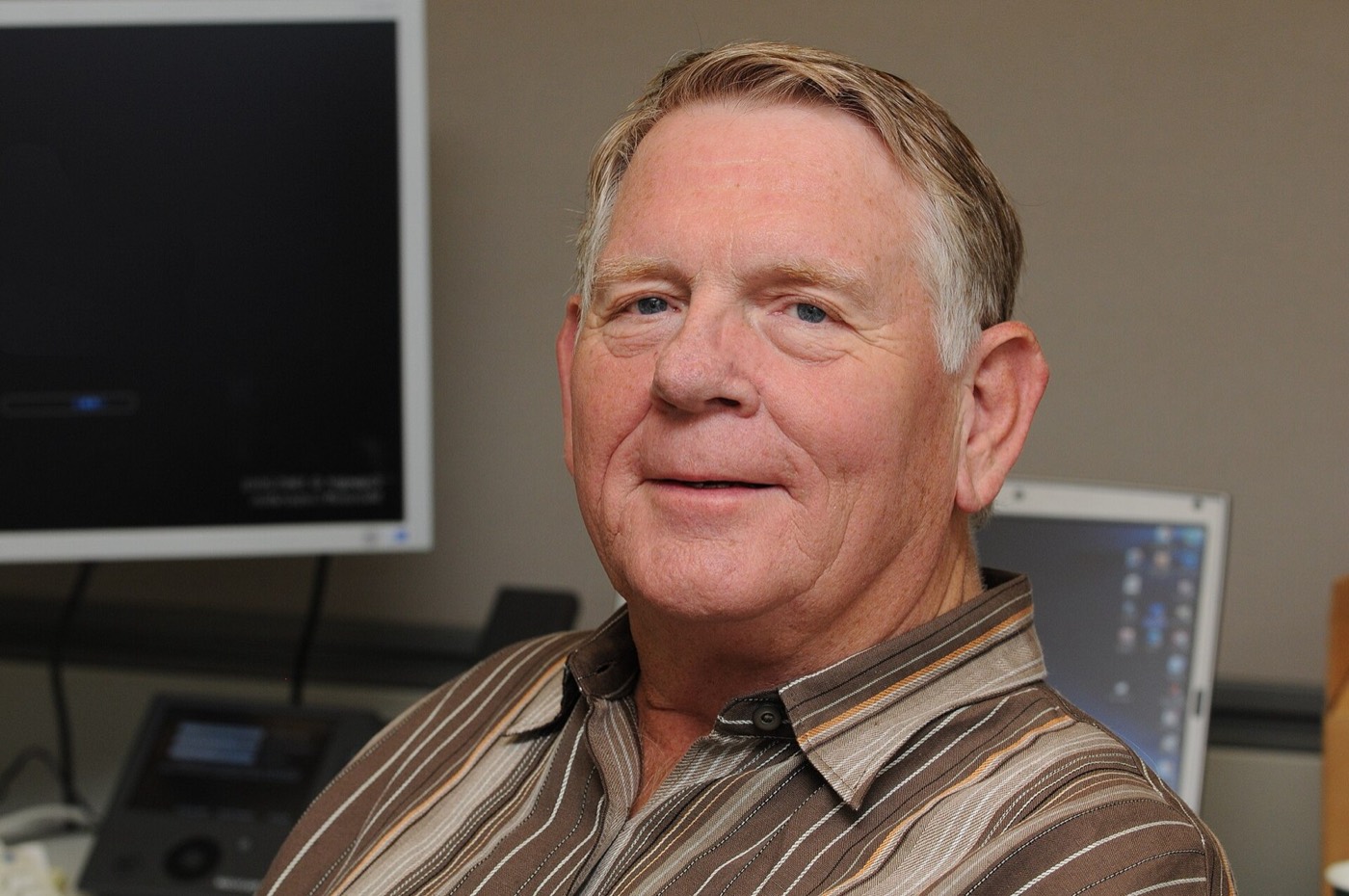
Gary Starkweather, shown here, had been thinking about exactly that since the late nineteen sixties, while working at a different Xerox laboratory in New York. His idea was to take an ordinary xerographic copier and replace its light source with a laser. A normal copier copies a page by shining light onto it and fixing toner wherever the light does not fall. Starkweather's laser, switched on and off by a computer, could draw any pattern onto that same page, not just a copy of one already printed.
Xerox moved him to PARC to build a working version. It took until nineteen seventy-one for the first complete system to run, printing a page at the same resolution the screen on an Alto would later try to match.
The printer could put down three hundred dots in every inch of paper, far finer than anything a typewriter could manage. Anyone with an Alto on their desk could now print a document that looked, on paper, exactly the way it had looked on the glowing screen in front of them. That was the paperless promise in its one truly delivered form: not less paper, but paper that finally matched the screen.
The printer worked. The promise that followed it, that the office might need no paper at all, did not.
7. WYSIWYG: what you see is what you get
Printing an exact copy of the screen only matters if what is on the screen is worth copying. The next problem PARC solved was the editor itself.
Charles Simonyi and Butler Lampson built an editor called Bravo, running on the Alto from the fourteenth of September, nineteen seventy-four. It showed text in different fonts and sizes, laid out on the bitmapped screen exactly as the page would eventually print. That is what the acronym in this chapter's title means: what you see is what you get, usually shortened to WYSIWYG.
It was not a perfect match. The Alto's screen showed about seventy-two dots in every inch, while PARC's laser printers, the ones from the last chapter, worked at three hundred. The screen could only approximate what the page would actually look like -- but it was close enough to change what editing a document felt like.
The comparison on screen sets those two figures side by side: seventy-two dots per inch on the Alto's display, against three hundred on the printer it fed. Bravo's own team later built on it again, in a program called Gypsy, generally counted as the first editor with a fully modern, mouse-driven interface. Between the two of them, Bravo and Gypsy set the template every word processor has followed since.
8. Smalltalk and a new way to program
Windows, a mouse, and a printer that matched the screen were all things a computer could show a person. Alan Kay's group was more interested in how the computer itself should be built, underneath all of that.
Kay's language was called Smalltalk, developed through the nineteen seventies, with Dan Ingalls writing most of the code and Adele Goldberg writing most of what explained it.
Smalltalk's central idea was that a program is not a list of instructions running in order. It is a collection of objects, each one holding its own data and its own behaviour. The diagram on screen shows how they work together: one object sends a message, a second object receives it and decides what to do with its own data, and may send a message back. Nothing about one object's insides has to be visible to any other, which is the idea now called object-oriented programming.
Smalltalk also did something stranger: it made its own programming environment, including the windows and menus a programmer used to write it, out of the same objects. The tool and the thing it was building were made of the same stuff.
Smalltalk went through several versions inside PARC during the nineteen seventies. In nineteen eighty-one, a version called Smalltalk-eighty became the first one Xerox allowed outside the building, and it is still studied as the common ancestor of today's object-oriented languages. Smalltalk also gave the emerging graphical interface one of its central features: the first working overlapping windows and pop-up menus, both pioneered inside this one piece of software.
9. A company that couldn't sell its own future
By the late nineteen seventies, PARC had built nearly everything this video describes: a computer, an interface, and a network. It had also built a laser printer, an editor that matched the page, and a new way to write software. Xerox had not sold a single one of them.
The machine on screen is the Xerox Star, launched on the twenty-seventh of April, nineteen eighty-one. It was the first computer Xerox tried to sell with everything PARC had built working together in one product. It arrived eight years after the Alto first ran, priced for sale rather than kept inside the building.
The Star cost sixteen thousand five hundred and ninety-five dollars, for one workstation alone -- a full office system, with shared servers, cost much more again. That was an enormous price for nineteen eighty-one, when most people had never sat in front of any computer at all, let alone one with a mouse.
The figures on screen are the two that decided the Star's fate. One is its price: sixteen thousand five hundred and ninety-five dollars, for a single workstation. The other is its total sales across its whole production run, from nineteen eighty-one to nineteen eighty-five: about twenty-five thousand units. A cheaper, much less capable machine called the personal computer was about to flood the market instead.
Xerox had invented the future of the office and then sold it at a price almost nobody could justify. Somebody else was about to see it for free.
10. The 1979 visit
Everything so far happened inside one building, mostly unseen by the public. That changed because of a deal that had nothing to do with computers.
In the late nineteen seventies, Xerox's venture-capital arm invested one million dollars in a small, struggling computer company called Apple, in exchange for the right to buy one hundred thousand shares of Apple stock before it went public. Apple's side of that deal was to let Xerox engineers see what Apple was building. In return, Apple's own people got to look inside PARC.
Steve Jobs led that visit himself, in December nineteen seventy-nine, arranged on Apple's side by Jef Raskin, who was already working on an early version of what would become the Macintosh.
The map on screen shows how close the two companies actually were: PARC in Palo Alto, and Apple's offices in Cupertino, a short drive apart. Jobs and his engineers were shown the Alto running its graphical interface -- windows, icons and a mouse -- along with the network and laser printer connecting it to other machines. What Apple's engineers saw in that one afternoon shaped the next five years of the company's work.
Apple had paid for a look. What it got back was a complete working draft of the next decade of personal computing.
11. From Lisa to Macintosh to Windows
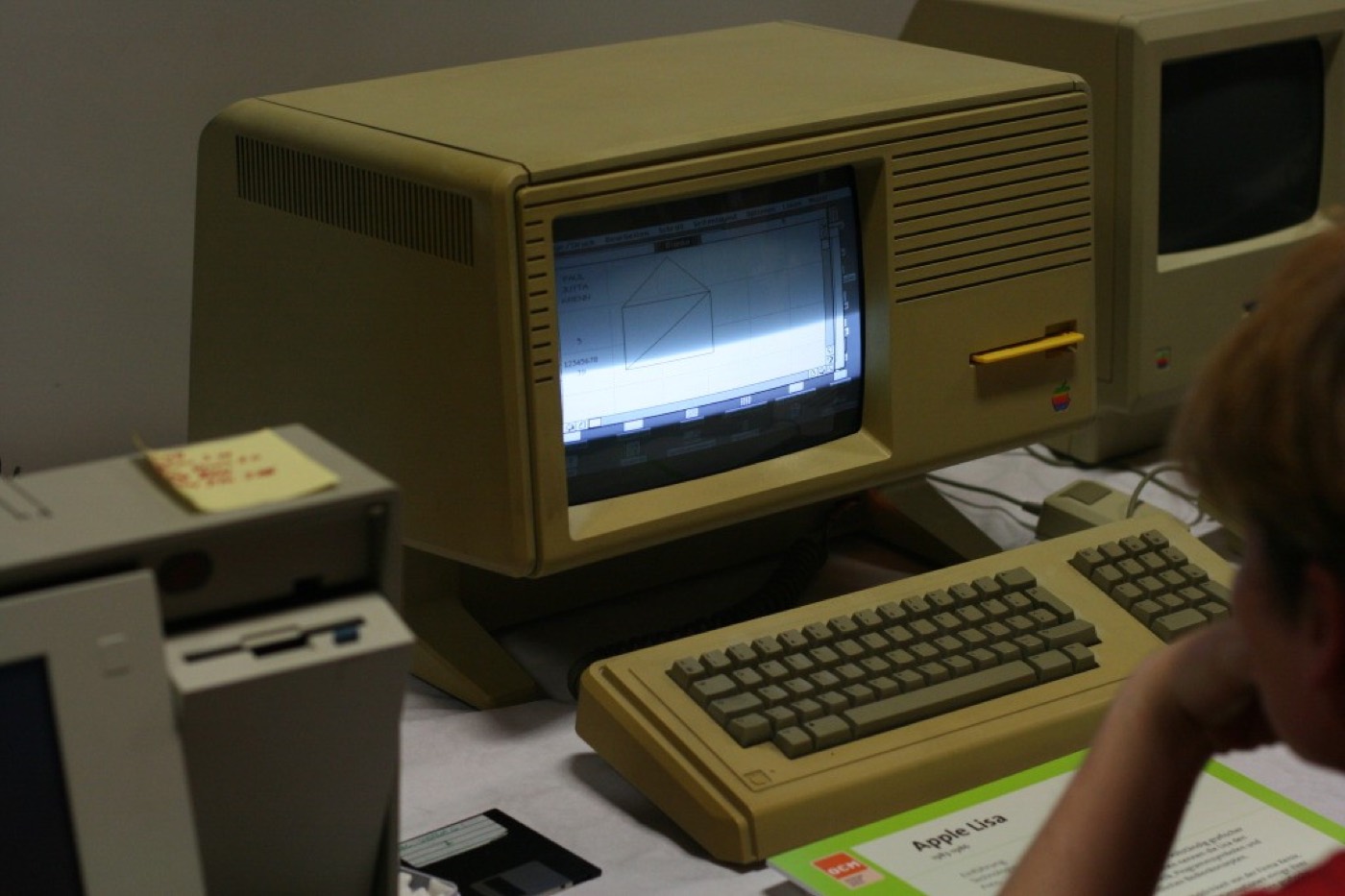
Apple did not simply copy what it saw. It spent several years turning a research demonstration into something that could be sold to ordinary people.
The computer on screen is an Apple Lisa, unveiled on the nineteenth of January, nineteen eighty-three, at a starting price of nine thousand nine hundred and ninety-five dollars. It had windows, icons and a mouse, built from the same ideas Apple's engineers had seen at PARC four years earlier, now aimed at a buyer rather than a researcher.
The Lisa was expensive and sold slowly. Apple's answer arrived the very next year.
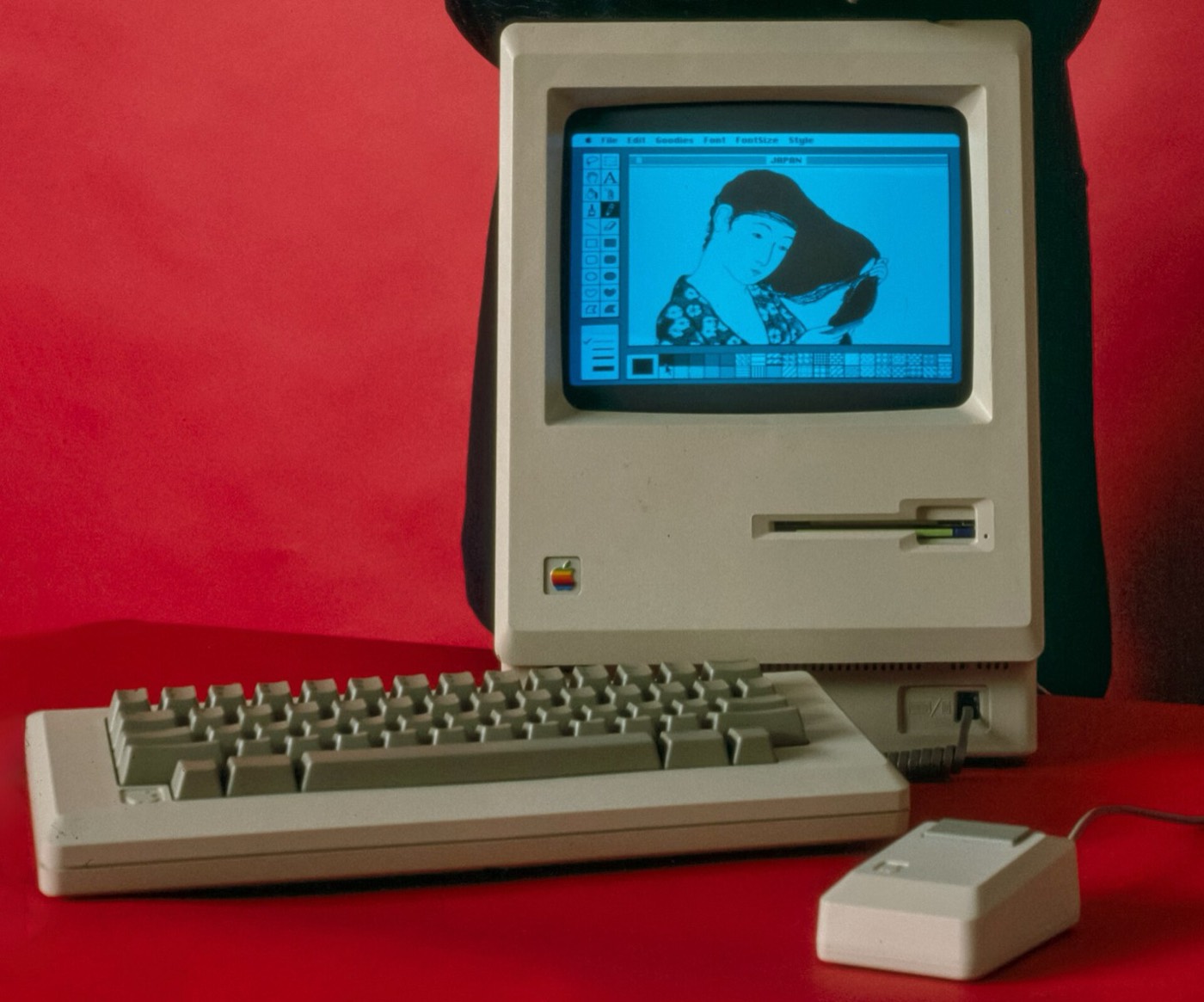
The bars on screen compare the two prices directly: nine thousand nine hundred and ninety-five dollars for the Lisa, against two thousand four hundred and ninety-five dollars for the Macintosh, when it launched the following year. The cheaper machine is the one that found a mass market.
The machine on screen is the original Macintosh, launched on the twenty-fourth of January, nineteen eighty-four, at under a quarter of the Lisa's price. It carried the same windows, icons and mouse into a machine ordinary people could actually afford, and its sales very quickly passed the Lisa's.
Microsoft watched both machines closely. Its own operating system, Windows, had started as a fairly basic add-on for older-style computers. Through the rest of the nineteen eighties and into the nineteen nineties, it adopted the same windows, icons and pointer that PARC had built first and Apple had sold second.
The timeline on screen lays out the whole sequence. PARC was founded in nineteen seventy. The laser printer was working by nineteen seventy-one, and the Alto and Ethernet both arrived in nineteen seventy-three. Smalltalk-eighty and the Star both reached the outside world in nineteen eighty-one. Then came the Lisa in nineteen eighty-three, and the Macintosh in nineteen eighty-four. Windows followed the same template through the rest of that decade and into the next, and by the nineteen nineties the graphical desktop PARC had built for one machine inside one building was running on most of the computers in the world.
PARC's own people, meanwhile, had mostly moved on.
12. PARC's afterlife
Not every idea PARC built stayed inside Xerox, and not every person who built one did either.
Robert Metcalfe and the other researchers who eventually left PARC carried their ideas into new companies of their own. Xerox owned none of what they went on to build. The laboratory that had once given away a computer, a network and a printer for nothing had, without planning to, helped start entirely new industries beyond its own.
PARC itself did not close. It kept inventing, long after the personal-computer boom it had started moved on without it.
The timeline on screen marks PARC's afterlife in three dates. Robert Metcalfe left Xerox in nineteen seventy-nine and co-founded Three Com, built on the Ethernet he had helped invent. John Warnock and Charles Geschke left in nineteen eighty-two, after Xerox's management would not back their page-description software, and founded Adobe instead. And in two thousand and two, PARC itself was incorporated as its own company, an independent subsidiary Xerox still owned outright but ran at arm's length.
Xerox never made a fortune from the office of the future it built. Almost everyone else who ever used a mouse, printed a WYSIWYG page, or clicked an icon on a window, did.
Sources and credits
Photo credits (Wikimedia Commons)
- Gary Starkweather, inventor of the laser printer at Xerox PARC: Dcoetzee, CC0 - https://commons.wikimedia.org/wiki/File%3AGary_Starkweather.jpg
- Robert (Bob) Metcalfe, co-inventor of Ethernet at Xerox PARC: Unknown authorUnknown author, Public domain - https://commons.wikimedia.org/wiki/File%3ARobert_Metcalfe_National_Medal_of_Technology.jpg
- Xerox Alto personal computer, built at PARC in 1973: Joho345, Public domain - https://commons.wikimedia.org/wiki/File%3AXerox_Alto_mit_Rechner.JPG
- Xerox Star 8010 workstation running the ViewPoint GUI (1981): Abdulla Al Muhairi, CC0 - https://commons.wikimedia.org/wiki/File%3AXerox_Star_8010_ViewPoint.jpg
- Apple Lisa 2 computer (1984), successor to the original 1983 Lisa: Wolfgang Stief from Tittmoning, Germany, CC0 - https://commons.wikimedia.org/wiki/File%3AApple_Lisa_2_%281984%29_%286981094476%29.jpg
- Original Macintosh 128K computer, photographed January 1984: Photo: Bernard Gotfryd - Edited from tif by Cart, Public domain - https://commons.wikimedia.org/wiki/File%3AMacintosh_128k_computer%2C_January_1984%2C_by_Bernard_Gotfryd_-_%28cropped_to_remove_individual%29.jpg


Primary sources
- Wikipedia, 'PARC (company)' - founding 1 July 1970, Jacob Goldman and George Pake's roles, Bob Taylor and the Computer Science Lab, 2002 spin-off as an independent, wholly owned subsidiary..
- Boston Globe, obituary of Jacob E. Goldman, 23 December 2011 - Goldman's plan for a lab separate from Xerox's Rochester, NY headquarters and Webster facility..
- Wikipedia, 'Xerox Alto' - conceived 1972 by Butler Lampson, designed by Charles Thacker, running 1 March 1973, production figures and $32,000 unit cost..
- Wikipedia, 'Ethernet' - Robert Metcalfe and David Boggs; memo of 22 May 1973; first ran 11 November 1973 at 2.94 Mbit/s..
- Wikipedia, 'Gary Starkweather' - laser printer conceived late 1960s at Xerox's Webster lab, working system at PARC by 1971..
- Wikipedia, 'Bravo (software)' - Charles Simonyi and Butler Lampson's Bravo, operational 14 September 1974, first WYSIWYG editor; 72 dpi screen vs 300 dpi printer; Gypsy built on Bravo..
- Wikipedia, 'Smalltalk' - Alan Kay, Dan Ingalls, Adele Goldberg; object-message model; Smalltalk-80 released outside PARC in 1981; first overlapping windows and pop-up menus..
- Wikipedia, 'Xerox Star' - Star 8010 launched 27 April 1981 at $16,595 per workstation; about 25,000 units sold, 1981-1985..
- Wikipedia, 'Apple Lisa' - unveiled 19 January 1983 at $9,995..
- Wikipedia, 'Macintosh 128K' - launched 24 January 1984 at $2,495..
- Wikipedia, '3Com' - Robert Metcalfe co-founded 3Com in 1979 after leaving Xerox..
- Wikipedia, 'Charles Geschke', and The Register, obituary of Charles Geschke (19 April 2021) - John Warnock and Charles Geschke left PARC in 1982 to found Adobe..
Not regulated financial advice.