
Robotaxis: Are Driverless Cars Finally Here?
On 3 September 2026 Tesla put its Cybercab, a two-seat car with no steering wheel and no pedals, on the streets of Austin. Two days earlier, Waymo had opened paid driverless service in Denver, San Diego and Tampa, taking it to 14 US cities. Are driverless cars finally here, or is full autonomy a promise that keeps slipping?
This video starts in the Mojave Desert, where every car failed the 2004 DARPA Grand Challenge and Stanford's Stanley won in 2005. It follows the trail through Google's 2009 project to Waymo's paid rides in Phoenix. Then it explains how a robotaxi works: cameras, lidar, radar and ultrasonic sensors, high-definition maps, and the neural networks that perceive, predict and plan.
Then the two opposite bets. Waymo uses lidar, cameras, radar and city-by-city maps, with remote helpers on call. Tesla uses cameras alone. What does the evidence show? Waymo reports 82% fewer injury crashes than human drivers over 271.3 million rider-only miles (to June 2026), backed by a peer-reviewed study and an insurer's claims data, and the video covers the limits of that data and the school bus incidents that dented trust.
Finally the rules, and the world beyond the US: NHTSA's rewrite of federal standards and its 10 September order to Tesla, the UK's Automated Vehicles Act, Waymo's plans for London and Munich, and China's Baidu Apollo Go (more than 23 million rides) and Pony.ai. Will robotaxis be ordinary transport within a decade?
Every figure is on screen with its source and date.
In these topics
Chapters
Video notes
1. A car with no driver
On the third of September, twenty twenty-six, Tesla put a car with no steering wheel and no pedals on the streets of Austin, Texas. Two days earlier, Waymo had opened its taxi service in three more American cities.
A robotaxi is a taxi with no human driver. You book it on a phone, it arrives empty, and it drives you where you asked.
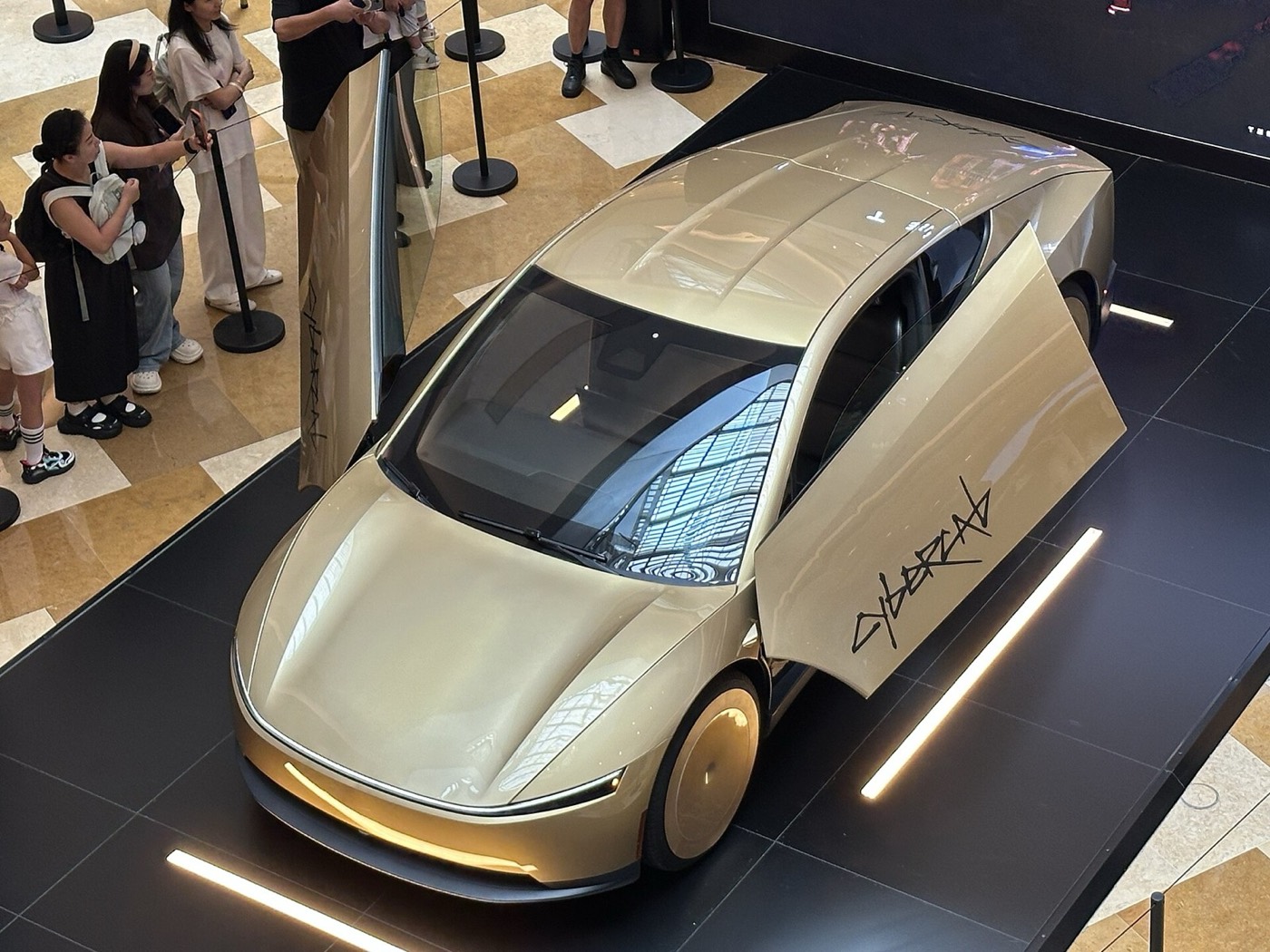
This is a Tesla Cybercab. It has two seats, and no steering wheel and no pedals. Tesla has described it as a car that sees with cameras alone.
Public rides in the Cybercab began on the fourth of September, in a limited area of Austin. Tesla has registered forty-five of them in Texas. That is a very small fleet, and it is only the start of the story.
Waymo's service is older and much larger. On the first of September it opened to paying riders in Denver, San Diego and Tampa. That took it to fourteen American cities. TechCrunch reported a fleet of more than four thousand vehicles.
So is driverless finally real? This video asks whether the robotaxi is the forwards step for city transport, or a promise that keeps slipping backwards.
First, where it all began, and how a car sees the road. Then the two rival ideas of how to build one, and what the safety numbers say. And finally the rules, the rest of the world, and whether robotaxis will be ordinary within ten years.
2. The desert that beat every car
The modern race began in a desert. In two thousand and four, the United States defence research agency, DARPA, offered a million dollars to any team whose robot car could cross the Mojave Desert with nobody at the wheel.
The route ran along the Interstate fifteen highway, from near Barstow in California to Primm in Nevada. It was about a hundred and fifty miles long. Every vehicle broke down or went off course before the end.
The farthest any vehicle got was seven point four miles. That was less than five per cent of the route, and the prize went unclaimed. The car was Sandstorm, from Carnegie Mellon University, and it left the road at a hairpin bend.
Some of the cars could follow satellite waypoints very accurately. What they could not do was sense obstacles ahead. A car that cannot see is not driving. It is only following a line.
A year later, on the eighth of October, DARPA tried again. This time the result was very different.
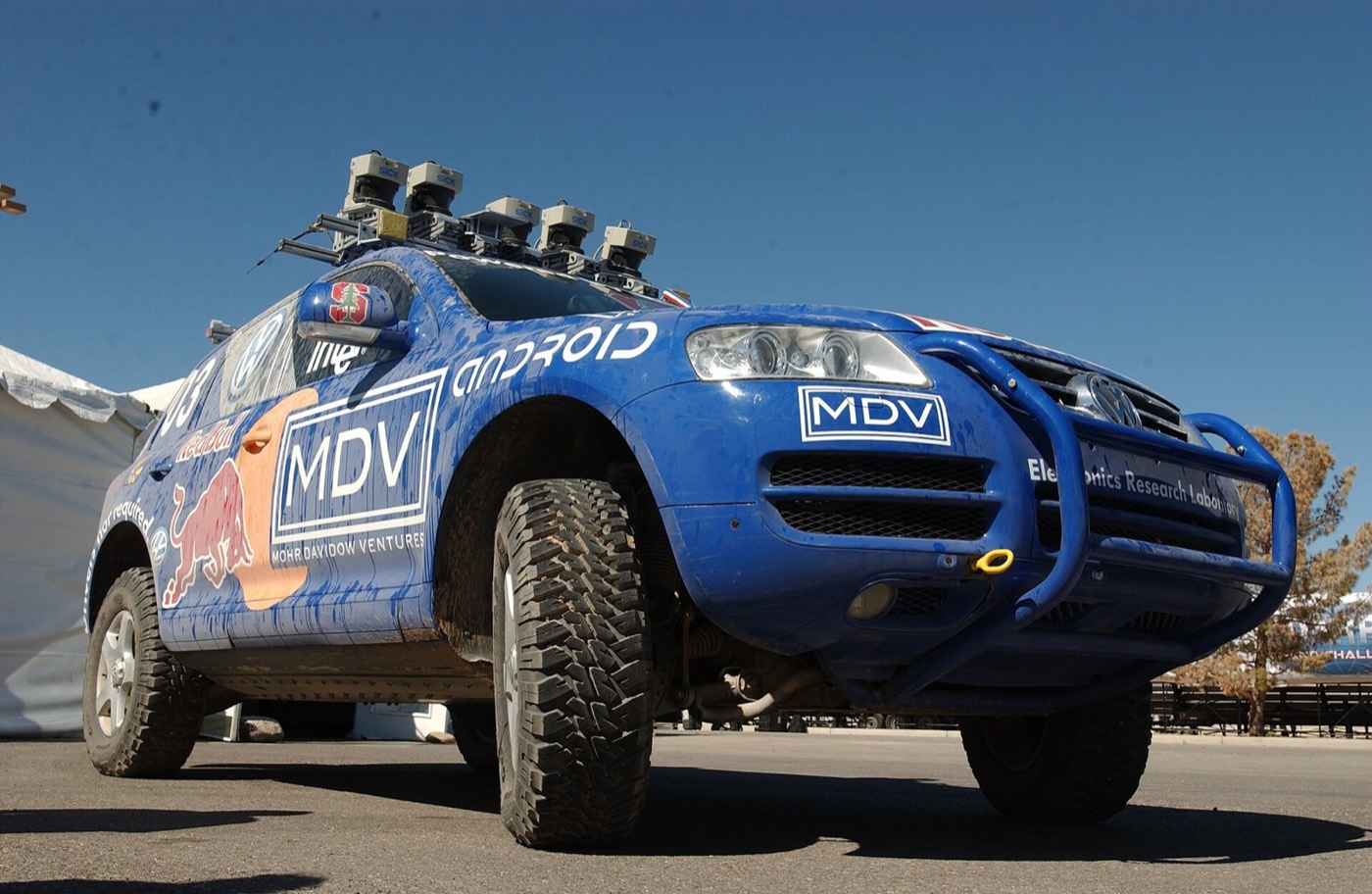
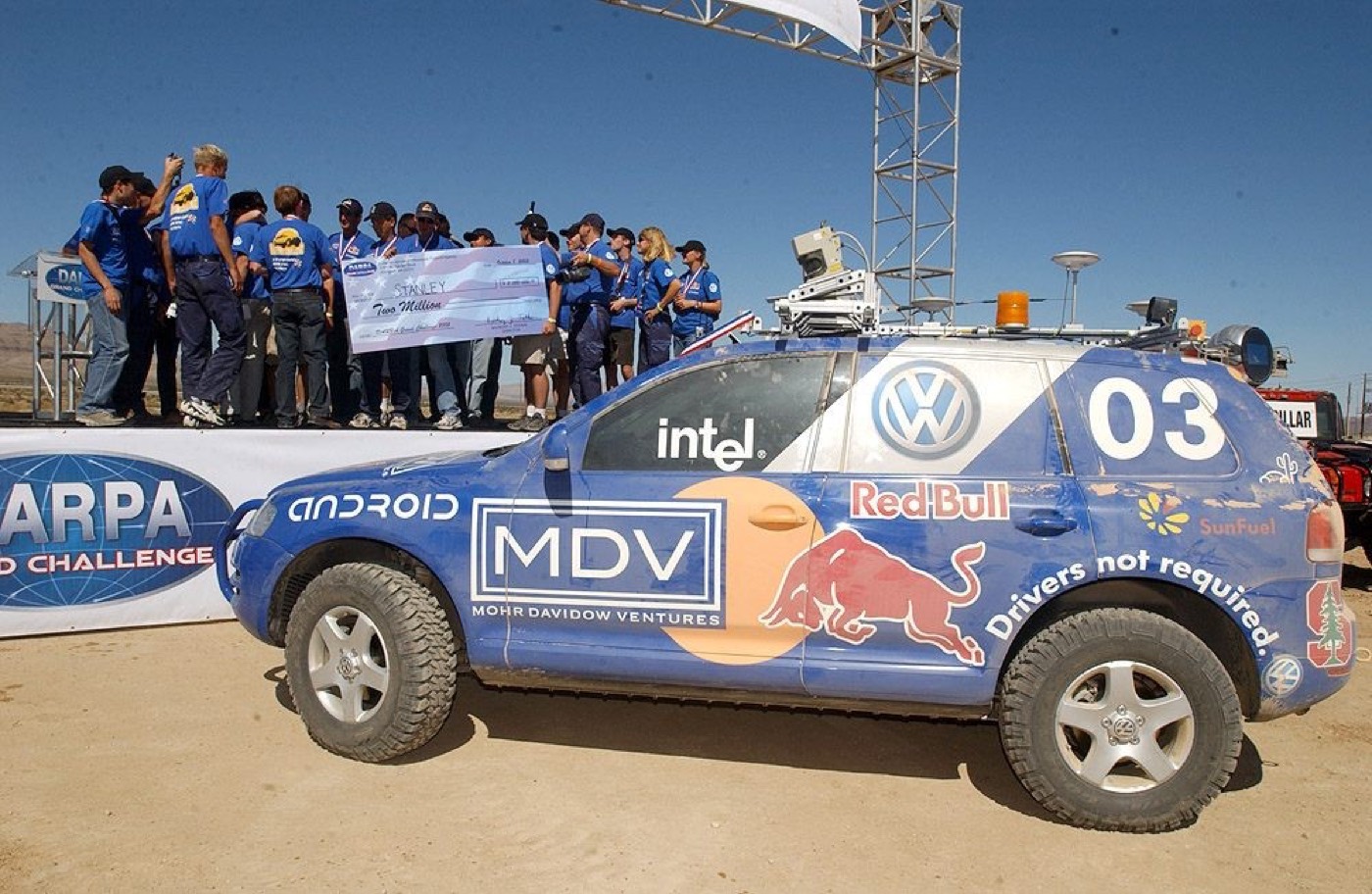
This is Stanley, Stanford's winning car. It was a modified Volkswagen, and it carried five lidar units on its roof. Lidar is a spinning laser that measures distance by timing how long its light takes to bounce back.
Stanford's team was led by Sebastian Thrun. It fed the car examples of human driving, to teach it what a shadow on the road really is. That was one of the things that had fooled the cars a year before.
Here is Stanley with the two million dollar award. The prize had doubled since the year before. It was a very public sign that the problem could be solved.
Five vehicles finished the route of a hundred and thirty-two miles. Stanley did it in six hours and fifty-four minutes, and won. Nearly every other finalist beat the best distance from the year before.
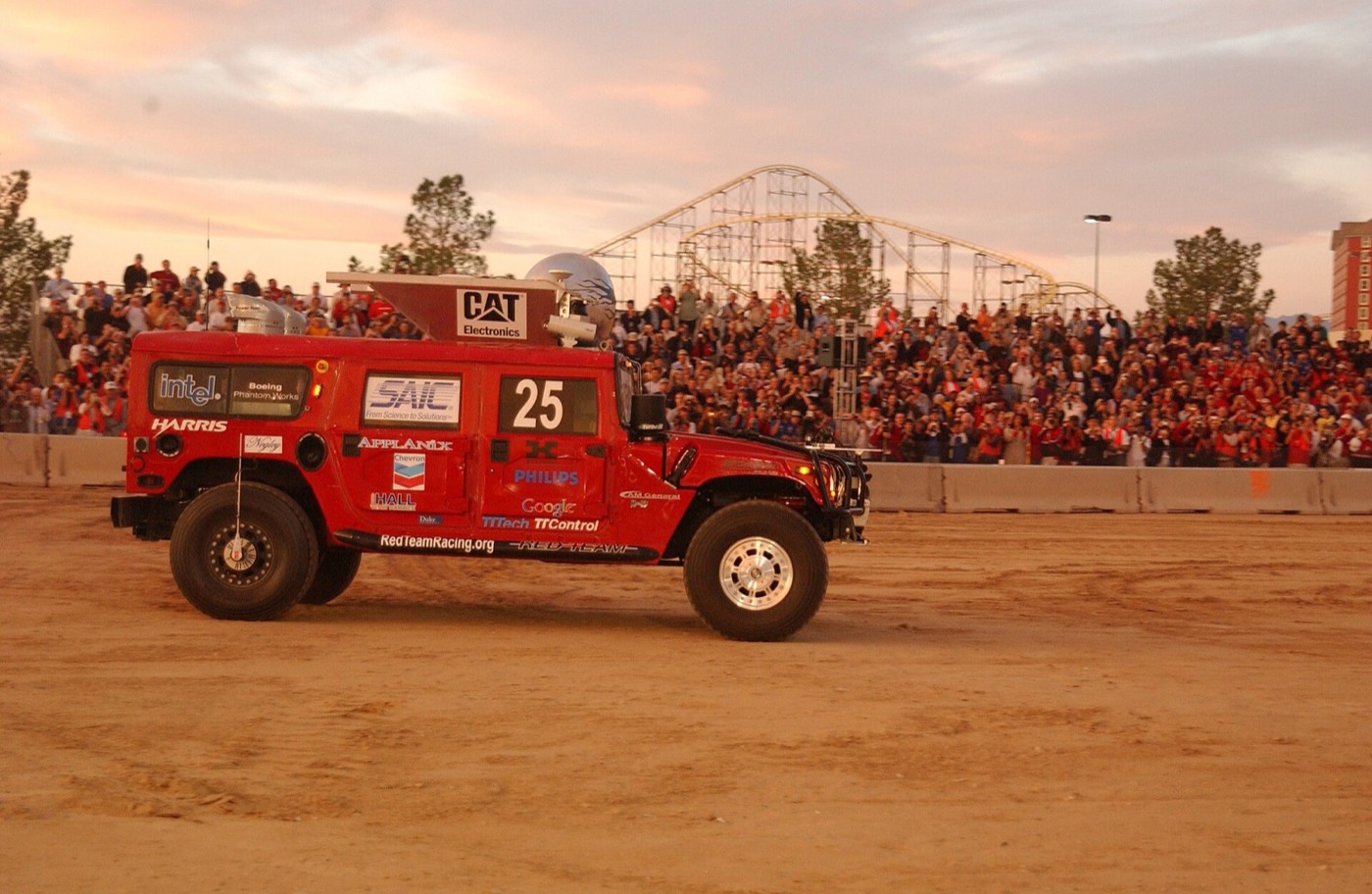
Carnegie Mellon's Highlander was a converted Hummer, and it finished third. Sandstorm, the car that had gone farthest a year earlier, finished second.
The lesson of the desert was simple. A driverless car needs to sense the world, and to make decisions about what it senses. Everything since has been an attempt to do both, on roads full of people.
3. From a secret project to Waymo
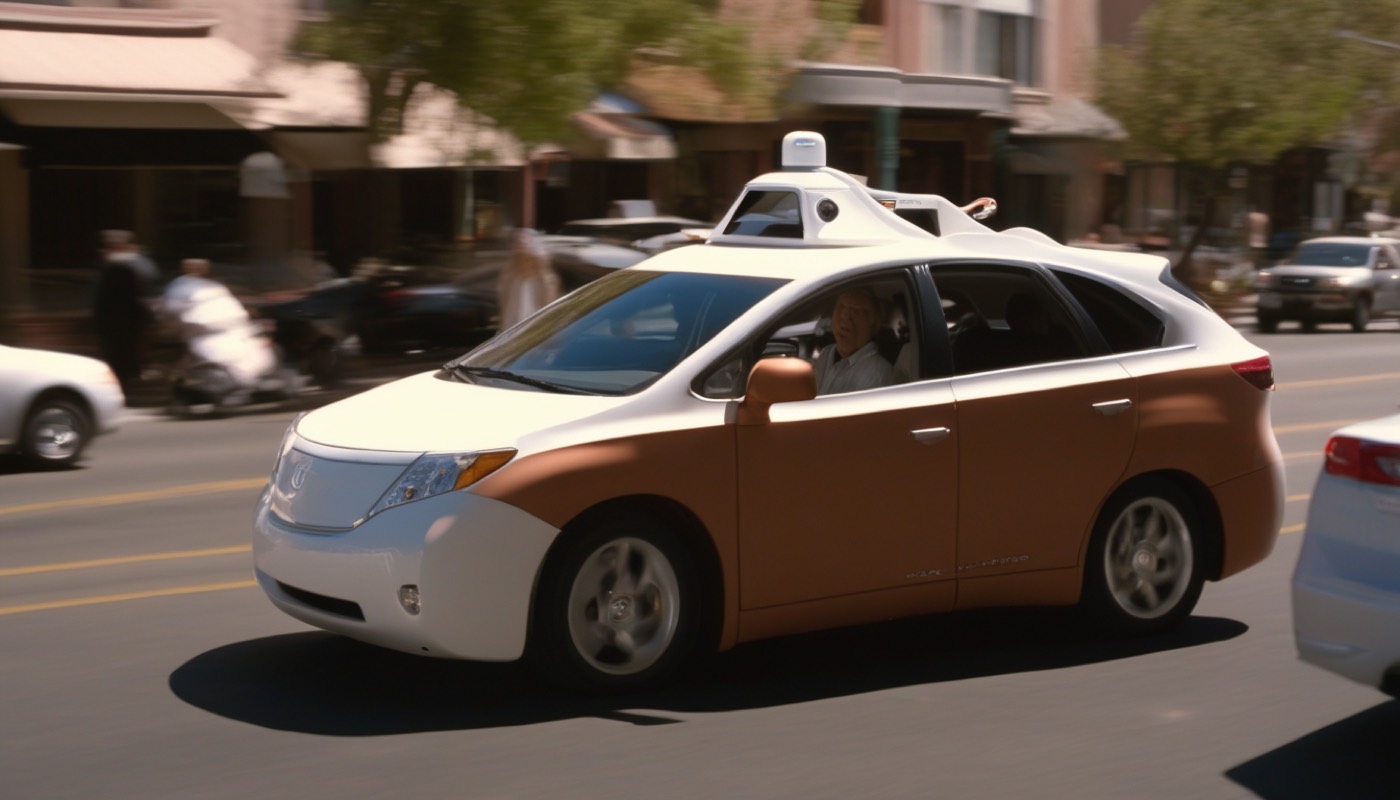
Several of the people who built those desert cars went to Google. In January two thousand and nine, Google started a secret project to build a self-driving car.
Its first test was hard. Drive ten routes of a hundred miles each, in California, with no human help.
Here is how the years ran. Google's project began in two thousand and nine. In two thousand and sixteen it became a company of its own, called Waymo, owned by Google's parent, Alphabet. In December two thousand and eighteen, Waymo One began carrying paying passengers around Phoenix, with a safety driver still on board. And in October two thousand and twenty, Waymo opened a service there with nobody in the driver's seat.
It took eleven years to go from a first test to a taxi that anyone could ride without a driver. That is the first thing to remember about this technology. It moves slowly, then it moves quickly.
4. How a robotaxi sees
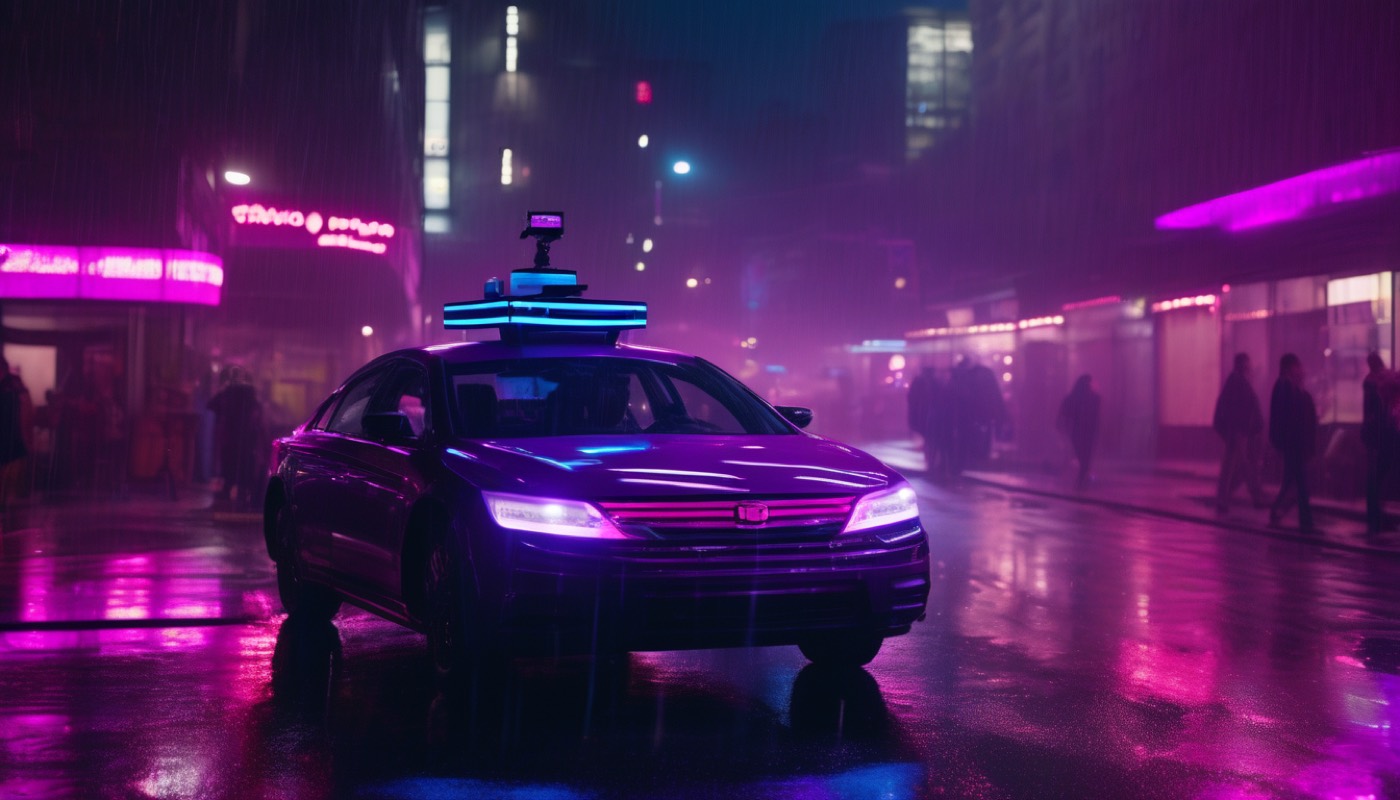
A human driver has two eyes and one head. A robotaxi has dozens of sensors, and each one sees the world in a different way.
There are four kinds. Cameras read colour, signs, lane lines and traffic lights. Lidar sends out laser pulses and builds a three-dimensional map of shapes, called a point cloud. Radar uses radio waves, and measures how fast things are moving. Ultrasonic sensors listen for echoes at very short range, for parking.
Each one fails in its own way. A camera struggles with glare, darkness and fog. Lidar can be confused by heavy rain or snow, and it costs more. Radar sees through weather, but gives only a blurry outline.
The point of having several is that their weaknesses do not line up. When one is blind, another may still see.
Waymo's newest system, announced in August twenty twenty-four, has thirteen cameras. It also has four lidars and six radars. Waymo says the overlapping views reach out to five hundred metres, day and night.
5. Maps and the brain
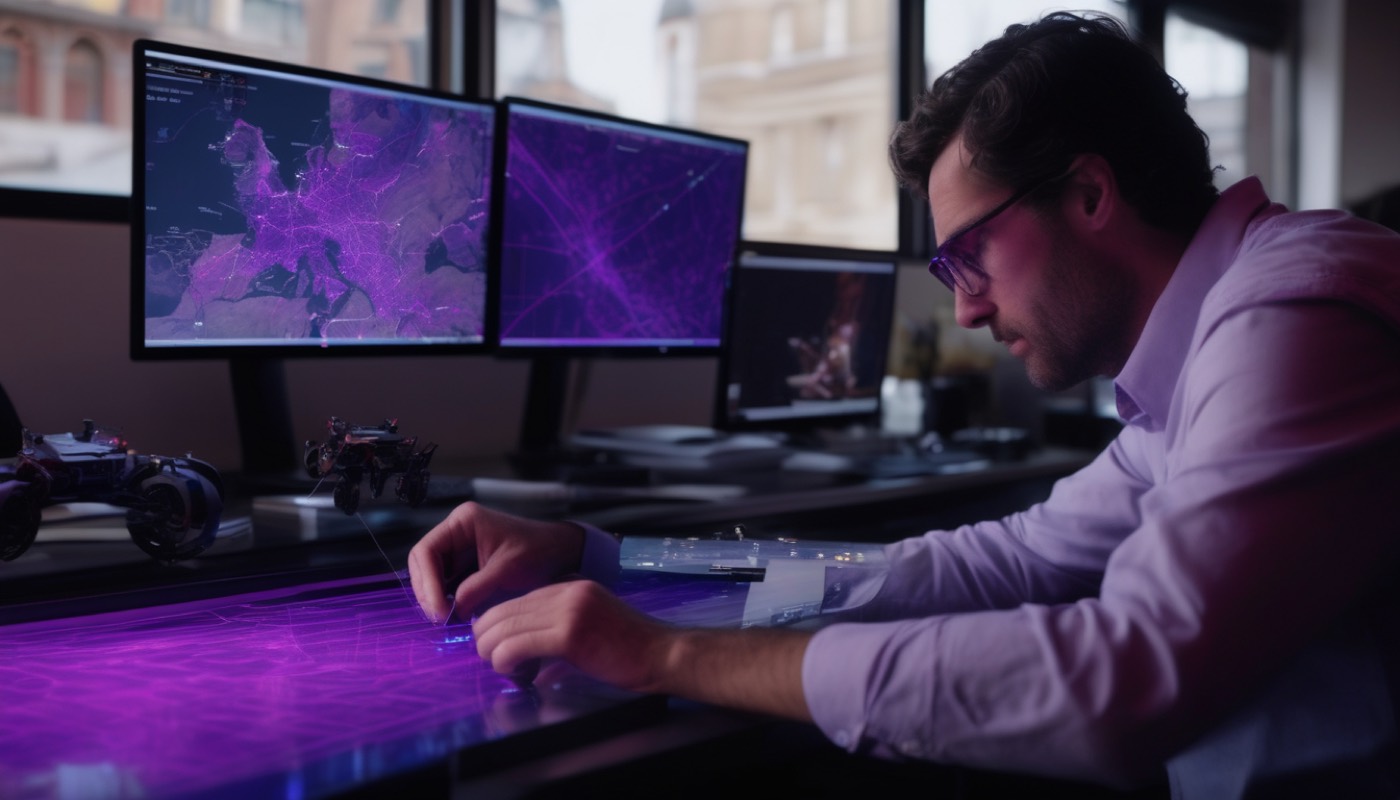
Sensors only supply raw data. Turning it into a decision is the job of the software, and it works in four steps.
First the car perceives: it finds the cars, people and signs around it. Then it predicts where each of them is going next. Then it plans a path through the gaps. And last it acts, with steering, braking and acceleration. The whole loop repeats many times every second.
Many robotaxis also carry a very detailed map of the streets they drive. It is a high-definition map, accurate to a few centimetres, that records every lane, kerb and traffic light.
The car works out where it is by matching what its sensors see against that map. That is called localisation, and it is why a robotaxi knows which lane it is in, even when the paint has worn away.
The brain itself has changed. The first systems followed hand-written rules: if a light is red, stop. Now the perception and prediction steps are neural networks, programs that learn patterns from millions of examples. The newest idea is end to end, where one network goes straight from sensor data to steering.
6. Waymo: sensors plus maps
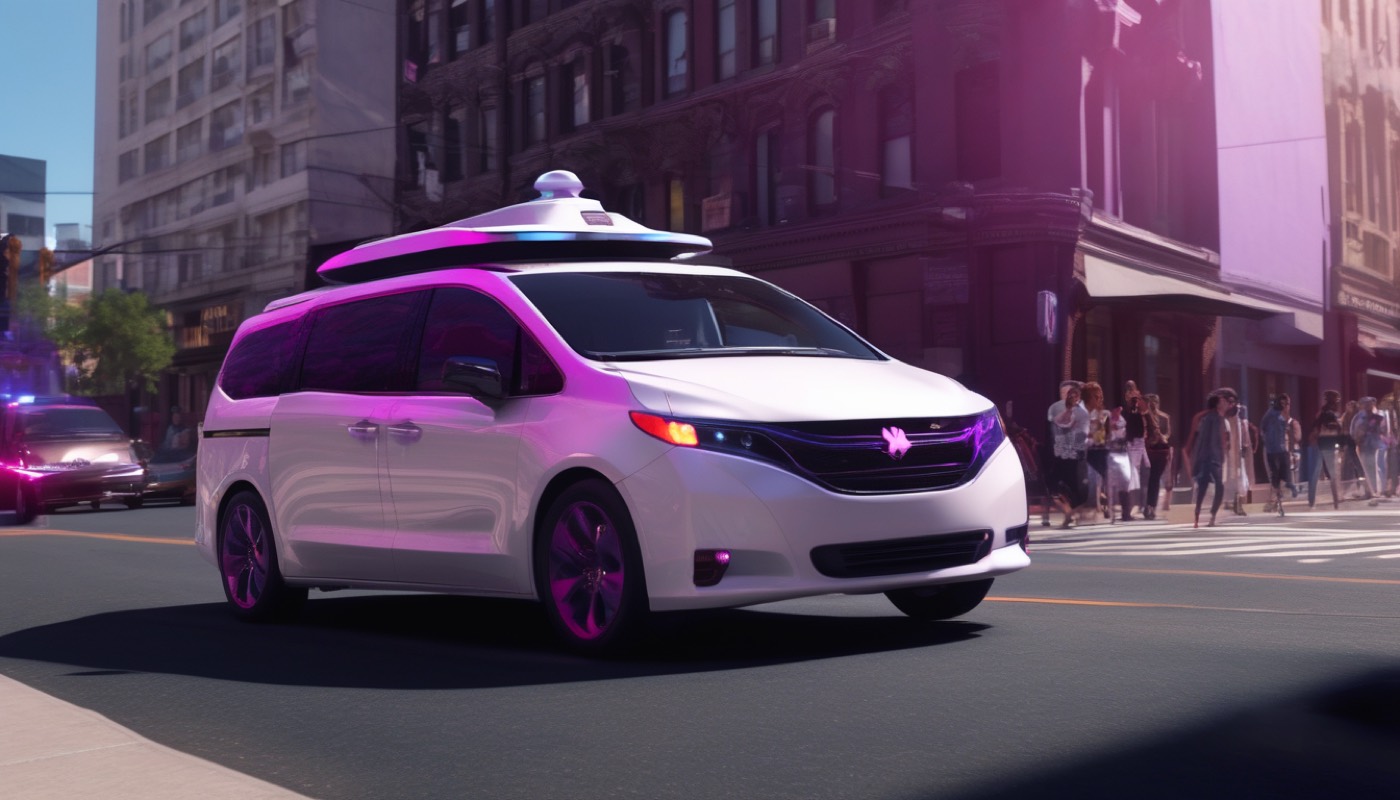
Waymo's bet is on more of everything. It uses lidar, cameras and radar together, and it maps each city before it drives there.
That is why it grows one city at a time. Each new place needs mapping, testing, and approval.
Its sixth-generation driver went into fully driverless service in February twenty twenty-six. Waymo says it needs less than half the cameras of the generation before. On the first of September, three more cities were added.
Denver and San Diego get only the Ojai, a minivan built with the Chinese maker Zeekr. Tampa gets a mix of the Ojai and the older Jaguar. TechCrunch reported roughly three hundred Ojai minivans in the fleet.
And there is a human in the loop. On the fourth of February, twenty twenty-six, Waymo's chief safety officer told the United States Senate that some remote helpers are based in the Philippines.
These remote helpers do not steer. When the car is unsure, for example in an unclear roadworks zone, it can ask a person for advice. Waymo says about seventy agents are on duty at a time, and about half of them work overseas.
7. Tesla: cameras only
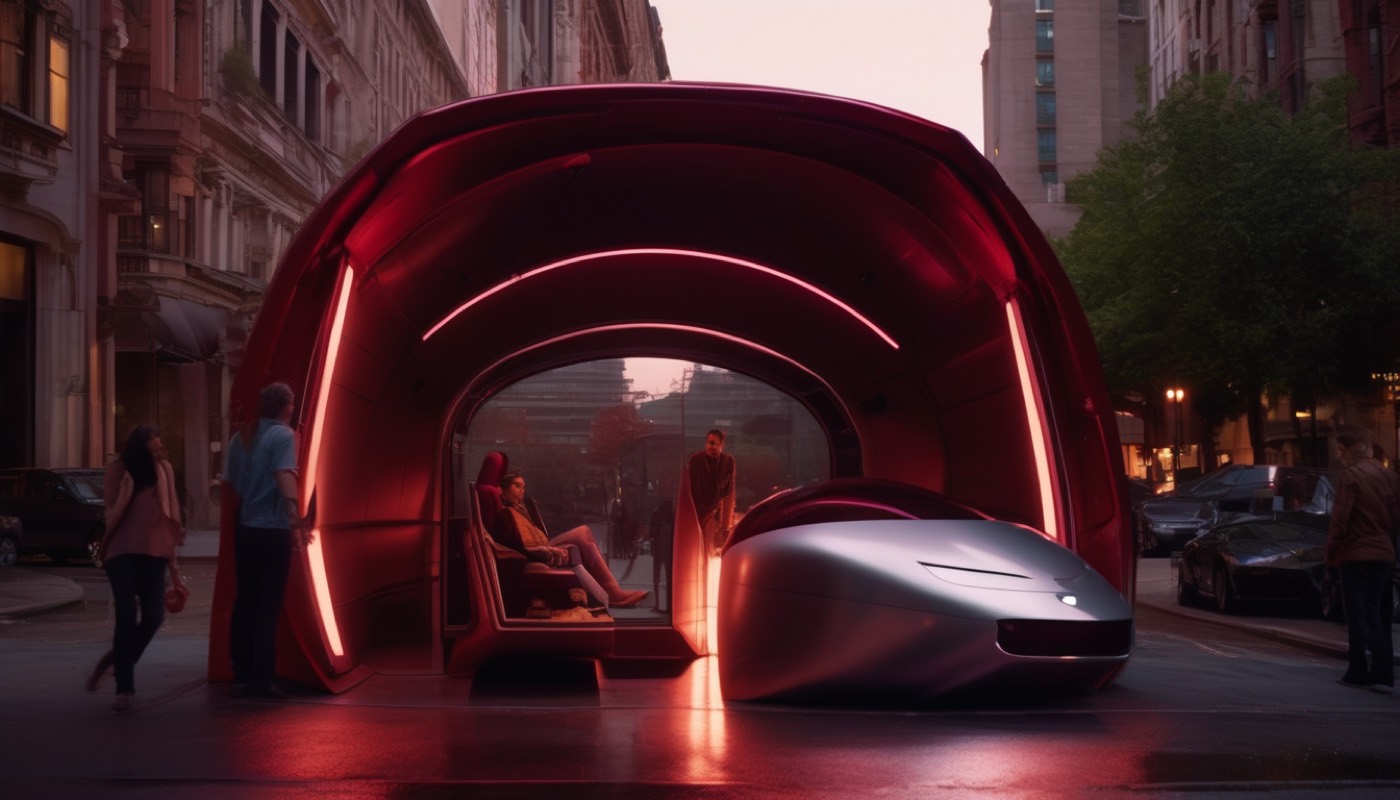
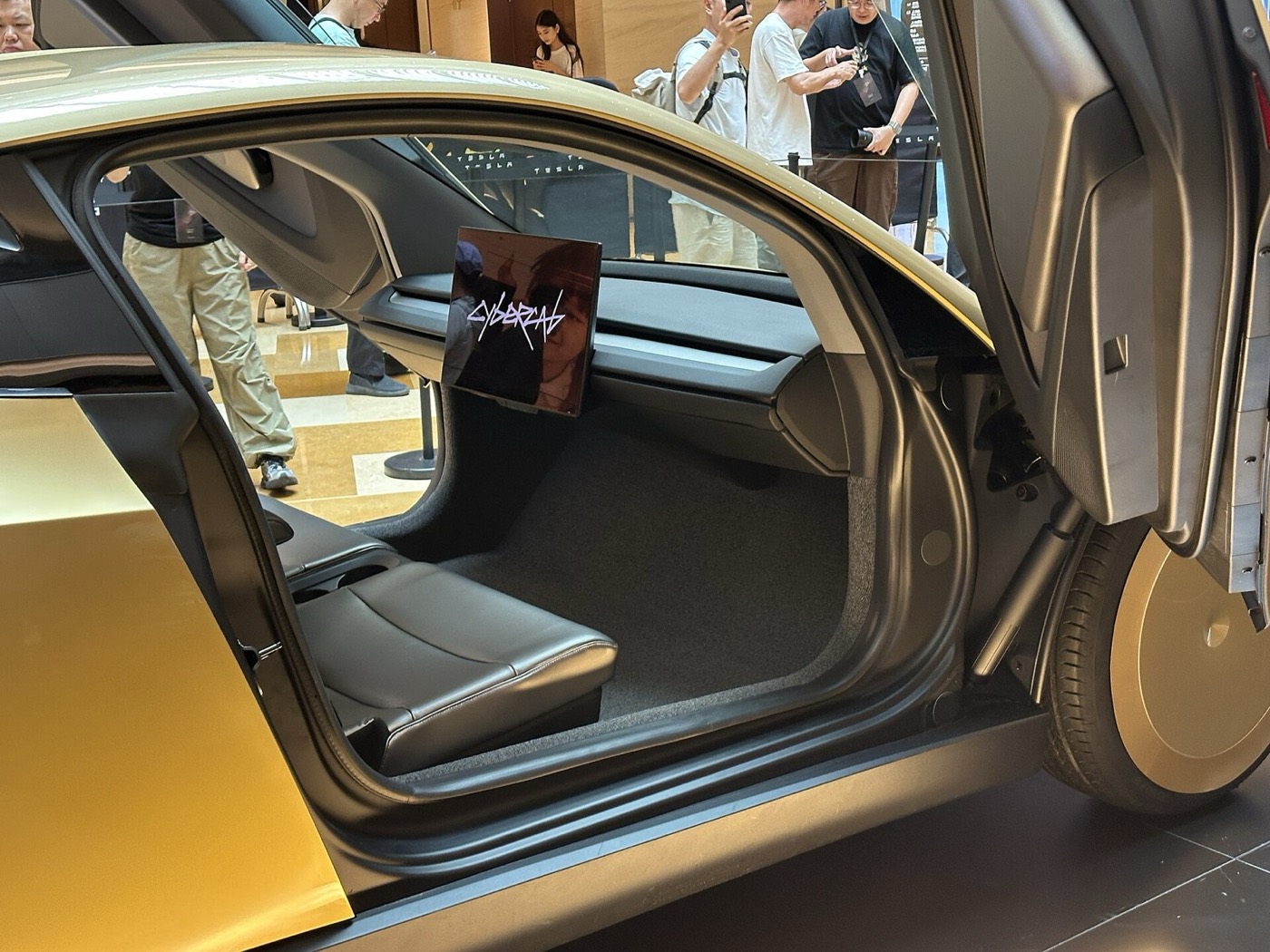
Tesla's bet is the opposite. It says a car needs only cameras, as a human needs only eyes.
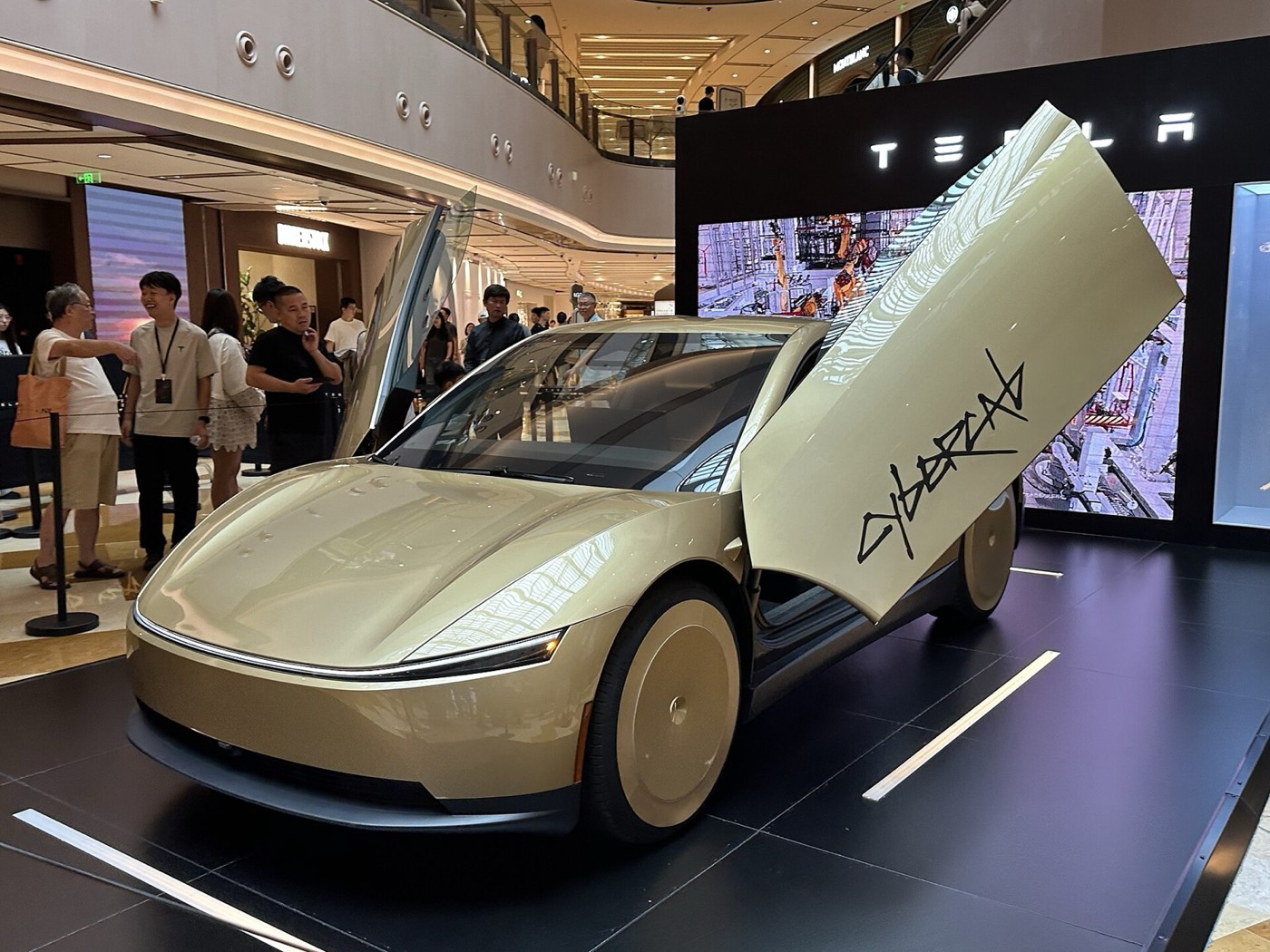
Here is the Cybercab, the car built around that idea. It has two seats, gull-wing doors and no mirrors.
It has no lidar and no radar. Its cameras feed a neural network, a program that learns from examples, trained on data from Tesla's large fleet of ordinary cars.
This is the Cybercab again, from a different angle. It is the purest form of Tesla's argument, because it has no other sensor to fall back on. If the cameras are not enough, nothing else will make up for it.
Before the Cybercab, Tesla ran robotaxis in Model Y cars. By August twenty twenty-six they were in limited mapped areas of six cities in Texas and Florida.
The service is Austin, Dallas and Houston in Texas, and Miami, Orlando and Tampa in Florida.
Only Austin has had some rides with no safety monitor on board. That began in January.
8. Lidar or cameras: who is right?
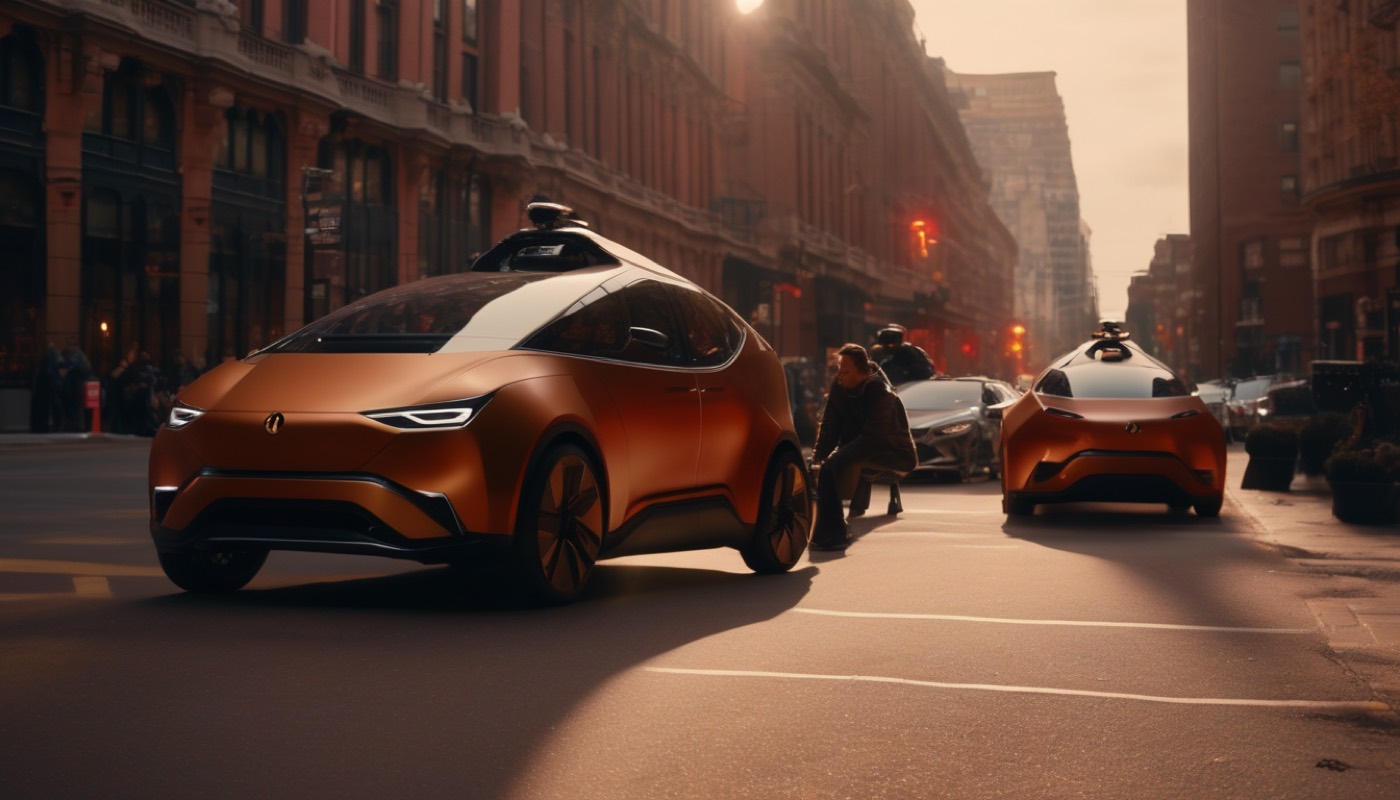
Here are the two arguments, side by side.
The case for lidar is redundancy. A second kind of sensor is a second opinion, and it does not fail in the same way. Waymo says that is what makes it safe to take the human out.
The case for cameras is cost and scale. Cameras are cheap and cars can be built by the million. If they work, the robotaxi becomes far cheaper to run.
What does the evidence show so far? Waymo has driven a very large number of rider-only miles with lidar. Tesla's fleet with no one on board is small, and the Cybercab's is only forty-five vehicles. So the honest answer is that lidar has been proven at scale, and cameras alone have not yet been tested at scale.
That is not the same as saying cameras cannot do it. It means nobody can yet prove the claim either way.
9. Is it actually safer?
Waymo publishes its own safety record. Through June twenty twenty-six, its cars had driven two hundred and seventy-one million miles with no one at the wheel.
Compared with human drivers on the same roads, Waymo reports eighty-two per cent fewer crashes that caused an injury. It reports ninety-three per cent fewer injury crashes involving pedestrians. And ninety-five per cent fewer crashes with serious injuries or worse.
Here is that first figure, drawn to scale. Set the human benchmark at a hundred crashes. On the same roads, Waymo has about eighteen. The benchmark uses police crash reports, which miss some crashes, so Waymo adds a correction for the ones that were never reported.
Independent researchers have checked it. A peer-reviewed paper in the journal Traffic Injury Prevention, in twenty twenty-five, looked at the first fifty-six point seven million miles. It found ninety-two per cent fewer injury crashes involving pedestrians.
The insurer Swiss Re looked at insurance claims instead. In December twenty twenty-four it studied twenty-five million miles. Waymo had eighty-eight per cent fewer property damage claims, and ninety-two per cent fewer injury claims, than human drivers.
But there are limits. Most of this data comes from Waymo, from the cities where Waymo chooses to drive. Serious injuries are rare, so the numbers behind those figures are small.
And trust has been dented. In October twenty twenty-five, federal regulators began investigating Waymo cars that passed stopped school buses. Waymo recalled its software in December. In January, a second body, the National Transportation Safety Board, opened its own inquiry.
10. Edge cases, cost and rules

The hardest part of driving is the rare event. A school bus with flashing lights, a blocked road, a flood, a person waving the traffic on. Each one is rare, and a driverless car must handle all of them.
Cost matters too. Each robotaxi has been expensive, and Waymo says its new hardware is cheaper. Making the car cheap enough is what turns a trial into a business.
The rules were written for cars with drivers. Federal safety standards assume a steering wheel, pedals and a mirror. A car built without them has to be fitted into rules that never imagined it.
The American safety regulator, NHTSA, has begun rewriting them. In March twenty twenty-six it proposed changing the rule on the gear display. In June, it proposed dropping the foot brake requirement for cars built never to be driven by a person.
A maker can also ask for an exemption. In July, NHTSA gave Amazon's Zoox one, covering eight standards. It is capped at two and a half thousand vehicles a year. Tesla has not asked for one, and on the tenth of September NHTSA ordered it to prove the Cybercab is legal, by the thirtieth.
Britain has its own timetable. Its Automated Vehicles Act allows pilot taxi services from the spring of twenty twenty-six, with no safety driver on board. The full regime is planned for the second half of twenty twenty-seven.
Germany is slower still, and Waymo's Munich launch is aimed at late twenty twenty-seven.
11. The rest of the world

China has been running robotaxis at scale for years, and the numbers are large.
Baidu's Apollo Go reported more than four million fully driverless rides in the second quarter of twenty twenty-six. That brought its total to more than twenty-three million rides by the end of June. It now operates in twenty-eight cities.
Pony.ai reported a fleet of one thousand nine hundred and seventy-five robotaxis. It has raised its target to three and a half thousand by the end of the year. Pony.ai has also agreed with Uber to deploy more than two thousand robotaxis in Europe.
The companies are spreading out from China. Baidu has expanded into the Middle East, and into London.
Waymo has been testing in London since April, with about a hundred Jaguars and a safety specialist on board. Its plan for Munich is late twenty twenty-seven.
The earlier hope of a London service in twenty twenty-six is now slipping. The first paying riders there have yet to be carried without a person on board.
12. Forwards or backwards?
So, will robotaxis be ordinary transport within a decade?
The case for forwards is real. Waymo is carrying paying passengers in fourteen cities, with a safety record that has been checked by outsiders. In China, robotaxis are already carrying millions.
The case for backwards is real too. Promises have slipped before, from Tesla's timetables to London's. The safety data comes largely from one company. And the rules are still being rewritten.
Four things could make it slip: a serious accident that breaks public trust, rules that lag behind the technology, hardware that stays too costly, and weather or rare events that still confuse the car.
My assessment is this. In a growing number of large American and Chinese cities, robotaxis will be ordinary within ten years. Across the rest of the world, they will arrive more slowly, and city by city.
So driverless cars are here, but only in certain places. Forwards, then, but not yet everywhere, and only as fast as trust and the rules allow.
Sources and credits
Photo credits (Wikimedia Commons)
- Stanley, Stanford's winning 2005 DARPA Grand Challenge vehicle: unknown, Public domain - https://commons.wikimedia.org/wiki/File%3AStanley2.JPG
- Stanley with the 2005 Grand Challenge award: unknown, Public domain - https://commons.wikimedia.org/wiki/File%3ADARPAGrandChallenge2005-StanleyAward.jpg
- Highlander, Carnegie Mellon's Hummer H1 entry at the 2005 Grand Challenge start: unknown, Public domain - https://commons.wikimedia.org/wiki/File%3AHighlanderstart.JPG
- Tesla Cybercab, no wheel or pedals: JustAnotherCarDesigner, CC0 - https://commons.wikimedia.org/wiki/File%3ATesla_Cybercab_001.jpg
- Tesla Cybercab, second view: JustAnotherCarDesigner, CC0 - https://commons.wikimedia.org/wiki/File%3ATesla_Cybercab_003.jpg
- Tesla Cybercab, third view: JustAnotherCarDesigner, CC0 - https://commons.wikimedia.org/wiki/File%3ATesla_Cybercab_005.jpg


Primary sources
- Waymo Safety Impact hub, waymo.com/safety/impact, data through June 2026 - 271.3M rider-only miles; 82% fewer injury-causing crashes, 93% pedestrian, 95% serious injury.
- TechCrunch, 'Waymo accelerates robotaxi expansion with launches in Denver, San Diego, and Tampa', 1 September 2026 - 14 cities, more than 4,000 vehicles, Ojai minivan.
- Cybercab launch reports (Yahoo/Motor1, Forbes, Quartz), 3-4 September 2026 - two seats, no wheel or pedals, 45 registered in Texas, public rides from 4 September.
- Electrek, 15 September 2026 - NHTSA Special Order to Tesla of 10 September 2026; Zoox Part 555 exemption (July 2026).
- Federal Register, FMVSS No. 102 modernization NPRM, 16 March 2026; FMVSS No. 135 modernization NPRM, 26 June 2026.
- Traffic Injury Prevention (Taylor & Francis), vol. 26, 2025, 'Comparison of Waymo Rider-Only crash rates by crash type to human benchmarks at 56.7 million miles'.
- Waymo and Swiss Re, 19 December 2024 - 25.3M miles; 88% fewer property damage and 92% fewer bodily injury claims.
- Waymo blog, 'Meet the 6th-generation Waymo Driver', 19 August 2024; 'Beginning fully autonomous operations with the 6th-generation Waymo Driver', 12 February 2026.
- TechCrunch, 23 January 2026 - NTSB inquiry into Waymo and school buses; NHTSA probe October 2025; recall December 2025.
- CleanTechnica, 6 February 2026, on the Senate hearing of 4 February 2026 - Waymo remote assistance staffing.
- Baidu Q2 2026 results, 18 August 2026 (SEC 6-K) - Apollo Go 4.1M driverless rides in the quarter, more than 23M cumulative at 30 June 2026, 28 cities. Pony AI Q2 2026 results, 18 August 2026 - fleet 1,975, target 3,500.
- TechCrunch, 14 April 2026 (Waymo begins testing in London); TechTimes, 27 August 2026 (Munich, late 2027).
- UK Department for Transport - Automated Vehicles Act 2024 and the accelerated pilot scheme (spring 2026; full regime second half of 2027).
- DARPA Grand Challenge 2004 and 2005 records, via Wikipedia (darpa.mil pages not reachable 26 Sep 2026); CNBC, 5 December 2018 (Waymo One).
Not regulated financial advice.