
3Com: How It Began, Its Ideas, Products and the People Who Ran It
In 1973, at Xerox's Palo Alto Research Center, Robert Metcalfe co-invented Ethernet - the way most office computers are still wired together. Xerox would not sell it. In 1979 Metcalfe left and founded 3Com, with Howard Charney and others, to sell the idea himself.
This video follows 3Com from that departure to the present day: its first Ethernet adapter cards for the DEC VAX and the IBM PC (1981-84), the software and the 1987 Bridge Communications merger that brought in Eric Benhamou, Benhamou's decade turning the company into a maker of hubs, routers and switches for the corporate network boom, and the costly 1997 merger with US Robotics that brought modems and the Palm handheld computer business along with it.
It covers the unwind - Palm's 2000 stock-market debut and full spin-off, and US Robotics' own spin-off the same year - the leadership handover from Benhamou to Bruce Claflin, and the decision to bet the company's future on a Chinese joint venture with Huawei, H3C, built from 2003 and wholly owned by 2007.
It ends with Hewlett-Packard's 2009 agreement to buy what was left of 3Com for about $2.7 billion - mainly for H3C's China business - and follows that business afterward, through HP's 2015 sale of a majority stake to China's Unisplendour and HPE's own slower, two-stage exit, completed in May 2026.
Every figure carries its date and source, and two points where the brief's own figures did not match the primary sources have been corrected and explained in the fact sheet.
Educational documentary. Not financial or investment advice.
In these topics
Chapters
- A lab idea nobody wanted
- Founding 3Com, 1979
- From cards to a company, 1981-1984
- Building the networked office, 1980s
- Benhamou's decade and the hub-and-router era
- The US Robotics gamble, 1997
- Palm problems and the unwind, 1998-2000
- New leadership, hard years, 2000-2003
- Betting on China: the H3C joint venture, 2003-2007
- 3Com's final years as an independent company, 2007-2009
- The HP deal, 2009-2010
- After 3Com: H3C's life inside HP and beyond
Video notes
1. A lab idea nobody wanted
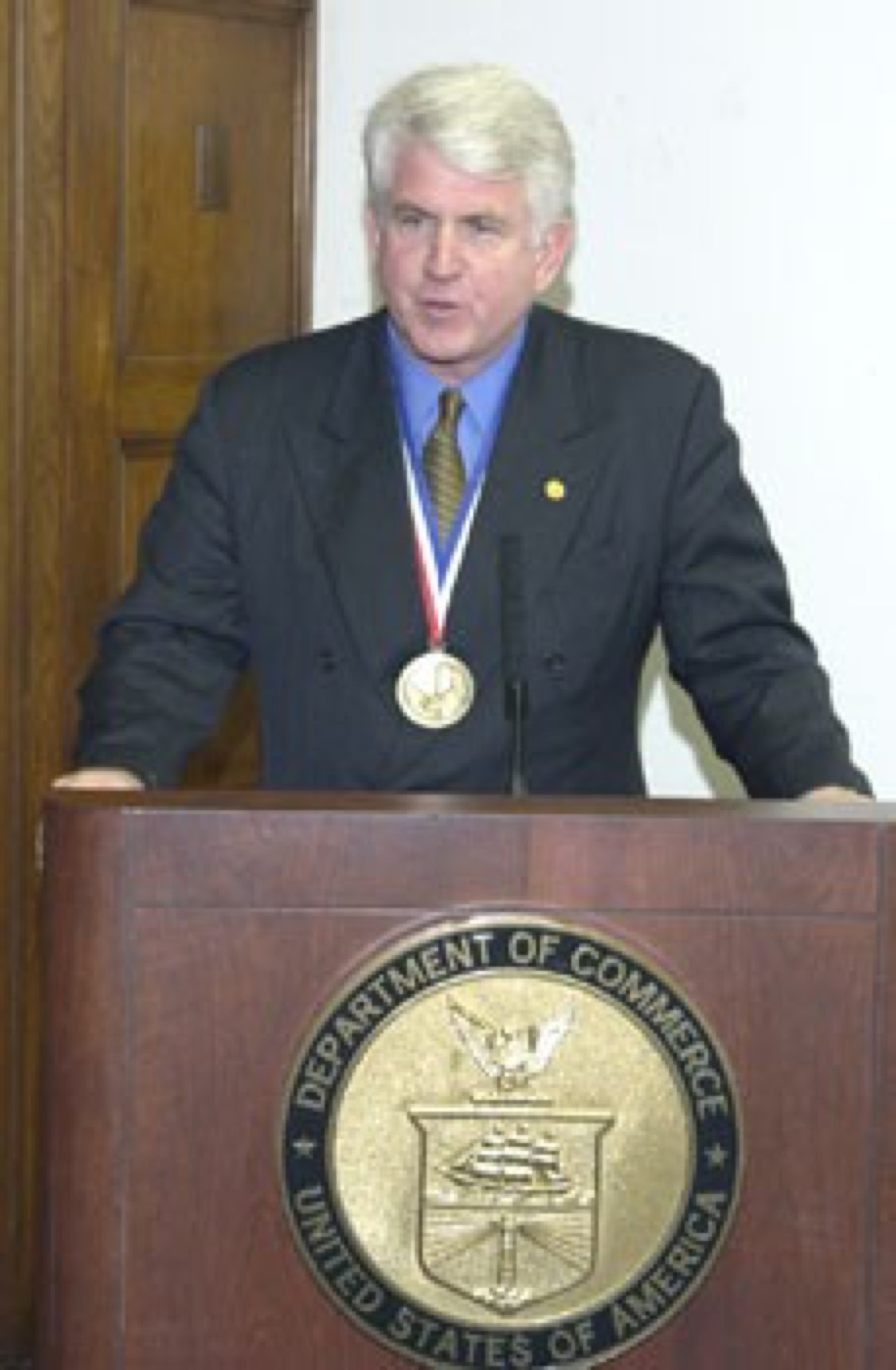
In July 2025, a company called Hewlett Packard Enterprise completed a fourteen-billion-dollar purchase of a networking firm called Juniper Networks. It was the latest round of a deal-making pattern that goes back decades in that industry. The first big one of that kind closed in 2010, when an earlier form of the same company bought a firm called 3Com.
This is where that firm came from.
Robert Metcalfe joined Xerox's Palo Alto Research Center, known as PARC, in 1972. In 1973, working with a colleague named David Boggs, he invented a way of wiring computers together so they could pass data between each other at speed. He called it Ethernet, and it is still how most office computers are wired today.
Metcalfe wanted Xerox to sell Ethernet as a product. Xerox made photocopiers and had just built the first modern personal computer, but it had no interest in selling networking hardware to other companies' machines.
The timeline on screen covers Metcalfe's years at Xerox. He joined the lab in 1972. He and Boggs invented Ethernet in 1973. In 1976 the two of them wrote the idea up formally. By 1979 he had left.
Writing an invention up does not make a company want to sell it. Xerox still would not.
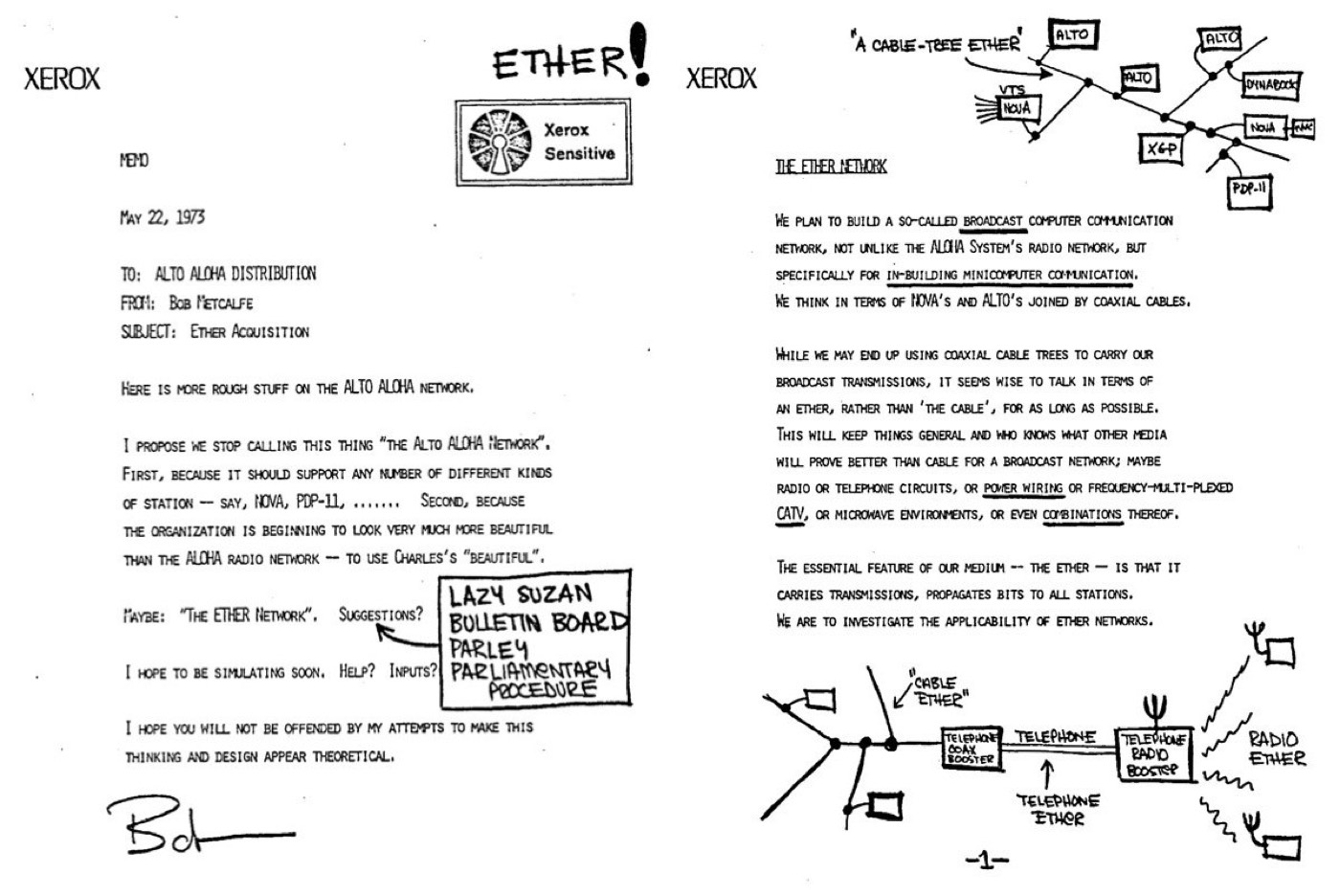
This is the actual memo, now held as an early record of the invention. It sets out, in plain engineering language, how computers on the same wire should take turns to speak without talking over each other. Xerox kept that idea inside its own machines for years afterward.
By 1979, Metcalfe had had enough. He quit Xerox to sell the idea himself.
2. Founding 3Com, 1979
Metcalfe founded a company in his Palo Alto apartment in June 1979, with Howard Charney and a small group of other engineers. He called it 3Com, a contraction of three words: Computer, Communication, Compatibility.
The map on screen shows where this happened. Xerox PARC sits in Palo Alto, a few streets from the apartment where 3Com began. The company would later move its headquarters a few miles south, to Santa Clara.
The idea was simple. Ethernet let computers in the same room, or the same building, talk to each other over a wired connection called a local area network, or LAN. Xerox had built that only for its own machines. 3Com's bet was that every computer company would eventually want it, and would pay an outside supplier to provide it.
This is what the new company set out to do. Sell Ethernet hardware to any computer, not just Xerox's own. Write the software that let machines on a network actually share something useful. Make money as the industry's independent networking supplier, rather than as one more computer maker.
That bet needed a product to sell. It did not yet have one.
3. From cards to a company, 1981-1984
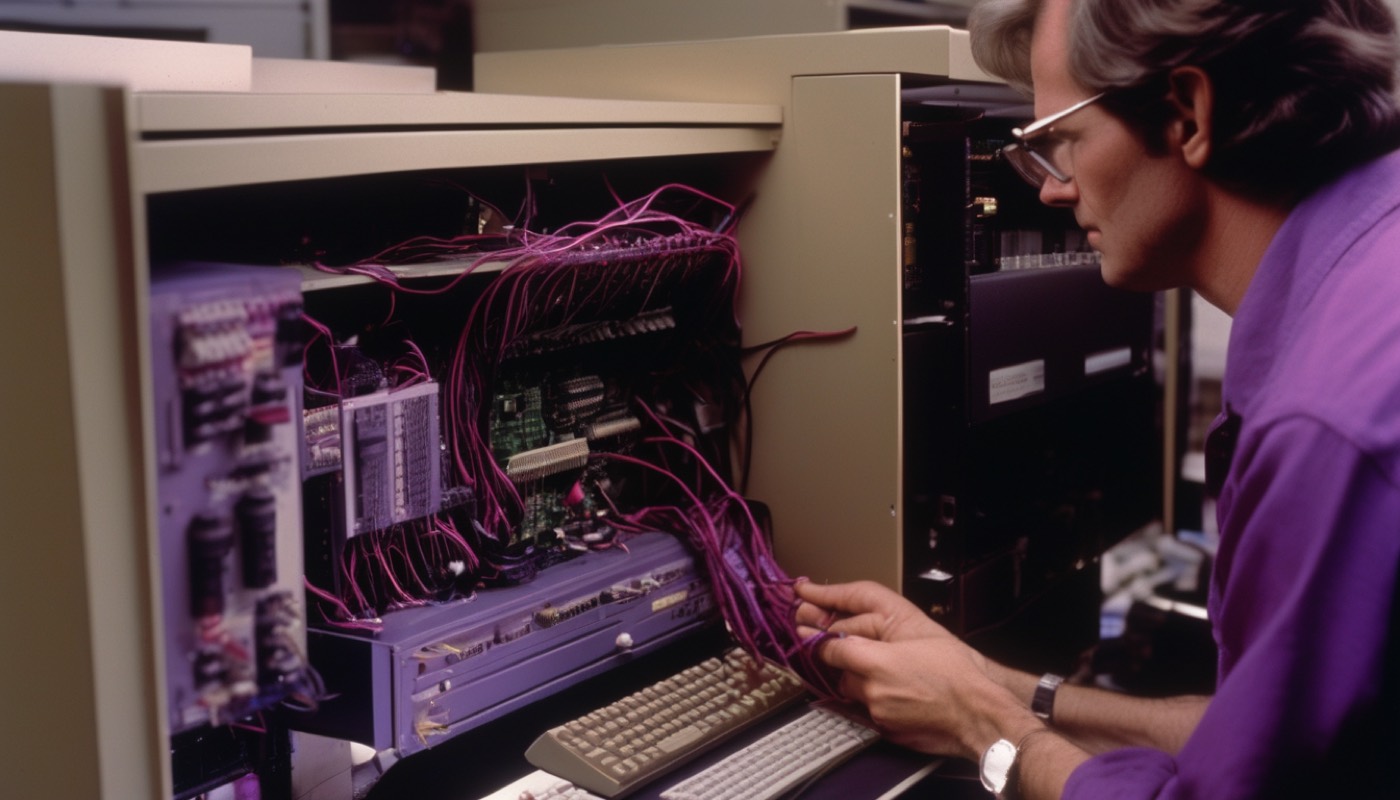
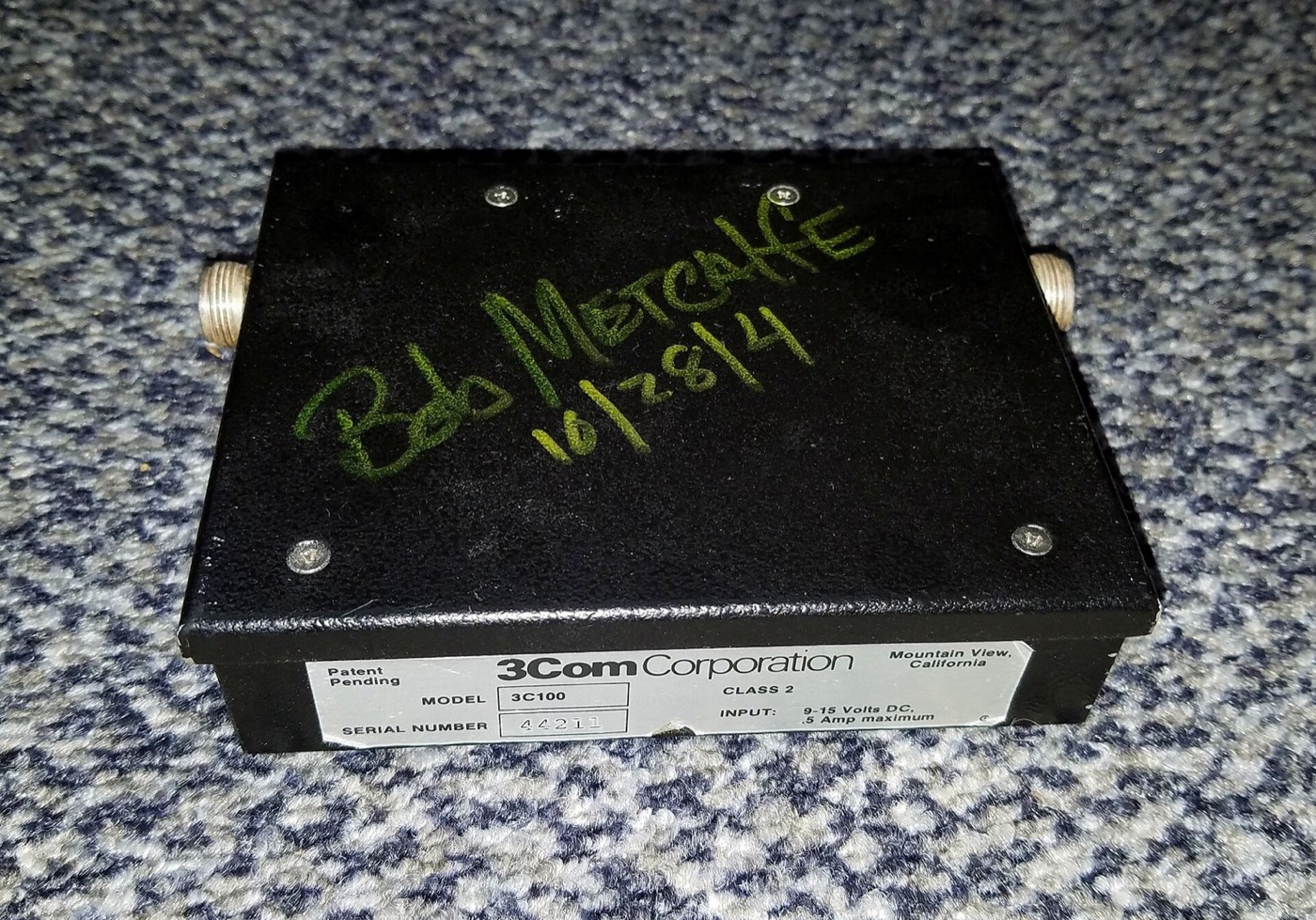
3Com shipped its first product in March 1981: an Ethernet transceiver and an adapter, the piece of hardware that gives a computer a socket for the network cable and translates its signals for the wire.
This is one of those early adapters, a connector signed by Metcalfe himself in later years. 3Com built versions for several of the computers offices actually owned at the time, including the DEC minicomputers and, from October 1982, the IBM Personal Computer.
The card for the IBM PC was called the 3C500. It was designed by an engineer named Ron Crane and was among the very first Ethernet cards built for that machine.
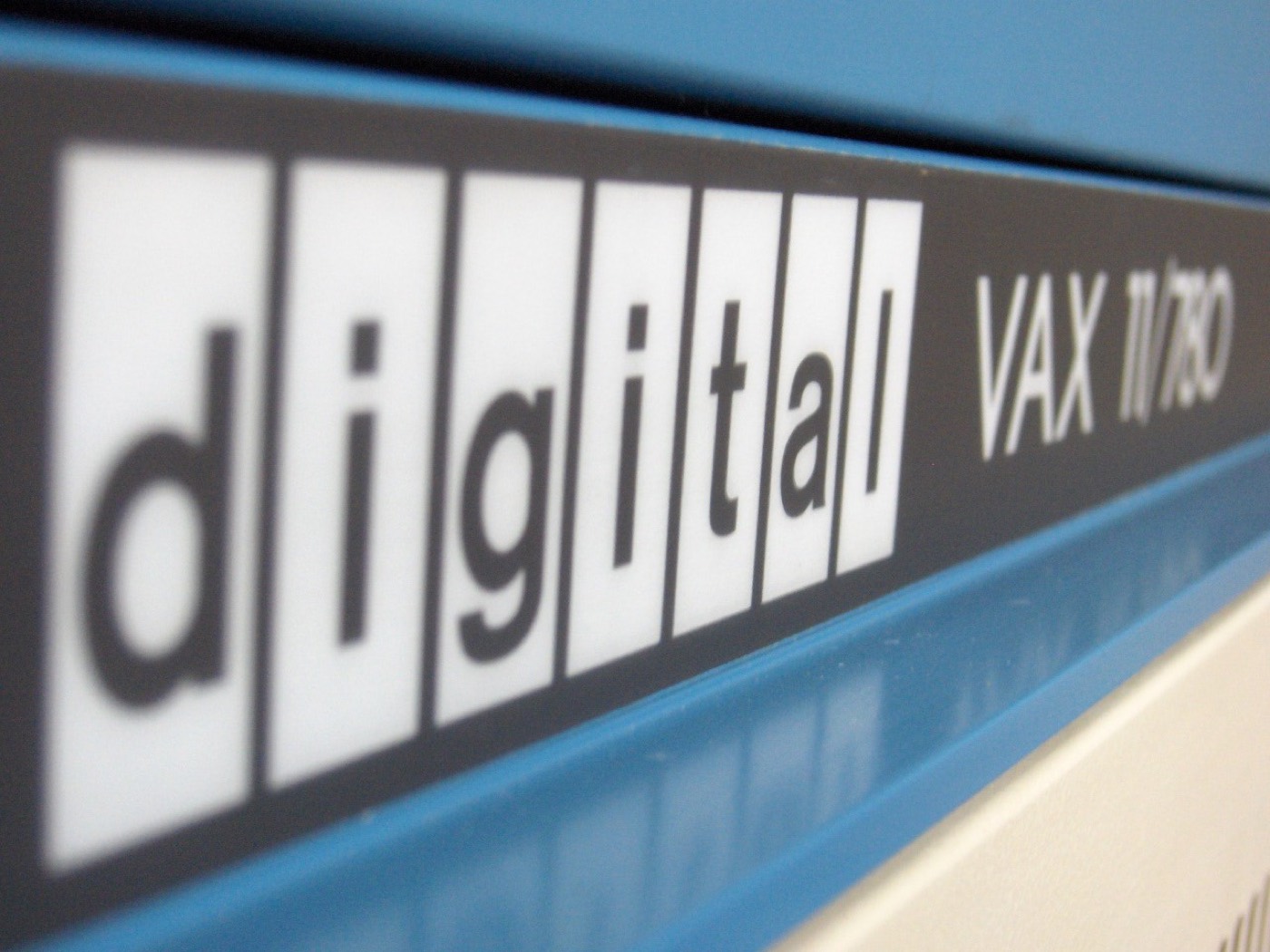
This is a VAX, a DEC minicomputer and one of the machines those first cards were built to connect. Each adapter 3Com sold meant one more computer able to join an Ethernet network, which is exactly the business Metcalfe had wanted Xerox to be in.
3Com branded its early adapter line EtherSeries, then EtherLink, and built the software to go with it.
The timeline on screen shows how fast this happened. The first product shipped in March 1981. The IBM PC card followed in October 1982. In 1984, 3Com went public, raising about ten million dollars on the stock market.
A company that had been three people in an apartment five years earlier now had the money, and the product line, to grow.
4. Building the networked office, 1980s

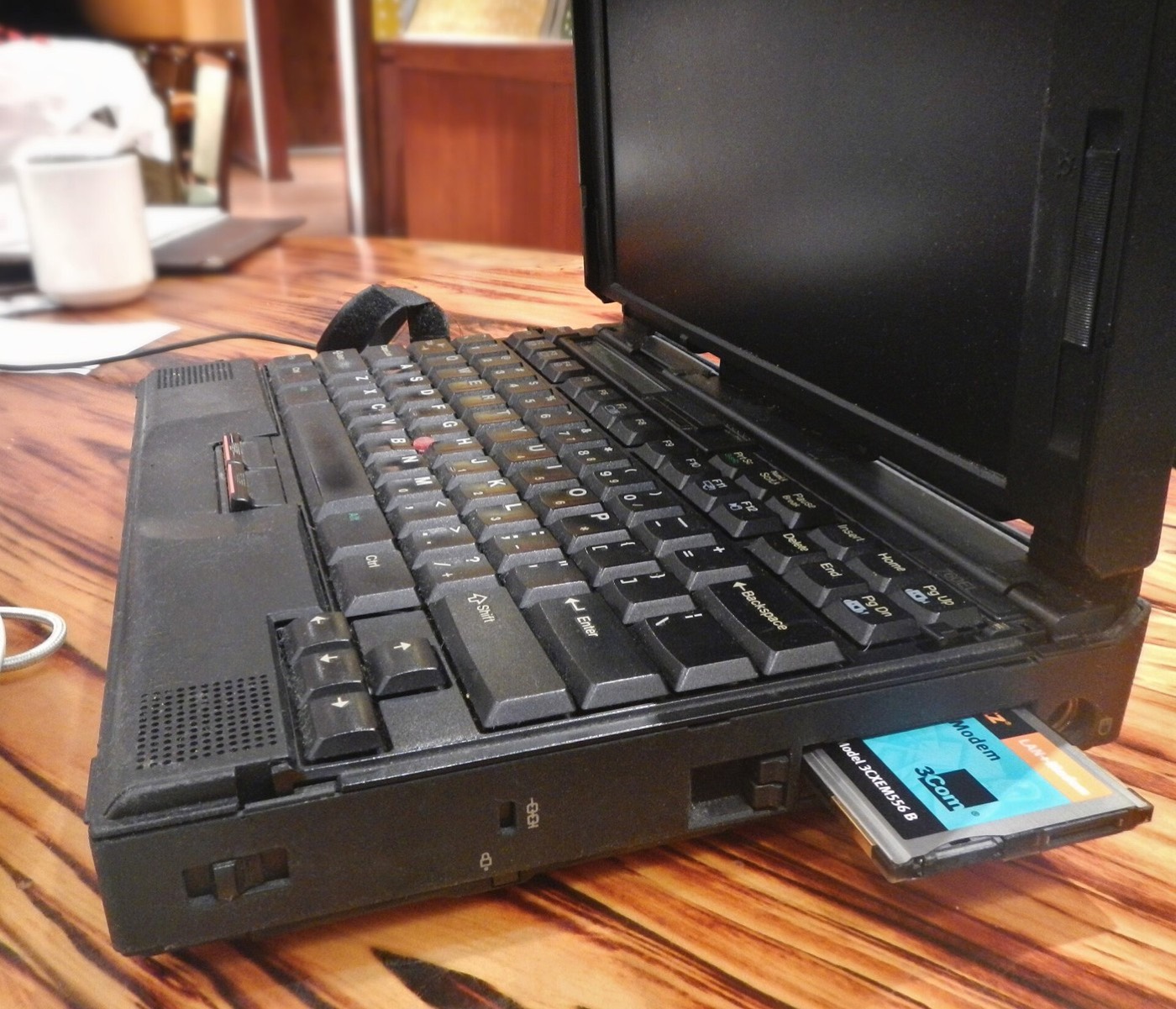
Selling the cable and the card was only half the job. Once a room full of computers could talk to each other, somebody had to write the software that gave them something worth saying.
This is one of 3Com's network cards, the circuit board that plugs inside a computer and gives it that Ethernet connection. 3Com built software to go with cards like it. A package called Three Plus Share let a network of PCs share one set of files. A companion, Three Plus Mail, let them send messages to each other — years before most offices had anything like email.
The company still needed a way to link separate networks together, rather than just computers within one. In September 1987, 3Com bought a company called Bridge Communications for about $151 million to get that technology.
The diagram on screen shows what the Bridge deal added. 3Com already had the cards and the file-sharing software for one office network. Bridge brought gateways and devices for joining separate networks into one larger system — the beginning of what would later be called routing.
Bridge brought something else into 3Com: an engineer named Eric Benhamou, who had been its vice president of engineering. He would run 3Com for the next decade.
5. Benhamou's decade and the hub-and-router era
Eric Benhamou became 3Com's chief operating officer in 1990. He became chairman of its board in 1994. In total, he led the company as chief executive for about ten years.
The timeline on screen shows his rise inside the company. He arrived through the Bridge merger of 1987. He was chief operating officer by 1990, then chairman by 1994.
Through the 1990s, corporate offices stopped wiring one network at a time and started wiring whole buildings, then whole companies. That meant new kinds of hardware.
A hub is a box that joins several computers' cables together into one network. A router is a box that decides which network a piece of data should travel to next, when a company has more than one. A switch does a router's job faster, inside a single building. The diagram on screen maps 3Com's own versions of each against the decade they arrived in. Network cards came first, in the early 1980s. Hubs and Bridge's gateway technology followed from the late 1980s. Then came 3Com's own NetBuilder routers and SuperStack switches, through the 1990s.
By the time Benhamou's decade was ending, 3Com's hardware sat inside a large share of the corporate networks being built. The next decision he made would nearly undo it.
6. The US Robotics gamble, 1997
On 12 June 1997, 3Com completed a merger with U.S. Robotics, a company best known for modems — devices that let a computer send data down an ordinary telephone line.
The figures on screen show the size of the deal. At the share prices when it was announced in February, the merger was valued at about $6.6 billion. By the time it closed in June, the same stock swap was worth closer to $8.5 billion, because 3Com's own share price had risen in between.
U.S. Robotics did not come alone. Three years earlier, it had bought a small company called Palm, which made a handheld computer called a personal digital assistant, or PDA. That business arrived inside the merger too.
The diagram on screen shows what 3Com took on in one deal. Its own networking cards, hubs and routers, joined to U.S. Robotics' modems, joined to Palm's handheld computers. Three different products, for three different kinds of customer, now inside one company.
Putting a networking-hardware maker, a modem maker and a handheld-computer maker under one roof turned out to be harder than signing the paperwork.
7. Palm problems and the unwind, 1998-2000
Through 1998 and 1999, the combined company struggled to manage three businesses that had little to do with each other. Palm's handhelds needed a consumer sales operation; 3Com's switches needed a corporate one. Investors wanted to value the fast-growing Palm business on its own, not buried inside a networking company's results.
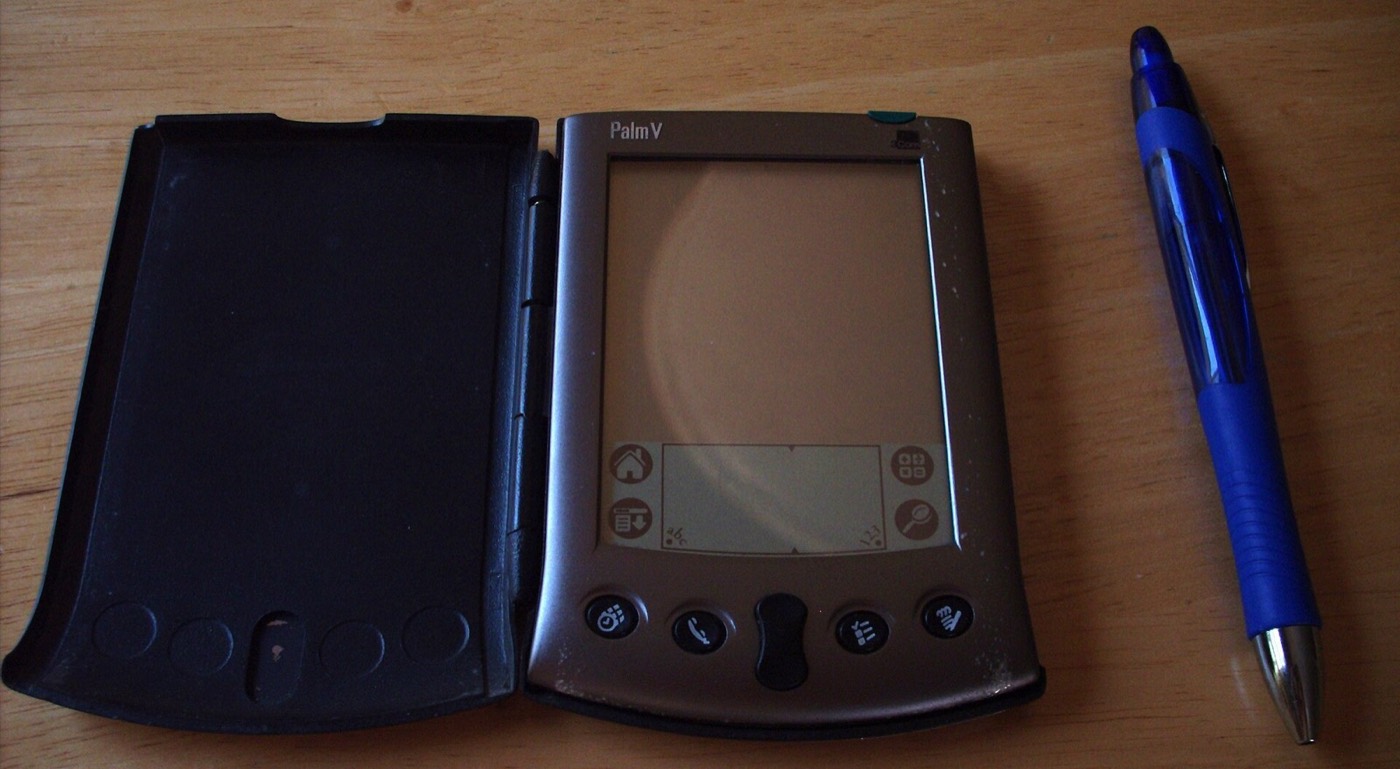
This is a Palm V, one of the handheld computers 3Com now owned through the merger. By 1999 these devices were selling well, and 3Com decided they were worth more as a separate, focused company than as one division among many.
On 2 March 2000, 3Com sold a slice of Palm to the public in a stock-market listing, while keeping most of the company for itself. A spin-off is the next step after that. Instead of selling its remaining shares, 3Com gave them directly to its own shareholders, who became Palm shareholders in their own right.
The timeline on screen shows how it happened. Palm's shares went on sale 2 March 2000. In June, 3Com spun off its remaining modem business as a new, independent US Robotics. Then, with a record date of 11 July, 3Com distributed the rest of its Palm shares directly to its own stockholders on 27 July.
By the end of that July, the firm that had bought both the modem maker and the handheld-computer maker three years earlier owned neither. What was left was the business Benhamou had actually built: networking hardware for offices.
8. New leadership, hard years, 2000-2003
On 28 September 2000, 3Com announced that Benhamou would step down as chief executive, handing the role to Bruce Claflin, the company's president. The change took effect on 1 January 2001. Benhamou stayed on as chairman.
Claflin's job was to make 3Com smaller and more focused after the U.S. Robotics years. The company pulled back from selling networking gear to ordinary consumers and concentrated on corporate customers instead, the market 3Com's cards and switches had always been built for.
Under Claflin, 3Com narrowed its business twice over: out of consumer products, and out of the low end of corporate networking, where cheaper competitors were taking share. What remained was a smaller company looking for its next source of growth.
That search would lead the company to China.
9. Betting on China: the H3C joint venture, 2003-2007
In November 2003, 3Com and the Chinese telecommunications firm Huawei formed a joint venture. It was a company owned jointly by both of them, built to make low-cost switches and routers. They called it Huawei-3Com, or H3C.
The map on screen shows where. H3C was based in Hangzhou, a city south-west of Shanghai. Huawei itself was headquartered in Shenzhen, in southern China, where 3Com now had a manufacturing partner with a much lower cost base than its own factories.
The venture began as an even split. Three and a half years later, it was not. In January 2006, 3Com bought an extra 2 per cent of H3C from Huawei. The price was $28 million. That took 3Com's own stake to 51 per cent.
Running H3C from California proved difficult. Scott Murray, who had just taken over as 3Com's chief executive from Claflin, resigned after only seven months, saying the time the China venture demanded did not fit with his young family. Edgar Masri replaced him in August 2006.
In 2007, 3Com went the rest of the way. It bought Huawei's remaining 49 per cent of H3C for $882 million, taking full ownership.
The diagram on screen shows the ownership change in three steps. First, an even split, in 2003. Then 3Com ahead, at 51 per cent, from 2006. And full ownership, from 2007. Three and a half years turned a 50/50 Chinese partnership into a wholly-owned subsidiary.
10. 3Com's final years as an independent company, 2007-2009
With H3C fully owned, its enterprise switches and routers became the part of 3Com that was actually growing. The company's older networking business in the United States, selling into a market that had matured and grown cheaper for two decades, kept shrinking.
The timeline on screen shows how often the top job changed hands while this played out. Claflin left in January 2006. Murray lasted seven months, to August 2006. Masri ran the company from August 2006. Robert Mao, originally hired to manage the Huawei relationship, became chief executive in 2008.
Under Mao, 3Com's pitch to the market was no longer about American corporate networking alone. It was about a profitable Chinese manufacturing and sales operation, attached to a shrinking Western brand.
By 2009, that was the whole of 3Com's story in two parts: a legacy networking business past its best years, and a Chinese joint-venture-turned-subsidiary that other, larger companies had started to notice.
One of those companies was about to make an offer.
11. The HP deal, 2009-2010

On 11 November 2009, Hewlett-Packard agreed to buy 3Com for $7.90 a share in cash, an enterprise value of about $2.7 billion.
The figures on screen show the terms: $7.90 a share, roughly $2.7 billion in total, agreed 11 November 2009.
HP's own announcement said plainly what it was after. Dave Donatelli ran HP's server and networking business at the time.
He put it plainly, in the company's statement the day the deal was agreed: "By acquiring 3Com, we are accelerating the execution of our Converged Infrastructure strategy and bringing disruptive change to the networking industry."
HP's real prize was less the fading American hardware brand than H3C's sales channel into China, and a switch business large enough to compete with the market leader, Cisco. The deal closed on 12 April 2010.
The map on screen shows the two places this deal was really about. HP was run from Palo Alto, California. The business it most wanted, H3C, was based in Hangzhou, China, and that is where the deal's value really closed, in April 2010.
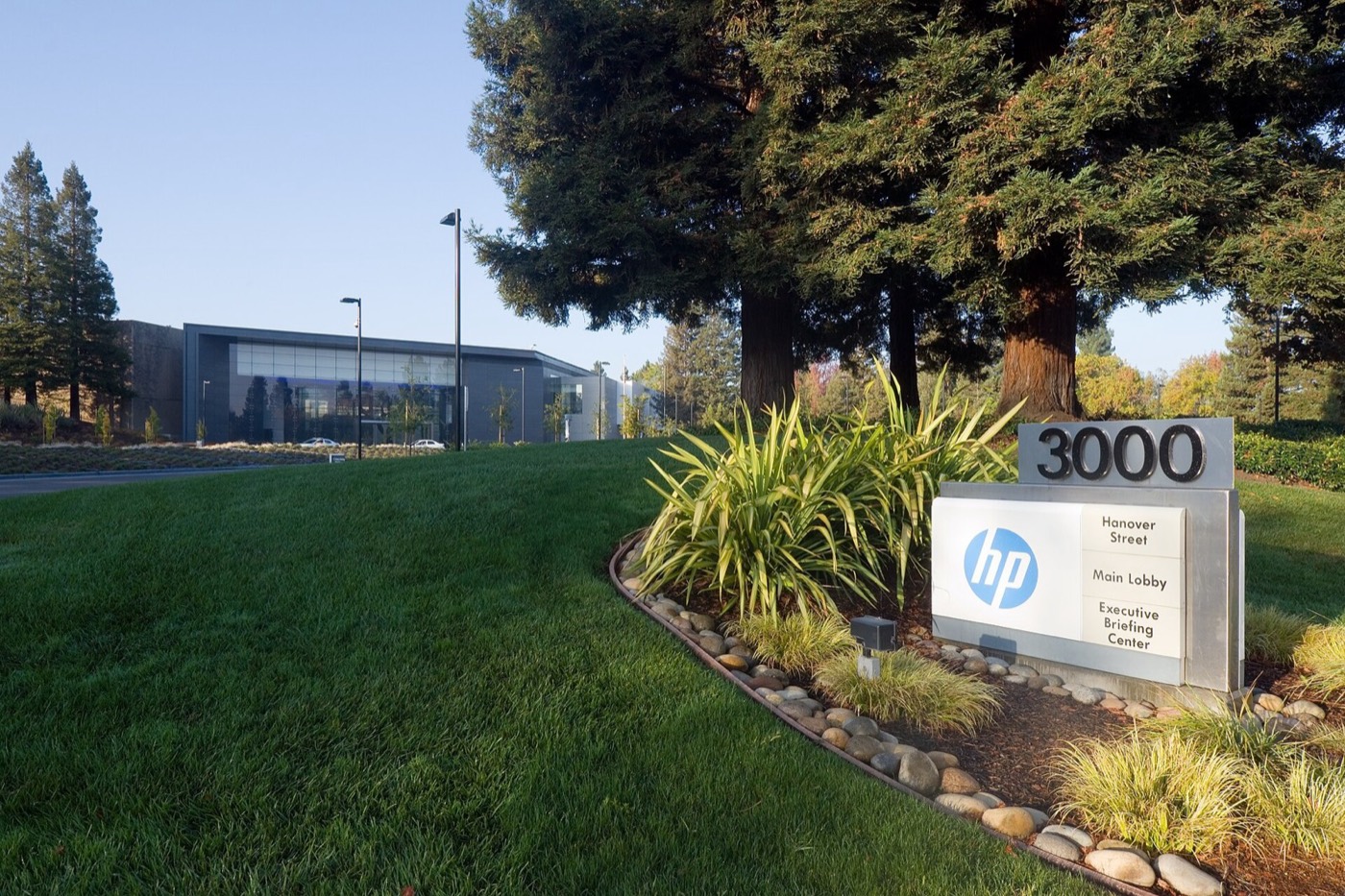
This is HP's headquarters in Palo Alto, a few miles from the apartment where Metcalfe had started 3Com thirty-one years earlier. After the deal closed, 3Com stopped existing as an independent company.
12. After 3Com: H3C's life inside HP and beyond

H3C's switches and routers did not disappear. They carried on, first as HP Networking, then as part of Hewlett Packard Enterprise once HP split itself in two in 2015.
The map on screen shows where its new owners sit. H3C itself stayed in Hangzhou. The company buying into it, Unisplendour, is controlled by Tsinghua Holdings, based in Beijing.
The timeline on screen follows that China business after 3Com itself was gone. In 2016, HP sold 51 per cent of H3C to Unisplendour, backed by China's Tsinghua Holdings, for about $2.3 billion. In 2023, HPE agreed to sell its remaining 49 per cent too. That sale came in two later parts. The first was 30 per cent, in September 2024. The last was 19 per cent, in May 2026.
Spread across four separate steps and ten years, HPE's exit from the business 3Com had built in China finally finished.
Add up every stage of that exit, and the figures on screen show the total. About $2.3 billion in 2016. Roughly $3.5 billion agreed for the rest in 2023, paid out in its two later parts. Across all of it, HPE's own reporting puts its cumulative proceeds from H3C at around $5.8 billion.
What began as Robert Metcalfe's argument with Xerox over who should be allowed to sell Ethernet ended, decades later, as a sale of Chinese switch-making shares to Chinese buyers. The hardware itself is still running, inside networks that have never heard the name 3Com.
And the pattern that absorbed 3Com has not stopped. The points on screen set out where it has gone since. HPE's purchase of Juniper Networks, closed in July 2025, folds another independent networking company into the same consolidating industry that 3Com once helped build, and that eventually swallowed it.
Sources and credits
Photo credits (Wikimedia Commons)
- Robert Metcalfe, Ethernet co-inventor and 3Com founder: Unknown authorUnknown author, Public domain - https://commons.wikimedia.org/wiki/File%3ARobert_Metcalfe_National_Medal_of_Technology.jpg
- Metcalfe's original memo establishing the basic principles of Ethernet: Robert Metcalfe, Public domain - https://commons.wikimedia.org/wiki/File%3AMetcalfe_Memo_Establishing_Basic_Principles_of_Ethernet_%28Cover_%2B_1st_page%29.jpg
- Early Ethernet connector, signed by Bob Metcalfe: Daderot, CC0 - https://commons.wikimedia.org/wiki/File%3AEarly_Ethernet_connector_-_signed_by_Bob_Metcalfe.jpg
- DEC VAX-11/780 computer, one of the machines 3Com's first Ethernet adapter cards connected: Emiliano Russo, Associazione Culturale VerdeBinario, Public domain - https://commons.wikimedia.org/wiki/File%3AVax_11-780_%282%29.jpg
- 3Com Ethernet/modem PCMCIA network card: Jim.henderson, CC0 - https://commons.wikimedia.org/wiki/File%3A3Com_modem_-_Ethernet_PCMCIA_in_IBM_9547.jpg
- Palm V handheld, the PDA line 3Com inherited via US Robotics: Jorfer, Public domain - https://commons.wikimedia.org/wiki/File%3APalm_V.JPG
- Hewlett-Packard headquarters, Palo Alto: LPS.1, CC0 - https://commons.wikimedia.org/wiki/File%3AHP_Headquarters_Palo_Alto.jpg


Primary sources
- IEEE Computer Society, 'Robert M. Metcalfe' biography, history.computer.org - Ethernet's invention at Xerox PARC and Metcalfe's 1979 departure.
- Dealroom.co, '3Com: from founding to acquisition and beyond' - the 1984 IPO, about $10 million raised.
- Palm Inc. Form 10-K (FY2000) and Form 8-K (2000), SEC EDGAR - the Palm IPO (2 March 2000) and full share distribution to 3Com shareholders (27 July 2000).
- Channel Futures, 'HP Sells 51 Percent Stake in H3C Chinese Networking Business to Tsinghua Holdings for $2.3 Billion' (2015)
- CRN Australia, 'HPE To Sell 30 Percent Stake In H3C For US$2.1B; Amends China Joint Venture Deal' (2024) - the restructured, two-tranche exit.
- FilingReader Intelligence, 'Unisplendour Increases H3C Stake to 88% as HPE Exits' and '...to 87.98% After Equity Buyouts' (both June 2026) - the completed 19% tranche, 28 May 2026.
- SiliconANGLE, 'HPE closes $14B Juniper acquisition following regulatory approval' (2 July 2025) - the 'why now' hook.
- Fast Company, 'When 3Com Met Huawei' - the H3C joint venture's formation (2003) and buyout (2007).
- Computerworld, 'HP agrees to buy 3Com for $2.7B' (2009).
Not regulated financial advice.