
AshtonTate a Timeline
In May 2026 the dBASE online store went dark, and The Register asked whether a 47-year-old database had finally died. It came back weeks later. The company that made it famous was not so lucky: Ashton-Tate disappeared in 1991.
This video follows Ashton-Tate year by year. It begins at NASA's Jet Propulsion Laboratory, where JPLDIS ran on a UNIVAC mainframe, and with Wayne Ratliff, a Martin Marietta contractor who wrote a database called Vulcan in 1978 to help with an office football pool.
George Tate and Hal Lashlee took it on in 1980, from a mail-order business started in Tate's garage with $7,500. Their advertising man, Hal Pawluk, renamed it dBASE II (there never was a dBASE I) and named the company Ashton-Tate, after a partner who never existed. His 'bilge pumps' advertisement sold it for $700 by post, and the IBM PC version followed in September 1982.
Then the rise: the November 1983 share offering, a place in the 'big three' of PC software with Lotus and Microsoft, and George Tate's sudden death on 10 August 1984. Under Ed Esber came dBASE III and III Plus, Framework and MultiMate, and sales that peaked at $307.3 million in the year to January 1989, when dBASE held most of the PC database market.
And the fall: the clones (FoxBASE and Clipper), the late and faulty dBASE IV of October 1988, and a share that IDC put at 62.5% in 1985 and 40% in 1989. The copyright lawsuit against Fox Software ended with Judge Terry Hatter ruling in December 1990 that Ashton-Tate had hidden dBASE's roots in JPLDIS. Borland bought the company for about $439 million in 1991, and a Justice Department settlement opened the dBASE language to everyone.
Finally, the long fade through Inprise, KSoft, dataBased Intelligence and dBase LLC, and the .dbf file that mapping software still uses.
No figure appears without its date and source.
Educational documentary. Not financial or investment advice.
In these topics
Video notes
1. The store that vanished

In April twenty twenty-six, a blog about old programming tools published what amounted to an obituary. Its subject was dBASE, a program whose story began in nineteen seventy-nine. The blog noted that the dBASE discussion forums had been off-line for months.
A database program keeps records in order. Customers, stock, invoices, members: each one is a row, each detail is a column, and all of it can be searched. For most of the nineteen eighties, dBASE was the program small businesses used to do that on a personal computer.
The Register's Liam Proven picked up the story in May. By the time he wrote, the dBASE online store had gone dark as well. He wrote that "the disappearance of the site itself once the blog post went up is just the cherry on top." His article said it looked like the end.
It was not quite the end, and the real reason was more ordinary than it looked.
The timeline on screen shows what happened. At the end of April a security flaw had forced the hosting company to take the dBASE server offline. On the twenty-seventh of May a contractor who answers dBASE support questions reported that the web server was back up. The store was open again when this video checked it, on the twenty-fourth of September.
So dBASE survives, just. A small company still sells it. But the company that made it famous has been gone since nineteen ninety-one.
The figures on screen measure the gap. dBASE's story runs to forty-seven years. Ashton-Tate, the company that turned it into one of the best-selling programs of its day, lasted about eleven, from nineteen eighty to nineteen ninety-one. Then Borland bought it for about four hundred and thirty-nine million dollars.
This video follows Ashton-Tate year by year. It starts at a NASA laboratory, with a program written to win a football pool. It covers a company named after a partner who never existed, the advertising that sold it, and its years among the biggest software companies in the world. And it covers the late, faulty release and the lawsuit that brought it down.
2. From JPL to Vulcan
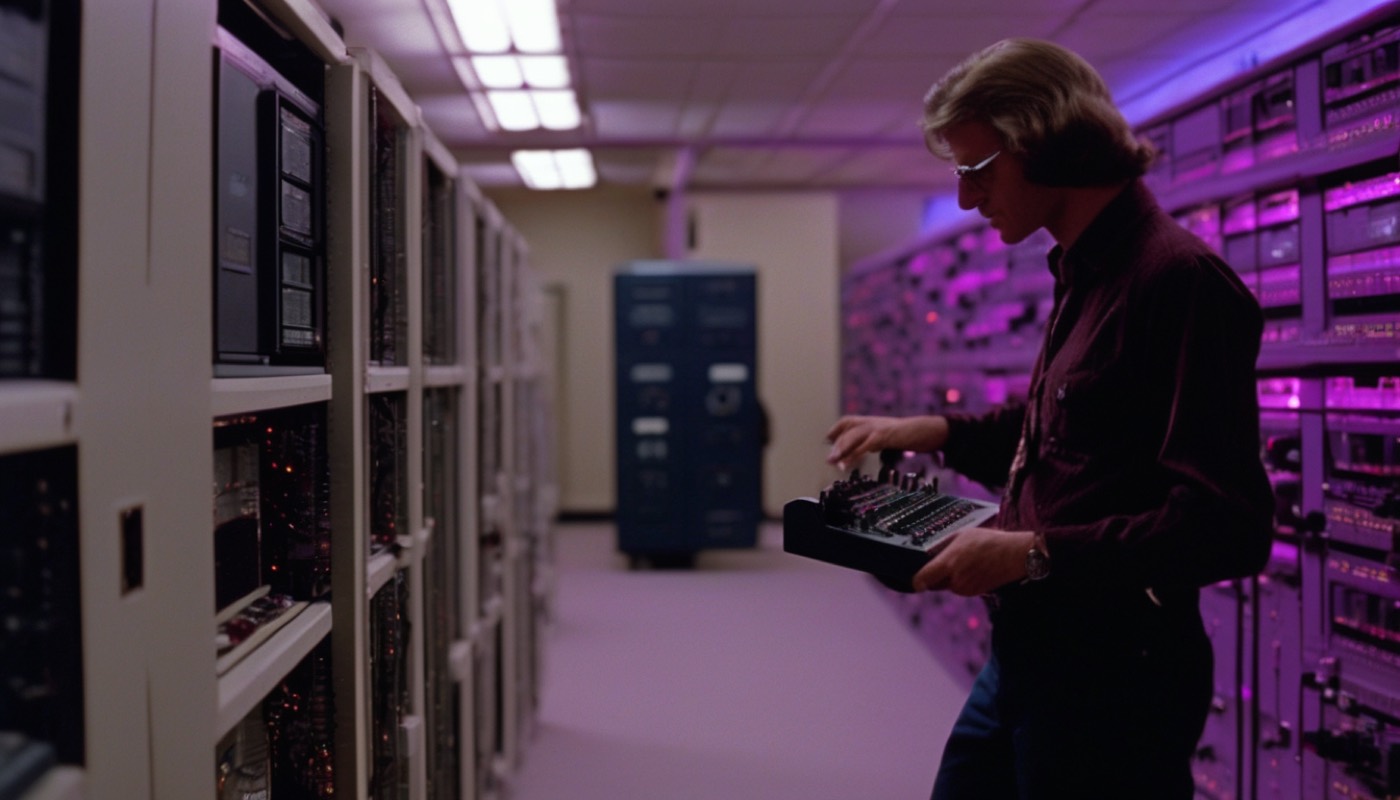
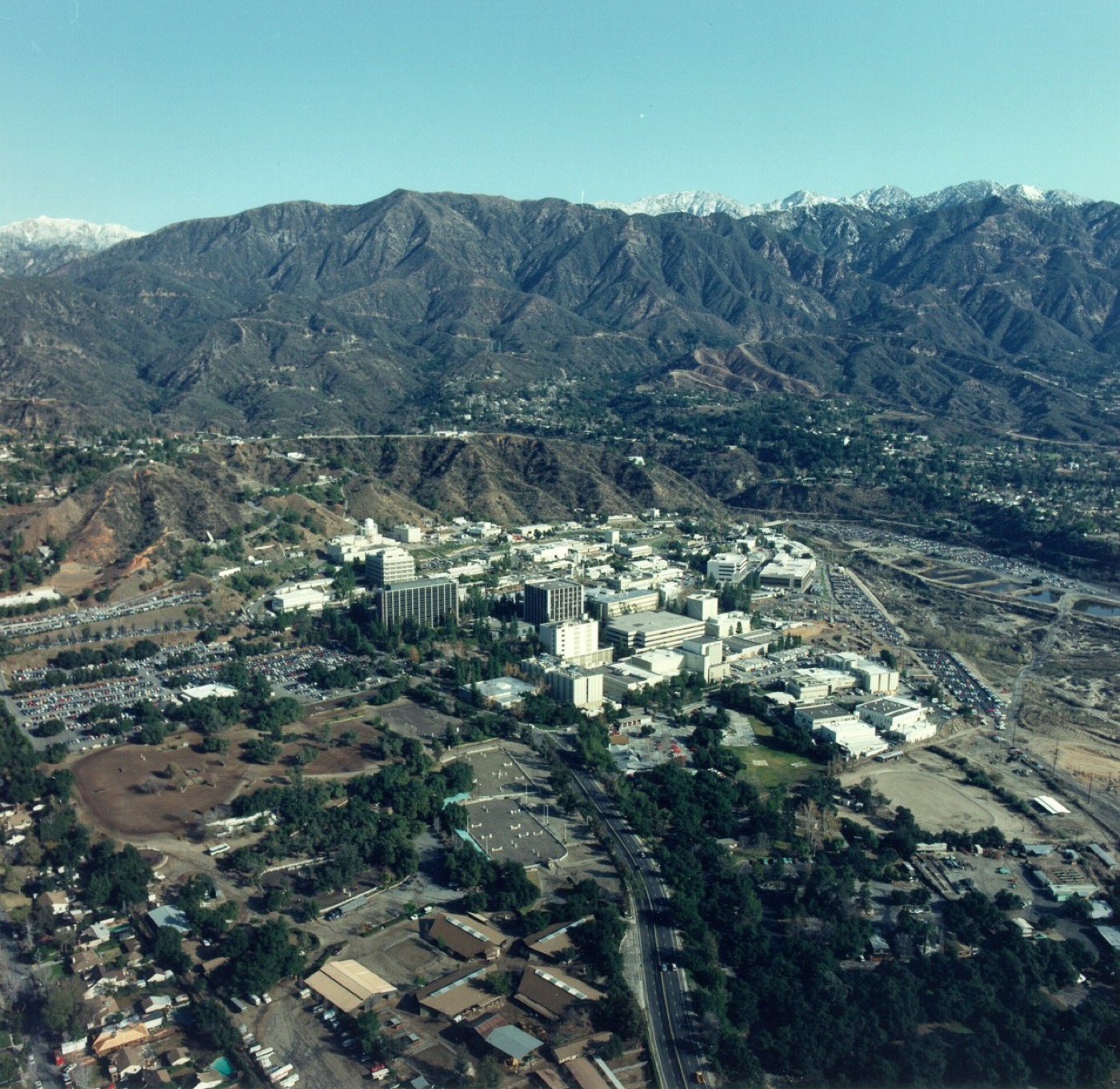
The story starts at NASA's Jet Propulsion Laboratory, in Pasadena, where the agency's robot space probes were designed and flown.
This is the laboratory from the air, in a NASA photograph. In the nineteen seventies one of the people working there was Wayne Ratliff, a programmer employed by the aerospace company Martin Marietta as a contractor at the laboratory. At home, he had built a small computer of his own from a kit.
Ratliff had a problem he wanted that computer to solve. He was in an office football pool, where each week you picked the winners and the point spreads, and he wanted help with the statistics.
Years later he told the writer Susan Lammers exactly where it began. "dBASE started, oddly enough, from football games." To sift the results, he needed a way to store records and ask questions of them.
He did not have to invent that from nothing. At the laboratory there was already a program for exactly this kind of work. It was called JPLDIS, short for the Jet Propulsion Laboratory Display Information System.
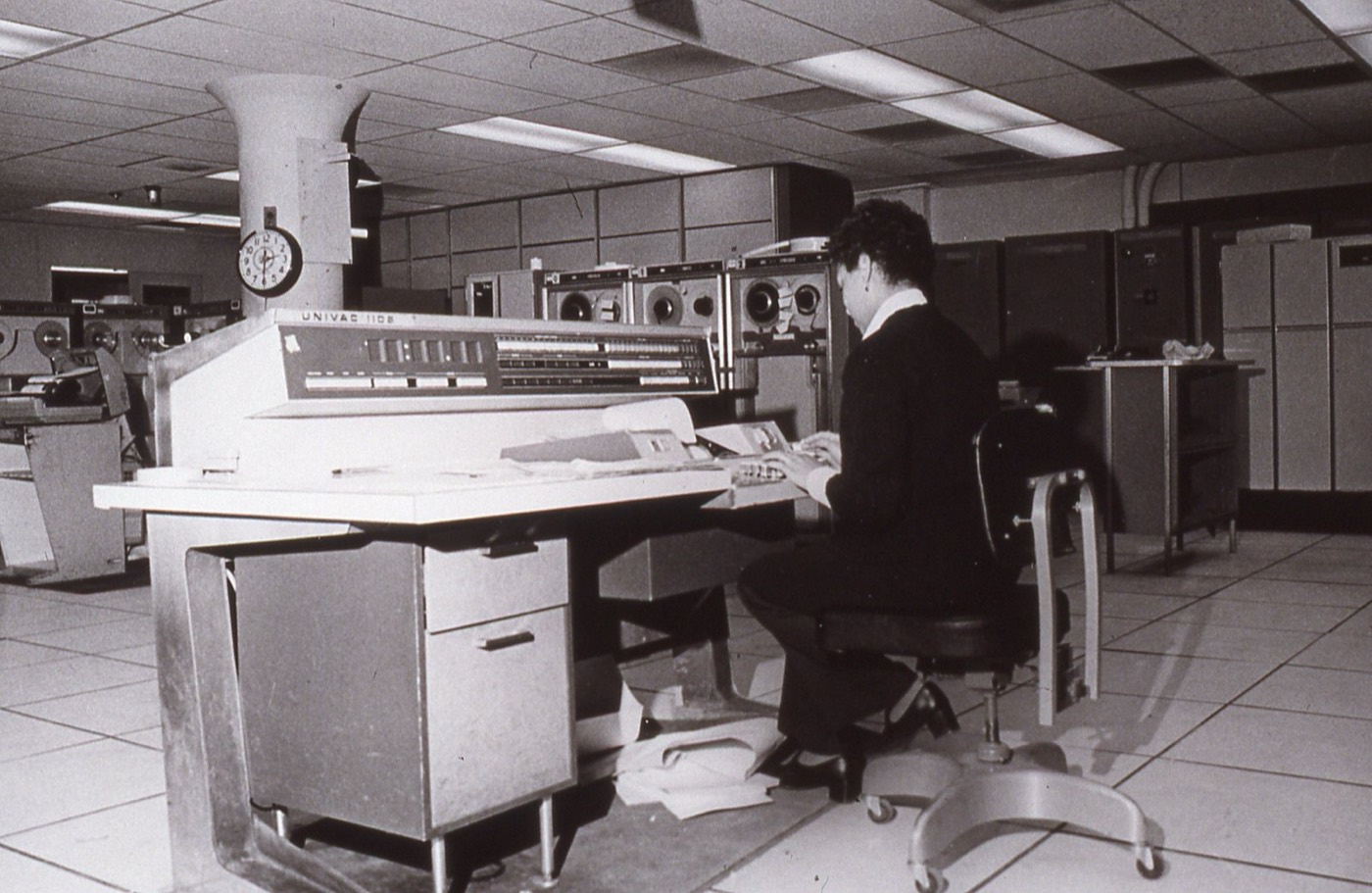
This is a UNIVAC eleven-oh-eight, the kind of large computer JPLDIS was written for. A mainframe like this filled a room and was shared by a whole organisation. JPLDIS ran on the laboratory's own UNIVAC, it was written in a programming language called FORTRAN, and it let staff keep files of records and pull out the ones they wanted.
The diagram on screen shows the family line. JPLDIS itself grew out of an older program called RETRIEVE, from the time-sharing company Tymshare. Fred Thompson and Jack Hatfield began JPLDIS at the laboratory, and Jeb Long later took it over. Ratliff modelled his own program on JPLDIS, and that borrowing will matter a great deal later in this story.
Ratliff wrote his version in assembly language, the raw instructions of the processor itself, so that it would fit in the tiny memory of a home computer. It ran under CP/M. CP/M was the operating system most small business computers used at the time, and an operating system is the basic program that runs a computer and lets other programs work on it. He named his program Vulcan, after Mr Spock's home planet in Star Trek.
The timeline on screen shows how it came together. JPLDIS was begun in nineteen seventy-one, and Jeb Long took it over in nineteen seventy-four. Ratliff wrote Vulcan in nineteen seventy-eight. In October nineteen seventy-nine he placed his first advertisement in BYTE magazine, selling Vulcan for four hundred and ninety dollars.
The response was more than one man could handle. By his own account he had sold thirty or forty copies, and the orders, the manuals and the support calls were taking over his life.
3. A partner called Ashton
Across the city, two men were running a mail-order software business.
The figures on screen show how small it was. George Tate and Hal Lashlee started it in January nineteen eighty, in Tate's garage, according to a Harvard Business School case study. It was funded with seven thousand five hundred dollars of savings. They called it Discount Software, and they sold programs by post to the owners of the new small computers.
Tate and Lashlee saw Vulcan and wanted to sell it. They offered Ratliff a deal: they would handle the marketing and the customers, and he would keep programming. According to the case study, they promised to turn sales of fifty copies a year into five hundred. Later that year they took Vulcan on under licence, and their publishing company was formed as Software Plus.
The map on screen shows where the company lived. Its first advertisements gave an office on Wilshire Boulevard in Los Angeles. Later it moved to Culver City, and later still to Torrance, in the south of the Los Angeles area. The laboratory where the idea began was not far away, in Pasadena.
The program needed a new name. Vulcan was already taken, by an operating system from the Harris Corporation. The man who chose the new one was Hal Pawluk, who wrote their advertising.
Pawluk called it dBASE II. There never was a dBASE one. The Harvard case study says the name was chosen because it had a technical ring, and because it implied an advance on a first version that did not exist.
Pawluk named the company too. The Harvard case study records that he chose Ashton-Tate "because it sounded better than Lashlee-Tate or Tate-Lashlee." Nobody called Ashton ever worked there. The partner in the company's name was invented.
4. The ad that sold a database
Now the company had a product with a name. It still had to find buyers, in a market with hardly any shops.
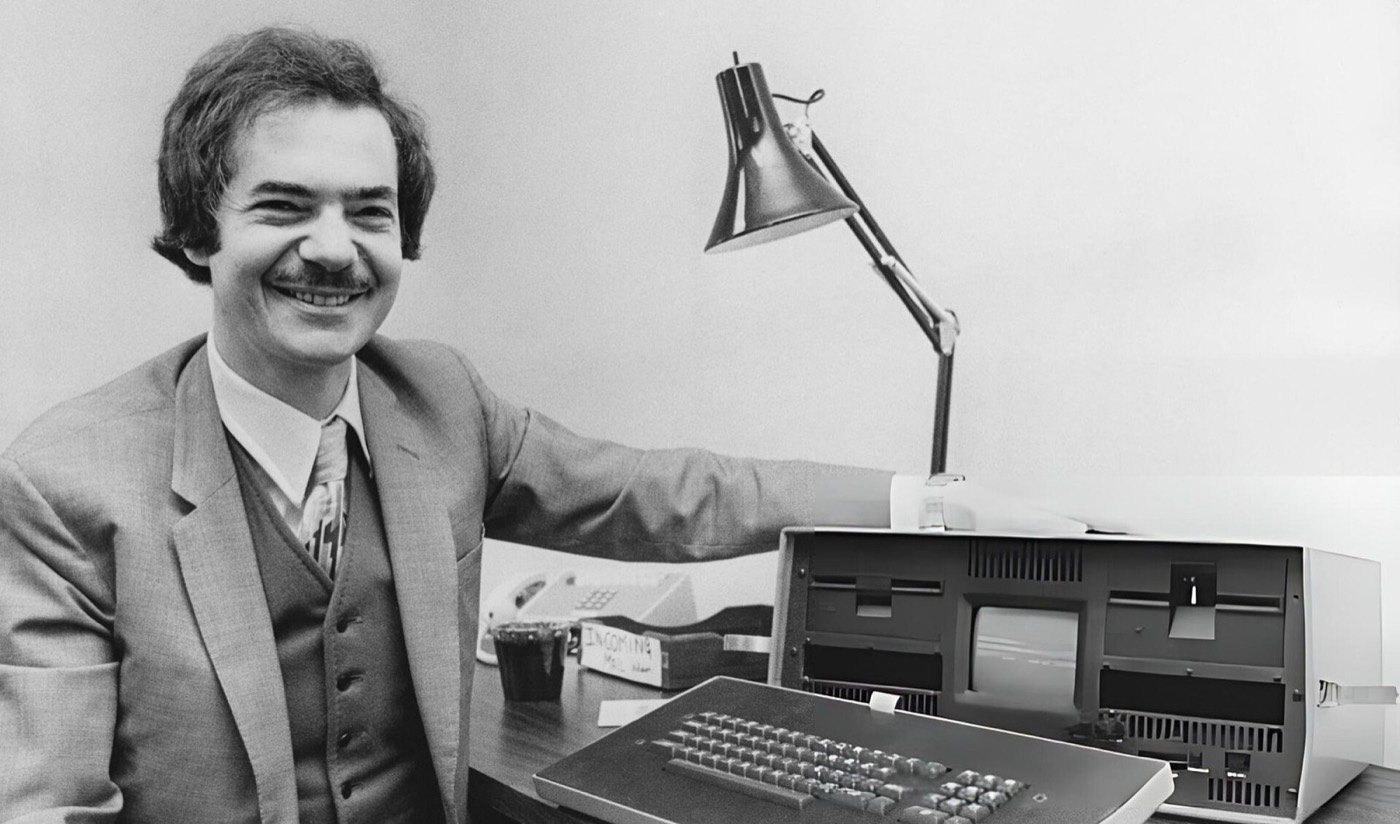
This is Adam Osborne with his Osborne One portable computer, in April nineteen eighty-one. Machines like it ran CP/M, and every one of them was a possible customer for dBASE II. Their owners learned about new software from the advertising pages of computer magazines.
Pawluk's advertisement ran in BYTE magazine from January nineteen eighty-one. It did not look like other software advertising. Its headline set dBASE II against the bilge pumps.
It opened with a line designed to be remembered: "We all know that bilge pumps suck." The joke was that other database programs were bilge pumps, and dBASE II was the real thing. The same advertisement ran for months.
It worked. The orders came in by post, and the company's sales began to climb.
The figures on screen show the price. The advertisement told readers to send seven hundred dollars to Ashton-Tate. Ratliff had been selling Vulcan for four hundred and ninety. In the year to January nineteen eighty-two, the Harvard case study puts the company's revenue at almost three point seven million dollars.
Then came the machine that changed the market. IBM launched its Personal Computer in nineteen eighty-one, and businesses bought it in large numbers.
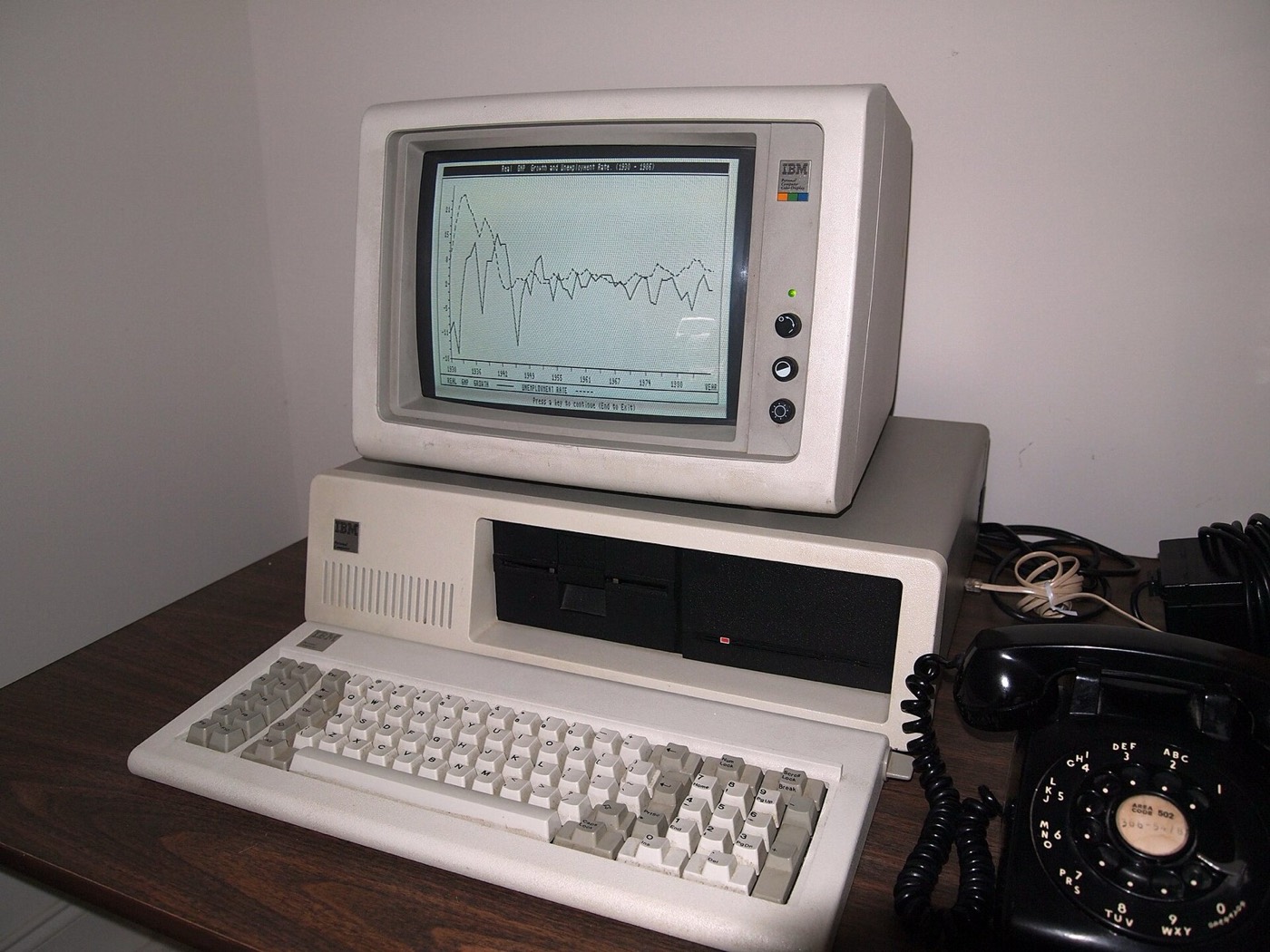
This is the IBM PC, with its monochrome screen. It did not run CP/M. It ran Microsoft's MS-DOS, so dBASE II had to be rewritten for it. The IBM version came out in September nineteen eighty-two, according to the Harvard case study, and it put dBASE on the machine that would take over the office.
5. IPO and the big three
By nineteen eighty-three Ashton-Tate was big enough to sell shares to the public. A company doing that for the first time is making an initial public offering, or IPO: it lists its shares on a stock market and raises money from the people who buy them.
The timeline on screen shows the steps. In September nineteen eighty-three the company filed to register one million seven hundred thousand shares. That filing is in the Securities and Exchange Commission's News Digest. The shares went on sale in November, and the financial year ended in January.
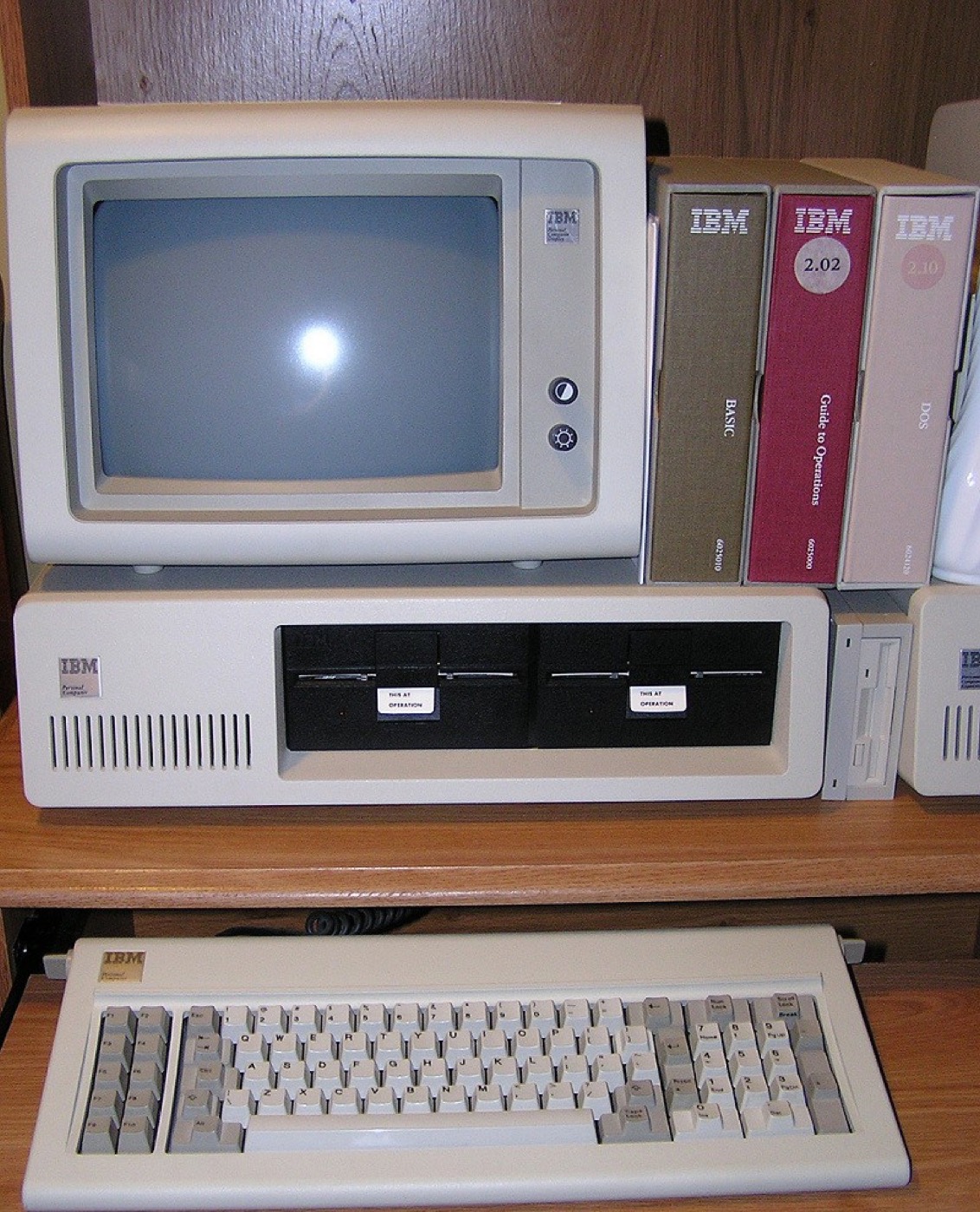
This is an IBM PC with its manuals and its DOS guide, the kind of set-up that sat on office desks by then. Most of dBASE's growth now came from machines like this one. For a small business keeping its records on a PC, dBASE had become the standard choice.
The figures on screen show what the offering and the year brought. The shares sold at fourteen dollars each, and the company raised about fourteen million dollars, according to the Harvard case study. In the year to January nineteen eighty-four, the New York Times reported revenue of thirty-nine point eight million dollars.
In four years a garage business had become one of the largest software companies in the world. A newsletter called Softletter later counted a big three of personal computer software: Lotus, Microsoft and Ashton-Tate.
The bars on screen compare the three. Lotus, maker of the best-selling spreadsheet, took about one hundred and fifty-seven million dollars in nineteen eighty-four. Microsoft took about ninety-seven million in its year to June nineteen eighty-four. Ashton-Tate took eighty-two point three million in its year to January nineteen eighty-five.
6. Losing George Tate
Nineteen eighty-four should have been Ashton-Tate's best year yet. It had two major new products.
The first was Framework, launched in March. Framework was an integrated program, which means several desk tools in one package, and it was aimed squarely at Lotus.
The diagram on screen shows the idea. Framework put a word processor, a spreadsheet, a database and charts inside one program, each in its own frame on the same screen. It was written by an outside developer, Robert Carr's Forefront Corporation. Ashton-Tate published it to compete with Symphony, the integrated program from Lotus.
The second was dBASE III, the successor to dBASE II, announced in May. It would carry the company through the good years that followed.
Then, on Friday the tenth of August, George Tate died at his office, apparently of a heart attack.
The card on screen gives the facts as they were reported. The New York Times gave his age as forty, and the Chicago Tribune said forty-one. He had built the company from his garage in under five years. What followed, in the Tribune's account, was turmoil at the top.
The timeline on screen shows how the leadership changed. Ed Esber, who had been at the software publisher VisiCorp until the year before, had joined in the spring. In September he was made president. David Cole, who had been running the company, resigned at the end of October. In December Esber took the title of chief executive.
7. The peak years
Under Esber, Ashton-Tate grew fast, and part of that growth was bought.
In December nineteen eighty-five Ashton-Tate completed its purchase of MultiMate, a word processor popular in offices. Its own press release put the price at twenty-two million dollars in cash. The idea was to sell businesses a word processor alongside their database.
At the end of that year the company moved into its headquarters in Torrance.
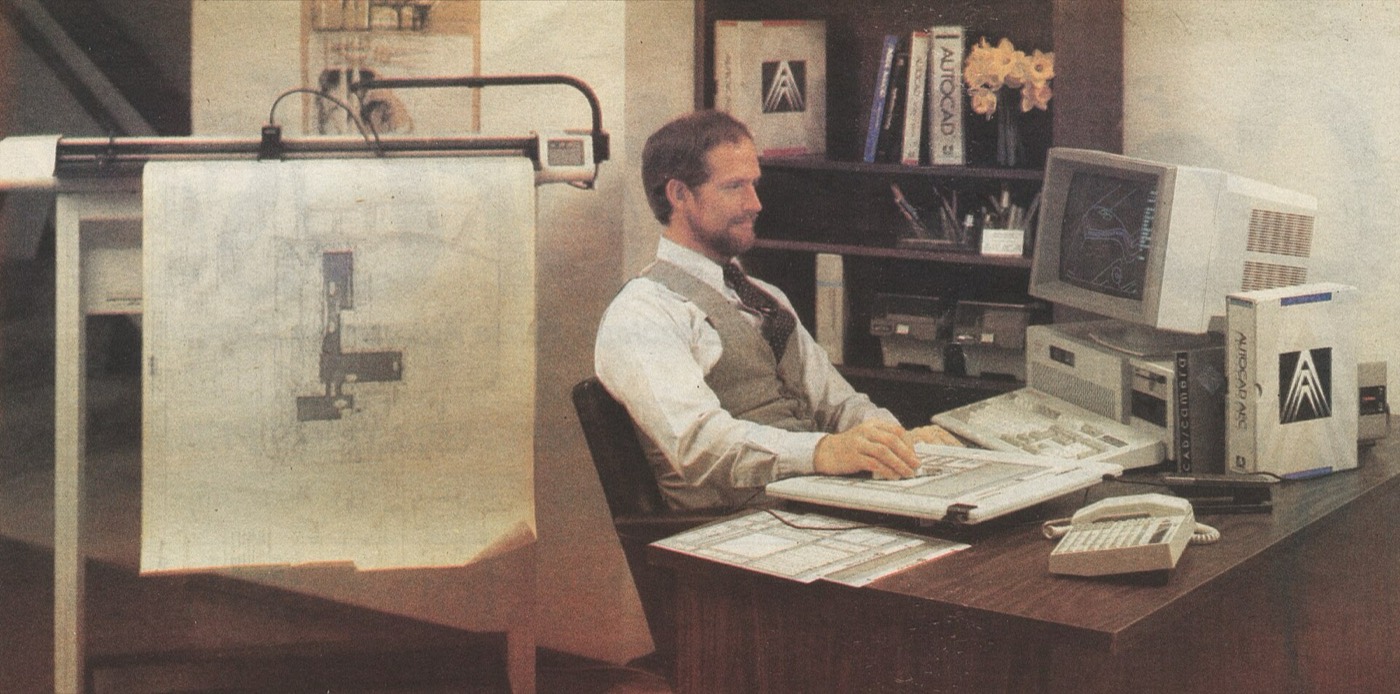
This is a PC workstation in an office in nineteen eighty-seven. By then a computer on a desk, running dBASE, was how a great many small businesses kept their customers, their stock and their accounts.
The product kept improving. dBASE III Plus was introduced in November nineteen eighty-five and shipped the following year, and customers bought it in large numbers.
The timeline on screen shows the good years. MultiMate was agreed in July nineteen eighty-five and completed in December. dBASE III Plus shipped in nineteen eighty-six. And the year to January nineteen eighty-nine was the best the company ever had.
The circle on screen shows dBASE's position in nineteen eighty-five. According to the research firm IDC, as reported by the New York Times, dBASE had sixty-two point five per cent of the market for PC database programs. Nobody else came close.
The line on screen shows sales rising every year. In the year to January nineteen eighty-four they were thirty-nine point eight million dollars. Five years later they were three hundred and seven point three million. Profit that year was forty-seven point seven million dollars.
8. The clones arrive
dBASE had a weakness that its success made worse. It was a language as well as a tool. Users wrote programs in dBASE's commands, and those programs only ran where dBASE was installed.
Anyone selling a finished dBASE application needed each customer to own dBASE, or to buy a runtime copy. A runtime copy is a cut-down version that can only run finished programs, and Ashton-Tate charged three hundred and ninety-five dollars per machine for it.
That opened a door. A program that understood the same commands, faster or cheaper, could take dBASE's own customers without them rewriting a line.
The map on screen shows where the challengers were. Fox Software was in Perrysburg, Ohio, near Toledo. Nantucket, which made a program called Clipper, was in Los Angeles, not far from Ashton-Tate's own headquarters in Torrance.
The timeline on screen shows how quickly they came. Fox released FoxBASE, which worked like dBASE II, in December nineteen eighty-four. Clipper followed in May nineteen eighty-five. In nineteen eighty-six came FoxBASE Plus, matching dBASE III Plus.
The diagram on screen shows the difference. dBASE read each command and carried it out as the program ran, which is called interpreting. Clipper was a compiler: it translated a whole dBASE program in advance into a finished program, which could be handed to a customer who had no copy of dBASE at all. FoxBASE made its name on speed.
Together these programs formed a family with its own name, xBase, meaning dBASE or anything that worked like it. The name got round the fact that dBASE was Ashton-Tate's trademark. The dBASE language had become bigger than the company that owned it.
9. dBASE IV: the fatal release
Ashton-Tate's answer to the clones was meant to be dBASE IV. When it was announced, a Los Angeles Times column by Lawrence Magid called it a likely winner.
It was not ready. In May the company admitted delays, caused by errors in the product.
The timeline on screen shows how long it took. dBASE IV was announced in February nineteen eighty-eight and shipped in October, months late. Version one point one, the release that fixed most of its faults, did not reach users until the summer of nineteen ninety.
When it did arrive, the first version was slow and full of faults. The New York Times reported that it could crash without warning and corrupt data. For a database, whose whole job is keeping records safe, that was the worst fault it could have.
Customers who had built their businesses on dBASE started to look elsewhere, and the clones were waiting. Adam Green, quoted by the New York Times, put it plainly: "The name dBASE has been tarnished." It was the one thing Ashton-Tate could least afford.
The figures on screen show what that cost. IDC gave dBASE sixty-two point five per cent of the PC database market in nineteen eighty-five. By nineteen eighty-nine that had fallen to forty per cent. Both figures were reported by the New York Times in August nineteen ninety.
The bars on screen show the money. Sales had peaked at three hundred and seven point three million dollars in the year to January nineteen eighty-nine. In calendar nineteen eighty-nine the company lost twenty-eight point six million dollars. In nineteen ninety sales fell to two hundred and thirty point five million.
Something had to give, and it was the man at the top.
On the thirtieth of April nineteen ninety, Ed Esber stepped down as chairman and chief executive. The new chairman, Carmelo Santoro, told the Los Angeles Times: "It was time for a change." Esber stayed on for a while as vice chairman, and William Lyons took over the running of the company.
10. The lawsuit that backfired
Ashton-Tate had already chosen to fight the clones in court. On the eighteenth of November nineteen eighty-eight it sued Fox Software, together with a second company, the Santa Cruz Operation.
The claim was that FoxBASE copied dBASE: its commands, its menus and its text. If Ashton-Tate won, it would own the language that the whole xBase family used.
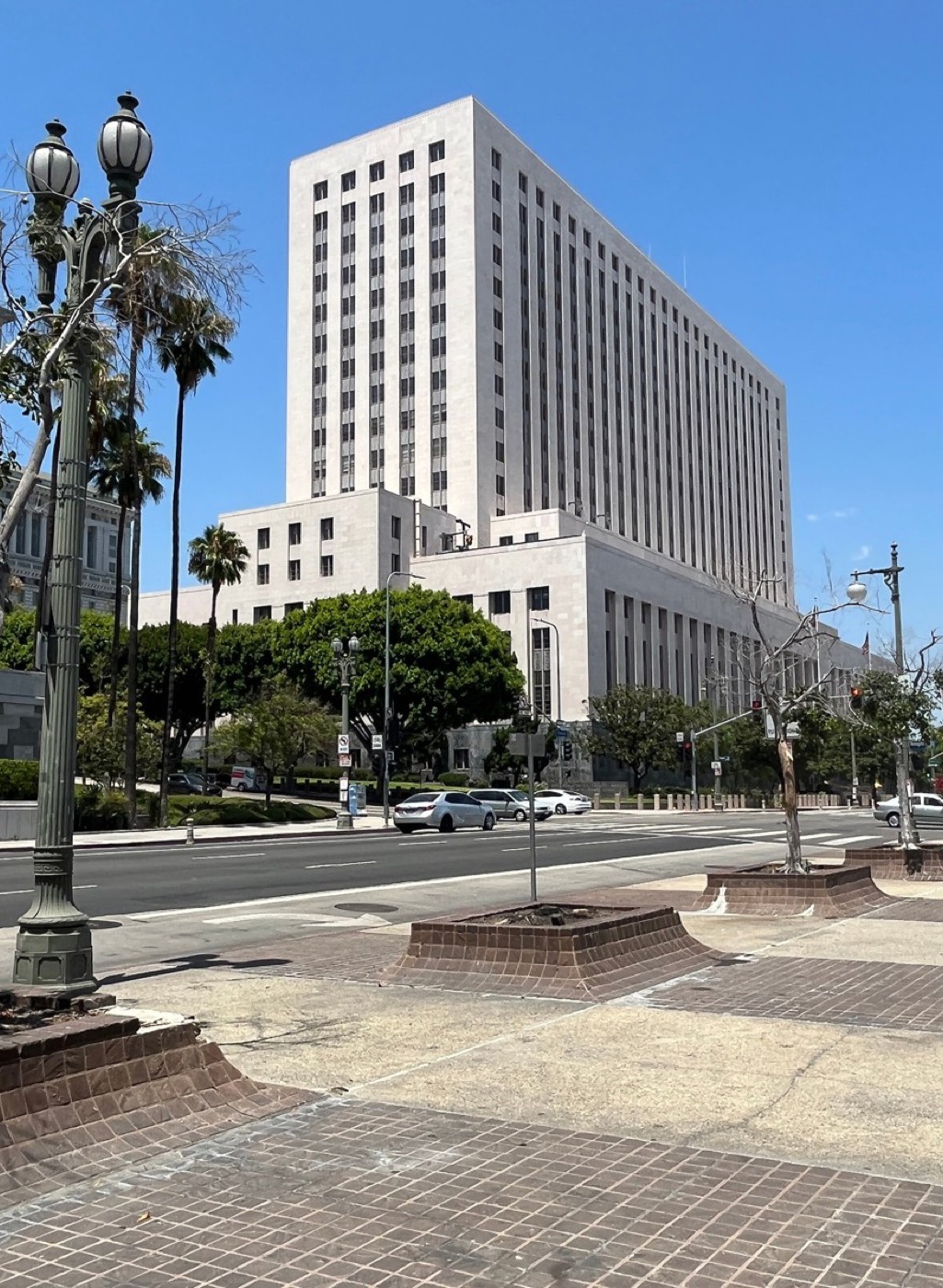
This is the old federal courthouse on Spring Street, in downtown Los Angeles. The case was brought in the federal court for that district, before Judge Terry Hatter. Fox's lawyers went back to the beginning of the story, and the program at the laboratory.
The diagram on screen shows Fox's argument. dBASE II had been modelled on JPLDIS, which was written at a government laboratory and was in the public domain, meaning nobody owned it. dBASE III was built on dBASE II. When Ashton-Tate registered its copyrights, it had told the Copyright Office about neither.
In December nineteen ninety, Judge Hatter ruled for Fox. He found that the failure to disclose "was done knowingly and with an intent to deceive." He declared Ashton-Tate's dBASE copyrights invalid and dismissed its claims.
It was a disaster. The company had gone to court to protect its most valuable asset, and come out with a ruling that it did not own it at all. And the story of dBASE's borrowed beginnings was now written into a federal judgment.
The timeline on screen shows how the case ran. In January nineteen ninety-one the judge refused to reconsider, but allowed an appeal. Then in April, after more argument, he changed course and rescinded the December ruling. By then the damage was done, and three months later Ashton-Tate agreed to be sold.
11. Borland takes over
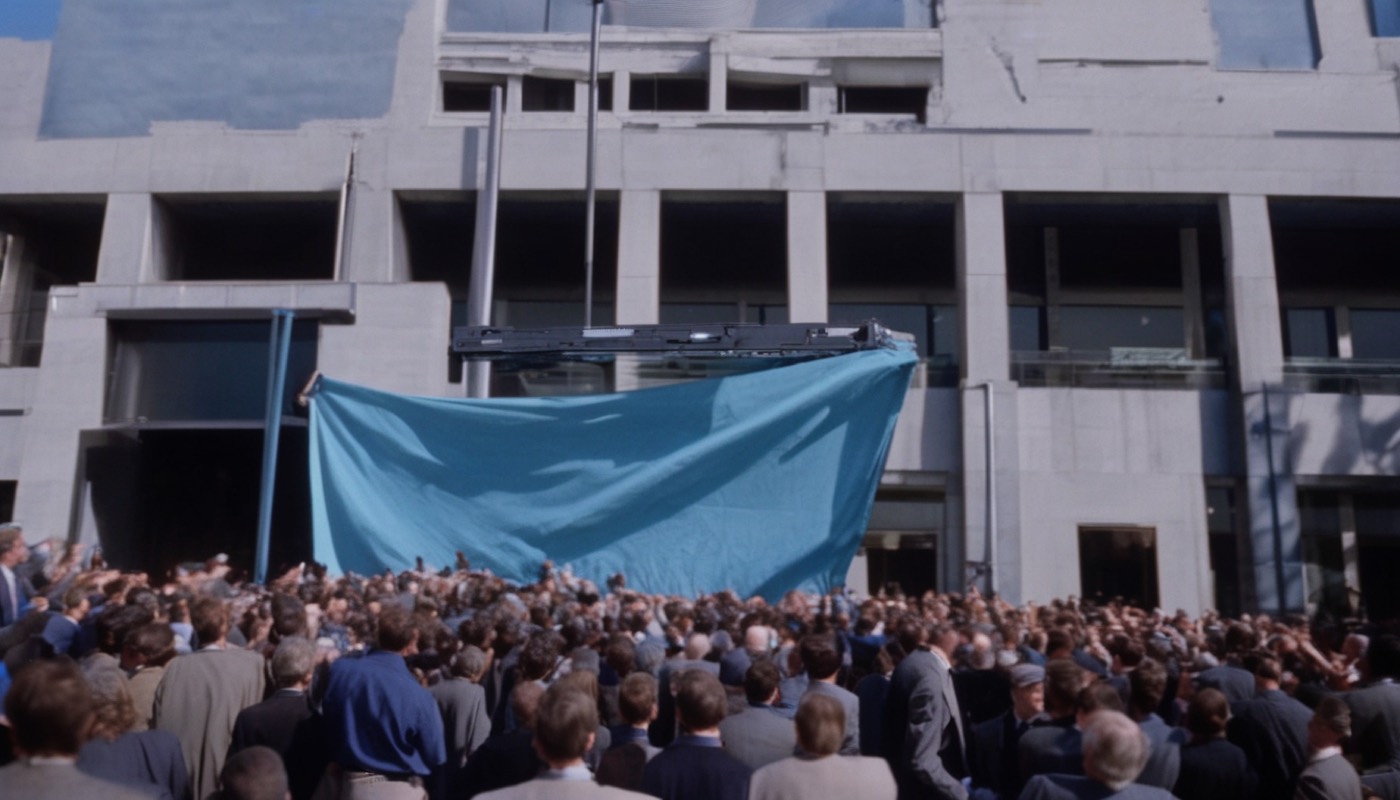
The buyer was Borland International, run by Philippe Kahn, which made programming tools and a database of its own called Paradox.
The figures on screen show the deal, announced on the tenth of July nineteen ninety-one. Borland would pay about four hundred and thirty-nine million dollars, all in its own shares. That came to seventeen dollars fifty in Borland stock for every Ashton-Tate share.
The map on screen shows what the deal meant. Borland was based in Scotts Valley, in the hills above Santa Cruz. When the purchase was completed in October, about four hundred Ashton-Tate staff were to be laid off and the Torrance headquarters closed. UPI called it the largest deal the PC software industry had seen.
One more authority had to be satisfied. Borland and Ashton-Tate both sold databases, and the Justice Department's antitrust division, which polices mergers that could reduce competition, wanted to know what the combined company would do with the dBASE copyrights.
Kahn had already said where he stood. On the day the deal closed he told UPI that "command sets as functional items should be promoted as open standards." He promised to make the dBASE commands an open standard for everyone.
The timeline on screen shows how the government made that binding. The deal closed on the eleventh of October nineteen ninety-one. Six days later the Justice Department filed its case, together with an agreed settlement. The final judgment was entered in March nineteen ninety-two, and it ran for ten years.
The list on screen sets out the terms. Borland could not claim copyright in dBASE's commands, menus, language or file structures. It had to drop the Fox lawsuit for good. Its actual program code stayed its own, but the language was now open to anyone.
Fox did not stay independent for long. In March nineteen ninety-two Microsoft agreed to buy it, for shares worth about one hundred and seventy-five million dollars. FoxPro became a Microsoft product, and the clone outlived the company it had copied.
12. The long fade

Under Borland, dBASE carried on, but its best years were behind it.
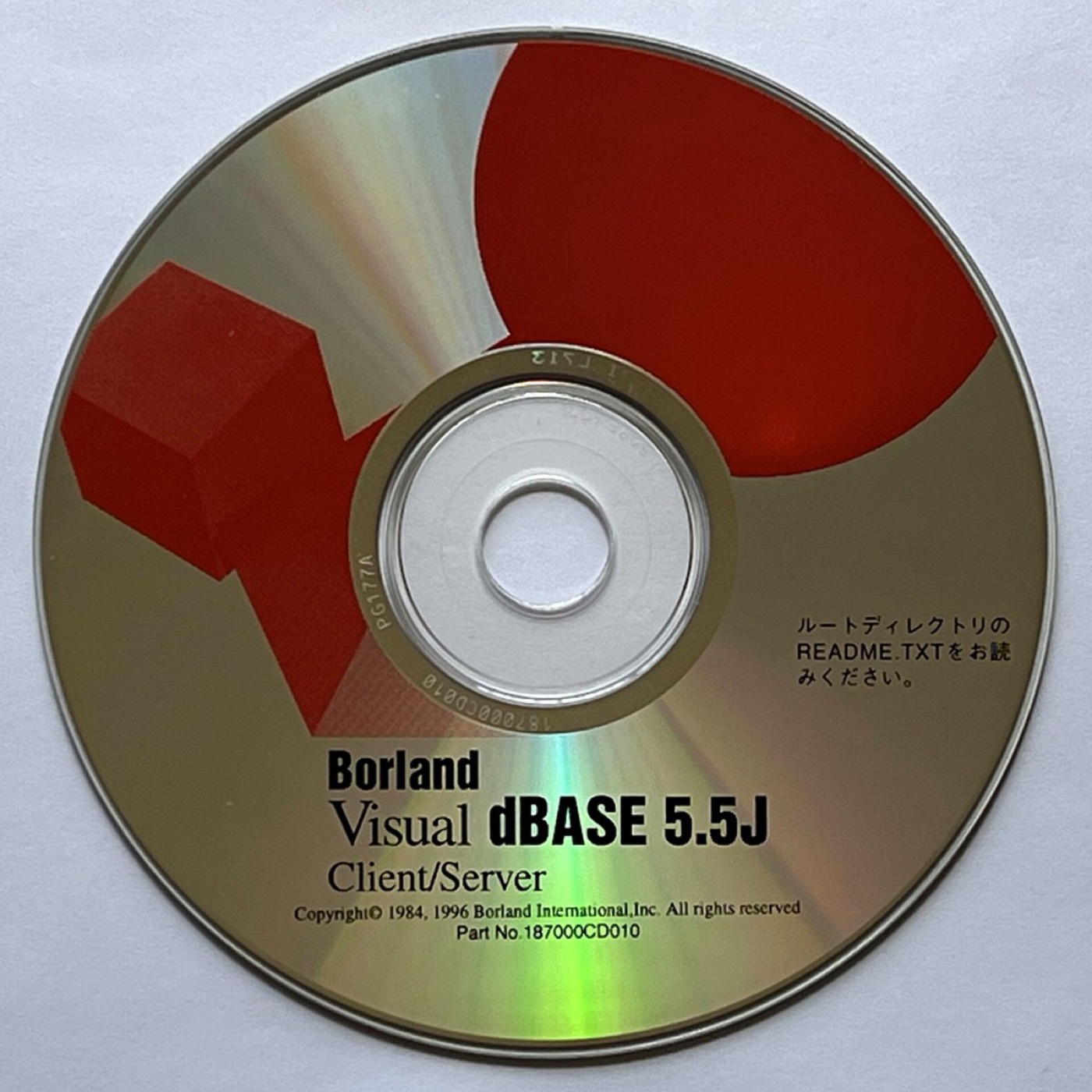
This is a Visual dBASE disc from nineteen ninety-six, the Japanese edition of version five point five. Borland had released dBASE for Windows and then renamed it Visual dBASE. By the time it reached users, most developers had moved on to other tools.
The timeline on screen shows the years that followed. Borland renamed itself Inprise in April nineteen ninety-eight. In March nineteen ninety-nine Inprise handed dBASE to a small company called KSoft. The business became dataBased Intelligence in two thousand and four, and dBase LLC was formed in twenty twelve. Its last major release, dBASE twenty nineteen, came out in August twenty nineteen.
From Ashton-Tate, dBASE went to Borland and on to Inprise. KSoft took it under an exclusive licence, and by two thousand and four the business was trading as dBASE Incorporated. Then a group of investors and former staff formed dBase LLC, which still sells it from upstate New York.
What outlived all of them was the file. Other programs learned to read and write the way dBASE stored its tables.
The diagram on screen shows how a dBASE file is built. It begins with a header that describes the table. Then comes a list of the fields, each with a name, a type and a width. Then come the records, one after another. Mapping software still uses exactly this kind of file to hold the details behind each shape on a map.
And the few people still using dBASE were not ready to give up.
Ken Mayer is a contractor who provides dBASE support. In May twenty twenty-six he told users that "dBASE, the company, is not gone." Weeks later the web server was back. The company is small, but it is still there.
The list on screen sets out what went wrong for Ashton-Tate. It built its business on a language it did not fully own, and rivals learned to speak it. It shipped its most important release before it was ready. And it went to court over the one question that exposed where dBASE came from.
Ashton-Tate lasted about eleven years. The program it made famous is still on sale, and the files it defined are still being written today.
Sources and credits
Photo credits (Wikimedia Commons)
- Jet Propulsion Laboratory, Pasadena - aerial view (NASA, 1961), where JPLDIS was built: NASA, Public domain - https://commons.wikimedia.org/wiki/File%3AAerial_View_of_JPL_-_GPN-2000-001980.jpg
- UNIVAC 1108 mainframe (US Census Bureau, 1970s) - the kind of machine JPLDIS ran on: U.S. Census Bureau employees, Public domain - https://commons.wikimedia.org/wiki/File%3AUnivac_1108_Census_Bureau.jpg
- Adam Osborne with the Osborne 1, April 1981 - a CP/M micro of the dBASE II era: Bill Crouch (-1998), Public domain - https://commons.wikimedia.org/wiki/File%3AAdam_Osborne_and_Osborne_1.jpg
- IBM PC 5150 with monochrome display - the machine dBASE II moved onto in 1982: Fried Dough, Public domain - https://commons.wikimedia.org/wiki/File%3AIbm_computer_pc_5150_%286049156797%29.jpg
- IBM PC 5150 system with manuals and DOS guide: Vintageibmmt, Public domain - https://commons.wikimedia.org/wiki/File%3AIBM_5150_PC.JPG
- Man at a PC workstation in an office, 1987 - mid-1980s business computing: Evergreen Systems, Public domain - https://commons.wikimedia.org/wiki/File%3AMan_using_AutoCAD_%281987%29.jpg
- Spring Street federal courthouse, Los Angeles (Central District of California), where Ashton-Tate v. Fox was heard: Benoît Prieur, CC0 - https://commons.wikimedia.org/wiki/File%3ASpring_Street_Courthouse_%28Main_Street%29_Los_Angeles_July_2022.JPG
- Borland Visual dBASE 5.5 installation CD (1996) - dBASE under Borland: Asanagi, CC0 - https://commons.wikimedia.org/wiki/File%3AVisual_dBASE_5_installation_CD_%28Ja%29_2025-02-22.jpg


Primary sources
- Susan Lammers, 'Programmers at Work' (Microsoft Press, 1986), interview with Wayne Ratliff, as reproduced on foxprohistory.org - Martin Marietta contractor at JPL, IMSAI kit, football pool, first BYTE ad October 1979, thirty or forty Vulcans sold; quotation re-.
- Wikipedia, 'JPLDIS', 'dBase', 'Ashton-Tate', 'Borland' () - JPLDIS history (RETRIEVE, Thompson, Hatfield, Long, UNIVAC 1108, FORTRAN); Vulcan 1978; Harris Vulcan name clash; Torrance late 1985; Softletter 'Big Three'; $395 runtime; xBase; Inprise April 1998.
- BYTE magazine (archive.org scans): Vulcan advertisement from October 1979 ($490, SCDP Systems); 'dBASE II vs. the Bilge Pumps' by Hal Pawluk, January 1981, p.164 ($700).
- Harvard Business School case 'Ashton-Tate (A)', Shirley M. Spence under Paul R. Lawrence, 1987 - Discount Software January 1980, $7,500, 50 to 500 copies, the dBASE II and Ashton-Tate names, FY to January 1982 revenue, IBM PC version September 1982, $14 a share and $14m raised.
- SEC News Digest 83-188, 28 September 1983 - S-1 for 1,700,000 shares, filed 23 September 1983.
- Computer History Museum, Ashton-Tate corporate history report (102746512) and press release 102762624 - Software Plus formed August 1980; revenue by year; Framework March 1984; dBASE III May 1984; MultiMate $19m letter of intent (July 1985) and $22m cash (5 December 1985); dBASE III Plus November 1985; dBASE IV October 1988; version 1.1 July 1990; George Tate's death.
- Chicago Tribune, Christine Winter, 'Turmoil at the top rocks Ashton-Tate's strategic year', 5 December 1984 - age 41, Esber, Cole, Santoro, Framework and Symphony.
- Microsoft Learn, 'The History of Microsoft - 1984'; International Directory of Company Histories via FundingUniverse, 'Lotus Development Corporation' - 1984 revenues for the big three chart.
- Ashton-Tate v. Fox Software, 760 F. Supp. 831 (C.D. Cal. 1990), Caselaw Access Project - decided 11 December 1990, reconsideration denied 14 January 1991, ruling rescinded 18 April 1991; Hatter quotation.
- US Department of Justice, U.S. v. Borland International and Ashton-Tate, C 91 3666 MHP (N.D. Cal.) - complaint and stipulation 17 October 1991, Competitive Impact Statement 22 October 1991 (Fox suit filed 18 November 1988), Final Judgment 13 March 1992, section IV.
- Tech Monitor, 'Inprise Finally Sells Off dBASE to KSoft', 14 March 1999; InformationWeek, Ted Kemp, 'dBASE Assumes New Identity', 9 November 2004; dbase.com, 'Announcing dBASE PLUS' (dBase LLC formed 2012) and news page (dBASE 2019, August 2019).
- The Register, Liam Proven, 'dBase debased: Database titan fades to black after 47 years', 13 May 2026; Delphi Nightmares, 'dBase: 1979-2026', 12 April 2026; Ken Mayer, 'Ken's dBASE Page', goldenstag.net, entries 25 February to 4 August 2026.
Not regulated financial advice.