
Autodesk: From the Beginning to Now
In April 1982, a group of programmers met at John Walker's house in Mill Valley, California, and by July had pooled $59,030 of their own money to found a software company. This video follows Autodesk from that meeting to September 2026.
Mike Riddle's drawing program, Interact, became AutoCAD, shown at COMDEX in Las Vegas in November 1982 at $1,000 a copy - the first CAD program built for an ordinary desktop computer rather than a shared minicomputer. Autodesk went public on NASDAQ on 28 June 1985, and John Walker published 'The Autodesk File' as an open company history.
Under Carl Bass, AutoCAD returned to the Mac (2010) before the business model itself changed: perpetual licences ended 1 February 2016, moving every customer from buying software once to renting it by subscription. Under Andrew Anagnost, Autodesk closed its Neuchâtel European headquarters (2017-2018, over 230 jobs) for a new EMEA base in Dublin, and exited its Marin County home for San Francisco in 2022.
In March 2024 Autodesk's own audit committee opened an investigation into its free-cash-flow and margin reporting; the CFO was replaced that May. The activist investor Starboard Value disclosed a stake worth over $500 million weeks later. The SEC and the US Attorney's Office closed their matters in August 2025 with no restatement required, and Autodesk and Starboard reached a board-seat cooperation agreement in April 2025.
None of it slowed the business: fiscal 2026 revenue reached $7.21 billion, and in 2026 Autodesk made its largest-ever purchase, buying maintenance-software company MaintainX for about $3.6 billion, while previewing agentic AI across Forma, Fusion and Flow at Autodesk University.
And what became of the founders: John Walker went on to found Fourmilab and died in Neuchâtel on 2 February 2024, while Mike Riddle went on to write cheaper CAD programs of his own.
No figure appears without its date and source. Photographs are public domain or CC0, from Wikimedia Commons, credited on screen: Alfred Twu (CC0); Daderot (CC0); Fizbin at en.wikipedia (public domain); the data cyclist (CC0); DylanGLC2017 (CC0).
Educational documentary. Not financial or investment advice.
In these topics
Chapters
- 1982: A Group of Programmers and $59,030
- Interact Becomes AutoCAD
- 1985: Going Public, and the Open Book
- Speaking the User's Language: Neuchâtel
- Al Green, San Rafael and the Workstation Years
- Carol Bartz and the Multi-Industry Push
- Buying the 3D and Media Tools
- Carl Bass and the Cloud Turn
- Neuchâtel to Dublin, and a Shrinking Footprint
- 2024–2025: The Accounting Investigation and Its Close
- Starboard, MaintainX and Agentic AI
- What Became of the Founders
Video notes
1. 1982: A Group of Programmers and $59,030
Almost every building, product and film made in the last forty years passed through one company's software at some point. It began with a group of programmers in a small town north of San Francisco, betting their own money on a single drawing program.
This video follows that company, Autodesk, from its first meeting in 1982 to today. It follows the program that made it, and the business built on top of that program. It follows what customers gave up when the company stopped selling software outright. And it ends with what became of the people who started it.
The man at the centre of the story was a programmer named John Walker. In April 1982, he and a group of fellow programmers met at his own house, in Mill Valley, California. Most of them had worked together before, at a small software firm.
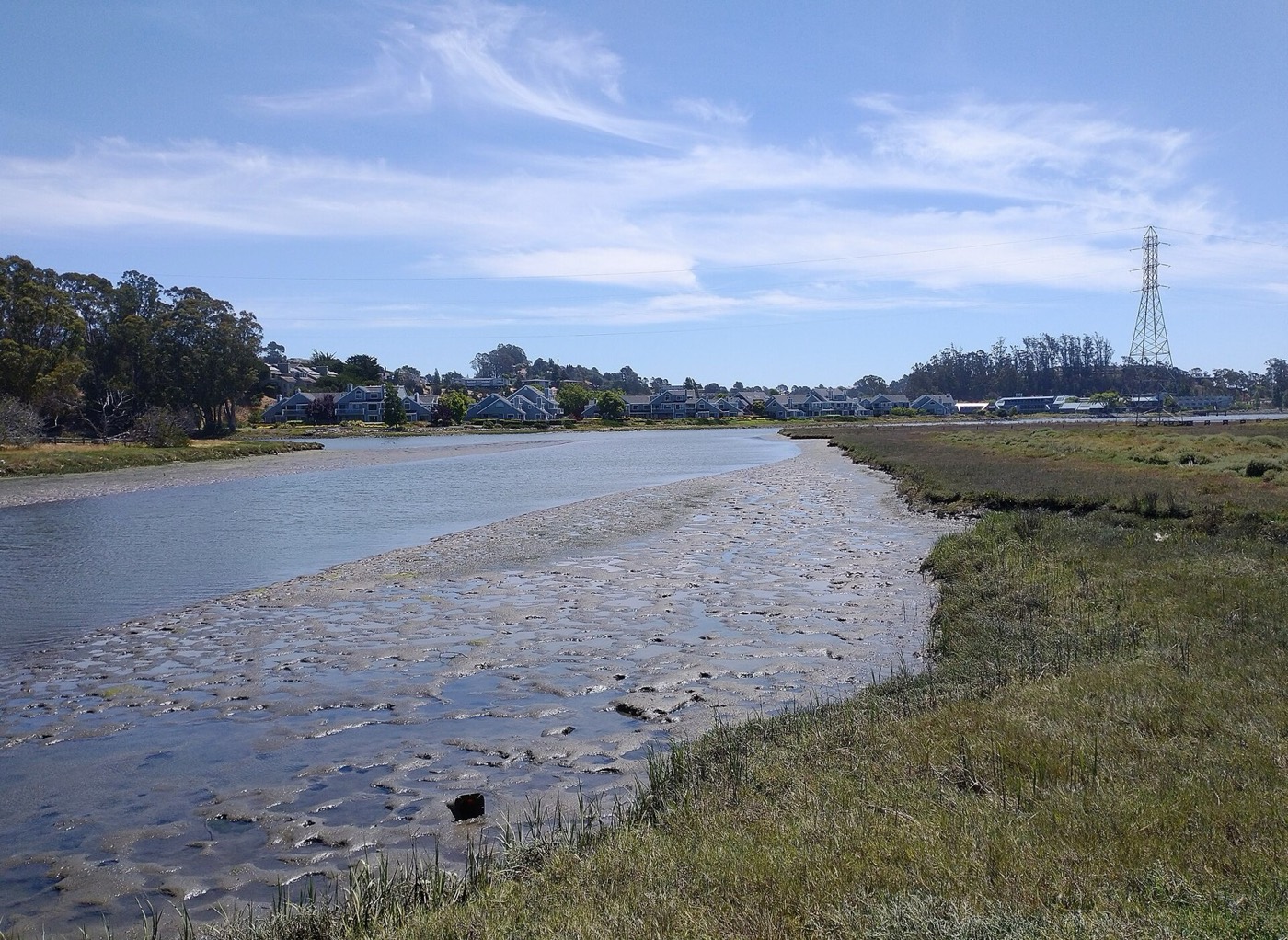
This is Mill Valley, California, the town where Autodesk began. The group met at Walker's own house, because the company did not yet have an office of its own. A business that would eventually earn billions started in a private house in a small town.
Walker wrote his plans down in numbered memos, which he called Information Letters. The founders received them first, and later so did the company's own staff and shareholders.
By July 1982, the sale of stock and options among the founders had raised $59,030. The group's own size is disputed. Sixteen is the number most often repeated, though some counts run as low as thirteen or as high as eighteen founders.
That was not a large sum, even in 1982. What made it count was the product the group chose to bet it on: a drawing program written by one of their own.
2. Interact Becomes AutoCAD
The program came from a founder named Mike Riddle. He called it Interact, and it did something unusual for its time: it let a computer draw the kind of technical plan an engineer would otherwise draw by hand.
This is what the letters "CAD" stand for: computer-aided design. It means producing drawings on a computer screen instead of on paper with a pencil and ruler. In 1982, CAD systems already existed, but they ran on large, costly minicomputers that only big companies could afford.
By May 1982, the founders had a formal agreement with Riddle. His program, briefly renamed MicroCAD, became AutoCAD, reworked for an ordinary desktop computer rather than a shared minicomputer. Riddle was paid a royalty on every copy sold.
The name said exactly what made it different: it ran on a machine that sat on one person's own desk.
In November 1982, Autodesk showed AutoCAD at COMDEX, the big computer trade show in Las Vegas. The price was $1,000 a copy — far below what a minicomputer CAD seat had cost, and a price one drawing office could actually afford on its own.
A desktop machine costing a few thousand dollars, running a $1,000 program, had just replaced a shared room-sized computer. That single change is why this video exists.
3. 1985: Going Public, and the Open Book
AutoCAD spread fast because it was never tied to one kind of computer. By 1985, it ran on 31 different desktop machines, at a time when office computing had no single standard.
On the 28th of June, 1985, Autodesk's shares were first sold to the public, on the NASDAQ stock market, under the ticker symbol ACAD. The company renamed that ticker ADSK in May 1996, the symbol it still trades under today.
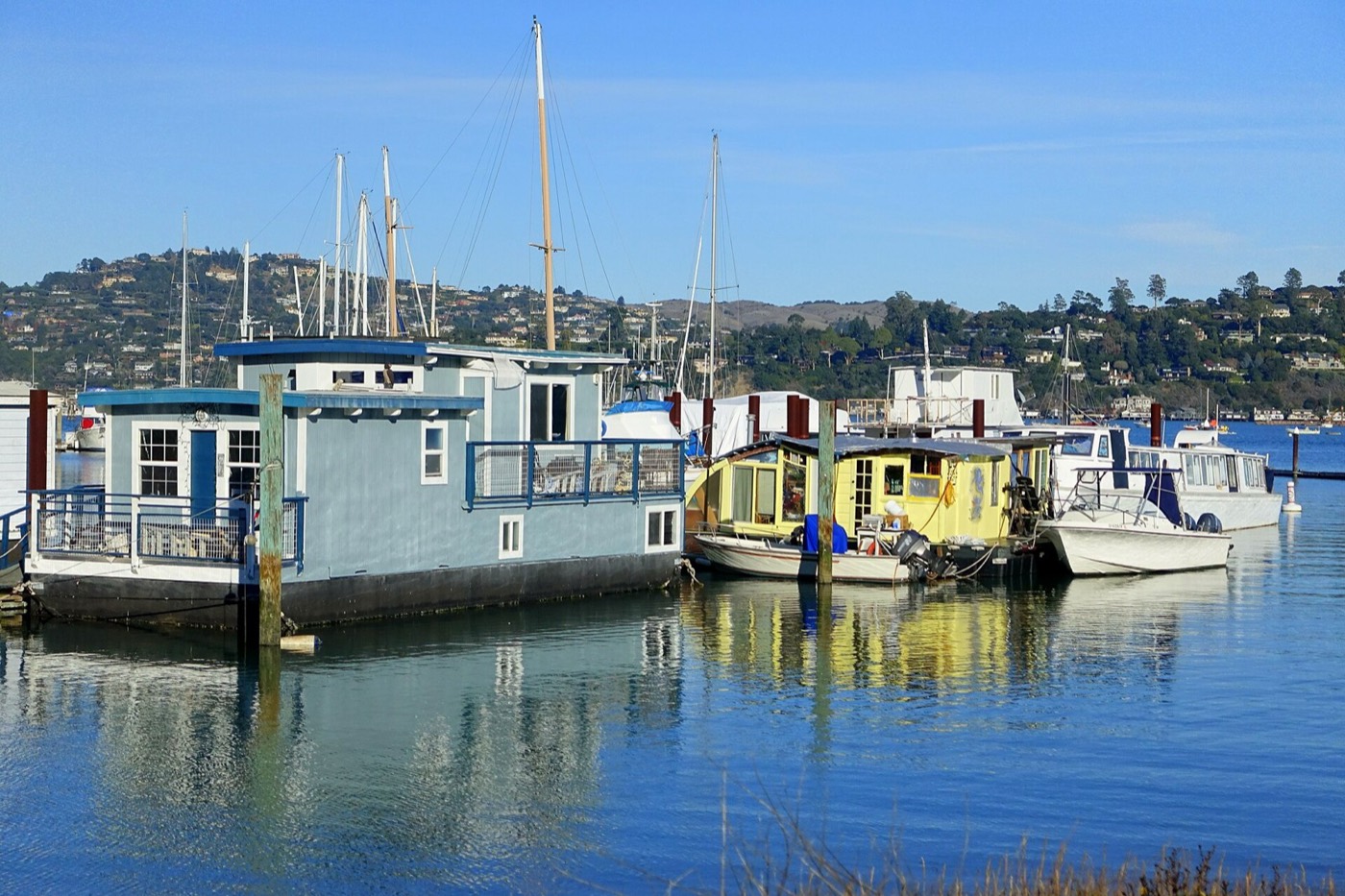
Going public gave the young company money to grow, and growing meant moving. Autodesk's earliest offices, after Walker's own house, were in nearby Sausalito, on the water just north of the Golden Gate Bridge.
This is Sausalito, California, where Autodesk worked out of before it outgrew the town entirely. A company that had started in one founder's living room now had a payroll, a stock-market listing, and an office on the water.
Not long after the IPO, John Walker did something unusual for a company founder. He wrote The Autodesk File, a book-length account of Autodesk's own early years. He built it from his own internal memos, and published it openly rather than keeping it private.
That openness matters for a reason beyond curiosity. Most of what this video can say about Autodesk's first decade comes directly from Walker's own account, written at the time, rather than worked out afterwards by a historian.
4. Speaking the User's Language: Neuchâtel
A drawing program is full of words — menus, error messages, a thick instruction manual. An engineer in France or Italy did not want to learn English before they could start drawing.
Adapting software for another country is called localisation. It means translating every menu, message and manual into the local language, and adjusting anything else that differs from place to place. The program underneath stays the same.
Autodesk started localising AutoCAD early, and it started with outside dealers, not its own staff. Small businesses in London, France and Italy translated the program and sold it in their own countries, each working mostly on its own.
That arrangement eventually moved in-house, and it moved a long way from California. On the 13th of November, 1991, Autodesk opened its own European Software Centre at Marin, on the shore of Lake Neuchâtel, in Switzerland. From then on, localisation had one home, rather than a scattered group of independent dealers.
For the next quarter-century, this Swiss lakeside office was where AutoCAD learned to speak the rest of the world's languages.
5. Al Green, San Rafael and the Workstation Years
Back in California, the company itself was changing leadership. In 1986, John Walker handed the chief executive's job to Al Green, stepping back himself to chairman.
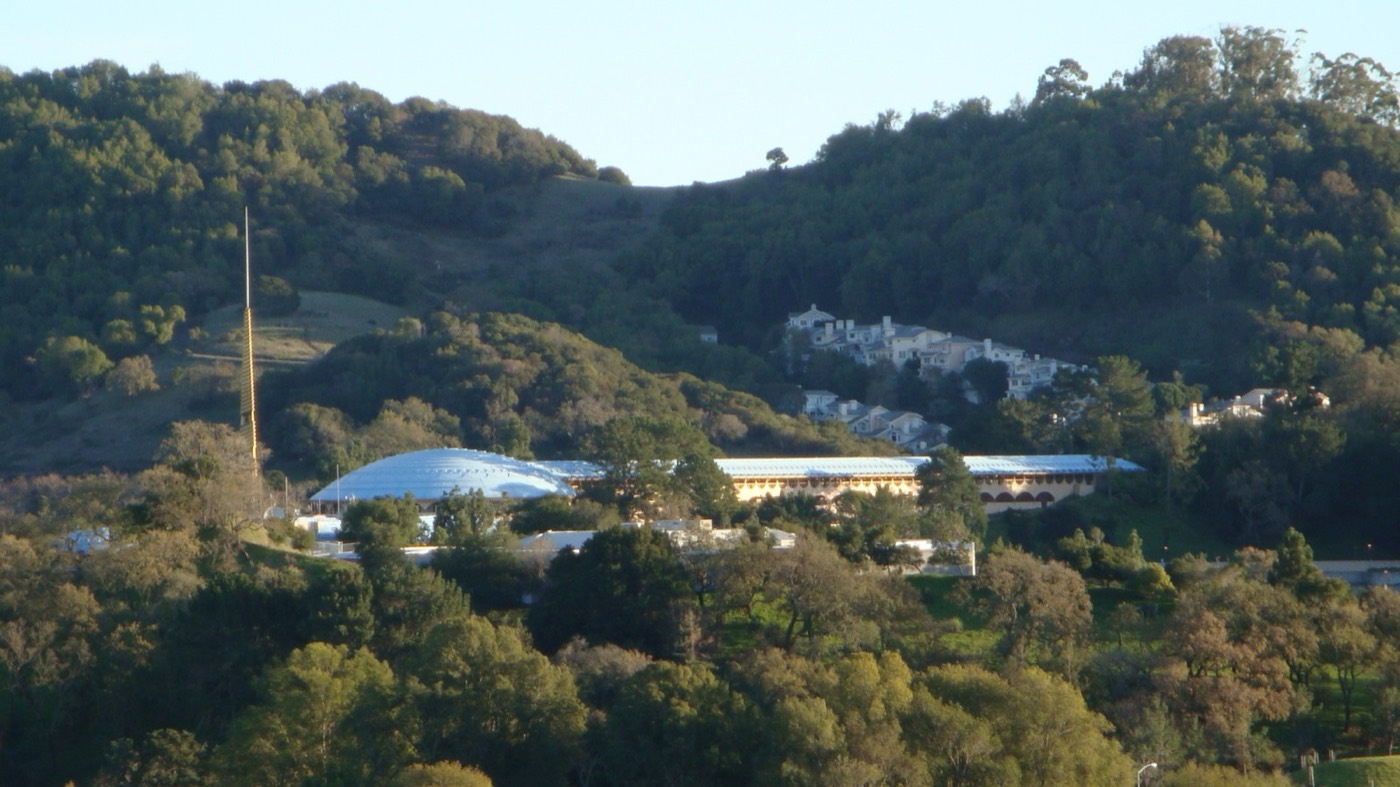
Autodesk also kept outgrowing its own buildings. In 1994, it moved into a new headquarters on McInnis Parkway in San Rafael, which stayed the company's home for nearly three decades.
This is the Marin County Civic Center, in San Rafael, shown here as a stand-in. No free photograph exists of Autodesk's own building nearby on McInnis Parkway, and the civic center still stands a few minutes from where those offices once were.
On a map, the company's early moves were all short hops. From Mill Valley, to Sausalito, to San Rafael — all within the same stretch of California's Bay Area.
Through the second half of the nineteen eighties, AutoCAD stopped being only a personal-computer program. It spread onto workstations: powerful, single-user computers built for engineers, made by companies including Sun, IBM and Hewlett-Packard.
A workstation ran an operating system called Unix — the basic software that lets every other program use a computer's hardware. For a few years AutoCAD ran on practically all of these machines, including a Mac version that shipped in 1992. Autodesk later dropped that version, choosing instead to put its full effort behind Microsoft Windows.
Running on everything had been the plan from the very start. Within fifteen years, that plan had narrowed down to one family of machines.
6. Carol Bartz and the Multi-Industry Push
On the 14th of April, 1992, Autodesk named a new president, chairman and chief executive: Carol Bartz. She led the company for the next fourteen years, until 2006.
Under Bartz, revenue grew roughly fivefold, and Autodesk expanded well beyond drawing offices, into software for manufacturing and product design as well as architecture. Release 14, which shipped in 1997, dropped Macintosh support entirely and ran only on Windows.
Drawing programs stopped being the whole business under Bartz. They became one part of a much larger one, built partly by buying other companies outright.
That growth was also about new dimensions, not only new industries. AutoCAD drew flat, two-dimensional plans — lines on a page, the same shape as the paper it had replaced. Autodesk now moved into building things in three dimensions instead, and it bought the companies that already knew how.
7. Buying the 3D and Media Tools
Over the following decade, Autodesk bought its way into entirely new creative industries, one acquisition at a time.
On the 21st of February, 2002, Autodesk agreed to buy Revit Technology Corporation for $133 million. On the 10th of January, 2006, it completed its purchase of Alias, maker of the animation program Maya, for about $197 million. Softimage, another visual-effects tool, followed from Avid in November 2008, for $35 million.
Between the three deals, Autodesk spent modest sums by its later standards. It was still enough to buy a real hold on three separate industries at once: architecture, animation and visual effects.
Revit mattered most of the three, because of one idea rather than its price. It stored a building as a single three-dimensional model, rather than as separate flat drawings, so moving one wall on screen updated every plan that showed it.
That idea gave the whole method a name: building information modelling. The building is stored once, as a single model of walls, floors, doors and windows, and every drawing becomes a view of that model rather than something drawn by hand.
Between them, Revit, Maya and Softimage moved Autodesk far beyond drawing offices and into architecture, product manufacturing, and the visual-effects work behind films and games.
8. Carl Bass and the Cloud Turn

Carl Bass became Autodesk's chief executive in 2006, succeeding Carol Bartz. Under him, the company changed not just what it sold, but how customers paid for it.
On the 15th of October, 2010, Autodesk put AutoCAD back on sale for the Macintosh, its first version for Apple's computers since the 1990s. The platform the company had abandoned under Bartz was now worth coming back to.
The bigger change was still to come, and it was about the business itself rather than which computer ran the software.
On the 1st of February, 2016, Autodesk ended the sale of perpetual licences for most of its desktop products. A perpetual licence let a customer buy software once and keep using that version forever. From that date, new customers could only rent access by subscription instead, paying every year to keep using it.
That one date marks the moment Autodesk stopped selling a product and started selling continued access to one. AutoCAD kept moving onto new hardware too, shipping as a native Apple silicon application from March 2023, running directly on Apple's own chips.
9. Neuchâtel to Dublin, and a Shrinking Footprint

Andrew Anagnost became Autodesk's permanent president and chief executive in 2017, after Carl Bass retired. Under him, the company's own footprint began shrinking in several places at once.
On a map, the shift is stark. Autodesk's European base moved from Neuchâtel, Switzerland, to Dublin, Ireland. Its American headquarters moved too, from San Rafael to San Francisco.
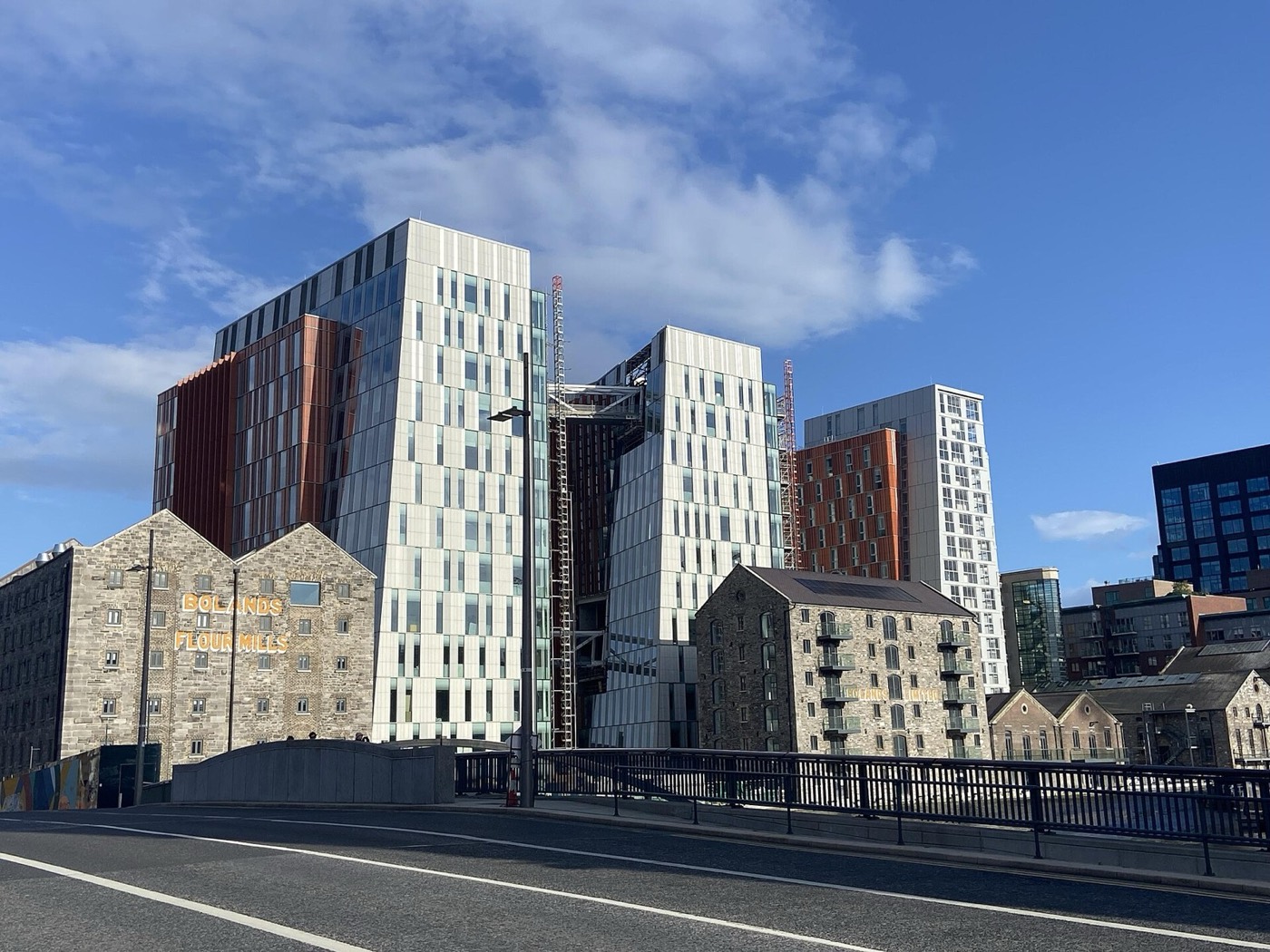
The first to go was the office that had served Europe for over a quarter-century. Between 2017 and 2018, Autodesk closed its Neuchâtel operation in Switzerland, affecting more than 230 Swiss jobs. It opened a new EMEA headquarters in Dublin, Ireland instead. In 2022, it also exited the Marin County headquarters it had held for nearly three decades, moving its corporate address to San Francisco.
This is Dublin's docklands, the part of the city where Autodesk's new European base opened. The Swiss lakeside centre that had translated AutoCAD into seven languages, and later built software of its own, had closed for good.
Autodesk's own chief executive explained the move to the Irish business news site Fora. "It was getting harder and harder to find the talent we needed in Neuchâtel." Dublin, he said, offered a bigger pool of the staff the company needed to hire.
Two long-standing homes, one Swiss and one Californian, both closed within a few years of each other — a company that had spent decades spreading outward now pulling its own footprint in.
10. 2024–2025: The Accounting Investigation and Its Close

In March 2024, Autodesk's own audit committee opened an internal investigation into how the company reported its free cash flow and certain profit margins.
Free cash flow is the cash a company has left after running its business and paying for equipment. Investors watch it closely because it is harder to adjust than reported profit, which is exactly why the board's own committee chose to investigate how Autodesk had been presenting it.
On the 31st of May, 2024, the board replaced its chief financial officer, naming Betsy Rafael interim CFO while the investigation continued. A permanent replacement, Janesh Moorjani, took over that December.
The investigation ran for close to a year and a half. On the 19th of August, 2025, the SEC told Autodesk it was closing its matter, and the US Attorney's Office in Northern California closed its own two days later. Neither body required Autodesk to restate its past financial results.
No restatement meant the numbers investors had already seen stood as reported. But the episode had already drawn an outside investor's attention, and that investor was not finished with Autodesk yet.
11. Starboard, MaintainX and Agentic AI

An activist investor buys a large stake in a company specifically to push for change — to strategy, management or the board — rather than simply holding the shares quietly. In June 2024, while the accounting investigation was still open, the activist firm Starboard Value disclosed a stake in Autodesk worth more than $500 million.
The dispute never reached a full fight for board seats. On the 24th of April, 2025, Autodesk and Starboard reached a cooperation agreement instead: two new directors joined the board, and Starboard withdrew its own nominees.
That settlement came in April 2025. Autodesk's business itself kept growing through the dispute: fiscal 2026 revenue reached $7.21 billion.
In May 2026, the company agreed its largest purchase yet. It closed that deal that August, and previewed new AI tools the following month.
Autodesk's largest purchase was a maintenance-software company, bought for about $3.6 billion in cash.
Set beside each other, the two numbers tell the story. $7.21 billion in revenue, in the year the deal was agreed. $3.6 billion in cash, spent on one acquisition.
MaintainX makes software for tracking maintenance and repair work inside factories and other facilities — work that happens after a building or product is already designed and built. For a company that began as a drawing-program maker, that is new territory: not just designing things, but helping to run them afterwards.
And in September 2026, at its own Autodesk University event in Las Vegas, the company previewed agentic AI across three of its platforms: Forma, Fusion and Flow.
Agentic AI describes software that can carry out a multi-step task mostly on its own, once it is given a goal, rather than waiting for a person to direct every individual step. Autodesk's preview showed this kind of assistant working inside its own design and construction tools.
12. What Became of the Founders
Autodesk's founders scattered after they left the company, and two of their later stories are worth finishing.
On a map, the story closes an ocean away from where it began. Mill Valley, California, is where Autodesk started. Neuchâtel, Switzerland, is where its founder's own story ended.
John Walker, the man who called that first 1982 meeting, left Autodesk's day-to-day leadership behind and later founded Fourmilab, his own personal research website, from his home in Switzerland.
Walker died in Neuchâtel on the 2nd of February, 2024, at the age of seventy-four — in the same part of Switzerland where Autodesk's own European office had once stood.
Mike Riddle, whose program Interact had become AutoCAD, went on to write cheaper CAD programs of his own, under different names, after he left the company.
So here is where the story leaves off. A group of programmers bet $59,030 on one drawing program in 1982. The company that grew from it now sells software by subscription, owns tools used across architecture, manufacturing and film, and is folding AI assistants into all of them.
The case for forwards is straightforward. A drawing program that once needed a room-sized computer now runs on a phone, translated into dozens of languages, backing far more industries than the one it started in.
The case for backwards is just as real. Customers who once bought a disc and owned it now rent access every year instead. A Swiss office that served Europe for more than a quarter-century is gone, and the company that grew by selling drawings outright now grows, in part, by selling continued access to them.
Sources and credits
Photo credits (Wikimedia Commons)
- Mill Valley, California - where Autodesk's founders pooled $59,030 to found the company in January 1982: Alfred Twu, CC0 - https://commons.wikimedia.org/wiki/File%3AMill-valley-apartments-and-wetlands.jpg
- Sausalito, California - Autodesk's early-1980s offices, before the move to San Rafael: Daderot, CC0 - https://commons.wikimedia.org/wiki/File%3AHouseboats_-_Sausalito%2C_CA_-_DSC03255.jpg
- Marin County Civic Center, San Rafael, California - stand-in for Autodesk's San Rafael home after 1994 (the 111 McInnis Parkway building itself has no free photo): Fizbin at en.wikipedia, Public domain - https://commons.wikimedia.org/wiki/File%3AMarin_Civic_Center.jpg
- Marin-Epagnier, Neuchatel, Switzerland - site of Autodesk's European Software Centre, opened 13 November 1991: the data cyclist, CC0 - https://commons.wikimedia.org/wiki/File%3AMarin-Epagnier_railway_station.jpg
- Dublin Docklands, Ireland - Autodesk's EMEA headquarters after the 2017-2018 move from Neuchatel: DylanGLC2017, CC0 - https://commons.wikimedia.org/wiki/File%3ABolands_Quay%2C_Dublin_Docklands_%282023%29.jpg


Primary sources
- Autodesk Investor Relations press releases and SEC EDGAR filings (CIK 0000769397): Revit 8-K (2002); Alias completion (2006); CFO changes (31 May 2024, Dec 2024); Starboard cooperation agreement 8-K (24 Apr 2025); Q4 FY2026 press release (26 Feb 2026, $7.21bn revenue); MaintainX agreement and completion 8-Ks (28 May 2026, 3 Aug 2026).
- Autodesk investor release, 'Details Subscription Transition' - perpetual licence sale ending 1 Feb 2016.
- Autodesk press release and Wikipedia 'AutoCAD' - AutoCAD for Mac, 15 Oct 2010; native Apple silicon, March 2023.
- Wikipedia 'AutoCAD version history' - workstation ports, Mac version 1992, Release 14 (1997) Windows-only.
- Game Developer, 'Autodesk Acquires Softimage For $35 Million' - Softimage deal from Avid, Nov 2008.
- Autodesk white paper, 'Building Information Modeling' (2002).
- swissinfo.ch, 'Autodesk to shut Neuchatel offices'; RTS, 29 Nov 2017; RTN, 31 Aug 2018 - Neuchâtel closure, 230+ jobs.
- Fora (Jonathan Keane), 'Autodesk shifted its EMEA base from Switzerland to Ireland because it needed better talent', Jan 2019.
- Northbaybusinessjournal.com, 'Autodesk finalizes exit from Marin County after 40 years' - San Rafael to San Francisco, 2022.
- Compliance Week, 'Autodesk says no restatements following accounting probe'; Construction Dive, 'Autodesk completes investigation, won't restate financials' - SEC/DOJ closing the matter, Aug 2025.
- CNBC, 'Activist Starboard amasses Autodesk stake, weighs suit over delayed disclosure', 17 Jun 2024.
- Wilson Sonsini, 'Wilson Sonsini Represents Autodesk in Cooperation Agreement with Starboard' - 24 Apr 2025 agreement, two new directors.
- Bloomberg, 'Autodesk to Buy MaintainX for About $3.6 Billion in Cash', 28 May 2026; Kalkine Media, 'Autodesk Finalizes MaintainX Acquisition as of August 3, 2026'.
- Autodesk press release via adsknews.autodesk.com, 'Autodesk Advances Agentic AI in Its Three Industry Clouds', Autodesk University, 15 Sep 2026.
- Design World, 'Mike Riddle wins CAD Society lifetime achievement award', 2 Apr 2008.
Not regulated financial advice.