
Borland: A Timeline
In November 1983 a start-up with Danish roots began selling a Pascal compiler for $49.95. IBM's own Pascal compiler was on its price list at $300. This video follows Borland from its start in Copenhagen to the pieces that survive in September 2026.
Turbo Pascal, written by Anders Hejlsberg and sold by Philippe Kahn from Scotts Valley, California, was followed by Sidekick, Turbo C and Turbo Prolog. Then Borland went after the giants: Paradox against dBase, Quattro against Lotus 1-2-3, and in 1991 the purchase of Ashton-Tate for about $439 million in shares. Lotus sued over Quattro's menus, and the case reached the US Supreme Court, which split 4-4 in January 1996.
Quattro Pro was sold to Novell in 1994 for $145 million. Kahn resigned as chief executive in January 1995, a month before Delphi launched. Microsoft hired Hejlsberg in 1996, and Borland sued in 1997 over 34 hires, settling that September. Then came the Inprise name (1998), a $125 million deal with Microsoft (1999), the return to the Borland name (2001), the sale of the developer tools to Embarcadero (2008) and Micro Focus buying the rest in 2009. OpenText bought Micro Focus in 2023.
Delphi is still sold, as part of RAD Studio 13.2, and Hejlsberg's TypeScript 7 shipped in July 2026. No figure appears without its date and source.
Educational documentary. Not financial or investment advice.
In these topics
Video notes
1. Copenhagen, 1981
In the early nineteen eighties, a few Danish programmers set out to sell software to the world. They had no venture capital and no famous product. What they had was a gift for fast, cheap software.
This video follows the company they started. Borland made programming tools cheap and fast, took on the biggest names in personal computing, and then lost its way. Its products, and some of its people, are still at work in twenty twenty-six.
The usual account says Borland was founded in August nineteen eighty-one by three Danes. Their names were Niels Jensen, Ole Henriksen and Mogens Glad. They meant to sell programs for small computers that ran a system called C P M.
An operating system is the basic software that starts a computer and runs its programs. C P M was the most common one on small business computers before the IBM Personal Computer arrived. The Danes' early products included WordIndex, a program for building the index of a document.
Denmark's own computer history society tells a fuller story. Niels Jensen started a company called Midas in nineteen seventy-nine. In nineteen eighty-two he took over an unused company in Ireland, one already registered and waiting for an owner, called Borland Limited.
So the business was run from Copenhagen, under an Irish company's name. Its Danish company was owned by four men. They were Jensen, Glad, Henriksen and a programmer, Lars Frid Nielsen.
The two accounts differ on the dates, and this video does not choose between them. They agree on the people, and on what came next. The Danes needed someone to sell their software in America.
2. Scotts Valley, 1983
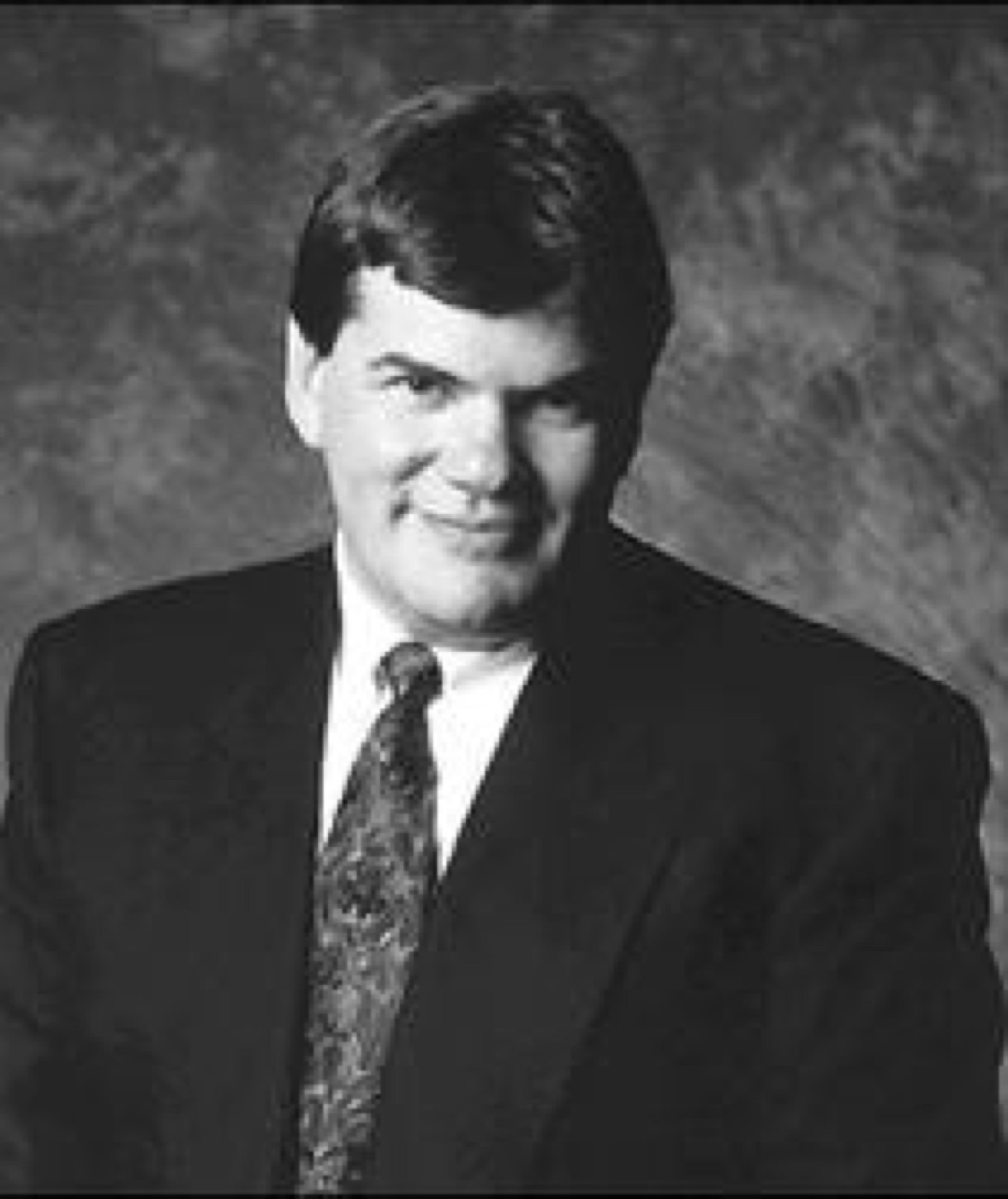
That someone was Philippe Kahn. He was French, and had studied mathematics at the ETH, the technical university in Zurich. One of his teachers there was Niklaus Wirth, who designed Pascal, a programming language much used for teaching. Kahn arrived in California without a work permit.
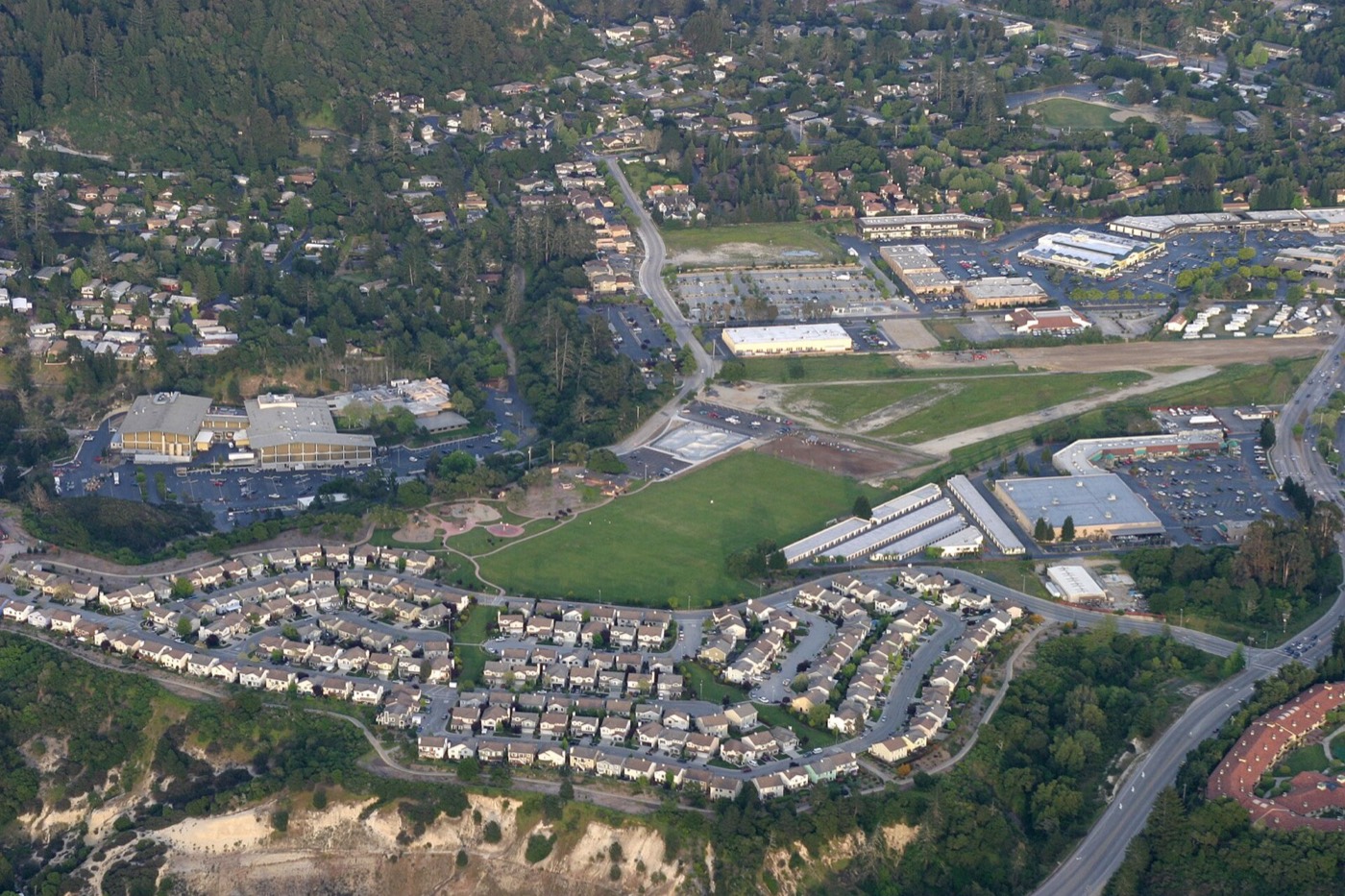
Borland International was set up in May nineteen eighty-three, with Kahn as chairman, president and chief executive. It settled in Scotts Valley, a small town in the wooded hills on the edge of Silicon Valley.
This is Scotts Valley from the air, in two thousand and five. Borland kept its headquarters in this town through the nineteen nineties.
So the company had two homes, more than five thousand miles apart. The programming talent was in Denmark, and the selling was done from California.
Borland's first big product came from Denmark too. Anders Hejlsberg, a young Danish programmer, had written a Pascal compiler and sold it through his own company, Poly Data. A compiler is the program that turns the code a programmer writes into instructions the computer can run.
Borland licensed it and called it Turbo Pascal. It went on sale on the twentieth of November, nineteen eighty-three. The price was forty-nine dollars and ninety-five cents. On IBM's own price list that March, the IBM Pascal Compiler cost three hundred dollars.
Turbo Pascal was fast as well as cheap. It kept its work in the computer's memory rather than on the slow disk, so a programmer could change a line and try again almost at once.
Kahn sold it direct to programmers, by post and through advertisements in BYTE magazine. In June nineteen eighty-five, the magazine MicroTimes published an interview with him. It reported that Turbo Pascal sold more than fifteen thousand copies in its first four months. Within a year, sales were more than ten times that.
3. The Turbo years
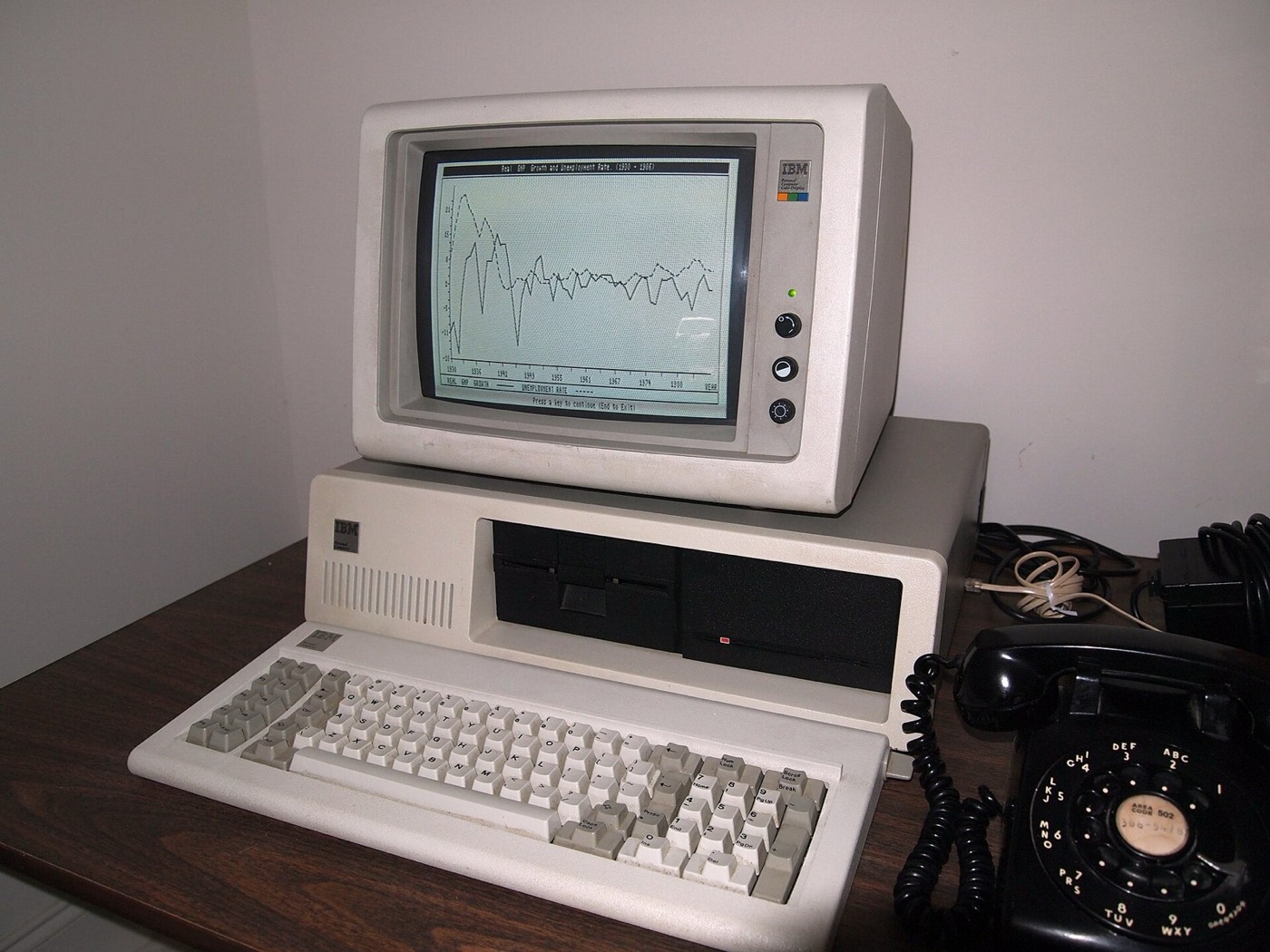
Borland wrote its tools for the IBM Personal Computer, like this one, and for the many machines that copied it. The PC ran an operating system from Microsoft, called DOS. Every program Borland sold had to work within it.
The second hit was not a programming tool at all. In June nineteen eighty-four Borland named it Sidekick, and priced it at forty-nine ninety-five, like Turbo Pascal. Sidekick was a pop-up organiser, with a notepad, a calendar, a calculator and a phone dialler.
It worked by staying in the computer's memory while another program ran. One press of a key brought it up on top of whatever was on the screen. Programs that worked this way were called memory-resident programs, meaning they stayed loaded in the background until they were wanted.
Sidekick sold more than a million copies in its first three years, according to the prospectus for Borland's first sale of shares. Borland's sales for nineteen eighty-four reached ten million dollars. By the year to March nineteen eighty-seven, they were twenty-nine point two million.
More Turbo tools followed, each for a different programming language. Turbo Prolog came in March nineteen eighty-six, for a language used in artificial intelligence research. Turbo C followed in May nineteen eighty-seven. C was the language in which much of the software industry's own programs were written.
The method was the same each time. A fast tool, a low price, and sales made straight to the people who would use it, through the post and through magazine advertisements.
4. Taking on the giants
By nineteen eighty-seven Borland wanted more than programmers. The big money in PC software was in office programs, and two of the best-known were the Lotus one-two-three spreadsheet and the dBase database from Ashton-Tate.
A spreadsheet is a grid of numbers in which changing one figure recalculates all the others. A database is a program for storing and searching records, such as a list of customers. Borland set out to sell both.
For the database, it bought a company. In July nineteen eighty-seven Borland agreed to buy Ansa Software, the maker of a database called Paradox, in a share deal worth twenty-nine million dollars. Paradox had been selling for seven hundred and twenty-five dollars a copy.
For the spreadsheet, it wrote its own. The Ansa purchase was completed in September, and Borland's spreadsheet, Quattro, went on sale late the same year. An improved version, Quattro Pro, followed in the last months of nineteen eighty-nine.
Quattro had a feature aimed straight at Lotus. Users could switch on a second set of menus, which a court later called the Lotus Emulation Interface. Emulation means imitating another program. With it switched on, the Lotus commands appeared on screen, so a Lotus user could move across without learning anything new.
That feature was meant to win customers from Lotus. It also started the longest legal fight in Borland's history.
5. The Ashton-Tate gamble
Ashton-Tate was based in Torrance, in southern California, and its dBase had once led the market for databases on personal computers. In October nineteen eighty-eight it released dBase four. A history published on the dBase website says it came out too early, and full of faults.
On the tenth of July, nineteen ninety-one, Borland announced it would buy Ashton-Tate for about four hundred and thirty-nine million dollars in Borland shares. Ashton-Tate's owners would get seventeen dollars fifty of Borland stock for each of their shares.
The two companies were almost the same size. In the year to March nineteen ninety-one, Borland had revenue of two hundred and twenty-six point eight million dollars. Ashton-Tate's revenue in its previous year was two hundred and thirty point five million, and it had made a loss.
On the eleventh of October the news agency UPI reported the purchase complete. About four hundred Ashton-Tate staff were to lose their jobs.
The combined company would be run from Scotts Valley. Ashton-Tate's headquarters in Torrance, about three hundred miles to the south, was to close within four months.
The deal came with a condition. The US Justice Department said the two companies together sold about sixty per cent of database software in America, by value. To let the deal through, it barred the combined company from suing anyone for copying the commands and menus of dBase.
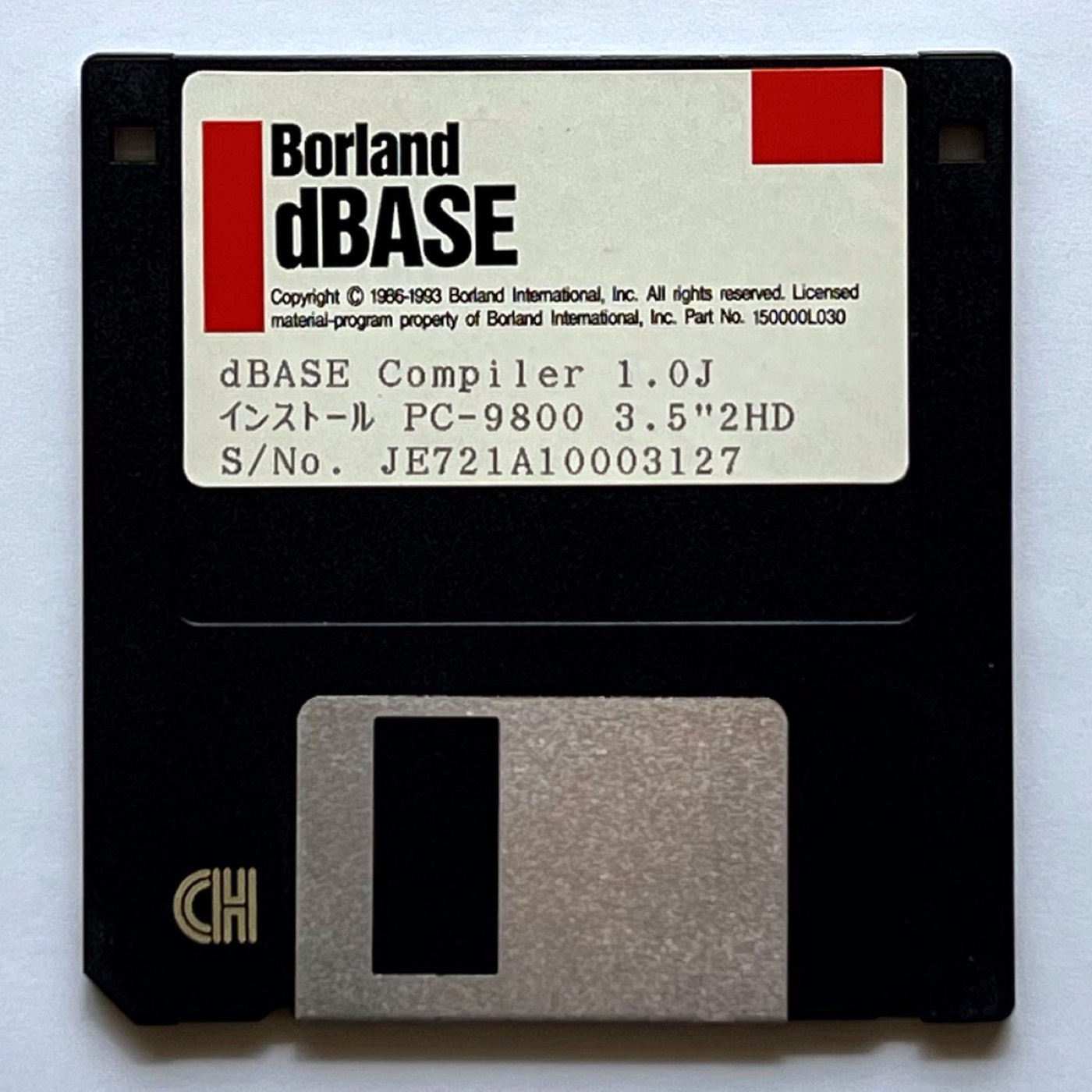
This disk, from nineteen ninety-three, shows the result, with Borland's name printed above dBase. But the Windows version that dBase needed was late. dBase for Windows did not appear until August nineteen ninety-four, and by then Microsoft was selling a database of its own, called Access.
6. Lotus v. Borland
Lotus sued Borland on the second of July, nineteen ninety. Its claim was about the menu tree of Lotus one-two-three, meaning the list of commands such as Copy, Print and Quit, and the order they sit in. Lotus said Quattro had copied it, and that the tree was protected by copyright.
Copyright is the law that stops people copying someone else's writing, music or pictures without permission. Lotus one-two-three had four hundred and sixty-nine commands, arranged in more than fifty menus.
In Boston, Judge Robert Keeton ruled for Lotus. In July nineteen ninety-two he found that the menus were protected, and Borland took the Lotus menus out of Quattro. In nineteen ninety-three he found that the Quattro programs broke the Lotus copyright. Borland appealed.
On the ninth of March, nineteen ninety-five, the Court of Appeals reversed him. Judge Norman Stahl wrote that the menu was a method of operation, meaning the means by which a person works something, and copyright does not protect that. "Lotus wrote its menu command hierarchy so that people could learn it and use it."
The judgment compared the menu to the buttons on a video cassette recorder. The buttons are simply how you work the machine. Giving them labels and putting them in order does not turn them into a piece of writing.
A second judge, Michael Boudin, added a comparison of his own. People keep the familiar typewriter layout because it is what everyone has learned to use. "The QWERTY keyboard is nothing other than a menu of letters."
Lotus took the case to the Supreme Court, in Washington, nearly four hundred miles from Boston. The case had now been running for more than five years.
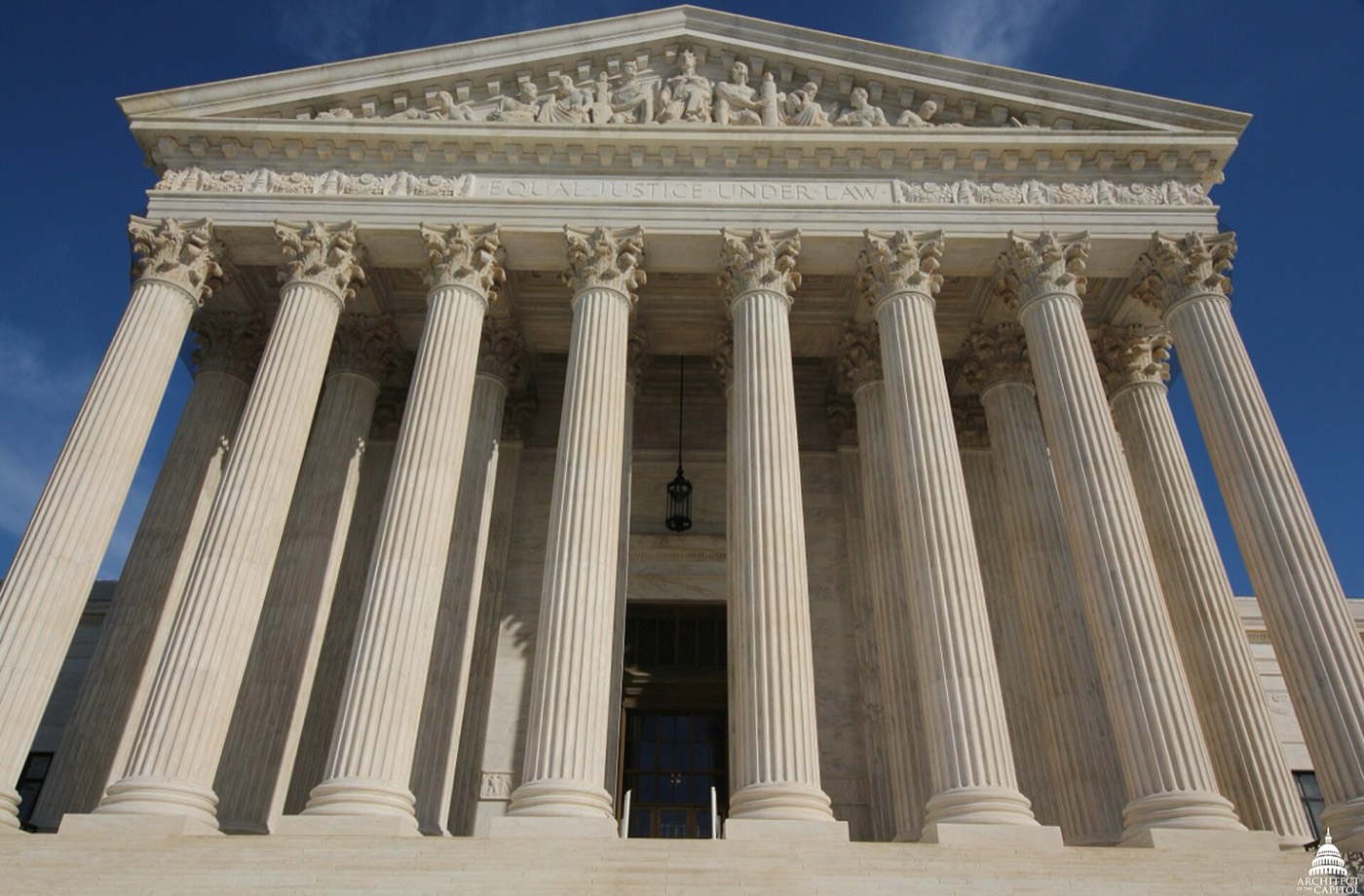
The court sits in this building. It heard the arguments in January nineteen ninety-six.
Only eight justices took part, because Justice John Paul Stevens stood aside. On the sixteenth of January, nineteen ninety-six, the court announced that it was equally divided, four to four. A tie leaves the lower court's ruling in place, but sets no rule for the rest of the country.
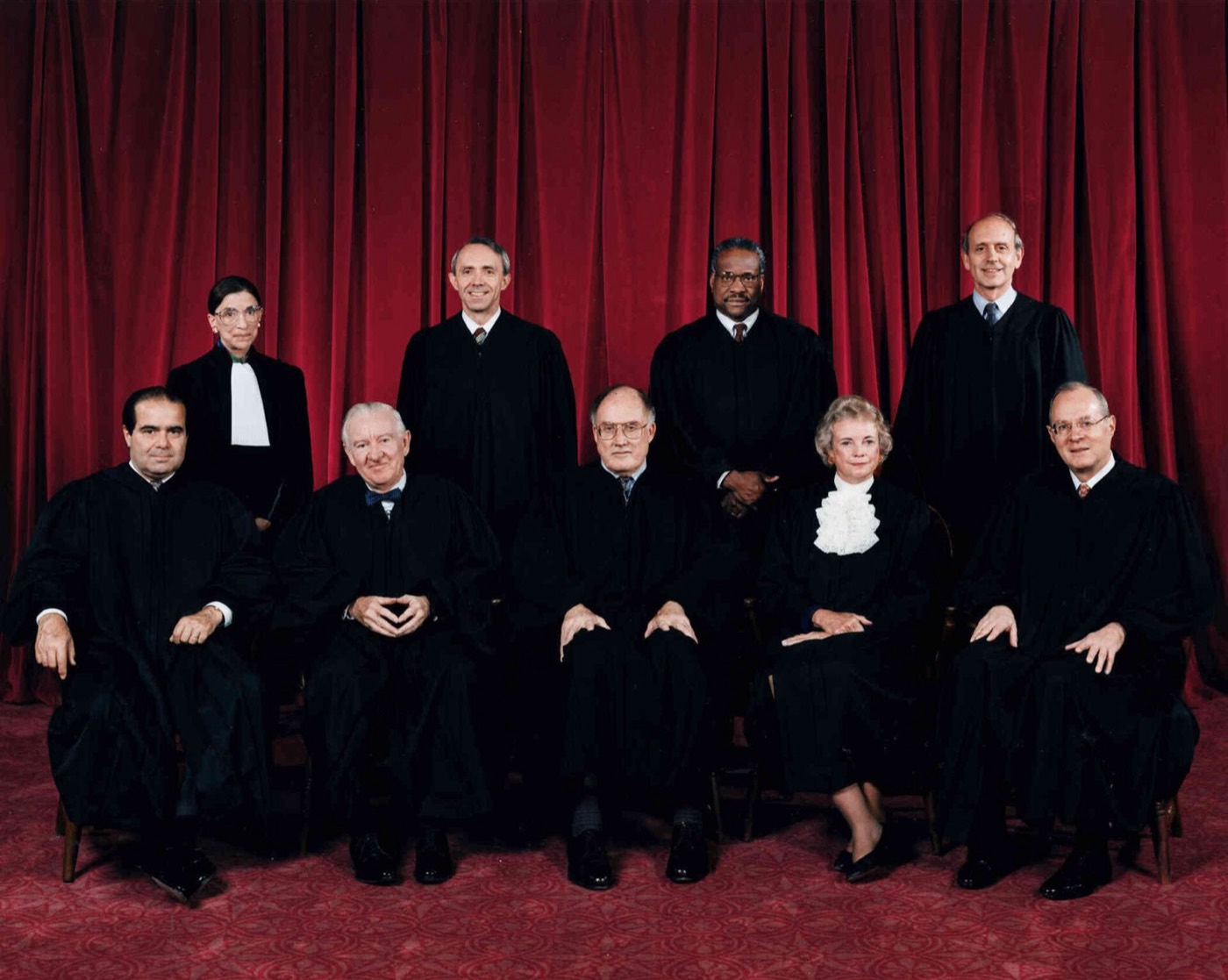
These were the justices at the time. They did not say which way each had voted, and the ruling was one sentence long. Borland had won, and in that part of the country, at least, a menu was free to copy.
7. Retreat and Kahn's exit
The Ashton-Tate purchase did not pay off. In the year to March nineteen ninety-two, Borland lost about one hundred and ten million dollars. Much of that was the cost of combining the two companies.
The spreadsheet went first. In March nineteen ninety-four Borland agreed to sell Quattro Pro to Novell, the networking company, for one hundred and forty-five million dollars. The sale was completed in June. Borland's accounts put a hundred and ten million of that on the spreadsheet itself. The rest paid for licences to sell Paradox alongside it.
Novell had bought WordPerfect, the best-selling word processor, in the same month. It wanted a set of office programs to take on Microsoft, and Quattro Pro filled the spreadsheet slot.
Then the founder went. On Wednesday the eleventh of January, nineteen ninety-five, Philippe Kahn resigned as president and chief executive. The finance chief, Gary Wetsel, replaced him as president. Kahn said that "my continuing as president and CEO has become a distraction."
Kahn stayed on as chairman for one more year, until January nineteen ninety-six. By then he was running a new company, Starfish Software, which he had founded in nineteen ninety-five. The man who had sold Turbo Pascal by post no longer ran the company he had fronted since the start.
8. Delphi, 1995
Five weeks after Kahn stepped down, Borland launched its best product. Delphi was unveiled on Valentine's Day, the fourteenth of February, nineteen ninety-five, at a software conference in San Francisco. It was shown at seven in the evening, straight after a keynote speech by Kahn.
Delphi was a tool for building Windows programs by drawing them. A programmer dragged buttons, boxes and lists onto a window, then wrote Pascal code for what each one should do. Delphi then compiled the whole thing into a finished program that ran on its own.
This way of working is called rapid application development, which means building a working program quickly from ready-made parts. Delphi's version was fast, because its programs were compiled straight to the computer's own instructions.
The chief architect was Anders Hejlsberg, the author of Turbo Pascal. Microsoft's own biography of him, from two thousand and one, calls him the original author of Turbo Pascal and the chief architect of Delphi.
Delphi was released to manufacturing, meaning the final copy was sent for mass production, on the fifteenth of February. That was a day after the launch, because a last-minute fault meant the master copy had to be remade. In the year to March nineteen ninety-six, Borland made a profit again. It earned fourteen point three million dollars, on revenue of two hundred and fifteen million.
Delphi gave Borland a product that programmers loved. But the man who designed it was about to leave.
9. The brain drain
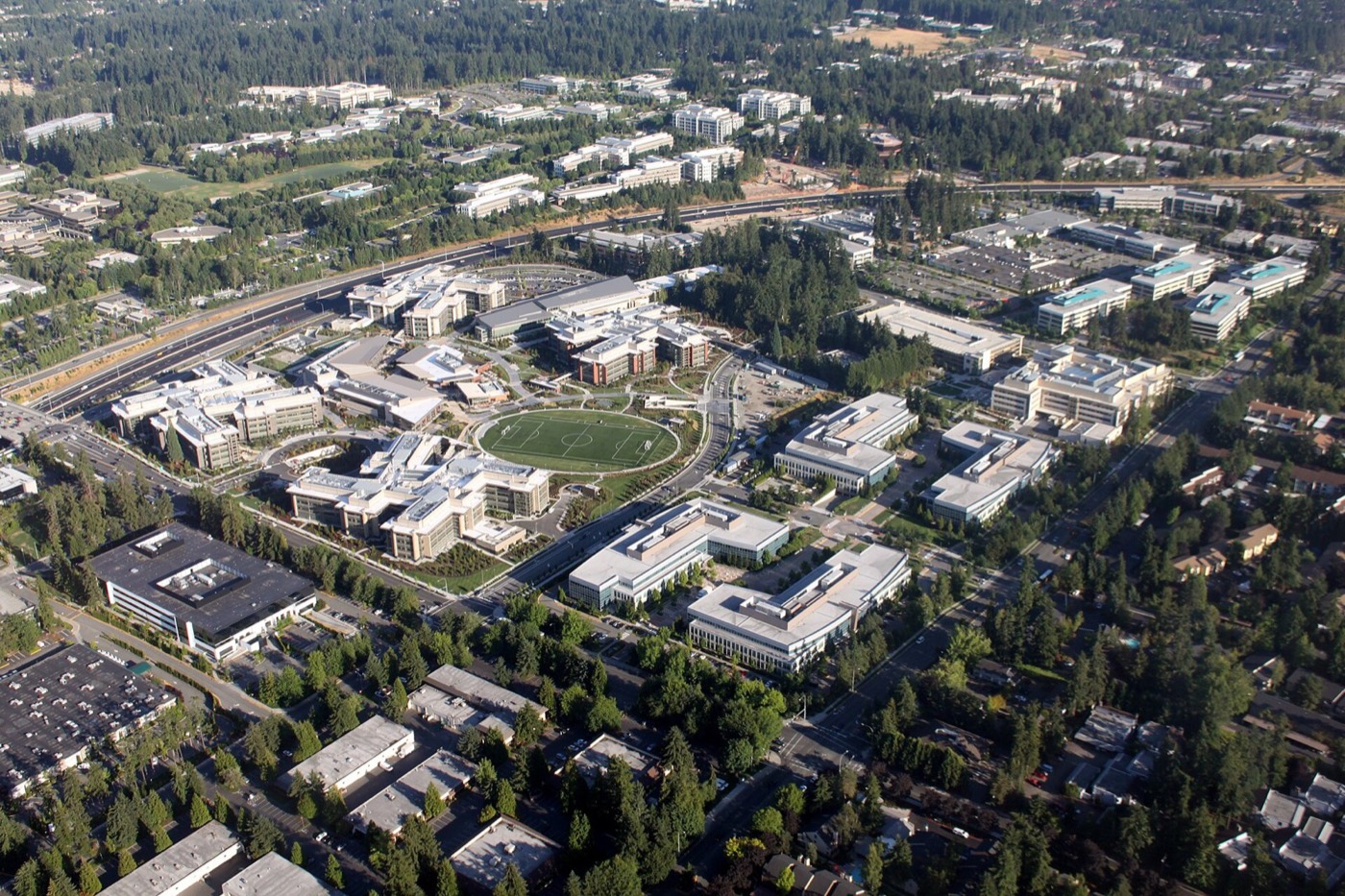
In nineteen ninety-six, Anders Hejlsberg left Borland for Microsoft. This is Microsoft's campus in Redmond, near Seattle, photographed from the air in two thousand and nine.
Redmond is about seven hundred and thirty miles north of Scotts Valley. Microsoft made the operating systems that most Borland programs ran on, and now it was hiring the people who wrote those programs.
On the seventh of May, nineteen ninety-seven, Borland sued Microsoft in Santa Clara County, California. It said that over the previous thirty months, Microsoft had hired away at least thirty-four of its people with large signing bonuses. The trade paper Tech Monitor reported that the suit alleged Hejlsberg had been offered a three million dollar signing bonus.
Borland's chief executive, Delbert Yocam, put it simply. "I have no problem with competition, but I have a real problem with unfair competition."
The case never came to trial. On the nineteenth of September, nineteen ninety-seven, the two companies announced they had settled, and the terms were kept confidential. At Microsoft, Hejlsberg became the chief designer of the language C sharp, which Microsoft announced in June two thousand. Later he helped create TypeScript, a language for building large programs for the web, first shown in October twenty twelve.
Borland had its settlement. Microsoft had the people.
10. Inprise and back
In late April nineteen ninety-eight, Borland International changed its name to Inprise Corporation. The new name was meant to show that it no longer just made desktop tools for programmers. It wanted to sell enterprise software, meaning the large systems that big businesses run on.
In June nineteen ninety-nine, Microsoft agreed a deal with Inprise worth one hundred and twenty-five million dollars. Twenty-five million of it bought Inprise shares. The other hundred million paid for the right to use Inprise's patents, and settled disputes over patents and licences.
A patent is a legal right to an invention, and a company that holds one can charge others to use it. The deal also made Microsoft a shareholder in its old rival.
Inprise's interim chief executive, Dale Fuller, welcomed the deal. "We're extremely pleased with this alliance," he said.
The new name never caught on. With effect from the twenty-second of January, two thousand and one, the company became Borland Software Corporation. Its share symbol on the Nasdaq exchange went back to B O R L.
The renamed company was smaller than the one that had bought Ashton-Tate. In the calendar year two thousand, its revenue was one hundred and ninety-one million dollars. Its profit was twenty point seven million, and it had about nine hundred and thirty-four employees.
11. Selling the crown jewels
In February two thousand and six, Borland announced it would sell the tools it was famous for, including Delphi and JBuilder. These were integrated development environments, which are the programs developers write, test and compile their code in. The same day, Borland agreed to buy Segue Software, a maker of testing tools.
Borland wanted to concentrate on software for managing how large teams build and test programs. The tools that had made its name no longer fitted that plan.
No buyer offered what Borland wanted. In November it put the tools into a separate company that it still owned, called CodeGear. Borland kept the testing and team-management products.
In May two thousand and eight, Embarcadero Technologies agreed to buy CodeGear for twenty-three million dollars. The sale closed in June at about twenty-four and a half million. The Register reported that Borland had first hoped to get a hundred and fifty million.
What was left of Borland was losing money. In two thousand and eight, its revenue was one hundred and seventy-two million dollars. It lost two hundred and sixteen million, much of it from writing down the value of past purchases.
In May two thousand and nine, the British software company Micro Focus announced a deal to buy Borland, opening at a dollar a share. Reports put that at about seventy-five million dollars, counting Borland's cash. Borland's board held out for more, and turned down a second offer of a dollar fifteen. The purchase was completed on the twenty-seventh of July, at a dollar fifty a share. That valued Borland at about one hundred and thirteen million dollars.
12. Where it all went

Micro Focus kept Borland's tools for testing software and managing large programming teams, such as Silk and StarTeam. On the thirty-first of January, twenty twenty-three, the Canadian company OpenText completed its purchase of Micro Focus. It paid about five point eight billion dollars, including cash and debt. What remains of Borland's own business now belongs to OpenText.
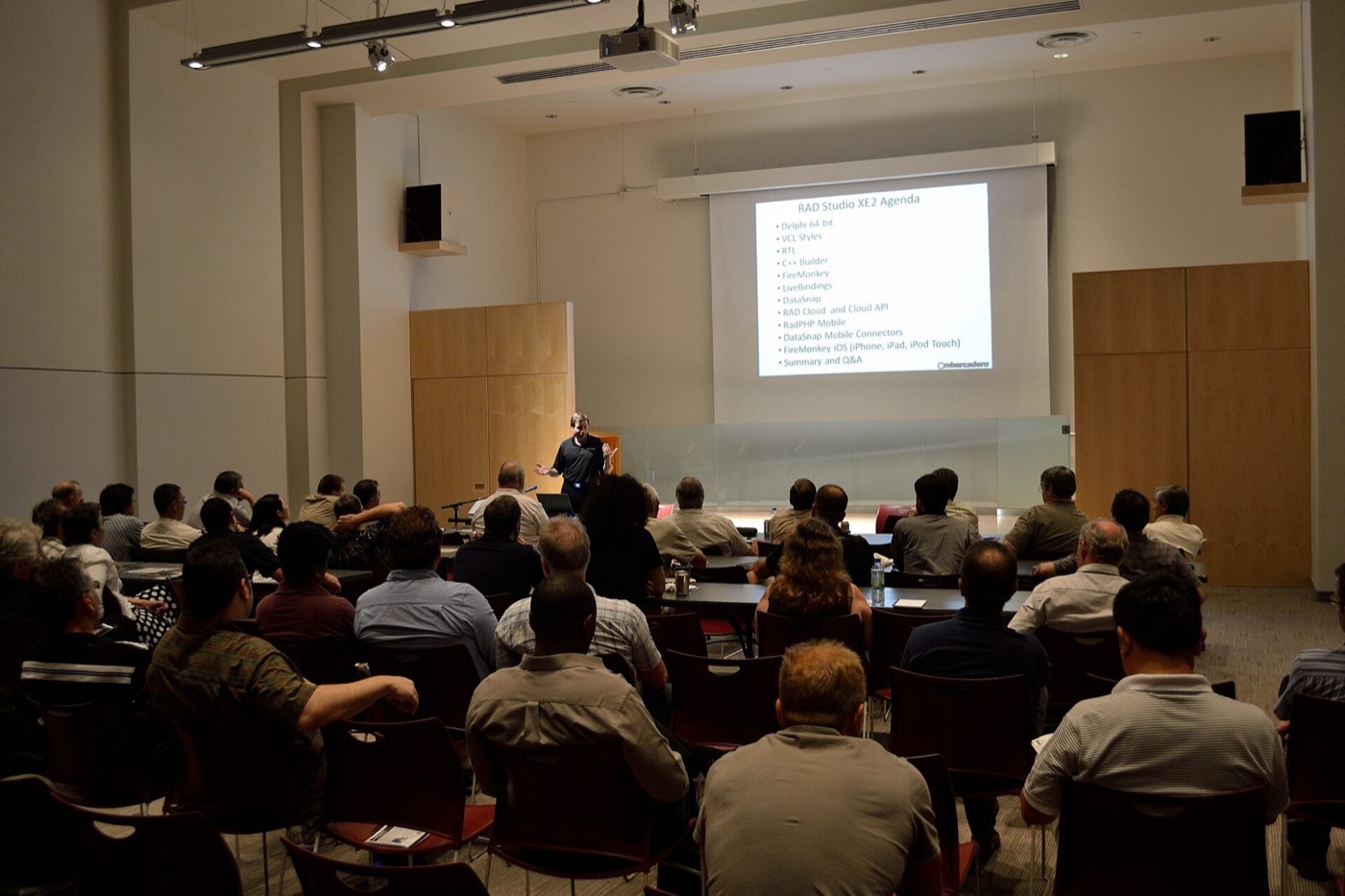
Delphi went a different way. This is one of Embarcadero's RAD Studio events, in two thousand and eleven. Embarcadero was itself bought by Idera in two thousand and fifteen, and it still sells Delphi, as part of a package called RAD Studio.
RAD Studio thirteen, named Florence, came out in September twenty twenty-five. An update followed in March, and version thirteen point two came out on the seventeenth of September this year. Among other things, it added a new Delphi compiler for Linux.
The TIOBE index is a monthly ranking of programming languages, built from search engine results. In January twenty twenty-six, Delphi was ninth, back in the top ten. It dropped out in July, when Rust moved in, and in September it stood thirteenth.
Anders Hejlsberg's latest project brings his story back to compilers. In March twenty twenty-five he announced that the TypeScript compiler was being rewritten in the Go language, to run as native code. TypeScript seven shipped on the eighth of July, twenty twenty-six. Microsoft said full builds were typically between eight and twelve times faster.
Follow the pieces and the whole story is there. Quattro Pro went to Novell, and two years later to Corel. The developer tools went to Embarcadero, and later to Idera. The rest of Borland went to Micro Focus, and then to OpenText.
Borland's story is often told as a company beaten by Microsoft. The record is more specific. It won with fast tools at low prices, sold straight to programmers. It lost money on a costly purchase, then lost its founder, its best designer and finally the tools that had made its name.
Borland is no longer a company of its own. But every time a developer drags a button onto a window, or waits a few seconds less for a compiler, a little of what those Danish programmers and their French salesman started is still at work.
Sources and credits
Photo credits (Wikimedia Commons)
- Philippe Kahn, Borland co-founder and CEO: unknown, Public domain - https://commons.wikimedia.org/wiki/File%3APhilippe_Kahn.JPG
- Scotts Valley, California, Borland's home town (aerial, 2005): User:DanDawson, Public domain - https://commons.wikimedia.org/wiki/File%3AScotts_Valley_California_20.jpg
- IBM PC 5150, the machine Borland's Turbo tools were sold for: Fried Dough, Public domain - https://commons.wikimedia.org/wiki/File%3AIbm_computer_pc_5150_%286049156797%29.jpg
- dBase installation disk - the product Borland acquired with Ashton-Tate: Asanagi, CC0 - https://commons.wikimedia.org/wiki/File%3ADBase_Compiler_installation_disk_2025-03-01.jpg
- The Rehnquist Court, 1994 - the court that split 4-4 in Lotus v. Borland: US Supreme Court, Public domain - https://commons.wikimedia.org/wiki/File%3ARehnquist_Court_in_1994.jpg
- US Supreme Court Building, Washington DC: USCapitol, Public domain - https://commons.wikimedia.org/wiki/File%3ASupreme_Court_Following_Facade_Restoration_%2810542206014%29.jpg
- Microsoft campus, Redmond, Washington (aerial, 2009): Jelson25, Public domain - https://commons.wikimedia.org/wiki/File%3AAerial_Microsoft_West_Campus_August_2009.jpg
- Embarcadero RAD Studio XE2 World Tour event, 2011 - Delphi under its later owner: Raysonho @ Open Grid Scheduler / Grid Engine, CC0 - https://commons.wikimedia.org/wiki/File%3ARADStudioXE2WorldTour.jpg


Primary sources
- Wikipedia, 'Borland' () and DOS Days, Borland history - Borland Ltd, August 1981, Jensen, Henriksen and Glad; CP/M software; Borland International May 1983; BYTE advertising.
- Danish Data Society, datamuseum.dk wiki, Borland entry - Midas (1979), Irish shelf company Borland Ltd (1982), Danish company owned by Jensen, Glad, Henriksen and Lars Frid Nielsen.
- Wikipedia, 'Philippe Kahn' - ETH Zurich, Niklaus Wirth, arrival in the US without a work permit; Starfish Software 1995; Wikipedia, 'Starfish Software'.
- Embarcadero blog, '40 years of Turbo Pascal', November 2023 - 20 November 1983, $49.95; Wikipedia, 'Turbo Pascal' (Compas Pascal, Poly Data).
- IBM price list, 8 March 1983 (WinWorld forum transcription) - IBM Pascal Compiler $300.
- MicroTimes, June 1985, interview with Philippe Kahn - 15,000+ copies in four months, ten times that within a year.
- Borland IPO prospectus - Sidekick over 1 million copies in three years; revenue FY1984 $10m, year to March 1987 $29.2m. Wikipedia, 'Borland Sidekick', 'Turbo Prolog', 'Turbo C'.
- New York Times, 10 July 1987 - Ansa Software (Paradox), about $29m in stock; completed September 1987; Paradox $725. Wikipedia, 'Quattro Pro'.
- UPI, 'Borland to acquire Ashton-Tate', 10 July 1991, and 'Borland completes Ashton-Tate acquisition', 11 October 1991 - $439m, $17.50 a share, revenue $226.8m and $230.5m, about 400 layoffs, Torrance to close within four months.
- US Department of Justice, US v. Borland International and Ashton-Tate, consent decree and competitive impact statement, October 1991 - about 60% of a roughly $200m 1990 US market; no suits over dBase commands and menus.
- dBase, 'History of dBase' (dbase.com) - dBase IV October 1988, released early and with faults; Wikipedia, 'dBase' - dBase for Windows, August 1994.
- Lotus Development Corp. v. Borland International, 49 F.3d 807 (1st Cir., 9 March 1995); 516 U.S. 233 (16 January 1996), affirmed by an equally divided court, Stevens not participating. Oral argument 8 January 1996 per Oyez.
- International Directory of Company Histories, 'Borland International, Inc.' (encyclopedia.com) - net loss $110.4m, fiscal 1992.
- Borland Form 10-K/A (SEC EDGAR) - Quattro Pro sale $145m: $110m product line, $35m Paradox licences; NYT and Roanoke Times, 22 March 1994; UPI, 27 June 1994.
- Spokesman-Review (wire services), 12 January 1995 - Kahn resigns as president and CEO, Wetsel president Borland Form 10-K, 1996 - Kahn chairman until January 1996.
- Embarcadero blog, David Intersimone, on the Delphi launch - 14 February 1995, 7pm, SD West, San Francisco; RTM 15 February 1995. Microsoft, 2001 press release - Hejlsberg original author of Turbo Pascal, chief architect of Delphi, chief designer of C#.
- Borland Form 10-K/A for the year to March 1996 - revenue $215.2m, net income $14.3m.
- Seattle Times and EE Times, May 1997 - suit filed 7 May 1997, Santa Clara County, at least 34 staff in 30 months; Yocam quotation. Tech Monitor, 9 May 1997 - the suit's allegation of a $3m signing bonus for Hejlsberg. Microsoft, 19 September 1997 - settlement, terms confidential.
- Microsoft, 26 June 2000 - C# announced; Microsoft TypeScript blog, 1 October 2012 - TypeScript unveiled (Hejlsberg's role per Wikipedia, 'Anders Hejlsberg').
- Tech Monitor, April 1998 - Inprise rename; ticker INPR from 5 June 1998. Inprise Form 8-K, June 1999 - $25m Series C preferred plus $100m = $125m; Fuller quotation. Borland Form 8-K, January 2001 - Borland Software Corporation from 22 January 2001, ticker BORL.
- Borland Form 10-K for 2000 - revenue $191.1m, net income $20.7m, about 934 employees at 2 March 2001.
- Network World, 8 February 2006 - IDE sale plan and Segue purchase (about $100m) the same day; Computerworld, 14 November 2006 - CodeGear.
- InfoWorld, 7 May 2008 - Embarcadero to buy CodeGear for $23m; RTTNews, 30 June 2008 - closed at about $24.5m; The Register - $150m originally sought.
- Borland Form 8-K, results for 2008 (February 2009) - revenue $172.0m, net loss $215.7m.
- InfoWorld and The Register, 6 May 2009 - Micro Focus offer, $1 a share, about $75m including cash; ESJ, 1 August 2009 - $1.15 rejected, $1.50 agreed; Borland Form 8-K, 27 July 2009 - merger completed.
- OpenText, 31 January 2023 - Micro Focus acquisition completed, about $5.8bn including cash and debt.
- The Register, 7 October 2015 - Idera buys Embarcadero. Embarcadero blog (Marco Cantu) - RAD Studio 13 Florence 10 September 2025, 13.1 on 19 March 2026, 13.2 on 17 September 2026.
- InfoWorld, 5 January 2026 and 6 July 2026; TIOBE index, September 2026 - Delphi 9th (1.98%), out of the top ten in July, 13th (1.08%).
- Anders Hejlsberg, 'A 10x Faster TypeScript', Microsoft, 11 March 2025; Microsoft TypeScript blog (Daniel Rosenwasser), 8 July 2026 - TypeScript 7.0, 8x-12x faster, VS Code 11.9x; The Register, 9 July 2026.
- Novell, 'Corel Acquires WordPerfect Software Products', January 1996 - Quattro Pro to Corel.
Not regulated financial advice.