
Compaq A Timeline
Compaq was sketched on a placemat in a Houston House of Pies in 1982. Twelve years later it was the biggest maker of personal computers in the world. Eight years after that it was gone, inside Hewlett-Packard. This video follows it year by year.
Rod Canion, Jim Harris and Bill Murto left Texas Instruments and founded Compaq in February 1982, with $1,000 each and $2.5 million from Ben Rosen of Sevin Rosen Partners. To copy the IBM PC legally they needed a BIOS that behaved exactly like IBM's without using a line of IBM's code, so they wrote one in a clean room. The Compaq Portable followed: 53,000 shipped in 1983 for more than $111 million, a US first-year record.
On 9 September 1986 the Deskpro 386 beat IBM to Intel's new chip by about seven months. In September 1988 Compaq and eight other makers, the Gang of Nine, answered IBM's closed Micro Channel with EISA. Then cheaper clones bit: a $70 million loss in the third quarter of 1991, 1,440 jobs cut, and Canion removed on 25 October 1991.
Eckhard Pfeiffer's price war (ProLinea, 1992; Presario, 1993) made Compaq number one in 1994, with 4.8 million PCs shipped. Then the bid to become an enterprise giant: Tandem (1997, about $3 billion when agreed) and Digital Equipment (26 January 1998, $9.6 billion, the largest computer takeover to that date). The 1998 loss of $2.7 billion, Dell's direct model, and Pfeiffer's exit on 18 April 1999.
On 4 September 2001 HP agreed to buy Compaq for about $25 billion in shares. Walter Hewlett fought it; HP's shareholders approved it by 51.4% to 48.6% in the vote of 19 March 2002; the Delaware Court of Chancery ruled for HP on 30 April; and the merger completed on 3 May 2002. HP dropped the Compaq brand from its PCs in 2013 and licensed it abroad. The ProLiant servers Compaq built are still sold by Hewlett Packard Enterprise.
No figure appears without its date and source.
Educational documentary. Not financial or investment advice.
In these topics
Chapters
Video notes
1. The placemat
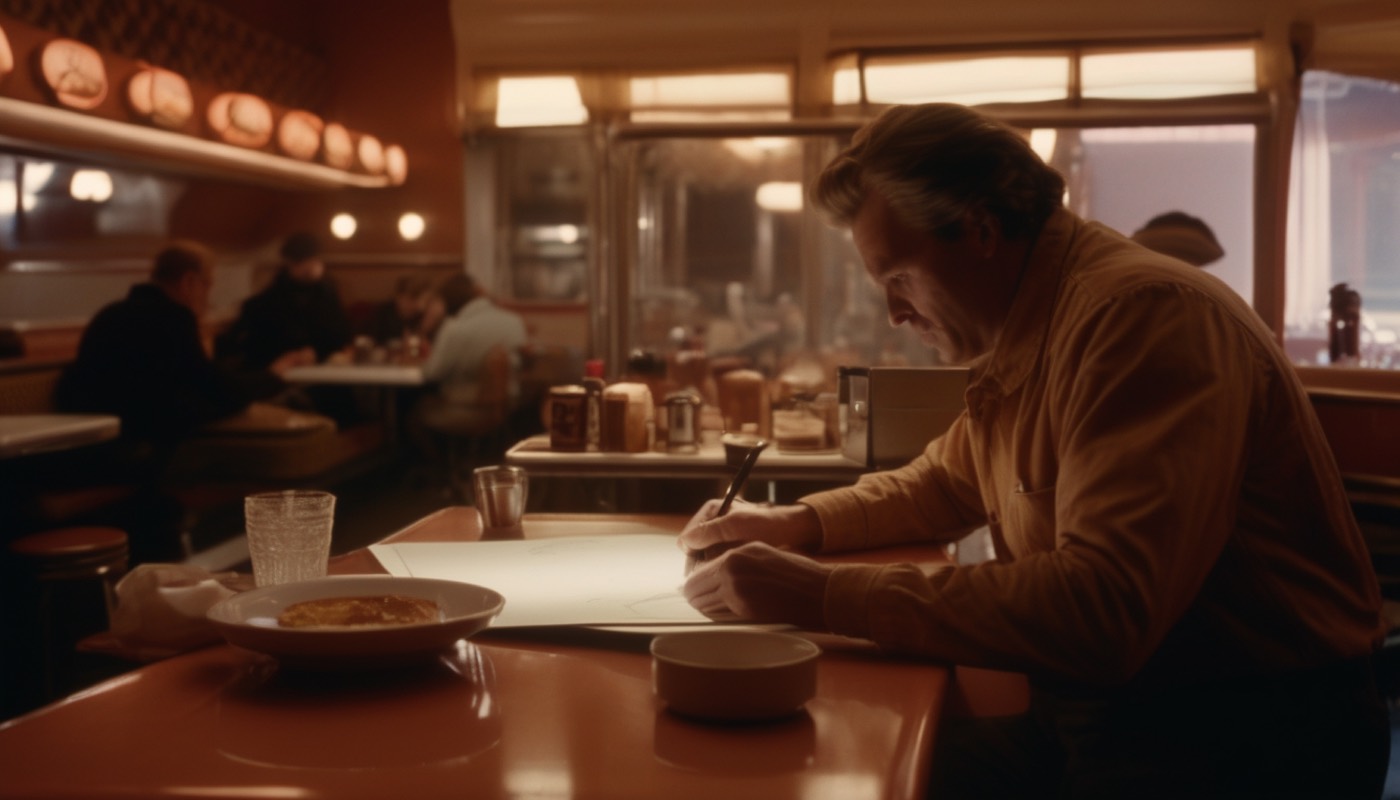
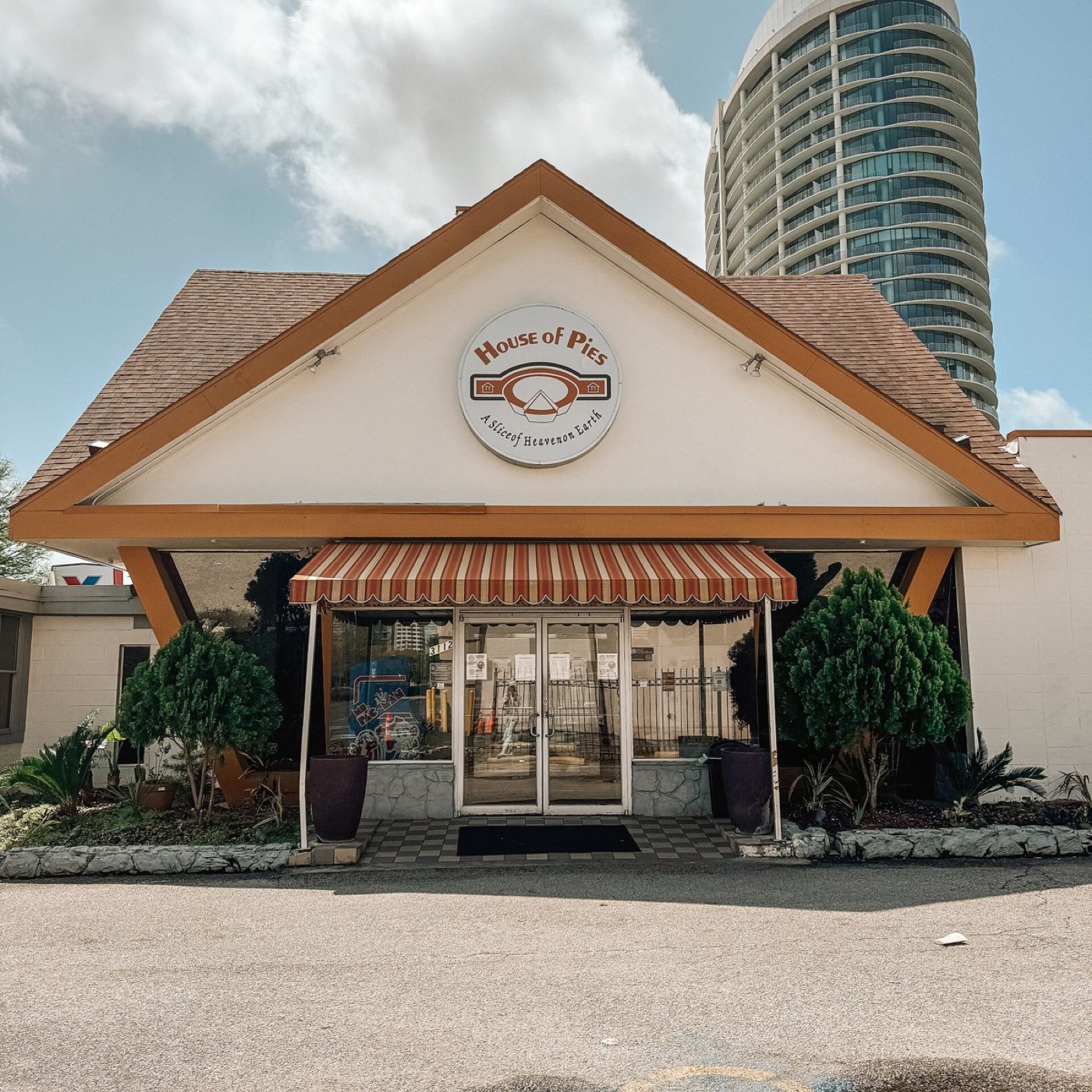
In February nineteen eighty-two, three engineers who had just left their jobs sat down to dinner in Houston. They wanted to start a company, and they had one idea worth building.
They met at a House of Pies restaurant, one of a local chain of diners. According to the Handbook of Texas, they sketched their first computer on the back of one of its paper placemats.
The sketch was of a computer you could carry. It would run every program written for the IBM Personal Computer, which had gone on sale the summer before and was fast becoming the machine every office wanted.
This video follows the company that sketch became. It is the story of Compaq, and of four big bets. A machine that copied the IBM PC legally. A faster machine than IBM's own. A price war. And the largest takeover the computer industry had yet seen.
Those bets took Compaq from a placemat to the top of the personal computer business. The last of them helped to end it.
Compaq's first computer went on sale in nineteen eighty-three. By nineteen ninety-four it was the world's biggest maker of personal computers. In nineteen ninety-eight it bought Digital Equipment. And in May two thousand and two, it disappeared into Hewlett-Packard.
This month marks twenty-five years since that takeover was announced. This is how a start-up broke IBM's hold on the personal computer, and why it could not survive its own growth.
2. Three men leave Texas Instruments
Rod Canion, Jim Harris and Bill Murto were senior managers at Texas Instruments, the electronics company. They left it to build a computer of their own.
Compaq was founded in February nineteen eighty-two. Its founders were Rod Canion, Jim Harris and Bill Murto. The Handbook of Texas records that each of them put in one thousand dollars of his own money.
A few thousand dollars does not build a computer company. The rest had to come from a venture capitalist, an investor who backs young companies in return for a share of them.
The company set up in Houston, where its founders lived and worked. It later built a headquarters campus on State Highway two forty-nine, on the north-west edge of the city. The House of Pies where the plan was drawn was on Westheimer Road, closer to the centre.
The investor was Ben Rosen, of the Houston firm Sevin Rosen Partners. Britannica records an initial investment of two and a half million dollars. Rosen also became Compaq's chairman, and he held that post until the year two thousand.
With the money came a deadline. The IBM PC was selling fast, and every month without a machine was a month of sales going to IBM.
3. Cloning IBM legally
IBM had built its Personal Computer quickly, and to do it, it used parts anyone could buy.
The IBM PC went on sale in August nineteen eighty-one. Its processor came from Intel, and its operating system, the basic software that runs the machine, came from Microsoft. IBM even published a technical reference describing how the machine worked. One part, though, was IBM's alone.
That part was the BIOS, short for basic input output system. It is a small program stored on a chip inside the computer. When the machine is switched on, the BIOS starts it up, and afterwards it carries messages between the software and the hardware.
Programs written for the IBM PC relied on the BIOS behaving in exactly the way IBM's did. A machine whose BIOS was different in any way would fail to run some of them.
And the BIOS was protected by copyright. A maker that copied IBM's code could be sued. A maker that left it out could not run all of the software. Compaq needed a BIOS that did everything IBM's did, without a single line of IBM's code in it.
The answer was a method that engineers call a clean room. It is slow and expensive, and it is legal.
One group of engineers studied IBM's BIOS and wrote down only what it did, never how it did it. A second group, who had never seen IBM's code, wrote new code from that description alone. The wall between the two groups is what kept the copyright safe.
Wikipedia puts the cost of the work at about one million dollars. The new BIOS behaved like IBM's in every documented way, but none of it was IBM's. That made Compaq's machine a legal clone, a copy built from scratch that could run the same software.
4. The Compaq Portable
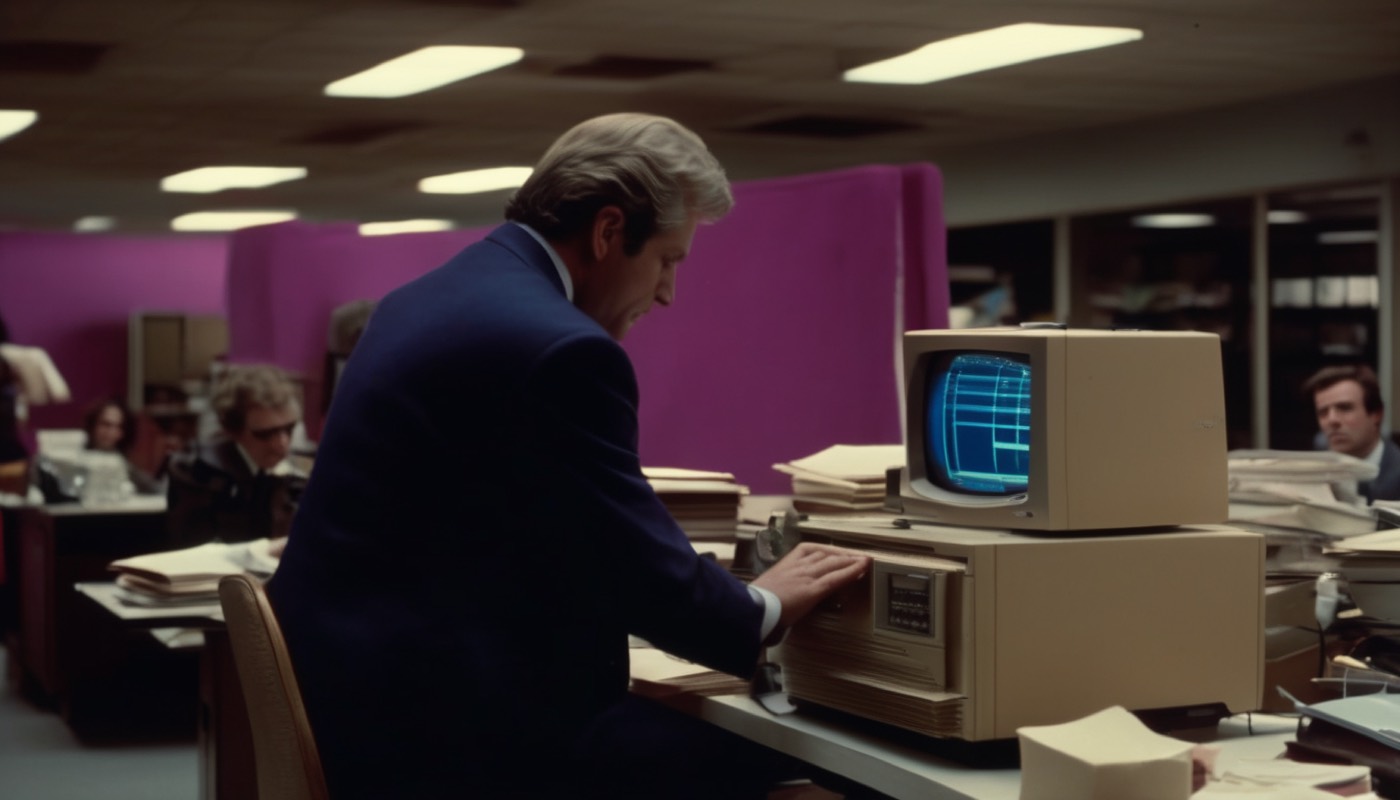
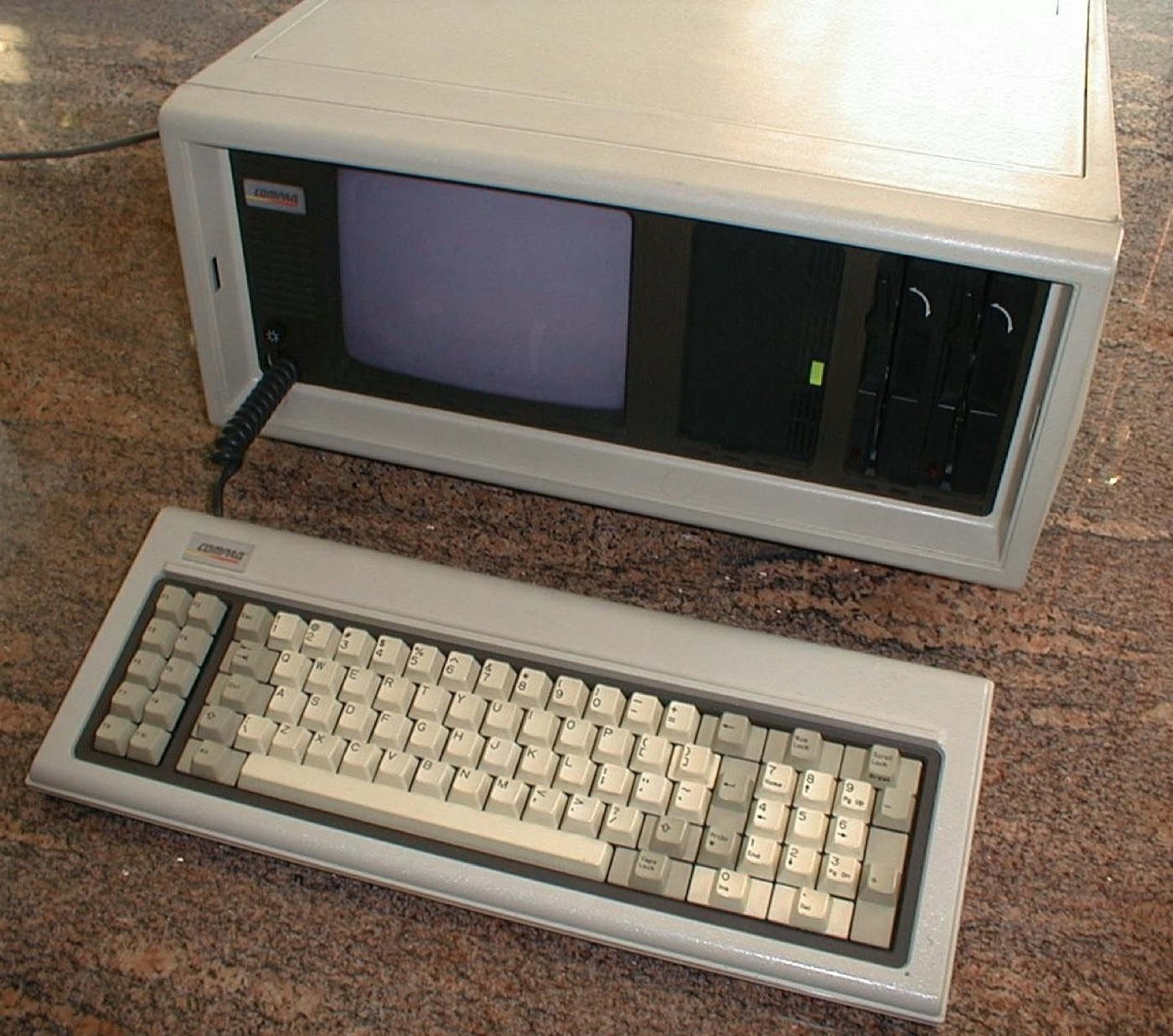
The first thing Compaq built with its new BIOS was the machine on the placemat.
The first machine was the Compaq Portable. It was announced in November nineteen eighty-two and went on sale in March nineteen eighty-three. Its nine-inch green screen was built into the case, beside the disk drives.
The Portable cost just under three thousand dollars. It weighed about twenty-eight pounds, or thirteen kilos. Portable meant a machine you could lift and carry, not one you would want to carry far.
Businesses bought it because it did what the IBM PC did. It ran the same programs, and it could go home with you at the end of the day.
In nineteen eighty-three, its first full year of production, Compaq shipped fifty-three thousand Portables. Britannica says they brought in more than one hundred and eleven million dollars. At the time, that was the most by any first-year company in the United States.
That same year, Compaq became a public company, with shares that anyone could buy. By nineteen eighty-six, the Handbook of Texas records, it had joined the Fortune five hundred list of the country's largest companies, faster than any company before it.
The clone makers had arrived, and Compaq was the one the others measured themselves against.
5. Deskpro 386
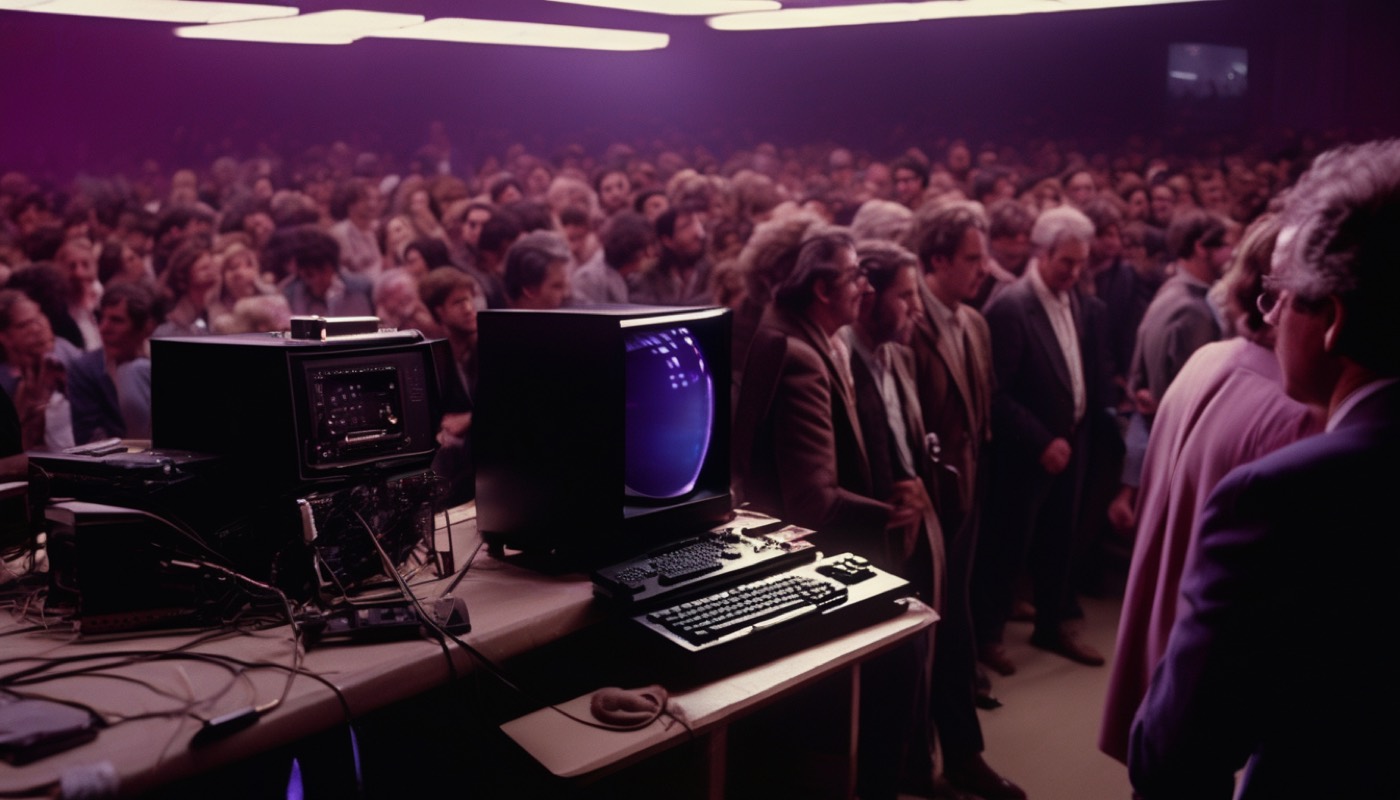
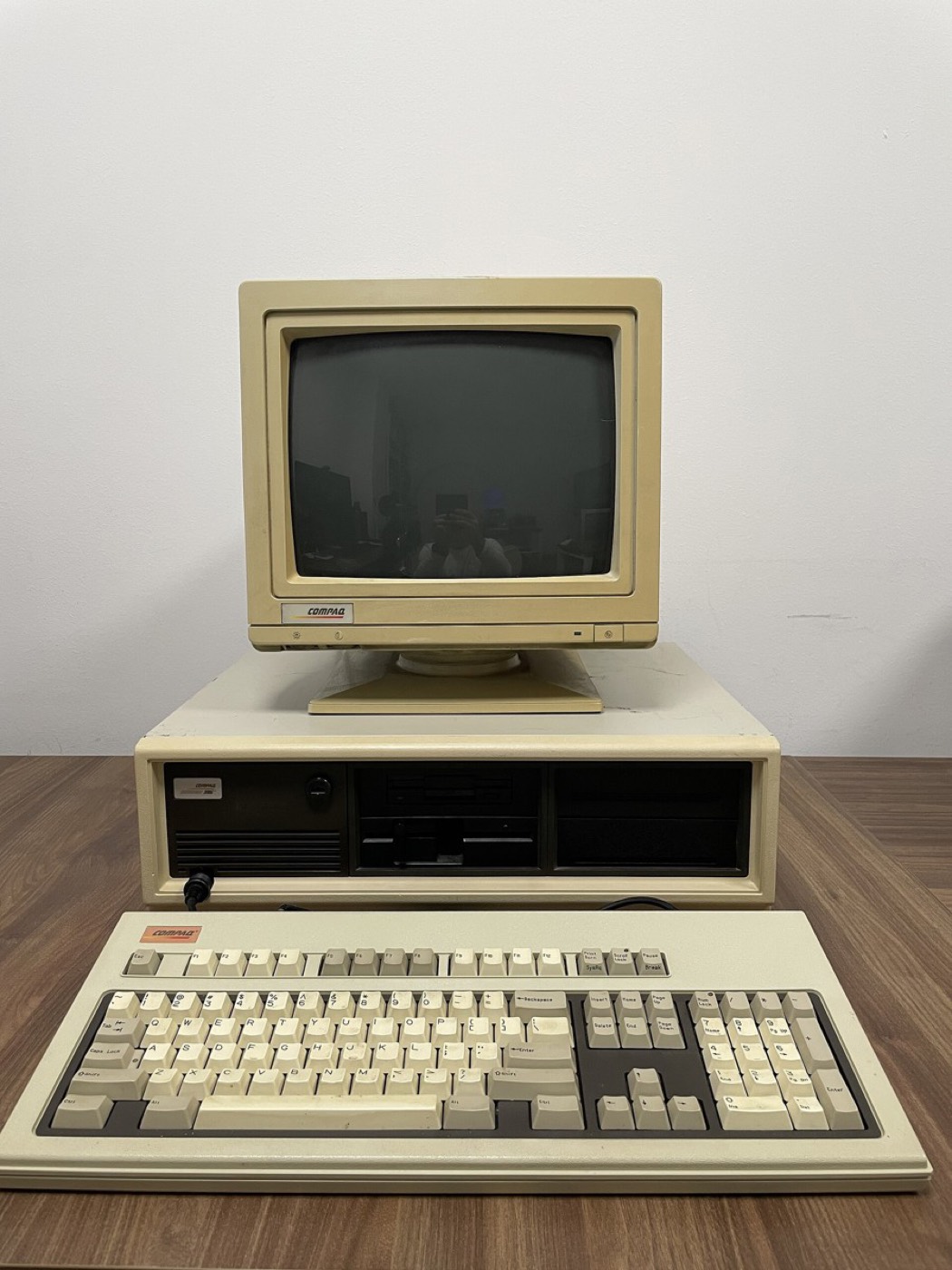
In nineteen eighty-five, Intel finished a new processor. Intel called it the 80386, and everyone else called it the 386. It was a thirty-two-bit chip, meaning it handled data in pieces twice the size of the chip before it, and it was much faster.
IBM had set the pace for every new generation of the PC. The industry expected it to be first with the 386 as well.
It was not. On the ninth of September, nineteen eighty-six, Compaq launched the Deskpro 386, the first personal computer built around Intel's new chip. For months it was the only one on sale.
The launch drew some of the biggest names in the business. The PCjs archive lists the speakers as Ben Rosen and Rod Canion of Compaq, Bill Gates of Microsoft and Gordon Moore of Intel. The makers of the software and of the chip were standing with Compaq.
IBM's answer came the following spring. IBM's first machine with the chip was the PS/2 Model 80. It arrived in April nineteen eighty-seven, about seven months after Compaq's. For the first time, a clone maker had set the standard and IBM had followed.
The personal computer now had a direction of its own, and IBM was no longer the one choosing it.
6. The Gang of Nine and EISA
IBM's reply to the clone makers was a new family of computers, the PS/2, launched in April nineteen eighty-seven. Inside it was a new expansion bus, called Micro Channel.
A bus is the set of slots and wiring that joins add-in cards to the rest of the computer. Micro Channel was faster than the old slots. But the old cards would not fit it, and IBM charged other makers licence fees to use it.
That was a bid to take back control. If Micro Channel became the standard, every clone maker would have to pay IBM for the right to follow it.
In September nineteen eighty-eight, Compaq and eight other makers answered together. They became known as the Gang of Nine. They were Compaq, AST, Epson, Hewlett-Packard, NEC, Olivetti, Tandy, Wyse and Zenith.
Their answer was EISA, the Extended Industry Standard Architecture. It widened the old slots to thirty-two bits while keeping them open to every maker. Old cards still fitted, and nobody needed IBM's permission.
The first EISA machines arrived in November nineteen eighty-nine, among them Compaq's SystemPro server. EISA ended up mostly in servers. But Micro Channel never became the standard IBM had hoped for, and the clone makers had shown they could set the rules together.
Compaq was now leading an industry, not just joining one. It was also about to find out what that industry could do to a leader.
7. First loss and Canion out
By the start of the nineteen nineties, Compaq was a big company selling expensive machines. Its computers were well built, and they were priced like it.
The same thing that made Compaq possible was now working against it. Anyone could buy the parts that went into a PC, from Intel and from Microsoft. So smaller makers built cheaper clones of Compaq's clones, and sold them for far less.
Britannica adds a world recession and the Gulf War to the list of troubles. Together, they hit Compaq's profits and its share price.
In October nineteen ninety-one, Compaq reported a loss of seventy million dollars for the third quarter. It was the first quarterly loss in its history. It also cut one thousand four hundred and forty jobs, about twelve per cent of the workforce.
Two days later, on the twenty-fifth of October, the board removed Rod Canion as chief executive. The decision came after a fourteen-hour board meeting. Britannica says it came at the urging of the chairman, Ben Rosen.
Canion had led the company since the night of the placemat. His idea of Compaq was a maker of the best machines, at a price to match.
His replacement was Eckhard Pfeiffer, who had run Compaq's sales in Europe. He was fifty years old. His aim was to make Compaq's computers as cheap as the clones, and to sell far more of them.
8. Price war to number one
Pfeiffer cut costs across the company, and then he cut prices.
In June nineteen ninety-two Compaq launched the ProLinea, a line of low-cost desktop computers. In August nineteen ninety-three came the Presario, a computer for the home. By nineteen ninety-four the price war had a winner.
Selling more machines let Compaq buy its parts in bigger batches, and so more cheaply. The clone makers that had undercut it now had to match its prices.
The Presario reached a new kind of customer. The International Directory of Company Histories says more than one hundred thousand were sold in the first sixty days. Compaq was now selling to families as well as to firms.
In January nineteen ninety-five, the research firm Dataquest published the totals for nineteen ninety-four. Compaq had shipped four point eight million personal computers. IBM had shipped just under four million, and Apple about the same.
That made Compaq the world's biggest maker of personal computers, with ten point three per cent of the market. IBM's share had fallen to eight point five per cent. For the first time in more than a decade, the leader was neither IBM nor Apple.
Twelve years after the placemat, the clone had passed the company it copied.
9. Buying Tandem and DEC
Being number one in PCs was not enough. The richest part of computing was selling big systems and services to large companies, the business IBM had always led.
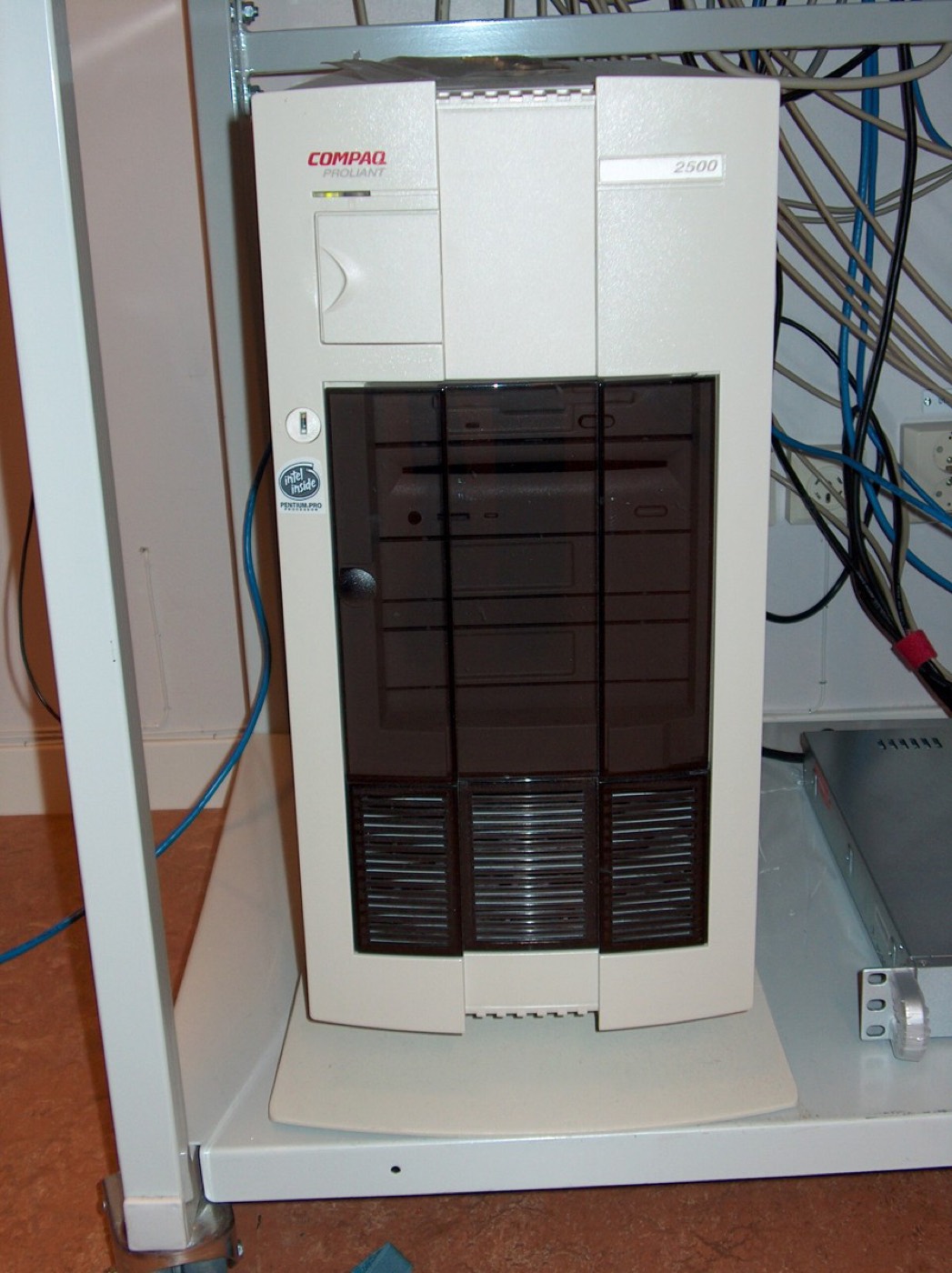
Compaq already sold servers, the powerful computers that run networks, under the name ProLiant. They were built from the same kind of standard parts as its PCs. The biggest customers wanted more: machines that could never stop, and a company that could service them anywhere.
In June nineteen ninety-seven, Compaq agreed to buy Tandem Computers. Tandem made NonStop systems, built to keep running even when a part failed. The deal was paid in Compaq shares, and was valued at about three billion dollars when it was agreed. Some later accounts put it at four billion.
Seven months later came something far bigger.
On the twenty-sixth of January, nineteen ninety-eight, Compaq agreed to buy Digital Equipment Corporation, known as DEC. Tandem was based in Cupertino, California. DEC was based in Maynard, Massachusetts, and Compaq was run from Houston. The new company would stretch across the country.
The price was nine point six billion dollars. It was the largest takeover in the history of the computer industry. For each DEC share, owners got thirty dollars in cash and just under one Compaq share. In all, Compaq paid four point eight billion dollars in cash.
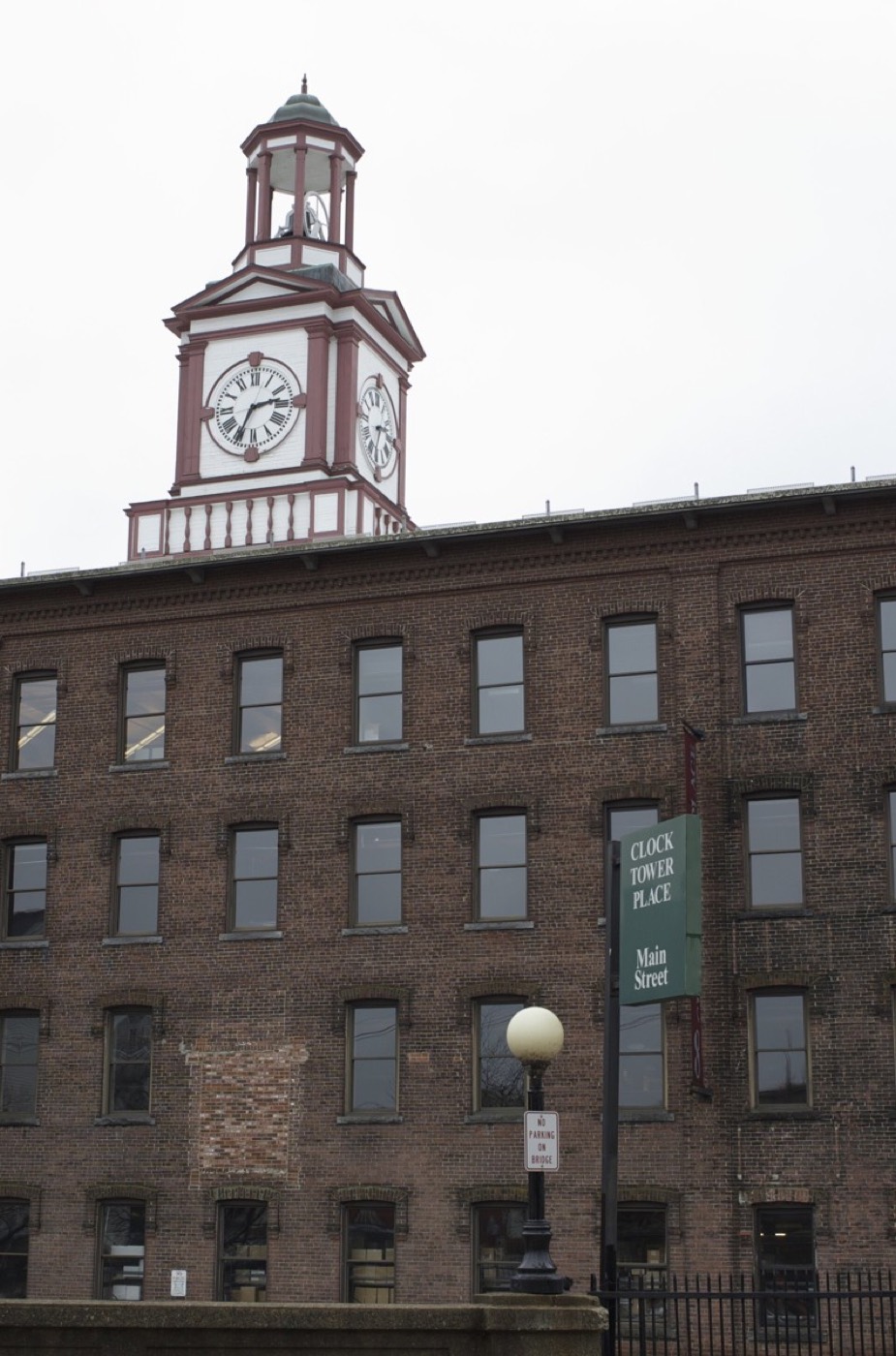
DEC's headquarters was a former wool mill in Maynard, now called Clock Tower Place. DEC had been making computers there for forty years, and it had a service organisation that reached around the world.
That service organisation was what Compaq wanted most.
Pfeiffer said, "We put tremendous value on the customer relationships Digital has cultivated". What Compaq wanted was DEC's customers and its service engineers. It wanted a place at IBM's table.
10. Indigestion, 1998 to 2001
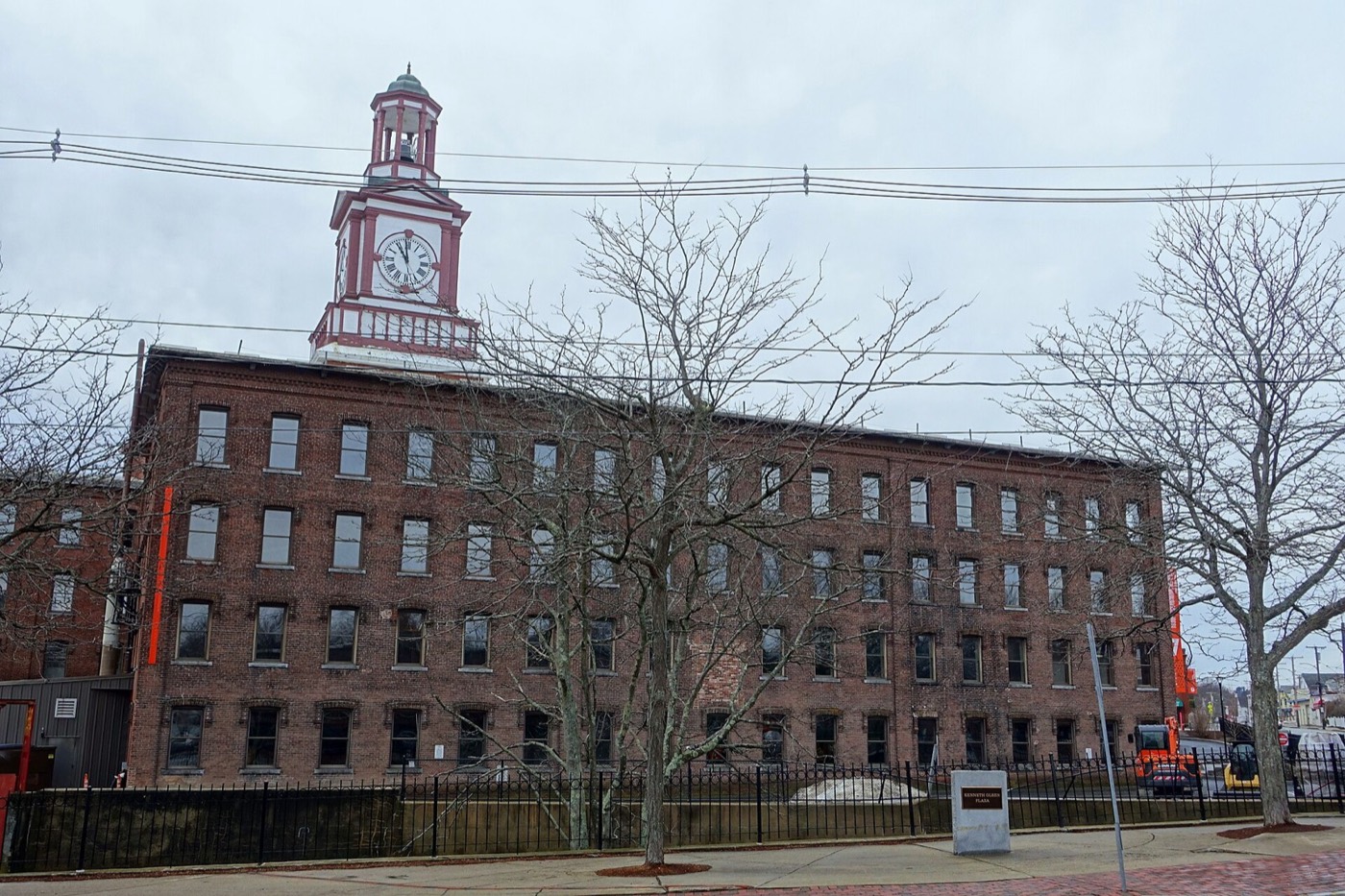
The old DEC mill was now part of Compaq, and so were DEC's processors, software and staff. DEC was a different kind of company, with its own way of working, and joining the two proved slow and costly.
The cost showed up in Compaq's results. In nineteen ninety-eight, the year the takeover closed, it lost two point seven billion dollars. Revenue kept growing, to forty-two billion dollars by two thousand. But profit stayed far below the year before the takeover.
While Compaq was digesting DEC, a rival was changing how PCs were sold.
Dell built each computer only after a customer had ordered it, and sold it direct, by phone and over the internet. Compaq sold mostly through dealers and shops, which kept machines in stock. Dell's way needed less stock, and let it cut prices faster.
On the eighteenth of April, nineteen ninety-nine, Eckhard Pfeiffer resigned as chief executive, under pressure from the board. Compaq's profit for the first quarter had come in at about half what analysts expected. Ben Rosen took charge for a few months.
In July nineteen ninety-nine, Michael Capellas became chief executive. He had joined Compaq only the year before. In two thousand and one, the Handbook of Texas records, Dell passed Compaq in PC sales. The company that had beaten IBM on price had been beaten the same way.
11. HP takeover and proxy war
On the fourth of September, two thousand and one, Hewlett-Packard and Compaq announced that they would merge. HP would pay in its own shares, valuing Compaq at about twenty-five billion dollars. HP's owners would hold about sixty-four per cent of the new company.
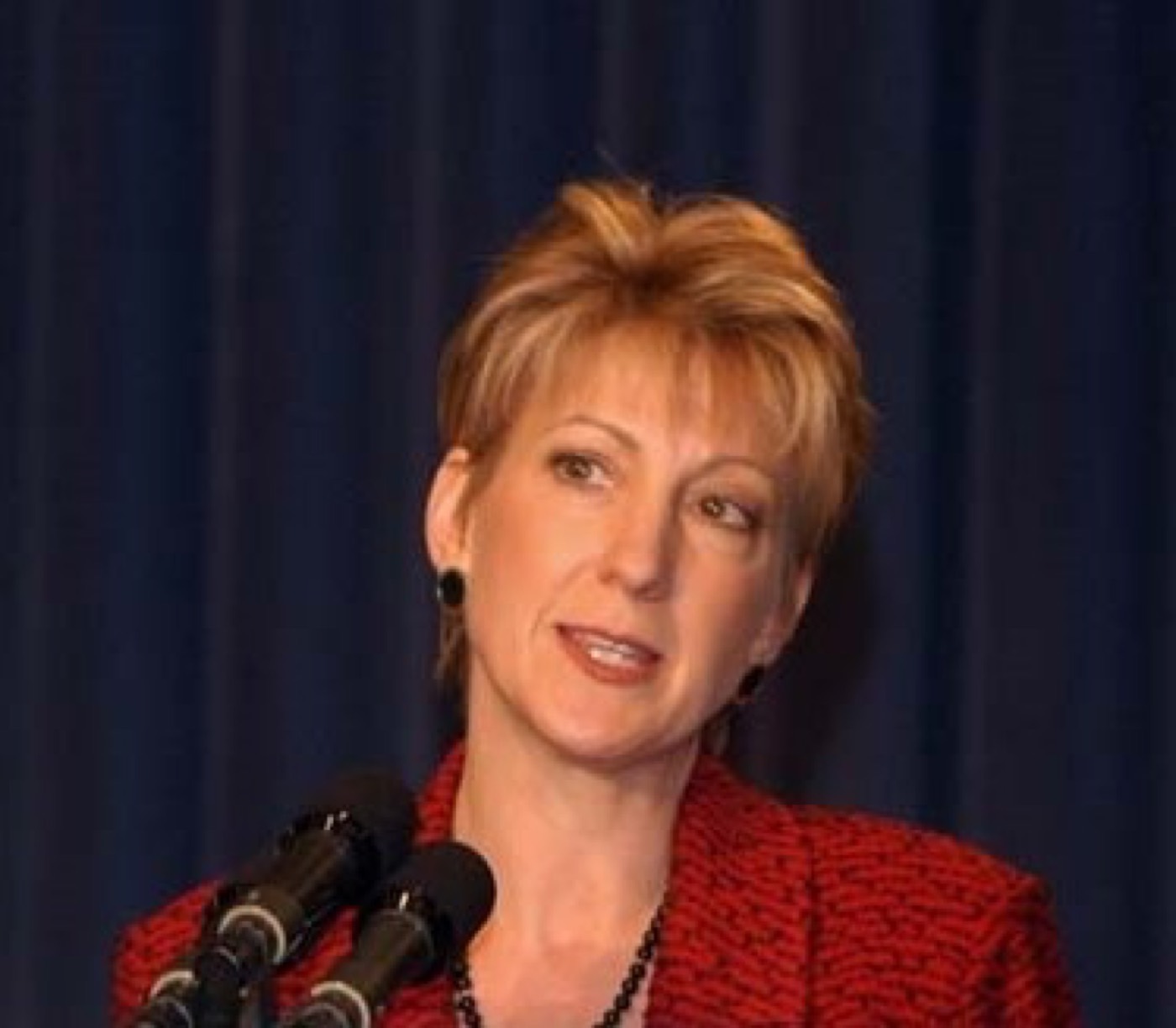
HP's chief executive, Carly Fiorina, would run the combined company, and Capellas would be its president. Four other Compaq directors would join HP's board.
Fiorina said, "This is a decisive move that accelerates our strategy". The new HP would lead the world in sales of servers, PCs and printers. Together, the two firms had annual revenue of about eighty-seven billion dollars.
Not everyone at HP agreed. Walter Hewlett, a son of the co-founder Bill Hewlett and a member of HP's board, opposed the merger. He fought it with a proxy battle, a campaign for the votes of the shareholders, most of whom vote by form rather than in person.
The vote came on the nineteenth of March, two thousand and two. In the final count, fifty-one point four per cent of the votes cast were for the merger. The rest, forty-eight point six per cent, were against.
Hewlett went to court in Delaware, where HP is incorporated. He claimed HP had pressured a big shareholder, Deutsche Bank, over its vote. On the thirtieth of April, the Court of Chancery ruled for HP. On the third of May, two thousand and two, the merger was completed.
Twenty years after the placemat, Compaq was no longer a company.
12. Afterlife, 2002 to 2026
Inside HP, Compaq became a brand rather than a company. Tandem and DEC had already become part of Compaq, and now all three were part of HP. In November twenty fifteen, HP split in two. HP Inc kept the PCs and printers, and Hewlett Packard Enterprise took the servers.
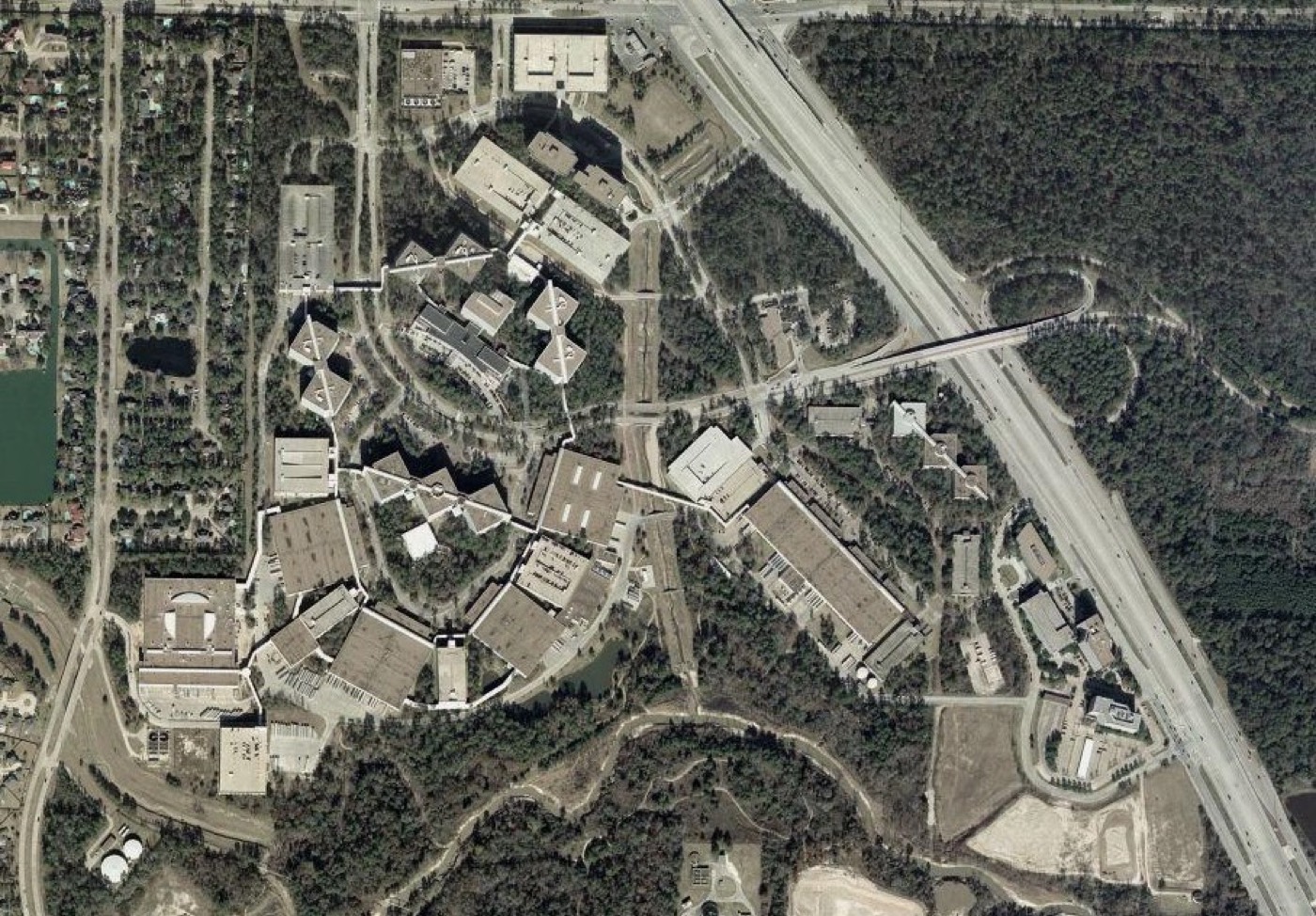
Compaq's old headquarters campus, north-west of Houston, became an HP site. The buildings that grew from a thousand dollars each and a placemat carried another company's name.
HP kept the Compaq name on cheaper computers for about a decade after the merger. It dropped the brand from its PCs in twenty thirteen. After that, it licensed the name to other makers. Newsan began making Compaq laptops in twenty fifteen, and Ossify signed up for Compaq televisions in twenty eighteen.
So the name turns up far from where it began. Compaq laptops were made in Argentina until about twenty nineteen. Positivo's licence to sell Compaq computers in Brazil was renewed in April twenty twenty-one. And Compaq smart televisions have been sold in India.
The servers lasted longest. ProLiant, the server line Compaq built, is still sold by Hewlett Packard Enterprise. In May twenty twenty-six, HPE launched another ProLiant model, built for artificial intelligence work.
Compaq's story ends where it began, with a copy. Three engineers showed that IBM's personal computer could be copied legally, and then built better. Then Compaq grew into the kind of company it had beaten. And a cheaper, faster rival did to it what it had done to IBM.
The placemat is long gone. The machines it led to changed who decides what a personal computer is.
Sources and credits
Photo credits (Wikimedia Commons)
- House of Pies, Kirby Drive, Houston - where Compaq was sketched on a placemat: ShreddedLettuce, CC0 - https://commons.wikimedia.org/wiki/File%3AHouse_of_Pies_Houston.jpg
- Compaq Portable, the first fully IBM-compatible portable PC: Tiziano Garuti (1000Bit, Public domain - https://commons.wikimedia.org/wiki/File%3ACompaq_portable.jpg
- Compaq Deskpro 386, the first 80386 PC: Tecnoxarxa, CC0 - https://commons.wikimedia.org/wiki/File%3ACompaq_Deskpro_386_16Mhz.jpg
- Compaq ProLiant 2500 server: Tommy Karlsson, Public domain - https://commons.wikimedia.org/wiki/File%3ACompaq_Proliant_2500.JPG
- Clock Tower Place, Maynard MA - the mill that was DEC's headquarters: self, Public domain - https://commons.wikimedia.org/wiki/File%3AMaynard_MA_Clock_Tower_Place.jpg
- Assabet Woolen Mill, Maynard MA (former DEC headquarters): Daderot, CC0 - https://commons.wikimedia.org/wiki/File%3AAssabet_Woolen_Mill_-_Maynard%2C_Massachusetts_-_DSC04913.jpg
- Carly Fiorina, HP CEO, 2003: U.S. Department of Commerce, Photographic Services, Public domain - https://commons.wikimedia.org/wiki/File%3ACarly_Fiorina_2003.jpg
- Former Compaq headquarters campus, Harris County TX (aerial, 2002, as HP campus): U.S. Geological Survey, Public domain - https://commons.wikimedia.org/wiki/File%3AHewlettPackardCampusHarrisCoTX.png


Primary sources
- Britannica Money, 'Compaq' - $2.5M initial investment and Rosen as chairman; 53,000 portables and more than $111M in 1983, the most by any first-year US company; public in 1983; 1991 recession, Gulf War and Canion's ouster at Rosen's urging.
- Texas State Historical Association, Handbook of Texas, 'Compaq Computer Corporation' - February 1982; $1,000 each; the House of Pies placemat on Westheimer Road; Fortune 500 in fourth year (1986); Tandem $4bn; Dell passes Compaq in 2001; campus northwest of Houston..
- International Directory of Company Histories via FundingUniverse, 'Compaq Computer Corporation' - $70M Q3 1991 loss, 1,440 jobs (12%), ProLinea June 1992, Presario August 1993 (100,000+ in 60 days), SystemPro November 1989, DEC closing June 1998.
- Wikipedia, 'Compaq' and 'Compaq Portable' - 16 Feb 1982; clean-room BIOS at about $1M; Portable announced Nov 1982, on sale Mar 1983, $2,995, 28 lb, 9-inch screen; Pfeiffer out 18 Apr 1999; completion 3 May 2002; brand dropped 2013; licensing to Newsan (2015), Ossify (2018), Positivo (renewed 13 Apr 2021).
- IBM, 'The IBM PC' (ibm.com/history) - 12 August 1981; off-the-shelf parts; published technical reference.
- PCjs Machines blog, 18 June 2019 - Deskpro 386 unveiled 9 September 1986; speakers Rosen, Canion, Gates, Moore; IBM's 386 answer about seven months later.
- Wikipedia, 'Extended Industry Standard Architecture' - announced September 1988 by the Gang of Nine; MCA licensing.
- UPI, 25 October 1991, 'Compaq removes Canion' - $70M loss, 1,440 jobs, 14-hour board meeting, Pfeiffer aged 50.
- Dataquest figures via The Washington Post, 25 January 1995 - 1994 shipments 4.8M (Compaq), 3.96M (IBM), 3.95M (Apple); shares 10.3% and 8.5%.
- Tandem Computers Form 8-K, June 1997 - agreement of 23 June 1997, about $3.0bn at the 20 June closing price.
- Digital Equipment Corporation Form 8-K, press release of 26 January 1998 (SEC EDGAR) - $9.6bn, $30 plus ~0.945 Compaq share per DEC share, $4.8bn cash, largest in computer-industry history, Pfeiffer quotation.
- Compaq Form 10-K for 2000 (SEC EDGAR) - revenue 1996-2000 and the 1998 net loss of $2,743M.
- HP and Compaq joint press release, filed as SEC Form 425 on 4 September 2001 - about $25bn, 0.6325 HP share per Compaq share, 64%/36%, $87bn combined revenue, Fiorina quotation.
- Delaware Court of Chancery, Hewlett v. Hewlett-Packard, C.A. No. 19513, Chancellor Chandler, 30 April 2002 - public announcement 4 September 2001; the Deutsche Bank vote claim decided for HP.
- HP Form 8-K, May 2002 - final count 838,401,376 for, 793,094,105 against (51.4% / 48.6% of votes cast).
- HP Inc Form 8-K, November 2015 - separation of Hewlett Packard Enterprise completed 1 November 2015.
- HPE newsroom, May 2026 - HPE ProLiant Compute DL394 Gen12 with NVIDIA Vera CPU (Computex 2026).
Not regulated financial advice.