
Digital Research a Timeline
In the autumn of 1974, in a backyard workshop in Pacific Grove, California, a Navy computer science teacher named Gary Kildall booted the first working copy of CP/M - the operating system that went on to run on hundreds of models of early personal computer. This video follows Digital Research, the company he and his wife Dorothy McEwen Kildall founded to sell it, from that workshop to a courtroom in Utah.
CP/M's BIOS layer made software portable, and WordStar and dBase were written for it; by September 1981 more than 250,000 licences had been sold (InfoWorld). Then the IBM visit of August 1980 - what the Computer History Museum says actually happened, and why the 'he went flying' story is a myth - and how Microsoft bought 86-DOS from Seattle Computer Products and kept the right to sell it to everyone. On the IBM PC, PC DOS cost $40 and CP/M-86 $240.
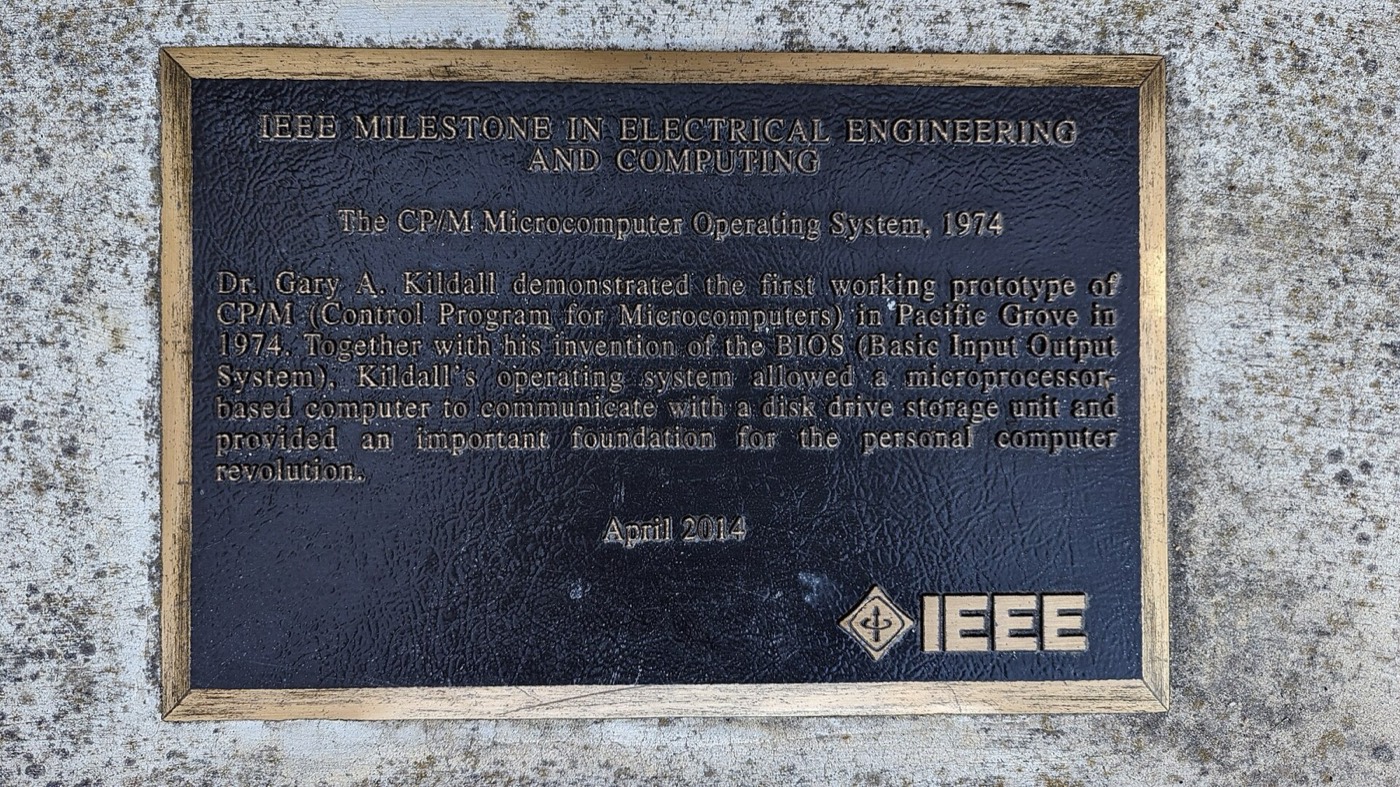
DRI fought back with Concurrent CP/M, the GEM desktop (and its life on the Atari ST), and DR DOS, a better DOS than DOS. Microsoft answered with per-processor licences, an early announcement of MS-DOS 5 and the AARD code hidden in Windows 3.1 test versions. Novell bought DRI in 1991; Kildall died in Monterey in July 1994, aged 52; Caldera bought the assets in 1996, sued Microsoft, and settled in January 2000 for $280 million, a sum kept secret until 2009. And the afterlife: the IEEE Milestone plaque (2014), CP/M's source code freed step by step from 2001 to 2022, and CP/M's fiftieth anniversary in 2024.
No figure appears without its date and source. Photographs are public domain or CC0, from Wikimedia Commons, credited on screen: Piotr J. Flatau; stiefkind (CC0); Swtpc6800 (Michael Holley); Bill Crouch; Vintageibmmt; Tandy Corporation; MKFI; Piero71 (CC0).
Educational documentary. Not financial or investment advice.
In these topics
Chapters
Video notes
1. The shed in Pacific Grove, 1974
Every personal computer needs a program that runs underneath everything else. It is called an operating system: the basic program that starts the machine, looks after its disks and lets other programs work. Today almost nobody remembers the man who wrote the first one that sold in large numbers.
This video follows Digital Research, the company that man started, from a backyard workshop to a courtroom in Utah. It follows the operating system that became a standard, and the meeting with IBM that people still argue about. Then come the fight back against Microsoft, the sale of the company, and what became of its code.
His name was Gary Kildall. In the early nineteen seventies he taught computer science at the Naval Postgraduate School, a university run by the United States Navy in Monterey, on the California coast.
Kildall lived in Pacific Grove, the small town next door to Monterey. He also worked on the side for Intel, a young chip maker in Santa Clara, south of San Francisco. Intel had just built some of the first microprocessors, a whole computer processor on one small chip.
The timeline on screen shows what he did with them. In nineteen seventy-three he wrote PL/M, a programming language for Intel's chips. In nineteen seventy-four he wrote a small program to control a computer and its disk drive, and he called it CP/M, short for Control Program for Microcomputers. The first copy was sold the next year, in nineteen seventy-five.
The hard part was the disk. Kildall worked with a friend, John Torode, on the electronics that joined a floppy disk drive to the computer. The two of them built it in a workshop behind Kildall's house at seven hundred and eighty-one Bayview Avenue.
One day that autumn, it worked. CP/M loaded from the disk and put its prompt on the screen. Kildall later wrote in his memoir that this may have been "one of the most exciting days of my life". The Institute of Electrical and Electronics Engineers now records that day as the first working demonstration of CP/M.
Machines like this IMSAI eighty-eighty would soon carry it. Inside, it is a box of circuit boards built around one of Intel's eight-bit chips, with switches and lights on the front. What it lacked was a way to use a disk without writing the program yourself, and that is what CP/M supplied.
2. Intergalactic Digital Research
At first CP/M was a hobby that happened to sell. Kildall's wife, Dorothy McEwen Kildall, saw that it could be a business.
In nineteen seventy-six, according to the Computer History Museum, Gary and Dorothy set up a company to sell it, with Dorothy as co-founder. They called it Intergalactic Digital Research. They shortened the name to Digital Research, or DRI, when that name became available.
Dorothy ran the business side, and Gary wrote the software. A licence is permission to use a program in return for a payment, and DRI sold licences both to hobbyists and to companies that built computers. A licensing deal with the computer maker IMSAI, in the museum's words, "bestowed credibility across the industry".
The growth shows on the timeline. The first licence had been sold in nineteen seventy-five. By nineteen seventy-eight, revenue topped a hundred thousand dollars a month. And by nineteen eighty, the company employed more than twenty people.
That year DRI's revenue reached three and a half million dollars. According to the Computer History Museum, that was five times Microsoft's revenue at the time. The small company from Pacific Grove was the bigger software business of the two.
3. The standard for eight-bit machines
CP/M had one idea that set it apart, and it explains everything that followed. It could be moved from one make of computer to another with very little work.
The diagram shows why. CP/M came in three layers. At the top, the command processor read what you typed at the prompt. In the middle, the disk operating system handled files. And at the bottom sat a small layer called the BIOS, short for Basic Input Output System, which was the only part that talked to the machine itself.
A computer maker who wanted CP/M only had to rewrite that bottom layer for its own hardware. Everything above it stayed the same. So a program written for CP/M on one machine would run on CP/M on another.
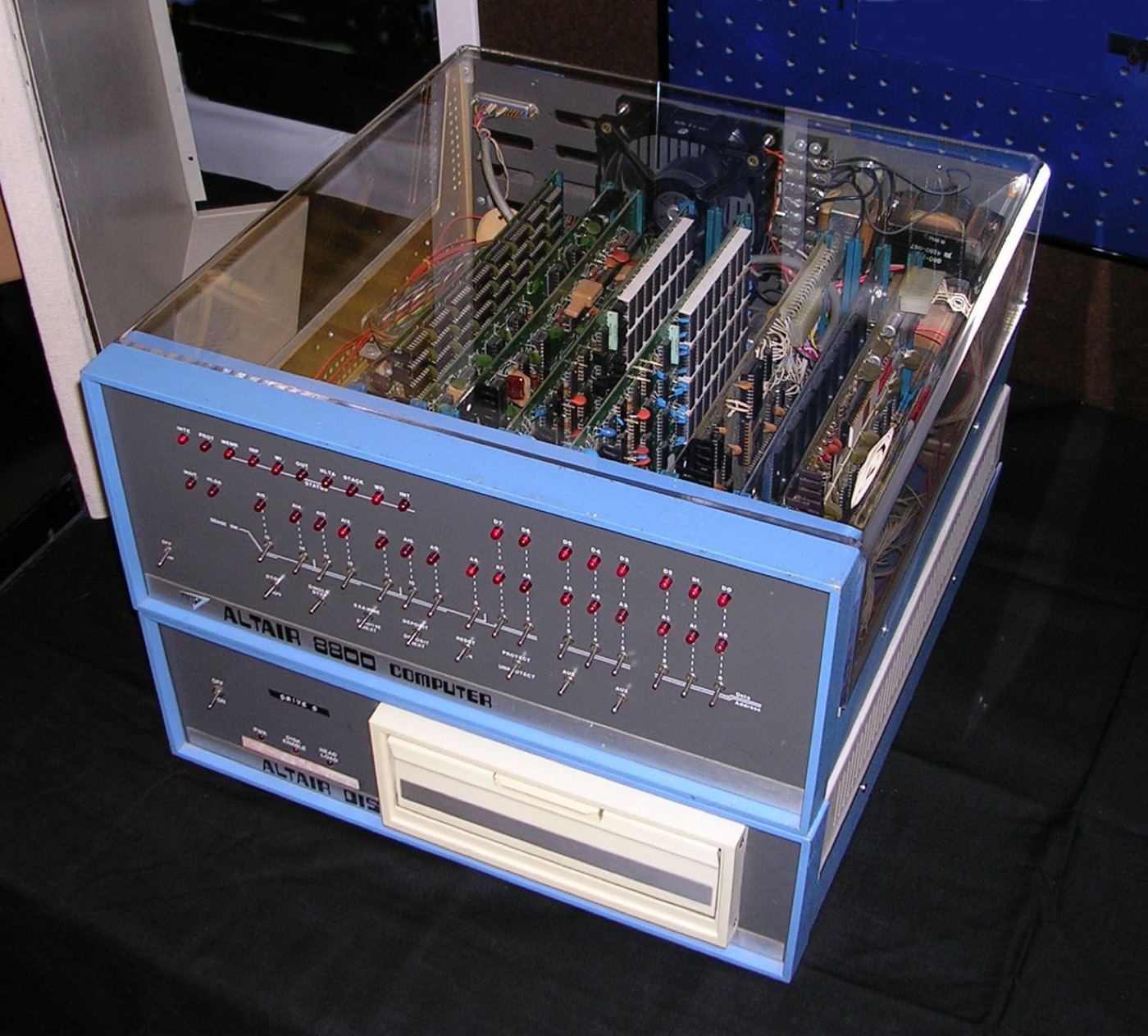
This is an Altair eighty-eight hundred, one of the first hobby computers, with its eight-inch floppy disk drive beside it. Machines like this, built around Intel's eight-bit chips or the similar Zilog Z-eighty, became CP/M's home. Most early personal computer makers came to offer it.
Because one program could run on so many machines, software companies wrote for CP/M first. The word processor WordStar and the database program dBase were both written for it. A database program stores records, such as customers or orders, so they can be searched and sorted.
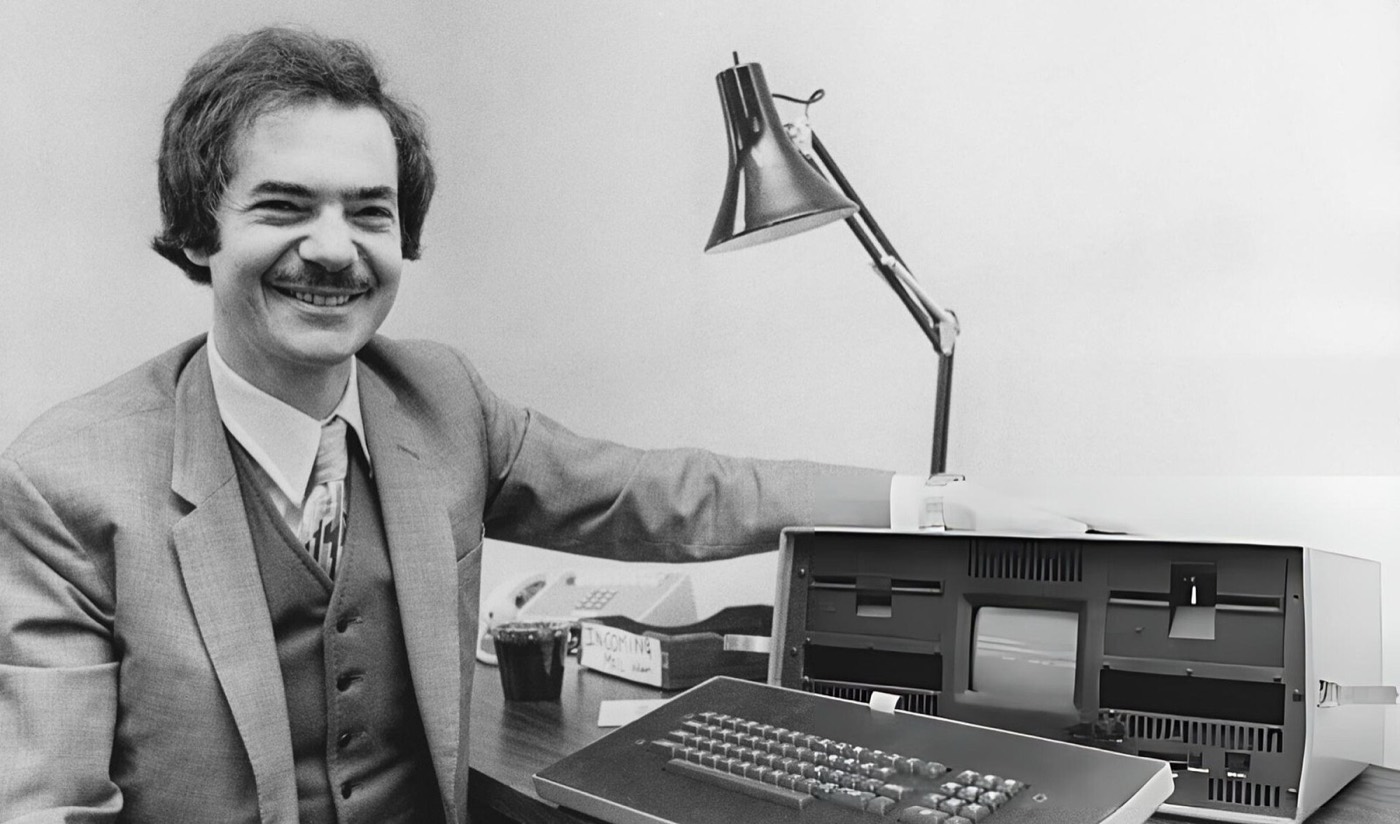
This is Adam Osborne with his Osborne One, a portable computer that ran CP/M, photographed in April nineteen eighty-one. It came with WordStar and other programs in the box. Machines like it made CP/M the operating system of small business.
By September nineteen eighty-one, the magazine InfoWorld reported, DRI had sold more than two hundred and fifty thousand CP/M licences. InfoWorld added that the real number of users was probably larger. By nineteen eighty-two, DRI said CP/M had been licensed for more than four hundred and fifty types of computer.
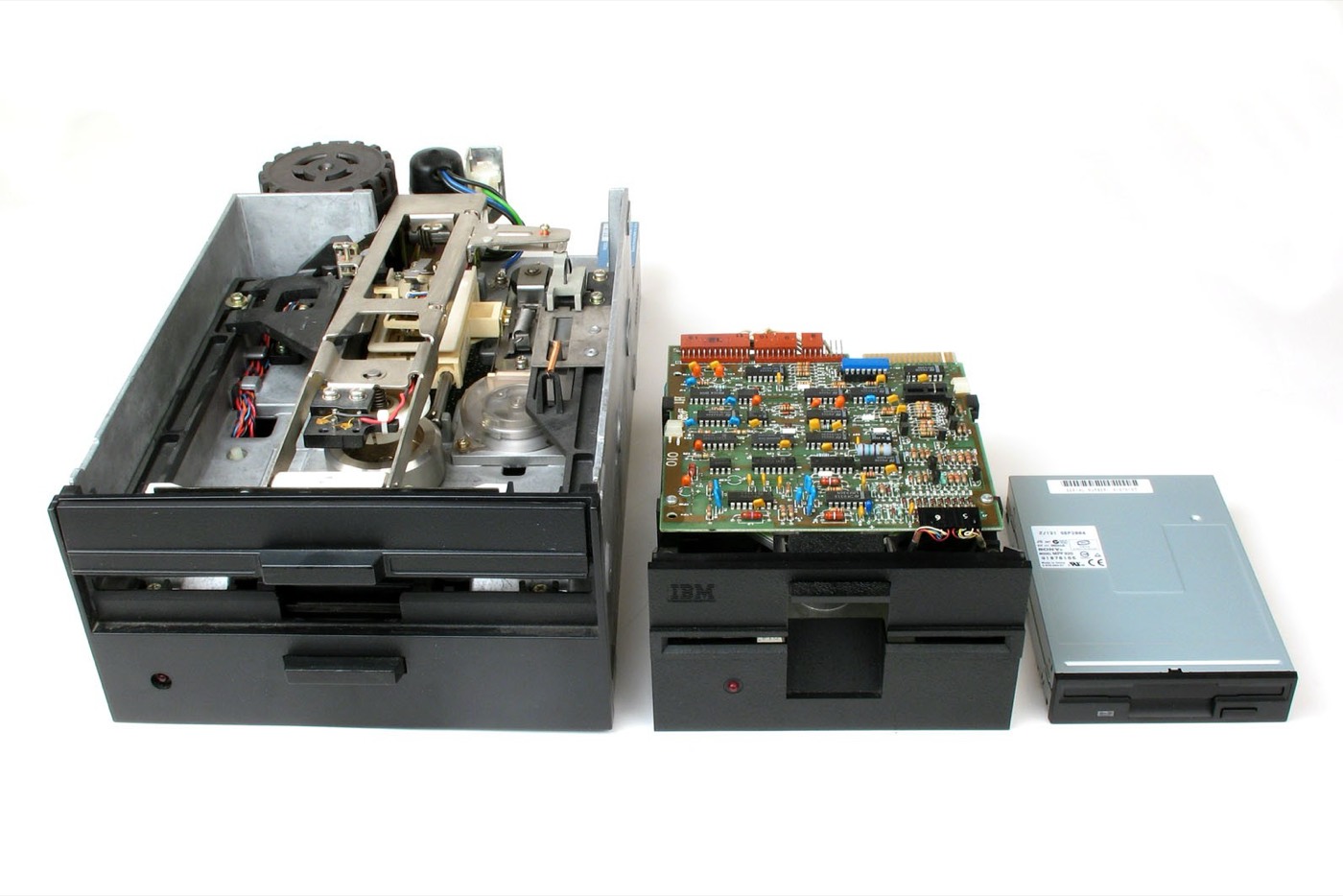
The disks themselves changed over the years. These are the three sizes of floppy disk drive, from the largest, eight inches across, down to the pocket-sized three and a half inches. CP/M began on the largest, and later versions moved to the smaller disks.
4. The IBM visit, August 1980
In the summer of nineteen eighty, the biggest computer company in the world decided to build a personal computer. IBM wanted it done fast, so it planned to buy the software from outside.
IBM's team went first to Microsoft, near Seattle, for its programming language, BASIC. According to the Computer History Museum, Bill Gates sent them on to Digital Research in Pacific Grove for the operating system. So a small group from IBM flew to California.
What happened next is the most retold story in the history of personal computers. The popular version is short. Kildall could not be bothered to meet IBM, because he had gone flying.
Here is what the Computer History Museum says happened. In the morning, the IBM team met Dorothy and DRI's lawyer, Gerry Davis, to agree a non-disclosure agreement, a contract promising to keep IBM's plans secret. Gary had flown his own plane to Oakland to meet an important customer, and he came back in the afternoon, as planned, to talk about the technical side.
The real dispute was about money, and the diagram shows the two paths. IBM wanted to buy the program outright, for a single payment. DRI wanted a royalty, a small fee for every copy sold, which is how it made its living from every other computer maker.
The Seattle Times, reporting at the time of Kildall's death, gave the figures. IBM offered two hundred and fifty thousand dollars for the program outright. Kildall held out for DRI's standard royalty of ten dollars a copy.
The museum's account of the end of the day is careful. "The meeting ended in an impasse over financial terms, but Gary believed they had essentially agreed to do business". IBM's team did not see it that way.
Accounts still disagree on almost every detail of that day. IBM's negotiator, Jack Sams, said he never met Gary Kildall at all. Kildall said they met, and that they went on talking later. What is not disputed is that IBM left without a deal.
Kildall's children have written about what the myth did to him. They describe the story that he missed his chance by "going flying instead of meeting with IBM". They say it is not what happened.
5. MS-DOS wins the IBM PC
IBM went back to Microsoft. Microsoft did not have an operating system of its own, but it knew where to find one.
A small company in Seattle, Seattle Computer Products, had one. A programmer there, Tim Paterson, had written it in nineteen eighty for Intel's new sixteen-bit chips, and modelled it on the way CP/M worked. It was called eighty-six DOS, and inside the company, QDOS, for Quick and Dirty Operating System.
The timeline shows how Microsoft got it. In December nineteen eighty, Microsoft paid twenty-five thousand dollars for the right to use it. In July nineteen eighty-one, it bought all the rights, for fifty thousand dollars.
Then came the move that made Microsoft. It licensed the program to IBM, which called it PC DOS, but it kept the right to sell the same program to anyone else, as MS-DOS. The Computer History Museum puts it plainly: "With great foresight, he retained the right to license the product to others".
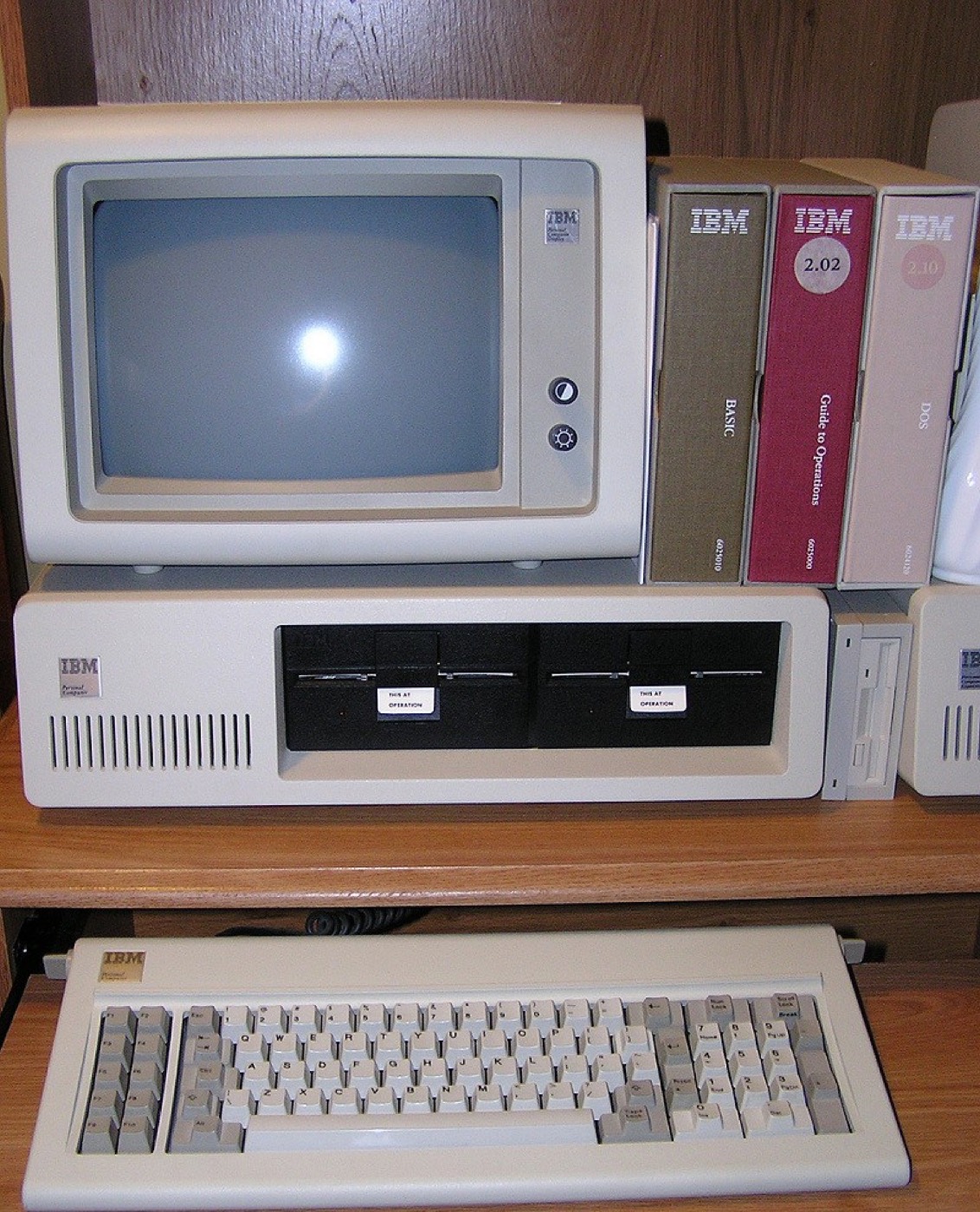
This is the machine it was made for, the IBM Personal Computer. IBM announced it on the twelfth of August, nineteen eighty-one. It could run more than one operating system, and CP/M-86, DRI's version for the new chips, was one of them.
But the price tags decided it. IBM listed PC DOS at forty dollars. CP/M-86, which arrived a few months later, cost two hundred and forty dollars, six times as much, and most buyers took the cheaper one.
Kildall never forgave it. In his unpublished memoir, he wrote that Microsoft's DOS worked so like CP/M that he called it "plain and simple theft". Tim Paterson always denied copying any of CP/M's code.
In twenty twelve, IEEE Spectrum published an examination of the code by the software expert Bob Zeidman. He found no sign that the code of CP/M had been copied. The magazine later added a note that Zeidman had worked as an expert witness for Microsoft in an unrelated case.
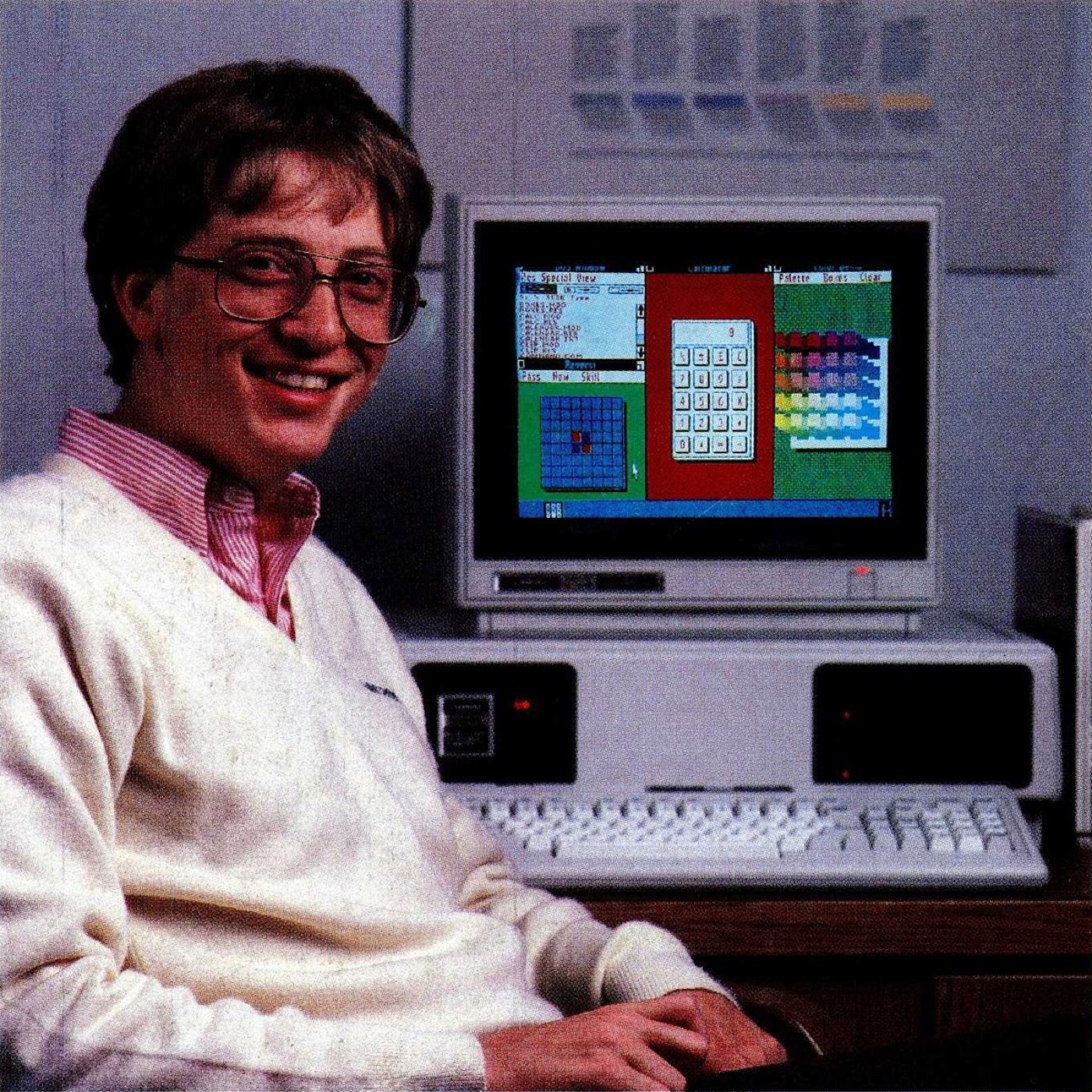
This is Bill Gates in November nineteen eighty-four, with a Tandy computer running an early version of Windows. By then Microsoft was licensing MS-DOS to the makers of the many computers that copied IBM's design. Each of those licences earned Microsoft money, and none of them earned DRI anything.
6. Fighting back: GEM and multiuser
DRI did not give up. It was still a large company, and it had ideas Microsoft did not.
The first was running more than one program, or more than one user, at a time. The diagram shows the idea: one computer shared between several screens and keyboards, each doing its own work. DRI had sold a version of CP/M like this, called MP/M, since nineteen seventy-nine. In nineteen eighty-two it released Concurrent CP/M for the IBM PC.
The company was growing fast. In nineteen eighty-three, according to the Computer History Museum, its sales reached forty-five million dollars. It employed more than five hundred people, over a hundred of them engineers.
The second idea was bigger. Apple's Macintosh had shown what a graphical desktop could be: windows, icons and a pointer moved with a mouse, instead of typed commands. DRI built one for ordinary PCs, called GEM, and showed it at the COMDEX trade show in November nineteen eighty-four.
The timeline shows what happened next. GEM Desktop one point oh was released on the twenty-eighth of February, nineteen eighty-five. Apple objected that it copied the look and feel of the Macintosh. DRI chose not to fight. It changed GEM instead, and a new version in March nineteen eighty-six replaced the desktop with two fixed windows and redrew the rubbish bin.
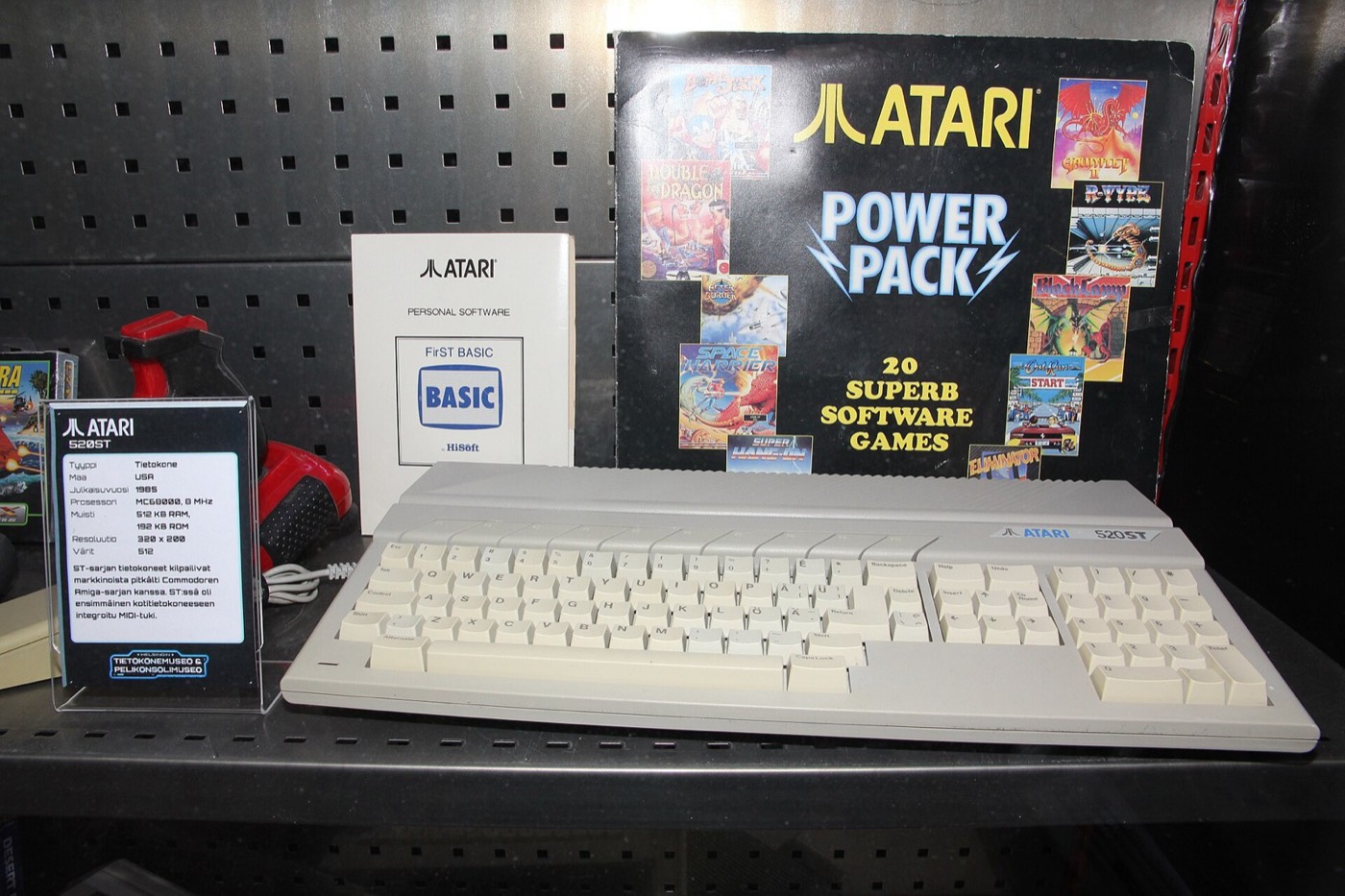
GEM's best home turned out to be this, the Atari ST, launched in nineteen eighty-five. Atari made GEM the standard desktop of the ST, so every one of them started up into it. On PCs, GEM lived on mainly underneath other programs, most famously the desktop publishing package Ventura Publisher.
7. DR-DOS, 1988
By the late nineteen eighties, DRI had one more idea, and it was the most direct challenge of all. If MS-DOS was the standard, DRI would sell a better MS-DOS.
It was called DR DOS, and the first version was released on the twenty-eighth of May, nineteen eighty-eight. It was a clone, meaning it behaved exactly like MS-DOS, so it ran the same programs. The aim was to sell it to computer makers as a better replacement.
The timeline shows the versions that made its name. DR DOS five, in May nineteen ninety, added a GEM-based file manager and power saving for laptop batteries. DR DOS six, in September nineteen ninety-one, added a task switcher and disk compression, which squeezes files so a disk holds more.
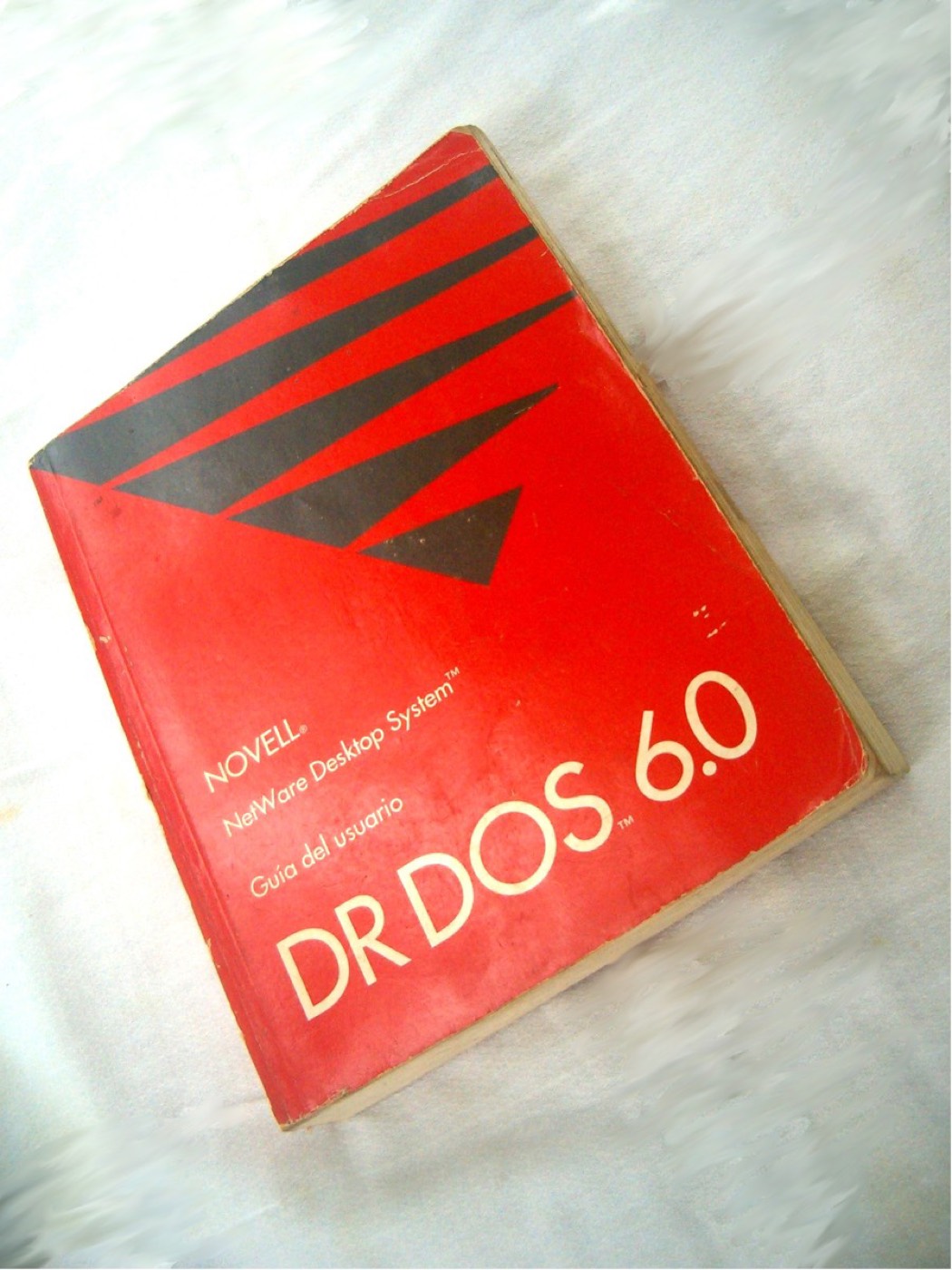
This is the manual for DR DOS six, in a Spanish edition. DRI sold it in several languages, both to computer makers and in shops. It was DRI's most direct challenge to Microsoft since the IBM PC.
The figures show a company recovering. In the year to September nineteen eighty-nine, DRI's revenue was thirty-six point two million dollars. A year later, to September nineteen ninety, it had risen to forty point nine million.
8. Microsoft's dirty tricks
Microsoft noticed. Evidence later gathered for the courts suggests it took DR DOS very seriously indeed.
The first weapon was the way Microsoft sold MS-DOS to computer makers. Under a per-processor licence, a maker paid Microsoft for every computer it shipped, whether or not that computer came with MS-DOS. So a maker that installed DR DOS paid for two operating systems.
The Justice Department later put an end to it. On the fifteenth of July, nineteen ninety-four, it charged Microsoft with breaking the antitrust laws, which forbid a company from using a monopoly to shut out competitors. The same day, Microsoft agreed to a settlement that banned per-processor licences.
The second weapon was an announcement. In May nineteen ninety, when DR DOS five came out, Microsoft announced MS-DOS five. It did not ship until June nineteen ninety-one. A product announced long before it exists is called vapourware, and the point of it can be to make buyers wait.
The third weapon was hidden inside Windows. Test versions of Windows three point one contained a piece of code, later called the AARD code, that checked whether the computer was really running MS-DOS. On DR DOS, it put up a warning of a non-fatal error and told the user to contact beta support.
The timeline shows how the code came to light. The researcher Geoff Chappell found it in April nineteen ninety-two. In September nineteen ninety-three, Andrew Schulman explained how it worked, in Dr. Dobb's Journal, a magazine for programmers. The check did not find a real fault. It simply failed on anything that was not Microsoft's.
9. Novell buys DRI, 1991
By nineteen ninety-one, DRI needed a partner. It found one in Novell, of Provo in Utah, whose NetWare software ran most of the office networks of the day.
The map shows the two companies. DRI was by now based in Monterey, California, with two hundred and seventy-three employees. Novell was in Provo, Utah, and wanted an operating system of its own to sell alongside NetWare.
The deal was agreed in July nineteen ninety-one, and DRI's shareholders approved it that October. They received about three million Novell shares. Reports of the value vary, from about a hundred and twenty million dollars to about a hundred and thirty-five million.
Under Novell, DR DOS carried on for a while. In December nineteen ninety-three it was relaunched as Novell DOS seven, with networking built in. But in nineteen ninety-four, under a new chief executive, Novell dropped it.
The Computer History Museum records how it ended in California. Novell closed the old DRI operation. The company Gary and Dorothy had started, in a workshop behind a house, was gone as a separate business.
10. Kildall's last years
Gary Kildall had become a familiar face well beyond the computer industry. For years he co-hosted Computer Chronicles, a public television programme about personal computers.
The timeline shows those last years. He co-hosted the programme for seven years, until its eighth season in nineteen ninety. In nineteen ninety-three he finished a draft of a memoir, called Computer Connections.
He also tried to sell DRI to Microsoft, before the Novell deal. According to the Seattle Times, he asked for twenty-six million dollars. Gates told him the company was worth no more than ten million.
The memoir is bitter about Gates. The Seattle Times quoted it the week he died: "He is divisive. He is manipulative. He is a user". It was never published in his lifetime.
On a Friday in July nineteen ninety-four, Kildall was hurt at a restaurant in Monterey, and at first he refused treatment. He died in hospital on the eleventh of July, aged fifty-two. The county coroner said the cause of death had not been determined.
More than twenty years later, in August twenty sixteen, his children released the first chapters of the memoir through the Computer History Museum. They left out the later chapters, which deal with his drinking. They said those pages did not reflect their father's true self.
11. Caldera v. Microsoft
DR DOS had one more life left, and it was in court.
On the twenty-third of July, nineteen ninety-six, Novell sold DR DOS and DRI's other assets to Caldera, a small software company in Utah. Caldera's main backer was Ray Noorda, Novell's former chief executive. The next day, Caldera sued Microsoft in federal court in Utah.
The map shows the two sides. Caldera, in Utah, accused Microsoft, in Redmond, near Seattle, of breaking the antitrust laws to drive DR DOS out of the market. Its case rested on the tactics in this video: the per-processor licences, the early announcement of MS-DOS five, and the AARD code.
The timeline shows how the case ended. It was due for trial in February two thousand. In January, a few weeks before the trial, the two companies settled. The amount was kept secret.
The figure came out in two thousand and nine, in a Microsoft court filing: two hundred and eighty million dollars. Caldera passed thirty-five and a half million dollars of it to Novell. The settlement came almost a decade after the tactics it was about.
Caldera also gave DR DOS a last release under a new name. In February nineteen ninety-seven it came out as Caldera OpenDOS. By then the program had passed through three owners.
12. Afterlife
The company was gone, but its code was not. The diagram shows where it went.
DRI's code passed from company to company. Novell bought it in nineteen ninety-one, and sold it to Caldera in nineteen ninety-six. A Caldera spin-off renamed Lineo took it over in nineteen ninety-nine, and in two thousand and two some of Lineo's managers formed DRDOS Incorporated, which owns it today.
In two thousand and one, Lineo let enthusiasts share CP/M freely. It followed the death of Tim Olmstead, who ran a website preserving CP/M. On the nineteenth of October, Lineo's chief executive, Bryan Sparks, gave "a right to use, distribute, modify, enhance and otherwise make available" the CP/M technology.
This is the plaque outside eight hundred and one Lighthouse Avenue, in Pacific Grove, DRI's old headquarters. The Institute of Electrical and Electronics Engineers dedicated it as a Milestone in April twenty fourteen. A second plaque stands at the Naval Postgraduate School.
The timeline shows how CP/M kept coming back. In October twenty fourteen, the Computer History Museum published the source code of early versions of CP/M, for non-commercial use. In July twenty twenty-two, Bryan Sparks, by then president of DRDOS Incorporated, confirmed that anyone could modify and share it. And in April twenty twenty-four, the museum marked CP/M's fiftieth anniversary.
The story keeps finding new readers. In August twenty twenty-six, the IBM PC turned forty-five. In June the same year, the AARD code and its secret settlement were back in the technology news. Hobbyists still build CP/M computers, and run it on modern boards and in software.
The case for forwards is strong. Gary Kildall wrote the first operating system that ran on many makes of personal computer. His BIOS layer made software portable, and it created the market for packaged programs that everyone still buys. DRI also built a graphical desktop and a better DOS, years before the market caught up.
The case for backwards is real too. DRI lost the IBM PC over a price and a contract, and never got it back. Microsoft's tactics against DR DOS worked, and the settlement came long after it mattered. And the man who started it all died with his memoir unpublished.
The workshop behind the house in Pacific Grove is long gone. What Gary and Dorothy Kildall built there still shapes every computer that starts up and waits for a command. Whether their story is forwards or backwards may depend on whether you count who invented the market, or who won it.
Sources and credits
Photo credits (Wikimedia Commons)
- IEEE Milestone plaque for CP/M (April 2014) at 801 Lighthouse Ave, Pacific Grove: Piotr J. Flatau, Public domain - https://commons.wikimedia.org/wiki/File%3AKildall_801lighthouse.jpg
- IMSAI 8080 opened - the kind of 8080 S-100 machine CP/M was built for: stiefkind, CC0 - https://commons.wikimedia.org/wiki/File%3AImsai_8080%2C_opened_-_48930049626.jpg
- Altair 8800 with 8-inch floppy disk system - a typical CP/M-era 8080 machine: Swtpc6800 en:User:Swtpc6800 Michael Holley, Public domain - https://commons.wikimedia.org/wiki/File%3AAltair_8800_Computer.jpg
- Adam Osborne with the Osborne 1, a CP/M machine, April 1981 (Oakland Tribune): Bill Crouch (-1998), Public domain - https://commons.wikimedia.org/wiki/File%3AAdam_Osborne_and_Osborne_1.jpg
- IBM 5150 Personal Computer with 5151 display: Vintageibmmt, Public domain - https://commons.wikimedia.org/wiki/File%3AIBM_5150_PC.JPG
- Bill Gates, Microsoft, November 1984 (Tandy 2000 running Windows 1.0): Tandy Corporation, Public domain - https://commons.wikimedia.org/wiki/File%3ABill_Gates_with_Tandy_2000_running_Windows_1.0_%281984%29.jpg
- Atari 520ST, the machine GEM lived on: MKFI, Public domain - https://commons.wikimedia.org/wiki/File%3AAtari_520ST_Tietokonemuseo.JPG
- DR-DOS 6.0 user manual (Spanish edition): Piero71, CC0 - https://commons.wikimedia.org/wiki/File%3AManualDRDOS60.jpg
- 8-inch, 5.25-inch and 3.5-inch floppy drives - the media CP/M and DOS shipped on: Swtpc6800 en:User:Swtpc6800 Michael Holley, Public domain - https://commons.wikimedia.org/wiki/File%3AFloppy_Disk_Drives_8_5_3.jpg


Primary sources
- Computer History Museum, David A. Laws, 'Fifty Years of the Personal Computer Operating System', 18 April 2024 - the 781 Bayview Avenue workshop, 1975 first licence, 1976 founding, 1978 and 1980 revenue, the IBM visit, $40 vs $240, Novell and Caldera. Read and quotations re-.
- IEEE / ETHW, 'Milestones: The CP/M Microcomputer Operating System, 1974', dedicated 25 April 2014 (801 Lighthouse Avenue and the Naval Postgraduate School).
- Computer History Museum press release, 1 October 2014 (CP/M source code); CHM blog, Leonard J. Shustek, 'In His Own Words: Gary Kildall', 2 August 2016.
- InfoWorld, Thom Hogan, 14 September 1981 (more than 250,000 CP/M licences), as cited in Wikipedia 'CP/M'.
- The Seattle Times, Paul Andrews, 'A Career Spent In Gates' Shadow - Computer Pioneer Dies At 52', 14 July 1994.
- IEEE Spectrum, Bob Zeidman, 'Did Bill Gates Steal the Heart of DOS?', 31 July 2012, with its editor's note.
- Andrew Schulman, 'Examining the Windows AARD Detection Code', Dr. Dobb's Journal, September 1993.
- US Department of Justice, complaint and proposed consent decree, United States v. Microsoft, 15 July 1994.
- Deseret News, 19 July 1991 and 30 October 1991; Tech Monitor, 29 October 1991 (Novell-DRI).
- Caldera v. Microsoft, D. Utah (72 F. Supp. 2d 1295, 3 November 1999); Dave Farquhar, The Silicon Underground; The Salt Lake Tribune, Tom Harvey, 7 October 2011 ($280m, $35.5m to Novell); Washington Post, 11 January 2000.
- The Register, 26 November 2001 (Lineo licence, Bryan Sparks email of 19 October 2001); The Register, Liam Proven, 15 July 2022; The Register, 2 August 2024.
- Wikipedia articles 'Gary Kildall', 'Digital Research', 'CP/M', '86-DOS', 'DR-DOS', 'GEM (desktop environment)', 'Caldera (company)', 'AARD code' -, used for dates and cross-checked where a primary page exists; OSnews, 30 August 2012 (GEM changes).
Not regulated financial advice.