
IBM a history of the company and its technology
IBM's story, in order, from a census that took eight years to count to a quantum computer that does not exist yet.
Herman Hollerith's punched-card tabulator counted the 1890 US census in six months. The company that grew from it became C-T-R in 1911 and IBM in 1924, under Thomas Watson. Along the way: the 80-column card (1928), electric typewriters and the Selectric's golf ball (1961), a test-scoring machine that read pencil marks (1938), and the Social Security records (1936).
Then the machines that made modern computing: the 701 and 650, magnetic core memory, RAMAC - the first hard disk (1956) - and FORTRAN (1957). System/360 (1964), IBM's own 'five billion dollar gamble', created the compatible mainframe family that still runs banks today. Robert Dennard's DRAM, the floppy disk, the Winchester drive, Codd's relational database and SQL, the barcode, and RISC.
The IBM PC of 1981 made IBM a household name - and made Microsoft and Intel rich, because PC DOS was licensed, not owned. OS/2, the AS/400 and OS/400, two Nobel prizes from Zurich, the ThinkPad, and the near-collapse of 27 July 1993. Then Deep Blue, Linux, Blue Gene, selling the PC business to Lenovo, Watson on Jeopardy!, Red Hat, Kyndryl, the z16 and z17 mainframes, watsonx, HashiCorp and Confluent - and the quantum roadmap to Starling in 2029.
Every figure is dated and sourced. IBM's own claims about its future are labelled as claims. The Dehomag chapter states what an academic study documents and nothing beyond it.
Educational documentary. Not financial or investment advice.
In these topics
Chapters
- Introduction: A company that keeps changing what it counts
- 1880 to 1924: The census machine
- 1880 to 1924: Company
- 1925 to 1939: The punched card
- 1925 to 1939: Typewriters
- 1925 to 1939: Reading a pencil mark
- 1925 to 1939: Company
- 1925 to 1939: Business in Germany
- 1940s: The big calculators
- 1950s: The first computers
- 1950s: Memory
- 1950s: Storage
- 1950s: Software
- 1950s: Company
- 1950s: Business computers
- 1960s: Office machines
- 1960s: SABRE
- 1960s: Research
- 1960s: Mainframes
- 1960s: Inside the System/360
- 1960s: Memory chips
- 1960s: Software
- 1970s: Mainframes
- 1970s: Storage
- 1970s: Software
- 1970s: The barcode
- 1970s: Research
- 1980s: Personal computing
- 1980s: Software
- 1980s: Mainframes
- 1980s: Business systems
- 1980s: Research
- 1980s: Company
- 1990s: Company
- 1990s: Personal computing
- 1990s: Mainframes
- 1990s: Deep Blue
- 1990s: Research
- 2000s: Company
- 2000s: Personal computing
- 2000s: Mainframes
- 2000s: Research
- 2010s: Watson
- 2010s: Company
- 2010s: Mainframes
- 2010s: Research
- 2020s: Company
- 2020s: Mainframes
- 2020s: Chips
- 2020s: Software
- 2020s: Quantum computing
- Today: What IBM counts now
Video notes
1. Introduction: A company that keeps changing what it counts
IBM's story begins before the aeroplane, the radio and the motorway. It began by counting people, and it is now trying to build a new kind of computer that works by the rules of atoms. Almost everything in between passed through its laboratories at some point.
This video tells the whole story, in order. It starts with punched cards and the first counting machines. It moves through typewriters, test scoring and the first electronic computers. Then memory, disks, the mainframe and the personal computer. Then the near collapse, the reinvention, and the machines that play chess, answer questions and use quantum physics.
Along the way, the business changes as much as the machines. IBM sells things, then stops selling them. It buys companies, then gives whole divisions away. Each time, it bets that the next thing will matter more than the last.
At the end of twenty twenty-five, IBM employed about two hundred and sixty-four thousand people. Its latest quarter ended in June twenty twenty-six. In that quarter, its revenue was seventeen point one six billion dollars. Most of that now comes from software and consulting, not from the machines it is famous for.
To see how it got here, we start with a problem that had nothing to do with computers at all. The problem was a census.
2. 1880 to 1924: The census machine
Every ten years, the United States counts its people. By law, it has to. The trouble was that the country was growing faster than the clerks could count.
The census of eighteen eighty took more than eight years to complete. By the time the results were ready, they were nearly out of date. A young engineer named Herman Hollerith, who had worked on that census, thought a machine could do the counting instead.
His idea came from a surprising place. Weaving looms and railway tickets already used holes in card to carry information. Hollerith realised a hole could stand for a fact about a person.
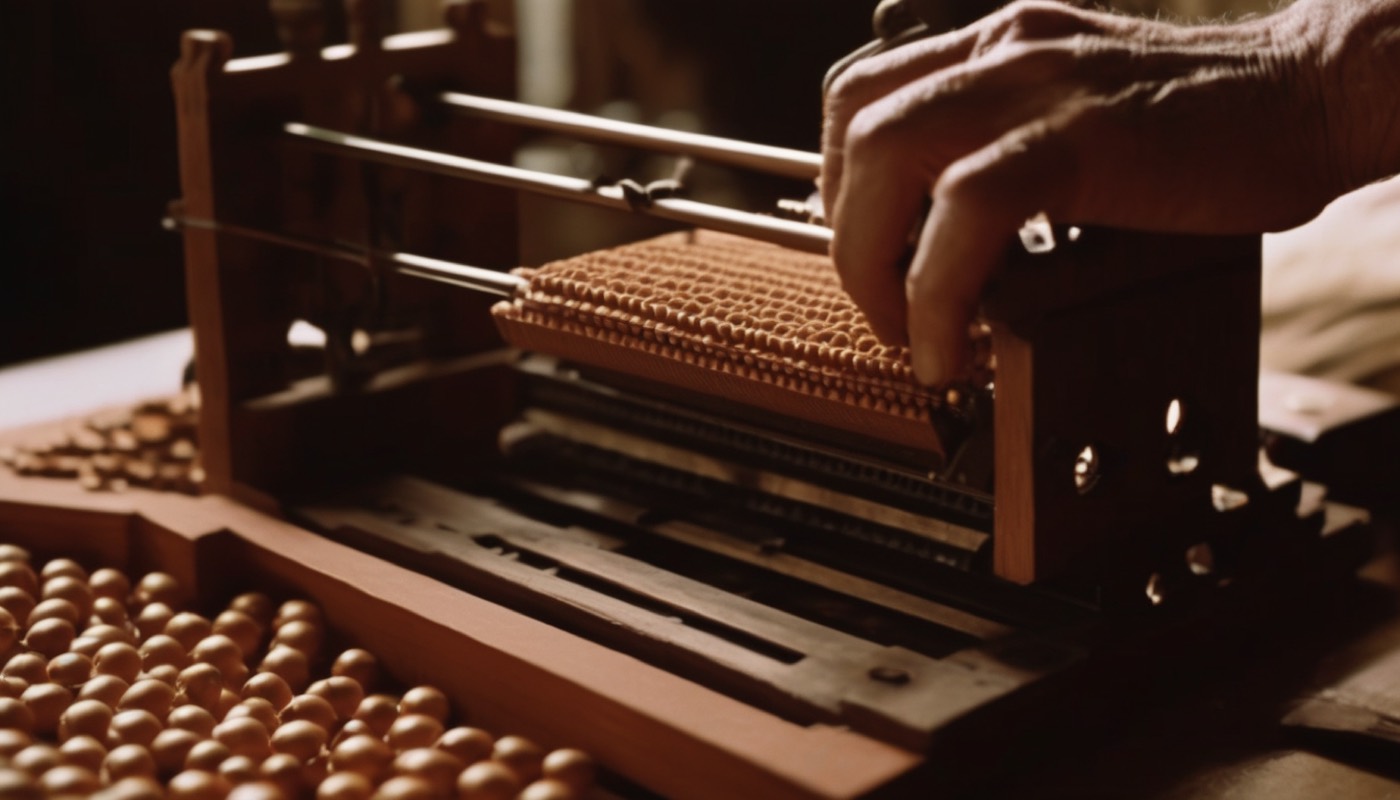
Each person became one card. A hole in one position might mean male, in another female, and others recorded age or place of birth. The card was placed in a press, and spring-loaded pins came down on it. Where a pin found a hole, it dipped into a cup of mercury below and completed an electric circuit. That circuit moved a counter on a dial forward by one.
That was the whole trick. A clerk no longer had to read anything. The machine felt for holes, and the electricity did the counting.
There was more to it than the counter. Next to the tabulator stood a sorting box, a cabinet of small compartments with lids. When a card was read, the lid of one compartment sprang open, and the clerk dropped the card inside.
So a single pass did two jobs at once. It added the card to the running totals, and it sorted the card by one of its answers, ready for the next count. Counting and sorting together, without anyone reading a word, is what turned years of work into months.
Hollerith applied for his first patent in eighteen eighty-four. In a government trial in eighteen eighty-eight, his system captured the test data in seventy-two and a half hours. The two rival methods took one hundred and forty-four and a half hours, and one hundred and a half hours.
He won the contract for the next census. The eighteen ninety count was completed in six months. The full results followed in two years. By IBM's own account, the machines saved the Census Office five million dollars.
3. 1880 to 1924: Company
A machine that worked for a census could work for anybody who counted things. Railways, insurers and factories all had the same problem, on a smaller scale.
In eighteen ninety-six, Hollerith founded the Tabulating Machine Company to sell his machines to business. On the sixth of July, nineteen eleven, he sold it to the financier Charles Flint. The price was two million, three hundred and twelve thousand dollars.
Flint did not want one company. He wanted several, joined together, so they could share customers and salesmen.
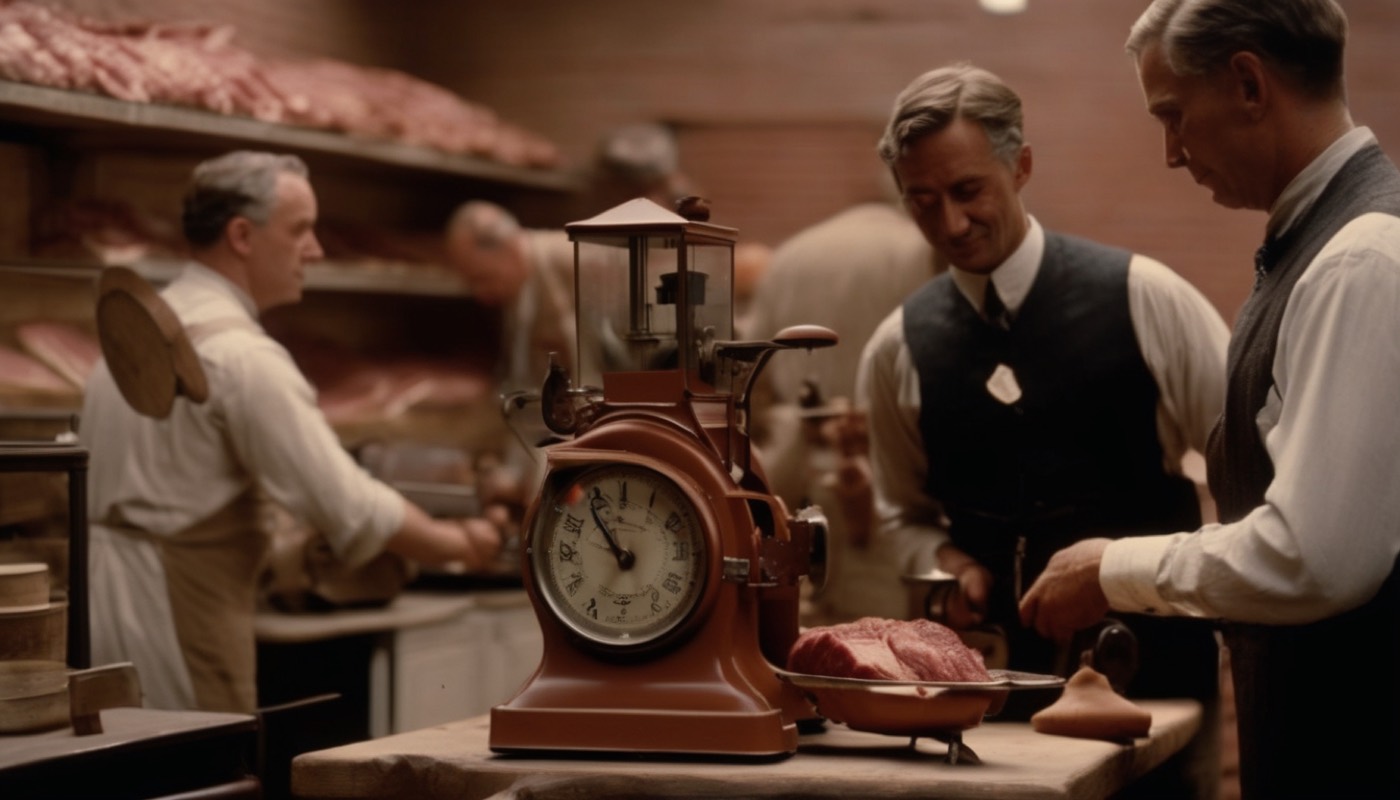
He merged Hollerith's firm with makers of shop scales, time clocks for factory workers and meat slicers. The combined business was called the Computing-Tabulating-Recording Company, usually shortened to C-T-R. It made useful things, but it had no clear idea of what it was.
That changed three years later, when Flint hired a salesman who had just been fired from his last job.
Thomas Watson had been a star salesman at the National Cash Register company, until he fell out with its boss. He arrived at C-T-R in nineteen fourteen with firm views on selling, and on people.
When Watson joined, C-T-R had two hundred and thirty-five employees. By the time he handed over, in nineteen fifty-six, the company employed sixty thousand. Its revenue had grown a hundredfold, to nine hundred million dollars.
Watson built a culture around the salesman. Staff wore dark suits and white shirts. His one-word motto was framed on office walls across the company.
Watson's motto was a single word: THINK. By nineteen forty-eight, IBM had handed out about nine thousand signs carrying it. The word would later give its name to a line of laptops.
His biggest decision was about a name. In nineteen twenty-four, C-T-R became International Business Machines. At the time, the company was neither very international nor very big. The name described what Watson wanted it to become.
4. 1925 to 1939: The punched card
For decades, IBM's real product was not a machine. It was the card that went through the machine. Every customer used them by the million, and IBM made most of them.
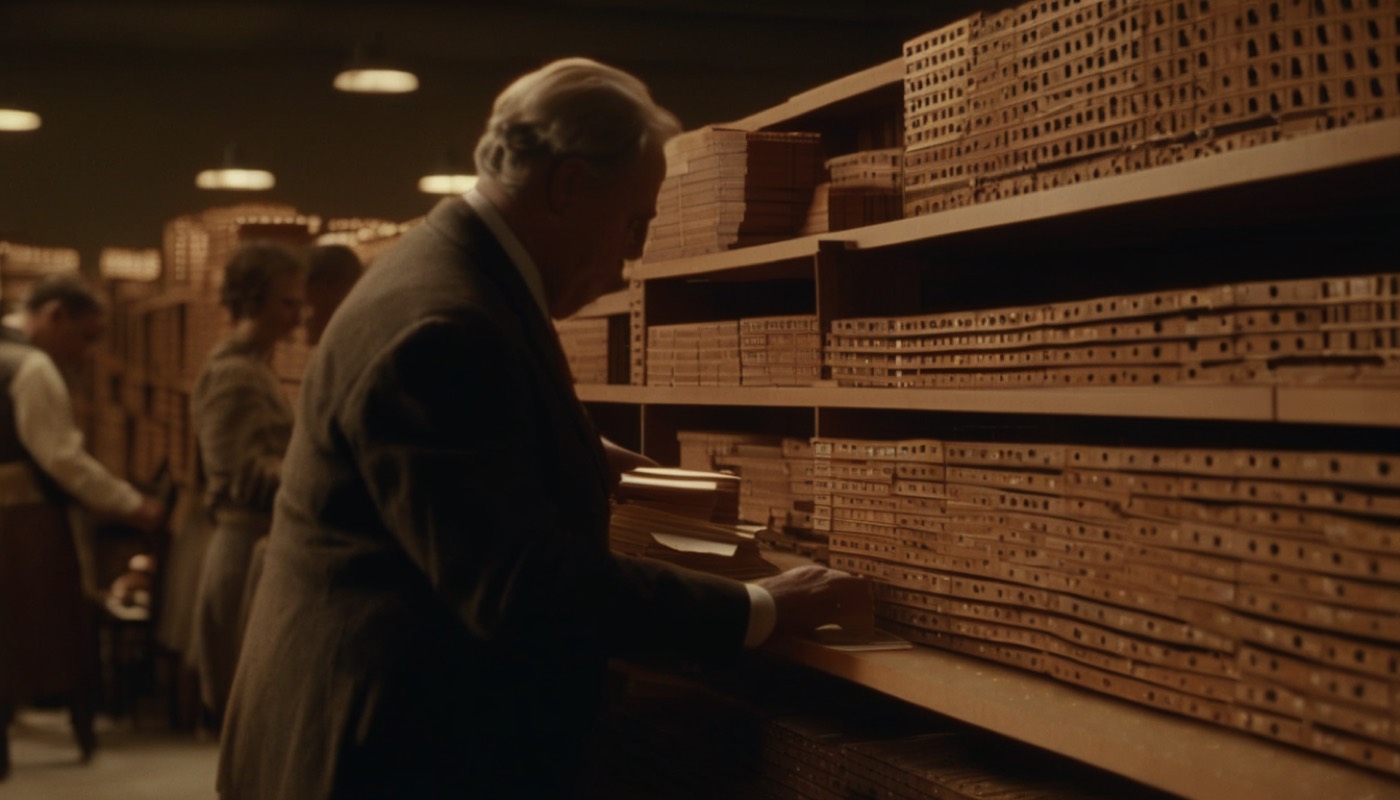
In nineteen twenty-eight, IBM introduced a new card with eighty columns and ten rows. Its holes were small rectangles instead of round ones, so more of them fitted in the same space. Each column could hold one digit, so a single card could hold eighty.
It sounds like a small change. It set a standard that lasted for the rest of the century.
Here is how one card carried a number. Each of the eighty columns ran down the card. A hole punched in row three of a column meant the digit three. A machine reading the card felt each column in turn and turned the holes back into numbers. Later versions added extra holes to carry letters as well.
The eighty-column card shaped computing long after punched cards themselves had gone. Early computer screens were eighty characters wide, because programmers were used to eighty columns. Some programming tools still warn when a line runs past eighty characters.
For decades, a computer program was a deck of these cards, one line of code on each. A programmer typed the lines on a keypunch, carried the deck to the computer room, and came back hours later for the result.
Dropping a deck was a disaster, because every card had to go back in the right order. Programmers learned to draw a diagonal line across the top edge of the deck with a pen. If the cards were ever shuffled, the broken line showed where each one belonged.
5. 1925 to 1939: Typewriters
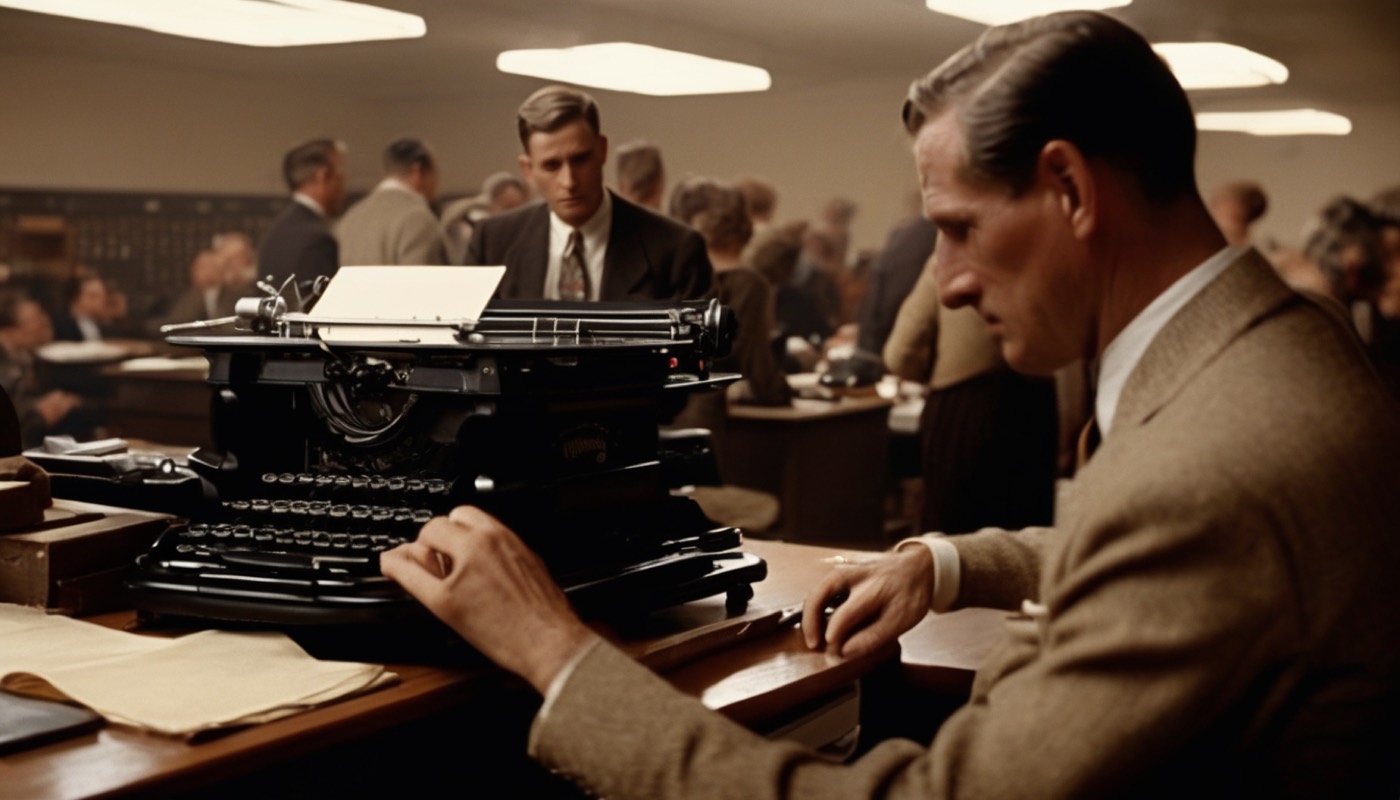
IBM did not only count. In the nineteen thirties, it also moved into one of the most familiar machines in any office: the typewriter.
In nineteen thirty-three, IBM bought the production facilities of Electromatic Typewriters. Two years later, in nineteen thirty-five, it introduced its first electric typewriter under its own name.
On a manual typewriter, each letter was only as dark as the typist's strike on the key. An electric motor did that work instead, so every letter came out evenly, and the carbon copies underneath stayed readable.
That mattered in offices that typed every letter with copies. A typist could also work faster, and for longer, with less effort. For the next half century, typewriters were one of the products the public most linked with IBM.
6. 1925 to 1939: Reading a pencil mark
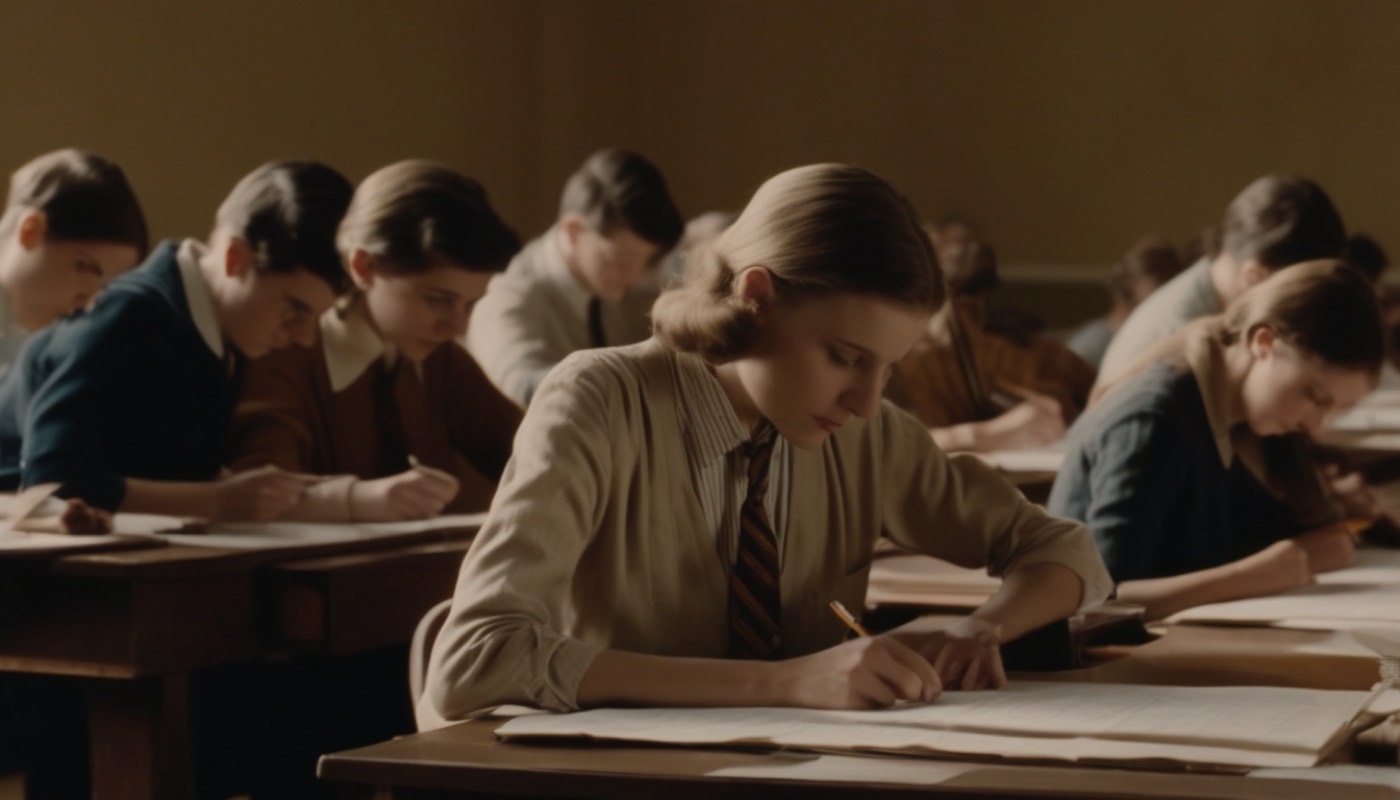
Hollerith's machines read holes. The next step was to read something a person could make with an ordinary pencil.
The idea came from a teacher. Reynold Johnson, a school teacher, built a prototype test-scoring machine in nineteen thirty-one. IBM hired him in nineteen thirty-four. IBM announced the machine, the Type eight-oh-five Test Scoring Machine, in nineteen thirty-eight.
The trick was that pencil lead conducts electricity. A mark on a page is a tiny, thin path that current can flow along.
A student filled in answer spaces with a soft pencil. The sheet was pressed against a set of electrical contacts, one for each answer space. Wherever there was a pencil mark, a small current flowed. The machine added up the current from the correct answers and showed the score on a meter. IBM said it scored tests about ten times faster than marking by hand.
The same idea spread to punched cards, where clerks could mark a card in pencil instead of punching it. By the nineteen sixties, reading marks by electricity had given way to reading them with light, called optical mark recognition. The multiple-choice answer sheet, filled in with a pencil and read by a machine, comes from this line of work.
Reading with light works differently. The machine shines light onto the sheet, and a sensor measures how much comes back. A dark pencil mark absorbs light, so the sensor sees a dip exactly where the mark is.
That meant the mark no longer had to conduct electricity. Any dark mark in the right box would do, and sheets could be read far faster, one after another, without being pressed against contacts.
7. 1925 to 1939: Company
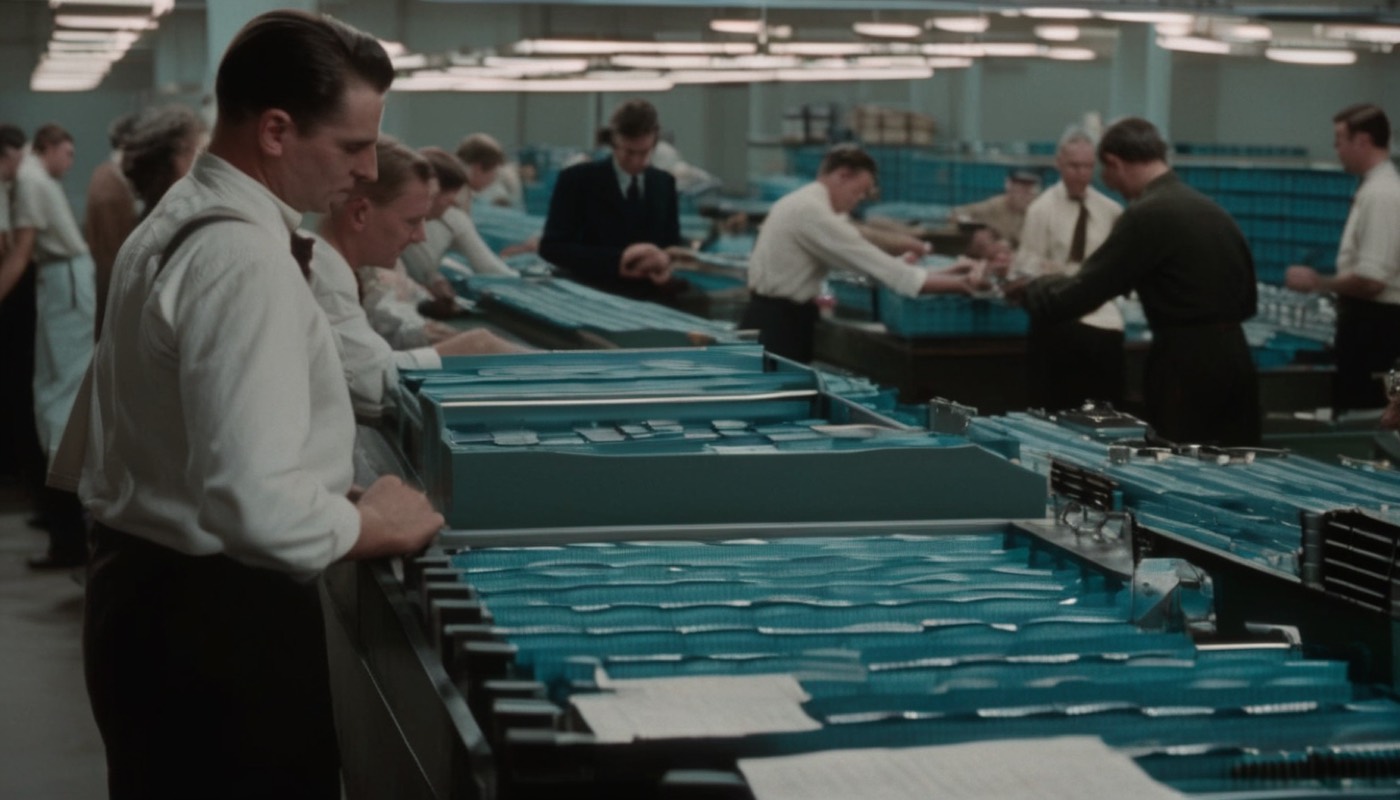
In nineteen thirty-five, the American government passed the Social Security Act. It promised pensions to millions of workers, which meant keeping a record of every worker's wages for the rest of their lives.
IBM won the contract to supply the machines on the sixteenth of September, nineteen thirty-six. The system had to track the wages of twenty-seven million employees. Each worker and each employer was given an identification number, recorded on punched cards.
IBM had kept its factories running through the Great Depression, building machines it did not yet have orders for. When the Social Security contract arrived, it could deliver.
IBM built a new machine for the job, the zero-seven-seven Collator. It compared two stacks of punched cards, found duplicates and merged them into one ordered stack. It handled between two hundred and forty and four hundred and eighty cards a minute.
The contract changed the company. By IBM's own account, its revenue grew by eighty-one per cent. That growth ran from nineteen thirty-five to the end of nineteen thirty-nine.
8. 1925 to 1939: Business in Germany
Punched-card machines were sold all over the world, and they counted whatever their owners asked them to count. One part of this history is documented, and it has to be told plainly.
In nineteen twenty-two, IBM acquired a German company, Deutsche Hollerith Maschinen Gesellschaft, known as Dehomag. In nineteen thirty-three, Dehomag's largest contract was to tabulate the German census. Census workers recorded Jewish respondents on a special, separate card. By nineteen forty, IBM's representative controlled eighty-five per cent of Dehomag's shares.
Dehomag also won the contract for the census of nineteen thirty-nine. That census recorded each person's ancestry and religious faith.
That is what an academic study of IBM and Germany, covering nineteen twenty-two to nineteen forty-one, documents. It does not establish what anyone at IBM's headquarters knew or intended, and this video does not claim it. In two thousand and one, IBM's public response was that "hundreds of businesses did business in Germany at that time".
The sourced record ends in nineteen forty-one, and so does this chapter. The machines themselves were neutral. The people who chose what to count with them were not.
9. 1940s: The big calculators
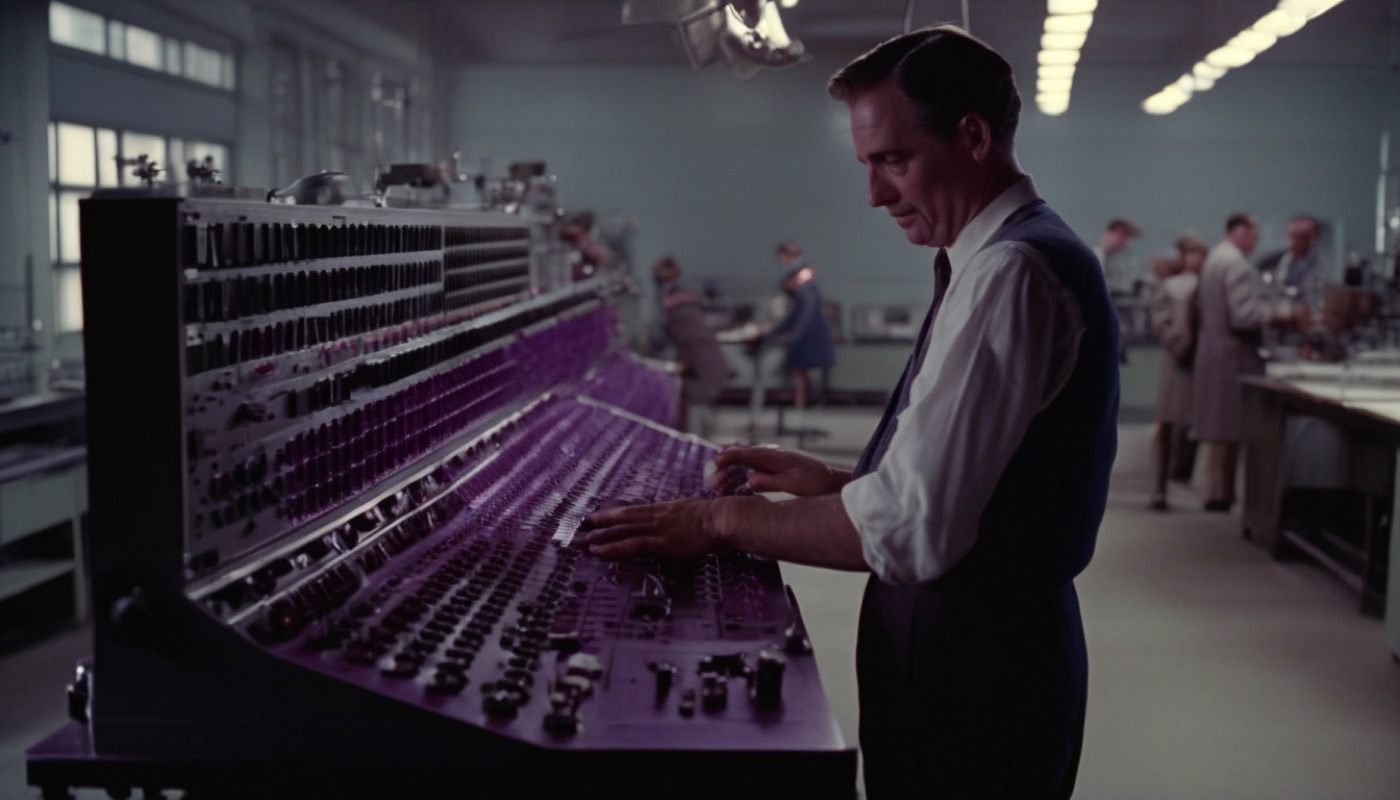
Before electronic computers, IBM helped to build some of the largest calculating machines ever made. They were driven by relays: electric switches that clicked open and shut.
The first was proposed to IBM in nineteen thirty-seven by a Harvard scientist, Howard Aiken. IBM engineers built it, and it was dedicated on the seventh of August, nineteen forty-four. It became known as the Harvard Mark One.
The machine was about fifteen and a half metres long. It held seven hundred and sixty-five thousand parts. It could add or subtract three numbers a second, and it took six seconds to multiply two numbers together.
In March nineteen forty-four, the mathematician John von Neumann brought it calculations for the atomic bomb project. At the dedication, Aiken's press release named only himself as the inventor. Thomas Watson was furious, and Aiken built his later machines without IBM.
Watson's answer was to build a machine of IBM's own.
On the twenty-seventh of January, nineteen forty-eight, IBM dedicated the Selective Sequence Electronic Calculator. It used about twelve thousand, five hundred valves. It also used twenty-one thousand, four hundred relays. It stood behind a large window at IBM's headquarters, where people in the street could watch it work.
Its first job was to work out the positions of the Moon and the planets. Each position of the Moon took it about seven minutes. It could also treat its own instructions as data, an early step towards the computers that followed.
10. 1950s: The first computers
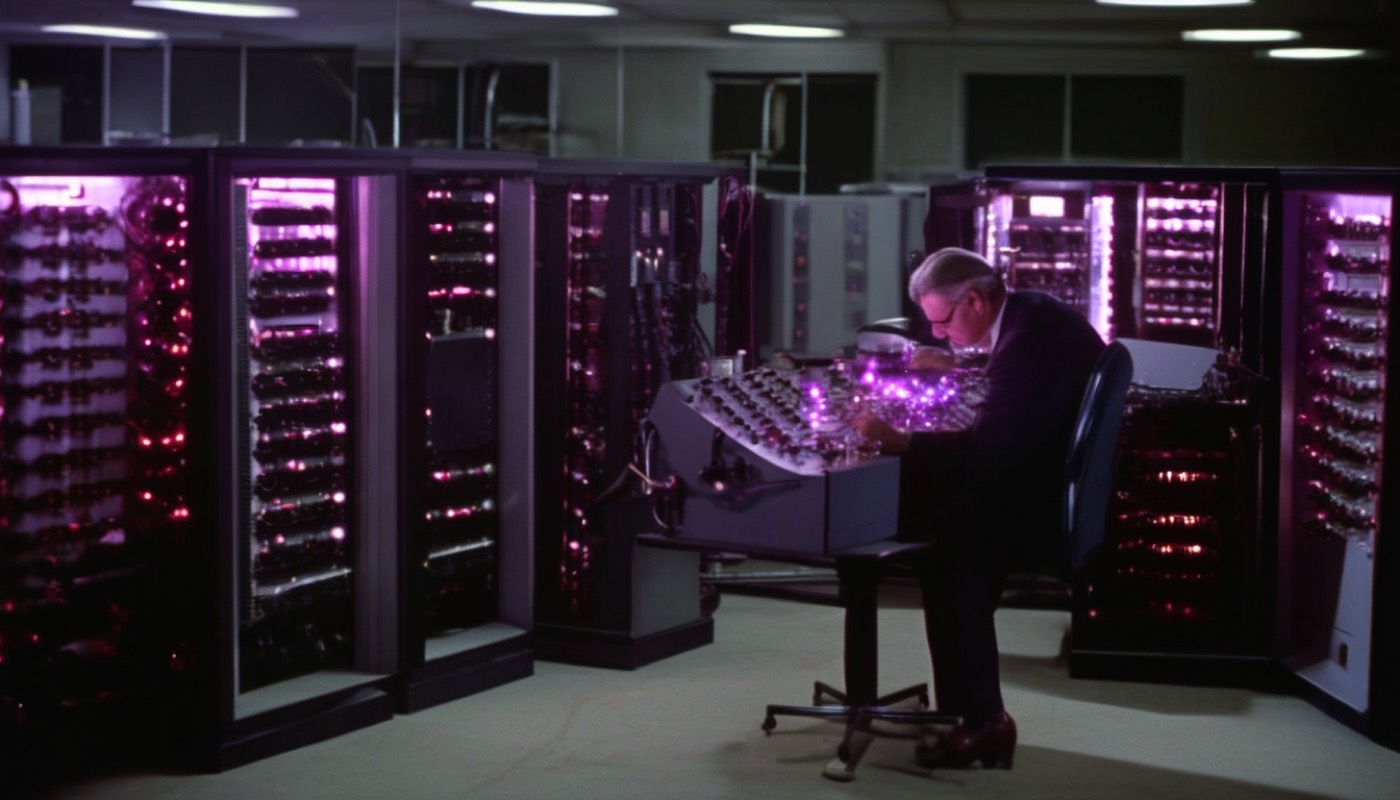
During and after the Second World War, a new kind of machine appeared. It used electronic valves, glowing glass tubes, to do arithmetic thousands of times faster than anything mechanical.
In nineteen fifty-two, IBM announced the seven-oh-one, its first electronic computer. During development it was called the Defense Calculator, because it was built for scientific and military work. In nineteen fifty-three, IBM announced the smaller six-five-zero. In nineteen fifty-four, it announced the seven-oh-four.
The seven-oh-one was a scientific machine. The six-five-zero was the one that brought computers to ordinary businesses.
IBM eventually installed nearly two thousand six-five-zero machines around the world. IBM calls it the world's first mass-produced computer, and the first computer to make a significant profit. It was cheaper than the big machines, and it could read the punched cards customers already had.
That last point mattered. IBM's customers already stored their records on its cards. A computer that read those cards meant nobody had to start again.
Inside these machines, the work was done by valves. A valve is a glass tube with a heated wire inside. It can switch an electric current on and off thousands of times a second, with nothing mechanical moving at all.
That speed is what made electronic computers possible. It also made them hot, hungry for power and fragile, because valves burned out like light bulbs. Within a few years, IBM moved to transistors, small solid switches that did the same job while running cooler and lasting far longer.
11. 1950s: Memory
A computer needs somewhere to hold the numbers it is working on, and the early ways of doing it were fragile. Some used the glow on a screen, which faded and had to be constantly refreshed.
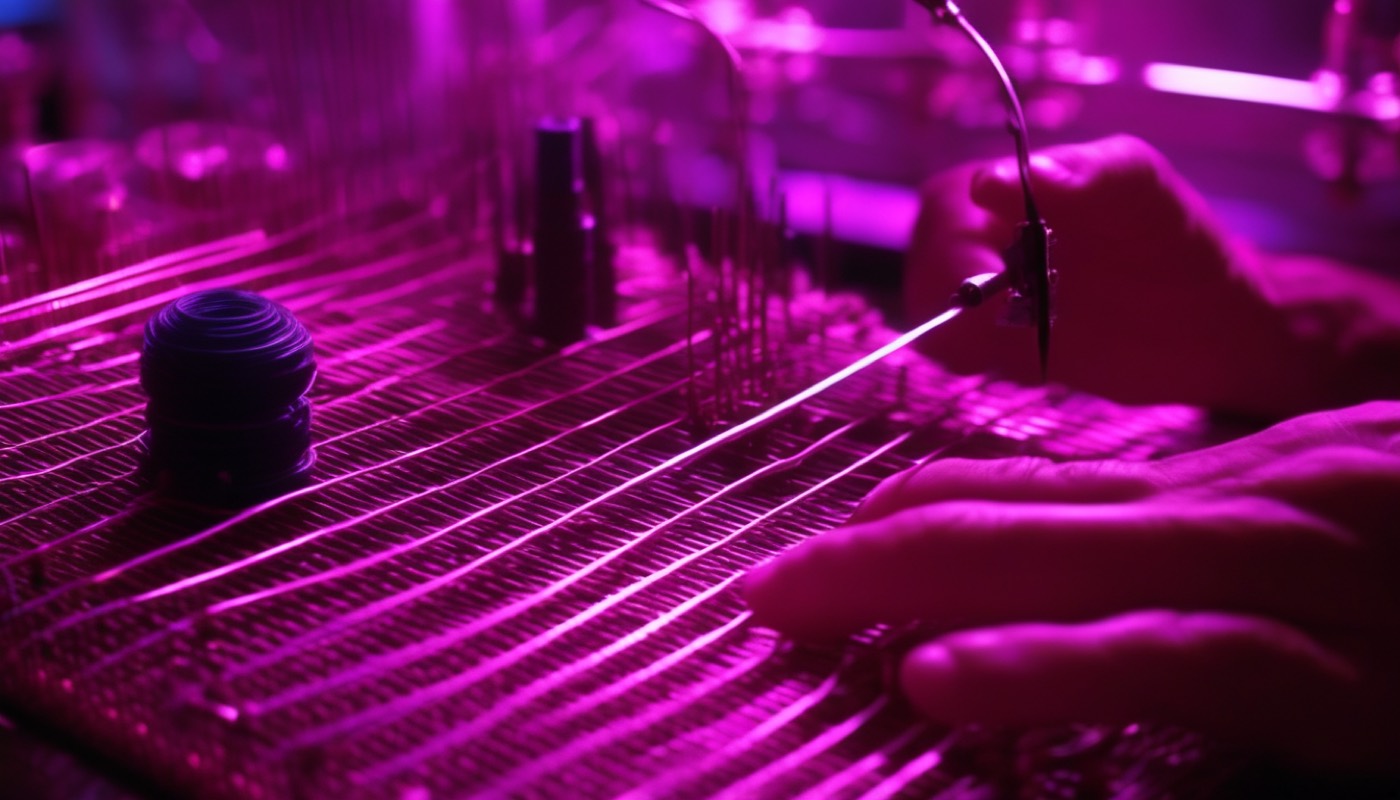
The IBM seven-oh-four, announced on the seventh of May, nineteen fifty-four, used magnetic core memory instead. Each core was a tiny ring of magnetic material, about the size of a pinhead, and shaped like a doughnut. Data in memory was ready for calculation in twelve millionths of a second.
The rings were threaded onto a grid of fine wires, like beads on a loom. Each ring stored a single bit, a one or a zero.
Here is how a core stored one bit. A current through the wires magnetised the ring in one direction or the other: clockwise meant one, anticlockwise meant zero. To read a core, the machine tried to flip it. If the ring flipped, a small pulse appeared on a separate sensing wire, and the machine knew what had been stored.
Core memory kept its contents even when the power was switched off, and it was fast and reliable. It became the standard form of computer memory for about twenty years, until memory chips replaced it.
Core memory left a word behind that programmers still use. When a program crashes, the contents of its memory can be saved to a file for investigation. That file is still called a core dump, decades after the last core memory was switched off.
12. 1950s: Storage
Punched cards and magnetic tape had one big weakness. To find one record, a machine had to work through all the records before it, in order.
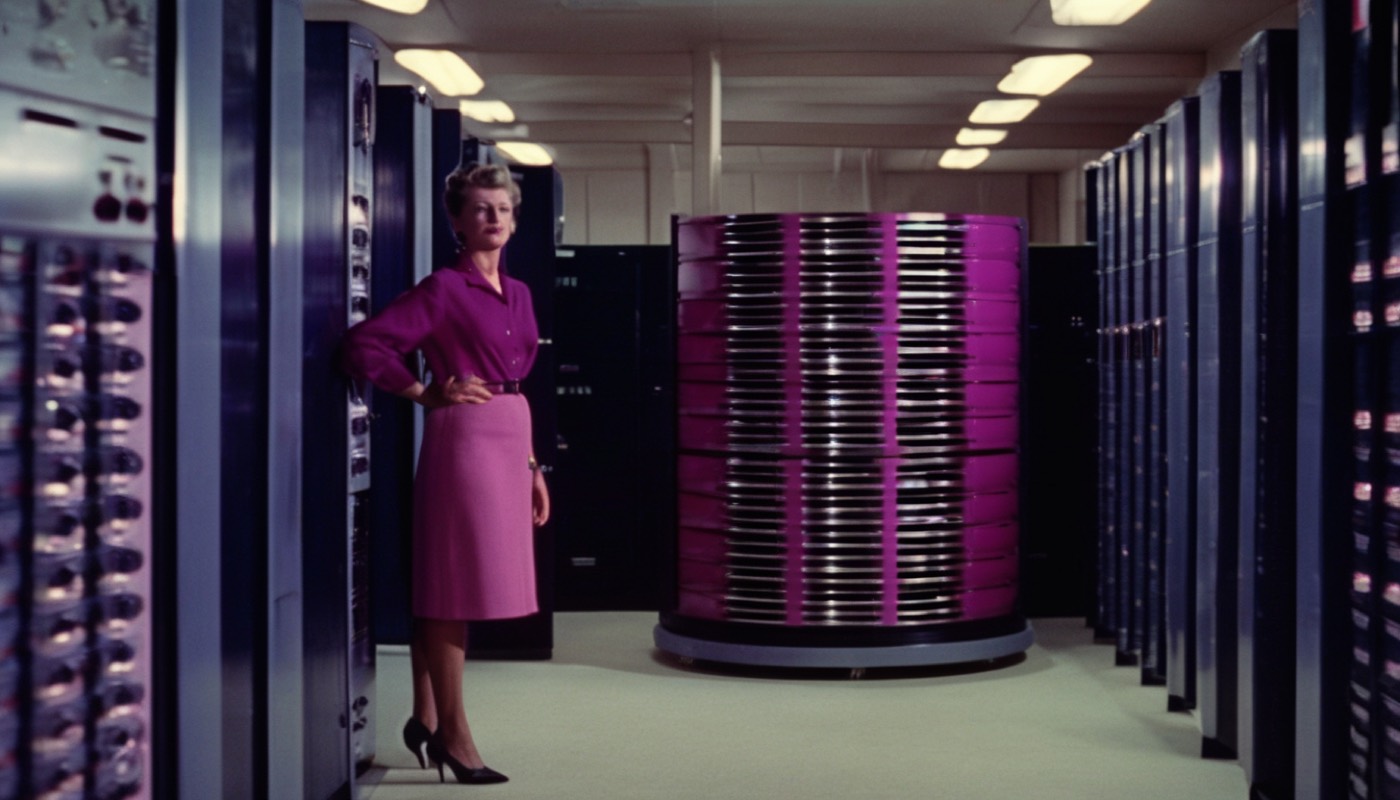
In June nineteen fifty-six, IBM shipped the first commercial hard disk drive, the Model three-fifty disk storage unit, to a paper company in San Francisco. It was part of a system called RAMAC. It stored five million characters, about three point seven five megabytes. They were held on fifty spinning disks, each twenty-four inches across. Customers leased it for seven hundred and fifty dollars a month.
That is less than a single photo on a modern phone. But it changed what a computer could do.
The fifty disks were stacked on a spindle turning twelve hundred times a minute. A single arm moved up and down the stack and in towards the centre. It could reach any record on any disk directly, in less than a second, without reading everything in front of it. That is called random access, the R and A in RAMAC.
Every hard drive since works on the same basic idea: spinning platters, and a head that moves straight to the data. IBM had invented the storage method that would hold most of the world's information for the next fifty years.
RAMAC changed how businesses worked, not just how they stored things. With tape, a company processed its records in batches, perhaps once a night, in a fixed order. With a disk, it could look up one customer's account the moment the customer asked.
That is the difference between a bank telling you your balance tomorrow and telling you now. Almost every online service today depends on that ability to jump straight to one record among millions.
13. 1950s: Software
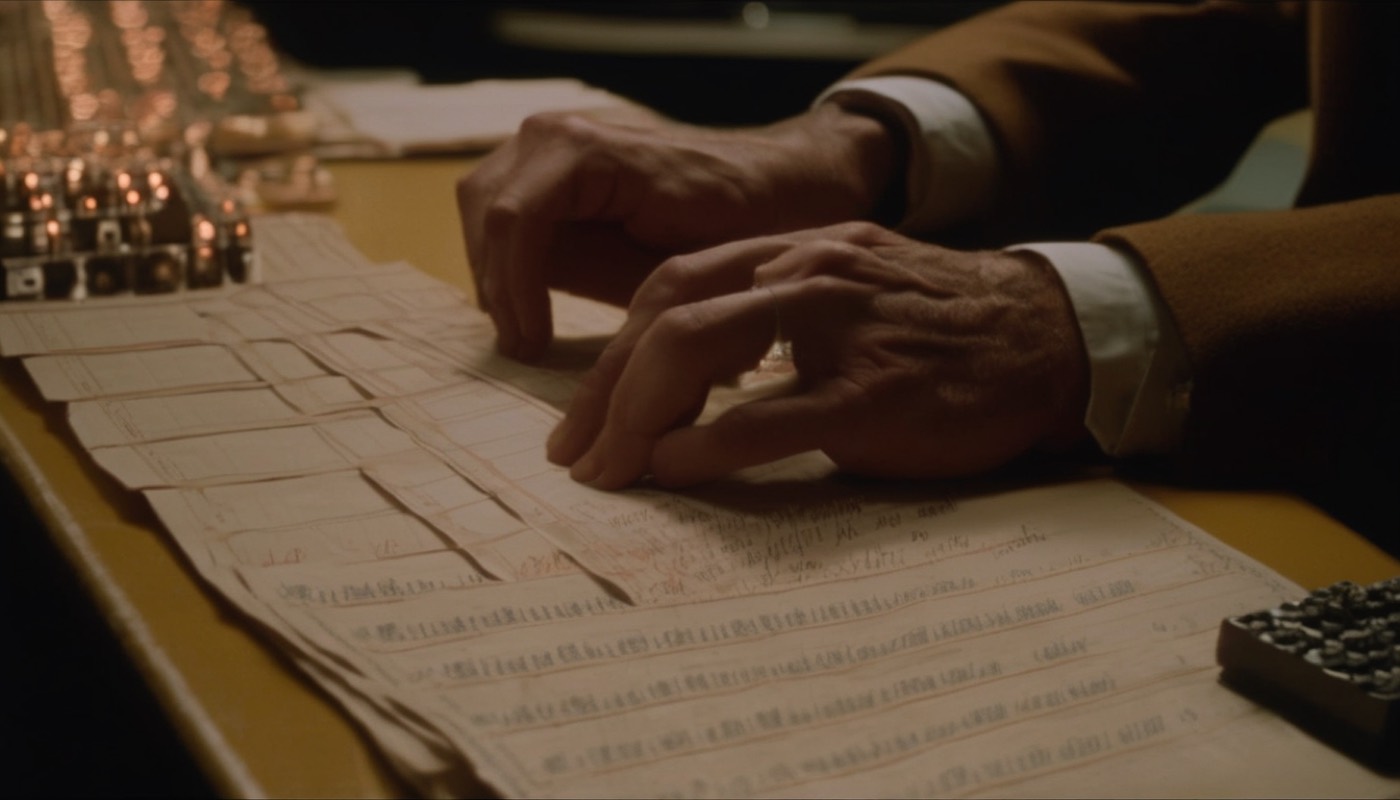
Early computers were programmed in the machine's own code. Every instruction was a number, and every program had to be written for one particular machine.
In nineteen fifty-four, John Backus led a small IBM team that set out to change that. Their language, called FORTRAN, short for formula translation, was released for the IBM seven-oh-four in nineteen fifty-seven. It let scientists write something close to ordinary algebra.
FORTRAN needed a program that could turn that algebra into machine code. That translating program is called a compiler.
Here is what that meant in practice. A scientist could write a line such as X equals A plus B times C, much as they would on paper. The compiler turned that single line into many machine instructions, choosing which ones to use and in what order. Before FORTRAN, a programmer had to do that by hand, for every line, on every machine.
Backus's team built the first optimising compiler. It did not just translate each line. It looked for the fastest way to run the whole program, so the result was nearly as quick as code written by hand. That was the point that convinced sceptical programmers to use it.
Many people had told Backus it could not be done. FORTRAN is still used today for weather forecasting and physics, nearly seventy years later. It was the first widely used high-level programming language.
14. 1950s: Company
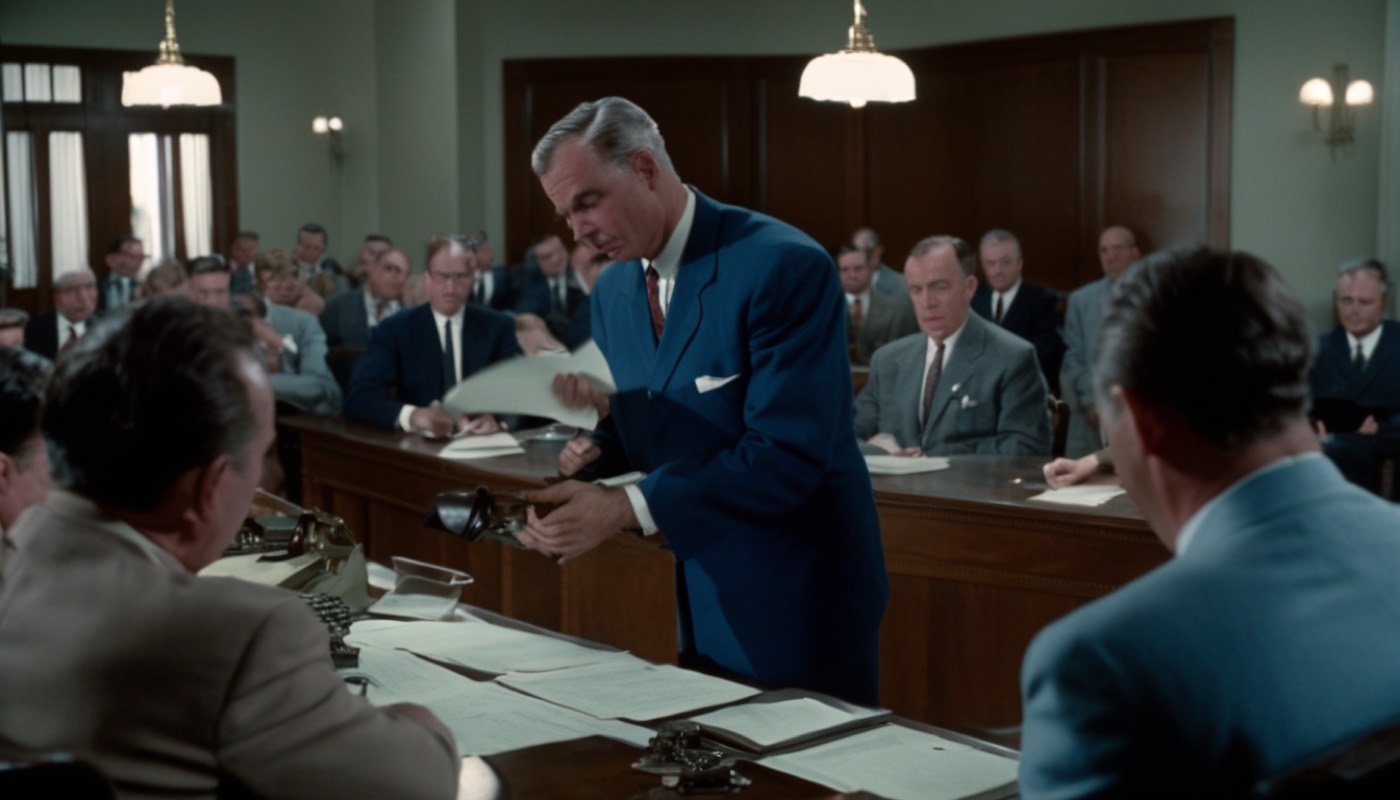
By the early nineteen fifties, Thomas Watson was in his late seventies. His son, Thomas Watson Junior, had been pushing the company towards electronics, sometimes against his father's wishes.
Watson Junior became president of IBM in nineteen fifty-two, and chief executive in nineteen fifty-six. Weeks later, on the nineteenth of June, nineteen fifty-six, his father died.
The same year settled a long argument with the government. IBM was so dominant in punched cards that the Justice Department had sued it for monopolising the market.
On the twenty-fifth of January, nineteen fifty-six, IBM agreed a consent decree. It had to sell its machines, not only lease them. It had to license its patents to any company that asked. And it could make no more than half of the country's punched cards.
A consent decree is an agreement, not a verdict. IBM admitted nothing, but it accepted the rules. The younger Watson used the moment to point the whole company at electronic computers.
15. 1950s: Business computers
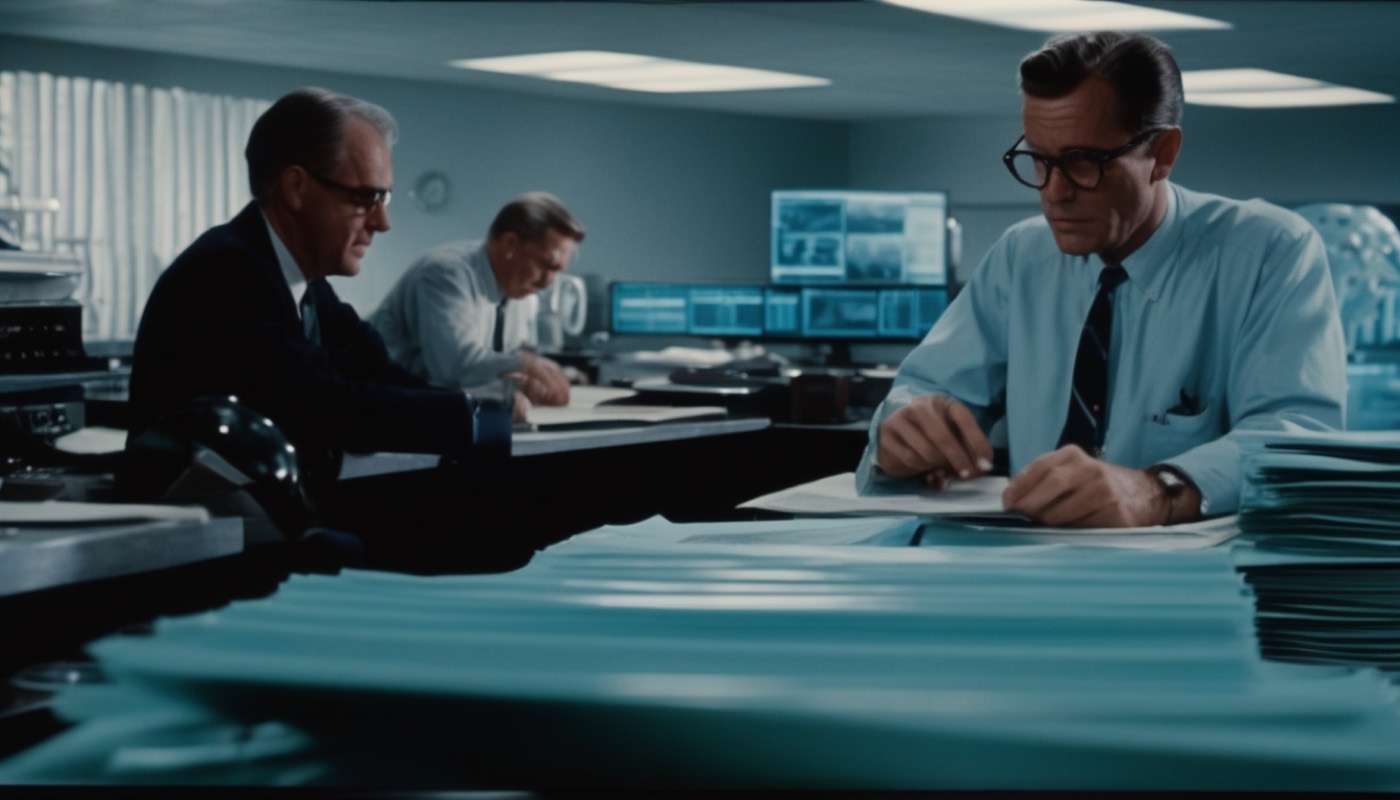
By the late nineteen fifties, most businesses that wanted a computer could not afford a big one. IBM's next machine was built for them.
On the fifth of October, nineteen fifty-nine, IBM announced the fourteen-oh-one, a smaller computer for everyday business accounting. More than five thousand, two hundred orders arrived in the first five weeks.
It worked alongside punched cards and a fast new printer, so companies could move to computing without throwing away their old records or their old habits.
By the middle of the nineteen sixties, more than ten thousand had been installed. IBM says that was more than half of all the computers in the world. It has been called the Model T of the computer industry, after the car that first brought motoring to ordinary people.
For many companies, the fourteen-oh-one was their first computer. It turned the computer from a scientific instrument into a normal piece of office equipment.
16. 1960s: Office machines
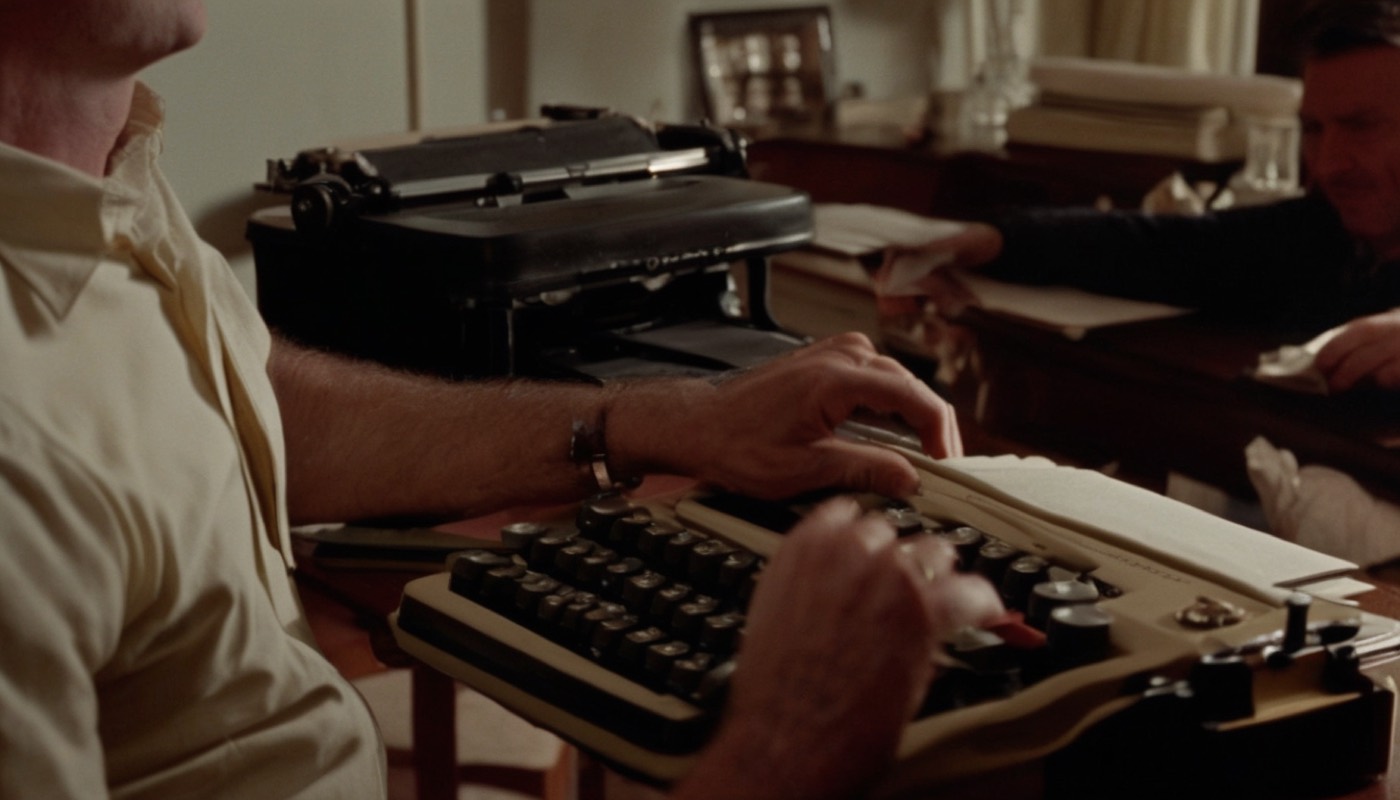
In the early nineteen sixties, IBM redesigned the typewriter from the ground up.
On the thirty-first of July, nineteen sixty-one, IBM launched the Selectric. It was the biggest change to the typewriter since IBM's first electric model.
The Selectric looked different from every typewriter before it. There were no rows of metal arms swinging up to strike the paper.
Instead, all the letters sat on a small metal ball, about the size of a golf ball. When a typist pressed a key, the ball tilted and turned until the right letter faced the paper, then struck it. The carriage did not move. The ball travelled along the line instead. Typists could swap the ball in seconds to change the typeface.
The ball design meant keys could not jam, and IBM said the Selectric could print one hundred and eighty-six words a minute. It became the standard office typewriter for a generation. IBM kept making typewriters until nineteen ninety-one, when it sold the business along with its printers.
The Selectric's mechanism also found its way into early computers. A version of it was used in computer terminals, typing out what the computer had to say, line by line, on paper.
Later models added a correcting tape. A typist could backspace and lift a wrong letter off the page, instead of reaching for white correction fluid. For offices that produced letters all day, that alone saved hours.
17. 1960s: SABRE
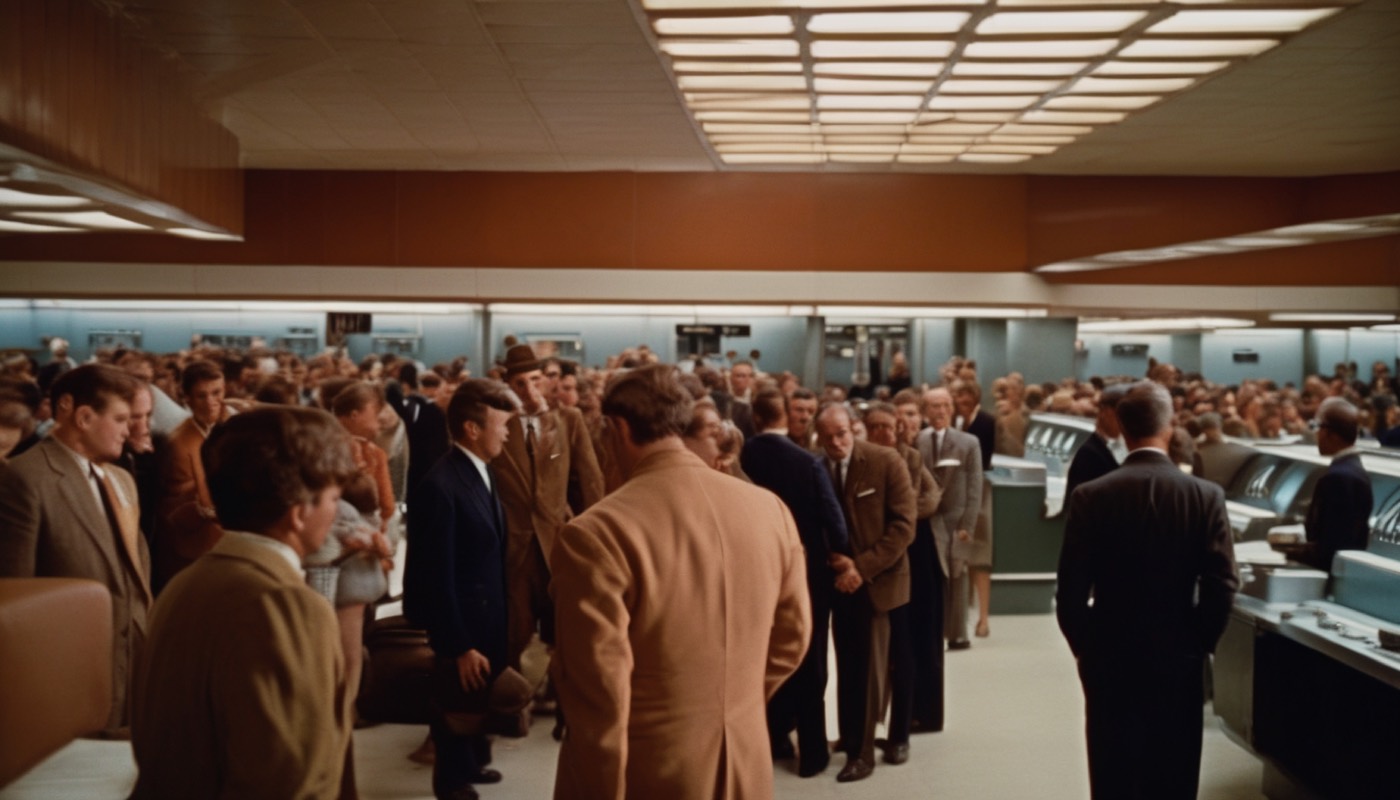
In the nineteen fifties, booking an airline seat meant clerks, card files and telephone calls. A booking could take an hour and a half to confirm.
The fix began with a chance meeting. In nineteen fifty-three, an IBM salesman sat next to the president of American Airlines on a flight, and they talked about the problem. The system they built together, called SABRE, was fully working in nineteen sixty-four.
SABRE linked booking agents across the country to a central computer. Every agent saw the same seats at the same moment.
By the middle of the nineteen sixties, SABRE was handling seven thousand five hundred reservations an hour. The time to confirm a booking dropped from about ninety minutes to a few seconds. It was one of the first times a computer system ran a business live, in real time.
Every online booking system since, for flights, hotels or tickets, follows the pattern SABRE set.
18. 1960s: Research
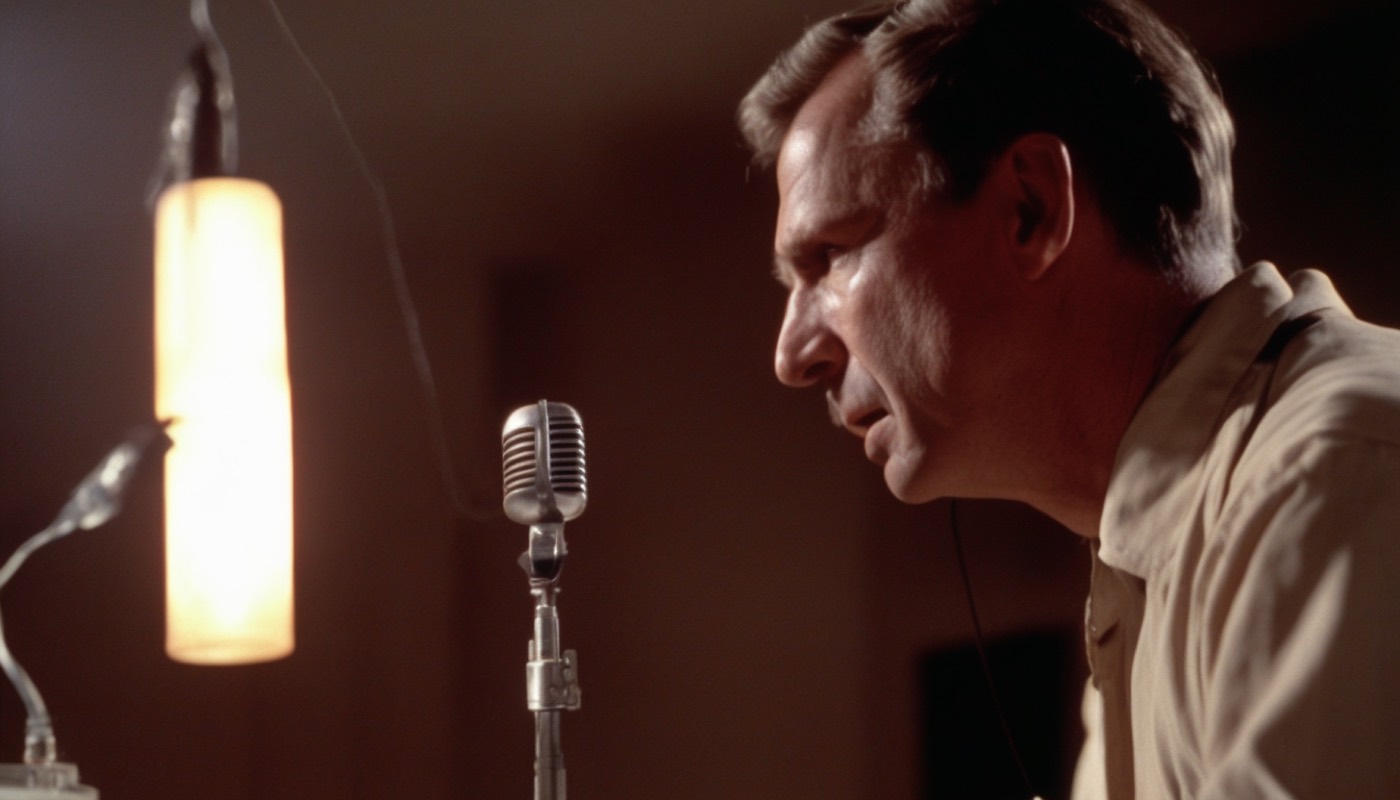
In the early nineteen sixties, IBM engineers were already trying to make machines that people could use without punching a single card.
In nineteen sixty-one, an IBM engineer, William Dersch, showed a machine called the Shoebox. It understood sixteen spoken words. They were the digits, and six commands such as plus, minus and total. Speak a sum into its microphone, and it worked out the answer.
Sixteen words is tiny by today's standards. But it was one of the first machines to turn a human voice into something a computer could act on.
At about the same time, another IBM engineer was working on a very different problem: how to make an identity card that a machine could read.
Forrest Parry wanted to fix a strip of magnetic tape to a plastic card, but the tape kept wrinkling. His wife, who was ironing clothes at the time, suggested using the iron to melt the stripe onto the card. It worked. The first cards were identity cards for officials at the CIA.
Airlines and banks soon saw what a card that a machine could read might do for them.
The magnetic stripe became a US standard in nineteen sixty-nine, and an international one two years later. Swiped bank cards, hotel keys and travel cards all followed from the same idea.
A stripe of tape, ironed onto plastic, became the way the world paid for things for the next half century.
19. 1960s: Mainframes
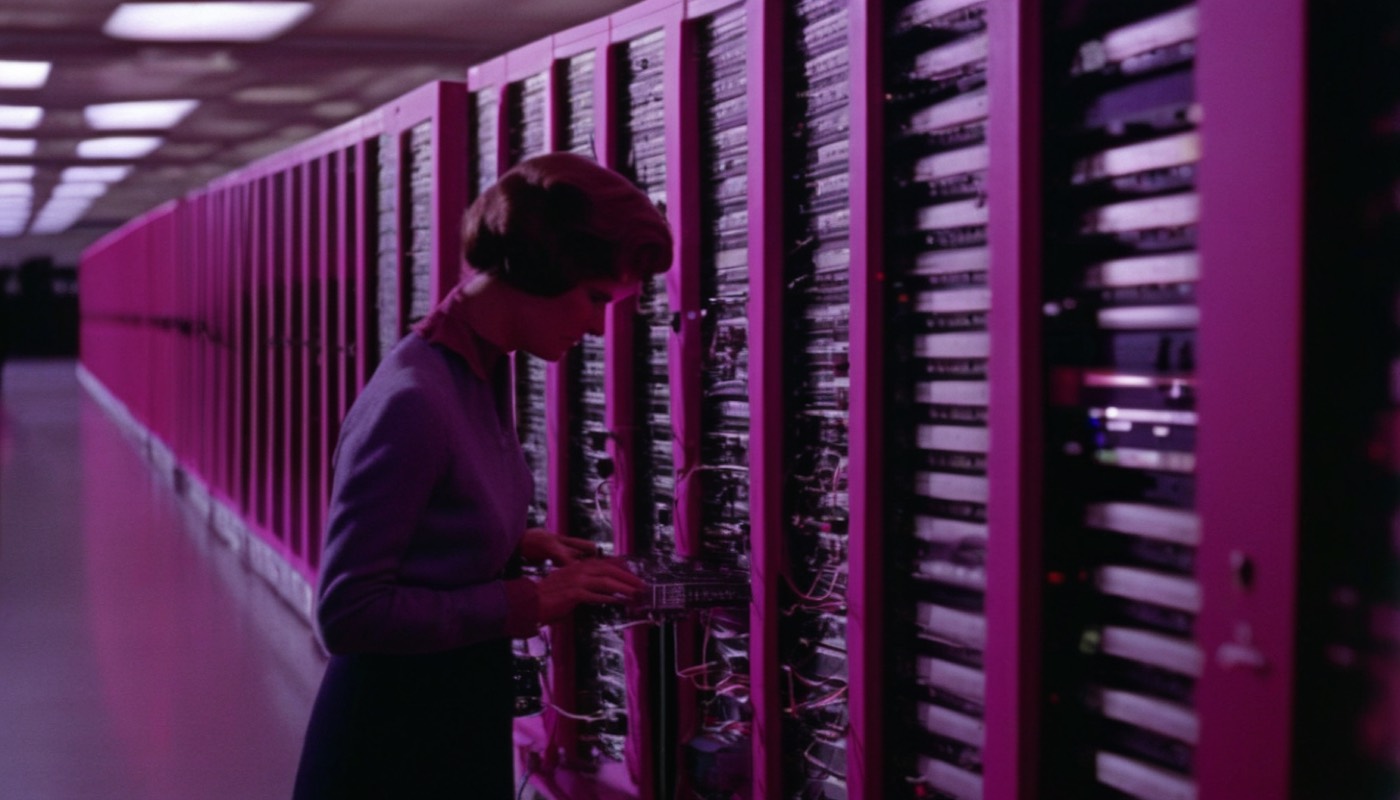
By the early nineteen sixties, IBM had a problem of its own making. It sold several families of computers, and none of them could run another's programs. A customer who outgrew one machine had to rewrite everything to move to a bigger one.
IBM's answer was the System three-sixty, launched on the seventh of April, nineteen sixty-four. IBM itself calls it a five billion dollar gamble. It was a whole family of machines that all spoke the same language, from small to very large, so software written for one would run on any of them.
That idea is called compatibility, and it sounds obvious today. In nineteen sixty-four, it meant IBM was replacing almost every computer it already sold.
The risk was enormous. IBM's existing computers were profitable, and customers were happy with them. Announcing a replacement for all of them at once invited customers to stop buying the old machines and wait. If the new family ran late, or did not work, IBM would have nothing to sell in between.
It also had to be built from scratch. IBM designed new circuits, built new factories to make them, and wrote a vast new operating system to run on every model. The software alone ran badly late. Fred Brooks, who managed the project, later wrote a famous book about why adding more people to a late software project makes it later still.
IBM announced six processor models at once, covering a fiftyfold range of performance. There were fifty-four devices to plug into them, from printers to tape drives. Memory ranged from eight thousand to five hundred and twenty-four thousand characters. In the first month, customers ordered more than a thousand.
20. 1960s: Inside the System/360
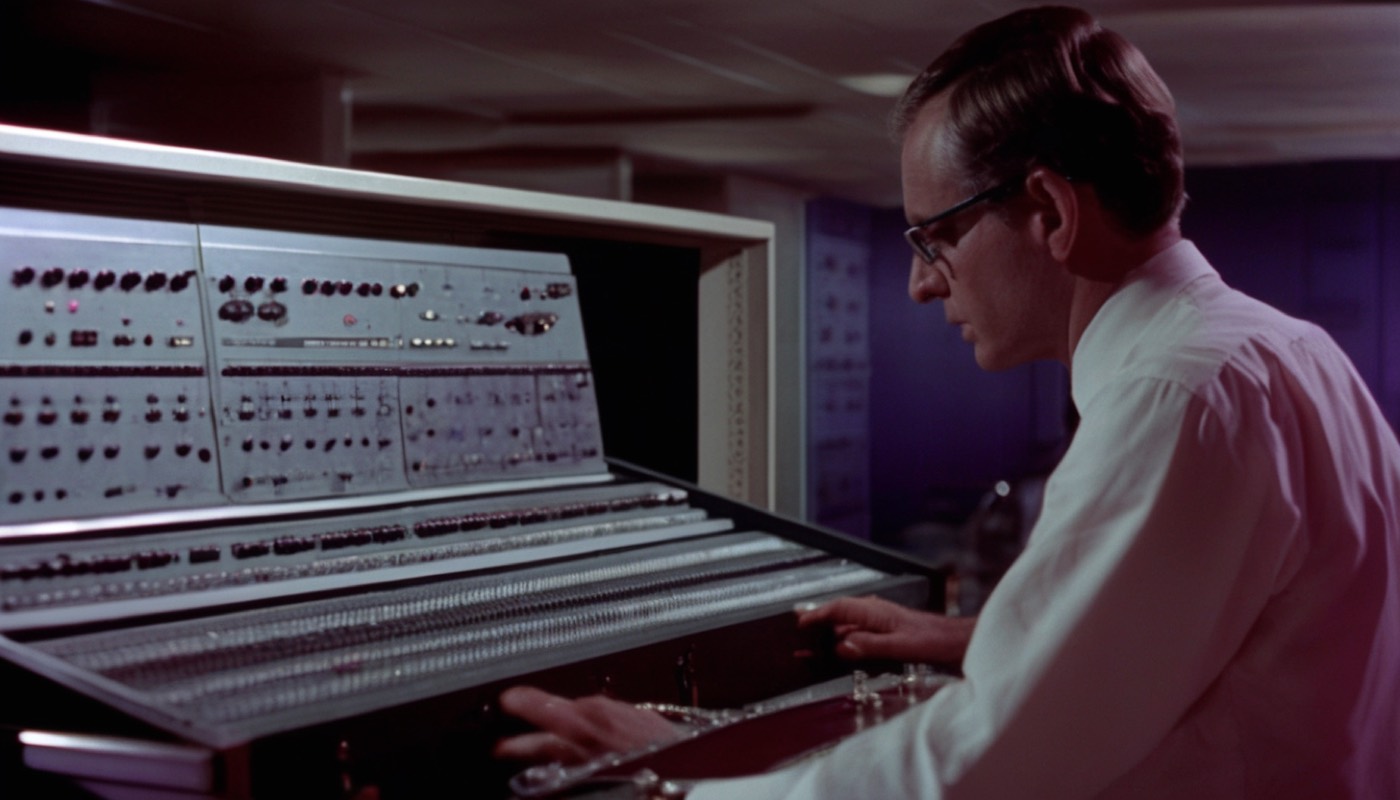
The System three-sixty is where the word mainframe really belongs. A mainframe is a large, central computer that a whole organisation shares, running many jobs at once, very reliably.
The design had a clever trick at its heart. The smaller, cheaper models did not contain all the circuits of the larger ones. Instead, they used microcode: a layer of tiny built-in programs that broke each instruction into simpler steps. The same software ran on every model, just faster on the expensive ones.
The System three-sixty also fixed the size of a byte, the basic unit of computer storage, at eight bits. Almost every computer made since has used the same eight-bit byte. Machines from the family also worked for NASA during the Apollo moon missions.
The idea of a compatible family, where new machines keep running old software, became the core of IBM's business. It is still the promise behind its mainframes more than sixty years later.
21. 1960s: Memory chips
Core memory worked, but every ring had to be threaded by hand onto wires. It was slow to make and expensive, and it could only shrink so far.
In nineteen sixty-six, an IBM researcher named Robert Dennard had an idea while sitting at home on his sofa. Memory cells on chips at the time used six transistors to store a single bit. Dennard worked out how to store that bit with just one transistor.
A transistor is a tiny electronic switch. Fewer switches per bit meant far more memory in the same space, and far cheaper.
Dennard's cell pairs one transistor with a tiny capacitor, which holds an electric charge. A charged capacitor means one, an empty one means zero, and the transistor acts as the gate to it. The charge slowly leaks away, so the memory has to be read and rewritten many times a second. That constant refreshing is why it is called dynamic memory, or DRAM.
IBM and Dennard received the patent for DRAM in nineteen sixty-eight. It is the main memory inside almost every computer and phone made since. Every time you open an app, it is loading into memory built on Dennard's idea.
Dennard is remembered for a second idea as well. He and his colleagues showed that as transistors are made smaller, they can also use less power and switch faster, at the same time. That rule became known as Dennard scaling.
For about thirty years, it was the reason computers kept getting faster and cheaper together. Each new generation of chips packed in more, smaller transistors, without running hotter. Much of the history of the personal computer rests on it.
22. 1960s: Software
Until the late nineteen sixties, IBM gave its software away. Programs, training and support came free with the machine, bundled into the price.
That changed on the twenty-third of June, nineteen sixty-nine. IBM began pricing many of its programs separately from the hardware. This was called unbundling. Overnight, software stopped being a free extra and became something a company could sell.
Unbundling created room for a whole industry of independent software companies. They could now compete with IBM's programs, because IBM's were no longer free.
The timing was not an accident. In January nineteen sixty-nine, on the last day of the Johnson administration, the government filed a new antitrust case against IBM. It ran for thirteen years. In January nineteen eighty-two, the Reagan administration dropped it, calling the case without merit.
An abandoned case decides nothing either way. But thirteen years under legal threat shaped how carefully IBM moved, right through the years when the personal computer was being born.
23. 1970s: Mainframes
The System three-sixty set the pattern. In the nineteen seventies, IBM's task was to make the family bigger and faster without breaking it.
On the thirtieth of June, nineteen seventy, IBM announced the System three-seventy. Later that year, its Model one-forty-five became the first to use main memory made from silicon chips. In nineteen seventy-two, IBM added virtual memory across the whole range.
Virtual memory lets a program behave as if the machine had far more memory than it really holds. The computer quietly moves pieces of the program between memory and disk as they are needed. Programmers no longer had to squeeze every job into the space available.
In March nineteen seventy-seven, IBM announced the three-oh-three-three, its largest and fastest machine yet. It ran faster inside than the company's previous flagship. And programs written for the System three-sixty still ran on it unchanged.
24. 1970s: Storage
Computers now needed a cheap way to carry programs and data from one machine to another. They also needed faster, smaller hard drives.
In nineteen sixty-seven, a small IBM team led by David Noble started building a cheap way to load instructions into mainframes. IBM began selling floppy disk drives in nineteen seventy-one. The original floppy disk was eight inches across, and held as much as three thousand punched cards.
The floppy was a thin, flexible disk of magnetic material, sealed in a card sleeve. It could be posted, filed and swapped between machines. Smaller versions of it carried software to the world for the next thirty years.
In November nineteen seventy-three, IBM began shipping the three-three-four-zero hard drive. Its read heads floated on a thin cushion of air and landed gently on lubricated disks when they stopped. It came in thirty-five and seventy megabyte versions. Engineers nicknamed it the Winchester, after a famous rifle called the thirty-thirty.
That low-flying, landing head design became the basis of hard drives for decades. For years, people simply called any hard drive a Winchester.
25. 1970s: Software
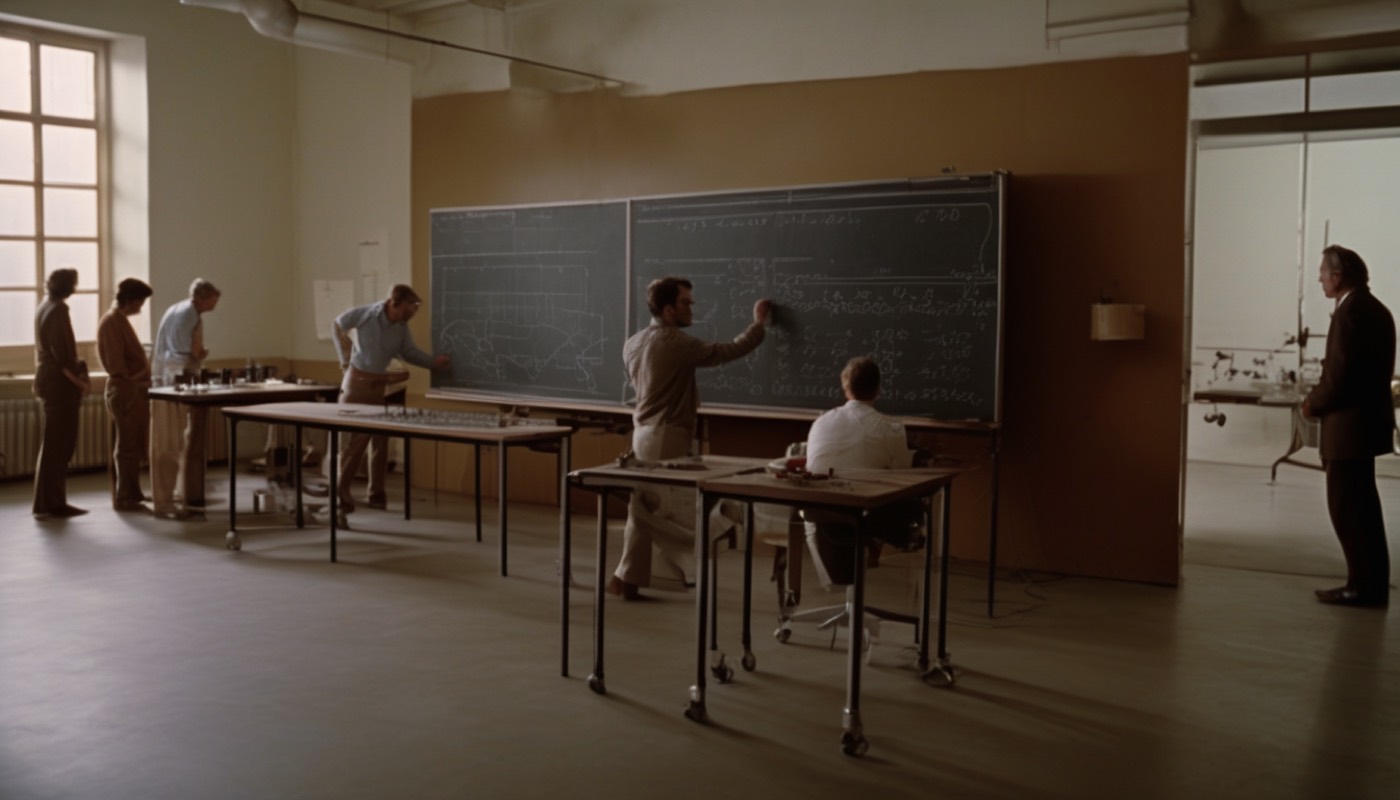
Storing data was one problem. Finding the right piece of it, fast, was another.
In nineteen seventy, an IBM mathematician named Edgar Codd published a paper called "A Relational Model of Data for Large Shared Data Banks". His idea was to store data in simple tables, and to ask questions of those tables without knowing how the data was laid out on the disk.
Codd's idea was simple to say and very hard to build. IBM set a team to it.
In nineteen seventy-three, the System R project began building a working relational database. Two of its researchers, Donald Chamberlin and Raymond Boyce, created a language for asking questions of the tables. It became SQL. In nineteen eighty-three, IBM shipped its own product, DB2, on mainframes.
SQL is now the most common way to ask a database a question. Nearly every bank balance, online order and airline booking passes through a relational database built on Codd's tables.
The appeal of SQL is that a question reads almost like English. Select the names of all customers whose balance is over a hundred pounds. The database, not the person asking, works out the fastest way to find them.
That separation was Codd's real idea. The people asking questions no longer needed to know how or where the data was stored. The same question keeps working even when the storage underneath is completely rebuilt.
26. 1970s: The barcode
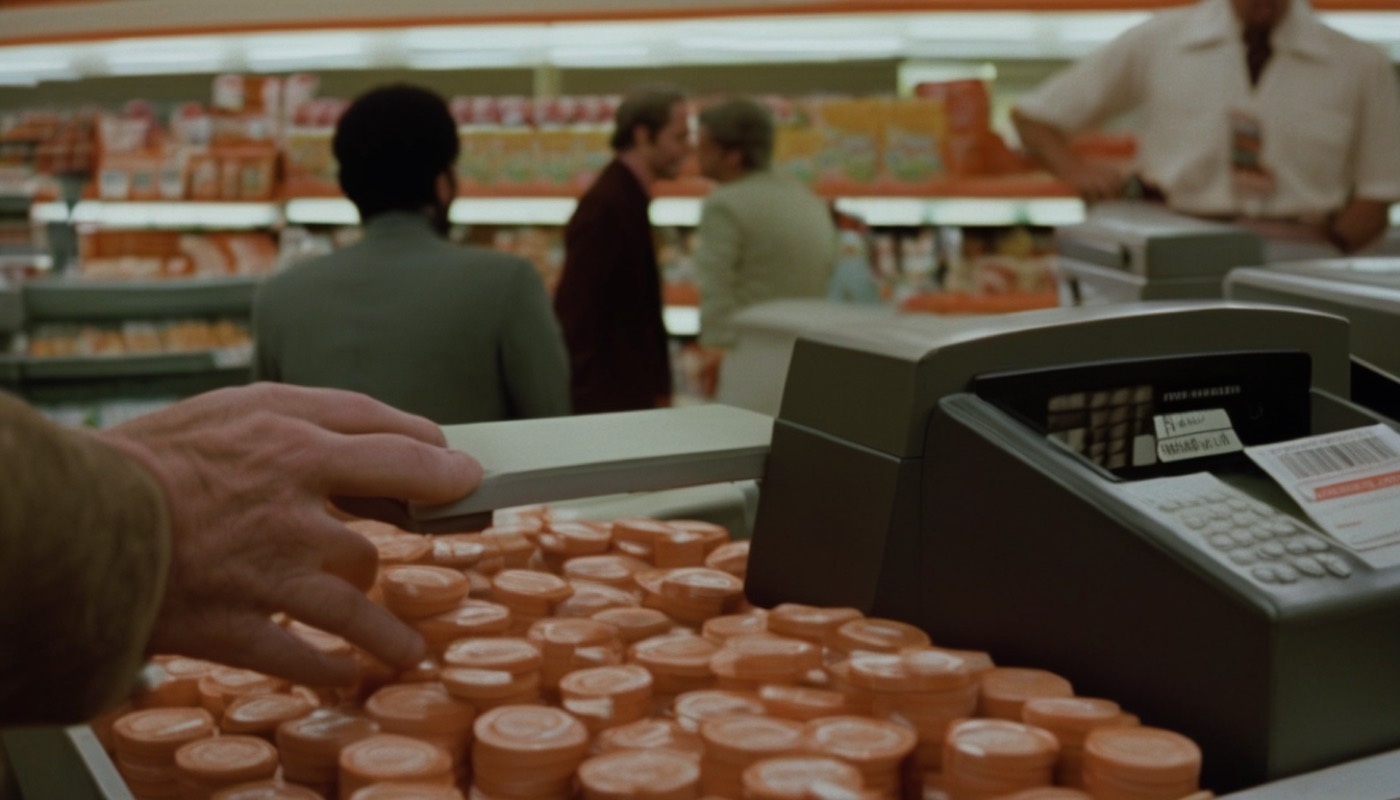
In the same years, IBM helped solve a problem for supermarkets. Every item still had to be priced by hand, and every price typed in at the till.
An IBM engineer, George Laurer, designed a pattern of black bars that a laser scanner could read. The Universal Product Code, based on his design, was adopted on the first of April, nineteen seventy-three. The first scan came on the twenty-sixth of June, nineteen seventy-four: a sixty-seven-cent pack of Wrigley's Juicy Fruit gum.
The barcode names the product, not the price. The shop's computer looks up the price, so it can be changed without relabelling anything.
That one choice made the barcode a data system, not just a label. Every scan also recorded a sale, so stores knew exactly what had sold and when. Today, barcodes are scanned billions of times a day.
The same pattern of stripes now tracks parcels, medicines and pallets around the world.
27. 1970s: Research
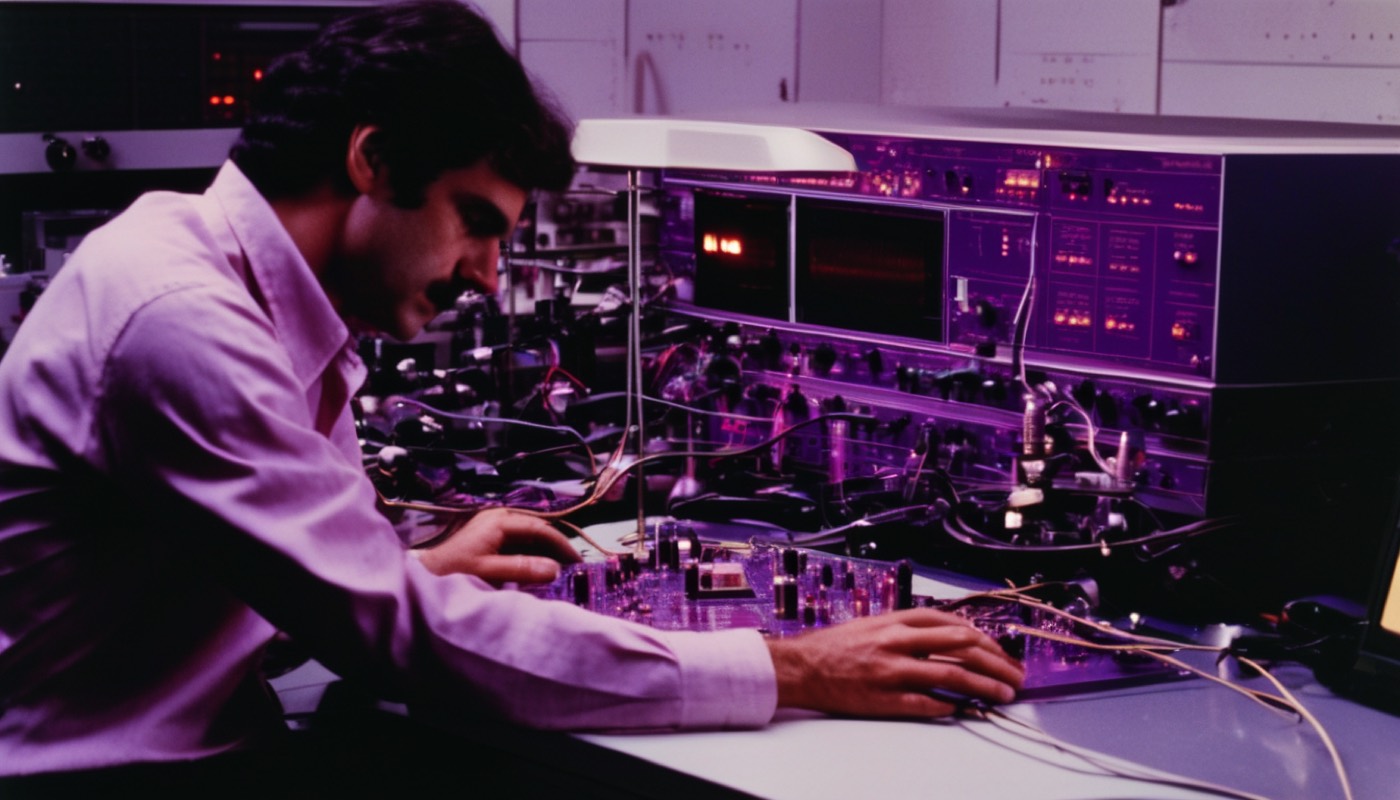
By the nineteen seventies, processors had grown complicated. They could carry out hundreds of different instructions, some of them rarely used.
In nineteen seventy-four, an IBM team led by John Cocke started asking whether most of that complexity was worth it. In nineteen eighty, they produced a prototype called the IBM eight-oh-one. It used a small set of simple instructions, each finishing very quickly.
This approach became known as RISC, short for reduced instruction set computing.
The thinking was that a simple instruction that runs fast, used over and over, beats a clever one used rarely. Doing less work per instruction let the chip run each one faster and more predictably. In nineteen ninety, IBM released the RISC System six-thousand, the ancestor of its Power servers.
RISC ideas now sit inside almost every phone and tablet, through processors designed by other companies. They came from a question an IBM team asked in the nineteen seventies.
The Arm chip designs inside most phones follow RISC ideas, and so do the processors Apple now uses in its own computers. Simple instructions, carried out quickly and with little power, turned out to suit battery-powered devices perfectly.
28. 1980s: Personal computing
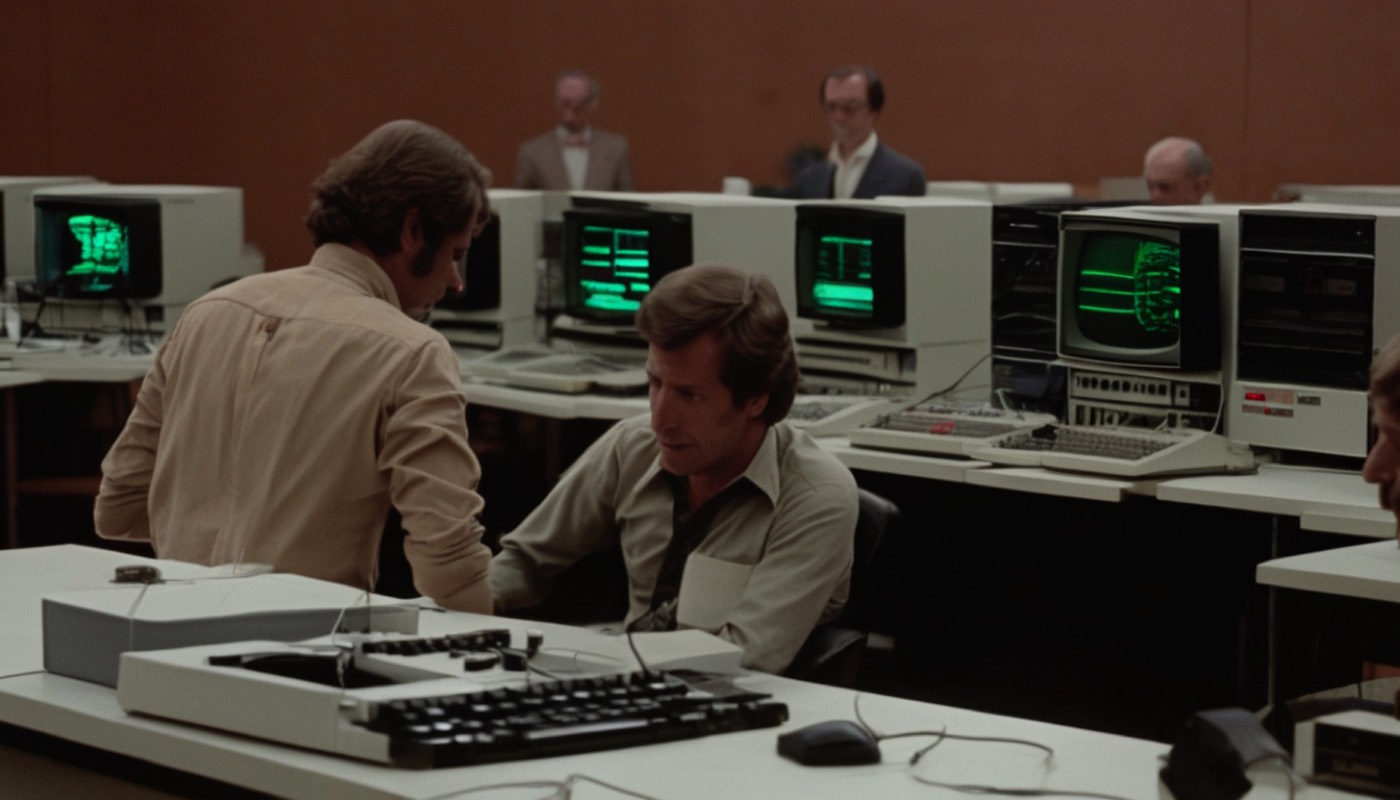
By nineteen eighty, small computers were being sold to hobbyists and schools by companies like Apple. IBM, the giant of mainframes, had nothing to offer.
IBM gave a small team in Florida about a year to build one. To move fast, they used parts anyone could buy, including an Intel eight-oh-eight-eight processor. They also published the technical details of the design. On the twelfth of August, nineteen eighty-one, IBM unveiled the Personal Computer, model five-one-five-zero.
It cost one thousand five hundred and sixty-five dollars in its basic form. It came with sixteen kilobytes of memory, and no disk drive at all.
The team was led by Don Estridge, and it worked almost like a separate company inside IBM. It was allowed to ignore IBM's usual rule of designing every part itself. Instead, it chose parts off the shelf, and it sold the PC through ordinary shops as well as through IBM's own salesmen.
The design had slots inside, so other companies could make cards that plugged in to add features. IBM published a technical reference that explained how everything fitted together. It wanted as much software and as many add-ons as possible, as fast as possible.
There was one part IBM did own: the BIOS, a small program built into the machine that starts it up and talks to its hardware. Rival companies, starting with Compaq, rebuilt their own versions of it from scratch, without copying IBM's code. With that done, they could make machines that ran exactly the same software as an IBM PC.
Spreadsheet programs turned the PC from a hobby into an office tool. Managers could change one number and watch a whole budget recalculate in front of them. Within a few years, the letters P and C had come to mean any computer of this kind, whoever made it.
The IBM PC sold fast. Within a year, more than seven hundred and fifty software packages had been written for it. At its peak, IBM said, a new retailer signed up to sell it every minute of every business day.
But the design IBM had opened up soon belonged to everybody. The machines that copied it were called IBM compatibles, and they outsold IBM. The PC made IBM famous with the public, and it made Microsoft and Intel rich.
The first PC was only the start of a family.
The PC XT of March nineteen eighty-three was the first IBM PC with a hard disk built in. The PC AT of August nineteen eighty-four used Intel's faster two-eight-six processor. A cheaper home model, the PCjr, was dropped in March nineteen eighty-five, after selling about two hundred and seventy thousand.
29. 1980s: Software
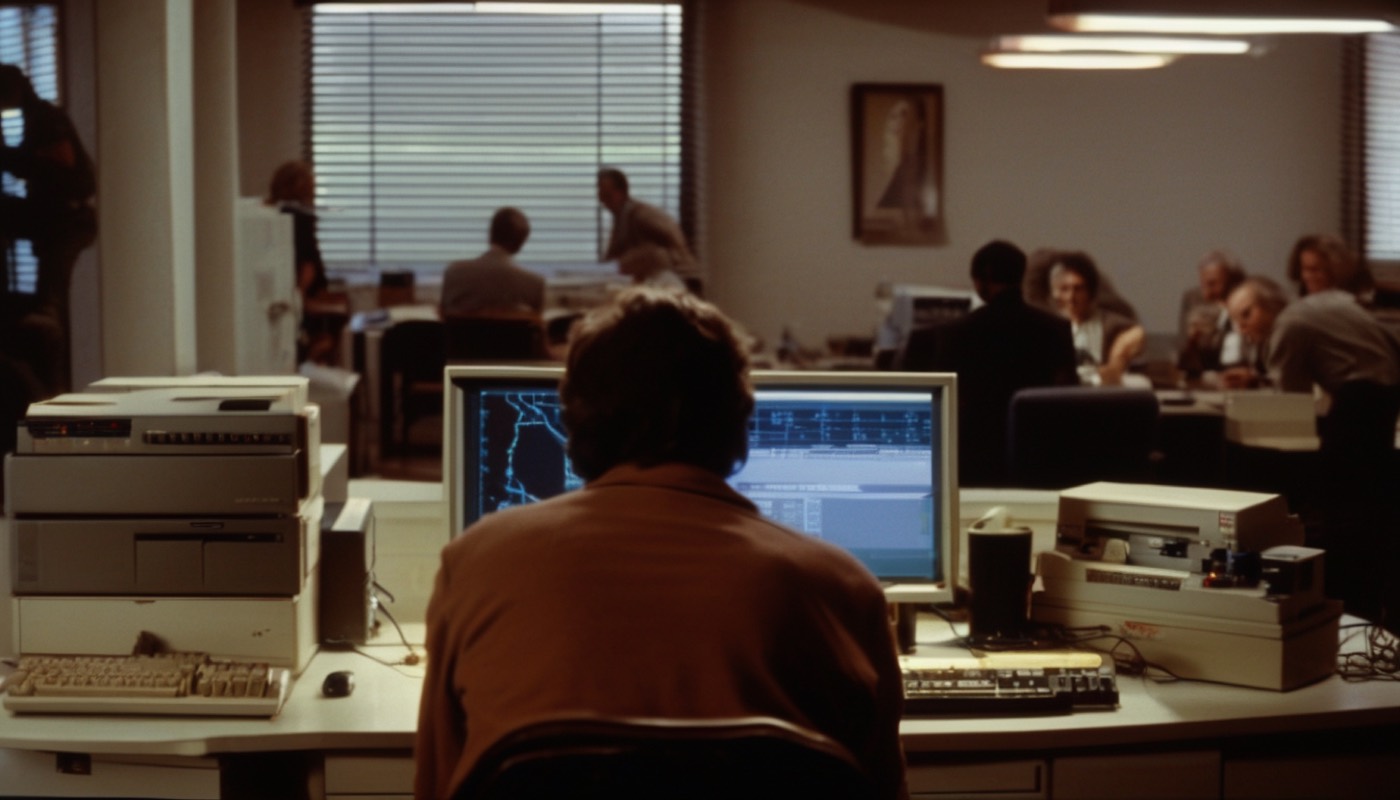
A computer is only as useful as the software that runs on it, and IBM did not write the PC's most important program itself.
The operating system came from a small company called Microsoft. Microsoft had bought the rights to an existing system for its IBM deal. Crucially, it kept the right to license that system to other manufacturers, as MS-DOS. IBM sold it under its own name, as PC DOS.
Microsoft had not written that system from nothing. In December nineteen eighty, it licensed an existing system from a small company for twenty-five thousand dollars. By the next summer, it paid fifty thousand dollars more to own it outright.
That clause changed the industry. Other companies could copy IBM's open design and buy the same operating system from Microsoft.
The operating system grew with the machines.
IBM and Microsoft kept improving PC DOS together. Version two arrived in March nineteen eighty-three, adding support for hard disks and for folders inside folders. Version three followed in nineteen eighty-four, for the PC AT. IBM's last version of PC DOS arrived in nineteen ninety-eight, updated for the new millennium.
30. 1980s: Mainframes
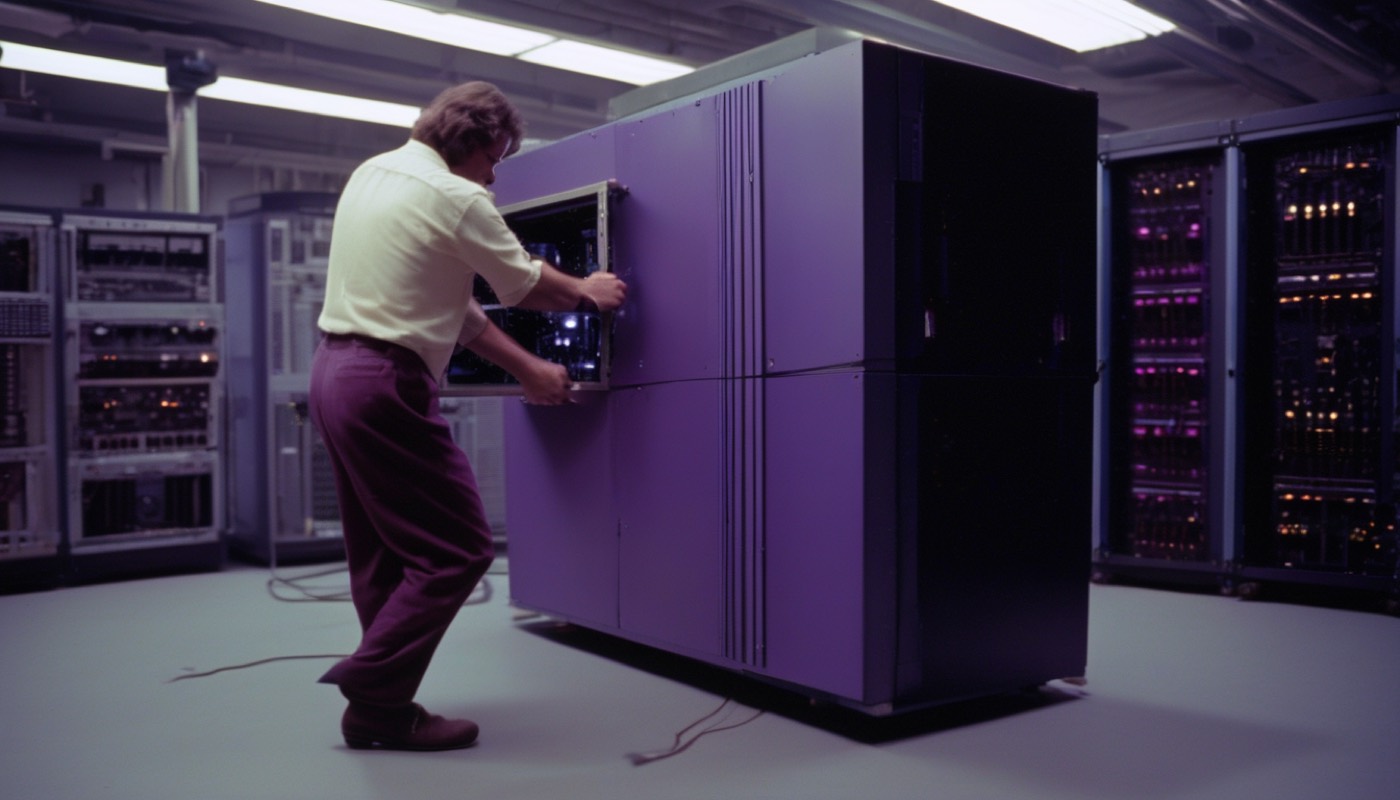
By the nineteen eighties, the largest companies ran their whole business on IBM mainframes, and they wanted more of everything.
On the twelfth of November, nineteen eighty, IBM announced the three-oh-eight-one. It packed its circuits into sealed, water-cooled modules. It could also reach far more memory than the machines before it.
Water cooling was not for show. The circuits were packed so tightly that air alone could no longer carry the heat away. The same problem, too much heat in too little space, still shapes the design of every fast computer today.
On the twelfth of February, nineteen eighty-five, IBM announced the three-oh-nine-zero. The first models had two and four processors. Scientists could add an optional vector facility, which worked through long lists of numbers at once.
31. 1980s: Business systems
Not every business needed a mainframe. Thousands of mid-sized companies wanted one reliable computer that ran their whole operation, without a large technical staff.
On the twenty-first of June, nineteen eighty-eight, IBM announced the Application System four hundred, or AS/400. Its operating system, OS/400, was at the heart of it. IBM designed it to run the programs written for its two older business machines, the System thirty-six and the System thirty-eight.
The AS/400 was built so that much of the hard work was already done for the customer.
It came with a database built into the system itself, rather than bought separately. It connected workstations, printers and other equipment out of the box. And its design let programs survive changes of hardware underneath them, so customers could upgrade without rewriting their software.
The AS/400 was renamed the iSeries in two thousand, and System i in two thousand and six. In two thousand and eight, it was folded into IBM's Power Systems line, where its operating system, now called IBM i, still runs. Many warehouses, distributors and banks still depend on it.
32. 1980s: Research
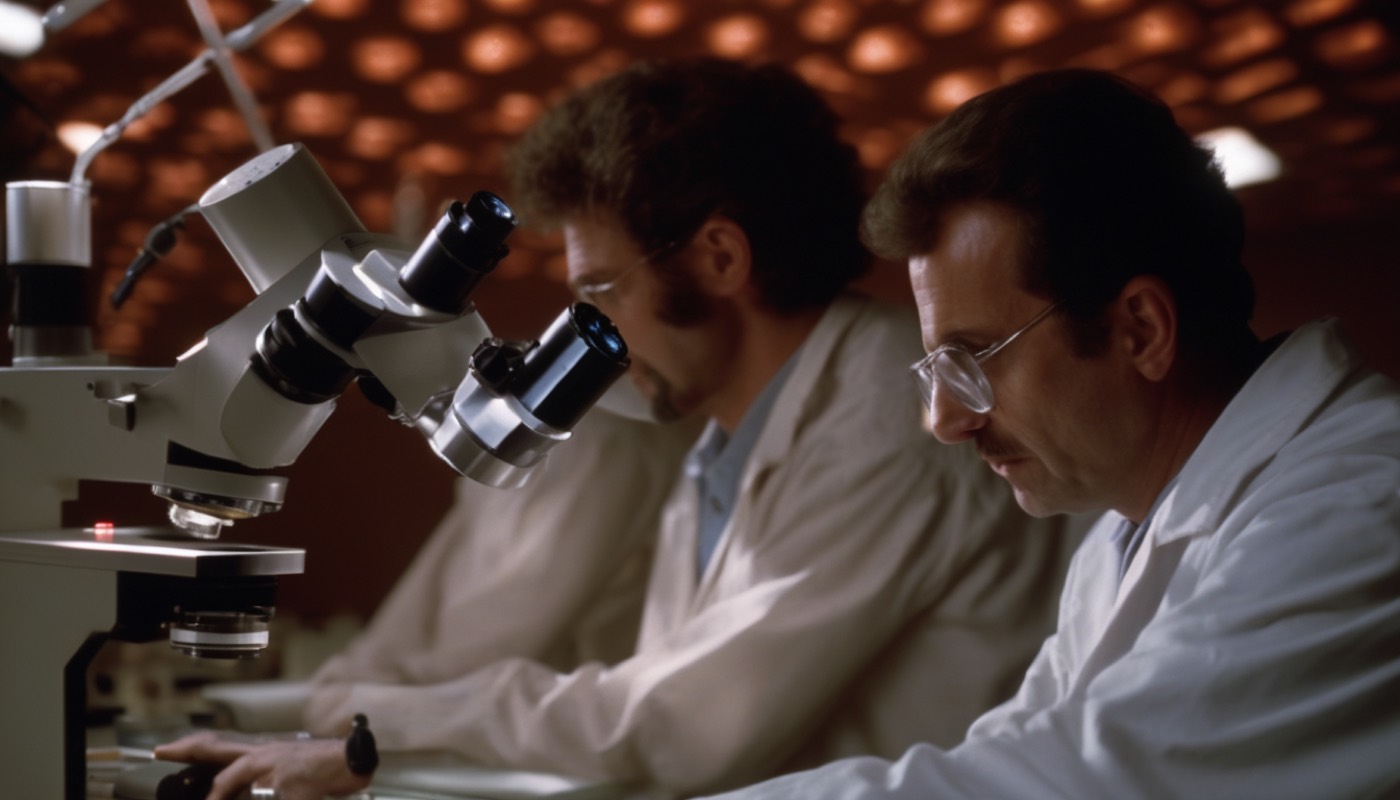
While IBM's business fought over PCs, its research laboratory in Zurich was working at the scale of single atoms.
In nineteen eighty-one, two IBM physicists, Gerd Binnig and Heinrich Rohrer, introduced the scanning tunnelling microscope. It was the first instrument that could show individual atoms on a surface. In nineteen eighty-six, they received the Nobel Prize in Physics for it.
A year later, the same laboratory won again, for a completely different discovery.
In January nineteen eighty-six, Alex Müller and Georg Bednorz revealed a ceramic that carried electricity with no resistance at thirty-five kelvin. That is far colder than anything on Earth, but warmer than any superconductor known before. They received the Nobel Prize in Physics in nineteen eighty-seven.
IBM says it was the shortest time ever between a discovery and a science Nobel. Two prizes in two years showed that IBM's research reached far beyond computers.
33. 1980s: Company
In the middle of the nineteen eighties, IBM looked unbeatable. It sold the most mainframes, the best-known PC, and a vast range of software and services.
John Akers became chief executive in nineteen eighty-five. At its peak, IBM employed about four hundred and seven thousand people. In January nineteen eighty-eight, Akers split the company into five new organisations, each far more independent than before.
The idea was to make one giant company move like a set of smaller ones. Each part would answer for its own customers and its own results.
The gamble paid off for decades. By nineteen eighty-nine, products based on the System three-sixty design and its successors made up more than half of IBM's total revenue. Its descendants still run in banks, airlines and governments today.
But that strength was also a risk. Most of IBM's profit still rested on one kind of machine, just as customers began to look at cheaper ones.
34. 1990s: Company
The nineteen nineties began with IBM letting go of one of its oldest businesses.
On the twenty-seventh of March, nineteen ninety-one, IBM completed the sale of its printer, typewriter and keyboard business for one point five billion dollars. The buyer, the investment firm Clayton and Dubilier, turned it into a new company called Lexmark. IBM's typewriter story, which began in nineteen thirty-three, was over.
By the early nineteen nineties, IBM's mainframe business was shrinking as companies moved to cheaper networks of PCs and servers. IBM had grown too big, too slow and too expensive for the market it was in.
In April nineteen ninety-three, IBM appointed an outsider as chief executive, Louis Gerstner. He came from food and financial services, not computing. On the twenty-seventh of July, nineteen ninety-three, IBM reported a loss of eight point zero four billion dollars for the second quarter alone.
The same announcement carried the human cost.
IBM said it would cut thirty-five thousand more jobs. That was on top of fifty thousand employees already gone, or committed to go, since the start of that year. It also cut its shareholder dividend again. Gerstner said: "The employees have borne an unbelievable burden."
Many expected Gerstner to break IBM up into separate companies. He decided to keep it together, and to sell customers a whole service, hardware, software and people, rather than boxes. Gerstner died in December twenty twenty-five. IBM still runs on the shape he gave it.
His reasoning was that large customers did not want to assemble computing from dozens of suppliers. They wanted one company that could make all the pieces work together. IBM's size, which had looked like its weakness, could be sold as its strength.
Gerstner also changed IBM's culture, which he later described in a book called Who Says Elephants Can't Dance. Meetings became shorter, the famous dress code was relaxed, and the company was organised around its customers rather than around its own divisions.
35. 1990s: Personal computing
By the late nineteen eighties, IBM wanted its personal computer standard back. Its plan was a new line of hardware and a new operating system, written together with Microsoft.
On the second of April, nineteen eighty-seven, IBM unveiled the PS/2 range of computers, and a new operating system for them called OS/2. It was developed jointly by IBM and Microsoft, and it was meant to replace DOS. Unlike DOS, it could run several programs at once, safely kept apart.
On paper, it was the more advanced system. In practice, Microsoft was also building Windows, and Windows three arrived in May nineteen ninety to strong sales.
OS/2 had real problems of its own. It needed more memory than most PCs had, and memory was expensive. Its early versions had no graphical desktop, and there were few programs written for it. Windows, by contrast, ran on the PCs people already owned, and ran their existing DOS programs.
In nineteen ninety-one, Microsoft began to cut its ties with IBM. One of its senior executives, Steve Ballmer, called OS/2 "a dead end". IBM carried on alone and released OS/2 Warp in November nineteen ninety-four. It was well reviewed, but Windows already had the market.
OS/2 lived on for years inside banks and cash machines, where reliability mattered more than popularity. On the desktop, the operating system that mattered now belonged to Microsoft.
In the early nineteen nineties, IBM also built a new kind of portable computer.
In October nineteen ninety-two, IBM announced the ThinkPad, named after Watson's old motto. The first model, the seven-hundred C, had a ten point four inch colour screen, large for its day. In the middle of the keyboard sat a small red rubber nub, used to move the pointer.
The black ThinkPad, with its red nub, became one of the best-known laptops ever made. IBM would sell it, too, in time.
36. 1990s: Mainframes
At the start of the nineteen nineties, many people expected networks of cheap PCs and servers to replace the mainframe altogether.
On the fifth of September, nineteen ninety, IBM announced the System three-ninety. It could connect to other equipment over fibre-optic cables. From nineteen ninety-four, a new line moved the family fully onto CMOS chips, the same kind of chip used in PCs.
The older mainframes used a kind of chip that was very fast, but hot and expensive to make. CMOS chips used far less power and cost far less to produce. Moving to them let IBM build mainframes much more cheaply, and customers needed far less cooling.
It also became easier to link several mainframes so that they shared the work, as if they were one machine. If one stopped, the others carried on. That kind of resilience is a large part of why banks kept them.
37. 1990s: Deep Blue
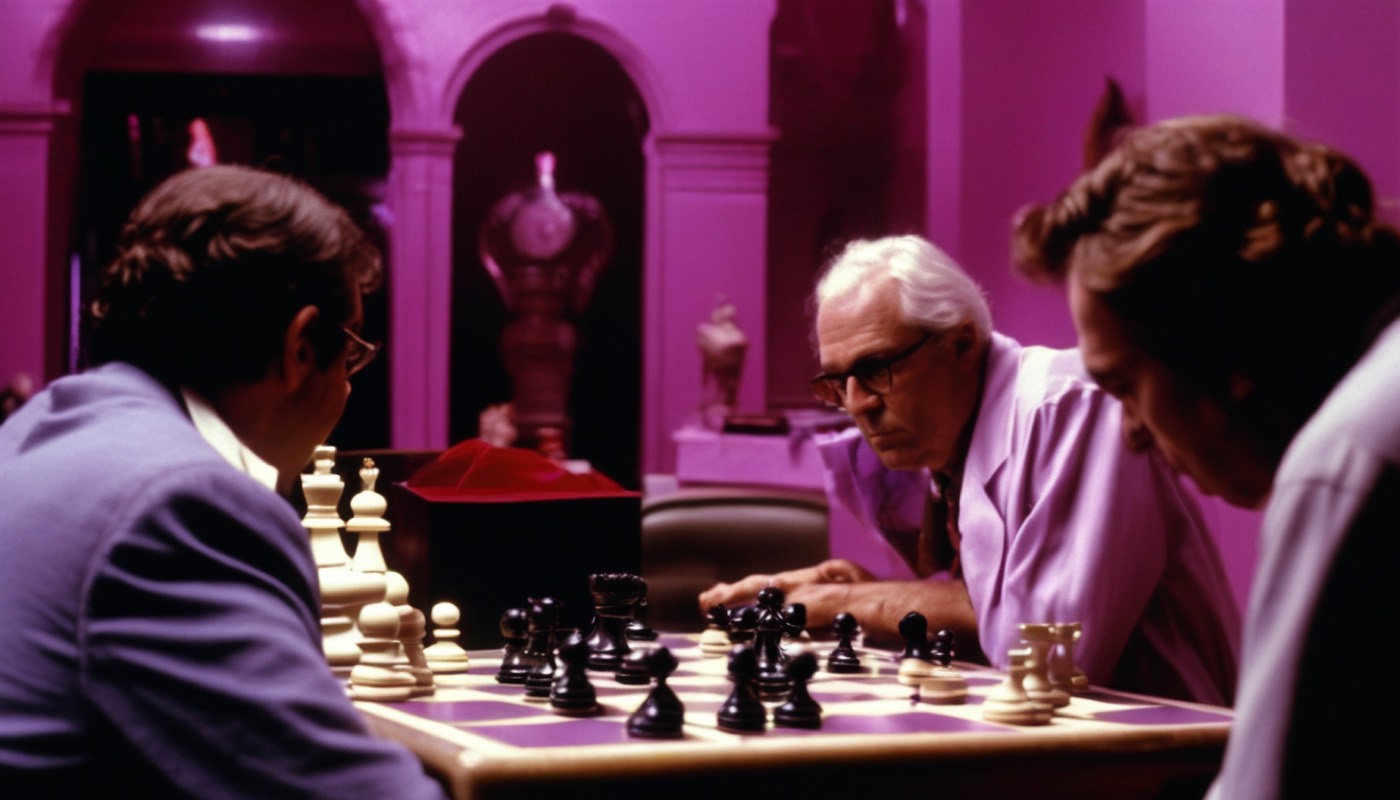
In the nineteen nineties, IBM set out to prove a point about computing power, in public, against the world chess champion.
In February nineteen ninety-six, IBM's Deep Blue played the world champion, Garry Kasparov. It won the first game, the first time a computer had beaten a reigning world champion under normal tournament time controls. But Kasparov won the match, four games to two.
IBM rebuilt the machine and asked for a rematch. It came fifteen months later, in New York.
In May nineteen ninety-seven, Deep Blue beat Kasparov by three and a half games to two and a half. It used thirty-two processors. It could evaluate two hundred million chess positions every second. Kasparov said: "For the first time in the history of mankind, I saw something similar to an artificial intellect."
Deep Blue did not think like a person. It searched, very fast, through more positions than any human could. But the match showed the public that computers could beat people at tasks once seen as purely human.
Deep Blue used hundreds of special chips designed only for chess. Each move it considered was followed many moves ahead, and each resulting position was given a score by a formula. Grandmasters helped IBM tune that formula between the two matches.
After the rematch, Kasparov suggested that humans had helped the machine during play. IBM denied it, and retired Deep Blue soon afterwards, without a third match. Chess programs on ordinary laptops now play far better than Deep Blue did.
38. 1990s: Research
Deep Blue was IBM's public face in the late nineteen nineties. Behind it, IBM's engineers were changing what went inside almost every computer.
On the twenty-second of September, nineteen ninety-seven, IBM announced it could make chips wired with copper instead of aluminium. Copper carries electricity with about forty per cent less resistance. IBM said that made processors about fifteen per cent faster.
The wires inside a chip are far thinner than a hair, and there are millions of them. Making them out of a better conductor lets the whole chip run faster and cooler.
The same year brought a change to hard drives.
In November nineteen ninety-seven, IBM announced a drive with a new kind of read head, based on an effect called giant magnetoresistance. Its electrical resistance changes sharply in a magnetic field, so it can sense far fainter signals. That lets data be packed much more tightly on the disk.
The first drive to use it held sixteen point eight gigabytes. Heads of this kind drove the huge rise in disk capacity that followed.
39. 2000s: Company
At the turn of the century, IBM made a bet that surprised the industry. It backed free, open-source software that it did not own.
In December two thousand, IBM said it would invest one billion dollars in Linux the following year. Linux is a free operating system that anyone can use and change. In two thousand and two, IBM agreed to sell its hard disk drive business to Hitachi, for two point zero five billion dollars. The company that had invented the hard disk no longer made them.
IBM was keeping the work where it could stay ahead, and selling what was turning into a commodity.
In July two thousand and two, IBM agreed to buy PwC Consulting, the consulting arm of the accounting firm PricewaterhouseCoopers. The price was three point five billion dollars, in cash and shares. About thirty thousand consultants and staff joined IBM.
It was the clearest sign yet of where Gerstner's plan was heading. IBM would earn more and more by advising customers and running their systems, and less by selling them boxes.
40. 2000s: Personal computing
The personal computer had made IBM a household name. By the early two thousands, it made very little money.
In March two thousand and two, Sam Palmisano became IBM's chief executive. On the first of May, two thousand and five, IBM completed the sale of its personal computer division to the Chinese company Lenovo. The price was one point two five billion dollars, part cash and part Lenovo shares.
Lenovo also took on about five hundred million dollars of the division's debts. IBM kept a stake of eighteen point nine per cent in Lenovo.
With the deal, Lenovo got the ThinkPad and the right to use the IBM name on PCs for a time. IBM stopped making the machine that had carried its name into homes and offices around the world. It kept the servers, the software and the consulting, where the profits were.
Twenty-four years after the IBM PC was unveiled, IBM had left the business it created.
41. 2000s: Mainframes
In the year two thousand, the mainframe took its biggest step since the System three-sixty. It also took a new name.
On the third of October, two thousand, IBM announced the z nine hundred. It brought the family to sixty-four-bit computing, and gave it the letter z. The z nine followed in two thousand and five. In February two thousand and eight, IBM announced the z ten.
Sixty-four-bit means the computer can handle much larger numbers in one step, and reach vastly more memory. For banks running millions of accounts at once, that room mattered more than raw speed.
IBM said the z ten had half as much performance again as the model before it. Its processors ran at four point four gigahertz, a very high speed for any chip at the time.
42. 2000s: Research
In the two thousands, IBM's research chased two very different kinds of speed: more work from a single chip, and more chips working together.
In October two thousand and one, IBM launched the POWER4 processor. It put two complete processor cores on a single chip, which IBM describes as an industry first. Almost every processor made today has several cores.
A core is a complete processor in its own right. Putting two on one chip let a computer work on two things at once, without needing two separate chips.
IBM also kept building the fastest computers of all. In November two thousand and four, IBM's Blue Gene L took first place on the world list of the fastest supercomputers. It ran at seventy point seven two trillion calculations a second, and stayed at number one for three years.
Blue Gene was built from many thousands of small, low-power processors working together, rather than a few huge ones. Most of the world's fastest computers are built that way today.
43. 2010s: Watson
After chess, IBM looked for a harder public test. Chess has fixed rules. Ordinary human language, full of puns, hints and double meanings, does not.
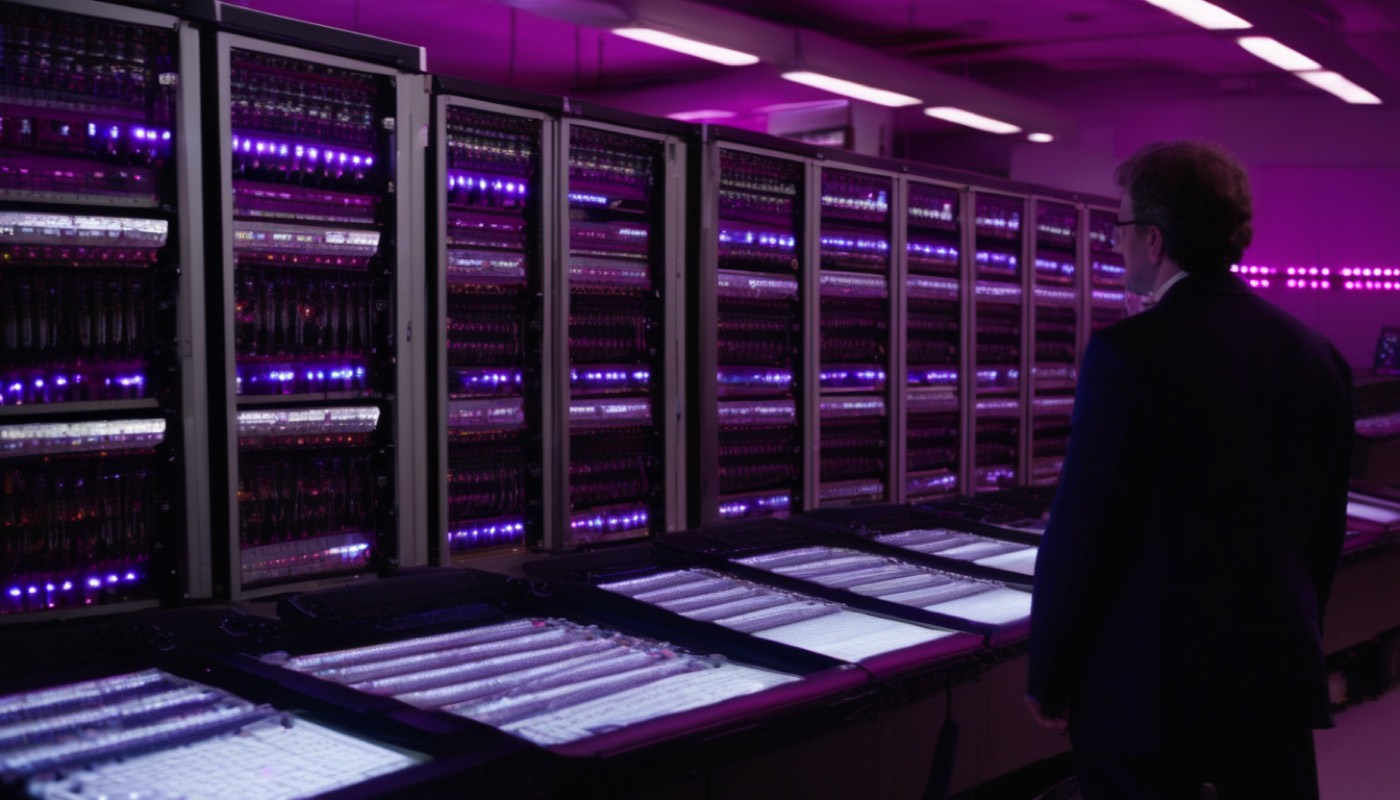
The Watson project began in two thousand and six, when an IBM researcher, David Ferrucci, proposed building a machine to play the American quiz show Jeopardy. His team spent five years on it. The finished system filled a room: ten racks holding ninety servers, with 2,880 processor cores.
Watson was not connected to the internet during the game. Everything it knew had been loaded into it beforehand.
Here is how Watson answered a question. It broke the clue apart and ran hundreds of different methods at once, each proposing possible answers. It then searched its stored text for evidence for and against each one, and gave every answer a confidence score. Only if the top score was high enough did it press the buzzer, all within about three seconds.
The match was broadcast over three days in February twenty eleven. Watson played two of the show's greatest champions, Ken Jennings and Brad Rutter.
Watson finished with seventy-seven thousand, one hundred and forty-seven dollars. Jennings had twenty-four thousand dollars, and Rutter twenty-one thousand, six hundred. Under his final answer, Jennings wrote: "I, for one, welcome our new computer overlords".
IBM turned Watson into a business, selling it to banks, hospitals and call centres. In twenty twelve, Ginni Rometty became chief executive, and she made Watson the centre of IBM's strategy. Its hardest test was medicine.
Turning a quiz champion into a product proved much harder than winning the quiz. Jeopardy clues have one right answer, and Watson had been tuned for years on that one task. Each new business problem needed its own data, its own training and a great deal of expensive expert work.
Watson was also sold with very high expectations. Customers were told it could read medical research and help choose cancer treatments. Doing that reliably, in the messy conditions of a real hospital, was a far harder problem than the one it had solved on television.
Healthcare proved far harder than a quiz show. Medical records are messy, and doctors need reasons, not just answers. On the thirtieth of June, twenty twenty-two, IBM completed the sale of its Watson Health data and analytics products to the investment firm Francisco Partners. They became a new company, called Merative.
The Watson name lived on at IBM, and it would return, rebuilt, in a new generation of artificial intelligence.
44. 2010s: Company
In twenty fourteen, IBM made two more decisions about the hardware it had spent a century building.
In January twenty fourteen, IBM agreed to sell its business in everyday x86 servers to Lenovo, for about two point three billion dollars. These were the standard servers that fill most data centres. In October twenty fourteen, IBM agreed to pay GlobalFoundries one point five billion dollars to take over its chip manufacturing.
IBM paid another company to take its chip factories. It showed how expensive it had become to keep up in making chips.
IBM kept designing its own processors, for its mainframes and Power servers, and kept its chip research. It let specialists manufacture them. The company that had invented the hard disk, DRAM and RISC now made far fewer of the physical parts itself.
The business was becoming software, services and research, wrapped around a small number of very specialised machines.
In the late twenty-tens, most companies were moving their computing to cloud services run by Amazon, Microsoft and Google. IBM had no chance of catching up in that race directly.
Instead, IBM bought Red Hat, the best-known company built on open-source software. The deal closed on the ninth of July, twenty nineteen, for about thirty-four billion dollars. Red Hat's software lets a company run the same programs on its own servers and on any public cloud. IBM calls that mix hybrid cloud.
It was the largest purchase in IBM's history.
45. 2010s: Mainframes
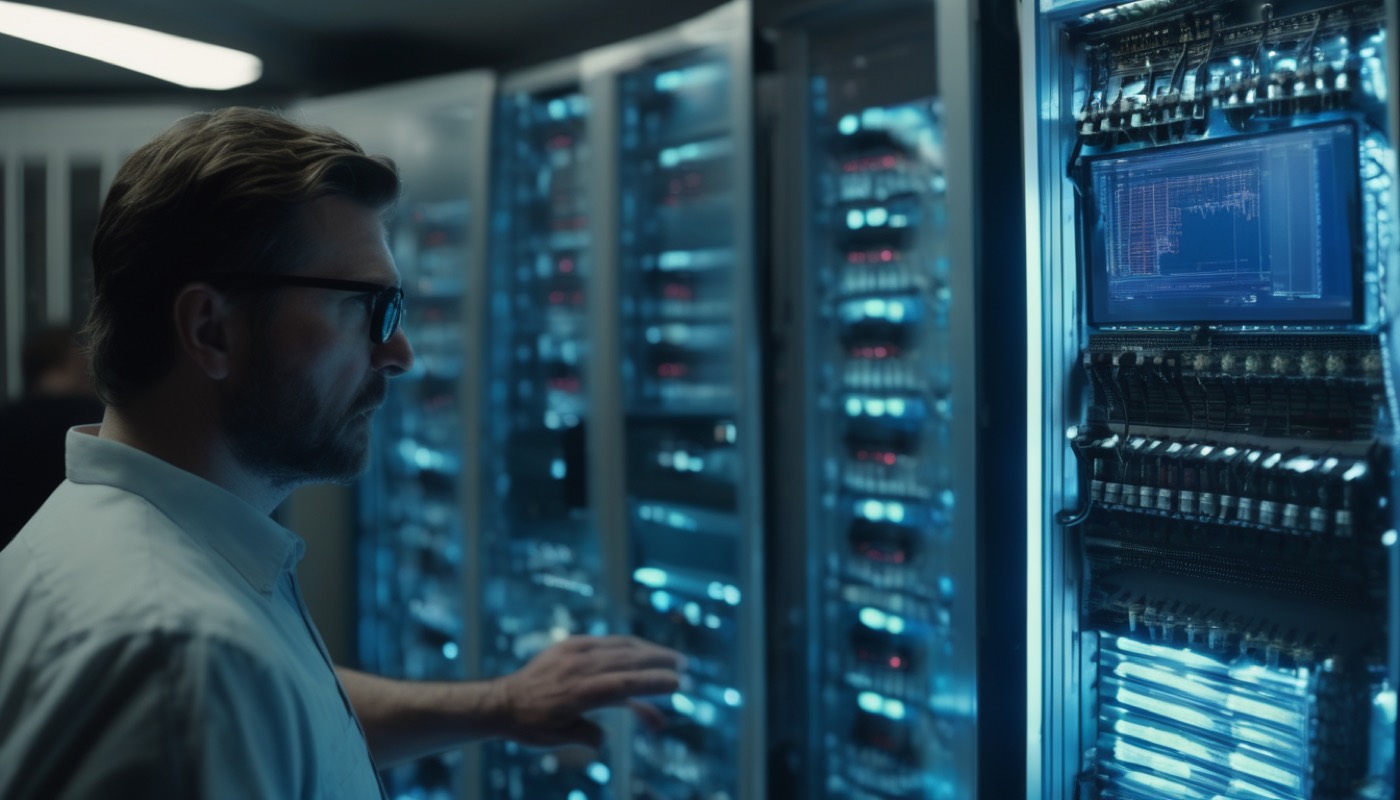
In the twenty-tens, the mainframe had to answer a new question. Could it keep a customer's data safe, as well as process it?
In August twenty twelve, IBM announced the zEC12. The z thirteen followed in January twenty fifteen. In twenty fifteen, IBM also launched LinuxONE, mainframes that run only the free Linux operating system.
In July twenty seventeen, IBM launched the z fourteen, which could encrypt all of a customer's data, all of the time. On the twelfth of September, twenty nineteen, IBM announced the z fifteen. IBM said one z fifteen could process a trillion web transactions a day.
Encryption scrambles data, so only someone with the right key can read it. Doing it everywhere, all the time, used to slow computers down too much. Building it into the chip made it cheap enough to leave switched on.
46. 2010s: Research
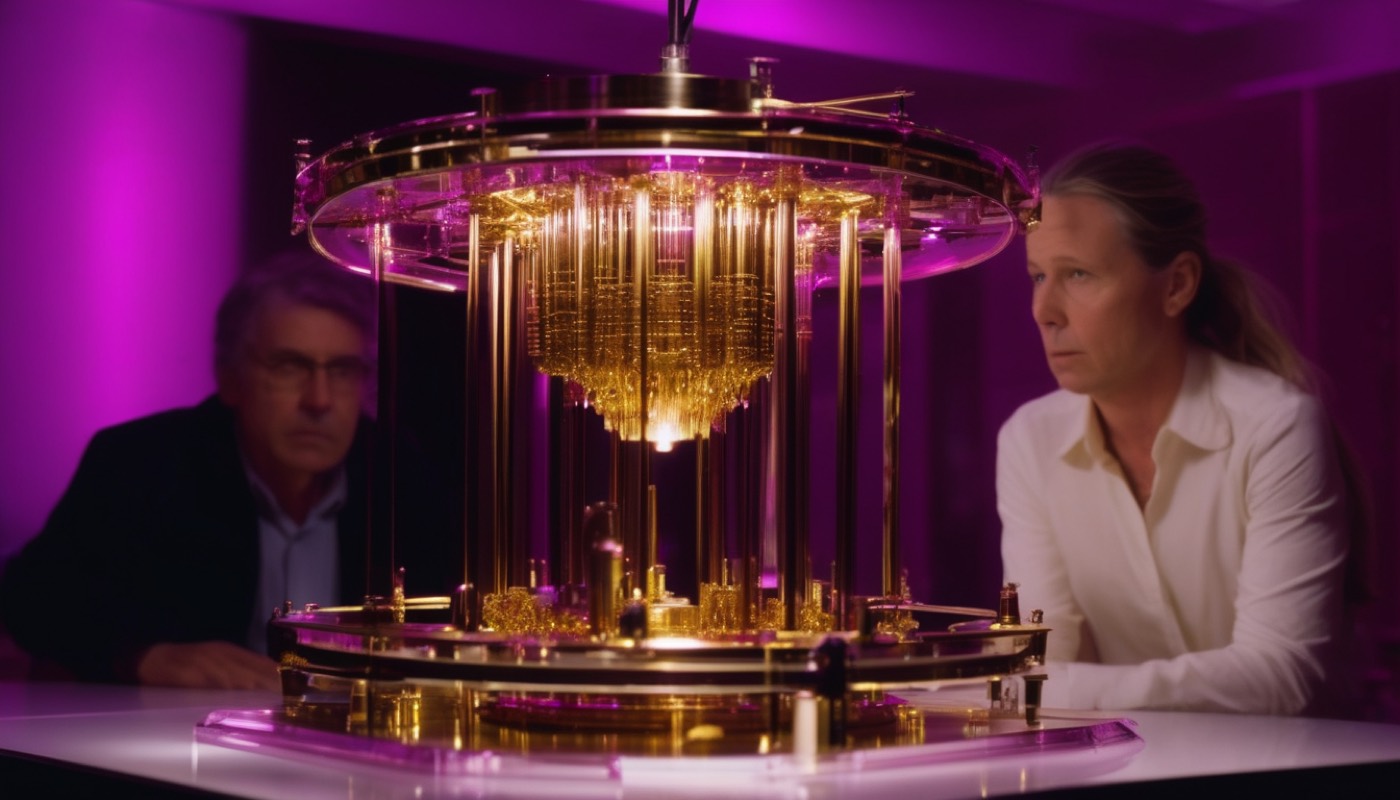
Ordinary computers store information as bits, each one either a one or a zero. A quantum computer uses qubits, which follow the rules of quantum physics.
A qubit can be in a mix of one and zero at the same time, called a superposition. Qubits can also be linked, so that measuring one tells you about another; this is called entanglement. For some problems, such as simulating molecules, these effects could let a quantum computer find answers that no ordinary computer could reach in any reasonable time.
Qubits are extremely fragile. IBM's are tiny superconducting circuits, cooled to a fraction of a degree above absolute zero.
Each qubit is controlled with short pulses of microwaves, sent down cables from electronics outside the fridge. The fridge itself is a tall gold-coloured structure of stacked plates, each colder than the one above it. At the bottom sits the chip, colder than outer space.
Heat, vibration or stray radio waves can knock a qubit out of its delicate state in a fraction of a second. That loss is called decoherence. Every calculation has to finish before it happens, which is why error correction matters so much.
On the fourth of May, twenty sixteen, IBM put a five-qubit quantum computer on the cloud, open to anyone. For the first time, people outside a laboratory could run their own programs on real qubits.
IBM still builds some of the fastest computers in the world, and it still does basic research into how chips are made.
In June twenty eighteen, Summit, a supercomputer IBM built for a US government laboratory, became the fastest in the world. It ran at one hundred and twenty-two point three petaflops. A petaflop is a thousand trillion calculations a second.
Machines like Summit model the climate, design new materials and simulate nuclear physics. They are built from thousands of processors working on one problem together.
47. 2020s: Company
The twenty-twenties began with a new leader, and another split.
On the sixth of April, twenty twenty, Arvind Krishna became chief executive. On the third of November, twenty twenty-one, IBM spun off its large business running other companies' computer systems as a separate company, Kyndryl.
Kyndryl's shares went to IBM's own shareholders, one for every five IBM shares they held. Krishna said: "The separation of Kyndryl is one of many actions we are taking to sharpen our focus on hybrid cloud and AI."
Once again, IBM had cut away a large part of itself, to put its money on what it thought came next.
48. 2020s: Mainframes
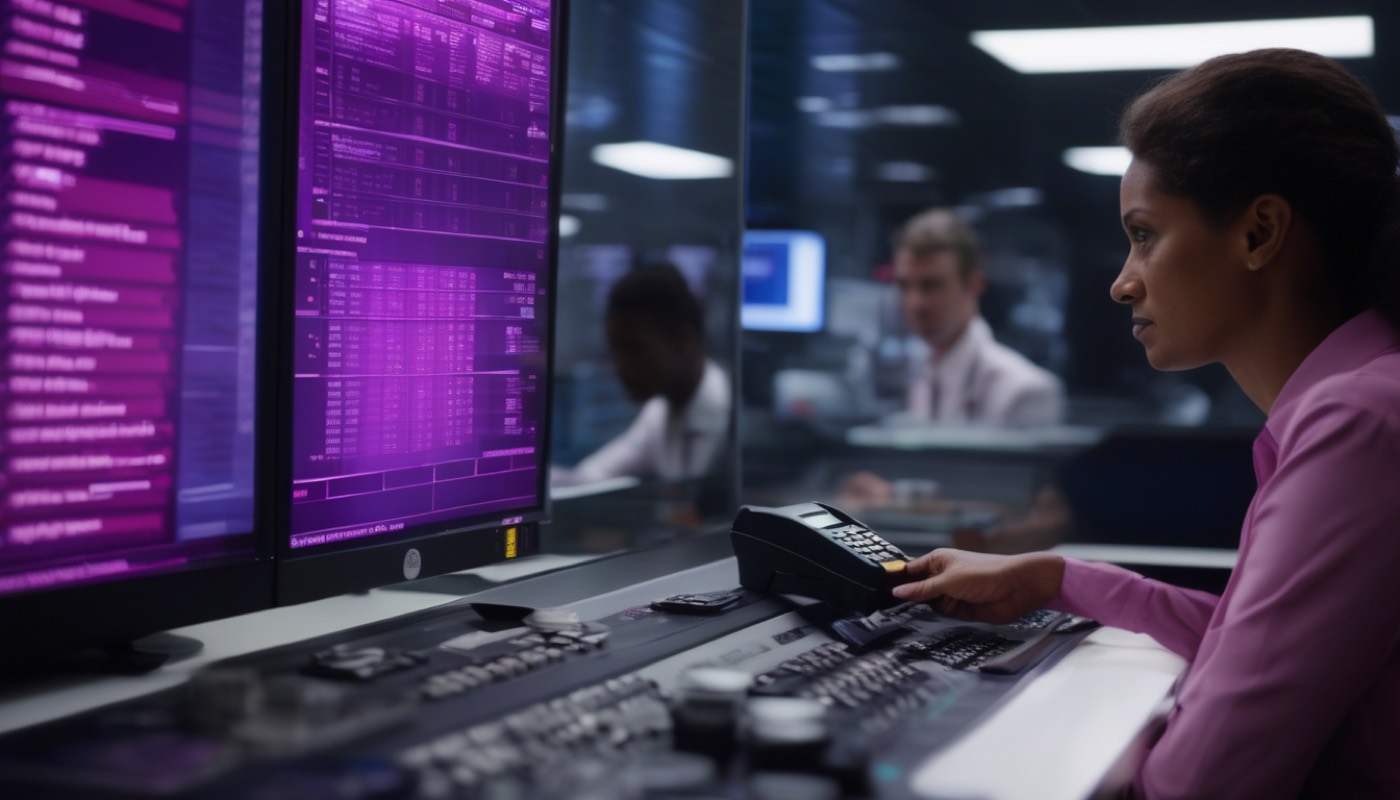
For decades, commentators predicted the end of the mainframe. IBM kept building them, and the biggest banks, airlines and card networks kept buying.
On the fifth of April, twenty twenty-two, IBM announced the z16. Its Telum processor included a part built just for artificial intelligence. That lets the machine check each card payment for fraud while it is being processed. IBM said it could handle three hundred billion such checks a day.
An AI check of this kind is called inference: using a trained model to make a judgement about new data.
The reason banks still use mainframes is not nostalgia. A mainframe is built to process huge numbers of small transactions, such as card payments, without ever stopping. Parts can be replaced while it is running, and many run for years without being switched off. For a bank, an hour of downtime can cost more than the machine.
In twenty twenty-two, IBM said its mainframes handled seventy per cent of the world's transactions, measured by value. That figure comes from a study IBM paid for, so it is IBM's own claim rather than an independent count. Large banks, card networks and airlines are still among the mainframe's biggest customers.
On the eighth of April, twenty twenty-five, IBM announced the z17, with a new Telum Two processor. IBM said it could run more than four hundred and fifty billion inference operations a day, half as many again as the z16. In August twenty twenty-six, IBM showed its next mainframe processor. It combines IBM's own mainframe design with Arm, the design used in most phones, on one chip.
Every one of these machines can still run programs written for the System three-sixty of nineteen sixty-four. The promise of compatibility, made more than sixty years ago, has never been broken.
49. 2020s: Chips
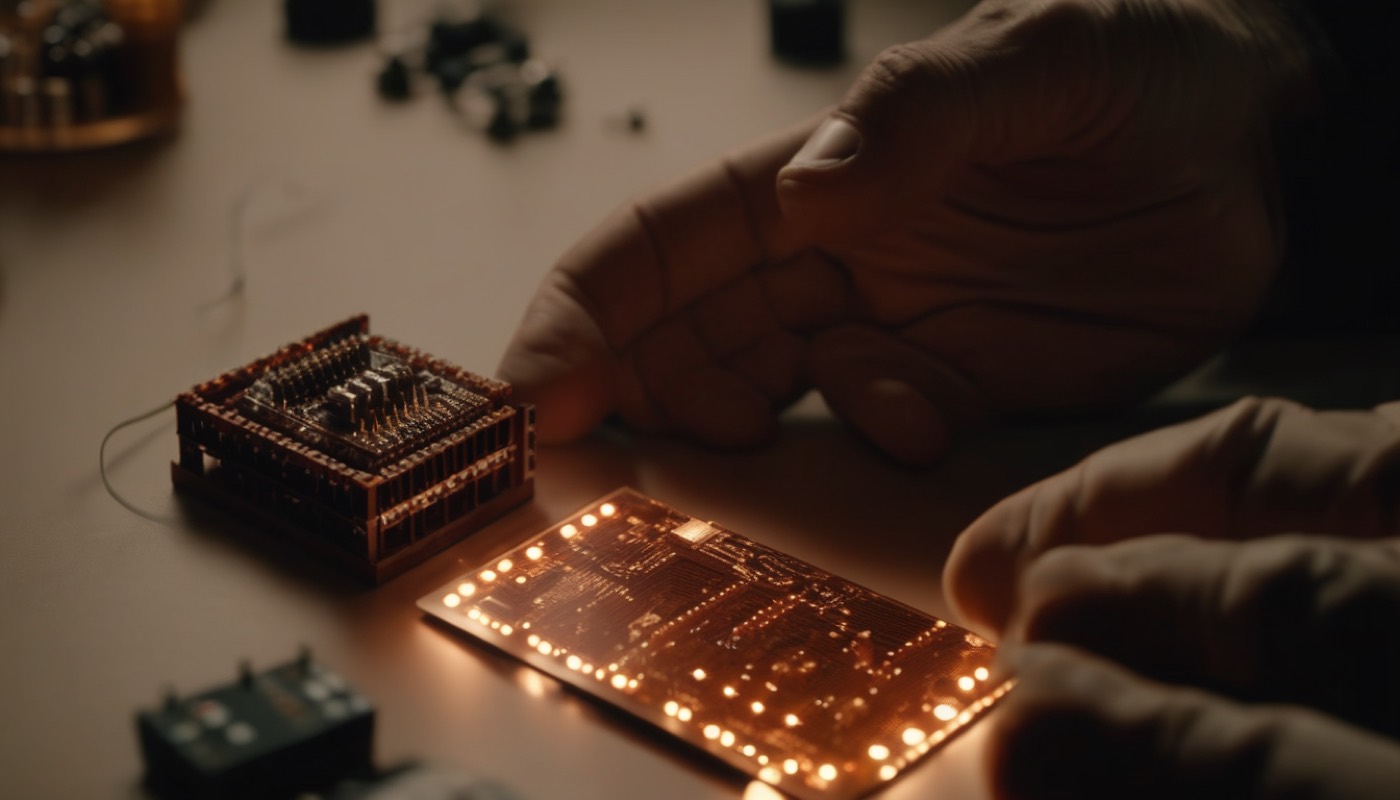
In the twenty-twenties, IBM's research turned to the chip itself: how small its parts could be made, and how it should be laid out.
On the sixth of May, twenty twenty-one, IBM Research unveiled a new chip technology. It was the first at two nanometres, a measure of how finely a chip's parts are made. IBM said it could fit fifty billion transistors on a chip the size of a fingernail.
Compared with the most advanced chips of the time, IBM said it could run forty-five per cent faster, or use seventy-five per cent less energy. IBM no longer manufactures chips in volume, so it works with chipmakers to put its research into production.
Chip research at IBM is not only about making parts smaller. Some of it asks whether a chip should be arranged differently in the first place.
In twenty twenty-three, IBM Research described NorthPole, a chip built to run trained AI models. It is made on an older, twelve-nanometre process, with twenty-two billion transistors. Yet on the tasks it was designed for, IBM reported that it beat chips made on far newer processes.
The reason is where it keeps its memory.
Most AI chips spend much of their time waiting for data to arrive from separate memory chips. NorthPole has no separate memory. Each of its two hundred and fifty-six cores keeps its own memory right beside it, so the data never has to leave the chip.
The speed-ups IBM reports for NorthPole are its own measurements, and no independent test has yet confirmed them. But Summit, the two-nanometre chip and NorthPole all show a company still doing basic hardware research, even as most of its income now comes from software.
50. 2020s: Software
IBM's software business now makes more money than any other part of the company. It has grown by building, and by buying.
On the ninth of May, twenty twenty-three, IBM unveiled watsonx, a platform for businesses to build and run their own AI models. The Watson name had returned, rebuilt for a new kind of artificial intelligence. In February twenty twenty-five, IBM completed its purchase of HashiCorp, whose tools manage cloud computing, for six point four billion dollars.
The next purchase was even larger, and it was about data.
In December twenty twenty-five, IBM agreed to buy Confluent, for about eleven billion dollars. Confluent's software moves data between systems the moment it changes, rather than in batches. The deal was completed on the seventeenth of March, twenty twenty-six.
At its Think conference in May twenty twenty-six, IBM said the age of AI agents, programs that carry out tasks on their own, had arrived. The company that began by counting cards now sells software that decides what to do with the data.
51. 2020s: Quantum computing
In the twenty-twenties, IBM's quantum processors grew quickly, and then changed direction.
In twenty twenty-one, IBM unveiled Eagle, with one hundred and twenty-seven qubits. Osprey followed in twenty twenty-two, and Condor in twenty twenty-three. In November twenty twenty-five, it unveiled Nighthawk, with more connections between its qubits.
More qubits is not the whole story. Errors pile up quickly, so IBM moved its focus from counting qubits to making them more accurate.
Here is the count along the way. Eagle had one hundred and twenty-seven qubits. Osprey had four hundred and thirty-three. Condor reached one thousand, one hundred and twenty-one. The Heron processor of twenty twenty-three had fewer, one hundred and thirty-three. By IBM's measure, it performed three to five times better than Eagle.
IBM's biggest bet on the future is the quantum computer, and it has put dates on it.
On the tenth of June, twenty twenty-five, IBM announced Starling, a quantum computer it says will correct its own errors. It is due by twenty twenty-nine, at a new IBM data centre in Poughkeepsie, New York. IBM says it will have two hundred logical qubits, and run one hundred million operations.
A logical qubit is not one physical qubit. It is many physical qubits working together, checking each other so errors can be caught and corrected.
IBM's plan depends on a newer kind of error-correcting code. IBM says it needs far fewer physical qubits for each logical qubit than older methods. If that holds up at scale, a useful quantum computer could be much smaller than once thought.
On the second of June, twenty twenty-six, IBM made its largest quantum commitment yet. It promised more than ten billion dollars over the next five years. Krishna said: "The quantum era is no longer ahead of us, it has started." In August twenty twenty-six, IBM completed its purchase of HRL Laboratories, a research lab working on new kinds of qubits.
In July twenty twenty-six, IBM and its partners published results they say show quantum advantage: a quantum computer beating any classical method on a useful problem.
Those claims are still being tested by other researchers. At least one team has already argued that a classical computer can match part of the result. Twenty twenty-nine has not happened yet, and Starling is still a plan. IBM's dates are targets, not achievements.
If Starling arrives, it will be the biggest change in how IBM computes since the System three-sixty. If it does not, it will be one of the most expensive bets IBM has made.
52. Today: What IBM counts now
More than a hundred and thirty years after Hollerith's census machine, IBM is still counting. What it counts has changed.
In IBM's latest quarter, ending in June twenty twenty-six, revenue was seventeen point one six billion dollars. That was up one per cent. Software brought in seven point seven six billion dollars, up five per cent. Consulting brought in five point three three billion dollars, the same as a year earlier. Infrastructure, the hardware including mainframes, brought in three point eight four billion dollars, down seven per cent.
The machines IBM is famous for now make up less than a quarter of its revenue.
Look back across the whole story, and the pattern repeats. IBM sold the typewriter, the printer, the hard disk, the PC and the everyday server. It invented much of what it sold, and then let it go when it became ordinary. Each time, it moved to the harder, more specialised thing that came next.
Some of those moves nearly broke the company. Some, like opening up the PC, made others rich. But the company that counted a census on punched cards is still here, betting on the atom.
Sources and credits
Primary sources
- McCormick, D.W. and Spee, J.C., 'IBM and Germany 1922-1941', Organization Management Journal 5(4), 2008.
- IBM FY2025 Form 10-K (headcount at 31 Dec 2025). Wikipedia used only for the AS/400 announcement day and later names (marked on screen).
Not regulated financial advice.