
Novell, a Timeline
In the early 1990s, if an office had its personal computers joined together, the odds were that Novell's NetWare was doing the joining. This video follows Novell from its first day to September 2026.
Novell Data Systems began in Orem, Utah - in August 1980 according to the press of the time, 1979 according to later histories - as a maker of small computers, and nearly failed. In 1983 Ray Noorda took over and bet the company on software written by three young consultants: a file server that let a room of PCs share files and printers. NetWare, IPX and the Certified NetWare Engineer programme gave Novell 53% of the market by IDC's 1988 count and 70% by 1993.
Then the buying spree: Digital Research (1991), Unix System Laboratories from AT&T (1993), and WordPerfect with Quattro Pro (1994), announced at $1.4 billion and worth about $855 million by the time it closed. Microsoft's Windows NT took the server market, Microsoft Office took the suite market, and in 1996 WordPerfect went to Corel for at least $185 million including royalties.
Eric Schmidt's rescue (1997-2001), the Linux turn with Ximian and SUSE (2003-04, $210 million in cash and $50 million from IBM), the 2006 pact with Microsoft ($348 million) and the long fight with SCO over who owned Unix, won by Novell before a jury on 30 March 2010. On 27 April 2011 Attachmate completed its purchase for about $2.2 billion, and 882 patents went to a group led by Microsoft - changed first by the US Justice Department.
And the afterlife: Micro Focus (2014), OpenText (2023), and SUSE's own road through EQT, the Frankfurt stock exchange and, in March 2026, a reported sale that could value it at up to about $6 billion.
No figure appears without its date and source.
Educational documentary. Not financial or investment advice.
In these topics
Chapters
Video notes
1. The network in every office
In the early nineteen nineties, if an office had its personal computers joined together, the odds were that Novell's software was doing the joining. That software was called NetWare. It let a room full of separate machines share the same files and the same printers, as if they were one system.
Network World put NetWare's share of the network software market at over seventy per cent during the nineteen nineties. The man who built the company, Ray Noorda, took it from fewer than twenty staff to more than twelve thousand.
Today the name has almost gone. Novell stopped being an independent company in April twenty eleven, when a software firm called Attachmate completed its purchase for about two point two billion dollars.
The chain on screen shows where Novell went after that. Attachmate merged into a British company, Micro Focus, and Micro Focus was later bought by the Canadian firm OpenText. Novell's Linux business, SUSE, took a different road, and today it belongs to an investment firm called EQT.
So how did the company that networked the world's offices lose that position, and what became of what it made?
This video follows Novell from a struggling hardware maker to its sale, and then follows what was left. It covers the network software that made the company, and the buying spree that nearly broke it. It covers the long contest with Microsoft, and it ends with where Novell's products stand in September twenty twenty-six.
2. Novell Data Systems
Novell began as a hardware company, and not a very successful one.
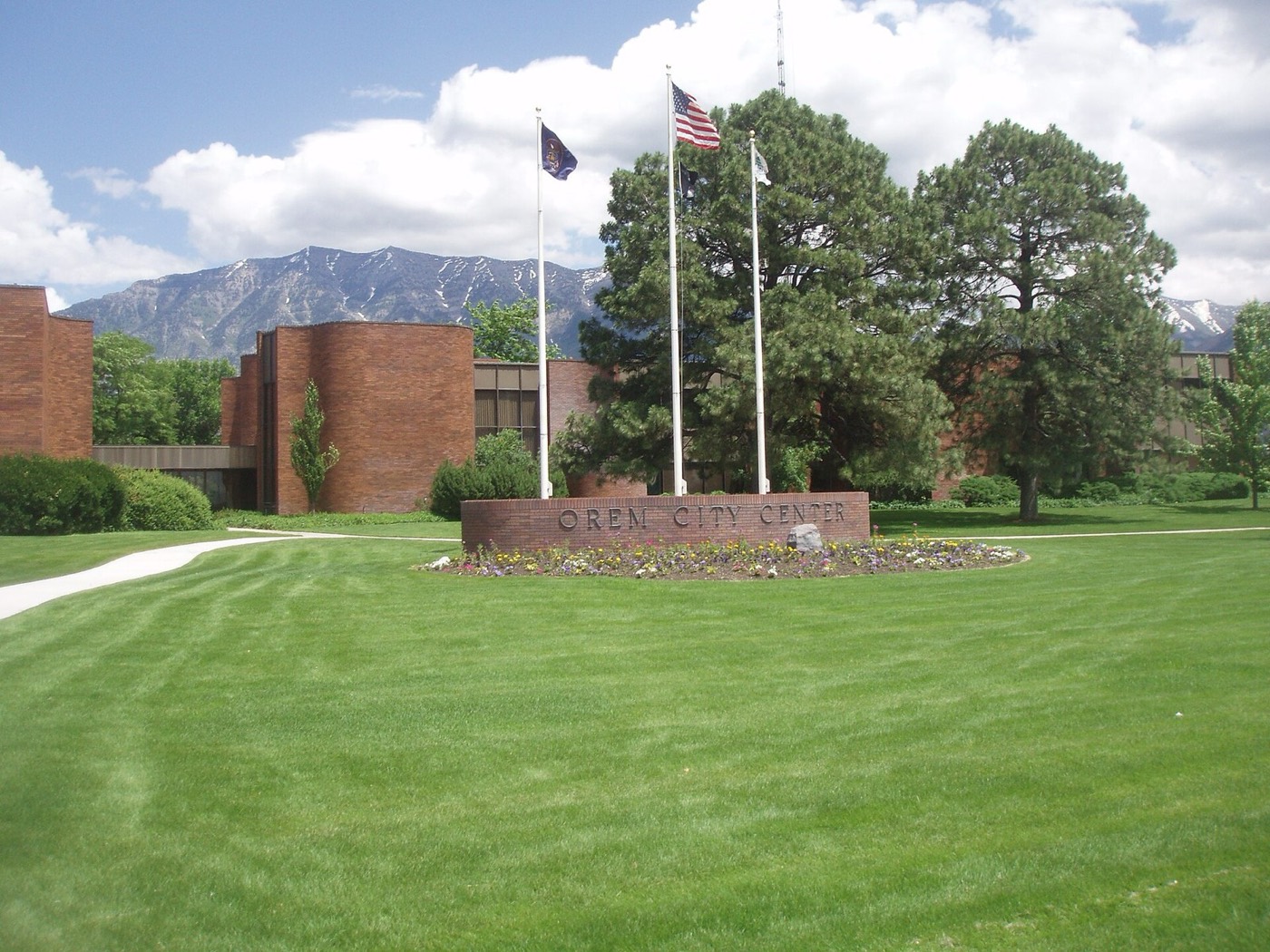
Novell Data Systems was set up in Orem, a town in a narrow valley south of Salt Lake City. Orem sits just north of Provo, the university town where Novell would later move. Most of the story that follows was decided in these few miles of Utah.
The dates of the start are not quite settled. Later company histories give nineteen seventy-nine. Reports from the time point to August nineteen eighty, and that is the date Wikipedia's article on Novell uses, after checking the press of the period.
This is Orem's city centre, photographed in two thousand and nine. The town was much smaller when the company began. The founders were George Canova and Jack Davis, and the money came from an investment firm called Safeguard Scientifics, which put in more than two million dollars and became the majority owner.
The name came from Canova's wife. She thought that Novell meant new in French. It does not quite, but the name stuck.
The company built small business computers and printers. By the middle of nineteen eighty-one it was selling a microcomputer called the Nexus, and a dot-matrix printer, which is a printer that forms each letter from a grid of tiny inked dots.
It was not enough. Plenty of companies were building small computers, and most of them were better funded.
The timeline on screen shows how quickly things went wrong. In the first months of nineteen eighty-two, costs ran far ahead of sales and staff were laid off. Canova was removed, and Jack Messman, from the investor Safeguard, took over as president. In January nineteen eighty-three, the company was incorporated again under a shorter name, Novell, Incorporated.
The hardware was failing. But inside the company, a few young programmers had built something that was worth far more than the computers.
3. Ray Noorda bets on the network

In November nineteen eighty-two, Novell showed its products at COMDEX, the big computer trade show in Las Vegas. One of the visitors was an engineer who specialised in rescuing struggling companies. His name was Ray Noorda.
Noorda was fifty-eight. He had spent twenty-one years at General Electric, then turned round a string of smaller firms. He put a hundred and twenty-five thousand dollars of his own money into Novell for a third of the company. In nineteen eighty-three he became its president and chief executive.
Novell had fewer than twenty employees, working out of a garage in Utah County. What Noorda saw in it was not the computers. It was the work of three young consultants from Brigham Young University, who called themselves SuperSet.
This is Drew Major, one of the three, in a later photograph. With Dale Neibaur and Kyle Powell, he had written software that let several small computers share one large disk. A networked game they wrote, called Snipes, helped convince Jack Messman that the idea mattered.
The idea was simple to describe and hard to build.
The diagram on screen shows it. One computer becomes the file server, which is a machine whose only job is to hold the shared files and hand them out. The personal computers on the desks are joined to it by cable, and so is a shared printer. Each desk asks the server for what it needs, and the server answers all of them at once.
Noorda's decision was to stop fighting in the crowded computer market and put everything behind that software. Novell closed its hardware division and concentrated on networking. The software would be sold for other companies' machines, which meant every personal computer sold anywhere was a possible customer.
Years later, Drew Major explained what Noorda had understood before most of the industry. He said that "Ray was one of the first to realize that networking computers inherently implied openness — all computers connected and working together." Novell would sell to everyone, and work with everyone's equipment.
4. NetWare conquers the office network
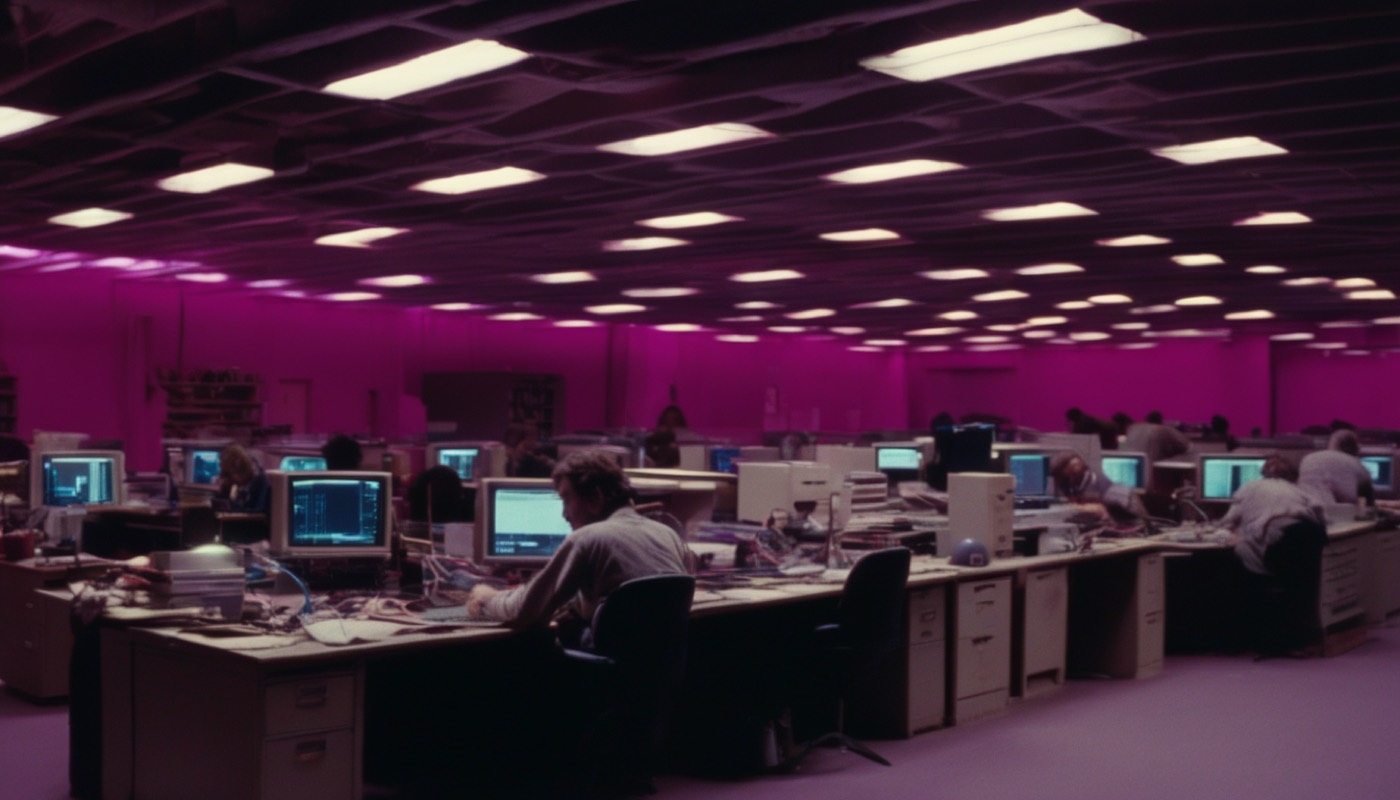
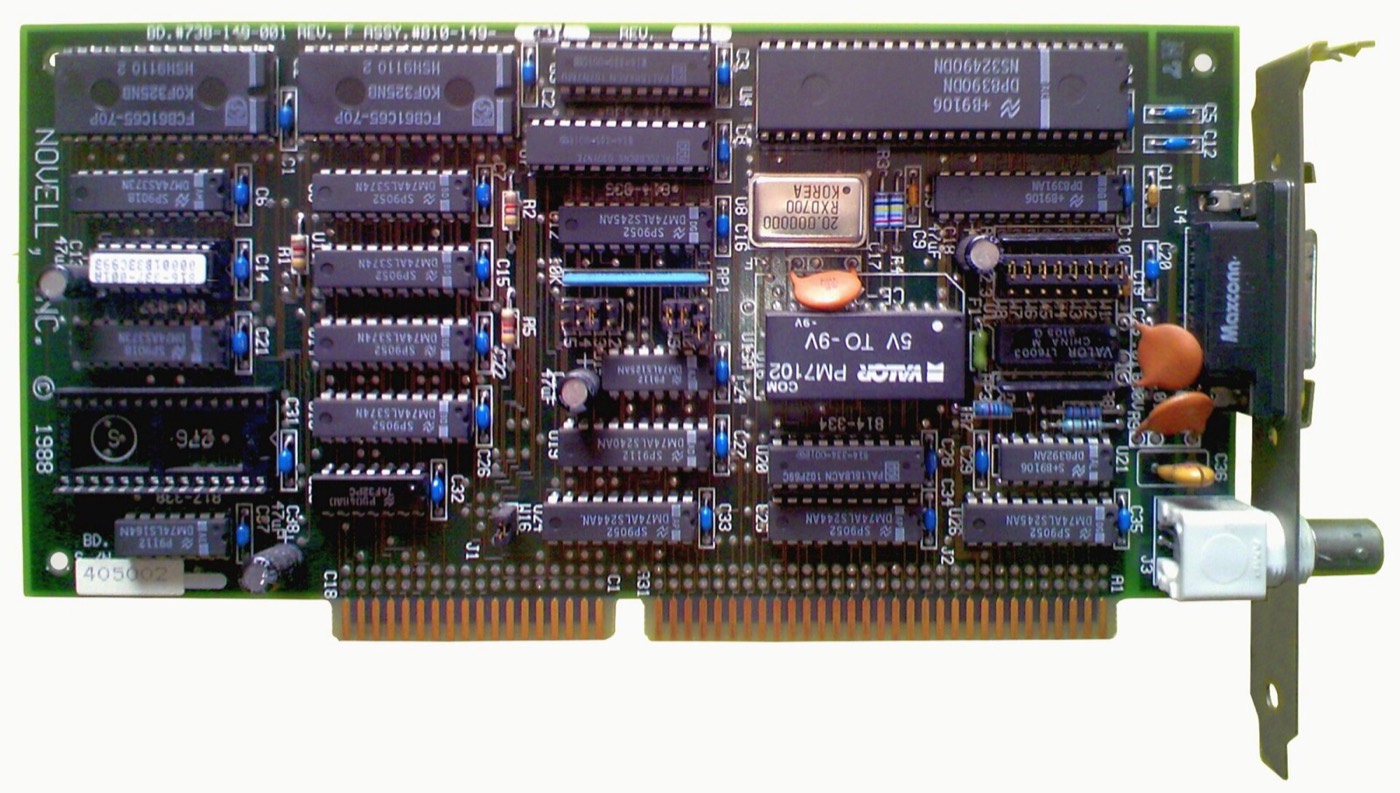
The software was called NetWare. To use it, each personal computer needed a network card.
This is one, a Novell Ethernet card from nineteen eighty-eight. A network card is a circuit board that slots inside the computer and gives it a socket for the network cable. Ethernet is the most common way of wiring such a network, and it is still how most office computers are wired today.
NetWare grew up quickly, version by version, and each one ran on more powerful machines.
The timeline on screen shows the versions. The first NetWare came in nineteen eighty-three, running on a server Novell built itself. Advanced NetWare followed in nineteen eighty-five, and a version for Intel's two-eight-six processor in nineteen eighty-six. In nineteen eighty-nine came NetWare three-eight-six, soon renamed NetWare three, and it became the version most offices ran.
The machines on a network need rules for how their messages are addressed and delivered. That set of rules is called a protocol. Novell took a design from Xerox's research, adapted it, and called its own version IPX. For years IPX was the language most office networks spoke.
Novell was not the only company selling network software. But it was far ahead.
The bars on screen show the market in nineteen eighty-eight, as measured by the research firm IDC. NetWare had fifty-three per cent. Microsoft's MS-Net had seventeen point one per cent, and Apple's AppleTalk eight point five.
Novell also did something that made the lead hard to take away. It trained the people who ran the networks.
In nineteen eighty-nine Novell launched the Certified NetWare Engineer programme, known as CNE. Novell says it was the first major computer company to offer a certification of its kind. Three hundred people qualified in the first year, and the certificate became a passport to jobs in company computer departments.
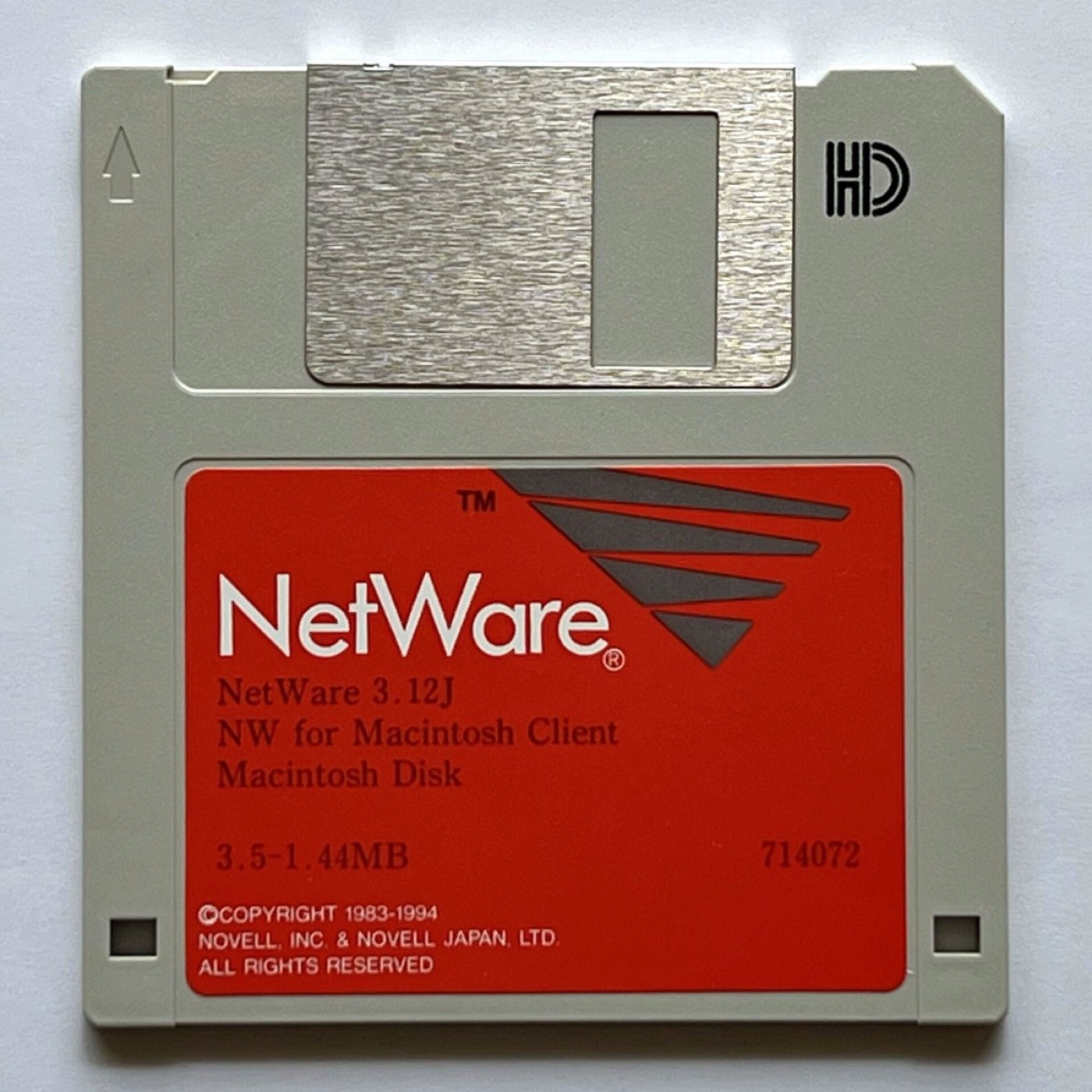
This is a NetWare installation disk, the kind those engineers carried from office to office. Every certified engineer was a reason for an employer to stay with NetWare, because the people who knew how to run it were already on the payroll.
5. Peak Novell
By the start of the nineteen nineties, Novell was one of the most valuable software companies in the world.
The bars on screen show its sales. In nineteen eighty-nine they reached about four hundred and twenty-two million dollars. In nineteen ninety they were close to half a billion.
Noorda had a word for the way he dealt with other companies. He called it coopetition, meaning that you compete with a company in one market while co-operating with it in another. His real competitor was Microsoft, and Microsoft's grip came from the operating system.
An operating system is the basic program that runs a computer and lets other programs work on it. On most personal computers that was Microsoft's MS-DOS. Novell wanted one of its own.
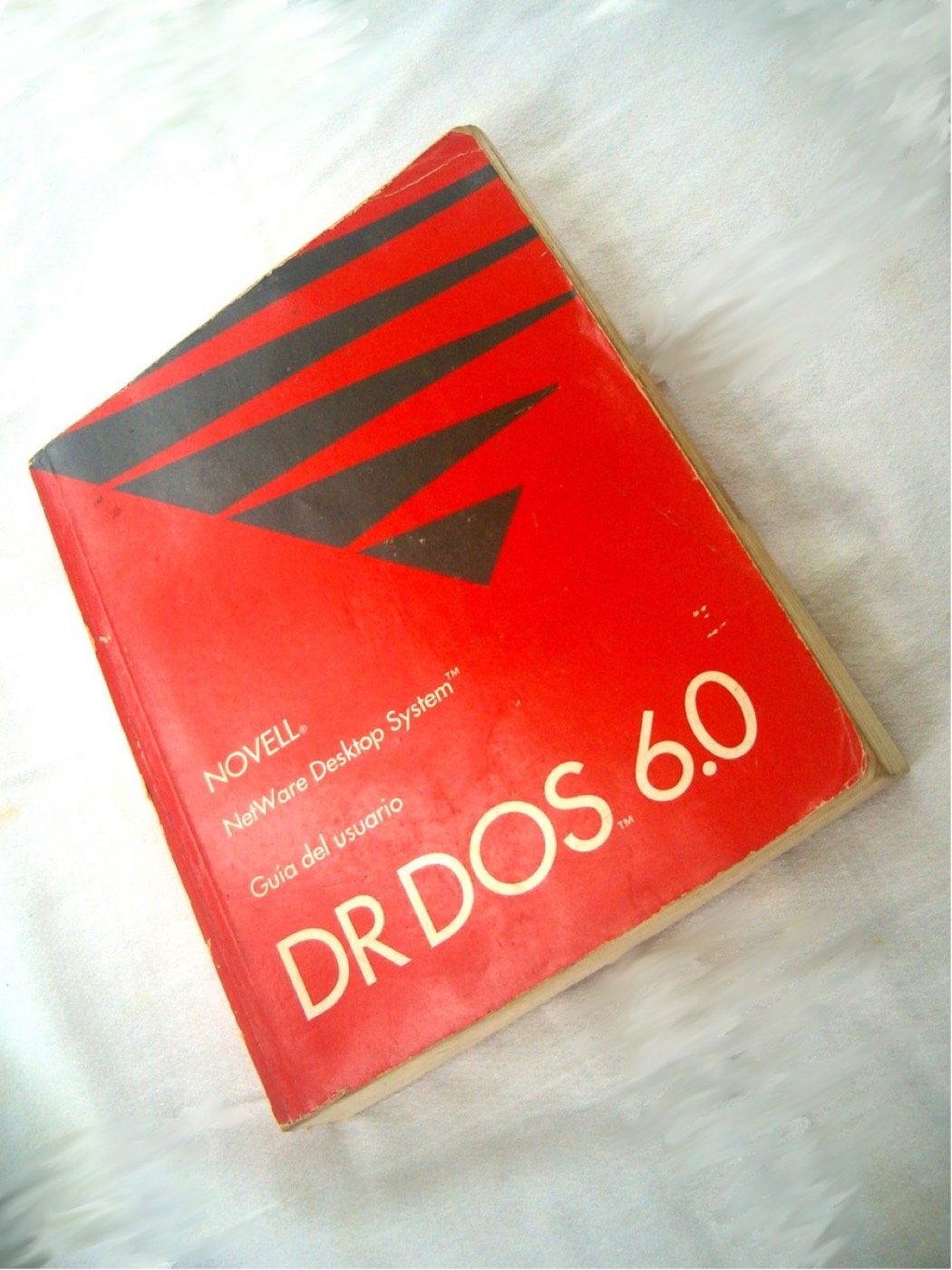
This is the manual for DR-DOS, an operating system that competed directly with MS-DOS. It was made by Digital Research, of California, and in July nineteen ninety-one Novell agreed to buy the company. Digital Research's shareholders approved it that October, in exchange for about three million Novell shares.
Next, Novell went after a much bigger operating system. Unix was the operating system of large business computers and universities. It had been created at AT&T's Bell Laboratories, and AT&T still owned it through a company called Unix System Laboratories.
The timeline on screen shows the buying spree. In December nineteen ninety-two, Novell agreed to buy Unix System Laboratories, in shares then worth about three hundred and fifty million dollars. The deal was completed in June nineteen ninety-three. The same year, Novell released NetWare four.
NetWare four brought something new. It was called NetWare Directory Services, and a directory in this sense is a single master list of every person, computer and printer on a network, however many buildings it spans.
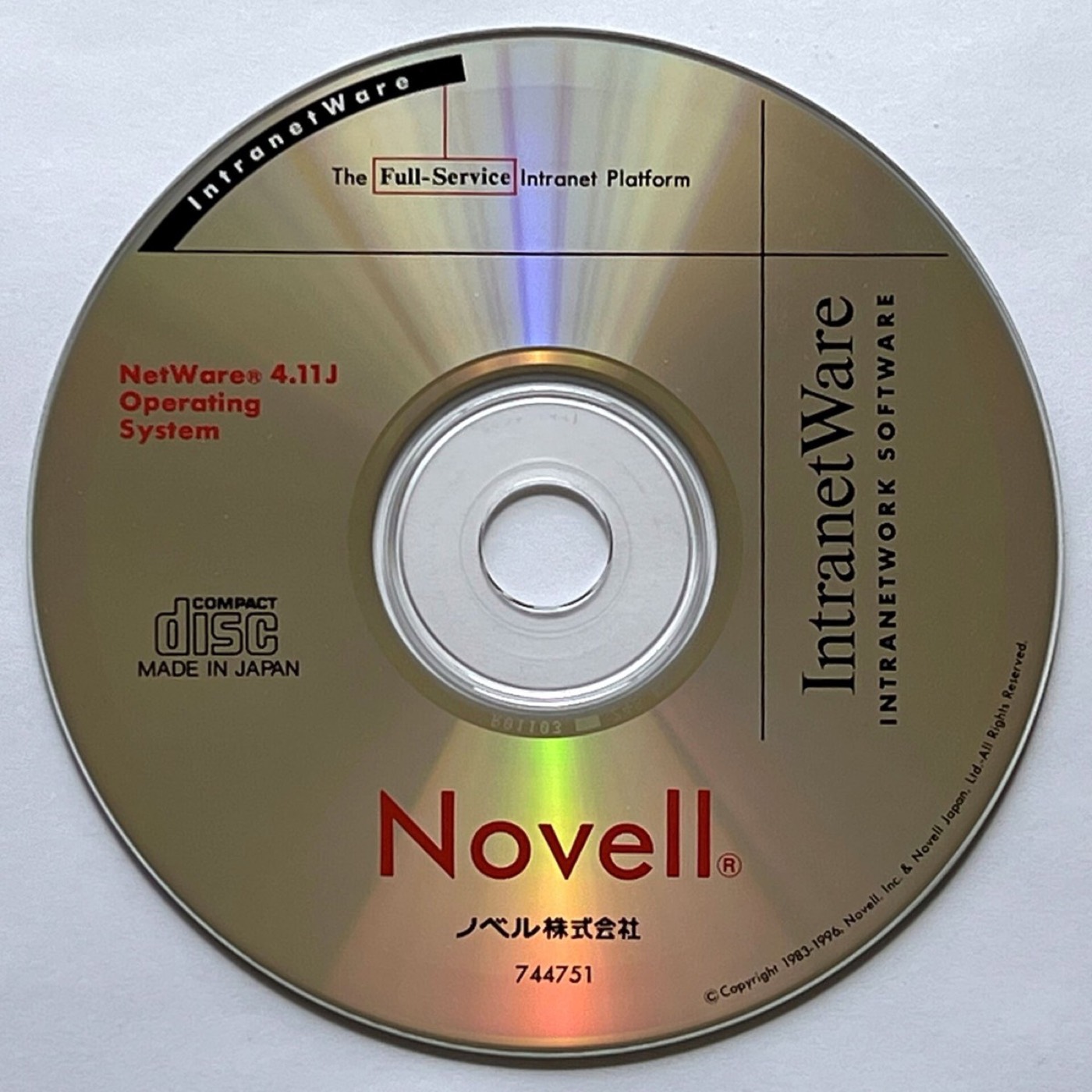
This is a NetWare four installation disc. The directory made it possible to run one network across a whole company, with one list of users instead of one per server. Large organisations came to depend on it, and some of the directory's descendants are still sold today.
By nineteen ninety-three, according to the International Directory of Company Histories, Novell had seventy per cent of the network software market. Everyone else, Microsoft included, shared the remaining thirty. It was the high point, and Noorda wanted more.
6. The WordPerfect gamble
Noorda's next move was aimed straight at Microsoft's most profitable business: the programs people used at their desks every day.
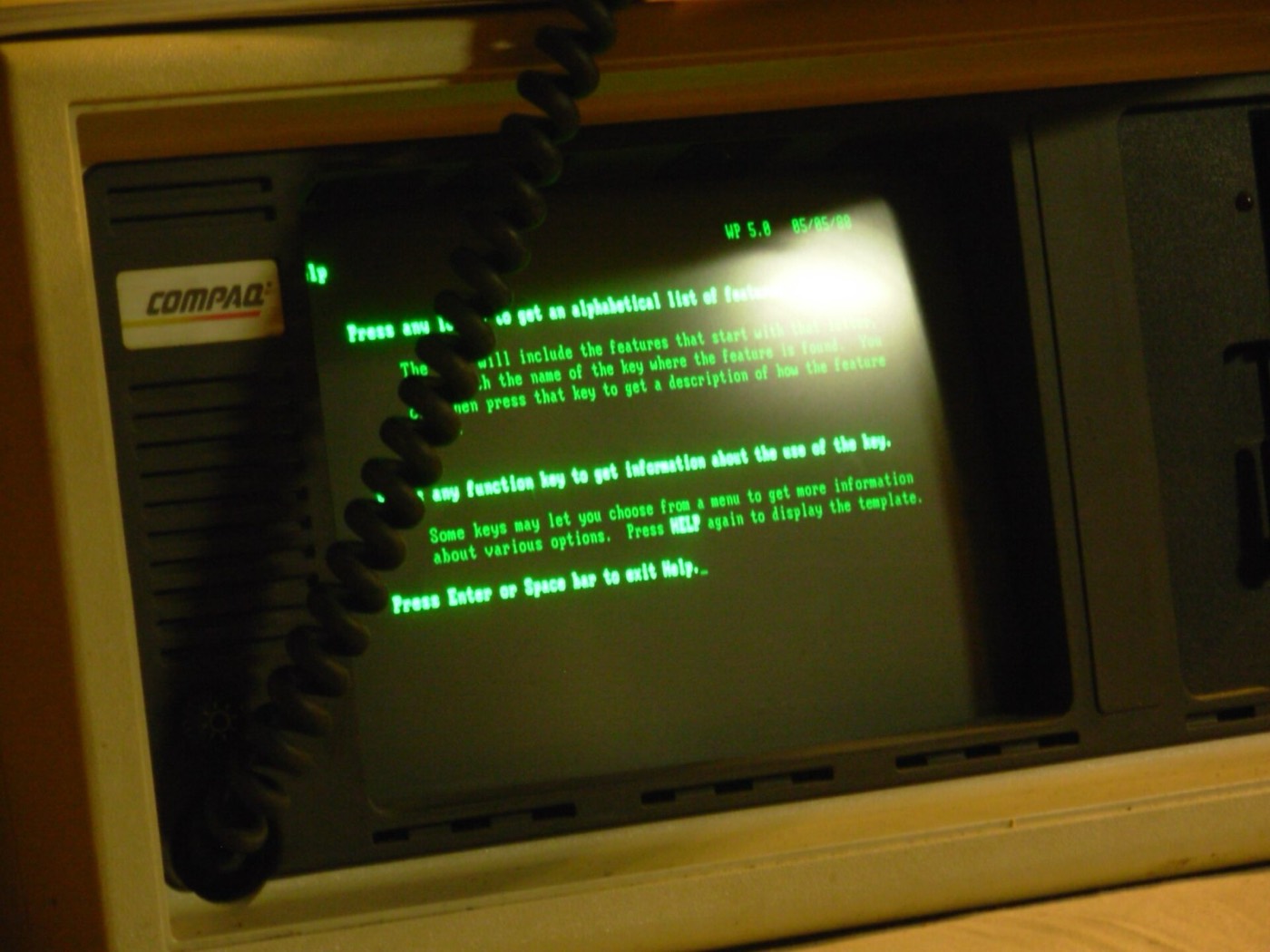
This is WordPerfect, running on an early portable computer. For years WordPerfect was the best-selling word processor in the world, the program most offices used to write letters and reports. The company that made it was another Utah firm, based a few miles from Novell.
In March nineteen ninety-four, Novell agreed to buy WordPerfect. It also agreed to buy Quattro Pro, a spreadsheet program, from the software company Borland. A spreadsheet is a program that works with tables of numbers, the way an accountant works with a ledger.
The figures on screen show the price. When it was announced, the WordPerfect deal was valued at one point four billion dollars, paid in Novell shares. Quattro Pro cost a further one hundred and forty-five million. By the time the deal closed in June, Novell's share price had fallen, and the shares it handed over were worth about eight hundred and fifty-five million.
The logic was the office suite. A suite is a set of desk programs sold together in one box, usually a word processor, a spreadsheet and more.
The diagram on screen shows the plan. Microsoft was selling Word and Excel together as Microsoft Office. Novell would answer with WordPerfect, Quattro Pro and GroupWise, WordPerfect's electronic mail and calendar program, all tied to the NetWare network that offices already owned.
The same spring, Novell changed its leader. Noorda was nearly seventy. In April nineteen ninety-four, Novell named Robert Frankenberg, a senior executive from Hewlett-Packard, as its new chief executive.
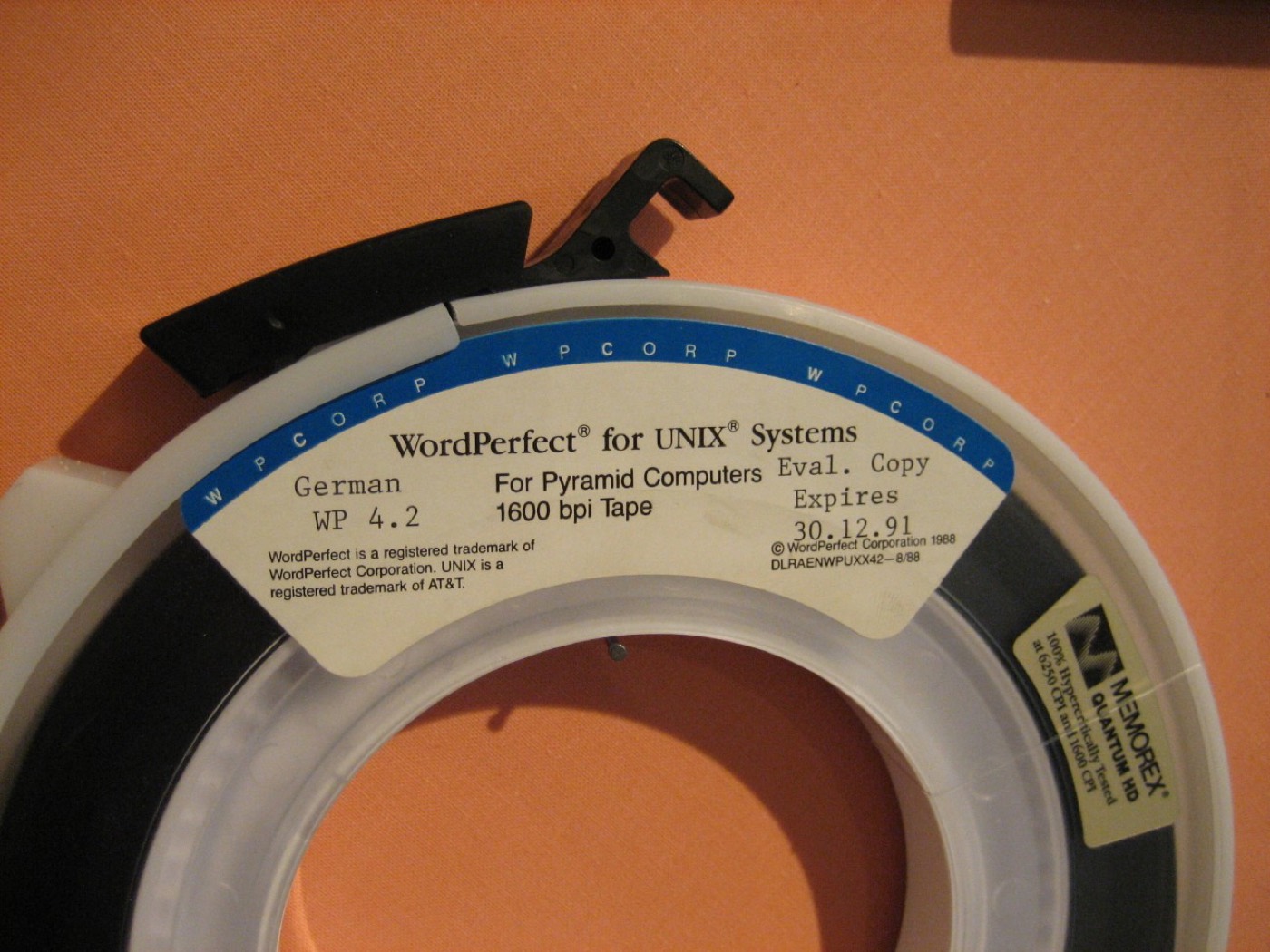
This is WordPerfect for Unix, supplied on a reel of magnetic tape. WordPerfect ran on almost every kind of computer, which had been its strength. But the market was moving onto just one kind, personal computers running Microsoft Windows, and there Microsoft wrote the rules.
7. Windows NT and the retreat
While Novell was buying, Microsoft was building. Its answer to NetWare was a new operating system called Windows NT.
The timeline on screen shows how the ground shifted. Windows NT first shipped in July nineteen ninety-three. In January nineteen ninety-six, Novell agreed to sell WordPerfect. In July of that year Microsoft finished NT four, and in August Frankenberg resigned.
NT could do the file server's job, and it could also run other business programs on the same machine. It looked like the Windows that people already used. And companies that bought Microsoft's desk software found it easy to buy Microsoft's server too.
Meanwhile, the office suite plan was failing.
The bars on screen show the office suite market at the start of nineteen ninety-six, as reported by the Associated Press. Microsoft had eighty-six point five per cent. Novell's WordPerfect suite had five point four per cent. WordPerfect still sold well on its own, but the suite war was over.
The figures on screen show the cost of retreat. Novell had paid about a billion dollars for WordPerfect and Quattro Pro. The Canadian company Corel bought them for cash, shares and future royalties, which the Associated Press valued at a minimum of about one hundred and eighty-five million.
Frankenberg said the sale "allows Novell to focus on what we do best, and that's networking." But the network market was exactly where Windows NT was now winning.
In nineteen ninety-six, the research firm IDC found that new sales of Windows NT server software had grown by nearly eighty-five per cent. NT was outselling the latest NetWare by more than two to one.
The line on screen shows what that did to Novell's sales, by financial year. In the year to October nineteen ninety-four, revenue was almost two billion dollars. The next year it was just over two billion. Then it fell to about one point three seven billion.
8. Eric Schmidt's rescue attempt
Novell needed a new leader, and it went to Silicon Valley to find one.
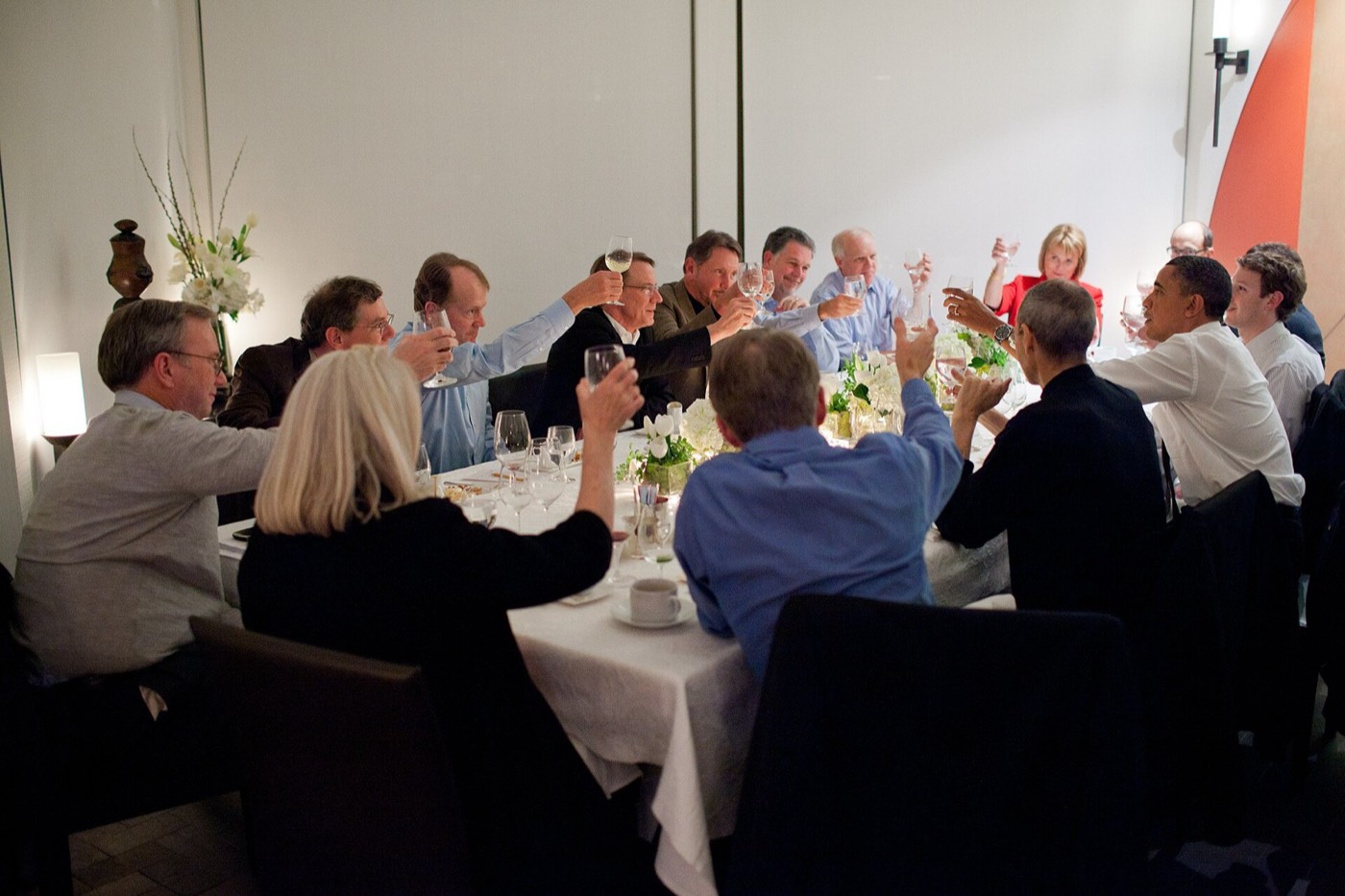
This is Eric Schmidt, photographed in twenty eleven. In March nineteen ninety-seven he was the chief technology officer of Sun Microsystems, one of the leading makers of business computers. That month, Novell named him its chairman and chief executive, starting in April.
Novell's announcement carried Schmidt's own reaction. He said, "This is an opportunity of a lifetime." What he took over was a company whose sales had shrunk by a third in a year.
The figures on screen show his first year. For the year to October nineteen ninety-seven, Novell lost seventy-eight point three million dollars. The year before, it had made a profit. About a thousand jobs were cut, roughly one in six.
Schmidt's plan was to move Novell onto the internet. Until then NetWare's own protocol, IPX, had carried its traffic. The internet used a different set of rules, called TCP/IP.
In October nineteen ninety-eight, NetWare five switched its main connection to TCP/IP, so a Novell network could speak the internet's language without translation.
Schmidt also bet on the directory. The master list of users that had arrived with NetWare four was made to run on other companies' systems as well, not only on NetWare. It is still sold today, under the name eDirectory.
For a while, it seemed to work. But Novell's share of the server market kept falling, as offices replaced their NetWare servers with Windows NT.
In March two thousand and one, Novell agreed to buy Cambridge Technology Partners, a firm of computer consultants, for about two hundred and sixty-six million dollars in shares. The idea was to sell advice as well as software.
The timeline on screen shows how Schmidt's time ended. The same March, he became chairman of a young search company called Google. That purchase was completed in July, and its chief executive, Jack Messman, the man who had run Novell Data Systems in its crisis, became Novell's chief executive. In August Schmidt became Google's chief executive.
9. The Linux turn

By two thousand and three, Novell needed another future, and it found one in software that anyone could get for nothing.
The diagram on screen shows the parts of Novell's new plan. Linux is an operating system that is free to use, and whose source code, the human-readable instructions behind it, is open for anyone to read and change. Companies make money from it by selling tested versions, updates and support. Novell bought two Linux companies to do that, and IBM put money in.
The first was Ximian, which made Linux software for desktop computers. Novell announced that purchase in August two thousand and three.
The map on screen shows where the pieces were. Ximian was in Boston. The bigger prize, SUSE, was in Nuremberg, in Germany, and it made one of the most widely used business versions of Linux. And in January two thousand and four, Novell moved its official headquarters from Provo to Waltham, near Boston.
The figures on screen show the SUSE deal. Novell paid two hundred and ten million dollars in cash. IBM invested fifty million dollars in Novell at the same time, to back the plan. The purchase was completed in January two thousand and four.
Messman had no doubt about what it meant. He said that combining the two companies "makes Novell one of the strongest options for enterprise Linux literally overnight." Enterprise, in this sense, means large organisations, the customers Novell already had.
For the first time in years, Novell had a story that pointed forwards. Its old customers could keep their directory and their network tools, and run them on Linux.
10. A pact with Microsoft, a war with SCO
In June two thousand and six, Ron Hovsepian became Novell's chief executive. Five months later he did something that surprised almost everyone. He signed an agreement with Microsoft.
The circle on screen shows what Microsoft paid, according to Novell's filing. Two hundred and forty million dollars bought certificates that Microsoft's customers could exchange for SUSE Linux support. A further one hundred and eight million was for patent co-operation. Together that came to three hundred and forty-eight million.
A patent is a legal right to stop others using an invention without permission. Under the agreement, each company promised not to sue the other's customers over patents. Novell agreed to pay Microsoft at least forty million dollars over five years.
Hovsepian described it as a change of attitude. He said, "Too often technology companies ask their customers to adapt to them. Today we are adapting to our customers."
Many people who wrote Linux saw it differently. To them, a patent deal that protected only Novell's customers suggested that other Linux users needed protecting. Jeremy Allison was one of the leading developers of Samba, a program that lets Linux computers share files with Windows ones. In December two thousand and six, he resigned from Novell in protest.
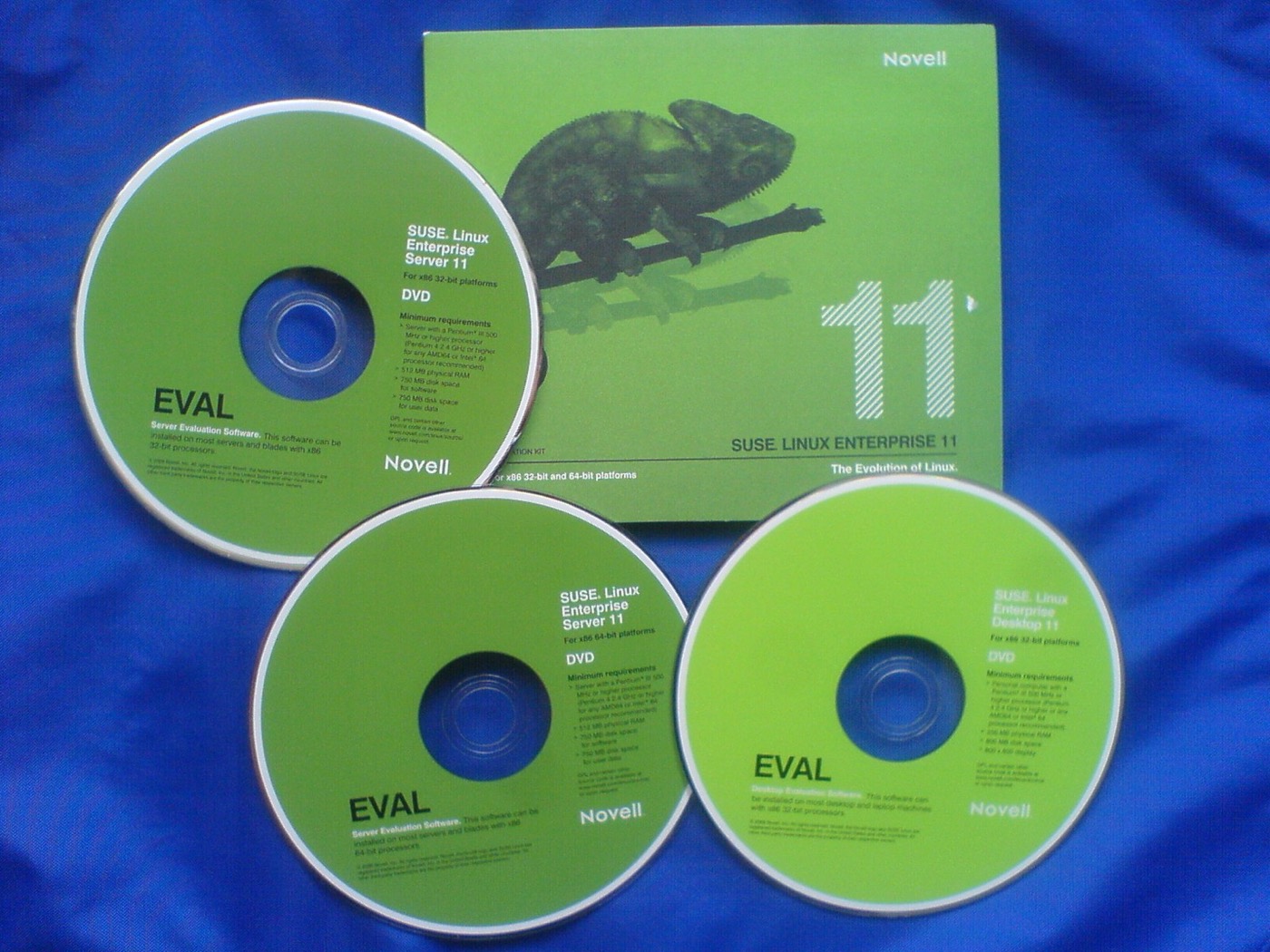
This is a set of SUSE Linux Enterprise Server discs from the Novell years. Despite the anger, the deal brought SUSE a new route to business customers. Microsoft's certificates could be exchanged only for SUSE.
At the same time, Novell was fighting a different battle over Unix. A company called the SCO Group claimed it had bought the rights to Unix, and that Linux contained code copied from it. Novell said it had never sold SCO the copyrights, the legal ownership of the Unix code itself.
The timeline on screen shows how long the fight lasted. SCO sued Novell in January two thousand and four. In August two thousand and seven a judge ruled that Novell owned the copyrights, and the next month SCO filed for bankruptcy protection. In August two thousand and nine an appeal court sent part of the case to trial.
The trial took place in Salt Lake City in March twenty ten. On the thirtieth of March, the jury found for Novell.
Novell's statement was brief. It said, "Novell is very pleased with the jury's decision confirming Novell's ownership of the Unix copyrights, which SCO had asserted to own in its attack on Linux." An appeal court upheld the result in August twenty eleven.
By then, though, Novell itself had been sold.
11. Sold

In November twenty ten, Novell agreed to be bought by Attachmate, a private software company that sold programs for connecting to older business computers.
The figures on screen show the terms. Attachmate paid about two point two billion dollars. That worked out at six dollars and ten cents for each share. In the same deal, Novell sold a separate bundle of patents for four hundred and fifty million dollars.
The patents were the part that worried people.
The diagram on screen shows who was buying them. About eight hundred and eighty-two patents and applications were to go to a new company called CPTN Holdings. CPTN was owned in equal shares by Microsoft, Oracle, Apple and EMC. The worry was that patents from a Linux company could be used to hold back Linux itself.
The Justice Department investigated, and in April twenty eleven it announced that the deal had been changed.
A senior Justice Department official, Sharis Pozen, said, "The parties' actions address the immediate competitive concerns resulting from the transfer of Novell's patents." Those actions are listed on screen.
Microsoft would sell its share of the patents on to Attachmate, keeping only a licence to use them. EMC would not take a group of patents on virtualisation software. And every patent would stay available to Linux under the terms of the open source licences that Linux relies on.
On the twenty-seventh of April twenty eleven, the sale was completed. Novell and SUSE became two separate businesses inside Attachmate. Novell's headquarters went back to Provo, and hundreds of staff were laid off.
After thirty years, Novell was no longer a company. It was a brand.
12. Forwards or backwards?

What happened next is a story of owners.
The timeline on screen shows them. In November twenty fourteen, Attachmate merged into Micro Focus. In March twenty nineteen, Micro Focus completed the sale of SUSE to the investment firm EQT. In January twenty twenty-three, OpenText completed its purchase of Micro Focus, and with it the Novell products.
The map on screen shows where those owners are. Micro Focus was based in Newbury, in England. OpenText is based in Waterloo, in Canada. SUSE still runs much of its work from Nuremberg, and its parent company is registered in Luxembourg.
SUSE had the most eventful life of all. EQT floated it on the Frankfurt stock exchange in May twenty twenty-one, then took it private again two years later.
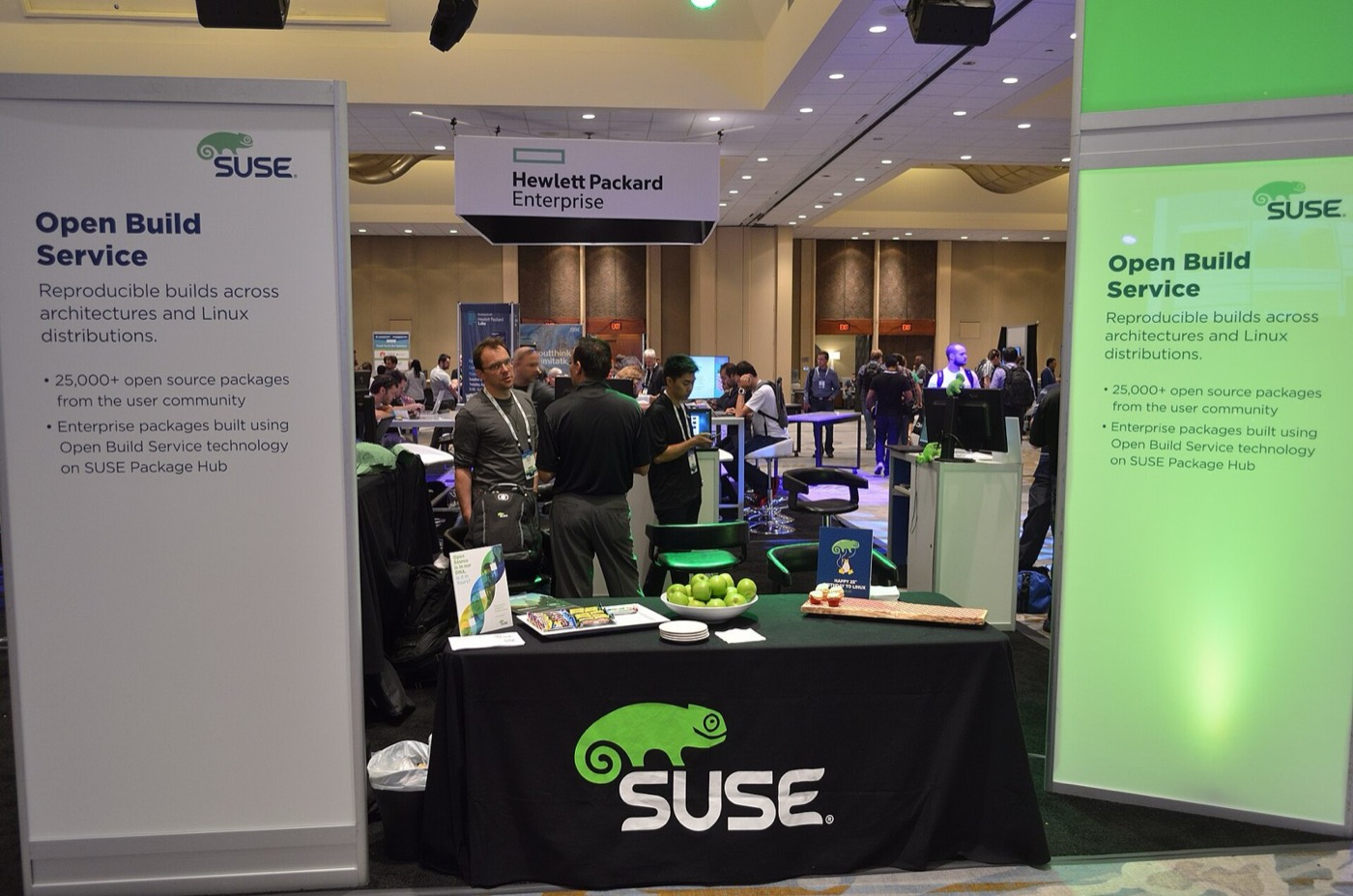
This is SUSE's stand at a Linux conference in two thousand and sixteen, while it belonged to Micro Focus. The Linux business Novell bought for two hundred and ten million dollars has outlived Novell itself, and it is still one of the main suppliers of Linux to large companies.
The bars on screen compare two values for SUSE. When EQT agreed to buy it in two thousand and eighteen, the price was about two and a half billion dollars. In March twenty twenty-six, Reuters reported that EQT was exploring a sale that could value SUSE at up to about six billion. By late September, no sale had been announced.
And NetWare itself? General support for its last version ended in March twenty ten. Its services live on in a Linux-based product called Open Enterprise Server.
The list on screen shows what survives. OpenText still sells Open Enterprise Server, the directory now called eDirectory, the device manager ZENworks, and GroupWise, the mail system that was once part of the WordPerfect plan. A new version of GroupWise came out in May twenty twenty-six.
So is Novell's story forwards or backwards? The company that put the personal computer on the office network lost its market to Microsoft, spent its fortune fighting on Microsoft's ground, and ended as a name inside other companies. But the idea Drew Major described, computers connected and working together, won completely. And the Linux business Novell bought to save itself may now be valued at more than twice what Novell was sold for.
Sources and credits
Photo credits (Wikimedia Commons)
- Orem, Utah (Novell's first home town) - Orem City Center, 2009: Ntsimp, Public domain - https://commons.wikimedia.org/wiki/File%3AOrem_Utah_City_Center.jpeg
- Drew Major, lead NetWare architect (SuperSet), 2005: Utah Technology Council Public Domain, Public domain - https://commons.wikimedia.org/wiki/File%3A2005_dmajor_bw.jpg
- Novell Ethernet network interface card, 1988: Wbenton at English Wikipedia, Public domain - https://commons.wikimedia.org/wiki/File%3AEISA_Ethernet_NIC.JPG
- NetWare 3.12J client installation floppy disk, 1994: Asanagi, CC0 - https://commons.wikimedia.org/wiki/File%3ANetWare_3.12J_Macintosh_client_installation_disk_2025-03-01.jpg
- NetWare 4.11 Server installation CD, 1996: Asanagi, CC0 - https://commons.wikimedia.org/wiki/File%3ANetWare_4_installation_CD_%28Ja%29_2025-02-22.jpg
- DR-DOS 6.0 user manual (Digital Research, bought by Novell 1991): Piero71, CC0 - https://commons.wikimedia.org/wiki/File%3AManualDRDOS60.jpg
- WordPerfect 5.0 running on a Compaq Portable: Anthony J. Bentley, Public domain - https://commons.wikimedia.org/wiki/File%3ACompaq_Portable_and_Wordperfect.JPG
- WordPerfect for UNIX Systems 4.2 on magnetic tape, 1991: Wolfgang Stief, CC0 - https://commons.wikimedia.org/wiki/File%3AWordPerfect_for_Unix_Systems_magnetic_tape.jpg
- Eric Schmidt (former Novell CEO) at the White House tech dinner, Woodside, Feb 2011: The White House from Washington, DC, Public domain - https://commons.wikimedia.org/wiki/File%3AP021711PS-0723_%286599552181%29.jpg
- SUSE Linux Enterprise Server 11 DVDs (Novell era): Kubx, Public domain - https://commons.wikimedia.org/wiki/File%3ASUSE_Linux_Enterprise_Server_11_installation_DVD_20100429.jpg
- SUSE stand at LinuxCon 2016, while part of Micro Focus: Raysonho @ Open Grid Scheduler / Grid Engine, CC0 - https://commons.wikimedia.org/wiki/File%3ASUSELinuxcon2016.jpg


Primary sources
- Wikipedia, 'Novell' and 'NetWare' () - founding in August 1980 (contemporary press) and 1979 (later sources); Canova and Davis; Safeguard Scientifics; Nexus and printer by mid-1981; early-1982 layoffs and Messman; Novell, Inc. 25 January 1983; move to Provo late 1986; NetWare versions 1983-1993; IDC 1988 shares (53%, 17.1%, 8.5%); NetWare 5 on TCP/IP, October 1998.
- International Directory of Company Histories, 'Novell Inc.' (encyclopedia.com) - founded 1980; Noorda's $125,000 for 33%; hardware division closed; sales $421.9m (1989) and $497.5m (1990); 70% of the network software market in 1993.
- Network World, Deni Connor, 'Remembering Novell's Ray Noorda', 10 October 2006 - over 70% share in the 1990s; Noorda's background; 'coopetition'.
- Deseret News, 'Novell co-founder dies', 10 October 2006 - fewer than 20 to more than 12,000 staff; Drew Major's quotation.
- Novell, 'The value of certification', 2002 - CNE from 1989, first major IT certification, 300 in the first year.
- Deseret News, 19 July 1991, 30 October 1991 (Digital Research, about 3 million shares) and 21 December 1992 (Unix System Laboratories, about $350m in stock).
- Deseret News, 23 March 1994 ($1.4bn WordPerfect deal) and 27 June 1994 (59m shares worth about $855m; about $145m for Quattro Pro); Telecompaper, 5 April 1994 (Frankenberg).
- Associated Press, 1 February 1996 (Roanoke Times) - Corel deal worth at least $185m including $70m minimum royalties; Novell paid $1bn; suite shares 86.5% and 5.4%; Frankenberg's quotation (re-). AP, 30 August 1996 - Frankenberg resigns.
- EE Times, 26 March 1997 - IDC: NT Server new sales up nearly 85% in 1996, outselling NetWare 4.x by more than two to one. Wikipedia, 'Windows NT 3.1' - July 1993.
- Novell Form 10-K for fiscal 1996 and fiscal 1997 (SEC EDGAR) - revenue FY1994-96; FY1997 net loss $78.3m; about 1,000 jobs.
- Novell, 'Dr. Eric Schmidt Appointed Chairman of the Board and Chief Executive Officer of Novell, Inc.', 18 March 1997 Novell, 10 July 2001, and Deseret News, 11 July 2001 - Cambridge Technology Partners, about $266m; Messman CEO.
- LWN, 4 August 2003 (Ximian); SUSE, 'Novell Completes Acquisition of SUSE Linux', 13 January 2004 ($210m cash; IBM $50m; Messman quotation re-); Deseret News, 29 January 2004 (HQ to Waltham).
- Novell Form 8-K for 2 November 2006 ($240m + $108m = $348m; at least $40m from Novell over five years); Microsoft, 2 November 2006 (Hovsepian quotation re-); Network World, 22 December 2006 (Jeremy Allison).
- Wikipedia, 'SCO Group, Inc. v. Novell, Inc.' (dates 2004-2011); The Register, 30 March 2010 (verdict and Novell's statement, re-).
- Novell Exhibit 99.1, 22 November 2010 ($6.10, about $2.2bn, $450m to CPTN); US Department of Justice, 20 April 2011 (882 patents, CPTN owners, conditions, Pozen quotation); PR Newswire, 27 April 2011 (completion); Daily Herald, 3 May 2011 (HQ back to Provo, layoffs).
- SUSE, 'Micro Focus Completes Merger with the Attachmate Group', November 2014; EQT, 2 July 2018 ($2.535bn); Wikipedia, 'SUSE S.A.' (closing 15 March 2019, listing 19 May 2021, delisting 13 November 2023); OpenText, 31 January 2023.
- Reuters, 9 March 2026, and Techzine, Mels Dees, 'SUSE may be sold again', 11 March 2026 - EQT exploring a sale at up to about $6bn, Arma Partners, about $800m revenue.
- OpenText, 'Announcing GroupWise 26.2', May 2026; OpenText community, NetWare support dates (general support ended 7 March 2010).
Not regulated financial advice.