
OpenText A Timeline
OpenText began as a search program for the Oxford English Dictionary. This video follows it from a University of Waterloo research project to a software group worth billions, and to the reversal that followed when the buying stopped.
In 1984 the University of Waterloo joined Oxford University Press to put the dictionary on computer. The search software built for it, PAT, became the product of a company founded in June 1991 by Frank Tompa, Tim Bray and Gaston Gonnet. Under Tom Jenkins it put one of the first web search engines online in 1995, listed on NASDAQ in January 1996, and then turned to managing companies' documents with Livelink.
Then the buying: Hummingbird (about $489 million, 2006), Vignette (about $310 million, 2009), GXS (about $1.165 billion, 2014), Dell EMC's Documentum ($1.62 billion, 2017), Carbonite and Webroot (about $1.45 billion, 2019), Zix (about $860 million, 2021) and Micro Focus (about $5.8 billion at completion, 2023), which brought Novell's old software with it. Most of it was paid for with borrowed money.
And the turn: the $2.275 billion sale of the mainframe tools to Rocket Software, revenue falling 10.4% to $5.17 billion, the removal of Mark Barrenechea on 11 August 2025, the sales of eDOCS and Vertica, and Ayman Antoun taking over as chief executive on 20 April 2026. Fiscal 2026 revenue was $5.246 billion, up 1.5%, and long-term debt was down to about $5.7 billion.
No figure appears without its date and source.
Educational documentary. Not financial or investment advice.
In these topics
Chapters
Video notes
1. The dictionary problem

This is a story about a dictionary that became a software company, and a software company that grew by buying other software companies until it had to start selling pieces of itself.
It begins with the biggest dictionary in the English language.
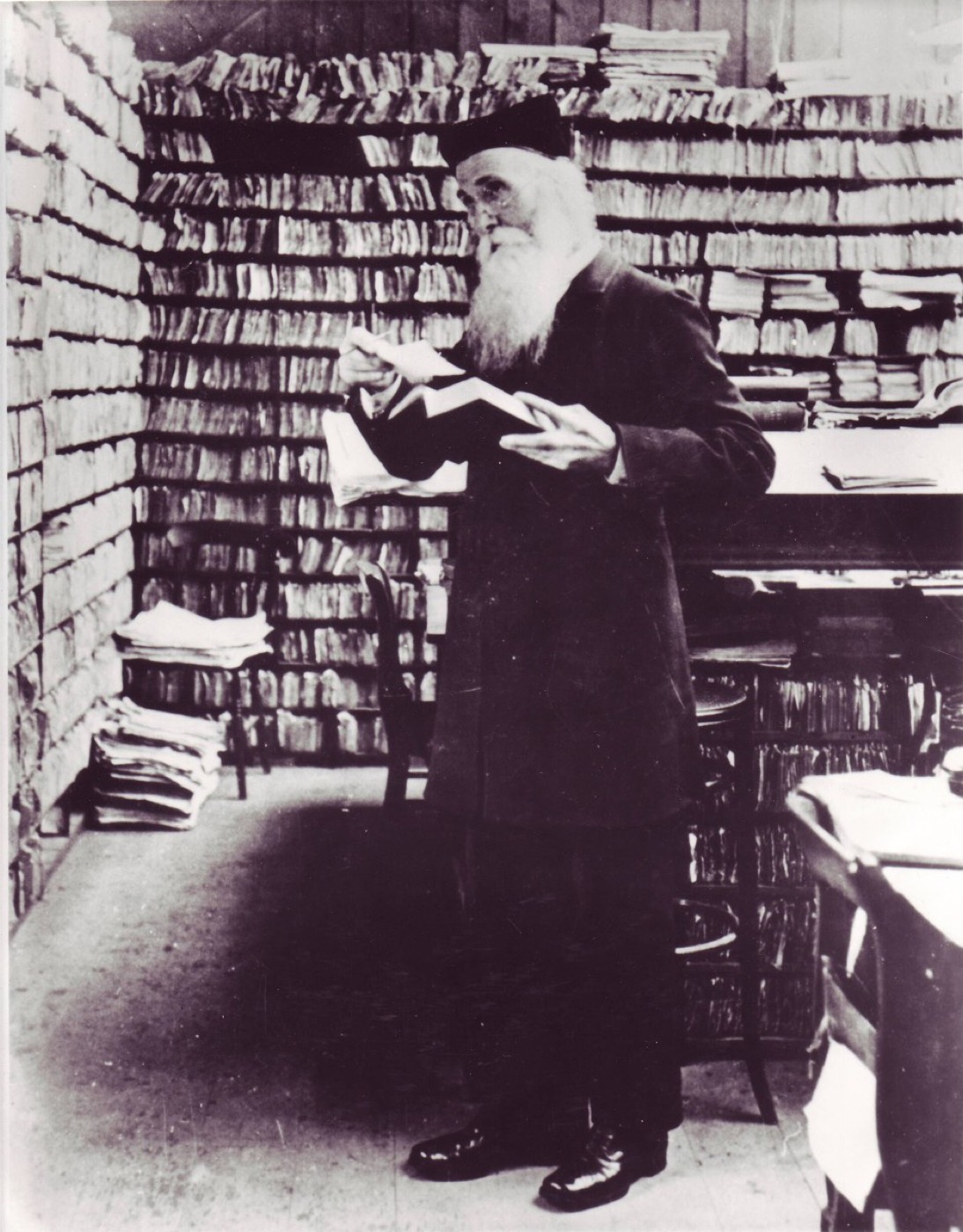
This is James Murray, the first editor of the Oxford English Dictionary, in his Scriptorium. The Scriptorium was a shed built to hold the millions of paper slips his team collected, each one showing a word in use. Murray took charge in eighteen seventy-nine and died long before the work was done.
The dictionary was finished in the end, and it was enormous.
The figures on screen show the first complete edition, published in nineteen twenty-eight. It filled twelve volumes. It defined more than four hundred and fourteen thousand words.
By the nineteen eighties that dictionary needed a new edition, and its publisher had a problem. Merging a century of additions by hand, in print, was slow and costly. The answer was to put the whole thing on computer.
The map on screen shows the two ends of that project. The publisher was in Oxford, in England. The computer work went to the University of Waterloo, in Ontario, Canada, a university known for mathematics and computing.
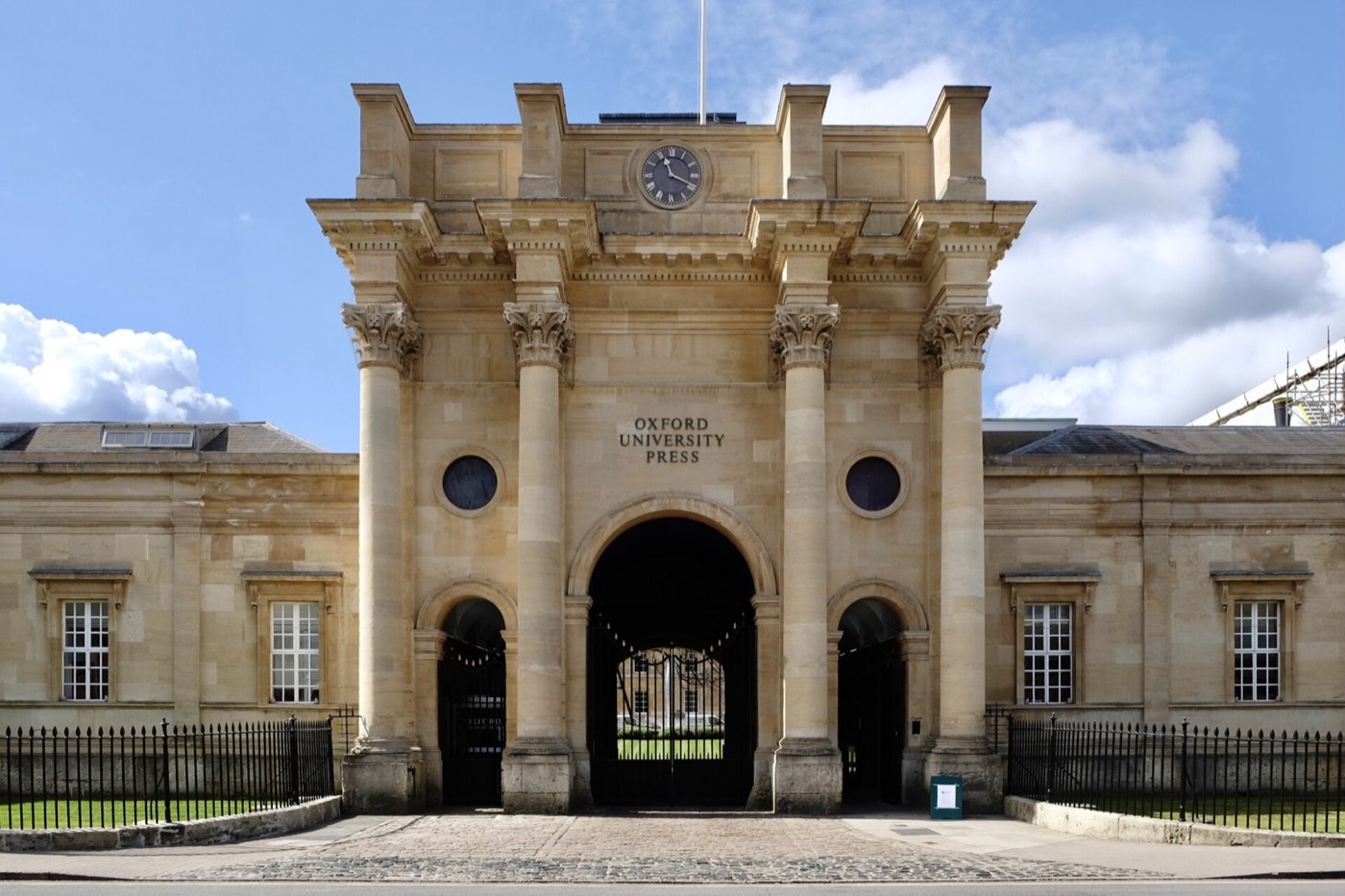
This is the Oxford University Press building on Walton Street, the dictionary's home. In nineteen eighty-four the University of Waterloo joined the Press in what was called the New Oxford English Dictionary project. Waterloo's job was the software.
The hard part was not storing the text. It was finding things in it. An editor might want every use of a word, in every quotation, across tens of millions of words, and they wanted it at once.
The diagram on screen shows the idea behind the search program that came out of Waterloo. It was called PAT, and it was written by the computer scientist Gaston Gonnet. Instead of reading the text from start to finish for every question, PAT built an index of every position in the text in advance. A question then went to the index, which pointed straight at every match.
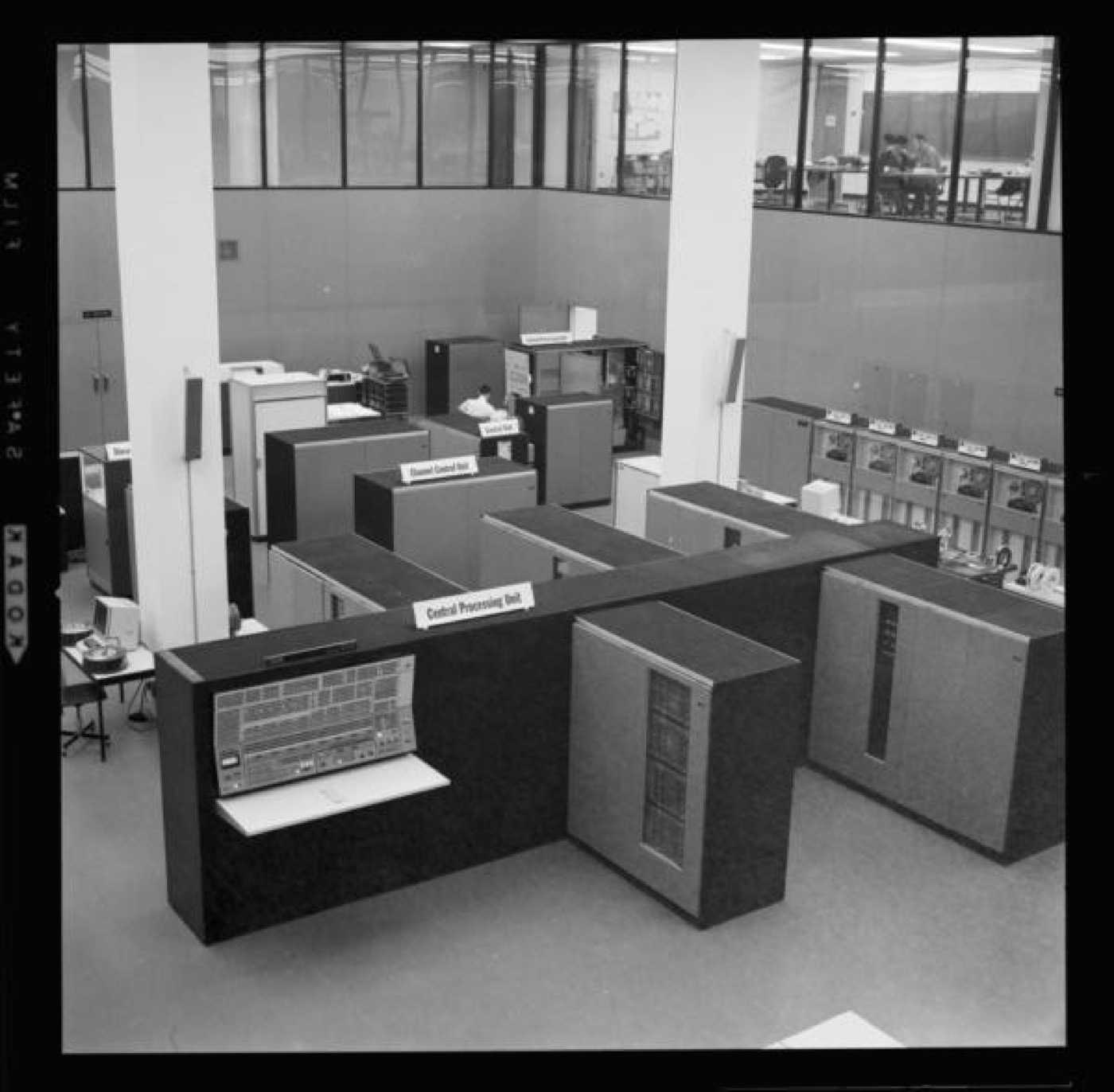
This is a computer room at the University of Waterloo, photographed in nineteen sixty-eight with an IBM mainframe in view. By the nineteen eighties the university had been teaching computing for a generation. The project team was led by Frank Tompa and Gaston Gonnet, and in nineteen eighty-seven a young developer called Tim Bray joined as its manager.
The timeline on screen shows how the project ran. Waterloo joined in nineteen eighty-four, and its Centre for the New Oxford English Dictionary opened in January nineteen eighty-five. The second edition of the dictionary was published in March nineteen eighty-nine, in twenty volumes, with around fifty-nine million words of text.
The dictionary was done. But the three men who had built its search tools had noticed something. The program would work on any large body of text, not just a dictionary.
2. Three academics start a company
Universities are good at inventing things and not always good at selling them. Tompa, Bray and Gonnet decided to try the selling themselves.
The card on screen shows the start. According to the International Directory of Company Histories, the three founded a company called Open Text in June nineteen ninety-one, to sell the search software. Its first product shipped that September.
The company's own filings give the precise date. OpenText says it was incorporated on the twenty-sixth of June. Tim Bray had left the dictionary project two years earlier, in nineteen eighty-nine, to work on the idea.
The diagram on screen shows what the founders were actually selling. The same index that found every use of a word in the dictionary could be built over any large collection of text. A law firm's case files, a manufacturer's manuals or a government's records could all be searched in the same way.
It was a small company in a university town, and for its first few years it looked like one. Its customers were organisations with a great deal of text and a need to find things in it quickly.
What changed it was the arrival of something that nobody at the dictionary project had planned for. The World Wide Web was about to become the largest collection of text anybody had ever tried to search.
The list on screen shows what the young company had going for it, and what it lacked. It had search software that was fast on very large amounts of text, and founders who understood it better than almost anyone. What it needed next was money, and a management team to run it as a business.
3. Web search before Google
In nineteen ninety-four the board brought in a new management team. At its head was Tom Jenkins, who would run the company for the next eleven years.
The timeline on screen shows how quickly things then moved. Jenkins took charge in nineteen ninety-four. In April nineteen ninety-five the company put the Open Text Index online, and in September it agreed to supply its web search to Yahoo. In January nineteen ninety-six it listed its shares on the NASDAQ stock market.
The Open Text Index was one of the first popular search engines on the web, years before Google.
The diagram on screen shows how it worked. A program called a web crawler moved from page to page, following links and copying the text it found. That text went into an index, like the dictionary's. A search typed by anyone, anywhere, went to the index, and came back as a list of pages.
Building an index of the whole web was expensive, and the web was growing faster than anyone could keep up with.
The figures on screen show the share sale that paid for it. In that January offering, Open Text sold four point six million shares at fifteen dollars each. After costs, the company kept about sixty-one million dollars.
Its shares still trade under the symbol it took that year, O T E X.
But being the search engine for the whole web was not a business that paid. Advertising on the web was new and small. The company that ran the index paid to crawl the web and gave the results away. Open Text looked for a customer that would pay for search, and found it inside companies rather than on the open web.
4. Livelink and the office file
The answer came from a purchase. In November nineteen ninety-five, Open Text bought a small software company called Odesta Systems, of Northbrook, near Chicago.
The card on screen shows the price, twenty-nine point eight million Canadian dollars. Odesta was developing a product that let a company keep its documents in one place on its own network. Open Text renamed it Livelink.
The diagram on screen shows what Livelink did. It is what is called document management, which means keeping track of a company's files so that people can find the right version. A contract or a drawing is stored once, with a record of every change and of who may see it. Anyone allowed can search for it, and nobody works on an old copy by mistake.
Early in nineteen ninety-six the company launched Livelink for company networks. It was the same idea that had built the dictionary index, now pointed at contracts, reports and engineering drawings.
That turned out to be the business. Large companies, governments and banks bought Livelink to manage their paperwork, and they paid every year to keep it running. Open Text gave up on searching the whole web, and became a supplier of software to the offices of very large organisations.
The timeline on screen shows the management of those years. Jenkins was president and then chief executive, and from nineteen ninety-eight he was also chairman. John Shackleton became president the same year. In July two thousand and five, Shackleton took over as chief executive, and Jenkins stayed on as chairman.
By then the market had a name, enterprise content management. It means the software large organisations use to store, find and control their documents. Open Text was one of several companies selling it, and none of them was dominant. That was about to change.
5. The buying begins
The next stage was to buy the competition. The first big target was just up the road.
The map on screen shows the two deals that set the pattern. Hummingbird, a document software company, was in Toronto, about a hundred kilometres from Waterloo. Vignette, which made software for running large websites, was in Austin, Texas.
The timeline on screen shows the two deals and their prices. Hummingbird cost about four hundred and eighty-nine million US dollars, and the deal was completed in October two thousand and six. Vignette was announced in May two thousand and nine at about three hundred and ten million.
The Vignette deal closed in July two thousand and nine.
Each deal brought the same things. It brought a product that competed with Open Text's own, and customers who were already paying for support every year. Open Text kept the customers and slowly moved them onto a smaller number of products.
The card on screen names what the company was becoming. A consolidator is a company that buys up rivals in a crowded market, to make one large supplier out of many small ones. It grows mainly by buying revenue rather than by winning new customers.
The figures on screen show where that had got the company. In the year to June two thousand and ten, revenue was about nine hundred and twelve million dollars. The next year it passed one billion for the first time.
In December two thousand and eleven, Shackleton announced he would retire. His successor would take the buying much further.
6. Barrenechea's machine
The new chief executive was Mark Barrenechea, who had been chief executive of the computer maker Silicon Graphics International.
The timeline on screen shows his arrival and his first big deal. His appointment was announced in December two thousand and eleven and took effect on the second of January twenty twelve. In November twenty thirteen he agreed to buy a company called GXS, and the deal closed in January twenty fourteen.
GXS was not a document company. It ran a network that businesses use to send each other orders and invoices.
The diagram on screen shows what that means. A retailer sends an order to a supplier as data rather than on paper. The supplier sends back an invoice the same way. GXS sat in the middle, translating and delivering the messages between thousands of companies.
That is business-to-business data exchange, and companies pay for it for as long as they trade. It gave OpenText a steady stream of fees.
The circle on screen shows how GXS was paid for. The total value of the deal was about one point one six five billion dollars. Almost all of it was cash, about one point zero six five billion, and the rest was paid in OpenText shares.
The cash came mostly from borrowing. That became the pattern: borrow, buy, cut costs, and pay the debt down from the customers' fees.
The line on screen shows the result in revenue. In the year to June twenty twelve, revenue was about one point two billion dollars. By twenty sixteen it was about one point eight billion.
7. Documentum and a billion-dollar habit
The deals then got bigger.
The figures on screen show the largest yet. In January twenty seventeen OpenText completed its purchase of the Enterprise Content Division of Dell EMC, whose best-known product was Documentum, for one point six two billion dollars. It brought about five thousand customers and about two thousand staff.
Documentum had been one of Open Text's oldest competitors. Now it was part of the same company.
Then OpenText moved outside its old market.
The timeline on screen shows the next deals. Carbonite sold online backup, and earlier in twenty nineteen it had bought Webroot, which makes security software for home computers and small businesses. OpenText completed the purchase of Carbonite on the twenty-fourth of December twenty nineteen, for about one point four five billion dollars. In December twenty twenty-one it added Zix, an email security company, for about eight hundred and sixty million.
The bars on screen line up the deals so far, each sized by its price. Hummingbird and Vignette were each under half a billion dollars. GXS, Documentum and Carbonite were each well over a billion.
Every one of those deals was paid for mostly with borrowed money.
The line on screen shows OpenText's long-term debt from twenty nineteen, counting only the part not due within a year. It stood at about two point six billion dollars in twenty nineteen. By June twenty twenty-two it was about four point two billion.
The plan still worked, as long as the fees kept coming in and the next deal kept adding to them. Then came the biggest deal of all.
8. Micro Focus and the Novell link

In August twenty twenty-two, OpenText agreed to buy Micro Focus, a British software company based in Newbury, in England.
The timeline on screen shows how Micro Focus came to own some famous old software. In April twenty eleven a company called Attachmate bought Novell, once the leader in office networks. In twenty fourteen Micro Focus merged with Attachmate's owners, and Novell's products came with it. In January twenty twenty-three OpenText completed its purchase of Micro Focus.
The diagram on screen shows that family tree. Novell went to Attachmate, Attachmate joined Micro Focus, and Micro Focus went to OpenText. So a company born from a dictionary project ended up owning software that once ran office networks around the world.
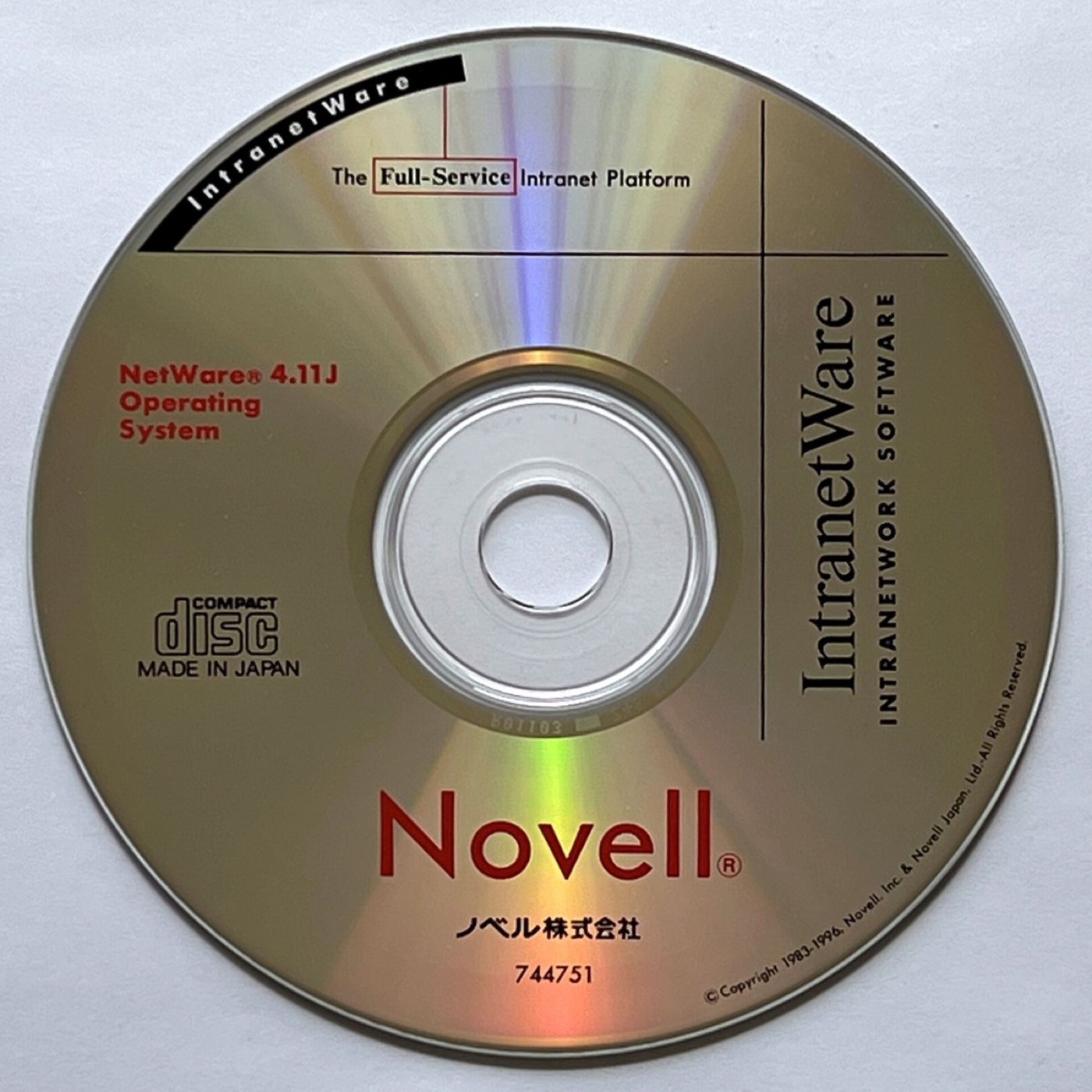
This is an installation disc for NetWare, Novell's network software, from the nineteen nineties. NetWare itself is long retired. But products descended from Novell's work, such as the GroupWise email system, are still sold by OpenText.
The price was the largest OpenText had ever paid.
The figures on screen show it. When the deal was announced, Micro Focus was valued at about six billion dollars including its debt. At completion in January twenty twenty-three, OpenText put the price at about five point eight billion.
OpenText's own later filings put the figure at six point two billion once all of Micro Focus's debt had been paid off. Whichever number is used, it was more than all the earlier deals combined.
The card on screen shows what happened on the day the deal closed. OpenText said it would cut about eight per cent of the combined staff. BetaKit, a Canadian technology news site, reported that as roughly two thousand jobs.
9. Paying it back
Micro Focus made OpenText much bigger. It also made it much more indebted.
The line on screen shows the jump in debt. At the end of June twenty twenty-three, OpenText's long-term debt stood at about eight point six billion dollars. That was roughly double the year before.
The company started to sell some of what it had just bought.
The diagram on screen shows the first sale. The part of Micro Focus that made tools for mainframes went to a company called Rocket Software. A mainframe is the large central computer that banks, insurers and governments still run their core systems on. The price was two point two seven five billion dollars, and the money went to paying down debt.
The timeline on screen shows the two years that followed. The sale was announced in November twenty twenty-three and completed on the first of May twenty twenty-four. In July twenty twenty-four OpenText announced about one thousand two hundred job cuts. In April twenty twenty-five it announced another round, tied to artificial intelligence.
Asked how the company chose which jobs to cut, Barrenechea told investors: "The work still needs to be done, it's just going to be done with a machine via AI." BetaKit reported that the combined plans meant a net reduction of about two thousand jobs.
The line on screen shows what happened to revenue. With Micro Focus included for a full year, revenue reached about five point seven seven billion dollars in the year to June twenty twenty-four. The next year it fell to about five point one seven billion, down more than ten per cent.
Some of that fall was the business that had been sold. But it meant that the company built by buying revenue now had less of it every year.
10. The board acts
The results for the year to June twenty twenty-five were published on the seventh of August. Four days later the board acted.
The timeline on screen shows those days. On the seventh of August twenty twenty-five, OpenText reported its fall in revenue. On the eleventh, the board removed Mark Barrenechea as chief executive after thirteen years, and James McGourlay became interim chief executive.
The company did not say why in so many words. McGourlay was a long-serving insider, with more than twenty-five years at OpenText in sales and operations. Tom Jenkins, the chairman, became executive chair.
The statement from Jenkins came closest to a reason. He said that "the Board believes there is an opportunity to enhance shareholder value by growing revenue in our core Information Management for AI business and redeploying capital from the non-core assets."
In plainer words, the board wanted to grow the main business rather than keep buying new ones. Anything that did not fit would be sold.
The card on screen shows what the company said it would do next. It would keep working with its financial advisers to explore what it called portfolio-shaping opportunities. That is corporate language for deciding which businesses to keep and which to sell.
The strip on screen shows the chief executives since Jenkins took charge. Tom Jenkins ran it from nineteen ninety-four and John Shackleton from two thousand and five. Mark Barrenechea took over in twenty twelve, and James McGourlay stepped in as interim leader in twenty twenty-five.
The one missing from the strip had not yet been chosen.
11. Selling the pieces
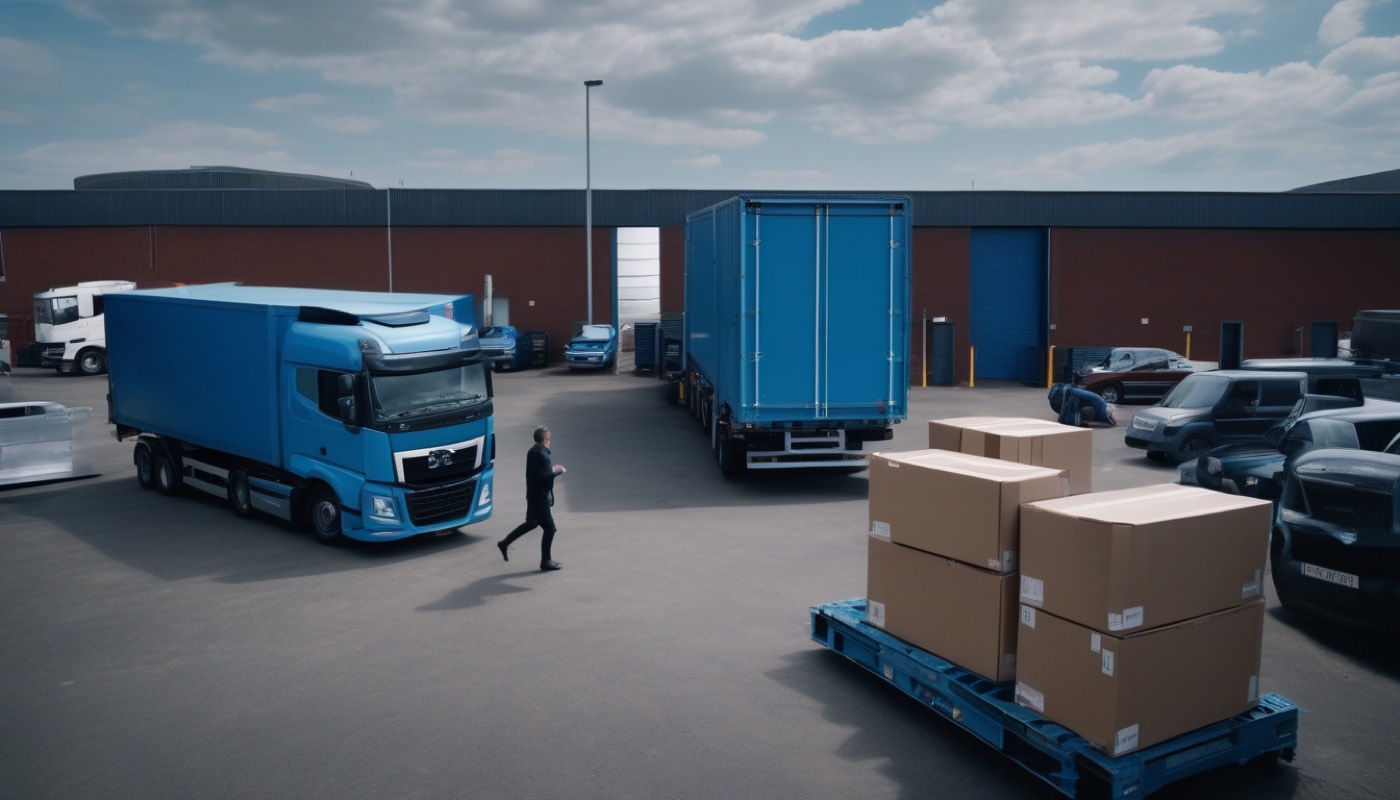
The selling started within two months.
The diagram on screen shows the businesses sold and who bought them. The mainframe tools had already gone to Rocket Software. eDOCS, software for law firms' documents, went to a company called NetDocuments. Vertica, a database business that came with Micro Focus, went to Rocket Software as well.
The bars on screen compare the two newest sales. NetDocuments paid one hundred and sixty-three million dollars for eDOCS. Rocket paid one hundred and fifty million for Vertica.
The eDOCS sale was announced in October twenty twenty-five and completed in January twenty twenty-six. Both units were small. According to OpenText, eDOCS brought in about thirty million dollars a year, and Vertica about eighty million.
In the middle of those sales, the board found its permanent chief executive.
The timeline on screen shows how the year unfolded. On the twenty-ninth of January twenty twenty-six, OpenText named Ayman Antoun as chief executive, from the twentieth of April. The Vertica sale was announced in February and completed on the eleventh of May.
Antoun had spent thirty-five years at IBM, and finished there as president of IBM Americas. He grew up in the Kitchener-Waterloo area and studied electrical engineering at the University of Waterloo.
In the announcement, Antoun said: "I am energized by the opportunity to lead OpenText into its next chapter." He pointed to OpenText's core products, and to trusted data, as its advantage.
The cuts continued too. BetaKit reported about eight hundred and eighty job cuts in March, and about four hundred more in July.
12. What OpenText is now

On the sixth of August twenty twenty-six, OpenText published its first full-year results under Antoun.
The figures on screen show them. Revenue for the year to June was about five point two five billion dollars, up one point five per cent. Cloud revenue, from software the company runs for its customers over the internet, rose five point five per cent.
That small rise came after the businesses already sold were counted out. The company's annual report says that, adjusted for those sales and for currency, revenue actually fell by half a per cent.
The line on screen shows the debt coming down. Long-term debt was about eight point six billion dollars in twenty twenty-three. By the end of June twenty twenty-six it was about five point seven billion.
The company's pitch now is artificial intelligence. It sells a set of AI tools called Aviator, built into its products, and argues that its real asset is the data its customers already keep in its systems.
Antoun put it this way in the results: "AI is creating urgency for every organization, but trusted data determines whether AI delivers value." The claim is that companies cannot use AI well without well-kept records, and that keeping records is what OpenText does.
The card on screen shows the company today. According to its annual report, OpenText had about nineteen thousand nine hundred employees at the end of June twenty twenty-six. Its headquarters is still in Waterloo, on a street named after Frank Tompa, one of its founders.
So the question is the one every company built by acquisition faces in the end. OpenText grew for three decades mostly by buying other people's customers. It has now stopped buying, and it is selling. Whether it can grow on its own, from the products it already has, is what the next few years will show.
The timeline on screen follows the whole road, from a dictionary to the present. A search program for the Oxford English Dictionary became a company in nineteen ninety-one. It became a buyer of rivals, then a borrower on a very large scale. It is now a seller of what it bought, under a new chief executive.
Sources and credits
Photo credits (Wikimedia Commons)
- Sir James Murray, first editor of the Oxford English Dictionary, in his Scriptorium: Unknown authorUnknown author, Public domain - https://commons.wikimedia.org/wiki/File%3AJames_Murray_in_a_scriptorium.jpg
- Oxford University Press building, Walton Street, Oxford - publisher of the OED: Jonas M, CC0 - https://commons.wikimedia.org/wiki/File%3AOxford_University_Press_Building_%E2%80%93_Walton_Street.jpg
- University of Waterloo computer room, Mathematics and Computer Building (1968): University of Waterloo. Central Photographic., Public domain - https://commons.wikimedia.org/wiki/File%3AWaterloo-IBM-System-360model75.jpg
- Novell NetWare 4.11 server installation CD (1996): Asanagi, CC0 - https://commons.wikimedia.org/wiki/File%3ANetWare_4_installation_CD_%28Ja%29_2025-02-22.jpg


Primary sources
- Wikipedia, 'James Murray (lexicographer)' () - editor from 1879; first edition 1928, twelve volumes, 414,825 words defined.
- Frank Tompa, 'The New OED project', University of Waterloo - Waterloo joined 1984; Centre for the New OED January 1985; second edition March 1989. Wikipedia, 'Oxford English Dictionary' - 20 volumes, about 59 million words; PAT by Gaston Gonnet.
- International Directory of Company Histories, 'Open Text Corporation' (encyclopedia.com, re-) - 1984-1989 search work; founded June 1991, first shipment September; Jenkins 1994; Open Text Index April 1995; Yahoo September 1995; NASDAQ January 1996, 4.6 million shares at $15, about $61m net; Odesta November 1995, C$29.8m; Livelink early 1996; Shackleton CEO July 2005.
- Wikipedia, 'Tim Bray' () - project manager from 1987, left 1989. OpenText board profile, Thomas Jenkins - chairman since 1998.
- OpenText Form 8-K exhibit, 2 October 2006 (Hummingbird, about $489m); 'Open Text to Acquire Vignette', 6 May 2009 (about $310m), completed 21 July 2009.
- OpenText release, 15 December 2011 (Barrenechea, effective 2 January 2012); Francisco Partners, 5 November 2013 (GXS, $1.165bn total, $1.065bn cash, $100m shares); OpenText, 'OpenText Buys GXS', 16 January 2014.
- OpenText, 'OpenText Buys Documentum', 23 January 2017; Carbonite completion release, 24 December 2019 (about $1.45bn); Zix completion release, 23 December 2021 (about $860m).
- OpenText, 25 August 2022 (Micro Focus announced, about $6.0bn) and 'OpenText Buys Micro Focus', 31 January 2023 (about $5.8bn); OpenText Form 10-K FY2026 ($6.2bn). BetaKit, 31 January 2023 (8%, about 2,000 jobs).
- OpenText, 28 November 2023 and 8-K exhibit of 1 May 2024 (AMC to Rocket Software, $2.275bn); 8-K, 3 July 2024 (about 1,200 positions); BetaKit, Madison McLauchlan, 6 May 2025.
- OpenText Forms 10-K, SEC EDGAR - revenue FY2010-FY2026 and long-term debt FY2019-FY2026; FY2025 results, 7 August 2025 ($5.168bn, down 10.4%).
- OpenText Form 8-K, 'OpenText Announces Leadership Transition', 11 August 2025.
- OpenText Q4 FY2026 results, 8-K Exhibit 99.1, 6 August 2026 - revenue $5.246bn (+1.5%), cloud $1.959bn (+5.5%), long-term debt $5.734bn; Antoun quotation re-. OpenText Form 10-K FY2026 - about 19,900 employees; 275 Frank Tompa Drive; Aviator; -0.5% adjusted.
- BetaKit, 24 March 2026 (about 880 jobs) and 8 July 2026 (about 400 jobs).
Not regulated financial advice.