
Sun Microsystems: A Complete History
Sun Microsystems built the workstations, chips and software that ran much of the early internet, then disappeared into Oracle. This video follows the company from its first day to its last.
In 1980, Stanford graduate student Andy Bechtolsheim designed a networked workstation. On 24 February 1982 he founded Sun Microsystems with fellow students Vinod Khosla and Scott McNealy; Bill Joy, a lead author of Berkeley's BSD Unix, joined soon after and brought BSD into Sun's first operating system, SunOS.
Sun sold Unix workstations to engineers and scientists, turned a profit in its first quarter, and went public in 1986. In 1984 it released the Network File System and gave the design away, making it a Unix industry standard. From 1985 it built its own SPARC processor, launching the SPARCstation 1 in April 1989 at $9,000.
A 1987 pact with AT&T to merge BSD and System V into SVR4 set off the 'Unix wars'; by 1993 Sun's own SunOS had moved onto System V-derived Solaris. In 1991 engineer James Gosling's Green Project, first called Oak, became Java by 1995, announced with the slogan 'write once, run anywhere.'
Through the 1990s, Sun's SPARC servers running Solaris powered much of the commercial web, and by 2000 its 'We're the dot in .com' ad campaign advertised that dominance, with its stock near $250 a share. The 2001 dot-com crash sent the stock below $10 within two years, forcing deep job cuts and a new slogan, 'Take it to the Nth.'
Sun's recovery bets included OpenSolaris and ZFS (2005-06) and buying MySQL for about $1 billion (2008), under new CEO Jonathan Schwartz. It was not enough: on 20 April 2009 Oracle agreed to buy Sun for $9.50 a share, about $7.4 billion, completing the deal on 27 January 2010. Java, NFS, ZFS and the Solaris BSD/System V lineage all continued inside Oracle and the open-source world long after.
No figure appears without its date and source.
Educational documentary. Not financial or investment advice.
In these topics
Chapters
- A network in a box, 1980-1982
- Bill Joy and the BSD inheritance
- Selling workstations to engineers, 1982-1984
- NFS and the networked desktop, 1984
- SPARC: building its own chips, 1985-1989
- The Unix wars and the System V switch, 1987-1993
- Java: write once, run anywhere, 1991-1995
- Powering the early web, mid-1990s
- 'We're the dot in .com': the dot-com peak, 1998-2000
- The crash and the long decline, 2001-2006
- Late bets: open source and new leadership, 2002-2009
- The Oracle takeover, 2009-2010
- What outlived Sun
Video notes
1. A network in a box, 1980-1982
In the late nineteen seventies, most computers that could talk to each other over a network filled a whole room. Andy Bechtolsheim thought one could fit on a desk, as what people were starting to call a workstation: a powerful computer built for one person, rather than many people sharing one big machine.
In nineteen eighty, Bechtolsheim was a graduate student at Stanford University. He designed a small workstation built to plug straight into the campus computer network, and he called it the Stanford University Network workstation. By nineteen eighty-one, fellow students Vinod Khosla and Scott McNealy had seen what it could do, and wanted to sell it. On the twenty-fourth of February, nineteen eighty-two, the three of them founded a company to build and sell it, naming it Sun Microsystems after the workstation itself.
Stanford gave Sun more than an idea. It gave the company engineers who already understood networked computing, in a part of California already filling with chip and computer start-ups.
Stanford University, in Palo Alto, California, had already built one of the first large computer networks for research use. The Stanford University Network workstation took its name directly from that network. Bechtolsheim designed the machine inside Stanford's own engineering buildings, on the campus shown here. The quad in this photograph dates from decades before Sun existed, but the university it belongs to is where this whole story starts.
Sun's first offices were in Santa Clara, barely ten miles from the Stanford campus where the idea began. The company stayed in that same part of California for the whole of its life, close to both its founders' university and the suppliers, customers and rivals that made up Silicon Valley.
2. Bill Joy and the BSD inheritance
Sun needed more than hardware. A workstation is useless without software telling it what to do, and the three founders had no finished operating system of their own - the core software that manages a computer and lets everything else run on it.
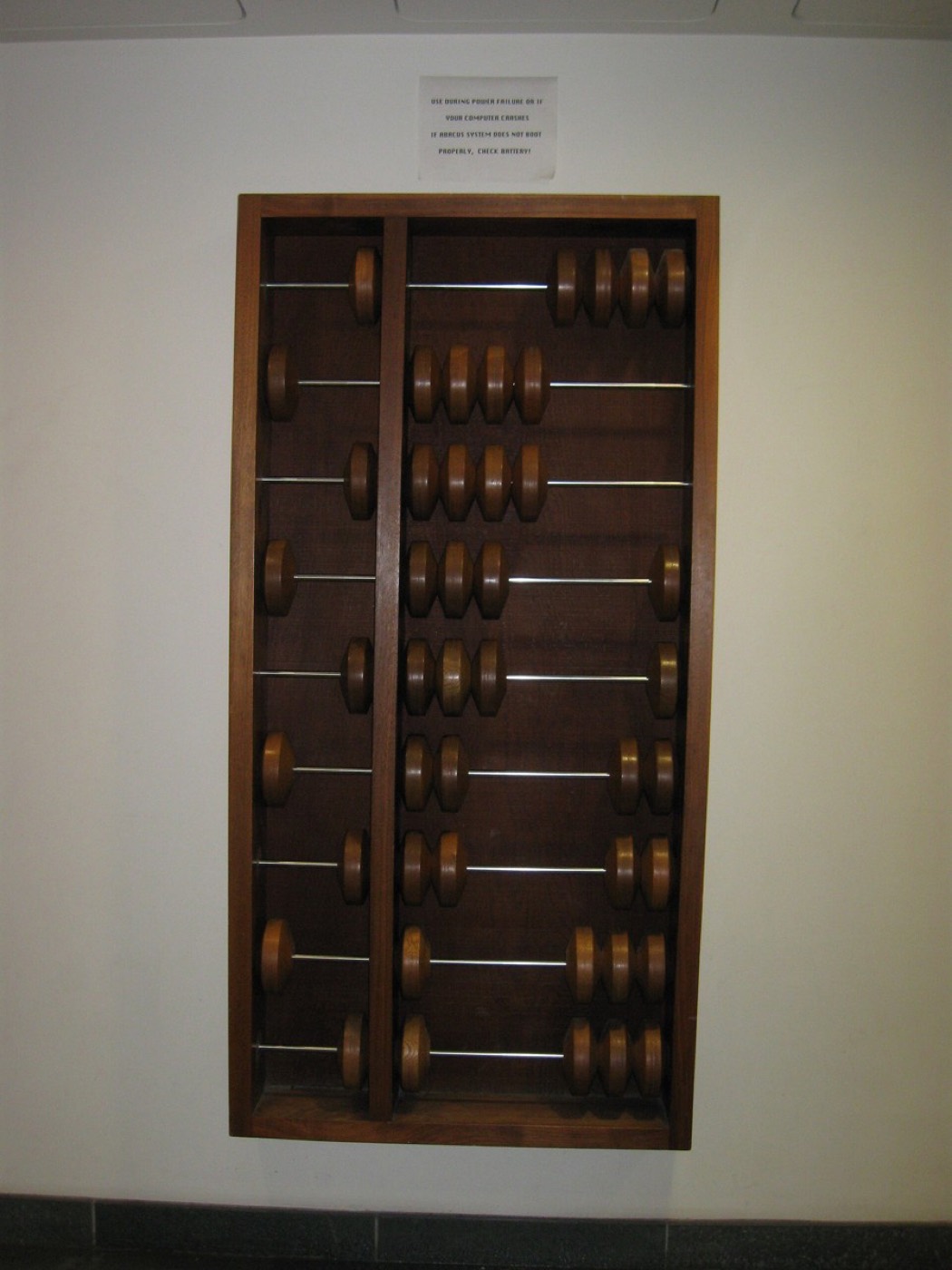
The university this time was not Stanford but the University of California, Berkeley, shown here in its computer science building. Berkeley was home to Bill Joy, who had already helped write a widely used version of Unix, a shared operating system first built at the AT&T Bell Labs research centre. Berkeley's own version was known as BSD, the Berkeley Software Distribution, and Joy was one of its lead authors.
Joy was based at Berkeley, while Bechtolsheim, Khosla and McNealy had built the company out of Stanford and nearby Santa Clara. Joy joined Sun as a founder soon after the February nineteen eighty-two signing, bringing his BSD code straight into the new company.
Sun built its first operating system, called SunOS, directly on top of Joy's BSD Unix. Rather than writing a new system from nothing, Sun took code already trusted at Berkeley and adapted it to run on its own workstations. That decision linked Sun's software to BSD for the whole of the next decade, a connection later chapters return to.
3. Selling workstations to engineers, 1982-1984
With hardware from Bechtolsheim and software from Joy, Sun had something to sell: a networked Unix workstation, aimed at the engineers and scientists who needed real computing power on their own desks.
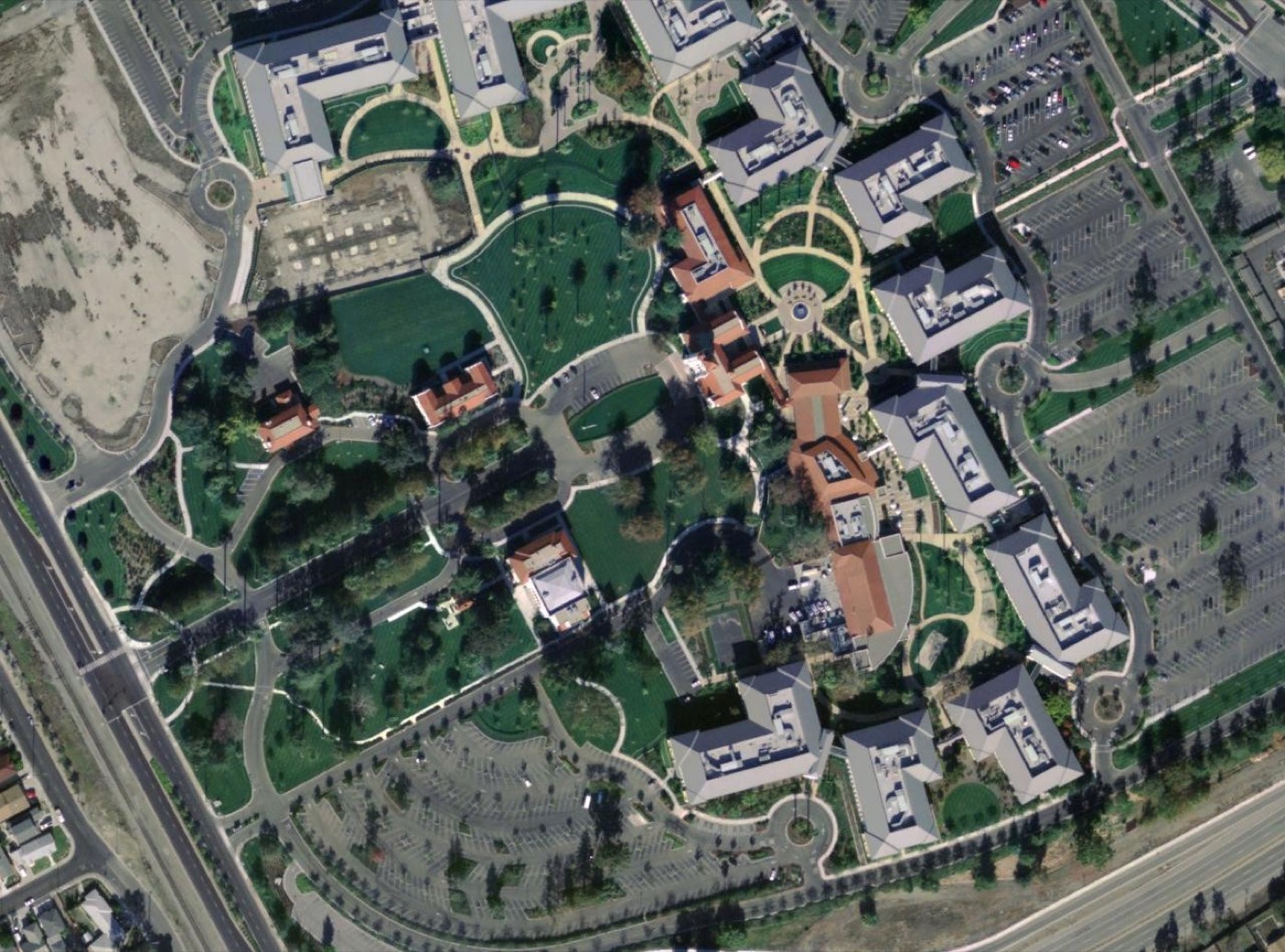
Sun's early customers were universities and engineering firms, the same kind of institution Stanford itself represented. Its workstations found a ready market because they ran Unix, already familiar to the scientists and engineers buying them, and because they could be linked together over a network straight out of the box. Sun's first headquarters sat at the Agnews Development Center in Santa Clara, shown here, before the growing company moved to larger sites nearby.
Sun was profitable from its very first quarter of trading, in the summer of nineteen eighty-two. Sales kept growing through nineteen eighty-three and nineteen eighty-four, as more engineering firms adopted its machines. In nineteen eighty-six, Sun went public, trading its shares for the first time under the stock symbol SUNW.
That early profit mattered, because it gave Sun the money to keep building its own hardware and software, rather than depending entirely on outside investors.
Both of Sun's early California homes sat close together: Stanford, to the north, where the idea began, and Santa Clara, to the south, where the growing company did business.
4. NFS and the networked desktop, 1984
A company selling networked workstations had an obvious problem still unsolved: engineers wanted to share files between machines as easily as they used their own local disk.
In nineteen eighty-four, Sun released the Network File System, usually called NFS: a way for computers on a network to open and save files on another machine as if those files sat on their own disk. Sun then placed the design of NFS in the public domain, rather than keeping it to itself, and invited every other computer maker to build their own version. That single choice meant NFS worked the same way no matter whose Unix machine was on the other end of the network.
Because Sun gave the design away rather than selling it, other companies had every reason to adopt it, and most of the Unix industry did exactly that within a few years. NFS became the standard way Unix computers shared storage over a network, a position it still held decades later. Giving away a technology to make it the industry standard became something of a pattern for Sun, one this video returns to later with Java.
5. SPARC: building its own chips, 1985-1989
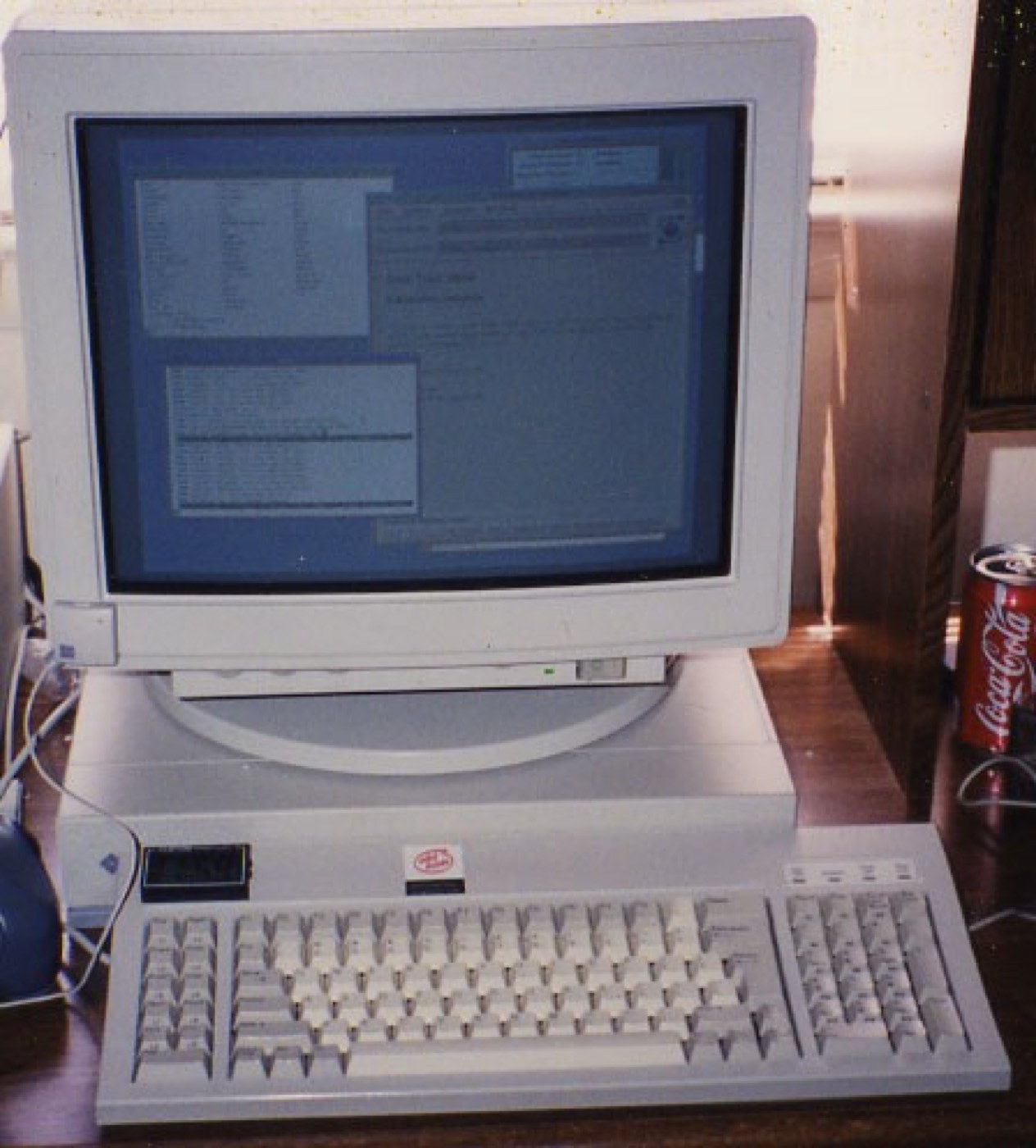
By the mid nineteen eighties, Sun's workstations still relied on processor chips bought from outside suppliers. Sun wanted a chip designed for exactly what its own machines needed to do.
Sun began designing that chip around nineteen eighty-five, calling it SPARC. The design was licensed to outside chip manufacturers from nineteen eighty-seven, so several companies could make SPARC chips rather than only Sun itself. On the twelfth of April, nineteen eighty-nine, Sun introduced the SPARCstation 1, the first desktop machine built around it.
SPARC is short for Scalable Processor Architecture, and it is a RISC design, meaning reduced instruction set computer. A RISC chip is built around a small set of simple instructions, carried out very quickly, rather than a large set of complicated ones. That simplicity is what let Sun's engineers make the chip both fast and comparatively cheap to produce.
This is the SPARCstation 1 itself, the machine that put Sun's own chip on sale to the public.
It sold for as little as nine thousand dollars without a hard disk, far below the price of Sun's earlier machines. Around thirty-five thousand were sold in its first year alone, and total sales eventually passed one hundred and twenty thousand.
The SPARCstation 1 proved that owning the chip design, not just the computer around it, let Sun cut its prices and still make money.
6. The Unix wars and the System V switch, 1987-1993
Sun's growing success worried its rivals, and in nineteen eighty-seven it struck a deal that worried them even more.
In nineteen eighty-seven, Sun and AT&T announced a project to merge BSD, the Berkeley Unix that Sun's own software was built on, with AT&T's own version, called System V. The merged result, released in nineteen eighty-eight as System V Release Four, or SVR4, combined features of both into a single Unix. Other Unix vendors feared the AT&T-Sun partnership gave Sun an unfair head start, and a group of them formed a rival alliance that same year.
Sun itself gradually moved its own operating system away from its BSD roots and onto the System V-derived design over the years that followed. SunOS version four point one point four, announced in nineteen ninety-three, was the last version built mainly on BSD. Everything after it carried the new name Solaris, and was built on the System V lineage instead.
This fight among Unix companies over whose version would lead became known as the Unix wars, and Sun's switch from BSD to System V was one of its defining moments.
7. Java: write once, run anywhere, 1991-1995
While Sun's hardware business matured, a small team inside the company was quietly starting work on something that would outlast the hardware itself.
In nineteen ninety-one, Sun engineer James Gosling began what was internally called the Green Project, building a programming language meant to run inside everyday electronic devices. Gosling first named the new language Oak, after a tree outside his office window. The team later discovered that name was already taken, so by nineteen ninety-five they had renamed it Java.
Sun gave the new language a slogan meant to sum up exactly why it mattered to programmers everywhere.
Sun announced Java publicly at the SunWorld conference in San Francisco on the twenty-third of May, nineteen ninety-five. Sun summed up its promise in a slogan used again and again: "write once, run anywhere." It meant one Java program could run everywhere, as long as each computer had the right small piece of Java software installed to understand it.
That promise arrived just as the wider internet was about to make it extremely valuable.
8. Powering the early web, mid-1990s
Through the middle of the nineteen nineties, more and more computers were connecting to a single shared network: the internet, and the World Wide Web growing on top of it.
Running Solaris, the Unix successor to SunOS described earlier, Sun's SPARC-based servers became common equipment in the data centres behind the earliest commercial websites and search engines. Reports from the period describe some of the biggest names of the early web running substantial parts of their operations on Sun hardware, among them eBay and Yahoo.
That shift mattered more than any single customer name. A company that had started by selling workstations to scientists was about to become one of the most important hardware suppliers behind the growing internet, at just the moment that industry began to boom.
9. 'We're the dot in .com': the dot-com peak, 1998-2000
By the end of the nineteen nineties, Sun's servers were default equipment for the fast-growing wave of internet companies known as dot-coms, and Sun wanted everyone to know it.
Sun's slogan for the period summed up how central it believed its hardware had become to the internet itself: "We're the dot in .com."
Starting in February two thousand, Sun built an entire advertising campaign around that slogan. The campaign used ten advertisements spoofing famous movie posters, with a planned spend of more than one hundred million dollars. One version put a giant Sun server in the role of a Hollywood monster, looming over the companies it claimed to be rescuing from being left behind online.
The campaign reflected real numbers, not just confidence. During the dot-com bubble, investors pushed Sun's own stock as high as two hundred and fifty dollars a share. That price made the company, for a while, one of the most valuable in the industry.
10. The crash and the long decline, 2001-2006
In two thousand, the dot-com bubble burst, and the customers who had filled Sun's order books started disappearing almost overnight.
By December two thousand and one, Sun's stock had fallen back to about one hundred dollars a share, roughly where it had traded before the bubble began. It kept falling, and by two thousand and two it was below ten dollars. Sun responded by cutting its workforce repeatedly, including one round that removed between five and six thousand jobs, around a sixth of its staff.
A slogan built on dot-com confidence no longer fit a company fighting to survive the dot-com collapse.
By early two thousand and one, Sun had retired its old slogan. The replacement was deliberately distanced from the internet bubble: "Take it to the Nth." The change showed how far Sun's fortunes had turned. A company that once advertised its grip on the web now wanted nothing to do with the word that used to define it.
11. Late bets: open source and new leadership, 2002-2009

Sun spent the rest of the decade looking for a way back, and increasingly it looked to open source software - code given away freely, for anyone to use, copy or improve - rather than products sold only by Sun itself.
In June two thousand and five, Sun released most of the Solaris operating system's own code as open source, under a new project called OpenSolaris. The following year, in June two thousand and six, Sun shipped ZFS, an advanced filesystem it had built, as part of a Solaris update. On the twenty-fourth of April that same year, Jonathan Schwartz became Sun's chief executive, succeeding co-founder Scott McNealy, promising to turn Sun's open-source bets into a real recovery.
The biggest of those bets arrived two years later, built around a product Sun had not invented itself.
In January two thousand and eight, Sun agreed to buy MySQL, a popular open-source database company, for about one billion dollars; the deal closed the following month. Combined with OpenSolaris, the open Java platform and ZFS, the MySQL purchase was meant to make Sun the company open-source software ran on - an ambitious plan, built on giving software away in the hope of selling the hardware and support underneath it.
12. The Oracle takeover, 2009-2010

Sun's open-source turnaround was not enough on its own, and by early two thousand and nine the company was looking for a buyer rather than a rescue plan of its own making.
On the twentieth of April, two thousand and nine, Oracle agreed to buy Sun in a cash deal. Sun's own shareholders cleared the sale that July. The European Union's competition regulator finished examining the deal and cleared it on the twenty-first of January, two thousand and ten, and Oracle completed the purchase six days later, on the twenty-seventh of January. Sun Microsystems ceased to exist as an independent company.
The price was nine dollars fifty a share. In total, the deal was worth about seven point four billion dollars. Net of Sun's own cash and debt, Oracle's real cost was closer to five point six billion. A company not yet thirty years old had been folded entirely into a much larger rival.
The company that vanished that day had begun in two places: Stanford, where Bechtolsheim first built it, and Berkeley, where Joy had written the Unix code it ran on.
13. What outlived Sun

Sun Microsystems the company disappeared into Oracle in January two thousand and ten. A surprising amount of what it built did not.
Java, launched at that SunWorld conference back in nineteen ninety-five, remains one of the most widely used programming languages in the world, now developed and sold under Oracle's stewardship. NFS, given away free in nineteen eighty-four, is still a standard way computers share files over a network. ZFS lives on through OpenZFS, an open-source project maintained outside any single company. And Solaris's own hybrid lineage, part BSD and part System V, continues through open-source descendants built by programmers who once worked on Sun's own Unix.
None of that was guaranteed when Bechtolsheim first wired a workstation into the Stanford network back in nineteen eighty. But the habit Sun formed early, of giving its best ideas away so the rest of the industry would build on them, turned out to outlast the company that started it.
Sources and credits
Photo credits (Wikimedia Commons)
- Stanford University Main Quad, 1925: Staff, Public domain - https://commons.wikimedia.org/wiki/File%3ALeRoy_Abrams_Stanford_Quad_1925.jpg
- University of California, Berkeley - Soda Hall (home of the Berkeley computer science department, source of BSD Unix): D Coetzee, CC0 - https://commons.wikimedia.org/wiki/File%3AAbacus_at_Soda_Hall%2C_UC_Berkeley.jpg
- Sun Microsystems headquarters at the Agnews Development Center, Santa Clara, California: User:Finlay McWalter, Public domain - https://commons.wikimedia.org/wiki/File%3AWfm_sun_agnews.jpg
- Sun SPARCstation 1 workstation, 1989: Fourdee at English Wikipedia, Public domain - https://commons.wikimedia.org/wiki/File%3ASPARCstation_1.jpg


Primary sources
- Wikipedia, 'Sun Microsystems' () - founding 24 Feb 1982; founders; Stanford University Network workstation; profitable first quarter; 1986 IPO.
- Wikipedia, 'SunOS' () - BSD heritage; SunOS 4.1.4 (1993) as last BSD release; Solaris as System V-derived successor.
- Wikipedia, 'Unix wars' () - 1987 AT&T-Sun SVR4 pact; Open Software Foundation formed 1988.
- Wikipedia, 'SPARC' and 'SPARCstation 1' () - SPARC from 1987, Sun-4; SPARCstation 1 announced 12 April 1989.
- Wikipedia, 'Network File System' () - released 1984, placed in the public domain, NFS Connectathon 1986.
- landley.net mirror of Sun Microsystems company history, 'sun-history.html' () - founding detail, SPARCstation 1 pricing and unit sales, 1986 IPO.
- i-Programmer, 'Java Turns 30' () - Green Project 1991, Oak renamed Java, SunWorld announcement 23 May 1995.
- Salon, 'The Dot-cominator', 26 January 2000 () - 'We're the dot in.com' campaign, ten ads, $100m+ planned spend.
- HPCwire, 'Sun's McNealy Moves Forward into Next Era', 10 May 2002, and Computerworld, 'Sun ditches its dot in dot com slogan' () - 'Take it to the Nth' slogan change.
- eWeek, 'McNealy Out as Sun CEO, Schwartz In', and Sun Microsystems Form 8-K, SEC EDGAR, April 2006 () - Jonathan Schwartz CEO effective 24 April 2006.
- eWeek, 'Sun Completes $1B Buyout of MySQL', February 2008 () - MySQL deal agreed Jan 2008, closed Feb 2008.
- Sun Microsystems Form 8-K and press release, SEC EDGAR, 20 April 2009; TechCrunch, 'Oracle To Buy Sun For Approximately $7.4 Billion', 20 April 2009 () - deal terms, $9.50/share.
- TechCrunch, 'EU Approves $7.4 Billion Deal Between Oracle And Sun', 21 January 2010 () - EU antitrust clearance.
- Wikipedia, 'Acquisition of Sun Microsystems by Oracle Corporation' () - deal completion 27 January 2010; post-acquisition fate of Java, NFS, ZFS, Solaris.
Not regulated financial advice.