
Vignette, a Timeline
In early 2000 a software company from Austin, Texas, was valued at about $15 billion - more than Xerox. Nine years later it was sold for about $321 million. This video follows Vignette from its founding to its sale, and what became of it.
Ross Garber and Neil Webber founded Vignette at the end of 1995 to make big websites easy to publish. CNET handed over its PRISM publishing software and, per Forbes, about $500,000 for a third of the company; StoryServer shipped in January 1997 and built each web page from a database as the visitor arrived - the idea now called a content management system.
Greg Peters became chief executive in June 1998. The IPO on 19 February 1999 was priced at $19; the shares closed the first day at about $42.69, and $100 invested that day was worth $1,716 by the end of 1999. In 2000 Vignette used its soaring shares to buy DataSage (about $587m) and OnDisplay (about $1.5bn). A share reached $297 before a three-for-one split; staff reached 2,330. The company lost $532m that year.
Then the crash: about 975 jobs cut in 2001, a $799m write-down, a loss of about $1.53bn, and shares under a dollar by late 2002. Tom Hogan rebuilt with small purchases - Epicentric, Intraspect and Tower Technology. Mike Aviles returned Vignette to profit in 2006-07, before sales fell in 2008.
On 6 May 2009 Open Text agreed to buy Vignette for $8 in cash plus 0.1447 of an Open Text share for each share; the deal closed on 21 July 2009 at about $321 million. In April 2011 the Vignette name was dropped. And in September 2026 OpenText, now a $5.2bn-a-year company, priced $1bn of new notes.
Forwards or backwards? No figure appears without its date and source.
Educational documentary. Not financial or investment advice.
In these topics
Chapters
Video notes
1. Worth billions, sold for millions
In the first weeks of two thousand, a software company from Austin was one of the most valuable names on the stock market. It was called Vignette. Most people had never heard of it, but many of them had used the websites it ran.
The figures on screen show how high it went. In February two thousand, a news report put Vignette's value at its January high at about fifteen billion dollars. That was more than the whole of the copier giant Xerox.
Nine years later, in July two thousand and nine, Vignette was sold to a Canadian software company called Open Text.
The bars on screen set the two values side by side. At its height the stock market valued Vignette at about fifteen billion dollars. Open Text paid about three hundred and twenty-one million, in cash and shares, a small fraction of that.
So how does a company fall that far in less than a decade? Vignette's story is the dot-com boom told through one company. The boom was the rush of money into internet businesses at the end of the nineteen nineties, and the crash that followed it.
This video follows Vignette from its start in Austin to its sale. It covers the software that ran the early commercial web, and the stock market listing that made its shares a sensation. It covers the buying spree paid for in those shares, and the crash. And it ends with what became of Vignette inside Open Text.
2. Austin, 1995: making the web publishable


In nineteen ninety-five the World Wide Web was only a few years old. Most websites were a handful of pages, typed out by hand and changed rarely.
That worked for a small business. It did not work for a newspaper, a bank or a big shop. Those companies wanted websites with thousands of pages, changing every hour. Every change meant a programmer editing files one at a time.
This is downtown Austin, where Vignette began. Ross Garber and Neil Webber founded the company at the end of nineteen ninety-five. Their aim was to make publishing on the web easier, and more personal.
Garber and Webber had a simple idea. Keep the words, pictures and prices in a database, which is an organised store of information that a computer can search. Then let the software build each web page from the database at the moment a visitor asks for it.
The diagram on screen shows how that works. Writers and editors put their stories into the database. The server picks out the right pieces for each visitor and fits them into a template, which is the page's fixed layout. The finished page goes out to the visitor's web browser.
That kind of software came to be called a content management system. In plain words, it is a program that lets people who are not programmers run a big website. The writers write, the editors approve, and the software builds the pages.
This is the kind of desk where that work was done, with a bulky tube monitor of the early web years. Before systems like Vignette's, changing a big company website meant waiting for a programmer. Afterwards an editor could publish a story without writing any code.
3. The CNET deal and StoryServer
Vignette did not start from nothing. It started with software written by one of the first big online publishers.
The map on screen shows the two companies. CNET was an online technology news company in San Francisco, and it had built its own system for publishing its websites. Vignette, in Austin, wanted to sell that kind of system to everyone.
The diagram on screen shows the deal they made in nineteen ninety-six. CNET handed over the rights to its publishing software, which it called PRISM. According to Forbes, CNET also put in about five hundred thousand dollars, and in return took a third of the company.
Money came from investors too. Venture capital firms put money into young companies in return for a share of them, and two of them backed Vignette from the start.
The timeline on screen shows the first two years. In February nineteen ninety-six, two investment firms, Austin Ventures and Sigma Partners, put in four hundred thousand dollars of seed money. In July the CNET agreement was signed. In January nineteen ninety-seven, Vignette shipped its first product, StoryServer, built from the software that came from CNET.
StoryServer did what Garber and Webber had described. It kept a website's stories in a database and built the pages as visitors arrived. It could show different visitors different pages, which is what the founders meant by personal.
The name said who it was for. Newspapers, magazines and news sites thought in stories, and StoryServer was sold as the way to put stories on the web. Its first big customers included the Chicago Tribune and the online travel agency Preview Travel.
4. Growing up: Greg Peters and XML

By nineteen ninety-eight Vignette was selling well beyond the news business. Banks, phone companies and retailers wanted big, changing websites too.
The card on screen lists the changes of nineteen ninety-eight. In June, Vignette hired Greg Peters as chief executive, and Ross Garber became chairman. In July it made StoryServer four available. By October, Forbes reported, Vignette had raised about twenty-seven point eight million dollars from venture capital firms.
Hiring a professional chief executive is a common step when a start-up is getting ready to sell its shares to the public. Peters had run a software company called Logic Works, and investors wanted to see someone who had run a larger business.
The product was changing too. StoryServer four was built around a new technology called XML.
The diagram on screen shows the idea. XML is a way of labelling information so that different computer systems can read it. A price is marked as a price, and a headline as a headline. That meant Vignette's software could pass content to other systems as well as to web pages.
That mattered because the web was changing from a place to read into a place to buy. A company's website now had to talk to its stock records, its orders and its customer lists.
Peters had a clear view of how to sell into that market.
He told Forbes, "I am a huge believer in the herd mentality. If you can sell into the lead customers and make them a success, everybody else will follow."
5. February 1999: the IPO


In early nineteen ninety-nine, investors wanted anything connected with the internet.
An initial public offering, or IPO, is the day a private company first sells its shares to the public on a stock exchange. For internet companies in nineteen ninety-nine, that day was often a wild one.
This is Nasdaq's MarketSite in New York, the public face of the exchange where Vignette's shares were listed. They traded under the symbol V-I-G-N, and Vignette sold four million shares on the first day.
The bars on screen show Vignette's first day, the nineteenth of February nineteen ninety-nine. The shares were priced at nineteen dollars each. By early afternoon CNN reported them up a hundred and fifty-two per cent. They closed the day at about forty-two dollars seventy. That was still a rise of about a hundred and twenty-five per cent.
The rise did not stop there. Through the rest of the year the shares kept climbing, much faster than the business behind them.
The figures on screen follow a hundred dollars put into Vignette's shares on the first day. By the last day of nineteen ninety-nine, according to Vignette's own filing, it was worth one thousand seven hundred and sixteen dollars. That year Vignette's sales were eighty-nine million dollars, and it still lost money.
6. Buying with bubble money

A company whose shares are worth a great deal can use those shares as money. In two thousand, Vignette did exactly that.
Greg Peters told a reporter in February what he thought the moment demanded.
"This is a land grab. We need to make sure we get customers fast."
The timeline on screen shows the two biggest purchases. In January two thousand, Vignette agreed to buy DataSage, which made software that studied what customers did on a website. In May it agreed to buy OnDisplay, whose software gathered content from other companies' systems. Both deals were paid for in Vignette shares.
The map on screen shows where the two companies were. DataSage was based in Reading, Massachusetts, near Boston. OnDisplay was in San Ramon, California, east of San Francisco. Both were brought into Vignette, which was run from Austin.
The figures on screen show what Vignette's own annual report put on them. DataSage cost about five hundred and eighty-seven million dollars. OnDisplay cost about one point five billion.
Almost none of that was paid in cash.
The diagram on screen shows why paying in shares was tempting. When your shares are expensive, each new share you issue buys a lot. Vignette could buy a company valued at a billion dollars without spending a billion dollars of real money. The cost falls on the existing shareholders, whose slice of the company gets smaller.
The plan was to sell a complete set of software for running a business online. Content, customer data and connections to other systems would all come from one supplier.
7. The peak
At the height of the boom, one Vignette share cost more than most people earned in a week.
The figures on screen show the peak. Early in two thousand, a single share reached two hundred and ninety-seven dollars. In April Vignette split every share into three, so the same high is recorded in its filings as ninety-nine dollars.
A share split changes nothing about the company. Each shareholder simply holds more shares, each worth less, and the lower price makes them easier to trade.
The company was growing just as fast inside.
The line on screen shows Vignette's yearly sales. In nineteen ninety-eight they were about sixteen million dollars. In two thousand they were about three hundred and sixty-seven million. Its staff grew to match. By the end of that year it employed more than twenty-three hundred people.
What the business did not have was a profit. Its sales were growing fast, but its costs were growing faster, and the purchases added huge charges of their own.
The bars on screen compare the two numbers for two thousand. Vignette's sales were about three hundred and sixty-seven million dollars. Its loss for the year was about five hundred and thirty-two million.
In the boom, that did not seem to matter. Investors were paying for how big a company might become, not for what it earned. A company that grew fast and lost money was seen as spending to win its market.
8. The crash
In March two thousand the Nasdaq, the index of American technology shares, reached its peak. Over the next two and a half years it lost most of its value.
The line on screen follows that same hundred dollars from the first day. By the end of nineteen ninety-nine it had become one thousand seven hundred and sixteen dollars. By the end of two thousand it was worth about five hundred and sixty-eight.
The companies that had bought websites in a hurry stopped buying. Many of Vignette's customers were internet start-ups, and many of those start-ups ran out of money and closed.
The timeline on screen shows how Vignette cut back. In January two thousand and one it began cutting about three hundred and fifty jobs worldwide. At the end of April it announced about two hundred more. By the end of two thousand and one, about nine hundred and seventy-five people had gone.
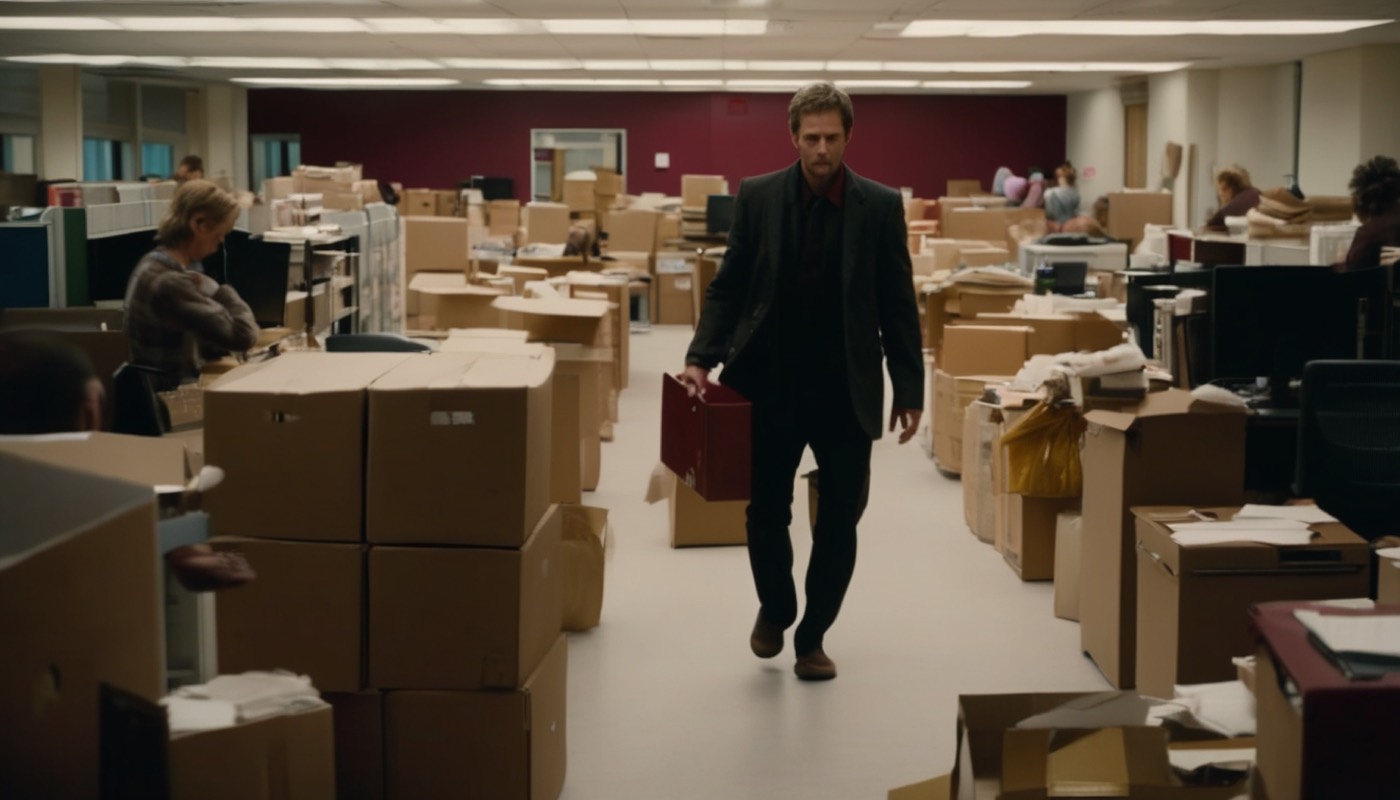
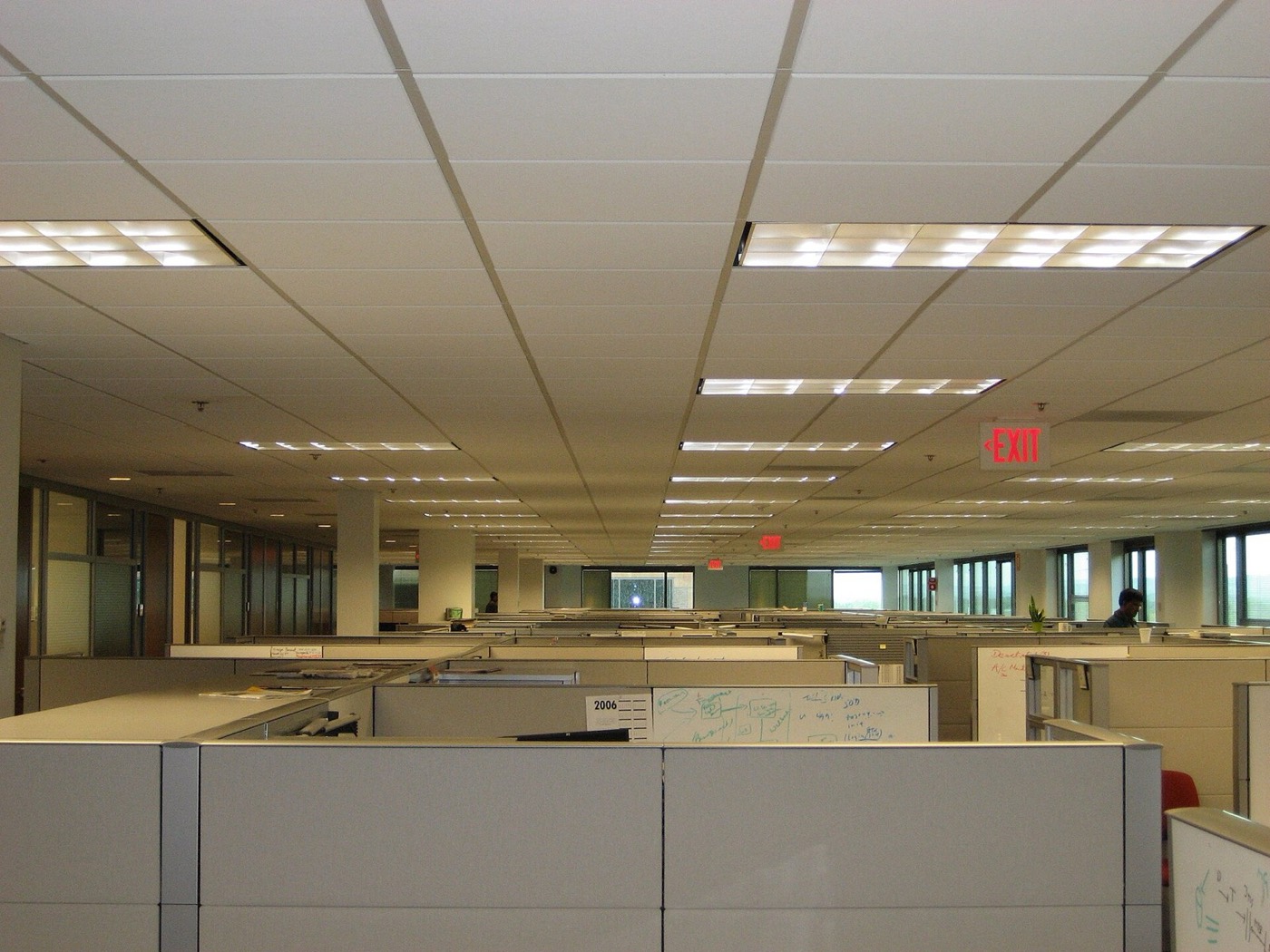
This is the kind of office the crash left behind, rows of empty desks. Across the internet industry, companies that had hired as fast as they could now let people go just as fast.
Then came the write-downs. A write-down is when a company admits that something it bought is worth far less than it paid, and records the difference as a loss.
The figures on screen show the cost. In the last months of two thousand and one, Vignette wrote down seven hundred and ninety-nine million dollars of the value of what it had bought. Its loss for that year was about one point five three billion dollars.
By late two thousand and two, the share that had peaked at ninety-nine dollars after the split was trading at under a dollar.
9. Tom Hogan's rebuild

The company that was left needed a different kind of leader.
The card on screen introduces him. Tom Hogan had spent seventeen years at IBM, then ran worldwide sales at the software company Siebel Systems. He joined Vignette as president in April two thousand and one, and became chief executive in July two thousand and two. Greg Peters stayed on as chairman.
Hogan's Vignette was a smaller company, and it bought smaller things. It paid partly in cash, and it paid far less.
The timeline on screen shows the three purchases. In October two thousand and two, Vignette agreed to buy Epicentric, a portal maker, for up to thirty-two million dollars. A portal gathers a company's systems onto one page for staff or customers. In September two thousand and three it agreed to buy Intraspect for about twenty million. In March two thousand and four it completed the purchase of Tower Technology for about a hundred and twenty-five million.
The bars on screen compare what Vignette spent in the boom and after it. The two big purchases of two thousand cost about two point one billion dollars in shares. The three that followed cost less than two hundred million together.
The idea was to sell more than websites. Tower Technology was an Australian company that made software for storing documents and records. With Epicentric and Intraspect as well, Vignette could offer a wider set of tools to big businesses and governments.
10. Mike Aviles and a shrinking niche

By the middle of the decade Vignette had shrunk to fit.
The timeline on screen shows the changes at the top. In June two thousand and five, Vignette carried out a reverse stock split. Every ten old shares became one new one, so a single share no longer looked like small change. In February two thousand and six, Tom Hogan left to become senior vice president of HP Software, at Hewlett-Packard. Vignette hired Mike Aviles, from outside the company, as its chief executive.
The market Vignette had helped to create was now crowded.
The diagram on screen shows who it was up against. Its own annual report named the giants, IBM, Microsoft, Oracle and SAP, which sold content software as part of much bigger packages. It also warned that its rivals had far greater financial, technical and marketing resources.
Under Aviles, Vignette did make money. It had been profitable in two thousand and five, and it stayed profitable in the next two years.
The line on screen shows how its sales moved under Hogan and Aviles. They peaked at about a hundred and ninety-eight million dollars in two thousand and six. In two thousand and eight they fell to about a hundred and seventy million, and the company was back to a loss.
The fall was sharpest where it mattered most. Licence sales are what a company earns when a customer buys new software, rather than paying to keep old software running. In two thousand and eight Vignette's licence sales fell by thirty-eight per cent.
The figures on screen show the company at the end of two thousand and eight. It had six hundred and forty-three employees, barely a quarter of the number at the height of the boom. Most of its money now came from supporting customers it already had.
Its old rival Interwoven went first. In January two thousand and nine, the British software company Autonomy agreed to buy Interwoven for about seven hundred and seventy-five million dollars. Vignette was one of the last independent companies of its kind.
11. Open Text takes over
On the sixth of May two thousand and nine, Open Text announced that it would buy Vignette.
The map on screen shows the move. Open Text was based in Waterloo, in Ontario, Canada. Vignette's software, and the customers who used it, would now be run from there.
The diagram on screen shows what each Vignette shareholder was offered. For every Vignette share, eight dollars in cash, plus a small part of an Open Text share. On the day before the announcement, that came to about twelve dollars and seventy cents.
It was about forty-one per cent more than Vignette's shares had been worth the day before. Open Text put the whole deal at about three hundred and ten million dollars.
Open Text's chief executive, John Shackleton, explained what he was buying. "Vignette's customers represent some of the world's most powerful online brands and we are excited about the opportunity to expand the relationship with these customers and partners."
Not everyone saw it as a triumph. One content management consultant, Jeff Potts, wrote on his blog that day that Vignette had been losing customers to complex and costly upgrades, and described the deal as a kind of mercy killing.
The timeline on screen shows how quickly it went. The deal was announced on the sixth of May. It was completed on the twenty-first of July, and on the final share price Open Text put its value at about three hundred and twenty-one million dollars.
12. What is left of Vignette

Inside Open Text, the Vignette name did not last.
The diagram on screen shows what the products became. In April twenty eleven, with version eight point one, Open Text dropped the Vignette name. Vignette Content Management became OpenText Web Experience Management. The Vignette Portal became OpenText Portal.
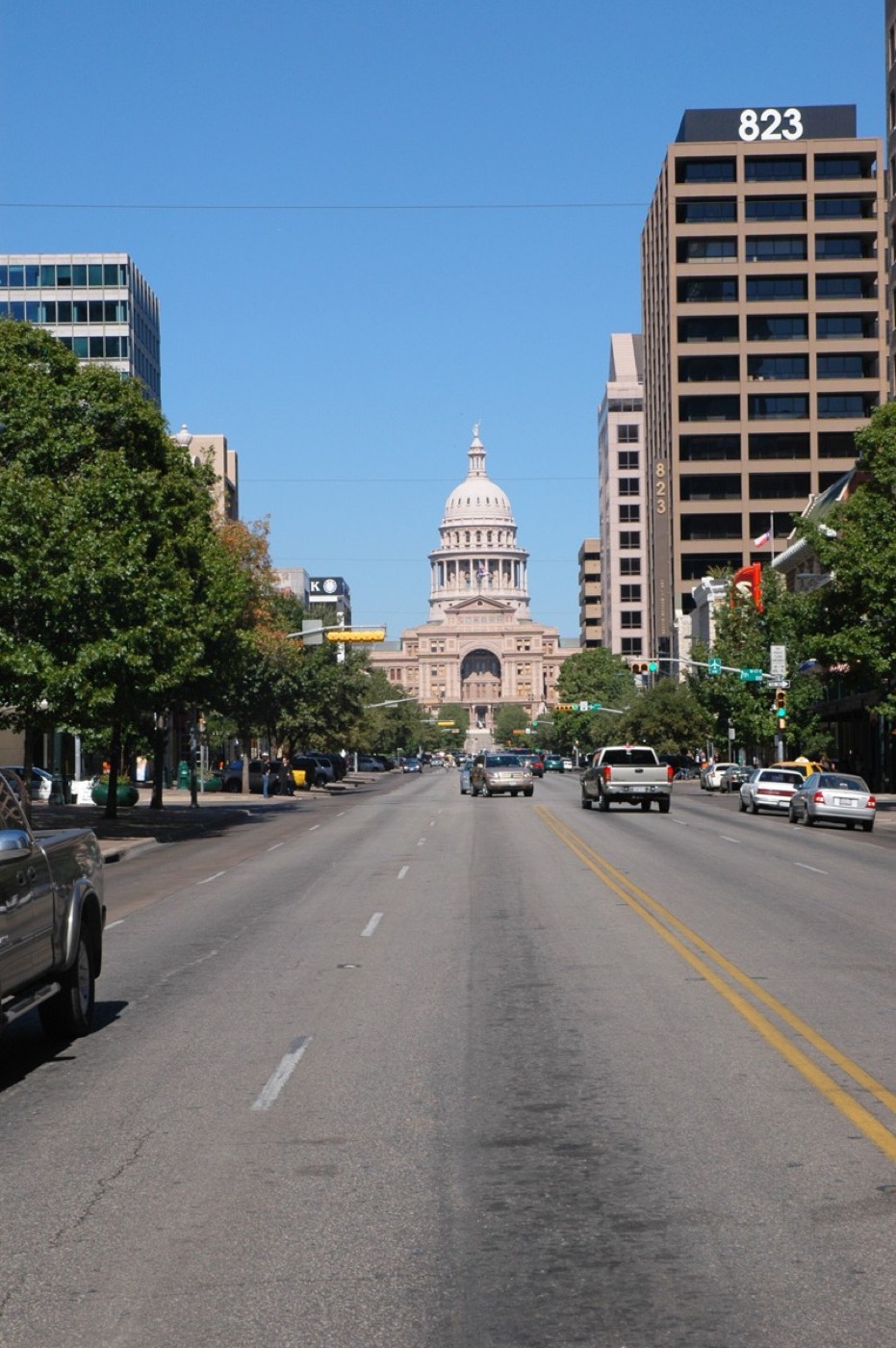
This is Congress Avenue in downtown Austin, leading up to the state Capitol. Austin went on to become one of the country's big technology centres. Vignette was one of the first software companies to put the city on that map.
Open Text itself kept growing by buying other software companies, and it now calls itself OpenText. In August twenty twenty-six it reported yearly revenue of about five point two five billion dollars. That is more than sixteen times what it paid for Vignette.
The timeline on screen shows OpenText's latest news. On the twenty-third of September twenty twenty-six, it priced a billion dollars of new borrowing. Part of it will pay off older debt early, and part will buy back some of its bonds due in twenty twenty-eight.
So is Vignette's story forwards or backwards? The company bet that big organisations would want to run their websites like publishers, and it was right. Almost every large website today is built from a database and a template, the way StoryServer built its pages. What went wrong was not the idea. It was the price the stock market put on it, and what the company did with that price.
Sources and credits
Photo credits (Wikimedia Commons)
- Downtown Austin, Texas skyline (Vignette's home city): Reid Sullivan, Public domain - https://commons.wikimedia.org/wiki/File%3AAustin_skyline_2.jpg
- Congress Avenue and the Texas Capitol, downtown Austin: The original uploader was Leonfu at English Wikipedia., Public domain - https://commons.wikimedia.org/wiki/File%3ACongress_Ave._in_downtown_Austin.JPG
- Nasdaq MarketSite, Times Square, New York (where VIGN traded): NASA Headquarters / NASA/Emma Howells, Public domain - https://commons.wikimedia.org/wiki/File%3ANASA_Mars_Perseverance_on_Nasdaq_MarketSite_%28NHQ202102180118%29.jpg
- Office desk with CRT monitor, early 2000s: unknown, Public domain - https://commons.wikimedia.org/wiki/File%3ATypicalbusyoffice20050109.jpg
- Near-empty open-plan office of cubicles: Larsinio at English Wikipedia, Public domain - https://commons.wikimedia.org/wiki/File%3ACubicle_land.jpg


Primary sources
- Vignette Corporation, final prospectus (Form 424B4), SEC EDGAR, filed 22 February 1999 - co-founded December 1995, incorporated 19 December 1995; $400,000 seed from Austin Ventures and Sigma Partners, February 1996; PRISM agreement 19 July 1996; StoryServer shipped January 1997; Greg Peters CEO June 1998, from Logic Works; StoryServer 4 available July 1998; IPO price $19; customers incl. Chicago Tribune and Preview Travel; revenue 1997-98.
- Forbes, Om Malik, 'Vignette is the story', 14 October 1998 - CNET put in $500,000 for a 33% stake; $27.8m raised from VC firms.
- Forbes, Daniel Fisher, 'Automating the Web', 29 November 1999.
- CNNfn, 'WebTrends, Vignette IPOs soar', 19 February 1999 (1:20 p.m. ET) - up 152% intraday. Computer Business Review, 21 February 1999 - closed at $42.6875, up 124.7%.
- Vignette Form 10-K for 1999 (filed 30 March 2000) and 2000 (filed 7 March 2001) - 1999 revenue $89.2m; two-for-one split 1 December 1999; three-for-one split paid 14 April 2000; Q1 2000 high $99.00 split-adjusted; DataSage ~$586.6m; OnDisplay ~$1.5bn; 2,330 staff at 31 December 2000; 2000 revenue $366.7m.
- Vignette proxy statement (DEF 14A), filed 12 April 2001 - $100 at IPO worth $1,715.79 on 31 December 1999 and $568.42 on 31 December 2000.
- News On 6, 'Rise of Vignette a good start-up story', 22 February 2000 - market value about $15bn, more than Xerox.
- Vignette 10-Q Q1 and Q2 2001; 10-K for 2001 and 2002 - ~350 and ~200 job cuts, ~975 in 2001; $799.2m goodwill impairment; net losses; Q4 2002 low $0.73; Hogan president April 2001, CEO July 2002.
- Vignette 8-K exhibit, 29 October 2002 (Epicentric, up to $32m); The Register, 25 September 2003 (Intraspect, $20m); Vignette 10-K for 2003 and release of 1 March 2004 (Tower Technology, ~$125m).
- Vignette 8-K, June 2005 (one-for-ten reverse split effective 10 June 2005); Vignette release, 26 January 2006 (Hogan to HP Software); Vignette 8-K, February 2006 (Aviles CEO from 13 February 2006).
- Vignette Form 10-K for 2008, filed March 2009 - revenue 2004-2008, net income, 643 employees, competitors IBM, Microsoft, Oracle and SAP, licence revenue down 38%.
- InformationWeek / Interwoven filings - Autonomy to buy Interwoven, about $775m, 21 January 2009.
- Open Text, 'Open Text to Acquire Vignette', 6 May 2009 - $8.00 cash plus 0.1447 Open Text share; ~$12.70; ~$310m; ~41% premium.
- Jeff Potts, ECM Architect, 'OpenText administers Vignette mercy killing', 6 May 2009.
- Open Text, 'Open Text Completes Vignette Acquisition', 21 July 2009 - about $321m at $36.84 an Open Text share.
- Real Story Group, 'Vignette RIP 1995 - 2011 -- and what that means for you', 27 April 2011 - version 8.1, renamed OpenText Web Experience Management; OpenText brand page 'Vignette' (Portal to OpenText Portal).
- OpenText Form 8-K exhibits, 6 August 2026 (fiscal 2026 revenue $5.246bn) and 23 September 2026 (pricing of $500m 6.700% notes due 2031 and $500m 7.150% notes due 2033; tender offer for up to $450m of 3.875% notes due 2028).
Not regulated financial advice.