
WordPerfect Corporation: A Timeline
WordPerfect began in the summer of 1977 as a design by Alan Ashton, a computer science professor at Brigham Young University, and was written with his graduate student Bruce Bastian for Orem City's Data General computer. This video follows it year by year.
Satellite Software International was incorporated in September 1979 and sold SSI*WP from March 1980 at $5,500 a copy. WordPerfect 2.20 for the IBM PC shipped on 26 November 1982, named after a staff contest it nearly lost. Free phone support, and a stumble by WordStar's maker MicroPro in November 1984, took it to the top: version 4.2 (26 October 1986), built for law offices, and a 30% share at the start of 1987. WordPerfect 5.1 for DOS (6 November 1989), with its blue screen, Reveal Codes and function-key templates, took about 70% of PC word processing sales in 1990, and the company's sales reached $533 million in 1991.
Then the bet on OS/2. Word for Windows arrived in November 1989 and Windows 3.0 in May 1990; WordPerfect for Windows did not ship until 4 November 1991. Microsoft Office sold Word, Excel and PowerPoint as one suite, and by 1995 it had 86.5% of the suite market against 5.4% for WordPerfect's suite (AP).
Novell agreed to buy WordPerfect in March 1994 for $1.4 billion in shares, worth about $855 million when the deal closed in June. On 31 January 1996 Novell sold it to Corel for $115 million plus at least $70 million in royalties. Novell's antitrust suit over Windows 95, filed in November 2004, ended with a hung jury (2011), judgment for Microsoft (2012), a Tenth Circuit opinion by Neil Gorsuch (23 September 2013) and the Supreme Court's refusal to hear it (28 April 2014).
WordPerfect is still sold by Corel, which relaunched under Vector Capital in May 2026. Bruce Bastian died on 16 June 2024.
No figure appears without its date and source.
Educational documentary. Not financial or investment advice.
In these topics
Chapters
Video notes
1. Provo, 1977 to 1979
In the summer of nineteen seventy-seven, a computer science professor at Brigham Young University found himself with nothing to do. Alan Ashton usually spent his summers consulting or teaching. That year no work turned up, so he spent the holiday designing a word processor.
A word processor is a program for writing text on a screen, correcting it, and then printing it. At the time, most word processors were whole machines built for that one job, and they were expensive. By the end of the summer, Ashton had a design about fifty pages long.
This video follows what that design became. It became WordPerfect, the best-selling word processor of its day, and a company that grew from a borrowed basement to a campus of its own. It was sold for one point four billion dollars in shares, and sold again two years later for a small fraction of that.
Ashton's partner was one of his students. Bruce Bastian finished a master's degree in computer science in the spring of nineteen seventy-eight, and took a programming job at Eyring Research, a firm in Provo.
Eyring had a contract to supply a computer to Orem City, just north of Provo. The deal included a word processor, and Eyring did not have one. Orem was then a small city of about fifty thousand people.
So Bastian and Ashton made Eyring an offer. Eyring would pay Bastian's salary while he wrote the program, and Ashton would give his design and his time for nothing. In return, the two of them would keep ownership of the finished work.
That last condition turned out to be worth more than anyone at the table could have guessed.
By the spring of nineteen seventy-nine, the program was ready for Orem City. The city let the two men keep working on its computer, in the basement of the city offices, in return for free copies of every new version. The design from that idle summer now had its first customer.
2. Satellite Software International
The two men now needed a company, so they could sell the program to anyone else with the same kind of computer.
Satellite Software International was incorporated in Utah in September nineteen seventy-nine. Everyone called it SSI, because initials were the fashion and every young firm wanted to be the next IBM. The word software was in the name because the company meant to sell programs, not machines.
In March nineteen eighty the program went on sale as SSI star WP.
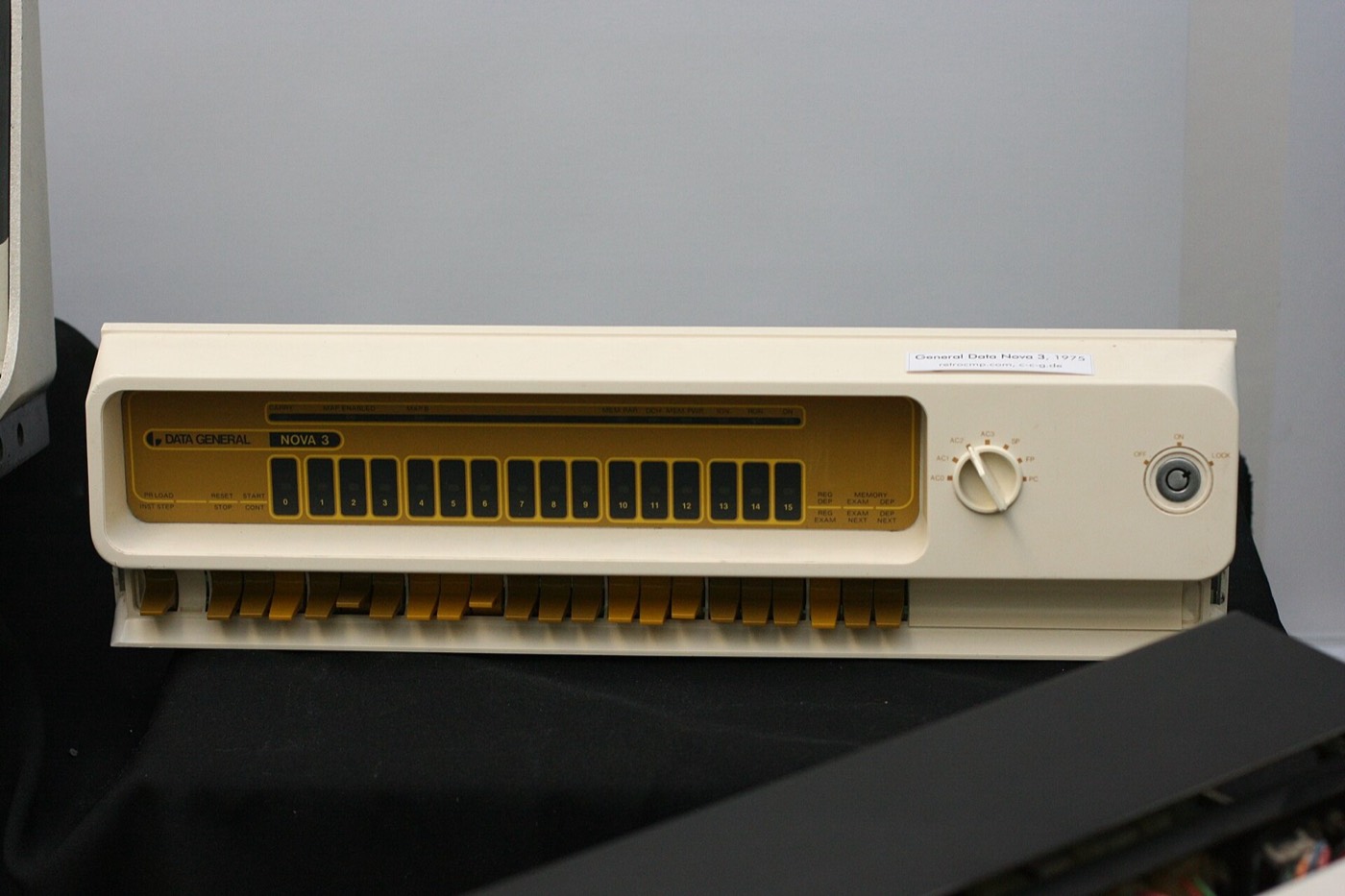
It ran only on minicomputers made by Data General. A minicomputer was a business computer about the size of a cabinet, shared by many people at once through their own screens and keyboards. That was a small market, but SSI had it almost to itself.
One of the people who joined the company that year was Pete Peterson, who took a part-time job at five dollars an hour.
Peterson went on to run the business side of the company for more than a decade. In nineteen ninety-four he published its history, a book called Almost Perfect. Much of what this video says about the company's early years comes from that book.
The software cost five thousand five hundred dollars. Peterson compares that with about fifteen thousand dollars for each desk of a machine built only for word processing. One copy of SSI star WP could serve everyone who used the office computer.
The business grew quickly on that small base. Sales were four hundred thousand dollars in nineteen eighty. In nineteen eighty-one they more than doubled, to eight hundred and fifty thousand dollars.
It was a small business in a small market. The next computer would make the market enormous.
3. WordPerfect for the IBM PC, 1982
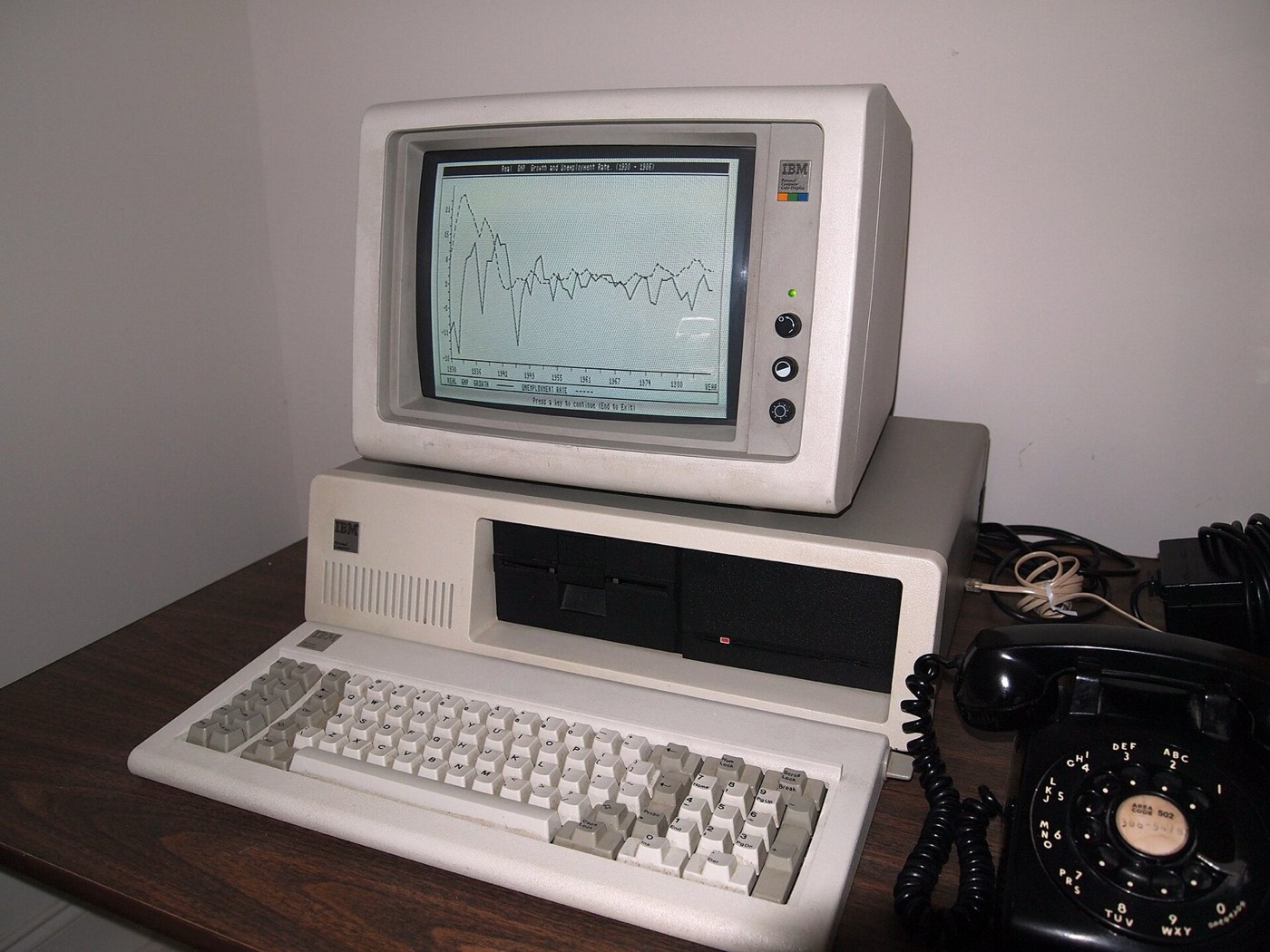
The IBM Personal Computer was announced in nineteen eighty-one. SSI bought its first one in February nineteen eighty-two. A programmer named Alan Brown began moving the word processor across to it.
The IBM PC ran an operating system called DOS, which is the basic software that starts the machine and runs its programs. Every program sold for the PC had to be written for DOS.
The new version needed a better name than SSI star WP. The staff held a contest, and Peterson's own suggestion, WordPerfect, came near the bottom of the vote. But the favourites already belonged to other products, and time was short. As Peterson wrote, "WordPerfect became the unpopular winner."
WordPerfect version two point two for the IBM PC went on sale on the twenty-sixth of November, nineteen eighty-two. That was the day after Thanksgiving. Peterson admits the first package had no typeset manual and no plastic keyboard template.
The market already had a leader. WordStar, from a company called MicroPro, was the most popular word processor on the PC. In nineteen eighty-four WordPerfect sold a little over nine million dollars' worth. WordStar sold sixty-seven million dollars' worth, and MultiMate twenty million.
What WordPerfect had was the telephone. Customers could ring the company for help, free of charge. Peterson says it began almost by accident. Customers kept using the free order line to ask for help, so the company added a free line just for support.
MicroPro sent its customers back to the shop that had sold them the program. WordPerfect answered the phone itself, and people remembered.
4. Beating WordStar: 4.2, 1986
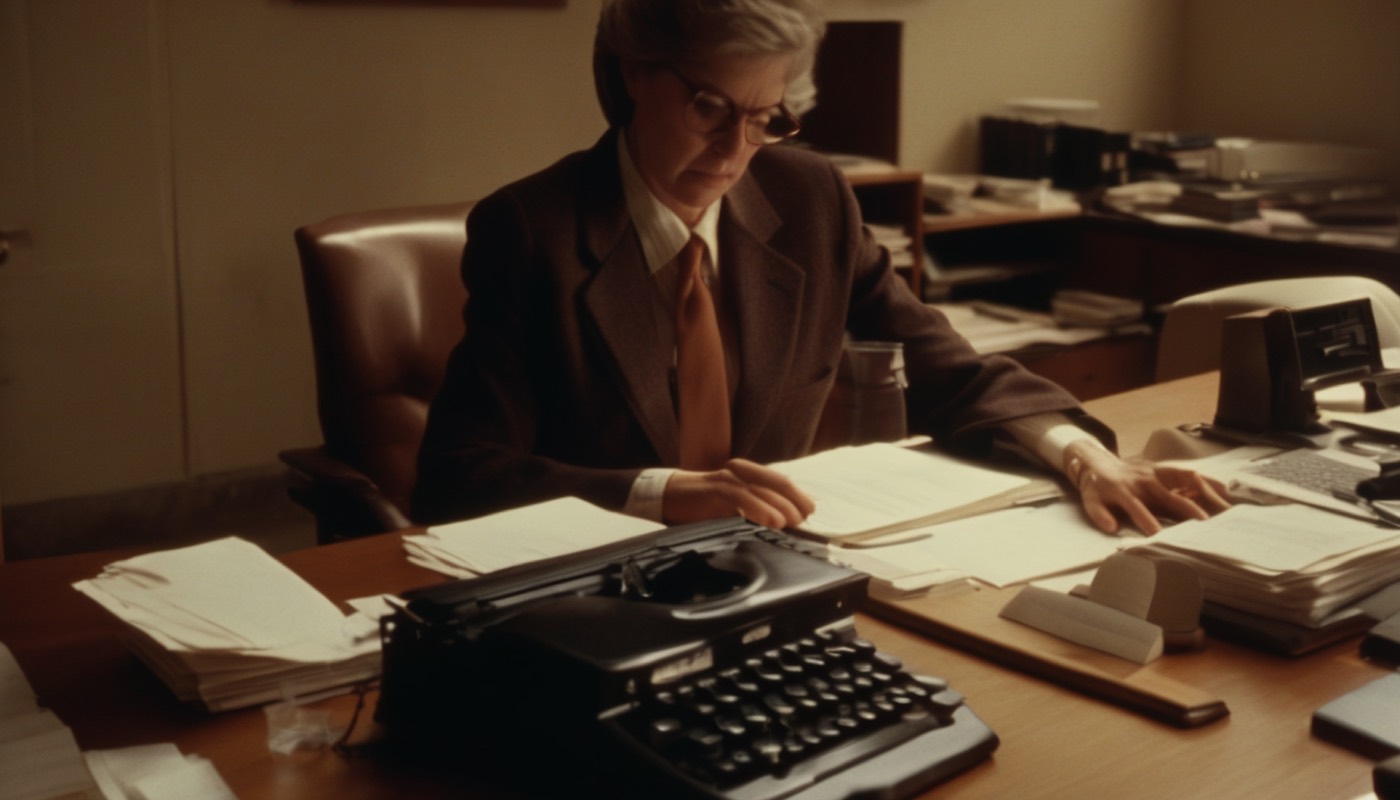
In November nineteen eighty-four, MicroPro made the mistake that opened the door. It showed a replacement for WordStar that was bigger and slower, and worked differently from the old one. Peterson says it convinced WordStar's own customers to go looking for something better.
WordPerfect four point oh came out that same month. Version four point one followed in October nineteen eighty-five. By the first months of nineteen eighty-six, Peterson says, WordPerfect's sales were dead even with WordStar's.
The next version was aimed at lawyers. It was built as four point one L, and the L stood for legal. It added line numbering, better paragraph numbering, and an automatic table of authorities, which is the list of every case and law cited in a legal brief. It went on sale on the twenty-sixth of October, nineteen eighty-six, renamed WordPerfect four point two.
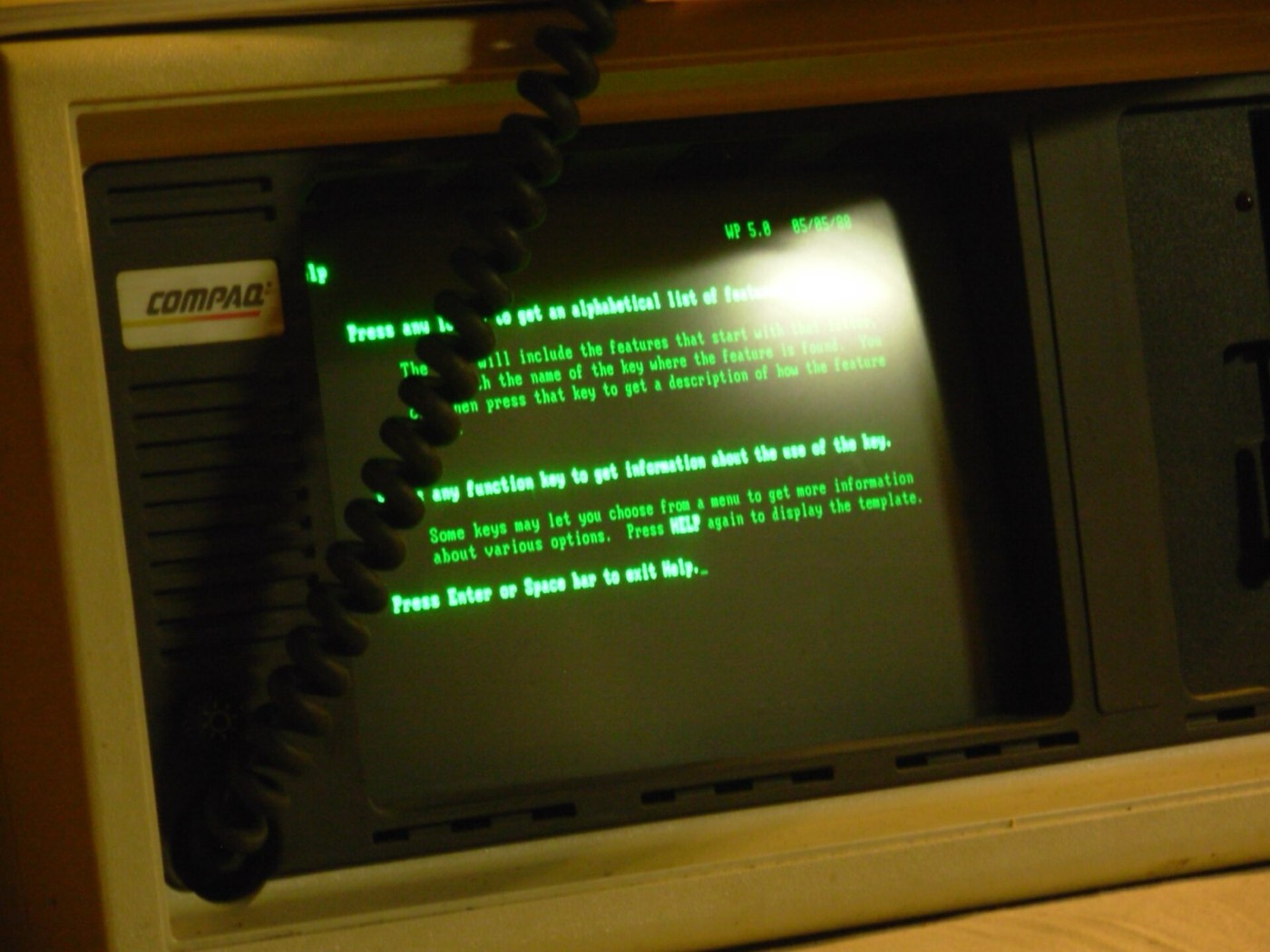
It ran on the IBM PC and on the machines that copied it, like this Compaq Portable. That same year the company changed its own name, to WordPerfect Corporation. Peterson says they had avoided the name for years, because on the telephone it could sound like we're perfect.
That year made WordPerfect the leader. Sales in nineteen eighty-six were fifty-two million dollars, and Peterson called the company the king of the word processing hill. By his figures, it began nineteen eighty-seven with thirty per cent of the market. MicroPro had sixteen per cent, and IBM and Microsoft had thirteen and eleven.
The company that began in a city basement was now the biggest name in word processing.
5. 5.1 and the blue screen, 1989
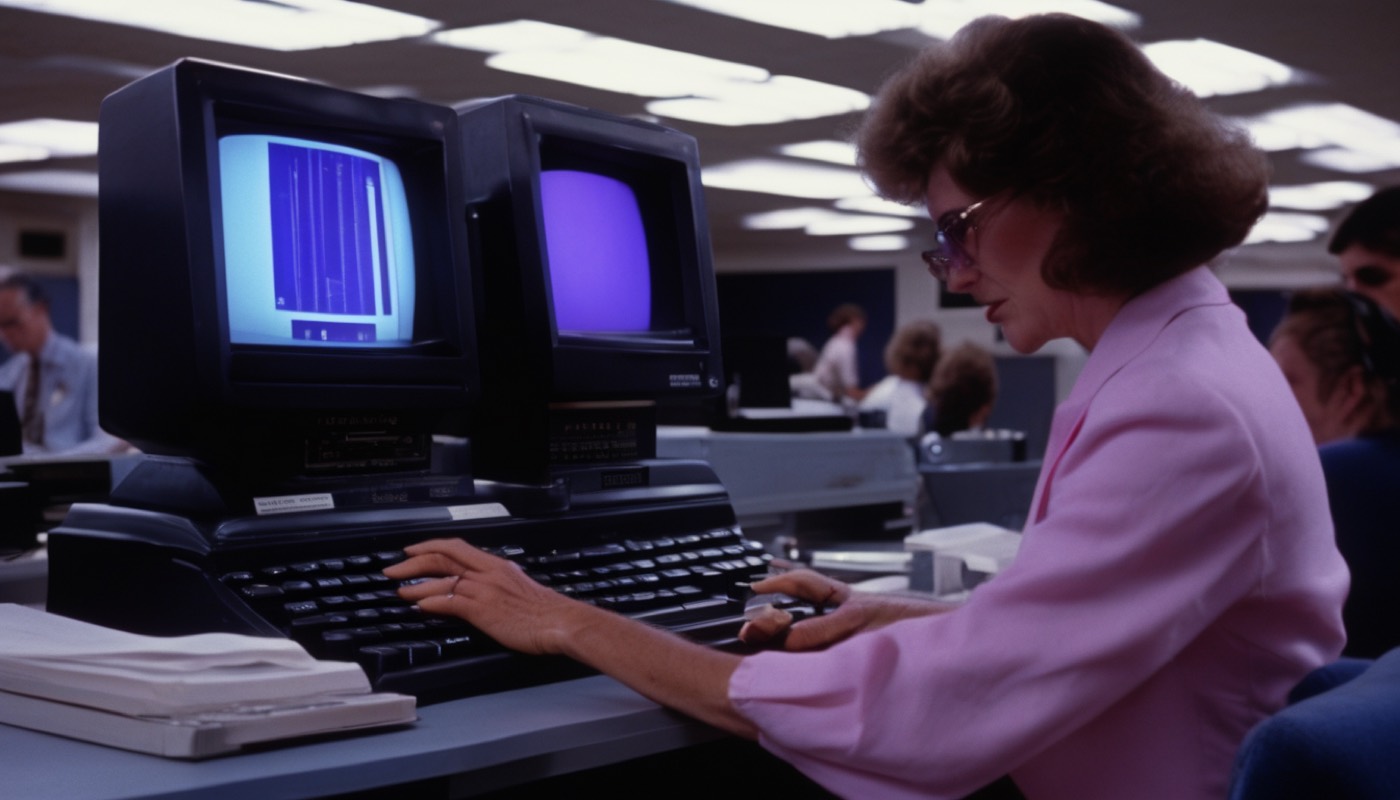
The next big change was printing. Laser printers could print many typefaces and sizes, and WordPerfect five point oh, released in May nineteen eighty-eight, was built to use them. Eighteen months later came the version that made the name.
On the sixth of November, nineteen eighty-nine, came WordPerfect five point one for DOS. It is the version most people remember, with its plain blue screen and a single line of status at the bottom. It added tables and equations, and it was ready for office networks straight out of the box.
The screen showed only the text. The formatting lived in hidden codes, and a feature called Reveal Codes opened a second window to show them. There the same words appeared with every code in place, such as a marker where bold type began and another where it ended. Delete a code, and the formatting it carried was gone.
The commands lived on the function keys, the row of keys marked with the letter F. Each key did a different job on its own, and others with the Shift, Alt or Control key held down. So users laid a plastic template around the keys, a printed map of every command.
By Peterson's count, the company had about sixty per cent of the word processing market when five point one came out. In nineteen ninety, he says, the new version took seventy per cent of word processing sales for personal computers.
Offices that lived on long, exact documents, law firms above all, would keep it for years.
6. Orem at its peak
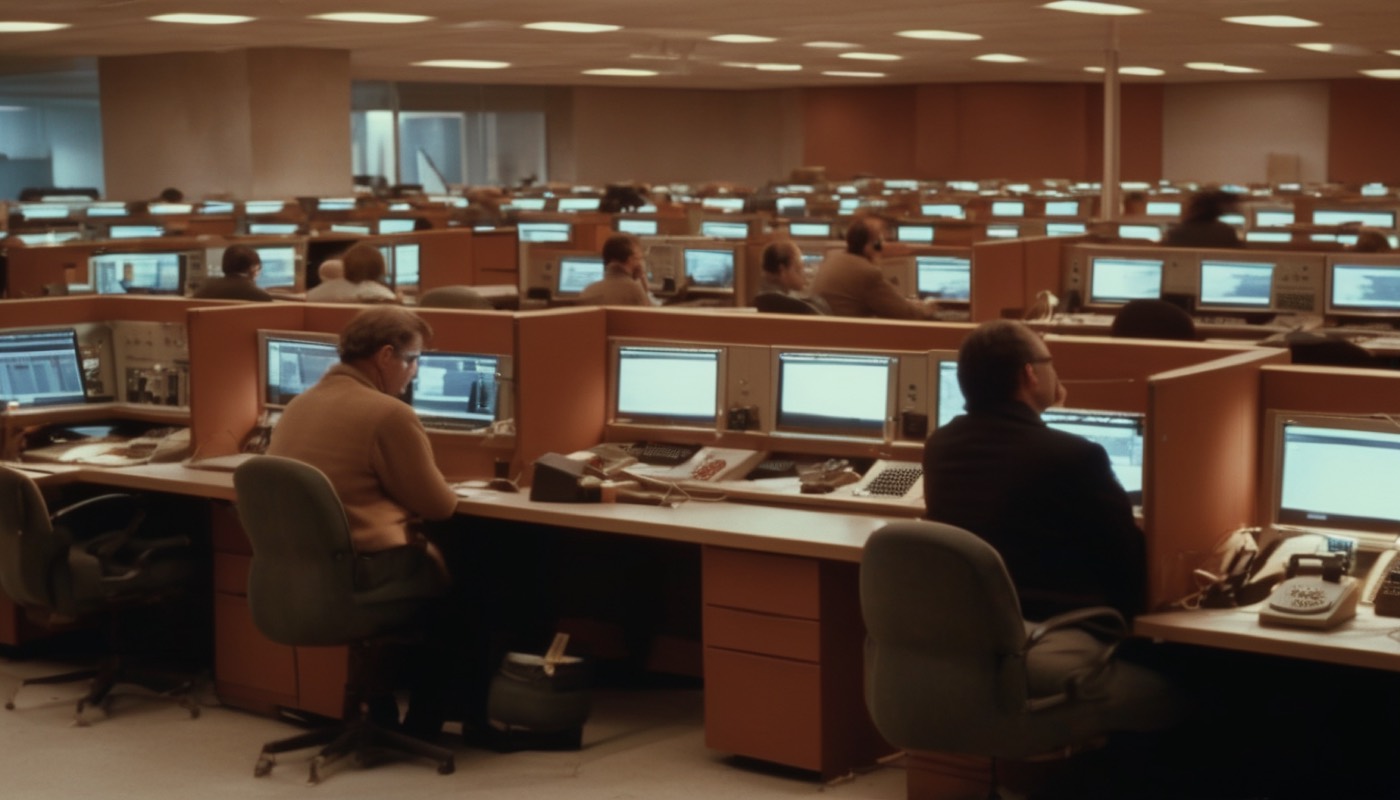
The money that five point one brought in was extraordinary.
Sales rose from one hundred and seventy-eight million dollars to five hundred and thirty-three million in three years. Peterson's figures put nineteen ninety at four hundred and fifty-two million. Profit before tax was about thirty-five per cent of sales, and the company had no debt at all.
The support lines had become famous. By the spring of nineteen ninety, about six hundred operators were answering calls. They worked in about twenty-five teams, and the phone system could not share the calls out evenly.
So the company invented the hold jockey. A hold jockey was a real person watching the queues, moving callers between teams, and playing the hold music. They gave traffic reports, meaning how long the wait was, and in winter there were ski reports too. Peterson says it saved buying a new phone system for about three million dollars.
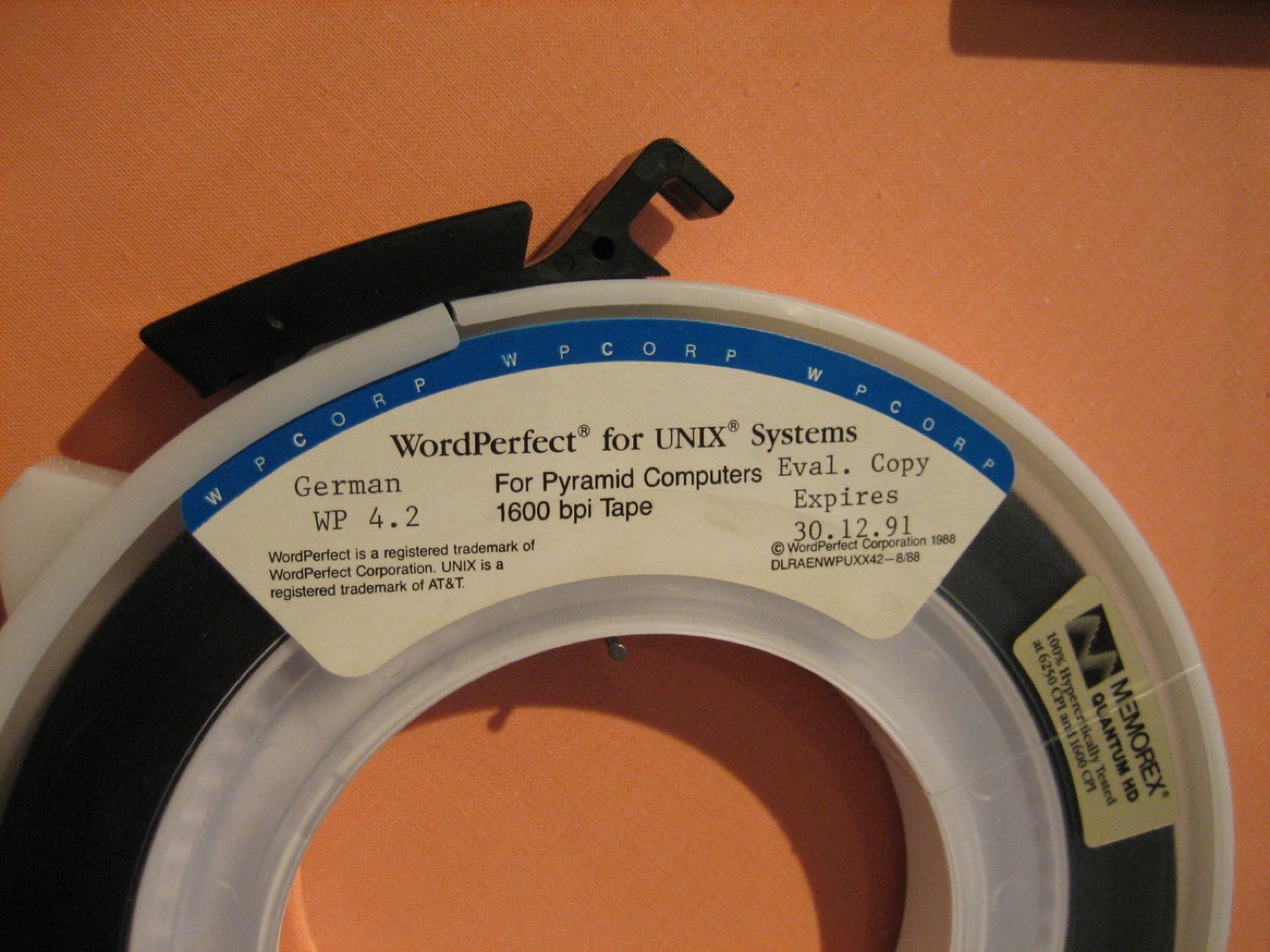
The company sold far more than one program for one kind of computer. There were versions for the Apple Macintosh, for large office computers, and for Unix, a system used on workstations and servers. This evaluation copy of WordPerfect for Unix came on magnetic tape in nineteen ninety-one.
That year the company paid bonuses to every one of its employees. The founders had become very rich men. In nineteen ninety, Forbes magazine had listed Alan Ashton among the four hundred wealthiest Americans.
7. The Windows problem
The threat was not another program. It was a new way of using a computer.
It was called a graphical user interface. Instead of typing commands, you pointed with a mouse at pictures, menus and windows on the screen. Two systems were competing to replace plain DOS: OS/2, which IBM was building with Microsoft, and Windows, which Microsoft sold on its own.
WordPerfect bet on OS/2, alongside IBM. Peterson opposed Windows. He called it "a toll booth on the road to the future."
Microsoft was already moving. Its Word for Windows went on sale in November nineteen eighty-nine, and Windows three followed in May nineteen ninety. Windows three sold, and WordPerfect had nothing ready for it.
On the thirty-first of May, nineteen ninety, WordPerfect announced it was putting its OS/2 version on hold to build for Windows first. Peterson wrote the press release himself. He later called it a sad day in the company's history.
WordPerfect for Windows finally shipped on the fourth of November, nineteen ninety-one, two years after Word for Windows. It had to be installed from DOS, and it was widely seen as slow and unstable. For that one month it outsold Word for Windows, but Microsoft already held more than half of the Windows market.
8. Word and Office win
Microsoft's advantage was not only an earlier start. It was the way it sold its programs.
In nineteen ninety Microsoft began selling Office. It put its word processor, Word, in one box with its spreadsheet, Excel, and its slide program, PowerPoint. That kind of bundle is called a suite, and a business could buy the lot at once.
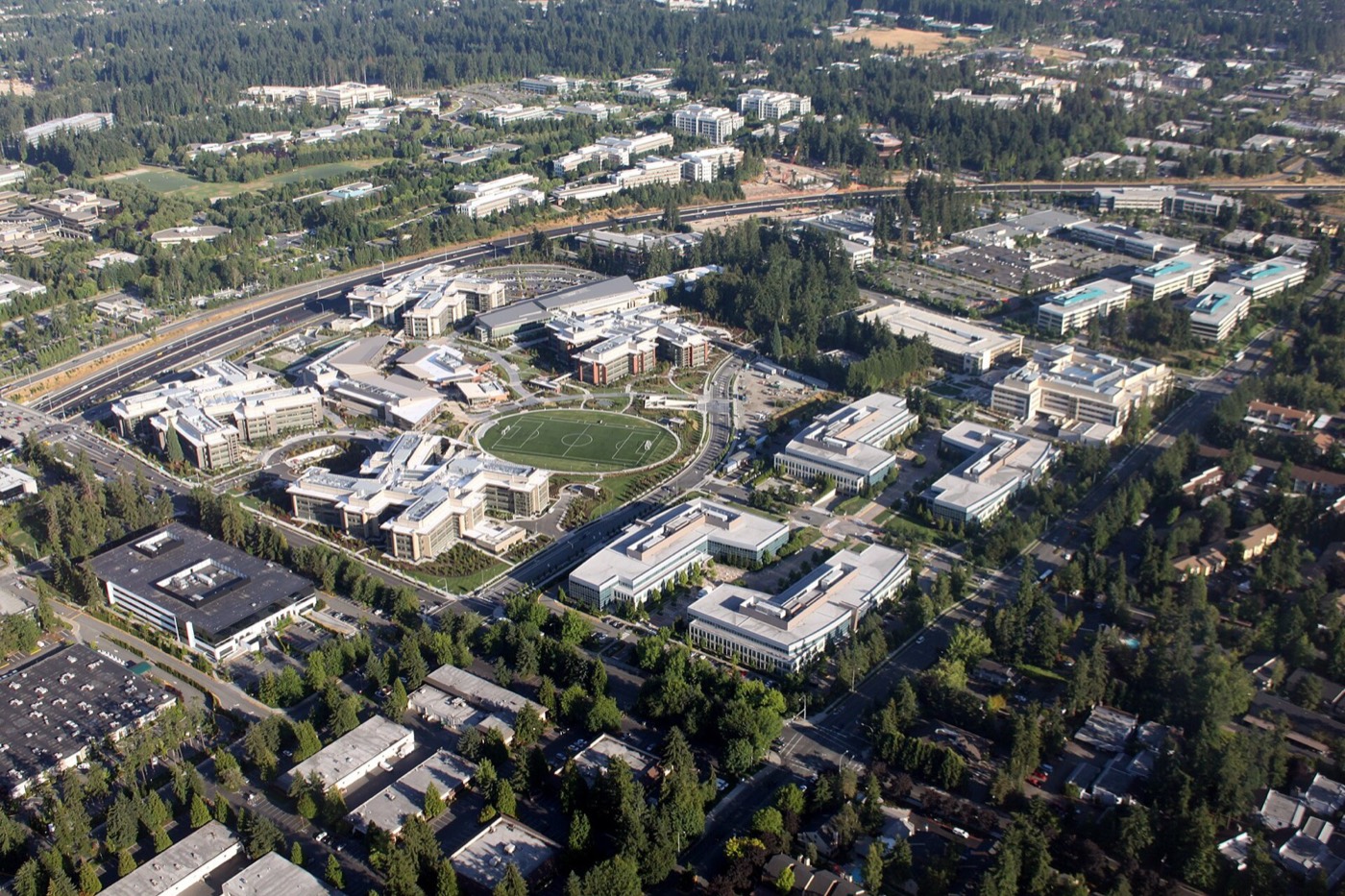
Microsoft's headquarters in Redmond grew into a campus of its own. Redmond now sold the operating system that every copy of WordPerfect for Windows had to run on.
Redmond lies near Seattle, more than seven hundred miles north-west of Orem. One company made the system, and the other had to work inside it.
In March nineteen ninety-two, Pete Peterson left WordPerfect. The founders wanted to expand the board and change his role, and he resigned. By the middle of nineteen ninety-three, the company claimed fifty-one per cent of the Windows word processor market.
The suites decided it. In nineteen ninety-five, the Associated Press reported, Microsoft Office had eighty-six and a half per cent of the office suite market. WordPerfect's own suite had five point four per cent.
Sold on its own, WordPerfect was still just ahead. The same report gave it forty-seven point nine per cent of word processor sales, against forty-four point five for Microsoft Word. But offices were buying suites, and there the lead was gone.
9. Novell, 1994
In March nineteen ninety-four, WordPerfect agreed to join another Utah company.
Novell was based in Provo, a few miles south of WordPerfect's home in Orem. It made NetWare, the software that linked an office's computers so they could share files and printers. Its chairman, Ray Noorda, wanted a company that could take on Microsoft across the whole of personal computer software.
The deal was announced at one point four billion dollars. Novell paid in its own shares, not in cash. It also bought the Quattro Pro spreadsheet from Borland, for nearly one hundred and forty-five million dollars.
The idea was a suite to match Microsoft Office. WordPerfect would handle the words and Quattro Pro the numbers, and GroupWise, WordPerfect's own email program, would link the people using them. Novell sold the bundle as PerfectOffice.
The merger was completed in June. By then, the Deseret News reported, the fifty-nine million Novell shares and options being exchanged were valued at about eight hundred and fifty-five million dollars. The headline price had shrunk by more than a third before the deal even closed.
Bruce Bastian stepped down as chairman that year. The company he and Ashton had built was now a division of someone else's.
10. Sold to Corel, 1996
The suite did not win back the offices. In November nineteen ninety-five, Novell said it would sell its applications business, WordPerfect included.
The buyer was Corel, a Canadian company from Ottawa, best known for its drawing program, CorelDRAW. The sale was announced on the thirty-first of January, nineteen ninety-six. Ottawa is nearly two thousand miles from Orem, and Corel said the purchase would triple its sales.
The Associated Press put the price at one hundred and fifteen million dollars in cash and Corel shares. Corel would also pay Novell at least seventy million dollars in royalties over five years, for rights to other Novell software. That brought the deal to at least one hundred and eighty-five million dollars.
Novell's chief executive, Bob Frankenberg, put the best face on it. He said the sale "allows Novell to focus on what we do best, and that's networking."
The fall in price was enormous. Two years earlier the deal had been announced at one point four billion dollars. Now WordPerfect went for about one hundred and eighty-five million. That was less than a seventh of the headline price, and about a fifth of the value of the shares Novell had handed over.
About five hundred jobs at the Utah business were expected to go. The WordPerfect name stayed, with Corel's in front of it.
11. Novell v. Microsoft

Novell was not finished with WordPerfect. It believed Microsoft had damaged the program on purpose, and in November two thousand and four it went to court.
The case turned on Windows ninety-five. Novell said Microsoft had encouraged it to use a set of programming hooks called namespace extensions, which let other programs add their own folders to the Windows file windows. Then, in October nineteen ninety-four, Microsoft withdrew its support for them, and Novell said its Windows ninety-five version was set back.
The claim was an antitrust claim. Antitrust law stops a dominant company from using its power to shut rivals out of a market. Novell asked for damages of about one billion dollars.
The trial finally opened in Salt Lake City in two thousand and eleven, and ran for about eight weeks. Bill Gates himself gave evidence. In December the jury told the judge it was hopelessly deadlocked, with a single juror holding out against Novell.
In July two thousand and twelve, Judge Frederick Motz ruled for Microsoft without a second trial. He found that Novell had not shown enough evidence for a jury to decide in its favour.
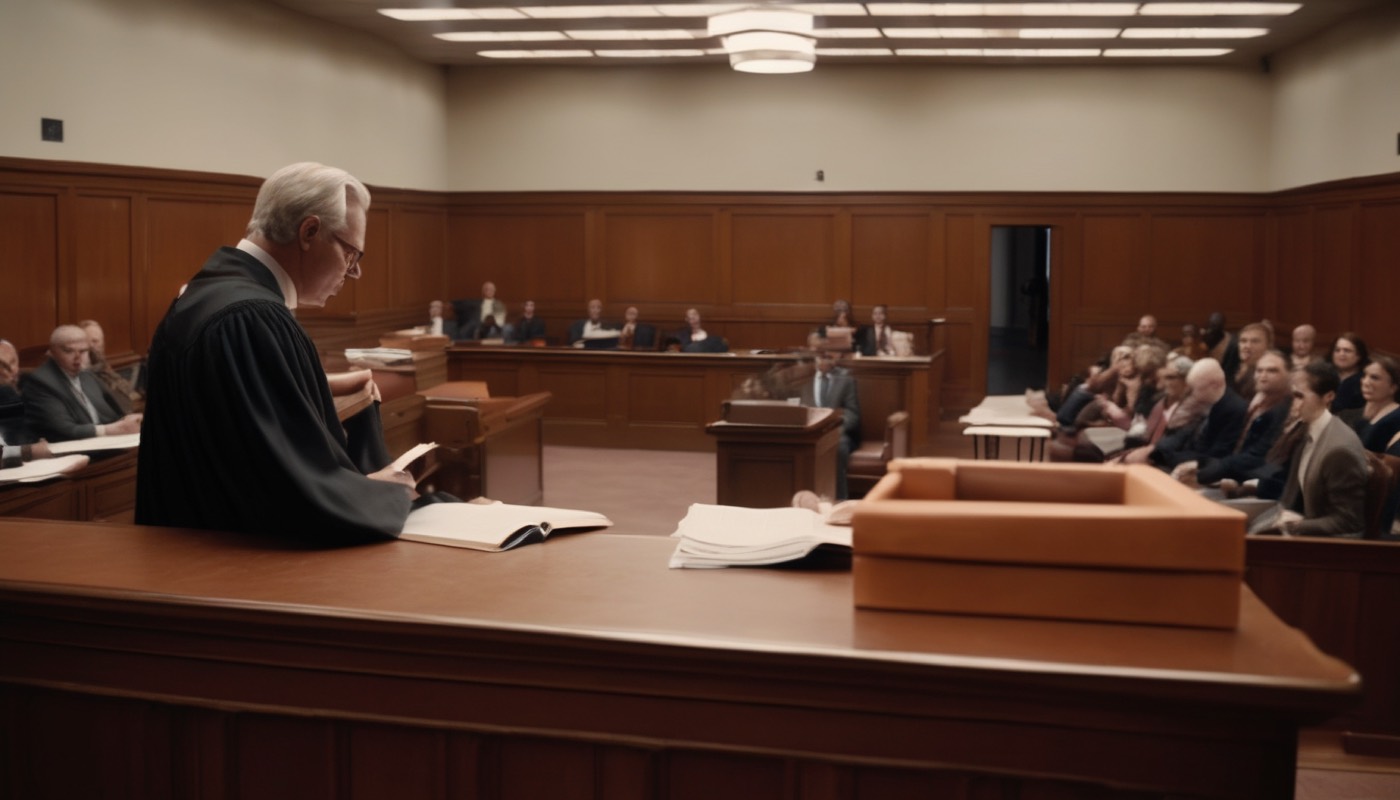
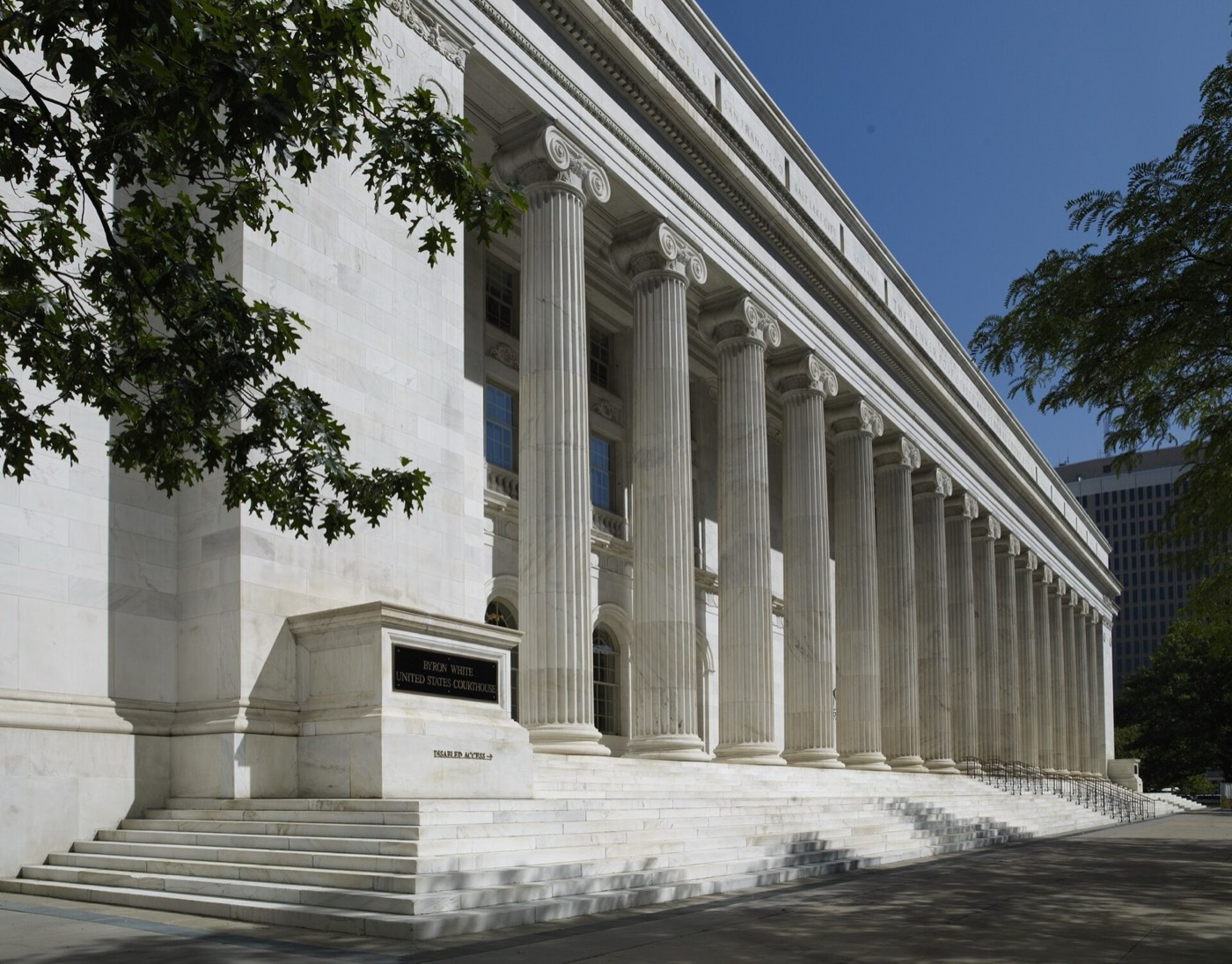
Novell appealed to the Tenth Circuit court of appeals, which sits in this courthouse in Denver. It lost again. The court ruled on the twenty-third of September, two thousand and thirteen.
The judgment opens with a line that sums up how old the dispute had become. "A straggler of a case, this one drags us back twenty years."
It was written by Judge Neil Gorsuch, who later joined the Supreme Court. The court found that Microsoft had no duty to share its technology with a rival, so taking it back did not break antitrust law.
Novell tried the Supreme Court as well. On the twenty-eighth of April, two thousand and fourteen, the court declined to hear the case. Nearly ten years after it was filed, the WordPerfect lawsuit was over.
12. Still selling

Corel never let WordPerfect go. Its newest version is WordPerfect Office twenty twenty-one, released in May of that year. Corel still sells it, with licences aimed at government, business and education, and law firms and government offices have long been among its most loyal users.
Corel itself changed hands. The investment firm KKR bought it in two thousand and nineteen, and in two thousand and twenty-two the company renamed itself Alludo. In February this year the business was split in two, and another investor, Vector Capital, bought the half that includes WordPerfect.
In May it relaunched in Ottawa, under the Corel name again.
Follow the program's owners and the whole story is there. It was built by Satellite Software International, which became WordPerfect Corporation. Novell bought it in nineteen ninety-four and Corel in nineteen ninety-six, and Corel has since passed through two investment firms.
Bruce Bastian died on the sixteenth of June, twenty twenty-four, aged seventy-six. After WordPerfect he became a philanthropist and a campaigner for gay rights, and in nineteen ninety-seven he set up a foundation that funds groups committed to equality. Alan Ashton and his wife founded Thanksgiving Point, a park of gardens, farms and museums.
The WordPerfect story is often told as a company beaten by a better program. The record is more specific than that. It won DOS with a fast program and famous telephone support. It lost when the world moved to Windows while it was still building for OS/2, and when offices started buying their programs in one box.
Thirty years after Novell sold it to Corel, WordPerfect is still on sale. Most of the offices that once ran on the blue screen moved on long ago. But somewhere, in a law office or a government department, someone is still pressing a function key to reveal the codes.
Sources and credits
Photo credits (Wikimedia Commons)
- Data General Nova 3 minicomputer (1975) - the Data General machine family SSI*WP first ran on: Wolfgang Stief, CC0 - https://commons.wikimedia.org/wiki/File%3AData_General_Nova_3.jpg
- IBM PC 5150 with monochrome display - the machine WordPerfect was ported to in 1982: Fried Dough, Public domain - https://commons.wikimedia.org/wiki/File%3AIbm_computer_pc_5150_%286049156797%29.jpg
- Compaq Portable (c.1983) running WordPerfect 5.0 for DOS: Anthony J. Bentley, Public domain - https://commons.wikimedia.org/wiki/File%3ACompaq_Portable_and_Wordperfect.JPG
- WordPerfect 5.1 for DOS - the blue screen (screenshot): No machine-readable author provided. Daniel Pritchard assumed (based on copyright claims)., Public domain - https://commons.wikimedia.org/wiki/File%3AWordperfect-5.1-dos.png
- WordPerfect for UNIX Systems 4.2 on magnetic tape, evaluation copy 1991: Wolfgang Stief, CC0 - https://commons.wikimedia.org/wiki/File%3AWordPerfect_for_Unix_Systems_magnetic_tape.jpg
- Microsoft's Redmond west campus from the air, 2009: Jelson25, Public domain - https://commons.wikimedia.org/wiki/File%3AAerial_Microsoft_West_Campus_August_2009.jpg
- Byron R. White U.S. Courthouse, Denver - home of the 10th Circuit, which affirmed against Novell in 2013: Carol M. Highsmith, Public domain - https://commons.wikimedia.org/wiki/File%3AFront_exterior%2C_Byron_R._White_U.S._Courthouse%2C_Denver%2C_Colorado_LCCN2010719086.tif
- Neil Gorsuch, who wrote the 10th Circuit's Novell v. Microsoft opinion (official portrait, 2017): Franz Jantzen, Collection of the Supreme Court of the United States, Public domain - https://commons.wikimedia.org/wiki/File%3AAssociate_Justice_Neil_Gorsuch_Official_Portrait.jpg


Primary sources
- W. E. Pete Peterson, 'Almost Perfect' (Prima, 1994; online at wordplace.com) - Ashton's 1977 design; Eyring and Orem City; SSI incorporated September 1979; SSI*WP March 1980 at $5,500; sales 1980-1991; the name contest; free support; 4.1L for legal; renamed 1986; 30% share in 1987; 60-70% share 1989-90; hold jockeys (1990); OS/2 bet and 31 May 1990; WPwin outsold Word for Windows in November 1991; Peterson's departure, March 1992..
- Edward Mendelson, 'WPDOS: A Chronology of Versions' (mendelson.org) - 2.20 on 26 Nov 1982; 4.0 Nov 1984; 4.1 Oct 1985; 4.2 on 26 Oct 1986; 5.0 on 5 May 1988; 5.1 on 6 Nov 1989; 6.0 on 1 Jun 1993; WordPerfect for Windows 5.1 on 4 Nov 1991.
- Deseret News, 'Novell-WordPerfect deal creates a new Utah giant', 23 March 1994 - $1.4 billion; 1993 revenues.
- Deseret News, Sharon M. Haddock, 'Novell, WordPerfect tie the knot', 27 June 1994 - 59 million shares and options, about $855 million; Quattro Pro for nearly $145 million.
- Associated Press, 'Corel corrals Novell's WordPerfect', Roanoke Times, 1 February 1996 - $115 million plus at least $70 million royalties, at least $185 million; Frankenberg quotation; 1995 suite and word processor shares.
- Deseret News, 'Corel to buy WordPerfect from Novell', 31 January 1996 - November 1995 decision to sell; about 500 jobs; tripling Corel's sales.
- US Court of Appeals, Tenth Circuit, Novell v. Microsoft, 731 F.3d 1064, 23 September 2013 (Gorsuch, J.) - October 1994 withdrawal of namespace extensions; 2011 trial; holding; opening sentence.
- The Register, 19 December 2011 and 28 April 2014; Fox News/AP, December 2011; Techdirt, 17 July 2012 - the deadlocked jury, Judge Motz's ruling and the Supreme Court's refusal.
- Microsoft statement on Novell's WordPerfect legal action, 12 November 2004.
- Washington Post obituary of Bruce Bastian, 5 July 2024; The Register, 3 July 2024.
- Corel newsroom, 'Corel Corporation Relaunches as Independent Company Backed by Vector Capital', 5 May 2026; Corel/Parallels announcement, 26 February 2026.
Not regulated financial advice.