
How Batteries Work and Why Lithium Matters
A battery does not store electricity. It stores a chemical reaction that has been paused: two materials that want to trade electrons, kept apart so the trade can only happen through your wire. This video explains how that works, why lithium became the answer, where lithium actually comes from, and what might replace it.
It starts with Alessandro Volta's letter to the Royal Society of 20 March 1800, describing a stack of copper and zinc discs separated by brine-soaked cloth. Every battery since has the same four parts: an anode, a cathode, an electrolyte that lets ions through but not electrons, and a separator that keeps the two sides from touching.
Why lithium? It is element number three, with one outer electron it gives up readily, which sets the push. And it has the lowest density of any metal: 0.534 grams per cubic centimetre, against 11.3 for lead (Royal Society of Chemistry).
The rechargeable lithium battery took three steps and three people, who shared the 2019 Nobel Prize in Chemistry. Stanley Whittingham at Exxon built a titanium disulphide cathode, announced in 1976, but its lithium-metal anode grew whiskers that could short the cell. John Goodenough published a lithium cobalt oxide cathode in 1980, at four volts. Akira Yoshino at Asahi Kasei replaced the lithium metal with a carbon anode in 1985. Sony sold the first commercial lithium-ion cell in 1991.
Today there are two main cathode recipes. The IEA reports that LFP (lithium iron phosphate) made up over 55% of EV batteries deployed worldwide in 2025. BloombergNEF's survey of 9 December 2025 put LFP packs at USD 81 per kWh against USD 128 for NMC, and the average pack at a record low of USD 108 per kWh, down from more than USD 1,100 in 2010 (in 2020 dollars).
The USGS estimates world lithium production at 290,000 tonnes of lithium content in 2025, led by Australia, China and Chile, with batteries taking 88% of use. Lithium carbonate under US fixed contracts averaged USD 46,000 a tonne in 2023 and USD 9,000 in 2025; the IEA reports prices then more than doubled between January 2025 and April 2026.
And what comes next: CATL and Changan's sodium-ion passenger car, announced 5 February 2026, and solid-state batteries, where Samsung SDI's stated mass-production target is 2027.
In these topics
Video notes
1. A paused reaction
Pick up your phone and there is a small, steady chemical reaction running inside it. Unplug a laptop or start an electric car, and the same thing is happening there.
We usually say that a battery stores electricity. It is a useful shorthand, and it is not quite true.
A battery does not store electricity. It stores a chemical reaction that has been paused, and it lets that reaction run only when you connect something to it. The electricity is what you see while the reaction is running.
The reaction itself is simple to describe. Inside every battery are two materials that would like to trade electrons with each other. Electrons are the tiny charged particles that make up an electric current.
The trick is to keep the two materials apart, so the trade cannot happen directly. The only route left for the electrons runs out of the battery, through your wire and your device, and back in again. Your phone is powered by electrons taking the long way round.
That one idea explains almost everything about batteries. Which two materials you pick decides how hard the electrons push. How heavy those materials are decides how much energy you can carry around. Both of those questions lead to the same element.
This video goes through it in four steps: what is inside a cell, why lithium became the answer, where lithium actually comes from, and what might replace it. None of it needs any chemistry beyond what we build as we go.
In twenty nineteen, the Nobel Prize in Chemistry was awarded for the development of the lithium-ion battery. The committee listed what it had made possible: portable electronics and, in its words, "long-range electric cars and the storage of energy from renewable sources, such as solar and wind power".
We start two centuries earlier, with a stack of metal discs.
2. Copper, zinc and wet cloth

On the twentieth of March, eighteen hundred, the Italian scientist Alessandro Volta wrote a letter to Joseph Banks, the President of the Royal Society in London. It described what is usually called the first battery: a device that gave a steady electric current.
Volta's pile was a stack of alternating copper and zinc discs. Between each pair sat a piece of cardboard, blotting paper or cloth, soaked in brine or acid. Each copper-and-zinc pair added its push — what a scientist would call its voltage — to the ones below it.
That damp cloth is doing the job that the rest of this video keeps coming back to. It lets charged atoms move between the metals, while keeping the metals themselves from touching. A charged atom is called an ion, and ions are half of how every battery works.
The words are worth getting straight here, because they are used loosely.
One copper-and-zinc unit is a cell. Several cells joined together make a battery, and their pushes add up. So the battery in a car is really a group of cells sharing one case.
The letter was published in the Royal Society's journal, Philosophical Transactions, on the last day of that year. Batteries improved steadily after that, but for a very long time they had nothing to do with lithium.
Then the story goes quiet for a long time. Lithium itself was discovered in eighteen seventeen, by the chemist Johan August Arfvedson. But more than a century and a half passed before the work that led to the rechargeable lithium battery we carry today began in the nineteen seventies.
To see what that work was up against, we need to look inside a single cell.
3. Inside a cell
Every battery cell, from Volta's pile to the one in your pocket, has the same four parts. Their names sound technical, but each one does a single, simple job.
The anode is the material that gives up electrons when the battery is in use. The cathode is the material that takes them in. Between them sits the electrolyte, a liquid or paste that lets ions through but not electrons, and a thin separator that stops the two sides from touching.
An ion, remember, is just an atom that has lost or gained an electron, so it carries a charge. That small detail is the whole design.
When you switch something on, two journeys start at the same moment. Electrons leave the anode and travel through the wire to the cathode, doing useful work on the way. At the same time, ions cross the electrolyte inside the cell, so that charge stays balanced on both sides.
If either journey stops, both of them stop. That is why a battery sitting on a shelf holds its charge. With no circuit connected, the electrons have nowhere to go, so the ions stay where they are too.
The separator is the part nobody thinks about, and it is the part that keeps you safe. If it fails, the two materials meet inside the cell and trade directly. The energy that should have gone down your wire comes out as heat instead, in the one place you least want it.
So a cell is two materials, and a careful arrangement to keep them apart. The next question is which two materials to choose.
4. Why lithium

Two things make a good battery material. The first is how strongly it wants to give away an electron, because that sets how hard the electrons push through your wire. That push is what we call voltage.
Lithium is element number three in the periodic table. It has one electron in its outer shell and, in the Nobel committee's words, "a strong drive to leave lithium for another atom". That eagerness to let go is exactly what you want in an anode.
The second thing is weight. A phone or a car has to carry its battery everywhere it goes, so the lighter the materials, the more energy you get for every kilogram you lift.
Here lithium has no rival among the metals. The Royal Society of Chemistry gives its density as nought point five three four grams per cubic centimetre, the lowest of any metal. Aluminium, the metal we think of as light, is about five times denser. Sodium is almost twice as dense, and lead, the metal in a car's starter battery, is more than twenty times denser.
So lithium gives you a strong push and very little weight to carry. On paper it is close to the ideal battery material. In practice it created a problem that took years to solve.
Lithium's eagerness cuts both ways. A metal that badly wants to give up an electron reacts readily with water and with air. The same property that makes it powerful makes it hard to control.
That was the problem waiting for the first people who tried to build a rechargeable battery around it.
5. The battery that could catch fire
In the early nineteen seventies, a chemist named Stanley Whittingham was working at the oil company Exxon, on materials that could store energy.
Whittingham built a cathode from titanium disulphide, a material with space between its layers where lithium ions could tuck themselves in. He paired it with an anode of pure lithium metal, and the battery was announced in nineteen seventy-six. It gave a couple of volts, and it was rechargeable.
The anode was the weak point. Every time the battery was charged, lithium was plated back onto that metal surface, and it did not always go back evenly.
The Nobel committee describes what happened next, in its words: "Thin whiskers of lithium grew from the lithium electrode. When they reached the other electrode, the battery short-circuited". That could lead to an explosion.
The separator had been bridged from the inside. That is the trade happening directly, inside the cell, which is exactly the failure described in chapter three.
So by the late nineteen seventies, the chemistry had a clear shape. Lithium ions moving into a layered cathode worked well. Lithium metal as the anode was the dangerous part, and it had to go.
Removing it took three more steps.
6. Four volts, and a lump of carbon

The dangerous anode was replaced in three steps, over eleven years. A new cathode arrived in nineteen eighty, and a new anode in nineteen eighty-five. Then, in nineteen ninety-one, Sony began selling the first commercial lithium-ion cell.
The first step came from John Goodenough, who looked again at the cathode.
Goodenough reasoned that a cathode made of a metal oxide, rather than a sulphide, could hold the lithium at a higher voltage. In nineteen eighty he published a cathode of lithium cobalt oxide. In the Nobel committee's words, it was "almost twice as powerful, at four volts".
Goodenough's cathode came already loaded with lithium. That mattered a great deal, because it meant the anode no longer had to supply any. The anode could be something much safer.
In nineteen eighty-five, Akira Yoshino at the Japanese chemical company Asahi Kasei made the anode from petroleum coke, a by-product of the oil industry. Petroleum coke is a form of carbon, with room between its layers for lithium ions. There was no pure lithium metal anywhere in the battery.
Put those two ideas together and you have the battery in your pocket. The lithium is never meant to exist as a metal; it only travels as ions, shuttling between two layered materials. Charging pushes the ions into the carbon anode, and using the battery lets them flow back into the cathode.
Twenty-eight years after that first sale, Goodenough, Whittingham and Yoshino shared the Nobel Prize in Chemistry for it.
7. Charging, using, and wearing out
Now that the parts are in place, it is worth following one charge from start to finish, because it explains both what a charger does and why every battery eventually gets weaker.
Charging a battery means running the reaction backwards. The charger pushes electrons into the anode and drags lithium ions after them, uphill, back into the carbon layers. Using the battery lets the ions roll back downhill to the cathode, and the electrons go through your device to meet them.
The voltage printed on a battery is a measure of how steep that hill is. Lithium's eagerness to give up electrons is what makes the hill so steep.
Every battery wears out, and the reason is that the shuttle is not perfect. On each trip, a small amount of lithium gets caught in side reactions at the surface of the electrodes, forming a thin crust. Trapped lithium no longer travels, so there is a little less to carry charge each time.
Heat speeds those side reactions up. So does keeping a battery completely full for long stretches. Both habits cost capacity over the years.
Heat is also the danger. If a cell is damaged, overcharged or badly made, it can warm itself faster than it can cool down. That is called thermal runaway, and it is why a damaged battery can keep burning: the heat drives further reactions inside the cell itself.
Which brings us to the choice every battery maker has to make: what to put in the cathode.
8. Two recipes
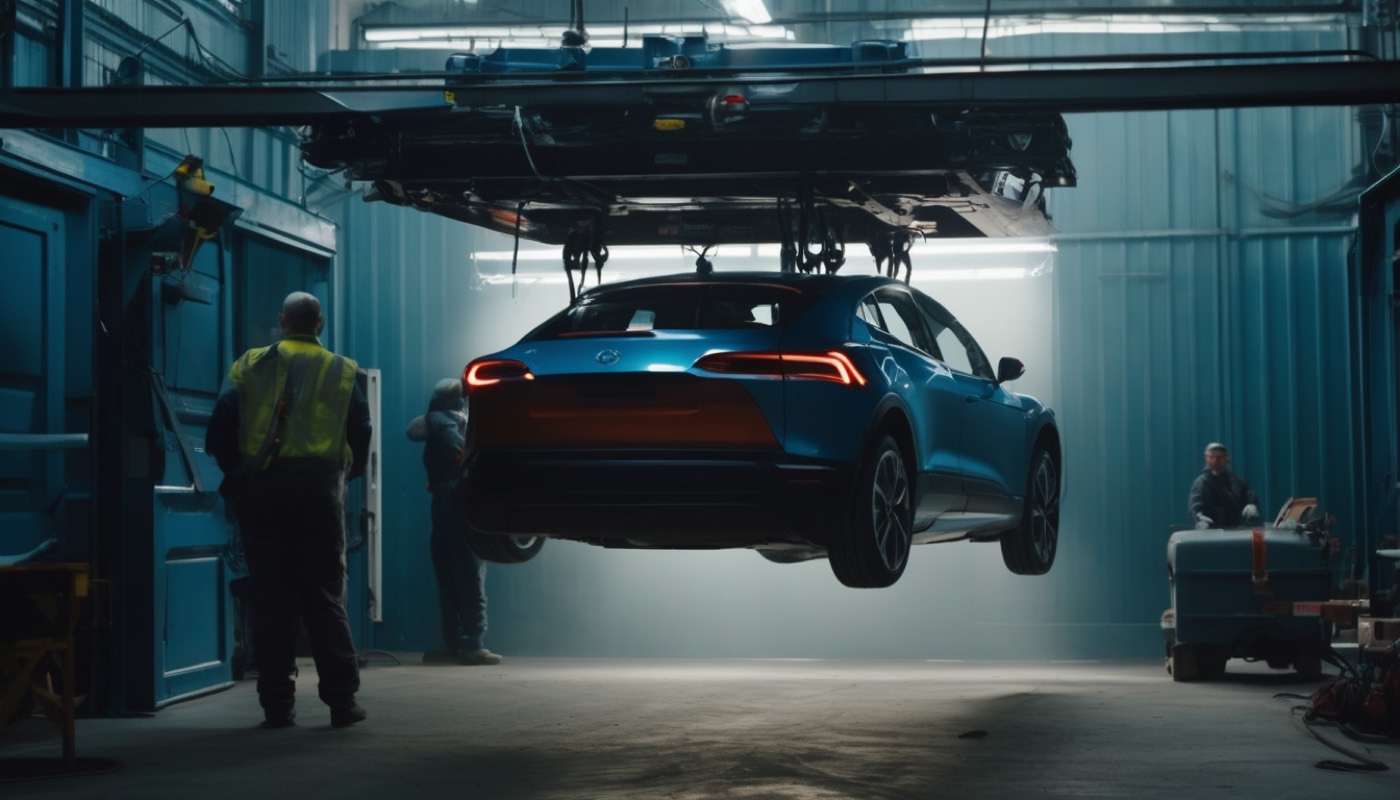
Goodenough's cobalt oxide was the start, not the end. Most of the engineering since has gone into the cathode, and today there are two main recipes.
The first recipe mixes nickel, manganese and cobalt, and is usually shortened to NMC. It packs a lot of energy into a small space, which is why it suits cars that need a long range. The second uses lithium iron phosphate, shortened to LFP: less energy for its size, but cheaper, longer-lasting and harder to set alight.
That trade-off used to have an easy answer.
For years NMC was the obvious choice for cars, and it no longer is. The International Energy Agency reports that in twenty twenty-five, over fifty-five per cent of the batteries put into electric vehicles worldwide were LFP. In China, LFP went into two-thirds of all electric car sales.
The reason is not hard to find.
Price is the reason. BloombergNEF publishes a survey of battery prices every December. Its latest, for twenty twenty-five, put the average LFP pack at eighty-one dollars per kilowatt-hour. An NMC pack averaged a hundred and twenty-eight. A kilowatt-hour is the energy it takes to run a one-kilowatt heater for an hour.
The companies making these packs are some of the largest manufacturers that most people have never heard of. The International Energy Agency names China's CATL as the world's largest battery producer. The other names in its report include BYD, Panasonic of Japan, and three Korean makers: LG Energy Solution, Samsung SDI and SK On.
Every one of them, whichever recipe it uses, needs the same element. So where does it come from?
9. Where lithium comes from
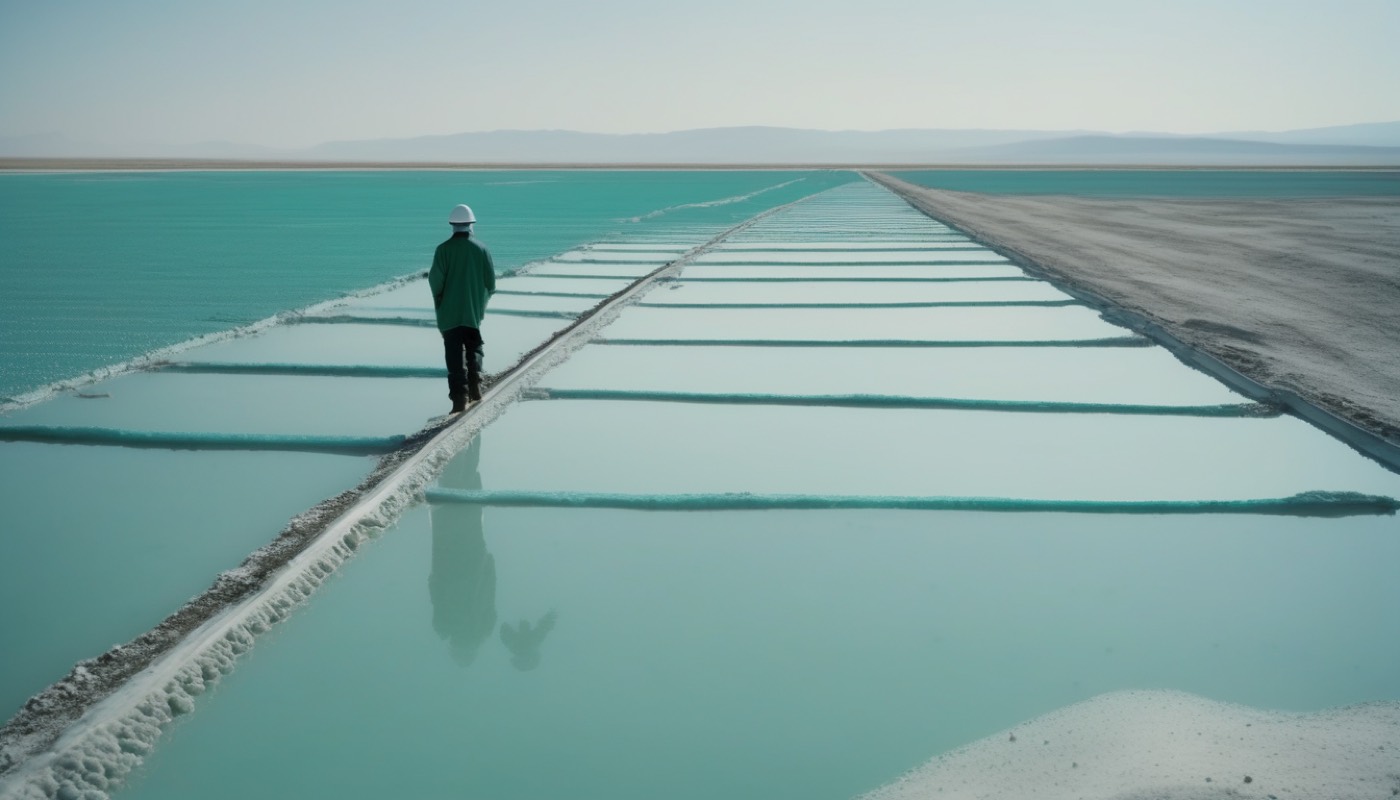
The United States Geological Survey estimates that the world produced two hundred and ninety thousand tonnes of lithium in twenty twenty-five, counted as the lithium it contains. Australia led, with about ninety-two thousand tonnes. China followed with about sixty-two thousand, and Chile with about fifty-six thousand.
That total has grown very fast, and nearly all of the growth has one destination.
Almost all of it now goes one way. The survey puts batteries at eighty-eight per cent of lithium use in twenty twenty-five. Known reserves, meaning lithium that could be extracted at a profit today, stand at about thirty-seven million tonnes.
Lithium comes out of the ground in two very different ways. In Chile and Argentina, salty groundwater called brine is pumped up from under salt flats and left in the sun, so the water evaporates and the lithium concentrates. In Australia, lithium is mined from hard rock, crushed, and then processed with heat and chemicals.
Either way, what leaves the mine is not yet something a battery factory can use.
Mining is only half the story, and it has grown from very little. In nineteen ninety-four, world production outside the United States was just six thousand one hundred tonnes. Now the International Energy Agency says the three largest producers supplied over seventy-five per cent of mined lithium in twenty twenty-four. For refining, it expects China alone to supply over sixty per cent of the world's refined lithium as late as twenty thirty-five.
A material that everybody suddenly needs, from so few places, does not have a calm price.
10. Boom, bust, and a tenfold fall
The United States Geological Survey tracks the average price of lithium carbonate, a common refined form of lithium, under fixed contracts in the United States. In twenty twenty-three it averaged forty-six thousand dollars a tonne. In twenty twenty-five it averaged nine thousand.
That is the calm version, because contracts smooth things out.
The fall inside a single year was steeper still. In China, spot prices fell from about seventy-six thousand dollars a tonne in January twenty twenty-three. By November they were about twenty-three thousand. Then the direction turned again: the International Energy Agency says prices more than doubled between January twenty twenty-five and April twenty twenty-six.
A falling price was good news for battery makers, and hard news for mining companies. The International Energy Agency reports that lithium companies cut their investment by around forty per cent in twenty twenty-five.
Meanwhile, the thing lithium goes into kept getting cheaper. In twenty ten, according to BloombergNEF, a lithium-ion battery pack cost more than eleven hundred dollars per kilowatt-hour. In its latest survey, for twenty twenty-five, the average was a hundred and eight. That is a fall of more than ten times.
The cheapest packs of all are no longer going into cars. BloombergNEF found that batteries for stationary storage, the kind that sit beside solar farms and on power grids, averaged seventy dollars per kilowatt-hour in twenty twenty-five. That puts them below both of the car recipes from chapter eight.
Cheap storage changes what the lithium is for. It is no longer only about cars and phones, which is part of why the price turned upward again.
11. After lithium?

Lithium is not the only element that can do this job. The element directly below it in the periodic table, sodium, behaves in a similar way.
Sodium is heavier, as we saw, and it gives a slightly lower voltage. But it is everywhere. Common salt is sodium chloride, and the sea is full of it.
In February twenty twenty-six, CATL announced what it called the world's first mass-production passenger car with sodium-ion batteries, built with the carmaker Changan. CATL says the cells store up to a hundred and seventy-five watt-hours per kilogram, a measure of how much energy each kilogram of battery holds. It quotes a pure-electric range of more than four hundred kilometres.
Those are the maker's own figures, and it is worth keeping the scale in view.
The International Energy Agency puts the world's capacity to make sodium-ion cells at just over one per cent of the capacity for lithium-ion. The first sodium-ion electric car only appeared in China in late twenty twenty-three. It is a real product now, but a small one.
The other direction is to keep lithium and replace the liquid electrolyte with a solid one. A solid-state battery could, in principle, pack in more energy and remove the flammable liquid. Samsung SDI said in March twenty twenty-four that it planned to begin mass production in twenty twenty-seven, which is a target, not yet a product.
Whatever wins, the principle will not change. Two materials that want to trade electrons, kept apart, with the trade forced through your wire.
Volta built it from copper, zinc and wet cloth. Your phone builds it from lithium, carbon and a thin separator. The chemistry has changed completely, and the idea is two hundred and twenty-six years old.
Sources and credits
Primary sources
- Nobel Prize in Chemistry 2019, press release (9 October 2019) and Popular information, nobelprize.org - laureates and affiliations; Whittingham at Exxon, titanium disulphide cathode, announced 1976, 'a couple of volts'; lithium whiskers causing short circuits; Goodenough's lithium cobalt oxide cathode, 1980, 'almost twice as powerful, at four volts'; Yoshino's petroleum-coke anode, 1985; first lithium-ion batteries sold in 1991; lithium's single outer electron.
- Benchmark Mineral Intelligence, 'Japan's role in developing the lithium ion battery industry', 24 August 2023.
- IEEE Spectrum, 'The First Battery: Dead Frogs Sparked the Voltaic Pile' - Volta's letter to Joseph Banks of 20 March 1800; copper and zinc discs separated by cardboard, blotting paper or cloth soaked in brine or acid; published in Philosophical Transactions on the last day of 1800.
- Royal Society of Chemistry periodic table - lithium: atomic number 3, density 0.534 g/cm3, the lowest of all metals, discovered 1817 by Johan August Arfvedson; densities of sodium 0.97, aluminium 2.70, lead 11.3 g/cm3.
- US Geological Survey, Mineral Commodity Summaries 2026, Lithium - world production 2025 (estimated) 290,000 t lithium content; Australia 92,000, China 62,000, Chile 56,000; world reserves 37,000,000 t; batteries 88% of end use; 1994 production outside the US 6,100 t (foreword); US fixed-contract lithium carbonate average USD 9,000 per ton in 2025, down 31%; brine and hard-rock operations by country.
- US Geological Survey, Mineral Commodity Summaries 2024, Lithium - US fixed-contract lithium carbonate average USD 46,000 per ton in 2023; China spot about USD 76,000 per ton in January 2023 to about USD 23,000 in November 2023.
- International Energy Agency, Global EV Outlook 2026, 'Electric vehicle batteries' - 1.2 TWh of EV batteries in 2025; LFP over 55% of EV batteries deployed globally and two-thirds of electric car sales in China; CATL the world's largest battery producer; sodium-ion capacity just over 1% of lithium-ion; first sodium-ion electric car in China in late 2023.
- International Energy Agency, Global Critical Minerals Outlook 2026 (executive summary) and 2025 (overview) - lithium prices more than doubled between January 2025 and April 2026; lithium companies cut investment by around 40% in 2025; top three producers over 75% of mined lithium in 2024; China projected to supply over 60% of refined lithium in 2035.
- BloombergNEF, 'Lithium-Ion Battery Pack Prices Fall to $108 Per Kilowatt-Hour', 9 December 2025 - 2025 average USD 108/kWh, down 8%; stationary storage USD 70/kWh; LFP USD 81/kWh; NMC USD 128/kWh.
- BloombergNEF, post on X, December 2020 - pack prices 'above $1,100 per kilowatt-hour in 2010', in real terms. Shown only as a labelled figure beside the 2025 price, never on a common scale.
- CATL, press release, 5 February 2026 - with Changan, the 'world's first mass-production passenger vehicle equipped with sodium-ion batteries'; up to 175 Wh/kg; pure-electric range exceeding 400 km. The maker's own figures, attributed as such.
- S&P Global Mobility AutoTechInsight, 6 March 2024 - Samsung SDI plans to begin mass production of all-solid-state batteries in 2027. A stated target.
Not regulated financial advice.