
Nuclear Fuel: The Bottleneck Behind the Comeback
Every nuclear revival plan needs fuel that only a few countries can make. This video follows uranium from the mine to the reactor: mining and milling into yellowcake, conversion to a gas, enrichment in centrifuge cascades, and fuel fabrication. It explains the separative work unit, the measure of enrichment effort, in plain terms.
Then it asks how Russia came to dominate enrichment, from the Megatons to Megawatts deal that began in 1993 to Rosatom's place today as the largest operator, and what the American ban on Russian uranium imports changes, with waivers ending by 1 January 2028.
It explains why new small and advanced reactors need HALEU, fuel enriched to just under 20 per cent that almost nobody in the West makes at commercial scale, and looks at the Western rebuild: Urenco's expansion at Eunice in New Mexico, announced on 2 June 2026, Centrus at Piketon in Ohio, and Orano.
The verdict: forwards, but not yet fast enough. The new capacity arrives after the waivers end, and the video says plainly that the gap in between is a risk, not a measured forecast.
Figures come from the World Nuclear Association, Urenco, Centrus's filings with the US SEC and the US Department of Energy, all dated on screen.
Educational documentary. Not financial or investment advice.
In these topics
Chapters
Video notes
1. The fuel nobody talks about
Nuclear power is having a comeback. Many countries are planning new reactors, and data centres want the steady electricity. Nearly every plan starts with the reactor. Almost none starts with the fuel.
That is the gap this video is about. A reactor cannot burn uranium as it comes out of the ground. It has to be refined, turned into a gas, enriched and built into fuel, and only a few countries can do the middle steps.
Here is the whole chain, from the ground to the reactor. Uranium is mined and milled into a yellow powder. Then it is turned into a gas, enriched, and built into fuel. Enrichment also leaves a leftover stream, so the chain has a second branch.
The rest of this video follows that chain one step at a time. Then it asks what happens when one link is held by a rival.
The question is simple. Is nuclear power moving forwards, to a comeback with secure fuel, or is it held backwards by a supply chain the West let wither? Every step in the chain is a piece of the answer.
Three ideas run through everything that follows. Few countries can enrich uranium. One state company dominates it. And the newest reactor designs need a fuel that almost nobody in the West makes yet.
For scale, a large reactor needs about a hundred and forty thousand units of enrichment work every year. That unit has a name, the separative work unit, and chapter five explains it plainly. First, the mines.
2. From mine to yellowcake
It starts in the ground. Uranium is a metal found in rock in small amounts, and most of it is mined in a few places.
Kazakhstan is first, producing about thirty-nine per cent of the world's uranium in twenty twenty-four. Canada is second and Namibia is third. Australia comes fourth.
Most Kazakh uranium is not dug out in the usual way. Over half of the world's uranium now comes from a method called in situ leaching. Liquid is pumped down into the rock, dissolves the uranium, and is pumped back up.
The bars show the gap between the producers. Kazakhstan alone mined more than Canada and Namibia together. Three countries supply about three quarters of the world's mined uranium.
The ore, or the liquid from leaching, then goes to a mill. The mill extracts the uranium chemically.
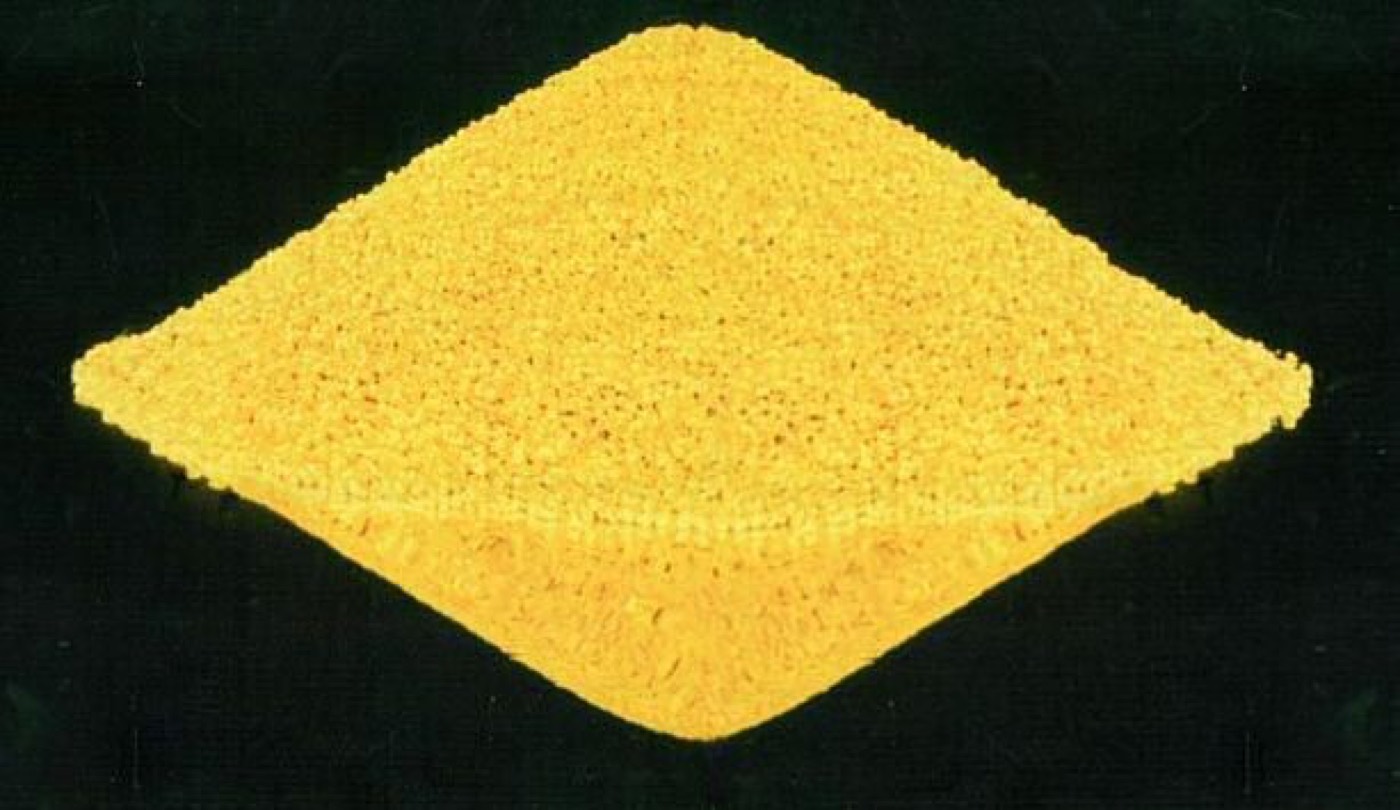
What comes out is a coarse yellow powder, a uranium oxide called yellowcake. Its chemical name is U three O eight. This photograph shows a sample of it.
It is not yet fuel. Yellowcake cannot be enriched as a powder, so it must first be turned into a gas. That is the next step in the chain.
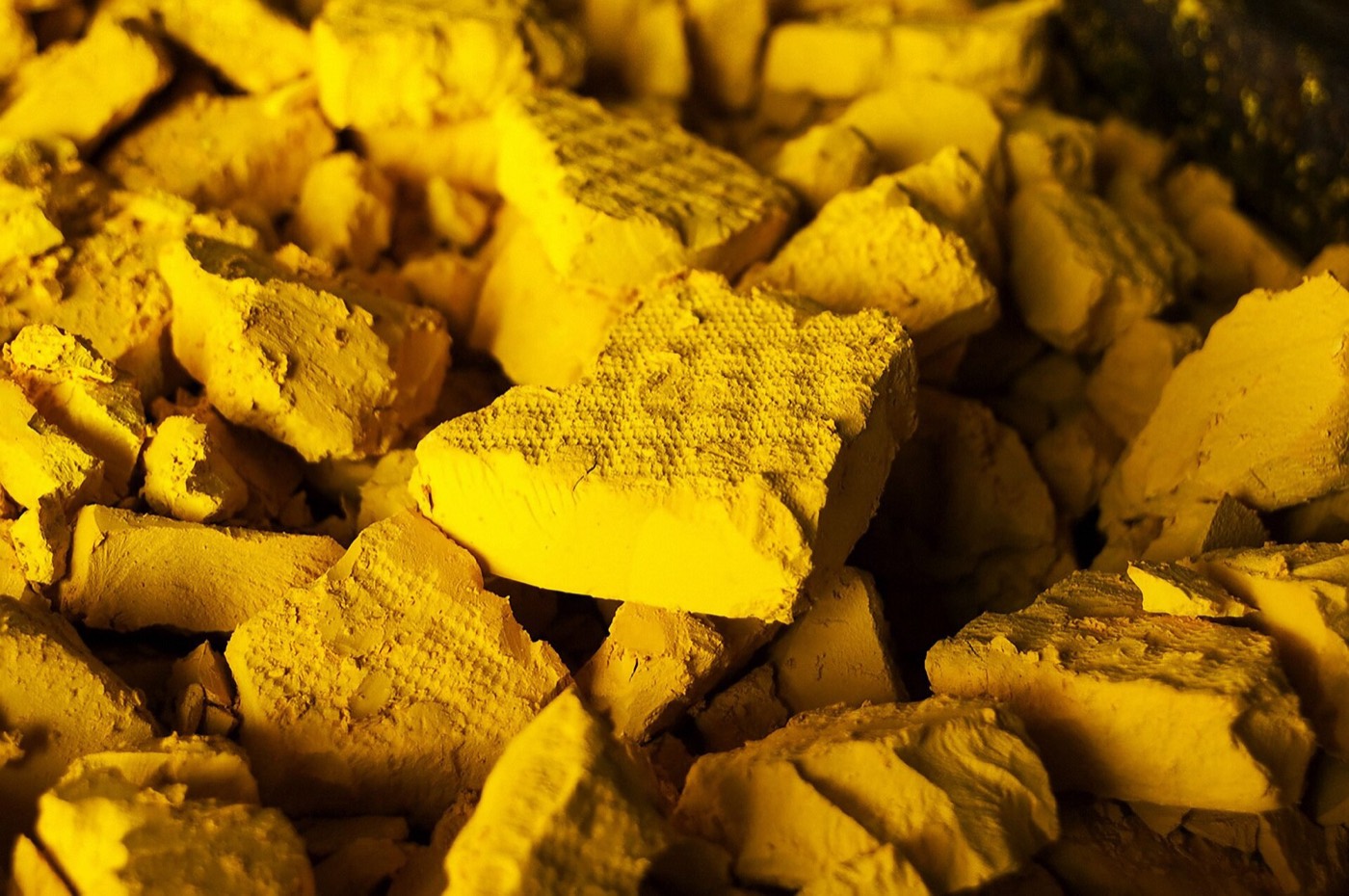
Here is a second sample, photographed by the Nuclear Regulatory Commission. It is a solid uranium oxide, the form in which the mill sends uranium onwards to be converted.
3. Conversion to gas
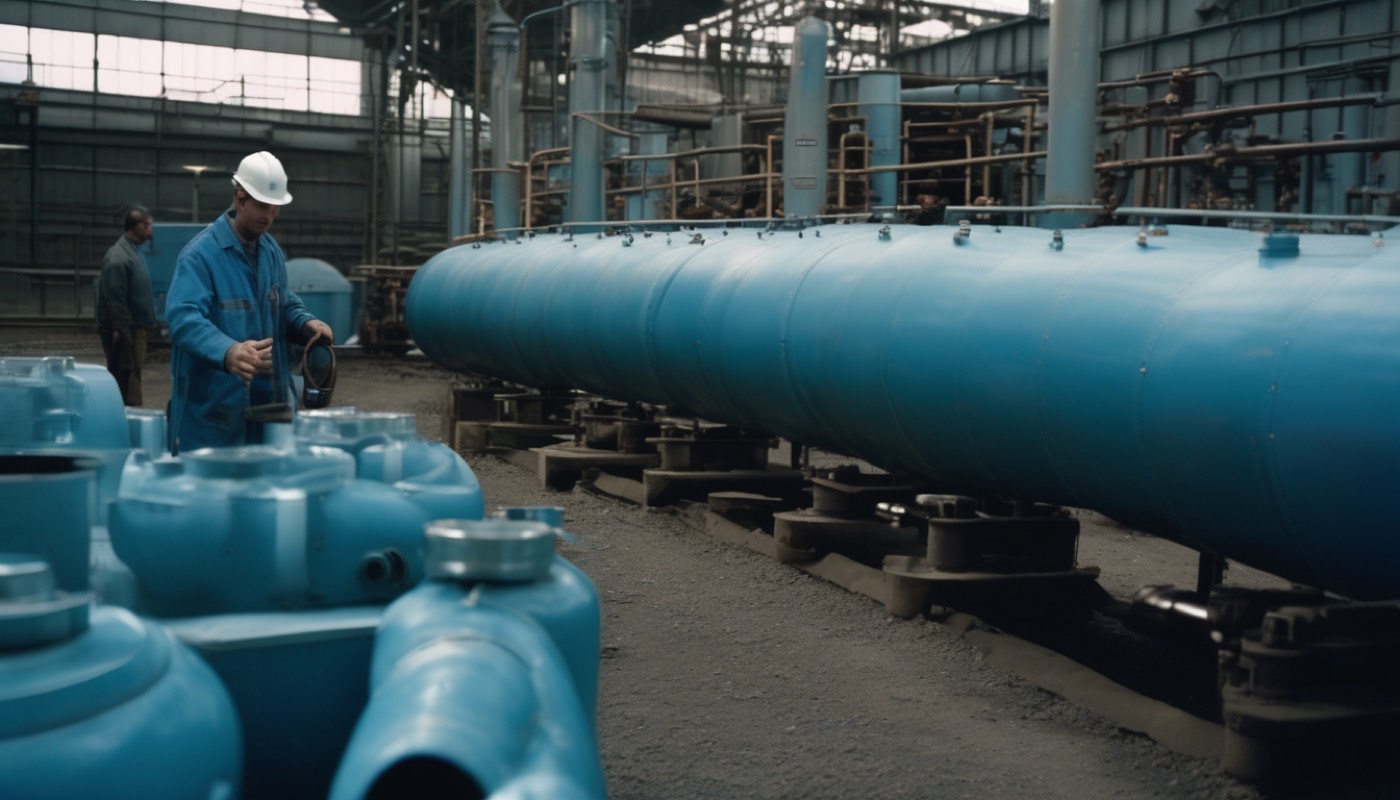
Enrichment works on a gas, and yellowcake is a powder. So before anything else, the powder must be converted.
Conversion turns yellowcake into a compound called uranium hexafluoride, written U F six. The uranium is combined with fluorine. The result is a solid that is easy to ship, and a gas when it is warmed, which is what the enrichment machines need.
Only five operators run commercial conversion plants. They are in Canada, France, Russia, China and the United States. Each one is a single point on the map, and a fault at one of them matters.
Read the bars from zero. China's plants and France's plants are the biggest, and the American plant is the smallest, at just over half the size of the Canadian one. Together they are licensed for about sixty-two thousand tonnes a year.
This step gets little attention. But a shortage here would stop the chain just as surely as a shortage of enrichment would.
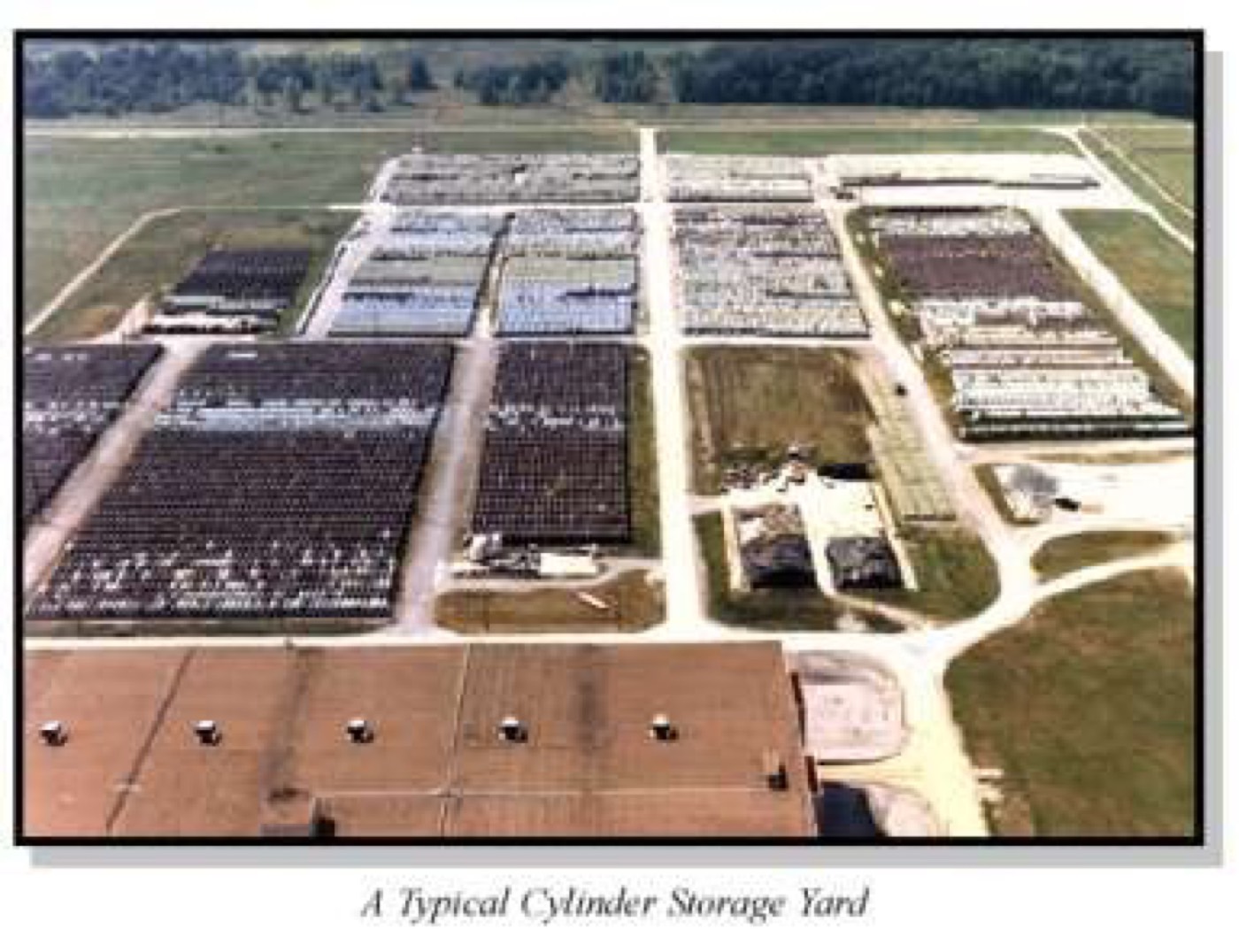
This is a storage yard of steel cylinders holding depleted uranium hexafluoride. Depleted means the leftover, with less of the useful isotope than it started with. Cylinders like these are how the gas is stored and moved.
4. Inside a centrifuge cascade
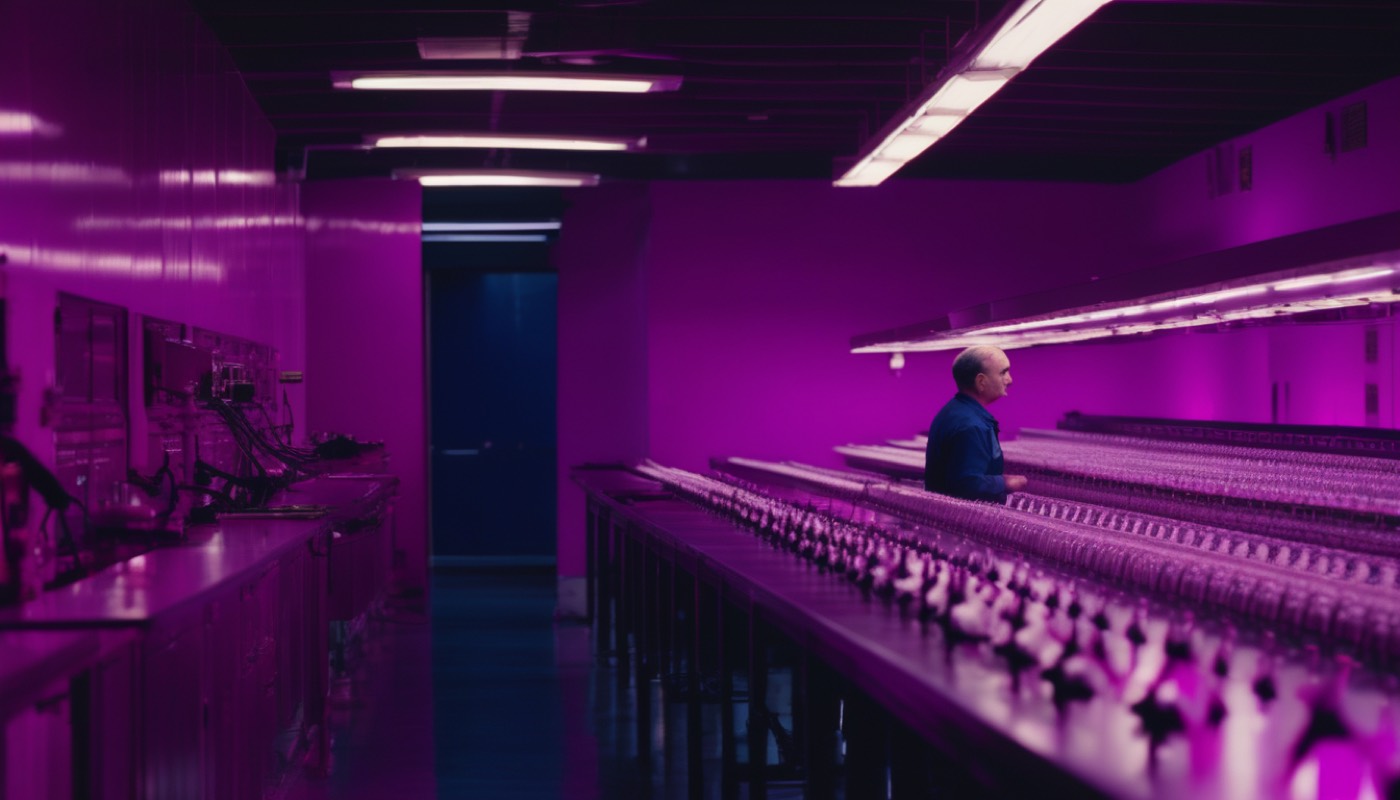
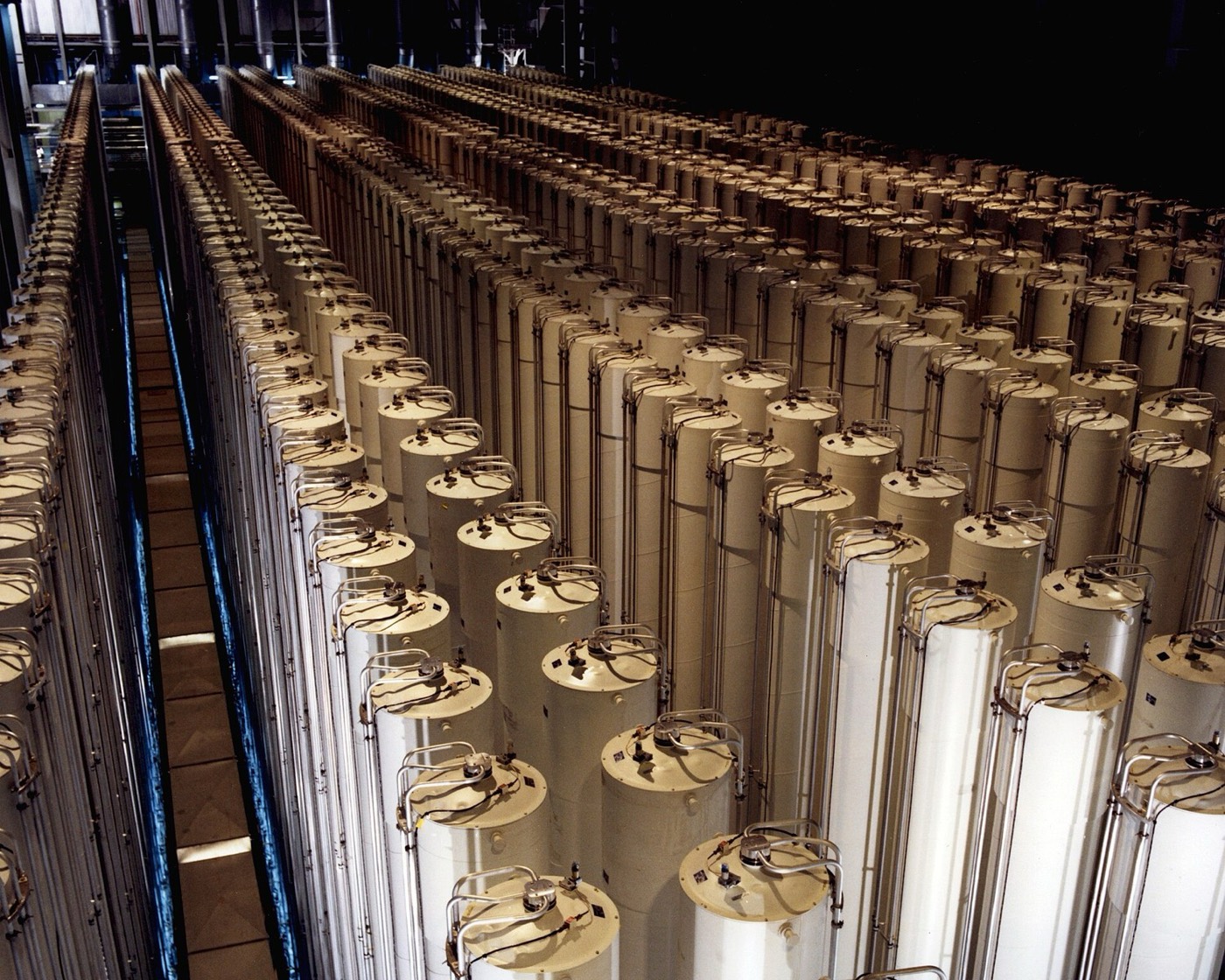
Now the hard part. Natural uranium is a mix of two kinds of atom, called isotopes. The rare one, uranium two thirty-five, is the one that splits easily in a reactor. It makes up only about nought point seven per cent of the mix.
The two isotopes are chemically identical, so chemistry cannot separate them. The only difference is weight, and it is tiny.
The answer is a gas centrifuge, a tall thin cylinder that spins very fast. The gas is fed in. The heavier atoms drift towards the wall, and the lighter ones collect nearer the centre. One machine separates only a little.
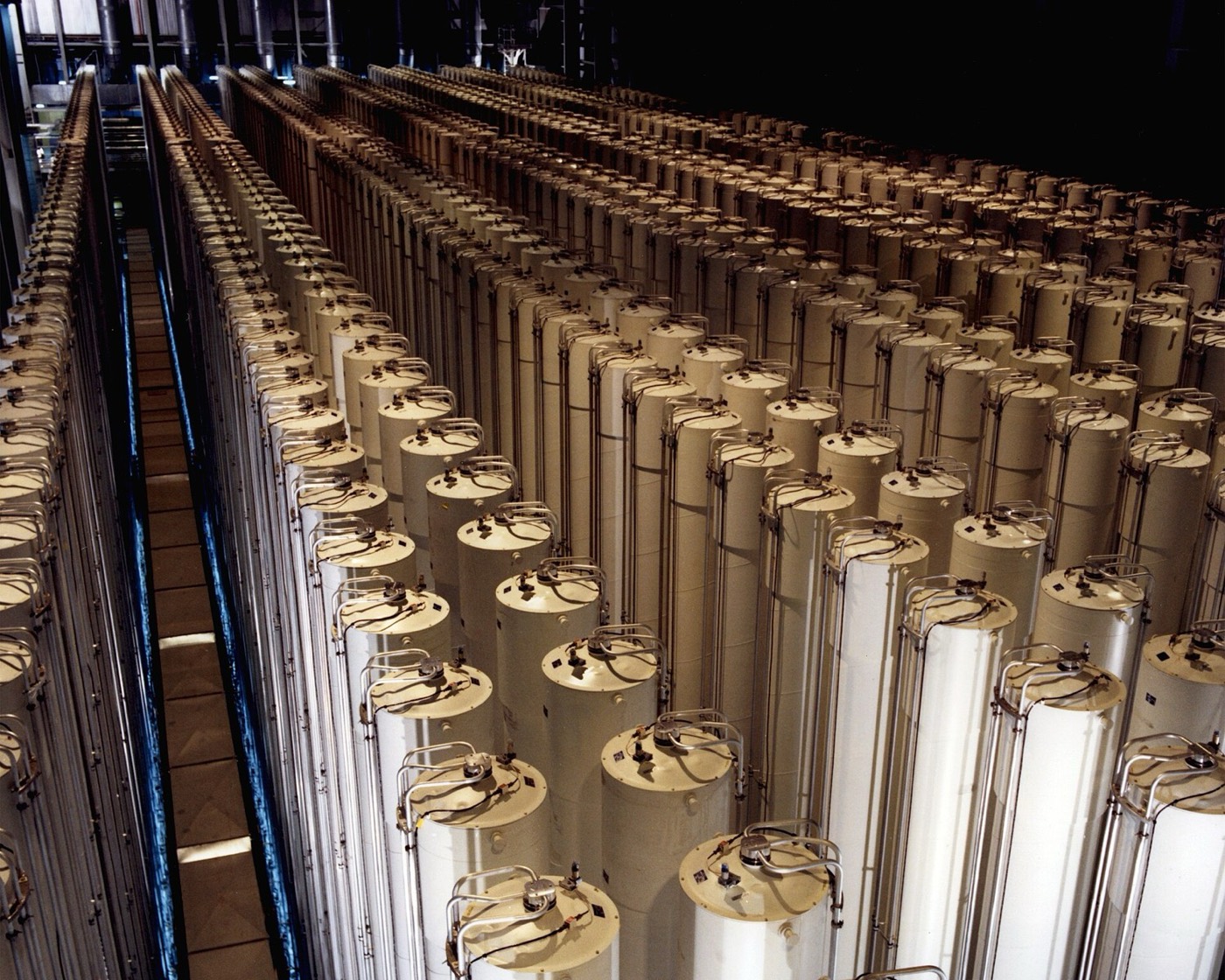
So plants join thousands of centrifuges together in a cascade. The output of one machine feeds the next. Each step raises the share of the rare isotope by a small amount.
Along a cascade, the share of the rare isotope climbs from about nought point seven per cent to between three and five per cent. That is the level a power station needs. Getting there takes many stages in a row.
This government photograph shows rows of centrifuges in a cascade hall, taken in nineteen eighty-four. The machines are joined by pipes, so that gas can pass from one to the next. A modern plant repeats this at a very large scale.
5. The separative work unit
Now the unit that everything in this business is measured in, the separative work unit, or S W U.
A separative work unit measures the effort of enrichment, not the weight of the fuel. Think of it as the amount of separating a plant has to do. The same tonne of uranium can need little work or a great deal, depending on how far the share of the useful isotope is raised.
Every enrichment job has three streams. Feed goes in. Product comes out, richer in the useful isotope. Tails come out too, poorer than the feed, and they are the leftover. The work done depends on all three.
Here is a worked example from the World Nuclear Association. Each kilogram of five per cent fuel takes about seven point nine units of work. That assumes the tails keep a quarter of one per cent.
That work has a cost in electricity. Modern centrifuge plants use about fifty kilowatt hours for each unit of work. The old gaseous diffusion plants used about two and a half thousand.
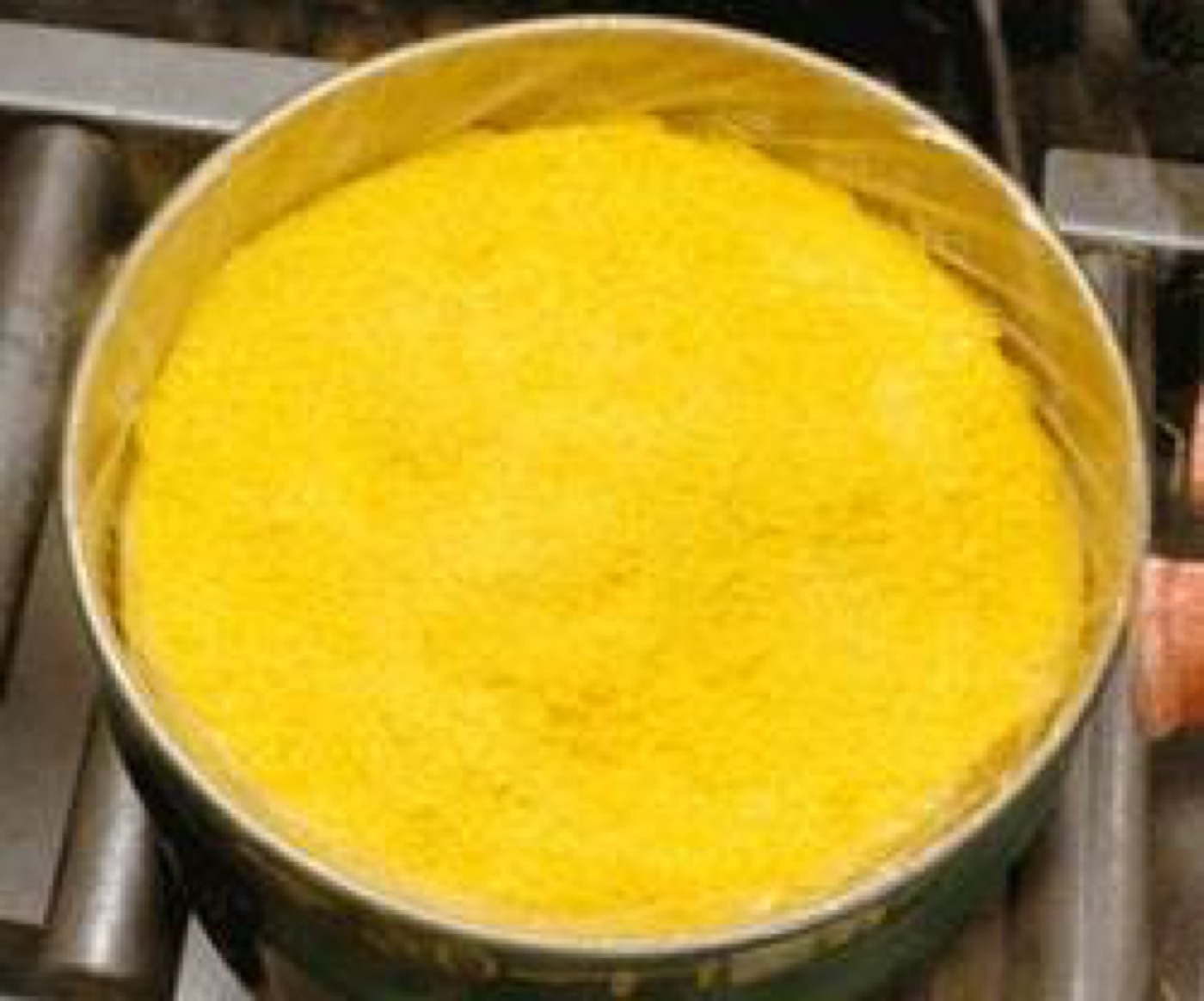
The result is low-enriched uranium, shown here as a powder. It is what a power reactor buys before it is made into fuel. Every step you have seen so far exists to make it.
6. Fuel fabrication
Enrichment ends with a gas, and a reactor cannot use a gas. The enriched uranium hexafluoride goes to a fuel plant, where it is turned back into a solid.
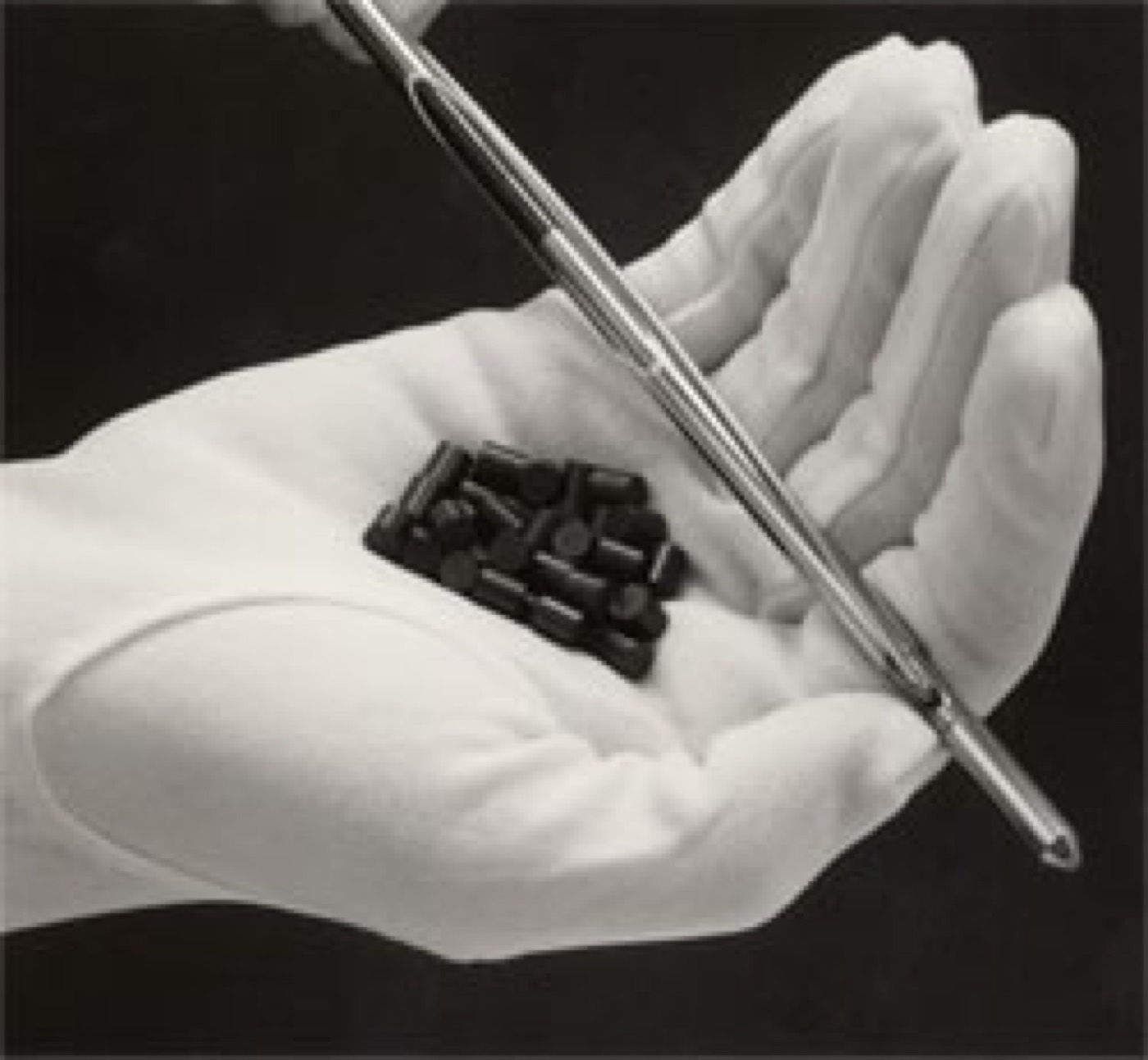
At the fuel plant the gas is converted to uranium oxide powder. The powder is pressed and baked into small ceramic pellets. The pellets are stacked in metal tubes, and the tubes are bundled into a fuel assembly.
Each pellet is just under a centimetre wide, and a little longer than that. Yet one pellet holds about as much energy as a tonne of coal. This photograph shows pellets beside a fuel rod.
A large reactor core holds about a hundred and ninety-three assemblies. Together they carry more than fifty thousand rods and about eighteen million pellets. That is the scale of what the fuel plant must build.
The tubes are made of a zirconium alloy, chosen for strength and to resist corrosion. Each tube keeps a small empty space at the top. It gives the fission gas room to collect as the fuel is used.
Fabrication is the last link before the reactor. After it, the fuel is ready to load.
7. How Russia came to dominate
The West did not lose its enrichment by accident. Part of it was a deal.
In nineteen ninety-three, Washington and Moscow signed a twenty-year agreement, nicknamed Megatons to Megawatts. It turned five hundred tonnes of Russian bomb-grade uranium into fuel for reactors. The last of it was delivered in twenty thirteen.
The scale was large. The bomb material was equal to about twenty thousand warheads. It became more than thirteen thousand tonnes of reactor fuel, and at its height it supplied about a third of the enrichment that American reactors needed.
Today Russia's state company, Rosatom, runs four enrichment plants. They are at Novouralsk, Zelenogorsk, Angarsk and Seversk.
The plants are spread across Russia, from the Urals to Siberia. Novouralsk is the westernmost, close to the Urals. The others lie far to the east, and all four belong to one state company.
Rosatom is the largest enrichment operator in the world, with about twenty-nine million units of work a year. Next comes the European group Urenco, then China's CNNC, then France's Orano. The bars are drawn from zero.
On the association's own table, that is roughly forty-three per cent of world capacity. That share is an arithmetic result, not a figure the association prints.
8. The US ban on Russian uranium

In twenty twenty-four Congress passed a law to cut off the supply. It banned imports of Russian low-enriched uranium.
The law was signed on the thirteenth of May, and the ban took effect on the eleventh of August. Waivers can be granted where there is no other viable source, or where the national interest requires it. Any waiver must end by the first of January twenty twenty-eight.
Notice what the law does not do. It does not stop Russian fuel at once, because waivers let some in while alternatives are built. It sets a hard end date instead.
Centrus, the company that imports Russian fuel, says it has waivers for the deliveries it had already committed to its American customers. They run through twenty twenty-seven. After that, the waiver route closes.
Russia has its own rule as well. Its government withdrew the licence to export enriched uranium to the United States, and has extended that through twenty twenty-seven. So the supply can be squeezed from both ends.
9. Why new reactors need HALEU
Most reactors today run on fuel enriched to no more than five per cent. Many new designs, including small and advanced reactors, need more.
High-assay low-enriched uranium, called HALEU, is enriched between five per cent and just under twenty. Its design level in the new American contracts is nineteen point seven five per cent. That is a much higher share of the useful isotope than a power station uses today.
The ladder has three rungs. Natural uranium sits at the bottom, power station fuel in the middle, and HALEU at the top. Each rung takes far more separative work than the one below.
Why do new designs want it? The Department of Energy says most American advanced reactors need HALEU to be smaller, with more power for their size. It also allows longer periods between refuelling, and better use of the fuel.
There is a catch. The Department of Energy says HALEU is not yet available at commercial scale. Its own estimate is that demand could reach about fifty tonnes a year by twenty thirty-five.
10. The Western rebuild
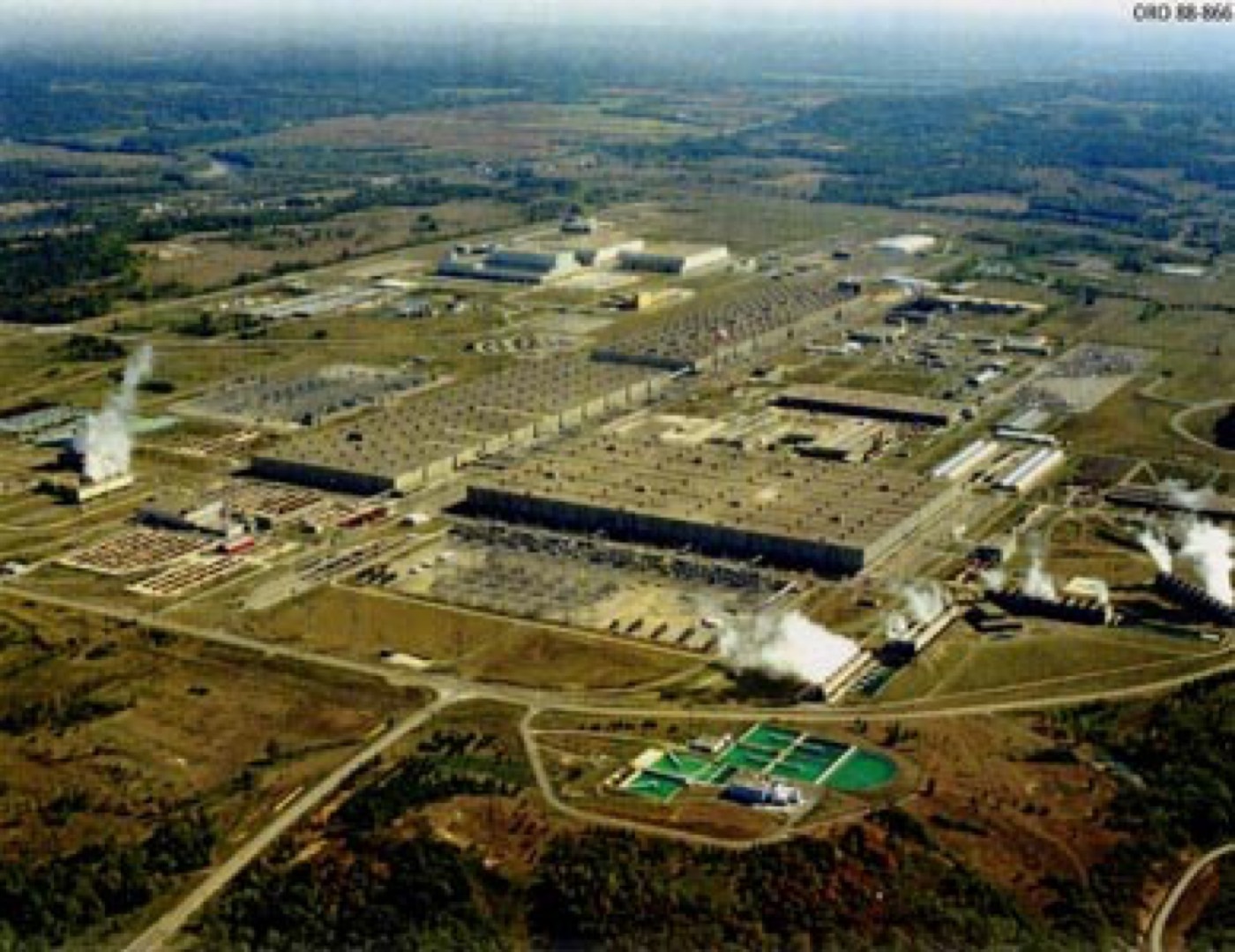
The West is now trying to rebuild. Two big announcements in twenty twenty-six show how.
On the second of June, Urenco announced a new plant at Eunice, in New Mexico. It will add two point one million units of work a year, on top of four point three million there today. That is nearly a fifty per cent increase.
Construction starts in twenty twenty-nine. The first cascades should begin producing in twenty thirty-two, and the plant should be complete by twenty thirty-six. Until then, the extra fuel is a promise, not a supply.
In Ohio, Centrus won a nine hundred million dollar task order from the Department of Energy. It is for HALEU production at Piketon, with options that take the total to one point zero seven billion dollars.
This aerial photograph shows the former Portsmouth Gaseous Diffusion Plant, near Piketon. That older plant used the old diffusion method. The Centrus enrichment work is at Piketon too.
Others are moving as well. In France, Orano is expanding its plant, and in Tennessee it plans a new one at Oak Ridge.
11. Can the West be in time?
So can the West be in time? Put the dates side by side.
The waivers for Russian fuel end at the start of twenty twenty-eight. Centrus expects its first new capacity in twenty twenty-nine. Urenco's first new cascades follow in twenty thirty-two, and the full expansion in twenty thirty-six.
That leaves a gap. Nothing new arrives before the waivers end. The risk is a shortage in the years between Russian supply and the new plants. Nobody can measure that in advance, so this video calls it a risk, not a forecast.
Here is who holds the world's capacity today. Rosatom and CNNC together hold about sixty-three per cent. Urenco and Orano hold about thirty-six. Western capacity is the smaller slice, and it is the part being rebuilt.
So what is the verdict? Forwards, but not yet fast enough. The money and the plans are real, and centrifuge technology is proven. But the new capacity arrives after the waivers end.
The comeback is real. Whether it is fuel-secure depends on the next few years, not the next few decades.
Sources and credits
Photo credits (Wikimedia Commons)
- Uranium yellowcake (U3O8) concentrate: unknown, Public domain - https://commons.wikimedia.org/wiki/File%3AYellowcake.jpg
- Yellow cake uranium, solid uranium oxide: Nuclear Regulatory Commission from US, Public domain - https://commons.wikimedia.org/wiki/File%3AYellow_Cake_Uranium_%2814492248719%29.jpg
- Depleted UF6 cylinder storage yard: unknown, Public domain - https://commons.wikimedia.org/wiki/File%3ADUF6_storage_yard_far.jpg
- Gas centrifuge cascade for enriching uranium (US plant, Piketon): U.S. Department of Energy, Public domain - https://commons.wikimedia.org/wiki/File%3AGas_centrifuge_cascade.jpg
- Gas centrifuge cascade, 1984 Piketon plant: Nuclear Regulatory Commission from US, Public domain - https://commons.wikimedia.org/wiki/File%3AGas_Centrifuges_-_1984_%2814655893576%29.jpg
- Nuclear fuel pellets and a fuel rod: U.S. Department of Energy, Public domain - https://commons.wikimedia.org/wiki/File%3ANuclear_fuel_pellets.jpeg
- Low-enriched uranium powder: Unknown author, Public domain - https://commons.wikimedia.org/wiki/File%3ALEUPowder.jpg
- Portsmouth Gaseous Diffusion Plant, Piketon, Ohio (aerial): U.S. Department of Energy, Public domain - https://commons.wikimedia.org/wiki/File%3APortsmouth_Gaseous_Diffusion_Plant.jpg


Primary sources
- Urenco USA, 'Urenco USA Plans Significant Expansion of U.S. Uranium Enrichment Capacity', 2 June 2026 - 2.1m SWU, nearly 50%, current 4.3m SWU, construction 2029, first cascades 2032, complete 2036..
- Centrus Energy Corp, Form 10-Q for the quarter ended 30 June 2026 (sec.gov) - $900.0m firm fixed price task order awarded 5 January 2026, contract 1 July 2026, one MTU of HALEU at nominal 19.75% by July 2032, options, Import Ban Act dates, waivers for 2024-2027 US deliveries, Russian Decree of 14 November 2024 extended through 31 December 2027.
- Centrus Energy Corp, news release 'Centrus Awarded $900 Million to Expand Uranium Enrichment in Ohio', January 2026 - up to $170m options, $1.07bn total, first new capacity 2029.
- World Nuclear Association, 'Uranium Enrichment', updated 4 September 2026 - 2025 capacity table (Rosatom 29,133; Urenco 17,300; CNNC 13,789; Orano 7,500; world 68,076 thousand SWU/yr), SWU example, energy use, assays.
- World Nuclear Association, 'World Uranium Mining Production', updated 21 September 2026 - 2024 production by country.
- World Nuclear Association, 'Conversion and Deconversion' and 'Fuel Fabrication' (updated 4 August 2026).
- US Department of Energy, Office of Nuclear Energy, 'What is High-Assay Low-Enriched Uranium (HALEU)?', updated 3 December 2024, and 'Russian Uranium Ban Waiver Guidance'.
- US Energy Information Administration, 'Megatons to Megawatts program will conclude at the end of 2013', Today in Energy.
- Orano, press release, 5 January 2026 - $900m DOE funding for Project IKE at Oak Ridge.
- govinfo, bill summary of H.R. 1042, Prohibiting Russian Uranium Imports Act - waivers terminate by 1 January 2028.
Not regulated financial advice.