
Oil: Has Global Demand Already Peaked?
Extracting, shipping, refining and pricing a barrel of oil is a chain most viewers never see - and in September 2026 that chain is carrying a contradiction. The International Energy Agency says world oil demand is falling by 2.5 million barrels a day this year. OPEC+ just finished raising output anyway, completing the full rollback of the voluntary cuts it first announced in 2023.
This video follows a barrel of oil from the ground to the pump: what grade actually means (sweet or sour, light or heavy), how conventional wells, offshore platforms and shale fracking each changed where oil comes from, the chokepoints - Hormuz, Malacca, Bab el-Mandeb - that a huge share of it has to pass through, how fractional distillation turns crude into a slate of fuels, and how Brent, WTI and Dubai/Oman benchmarks actually set a price on futures markets rather than by producer fiat.
Then the history that built today's standoff: OPEC's 1960 founding in Baghdad, the 1973 Arab oil embargo that first showed producers' pricing power, the US shale boom that forced OPEC to add Russia and others as OPEC+ in 2016, and the 2020 Saudi-Russia price war that briefly sent WTI futures to a negative price.
Then the argument that is not settled: the IEA's 2023 forecast that oil demand would peak before 2030, OPEC's furious public rebuttal, and the electric cars that displaced 1.7 million barrels a day of oil in 2025 alone - a real, measured number, not a forecast. Then 2026 itself, where a major forecaster says the market wants less oil and a producer group just finished pumping more of it in.
Every figure is on screen with its source and date. Chapter 12 weighs the case for OPEC+ chasing market share against the case that a genuine, permanent demand peak is a harder problem than any price war - the video's own labelled, editorial judgement, on a question its own sources do not agree on.
In these topics
Chapters
Video notes
1. What a barrel actually is

Every barrel of crude oil that comes out of the ground is different from the next one, and that difference decides almost everything that happens to it afterward.
This video follows a barrel of oil from the ground to the pump. It covers how oil is extracted, shipped and refined, how its price is actually set, and why the producers who set that price are pumping more of it into a market that says it wants less.
Two properties do most of the work of describing a barrel. The first is sulfur content. Oil with less than one per cent sulfur is called sweet. Above that, it is sour, and it needs extra refining to remove the sulfur before it can be sold as fuel.
The second property is density, measured on a scale called API gravity. Oil above thirty-five degrees on that scale is light. Oil below twenty-five degrees is heavy, and thick enough that it often has to be diluted before it will even flow down a pipeline.
Light, sweet crude is the easiest and cheapest to turn into petrol and jet fuel. Heavy, sour crude needs more equipment, more energy and more time at the refinery to reach the same finished products. So before a single well is drilled, the grade of oil underground has already decided how it will be extracted, shipped and refined, and how much that will cost.
2. Getting it out of the ground
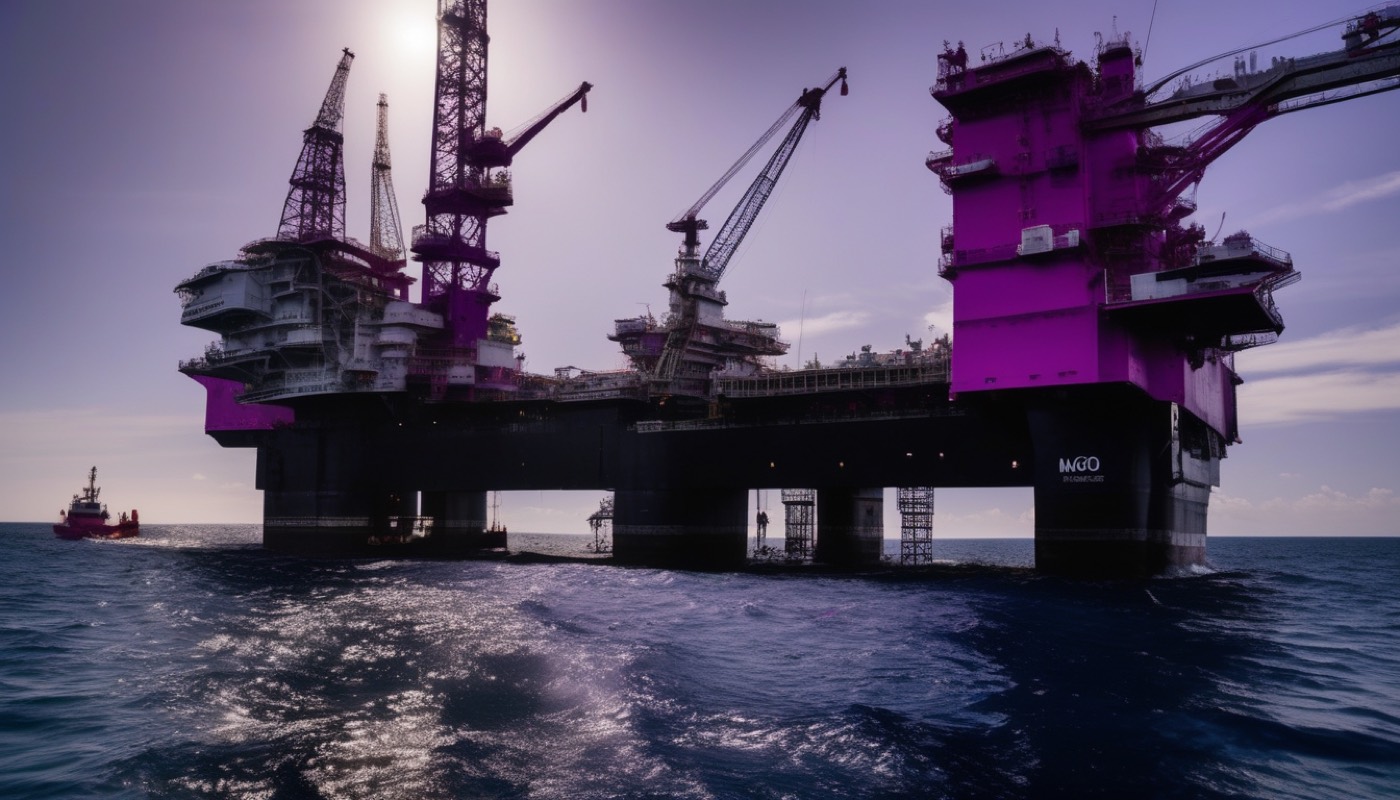
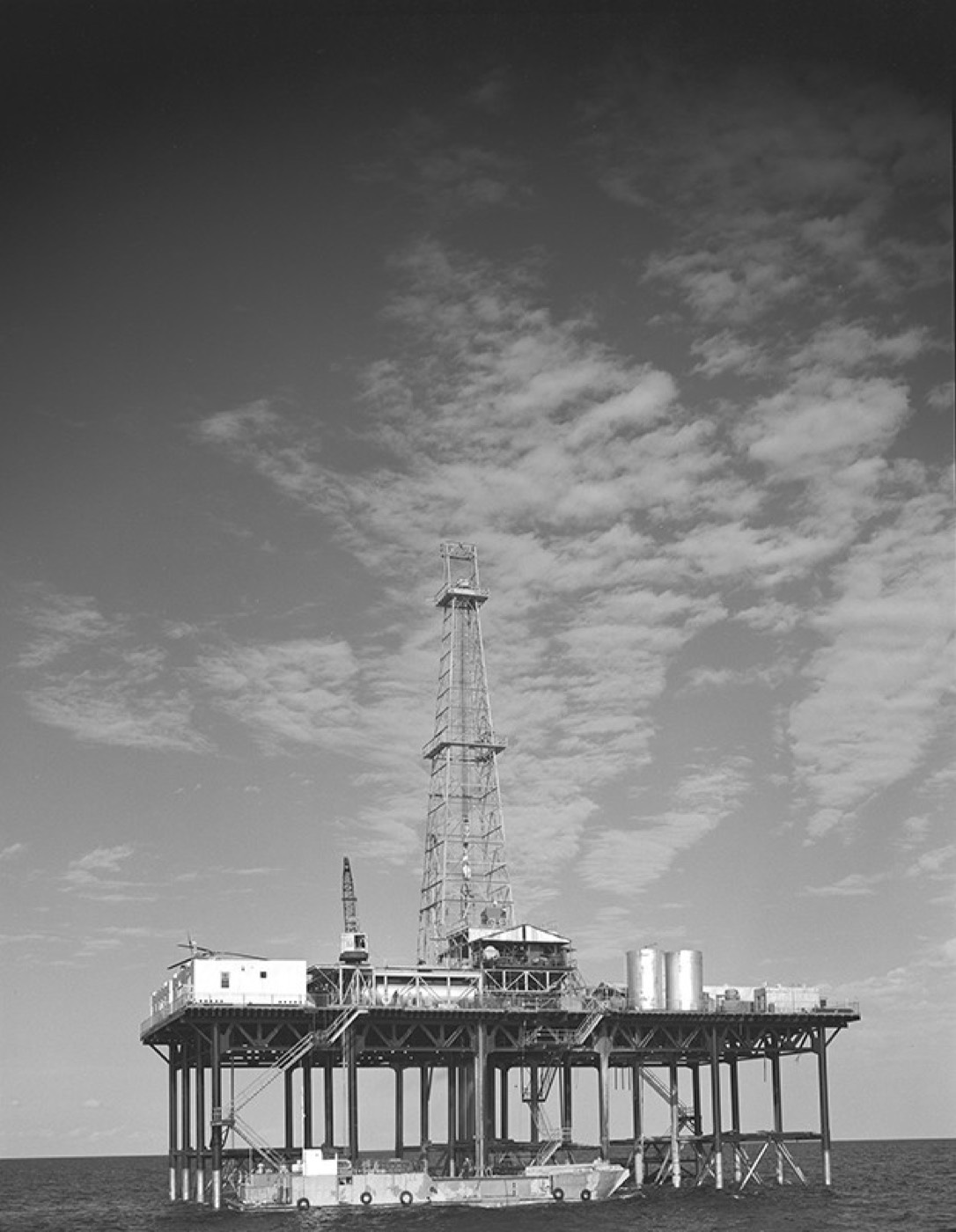
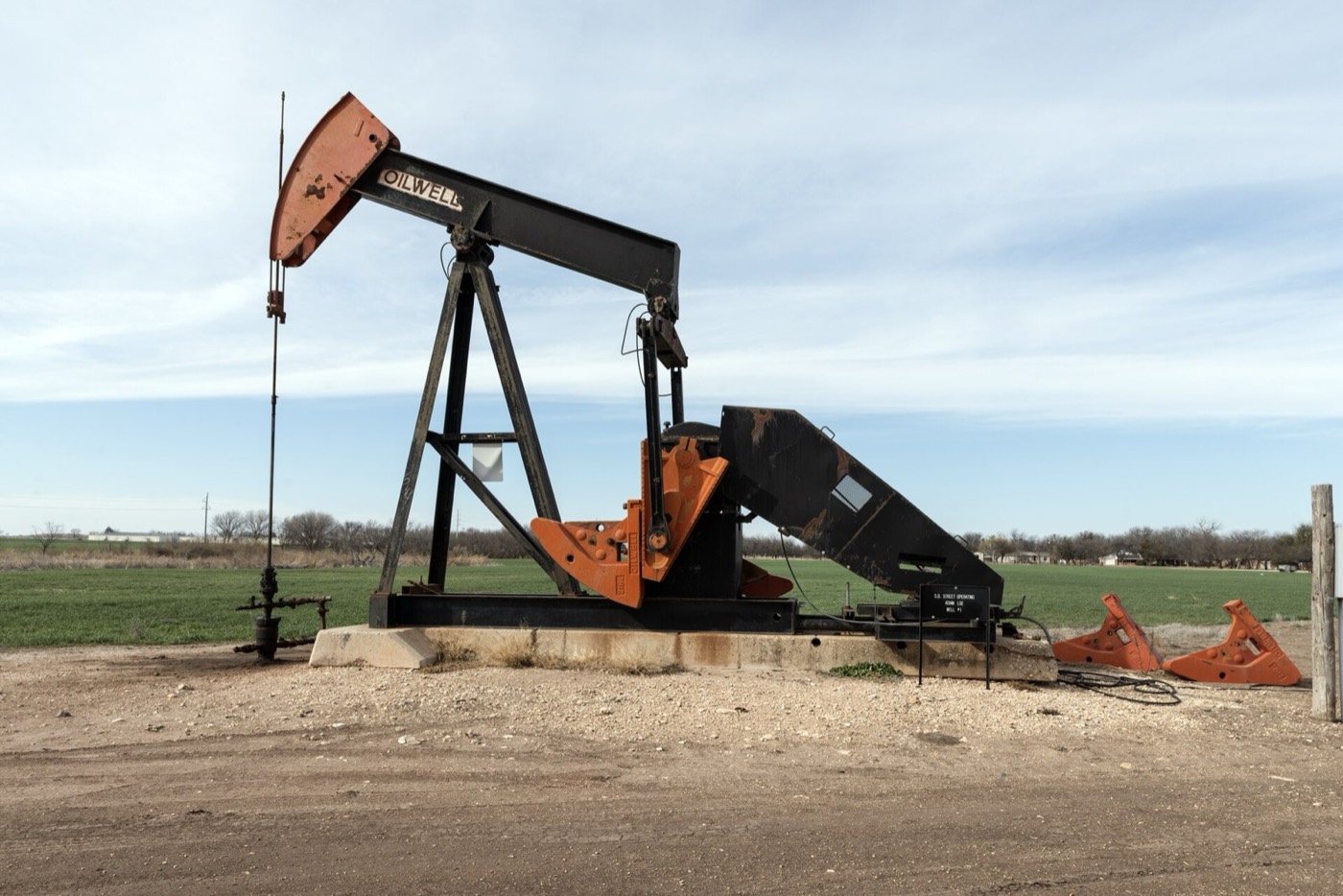
Oil has never come out of the ground in just one way, and each new method has changed where in the world it is worth drilling.
This is an offshore drilling platform in the Gulf of Mexico. Conventional wells like this reach oil that has collected in a single porous rock formation, under enough natural pressure that it can be pumped, or sometimes even flows, to the surface on its own.
That description covers the oldest wells on land and the platforms that later took the same idea out to sea, into water thousands of feet deep. It does not cover the method that reshaped American oil production this century.
The Permian Basin lies inland, in West Texas and New Mexico — far from the offshore platforms like the one pictured, but just as central to how oil reaches the surface.
It produced six million barrels of oil a day in December 2025. That was forty-four per cent of all United States oil production, from shale and similarly tight rock that no conventional well could ever reach.
Shale rock holds oil in pores too small for it to flow through on its own. The method built to reach it drills sideways through the rock and fractures it with high-pressure fluid, opening thousands of tiny paths for oil to escape into the well. It is called hydraulic fracturing, or fracking, and it is why a region of Texas now moves more oil each day than most of the world's oil-producing countries.
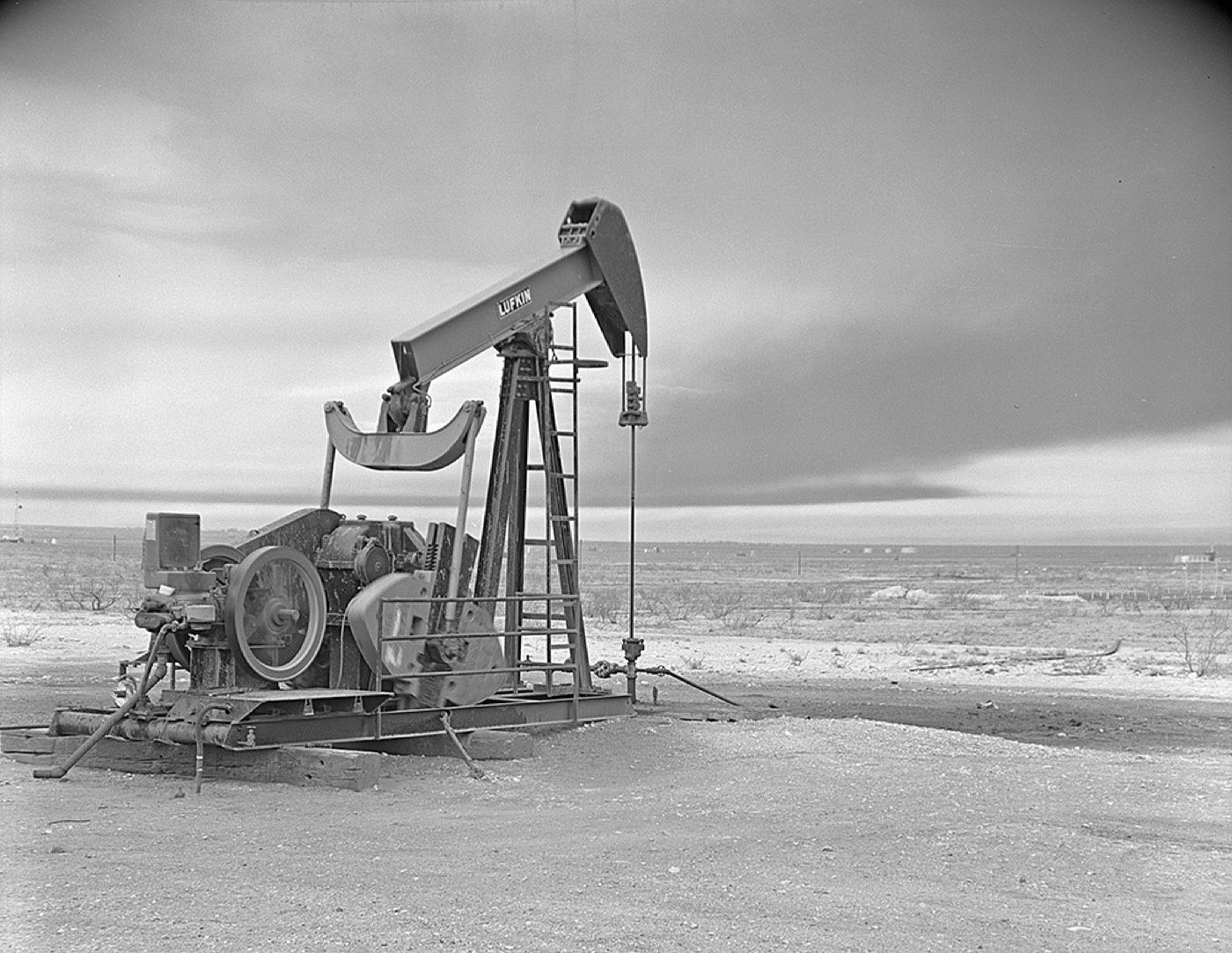
This is a pumpjack in West Texas, the machine that lifts oil from a conventional well to the surface — the same basic design used since long before shale changed everything around it.
3. Wellhead to refinery
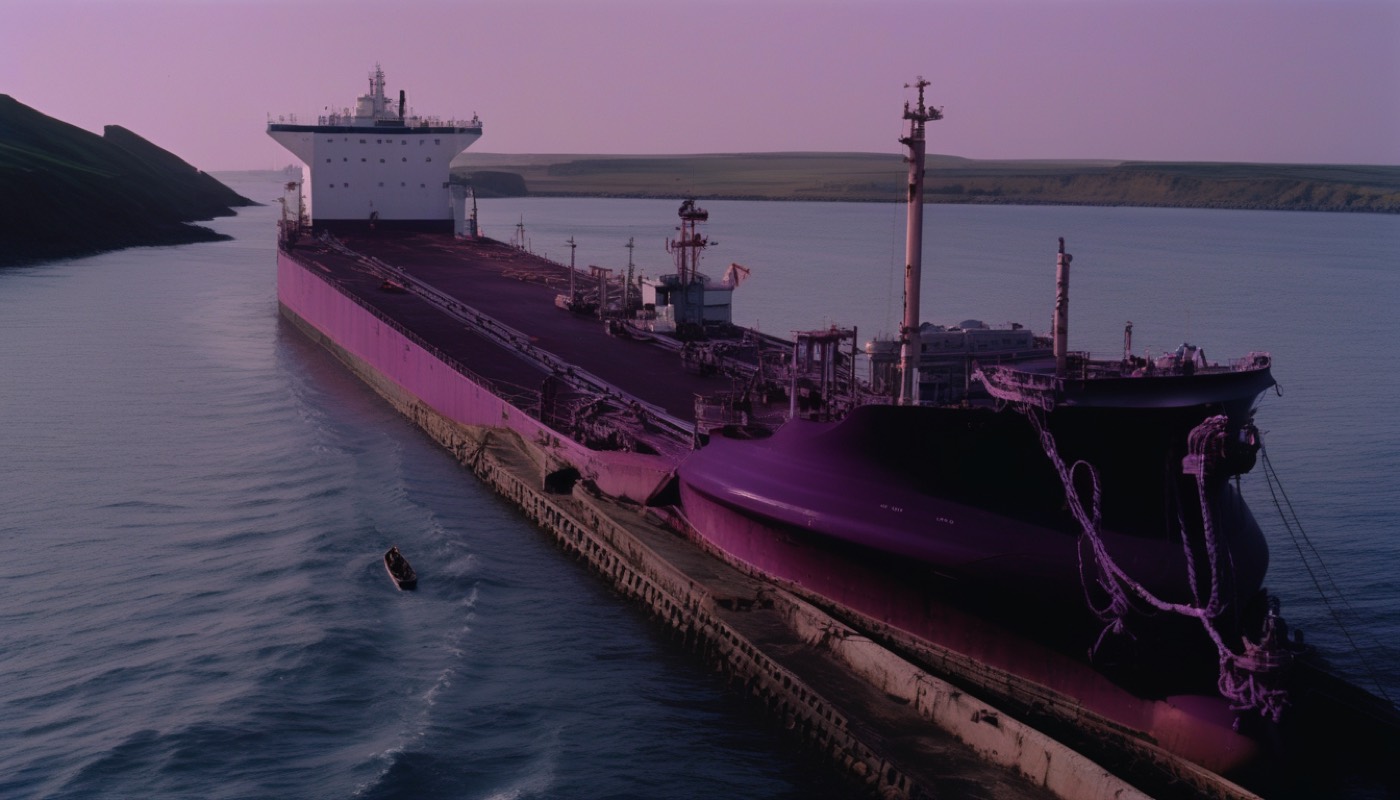
Getting oil out of the ground is only the start. From the wellhead, it has to travel — usually a very long way — before it reaches a refinery at all.
Most of that journey happens by pipeline over land and by tanker over water, and a handful of narrow sea passages carry a disproportionate share of it. The Strait of Hormuz alone carries about one-fifth of the world's oil. Cargo passing through it has nowhere else to go without a long and costly detour.
A chokepoint is simply a narrow stretch of water that a large share of world trade has to pass through, and oil shipping has three of the most important ones anywhere. The Strait of Hormuz, at the mouth of the Persian Gulf, carries close to twenty-one million barrels a day. The Strait of Malacca, between Malaysia and Indonesia, carries even more.
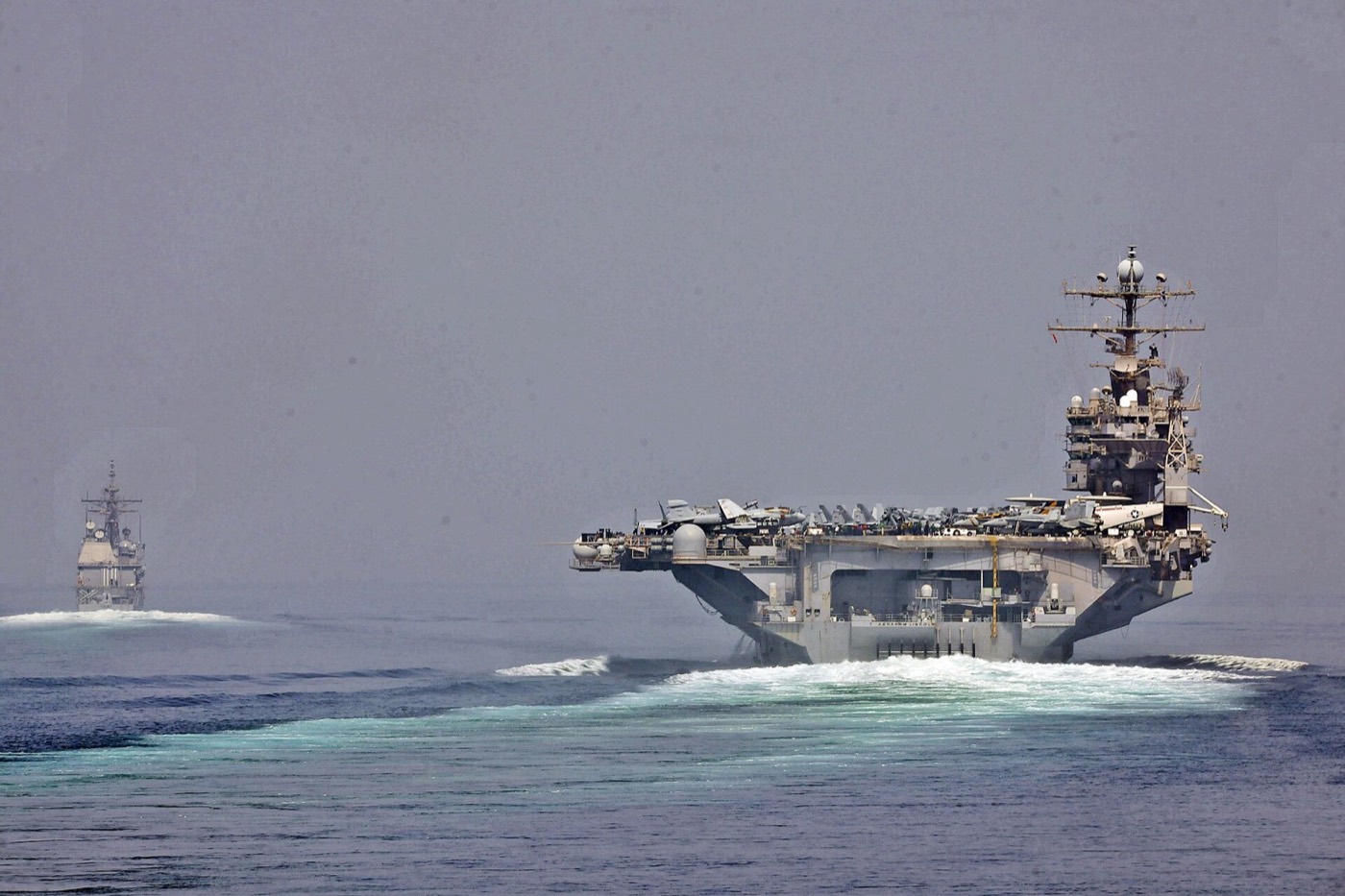
This is a US Navy escort transiting the Strait of Hormuz — a reminder that keeping this particular strait open has been a standing military concern for decades, not a new one.
A third route, the Bab el-Mandeb Strait between the Arabian Peninsula and East Africa, now carries only about four million barrels a day, down sharply from what it carried before attacks on Red Sea shipping began disrupting it. Ships headed that way now often sail around Africa instead, adding weeks to the voyage rather than risk the strait.
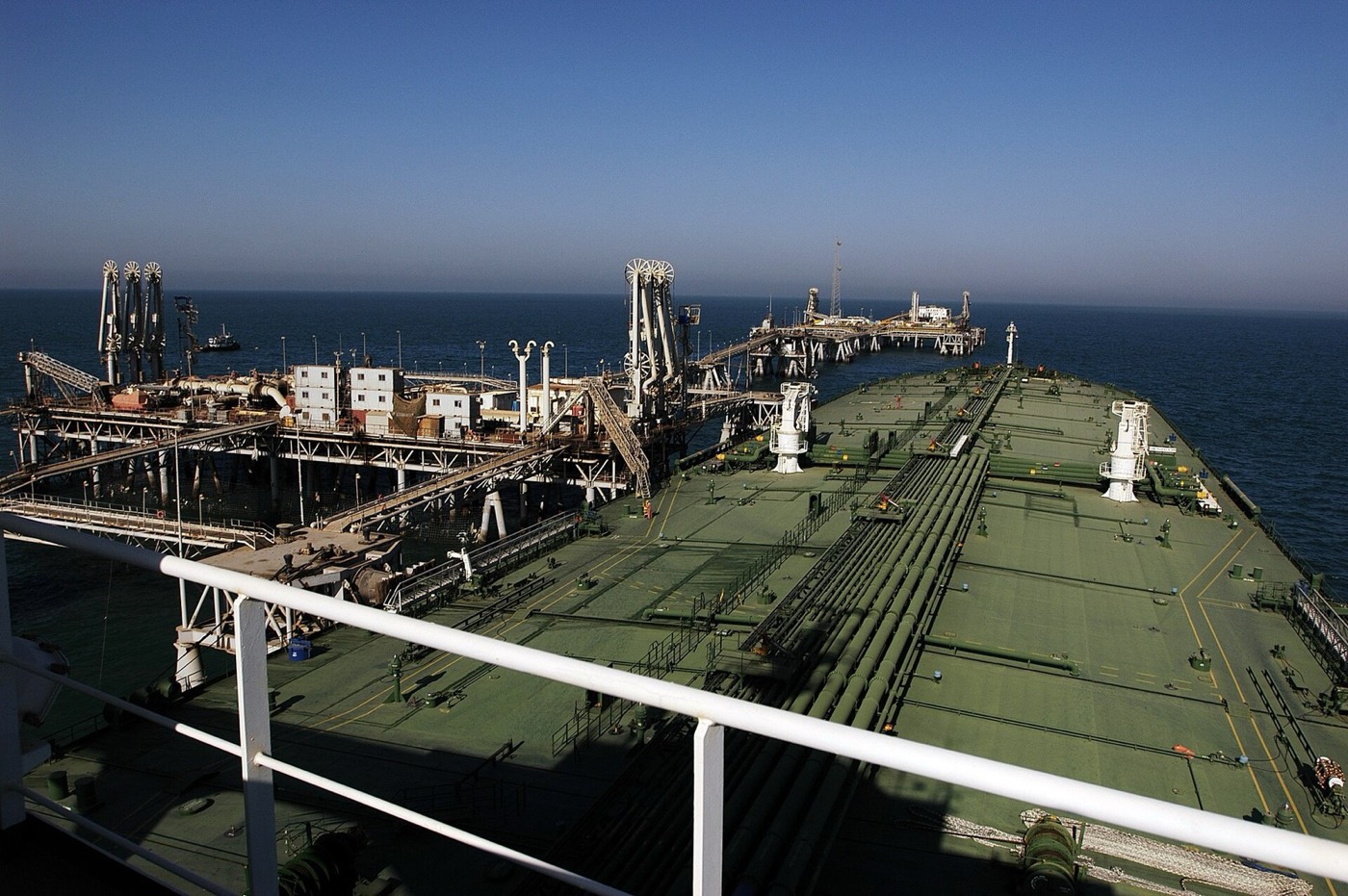
This is a tanker loading crude at the Al Basrah Oil Terminal in the Persian Gulf — one of thousands of similar loadings that, taken together, are the actual physical link between a well and a refinery.
4. Turning crude into fuel
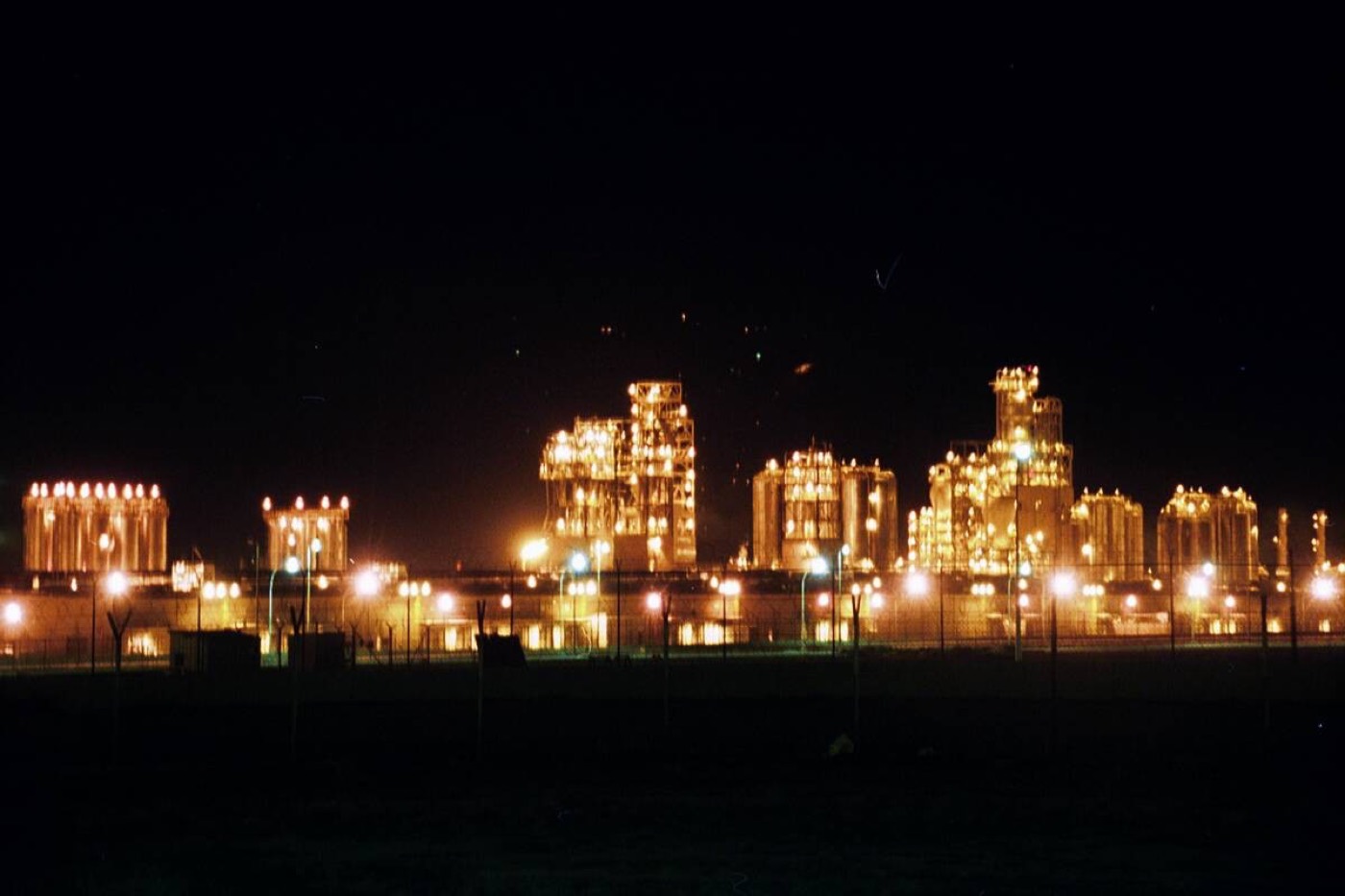
Whatever route it took to get there, crude oil arriving at a refinery is not yet fuel. It is a mixture of thousands of different hydrocarbon molecules, and separating them is the refinery's whole job.
Refineries doing that separating work sit all over the world, from Texas to Kuwait's Persian Gulf coast, wherever crude oil arrives needing to become fuel.
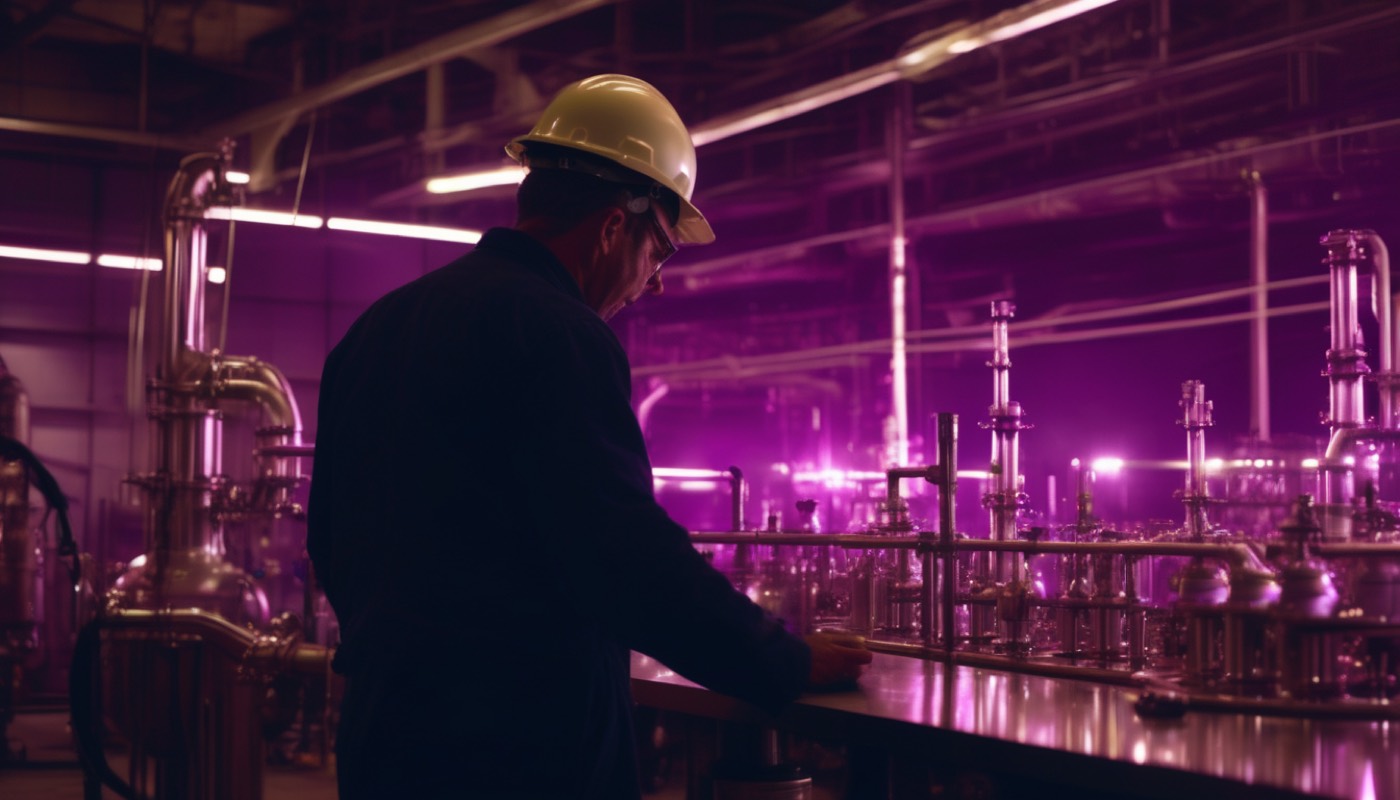
The process is called fractional distillation. Crude oil is heated until it vaporizes, then fed into a tall tower where it cools as it rises. Different molecules condense back into liquid at different heights, because each one boils at a different temperature. The lightest, like the fuel that becomes petrol, condense near the top. The heaviest sink to the bottom.
From one forty-two-gallon barrel, a US refinery typically draws nineteen to twenty gallons of petrol. It draws eleven to thirteen gallons of diesel from the same barrel, alongside jet fuel and other products it yields at once.
This is a gasoline plant in West Texas, photographed in 1956 — the same fractional-distillation principle used at far larger scale in refineries built seventy years later.
Refiners can shift that mix somewhat, drawing more diesel in one season and more petrol in another, but the physics of the tower sets firm limits on how far that shifting can go.
This is the Mina Al-Ahmadi refinery in Kuwait at night, one of the plants where that separation happens around the clock, turning a mixture that arrived as crude into fuels sold by the gallon and the litre.
5. How the price is actually set

There is no single price of oil that everyone quotes. What gets quoted in the news is always one of a small number of benchmark grades, and which one is quoted changes what the number actually means.
Brent crude, produced in the North Sea, is the benchmark for most oil traded into Europe, Africa and Asia. WTI, or West Texas Intermediate, is priced against physical delivery at a storage hub in Cushing, Oklahoma, and sets the US price. Dubai and Oman crude set the benchmark for most sour crude sold from the Persian Gulf into Asia.
None of those three prices is fixed by a producer sitting down and naming a figure. Each is set on a futures market, where traders buy and sell contracts for oil to be delivered on a future date, long before any of it is actually loaded onto a ship.
A producer agrees to sell, and a trader agrees to buy, at a price set now for delivery later. That contract itself gets bought and sold many times before delivery ever happens. Whatever price it settles at each day is the number that ends up on the news.
So when OPEC Plus raises or cuts output, it is not setting the price directly. It is changing how much physical oil will exist to back up whichever side of those contracts wins — and that is usually enough, on its own, to move the number.
6. OPEC is born

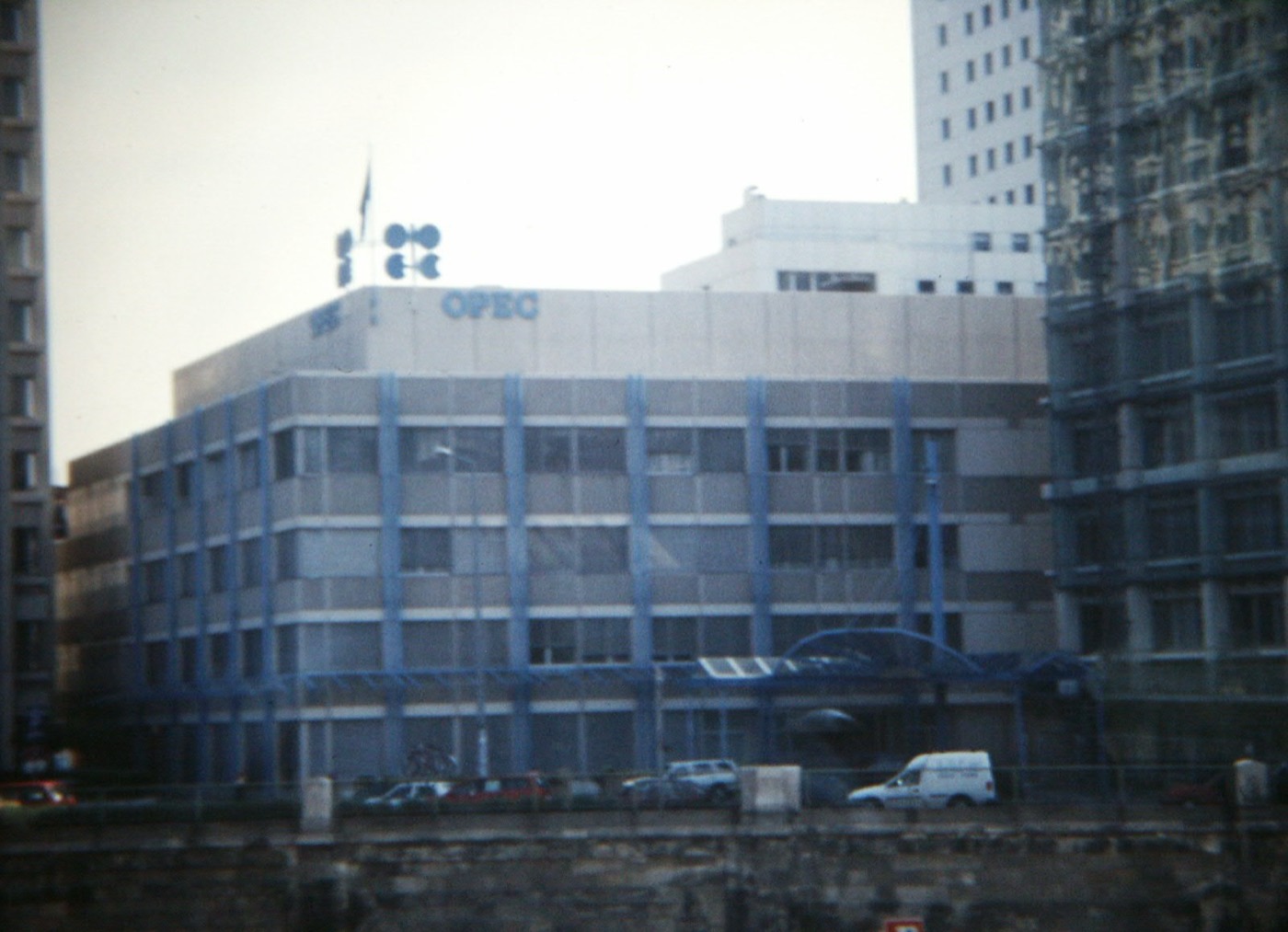
For most of oil's history, no producer had enough control over supply to set a price and make it hold. That changed in Baghdad, in September 1960.
Iran, Iraq, Kuwait, Saudi Arabia and Venezuela founded OPEC at the Baghdad Conference, on 14 September 1960. Between them, the five founding countries held most of the world's oil exports, and had watched the companies buying their oil cut its price without asking them first.
For over a decade, OPEC coordinated but rarely acted together in a way the wider world noticed. That changed on 19 October 1973.
Arab oil-exporting countries placed an embargo on the United States and its allies that day, in response to the Yom Kippur War. The price of oil nearly quadrupled within months. Before the embargo it stood at $2.90 a barrel. By January 1974, it had reached $11.65.
Petrol queues stretched down city blocks. It was the first time the producers who founded OPEC thirteen years earlier showed they could move the world price simply by choosing to.
This is OPEC's headquarters in Vienna, home to the organization since 1965 — the building from which that coordination has been run ever since.
7. Shale changes the game
For decades after 1973, OPEC's members held enough combined market share that coordinating among themselves was close to enough. Shale ended that.
American shale output, most of it from the Permian Basin described earlier, grew fast for most of that decade. By 2018, it had made the United States the world's largest crude oil producer — the first time that had happened since 1973. That year, American output alone overtook both Saudi Arabia and Russia.
A rival supply that large, growing outside OPEC's control entirely, meant OPEC alone could no longer move the world price by coordinating among its own members.
So in 2016, OPEC began coordinating output directly with Russia and a group of other non-OPEC producers. The wider group took the name OPEC Plus, and it is OPEC Plus, not OPEC alone, that has set most output decisions since.
Shale did not just add a new supplier. It forced the group that had run the market since 1960 to grow larger just to keep doing the same job.
8. The 2020 price war and crash

Even a coordinated OPEC Plus can be overwhelmed, and 2020 showed exactly how.
In March 2020, Saudi Arabia and Russia disagreed over how deep to cut output as COVID-19 spread. Rather than agree a cut, Saudi Arabia opened the taps, and both countries pushed more oil into a market where lockdowns were shutting down demand for it worldwide, at the same moment.
Storage tanks filled up faster than anyone could sell what was in them. At the delivery point for WTI contracts, in Cushing, Oklahoma, there was almost nowhere left to put another barrel.
On 20 April 2020, the WTI futures contract due to expire that month did something it had never done before. It settled at negative $37.63 a barrel. A seller was paying a buyer thirty-seven dollars and sixty-three cents to take the oil away.
That was not a permanent collapse in the value of oil. It was one narrow contract, at one delivery point, running out of anywhere to put anything, on one specific day. The price recovered within weeks. But for a single afternoon, oil had a price below zero.
9. The IEA calls a peak

By 2023, a different kind of pressure was building. Not a shock, but a forecast — and it came from an agency that speaks for oil-consuming countries rather than producing ones.
On 14 June 2023, the International Energy Agency published its annual oil market outlook. It said overall demand growth would slow sharply through 2028, with demand for oil burned as fuel, specifically, on course to peak at 81.6 million barrels a day that year.
Two months later, the agency's head put that finding to the public more plainly than the report itself had.
On 12 September 2023, IEA Executive Director Fatih Birol wrote in the Financial Times. He said global oil demand would peak before 2030. Two days later, OPEC answered.
"It would lead to energy chaos on a potentially unprecedented scale, with dire consequences for economies and billions of people across the world." OPEC Secretary General Haitham Al Ghais said that, calling the IEA's framing dangerous, on 14 September 2023.
Neither side backed down. The IEA has repeated versions of the same forecast most years since. OPEC has rejected each one on roughly the same grounds — and 2026, the next chapter shows, has not settled it either.
10. Electric cars start to bite

Whatever the argument over forecasts, one piece of the demand side is no longer a projection. It is already measured.
In 2025, electric cars made up one-quarter of all new cars sold worldwide. That fleet of EVs displaced about 1.7 million barrels of oil a day — roughly Indonesia's entire national oil demand for the year, replaced by cars that simply burn none.
That is not a small, symbolic dent. It is oil demand that used to exist and, in 2025, did not.
For 2026, the International Energy Agency projects electric car sales reaching twenty-three million units worldwide. That works out to twenty-eight per cent of every new car sold. The year before, it was twenty-five per cent.
Every one of those cars keeps displacing oil for as long as it is on the road, not just in the year it was bought. So the 1.7 million barrels a day displaced in 2025 is not a peak. On the IEA's own numbers, it is a floor that next year's sales will build on top of.
11. 2026: pumping into a shrinking market
Set the demand side against the supply side, in the same year, and the contradiction this video opened with becomes exact rather than general.
The IEA's September 2026 Oil Market Report forecasts world oil demand falling by 2.5 million barrels a day this year. That is nearly a million barrels a day steeper than the agency's own forecast just one month earlier.
The decline is not steady through the year. It eases from 5.3 million barrels a day in the second quarter to 3.4 in the third. By the fourth quarter it is down to 2 million a day — still a fall, but a smaller one as the year ends. The IEA expects a partial recovery in 2027, adding back 2.6 million barrels a day.
On 2 August 2026, seven OPEC Plus producers agreed to raise output again for September — Saudi Arabia, Russia, Iraq, Kuwait, Kazakhstan, Algeria and Oman. The rise itself was small, 188,000 barrels a day. But it completed something larger: the full reversal of voluntary cuts the group had first announced in 2023, worth roughly 3.5 million barrels a day.
A forecaster saying the market wants less oil, and a producer group finishing the job of pumping back in everything it once agreed to hold off the market, are not describing the same year by accident. They are describing it from two different sides of the same barrel.
12. What peak demand would mean

Put every chapter of this video together, and one question is left standing: why keep pumping into a market a major forecaster says is shrinking?
One answer is market share. If demand really is at or near its ceiling, the barrels that get sold go to whichever producer priced theirs lowest, not to whichever one cut back to prop up the price. Sitting on spare capacity while a shrinking market gets carved up by everyone else is its own kind of loss.
That would make 2026's output increase a rational response to a shrinking market, not a rejection of the forecast describing it.
Set against that: OPEC Plus economies depend heavily on oil revenue, and a demand fall that is permanent, rather than a price war or an embargo that eventually ends, removes buyers rather than moving price. That is a harder kind of pressure to pump your way out of.
Whether 2026 turns out to be the year global oil demand quietly peaked, or just one more downturn inside a market that keeps recovering, is a question this video's own sources do not agree on. Neither the IEA nor OPEC has much reason to settle it against themselves.
Sources and credits
Photo credits (Wikimedia Commons)
- Offshore oil drilling platform, Continental Oil Co., Gulf of Mexico, 1955: Robert Yarnall Richie, No restrictions - https://commons.wikimedia.org/wiki/File%3AOffshore_oil_well_drilling_platform%2C_Continental_Oil_Co.%2C_C.A.T.C.%2C_Gulf_of_Mexico.jpg
- Pumpjack (conventional oil well), West Texas: Carol M. Highsmith, Public domain - https://commons.wikimedia.org/wiki/File%3AColorful_%22pumpjack%2C%22_a_type_of_small_oil_pump_that%27s_a_common_sight_in_West_Texas%2C_along_U.S._83_near_the_town_of_Winters_in_Runnels_County%2C_Texas_LCCN2014631353.tif

Primary sources
- EIA, Today in Energy, 17 March 2026 - Permian Basin production, 6.0 mb/d December 2025, 44% of US output.
- EIA/DOE, 2018 largest-producer reporting; CNN, 12 Sept 2018 - United States becomes world's largest crude producer.
- EIA, 'World Oil Transit Chokepoints', updated 3 March 2026 - Hormuz, Malacca, Bab el-Mandeb volumes.
- OPEC, 'Brief History'; Britannica, 'OPEC' - 1960 Baghdad founding, five founding members, Vienna HQ since 1965.
- Federal Reserve History, 'Oil Shock of 1973-74'
- IEA, Oil 2023 report, published 14 June 2023 - fuel demand peaking at 81.6 mb/d in 2028.
- Financial Times op-ed by Fatih Birol, 12 September 2023 (via corroborating coverage) - 'before 2030' public framing.
- CNBC, Forbes, BOE Report, all 14 September 2023.
- IEA, Global EV Outlook 2026, executive summary - 2025 EV displacement (1.7 mb/d, 25% of new car sales) and 2026 projection (23 million units, 28%).
- IEA, Oil Market Report, September 2026 - 2026 demand falling 2.5 mb/d, quarterly deceleration, 2027 partial recovery of 2.6 mb/d.
- OPEC press release, 2 August 2026; World Oil, 'OPEC+ approves final production quota increase of 2026' - seven producers, 188,000 bpd September rise, completing the 3.5 mb/d rollback of 2023's voluntary cuts.
- EIA, 'Crude oil prices briefly traded below $0 in spring 2020' - 20 April 2020, WTI settling at -$37.63/barrel.
Not regulated financial advice.