
The Barcode That Changed Everything
Every beep at a supermarket till is a machine reading a number - more than ten billion times a day, according to GS1 US. This video follows the barcode from the lines Joseph Woodland drew in the sand, remembering Morse code, to the patent he and Bernard Silver filed in October 1949 and sold to Philco for $15,000.
It took more than twenty years for the idea to become practical. Lasers and cheap computers made scanning possible; American railways tried striped labels on their wagons from 1967, in a system called KarTrak, and abandoned it by the late 1970s. The grocers' committee chose George Laurer's rectangular IBM design in 1973, and on 26 June 1974 a ten-pack of Wrigley's Juicy Fruit gum became the first product scanned at a real checkout, in Troy, Ohio - ringing up 67 cents.
Then the slow part: in 1976 Business Week called it 'The Supermarket Scanner That Failed'; by the end of the 1970s only about 1% of US grocery stores had scanners, and a decade later more than half did. We explain how a UPC-A code carries twelve digits in 95 modules, why it scans upside down, and what the check digit catches - and how GS1 grew to 116 national member organisations. Finally, the QR code, invented by Denso Wave in 1994, and GS1's Sunrise 2027 plan for checkouts to read 2D codes by the end of 2027.
No figure appears without its date and source.
Educational documentary. Not financial or investment advice.
In these topics
Video notes
1. The beep nobody hears
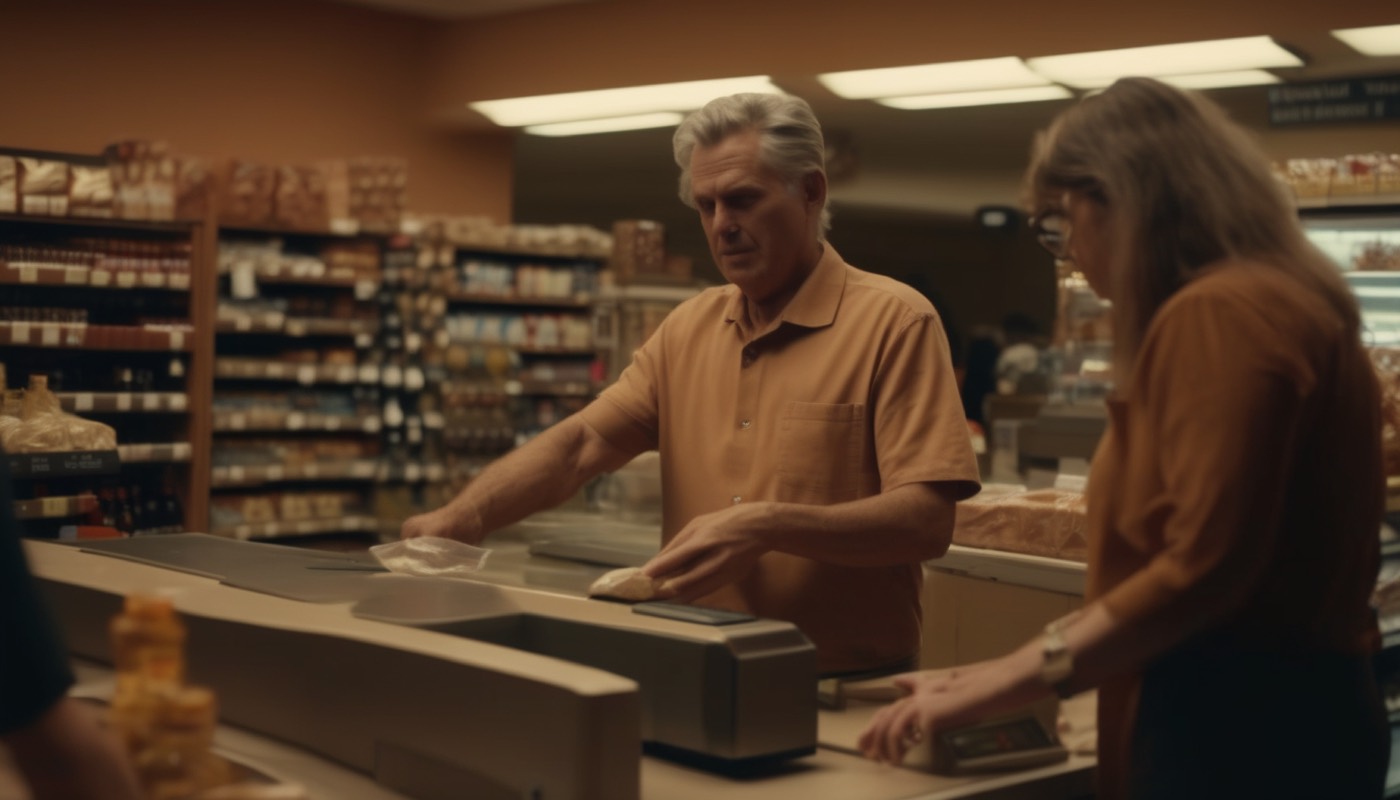
Every time a cashier slides a packet across a scanner, a short beep confirms that a machine has just read a number. It happens so often that almost nobody notices it any more.
This video covers five things. Where the idea came from, drawn with fingers in the sand. Why it took more than twenty years to become useful. The morning a small supermarket first used it on a real customer. How a row of stripes actually carries a number. And what is starting to replace it now.
First, the scale of it, because the scale is the reason any of this matters.
Barcodes are now scanned more than ten billion times every day. That figure comes from GS1 US, the body that runs the American barcode system, on the fiftieth anniversary of the first scan. More than one billion products carry a barcode. Almost every one of those scans still works the same way as the very first.
To see why, we have to go back to a beach, and a problem nobody had yet solved.
2. Lines in the sand
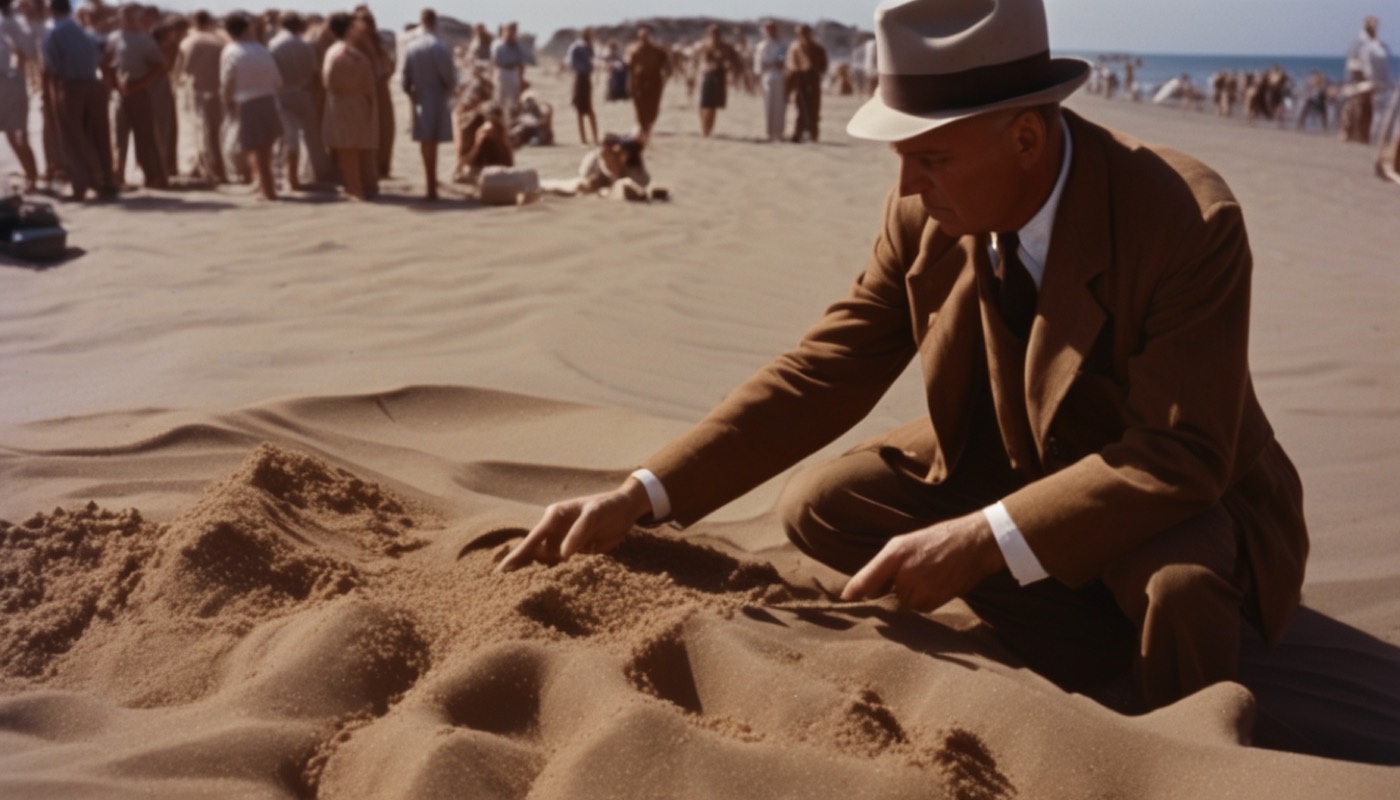
Two young engineers, Joseph Woodland and Bernard Silver, set out to solve a plain shop problem. How could a store record what each customer bought, without anyone writing it down?
Woodland said the answer came to him on a beach, remembering the Morse code he had learned as a Boy Scout. He pushed his fingers into the sand and pulled them towards him. Looking at the marks, he realised, in his words, "they could be wide lines and narrow lines, instead of dots and dashes".
Lines, unlike dots, can be read by a beam of light passing across them. The next problem was reading them from any direction.
So Woodland and Silver bent the lines into rings, like a target. A ring looks the same from every angle, so a reader would not care which way a packet faced. They filed a patent in October nineteen forty-nine. It was granted three years later, in October nineteen fifty-two. That same year, they sold it to the electronics company Philco for fifteen thousand dollars.
They had a working code and a patent. What they did not have was anything cheap enough to read it.
3. A code with nothing to read it
Woodland's early reader used a five-hundred-watt bulb, and the whole machine was the size of a desk. It worked, but no shop could have put one at a till.
Two later inventions changed that. The laser gave a thin, bright beam that could sweep across a code in an instant. Small, cheap computers could then turn the pattern of reflected light into a number, fast enough for a queue of shoppers.
The first large test did not come from shops at all. It came from the railways.
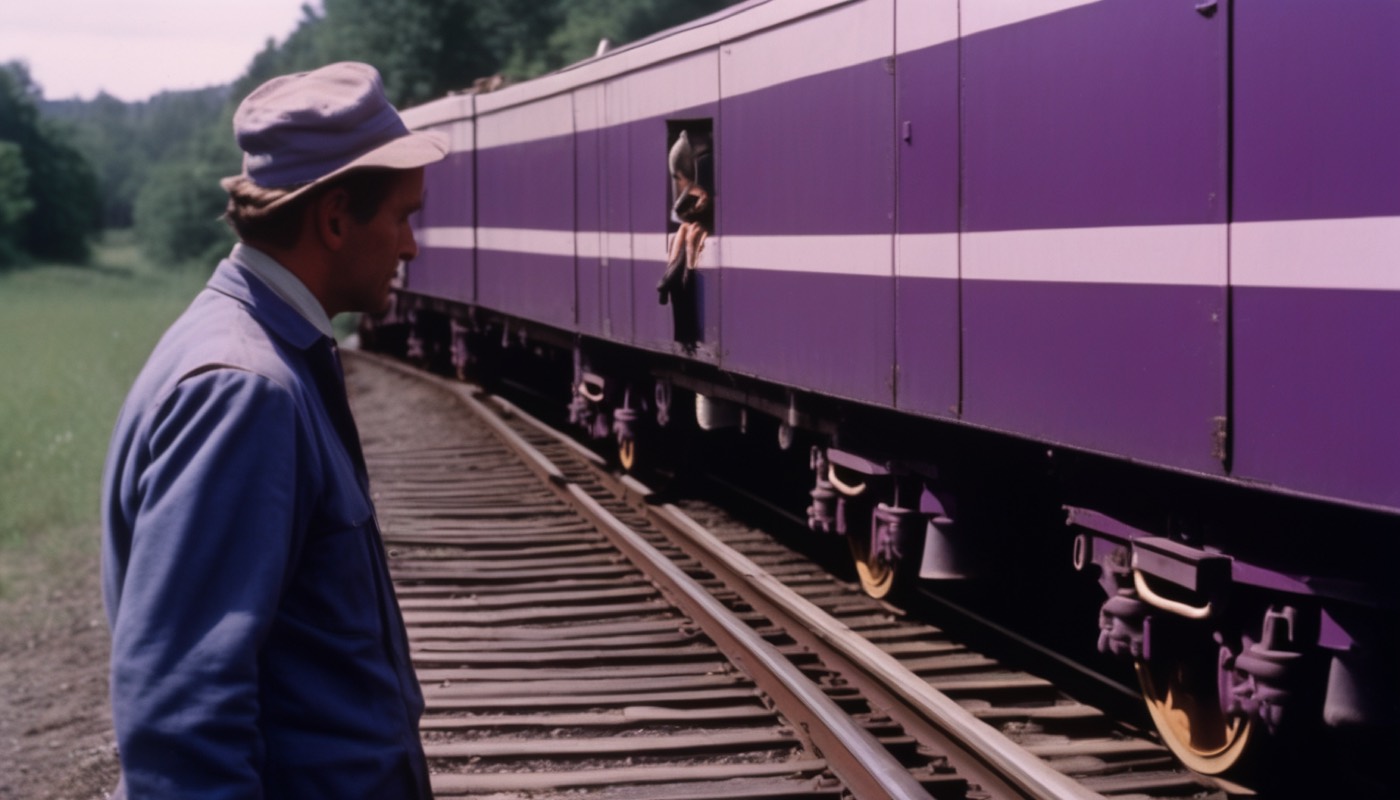
The first working laser was shown in nineteen sixty. In nineteen sixty-seven, American railways began fitting their wagons with striped labels, read by trackside scanners, in a system called KarTrak. By the late nineteen seventies it had been abandoned. Dirt and weather covered the labels, and the scanners were easily fooled.
The railways proved the idea could work at scale. They also proved that a label nobody keeps clean is a label nobody can read.
4. The grocers choose a design
Supermarkets had the strongest reason of all to want scanning. Every item was priced by hand and rung up by hand, one at a time.
In nineteen sixty-six, the grocery chain Kroger said publicly that it wanted an automatic checkout scanner. In July nineteen seventy-two, it opened test checkouts in a Cincinnati store. Those tills read a circular code, the ring shape Woodland had first drawn.
One chain's test was not enough. For scanning to pay off, every manufacturer would need to print the same code on every packet.
So the grocery industry formed a committee to choose one design for everyone. In nineteen seventy-three, it picked a rectangle of stripes, designed by George Laurer at IBM. Woodland, by then working at IBM, was part of that effort. The rectangle became the Universal Product Code, usually shortened to UPC.
The code was chosen. Now someone had to use it on a real customer, at a real till.
5. One packet of gum
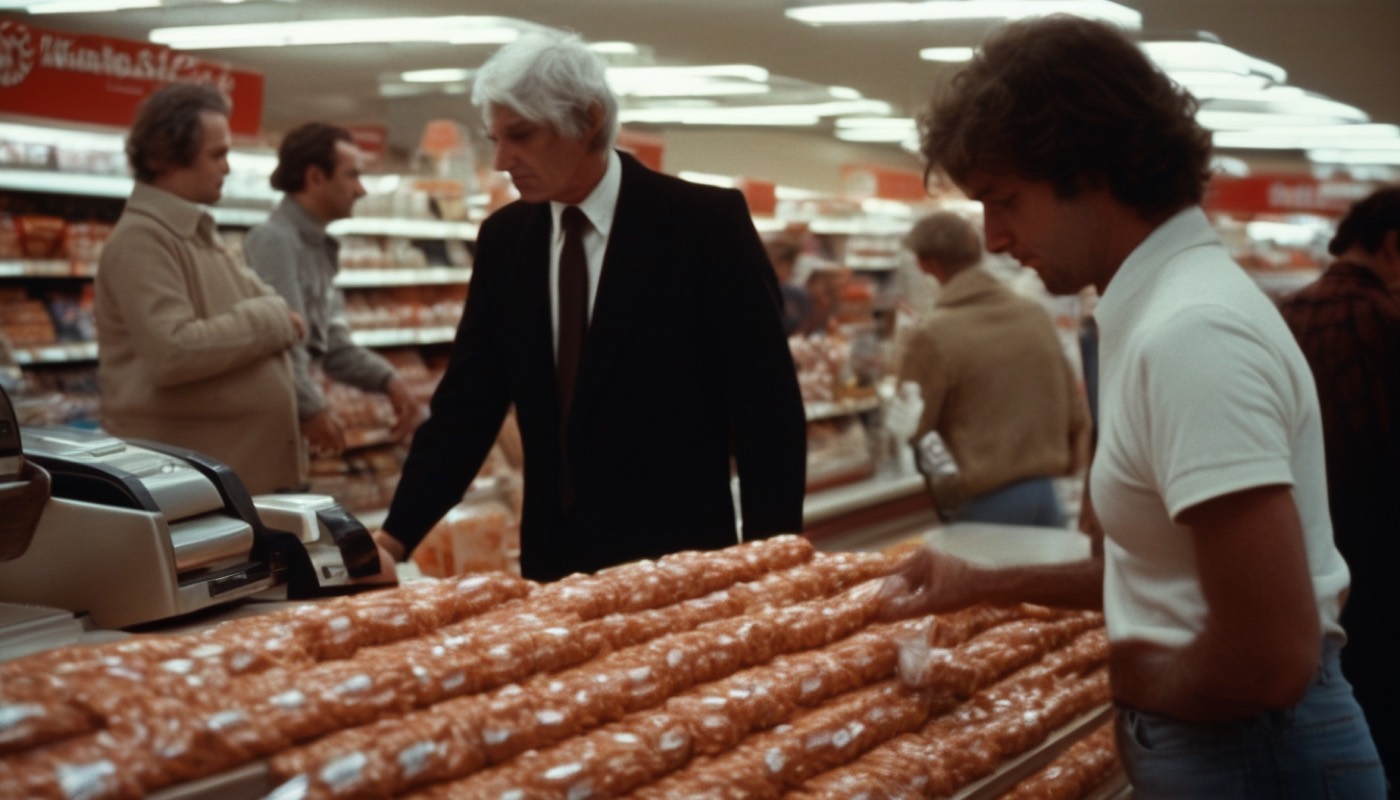
The first real scan did not happen in a laboratory. It happened in an ordinary supermarket, on an ordinary weekday morning.
The store was a Marsh supermarket in Troy, Ohio. That is in the same state as Kroger's test store in Cincinnati, where the ring-shaped code had been tried two years earlier.
The item itself was completely ordinary.
The date was the twenty-sixth of June, nineteen seventy-four. Just after eight in the morning, a cashier scanned a ten-pack of Wrigley's Juicy Fruit chewing gum. It rang up at sixty-seven cents. A copy of that packet is now on display at the Smithsonian's American history museum.
The gum was not the point. The point was that the beep worked, and the price appeared without anyone typing it in.
6. The scanner that failed
Success at one till did not mean success everywhere. Scanners were expensive, and they only paid off when most products carried a code.
In nineteen seventy-six, the magazine Business Week ran a headline that summed up the mood: "The Supermarket Scanner That Failed". Scanners only saved a store money once most of its products carried a code. And most products did not yet.
The slow part was never the technology. It was getting an entire industry to change at the same time.
By the end of the nineteen seventies, only about one per cent of American grocery stores had barcode scanners. A decade later, more than half of them relied on scanners. Kmart became the first major discount chain to adopt the code, and the rest of retail followed.
Once most stores had scanners, a product without a code became awkward to sell.
7. How stripes carry a number
A barcode looks like a random row of lines, but every width is exact. The standard shop code, called UPC-A, carries twelve digits.
The code is ninety-five narrow units wide, and each unit is called a module. Eighty-four of them carry the digits. Eleven more form the guard bars, fixed patterns that tell the scanner where the code starts, where its middle is, and where it ends. Each digit takes exactly seven modules. Those are split into two dark bars and two light spaces, of varying widths.
The two halves of the code are built slightly differently, and that small difference does a lot of work.
Digits on the left half follow one pattern rule, and digits on the right follow the opposite rule. So the scanner can tell which way it is reading, and a packet held upside down still scans. The last digit is a check digit, worked out from the other eleven. A single misread digit always makes the check fail.
None of those twelve digits is the price. The code names the product, and the shop's own computer looks up what it costs.
8. One number for the world
A code that only works in one country is only half useful. Europe needed its own version, and it had to fit with the American one.
In nineteen seventy-four, the Uniform Code Council was appointed to run the American code. In nineteen seventy-seven, the European Article Numbering Association was founded, using a thirteen-digit version. In two thousand and four, the first square code, GS1 DataMatrix, was approved. In two thousand and five, the two bodies merged into one organisation, called GS1.
The merger meant a packet printed in one country could be scanned in almost any other.
By twenty twenty-three, GS1 had one hundred and sixteen national member organisations. The same numbers had also spread far beyond the checkout. Warehouses, hospitals and delivery companies use them to track pallets, medicines and parcels.
The barcode stopped being a shop's tool, and became a shared language for moving goods.
9. What comes after the stripes
A barcode's biggest limit is how little it holds. It names a product, but it cannot say which batch it came from, or when it expires.
In nineteen ninety-four, the Japanese company Denso Wave developed a square code for tracking car parts. Its makers explain the name in one line: "The QR in the name stands for quick response". It was built to be read fast, and to hold far more than a row of stripes.
That extra room is exactly what shops now want.
A standard barcode holds about twenty characters. A QR code can hold about seven thousand digits. GS1's plan, called Sunrise twenty twenty-seven, aims for shop checkouts around the world to read square codes by the end of twenty twenty-seven.
The stripes are not about to vanish. Most retailers plan a long period with both codes printed side by side on the same packet.
More than seventy years after a few lines were drawn in the sand, the beep at the till is still the same idea: a number, read by light.
Sources and credits
Primary sources
- GS1 US, 'GS1 US Celebrates 50-Year Barcode Scanniversary and Heralds Next-Generation Barcode to Support Modern Commerce', press release, 26 June 2024 (gs1us.org) - 'scanned more than 10 billion times daily'; over 1 billion products; Sunrise 2027.
- GS1, 'GS1 historical timeline' (support.gs1.org, article 43000734073) - UCC 1974; EAN founded 1977 in Brussels; GS1 DataMatrix approved 2004; UCC/EAN merger 2005 with 101 Member Organisations; 116 in 2023; Sunrise 2027 ambition 'by the end of 2027'.
- Denso Wave, 'History of QR Code' (qrcode.com/en/history) - developed 1994; automotive kanban; about 7,000 numerals vs about 20 characters; 'The QR in the name stands for quick response'.
- Smithsonian magazine, 'The History of the Bar Code' (smithsonianmag.com) - Woodland's sand quote; 500-watt bulb, desk-sized prototype; laser 16 July 1960; Kroger 1966 and 3 July 1972 Cincinnati test; committee choice of Laurer's IBM design, 1973; Kmart first major mass merchandiser.
- Wikipedia, 'Norman Joseph Woodland' - US patent 2,612,994 filed 20 October 1949, granted 7 October 1952; sold to Philco 1952 for $15,000; Woodland at IBM on the UPC from 1971.
- Wikipedia, 'Universal Product Code' - UPC-A structure (12 digits, 95 modules, 7 per digit, guard patterns, left odd / right even parity, check digit); first scan 26 June 1974, 8:01 a.m., 10-pack Juicy Fruit, 67 cents; facsimile at the Smithsonian.
- Wikipedia, 'Barcode' - KarTrak installed from 1967, abandoned late 1970s; Business Week 1976 'The Supermarket Scanner That Failed'.
- trackvision.ai, 'GS1 Sunrise 2027 compliance deadlines', 27 March 2026 - dual-symbol period; no fixed 'Sunset' date for 1D.
Not regulated financial advice.