
The Steel Box That Shrank the World
In 1954 one cargo ship, the Warrior, carried 194,582 separate items from Brooklyn to Bremerhaven, and spent about half its trip tied up in port. Two years later a trucker's converted tanker, Ideal-X, sailed from Port Newark to Houston with 58 steel boxes on deck, and the cost of loading fell from $5.83 a ton to under 16 cents (Marc Levinson, The Box).
This video follows the box from there. Malcom McLean's road to the sea; the twist-lock, the cellular ship and the dockside gantry crane; the fight over sizes that ISO settled between 1961 and 1970, and the TEU, the twenty-foot box the world still counts in. Sea-Land's service to Vietnam from 1967, and the ships that came home full from Japan. The docks of Manhattan, Brooklyn and London emptying as the work moved to Port Elizabeth, Tilbury and Felixstowe. The ports of East Asia, and ships that grew from 58 boxes to MSC Irina's 24,346 TEU.
Then the cost of being lean: the Ever Given in the Suez Canal (23-29 March 2021), the pandemic peak of $12,683 per forty-foot box to the US East Coast (1 January 2022), the Red Sea attacks from November 2023, and the Hormuz crisis that began on 28 February 2026. On 17 September 2026 Xeneta put the Far East-US East Coast spot rate at $11,259, up 324.7% since the crisis began.
Is the container still moving the world forwards, or has a lean, box-dependent trade system become a weakness? Every figure is dated and sourced. Photographs are public domain or CC0 and credited on screen.
Educational documentary. Not financial or investment advice.
In these topics
Video notes
1. The docks before the box
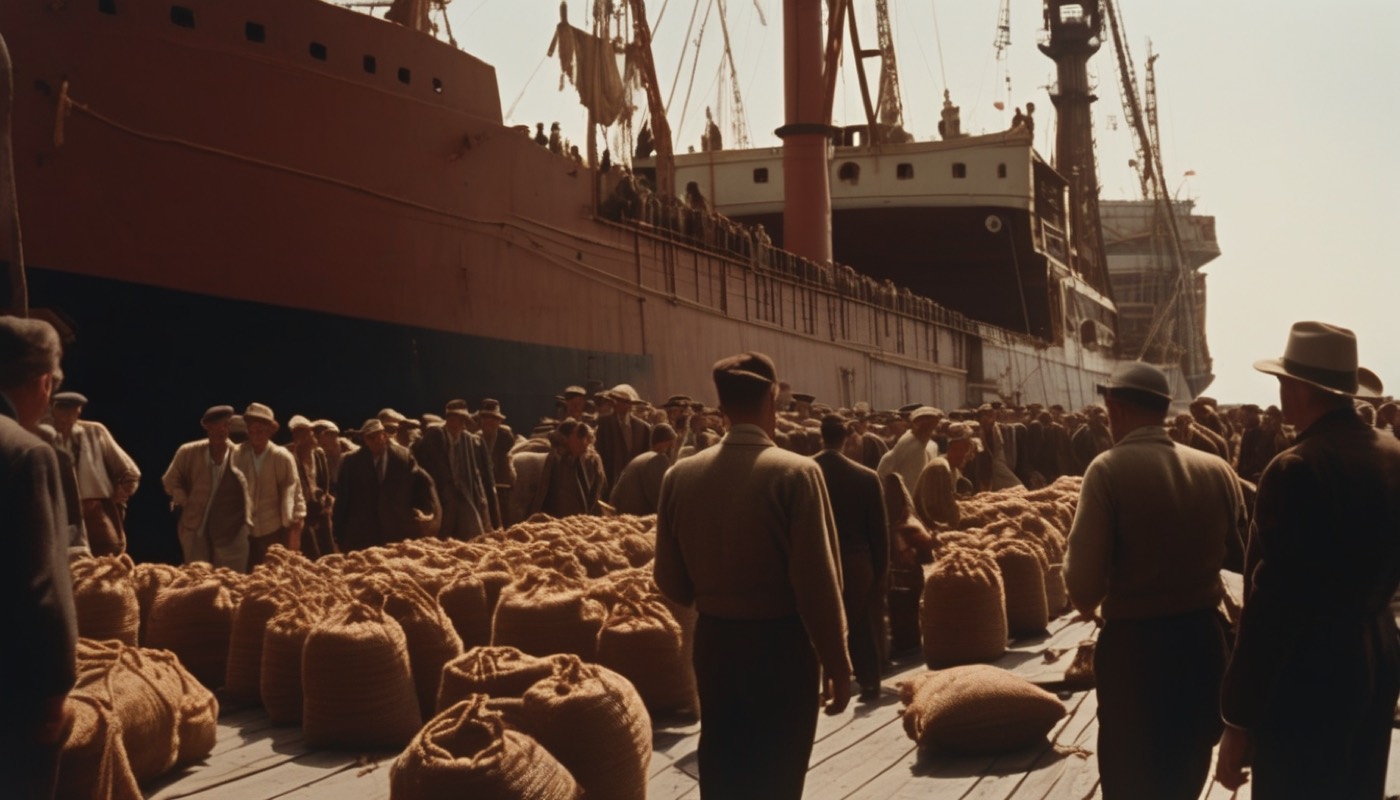
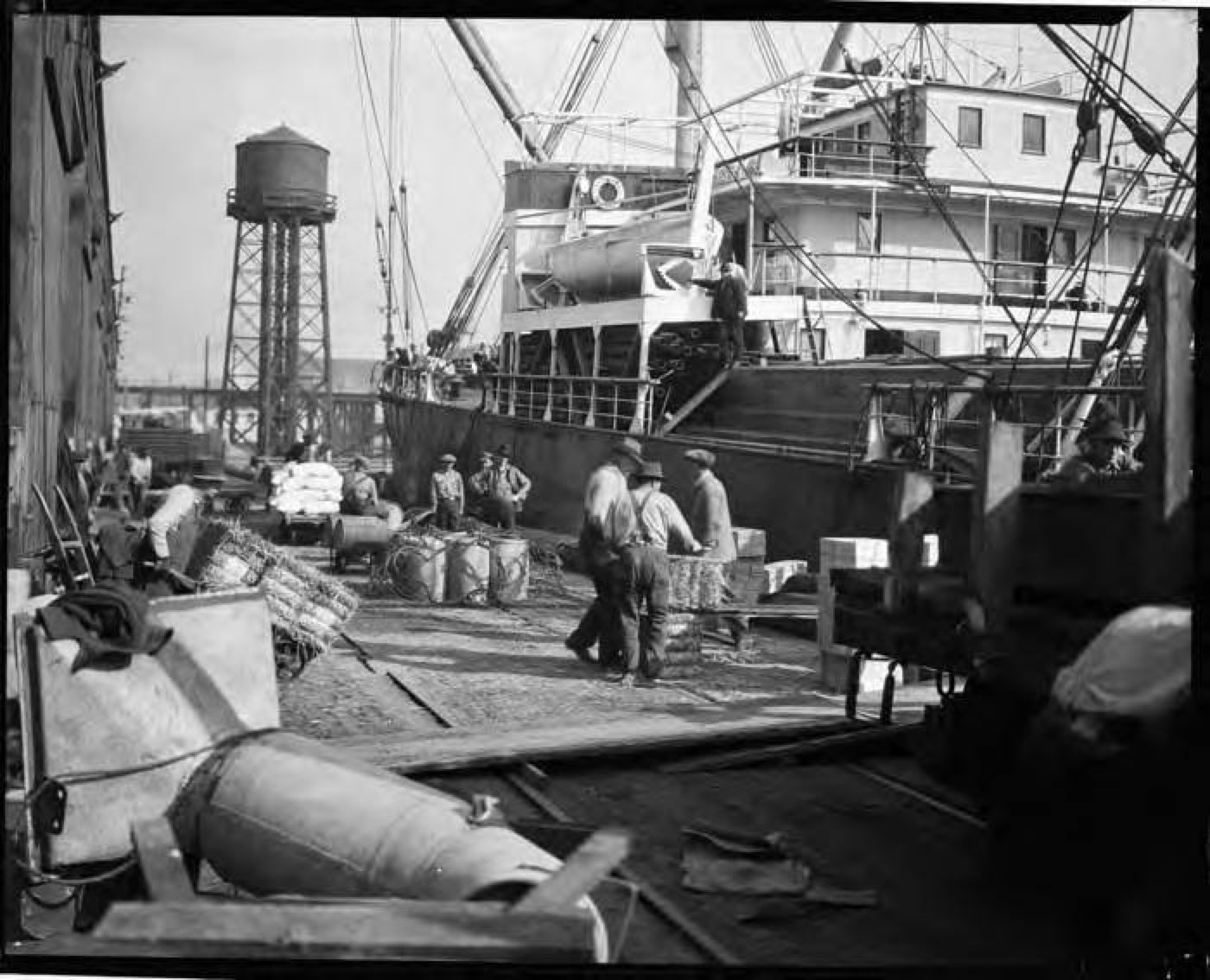
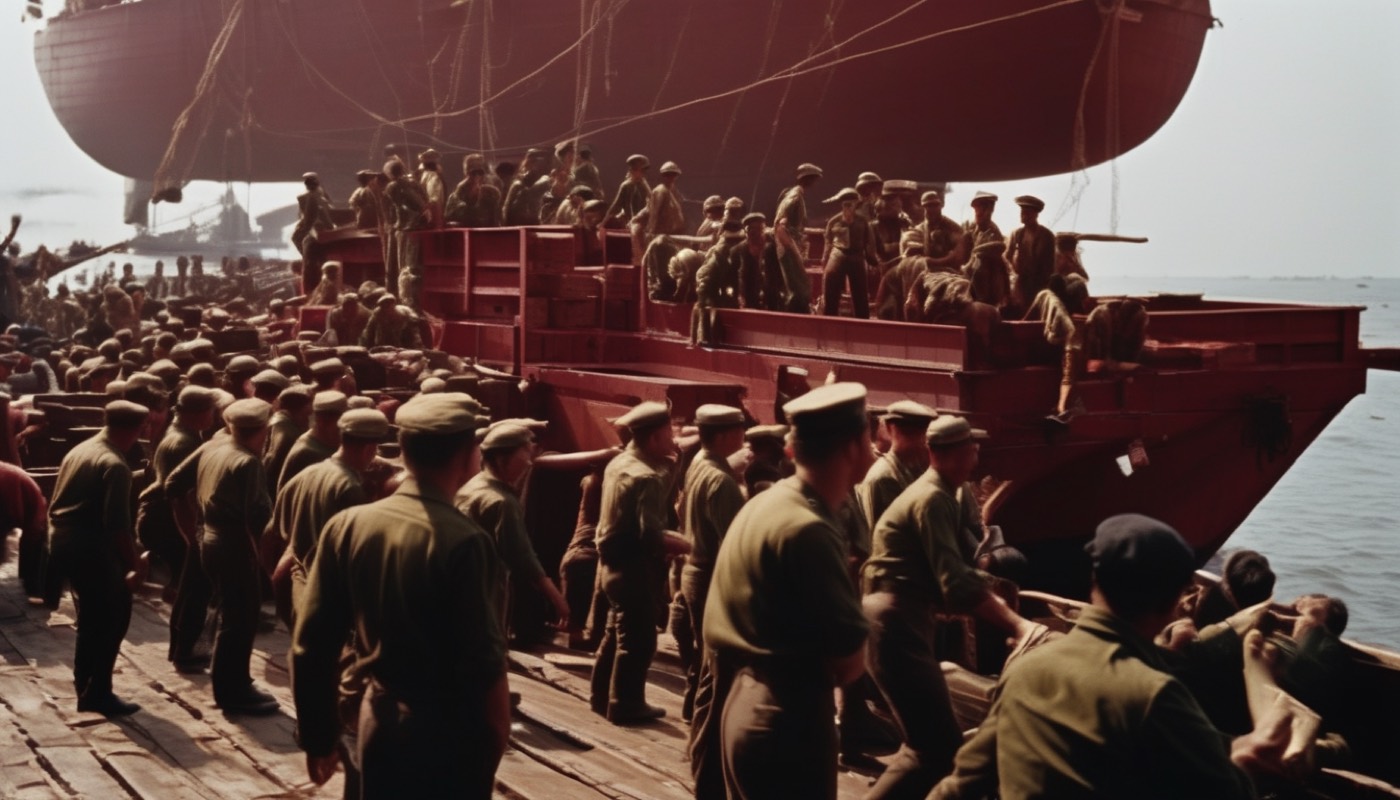
Picture a harbour in the early nineteen fifties. A cargo ship is tied up at the pier, and it has been there for days. Around it, hundreds of men are at work, and almost everything they do, they do by hand.
Men like these were called longshoremen in America and dockers in Britain. They carried sacks, rolled barrels and hauled crates, one piece at a time. On the quay, each load was gathered into a rope sling, and a winch swung it up and over into the ship.
The trade had a name: break-bulk. It means cargo shipped as thousands of separate pieces, each one handled on its own, rather than packed into anything larger.
Down in the hold, other gangs of men took each piece off the sling. They wedged it into place against every other piece, so that nothing could shift when the sea got rough. At the other end of the voyage, the whole process ran in reverse.
In nineteen fifty-four, researchers followed one ordinary cargo ship to see what this really meant. She was the Warrior, a freighter sailing from Brooklyn to the German port of Bremerhaven.
The Warrior's cargo was counted piece by piece. She carried one hundred and ninety-four thousand, five hundred and eighty-two separate items. They had arrived at the pier in one thousand, one hundred and fifty-six separate shipments, each with its own paperwork.
Follow the voyage on the map. Loading in Brooklyn took six days. The crossing took ten and a half days, and unloading in Bremerhaven took four more. Taken together, the ship spent about half of the whole trip tied up in port.
All that handling was slow, it was dangerous, and it was expensive. Cargo went missing, too. A crate of whisky or a case of cigarettes had a way of breaking open on the quay.
So the costs piled up at every step. Labour to carry each piece. Time with the ship earning nothing. Goods broken or stolen on the way. Insurance to cover the losses. For many goods, the trip across the water was the cheap part, and the handling at each end was the expensive part.
Nobody thought this could be changed. Ships were ships, and cargo came in every shape there was. The man who changed it did not come from the sea at all.
2. A trucker's idea
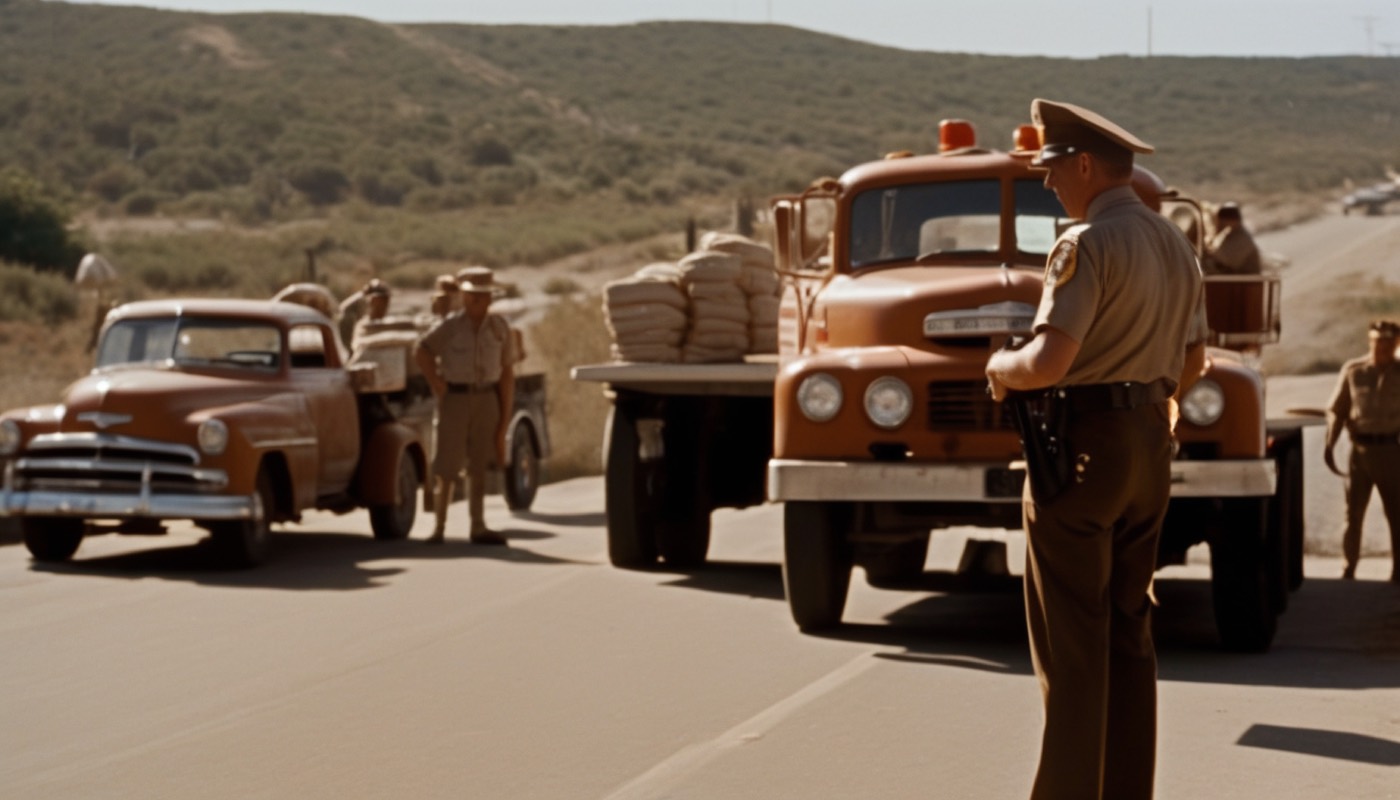
He came from the road. Malcom McLean was born in North Carolina. In nineteen thirty-four, he bought a second-hand truck, and that one truck became a business.
McLean later told a story about a day in nineteen thirty-seven, when he delivered cotton bales to a pier in Hoboken, New Jersey. He said "I had to wait most of the day to deliver the bales, sitting there in my truck, watching stevedores load other cargo." And then, "It struck me that I was looking at a lot of wasted time and money."
The historian Marc Levinson doubts the story happened quite like that. But the problem McLean described was real.
Meanwhile, his company grew fast. By the early nineteen fifties, McLean Trucking was the fifth-largest trucking company in the United States. It ran one thousand, seven hundred and seventy-six trucks, from terminals along the East Coast.
The trouble was the road itself. Highways were crowded, and each state had its own rules on how heavy a truck could be.
Look at the route his trucks drove. From North Carolina, they ran north through Virginia and on to New York and New Jersey. The ocean ran alongside the whole way, and the ships on it were not held up by weigh stations or traffic.
So McLean had an idea. Why not drive the trucks onto a ship, sail them up the coast, and drive them off again at the other end?
Then he improved it. A truck's wheels and engine only waste space on a ship. So leave them behind, and ship the trailer body alone, a steel box that can be lifted off its wheels and stacked. That was the idea: move the box, not the load inside it.
To do that, McLean needed ships and a place to load them.
In nineteen fifty-five, he sold his stake in the trucking firm for six million dollars. He then bought a small shipping line, the Pan-Atlantic Steamship Company. In nineteen sixty, it would be renamed Sea-Land.
He had bet his fortune on the sea. Now he had to show that the idea worked.
3. Ideal-X, 26 April 1956
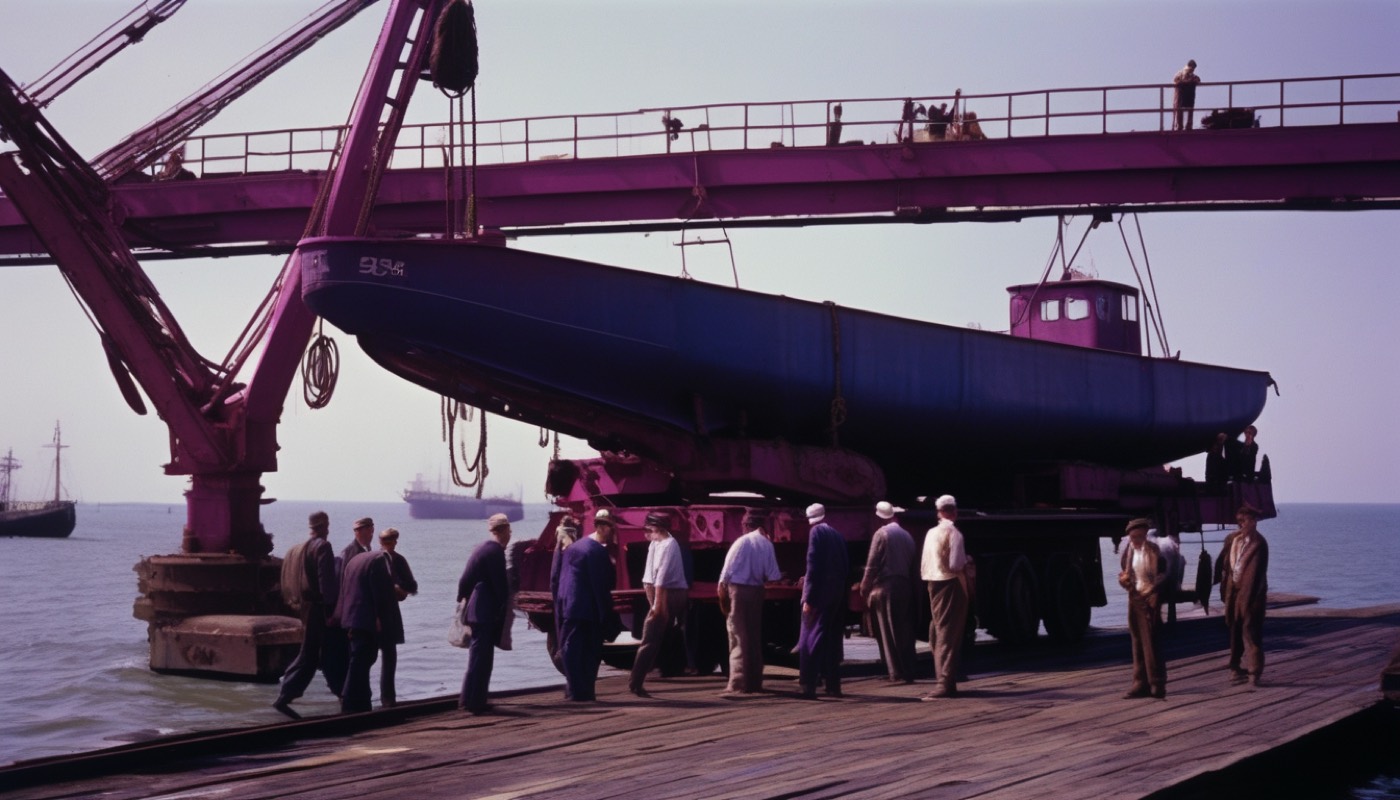
Ideal-X was an old oil tanker, built during the Second World War. McLean's company had a frame fitted over her deck, so that boxes could be carried on top of it.
On the twenty-sixth of April, nineteen fifty-six, she sailed from Port Newark in New Jersey. Five days later, she arrived in Houston, Texas. It was an ordinary coastal route, and that was the point.
On her deck were fifty-eight steel boxes, the bodies of truck trailers. Each one was lifted straight off a truck trailer by a crane, and each one could go straight back onto a trailer at the other end. Nobody had to touch the goods inside.
The difference showed up in the cost of loading.
Here are the costs, as they stood in nineteen fifty-six. Loading loose cargo onto a medium-sized ship cost about five dollars and eighty-three cents a ton. McLean's experts put the cost of loading Ideal-X at under sixteen cents a ton. That is a fall of more than ninety-five per cent.
Those figures come from Marc Levinson's history of the container, called The Box. The money was saved on the quay, not on the ocean. The sea voyage was much the same. What changed was the time and the labour at each end.
Word got round. Shippers began asking to use the boxes. But one converted tanker was a demonstration, not a system. To make it a system, the box needed hardware built around it.
4. The hardware
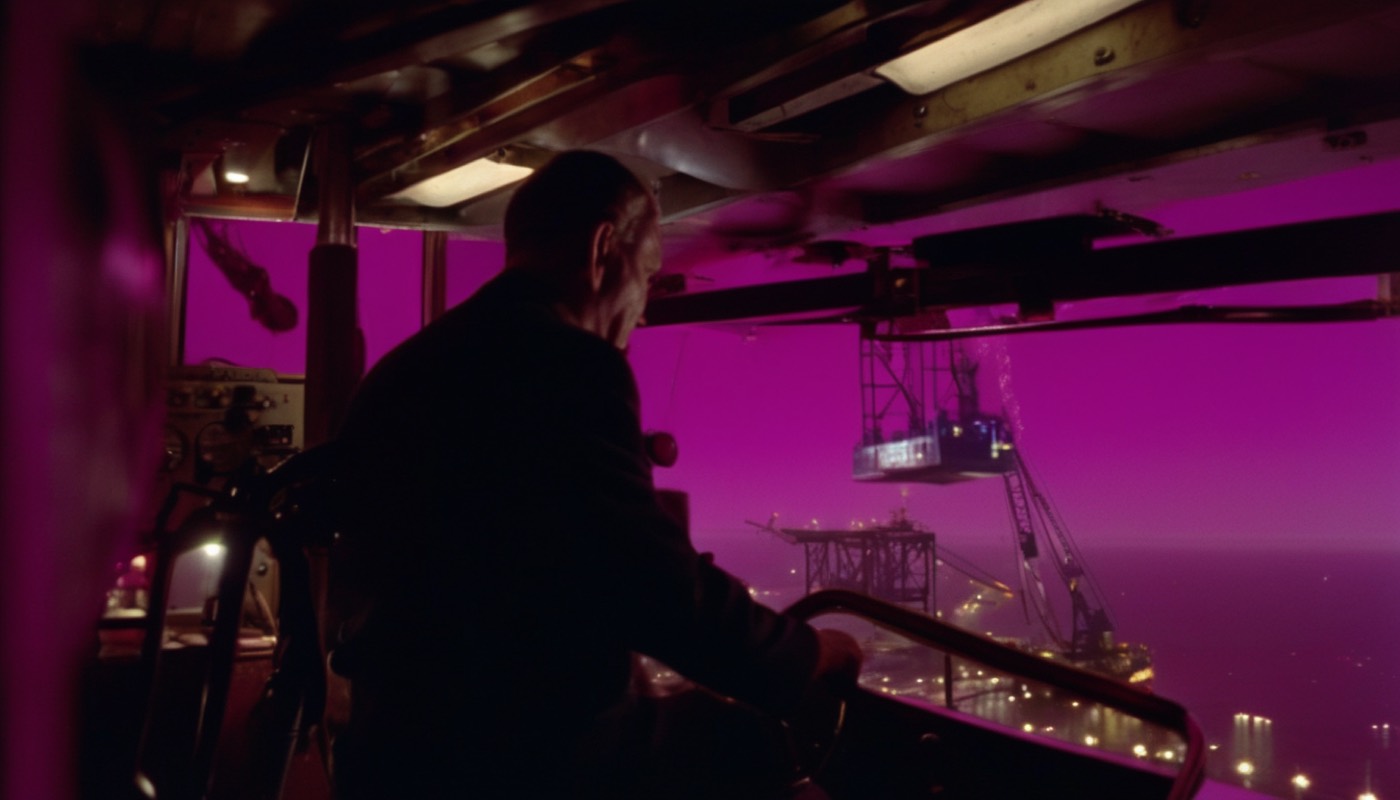
A box on its own is just a box. What made the container work was that every piece of equipment around it was designed to fit it.
It starts at the corners. Each container has a steel fitting at each of its eight corners, with an oval hole in it. A device called a twist-lock drops into that hole, and a quarter turn locks it tight. With twist-locks, boxes can be lifted by a crane, stacked on each other, and fixed to a ship, a truck or a train.
The twist-lock was developed in the nineteen fifties by an American engineer, Keith Tantlinger, who worked with McLean on the box. In October nineteen fifty-seven, Sea-Land's Gateway City became the first ship built around containers, with a cell for each box. Early in nineteen fifty-nine, the Matson line put the first high-speed dockside container crane into service, in California.
Inside the ship, the box needed a place of its own.
Container ships are built with cells. These are vertical steel guides, like the rails of a lift shaft, running down through the hold. A crane lowers a box into the top of a cell, and the guides steer it down onto the box below. No one in the hold has to push it into place.
And on the quay, the crane is the heart of it.
A gantry crane stands on legs over the edge of the quay, with a long arm reaching out over the ship. A trolley runs along the arm and lowers a frame onto the box. The frame locks onto the four top corners, lifts the box, and swings it ashore onto a waiting truck.
Put the pieces together and you have one system. The box has standard corners. Twist-locks hold it to anything. Cells guide it inside the ship, and the crane lifts it between ship and shore. Each part only works because the others fit it.
That system had one weakness left. Every company was building it to its own size.
5. One standard shape
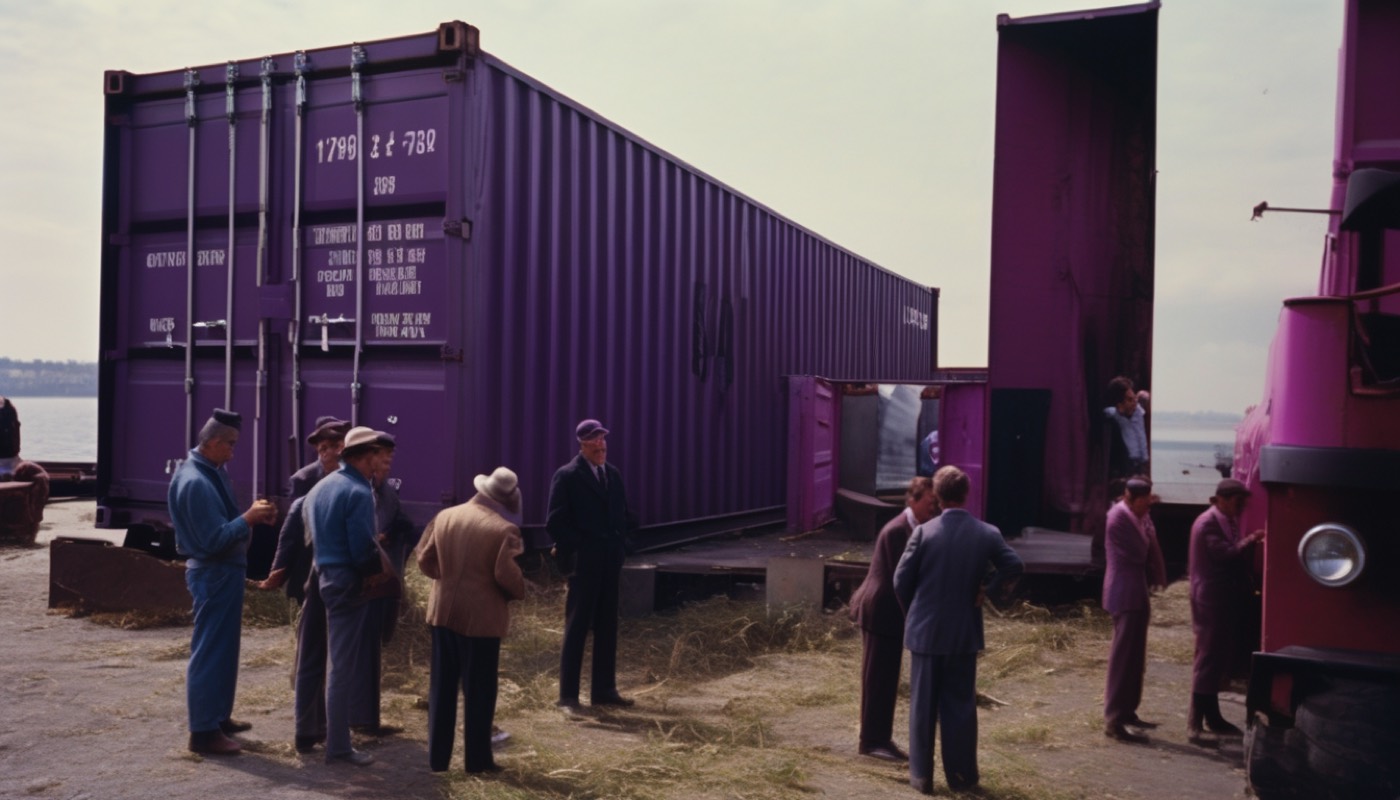
By the late nineteen fifties, containers were spreading, but they were not the same. Sea-Land's boxes were thirty-five feet long, the size of the truck trailers it used. Out west, the Matson line chose boxes twenty-four feet long for its trade to Hawaii.
Compare the lengths. A Sea-Land box would not fit a Matson ship, and a Matson box would not fit Sea-Land's cells. Other lines chose other sizes again. A box that could not travel on someone else's ship could not travel very far.
So the fight moved into committee rooms. At home, government agencies and industry groups argued over the right sizes, and every company wanted the standard to be its own. Then the argument went international.
The International Organization for Standardization, known as ISO, began work on freight containers in nineteen sixty-one. In February nineteen sixty-eight, it adopted its recommendation on container sizes, ISO six six eight. In nineteen seventy came its recommendation on the corner fittings, ISO eleven sixty-one.
The corners were the hardest part, and Tantlinger's design helped settle them. His twist-lock patent was released free of charge, so every maker could use the same corners. With the corners agreed, any crane could lift any box.
Two lengths won: twenty feet and forty feet. Heights and widths were fixed too, so that the boxes would stack on each other and fit on a road trailer.
That gave the industry its unit of measure, the TEU. It stands for twenty-foot equivalent unit, and it simply means one standard twenty-foot box. A forty-foot box counts as two TEU. Ships, ports and fleets are all measured this way.
Most containers moving today are forty feet long. But the world still counts in twenty-foot boxes, and that small decision made in committee is why a box loaded in one country can be lifted by a crane in any other.
6. Vietnam proves it
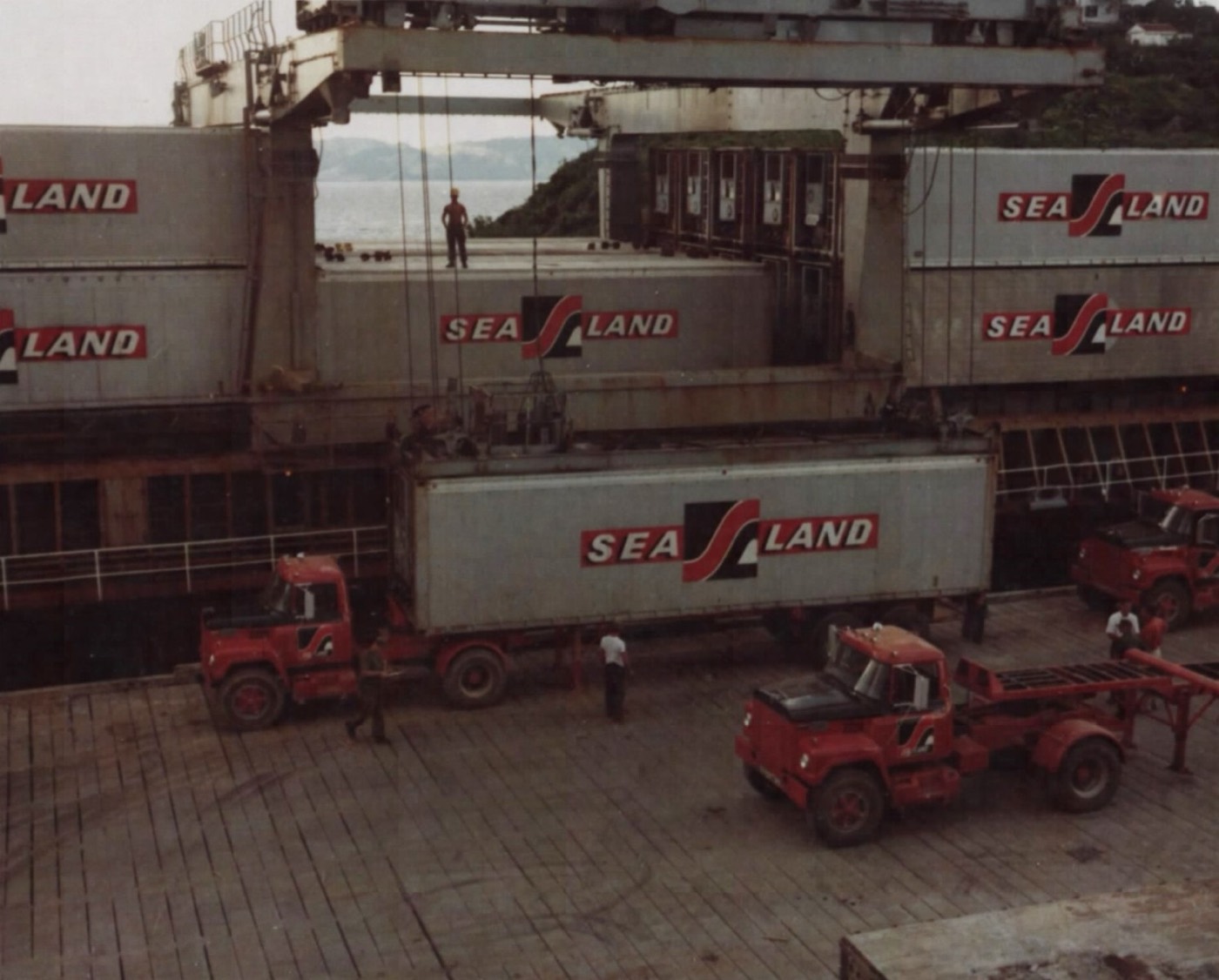
The standard was still being written when the container faced its biggest test. It came from the United States military, and a war in Vietnam.
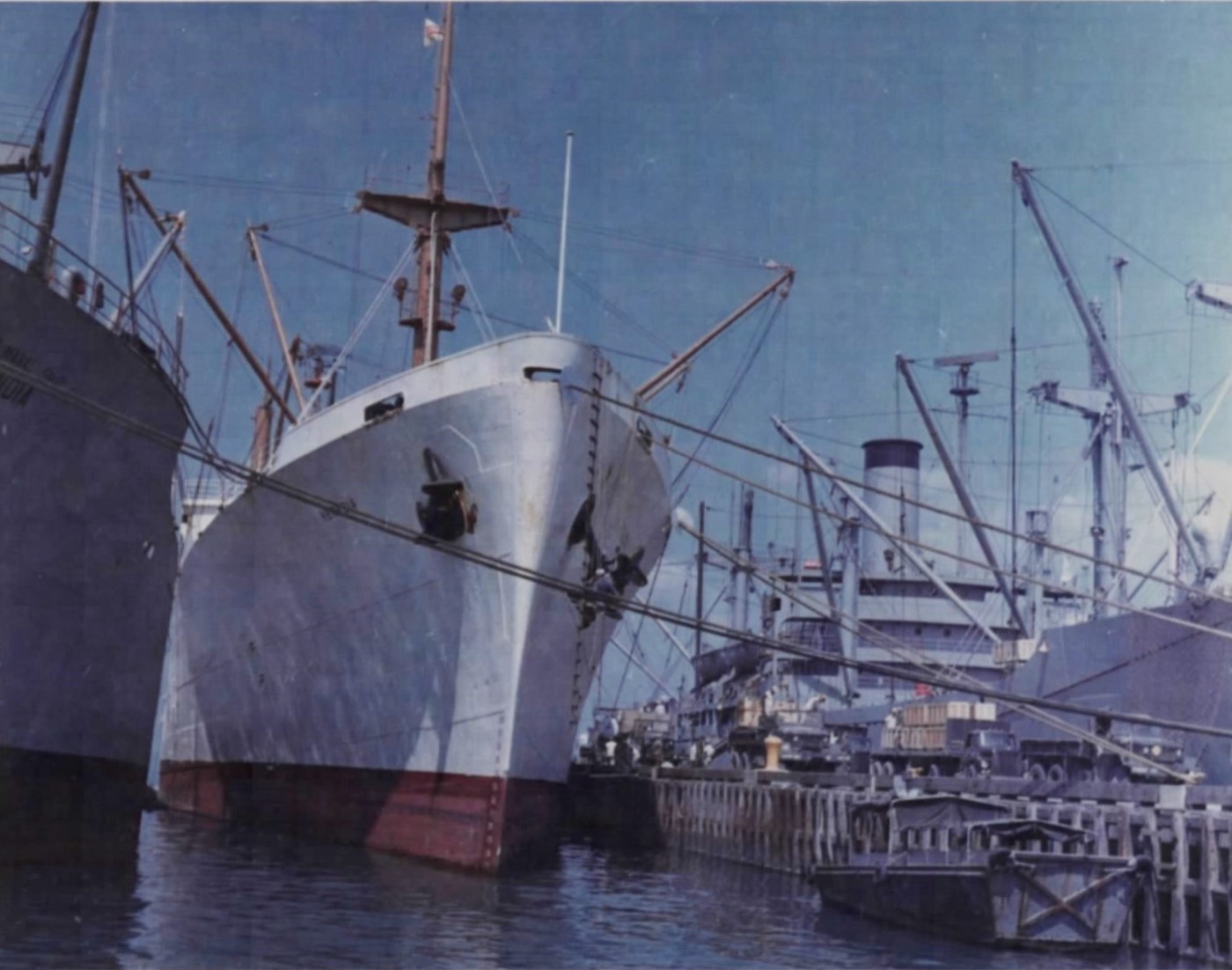
By the mid-nineteen sixties, American forces were pouring supplies into Vietnam through ports that were never built for it. Docks like these at Cam Ranh Bay were worked in the old way, piece by piece. Ships queued to unload, and cargo waited on the quays.
The answer was the box. The United States government invited Sea-Land to start a container service to South Vietnam.
Sea-Land's container ships sailed from the American West Coast into Cam Ranh Bay. Between nineteen sixty-seven and nineteen seventy-three, Sea-Land delivered as many as twelve hundred containers a month to the country.
These are thirty-five-foot Sea-Land containers being unloaded at Da Nang, further up the coast, in September nineteen sixty-seven. Each box arrived sealed, and it could be trucked straight to the base that needed it. There was far less handling, and far less to go missing.
There was one problem left. The ships were full going to Vietnam, but the boxes were empty coming home. An empty ship crossing the Pacific earns nothing.
McLean's answer was Japan. On the way back, the ships called at Japanese ports and filled up with goods for American shops. The Pacific became a loop: America to Vietnam, Vietnam to Japan, Japan back to America. Hong Kong, Taiwan and South Korea soon joined it.
That loop mattered more than the war. It showed that a container line could cross an ocean, run to a timetable, and carry one country's exports to another continent. Trade across the Pacific would never be the same.
7. The old docks die
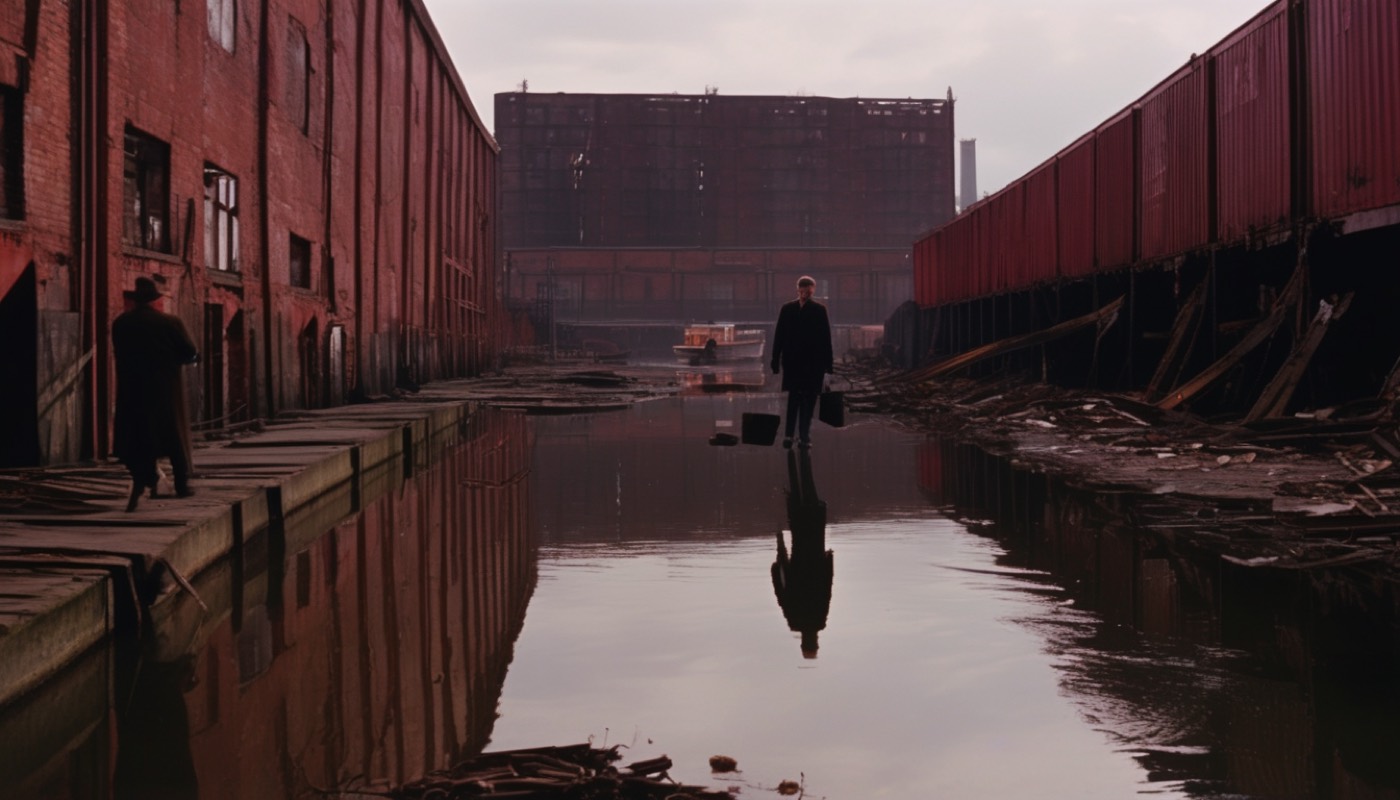
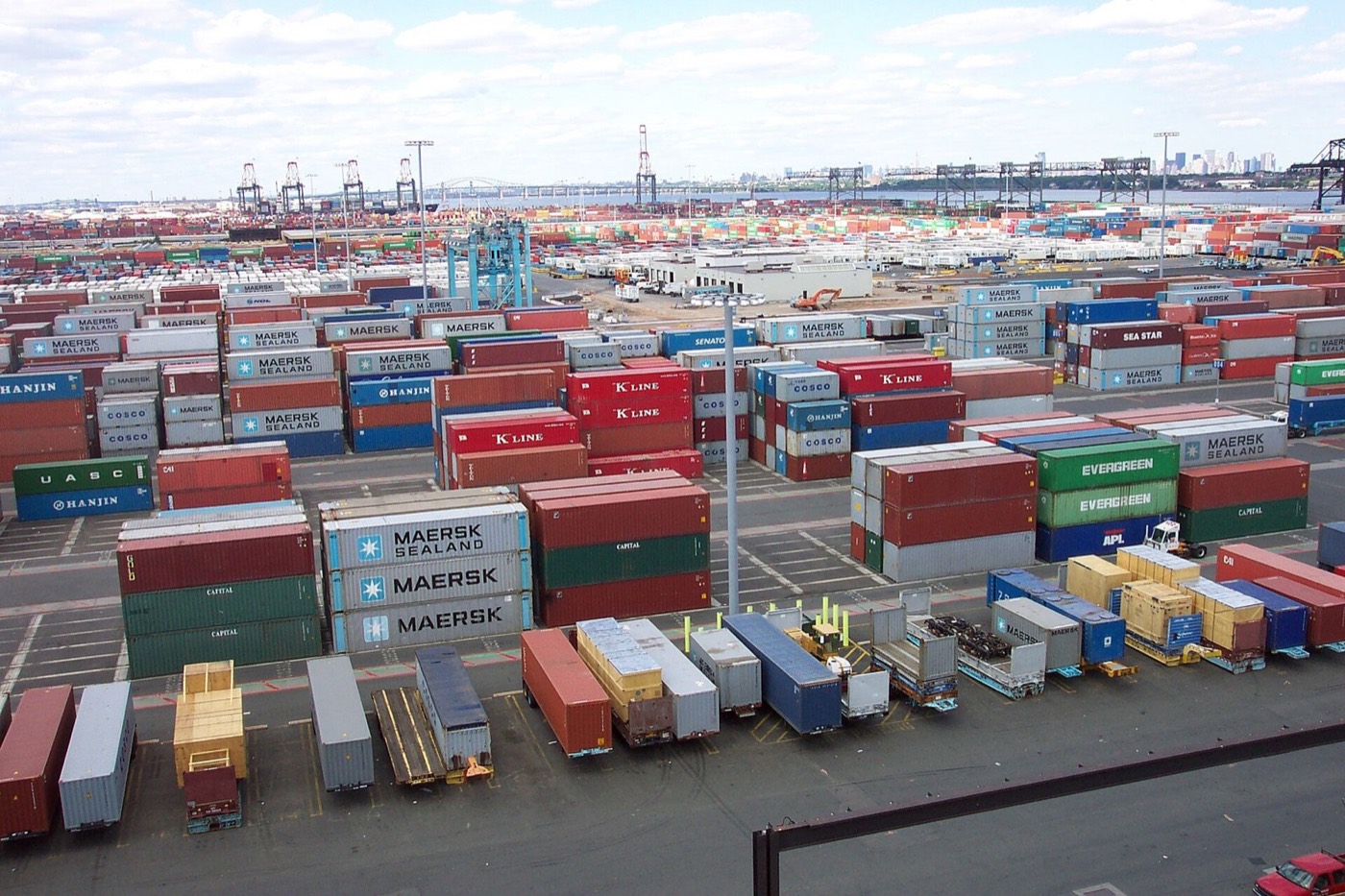
Back home, the container was reshaping the waterfront. It needed something the old docks did not have: space.
Look at New York harbour. The old piers poked out from Manhattan and Brooklyn like the teeth of a comb, hemmed in by city streets. A container terminal needs acres of flat land beside the water, to park thousands of boxes. That land was across the harbour, in New Jersey.
In August nineteen sixty-two, the Port Authority opened a new marine terminal at Port Elizabeth, in New Jersey, with a container terminal for Sea-Land. This is how it looks today. Box upon box, stacked on land that the old city piers never had.
The work moved to where the space was, and the jobs went with it. The piers of Manhattan and Brooklyn emptied.
The same thing happened in London, one dock at a time. The London Docks and St Katharine Docks closed in nineteen sixty-eight. The Surrey Commercial Docks followed in nineteen seventy. The West India and Millwall Docks closed in nineteen eighty, and the Royal Docks, the last of them, in nineteen eighty-one.
The ships had gone downstream and up the coast. In nineteen sixty-seven, a new container port opened at Tilbury, further down the Thames. That same year, Felixstowe, a small port on the Suffolk coast, opened its first container terminal. Today it is Britain's busiest container port.
For the dockers, this was the end of a way of life. Where a gang of men had once spent days on a ship, a crane driver and a few others could now empty it in hours. The old docklands of London sat derelict for years, before the offices of Canary Wharf rose on the same ground.
8. Made anywhere
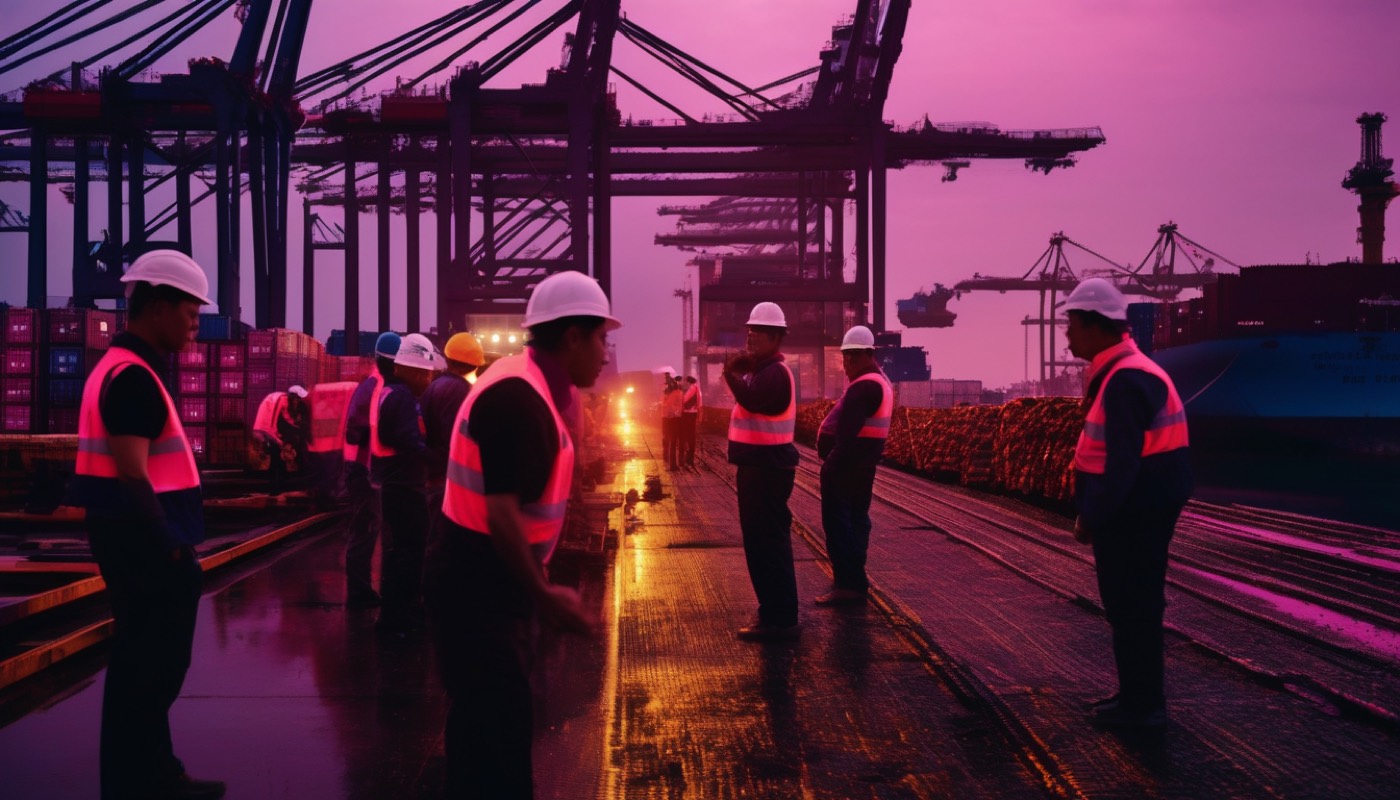
The container did not only change ports. It changed where things could be made.
Here is the chain. Cheap, reliable shipping cut the cost of moving goods. Once moving goods was cheap, a factory no longer needed to sit near its customers. It could go wherever costs were lowest. And the parts could be made in one country and put together in another.
That is how the modern supply chain was born. A phone, a car or a shirt can now contain parts from a dozen countries, and each of those parts may have crossed an ocean in a box.
The biggest winners were in East Asia. Shenzhen was a small town beside Hong Kong until China opened it up to foreign trade. Shanghai grew into the busiest port on Earth. Singapore made itself the great transfer point between the Indian Ocean and the Pacific.
Look at the busiest container ports in twenty twenty-five. Shanghai handled about fifty-five million TEU. Singapore handled about forty-five million. Ningbo and Shenzhen come next. The busiest port in Europe, Rotterdam, handled about fourteen million.
Across the whole world, the United Nations trade body, UNCTAD, counted about nine hundred and twenty million TEU moving through ports in twenty twenty-four. That was nearly seven per cent more than the year before. Many boxes are counted more than once, as they are unloaded at one port and loaded at the next.
The analysts at DynaLiners put the total for twenty twenty-five at more than a billion. The box made distance cheap. And when distance is cheap, the whole world becomes one factory floor.
9. Bigger and bigger ships
If one box is cheap to move, many boxes on one ship are cheaper still. So the ships grew.
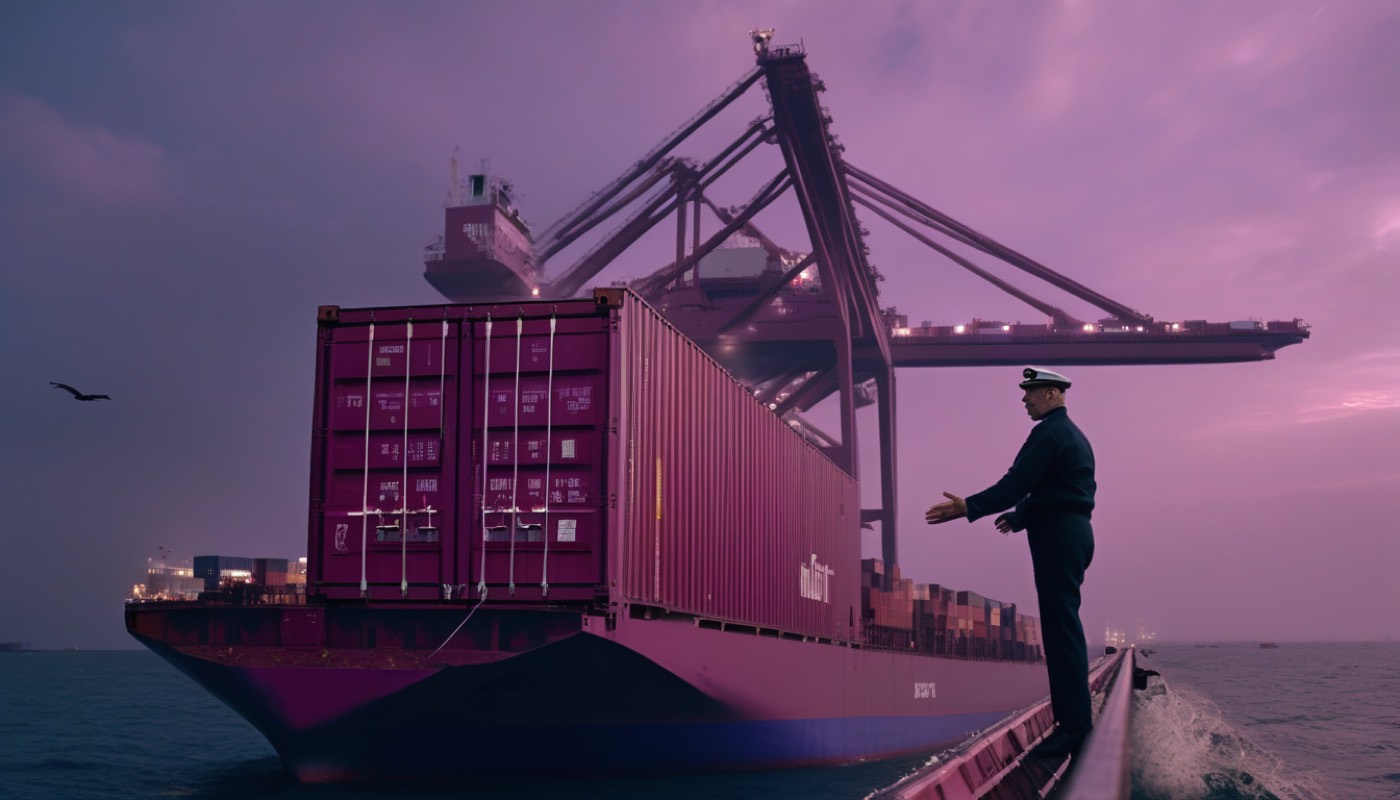
Ideal-X carried fifty-eight boxes. The largest container ships afloat today carry more than twenty-four thousand TEU. The box is the same basic shape. The ship is hundreds of times the size.
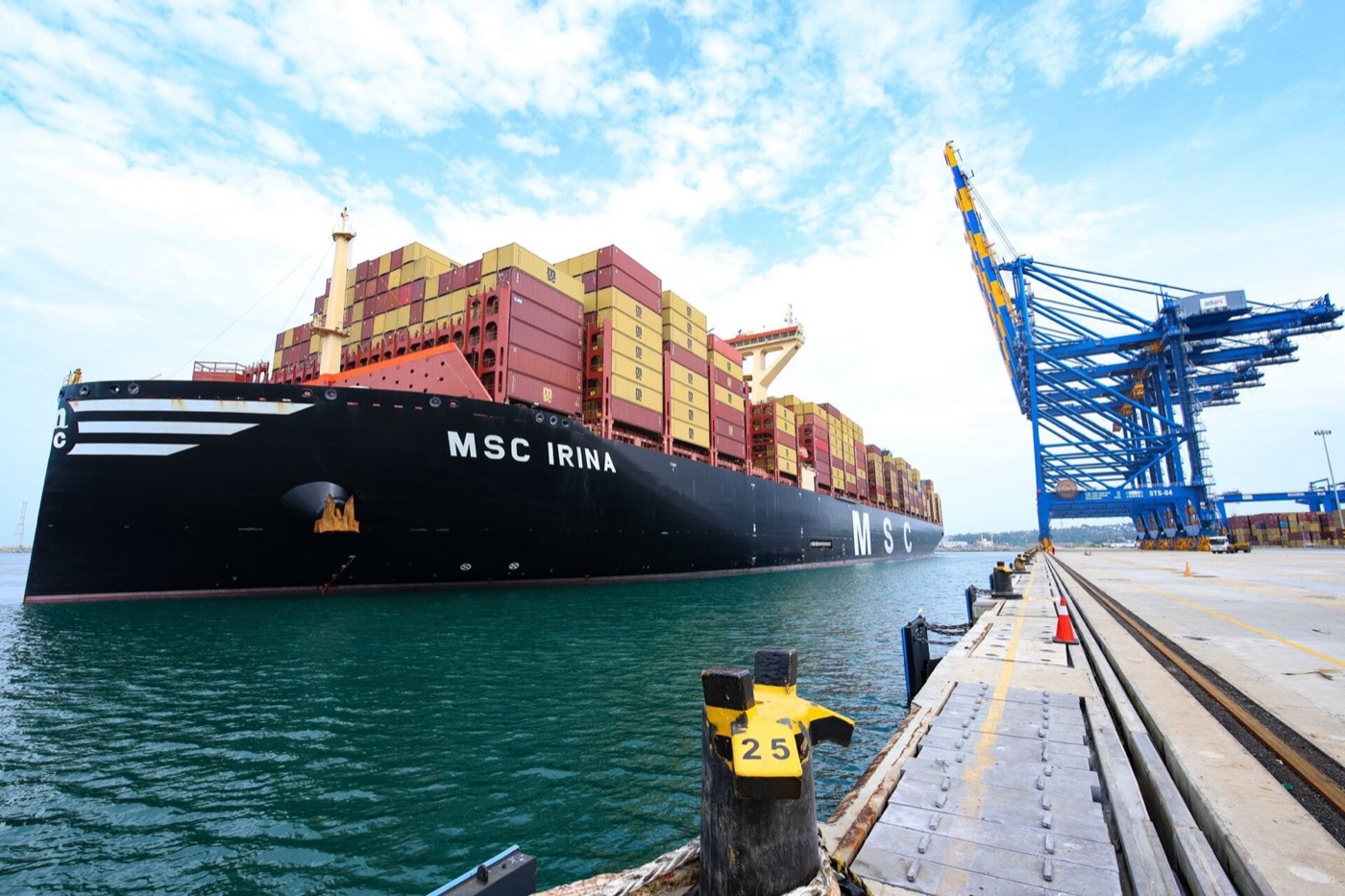
This is MSC Irina, of the Mediterranean Shipping Company. When she was delivered in March twenty twenty-three, she was the largest container ship in the world, at twenty-four thousand, three hundred and forty-six TEU. She is nearly four hundred metres long, and her sister ships share the record.
The record has crept up in small steps. In twenty seventeen, the biggest ship carried just over twenty-one thousand TEU. HMM Algeciras reached nearly twenty-four thousand in twenty twenty. The Irina class added a few hundred more in twenty twenty-three.
A ship that size cannot be loaded by guesswork. Every one of its slots has to be planned before the first box is lifted.
The plan is called a stowage plan, and today a computer draws it. Heavy boxes go low, to keep the ship stable. Boxes for the first port go on top, so they can come off without moving the others. Refrigerated boxes go where they can be plugged into the ship's power.
Get the plan wrong, and the cost is real. A box stuck under the wrong stack has to be moved twice. A heavy box too high can make the ship less stable. So the planners balance weight, stability and the order of the ports, box by box, thousands of times over.
Bigger ships made each box cheaper to carry. They also made each ship matter more. When one of them stops, a great deal stops with it.
10. When the pipe blocks
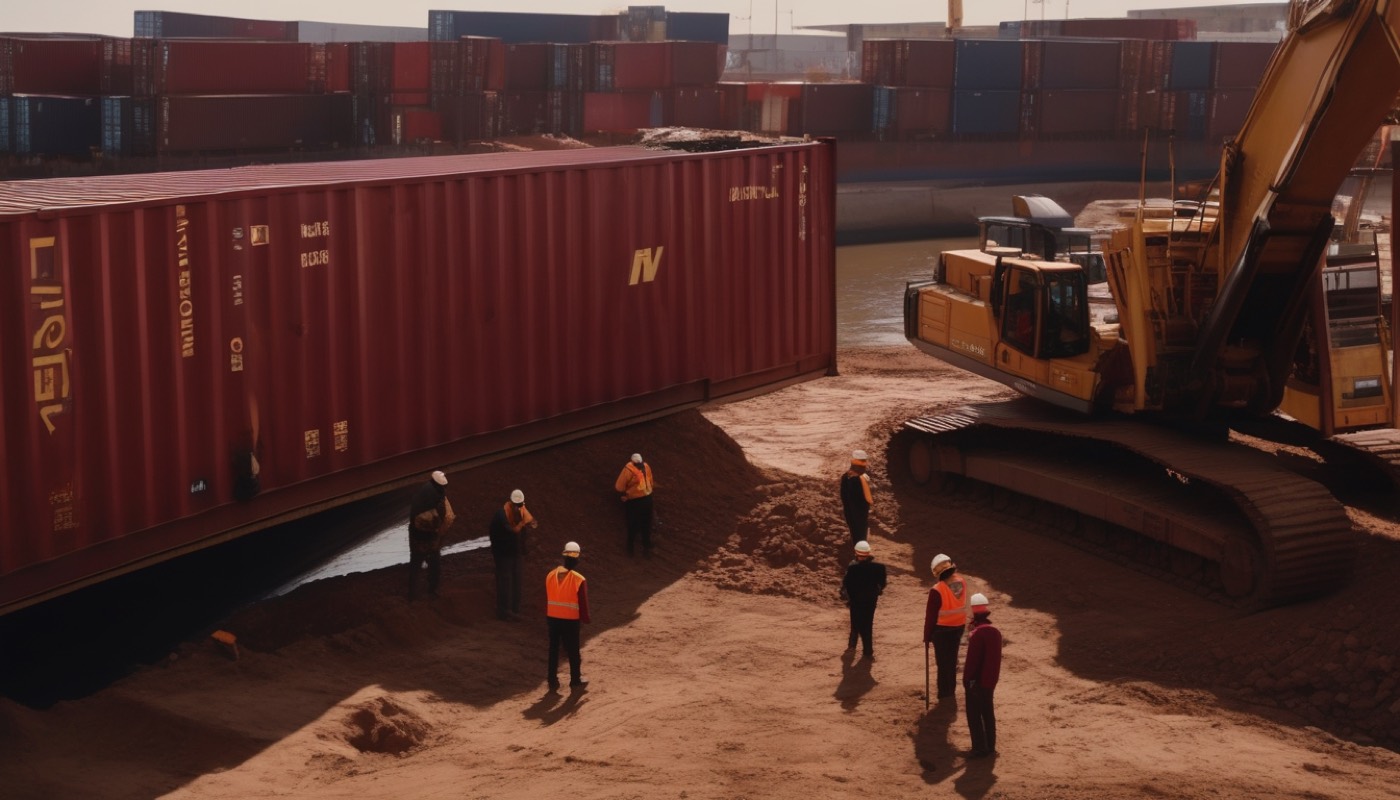
Global shipping runs through a few narrow places. A chokepoint is a narrow stretch of water that a large share of world trade has to pass through. The Suez Canal is one. The Red Sea, and the Strait of Hormuz at the mouth of the Persian Gulf, are others.
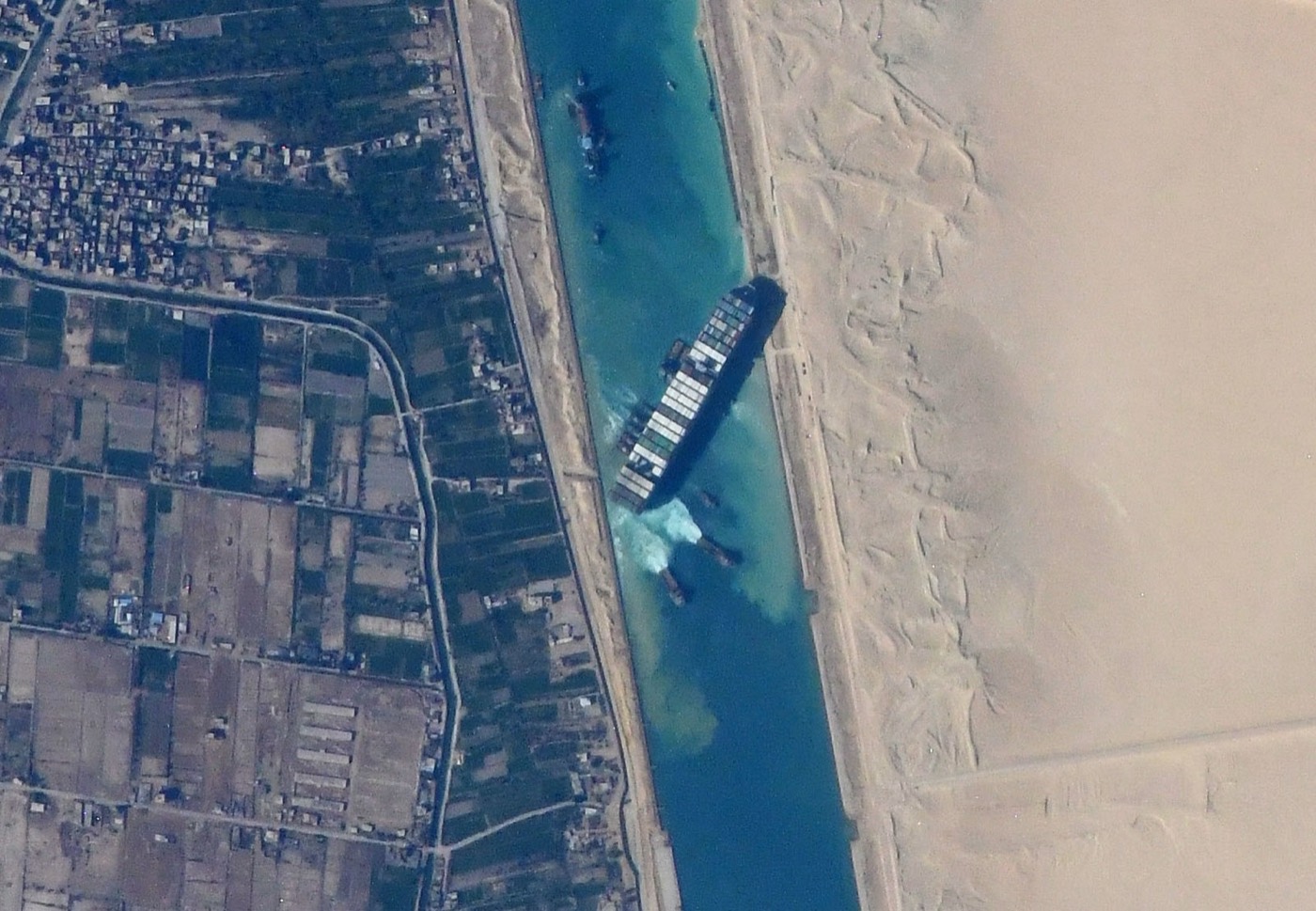
On the twenty-third of March, twenty twenty-one, the container ship Ever Given ran aground in the Suez Canal and wedged itself across it. This is the ship, photographed from the International Space Station. She was not freed until the twenty-ninth of March, six days later.
For six days, nothing passed. Hundreds of ships queued at each end of the canal. The shipping newspaper Lloyd's List estimated the trade held up at about nine point six billion dollars a day, and called it a rough calculation.
The whole system was already under strain. The pandemic had shut factories, then sent demand for goods soaring.
Ports jammed, and boxes ended up in the wrong places. The price of shipping a forty-foot box from Asia to America soared. The analysts at Xeneta record the peak on the route to the US East Coast on the first of January, twenty twenty-two, at twelve thousand, six hundred and eighty-three dollars.
Then came the Red Sea. From November twenty twenty-three, Houthi forces in Yemen attacked ships passing through it. Most container lines stopped using the Suez Canal. A ship from Asia to Europe now went the long way round, past the Cape of Good Hope at the tip of Africa.
The detour did not end quickly. UNCTAD reported that transits through the Suez Canal were still around seventy per cent below their level in twenty twenty-three. That was in May twenty twenty-five, a year and a half after the attacks began.
Each time, the lesson was the same. The system is lean. It keeps very little spare, and when one pipe blocks, there is no slack anywhere else to take the strain.
11. Hormuz, 2026
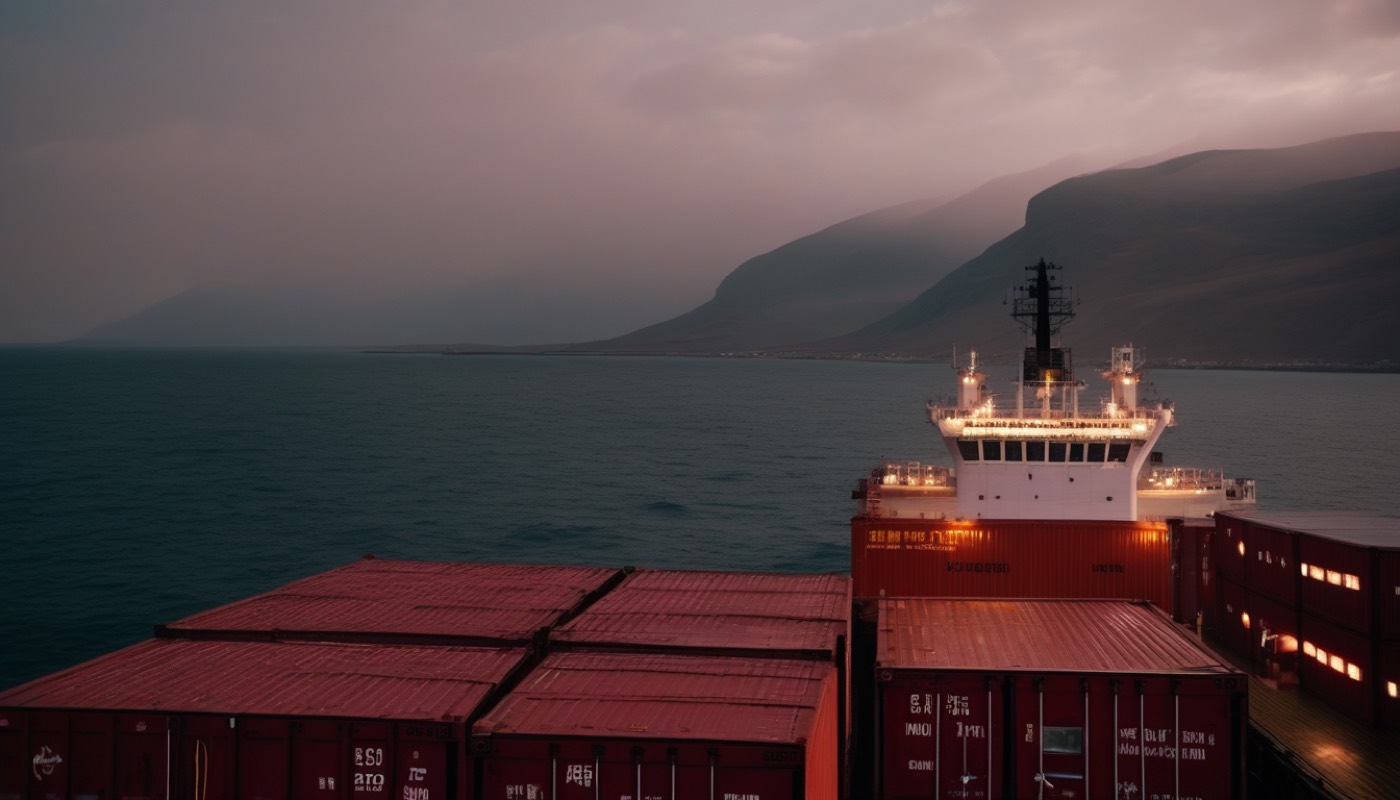
In twenty twenty-six, the pipe blocked again, and this time it was the Strait of Hormuz.
The Strait of Hormuz is the narrow channel between Iran and Oman, at the mouth of the Persian Gulf. Big container ports lie inside it, including Jebel Ali in the United Arab Emirates. On the twenty-eighth of February, twenty twenty-six, after American and Israeli strikes on Iran, Iran's Revolutionary Guard warned that no ship could pass.
The shipping analysts at Xeneta counted what was caught. Before the crisis, ninety-nine container services ran in or through the Gulf. Together they used about three point two million TEU of ships, around ten per cent of the world's container capacity. Only eleven of those services kept running.
Shippers went looking for other ways in. Some cargo landed at Jeddah, on Saudi Arabia's Red Sea coast, and crossed the desert by truck. The trucks soon queued there too.
In the middle of June, the United States and Iran signed an agreement to reopen the strait. Ships began to move again. By the middle of July, the truce had broken down and the blockade was back. At the end of August, Al Jazeera reported that the strait was still, in effect, closed.
The effect reached every ocean. On the seventeenth of September, twenty twenty-six, Xeneta put the spot rate from the Far East to the US East Coast at eleven thousand, two hundred and fifty-nine dollars for a forty-foot box. That is up about three hundred and twenty-five per cent since the crisis began.
It is still a little short of the pandemic peak, by about eleven per cent. But a crisis in one strait in the Middle East has made it far dearer to ship a box from Asia to America's East Coast, on the other side of the world.
The container made the world one market. That also means a problem in one corner of it is felt everywhere.
12. Forwards or backwards?
So, seventy years after Ideal-X, is the container still carrying the world forwards?
There is a strong case that it is. The box made goods cheaper to move for almost everyone. It let poorer countries sell to richer ones, and East Asia built its factories on it. For decades, shipping was so cheap and so reliable that most people never thought about it.
There is a strong case against, too. The system was built to be lean, with little spare, so every shock is felt at once. The Suez blockage, the pandemic, the Red Sea and now Hormuz have come one after another. And each one has pushed up the cost of the same steel box.
Some companies are responding by bringing factories closer to home, a shift known as nearshoring. Others are holding more stock, or spreading their suppliers across more countries. Both cost money that the lean system was designed to save.
And the ships keep coming. In March twenty twenty-six, the shipping body BIMCO counted a record eleven point eight million TEU of container ships on order. Chinese designers have already drawn up a ship of about twenty-seven thousand, five hundred TEU, bigger again than MSC Irina.
So the numbers tell two stories. Fifty-eight boxes in nineteen fifty-six. About nine hundred and twenty million TEU through the world's ports in a single year. And a price that can more than quadruple when one narrow channel closes.
The steel box shrank the world. It is still the cheapest way ever found to move almost anything across an ocean. Whether it keeps moving the world forwards depends on whether the system around it can learn to carry a little spare.
Sources and credits
Photo credits (Wikimedia Commons)
- Longshoremen loading barrels by hand onto the steamship Manukai, Seattle, c. 1925 (break-bulk era): Webster & Stevens, Public domain - https://commons.wikimedia.org/wiki/File%3ALongshoremen_transferring_cargo_at_dockside%2C_ca_1925_%28MOHAI_5529%29.jpg
- Docks at Cam Ranh Bay, 21 March 1967: SP4 Larry Morris, Public domain - https://commons.wikimedia.org/wiki/File%3ADocks_at_Cam_Ranh_Bay%2C_March_1967.jpg
- 35-foot Sea-Land containers offloaded from a ship at Da Nang, September 1967: SSG James I. Hatton, Public domain - https://commons.wikimedia.org/wiki/File%3A35-foot_Sea-land_containers_being_offloaded_from_a_ship_in_Da_Nang.jpg
- Container terminal at Port Elizabeth, New Jersey (NOAA, 2004): Captain Albert E. Theberge, NOAA Corps (ret.), Public domain - https://commons.wikimedia.org/wiki/File%3ALine3174_-_Shipping_Containers_at_the_terminal_at_Port_Elizabeth%2C_New_Jersey_-_NOAA.jpg
- MSC Irina (24,346 TEU) arriving at Vizhinjam port, Trivandrum, June 2025: Giridharseeman, CC0 - https://commons.wikimedia.org/wiki/File%3AMSC_IRINA_Trivandrum_Port.jpg
- Ever Given stuck in the Suez Canal, seen from the ISS, 27 March 2021: NASA JSC ISS image library, Public domain - https://commons.wikimedia.org/wiki/File%3AEver_Given_in_Suez_Canal_viewed_from_ISS.jpg


Primary sources
- Marc Levinson, The Box, Princeton University Press, 2006 (2nd ed. 2016) - Warrior study 1954 (194,582 items, 1,156 shipments, 6 days loading, 10.5 days crossing, 4 days unloading); loading cost $5.83/ton vs 15.8 cents/ton (passages read as verbatim excerpts).
- Port Houston, 'Ideal X', 30 April 2026 - 26 April 1956, Port Newark to Houston, 58 containers, arrived five days later; Containerization & Intermodal Institute, Ideal X 70th anniversary page.
- Anthony Mayo and Nitin Nohria, 'The Truck Driver Who Reinvented Shipping', HBS Working Knowledge, 3 Oct 2005 - 1934 truck, Hoboken quotation, fifth-largest, 1,776 trucks, $6m sale 1955; Wikipedia, 'Malcom McLean' - Sea-Land name April 1960, Vietnam invitation 1967, 35-foot trailer vans.
- Wikipedia, 'SS Ideal X' - built during the Second World War as a T-2 tanker, converted 1955.
- Wikipedia, 'Twistlock' - developed in the 1950s by Keith Tantlinger, patent released royalty-free; RTE Brainstorm, 19 Jul 2024.
- Guinness World Records, 'First cellular container ship' - Gateway City, 4 Oct 1957, 226 containers; ASME Landmark 85, PACECO container crane, in service 7 Jan 1959, Alameda.
- Matson, company history page - Hawaiian Merchant, 31 Aug 1958, 24-foot containers.
- ISO Recommendation R 668, 1st edition, February 1968 (foreword: work began 1961); ISO R 1161, 1970.
- Industrial History of Hong Kong Group, 29 Nov 2014 (updated 22 Jun 2019) - up to 1,200 containers a month to Vietnam 1967-1973; return via Japan, then Hong Kong, Taiwan, South Korea.
- Wikipedia, 'Container port' - Elizabeth Marine Terminal opened 15 Aug 1962; Wikipedia, 'Port Newark-Elizabeth Marine Terminal' - 90-acre Sea-Land terminal.
- London Museum, 'What is the Port of London Authority?' - London and St Katharine Docks 1968, Surrey Commercial 1970, West India and Millwall 1980, Royal Docks 1981, Tilbury container port 1967; Port of Felixstowe history - Landguard terminal in use by 1 July 1967; 'Britain's Biggest & Busiest Container Port'.
- Container News, 10 Aug 2026 (DynaLiners data) - 2025 port throughput and world total over 1 billion TEU; Port of Rotterdam, 26 Feb 2026 - 14.2m TEU in 2025.
- UNCTAD, Review of Maritime Transport 2025 (via SAFETY4SEA, 25 Sep 2025) - 920m TEU in 2024, +6.9%; Suez transits about 70% below 2023 as of May 2025.
- Ships Monthly - MSC Irina delivered 9 Mar 2023, 24,346 TEU, 399.99 m; Wikipedia, 'List of largest container ships' - OOCL Hong Kong 21,413 (2017), HMM Algeciras 23,964 (2020).
- gCaptain, 25 Mar 2021, citing Lloyd's List - about $9.6bn of trade a day; Ever Given aground 23 Mar, refloated 29 Mar 2021.
- PBS NewsHour - Galaxy Leader seized 19 Nov 2023.
- Xeneta, weekly ocean container shipping market update, 18 Sep 2026 - Far East-US East Coast $11,259/FEU on 17 Sep 2026, +324.7%, 11.2% below the $12,683 peak of 1 Jan 2022.
- Xeneta, 'US-Iran deal to reopen Strait of Hormuz', 19 Jun 2026 - 99 services, 3.2m TEU, around 10% of capacity, 11 services still active; Wikipedia, '2026 Strait of Hormuz crisis' - 28 Feb 2026, MoU 17 Jun, breakdown 8 Jul; Al Jazeera, 27 Aug 2026 - blockade resumed 14 July, strait 'in effect, closed'; The Loadstar, 3 Jul 2026 - Jeddah land bridge, 5 km truck queues.
- BIMCO, 11 Mar 2026 - record orderbook 11.8m TEU; The Maritime Executive / The Loadstar - CSSC SRDI 27,500 TEU design (design only, no order).
Not regulated financial advice.