
The Industrial Revolution: What Power Decided Then and Now
The Industrial Revolution is usually taught as a story of inventions. It was really a story about energy: whoever controlled coal and steam decided which nations got rich. This video traces that story from Thomas Newcomen's 1712 mine pump and James Watt's 1769 and 1781 patents, through Britain's coal-fuelled rise to producing about two-thirds of the world's coal and half its cotton and iron by 1850, to the cities and empire that coal built.
Then it draws the line to today. The International Energy Agency's 2025 'Energy and AI' report found data-centre electricity demand rose 17% in 2025 alone, against about 3% growth for the rest of the world's grid, and is on track to more than double by 2030, to around 945 terawatt-hours. US utilities, including Southern Company, are now delaying the retirement of coal plants in Georgia and Mississippi — Plant Bowen, Plant Scherer and Plant Daniel — specifically to meet that demand, pushing some closures as late as 2039. At least 15 US coal plants nationally have had retirements delayed or paused since January 2025.
The verdict: AI did not create the scramble for cheap, abundant power. It reopened the same contest that started in a flooded coal mine three centuries ago.
Every figure is on screen with its source and date.
In these topics
Chapters
- The question nobody asks about machines
- Life before steam
- Newcomen's engine in the coal mines
- Watt's efficient engine
- Why Britain had the coal to burn
- From pump to factory
- Coal production explodes
- Cities, workers and empire reshaped
- The pattern repeats: coal, oil, and now electricity
- AI's electricity problem
- Coal comes back from retirement
- The same fight, a new century
Video notes
1. The question nobody asks about machines

Most history lessons tell the Industrial Revolution as a parade of inventions.
The usual list runs through the steam engine, the spinning machine and the railway, one invention after another. But none of those machines explains why Britain went first, or why some nations stayed poor while others grew rich.
The real turning point was something else entirely.
Before steam, every economy was capped by how much power human muscle, animals, wind and water could supply. Steam broke that cap, and from this point on, whoever controlled it decided which nations got rich and which were left behind.
This video asks a question that sounds modern but is not. Is today's scramble for electricity to run AI a new industrial revolution, or a step backwards into the coal economy the first one built? To answer that, start with how little power anyone had before steam.
2. Life before steam

For most of history, there were exactly four sources of power, and none of them scaled.
Human muscle turned handles and carried loads. Animals pulled ploughs and carts. Wind turned sails and windmills, and water turned the wheels of early mills. Every one of those four had a hard ceiling on how much work it could do in a day.
That ceiling capped the whole economy. A mill could only grind as much grain as its water wheel allowed, and a workshop could only make as many goods as its workers' arms and legs could manage, no matter how much anyone wanted to sell.
This is the ceiling steam eventually broke. A water wheel's power came from wherever the river happened to be, so work had to move to the river. A steam engine could be built almost anywhere there was coal, so for the first time, power could move to the work instead.
3. Newcomen's engine in the coal mines
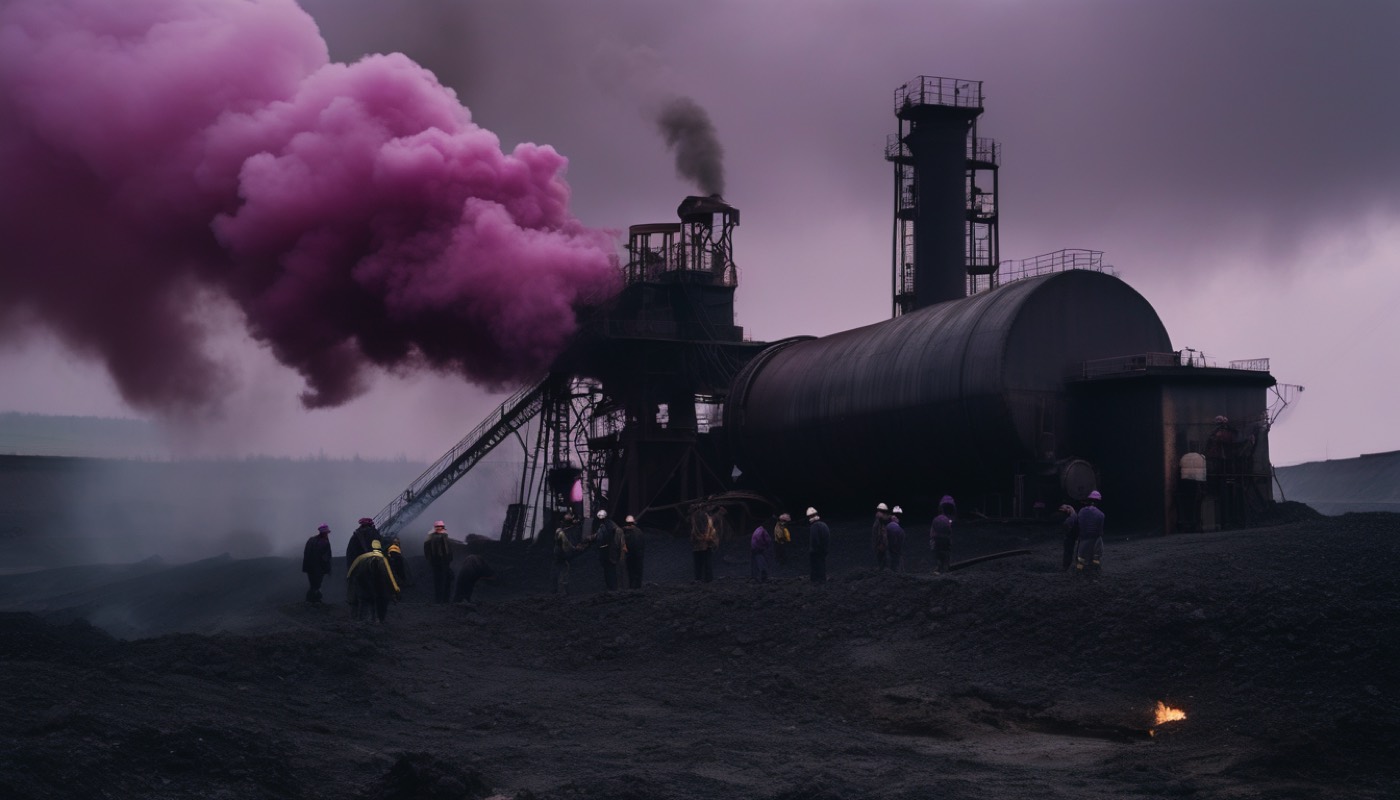
The first machine to break that ceiling was built to solve a much narrower problem: water flooding a coal mine.
In 1712, the engineer Thomas Newcomen installed a steam-powered pump at a coal mine in Dudley, in the English Midlands. It is remembered as the first practical use of steam power anywhere.
Newcomen's engine worked by filling a cylinder with steam, then cooling it so the steam condensed and the air pressure above pushed a piston down. It repeated that cycle again and again, as long as the fire stayed lit.
Inside the engine, a boiler made steam, a cylinder and piston turned that steam into an up-and-down motion, and a connecting rod carried that motion down the shaft to the pump below. It was crude and slow, and it burned enormous amounts of coal for the work it did.
It was hugely wasteful of fuel. But it sat inside a coal mine, so wasted coal barely mattered.
This single pump could clear five thousand gallons of water an hour from a shaft one hundred and fifty-three feet deep. That is roughly the depth of a fifteen-storey building, straight down, kept clear of water by nothing but fire and steam.
The mine simply burned a little of what it was digging up anyway, and that trade-off is why the engine's first home was a coal mine and nowhere else.
4. Watt's efficient engine
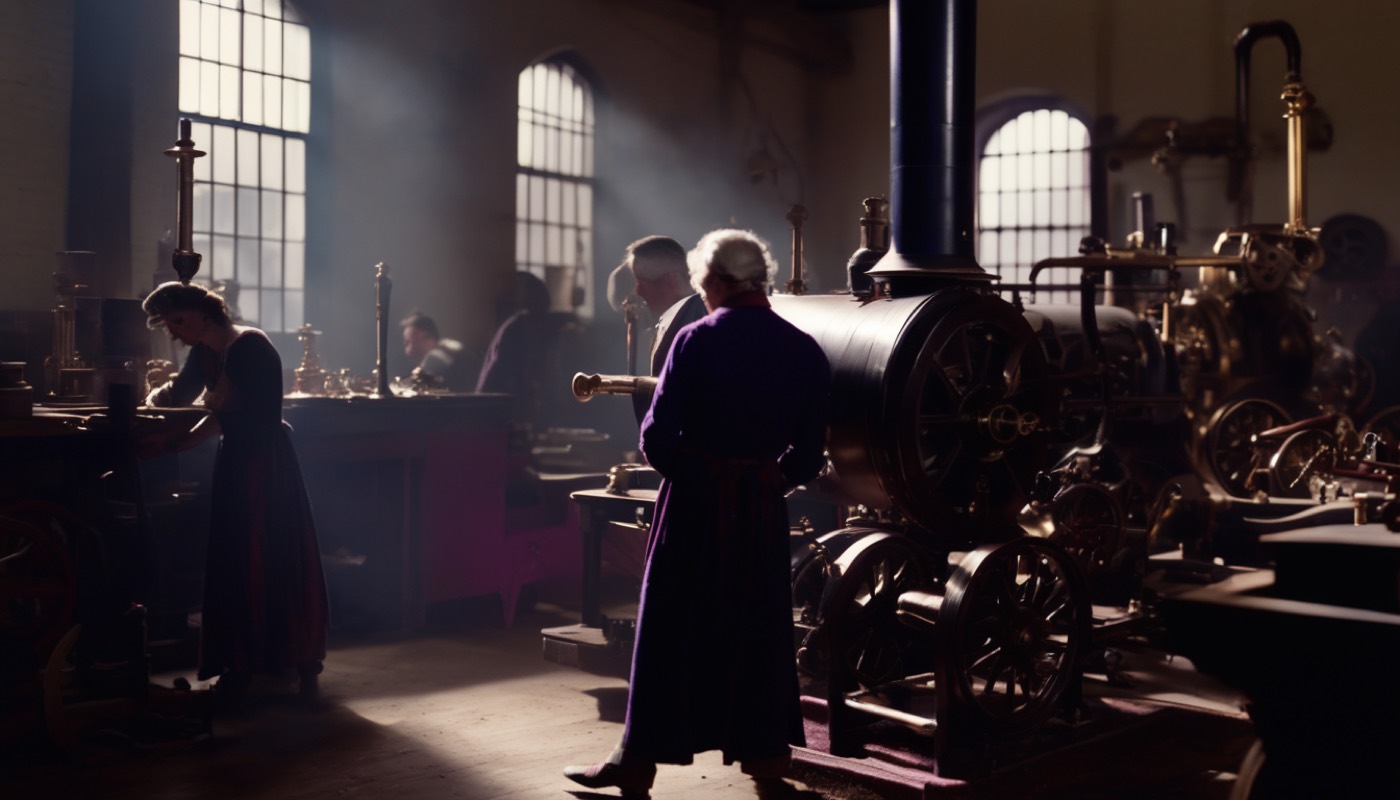
Newcomen's engine stayed almost unchanged for half a century, because nobody needed it to do more than pump water out of mines.
Laid on a timeline, the engine's story runs like this. Newcomen's pump started the age of steam in seventeen twelve. In seventeen sixty-nine, the Scottish engineer James Watt patented a separate condenser that stopped the engine wasting most of its heat. And in seventeen eighty-one, Watt patented a gear that turned the engine's push-and-pull motion into a steady rotary motion.
The separate condenser alone was the bigger saving. Newcomen's design cooled the whole cylinder on every stroke, then reheated it from scratch, wasting most of the fire's heat each cycle. Watt's design cooled only a separate chamber, so the cylinder itself stayed hot.
The result was dramatic. Watt's engine used only about a quarter of the coal that Newcomen's needed to do the same work. A mine, a mill or a factory could now run a steam engine for a fraction of the fuel bill.
The condenser made steam cheap. The second patent made it useful almost everywhere, because a mine pump only needs to push up and down — but a factory needs something turning round and round.
Watt's rotary gear connected the piston's up-and-down stroke to a turning wheel, and that turning wheel could drive a shaft, a belt, or a spinning machine. For the first time, steam could power any factory, not only a mine pump.
That one change — rotary motion — is why Watt's engine, not Newcomen's, became the engine of the factory age.
5. Why Britain had the coal to burn
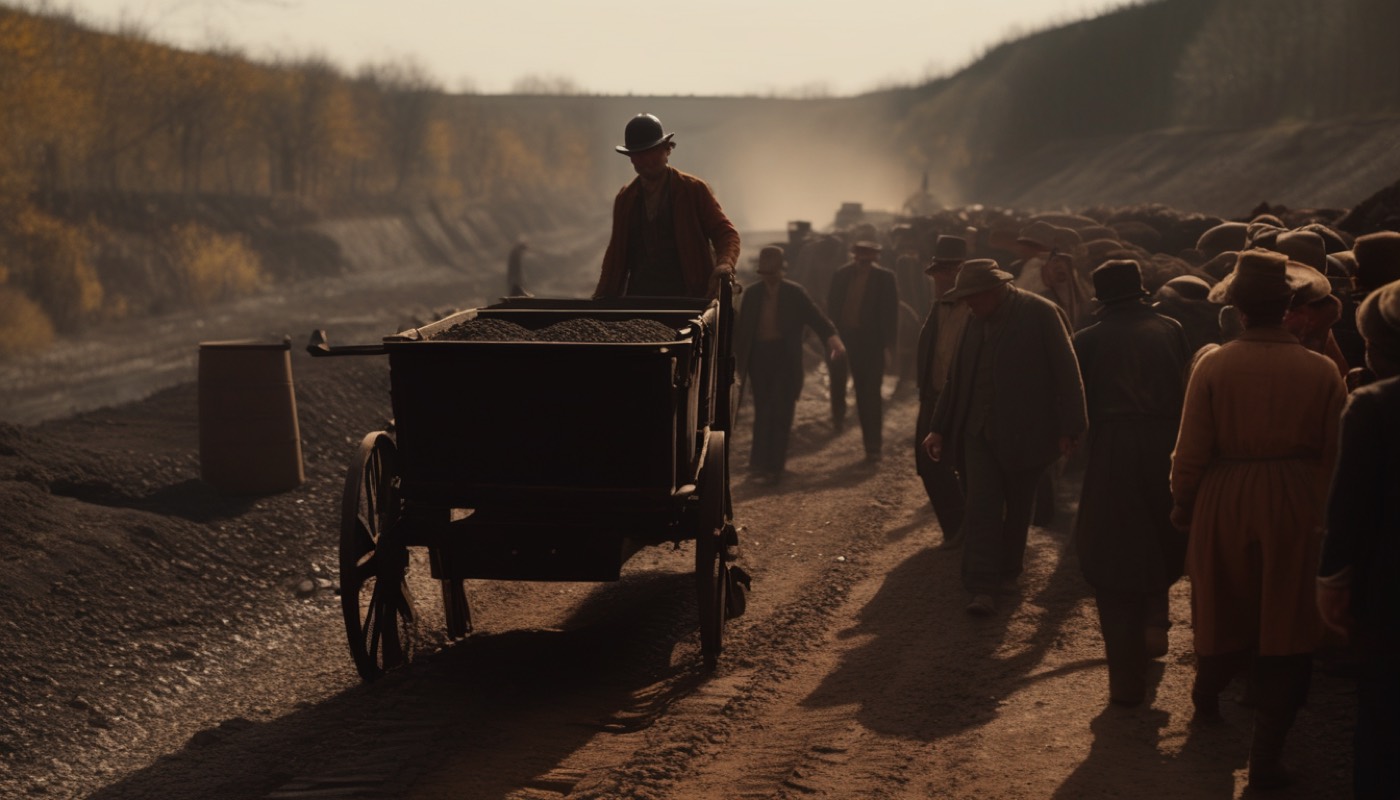
None of this mattered unless there was coal nearby to burn, and Britain had an unusual amount of it.
Britain's coal sat in shallow seams close to the surface, in coalfields across South Wales, the Midlands, and the North East of England. Those same regions were already linked by rivers and a growing network of canals, so coal could reach cities and factories cheaply.
That geography gave Britain a head start nobody else matched at the time.
By 1700, Britain was already producing eighty per cent of Europe's coal, according to World History Encyclopedia. Coal that cheap and that close meant fuel cost less in Britain than almost anywhere else.
Cheap coal met expensive labour, and that combination is what actually drove invention.
Enclosure had turned much of English farmland into larger, more efficient estates, pulling workers off the land and into towns. Fewer farm labourers meant higher wages. An inventor who could replace an expensive worker with a cheap-to-run machine stood to make money.
So Britain had the fuel, and it had the financial reason to burn it. The next step was putting that fuel to work outside the mines.
6. From pump to factory
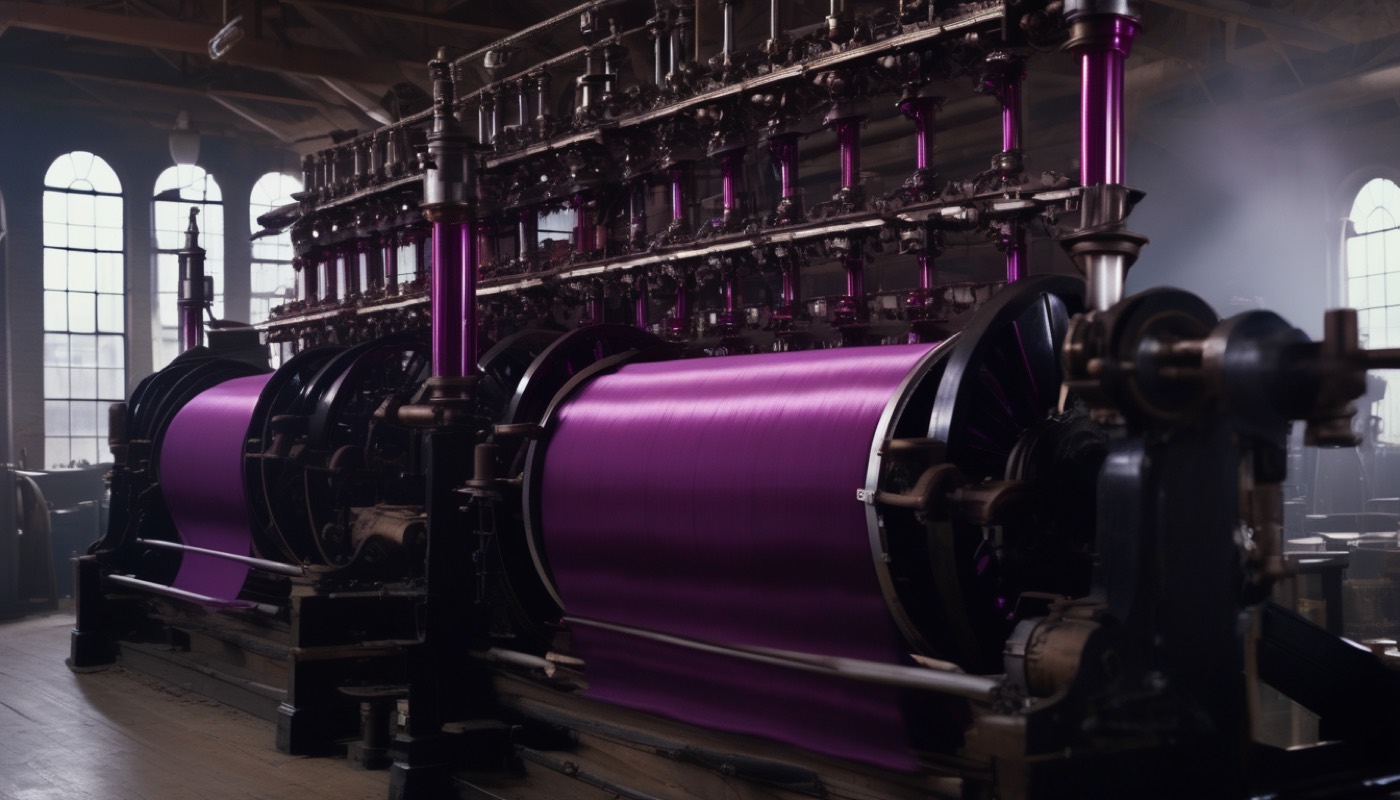
Before Watt's rotary engine, cloth-making happened in cottages, powered by hand and foot.
A weaver's cottage held a hand loom and a spinning wheel, worked by one family, producing cloth in small batches at whatever pace human hands allowed. A steam-driven mill replaced that with rows of machines, all turned by one engine, running far faster than any hand could manage.
That single change moved the entire textile industry out of homes and into purpose-built factories.
Three things changed at once. Production moved from the home to the factory floor. The power source moved from human hands to a shared steam engine. And output per worker rose, because one engine could now drive dozens of spinning and weaving machines at a time.
Factories did not simply replace cottages with bigger versions of the same work. They were built around the engine itself, because the engine, not the river or the worker's cottage, was now the thing everything else had to be near.
7. Coal production explodes

Steam-powered factories needed far more coal than mine pumps ever had, and British output rose to match.
British coal output climbed steeply once Watt's engine spread. It rose from about three million tons to around fifteen million tons over the following century. Then it surged again, reaching sixty-two and a half million tons by 1850.
That is not simply more output on the same old scale. It is an economy that could suddenly draw on a fuel source other countries could not match.
By 1850, Britain was producing about two-thirds of the entire world's coal. No other country came close to extracting fuel at that scale.
All that coal had to go somewhere, and it went straight into reshaping where people lived and how they worked.
8. Cities, workers and empire reshaped
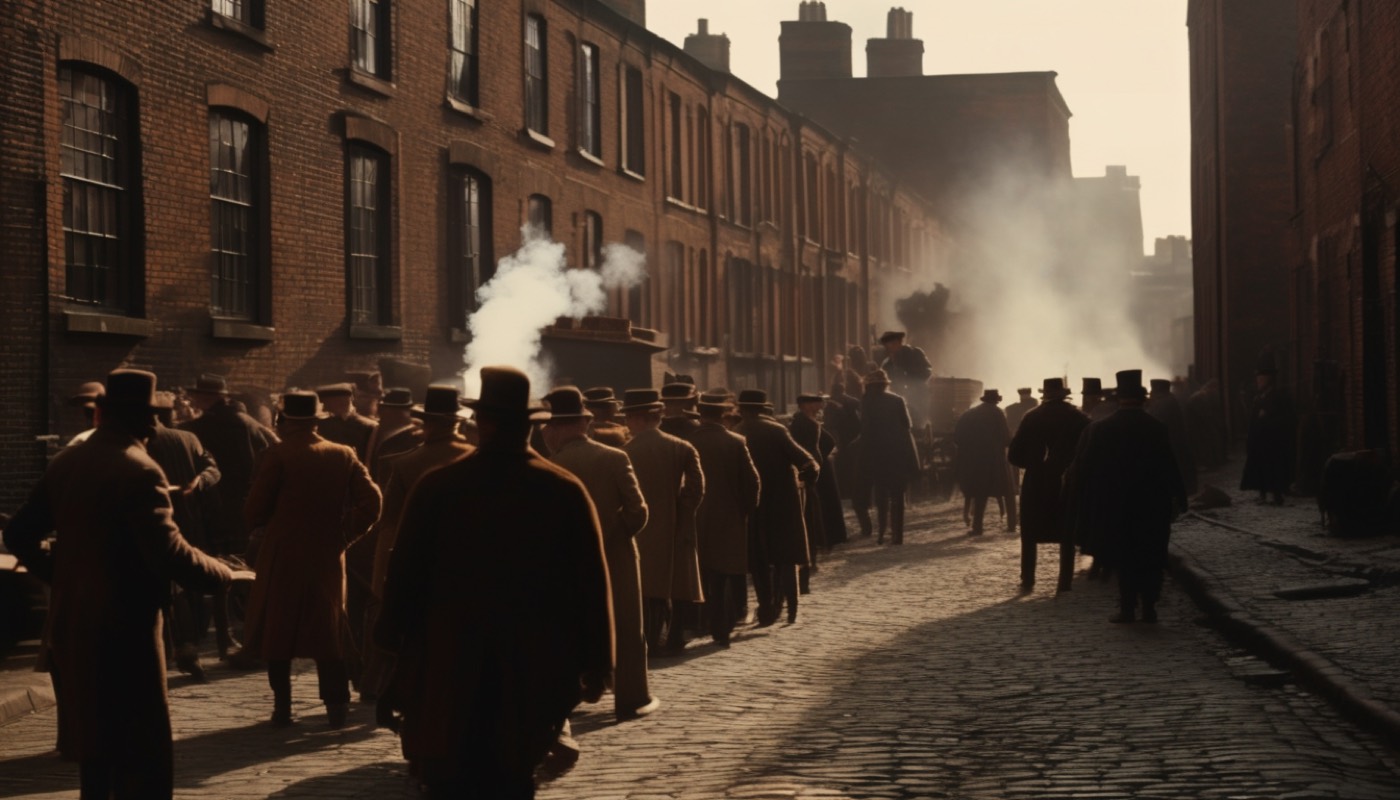
Factories needed workers close by, and that pulled people off the land and into new industrial towns at a pace nobody had planned for.
Manchester grew from a market town into the world's first great industrial city, surrounded by mill towns across Lancashire and the Midlands. People moved from scattered villages into these crowded new centres because that is where the engines, and the jobs, now were.
The scale of that shift shows up clearly in one industry's weight in the whole economy.
Cotton textiles made up only about two point six per cent of everything Britain produced in seventeen sixty. By eighteen thirty-one, that share had grown to twenty-two per cent.
That reshaping did not stop at Britain's shoreline. Cheap manufactured cotton cloth and iron goods gave Britain something to sell to the rest of the world, in huge volume.
By 1850, Britain produced about half of the entire world's cotton textiles, and about half of the world's iron too. Factories built on steam and coal were not just feeding British cities. They were supplying, and underpinning the trade of, an empire.
This shift has its own timeline too, running from cotton's earliest years to its world-beating peak. Watch those three dates, because the same shape repeats throughout this video.
Cities, factories and overseas trade did not grow by accident. They grew because one country had found a way to multiply the work a person could do, using coal.
9. The pattern repeats: coal, oil, and now electricity
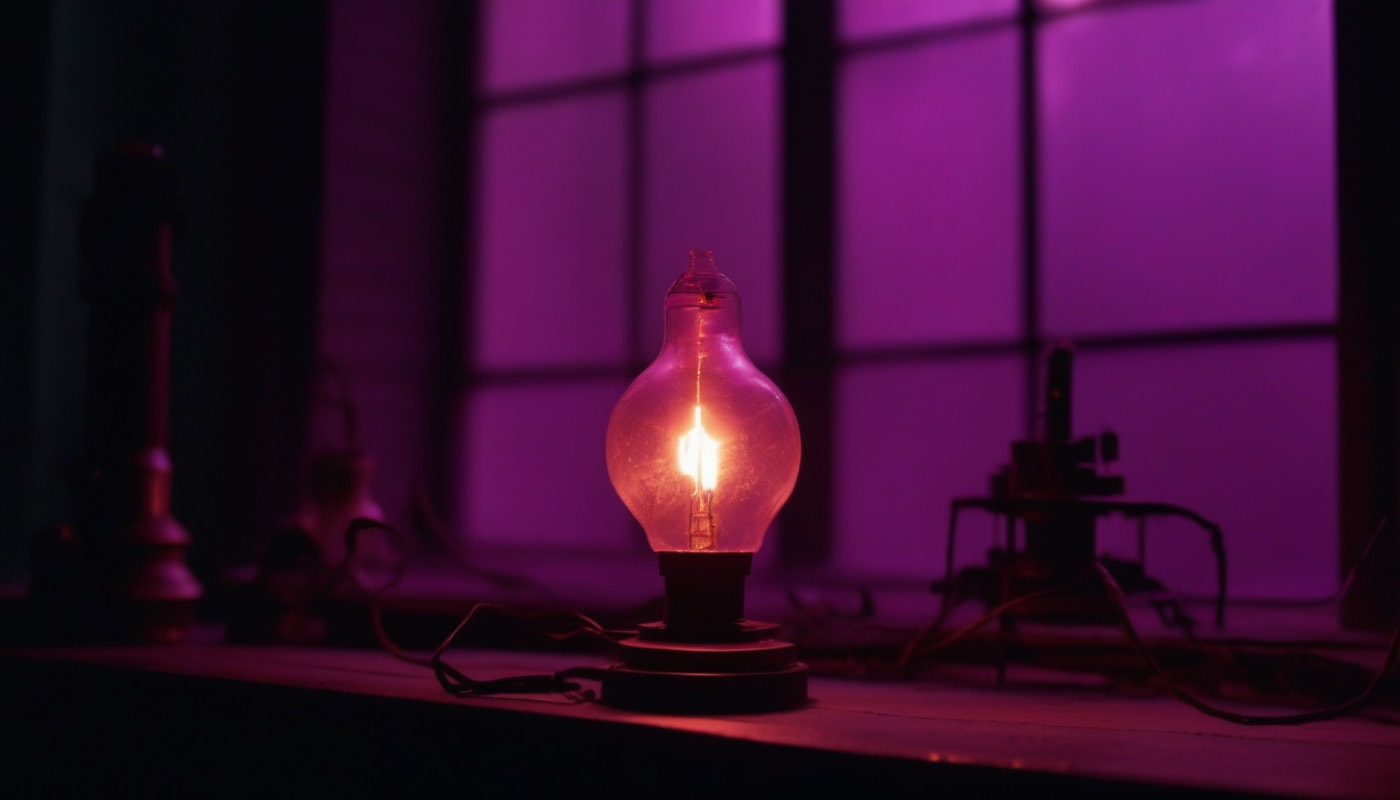
Steam and coal were not the last word in energy deciding who gets rich. They were just the first.
The same pattern shows up again and again on the timeline. Thomas Edison's Pearl Street power station lit up part of New York City in eighteen eighty-two, starting the electric age. Britain opened Calder Hall, the world's first full-scale nuclear power station, in nineteen fifty-six. And in two thousand twenty-five, the International Energy Agency published a report warning that electricity demand was about to surge again.
Oil overtook coal as the world's leading energy source in the middle of the twentieth century, and electrification brought power into homes that had never had it. Nuclear power added a source that needed no fuel delivery at all, once built.
Edison's station sat in New York City, in the United States. Calder Hall sat in Britain, on the other side of the Atlantic — proof that this pattern was never confined to one country.
Every one of those shifts followed the same rule. Whoever secured the cheapest, most abundant power first captured the growth that came with it — just as Britain had with coal two centuries earlier.
That brings the story to right now, and to a machine that burns no coal itself but is still reopening the same contest.
10. AI's electricity problem

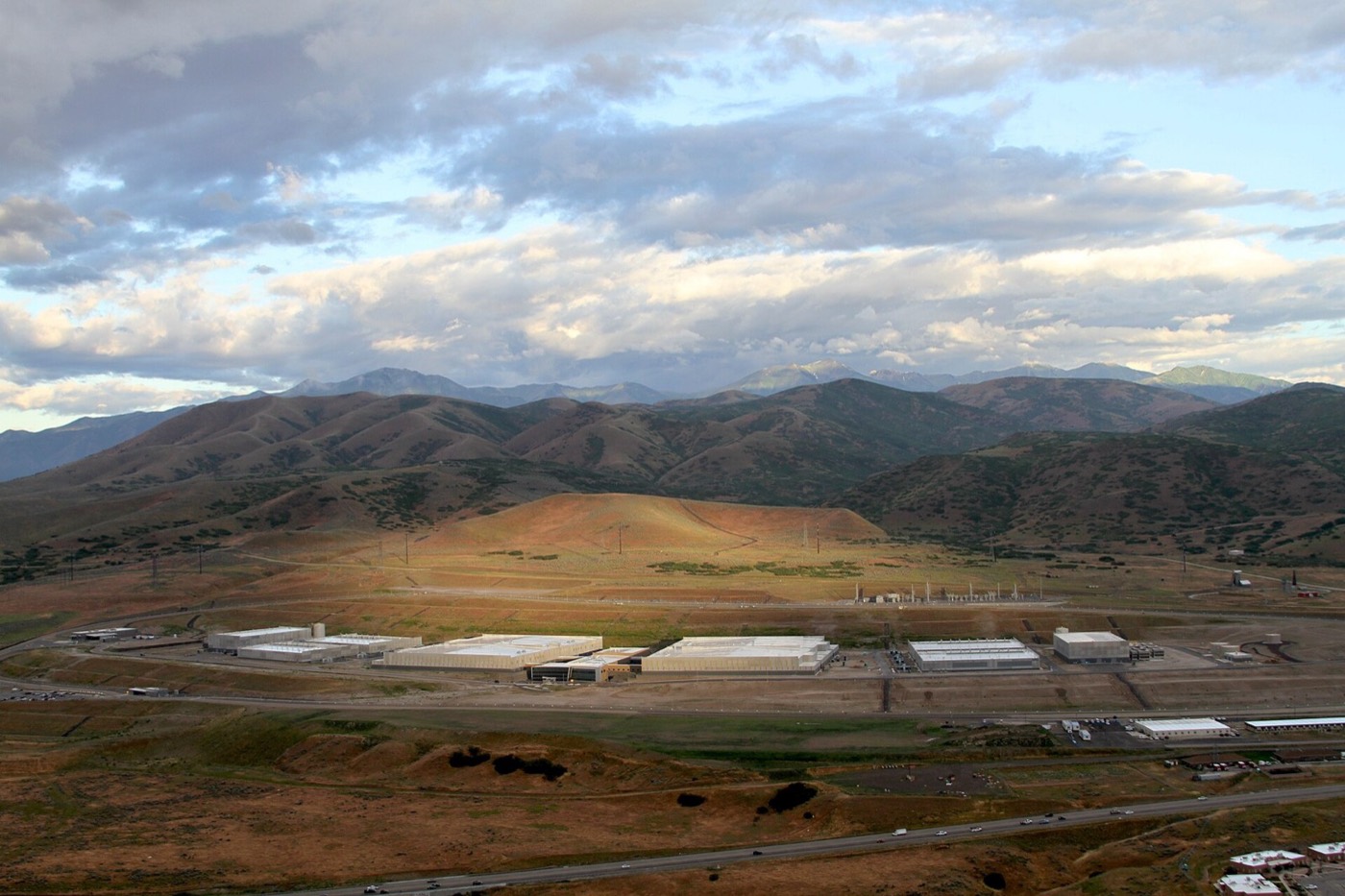
The International Energy Agency's twenty twenty-five report identified the newest version of that same contest: artificial intelligence.
This is the Utah Data Center, a vast government computing facility near Bluffdale, Utah. Buildings like it, built to train and run AI models, now draw as much electricity as a small city, running day and night.
Data centres are not new. What changed is how fast their appetite for electricity is growing, compared with everything else on the grid.
In twenty twenty-five, electricity demand from data centres rose seventeen per cent. Demand across the entire world's grid, everything else included, rose only about three per cent over the same year.
The IEA expects that gap to widen, not close, over the rest of this decade.
Global data-centre electricity use is on track to more than double, reaching around nine hundred and forty-five terawatt-hours by 2030. A terawatt-hour is a trillion watt-hours of electricity — roughly what a few million homes use in a year.
That demand has to come from somewhere, and the grid cannot build enough new wind, solar and gas capacity fast enough to cover all of it. So utilities have started looking backwards, to a fuel they had already scheduled to retire.
11. Coal comes back from retirement

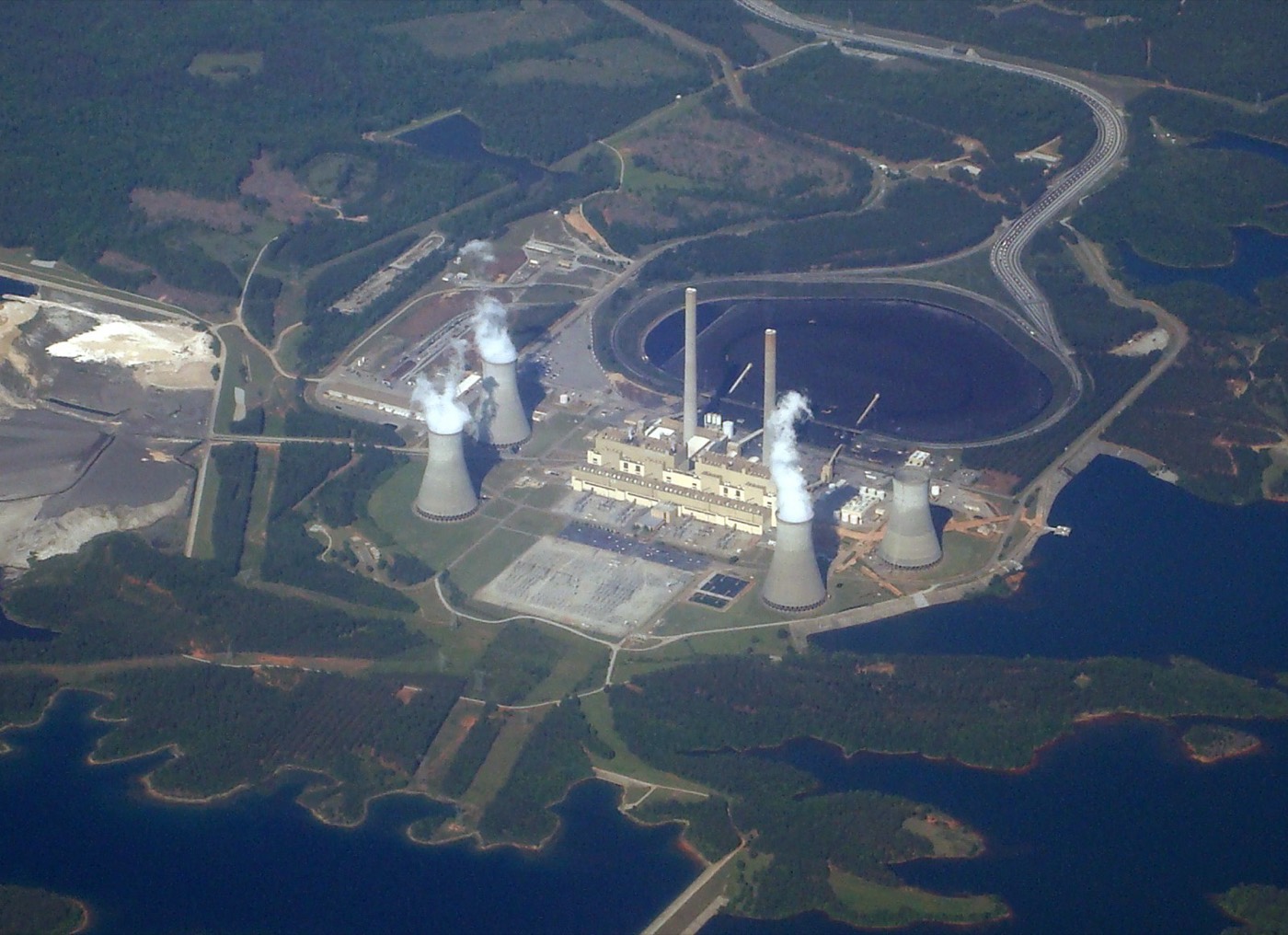
Southern Company, one of the largest US utilities, is the clearest example.
This is Plant Scherer, a coal-fired power station near Macon, Georgia, one of the plants now at the centre of this story. It was due to close, and now it is not.
Georgia Power, a Southern Company subsidiary, filed an integrated resource plan that cited an enormous jump in need. An integrated resource plan is simply a utility's multi-year plan for how it will meet expected demand.
Georgia Power's plan points to more than nine thousand four hundred megawatts of new electricity demand over the next ten years, mostly from data centres. The three coal plants now being kept open add up to about eight thousand two hundred megawatts of capacity between them.
Two states are involved, not one.
Plant Bowen and Plant Scherer sit in Georgia. Plant Daniel sits across the state line in Mississippi, where Mississippi Power's own lawyers told regulators that new data centres made keeping it open necessary.
Keeping these plants running is not free, or simple. It means burning a cleaner-burning fuel alongside the coal for part of the load.
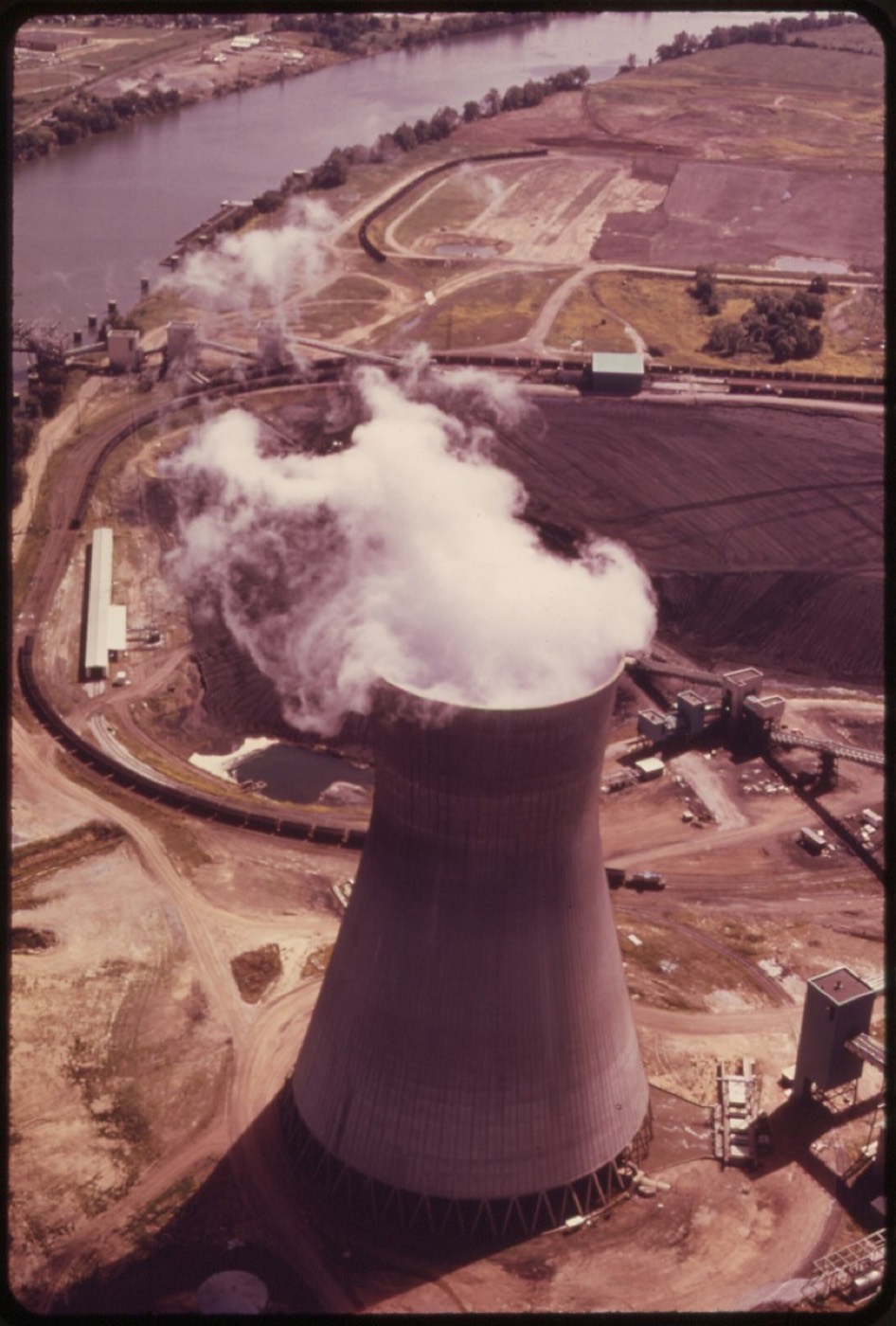
These are the cooling towers of a coal-fired power station, venting steam from the plant's turbines — the general kind of plant now being asked to run years longer than planned. Southern Company plans to co-fire its Georgia units with gas, burning both fuels together, from 2030 onward.
Laid out on a calendar, the delay looks like this.
Plant Scherer and Plant Daniel were originally due to close in twenty twenty-eight. Plant Bowen was due to close in twenty thirty-five. Co-firing with gas begins no later than twenty thirty, and the new retirement date for Bowen and Scherer is now as late as twenty thirty-nine.
Southern Company is not alone. Across the country, the same retreat from retirement is happening plant by plant.
At least fifteen US coal plants have had their retirements delayed or paused since January twenty twenty-five, according to DeSmog. Nearly three-quarters of them had been due to close within two years.
12. The same fight, a new century

So, here is the answer to the question this video opened with: forwards into something new, or backwards into the fuel that started it all?
Neither framing is quite right. AI did not create the contest for cheap, abundant power. It simply reopened a contest that started in seventeen twelve, in a flooded coal mine, when steam first multiplied what one fuel source could do.
Every energy transition in this video ran on the same rule: whoever secures the cheapest, most abundant power captures the growth that follows, and everyone else adapts around them.
The numbers to hold on to are these. British coal output rose more than twenty times over between 1700 and 1850. Global data-centre electricity demand is set to more than double within this decade.
Coal plants that were scheduled to close are staying open specifically to feed that demand, which is exactly the kind of decision Georgia Power and Southern Company are making right now.
This story keeps its own timeline too. From a flooded mine to a global projection, the same question runs through every date in this video.
The honest verdict is this: this is not a new fight. It is the oldest fight in industrial history, over who gets to burn the cheapest fuel first — just fought now with data centres instead of spinning mills.
Thomas Newcomen built a pump to keep a coal mine dry. Three centuries later, the same question — who gets cheap, abundant power — is deciding whether a data centre gets built, and whether a coal plant gets to retire. Forwards or backwards, that question has never gone away.
Sources and credits
Photo credits (Wikimedia Commons)
- Robert W. Scherer Power Plant (Plant Scherer), near Macon, Georgia - the coal plant named in the scope as having its retirement delayed for data-centre demand: Antennas, Public domain - https://commons.wikimedia.org/wiki/File%3ASchererplant.jpg
- Cooling towers of a coal-fired power station venting steam (John Amos Power Plant, Kanawha River, West Virginia): Schaefer, Harry, Photographer (NARA record: 8464469), Public domain - https://commons.wikimedia.org/wiki/File%3ACLOUD_OF_STEAM_RISES_FROM_ONE_OF_THE_MASSIVE_COOLING_TOWERS_OF_THE_JOHN_AMOS_POWER_PLANT_NEAR_NITRO_ON_THE_KANAWHA..._-_NARA_-_551184.jpg
- NSA Utah Data Center, Bluffdale, Utah - a real, large modern data centre exterior: User:ParkerHiggins (Electronic Frontier Foundation), CC0 - https://commons.wikimedia.org/wiki/File%3AEFF_photograph_of_NSA%27s_Utah_Data_Center.jpg


Primary sources
- World History Encyclopedia, 'The Steam Engine in the British Industrial Revolution' (worldhistory.org) - Newcomen's 1712 pump at Dudley, 5,000 gal/hr from a 153ft shaft; Watt's 1769 separate-condenser patent and quarter-of-the-coal saving.
- World History Encyclopedia, 'Why the Industrial Revolution Started in Britain' (worldhistory.org) - Britain producing 80% of Europe's coal by 1700; coalfield geography and enclosure/wages.
- Standard engineering-history references for James Watt's 1781 sun-and-planet rotary patent (Patent No. 1306, 25 Oct 1781), used alongside the 1769 condenser date from World History Encyclopedia.
- Industrial-Revolution statistics compilations (gitnux.org; ZipDo) and UC Davis economic-history course material (faculty.econ.ucdavis.edu, Gregory Clark, ECN 110B) - British coal output ~3M tons (1700) to 62.5M tons (1850); Britain producing about two-thirds of world coal output and about half of world cotton and iron output by 1850.
- Wikipedia, 'Industrial Revolution', footnoted estimate - cotton industry's share of value added: 2.6% (1760), 17% (1801), 22% (1831).
- International Energy Agency, 'Energy and AI' report, 2025 (iea.org/reports/energy-and-ai) - global data-centre electricity demand set to more than double by 2030, to around 945 TWh.
- International Energy Agency, 'Data centre electricity use surged in 2025...' news release (iea.org/news) - data-centre electricity demand up 17% in 2025, against about 3% growth for global electricity demand overall.
- Energy and Policy Institute, 'Southern Company extends life of coal plants to power data centers' (energyandpolicy.org) - Plant Bowen and Plant Scherer (Georgia) and Plant Daniel (Mississippi); original 2028/2035 retirement dates delayed to as late as 2039; co-firing with gas from 2030; 9,400+ MW new demand cited in Georgia Power's integrated resource plan; ~8,200 MW combined capacity of the three plants.
- DeSmog, '15 coal plant retirements delayed: AI data centers, Trump DOE orders', 12 Dec 2025 (desmog.com) - at least 15 US coal plants with delayed or paused retirements since January 2025, nearly 75% originally due to close within two years.
Not regulated financial advice.