
Learning Photography Course — 8. Photographing the World
Module 8 of the Learning Photography Course. Seven modules built a camera you understand. This one takes it outside and points it at the world — portrait, landscape, street, wildlife, macro, night, sport, architecture and events.
The idea that runs through the whole module: every genre is one hard constraint plus taste. A face is only a few centimetres deep. A landscape needs everything sharp at once. The street moment will not wait. Wildlife is far away. Macro depth of field is measured in millimetres. The night is short of light and the stars move. Sport is fast. Buildings need straight lines. Name the constraint and the settings mostly choose themselves — using five questions that work for any genre: what must be sharp, what is moving, how much light is there, how close can I get, and what do I owe the subject.
Worked numbers, with the assumptions stated: an 85 mm lens at f/1.4 focused at a metre and a half is sharp through about 26 mm in total, which is why you focus on the nearer eye. Hyperfocal distance for a 24 mm lens at f/11 is about 1.75 m. Zone focusing a 28 mm lens at f/8 puts everything from about 1.6 m to infinity in focus before the camera is raised. A ten-stop ND filter turns 1/60 s into about 17 seconds. At 1:1 magnification f/8 behaves like f/16, and depth of field is about a millimetre.
The night sky: why the old 500 rule allows visible star trails on a modern sensor, and the NPF rule devised by Frédéric Michaud of the Société Astronomique du Havre in 2010 — about 9.5 seconds against the 500 rule's 21 for the same 24 mm lens. The Bortle dark-sky scale, published by John Bortle in Sky & Telescope in February 2001.
And the law, quoted from the primary source and dated. The Metropolitan Police's own guidance that no permit is needed to photograph in public places and that officers cannot delete images. The ICO's statement that pictures taken for your own enjoyment are outside the UK GDPR — and why commercial use ends that. The Wildlife and Countryside Act 1981 on disturbing Schedule 1 birds at the nest, with 'recklessly' added in 2000. Legal is not the same as fair, and the module says so.
Educational documentary. Not financial or investment advice.
In these topics
Video notes
1. 1 How to read a genre
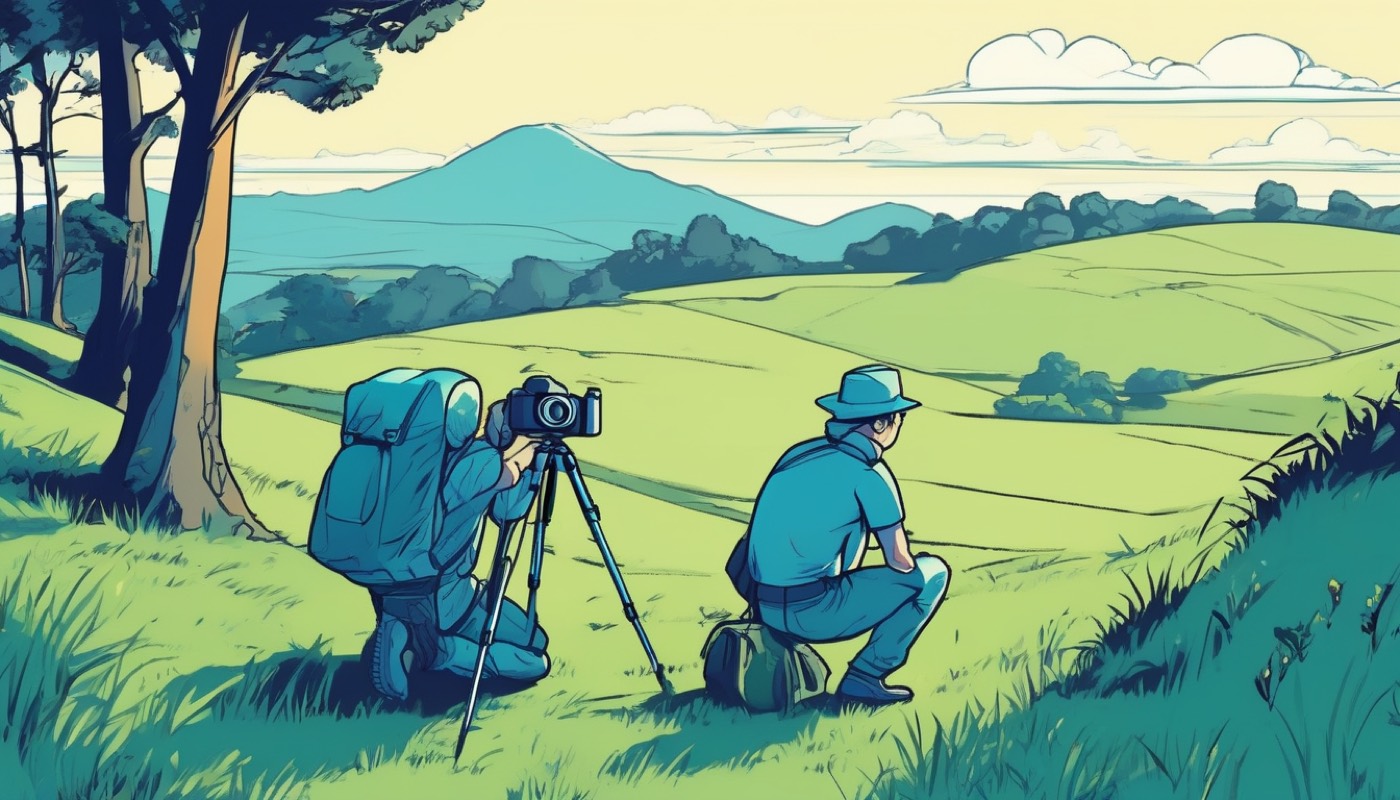
Seven modules have given you a camera you understand: exposure, lenses, light, and the decisions inside the frame. This module takes that camera outside and points it at the world, one kind of subject at a time.
Every genre looks like its own craft, with its own kit and its own vocabulary. Underneath, every genre is one hard constraint plus taste.
Portraits are constrained by a face that is only a few centimetres deep. Landscapes by the need for everything to be sharp at once. Street by the fact that the moment will not wait. Wildlife by distance. Macro by a depth of field measured in millimetres. Night by the shortage of light. Sport by speed. Architecture by lines that must stay straight. Taste is everything you choose once that constraint is dealt with.
So the first job in any genre is not choosing settings. It is naming the constraint. Get that right and the settings mostly choose themselves, using the controls you already know.
For the rest of this module, every genre goes through the same five questions. What must be sharp? What is moving? How much light is there? How close can I get? And what do I owe the subject? Hold on to that checklist. It works for genres this module never mentions.
2. 2 Portrait
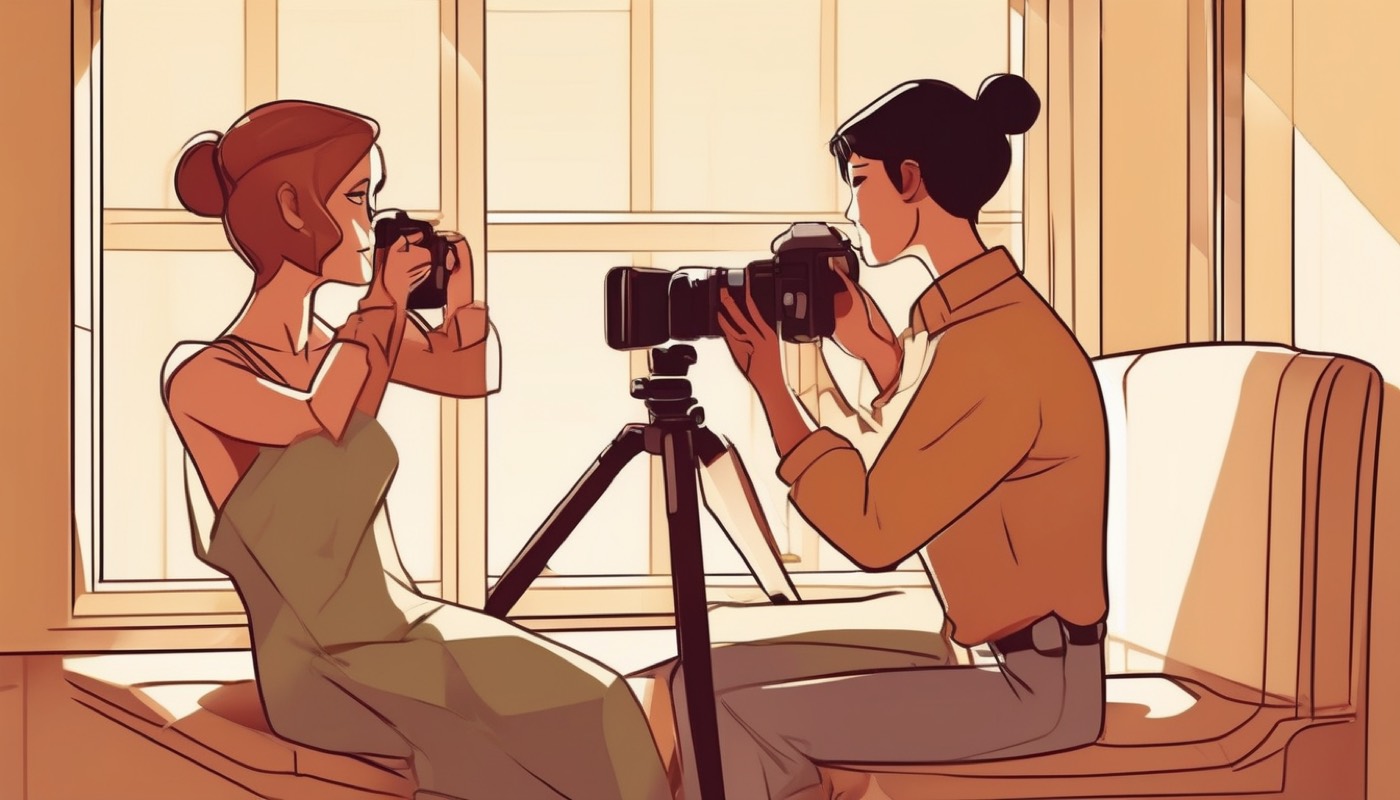
The hard constraint in a portrait is depth. A face is a three-dimensional object only a few centimetres deep, and a wide aperture gives you a plane of focus thinner than the face.
Here is the arithmetic, using the usual full-frame assumptions. An eighty-five millimetre lens at f one point four, focused on a face a metre and a half away, is sharp through only about twenty-six millimetres in total. The tip of the nose to the ears is several times that.
That is why the rule in portraiture is to focus on the nearer eye. The eyes are where a viewer looks first, and a portrait with the ear sharp and the eye soft reads as a mistake immediately. If you want both eyes sharp in a three-quarter view, stop down. Going from one point four to four roughly triples the depth.
Focal length changes a face, but not for the reason usually given. The lens does not flatten or distort. Distance does. To fill the frame with a wide lens you must stand close, and at close range the nose is proportionally much nearer to you than the ears, so it looks larger. A longer lens lets you stand back, where those proportions even out. Choose the distance for the face, then choose the lens that frames it from there.
Light for skin follows module six. Large, soft sources close to the subject are forgiving; small hard sources show texture. Direction is character: light from the side carves the face and reads as serious, light from the front flattens it and reads as open.
And the part no setting covers. A portrait is made with a person, not at one. Talk to them. Tell them what you are doing and why. People who know what you want look relaxed; people left guessing look like people waiting for a photograph to be over.
3. 3 Landscape
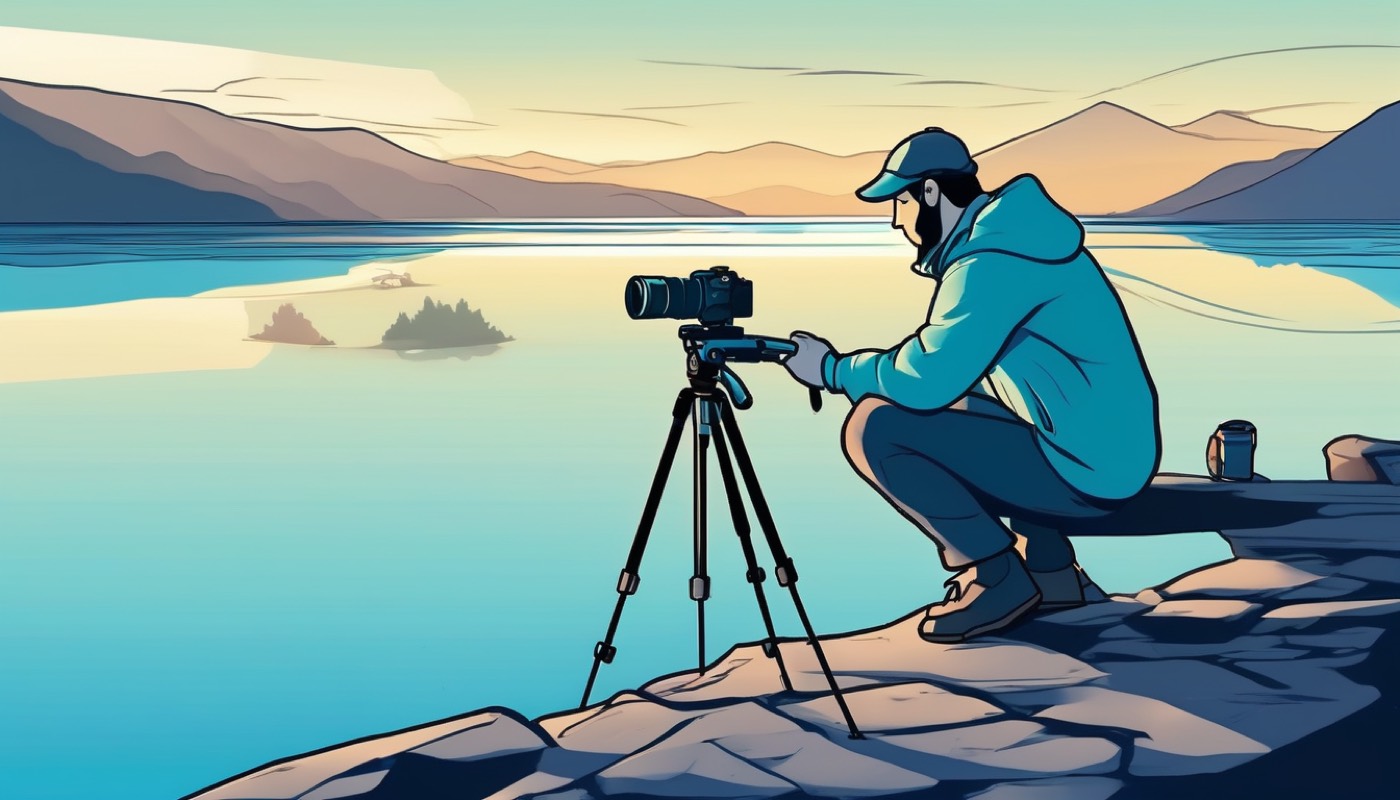
Landscape inverts the portrait problem. The constraint is that everything must be sharp at once, from the rock at your feet to the mountain on the horizon.
The classical answer is hyperfocal distance: the focus point that puts infinity at the far edge of acceptable sharpness. The formula is the focal length squared, divided by the f-number times the circle of confusion. For a twenty-four millimetre lens at f eleven, that comes to about one point seven five metres. Focus there and everything from about ninety centimetres to infinity is acceptably sharp.
That works when your nearest subject is a metre away. When a flower is thirty centimetres from the lens, no single focus point will hold it and the mountain. The modern answer is focus stacking: several frames focused near, middle and far, blended in software. Use hyperfocal when the foreground allows it and stacking when it does not — and stopping down to f twenty-two instead is the one choice that loses, because diffraction softens the whole frame to rescue the edges.
Three filters still matter, because software cannot fully fake them. A polariser cuts reflections from water and foliage and darkens blue sky, most strongly at right angles to the sun. A neutral density filter cuts light evenly so the shutter can stay open. A ten-stop filter passes one part in one thousand and twenty-four, so a sixtieth of a second becomes about seventeen seconds, and moving water turns to mist. A graduated filter darkens the sky while leaving the land alone.
Long exposures bring a practical problem: wind. A tripod on soft ground in a breeze is a vibrating post. Hang your bag from the centre column, keep the legs short, and use a remote release or a two-second timer.
And the truth about landscape that equipment does not solve. The light and the weather are the subject. The same valley at noon and in the half hour after a storm are different photographs, and the second one comes from turning up, often more than once.
4. 4 Street
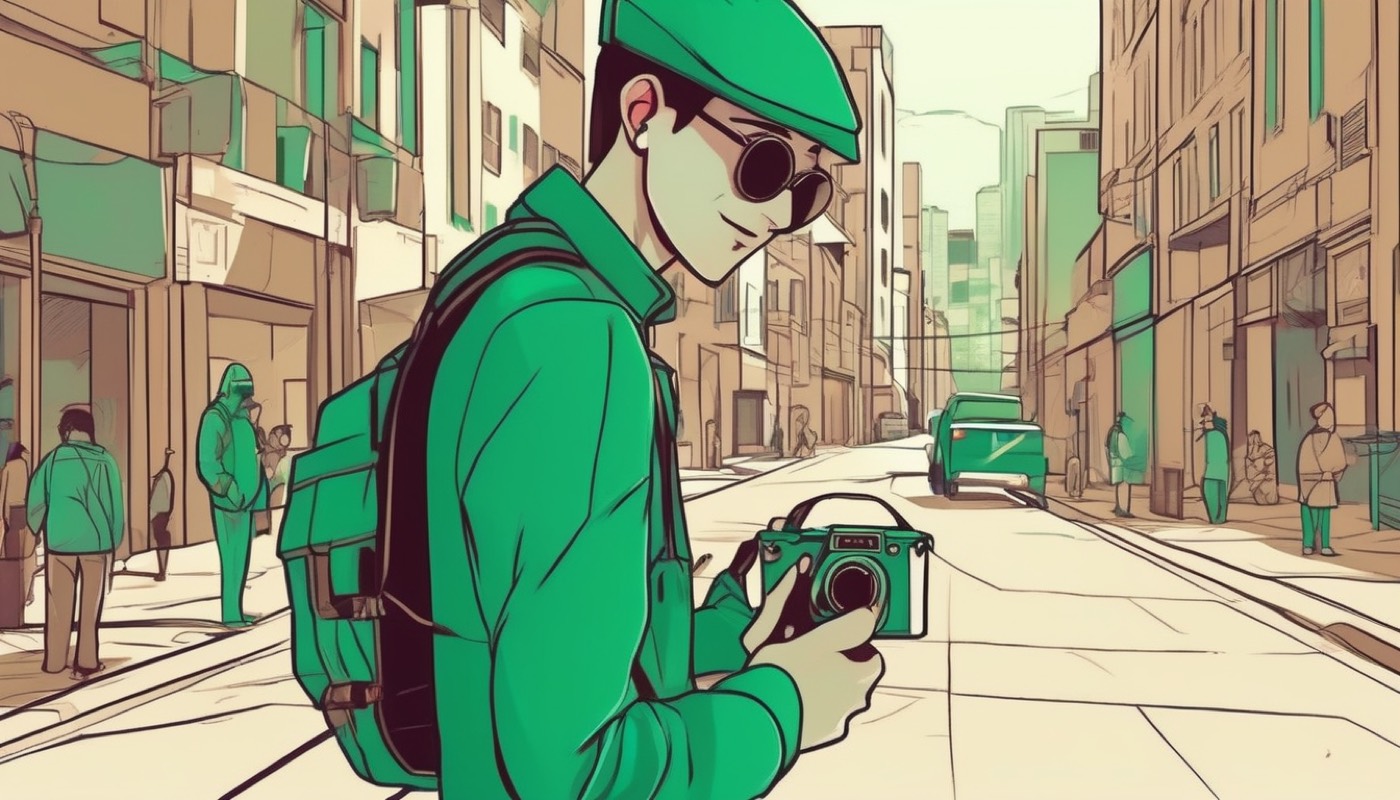
Street photography's constraint is that the moment will not wait for you to focus.
The answer is older than autofocus: zone focusing. Set a focus distance and an aperture so that a band of the street is already sharp, then stop thinking about focus. A twenty-eight millimetre lens at f eight has a hyperfocal distance of about three point three metres. Focus there and everything from about one point six metres to infinity is sharp before you raise the camera. Pair it with a shutter speed of about a two-hundred-and-fiftieth to freeze someone walking, and let auto ISO carry the rest.
Working small helps more than any setting. A small camera held at chest height is ignored; a large lens raised to the eye changes how everyone in front of it behaves.
And working legally. In the United Kingdom, taking a photograph in a public place is not an offence. The Metropolitan Police's own guidance says that members of the public and the media do not need a permit to film or photograph in public places, and that officers do not have the power to delete digital images or destroy film. That is London's force stating its own position, and it is worth knowing exactly.
For data protection, the Information Commissioner's Office says that taking pictures for your own enjoyment is a purely personal activity outside the UK GDPR. The boundary is commercial use. The moment the pictures are for a business, that exemption is gone.
Outside the UK, assume nothing. Some countries give people a legal right over their own image — France is the example usually given — so check before you travel.
Anticipation is the actual skill. Find a good background, a patch of light, a doorway, and wait for someone to walk into it. That is not cheating; it is how a large share of the best street photographs were made.
Which leaves ethics, and the law does not settle them. Legal is not the same as fair. A person at their worst moment is not a subject just because they are in public. If someone objects, the photograph is rarely worth the argument, and deleting it costs you nothing but a frame.
5. 5 Wildlife
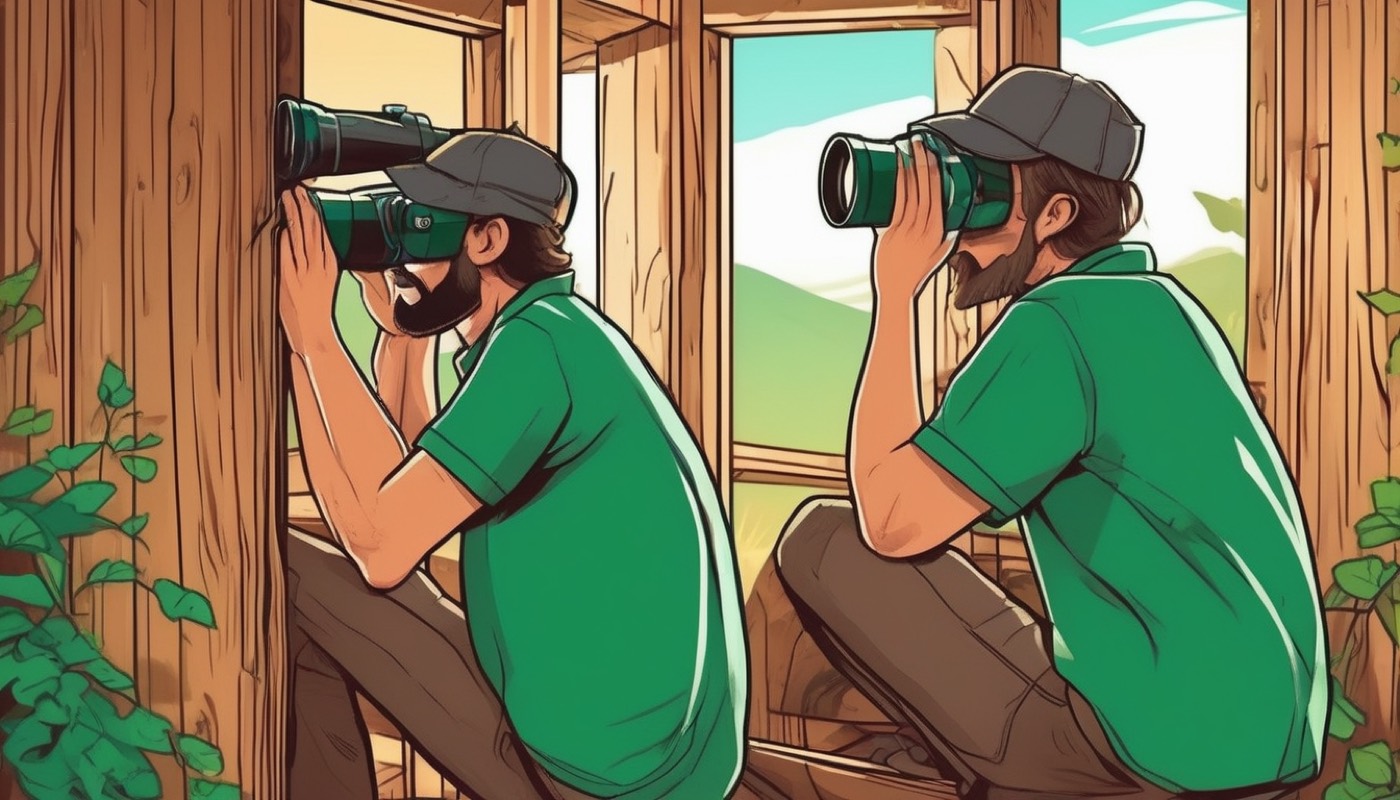
Wildlife's constraint is distance. The animal decides how close you get, and usually the answer is not very.
Reach costs weight, money and light. A six-hundred-millimetre lens at f four is a very large, very expensive object; the same focal length at f six point three is lighter and more affordable, and costs you over a stop of light. A teleconverter adds reach and takes light with it, as module five showed.
Shutter speed follows the subject. As a starting point, photographers use around a two-thousandth of a second for birds in flight, and faster for small birds with rapidly beating wings. These are conventions, not measured limits; start there and check the frames.
Use continuous autofocus with the widest tracking area your camera handles well, and animal eye detection if it has it. Shoot in short bursts rather than holding the button down, because a full buffer at the moment the bird takes off is the most common way to miss the picture.
Then fieldcraft — the part that is not photography at all. Knowing where an animal will be at dawn, approaching slowly from downwind, staying low and still, and using a hide. Most good wildlife pictures are won before the camera comes out.
And a legal point every British wildlife photographer needs. Under the Wildlife and Countryside Act nineteen eighty-one, it is an offence to intentionally or recklessly disturb a bird listed on its Schedule 1 while it is building a nest, or is at a nest with eggs or young. "Recklessly" was added in two thousand. Photography at the nest is something a licence can be issued for; without one, getting close to a Schedule 1 nest for a picture is exactly what the Act describes. The welfare of the animal comes before the photograph, every time.
6. 6 Macro
Macro's constraint is that depth of field is measured in millimetres.
Start with magnification. One-to-one means the subject is the same size on the sensor as it is in life: a ten-millimetre insect covers ten millimetres of sensor. Working distance is how far the front of the lens is from the subject, and a longer macro lens gives you more of it, which matters when the subject can fly away or when your own shadow falls across it.
Close focus has a cost the aperture ring does not show. The effective aperture is the marked f-number multiplied by one plus the magnification. At one-to-one, f eight behaves like f sixteen — two stops less light than the ring says. Modern cameras meter through the lens so the exposure takes care of itself, but the shutter speed you get will surprise you.
And the depth. At one-to-one and f eight, with the usual full-frame assumptions, the zone of sharpness is about one millimetre deep. An insect's eye can be sharp and its antennae already soft.
So light becomes the problem. Stopping down for depth costs light you do not have, and a slow shutter at that magnification records every movement. The usual answer is flash, softened and held close: a small diffused flash near the subject is effectively a large soft source, it freezes motion, and it lets you stop down.
When one millimetre is not enough, focus stacking again, done in the field. Take a series of frames while moving focus in tiny steps, or move the whole camera on a focusing rail, and blend them afterwards. Some cameras will step the focus for you. A still subject on a still day is the condition; wind is the enemy.
7. 7 Night and astro
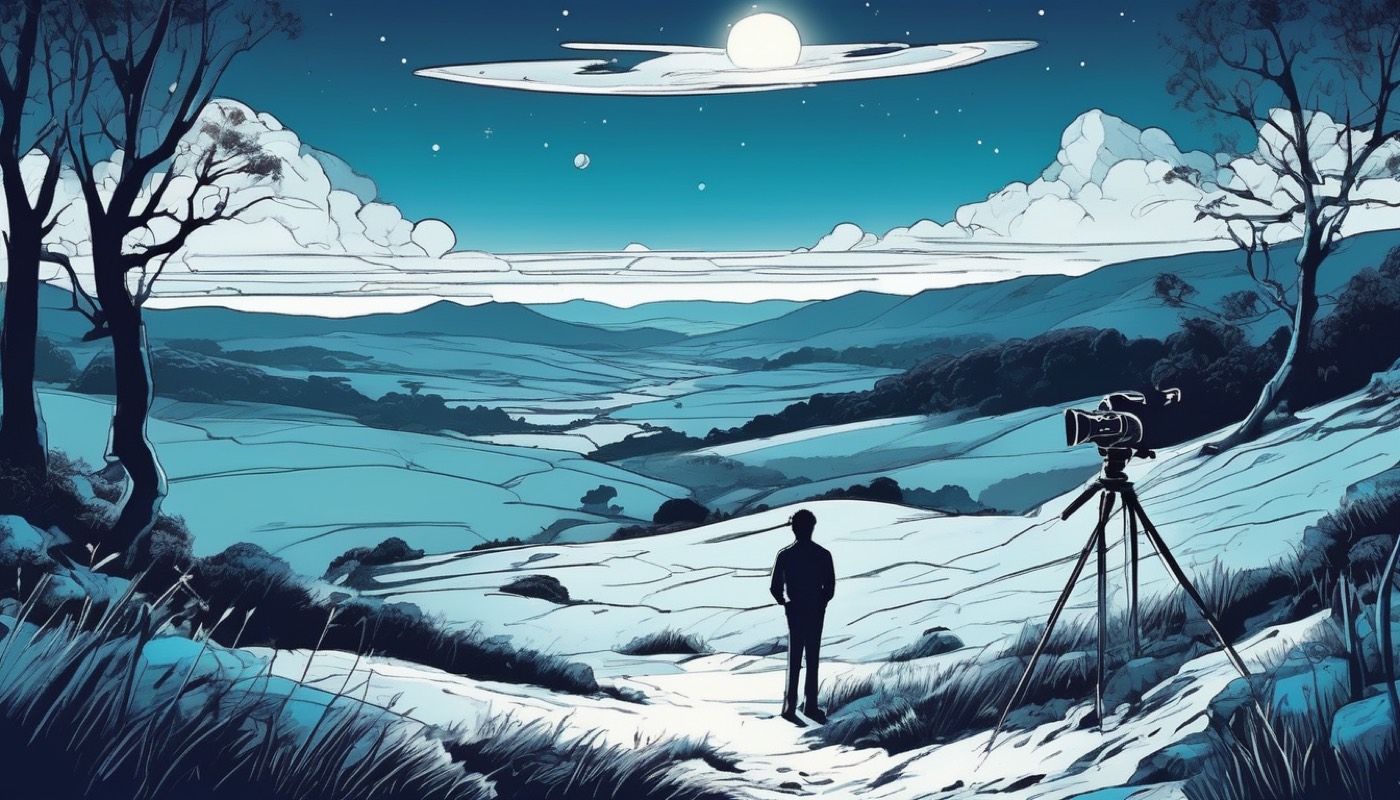
Night's constraint is the shortage of light, and with the stars there is a second one: they move.
The Earth turns, so any exposure long enough to gather starlight is also long enough for stars to trail. The old rule of thumb is the five hundred rule: five hundred divided by the focal length, adjusted for crop, gives the longest exposure in seconds. For a twenty-four millimetre lens on full frame, that is about twenty-one seconds.
It dates from film and modest prints, and on a modern high-resolution sensor it allows trails you can see. The better replacement is the NPF rule, devised by Frédéric Michaud of the Société Astronomique du Havre in two thousand and ten. Its simplified form uses the aperture, the size of the sensor's photosites in micrometres, and the focal length. For the same twenty-four millimetre lens at f two point eight on a sensor with four point three micrometre photosites, it gives about nine and a half seconds — less than half the old answer.
Focusing on a star is its own small skill, because autofocus has nothing to lock on to and the infinity mark on many lenses is not true infinity. Switch to manual, magnify the live view on the brightest star you can find, and turn the ring until it is the smallest point it can be.
To get more signal than one exposure allows, stack many short frames and average them, which reduces noise without trailing. A star tracker turns the camera with the sky so a single exposure can run for minutes. And dark frames — exposures taken with the lens cap on, at the same settings and temperature — record the sensor's own noise so it can be subtracted.
Then there is the sky itself. In two thousand and one John Bortle published a nine-step scale in Sky and Telescope for how dark a site is, from class one, the darkest skies on Earth, to class nine, the inner city. Planning a night means the scale, the phase of the moon, and the weather, in that order, long before you leave the house.
8. 8 Sport and action
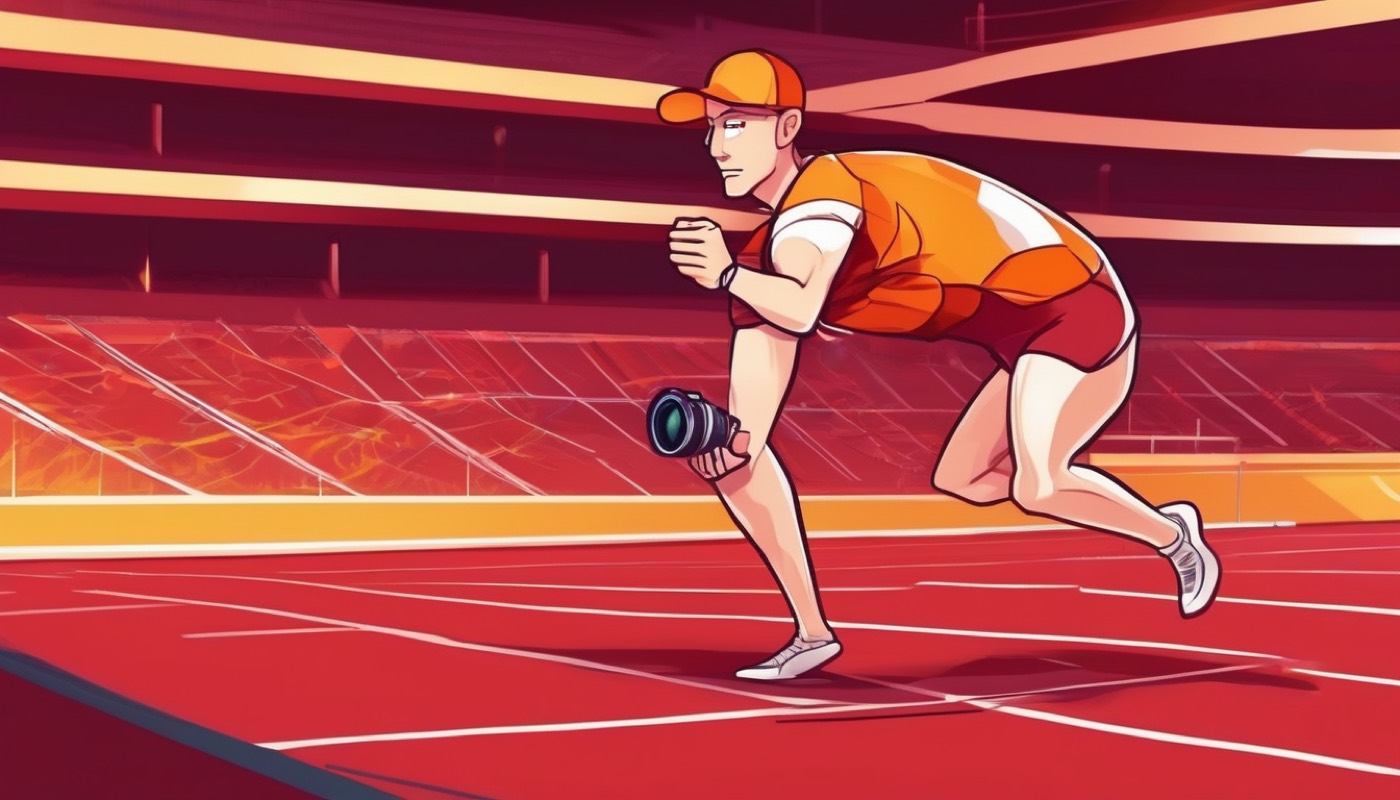
Sport's constraint is speed, and there are two opposite answers to it.
Freezing stops the action dead: a shutter around a thousandth of a second for most sport, faster for a racket or a golf club. Panning does the reverse. Follow the subject with the camera at a slow shutter, somewhere around a thirtieth to a sixtieth of a second as a starting point, and the subject stays reasonably sharp while the background streaks into speed. Freezing records what happened; panning records how fast it happened.
Autofocus is only half the method. The other half is reading the game. Pre-focus on the place the action will arrive — the goalmouth, the finish line, the net — and wait for the play to come to you. A photographer who understands the sport is standing in the right place before the moment; one who does not is chasing it.
Indoor sport is the hardest light in photography. Sports halls are dim to a camera, often lit by sources that flicker, and the action needs a fast shutter. Something has to give, and it is usually ISO. Modern sensors handle high ISO far better than they did, and a sharp noisy frame beats a clean blurred one. A camera setting that reduces flicker, where available, removes the banding and the frame-to-frame changes in colour.
And a warning about bursts. A fast frame rate feels like insurance. It is not. At ten frames a second there is still a tenth of a second between frames, and the ball meeting the bat can happen in that gap. Shoot for the moment, not the burst.
9. 9 Architecture and events
Architecture's constraint is lines that must stay straight.
Tilt a camera upwards to fit a tall building in and the verticals converge, as module seven explained — perspective doing exactly what it does. There are three answers. Step back and use a longer lens, keeping the camera level. Use a tilt-shift lens, whose shift movement slides the image up without tilting the camera. Or correct it in software afterwards, which works if you leave room at the edges, because correction crops.
Interiors add mixed light: daylight from windows, warm bulbs, cool tubes, all in one room. Choose which source sets the white balance and let the others fall where they fall, or light the room yourself. And the brightness range of a room with a sunlit window is usually more than one exposure can hold, so bracket and blend.
Events are architecture's opposite: nothing stays still and nothing repeats. The discipline there is a shot list, agreed in advance. The couple arriving. The speech. The group photograph. The people who paid for it. A missed candid moment is forgiven; a missed shot of the grandparents is not.
Coverage means wide, medium and close of each moment, and it means not missing the obvious while chasing the clever.
And the lesson that closes this module, because it applies to every genre in it. You rarely get the light you wanted. You work in the light you were given: you move, you wait, you change the angle, you change the lens, or you change the picture you were trying to make.
That is where the course turns. The next module goes back to where photography began, to film, and to what a chemical process teaches about every photograph since.
Sources and credits
Primary sources
- Information Commissioner's Office, 'A guide to the data protection exemptions', page dated 8 May 2025. Quoted for the purely personal or household activity exemption and its example of 'taking pictures for your own enjoyment'.
- Wildlife and Countryside Act 1981, Schedule 1 disturbance offence, and the addition of 'recklessly' by the Countryside and Rights of Way Act 2000; not read in legislation.gov.uk today. Penalties and the licensing body in each nation are NOT narrated.
- Société Astronomique du Havre, 'La règle NPF', sahavre.fr —. Rule devised by Frédéric Michaud, 2010; simplified form t = (35N + 30p) / f used, and said to be the simplified form.
- John E. Bortle, 'Introducing the Bortle Dark-Sky Scale', Sky & Telescope, February 2001.
Not regulated financial advice.