
Stablecoins: The Backbone of a New Payment System?
A freelancer in the Philippines watches a US dollar payment land on her phone in seconds, for a fraction of a cent. This video asks whether that is a genuine advance in how money moves, or the same dollar in new packaging, and answers with what actually backs the token and why most ordinary businesses still are not using it.
A stablecoin is a token issued on a public blockchain, redeemable one-for-one for a dollar, built to hold its value rather than float the way bitcoin does. Under the GENIUS Act, signed into law on 18 July 2025, a US issuer must back every token at least one-for-one with a short list of permitted reserves: US currency, insured bank deposits, Treasury bills maturing in 93 days or less, overnight repo, and government money-market funds - no corporate debt, no equities - published monthly and examined by an accounting firm. The same Act bars an issuer from paying its holders any interest: the Treasury income the reserves earn stays with the issuer.
The video traces the category's history: early attempts that failed to hold their peg, Tether's October 2014 launch and its 2021 CFTC settlement over reserve claims that were not true for years, Circle and Coinbase's 2018 USDC as an audited rival, and Circle's June 2025 NYSE listing. It covers the one case where the backing was missing entirely: Terra's algorithmic stablecoin UST, which lost its peg in May 2022 and fell to 12 cents within nine days, with no real reserve ever behind it.
It explains why a stablecoin can settle in seconds - skipping the correspondent-banking chain and card networks entirely, not just using a faster token - and who has actually adopted it: crypto exchanges settling trades, Visa reporting a $20 billion annualised stablecoin settlement run rate in 2026, and Western Union's own USDPT stablecoin, launched on Solana in May 2026. Then it covers who has not: a Cleveland Fed survey of 148 firms found only about 5% had any plan to adopt stablecoins, citing satisfaction with existing methods, unfamiliarity, and no client demand - plus the same two structural gaps the video names throughout, no interest and no deposit insurance.
It closes on the Federal Reserve's own rulebook: two rules proposed on 24 September 2026 under the GENIUS Act, open for 60 days of public comment, still being finished as this video is made.
Educational documentary. Not financial or investment advice.
In these topics
Chapters
- A dollar that moves like a text message
- What a stablecoin actually is
- The one-for-one rule
- Where the interest goes
- The first attempts
- Tether and the trust problem
- USDC and the audited rival
- When a peg breaks
- The rails replacing the banks
- Who has already switched
- The 95 percent who haven't
- The Fed writes the rulebook
- A new layer, still finding its floor
Video notes
1. A dollar that moves like a text message

A freelancer in the Philippines is watching her phone. A client in the United States has just sent her payment, and instead of waiting days for it, she watches it land in her account in seconds, for a fraction of a cent in fees.
A standard international bank transfer still moves through a chain of banks passing the payment hand to hand, and can take two to five business days to clear, with a fee charged at more than one point along the way. What this freelancer just watched happen skipped all of that: a dollar arrived, nearly instantly, for almost nothing.
That single moment is the whole question this video is going to answer.
Is this a genuine advance in how money moves around the world, or is it the same dollar as always, wrapped in new technology, carrying new risks nobody has fully priced in yet? By the end, you will know exactly what backs the token that just landed on her phone, and why most ordinary businesses are still not using it.
2. What a stablecoin actually is

The token that arrived on that phone is called a stablecoin, and the name tells you its entire purpose: a digital token designed to hold a steady value, usually one US dollar, rather than rising and falling the way an investment does.
A stablecoin is a token issued on a public blockchain — a shared, public ledger that anyone can check, where every transaction is recorded permanently and nobody owns the copy everyone agrees on. Unlike a bank's own private ledger, a public blockchain lets a token move between two strangers anywhere in the world without a bank in the middle approving the transfer.
Holding its value at one dollar is called holding its peg, and that single design choice separates a stablecoin from almost every other kind of token in this space.
Bitcoin was built to let its value float freely, rising and falling with demand, because it was designed as a new kind of asset, not a means of payment. A stablecoin is built for the opposite job: it is redeemable one-for-one for a dollar, and its entire design goal is to never move.
That difference in purpose is why a stablecoin can do something bitcoin was never meant to do: settle an everyday payment without anyone worrying what it will be worth tomorrow.
3. The one-for-one rule


A token that claims to always be worth a dollar is only as good as what stands behind it, and in the United States that backing is no longer just a company's word.
The GENIUS Act is the law President Trump signed on the eighteenth of July twenty twenty-five. Under it, a payment stablecoin issuer must back every token it issues at least one-for-one with permitted reserves — the specific assets it is allowed to actually hold against the tokens in circulation.
Those permitted reserves are a short list, chosen to be boring on purpose.
An issuer may hold US currency, deposits at insured banks, and short-dated Treasury bills maturing in ninety-three days or less. It may also hold overnight repo — a repurchase agreement, a short-term loan secured against Treasury securities and bought back the next day. And it may hold shares in government money-market funds, funds that hold short-term debt and are used much like a bank account. No corporate debt. No shares in a company.
That list is checked, not just declared.
Issuers must publish what their reserves actually hold every month, and a registered accounting firm has to examine that monthly report before it goes out. The issuer's own chief executive and chief financial officer must personally certify that report is accurate to their regulator.
Writing that reserve rule into federal law took a signature.
4. Where the interest goes

A reserve full of Treasury bills and bank deposits does not just sit there — it earns interest, the way any such holding would. The GENIUS Act decides, by law, exactly who gets to keep that money.
Section four of the GENIUS Act bars a stablecoin issuer from paying its holders any interest or yield at all, whether in cash, in more tokens, or in any other form. The Treasury income the reserve assets earn belongs entirely to the issuer, not to the person holding the stablecoin.
That single rule is what makes a stablecoin behave nothing like a bank account, however similar the two might look on a phone screen.
A bank deposit pays you interest, and if the bank fails, the government's deposit insurance replaces your money up to a set limit. A stablecoin pays no interest at all, and if its issuer fails, there is no equivalent insurance standing behind the token in your wallet.
Keep that pairing in mind: no interest, no insurance. This video comes back to it later, because it is the single biggest reason adoption has not caught on everywhere at once.
5. The first attempts

Long before anyone called this category a stablecoin, people were already trying to build a digital dollar on top of newly invented crypto networks.
The earliest attempts tried to hold a peg using only other volatile crypto tokens as backing, with no real-world cash or government debt anywhere in the structure. Most of them failed to hold their value for long, and trading platforms quietly dropped them once that became obvious, because a peg backed only by other things that can also crash is not much of a peg at all.
What finally worked was a far more old-fashioned idea: hold actual dollars, not more crypto, behind every token issued.
6. Tether and the trust problem

The project that made that old-fashioned idea stick was called Tether, and it is still the largest stablecoin in use today.
Tether's dollar token launched in October twenty fourteen, having started that same year under a different name, Realcoin. Its creators settled on the fiat-reserve model — a reserve of real currency, not other crypto — that the rest of the industry eventually copied. For years afterward, Tether told the public its tokens were fully backed by dollars, one for one.
That claim did not survive contact with a regulator.
The CFTC found that for most of the period from June twenty sixteen to February twenty nineteen, Tether's reserves were not actually backed one-for-one the way the company had said, and that its claimed routine audits had never taken place. In October twenty twenty-one, Tether paid a forty-one million dollar penalty and agreed to stop making the claim.
That settlement is a large part of why today's rules exist at all: a token claiming to be fully backed, and a regulator finding that it was not, is exactly the gap the GENIUS Act's monthly, audited reporting was written to close.
7. USDC and the audited rival

While Tether was fighting that reputation, a rival stablecoin was built from the start to answer the trust question differently.
Circle and Coinbase co-founded a consortium called Centre and launched USDC in the autumn of twenty eighteen, positioning it from day one as an audited, transparency-first alternative to Tether's reserve claims. The pitch was simple: publish what backs the token, rather than asking people to take the issuer's word for it.
Transparency, it turned out, was also good for business.
Circle, USDC's issuer, listed on the New York Stock Exchange on the fifth of June twenty twenty-five, pricing its public offering at thirty-one dollars a share and opening trading more than double that price. A stablecoin issuer going public on the same exchange as any ordinary company was, itself, a kind of answer to the question of whether this industry was here to stay.
8. When a peg breaks

Not every stablecoin held its one-dollar peg the way USDC and Tether, for all their troubles, ultimately did. One collapse in particular is the reason today's rules are built the way they are.
Terra's stablecoin, UST, was algorithmic rather than asset-backed. It held no reserve of real dollars or Treasury bills at all, and instead relied on a second, freely trading token called Luna to try to hold its peg through market arbitrage. Demand for UST had been propped up by a lending protocol offering a reported twenty percent annual yield, and that protocol saw heavy withdrawals in the days before everything gave way.
What happened next took about a week.
UST lost its one-dollar peg starting on the seventh of May twenty twenty-two. Within nine days it had fallen to twelve cents. Luna, the companion token meant to absorb that shock, collapsed alongside it. UST's market capitalisation, worth more than eighteen billion dollars just days earlier, was effectively wiped out.
Every reserve rule this video has described so far is a direct answer to what Terra did not have: real cash and real Treasury debt, sitting behind the token, examined by somebody other than the issuer.
9. The rails replacing the banks

A one-dollar peg explains what a stablecoin is worth. It does not explain why it can move so much faster than the dollar in a bank account, and that answer has nothing to do with the token at all.
An ordinary cross-border bank transfer passes through a chain: the sender's bank, one or more correspondent banks, and finally the receiving bank. A correspondent bank exists purely to pass payments between two other banks that have no direct relationship, and each link in that chain takes its own time and its own cut. A stablecoin payment skips that entire chain, settling as a single entry on a shared public ledger that both sides can already see.
Removing the chain, not just changing the token, is what makes the speed possible.
There is no card network taking a percentage, and no correspondent bank holding the payment overnight while it clears. The ledger updates once, publicly, and the payment is simply done — which is also why a transfer that used to take days now takes seconds.
That is the actual mechanism behind the freelancer's phone, from chapter one: not a faster bank, but no bank in the middle at all.
10. Who has already switched

That speed has not gone unnoticed by the companies that move money for a living, even while most ordinary businesses have yet to touch it.
Visa reported its stablecoin settlement volume crossing a twenty billion dollar annualised run rate in twenty twenty-six. That was more than fifteen times higher than the same period a year earlier, and more than one hundred and sixty stablecoin-linked card programmes were live on its network worldwide by that point.
Crypto exchanges were the first real customers for this kind of rail, and remittance firms followed once the economics became obvious.
Crypto exchanges settle enormous volumes of trades between each other in stablecoins rather than moving bank wires back and forth for every trade, because a stablecoin settles in seconds where a wire takes days. Western Union, a hundred-and-seventy-five-year-old money transfer company, launched its own dollar stablecoin on the Solana network in May twenty twenty-six. It is called USDPT, and it is aimed first at settling payments faster across Western Union's own worldwide network of agent locations.
These are companies whose entire business is moving money, which is exactly why they moved first.
11. The 95 percent who haven't


Crypto exchanges and payment giants are not, however, most of the economy — and when researchers asked ordinary businesses the same question, the answer looked completely different.
The Federal Reserve Bank of Cleveland surveyed one hundred and forty-eight firms in its own district. Only about eight of them — roughly five percent — had any plan to use stablecoins. The other ninety-five percent had no such plan at all.
This is the Cleveland building where that survey was carried out.
The Federal Reserve Bank of Cleveland is one of twelve regional reserve banks that make up the US central banking system. Its survey became one of the clearest pictures yet of how ordinary companies actually feel about this technology, rather than how enthusiastic its backers are.
The firms that said no gave three reasons, and none of them was fear of the technology failing.
Firms told the Cleveland Fed they were already satisfied with their existing payment methods, that they were simply unfamiliar with how stablecoins work, and that neither their clients nor their suppliers had ever asked to be paid that way. Remember the pairing from chapter four — no interest, and no deposit insurance — because that same survey named both as real disadvantages against a plain bank account.
12. The Fed writes the rulebook


Every rule this video has described so far was written into one law. What happens next is a regulator turning that law into something firms can actually apply for.
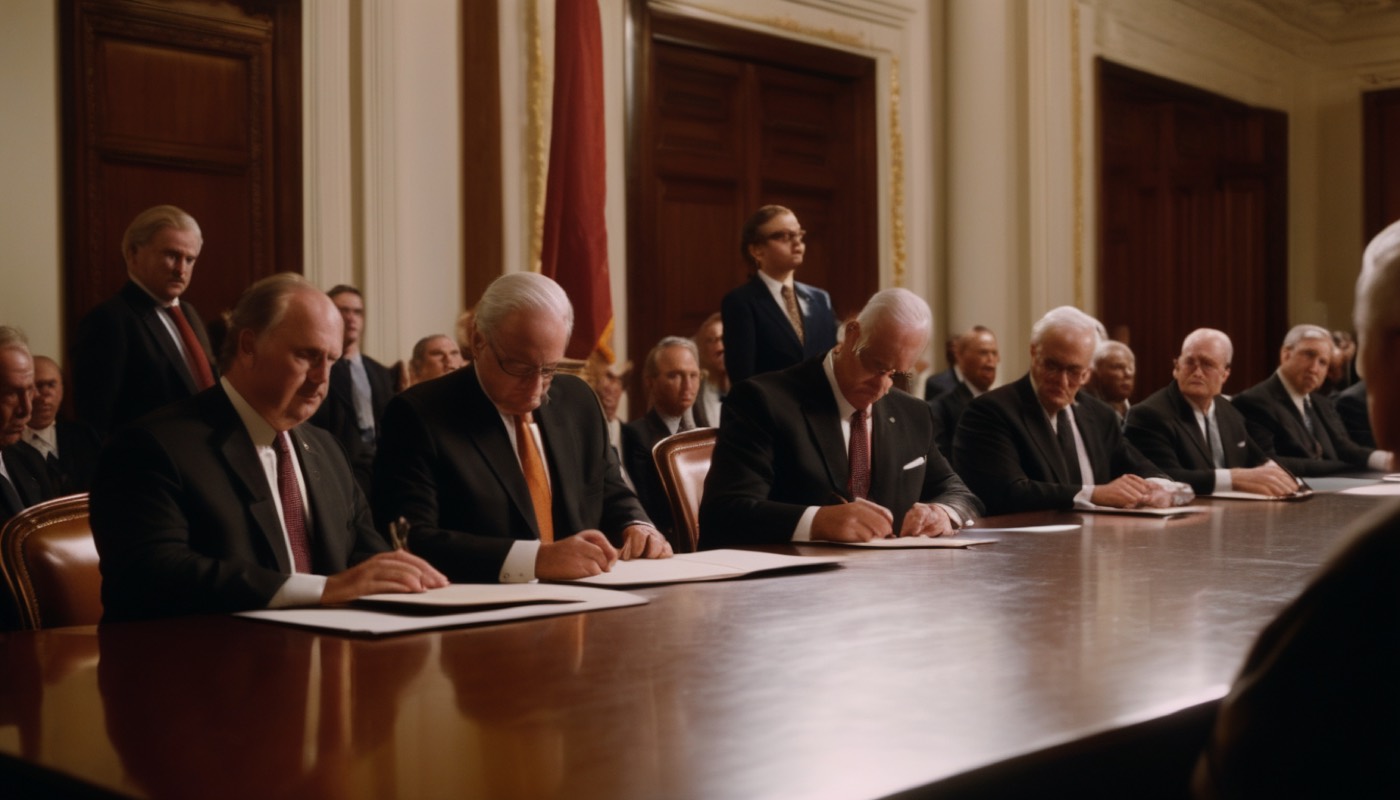
This is the moment the GENIUS Act became law: President Trump signing it at the White House on the eighteenth of July twenty twenty-five, the starting point for every reserve rule and every interest ban this video has covered.
Turning a signed law into working oversight took the Federal Reserve more than a year.
On the twenty-fourth of September twenty twenty-six, the Federal Reserve Board proposed two separate rules to carry out its part of the GENIUS Act. The first sets the actual reserve and capital standards for issuers it supervises. The second lays out how a bank's subsidiary applies for approval to issue a stablecoin at all, including the business plan and financial information it has to submit.
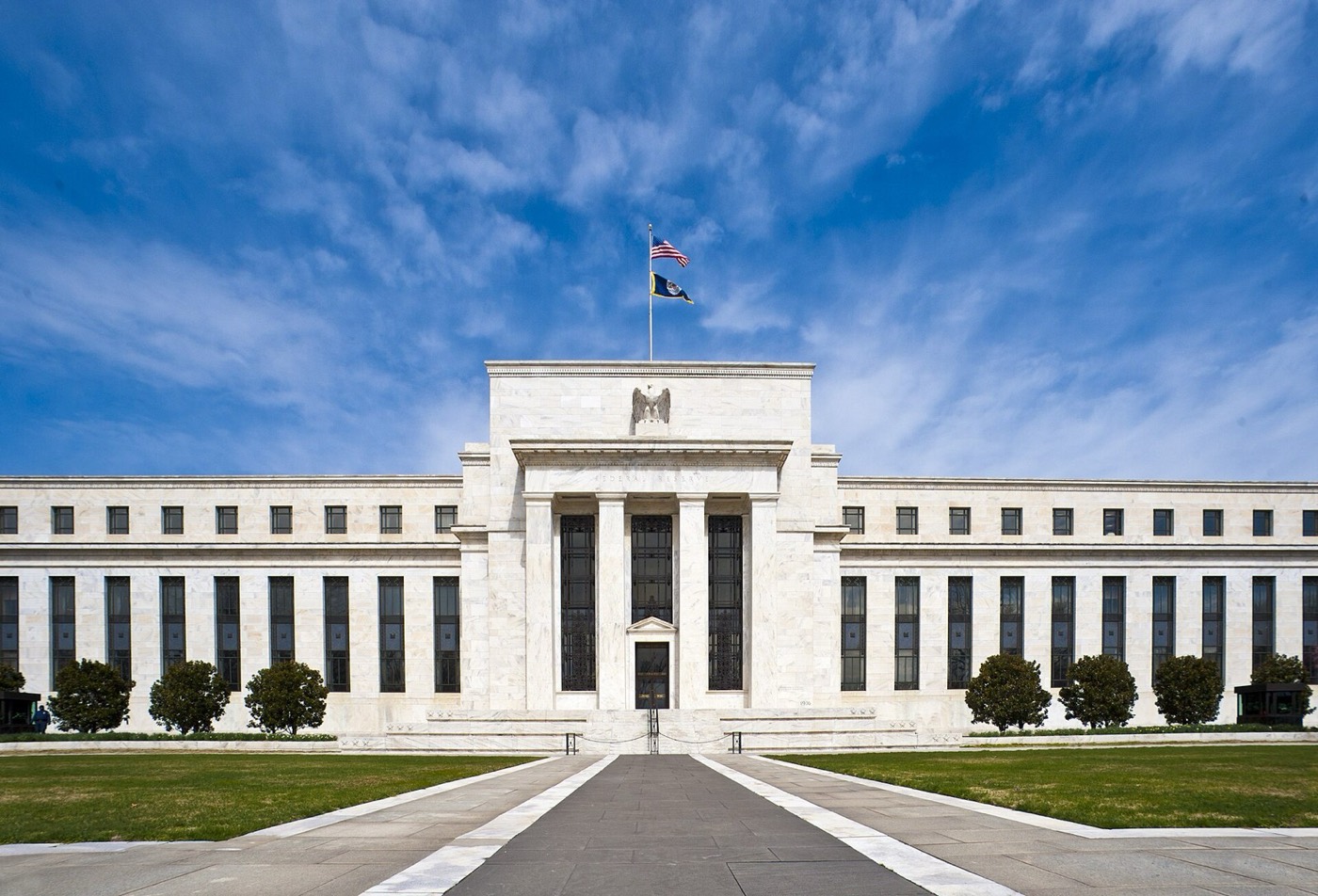
This is the Eccles Building in Washington, the Federal Reserve Board's own headquarters, where that proposal was written.
The Marriner S. Eccles Federal Reserve Board Building has housed the Board's governors since the nineteen thirties, and it was from here that both proposed rules were published for public comment. Both rules opened for sixty days of public comment once they reached the Federal Register on the twenty-ninth of September twenty twenty-six.
Three dates now sit on the same short timeline. The law was signed on the eighteenth of July twenty twenty-five, and the rule was proposed on the twenty-fourth of September twenty twenty-six. Both rules were then published in the Federal Register five days later, starting a sixty-day clock on public comment.
Jerome Powell has chaired the Federal Reserve through the entire period this video has covered, from the law's signing to the proposal bearing his Board's name. Sixty days of public comment is still running as this video is made, which means the exact shape of the finished rule is not decided yet.
13. A new layer, still finding its floor

Put everything in this video together, and a single, carefully balanced answer appears — not a verdict that favours either side of the question chapter one asked.
A stablecoin genuinely is a dollar that moves at the speed of a message, backed one-for-one by real cash and real government debt, checked every month by an outside accountant. It also genuinely pays no interest and carries no deposit insurance, which is exactly why ninety-five percent of ordinary firms are still waiting on the sidelines while crypto exchanges and payment giants move ahead without them.
Whether that is a forwards step or a backwards one may depend entirely on which business you ask.
This is a new settlement layer, genuinely faster and genuinely real, built on rules that are still being finished rather than rules that have already settled. It is backwards in the sense that it is still just a dollar — and forwards in the sense that the dollar has never moved like this before.
That freelancer in the Philippines is still watching her phone. For her, at least, the answer already arrived — in seconds, for a fraction of a cent.
Sources and credits
Photo credits (Wikimedia Commons)
- President Trump signs the GENIUS Act into law, White House, 18 July 2025: The White House, Public domain - https://commons.wikimedia.org/wiki/File%3AP20250718DT-0160_President_Donald_Trump_signs_S.1852%2C_The_GENIUS_Act.jpg
- President Trump signs the GENIUS Act into law, White House, 18 July 2025 (alternate angle): The White House, Public domain - https://commons.wikimedia.org/wiki/File%3AP20250718DT-0454_President_Donald_Trump_signs_S.1852%2C_The_GENIUS_Act.jpg
- Marriner S. Eccles Federal Reserve Board Building, Washington DC: Federalreserve, Public domain - https://commons.wikimedia.org/wiki/File%3AEccles_Building_%2826088200676%29.jpg
- Federal Reserve Bank of Cleveland building: Warren LeMay from Cincinnati, OH, United States, CC0 - https://commons.wikimedia.org/wiki/File%3AThe_Federal_Reserve_Bank_of_Cleveland%2C_Cleveland%2C_OH_%2828812480177%29.jpg
- Jerome H. Powell, Federal Reserve Chair, official portrait: Federalreserve, Public domain - https://commons.wikimedia.org/wiki/File%3AJerome_H._Powell%2C_Federal_Reserve_Chair.jpg


Primary sources
- Federal Reserve Board, press release and notice of proposed rulemaking on GENIUS Act reserve/capital and bank-subsidiary rules, 24 September 2026, federalreserve.gov/newsevents/pressreleases/bcreg20260924a.htm - fetched in full 1 October 2026 - the two proposed rules, and the 60-day public comment period following Federal Register publication on 29 September 2026.
- Federal Reserve Bank of Cleveland, 'Will US Firms Adopt Stablecoins? Survey Says They're Not Enthusiastic', Economic Commentary 2026-22, DOI 10.26509/frbc-ec-202622, published 28 September 2026, clevelandfed.org - the 148-firm survey, the roughly 5% (8 firms) with adoption plans, and the three reasons firms gave.
- GENIUS Act of 2025 (P.L. 119-27) text and summaries, including CRS 'Stablecoin Legislation: An Overview of the GENIUS Act of 2025' (IN12553) and Latham & Watkins, 'The GENIUS Act of 2025', lw.com - the one-for-one reserve rule, permitted reserve assets, the monthly audited reporting requirement, and the Section 4(a)(11) ban on paying interest to holders.
- U.S. Commodity Futures Trading Commission, Press Release 8450-21, 'CFTC Orders Tether and Bitfinex to Pay Fines Totaling $42.5 Million', 15 October 2021, cftc.gov - Tether's $41 million penalty and the CFTC's finding that its reserves were not fully backed from at least June 2016 to February 2019.
- Congressional Research Service, 'Algorithmic Stablecoins and the TerraUSD Crash' (IN11928), Paul Tierno, Eva Su and Andrew P. Scott, 16 May 2022, congress.gov - UST's algorithmic design, its more-than-$18-billion market capitalisation in early May 2022, and its fall to $0.12 by 16 May 2022.
- Circle Internet Group investor announcement, 'Circle Announces Pricing of Upsized Initial Public Offering', and CoinDesk, 'Circle Debuts on NYSE at $31 Per Share', 4-5 June 2025 - the NYSE listing date, IPO price and opening-trade price.
- Coinbase company blog, 'Coinbase and Circle announce the launch of USDC', 2018 - the Centre consortium and USDC's October 2018 launch.
- Unchained Crypto, 'Western Union to Launch USDPT Stablecoin on Solana Next Month', and The Daily Hodl, 'Western Union Officially Rolls Out USDPT Stablecoin on Solana Blockchain', 4-5 May 2026 - USDPT's May 2026 launch date and its agent-network purpose.
Not regulated financial advice.