
How the UK Teachers' Pension Scheme Works
The Teachers' Pension Scheme (TPS) promises every teacher in England and Wales a guaranteed income for life. This video explains how that promise actually works today, and how the formula behind it has been rebuilt twice.
It starts with the mechanism itself, then goes back to the scheme's 1898 origins and how final salary pensions were calculated for most of the twentieth century. It covers the unfunded, pay-as-you-go cost problem that built through the 2000s, Lord Hutton's March 2011 report recommending career average pensions across the public sector, and the 30 November 2011 strike by around two million public sector workers that followed. It explains the 2015 reform that moved most teachers onto a career-average scheme accruing 1/57th of salary a year — and the transitional protection for older members that a later court ruling found unlawfully discriminated by age (the McCloud/Sargeant case).
It then covers the McCloud remedy: the Public Service Pensions and Judicial Offices Act 2022, the October 2023 implementation, and the deferred choice underpin that lets affected teachers choose legacy or reformed scheme benefits for their 2015-2022 service — plus the backlog of corrected benefit statements still being worked through, with a statutory deadline extended to 31 August 2026.
Finally it covers what teachers and employers pay today: member contributions tiered from 7.4% to 12% of salary from April 2026, and an employer rate of 28.6% that the 2024 actuarial valuation has set to fall to 17.6% from April 2027 — and what that swing could mean for school funding and pay talks.
Every figure is on screen with its source and date.
In these topics
Chapters
Video notes
1. The promise

Every working teacher in England and Wales is paying into a promise. Not a savings pot that rises and falls with the stock market, but a guaranteed income for life, set by rules rather than by markets, that starts the day they retire and keeps paying until they die.
The Teachers' Pension Scheme is what is called a defined-benefit scheme. Teachers and their employers pay money in every month, but what a teacher eventually gets out is not determined by how that money performs as an investment. It is set by a formula, written into the scheme's rules, based on how long someone has worked and what they were paid while working.
That sounds simple, and in one sense it is: the promise itself has never changed. What has changed, more than once, is the formula behind it — and most of this video is about why.
Every state school, every sixth-form college and most universities in England and Wales pay into this one scheme on their staff's behalf. It runs the length of the country: employers in England and employers in Wales, all paying into the same promise, under the same rules.
So before we get to how the formula has changed, it is worth being clear about what has not: the promise of an income for life, guaranteed by government rather than by an employer's own solvency.
2. Origins of the scheme
That guarantee is not a modern invention. It goes back further than almost anyone watching this would expect.
The Teachers' Pension Scheme traces back to the Elementary School Teachers Superannuation Act, passed in 1898. Before that Act, a teacher's retirement income depended on the minutes of a government committee — small, limited, and not guaranteed to anyone. The 1898 Act created something new: a proper fund that certificated teachers paid into during their working lives, with a pension promised at the end of it.
Twenty years later, Parliament went further.
The School Teachers Superannuation Act of 1918 made the scheme considerably more generous, adding death gratuities for families and extending cover well beyond the certificated elementary teachers the 1898 Act had applied to. By the early twentieth century, a teacher's pension was no longer an act of goodwill. It was a right, written into law.
Over the following decades, that right was refined again and again, but its basic shape held for most of the twentieth century: a final-salary deal for public servants, teachers among them.
3. How final salary worked


"Final salary" is the phrase that shaped teachers' pensions for most of the scheme's history, and it is worth being precise about what it actually meant.
Under a final-salary pension, your retirement income was calculated from your salary right at the end of your career, multiplied by how many years you had worked, multiplied by a fixed fraction. For teachers who joined before 2007, that fraction was one eightieth of final salary for every year worked, plus an automatic lump sum on top. For those who joined later, a second section used one sixtieth instead, a more generous fraction but with no automatic lump sum.
Those two sections ran one after the other. The eightieth section closed to new members in January 2007; the sixtieth section carried on until the scheme closed to new final-salary entrants altogether, in April 2015.
This is what an English state classroom looked like in the mid-twentieth century, during the era the final-salary promise was built for. It was built for a career spent largely with one employer, a pay scale that rose steadily toward the end, and a pension that rewarded exactly that kind of career.
That last part is the key to understanding why final salary eventually ran into trouble. It rewarded one specific shape of working life — and by the 2000s, fewer and fewer people were actually living it.
4. The money problem

A pension promise this generous does not pay for itself. Somebody has to meet the bill, and by the turn of this century, that bill was growing faster than anyone had planned for.
The Teachers' Pension Scheme is unfunded. Unlike a private pension fund, there is no vast pot of invested money sitting behind it. Today's teachers' contributions, and the government's, pay today's pensioners' pensions directly, each year, as they go. That design works fine as long as the numbers behind it hold roughly steady. They did not.
Two forces were pulling against each other, and both were well understood long before anyone acted on them.
People were living longer, which meant a pension promised for the rest of a person's life cost more to honour with every passing decade. And final salary itself rewarded the people whose pay rose fastest at the very end of their careers — not necessarily the people who had contributed the most over their working lives. The official body that later examined this in full detail called it two things. Unfair sharing of costs between the employee, the employer and taxpayers. And unequal treatment of members within the same profession.
By the late 2000s, that imbalance had stopped being an actuary's concern and become a live political argument — one that would come to a head within a year or two.
5. Hutton and the 2011 fight


The government's answer to that argument arrived in the form of an independent review, led by a former Cabinet minister with no pension industry to protect.
In March 2011, Lord Hutton of Furness published the final report of the Independent Public Service Pensions Commission. His central recommendation was blunt: replace final salary with a new model called career average, across the public sector, not just for teachers. Pay in every year, he argued, and that year's pay should count toward your pension — not just whatever you happened to be earning on your last day.
"I believe this is a balanced deal that will ensure public service workers continue to have good pensions and taxpayers can have confidence that the costs are controlled." Lord Hutton wrote that in his report's own foreword. It was his case that the reform was fair to both sides, not a cut dressed up as reform.
Public sector unions, including teachers' unions, did not read it that way. They rejected the terms on offer, and when negotiations broke down, they did what unions do when talks fail.
This is Lord Hutton, whose report set the terms of the fight that followed it. On the thirtieth of November 2011, around two million public sector workers walked out together. Teachers, nurses, civil servants and local government staff all took part, in the UK's biggest public sector strike in decades, and schools across the country closed for the day.
The strike did not stop the reform. It did shape how teachers experienced it: not as a technical adjustment, but as something fought over in public, on picket lines, before it ever reached a classroom payslip.
6. The 2015 reform

Four years after Hutton reported, his recommendation became law for teachers specifically.
From the first of April 2015, most teachers moved into a new career average section of the scheme — CARE, for short. Instead of one final salary multiplied by years worked, each year's actual pay now earned its own slice of pension, at a rate of one fifty-seventh of that year's pensionable pay. Every year's slice was then revalued each year by inflation plus one point six per cent, so it kept its value until retirement, when all the slices were added together.
Picture the two systems side by side. Final salary took one number — your last salary — and multiplied it by your years of service. Career average takes every single year's pay, turns each one into its own small slice of pension, revalues every slice for inflation, and adds the whole lot up at the end. One number scaled up. Many numbers added together.
Pension age changed too, now linked to State Pension age rather than fixed at 60. And members close to retirement when the change happened were given transitional protection: extra time, or in some cases full exemption, to stay on the old final-salary terms a little longer.
That protection was meant as a kindness to people nearest the finish line. It became the reform's biggest problem.
7. The age discrimination claim

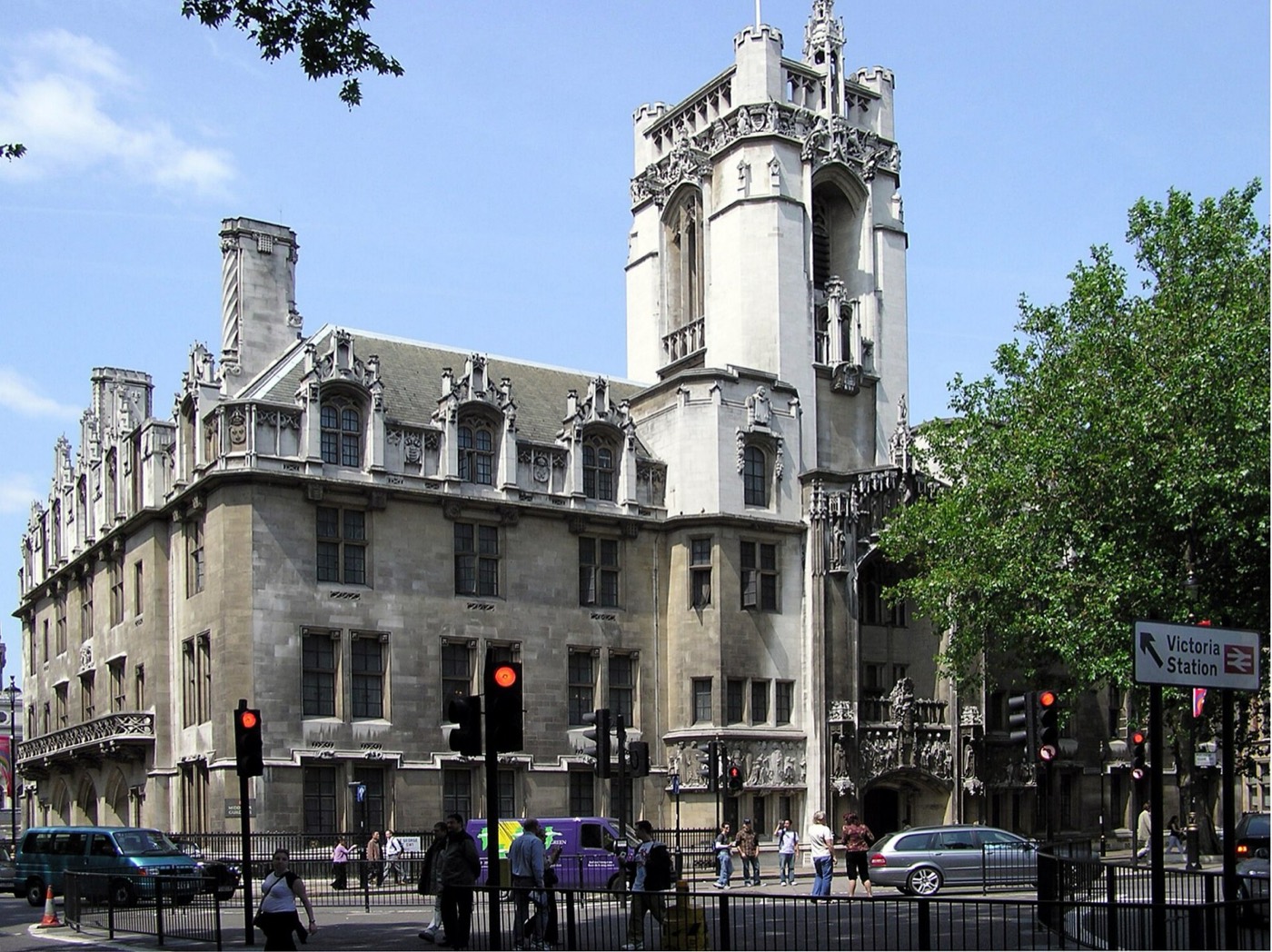
Protecting older members sounds fair on its face. Protecting them while giving younger members in the same staffroom no such protection turned out to be something the law had a name for.
Transitional protection kept older members on final-salary terms for years longer than it kept younger colleagues doing the identical job alongside them. Two test cases challenged that gap: McCloud, brought by judges, and Sargeant, brought by firefighters. Teachers were not the claimants, but the same transitional protection had been built into their scheme in the same way, so the ruling would apply to them too.
In December 2018, the Court of Appeal ruled that the transitional protection amounted to unlawful direct age discrimination. The government sought a further appeal, and the Supreme Court refused permission to hear one, in June 2019. The ruling stood.
This is Middlesex Guildhall, home of the UK Supreme Court, which closed the door on any further challenge. What had been designed as protection for the scheme's oldest members had been found, by the country's highest courts, to unlawfully discriminate against its youngest.
A ruling like that does not fix itself. Every public service pension scheme built the same way — teachers' included — now had to work out what to do about years of service that had already happened.
8. The McCloud remedy
Fixing discrimination that has already happened means reopening years that have already closed.
Parliament's answer was the Public Service Pensions and Judicial Offices Act 2022, and the fix it built is called the McCloud remedy. From the first of October 2023, every affected member's service in what is called the remedy period stopped being locked into whichever scheme they happened to have been moved into. That remedy period runs from April 2015 to March 2022, seven years in all.
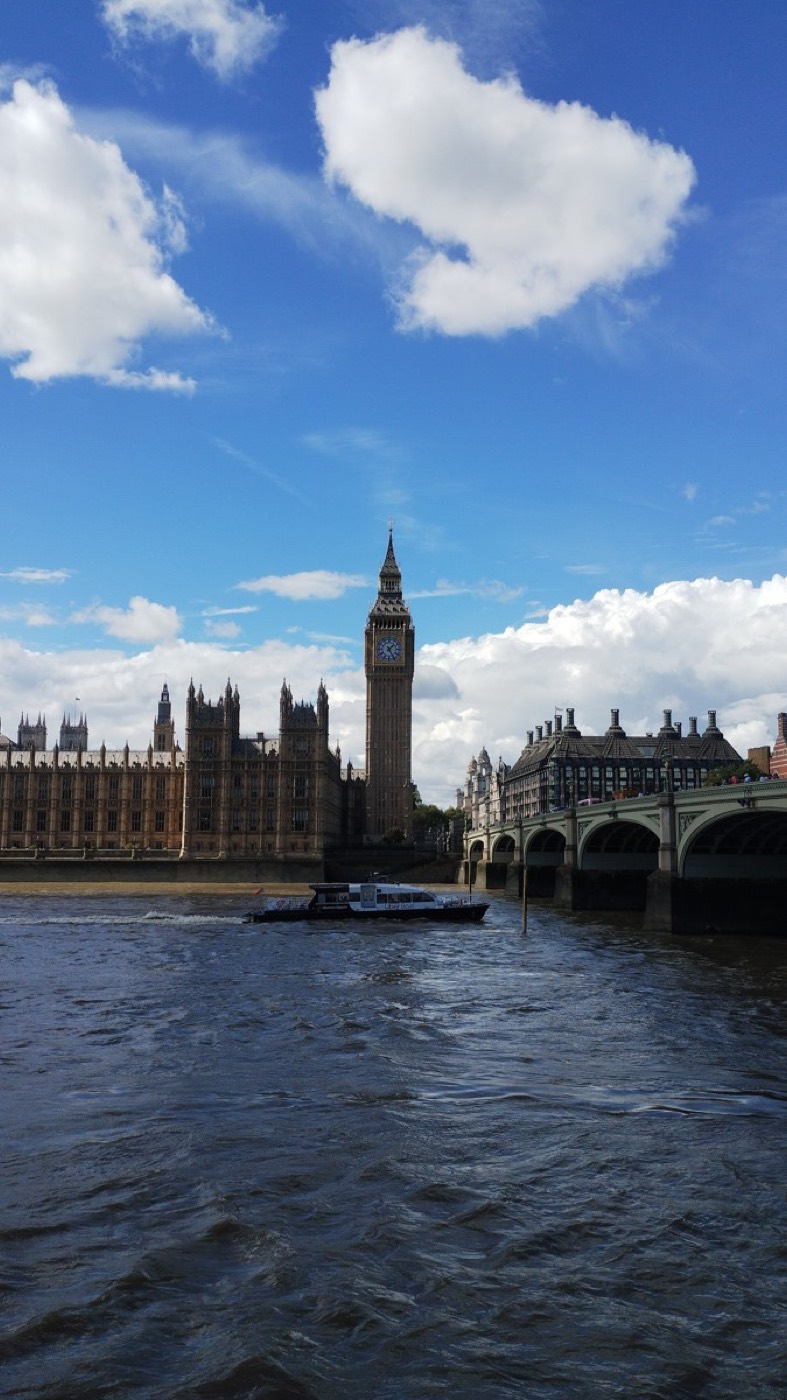
This is the Palace of Westminster, where that Act was passed. The mechanism it created is known as the deferred choice underpin. Each affected teacher gets to choose, at retirement or another qualifying moment, whether their benefits for those remedy-period years are paid under the old final-salary rules or the newer career-average ones — whichever turns out better for them.
Nobody is forced to accept a worse pension because of how the 2015 transition happened to place them. That is the promise behind the remedy. Delivering it at national scale is a different matter, and that is where the story stands next.
9. McCloud in practice, 2024-2026

A promise to recalculate millions of pension records is simple to state and enormous to carry out.
Teachers' Pensions has spent the past three years working through a backlog of McCloud recalculations and corrected Annual Benefit Statements — the yearly document that tells a member what their pension is actually worth. Statutory guidance allows schemes to extend the deadline for including corrected McCloud figures on those statements, and for the Teachers' Pension Scheme that extended deadline now runs to the thirty-first of August 2026, the latest extension the guidance permits.
That deadline exists because the first one was not met. For some members, the gap between a statement being due and a statement being accurate has run to months, not days.
For a teacher checking their own figures during this period, the practical effect has been uncertainty. A benefit statement may not yet reflect the McCloud choice correctly, and it may arrive later than it should, while the scheme works through cases one by one rather than all at once.
None of that changes what a teacher is ultimately owed. It does change how confidently they can plan around it in the meantime — which is the quieter, less headline-grabbing cost of fixing a discrimination finding at the scale of an entire profession.
10. What teachers pay today

Set the history aside for a moment, because none of it answers the question most working teachers actually want answered: what comes out of my payslip, right now?
Teachers do not all pay the same rate. Contributions are tiered by salary, so a teacher earning more pays a higher percentage than a teacher earning less. The current tiers took effect in April 2026. They run from seven point four per cent of pay at the lowest salary band up to twelve per cent at the highest, with further bands in between, stepping upward with pay rather than jumping straight from bottom to top.
The employer side of that bargain is far larger than the member side. Right now, every school, college and university in the scheme pays twenty-eight point six per cent of each teacher's salary into the Teachers' Pension Scheme. That is more than four times what the highest-paid tier of teachers themselves contribute, from the same payroll.
That employer figure has not always been that high, and it is not going to stay that high either. Both of those facts come from the same process: an actuarial valuation, carried out roughly every four years, which checks whether the money going in still matches what the scheme is promising to pay out.
11. The valuation swing

That checking process is where the scheme's cost gets decided — and in the last two rounds, it has swung sharply in opposite directions.
Before April 2024, employers paid twenty-three point six per cent of pay into the scheme. The 2020 valuation pushed that rate higher. It rose to twenty-eight point six per cent, where it still stands today — driven mainly by a change to the discount rate the government uses to value long-term pension promises.
The 2024 valuation, published by the Government Actuary's Department in July this year, found the opposite problem: the scheme had been overfunded relative to what it actually needs. The employer rate is coming down. From April 2027, it falls to seventeen point six per cent. That is worth something over three billion pounds a year to the schools, colleges and universities paying it.
Set those rates side by side and the swing is stark. Twenty-three point six per cent, then twenty-eight point six per cent. Then seventeen point six per cent — all inside one decade. None of that changes what any individual teacher is promised. It does change how much of a school's budget goes toward paying for that promise, which is why head teachers and university finance directors watch these valuations as closely as any teacher watches their own statement.
12. What it means going forward


Put the mechanism, the history and the money together, and here is what it actually means for someone teaching today.
If you are an active member, the scheme still promises exactly what it always has: a guaranteed income for life, now built up at one fifty-seventh of each year's pay rather than from your final salary alone. If you served any part of 2015 to 2022, the McCloud remedy means you get to choose the better of two calculations for those years, once your corrected figures are through the backlog.
And from April 2027, your employer pays over a third less into your pension than it does today — not because your pension is worth less, but because the valuation that set today's higher rate has been recalculated. What a school does with that freed-up money, and whether any of it reaches staff pay, is a question for the next round of school funding and pay talks, not for the scheme itself.
One more change is coming on the administrative side, not the financial one. Capita has run the day-to-day administration of the scheme since 1996. That job is moving to Tata Consultancy Services, due in late 2026, under a ten-year, two hundred and thirty-three million pound contract. For a member, that should mean the same promise, handled by a different office.
That is the shape of the promise a teacher is actually paying into. It is older than most people realise, and it has been rebuilt twice under real pressure. For now, it remains a guarantee that has survived every one of those rebuilds intact.
Sources and credits
Photo credits (Wikimedia Commons)
- John Hutton (Lord Hutton of Furness), author of the 2011 Independent Public Service Pensions Commission report: US Department of Defense, Public domain - https://commons.wikimedia.org/wiki/File%3AJohn_Hutton.jpg
- English state school pupils during the mid-20th-century final-salary era of the scheme: Ministry of Information Photo Division Photographer, Public domain - https://commons.wikimedia.org/wiki/File%3AGirls_at_Baldock_County_Council_School_in_Hertfordshire_enjoy_a_drink_of_milk_during_a_break_in_the_school_day_in_1944._D20552.jpg
- Middlesex Guildhall, home of the UK Supreme Court, which declined to hear a further appeal in the McCloud age-discrimination case: Arpingstone, Public domain - https://commons.wikimedia.org/wiki/File%3AMiddlesex.guildhall.london.arp.jpg
- Palace of Westminster, seat of the Parliament that passed the Public Service Pensions and Judicial Offices Act 2022 implementing the McCloud remedy: CubicPioneer, CC0 - https://commons.wikimedia.org/wiki/File%3AElizabeth_Tower_and_Palace_of_Westminster_from_the_River_Thames.jpg
- Contemporary UK school classroom, for the closing chapter on what the scheme means for working teachers today: Mertbiol, CC0 - https://commons.wikimedia.org/wiki/File%3AFirst-floor_classroom%2C_Prior%27s_Field_School%2C_Surrey_-_September_2025.jpg


Primary sources
- Government Actuary's Department, 'Teachers' Pension Scheme (England and Wales) 2024 Actuarial Valuation Results' and 'Summary', published 1 July 2026 - employer contribution rate 17.6% (17.68% with the administration levy) from 1 April 2027, an 11.0 percentage-point cut from the 28.6% rate set at the 2020 valuation.
- Independent Public Service Pensions Commission, Final Report (the Hutton Report), 10 March 2011, HM Treasury/gov.uk - the recommendation to replace final salary with career average schemes, and the foreword's 'balanced deal' quotation.
- House of Commons Library, Teachers' Pension Scheme briefing CBP-10179, and Teachers' Pensions (scheme administrator) scheme guide, Active Member Guide (August 2026 edition) and Tiered Contributions Member Factsheet (March 2026 edition), teacherspensions.co.uk - the 1/57th accrual rate, CPI+1.6% revaluation, and the six member contribution tiers from 7.4% to 12% effective 1 April 2026.
- UK Parliament, Historic Hansard / api.parliament.uk, and education-uk.org act texts - the Elementary School Teachers Superannuation Act 1898 and the School Teachers Superannuation Act 1918.
- Court of Appeal judgment [2018] EWCA Civ 2844 (McCloud v Ministry of Justice; Sargeant v London Fire and Emergency Planning Authority), 20 December 2018, and the Supreme Court's refusal of permission to appeal, 27 June 2019.
- Public Service Pensions and Judicial Offices Act 2022 and Teachers' Pensions McCloud remedy guidance, teacherspensions.co.uk - the 1 October 2023 implementation date, the 2015-2022 remedy period, and the deferred choice underpin mechanism.
- Statutory guidance on McCloud-related Annual Benefit Statement corrections, as applied across public service pension schemes (Leicestershire Local Pension Committee McCloud Remedy Report, 30 May 2025; Scottish Public Pensions Agency correspondence, 2026) - the 31 August 2026 maximum-extension deadline.
- Southwark Teacher Pension Newsletter, June 2026 edition, reproducing Teachers' Pensions' own update - 'the transfer of Teachers' Pensions administration services from Capita to Tata Consultancy Services (TCS) will now take place in late 2026'; Schools Week/FE Week reporting (multiple dates, August 2025-March 2026) on the handover's delays, and the GBP233 million, 10-year TCS contract.
- Barnett Waddingham and HCR Law briefings on the SCAPE discount rate consultation/announcement - context for the 2020-valuation employer rate rise from 23.6% to 28.6%.
Not regulated financial advice.