
UK Pension: How the Triple Lock Works
Every April, the UK State Pension rises under a rule called the triple lock: the highest of average earnings growth, CPI inflation, or 2.5%. This video explains the mechanism itself, then follows it from the pensioner poverty of the pre-2010 price-only years, through its 2010 coalition-government origin, fifteen years of rises from £102.15 to £184.90 a week, the 2022 earnings-link suspension and the record 10.1% rise that followed, the OBR's finding that its cost has roughly tripled since 2010, the double-lock and smoothed-earnings reform ideas from the Social Market Foundation and the IFS, Chancellor Rachel Reeves's 2025 decision to keep it and the resulting 4.8% rise for April 2026, and Prime Minister Andy Burnham's 29 September 2026 announcement that the earnings link ends from April 2030 to help fund a National Care Service.
It also covers the separate timetable raising the State Pension age from 66 to 67 by 2028, and what all of this means for today's pensioners against today's workers.
Every figure is on screen with its source and date.
In these topics
Chapters
- What the triple lock actually is
- Pensioner poverty before 2010
- Born in coalition talks
- How it worked in practice, 2011-2026
- The 2022 announcement and the 10.1% rise
- Why economists call it unsustainable
- The reform proposals
- Reeves keeps it, for now
- Burnham's 2030 announcement
- State pension age moving too
- What it means for you
Video notes
1. What the triple lock actually is
Every April, millions of pensioners in the UK see their State Pension go up. The rule that decides the rise is called the triple lock. In this video we take it apart piece by piece: what it is, why it exists, what it costs, and why the government is already planning to change it.
The triple lock compares three numbers each year and picks the highest. The first is the growth in average earnings across the economy. The second is CPI inflation, the rise in the price of everyday goods and services, measured by the Office for National Statistics. The third is a fixed floor of two point five per cent, guaranteed whatever earnings or prices do.
Whichever of those three is largest becomes April's rise, applied to both the basic State Pension and the newer State Pension.
Picture it as a dial with three pointers. One pointer tracks pay, one tracks prices, and one never moves from two point five per cent. Each year the dial swings to whichever pointer is furthest round, and that figure becomes the rise every pensioner gets.
That sounds simple, and the mechanism is simple. What is not simple is why it exists at all, and for that we have to go back before 2010.
In plain terms, the pension cannot fall behind wages, and it cannot fall behind prices, and it cannot rise by less than two and a half per cent even in a quiet year. Those are three separate promises rolled into one rule. A pensioner never has to guess which promise applies, because the highest one always wins.
2. Pensioner poverty before 2010
To understand why three promises were rolled into one rule, look at what happened when there was no such rule.
In 1979, the basic State Pension was worth about a quarter of average earnings. The following year, the government broke the link between pensions and pay, and uprated the pension with prices alone instead. Over the next three decades, prices grew more slowly than wages almost every year, so pensioners steadily fell behind everyone still working. By 2010, the pension had fallen to roughly a sixth of average earnings.
That is not a small drift. It is three decades of pensioners getting relatively poorer while the rest of the country got richer.
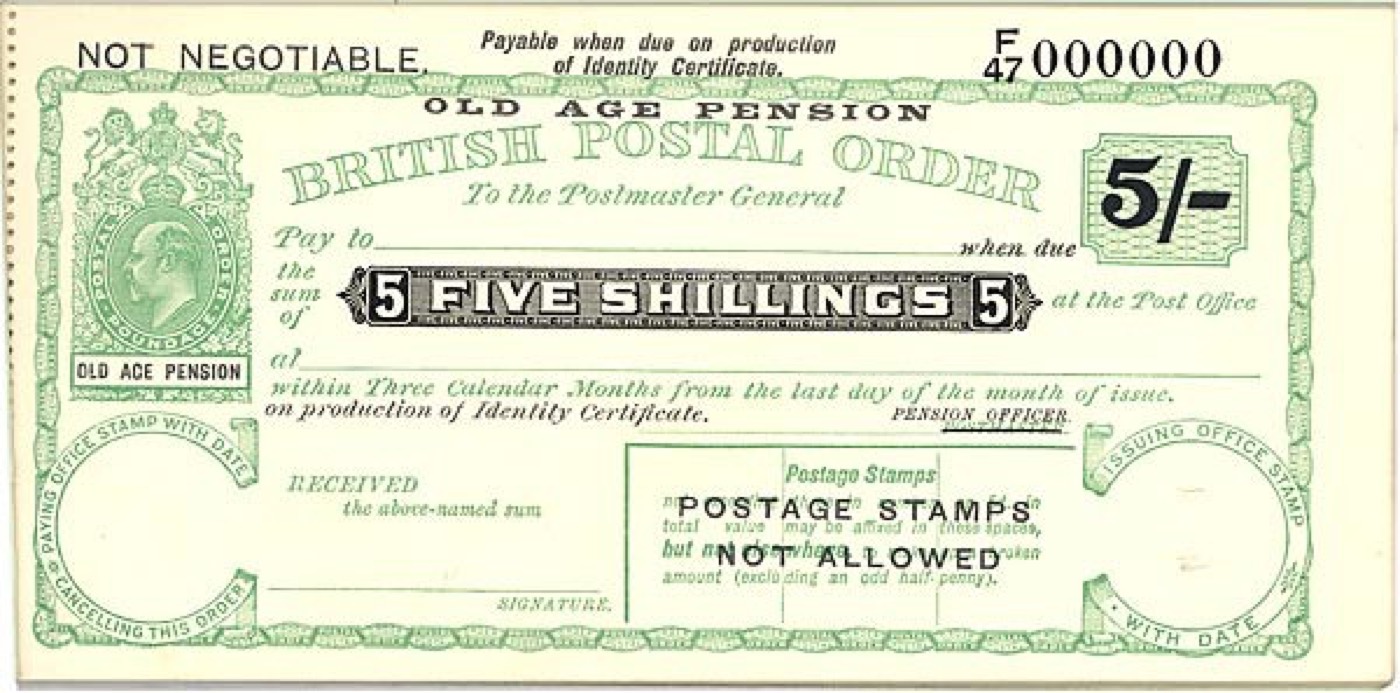
This is an Old Age Pension book from 1909, showing the postal orders a pensioner collected each week. The mechanism has changed completely since then, but the underlying question has not: how much of ordinary working life should a pension actually replace?
By the late 2000s, that question had become a political problem nobody in government could ignore.
Pensioner poverty was higher than it needed to be, and every party going into the 2010 election knew it. A fix that only matched prices had produced the fall; a fix that matched pay, or something better than pay, was the obvious answer being discussed.
3. Born in coalition talks
That answer arrived within weeks of the 2010 election.
The Liberal Democrats had proposed a pension "triple guarantee" in their 2010 manifesto, before the election that produced Britain's first coalition government since the war. Once the Conservatives and Liberal Democrats formed that coalition, Chancellor George Osborne adopted the idea and announced it in his first Budget, delivered on the twenty-second of June, two thousand and ten. The new rule, by then renamed the triple lock, started paying out from April the following year.
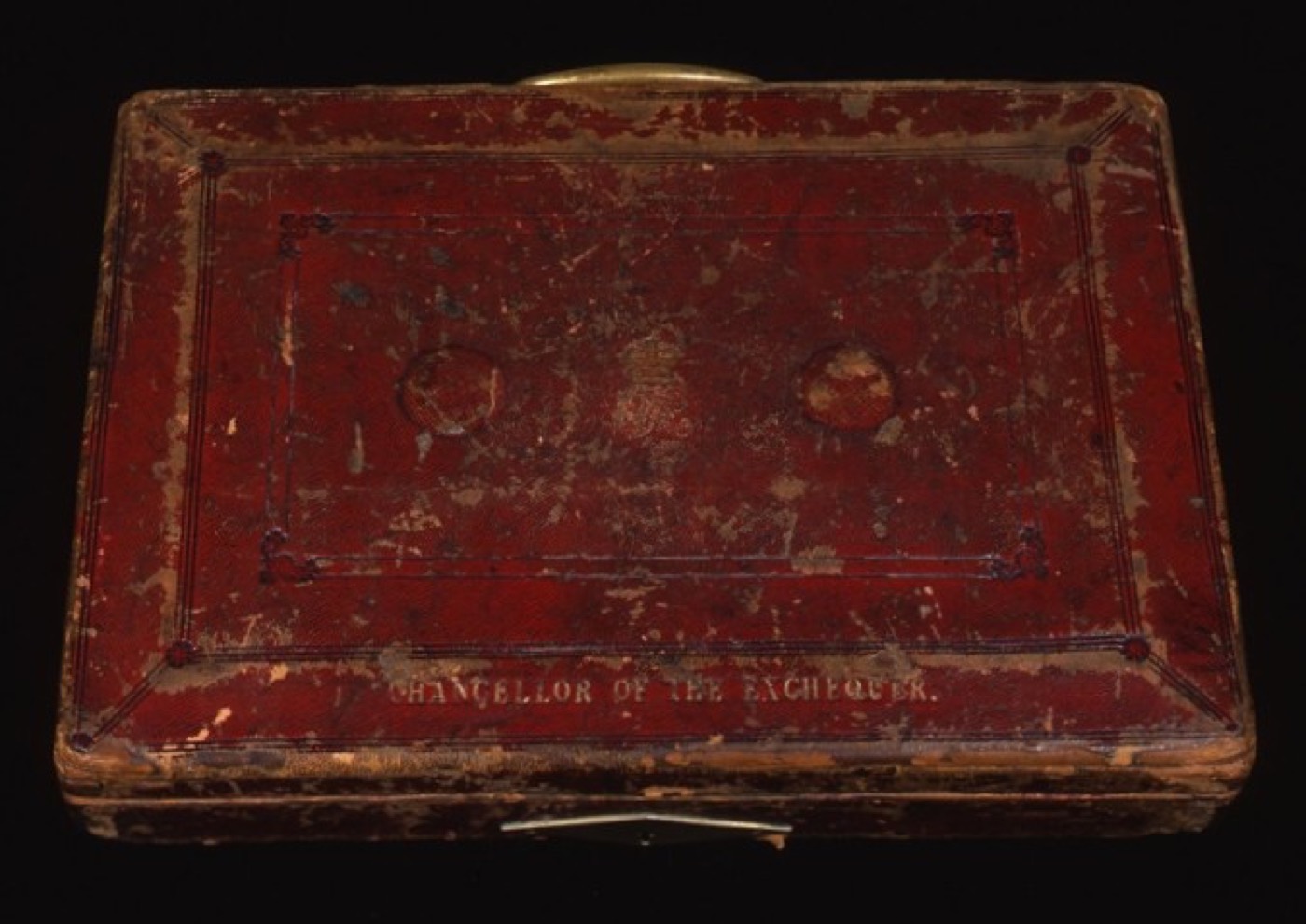
This is Gladstone's Red Box, the traditional case a Chancellor carries the Budget documents in to Parliament. Osborne's June 2010 Budget, delivered in a box like this one, is where the triple lock was first announced to the country.
The announcement itself was made in the House of Commons, but the coalition that agreed to it was built somewhere else entirely.
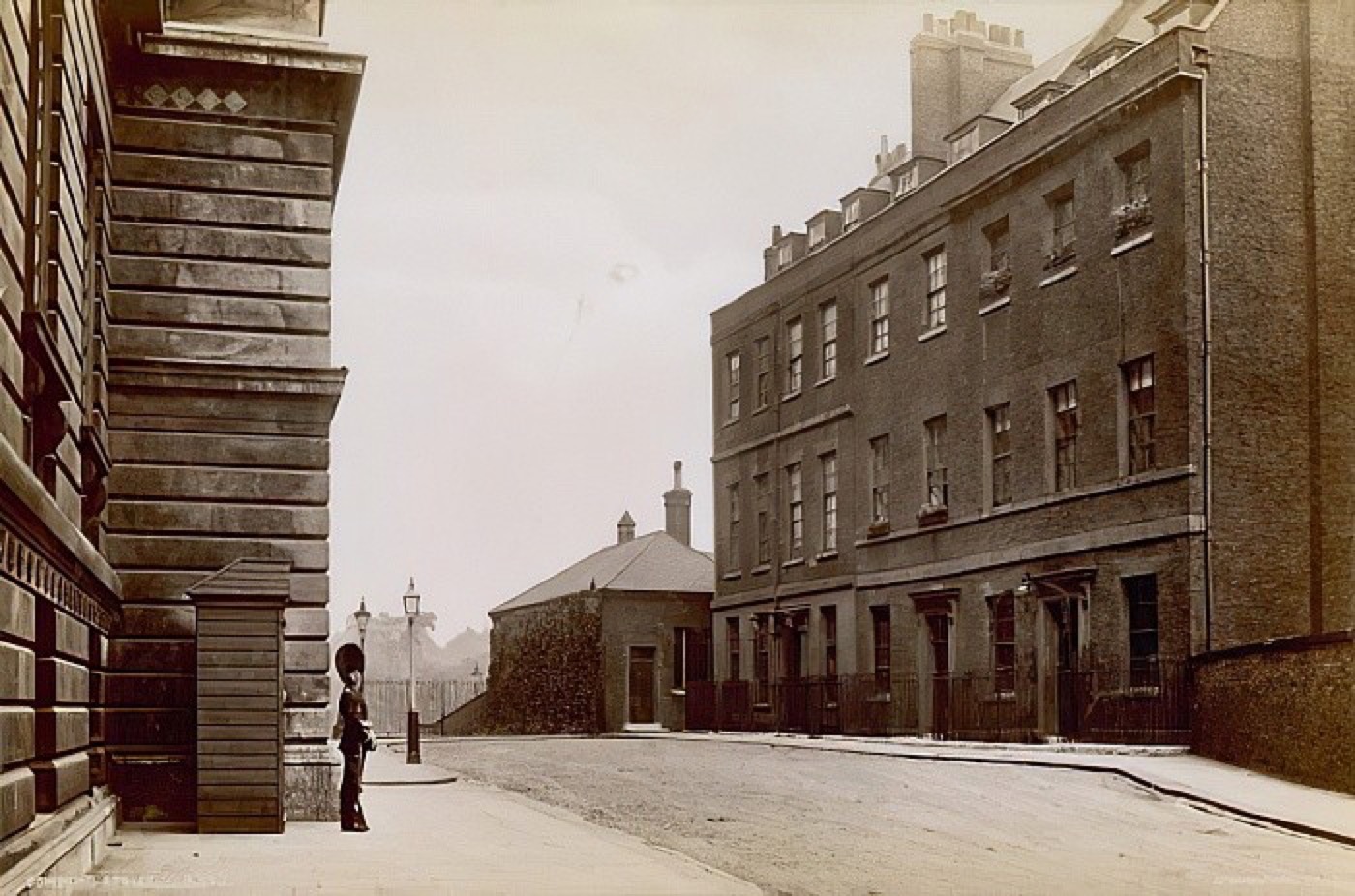
Two addresses matter to this story. Number 10 Downing Street, the Prime Minister's official residence, is where the coalition deal between the two parties was finally agreed. The Treasury, the Chancellor's department, is where the Budget that announced the triple lock was drawn up. Policy is made in one building and delivered from another, and both sit within a few minutes' walk of Parliament.
This is 10 Downing Street, photographed in the early 1900s. It has been the Prime Minister's official residence for centuries, long before any coalition met inside it.
4. How it worked in practice, 2011-2026
So what did the lock actually do to people's pensions, year after year?
In its first year, 2011, the basic State Pension paid one hundred and two pounds fifteen a week. By 2026, it had climbed to one hundred and eighty-four pounds ninety. The rise was not smooth. Some years it tracked earnings, some years it tracked prices, and in at least one year the fixed floor did the work on its own.
Add up those fifteen years of rises and the total comes to about eighty-one per cent. That is arithmetic, not a separate claim: it is simply what the weekly figures from 2011 and 2026 work out to, before accounting for inflation over the same period.
An eighty-one per cent cash rise sounds generous, and for anyone living on a State Pension it mattered enormously. But averaged totals hide the years that drove them, and one of those years was far bigger than the rest.
Three forces pushed the line upward at different speeds. Ordinary pay growth in most years. The two-and-a-half per cent floor in the quietest years. And, once, a price spike so sharp it reset what "generous" meant for a single April. That spike is where we go next.
5. The 2022 announcement and the 10.1% rise
That single year deserves its own chapter, because it shows the triple lock under real strain.
For the uprating paid from April 2022, the government suspended the earnings leg of the lock for one year only. Pandemic-recovery bonuses and people returning from furlough had pushed measured average earnings growth to a figure nobody thought was real. Ministers judged it would have handed pensioners an unrepresentative windfall, so that year's rise used CPI inflation instead, at three point one per cent.
The very next year told the opposite story. September 2022's inflation reading, driven by the same post-pandemic pressures plus a sharp rise in energy prices, came in at ten point one per cent. Under the triple lock's normal rules, that became the rise paid from April 2023, the largest single increase in the policy's history.
So the lock suspended its earnings pointer in one year, and its inflation pointer overshot everything the year after.
Two consecutive Aprils show both edges of the same mechanism. One year, a promise was set aside because the number behind it looked wrong. The next year, the mechanism paid out its biggest rise ever, because the number behind it was real, and painfully so for anyone paying those prices.
That 10.1% rise is the single figure people opposed to the triple lock point to most often, and it is worth seeing exactly why.
A one-off inflation spike like September 2022's becomes a permanent, compounding increase to every future pension payment, because each year's rise builds on the year before. A rule designed to stop pensioners falling behind had also, by its own logic, locked in an unusually large jump the moment prices spiked.
6. Why economists call it unsustainable
That locking-in effect is exactly what worries the government's own independent forecaster.
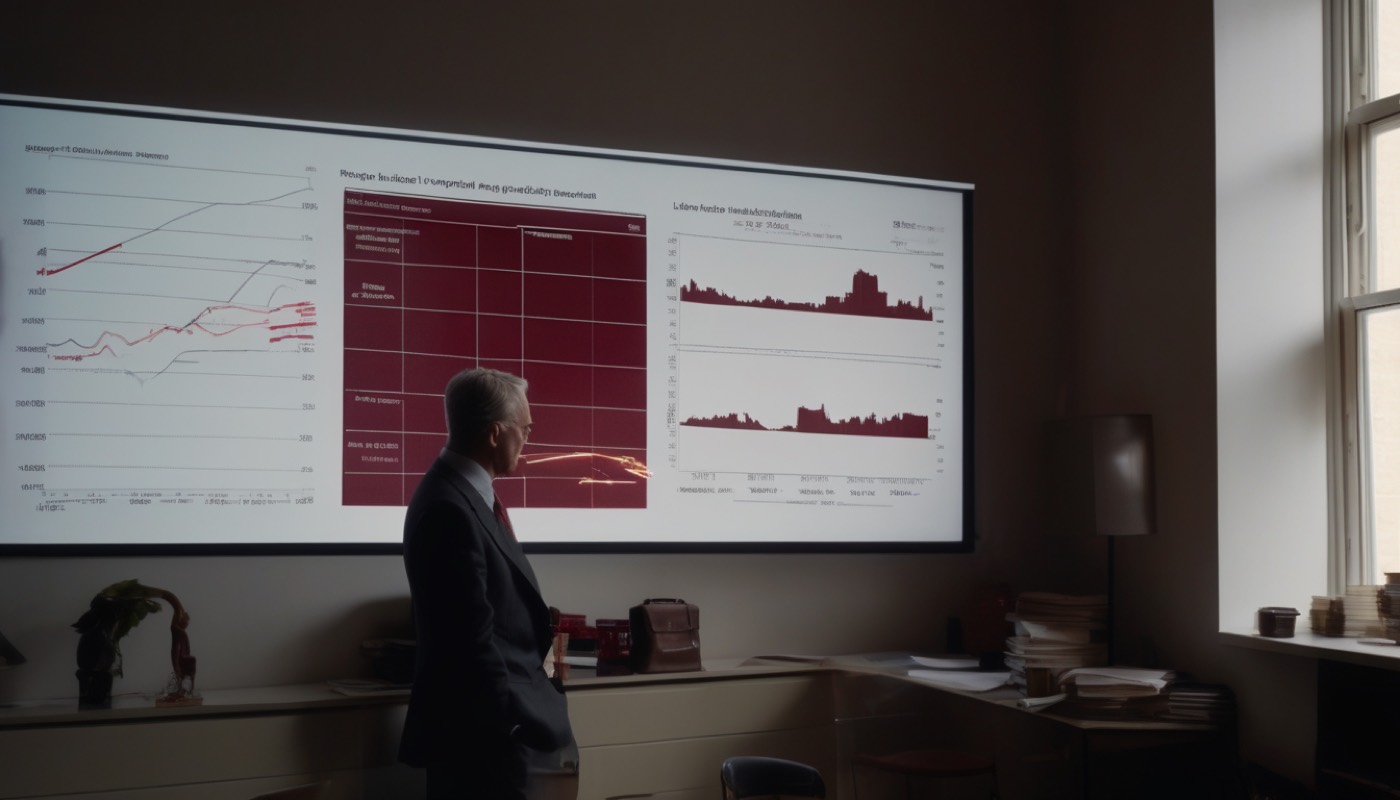
The Office for Budget Responsibility, or OBR, is the independent body that checks the government's sums. In July 2025 it reported that the triple lock is now forecast to cost about fifteen and a half billion pounds a year. That cost arrives by 2029 to 2030. When the policy was introduced in 2010, it was expected to cost about five billion.
Put those figures side by side and the triple lock's real cost is roughly three times what was first forecast. No single year explains that gap. It is the earnings floor, the inflation floor and the occasional spike, compounding together for a decade and a half.
That is the near-term picture. Further out, the OBR's projection gets harder to ignore.
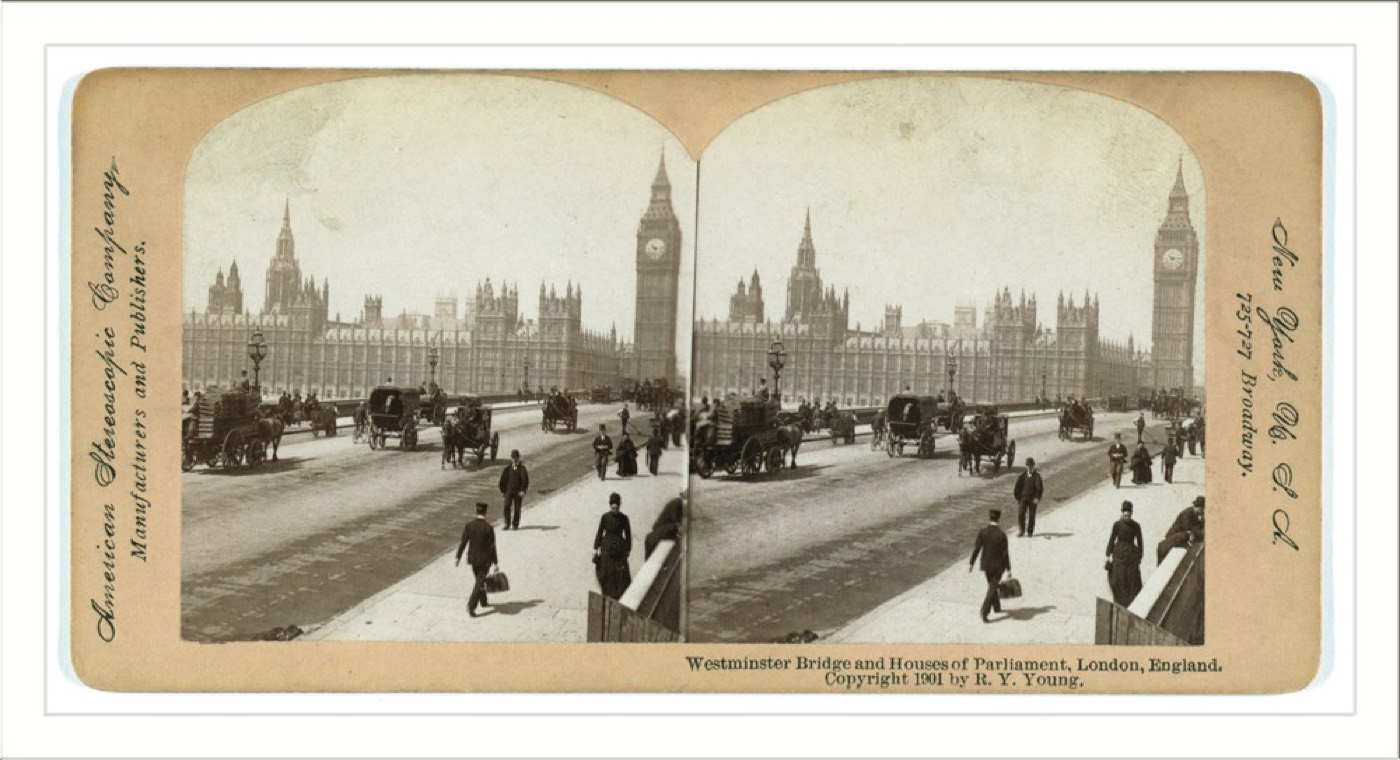
Westminster is where that OBR report was debated and where the Treasury, just along the road, decides what to do about it. State pension spending today runs at about five per cent of everything the country produces in a year. On the OBR's long-run projections, if the triple lock continues on its current pattern, that share keeps climbing toward the middle single figures by the early 2070s.
Compare today's share of the economy with that long-run projection and the gap is the whole argument in one picture. A commitment that looked affordable in 2010 is now on a path its own official forecaster calls unsustainable if nothing changes.
7. The reform proposals

Unsustainable, according to the OBR, does not mean everyone agrees on the fix.
The Social Market Foundation, a think tank, has proposed simply dropping the two-and-a-half per cent floor, leaving a "double lock" of earnings or inflation, whichever is higher. It estimates that change alone would save the Treasury about two point six billion pounds a year.
The Institute for Fiscal Studies, or IFS, a research institute that specialises in checking government tax and spending numbers, looked at the same idea and reached a cooler conclusion.
The IFS published an article with a blunt title: "A double lock on the state pension would still be a bad idea". Its argument is that dropping the floor barely touches the underlying problem, because state pension spending would still be projected to rise by a large share of national income over the next fifty years even without it.
So if dropping the floor is not enough, what does the IFS suggest instead?
The IFS favours a different design entirely: smoothing the earnings link, so a single freak year of pay growth, or a single freak year of inflation, cannot lock in an outsized permanent rise the way September 2022's spike did. Nobody in this debate wants pensioners worse off. The disagreement is over how to stop one unusual year from setting every future year's baseline.
8. Reeves keeps it, for now
That debate reached a Chancellor who had to make an actual decision.
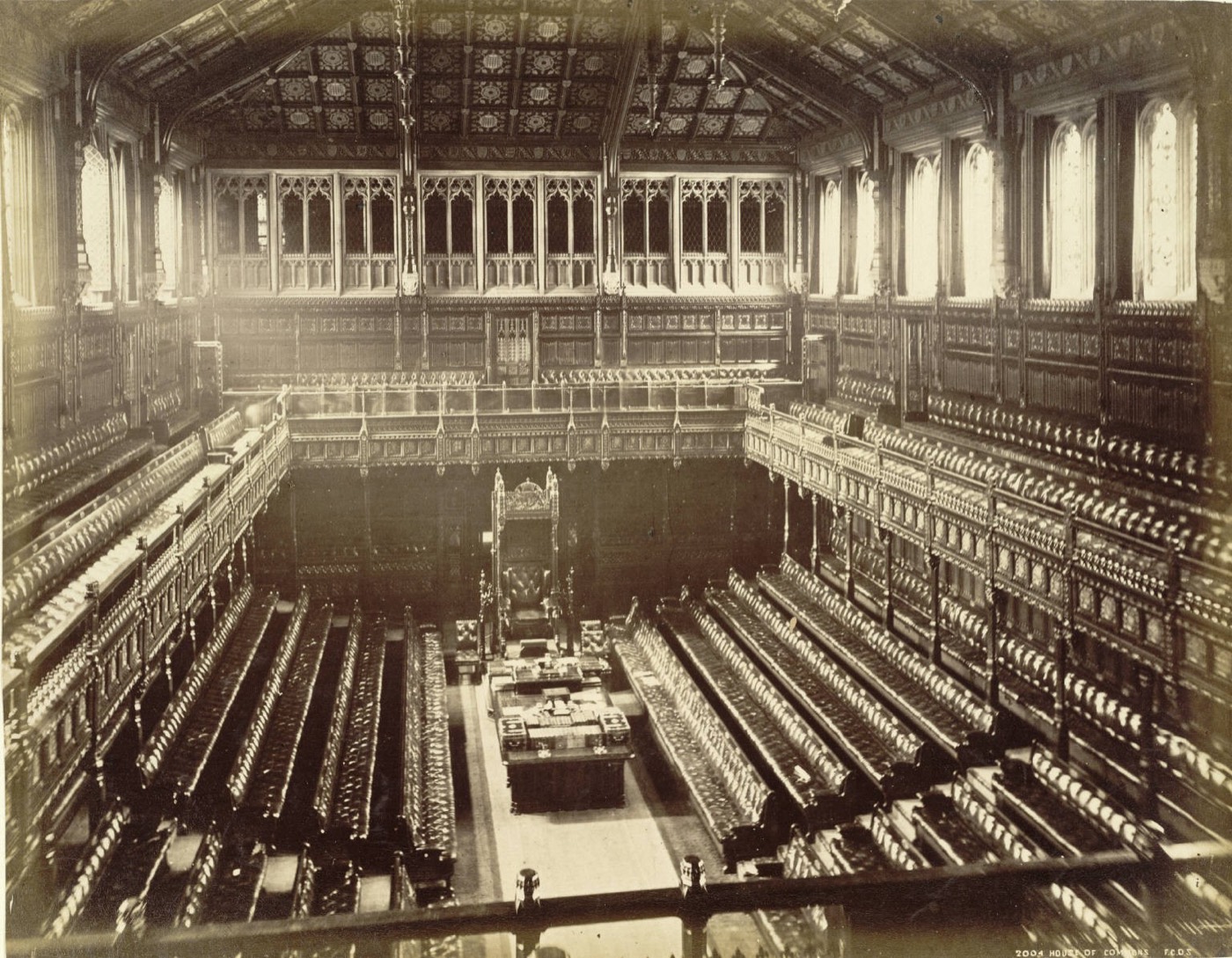
This is the House of Commons chamber, where every Budget in this story has been delivered, going back to Osborne's in 2010. In her Autumn Budget, Chancellor Rachel Reeves confirmed the triple lock would continue unchanged for the rest of this Parliament, resisting the reform ideas from both the Social Market Foundation and the IFS, at least for now.
That decision produced a rise of four point eight per cent from April 2026. The basic State Pension rose to one hundred and eighty-four pounds ninety a week, and the full new State Pension rose to two hundred and forty-one pounds thirty. It was earnings growth, not inflation, that set that figure.
It is worth being precise about which pointer actually won, because it was not the one most people assumed.
Average earnings growth for May to July came in at four point eight per cent, ahead of CPI inflation to September, which stood at three point eight per cent. Pay, not prices, was the highest of the three measures that year, so pay decided the rise.
9. Burnham's 2030 announcement
Reeves kept the mechanism whole for now. Her successor as Prime Minister has already set a date to change it.
On the twenty-ninth of September 2026, in his first Labour conference speech as Prime Minister, Andy Burnham made the announcement. The triple lock stays exactly as it is for the rest of this Parliament, and then changes from April 2030. From that point, the earnings pointer is dropped entirely, leaving the pension to rise each year by whichever is higher of inflation or two and a half per cent.
The change is intended to help fund a new National Care Service, free at the point of use for personal care. Officials close to the announcement put the expected savings from dropping the earnings link at around fifteen billion pounds a year by 2040, money that would otherwise have gone into pensions instead of care.
Burnham's version keeps two of the three original promises and drops the one that has driven most of the recent cost.
From April 2030 the dial loses its earnings pointer for good. What is left is the same floor that has always been there, at two and a half per cent, and the inflation pointer that overshot so badly in 2022. Ministers are betting that combination is enough to protect pensioners without repeating the last decade's cost growth.
10. State pension age moving too
The triple lock decides how much a pension pays. A separate rule decides when anyone can start claiming it, and that rule is moving too.
The State Pension age is rising from 66 to 67, under the Pensions Act 2014. The change is phased in between April 2026 and April 2028. It runs on its own timetable, set years before Burnham's announcement and unaffected by it.
A further, ongoing review is examining whether that timetable should move faster still.
A separate State Pension Age review looks periodically at whether life expectancy and other factors justify raising the age sooner than currently planned. Its next recommendations could land well before today's younger workers are anywhere near retirement, adding a second kind of uncertainty on top of the triple lock change.
11. What it means for you

Put the mechanism, the cost and the 2030 change together, and the practical question is simple: what does any of this mean for the pension you will actually get?
If you are already drawing the State Pension, the triple lock as it stands today is protected for the rest of this Parliament, promise intact, dial and all. If you are decades from retirement, you reach State Pension age later than today's pensioners did, and from April 2030 your future rises lose the earnings pointer that has driven most of the growth since 2011.
Here are the numbers worth keeping. Eighty-one per cent: the cash rise in the basic pension since 2011. Fifteen and a half billion pounds: the triple lock's forecast yearly cost by 2029 to 2030. April 2030: the date the earnings pointer disappears for anyone claiming after that.
None of that makes today's pension smaller, and none of it is settled law yet. It is a direction, chosen by a government that inherited an expensive fix to a real problem, and is now trying to keep the fix without the expense.
The triple lock was built to answer one question: how do you stop pensioners falling behind? For fifteen years it answered that question generously. What comes after 2030 is this video's last word, not because it is decided, but because it is the next question the policy has to answer.
Sources and credits
Photo credits (Wikimedia Commons)
- Old Age Pension Book Postal Order, 1909 - the original UK old-age pension payment book: British Government, Public domain - https://commons.wikimedia.org/wiki/File%3AOld_Age_Pension_Book_Postal_Order%2C_1909.jpg
- Chancellor's Budget Red Box (Gladstone's Red Box), used to carry the Budget to Parliament: The National Archives UK profile, No restrictions - https://commons.wikimedia.org/wiki/File%3ACropped_Gladstone%27s_Red_Box.jpg
- 10 Downing Street, seat of the Prime Minister and coalition government: Unknown authorUnknown author, Public domain - https://commons.wikimedia.org/wiki/File%3A10_Downing_Street_early_1900s.jpg
- House of Commons chamber, where pension and Budget policy is debated: Francis Godolphin Osbourne Stuart, Public domain - https://commons.wikimedia.org/wiki/File%3AOld_House_of_Commons_chamber%2C_F._G._O._Stuart.jpg
- Palace of Westminster and Westminster Bridge, seat of the UK Parliament: American Stereoscopic Company, Public domain - https://commons.wikimedia.org/wiki/File%3AWestminster_Bridge_and_Houses_of_Parliament_London_England_c._1900.jpg


Primary sources
- House of Commons Library, 'State Pension triple lock', CBP-7812, and 'The triple lock: how will State Pensions be uprated in future?', CBP-11126 - the mechanism, and the 2011/12 to 2026/27 rate history.
- Pensions Policy Institute briefing note BN104 and House of Commons Library summaries - basic State Pension fell from about 26% of average earnings in 1979 to about 16% by 2010.
- HM Treasury, Budget 2010 (22 June 2010) - the original triple lock announcement by Chancellor George Osborne, effective from April 2011.
- DWP State Pension uprating announcements, autumn 2021 and autumn 2022 - the 2022/23 earnings-link suspension (CPI 3.1%) and the 10.1% rise from April 2023 (September 2022 CPI).
- Office for Budget Responsibility, 'Fiscal risks and sustainability', July 2025 (obr.uk) - triple lock cost forecast ~£15.5bn/year by 2029-30, versus a ~£5.2bn first forecast in 2010; state pension spending projected to keep rising as a share of GDP into the early 2070s.
- HM Treasury Autumn Budget 2025 (26 November 2025) and DWP uprating statement, reported by MoneySavingExpert, AJ Bell and Professional Adviser - triple lock retained; April 2026 uprating of 4.8%, set by average earnings growth (4.8%) over CPI inflation (3.8%); basic pension £184.90/week, new State Pension £241.30/week.
- ITV News, Politics.co.uk, HuffPost UK, AOL/PA and IBTimes UK, 29 September 2026 - PM Andy Burnham's Labour conference speech announcing the triple lock's earnings link ends from April 2030, replaced by inflation-or-2.5%, to help fund a National Care Service; officials' estimate of ~£15bn/year savings by 2040.
- DWP State Pension age timetable and the Pensions Act 2014 - State Pension age rising from 66 to 67, phased April 2026 to April 2028.
Not regulated financial advice.