
CRISPR: When Gene Editing Became Medicine
CRISPR sat in laboratories for more than a decade - a bacterial immune system, then a programmable tool - before anyone was treated with it. This video follows that gap: from the 2000s discovery that bacteria keep a genetic memory of the viruses that attack them, through the 2012 paper that showed the cutting enzyme Cas9 could be redirected to any DNA sequence, to the first patient treated in 2019 and the first approved CRISPR medicine, Casgevy, in December 2023.
It explains how the edit actually works - guide RNA, Cas9's cut, and the newer, gentler base-editing method that changes one DNA letter without cutting at all - and what had to be solved before any of it could reach a patient safely: off-target cuts, delivery into the right cells, and manufacturing at hospital scale.
Then it follows the list of what gene editing can treat as it starts to grow: a base-edited leukaemia cure in London in 2022, Casgevy's extension to a second blood disorder in 2024, and a bespoke, one-patient therapy built for an infant, KJ Muldoon, in just six months in 2025. Against that, it follows where the approach still breaks - an in-body CRISPR trial placed on FDA clinical hold in late 2025 after a patient died - and the FDA's January 2026 attempt to make its own manufacturing review faster.
It closes by weighing a small, approved, expensive list of cures against the more than ten thousand other genetic diseases gene editing cannot yet touch.
Educational documentary. Not financial or investment advice.
In these topics
Chapters
Video notes
1. The paradox
A tool for editing DNA has existed, fully described and freely shared, since 2012. For most of the years after that, nobody had been treated with it.
This video follows that gap, start to finish. In 2012, scientists showed a bacterial defence system could be programmed to cut any DNA sequence. In 2019, the first patient was treated with it. In 2020, the discovery won a Nobel Prize. In 2023, the first edited medicine was approved. In 2025, doctors built a one-patient version of it in months. And in 2026, regulators were still working out how to keep up with all of it.
Seven years between the tool and the first patient. Four more between the first patient and the first approval. That is not how most medicines arrive, and the question worth asking is why this one took so long, and then suddenly didn't.
Editing a gene means changing a specific piece of a cell's DNA — the instructions, written in a chemical code, that tell a cell what to build and how to behave. CRISPR is the method that made that change possible to aim.
The paradox is this. Once the aiming problem was solved, in 2012, the technology did not rush into hospitals. It sat in laboratories for the better part of a decade, being tested, refined and argued over, before anyone dared put it in a person. Solving the aim was the easy part. Deciding it was safe enough to use was not.
What happened in that decade is the hinge the rest of this video turns on.
2. Bacteria's immune system
CRISPR was not invented. It was found, already working, inside bacteria — and it took scientists most of two decades to work out what it was for.
Bacteria get attacked by viruses too. Starting in the late 1980s, researchers kept noticing a strange pattern repeated in bacterial DNA: short identical sequences, evenly spaced, with different stretches of other DNA sandwiched between them. Nobody knew what it did, and for years it was given no name beyond a description of its shape.
In 2002, that shape finally got the name it still has: CRISPR. In 2005, a Spanish microbiologist named Francisco Mojica noticed something the shape alone hadn't shown. The stretches of DNA between the repeats matched the DNA of viruses that attack bacteria, and bacteria carrying a matching piece were the ones that survived an attack by that exact virus. He proposed that CRISPR was a memory system. Proving it took until 2007, when food scientists deliberately added a new viral sequence to a yogurt bacterium's CRISPR record, and the bacterium became resistant to that virus on command.
Remove the sequence, and the resistance went with it.
So the mechanism was real, and it had three working parts: a memory of past viral DNA, a way to recognise that DNA again, and a way to cut it. Bacteria had been running a search-and-destroy immune system against viruses for longer than human medicine has existed. Nobody had looked at it as a tool. That came next.
3. Turning defense into a tool

A defence system that can search for one exact DNA sequence and cut it is, underneath, a programmable machine. Somebody had to notice that.
Jennifer Doudna, a biochemist at the University of California, Berkeley, and Emmanuelle Charpentier, then at Umeå University in Sweden, led the team that did. Publishing in the journal Science in 2012, they showed that the two separate guide molecules bacteria use could be fused into one. That fused guide could be redesigned, in the lab, to direct the cutting enzyme, Cas9, to almost any DNA sequence a scientist chose.
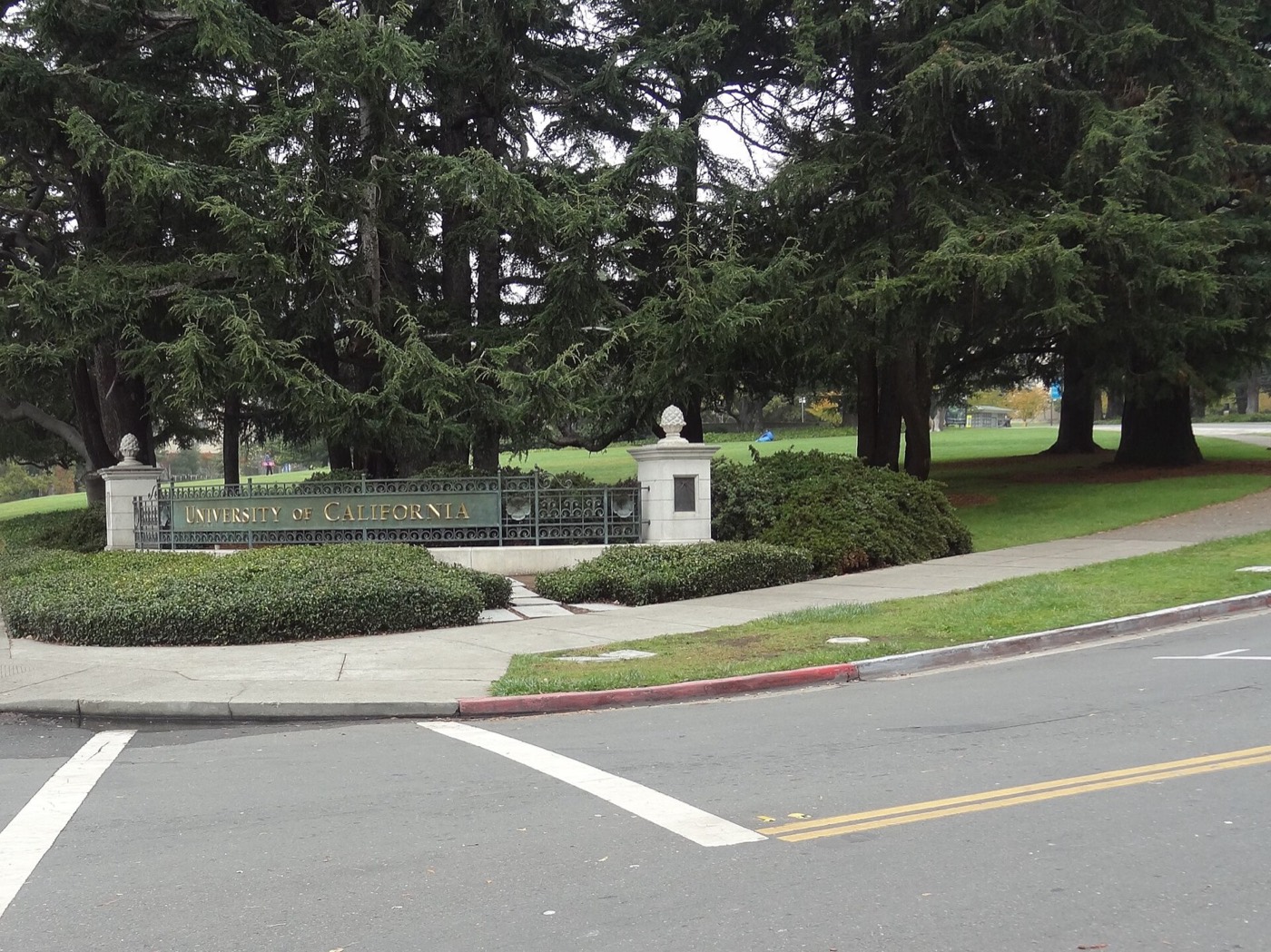
Doudna's laboratory was in California. Charpentier's was in Sweden — two groups, on two continents, before they joined forces on that 2012 paper.
That is the whole trick, stated plainly. A guide is a short strand of RNA that matches the target DNA, the way a key matches a lock. Cas9 is the enzyme that does the cutting once the guide finds the right spot. Change the guide's sequence, and you change what gets cut. Nature built the lock decades earlier; 2012 is when someone worked out how to cut a new key for any door.
The practical result: a researcher could write down a target DNA sequence, order a matching guide, and expect Cas9 to cut exactly there. That works in almost any cell, from almost any organism — which is why 2012 counts as the start of the editing era, not just one more laboratory finding about bacteria.
The work was done on two campuses: Doudna's lab at Berkeley, California, and Charpentier's at Umeå University in Sweden. The two groups joined forces for the 2012 paper, and the discovery was formally recognised in 2020, when Doudna and Charpentier shared the Nobel Prize in Chemistry for it — the first time two women had jointly won a Nobel in the sciences.
4. The first human test
A tool that works in a laboratory dish is not the same as a tool that works inside a person, and seven years passed between the 2012 paper and anyone finding out.
In July 2019, at the Sarah Cannon Research Institute in Nashville, Tennessee, a woman named Victoria Gray became the first patient in the United States with a genetic disease to be treated with CRISPR. Gray had sickle cell disease, an inherited blood disorder that causes episodes of severe pain and organ damage. The experimental therapy she received was developed by Vertex Pharmaceuticals and CRISPR Therapeutics, headquartered in the Kendall Square biotech district of Cambridge, Massachusetts — the same therapy that would later be approved as Casgevy.
The treatment edited Gray's own blood stem cells outside her body, to switch back on a kind of healthy haemoglobin that is normally only active before birth, and then returned those edited cells to her. It took months to know whether it had worked.
It had. Years later, Gray described her life afterward in her own words: "I finally get to live a normal life and be happy. It's unbelievable."
One patient is not proof a therapy works for everyone, and this video treats it that way — Gray's case was the opening trial, not the approval. But it is the moment the gap this video is about started closing: the first time the 2012 tool touched an actual patient, seven years after the paper that made it possible.
5. How the edit actually works
Here is what editing a gene means at the molecular level, because the rest of this video depends on it.
A human cell keeps its instructions, DNA, inside a nucleus at the cell's centre. To edit a gene, a cutting tool has to get past the cell's outer membrane, through its interior, and into the nucleus. That is where the one faulty instruction sits among thousands of correct ones. Every delivery problem this video mentions is really one problem: getting the editor to that one small room inside the cell, and nowhere else.
Once there, two different kinds of edit are used in the therapies this video covers.
The first is the original method: Cas9 is guided to the target and cuts both strands of the DNA there, like scissors. The cell's own repair machinery then patches the break — and in patching it, the faulty instruction is disrupted. That is how Casgevy works: not by rewriting the sickle cell gene, but by cutting a different gene nearby, which switches on a backup form of haemoglobin the body stops using after birth.
The second is newer and more delicate: base editing, which changes a single letter of the DNA code directly, chemically, without ever cutting both strands at once. No break, no repair process, no scissors — just one letter converted to another. It is slower to design but leaves less room for the cell's own repair to make a different mistake. Both of the 2025 cases later in this video use base editing rather than a cut.
6. What had to be solved first
Between 2012 and the first approved medicine in 2023, three separate problems had to be solved, and none of them was solved quickly.
The first was off-target cutting: an edit that lands somewhere other than the intended gene, which in the worst case damages a gene that was working fine. The second was delivery: getting the editing tool into the right cells in a living body, rather than scattered everywhere the bloodstream reaches. The third was manufacturing: taking a method that worked once, in one laboratory, and reproducing it safely, consistently, at the scale a hospital pharmacy needs.
None of these were solved all at once, or finally. They were solved well enough, for one disease at a time, in a specific way. What well enough looked like — and where it still did not hold — is the rest of this video.
It is worth naming here what the delay actually bought. Seven years between the programmable tool and the first patient is not bureaucracy for its own sake. It is the time it took to convince a safety-conscious system that this particular use, in this particular disease, of this particular method, would not do more harm than the disease it was meant to fix.
7. The first approved cure
On 8 December 2023, the U.S. Food and Drug Administration approved Casgevy, exagamglogene autotemcel, for sickle cell disease — the first medicine ever approved that works by CRISPR gene editing.
In the trial the FDA reviewed, 29 of 31 patients went at least a year without a single severe sickle cell crisis after one treatment. That is over ninety per cent. The approval covered patients 12 and older, an eligible population in the United States of about sixteen thousand people.
Casgevy is not a pill and not an injection in the usual sense. A patient's own blood stem cells are removed, edited outside the body the way Victoria Gray's were, and then returned by infusion — a process that takes months from start to finish and happens at a small number of specialised hospital centres.
Casgevy was built by Vertex Pharmaceuticals and CRISPR Therapeutics, both based in the Kendall Square biotech district of Cambridge, Massachusetts — one stretch of one American city responsible for the first medicine of its kind anywhere.
The medicine was approved in Washington, and built in Cambridge, in the United States.
Eleven years passed between the 2012 paper that made this kind of editing possible and the day it became an approved medicine. That is the gap from the opening chapter, closed — once, for one disease, in one country. Whether it stayed closed for anything else is the rest of this video.
8. The list starts growing
A single approved medicine could have been the end of the story. Instead, across the following three years, the list of what CRISPR-based editing could treat started to grow.
In December 2022, a 13-year-old named Alyssa Tapley was treated at Great Ormond Street Hospital in London. She became the first patient anywhere given a base-edited cell therapy, called BE-CAR7, for a form of leukaemia that had resisted every other treatment. In January 2024, Casgevy itself was approved for a second disease, transfusion-dependent beta-thalassaemia, a different inherited blood disorder treated with the same editing approach. And in July 2026, regulators expanded both of Casgevy's approvals to children as young as two.
Each of those is a separate, specific decision, not one technology unlocking everything at once. BE-CAR7 edits donor immune cells at four sites with base editing, so they can be prepared in advance rather than grown individually for each patient. By a December 2025 trial update, most of those treated patients were disease-free.
The number of patients choosing to start Casgevy's own treatment nearly tripled between its first year on the market and its second. A hundred and nine people started the process in 2024. Three hundred and one started it the year after that. A medicine can be approved and still take years to reach the people it was approved for — adoption is its own kind of gap, smaller than the one this video opened with, but real.
9. Editing a baby's DNA, bespoke
Every therapy so far in this video was built once and then given to many patients. In 2025, that changed.
KJ Muldoon was born with severe CPS1 deficiency, a disease that leaves the body unable to clear ammonia from the blood — a condition affecting roughly one birth in a million, and lethal in about half of those cases without treatment. There was no approved therapy for his specific mutation, because there were not enough patients with it to justify developing one through the usual route.
So a team at Children's Hospital of Philadelphia and Penn Medicine designed one anyway, led by Kiran Musunuru and Rebecca Ahrens-Nicklas. It was a base-editing therapy built around KJ's exact genetic error, delivered to his liver in a fatty particle carrying the edited instructions. From diagnosis to his first dose took about six months. He received two further doses in the weeks after.
Musunuru, describing the case after it was published, called it "the first step towards the use of gene editing therapies to treat a wide variety of rare genetic disorders for which there are currently no definitive medical treatments." That is a careful claim, not an overreach: this exact therapy will likely never be used again, built as it was for one child's exact mutation. What may be reusable is the six-month process that built it.
10. Where it still breaks
Not every trial in this video ends well, and the clearest example happened in the same stretch of time as KJ Muldoon's case.
Intellia Therapeutics has been testing an in-body CRISPR therapy called nex-z. Rather than editing cells outside the body and returning them, it is injected directly into the patient. That is a harder delivery problem than Casgevy's, because the editor has to find the right cells inside a living person, with no chance to check its work first. On 27 October 2025, a patient in the trial developed a severe liver injury. Two days later, the FDA placed a clinical hold on that trial and a related one, pausing both. On 5 November, the patient died.
The company's own account is specific, and this video keeps that precision rather than simplifying it: the patient died of septic shock from a perforated ulcer, a complication the company says was made worse by the earlier liver injury and its treatment. The hold itself was placed for the liver event, before the death — regulators acted on a warning sign, and the worse outcome followed. In January 2026, the FDA lifted the hold on the related, smaller trial. The trial where the death occurred remained on hold as this video was made.
This is what one of those earlier problems looks like when it stays unsolved. Delivery into the right place in a living body, the hardest of the three, is still the one most likely to fail.
11. Regulators try to keep up
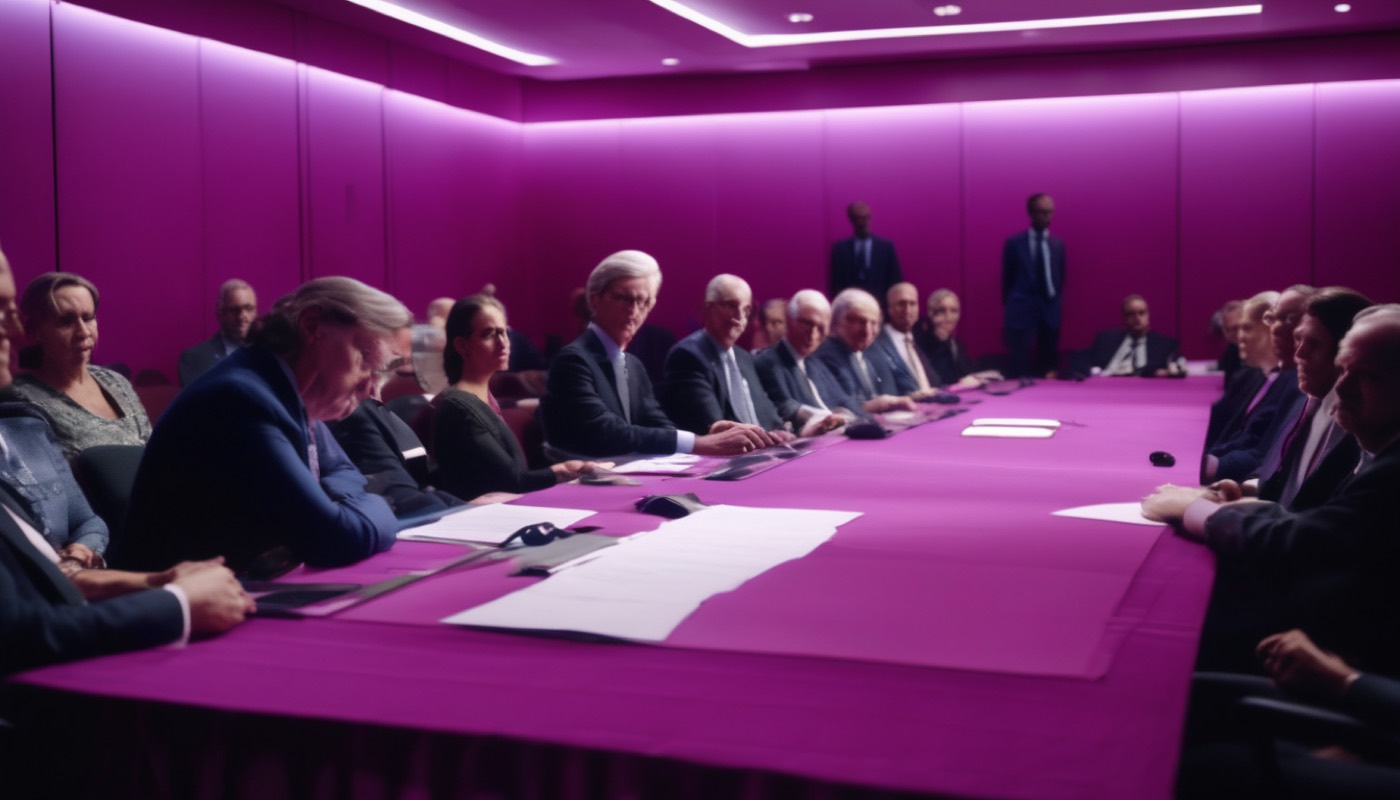
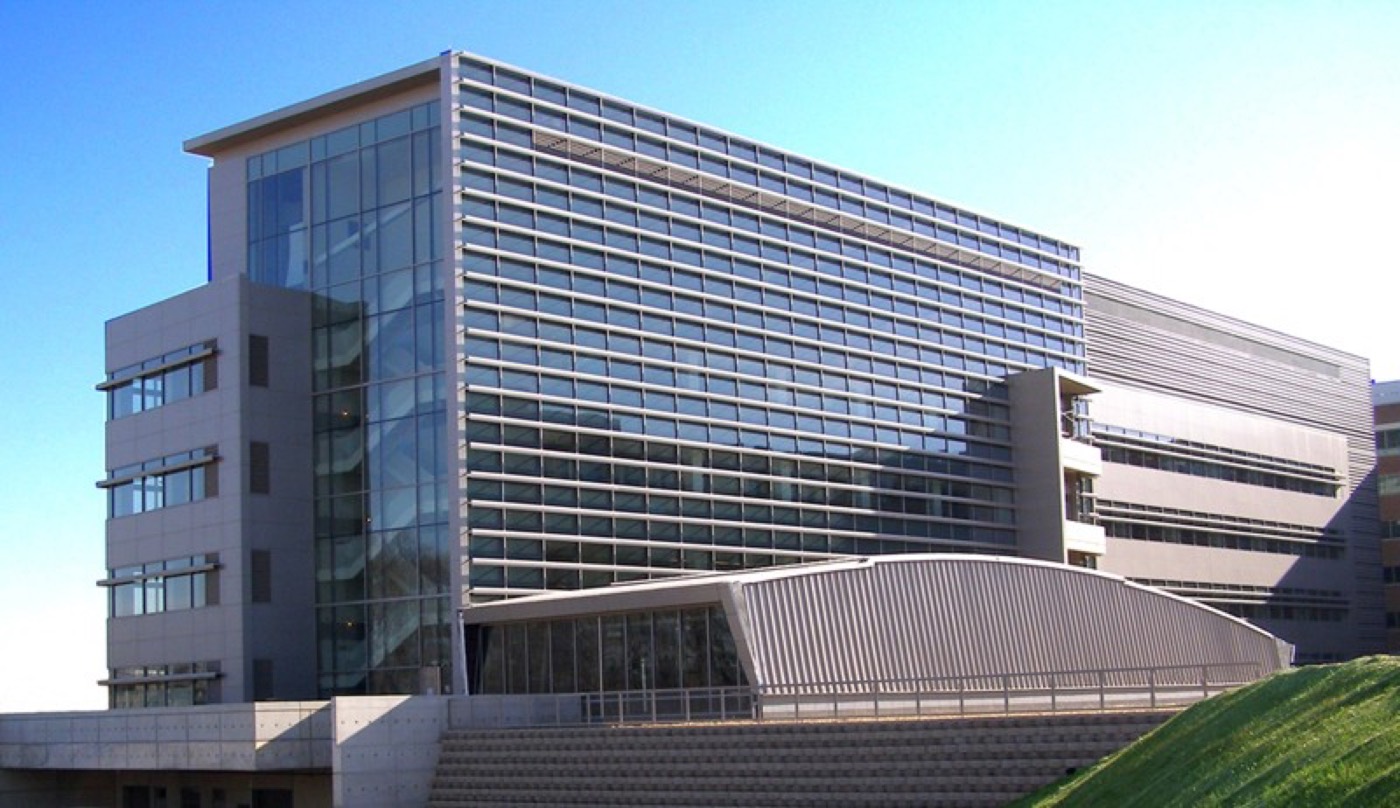
While some trials were succeeding and at least one was failing badly, regulators were trying to build a process that could handle either outcome faster.
On 11 January 2026, the FDA posted a policy update called Flexible Requirements: Cell and Gene Therapies Advance Innovation. It consolidated, into one public document, a set of manufacturing flexibilities that reviewers inside the agency had already been granting case by case — covering how these therapies are tested and validated on the way from a laboratory process to a repeatable medicine.
The FDA was careful to say what this was not: its own text states plainly that it did not change the legal requirements for these therapies. What changed is that a flexibility a company used to have to ask for, one approval at a time, is now written down in advance.
It is a small, administrative-sounding step, and this video names it as exactly that rather than inflating it. It is not a new law, and not a response to any single case here — just an attempt to make the years-long gap from earlier in this story shorter for whatever comes next.
12. Medicine, or still the exception?
So: has gene editing crossed into medicine, or is December 2023 still an exception rather than a rule?
Both answers have real evidence behind them. There are more than ten thousand known rare diseases, most of them genetic, cataloged by the National Organization for Rare Disorders. As this video was made, there were two approved CRISPR-based medicines, covering two related blood disorders. There was also one experimental therapy still in trials, and one therapy built for a single named child.
Measured against ten thousand diseases, two approvals is not a revolution. It is a foothold.
But a foothold is not nothing, and this video has tried to show why. The seven years from programmable tool to first patient, and the eleven years from there to first approval, are the same story. The six months it took to build KJ Muldoon's therapy is that story again, much faster. This whole video, from the approvals to the clinical hold, is evidence that this is a system still learning how fast it can safely move, on a technology that works.
The honest answer is neither triumph nor disappointment. CRISPR has become medicine for a small, specific, and growing number of patients. For the other ten thousand diseases on that list, it has not yet, and nobody watching this field expects that gap to close all at once.
Sources and credits
Photo credits (Wikimedia Commons)
- Jennifer Doudna, CRISPR-Cas9 co-discoverer: The White House, Public domain - https://commons.wikimedia.org/wiki/File%3AP20230620AS-0276_%2853233832252%29.jpg
- University of California, Berkeley campus (Doudna's university): Simon Cobb, CC0 - https://commons.wikimedia.org/wiki/File%3ACampus_of_the_University_of_California.jpg
- Kendall Square, Cambridge MA (Vertex/CRISPR Therapeutics biotech corridor): Tim Pierce, Public domain - https://commons.wikimedia.org/wiki/File%3AKendall_Square.jpg
- FDA White Oak campus, Silver Spring MD: The U.S. Food and Drug Administration, Public domain - https://commons.wikimedia.org/wiki/File%3AFDA_Bldg_62_-_Exterior_%285161375340%29.jpg


Primary sources
- Mojica, Diez-Villasenor, Garcia-Martinez, 'Intervening Sequences of Regularly Spaced Prokaryotic Repeats Derive from Foreign Genetic Elements', Journal of Molecular Evolution, 2005.
- Barrangou, Horvath et al., 'CRISPR Provides Acquired Resistance Against Viruses in Prokaryotes', Science, 23 March 2007.
- Jinek, Chylinski, Fonfara, Hauer, Doudna, Charpentier, 'A Programmable Dual-RNA-Guided DNA Endonuclease in Adaptive Bacterial Immunity', Science, 28 June 2012 (online).
- NobelPrize.org, 'The Nobel Prize in Chemistry 2020 - Popular information'.
- NPR, Rob Stein, 'In A First, Doctors In U.S. Use CRISPR Tool To Treat Patient With Genetic Disorder', 29 July 2019, and 'First Sickle Cell Patient Treated With CRISPR Gene-Editing Still Thriving', 31 December 2021.
- FDA, 'FDA Approves First Gene Therapies to Treat Patients with Sickle Cell Disease', 8 December 2023.
- Vertex/CRISPR Therapeutics investor release, 16 January 2024 (Casgevy beta-thalassaemia approval); Healio and Pharmacy Times coverage of the FDA's paediatric label expansion, July 2026.
- Vertex Pharmaceuticals Q4 2025 earnings results, reported 12 February 2026 (BioPharma Dive coverage) - Casgevy patient-initiation figures.
- Great Ormond Street Hospital/UCL press materials on Alyssa Tapley and BE-CAR7, 2023; ASH 2025 trial-update coverage, December 2025.
- Musunuru et al., 'Patient-Specific In Vivo Gene Editing to Treat a Rare Genetic Disease', New England Journal of Medicine, 15 May 2025; NBC News and CHOP/Penn Medicine press releases, 15 May 2025.
- Intellia Therapeutics, SEC Form 8-K filings, October 2025-January 2026; CGTLive, 9 November 2025; Intellia press release, 27 January 2026 (MAGNITUDE-2 hold lifted).
- FDA, 'Flexible Requirements: Cell and Gene Therapies Advance Innovation', fda.gov, 11 January 2026.
Not regulated financial advice.