
Cement: Can We Build Without the Carbon?
Heating limestone to make cement clinker releases carbon dioxide from the limestone itself, whatever heats the kiln. This video follows the two separate fixes to that problem: making less clinker, and capturing the carbon dioxide that clinker production still produces.
It traces Joseph Aspdin's 1824 Portland cement patent in Leeds through to the modern limestone-to-clinker process, then explains lower-clinker blends including LC3, which researchers at ETH Zurich report cuts CO2 by around 40% using half the clinker of ordinary cement.
The video is equally clear about limits: Brevik captures about half of one plant's emissions, not all of it; Heidelberg's evoZero near-zero product claims use mass-balance accounting, not a physical zero-carbon guarantee; and as of 25 May 2026, the SEI/LeadIT tracker projects less than 2% of the entire cement industry's emissions being captured by 2035, even with more than 175 projects in development worldwide.
Every figure is on screen with its source and date.
In these topics
Chapters
- The carbon inside a bridge
- How Portland cement became the default
- From limestone to clinker
- Two sources of CO2
- Make less clinker first
- Capture the remaining exhaust
- Follow the CO2 to permanent storage
- What a working plant proves
- Who pays for lower-carbon cement?
- One factory versus an industry
- Can we build without the carbon?
Video notes
1. The carbon inside a bridge
A bridge, a housing estate, a motorway flyover. Almost everything built in the last century rests on one grey powder.
That powder is cement. Mixed with water, sand and crushed stone, it becomes concrete — the most-used manufactured material on Earth. Cement is the glue. Water, sand and stone are the bulk.
Cement is made by heating limestone until it transforms into hard pellets called clinker, then grinding those pellets almost to dust. That single step, turning limestone into clinker, is where this video's real question begins.
Imagine a cement kiln running on entirely clean electricity, no fossil fuel anywhere near it. Would the cement coming out the other end be carbon-free? It would not. Limestone itself gives off carbon dioxide simply by being heated, whatever is doing the heating.
So a clean kiln solves one problem and leaves another standing. This video follows both: making less of the clinker that causes it, and capturing the carbon dioxide that heating clinker cannot avoid.
One cement plant in Norway now does both at once, and does them at a scale nobody else has matched. Whether that one plant points the way for an entire industry, or simply proves what a very expensive exception looks like, is the question this video keeps coming back to.
2. How Portland cement became the default

To understand why clinker is so hard to avoid, start with how this particular recipe won.
In 1824, a bricklayer named Joseph Aspdin patented a cement in Leeds, England. He called it Portland cement, after the pale stone it resembled once set. That patent is the starting point for the cement almost every building on Earth now uses.
Aspdin's own process was crude by later standards, burned in small batches by hand. The technology that scaled it up came later, and changed everything about how fast cement could be made.
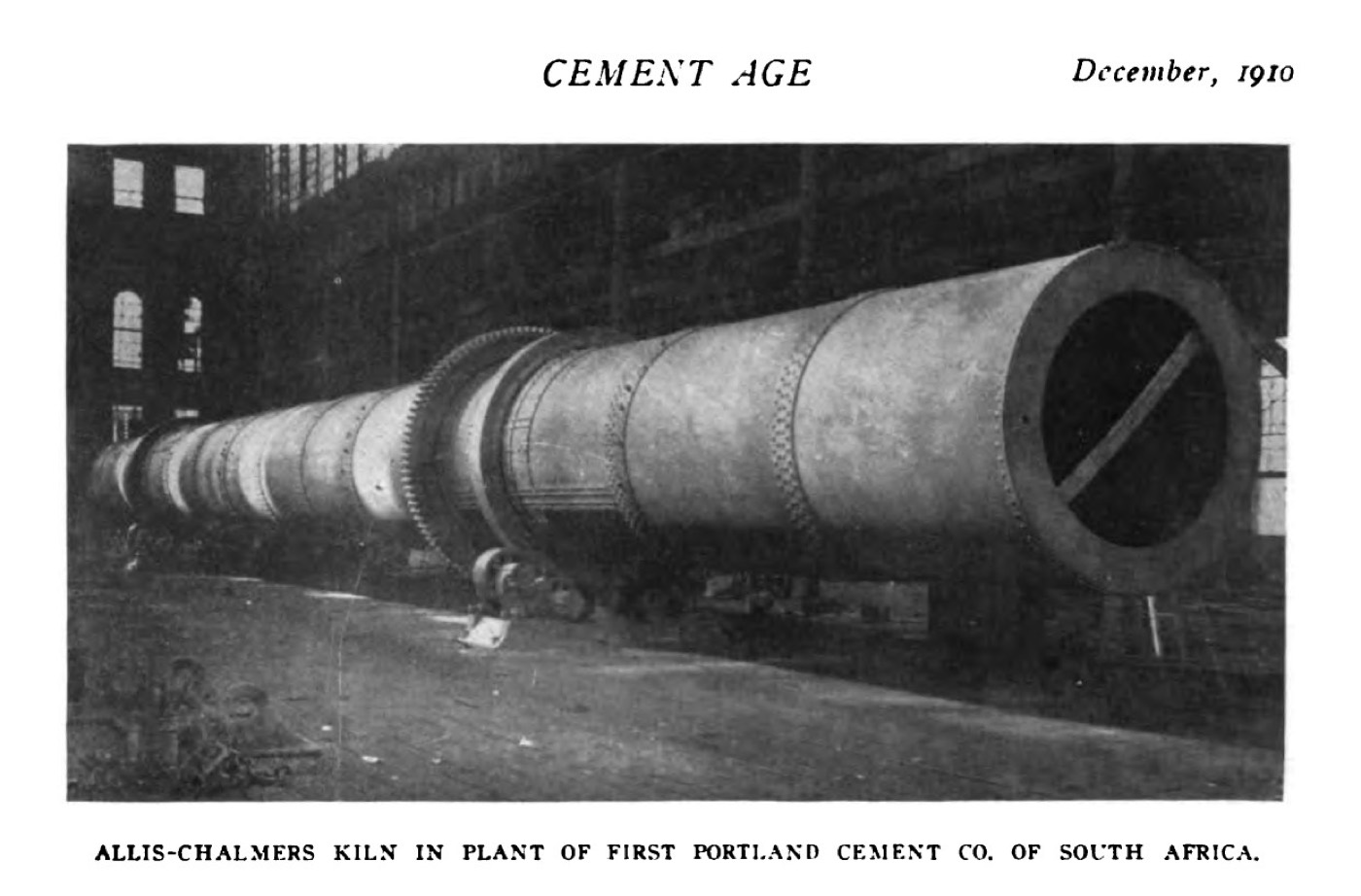
This is a rotary kiln from 1910, photographed at a cement works in South Africa. It is not Aspdin's own equipment, but the kind of continuous, rotating kiln that replaced his small batch-fired process within a few decades. A rotary kiln turns slowly, tumbling raw material through ever-hotter zones instead of baking it in one static batch.
That shift, from batch to continuous, is what let cement go from a specialist material to the default choice for roughly every poured structure in the modern world.
Two centuries after Aspdin's patent, Portland cement clinker is still made the same chemical way he discovered, just at a scale and a speed he could not have imagined. The chemistry has not changed. The question of what that chemistry costs the climate is entirely a twenty-first-century one.
3. From limestone to clinker
So what actually happens inside a modern cement plant, between the quarry and the bag?
Limestone is quarried and crushed, then blended with smaller amounts of other minerals into what the industry calls raw meal. That raw meal is fed into the top of the plant and moves downward through progressively hotter stages.
First comes the preheater, a tower of chambers that uses waste heat from lower down to warm the raw meal before it reaches the hottest zone. Then comes the calciner, where most of the chemical transformation actually begins.
The calciner is where limestone first starts giving off carbon dioxide, at temperatures lower than the kiln itself needs. From there, the material drops into the kiln proper, where it reaches roughly 1,450 degrees Celsius — hot enough to fuse it into hard, marble-sized pellets called clinker.
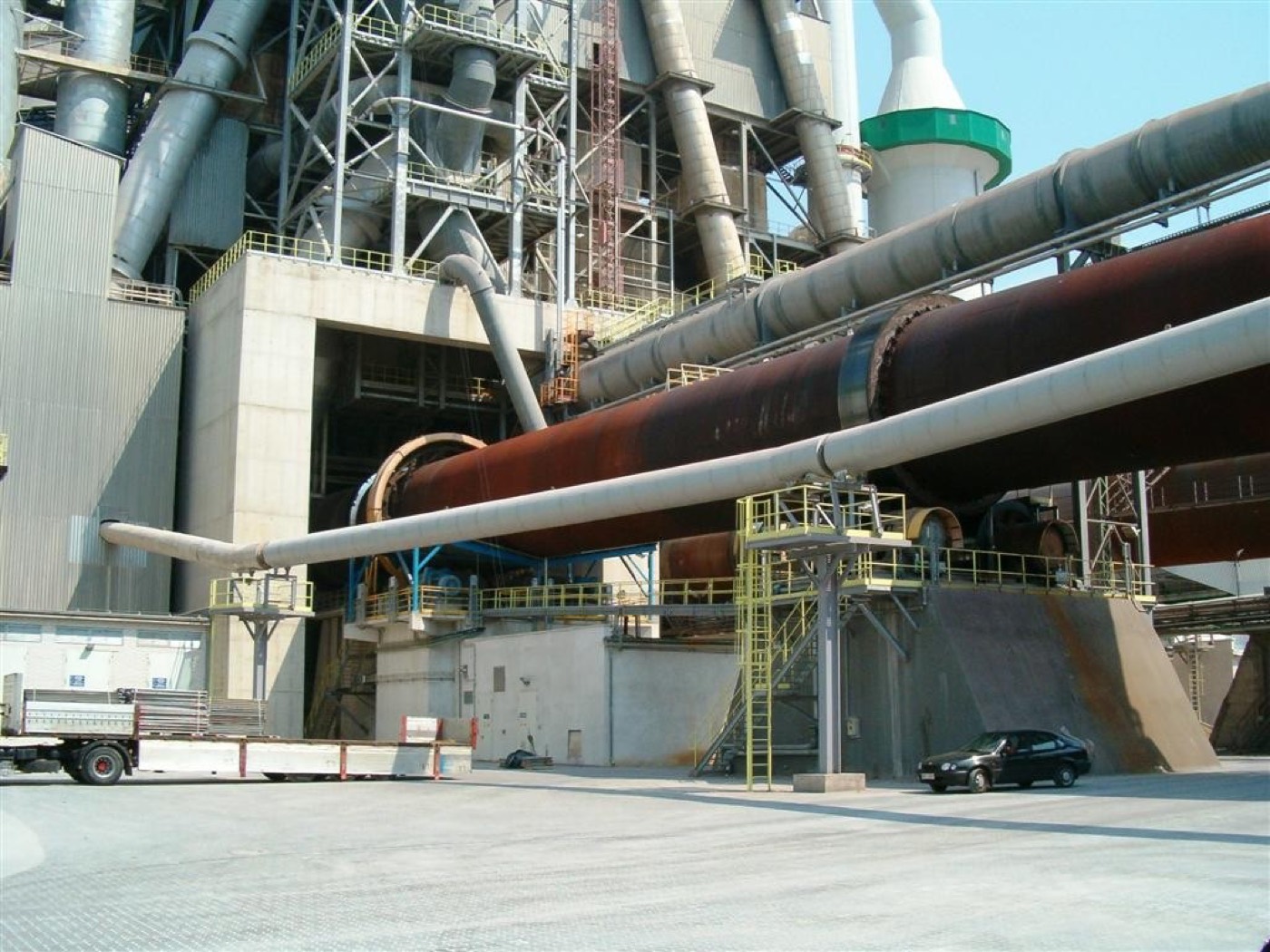
This is a rotary kiln at the Górażdże cement plant in Poland — the same basic design the whole industry still uses, scaled up from the 1910 photograph in the last chapter. Raw meal enters cooler at one end and leaves as clinker at the other, after tumbling through the hottest part of the cylinder.
After the kiln, the clinker is cooled rapidly, then ground almost to powder together with a small amount of gypsum, which controls how the finished cement sets.
That ground mixture, clinker plus gypsum, is cement. Add water at a building site, and a chemical reaction begins that binds everything together. Add sand and crushed stone as well, and the result is concrete.
Every one of those steps, except the last, burns fuel and releases heat. The next chapter explains why that fuel is only half of the plant's carbon problem.
4. Two sources of CO2
A cement plant's carbon dioxide comes from two genuinely separate sources, and confusing them is the easiest mistake to make about this whole subject.
The first source is fuel. Burning coal, gas or waste to heat the kiln and calciner releases carbon dioxide, exactly as burning any fuel does anywhere else. Switch that fuel to clean electricity, and this source falls to close to nothing.
The second source is the chemistry itself. Limestone is mostly calcium carbonate. Heated past a certain point, it breaks down into calcium oxide, the active ingredient in clinker, and carbon dioxide, which escapes as gas. That reaction is called calcination, and it happens whether the heat comes from coal or from clean electricity.
In the United States, calcination accounts for roughly 60% of a typical plant's carbon dioxide, with fuel combustion responsible for most of the rest. That is a national industry estimate, not a fixed law — the exact split shifts with each plant's fuel mix and efficiency.
So replacing fossil fuel at the kiln is real progress, and it is not enough on its own. The calcination share remains, baked into the chemistry of limestone itself, however the kiln is heated.
This is the two-source problem the rest of this video is built around. Making less clinker shrinks how much calcination happens in the first place. Capturing the exhaust catches what calcination still releases, however little clinker is used.
5. Make less clinker first
If calcination cannot be switched off, the next best option is simple: use less clinker to begin with.
Clinker does not have to be the whole of a finished cement. Other materials can replace part of it: ground limestone, slag left over from steelmaking, and fly ash from coal power stations. So can clay that has been specially heated, which the industry calls calcined clay. Properly blended, the cement still sets and hardens the way it needs to.
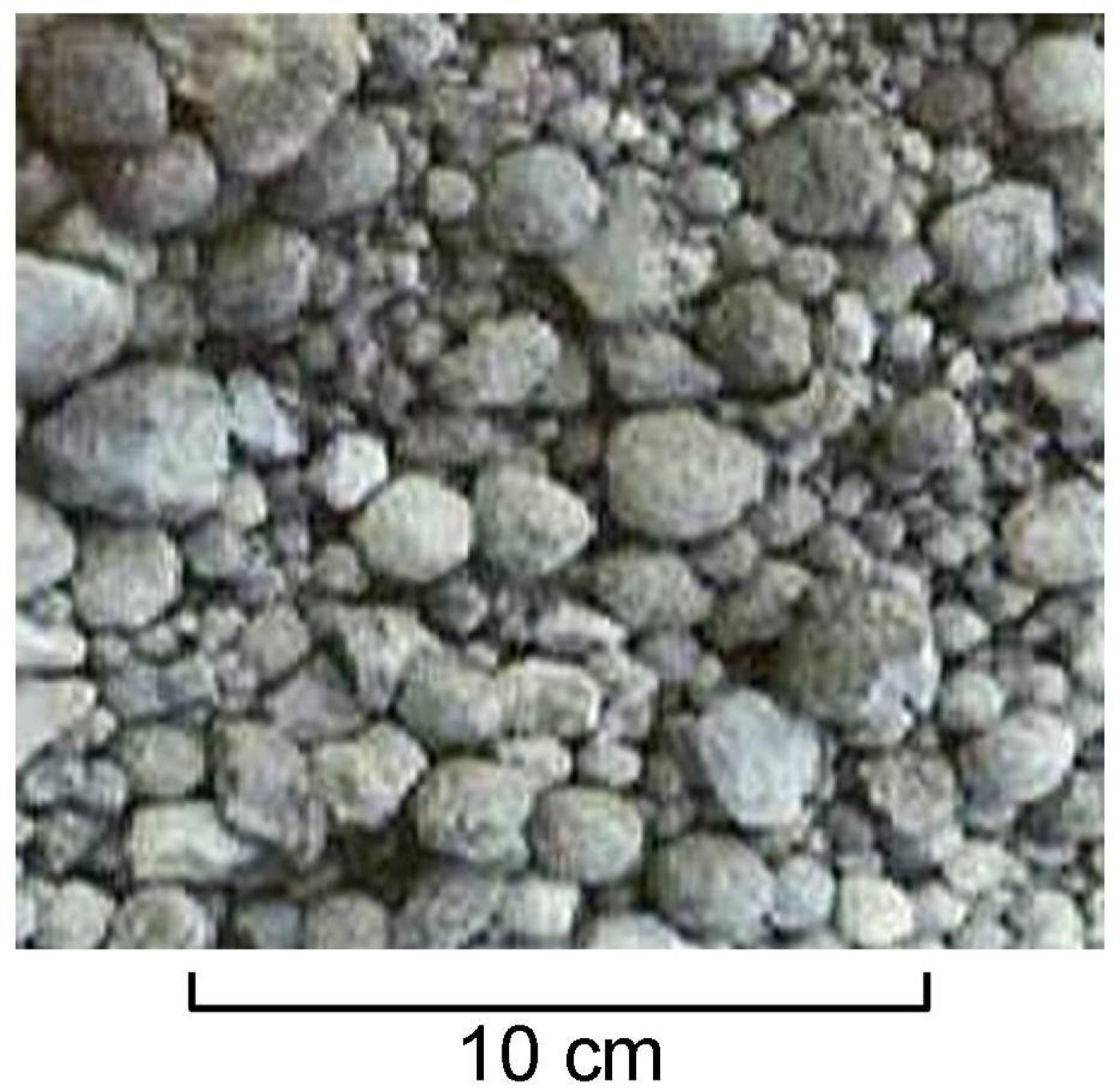
This is a sample of clinker itself, the hard pellets a kiln produces before grinding.
One such blend, called LC3, replaces half that clinker with a mix of calcined clay and limestone. Researchers at ETH Zurich reported, in November 2023, that LC3 cuts carbon dioxide emissions by around 40% compared with standard cement.
That 40% figure is specific to LC3's own mix and its own reported comparison. It is not a guarantee every blended cement delivers the same saving.
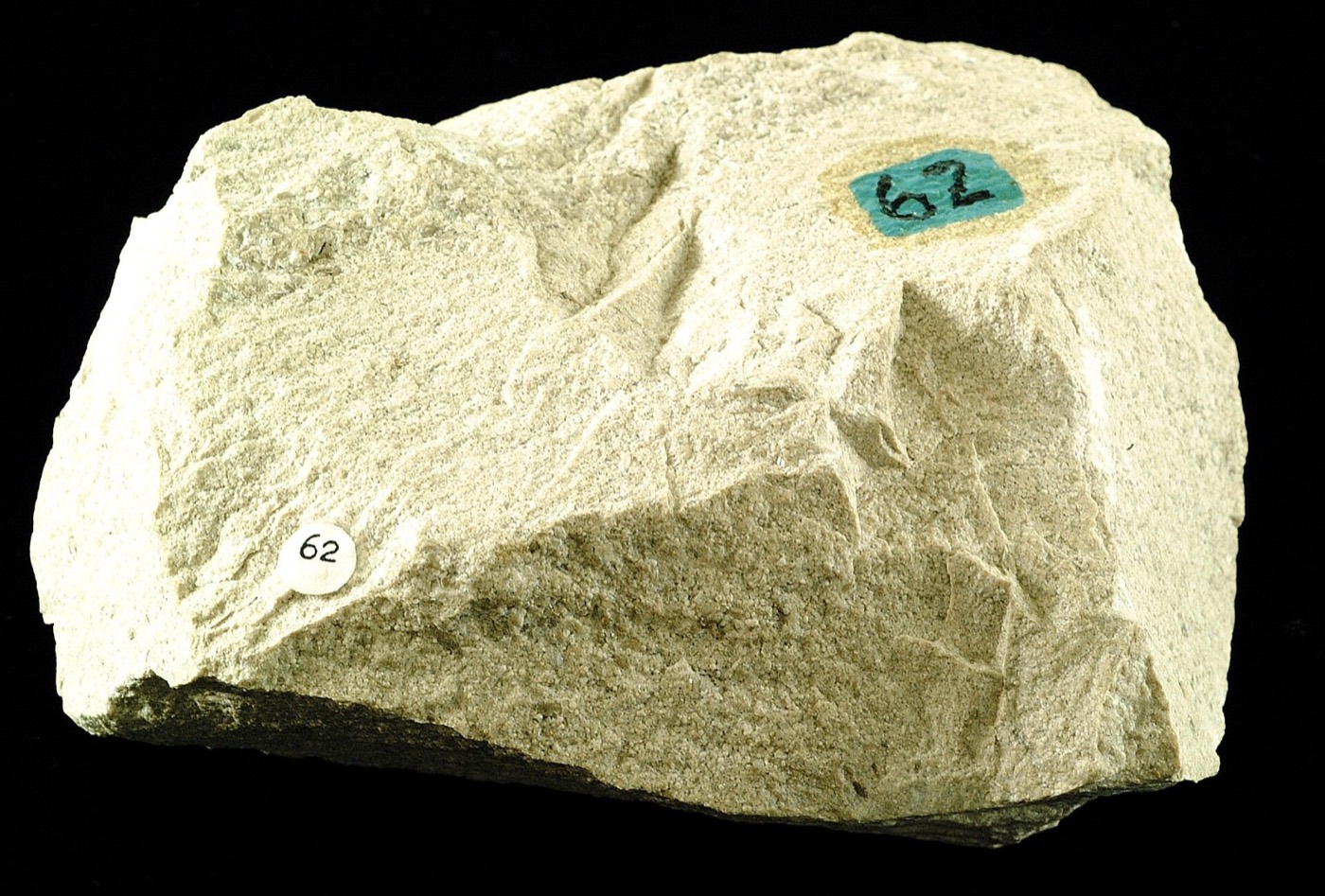
This is oolitic limestone, one of the plainer raw ingredients blended into cement in smaller amounts, to stretch the clinker further without losing strength.
Lower-clinker blends are not a free swap everywhere. Supply of good slag and fly ash is limited and shrinking, as steel and coal plants themselves change. Calcined clay needs its own heating step, with its own energy cost.
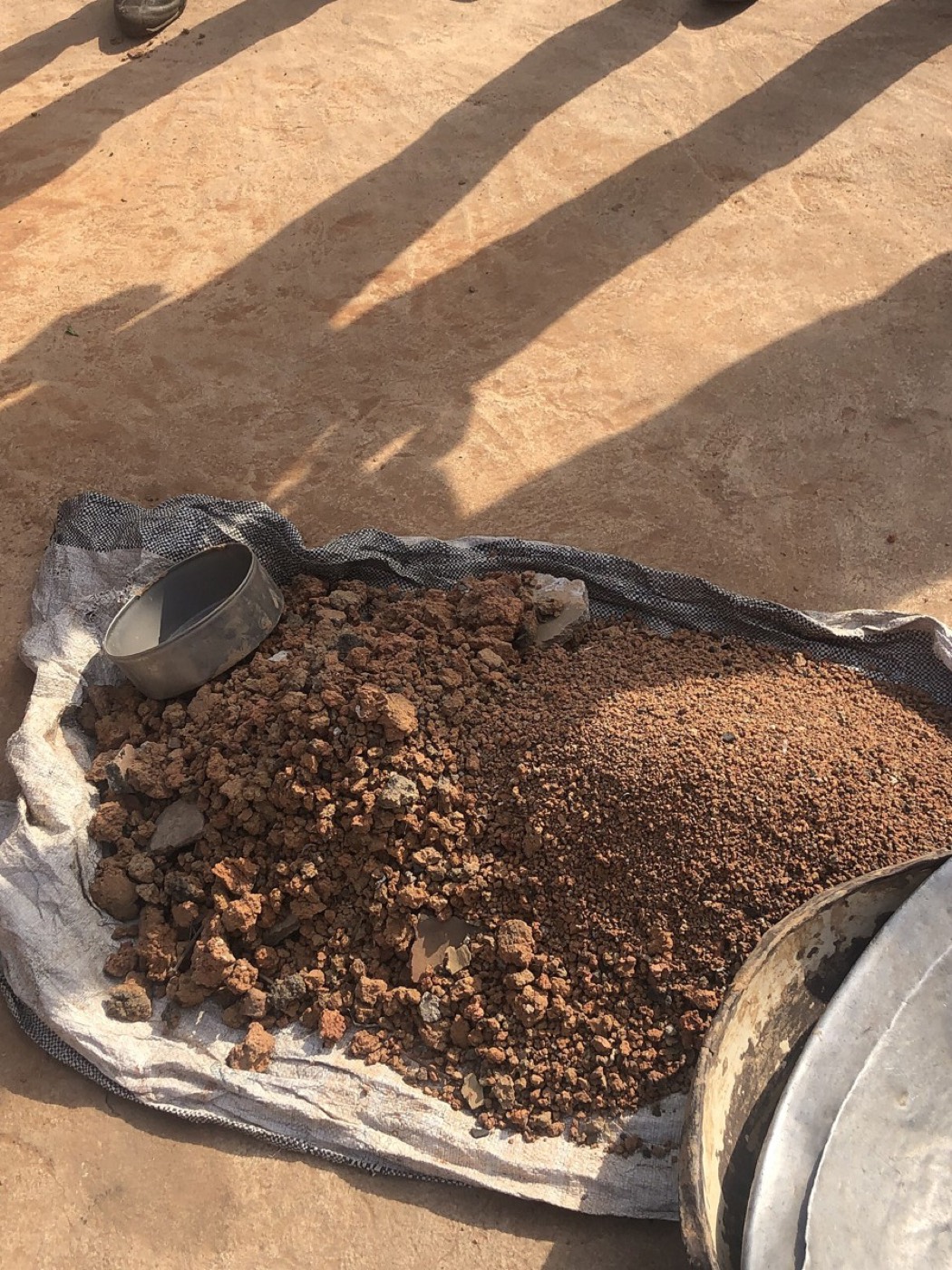
This is a sample of raw clay, shown here to illustrate the material family LC3 draws on. It is not the calcined, heat-treated clay LC3 actually uses, and it is not a verified ingredient of any named LC3 plant.
Some blends also cure more slowly than ordinary cement, or need adjusting for the specific job a building needs cement to do. So making less clinker helps everywhere it is used, but it cannot by itself replace every tonne the world pours each year.
6. Capture the remaining exhaust
Whatever clinker a plant still makes, the calcination inside it still releases carbon dioxide. The other half of this video's answer is catching that gas after the fact.
Heidelberg Materials' cement plant at Brevik, in Norway, reached mechanical completion of a carbon capture unit on 2 December 2024. Once running fully, it is designed to capture 400,000 tonnes of carbon dioxide a year — about half the plant's total emissions.
The process starts with cleaning the hot exhaust gas, removing dust and other impurities before the carbon dioxide itself can be pulled out.
The cleaned gas then passes through a liquid chemical called an amine, which binds to carbon dioxide and pulls it out of the gas stream. That is called amine absorption. Heating the amine afterwards releases the captured carbon dioxide again, now separated from the rest of the exhaust, ready to be compressed.
On this timeline, the plant's own milestones. Mechanical completion came first, in December 2024. The first carbon dioxide was actually captured in the absorber on 12 February 2025. By 5 May 2025, that captured gas was being turned to liquid, ready for transport.
Within days, the scale became concrete rather than theoretical. By early May, the plant had stored 1,000 tonnes of liquid carbon dioxide on site — its own biggest milestone yet.
Capturing the gas, though, is only step one. Liquid carbon dioxide sitting in a tank in Norway still has to go somewhere permanent.
7. Follow the CO2 to permanent storage
So where does Brevik's captured carbon dioxide actually end up?
Once liquefied, the carbon dioxide is loaded onto specialised ships at Brevik and carried along the Norwegian coast to a receiving terminal at Øygarden, near Bergen. From there it travels onward by pipeline, out under the North Sea itself.
That pipeline runs about 100 kilometres offshore to an injection point named Aurora, where the carbon dioxide is pumped roughly 2,600 metres beneath the seabed into porous rock, sealed above by solid caprock that keeps it from working back upward.
The Northern Lights joint venture, which runs this storage link, reported the first carbon dioxide safely injected and stored at Aurora on 25 August 2025 — the far end of the same molecule of gas that left Brevik's exhaust months earlier.
That first injection was not the system running at capacity. It was proof the whole chain, from kiln to seabed, actually works end to end.
Northern Lights' first phase can store 1.5 million tonnes of carbon dioxide a year. An expansion, already approved, would raise that to at least 5 million tonnes a year — though that expanded capacity was not yet operating when this video was made.
The storage site itself is monitored rather than simply sealed and left. Wells, sensors and the caprock layer above the reservoir are all tracked, to confirm the carbon dioxide is staying exactly where it was put.
8. What a working plant proves

Brevik and Northern Lights together prove the engineering works. They prove something narrower than "zero-carbon cement," and that distinction matters.
Brevik's capture unit is designed to catch about half the plant's total emissions, not all of it. The other half — mostly fuel combustion the capture unit was never built to touch — keeps being released exactly as before.
Heidelberg Materials sells some of its output under the name evoZero, using an accounting method called mass balance. Captured reductions, achieved somewhere in the production system, are allocated to specific sold product on paper, rather than every bag of that cement physically containing none of the original emissions.
That is an accounting choice, not a claim that any single bag of cement was made with zero carbon dioxide released anywhere in its production.
So "near-zero," in this context, describes a lifecycle calculation across a plant's output, not a physical property you could test for in any one tonne pulled off the line.
None of that makes the capture at Brevik meaningless. It is the first full-scale cement carbon capture plant in the world, running, storing gas permanently, and doing exactly what it was engineered to do.
What Brevik proves is narrower than it first sounds, and more useful because of it: the mechanism for half a plant's emissions works at industrial scale. Whether the rest of the industry can afford to copy it is the next question.
9. Who pays for lower-carbon cement?

None of this is free. Capturing, liquefying, shipping and permanently storing carbon dioxide all cost money, on top of running a cement plant in the first place.
Longship, the Norwegian government programme behind Brevik and Northern Lights, is costed at NOK 34 billion — about £2.4 billion — covering construction and ten years of operation. Of that total, NOK 22 billion comes from the Norwegian state.
That figure covers more than Brevik alone: it includes a planned second capture plant at a waste-to-energy site in Oslo, plus the ships and pipeline that move and store every tonne captured anywhere in the chain.
Those costs land somewhere. Capital to build the capture plant, extra heat and power to run it, and ships and pipeline to move the gas all have to be paid for. So does the storage site itself. Somebody pays for all of that: the plant's owner, its customers, or taxpayers funding programmes like Longship.
One 2023 industry estimate put the average premium for low-emission cement at 75% above ordinary cement's production cost. That figure describes production cost in 2023, not a price any builder pays today, and not the added cost of an entire finished building.
Cement is usually a small share of what a building costs overall, so even a real premium on cement itself does not translate directly into the same percentage rise in construction costs.
Public money, in Norway's case, is carrying almost two-thirds of Longship's total bill. Whether other countries are willing to subsidise carbon capture at a similar share is an open question this video does not answer.
10. One factory versus an industry
So does one working plant mean the cement industry has solved this? The scale says otherwise.
A group of researchers called the Leadership Group for Industry Transition, known as LeadIT, tracks capture projects worldwide, from early planning through to construction. By late May 2026, its tracker listed more than 175 of them.
That sounds like a wave of activity, and in one sense it is. But LeadIT's own projection is blunt: even if every tracked project goes ahead on schedule, planned capture would cover less than 2% of the entire cement industry's emissions by 2035.
Cement production is enormous to begin with. LeadIT puts recent global output at roughly 4 billion tonnes a year, responsible for around 8% of the world's carbon dioxide emissions. That is cement specifically, not concrete, and carbon dioxide specifically, not every greenhouse gas.
Against totals that large, one plant capturing 400,000 tonnes a year is a genuine first, and it is also a rounding error.
Brevik currently stands as the largest cement carbon capture project running anywhere. LeadIT's tracker shows roughly a dozen more projects at a similar stage worldwide, with 38 projected to be operating by 2035 — a real expansion, and still a small fraction of the plants making cement today.
That gap, between one plant proven and an industry transformed, is the honest state of this technology in 2026.
11. Can we build without the carbon?
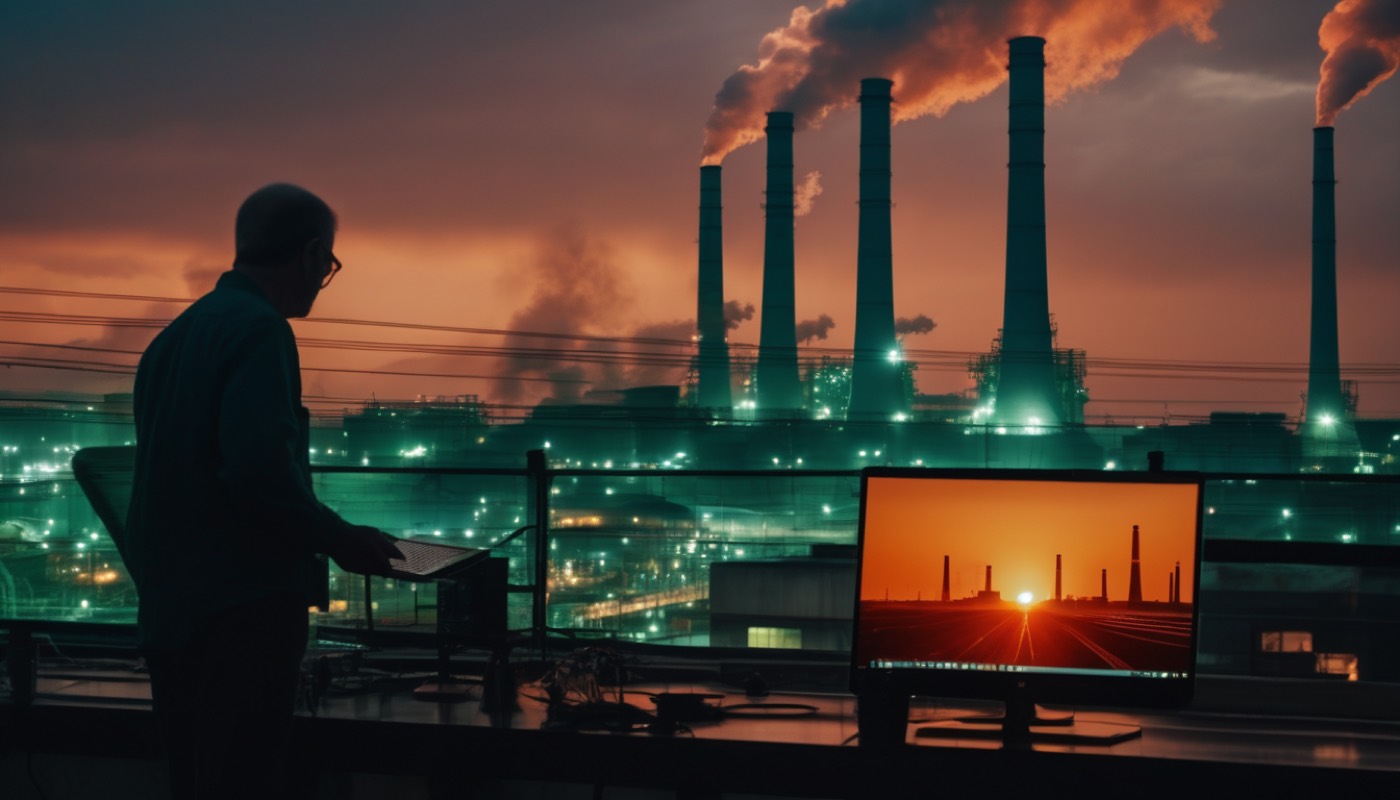
So, can cement be built without the carbon that has always come with it?
Not through any single fix. Making less clinker reduces how much calcination happens per tonne of cement. Capturing exhaust gas catches carbon dioxide that calcination still produces, wherever clinker is still made. Neither one, alone, gets close to closing the gap this video has traced from quarry to seabed.
Verified, permanent storage — like the rock two and a half kilometres under the North Sea at Aurora — is what makes captured carbon dioxide a genuine climate answer rather than a gas moved from one place to another. Without it, capture is just relocation.
Brevik shows every one of those pieces working together, at the scale of one plant. Scaling that to the roughly 4 billion tonnes of cement poured every year is a different, much larger problem, and nobody tracking it claims otherwise.
Is lower-carbon cement moving the construction industry forwards, or does the cost and scale of carbon storage hold it back? On the evidence gathered here, both things are true at once: the engineering works, proven at Brevik, and fewer than 2% of the industry's emissions are on track to be captured by 2035.
Forwards, for one plant. Backwards still describes almost everywhere else. Closing that gap is now a question of money and political will, not of whether the chemistry can be made to work.
Sources and credits
Photo credits (Wikimedia Commons)
- Portland cement clinker nodules with 10 cm scale; Commons upload 2007: LinguisticDemographer at English Wikipedia, Public domain - https://commons.wikimedia.org/wiki/File%3ALDClinkerScaled.jpg
- Oolitic limestone sample, Salem/Spergen Limestone, Indiana; photographed 5 April 2001: Mike Davis, CC0 - https://commons.wikimedia.org/wiki/File%3AOolitic_limestone_%28GeoDIL_number_-_297%29.jpg
- Raw clay sample used for pottery in northern Ghana, 20 April 2024; raw clay illustration only, not calcined clay or a verified LC3 feedstock: Alooissah, CC0 - https://commons.wikimedia.org/wiki/File%3AClay_soil_for_moulding_pots.jpg
- Rotary cement kiln at Górażdże cement plant near Chorula, Poland, 8 May 2006: Jb957, CC0 - https://commons.wikimedia.org/wiki/File%3ACement_kiln_in_Gorazdze_Cement_plant.JPG
- Historic Allis-Chalmers rotary kiln at First Portland Cement Co., South Africa, published in Cement Age December 1910; not Aspdin’s 1824 kiln: Editorial staff and correspondents of the journal Cement Age, Public domain - https://commons.wikimedia.org/wiki/File%3AAllis-Chalmers_rotary_cement_kiln_photo_in_Cement_Age_1910_v11_n6_p398.png


Primary sources
- MPA Cement, 'Portland Cement: 200 Years of Building for the Future' (2024) - Joseph Aspdin's 1824 Portland cement patent, Leeds.
- PCA, 'Roadmap to Carbon Neutrality' (Jan 2024) - ~60% of US cement-plant CO2 from calcination; CaCO3 -> CaO + CO2 chemistry.
- Brevik CCS, 'Project Update' - first CO2 captured 12 Feb 2025; first liquefaction 5 May 2025; 1,000 tonnes stored 9 May 2025.
- Norwegian Ministry of Energy, Longship release (17 Jun 2025, corroborated via thelocal.no and esgnews.com) - NOK 34bn total cost including 10 years' operation, NOK 22bn state support.
- ETH Zurich, 'Green change in a grey industry' (Nov 2023) - LC3: 50% clinker, ~40% CO2 cut vs ordinary cement.
- IEA/IRENA/UN Climate Champions, 'Breakthrough Agenda Report: Cement' (2023) - 75% average 2023 production-cost premium for low-emission cement.
- SEI/LeadIT (25 May 2026, corroborated via decarbonfuse.com) - 175+ CCUS/calcined-clay projects tracked; <2% of cement emissions projected captured by 2035; 38 projects projected operating by 2035; ~4bn tonnes cement and ~8% of global CO2 in 2024.
- Heidelberg Materials, Carbon Bank: Transactions (undated) - evoZero mass-balance accounting, used cautiously; page did not fully render on re-fetch 9 Oct 2026.
Not regulated financial advice.