
Green Steel: Can Hydrogen Replace the Blast Furnace?
Steel is responsible for somewhere between seven and ten per cent of the world's energy-related CO2 emissions, by the International Energy Agency's count, and seven to eight per cent of all human-caused greenhouse gas emissions by broader industry tracking. Almost all of it is still made the way it has been made for more than a century: iron ore reduced with coke in a blast furnace, in a reaction that puts carbon dioxide into the air as an unavoidable part of the chemistry itself, not as a side effect of the fuel.
This video explains that chemistry in full - why coke is both the furnace's fuel and its reducing agent, why scrap and the electric arc furnace can only ever be part of the answer, and how hydrogen direct reduction does the same job coke does, leaving water instead of carbon dioxide behind.
And then the money. Stegra agreed a 1.4 billion euro financing round on 14 April 2026, led by a consortium organised by the Wallenberg family's investment arm, closing on 24 June 2026 - bringing its total financing close to 8 billion euros. SSAB's own new electric arc furnace at Oxelosund was separately delayed in May 2026 by a permitting appeal over its power connection. Then, on 30 September 2026, Stegra's own board announced that a 100-day review had found building costs running higher than assumed, that further capital would be needed, and that chief executive Henrik Henriksson was being replaced by Hakan Buskhe. Every delay in this story has come from permits, power lines and financing - not from the reaction failing to work.
Finally, the cost: green steel selling at a premium of roughly 100 to 170 euros a tonne over conventional steel through the first half of 2026, against a European Union carbon border tax that, since 1 January 2026, has started putting a carbon cost on imported conventional steel too.
The question the video leaves open, deliberately: is this a real industrial shift, or a subsidy-dependent experiment that has not yet proven it can stand on its own.
Educational documentary. Not financial or investment advice.
In these topics
Chapters
Video notes
1. The material under everything
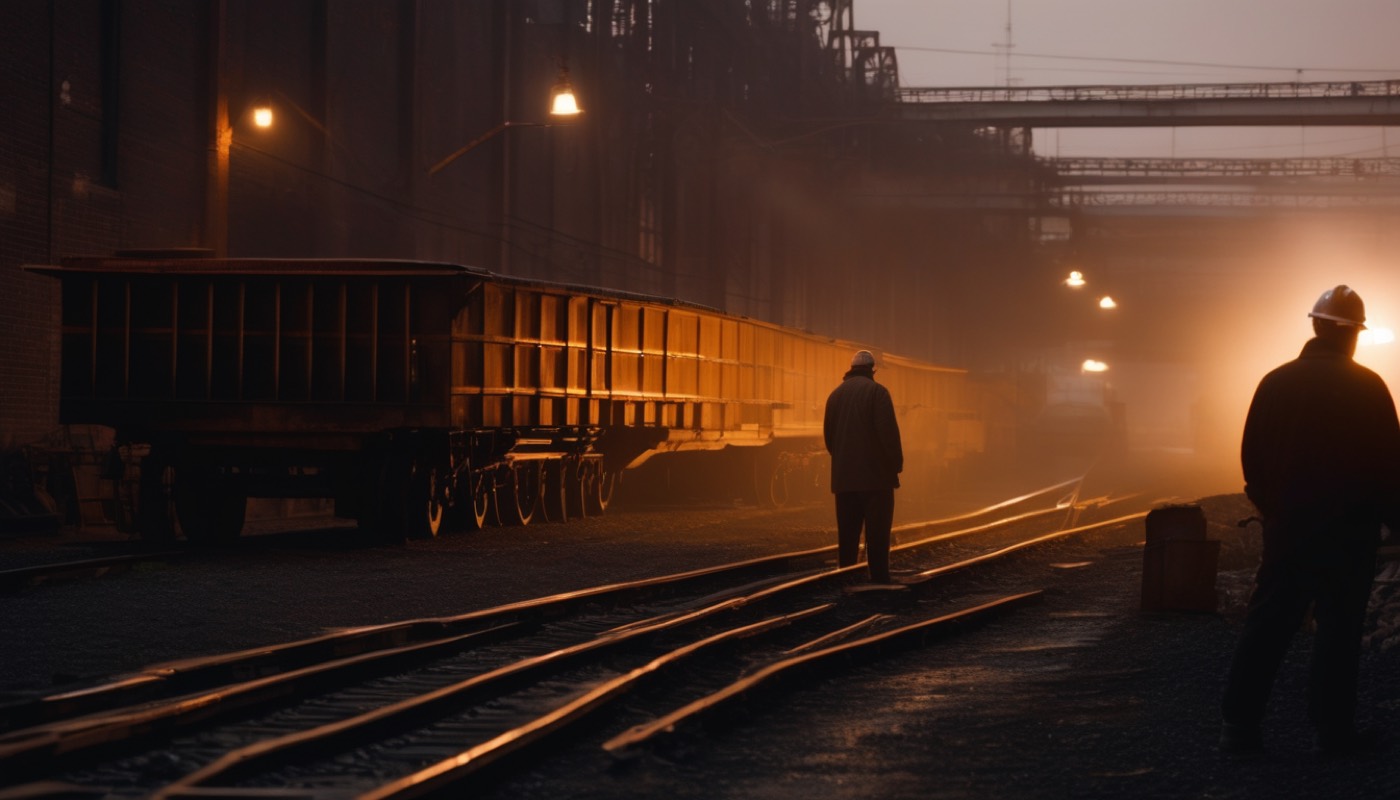
Steel holds up the modern world, in the most literal sense there is. It is the frame of a car, the bar inside a concrete building, and the hull of a ship. It is also the machine tools that build almost everything else — including the chip factories that make the processor in your phone.
All of that steel comes at a cost measured in carbon.
Steel production is responsible for somewhere between seven and ten per cent of the world's energy-related CO2 emissions, by the International Energy Agency's own count. Widen the measure to every greenhouse gas the industry produces, at every stage, and independent trackers put the figure at seven to eight per cent of the whole world's total. Either way you measure it, one material accounts for close to a tenth of the problem.
That is not true of cars, or planes, or farms, taken on their own. Steel is not one product made one way — it is the base material almost everything else is built on top of. And most of it is still made using a process invented in the nineteenth century.
This video follows one attempt to change that: a plant in northern Sweden, built to make steel with hydrogen instead of coal, and the money problems that attempt has already run into. By the end, you can judge whether it looks like a real industrial shift, or a subsidy-dependent experiment.
Understanding what hydrogen is trying to replace starts with the blast furnace itself.
2. Iron ore to steel: the blast furnace
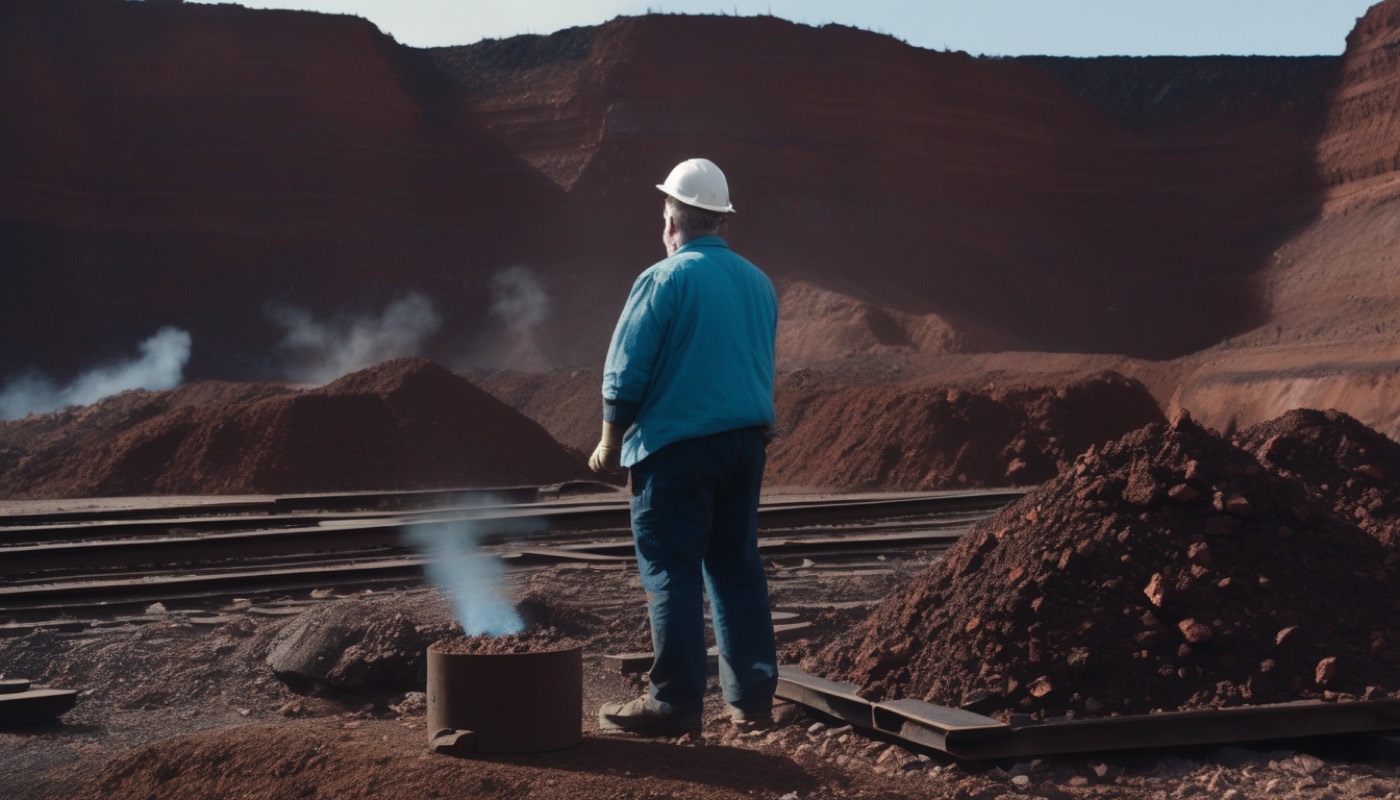
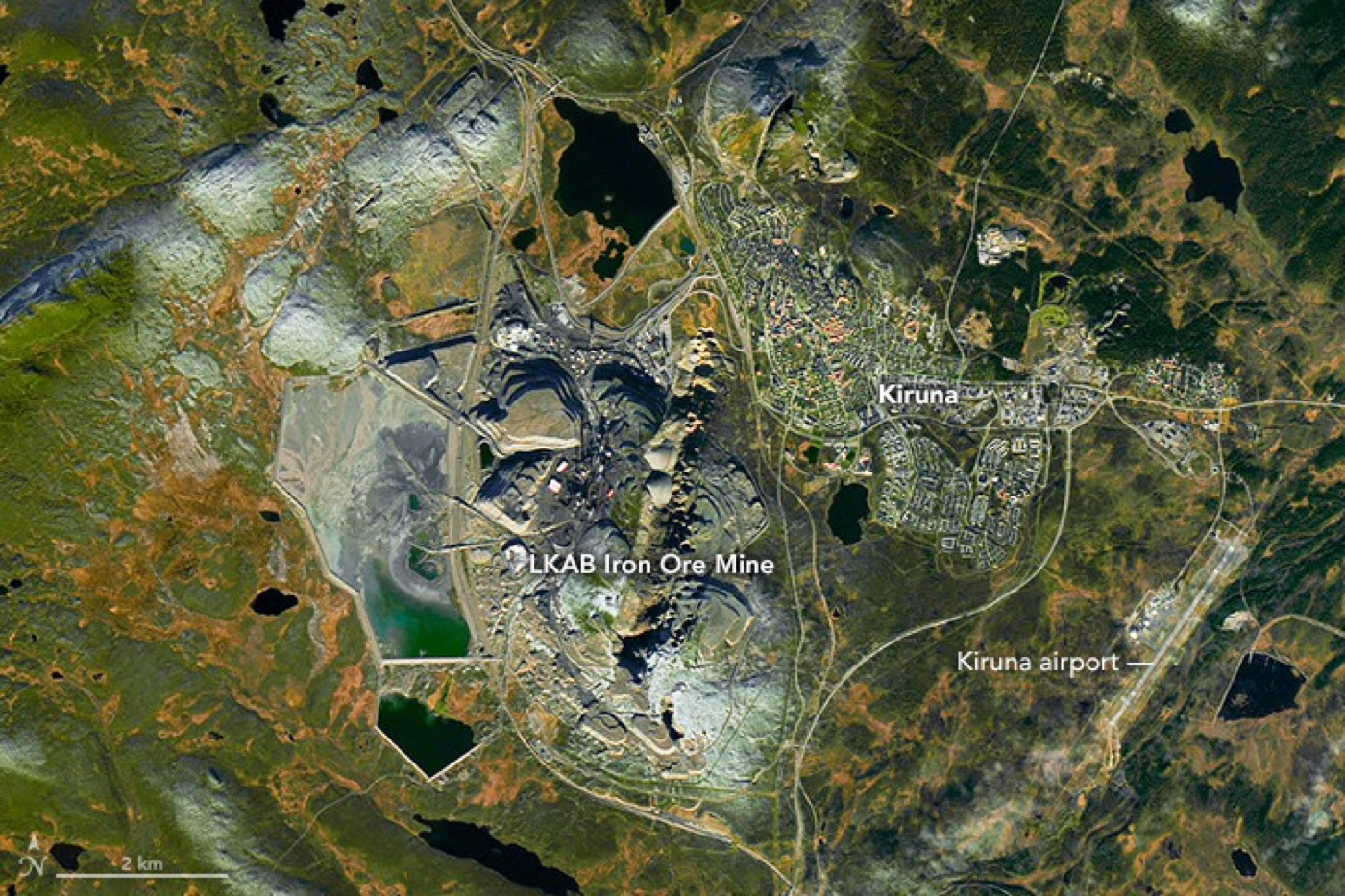
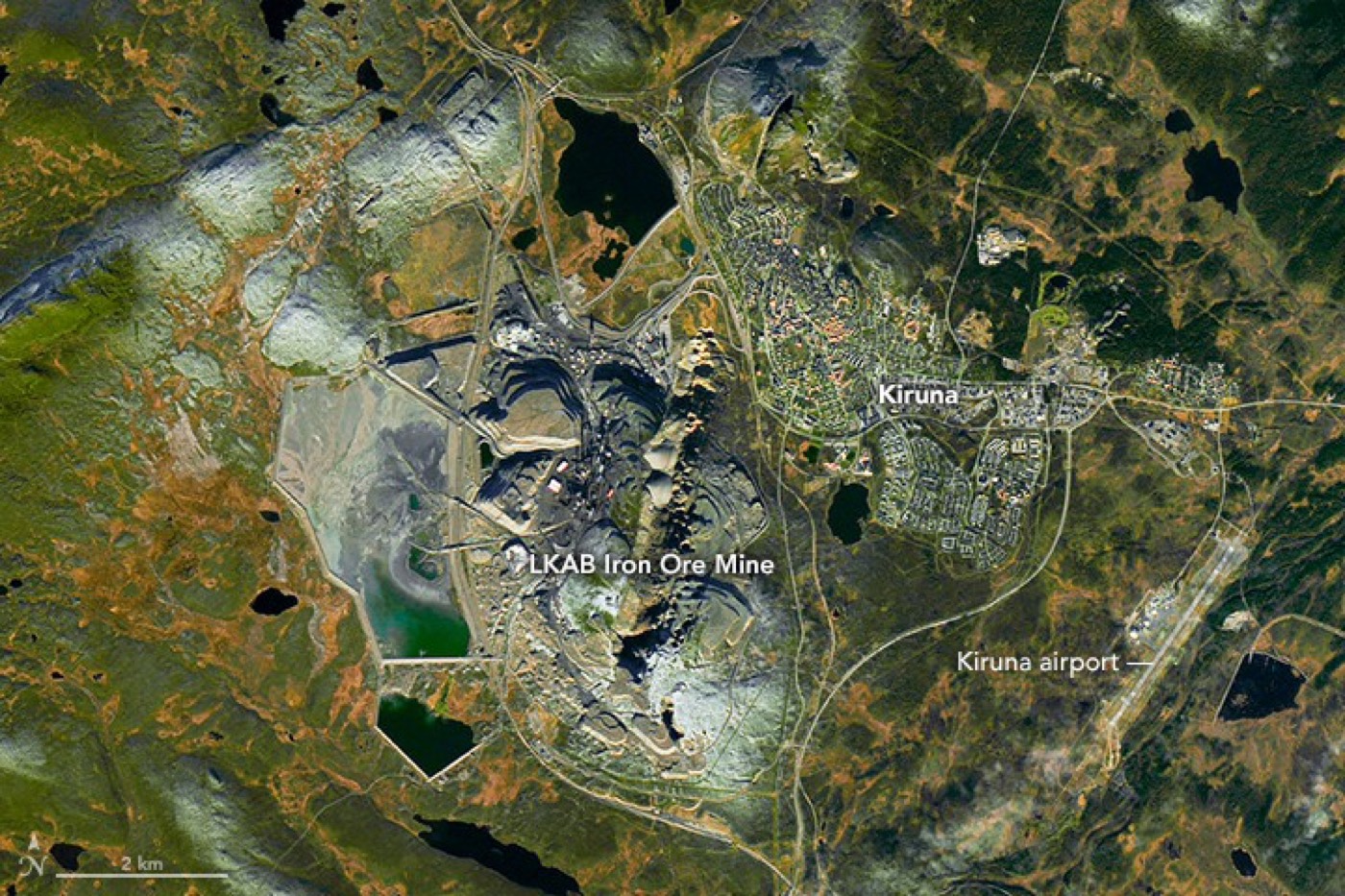
Almost all of the world's steel starts the same way: as iron ore, rock containing iron locked up with oxygen, dug out of the ground at mines like this one.
Seen from orbit, the mine at Kiruna is large enough to pick out from a passing spacecraft — a single hole in the ground supplying a meaningful share of Europe's iron ore.
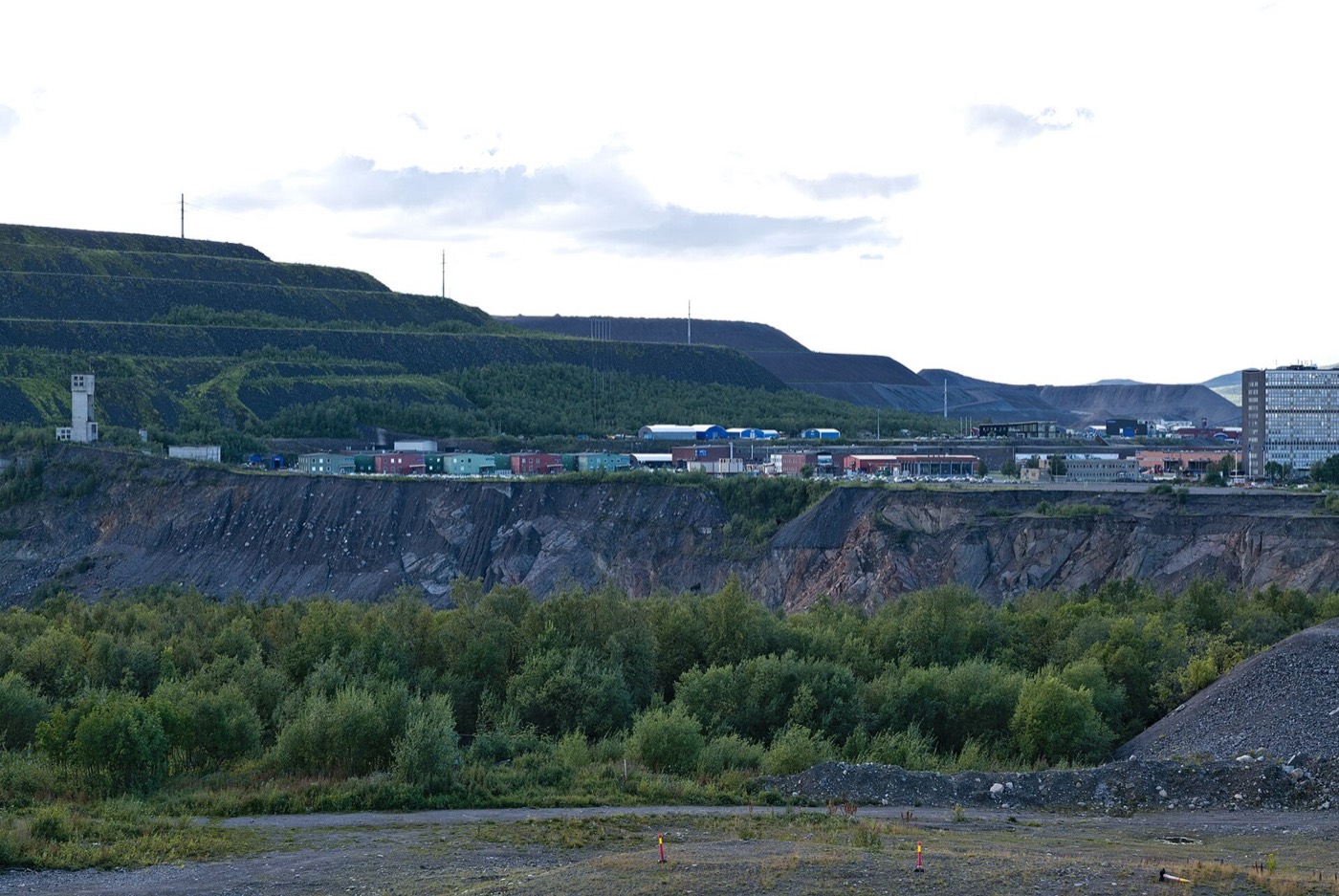
This is Kiruna again, seen from the town rather than from space. The ore mined here does not become steel on its own. First the oxygen has to be stripped out of it, and that stripping is the whole job of a blast furnace.
A blast furnace is a tall, cylindrical tower, loaded from the top with iron ore, coke and limestone. Air blasted in near the bottom burns the coke, and the heat and gas it produces strip the oxygen from the ore as everything sinks down the tower. What comes out at the bottom is molten iron, not yet steel.
Picture that tower in cross-section. Ore, coke and limestone go in at the top. Air is blasted in near the bottom. Molten iron collects at the base, ready to be tapped off.
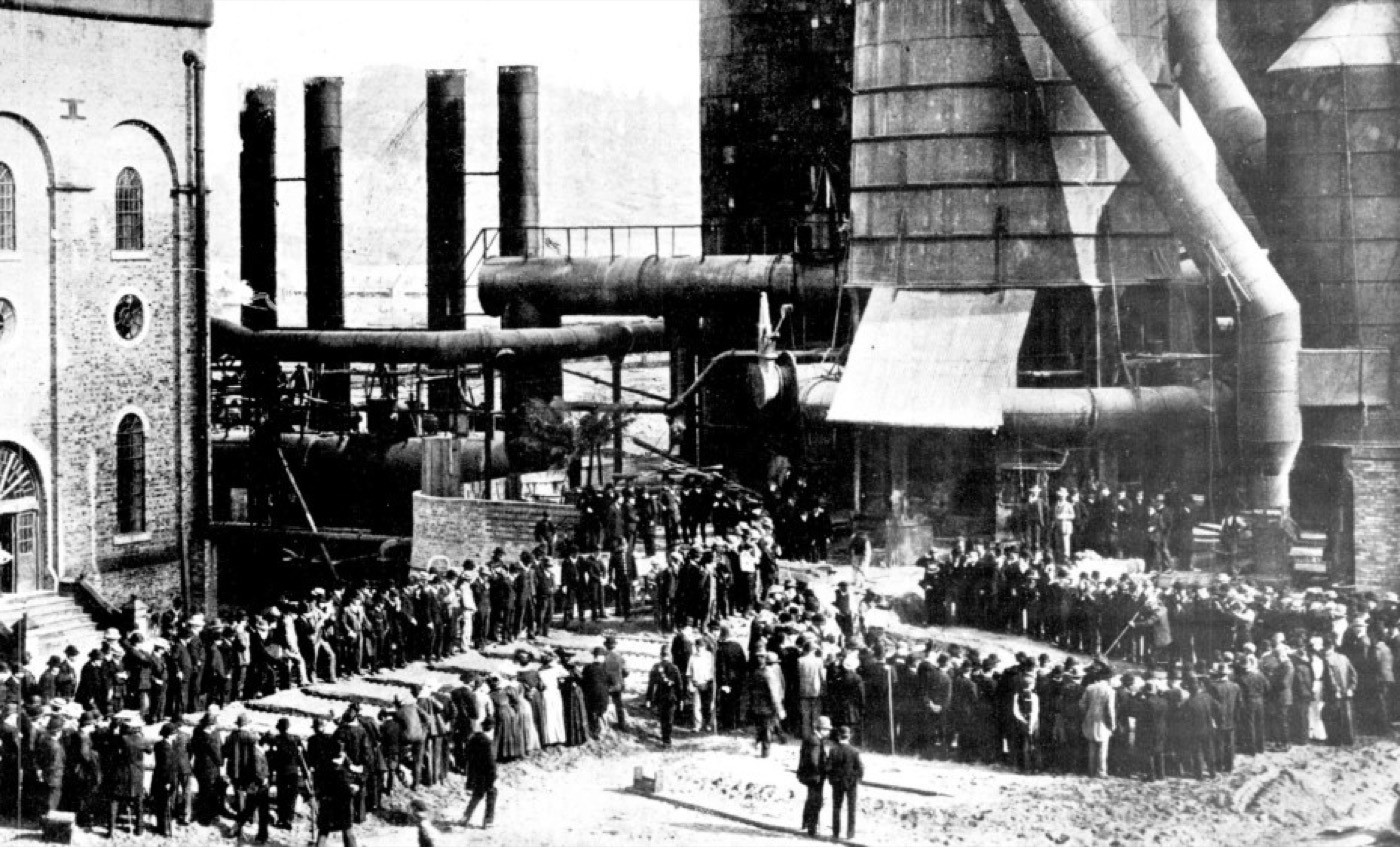
Here is a blast furnace being tapped for the very first time, its molten iron pouring out, photographed in 1907. The basic shape of that tower has barely changed since.
The iron still has too much carbon in it to be useful, so it goes next into a basic oxygen furnace, where pure oxygen is blown through it to burn that carbon away. What comes out the other end is steel. It is an old, proven process — and, as the next chapter explains, its emissions are not an accident of poor design. They are built into the chemistry itself.
3. Why coke does the chemistry
Coke is not simply the fuel that heats a blast furnace. It does a second job at the same time, and that second job is the reason a blast furnace can never be made clean by better engineering alone.
Coke is baked from coal until almost nothing is left but carbon. Burned in the furnace, that carbon does two things at once: it releases the heat that melts everything, and its carbon atoms grab the oxygen straight off the iron ore. Chemists call that second job reduction — removing oxygen from a compound. Coke is both the furnace's fuel and its reducing agent, in a single reaction.
That double role is the whole problem. Take the carbon out to stop the CO2, and you also take away the one thing doing the chemistry that turns ore into iron. There is no way to run a blast furnace on a cleaner fuel and keep the same reaction, because the fuel is not separate from the reaction.
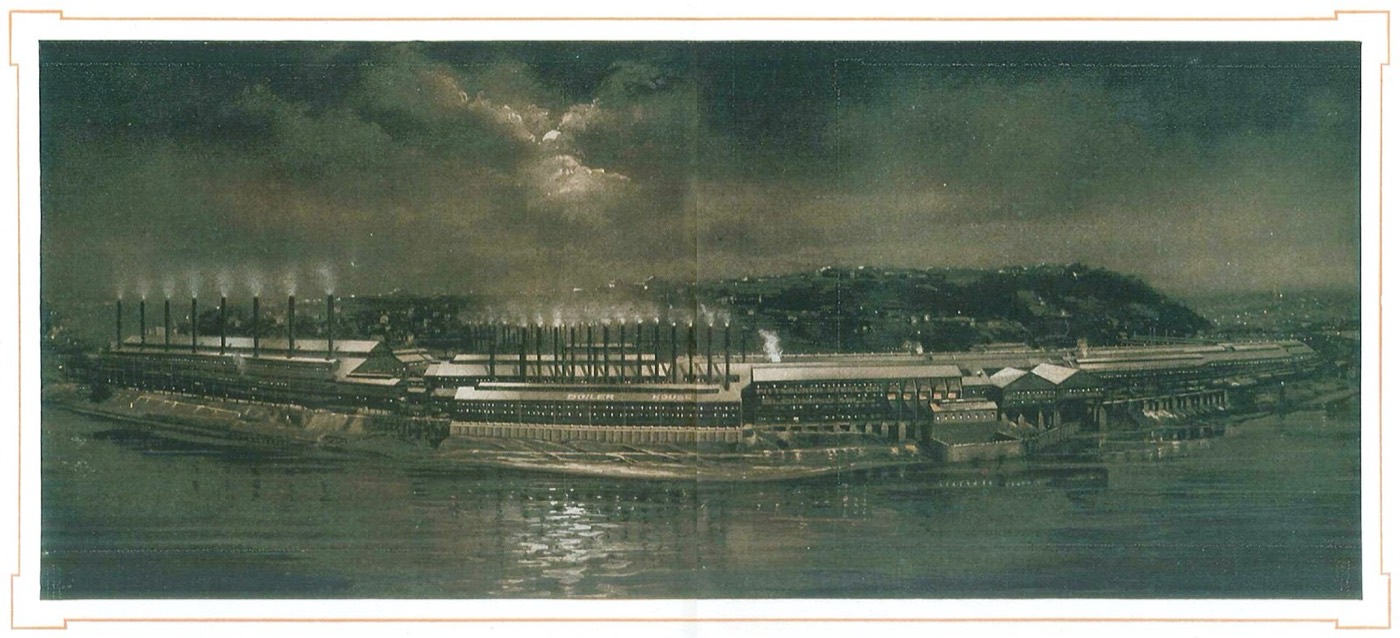
Towns like Pittsburgh grew up around exactly this chemistry, through the early twentieth century. Mills like these ran day and night, decade after decade, and CO2 poured out of every one of them as an unavoidable part of making the iron itself.
So a blast furnace's carbon problem is not a flaw in one design. It is what the reaction is. Getting rid of it means not using coke at all — and that means either skipping the furnace, or replacing what strips the oxygen.
4. Scrap and the electric arc furnace
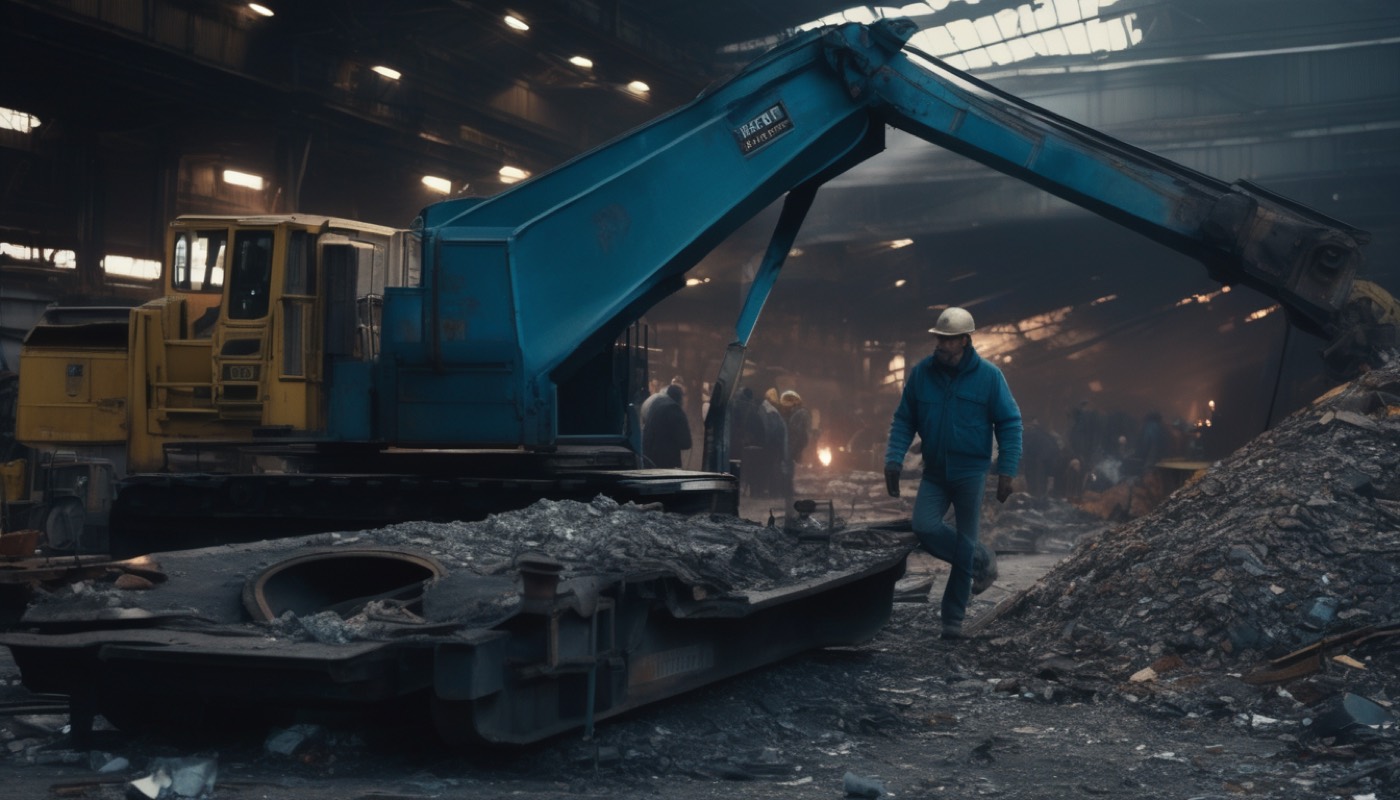
One way around the blast furnace already exists, and much of the world's steel is made this way today: melt down steel that already exists, rather than making new iron from ore at all.
An electric arc furnace does exactly that. It loads scrap steel into a vessel, and passes an enormous electric current through electrodes above it, forming an arc hot enough to melt the scrap within minutes. No ore, no coke, no reduction chemistry — the iron has already been extracted once, by somebody else's furnace, years or decades earlier.
Because it skips the ore-reduction step entirely, an electric arc furnace emits roughly a third of what a blast furnace does for the same tonne of steel. If the electricity feeding it is low-carbon, its emissions fall much further still.
That sounds like the answer already exists. It does not, for one blunt reason: there is not enough scrap. The world's steel demand keeps growing, and scrap only becomes available once something made of steel is finally scrapped, decades after it was built. Recycled scrap also carries trace elements, such as copper and tin, that build up a little more each time it is melted again. That rules scrap out for the highest grades of steel, the kind used in car bodies and some structural work.
So scrap can shrink the problem. It cannot solve it. Making new iron from ore, without coke, is the harder task — and it is the one hydrogen is aimed at.
5. Hydrogen direct reduction
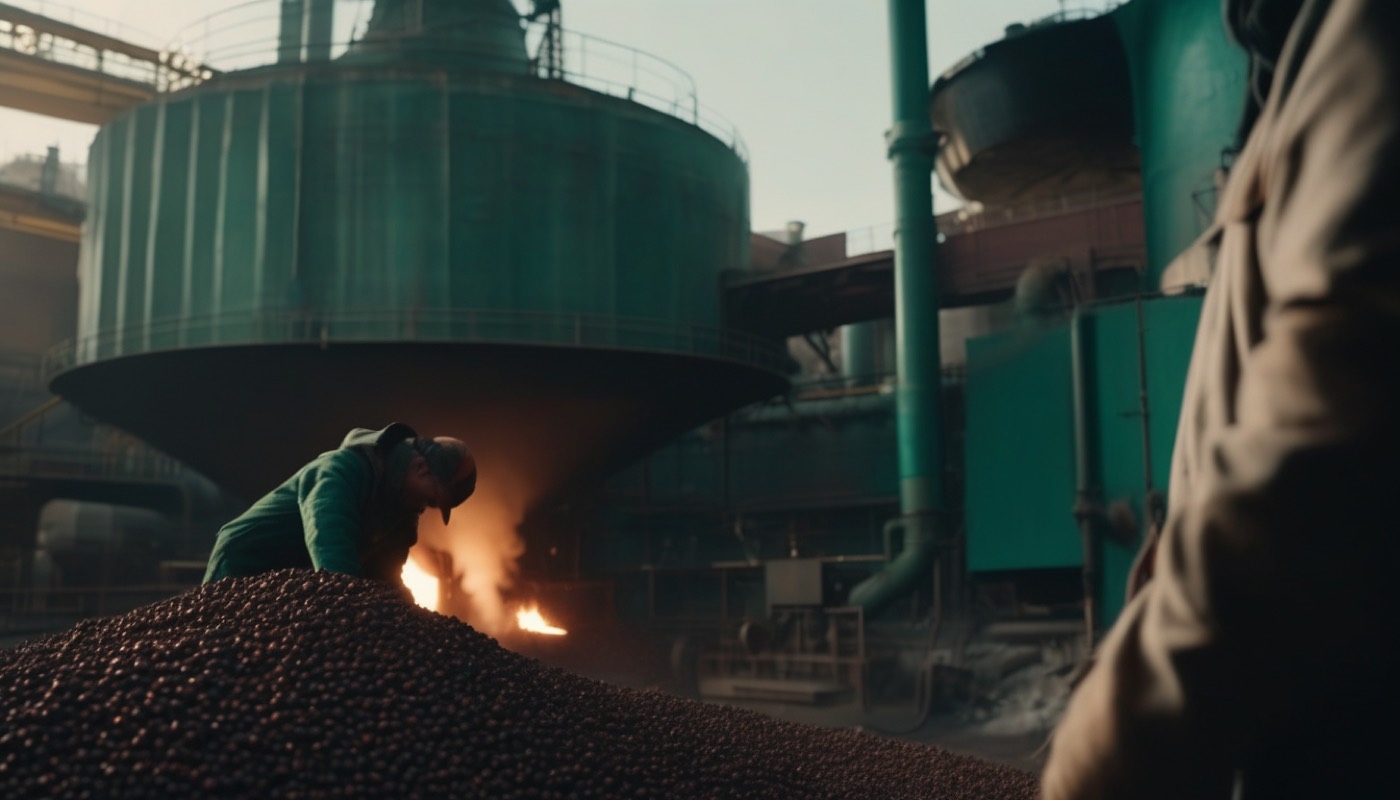
If coke's job is to strip oxygen from iron ore, the obvious question is whether something other than carbon can do that job instead. Hydrogen can.
Pass hydrogen gas through a shaft of iron ore pellets, hot enough for the reaction to run, and the hydrogen pulls the oxygen off the ore in almost the same way coke's carbon does. The difference is what comes out. Coke's carbon combines with that oxygen to make CO2. Hydrogen's combines with it to make water vapour — H2O, not CO2.
What is left behind is a solid, porous lump of nearly pure iron, called sponge iron, or direct reduced iron — DRI for short. It still has to be melted into steel, usually in an electric arc furnace, the same machine already used for scrap. But getting to that solid iron no longer needs a lump of coal at all.
This is the trade this chapter is really about: the same reaction, run on a different reducing agent, with water instead of carbon dioxide as the byproduct.
None of this is free. Making the hydrogen takes a great deal of electricity, and building a plant to do it at the scale a blast furnace works at has never been done outside a handful of pilot projects. The next three chapters follow the people who are trying anyway, starting with the first one to make it work at all.
6. HYBRIT: the Swedish pilot
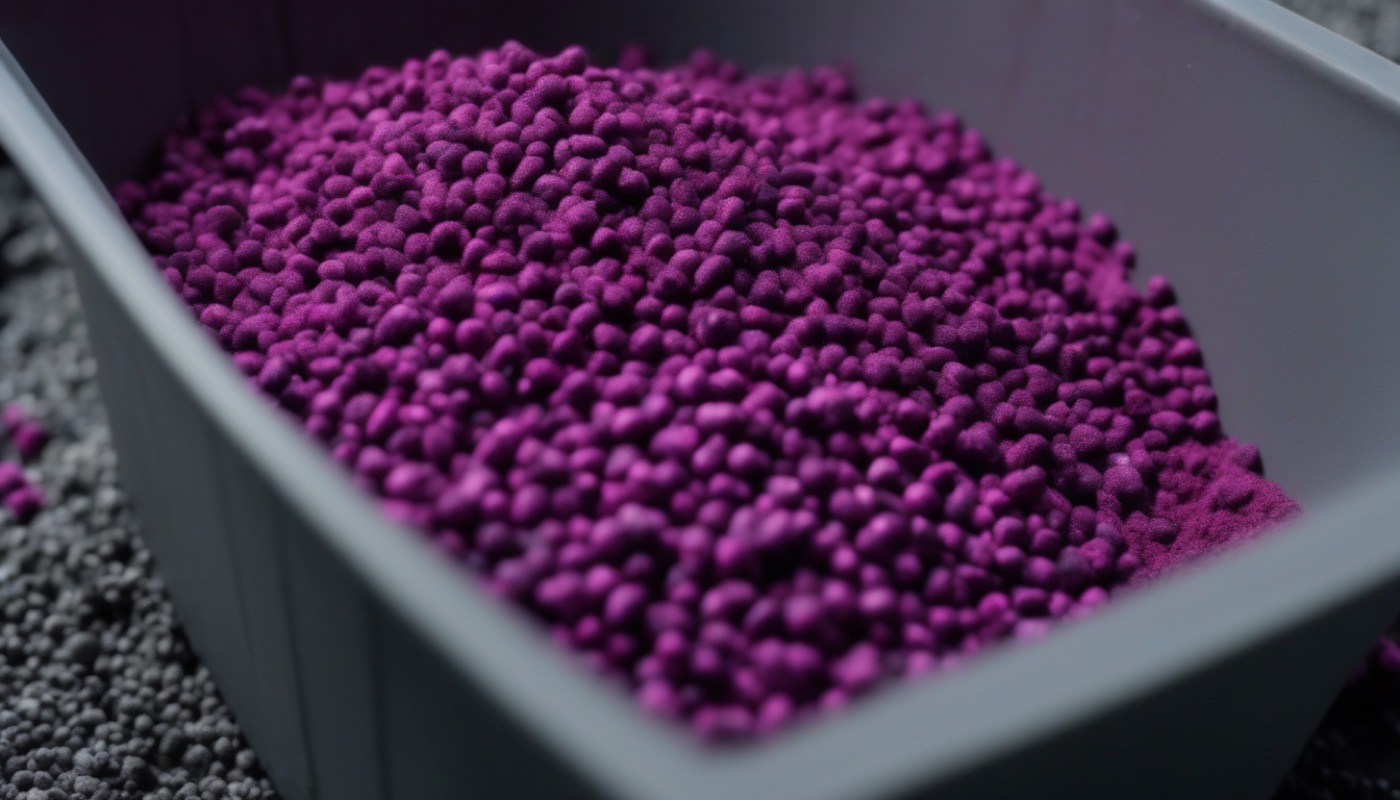
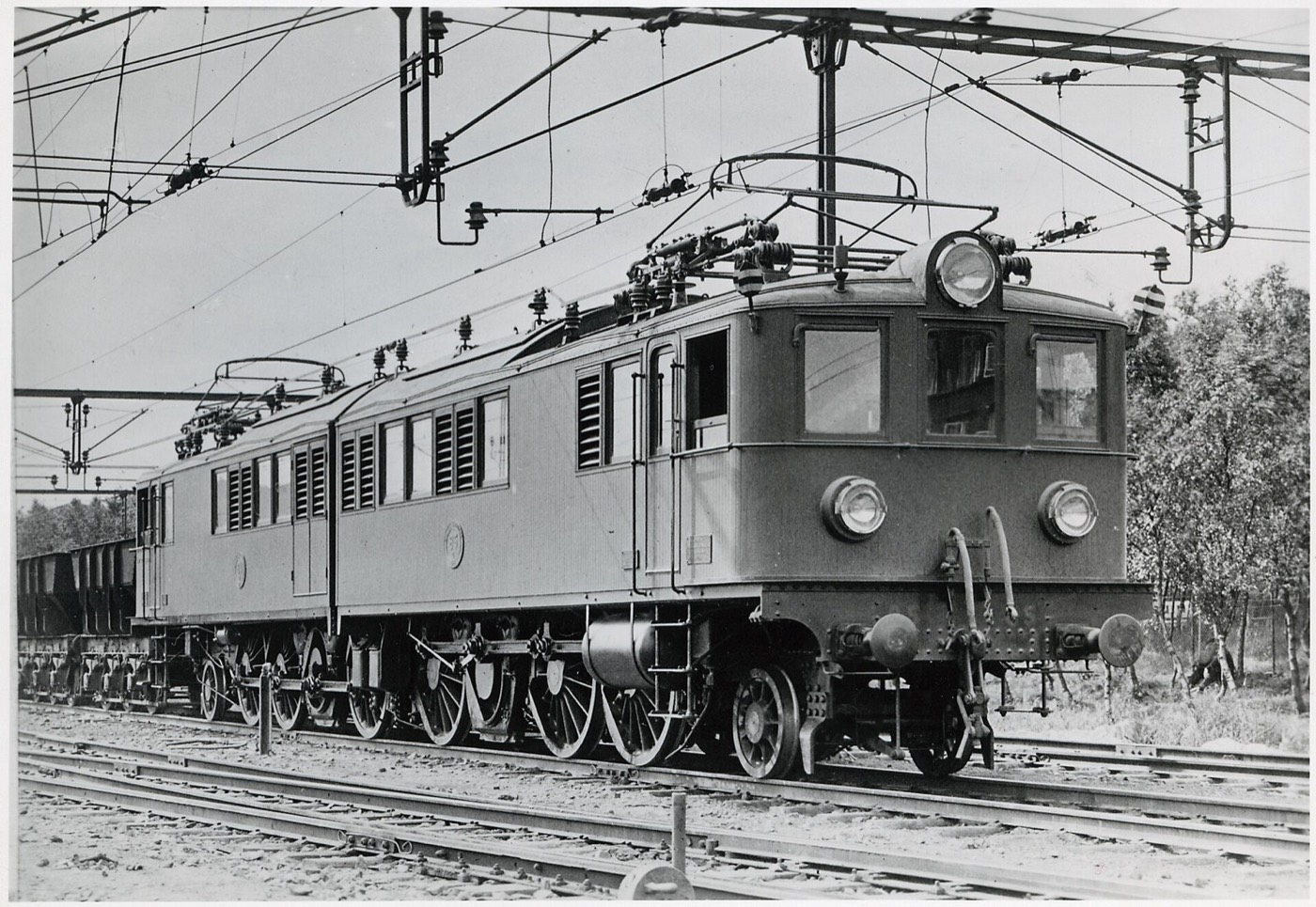
The first place hydrogen direct reduction was proven to work, at any scale, was a joint project between three Swedish companies: steelmaker SSAB, iron-ore miner LKAB, and power company Vattenfall. They called it HYBRIT.
Their pilot plant, in the port city of Luleå, started test operation on the 31st of August 2020. Less than a year later, in June 2021, it produced the world's first hydrogen-reduced sponge iron at any meaningful scale. By the time the pilot phase wound down, LKAB reported that more than five thousand tonnes of hydrogen-reduced iron had been made there. That is proof the chemistry works outside a laboratory — though still a fraction of what one commercial furnace processes in a single day.
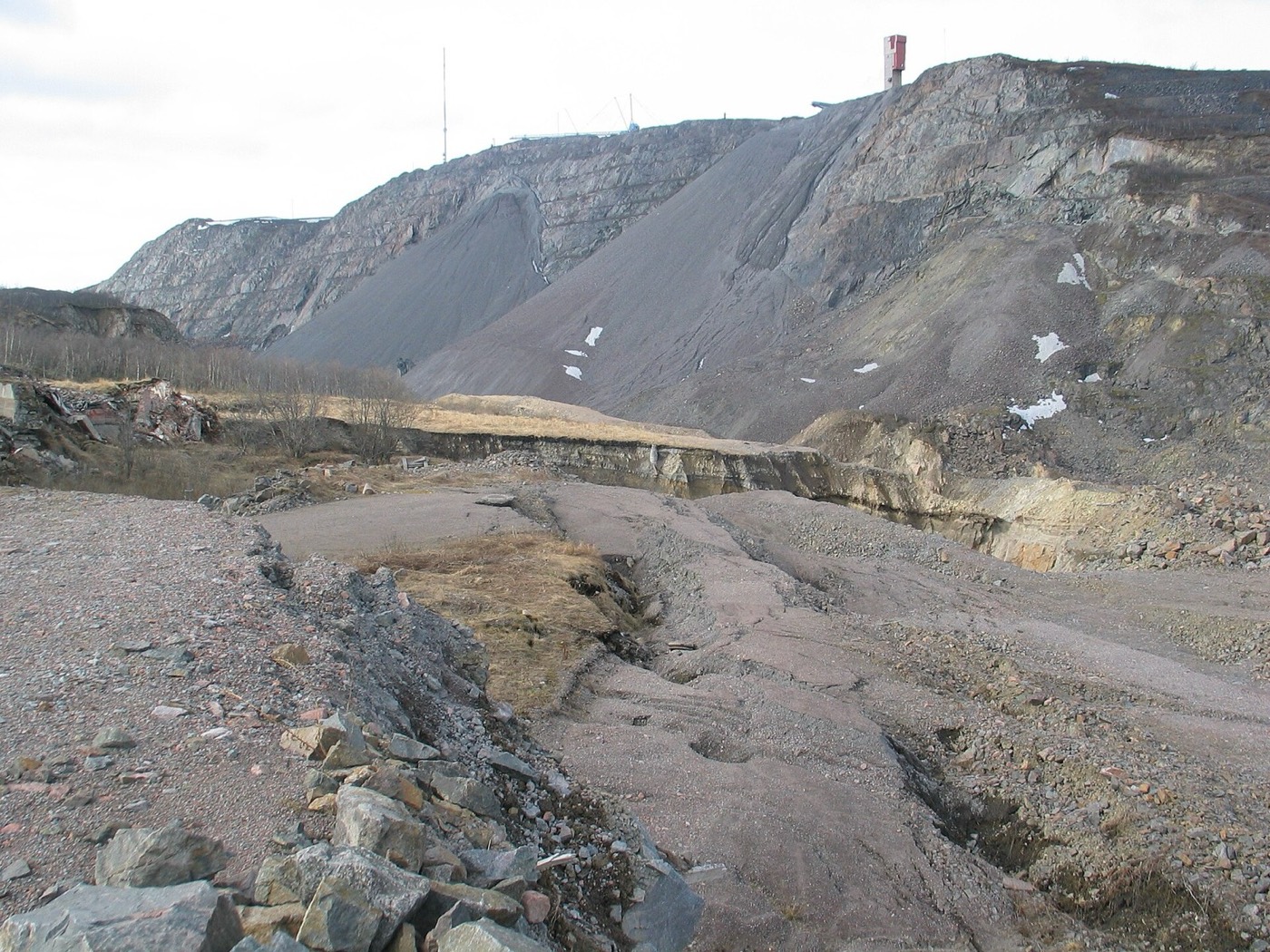
This open pit, at Kiirunavaara near Kiruna, is where the ore for that pilot comes from.
From there it travels five hundred kilometres by rail, on the Malmbanan line, climbing through mountain country down to the coast at Luleå.
The next step was meant to be a demonstration-scale plant at Gällivare, near the mines themselves, producing sponge iron on an industrial footing rather than a pilot one.
Kiruna, Luleå and Gällivare, joined by the railway between them, are the whole geography of this chapter. It is a supply chain running from ore in the ground to iron with the oxygen stripped out.
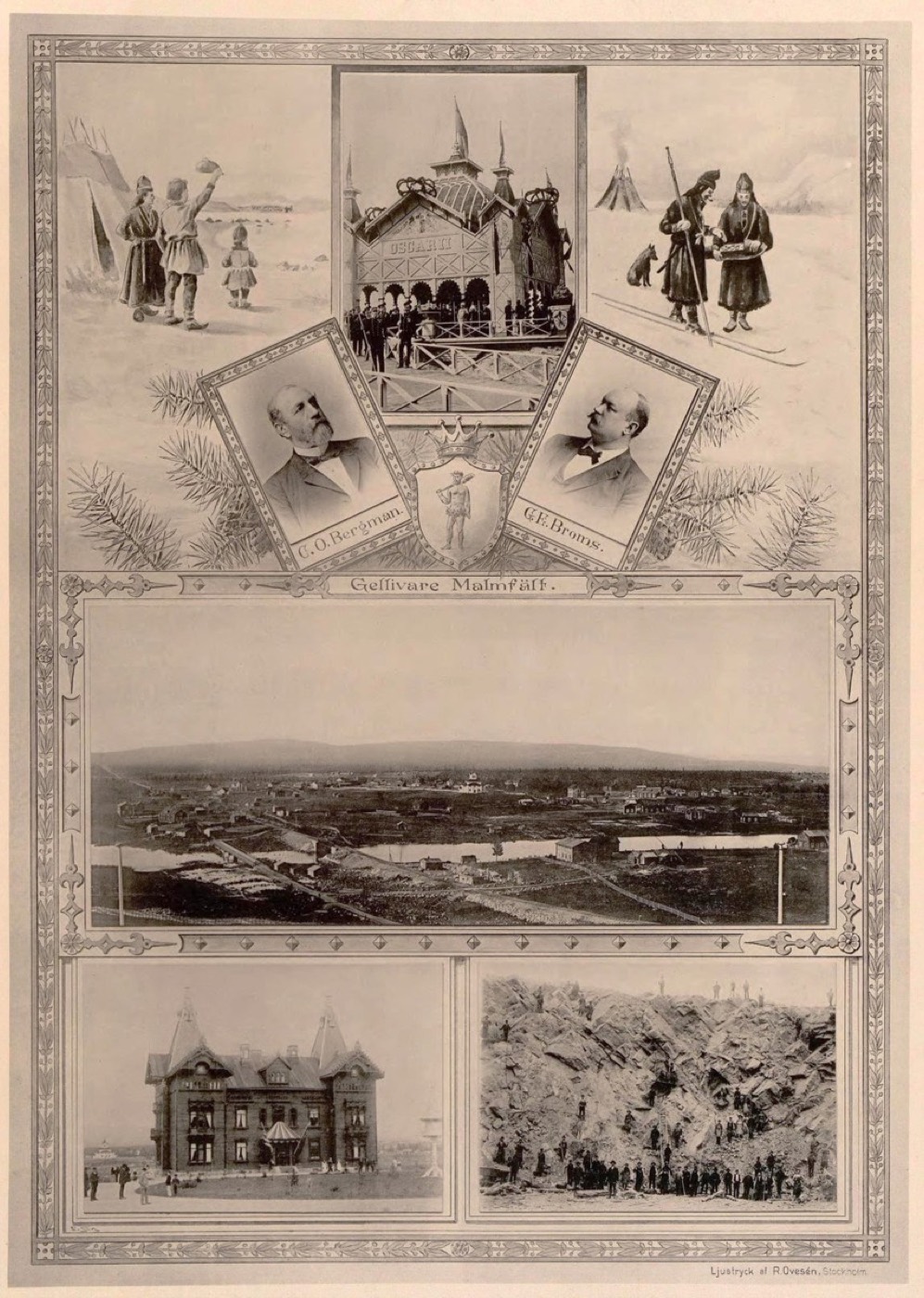
Gällivare's own mining district, photographed around the turn of the last century, long before hydrogen was part of the plan for it.
The demonstration plant there has been delayed. The sixty-kilometre power line it needs ran into a permitting error — some landowners along the route were never properly consulted — and construction of that line has slipped to the end of 2026.
LKAB still says it aims to begin production at Gällivare in 2029. Whether the power line arrives in time to make that possible is, at the time of writing, still an open question.
HYBRIT proved the chemistry. Turning it into an industry was always going to be the harder part — and the company furthest along that road is not HYBRIT itself, but a separate Swedish start-up building at industrial scale from day one.
7. Stegra at Boden
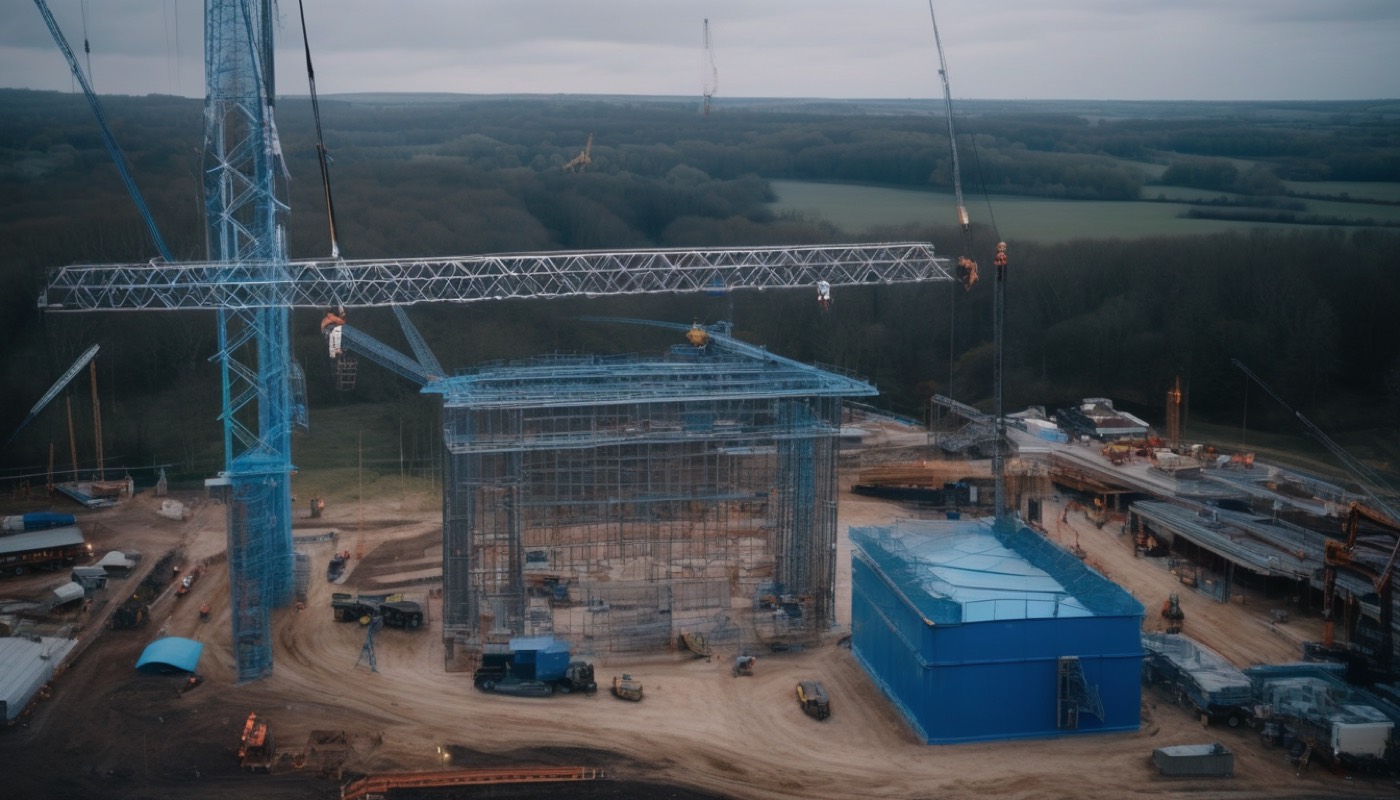
While HYBRIT ran its pilot, a separate Swedish company set out to do something bolder. Stegra, founded in 2020, is building a hydrogen steel plant at full commercial size from the start, rather than scaling up gradually.
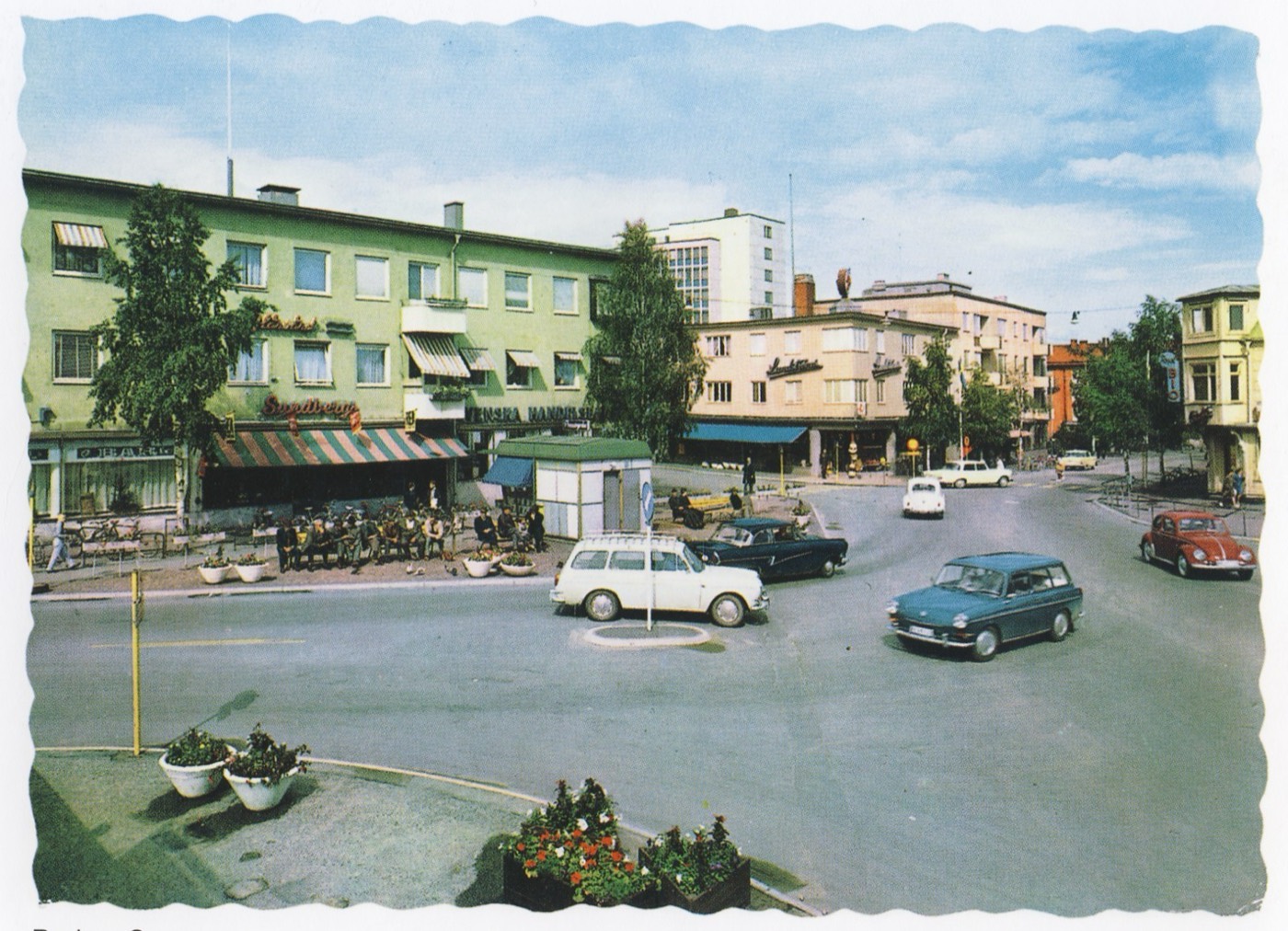
Its site is at Boden, a small town in the far north of Sweden, seen here — chosen for what sits nearby, not for the town itself.
The design is enormous: a plant intended to reach five million tonnes of green steel a year once fully built out. It is fed by its own electrolysers — machines that split water into hydrogen and oxygen using electricity — running on power from the region's hydroelectric dams.
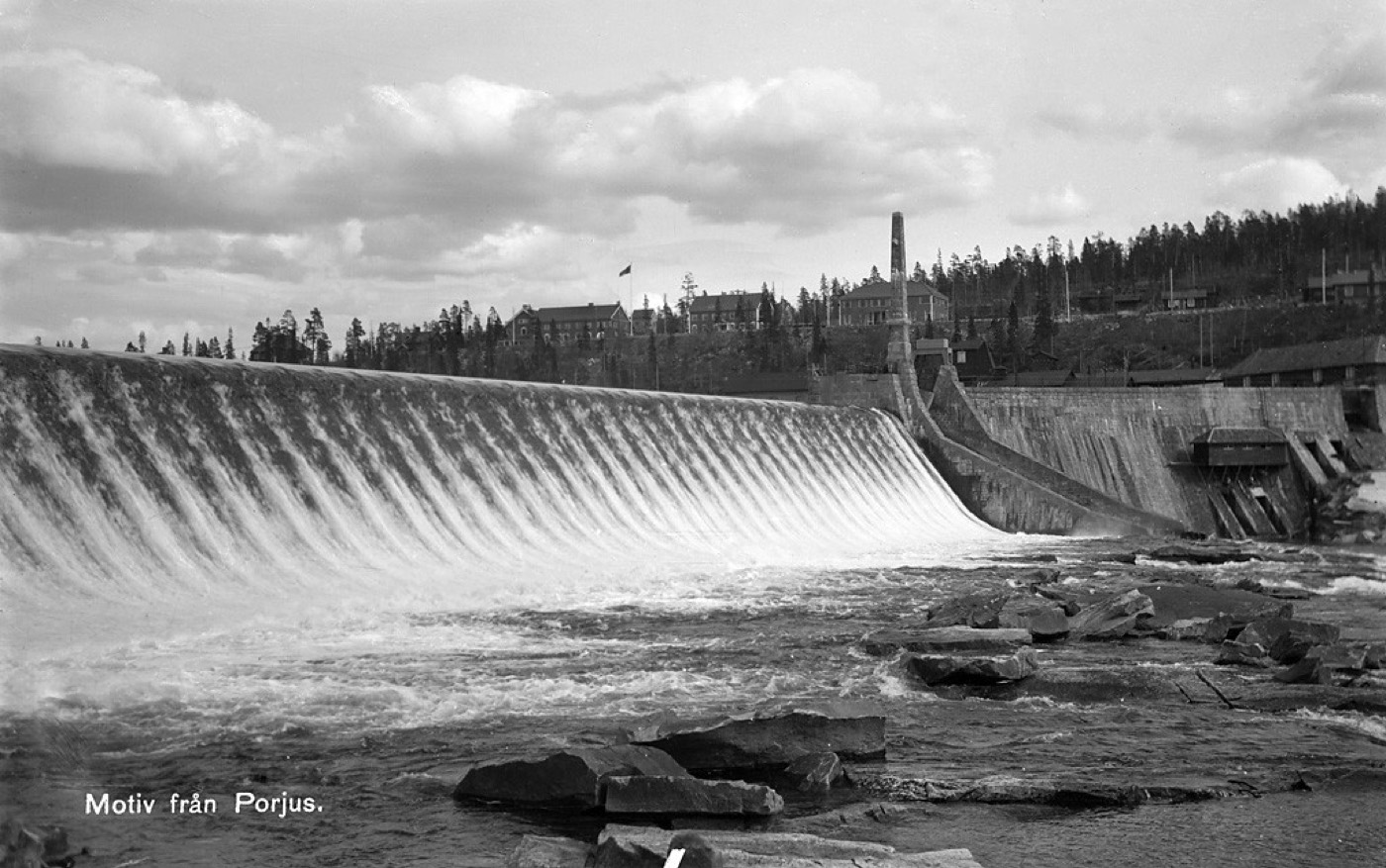
Boden and the dam at Porjus sit within the same stretch of northern Sweden. The plant was built beside the power, rather than the power built to reach the plant.
Here is that dam at Porjus, holding back the Lule river.
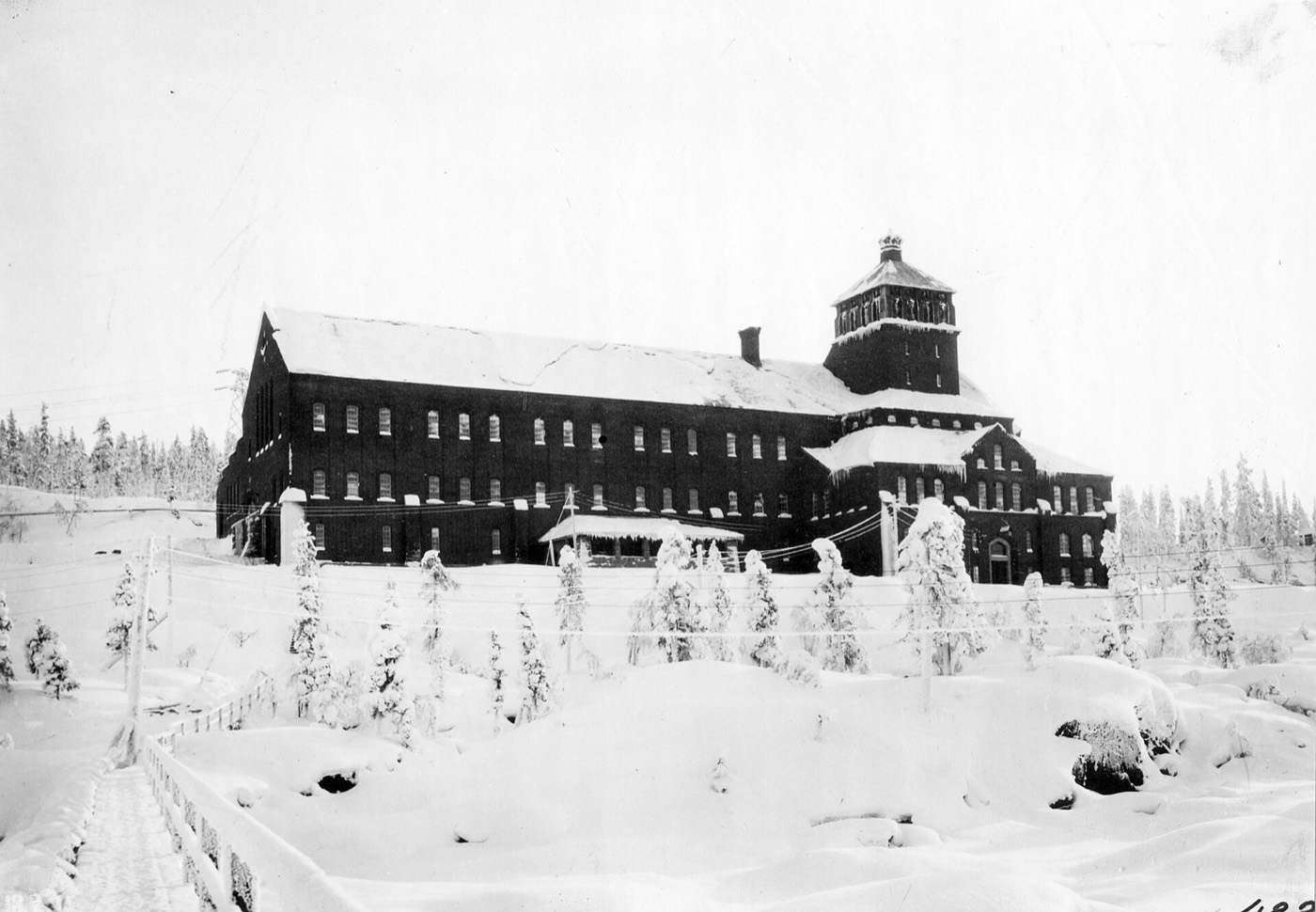
And here is the power station it feeds. Northern Sweden has some of the cheapest, cleanest electricity in Europe, and an electrolyser plant this size needs a huge, reliable supply of exactly that.
Stegra has already signed customers ahead of production. One multi-year agreement, with thyssenkrupp, covers at least one hundred thousand tonnes a year, starting in 2027. That is evidence carmakers and steel processors want this supply, if it actually arrives on schedule and at a workable price. The plant's first phase is designed for two and a half million tonnes a year, with the full five-million-tonne design reached only later.
None of that answers the harder question hanging over the whole project: whether Stegra can actually pay for what it has designed. That is where the story gets complicated.
8. The money problems
Building a hydrogen steel plant at this scale costs a staggering amount of money, and Stegra has spent much of 2026 finding out exactly how staggering.
On the 14th of April 2026, Stegra announced a financing round of 1.4 billion euros. It was led by a consortium put together by the Wallenberg family's investment arm. The round closed on the 24th of June 2026. Reports on the day called it 1.6 billion dollars — the same money, in dollars, at that day's exchange rate, not a second raise on top. Stegra's funding before this round was reported at around 6.5 billion euros in loans and equity, which this new money brings to something close to 8 billion euros in total.
That is an extraordinary sum for a company that has not yet produced a commercial tonne of steel. It bought time, not certainty: Stegra itself said, that same day, that its construction timeline for Boden was still under review.
Sweden's existing steel industry has hit the same wall from a different direction. SSAB's new electric arc furnace at Oxelösund — needed to make full use of hydrogen-reduced iron once it arrives — was delayed in May 2026 by an appeal against its own power connection, over the protection of two plant species and a bird. "It is extremely frustrating that external factors beyond our control are now forcing a postponement of commissioning," said SSAB's chief executive, Johnny Sjöström, on the day the delay was announced.
On the 30th of September 2026, new trouble appeared inside Stegra itself. A hundred-day review by the company's new owners found building costs running higher than expected, and said more capital would be needed to finish the plant. The chief executive who had led the project from the start, Henrik Henriksson, is being replaced by Håkan Buskhe from the 1st of November.
Stegra's own chair, Leif Johansson, said on the 1st of October 2026 that the shortfall was bigger than the company had hoped, but that it still had a workable plan to finish the plant.
Money, permits, power lines, and now a boardroom reshuffle: none of these is a chemistry problem. All of them have slowed a technology that already works at pilot scale.
9. Green steel vs conventional: the cost
Suppose hydrogen steel arrives on schedule. The next question is whether anyone can afford to buy it, compared with the conventional steel sitting next to it on the same order form.
Through the first half of 2026, market researcher Fastmarkets tracked green steel in northern Europe selling at a premium of roughly one hundred to one hundred and seventy euros a tonne over ordinary steel, on long-term supply contracts. Buyers on the open spot market mostly refused to pay even that much, and open-market trading in green steel was described as almost non-existent.
That premium comes from two places: the electricity an electrolyser needs to make hydrogen, and the cost of building an entirely new kind of plant in the first place. Both fall as more plants get built and electricity gets cheaper — but neither is close to falling to zero yet.
There is a second force working the other way, and it is new. Since the 1st of January 2026, the European Union's carbon border tax — a charge on the carbon emitted making an imported product — has applied in full to steel entering the EU from outside it. Conventional steel bought from a high-carbon producer abroad now carries a carbon cost of its own, for the first time. It does not close the price gap. It narrows it, a little, from the other direction.
So today, green steel is not simply an idea competing on its merits. It is being sold at a premium into a market where the alternative's own carbon cost has just started rising too.
10. Real shift or subsidised experiment?
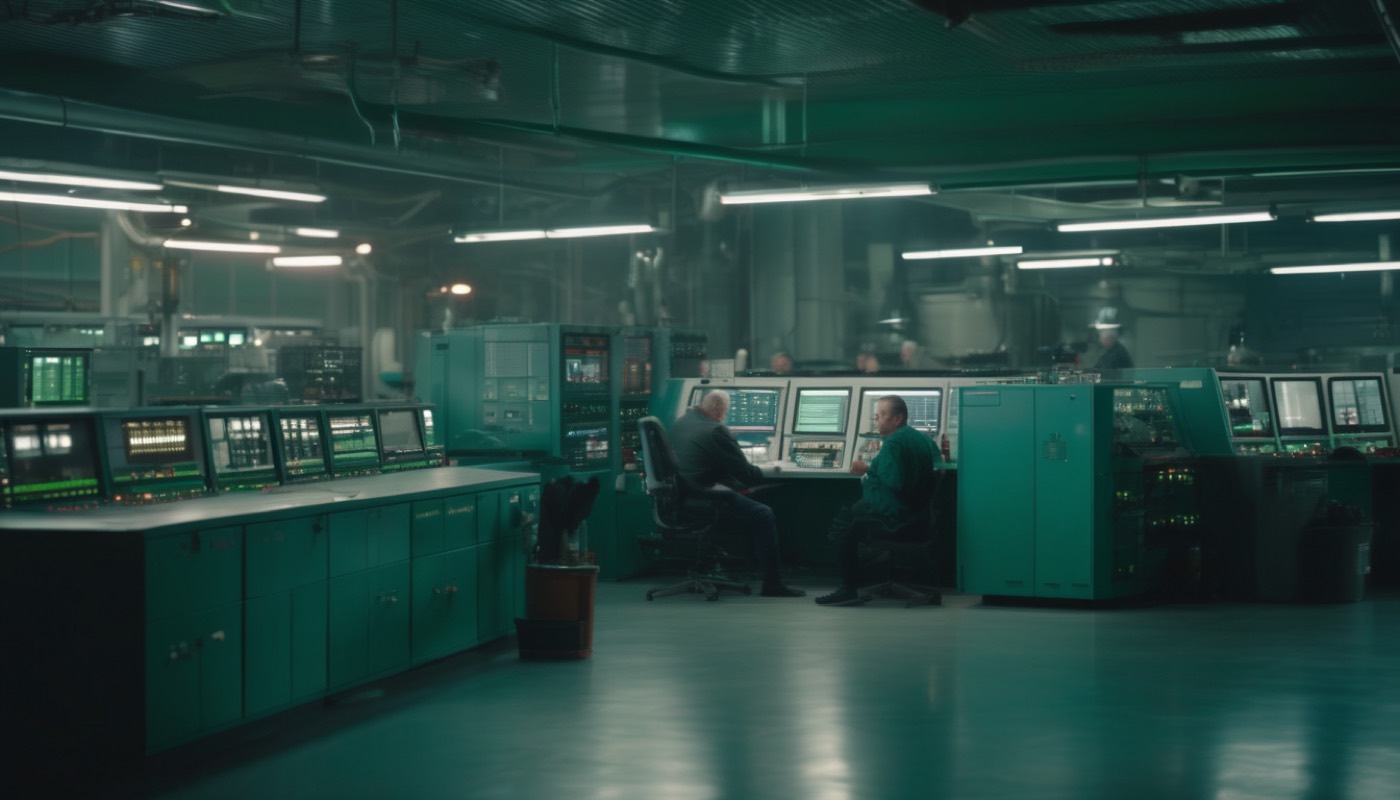
So: is heavy industry actually moving forwards to hydrogen steelmaking, or will the blast furnace outlast every green promise made about replacing it?
The chemistry is not in doubt. HYBRIT proved hydrogen can strip oxygen from iron ore outside a laboratory, and did it years ago now. What remains genuinely uncertain is everything around the chemistry. Whether Stegra's financing holds for the years it will take to finish Boden. Whether the delayed power lines get built on time. And whether buyers keep paying a premium once the novelty wears off.
Every delay covered in this video has come from the same place — permits, power connections and money — not from the reaction itself failing to work. That is, in its own way, a hopeful sign. It means the hard scientific problem is solved. What is left is the ordinary, grinding difficulty of building anything at industrial scale.
None of that makes the outcome certain. A plant that cannot get its power connected on schedule, or its financing renewed on schedule, fails for reasons that have nothing to do with chemistry — and this industry has now hit both kinds of failure at least once each.
Forwards, for the reaction itself. Backwards, if the money runs out before the plants do. Which one wins is not a question this video can answer — it is a question the next few years of permits, power lines and balance sheets will.
Sources and credits
Photo credits (Wikimedia Commons)
- Kiruna, the largest underground iron mine (astronaut photo): NASA International Space Station Program, Public domain - https://commons.wikimedia.org/wiki/File%3AKiruna_iron_mine_ISS.jpg
- Kiruna iron mine area seen from the town, 2022: Leonhard Lenz, CC0 - https://commons.wikimedia.org/wiki/File%3AKiruna_mine_2022-08-22_01.jpg
- Lithgow blast furnace tapping, opening day 1907: Unknown photographer. Published in 'The Sydney Mail and News South Wales Advertiser' of 22 May 1907, Page 1312., Public domain - https://commons.wikimedia.org/wiki/File%3ALithgow_blast_furnace_-_guests_watch_tapping_at_opening_%28Sydney_Mail_22-5-1907%2C_p1312%29.jpg
- Pittsburgh steel mills at night, early 20th century: AnonymousUnknown author, Public domain - https://commons.wikimedia.org/wiki/File%3ANight_Scene_on_the_Monongahela_River_Near_Pittsburgh%2C_Pa.%2C_Showing_a_Portion_of_the_Plants_of_the_Pittsburgh_Steel_Co.jpg
- Kiirunavaara open pit iron mine: unknown, Public domain - https://commons.wikimedia.org/wiki/File%3AKiirunavaara_dagbrott.jpg
- Iron ore train on the Malmbanan: Unknown authorUnknown author, CC0 - https://commons.wikimedia.org/wiki/File%3AJvmKDAE08586.jpg
- Malmbanan iron ore line in the mountains, 2022: Leonhard Lenz, CC0 - https://commons.wikimedia.org/wiki/File%3AMalmbanan_at_L%C3%A5ktatj%C3%A5kka_2022-09-01_01.jpg
- Porjus hydroelectric dam, Lule river: Swedish National Heritage Board, No restrictions - https://commons.wikimedia.org/wiki/File%3AThe_dam_of_Porjus_water_power_plant%2C_Jokkmokk%2C_Lappland%2C_Sweden_%289664010748%29.jpg
- Porjus power station exterior: Unknown authorUnknown author, Public domain - https://commons.wikimedia.org/wiki/File%3AKraftverk_Exteri%C3%B6r._ArkDes_ARKM.1962-101-1404.jpg
- Boden town centre, Norrbotten: Unknown authorUnknown author, Public domain - https://commons.wikimedia.org/wiki/File%3ABoden_centrum.jpg
- Gällivare mining district, historic photograph c.1900: Ring, Herman A (1859-1927), Public domain - https://commons.wikimedia.org/wiki/File%3AG%C3%A4llivare_Malmf%C3%A4lt_-_Sveriges_industri_-_dess_storm%C3%A4n_och_befr%C3%A4mjare.jpg


Primary sources
- IEA, 'Iron and Steel Technology Roadmap', 2020, using 2019 data - the 7% (energy-system CO2) and 10% (including indirect emissions) figures, and the general blast-furnace/coke/EAF process descriptions.
- worldsteel, 'World Steel in Figures 2024' and 'Sustainability Indicators' - 1,886 Mt crude steel produced in 2024, average intensity 2.18 t CO2e/t steel, and the 7-8% of global GHG emissions figure also reported by the World Economic Forum's Net Zero Industry Tracker 2024.
- Vattenfall/SSAB/LKAB (HYBRIT) press materials, 2020-2024 - pilot plant commissioned 31 August 2020, first hydrogen-reduced sponge iron reported 21 June 2021 ('around 100 tonnes'), and LKAB's 27 August 2024 statement that 'more than 5,000 tonnes of hydrogen-reduced iron have been produced at HYBRIT's pilot plant in Lulea'.
- Norran, 'Green shift stalls: LKAB's fossil-free iron project pushed back', 13 November 2025 - the Gallivare power-line permitting delay and LKAB's continued 2029 production target.
- Stegra press release via Cision, 'Stegra has agreed in principle on a EUR 1.4 billion financing round...', 14 April 2026 - the financing amount, the Wallenberg Investments-led consortium, and Stegra's own 'timeline under review' statement.
- Canary Media, 'Stegra lands funding to complete world's first major green-steel mill', 14 April 2026 - Stegra's approximately EUR 6.5bn in prior funding, which this round brings close to EUR 8bn in total.
- Sweden Herald, 'Stegra reaches supply agreement with thyssenkrupp for at least 100,000 tons starting in 2027', 12 January 2026 - the thyssenkrupp offtake agreement and the 2.5 million tonnes/year first-phase capacity.
- SSAB press release, 'Commissioning of the electric arc furnace in Oxelosund delayed due to permitting process', 11 May 2026, 19:45 CEST - the permitting appeal, the delay to Q2 2027, and the verbatim quote from CEO Johnny Sjostrom.
- Stegra press release via Cision, 'Stegra implements changes following 100-day review under new owners - Hakan Buskhe appointed CEO', 30 September 2026, 10:00 CET - the need for further capital beyond the June 2026 round, and the CEO change from Henrik Henriksson to Hakan Buskhe from 1 November 2026.
- ESG Today, 'Stegra Seeks More Capital - Again - for Green Steel Megaplant on "Significantly Higher than Assumed" Costs', 1 October 2026 - the verbatim quote from Stegra chair Leif Johansson.
- Fastmarkets green-steel premium assessments, Northern Europe flat-rolled, January-May 2026 - the EUR 100-170/tonne premium range.
- EU CBAM definitive-phase trade-compliance reporting, 2026 - the 1 January 2026 start of financial obligations on imported steel's embedded carbon, and the first certificate surrender deadline of 30 September 2027.
Not regulated financial advice.