
The Invention That Turned Air Into Food
Air is 78% nitrogen, yet for most of history crops starved for it. This video follows how two German chemists learned to pull that nitrogen out of the sky, and what it has cost since.
In September 1898 Sir William Crookes warned that 'England and all civilised nations stand in deadly peril of not having enough to eat', as the guano and Chilean nitrate that fed Europe's farms ran down. On 2 July 1909 Fritz Haber showed BASF a tabletop machine making ammonia from nitrogen and hydrogen. Carl Bosch and Alwin Mittasch turned it into industry: Oppau came on stream in September 1913, Leuna followed in 1917.
The same ammonia made explosives, and Haber organised Germany's gas attacks, including the chlorine attack near Ypres on 22 April 1915. Then the Nobel Prizes of 1918 and 1931, the Oppau explosion of 21 September 1921 that killed more than 500 people, and Haber's resignation in 1933 and death in Basel in 1934.
Today: how a modern plant works; Borlaug's wheat and the estimate that nitrogen fertiliser feeds about half of humanity (Erisman et al., 2008); about 450 million tonnes of CO2 a year (IEA); the Gulf of Mexico dead zone (NOAA, 2025 and 2026); the 2022 gas shock and the 2026 shutdown of shipping through the Strait of Hormuz (World Bank, WTO); green ammonia at NEOM, its cost gap (AGBI, June 2026) and the EU's carbon border levy, charged from 1 January 2026.
No figure appears without its date and source.
Educational documentary. Not financial or investment advice.
In these topics
Chapters
Video notes
1. The nitrogen paradox
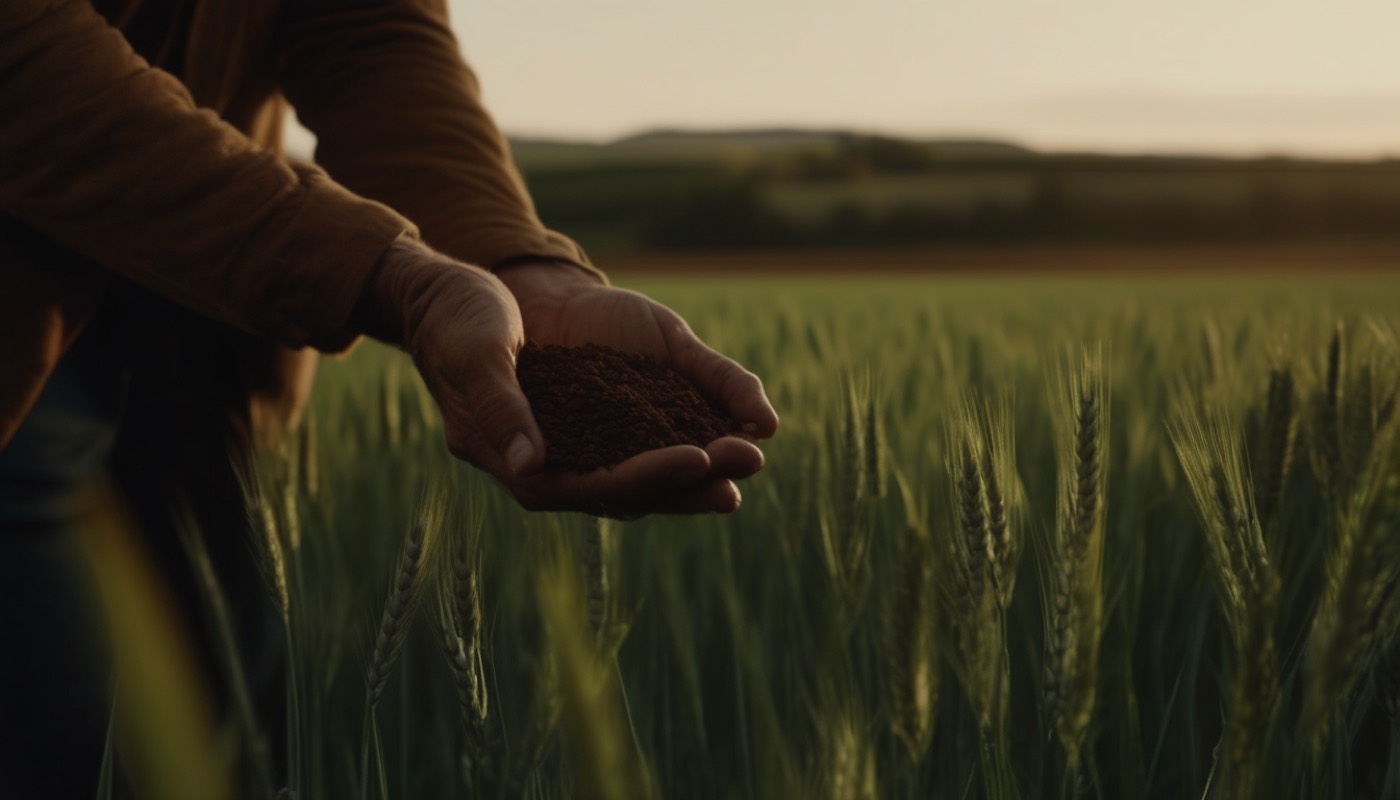
Every breath you take is mostly nitrogen. It is the gas that fills the sky, and every living thing needs it to build protein. Yet for most of history, farmers could not get enough of it into their fields.
This video follows that paradox from start to finish. Why the nitrogen in the air is so hard to use. How two German chemists learned to pull it out of the sky. What that did to war, to farming and to the number of people alive. And what it costs today, in gas, in carbon and in a food supply that hangs on shipping lanes.
Start with the air itself, because there is no shortage of it.
NASA's fact sheet for our planet puts nitrogen at seventy-eight per cent of dry air, by volume. Oxygen, the gas we notice, is just under twenty-one per cent. So above every field on the planet there is nitrogen in enormous quantity, free for the taking.
The trouble is the way that nitrogen is held. In the air, nitrogen atoms travel in pairs, and the two atoms in each pair are locked together by a triple bond. A triple bond is three chemical links at once, and it makes the pair exceptionally stable. Plants cannot break it.
Nature has only a few ways to break it. Lightning can split the pair, and rain carries a little of the result into the soil. Bacteria living in the roots of peas, beans and clover can split it too, slowly. Everything else a crop needs has to come from what is already in the ground.
And every harvest carries some of that nitrogen away with it. For centuries, the answer was manure, crop rotation and patience. By the end of the nineteenth century, that was no longer enough.
2. The wheat problem
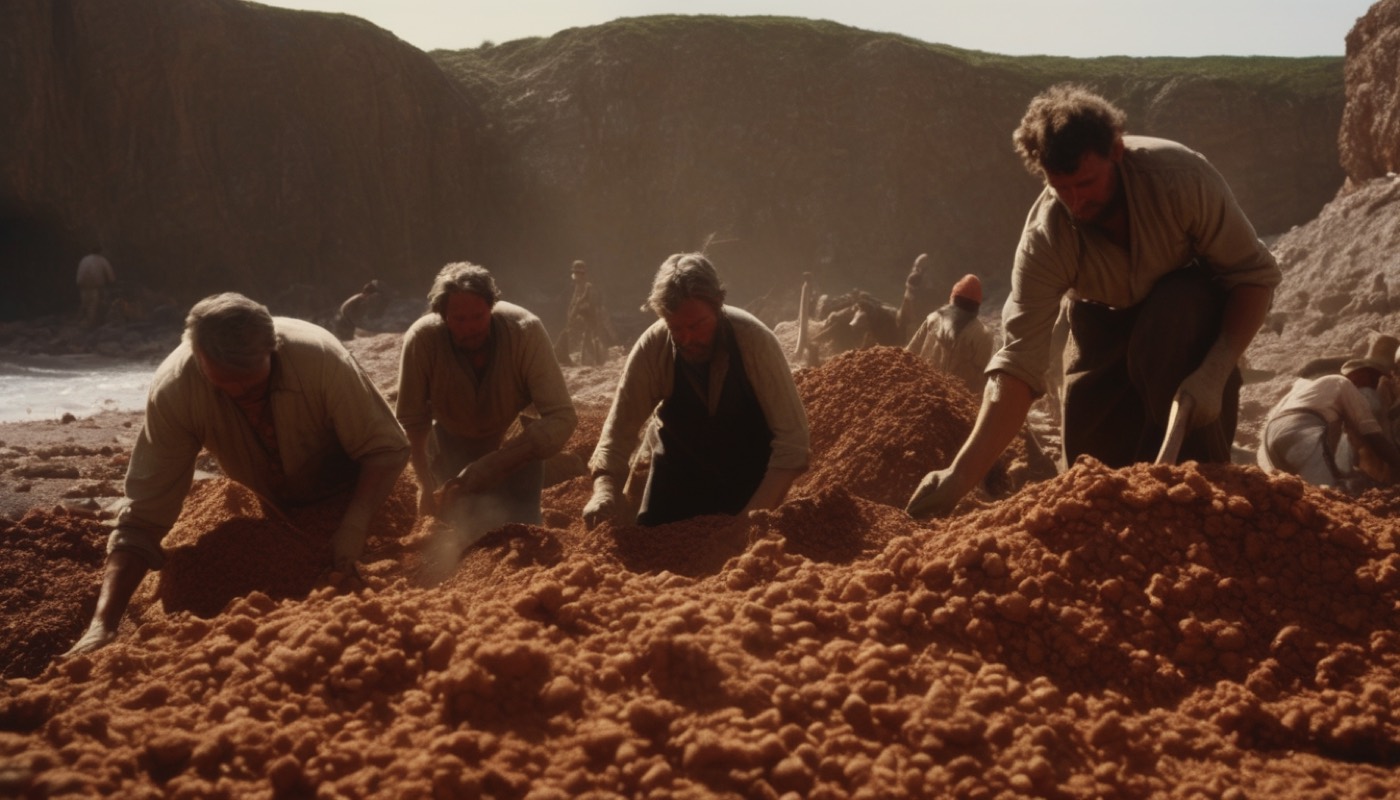
The cities of Europe were growing fast, and so was their hunger for bread. Farmers were feeding their fields with nitrogen brought from the other side of the world.
The first source was guano, the droppings of seabirds, dug from dry islands off the coast of Peru. From the eighteen forties it was shipped north by the boatload. Then came saltpetre, a nitrate mineral dug from the Atacama Desert, on the Pacific coast of South America. Nitrate is a form of nitrogen that plants can take straight up.
Both were being dug far faster than nature could replace them, and both were worth fighting over.
Peru's guano boom began in the mid eighteen forties and made the country rich for two decades. In eighteen seventy-nine, Chile went to war with Peru and Bolivia. The direct cause was a dispute over taxes on nitrate. Chile won, and took the richest nitrate land.
Nineteen years later, a British scientist asked what would happen when it ran out. His name was Sir William Crookes. In September eighteen ninety-eight, in Bristol, he gave the presidential address to the British Association for the Advancement of Science.
He warned his audience that "England and all civilised nations stand in deadly peril of not having enough to eat." His reasoning was simple. The world's wheat land was nearly all in use, the guano was nearly gone, and the nitrate beds would not last.
He offered a way out as well. The air above every field is mostly nitrogen. A chemist who could fix it, which means joining it to something a plant can use, would turn the threat around.
3. Haber's tabletop reactor
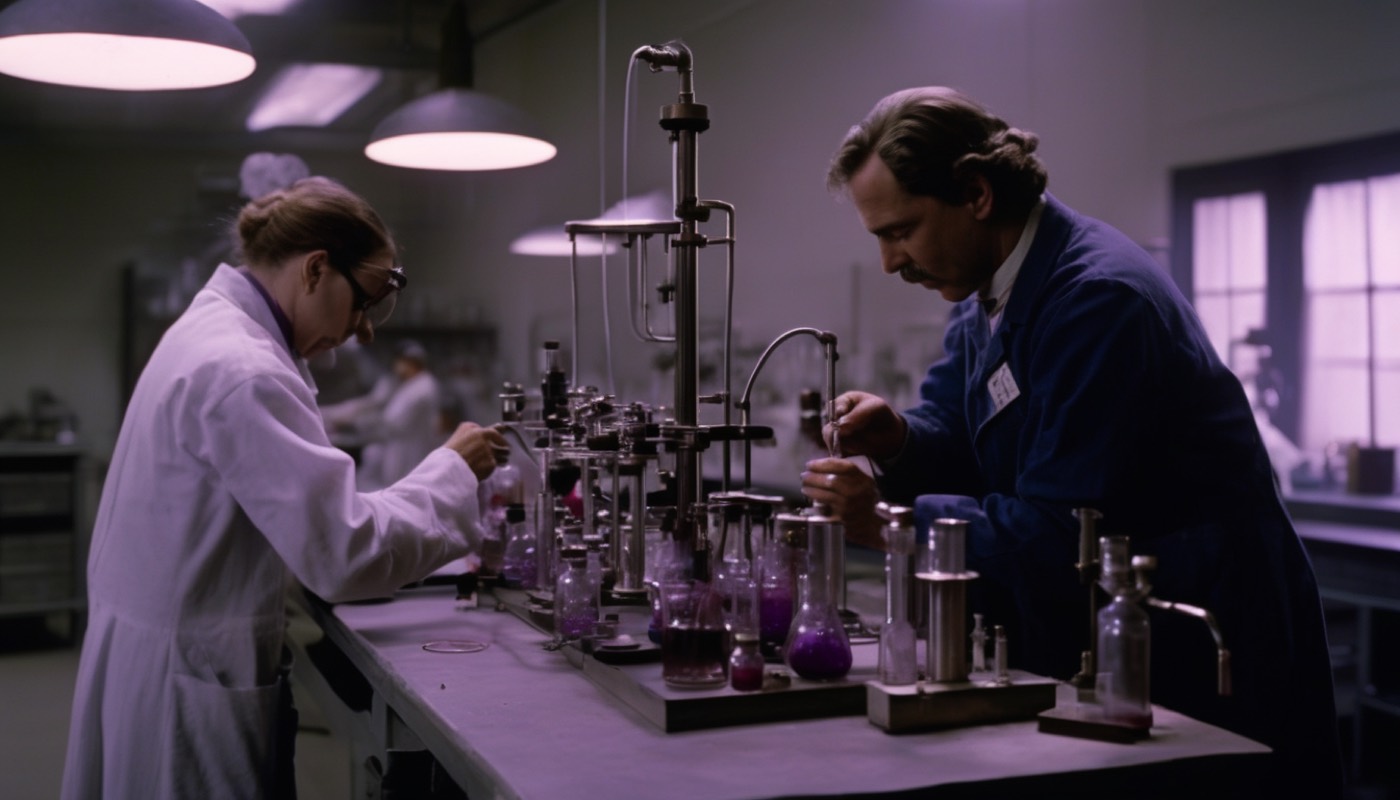
Fritz Haber took up that challenge at the technical university in Karlsruhe. He was a physical chemist, and he knew that nitrogen and hydrogen can be made to join as ammonia. Ammonia is one nitrogen atom with three hydrogen atoms attached, and plants can use the nitrogen in it.
The problem was that the reaction barely runs. At a low temperature it is far too slow. Heat it up to speed it along, and much of the ammonia falls apart again.
Haber's answer had three parts. He pressed the gases together at one hundred and fifty to two hundred atmospheres. One atmosphere is the pressure of the air around us, so that is up to two hundred times as much. He passed them over a catalyst at about five hundred degrees. A catalyst is a material that speeds up a reaction without being used up itself. And he wasted nothing: the ammonia was taken out, and the gas that had not reacted was sent round again.
That last idea, the loop, is what made the process practical. Each pass turned only part of the gas into ammonia, but none of it was thrown away.
On the second of July, nineteen oh nine, Haber showed the machine working to the chemical company BASF. It made ammonia continuously, drop by drop, at about a hundred and twenty-five millilitres an hour. His assistant, Robert Le Rossignol, kept a sealed tube of the ammonia made that day. It is now held by the Science Museum in London.
BASF had already bought the rights to the process. Now it had to turn a machine that fitted on a laboratory bench into a factory.
4. Bosch scales it up
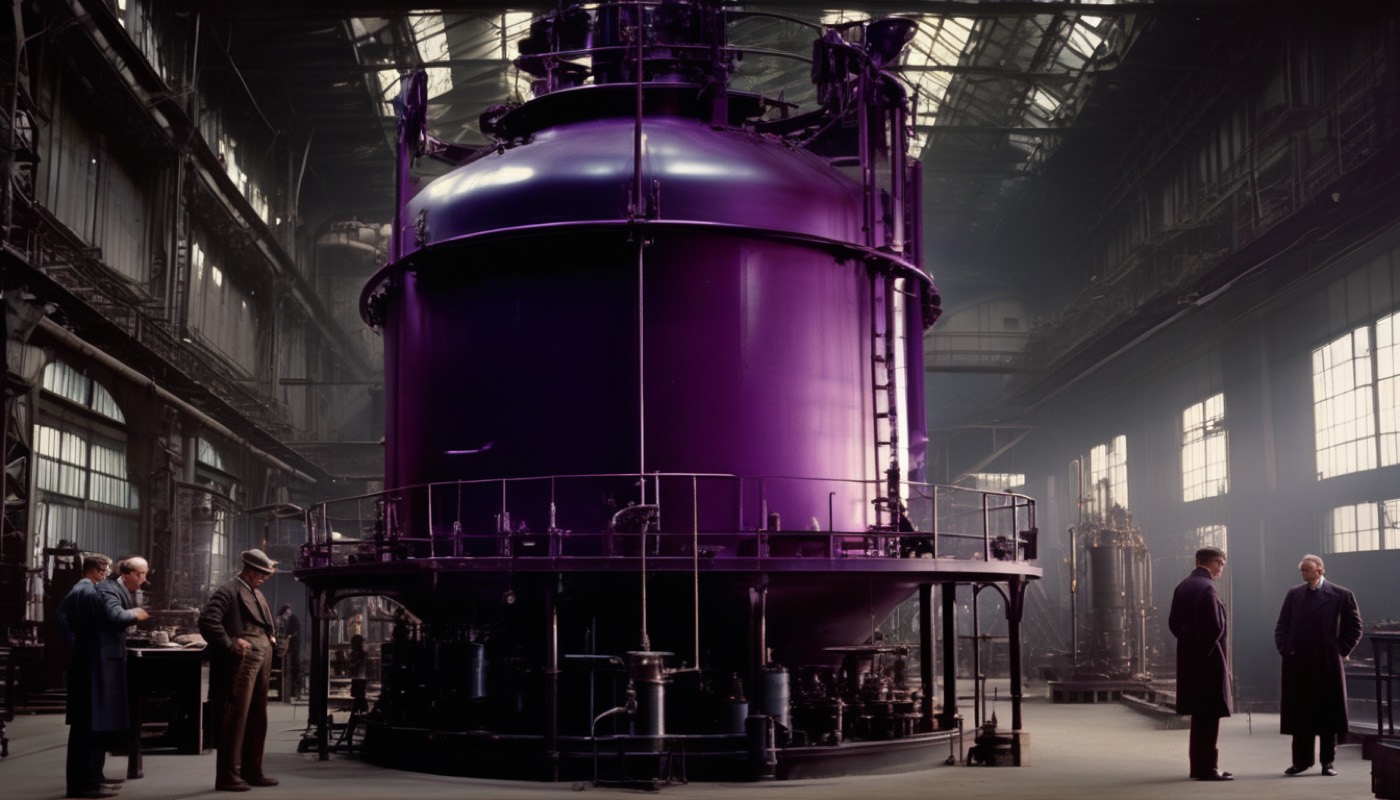
The job went to Carl Bosch, a BASF chemist who had also studied metallurgy and engineering. It was a far harder task than it looked, because nobody had built equipment to work at these pressures and temperatures.
The first large reactors burst. Bosch studied the broken steel and found the cause. Hot hydrogen under pressure was pulling the carbon out of the steel walls, and without its carbon the steel turned soft and brittle at once. His fix was a thin inner lining of soft, low-carbon iron. Behind it, small holes drilled through the outer steel wall let any hydrogen that seeped through escape without doing damage.
The catalyst was the second problem. Haber had used osmium and uranium, which were rare and expensive.
BASF's chemist Alwin Mittasch set out to find something cheaper. He tested thousands of mixtures, one after another, in a systematic search. The winner was iron, with small amounts of other substances added to help it work. A catalyst of that kind is still used in ammonia plants today, almost unchanged.
With a reactor that held and a catalyst that was cheap, the scale-up could begin.
From laboratory bench to factory took just four years. BASF bought Haber's process in nineteen oh eight, and Bosch was given the scale-up the next year. The first industrial ammonia plant in the world came on stream in September nineteen thirteen. A second, even larger plant followed in nineteen seventeen.
The first plant was at Oppau, beside BASF's home works at Ludwigshafen on the Rhine. The second was at Leuna, near Merseburg, far to the east. Between them, they could turn the air over the country into nitrogen compounds by the trainload.
5. Fertiliser and explosives
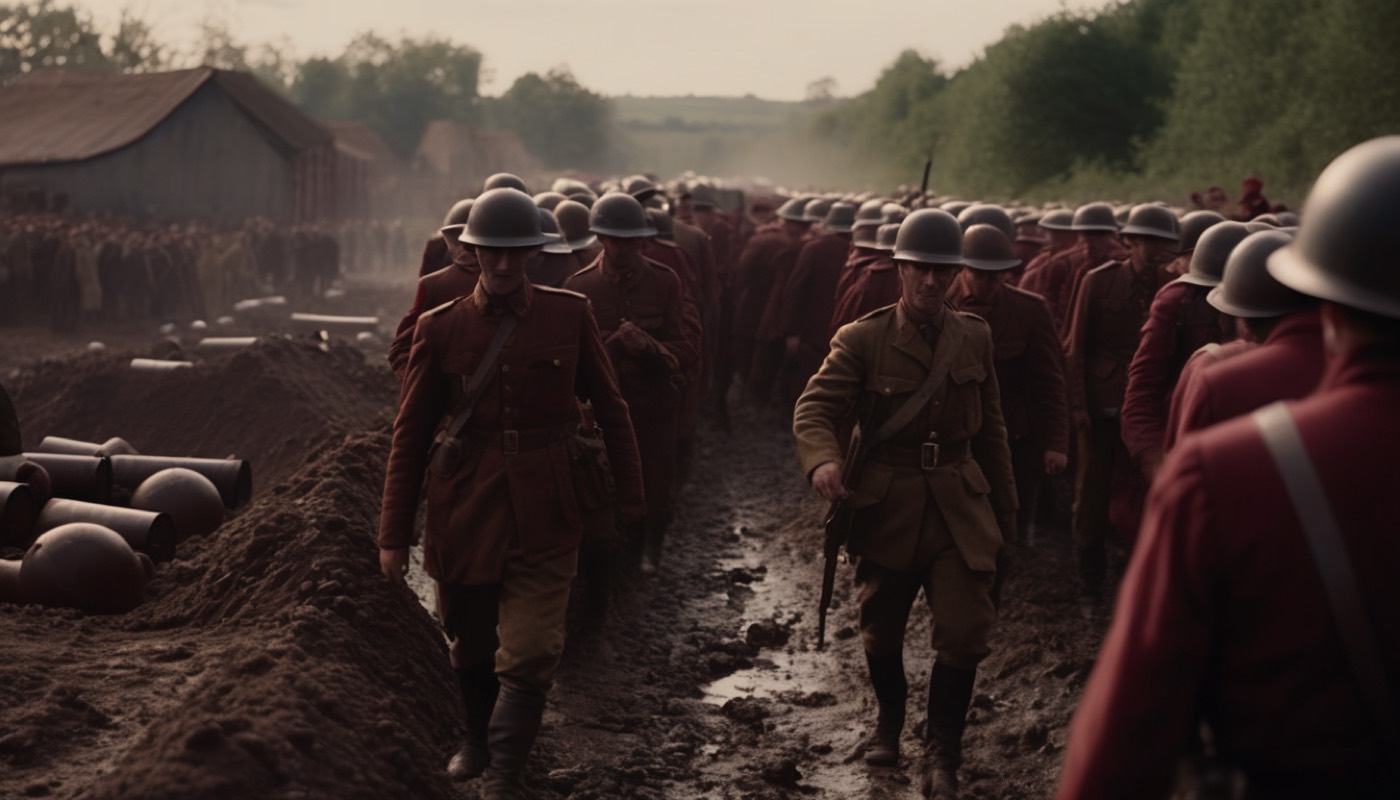
The same molecule that feeds a field can also arm a gun. That is the part of the story the fertiliser bags leave out.
This is the double life of ammonia. Burned with air over a second catalyst, it becomes nitric acid. Nitric acid is the starting point for the explosives that fill shells. Combined with more ammonia, the same acid makes ammonium nitrate, which is both a fertiliser and an explosive.
When war broke out in nineteen fourteen, Germany's supplies of imported nitrate for making explosives failed. The new factories filled the gap.
The official Nobel Prize biography of Haber is blunt about what that meant. It says the Oppau and Leuna works "enabled Germany to prolong the First World War". The plants built to feed farms were making the raw material for shells.
Haber did not stop at nitrogen. He became an adviser to the German War Office, and he organised its gas attacks.
On the twenty-second of April, nineteen fifteen, near Ypres, German troops released chlorine, a choking poison gas, from cylinders along the front. There were five thousand, seven hundred and thirty of them. Haber had gone to the front line himself to supervise where they were placed. It was the first chlorine gas attack of the war.
At home, the cost was personal. His first wife, Clara Immerwahr, was one of the first German women to earn a doctorate in chemistry. She strongly objected to his work on chemical weapons. Days after the attack at Ypres, she shot herself.
The man who had found a way to feed millions had also found a new way to kill them. Both facts belong in the same story.
6. Prizes, disaster and exile
After the war, the honours came, and so did the reckoning.
Haber was given the Nobel Prize in Chemistry for nineteen eighteen, for making ammonia from nitrogen and hydrogen. The award was handed over in nineteen nineteen. Bosch shared the chemistry prize for nineteen thirty-one with Friedrich Bergius, for their work on chemical high pressure methods. Between those two prizes came a disaster, and after them, exile.
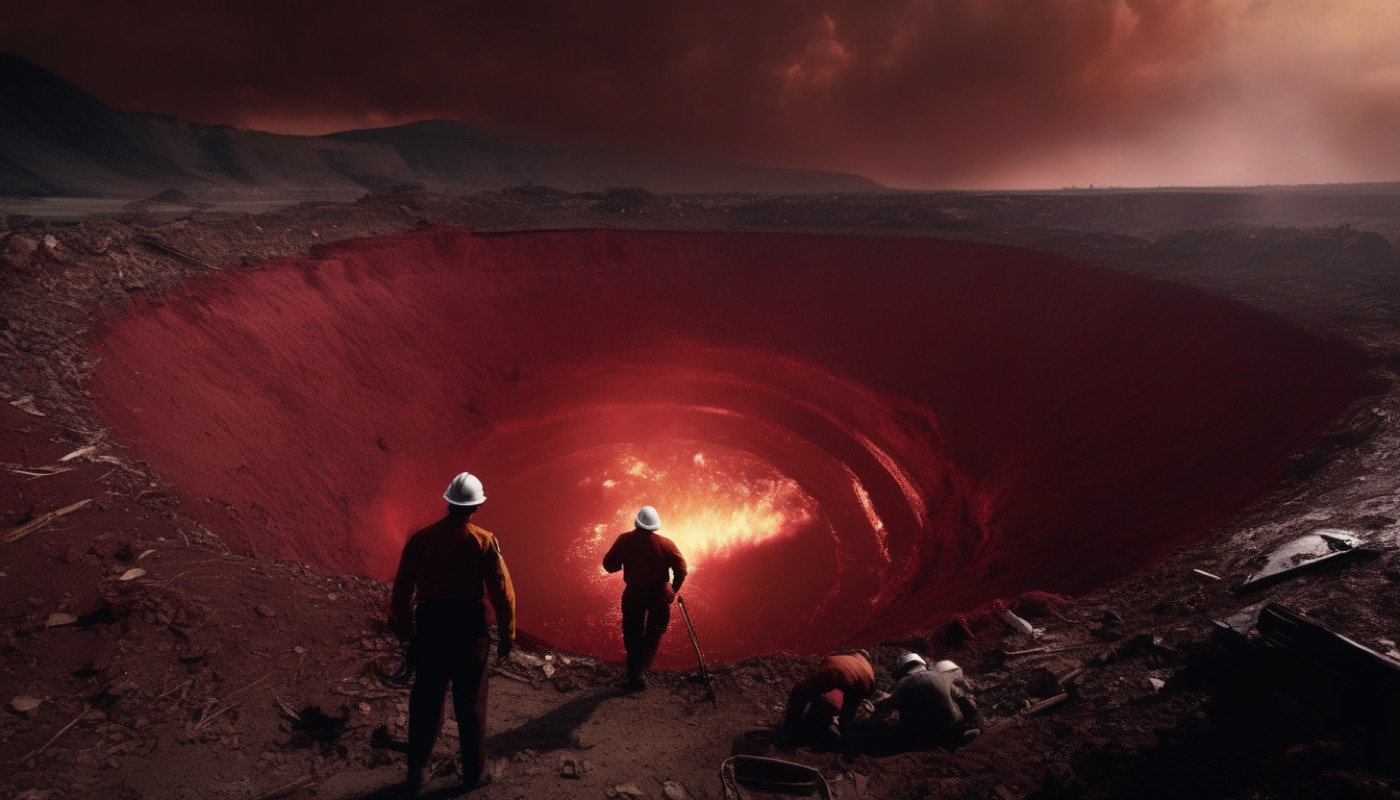
On the twenty-first of September, nineteen twenty-one, at seven thirty-two in the morning, a fertiliser silo at Oppau exploded. It held about four and a half thousand tonnes of a mixed ammonium fertiliser. Workers had been loosening the hardened fertiliser with small blasting charges, as they had done more than twenty thousand times before. More than five hundred people died, and around two thousand were injured.
The explosion left a crater that filled with ground water. The village of Oppau, next to the works, took the worst of the damage.
At the memorial service, Bosch spoke of the fertiliser that had "suddenly proven to be a grim enemy for reasons we do not know". The material meant to bring life to millions had destroyed a town. BASF stopped making that fertiliser for many years.
For Haber, the end came from his own country, a decade later.
In nineteen thirty-three, the Nazi race laws forced nearly all of the staff at his institute in Berlin to resign. Haber resigned rather than go along with it. He went to Cambridge, in England, at the invitation of the chemist Sir William Pope. On the twenty-ninth of January, nineteen thirty-four, on his way to recover in Switzerland, he died in Basel.
His Nobel biography says he died with his spirit broken, rejected by the country he had served so well.
7. Inside a modern plant
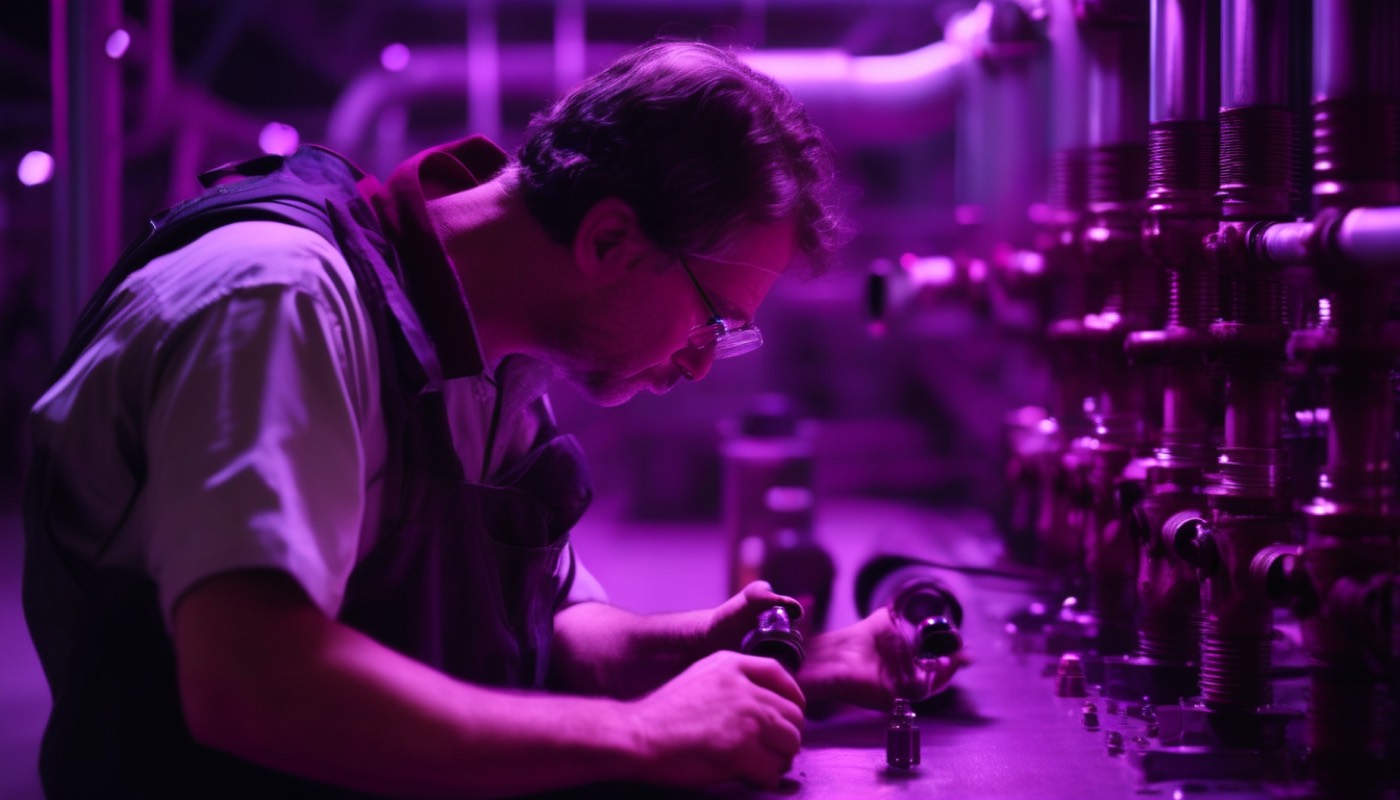
A century on, the chemistry at the heart of an ammonia plant is the one Haber demonstrated. What has changed is the scale, and where the hydrogen comes from.
The nitrogen is simply taken from the air. The hydrogen has to be made. The International Energy Agency says just over seventy per cent of the world's ammonia is made from natural gas. Most of the rest is made from coal. China relies on coal for about eighty-five per cent of its production.
The route from gas to ammonia is a chain of steps, and each one has a job.
The first step is called steam reforming. Natural gas, which is mostly methane, is heated with steam over a catalyst, and it splits into hydrogen and carbon dioxide. The hydrogen is mixed with nitrogen from the air and squeezed by compressors. It passes through a converter packed with the iron catalyst. The gas leaving it is cooled until the ammonia condenses into a liquid, and whatever did not react goes back round the loop.
The carbon dioxide from the first step is where most of the climate cost begins. The reactor at the centre is where the old engineering problem lives on.
At BASF's Ludwigshafen site, the newer reactor runs at more than four hundred degrees Celsius. Its pressure is more than a hundred and fifty bar, and one bar is roughly the pressure of the air around us. Its wall is fifteen centimetres of high-strength steel, in an alloy that resists hydrogen. The double casing Bosch invented is no longer needed there.
About seventy per cent of all this ammonia goes into fertiliser. The rest ends up in plastics, synthetic fibres and explosives.
8. Feeding half the world
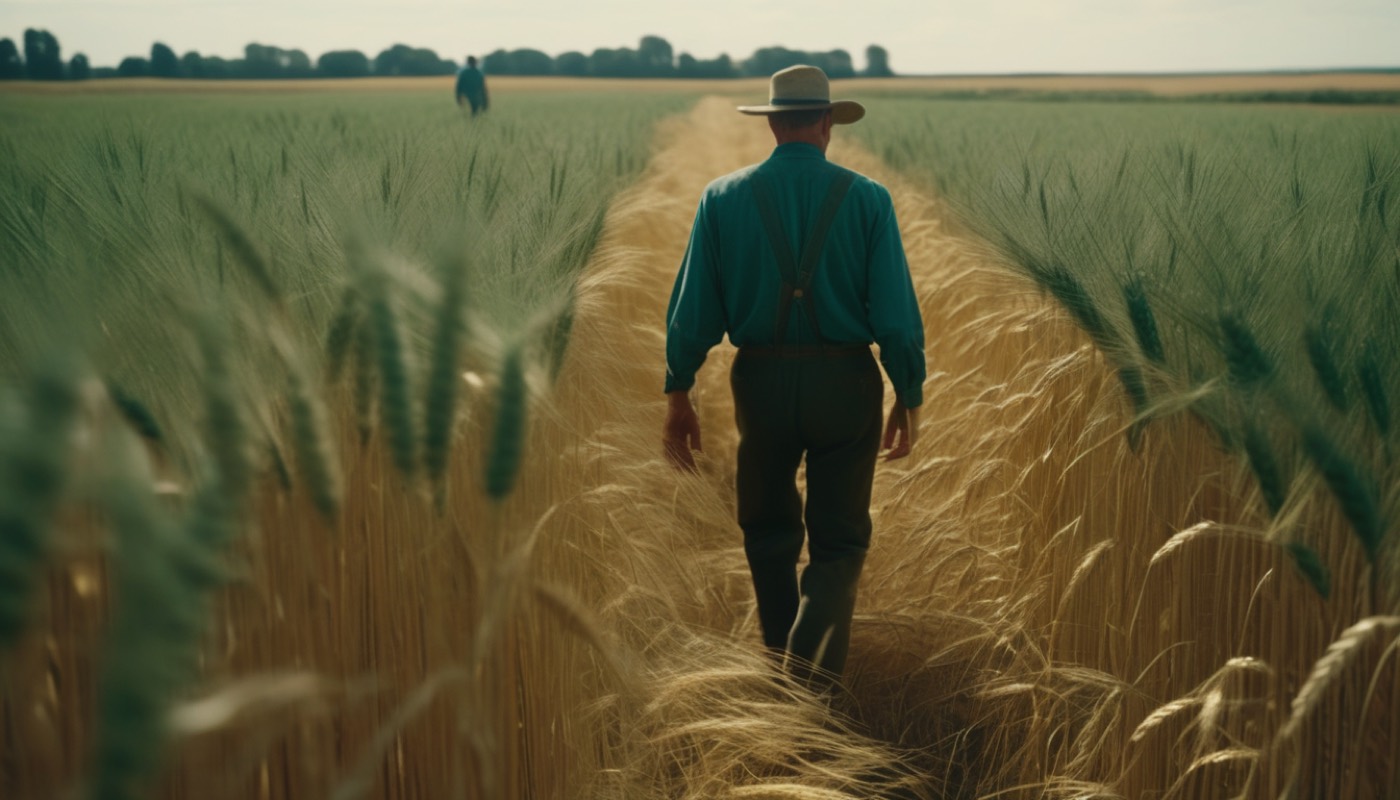
Synthetic nitrogen spread slowly at first. It took another invention, in plant breeding, to unlock what it could do.
In Mexico, the American plant breeder Norman Borlaug bred wheat with short, stiff stems. Tall wheat fed with nitrogen fertiliser grew so heavy with grain that it fell over, which farmers call lodging. Borlaug's semi-dwarf wheat could carry the extra grain standing up. In the nineteen sixties his seed was shipped to India and Pakistan, and the Green Revolution in wheat spread across South Asia.
Borlaug later won the Nobel Peace Prize. His wheat needed fertiliser to deliver its yields, and the Haber-Bosch process supplied it.
How many people does synthetic nitrogen now feed? A team led by the Dutch scientist Jan Willem Erisman worked it out in a study published in two thousand and eight. Their estimate was forty-four per cent of the world's people in the year two thousand. By two thousand and eight, it had risen to forty-eight per cent.
That is the number behind the claim that this process feeds half the world. It is an estimate, not a count, but independent estimates land in the same place.
Put the numbers side by side. At the start of the twentieth century there were about one point six five billion people. Today there are more than eight billion, and roughly half of them are fed by nitrogen taken from the air. The energy scientist Vaclav Smil calculated that at the yields of a century earlier, the harvest at the turn of the millennium would have needed nearly four times as much land.
Few inventions have changed so directly how many people the planet can feed.
9. The hidden costs
Feeding half the world has a price, and it is paid in three places: the air, the soil and the sea.
Start with carbon. The International Energy Agency puts the direct emissions of ammonia making at about four hundred and fifty million tonnes of carbon dioxide a year. That is as much as the whole energy system of South Africa. Each tonne of ammonia comes with about two point four tonnes of carbon dioxide. That is nearly twice as much as a tonne of crude steel.
The second cost is in the field. The agency estimates that more than seventy per cent of the greenhouse gases in a nitrogen fertiliser's life come from its use in the field, not from the factory. Some of the nitrogen escapes as nitrous oxide, a gas that traps heat.
What the crop does not take up can wash away. Rain carries the nitrogen off the land and into rivers. At the coast, it feeds an overgrowth of algae. The algae sink and rot, and the rotting uses up the oxygen in the water. Fish leave, and much of what cannot move dies. That is what a dead zone is: water with too little oxygen for most marine life.
The best known lies off the coast of Louisiana, in the Gulf of Mexico, where the Mississippi River empties the run-off of the farms upstream. It is the second largest dead zone in the world, and scientists supported by NOAA measure it every summer.
In twenty twenty-five it covered about four thousand four hundred square miles. This summer, NOAA measured only about one thousand three hundred and thirty. By its count, that is the second smallest in forty years of measurement. It was not a cure: Tropical Storm Bertha had just stirred oxygen back into the water.
The official goal is a five-year average under one thousand nine hundred square miles, by twenty thirty-five. Even with this year's small reading, the average is about three thousand seven hundred and fifty, nearly twice the goal.
10. A chokepoint for food
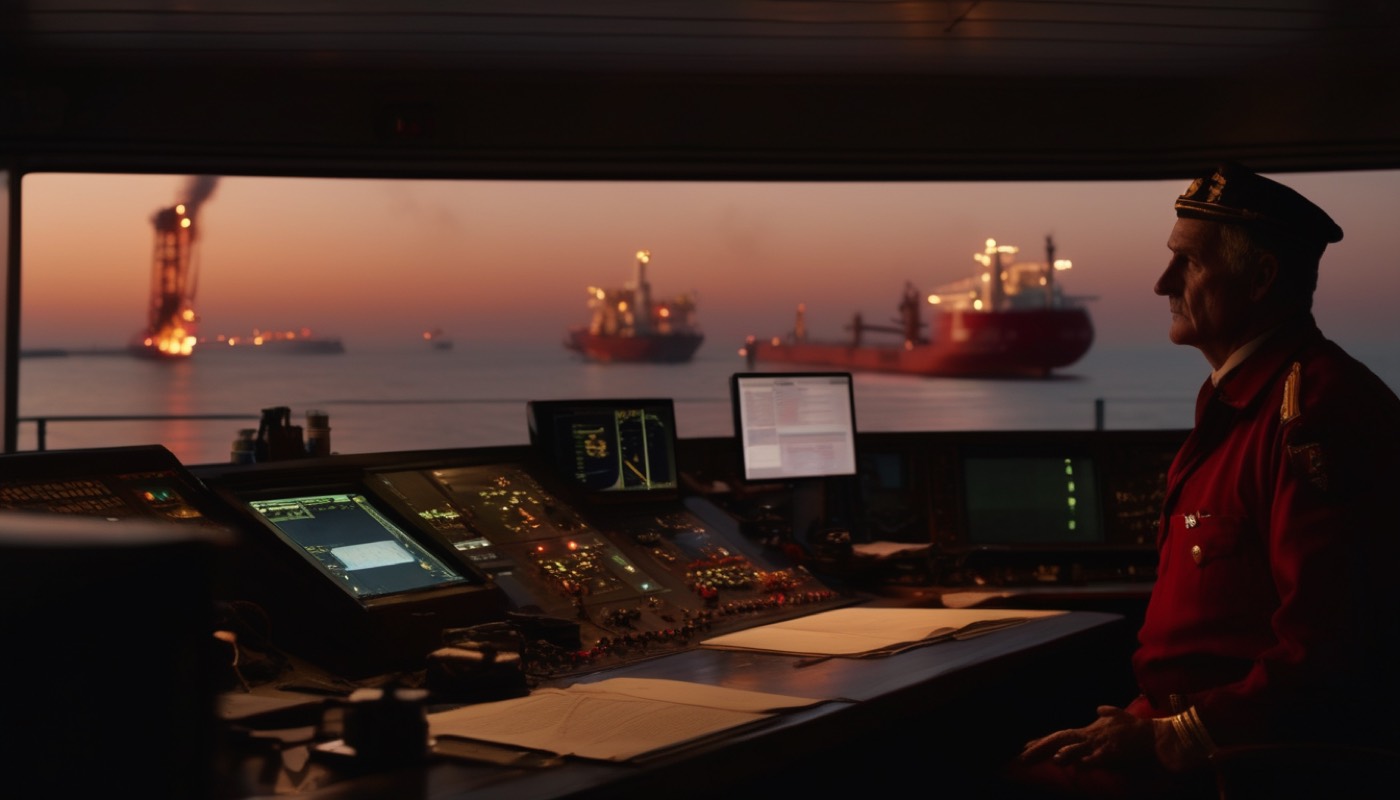
Because most ammonia is made from natural gas, the price of bread is tied to the price of gas. Twice in five years, that tie has pulled tight.
In twenty twenty-two, after Russia invaded Ukraine, gas prices in Europe hit record highs. The Norwegian fertiliser maker Yara kept cutting back. By late August it was running its European ammonia plants at around thirty-five per cent of their capacity.
The second shock is still going on, and it comes from a single stretch of sea.
On the twenty-eighth of February, twenty twenty-six, the United States and Israel launched air strikes on Iran. Iran's Revolutionary Guards warned ships that none would be let through the Strait of Hormuz, and shipping through it all but stopped. The strait is a chokepoint: a narrow stretch of water that a large share of world trade has to pass through. The World Bank reported that Iran halted ammonia production, and that Qatar suspended urea and ammonia after damage to key plants. India, short of imported gas, cut its own output.
Urea is the most common fertiliser made from ammonia. The World Trade Organization says the Gulf economies supplied almost a quarter of the world's nitrogen fertiliser exports, so the price of urea moved first.
The World Trade Organization tracked urea from around four hundred dollars a tonne before the war to over eight hundred and fifty in April. The World Bank called April's price a rise of eighty per cent since February. By June it had eased to about four hundred and fifty-three dollars. By August, the World Bank's figures had it back below four hundred.
The countries that feel it most are the ones that buy their nitrogen from the Gulf.
India sourced almost two-thirds of its nitrogen fertiliser imports from the region. The trade body counts Kenya, Tanzania and Uganda among the most exposed developing economies, along with Brazil and Sri Lanka. Treating the closed strait as a ban on all Gulf fertiliser exports, it puts the share of world fertiliser exports affected at up to twenty-three point three per cent.
And it is not over. A brief pickup in early summer did not last. The shipping tracker run by the trade body and AXSMarine was updated on the twenty-first of September, twenty twenty-six. Apart from a few brief pickups, it found fertiliser shipments out through the strait close to zero through July and August. A process invented to free farming from one distant supply has made it depend on another.
11. Greening the process
If the problem is the gas, the obvious fix is to make the hydrogen another way.
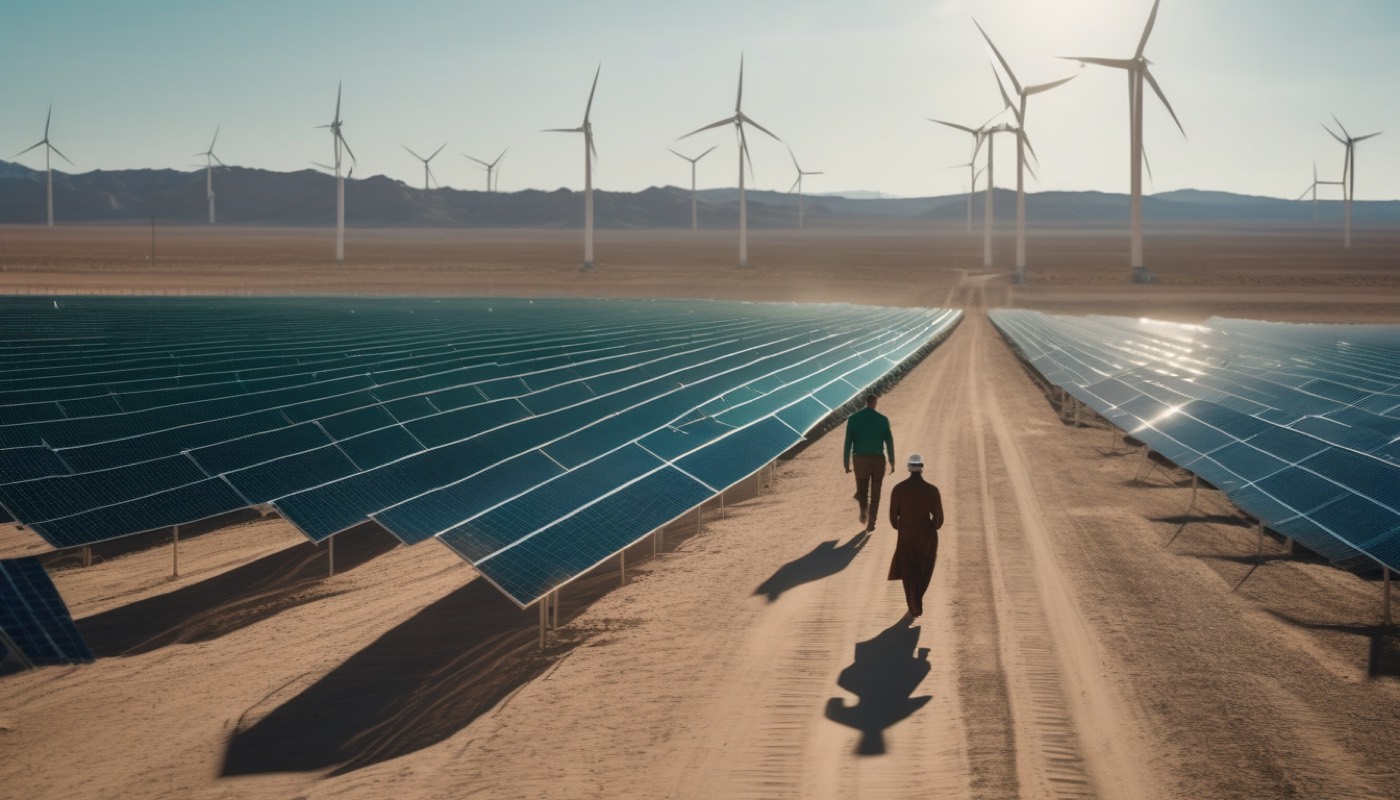
The alternative is called green ammonia. Instead of splitting natural gas, it splits water, using electricity from solar panels and wind turbines. The machine that does this is an electrolyser: an electric current passed through water separates it into hydrogen and oxygen. The hydrogen then goes into the same Haber-Bosch loop as before, with no carbon dioxide from gas.
The largest project so far is being finished in the desert.
It is at NEOM, in the north-west of Saudi Arabia. In August twenty twenty-six, its builders said construction was complete and the plant had entered commissioning, which is the testing phase before full production. The complex cost eight point four billion dollars. It is designed to make up to six hundred tonnes of hydrogen a day, all of it turned into ammonia for export.
The American company Air Products owns a third of it and has agreed to take every tonne. Finding customers proved hard, and in July it signed Yara, the Norwegian fertiliser maker, to market the ammonia.
Cost is the obstacle. An analysis published by AGBI in June twenty twenty-six found green ammonia still roughly up to twice as expensive to make as the ordinary kind, which is called grey. Analysts expect that gap to last more than a decade. Green ammonia is still less than one per cent of the two hundred to two hundred and forty million tonnes made each year.
One market is trying to close that gap with a charge at its border.
The European Union's carbon border levy is called the Carbon Border Adjustment Mechanism. From October twenty twenty-three, importers only had to report their emissions. Since the first of January, twenty twenty-six, companies importing fertiliser into the Union have owed a charge for the carbon emitted in making it. They pay it with certificates, which go on sale in February twenty twenty-seven. NEOM's commercial output is due in twenty twenty-seven, into a market that has started to price carbon.
12. Forwards or backwards?
So is Haber-Bosch a step forwards or a step backwards? On the evidence, it is both, and the question now is what comes next.
There are three broad ways forward. The first is to make ammonia without fossil carbon, with electrolysers, or by capturing the carbon from gas-fired plants and storing it underground. The second is to lean harder on nature's own method, the bacteria in the roots of beans and peas. The third is simply to use less, by putting fertiliser only where and when the crop can take it up.
None of them is ready to replace the whole system. The energy agency says nearly sixty per cent of the emission cuts in its clean scenario come from technologies still at the demonstration stage.
The scale is daunting. In that scenario, direct emissions from ammonia making fall by more than seventy per cent by twenty fifty. Getting there needs more than one hundred and ten gigawatts of electrolysers. That means installing, on average, ten electrolysers the size of the largest one working today, every month, until then.
It helps to remember where this began.
In eighteen ninety-eight, Crookes called on the chemist to come to the rescue. He told his audience that "it is through the laboratory that starvation may ultimately be turned into plenty". The laboratory delivered, and roughly half the people alive today eat because it did.
The next test is harder. It is whether the same chemistry can keep feeding them without the gas, the carbon and the dead zones. Haber pulled food out of the air once. The task now is to do it again, cleanly.
Sources and credits
Primary sources
- Sir William Crookes, 'The Wheat Problem', based on the presidential address to the British Association at Bristol in 1898 (archive.org full text) - both quotations; The Spectator, 10 September 1898 - date of the address.
- Wikipedia, 'History of Peru (1845-1866)' (Guano Era 1845-1866) and 'War of the Pacific' (1879; nitrate taxation dispute).
- NobelPrize.org, Fritz Haber biographical (from Nobel Lectures, Chemistry 1901-1921, Elsevier 1966) - 150-200 atmospheres, about 500 C, Bosch and Mittasch, Oppau and Leuna, 'enabled Germany to prolong the First World War', gas attacks, 1918 prize awarded 1919, 1933 resignation, Cambridge, died 29 January 1934 at Basle.
- NobelPrize.org, Carl Bosch biographical and Nobel Prize in Chemistry 1931 summary - 1908 purchase, iron catalyst, Oppau 1913, Leuna 1917, 1931 prize with Bergius.
- Science Museum Group, 'Sample of Haber's Synthetic Ammonia, 2 July 1909', object 1952-391/2 - date of the demonstration to BASF.
- Wikipedia, 'Haber process' - about 125 mL an hour in 1909; exceptionally stable nitrogen; Smil's four-times-the-land estimate. Wikipedia, 'Alwin Mittasch' - systematic catalyst search.
- BASF, 'Fertilizer out of thin air' (basf.com) - burst reactors, hydrogen embrittlement, soft-iron lining and drilled holes, September 1913, modern reactor >400 C, >150 bar, 15 cm wall.
- C&EN, '100 Years of Chemical Weapons' - 22 April 1915, 5,730 cylinders, Haber's supervision, Clara Immerwahr.
- BASF, '100th anniversary of the Oppau explosion' and chronology 1921 - 21 September 1921, 7:32 a.m., over 500 dead, about 2,000 injured, about 4,500 t, more than 20,000 earlier loosening blasts, Bosch's memorial speech.
- IEA, 'Ammonia Technology Roadmap', Executive Summary, October 2021 - >70% natural gas, China ~85% coal, ~70% to fertilisers, 450 Mt CO2, 2.4 t CO2/t, >70% use-phase, demonstration stage, >110 GW electrolysers, ten 30 MW electrolysers a month.
- Wikipedia, 'Norman Borlaug'; NobelPrize.org, Nobel Peace Prize 1970 - semi-dwarf wheat, lodging, India and Pakistan.
- Erisman et al., 'How a century of ammonia synthesis changed the world', Nature Geoscience, published 28 September 2008; Our World in Data, 'How many people does synthetic fertilizer feed?' - 44% (2000), 48% (2008), 1.65 billion in 1900, more than 8 billion today.
- NOAA NCCOS, 'Below Average Summer 2025 Dead Zone Measured in Gulf', 31 July 2025 - 4,402 sq mi, five-year average 4,755, goal under 1,900; NOAA NCCOS, 5 August 2026 - 1,332 sq mi, Tropical Storm Bertha, five-year average now 3,745 sq mi, goal under 1,900 by 2035; NOAA Ocean Service, 'What is a dead zone?'.
- Yara, 'Yara implements further production curtailments in Europe', 25 August 2022 - around 35% European ammonia capacity utilisation.
- World Bank Data Blog, John Baffes and Kaltrina Temaj, 'Fertilizer prices surge as Strait of Hormuz disruptions tighten supplies', 14 May 2026.
- WTO Data Blog, 'Fertilizer trade impacted by Strait of Hormuz conflict', 10 July 2026; WTO-AXSMarine Strait of Hormuz Trade Tracker, update of 21 September 2026.
- Fertilizer Daily, 'NEOM green hydrogen complex finishes $8.4 billion construction', 25 August 2026; Air Products Form 10-Q, quarter to 30 June 2026; AGBI, 'Neom green hydrogen project nears completion', 5 February 2026.
- AGBI, Valentina Pasquali, 'Green ammonia fails to gain from Hormuz fertiliser shock', 15 June 2026.
- European Commission, Taxation and Customs Union, 'Carbon Border Adjustment Mechanism' - transitional phase 2023-2025, definitive regime from 1 January 2026, fertilisers covered; Commission CBAM Q&A (reported by CLECAT) - certificates on sale from 1 February 2027.
- Wikipedia, '2026 Strait of Hormuz crisis' (revision of 18 September 2026) - strikes on Iran from 28 February 2026; IRGC warnings to shipping; no formal blockade declared.
- World Bank Commodity Price Data (Pink Sheet), September 2026 - urea (E. Europe, f.o.b. Middle East) $453.1/t June, $400.0 July, $390.0 August 2026.
- Air Products Form 8-K, exhibit 99.1 (Q3 FY2026 results, 30 July 2026); World Fertilizer, 4 August 2026 - Yara marketing and distribution agreement for NEOM ammonia.
Not regulated financial advice.