
After the ISS: Can Private Space Stations Take Over?
First, what the ISS leaves behind: assembly beginning with Zarya's launch from Baikonur on 20 November 1998, and unbroken crewed occupation since Expedition 1 arrived on 2 November 2000. Then the mechanics of staying alive in orbit - air, water, waste, power and heat rejection - including NASA's 2023 water-recovery milestone (98%, via the station's brine processor) - and what research actually requires once survival is handled.
Then the four companies building replacements: Axiom Space (attaching to the ISS, then detaching as early as 2028), Starlab (launching complete on a single rocket, five NASA milestones cleared by July 2025), Orbital Reef (full-size mockup walkthroughs, not certification), and Vast (integrating Haven-1 hardware, targeting Q1 2027). None has yet cleared NASA's four-stage certification process.
Then the spacecraft problem: Crew Dragon has flown twelve certified crewed missions since 2020; Boeing's Starliner remains uncertified, with a crewed Starliner-2 flight now targeted for 2028 alongside certifying the Vulcan rocket. Verbatim, on-screen quotes from NASA's Dana Weigel (28 September 2026) and Administrator Jared Isaacman (6 July 2026) set out NASA's own account of where the programme stands.
Finally, the money and the risk: NASA buying services rather than owning a station, via fixed-price contracts starting with two or more providers; the customers a station still has to find (government missions, private astronauts, research, manufacturing); and the US GAO's 17 June 2026 warning that NASA has not yet assessed the likelihood or duration of a gap between ISS retirement and a certified successor.
This video draws a conditional conclusion, not a verdict: replacement is credible only once a certified station, reliable transport, and paying customers exist together - and as of October 2026, that has not yet happened.
Educational documentary. Not financial or investment advice.
In these topics
Chapters
Video notes
1. The deadline above Earth
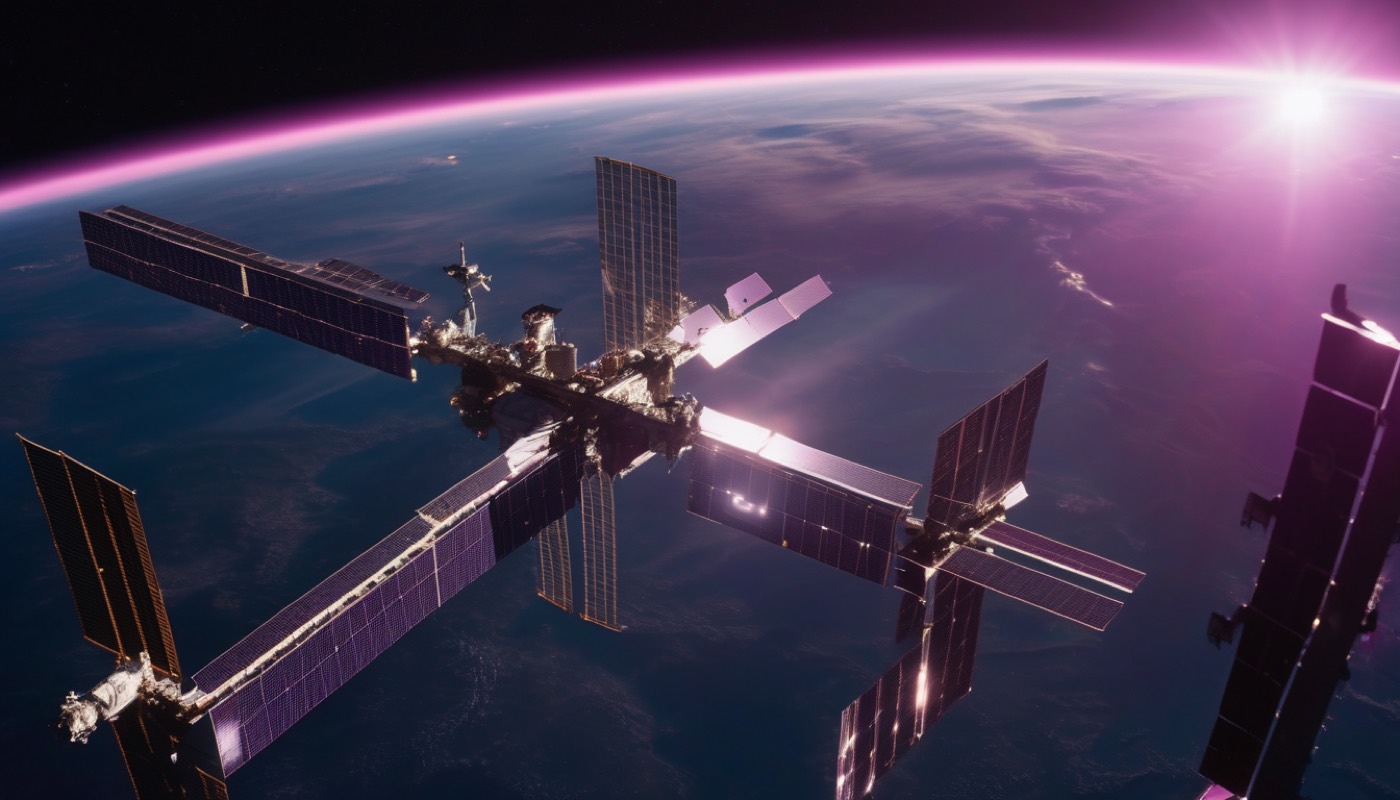
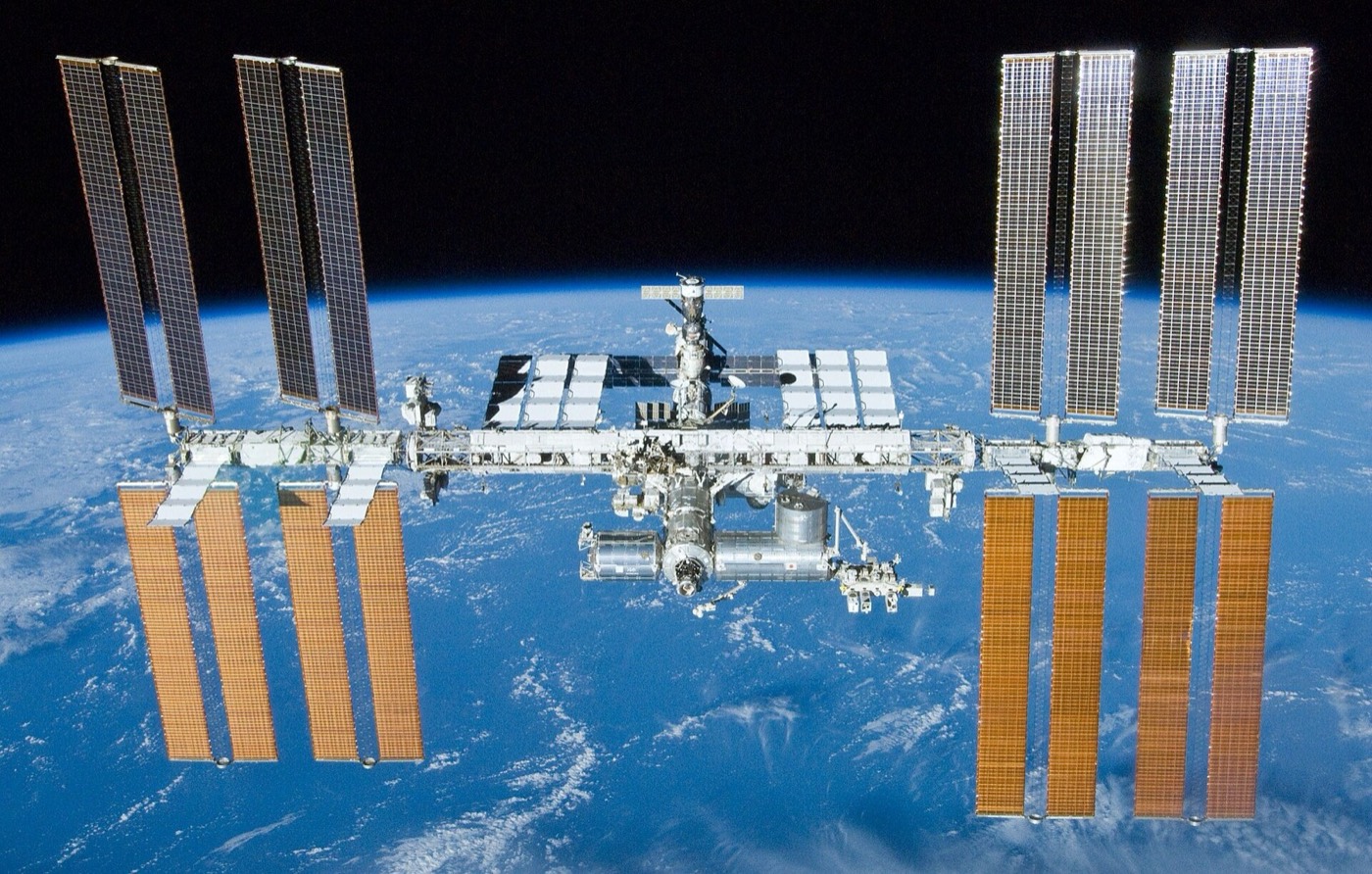
The International Space Station has been flying for more than a quarter of a century, and it will not fly forever. NASA has fixed a date to end its use, and that date puts a clock on everything the rest of this video has to explain.
In July 2024, NASA confirmed its plan for the station: keep using it fully through 2030, then bring it down in a controlled descent called a deorbit. That means steering the wreckage into a remote stretch of ocean, rather than letting a structure the size of a football field fall where it lands. The 2030 date is now the planning assumption behind every decision this video covers.
This is the station that date applies to.
Photographed here, the International Space Station spans the length of a football pitch, carrying the solar arrays that power it and the radiators that carry waste heat back out into space. Everything on this video's fact sheet about keeping astronauts alive happens somewhere inside that structure.
The reason NASA is retiring the station rather than extending it again comes down to the hardware itself, not a change of ambition.
NASA's own transition planning says the station's primary structure has reached the end of its practical working life, and much of it was designed and built back in the late 1990s and the 2000s. Its power, data and structural systems were built to fit each other, not some future platform, and NASA says industry showed no real interest in reusing the station's major components once it retires.
So nothing of the International Space Station itself carries forward into what replaces it. What has to exist instead — certified, and ready before 2030 arrives — is the whole subject of this video.
2. What the ISS leaves behind
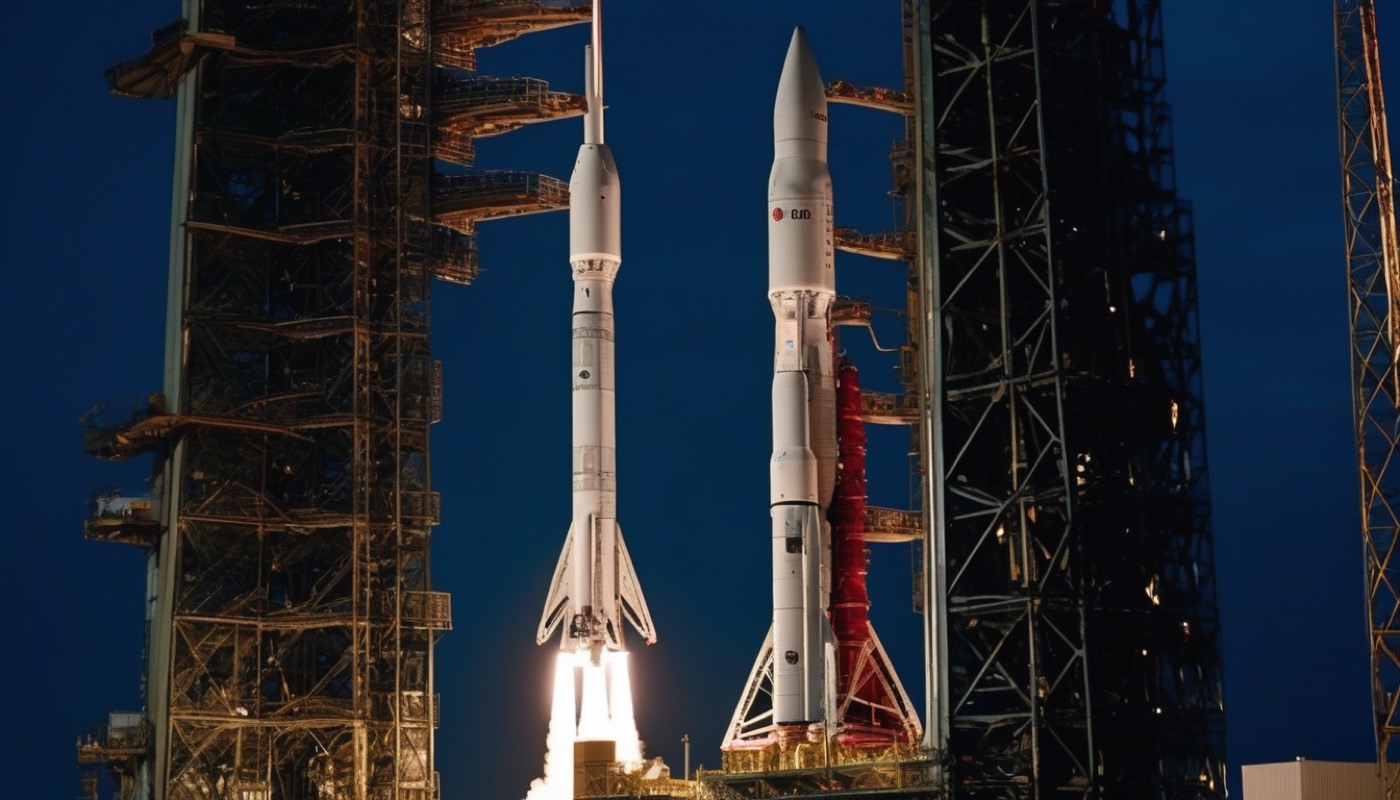
Before anything can replace the International Space Station, it is worth being clear about what it actually built, because calling it a laboratory in orbit undersells it.
Assembly began at two launch sites on opposite sides of the world: the Baikonur Cosmodrome, and the Kennedy Space Center. Two space programmes that had spent decades as rivals were, from that point on, flying hardware that had to dock together and keep working as one machine.
The first of those two pieces went up first, and everything else was built onto it.
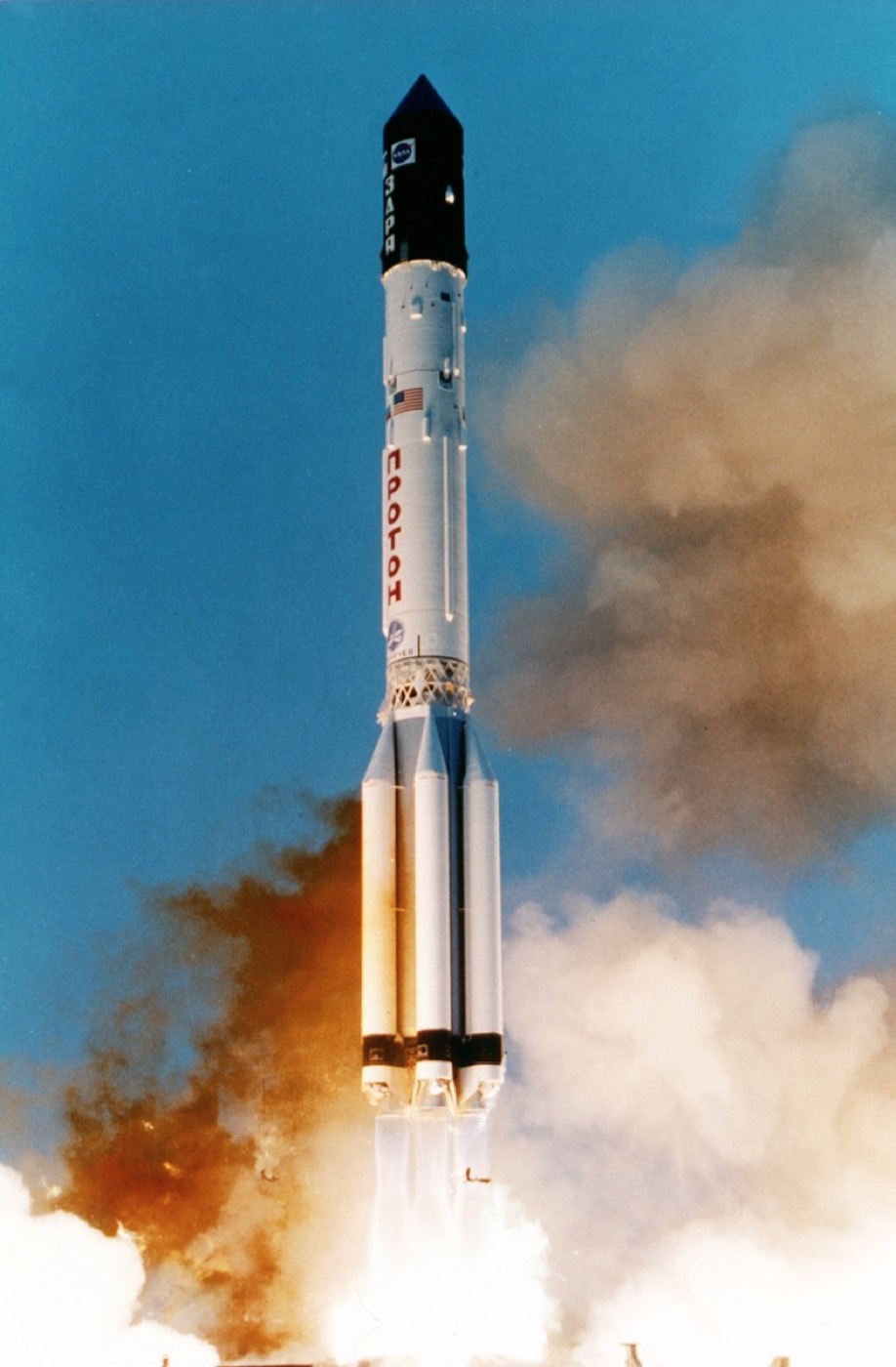
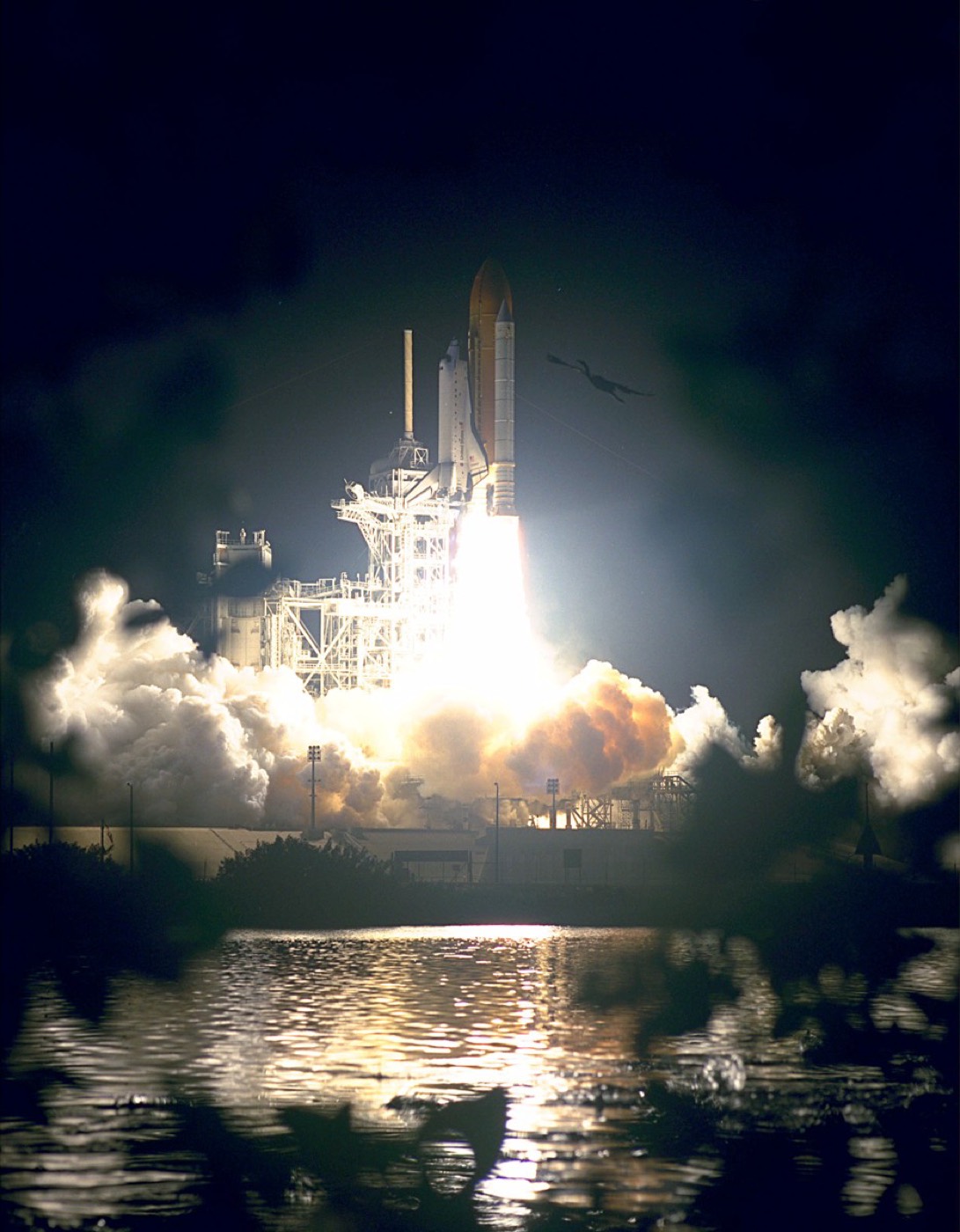
On 20 November 1998, the Zarya module launched from Baikonur atop a Proton-K rocket, carrying the station's first power and propulsion systems into orbit. This is that launch.
Assembly then continued for years, but the station's defining moment was not a piece of hardware. It was the day people stopped leaving.
In November 2000, the crew of Expedition 1 moved into the station, and nobody has left it empty since. That unbroken run, continuing today, is now well into its third decade.
The station's second major piece, arriving within weeks of the first, says something about who actually built this thing.
On 4 December 1998, the Space Shuttle Endeavour lifted off from Kennedy Space Center carrying the Unity module, which astronauts connected to Zarya in orbit days later. That joining formed the station's first two connected pieces.
None of that hardware, though, is something a replacement can simply inherit.
NASA's own transition planning says plainly that the station's modules carry a specific power, data and structural design that may not fit a future platform, and much of that hardware is now more than two decades old. A new station does not inherit the ISS's systems. It has to build its own version of everything just described.
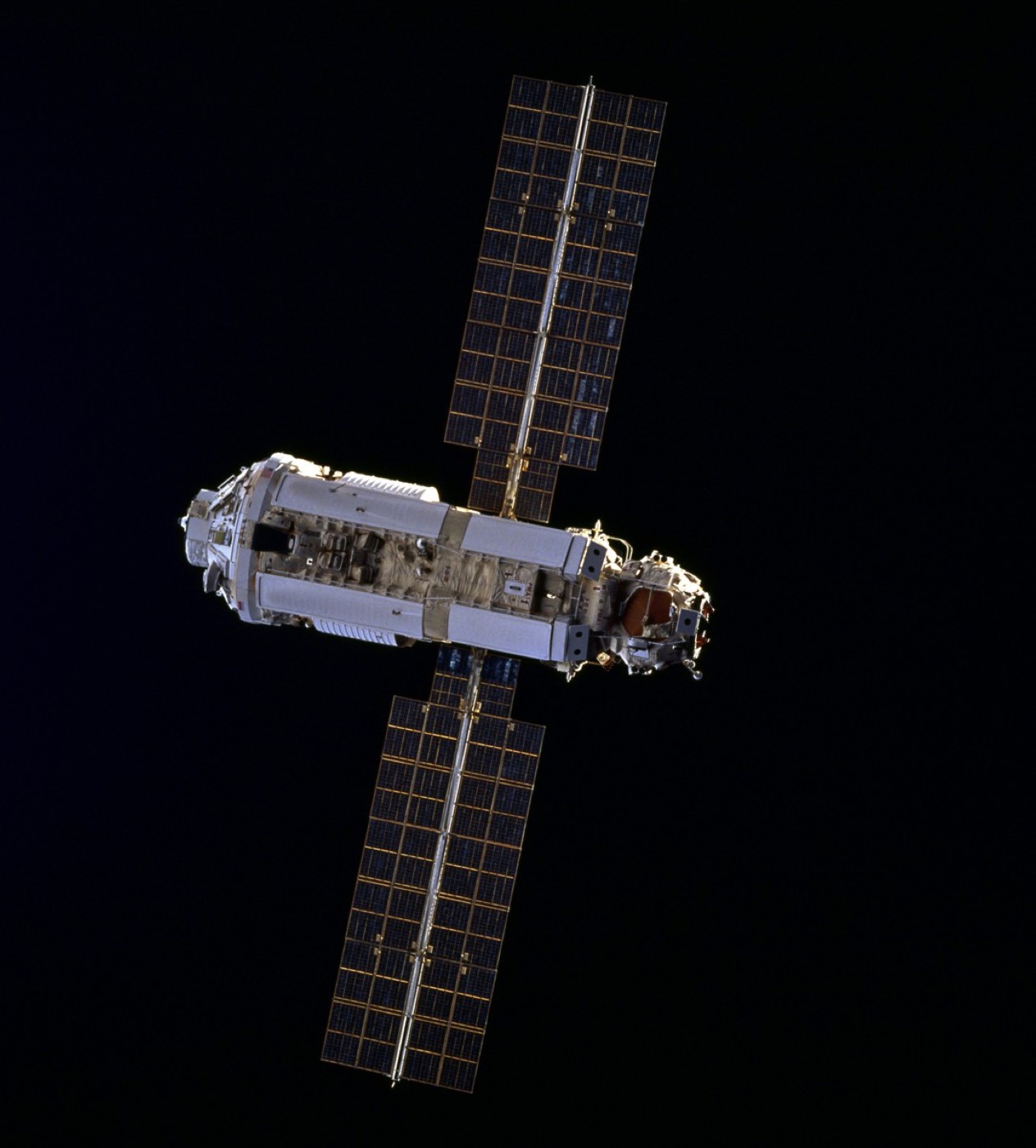
This is what that history looks like from outside, photographed during the same mission that delivered Unity.
This is Zarya, already circling the Earth, photographed from Endeavour's cabin on 6 December 1998 as the shuttle closed in to connect the two pieces together. It is the earliest surviving image of the station that would grow from it.
That is what the ISS leaves behind: a laboratory, and more than two decades of an international operating system nobody has had to rebuild from nothing. The next two chapters set out exactly what rebuilding has to mean, starting with keeping a crew alive at all.
3. Keeping people alive
Whatever replaces the International Space Station has to do one job before any research happens: keep a crew alive, with nothing to breathe, drink or stand on except what the station itself provides.
A station like this holds air in with a sealed, pressurised hull. Inside that hull, it has to supply breathable air, drinkable water, and somewhere for waste to go. It also needs electrical power from solar arrays, and a way to get rid of waste heat. Every one of those systems has to work continuously, because there is no atmosphere outside to fall back on.
Water is the resource that shows most clearly how far recycling has to go, because almost none of it can simply be shipped up from Earth once a mission gets longer.
In June 2023, NASA announced that the ISS's brine processor, a unit that squeezes the last usable water out of leftover urine concentrate, had pushed the station's overall water recovery rate to 98%. A system that recycles sweat, breath moisture and urine into drinking water is not a backup. On a station this size, it is the water supply.
That number did not come from a new idea. It came from refining hardware astronauts had already been maintaining by hand for years.
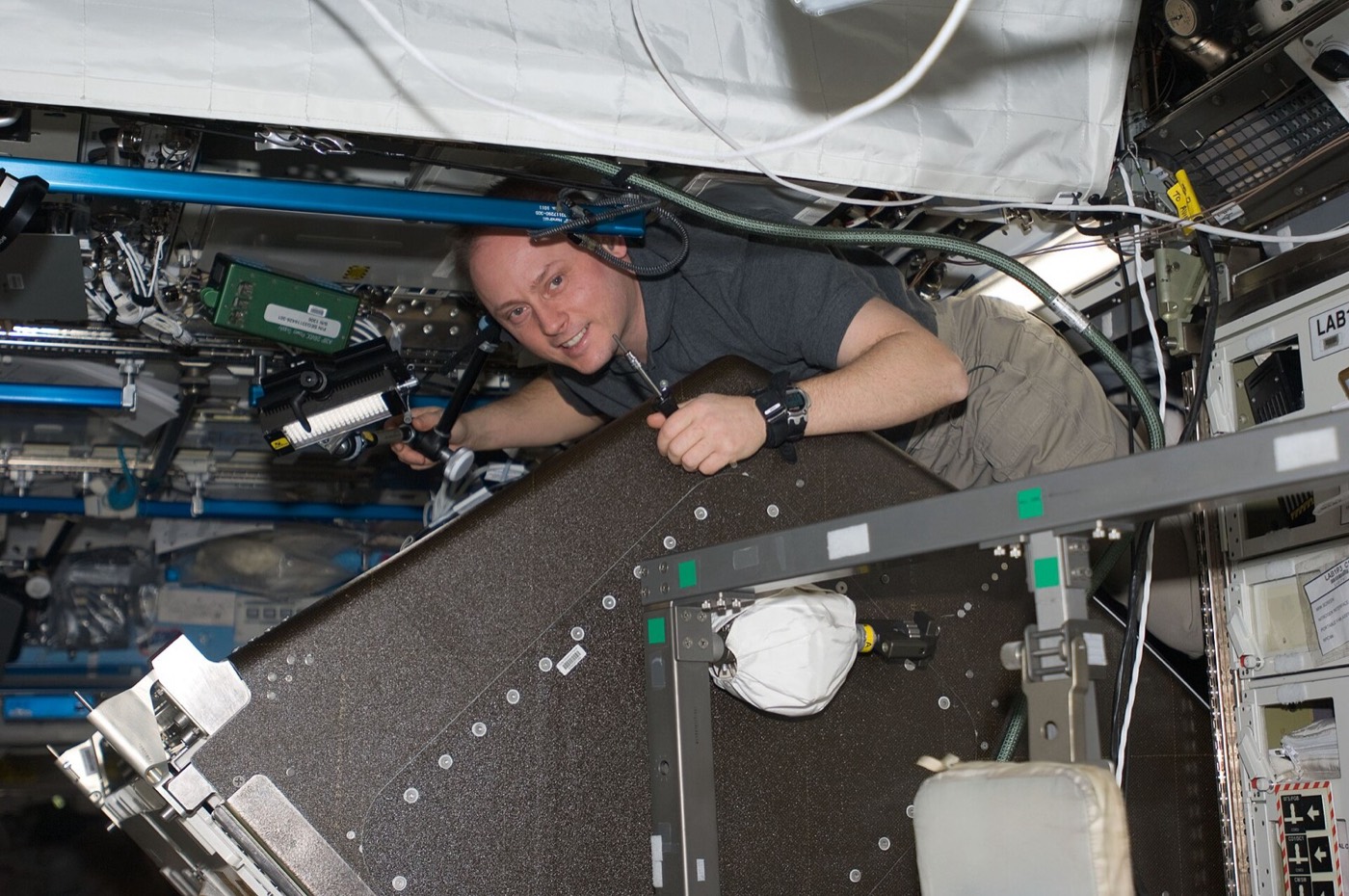
This is an earlier stage of that same system, in 2008, as an astronaut checks the water recovery hardware inside the station's Destiny laboratory for leaks. The 98% figure NASA announced in 2023 is a later milestone for the system shown here, not a description of this exact photograph.
Keeping the air and water running is the routine case. A station also has to have an answer for when something fails badly enough that routine stops being an option.
The standard response to a serious problem, such as a depressurisation or a toxic leak, follows the same three steps on every station. First, isolate the affected module by sealing hatches around it. Second, shelter the crew in a part of the station that is still safe. If the problem cannot be contained, evacuate in a crew capsule that stays docked for exactly this reason. That capsule, covered properly in chapter seven, is as much a life-support system as anything inside the hull.
Survival is the floor, not the purpose. The entire reason to keep people alive up there is the next chapter's subject: the work they actually do.
4. Keeping research useful
A life-support system only buys the right to spend time on board. The ISS's second legacy is what it proved that time could be used for.
A piece of research on the station follows the same four-step loop regardless of the subject. A sample or experiment launches up to orbit. It runs inside the station's microgravity, the condition of continuous, near-weightless freefall that no ground laboratory can fully reproduce. Results and data are transmitted down by radio link. And where a physical sample needs analysis on Earth, it rides home inside a returning cargo or crew capsule.
That loop needs more than a laboratory module. It needs a person inside it, running the experiment by hand.
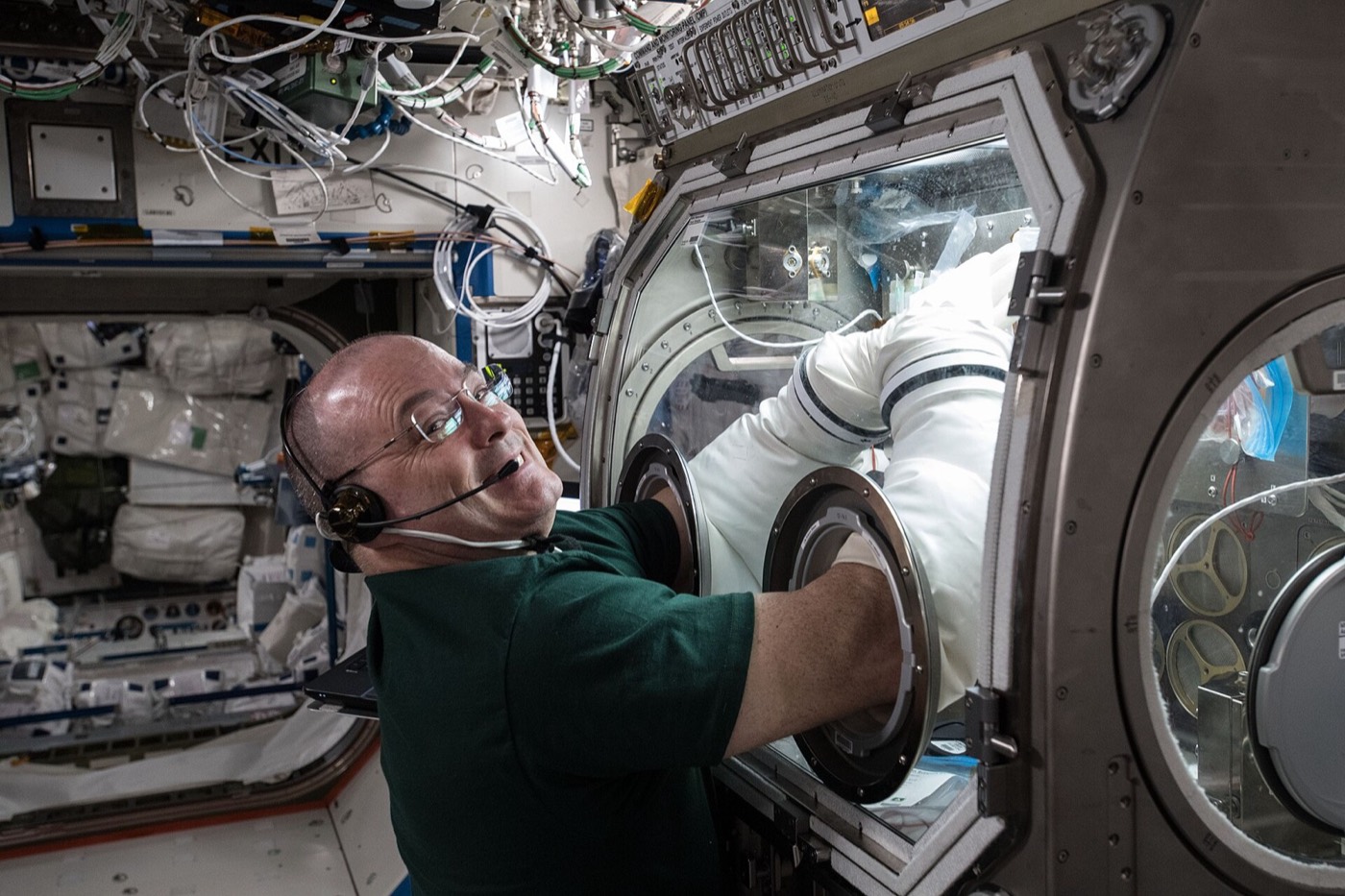
This is an astronaut in 2018, working inside the station's Microgravity Science Glovebox in the Destiny laboratory, a sealed, see-through workstation that lets crew handle samples without them drifting loose in freefall. Equipment like this is what turns an empty module into a working laboratory.
None of that comes free, and the scarcest part of running a laboratory in orbit is not the equipment.
Every hour an astronaut spends on one experiment is an hour not spent on another, on maintenance, or on the life-support work chapter three described. Crew time is a fixed, shared resource, and a station that wants to be useful for research has to budget it as carefully as it budgets power or water.
That is the full job description: keep people alive, and leave them enough spare time and the right equipment to make the trip worth the cost. Four companies are now trying to build something that can do both, and they are not all building the same thing.
5. Four routes to a new station
NASA is not betting on one replacement. Four companies are building four different answers to the same brief, and the differences are not cosmetic. They are different theories about the cheapest way to get a station into orbit.
Axiom Space is building modules to attach to the ISS first and detach later as a free-flying station of their own, one that operates independently in orbit, attached to nothing. Starlab is building its entire station to launch complete, in one piece, on a single rocket. Orbital Reef and Vast are both building free-flying stations from the start, assembled or crewed in stages rather than attached to anything already in orbit.
Set against each other, those four plans fall into a short run of dates.
Axiom reordered its own assembly plan in December 2024. Starlab and Orbital Reef each passed design milestones in 2025. And Axiom's own target for becoming a fully independent station is as early as 2028. Those three years are the spine the rest of this chapter hangs on.
Axiom's approach is the most literal way to replace it: grow a new station out of the old one before the old one is gone.
In December 2024, NASA and Axiom changed the order of assembly. Instead of launching a habitat module first, Axiom now launches its power and thermal module first and attaches it to the ISS, adding habitat modules later. The whole assembly can then detach and become a free-flying Axiom Station as early as 2028, rather than waiting to finish construction attached to a retiring station.
Starlab is betting on the opposite idea: that avoiding in-orbit assembly altogether is the real way to save time and risk.
By July 2025, Starlab had completed five design and safety milestones with NASA, including a review of its docking system, the hardware that lets it connect and seal to another spacecraft. Its habitat and service module are designed to launch together, fully built, on a single rocket, rather than being assembled piece by piece in orbit the way the ISS was.
Vast is pursuing a staged version of a free-flying station, and it is the one of the four that has already built hardware you can see.
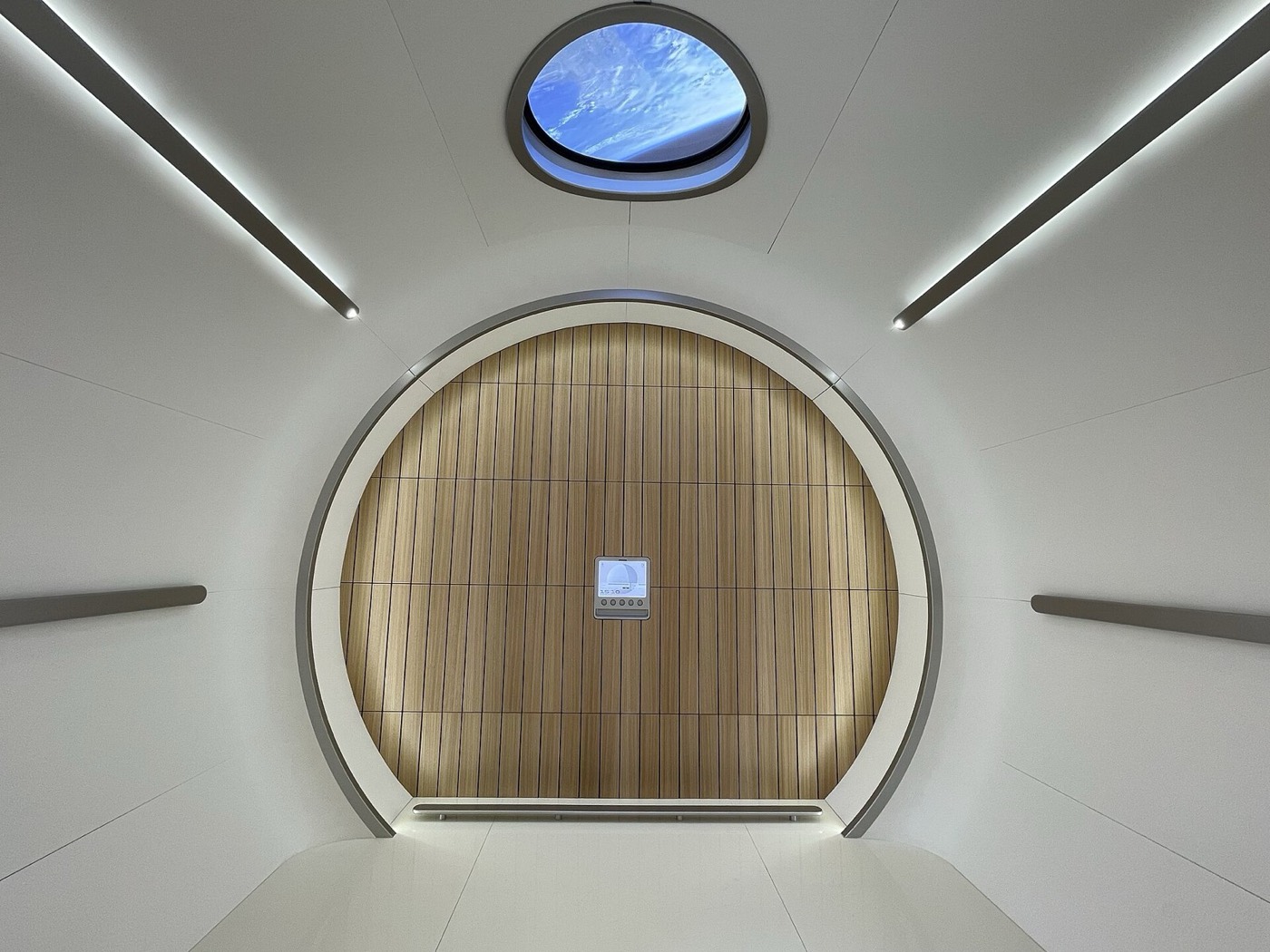
This is a lab and payload mockup of Vast's Haven-1 station, shown at an industry conference, a ground mockup used to test layout and procedures, not flight hardware and not an operational station. Vast describes Haven-1 as a stepping stone toward Haven-2, a larger station meant to support people continuously, the way the ISS does now.
Orbital Reef has made real progress too, and it is worth being precise about what kind.
By April 2025, Orbital Reef's team had completed crew walkthroughs inside full-size mockups of its modules, valuable for working out layout and procedures. But a mockup walkthrough is not an orbital test, and it is not NASA certification. None of the four companies has yet put a certified station into orbit.
Four different bets, and not one of them has yet cleared the step that actually matters: proving, to NASA's satisfaction, that the finished hardware is safe to fly people on.
6. From hardware to safe operations
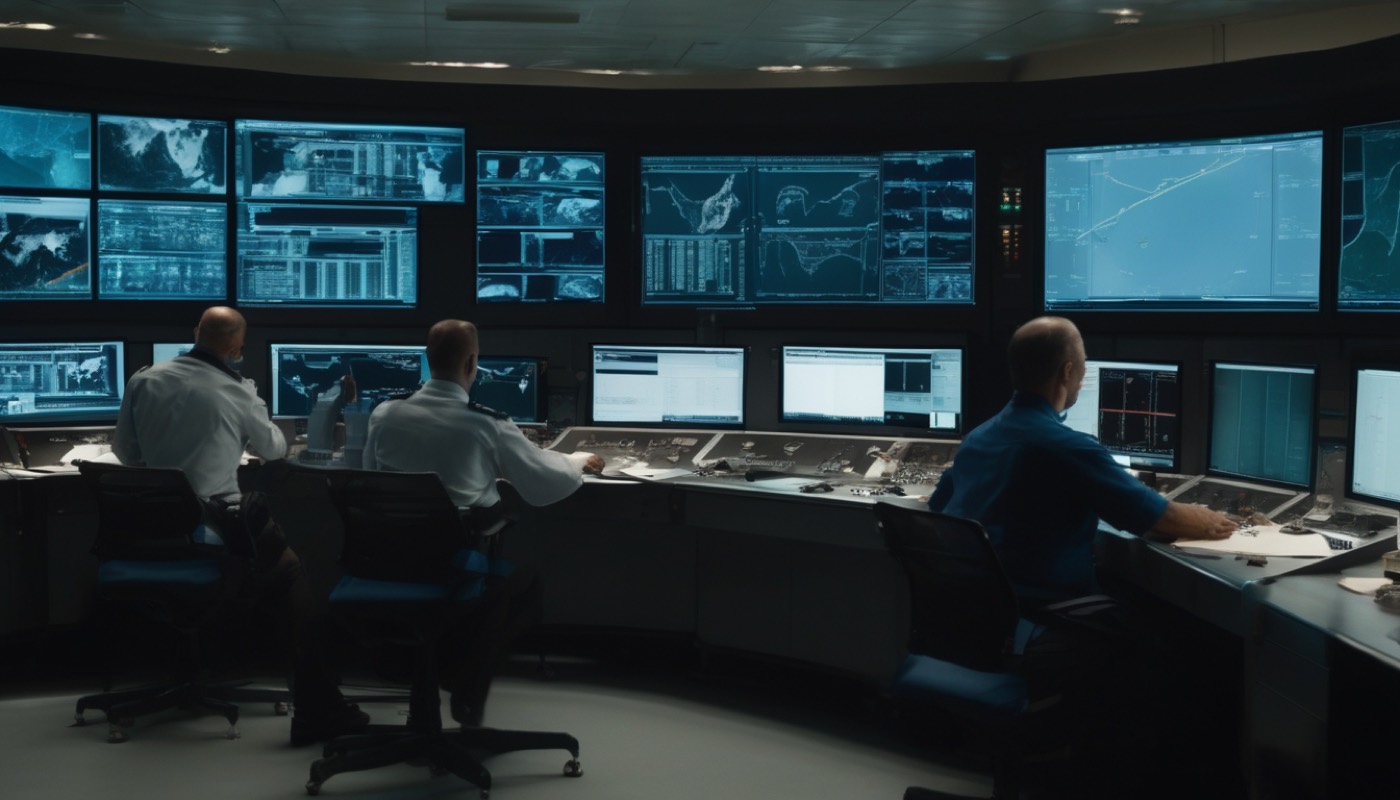
Being safe to fly people on is not a slogan. It is a specific, multi-stage process that every one of these designs still has ahead of it.
Getting from hardware to a certified, operating station runs through four stages in order. The station launches. Ground and flight teams commission it, checking that every system actually works the way it was designed to in real orbit. Engineers then run integrated tests across the whole station together. Only after that does NASA certify it fit to carry astronauts. Skipping a stage does not speed up the process. It just moves the failure to a later, more dangerous point.
Measured against that four-stage process, here is where each of the four designs actually stands, not where their renderings suggest.
As of 2026, Vast has begun physically integrating Haven-1's pressurised systems, targeting flight readiness in early 2027. Starlab has completed its design review stage with NASA. Orbital Reef has finished early requirements and design reviews. Axiom is building its first module for launch. None of the four has reached commissioning, let alone certification.
That gap between a rendering and a flying station is worth stating plainly, because the two are easy to mix up on screen.
Every illustration of a future station in this video, and in the companies' own marketing, is a concept: an artist's rendering of a design, not footage of something flying. The ground mockups shown so far are real hardware, built to test fit and procedure, but they are not the same thing as a station that has flown, let alone one NASA has certified.
Certifying the station solves only half of the problem. The other half is getting anyone there and back in the first place.
7. The spacecraft dependency
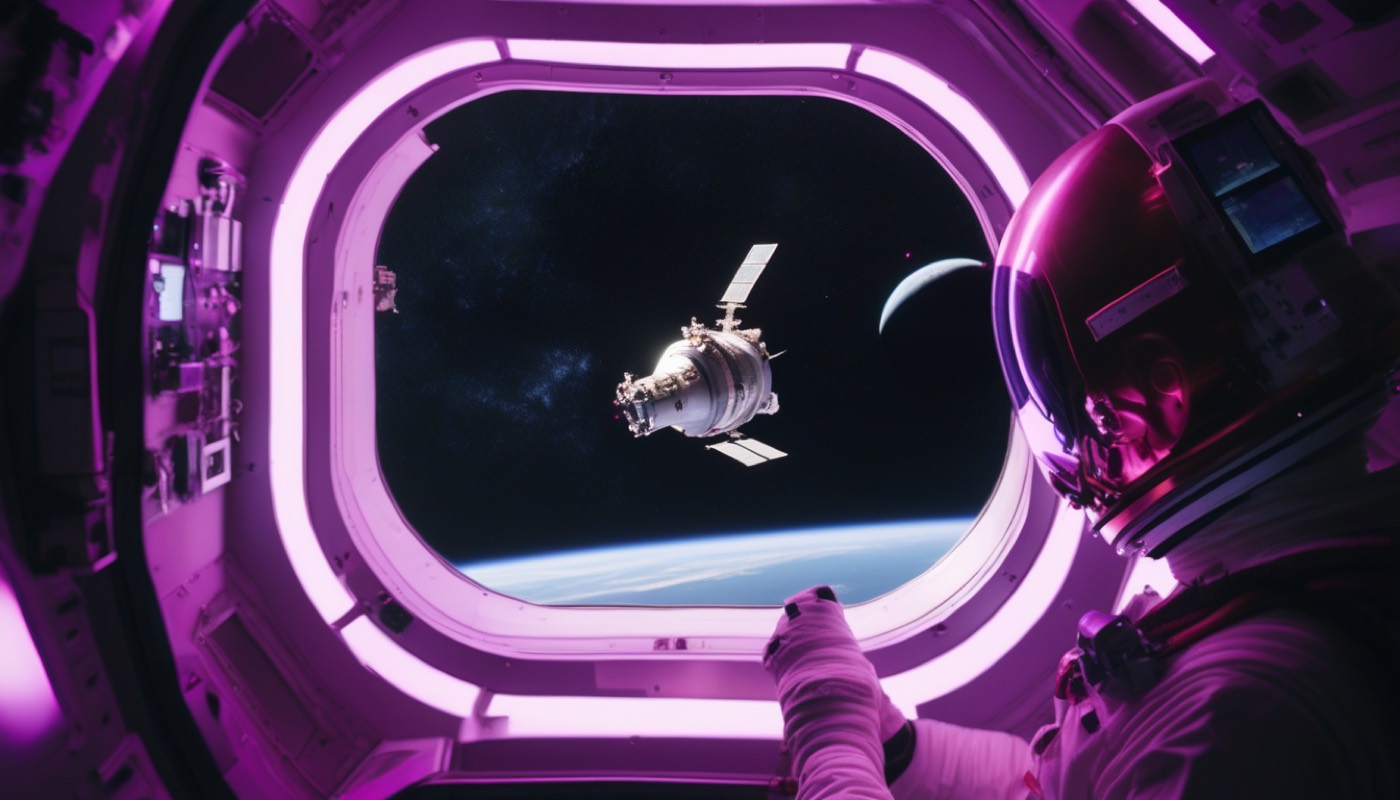
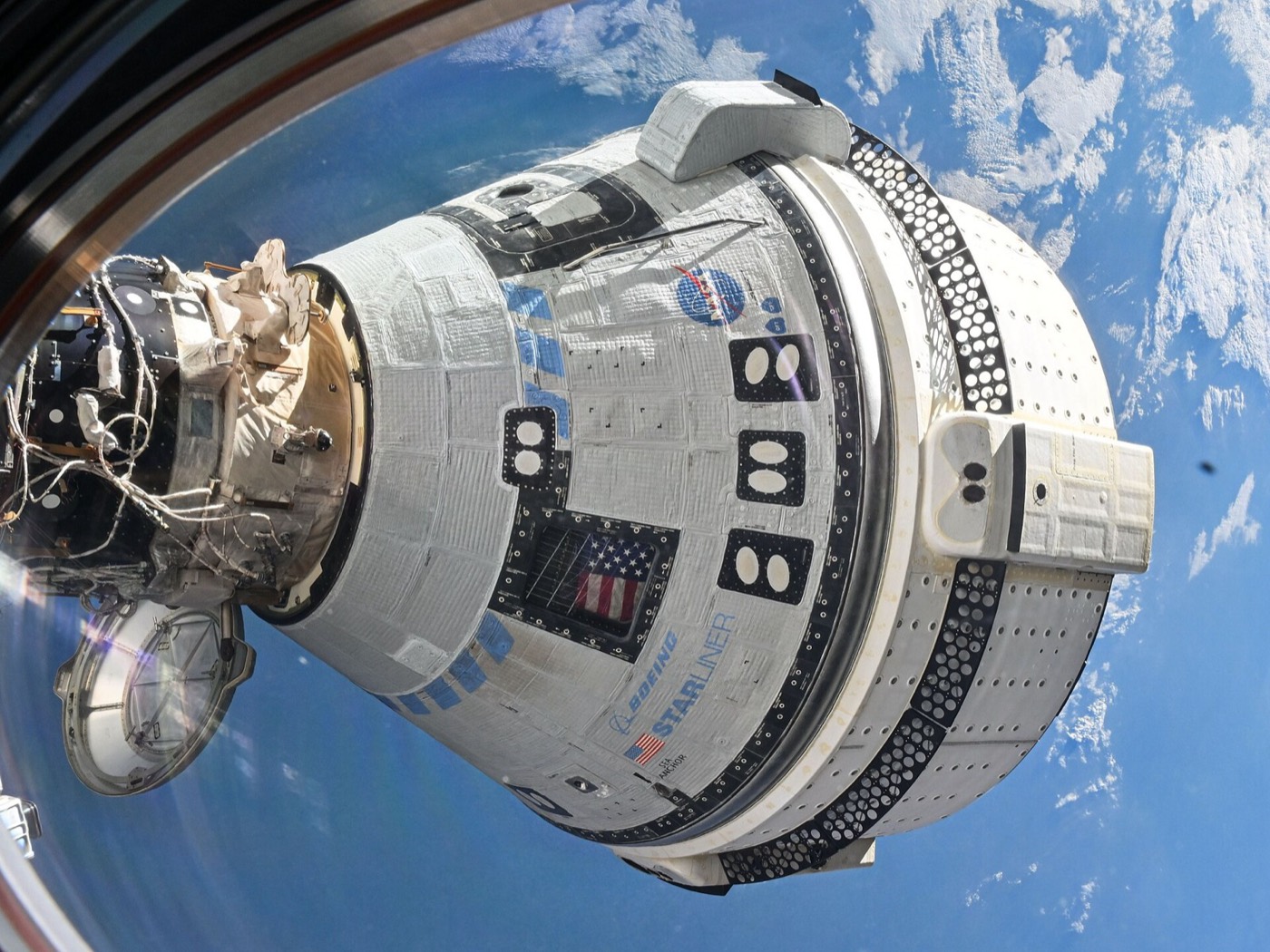
A certified station with nobody able to reach it solves nothing. Right now, reaching low Earth orbit, the band of space a few hundred kilometres up where the ISS and every one of these new stations fly, depends on a short list of working spacecraft.
Using a station at all depends on a chain that has to hold at every link. A launch vehicle has to reach orbit. A crew capsule on top of it has to carry astronauts safely. That capsule has to dock with the station, meaning connect and seal itself to one of the station's ports. A separate cargo vehicle has to keep supplies arriving. And the system needs a capsule sitting docked and ready for the evacuation chapter three described. Right now, only part of that chain is certified to fly people.
One capsule has already cleared that bar completely.
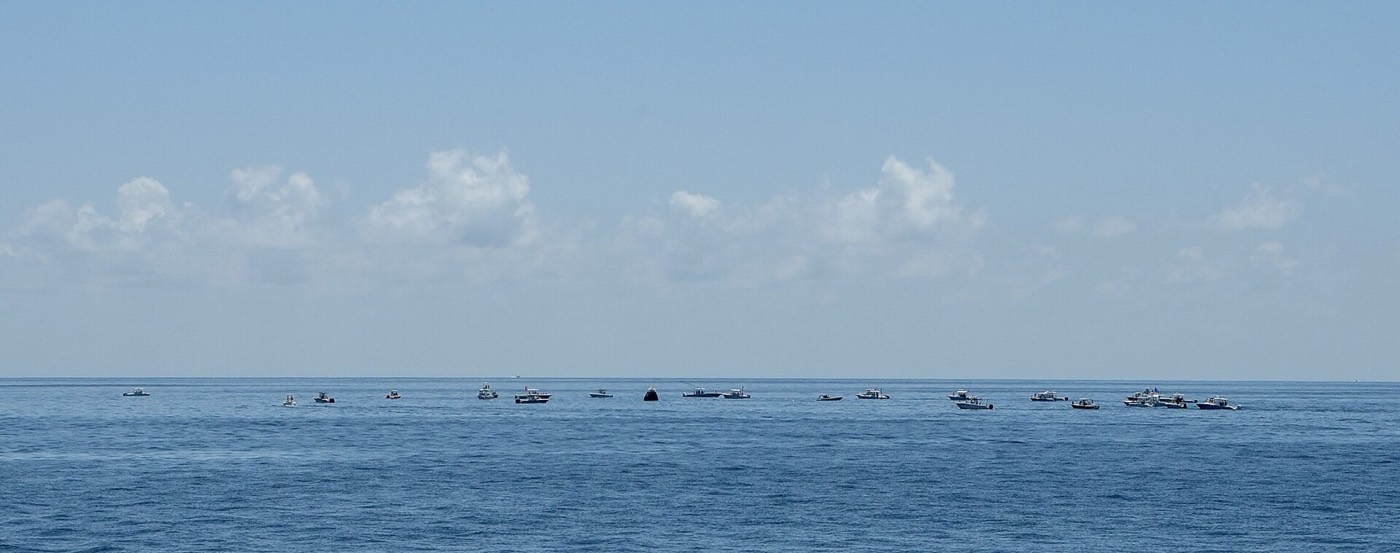
This is SpaceX's Crew Dragon splashing down off Pensacola in 2020, the test flight that led directly to its human-rating certification, the formal approval that lets a spacecraft carry astronauts rather than just cargo. Dragon has been flying people routinely ever since.
Calling that routine is not an exaggeration.
NASA's own inspector general reported that, by mid-2026, Crew Dragon and its Falcon 9 rocket had completed twelve crewed missions since that certification. It is, right now, the only western crew vehicle flying people to orbit on a regular schedule.
Here is that record, docked.
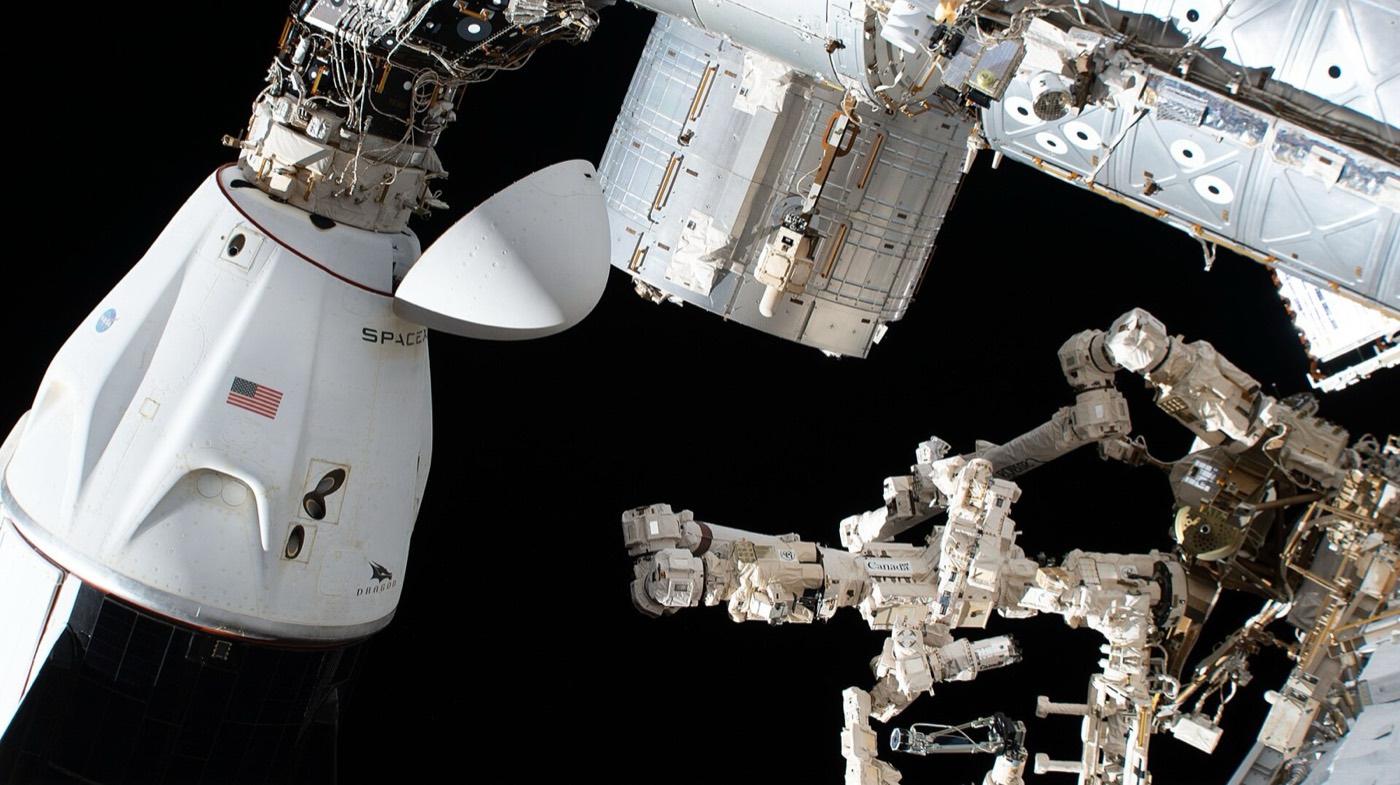
This is Crew Dragon Endeavour docked to the station's Harmony module, one of the twelve missions just mentioned, and the kind of routine arrival every one of the four new stations will eventually need of its own.
The other half of NASA's planned crew fleet has not reached that point yet.
Boeing's Starliner remains uncertified for crew flight, and NASA's inspector general said it will likely not be certified before 2027 at the earliest. On 28 September 2026, Dana Weigel, manager of NASA's Low Earth Orbit Program, said: "Starliner's next flight is a critical step on the path to achieving full system certification and ensuring a sustained human presence in low Earth orbit."
That next flight is not the first time Starliner has reached the station. It has done that before, under a different kind of test.
This is Boeing's Starliner docked to the ISS during its Crew Flight Test in 2024, a test mission that carried astronauts but did not, by itself, win the spacecraft certification. NASA now plans an uncrewed Starliner-1 flight around the end of 2026, with a crewed Starliner-2 mission targeted for 2028, alongside certifying the Vulcan rocket to launch it.
Laid end to end, the spacecraft side of this story has five dates. Crew Dragon was certified in 2020. Starliner reached the station on a test flight in 2024, which was not the same as certification. By 2026, NASA's watchdog and its own programme manager were both still discussing what certification requires. An uncrewed Starliner return is now targeted for 2027. A certified, crewed flight is targeted for 2028.
So the dependency this chapter is named for runs both ways. No certified station is worth anything without a certified ride, and right now, that ride depends on one working capsule and a second one still finishing its homework.
8. NASA buys a service
All of this, four companies, four designs, an unfinished transport chain, only happens because NASA deliberately decided not to build and own the next station itself.
NASA spent part of 2026 weighing a different option: having the government itself own a core station module, rather than simply buying services from private companies. By July 2026, that option was set aside. NASA returned instead to its original plan: procuring commercial stations through competitively awarded, fixed-price contracts. In such a contract, a company is paid an agreed amount for an agreed result, rather than for its costs as they occur.
The draft plan NASA published that same month set out how many companies that approach starts with.
NASA's draft plan uses multi-award contracts, meaning more than one company can hold a development contract at once, rather than NASA picking a single winner up front. The plan starts with two or more providers in early development, before separate task orders later narrow the field for final design and certification.
NASA's reasoning for staying with that approach was stated plainly.
On 6 July 2026, NASA Administrator Jared Isaacman said: "Industry believes it can meet the timelines and that a viable commercial marketplace exists where NASA is one customer among many."
That sentence is also this video's central question, restated as an industry's own confidence rather than a settled fact.
NASA, in other words, has chosen to be a customer rather than an owner. A customer is only one source of money among several a new station will actually need.
9. Who pays the remaining bill?
Being one customer among many is the whole financial model these companies are counting on, so it is worth laying out exactly who the other customers are supposed to be.
Money is meant to reach a commercial station from several directions at once. NASA's own development support and its later service purchases are one source. Private capital the company raises itself is another. The rest comes from paying customers once the station is flying: private astronauts, researchers renting lab time, and companies renting space to manufacture something only microgravity can make well. No single source is meant to carry the whole cost.
Each of those paying customers is really a different bet on why anyone would want to be in orbit at all.
A government astronaut's seat is the most certain of the four, because NASA and its partner agencies already buy it today. A private astronaut's seat is a luxury purchase, dependent on how many people can afford one. A research contract depends on microgravity experiments being worth running at commercial prices rather than through a government programme. A manufacturing contract depends on something nobody has yet proven: that making a product in orbit is cheaper, or better, than making it on the ground.
None of the four companies has published a verified, independent figure for what any of this will actually earn once a station is flying, and this video is not going to invent one on their behalf. Customer interest, which is real and growing, is not the same thing as proven, profitable demand.
10. What if the handover slips?
Every chapter so far has described work still in progress. The next question is what happens if that work is not finished when the ISS runs out of time.
Three dates now govern this story. On 17 June 2026, the US Government Accountability Office warned that a critical decision is coming. That decision falls in 2027: whether a certified commercial replacement will be ready in time. If not, the ISS may have to be extended, at real cost, while NASA waits. Behind both of those dates sits the one fixed in chapter one: 2030, the planning target for retiring the ISS itself.
The GAO's warning was not just about a date. It was about how little NASA has actually measured.
The GAO's own report found that NASA had not yet formally assessed how likely a gap in crewed presence actually is, or how long one might last, even after changing its acquisition approach. The watchdog also pointed to NASA's own history: past spacecraft and station programmes have routinely taken longer to develop than their schedules promised.
That leaves two possible outcomes, and they are worth stating side by side rather than picking one in advance.
In the overlap scenario, at least one commercial station reaches certification and a working crew transport before 2030, and the handover happens with no break in continuous presence. In the gap scenario, nothing is ready in time, and NASA must either pay to extend the ageing ISS past its planned retirement or accept a period with no American-operated station in orbit at all.
11. Practical next step or market gamble?
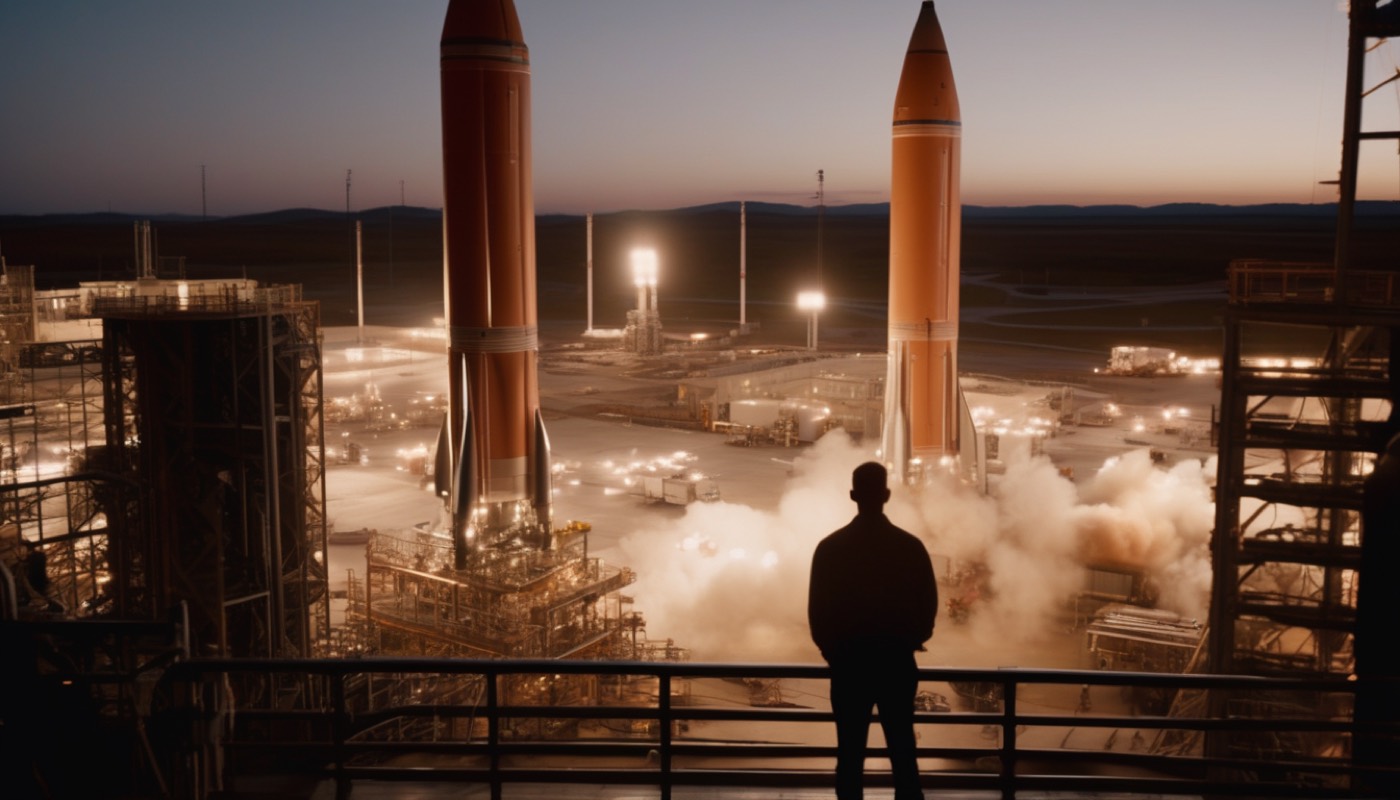
So: is buying space-station services a practical next step, or a gamble on a market that does not exist yet? Based on everything this video has covered, the honest answer is that it depends on three separate things lining up, not one.
The first requirement is a safe station. That means a design that has cleared launch, commissioning, integrated tests and NASA certification. No commercial design has yet done that in full. The second is reliable access: a certified crew capsule and cargo vehicle able to reach it on a routine schedule, which today describes one spacecraft, not two. The third is paying demand that is real rather than assumed, and that has not yet been tested at any scale.
None of those three is impossible. All three are unfinished at the same time, with a fixed retirement date approaching.
That is a conditional answer, not an evasive one. Replacement is credible exactly when a certified station, a reliable ride, and funded customers all exist together, before the ISS retires. As of 6 October 2026, that is a real possibility, not yet a settled fact, and this video has tried to keep that distinction in view.
The International Space Station proved that people could live and work in orbit continuously, for decades, as a joint effort nobody owned alone. What it has not yet proven is that a private company can sell the same thing, profitably, before the clock the first chapter described runs out.
Sources and credits
Photo credits (Wikimedia Commons)
- Zarya in orbit, photographed during STS-88, 6 December 1998: unknown, Public domain - https://commons.wikimedia.org/wiki/File%3AZarya_from_STS-88.jpg
- Zarya launch on Proton-K at Baikonur, 20 November 1998: NASA, Public domain - https://commons.wikimedia.org/wiki/File%3AProton-K-Zarya.jpg
- Space Shuttle Endeavour STS-88 launch, Kennedy Space Center, 4 December 1998: NASA, Public domain - https://commons.wikimedia.org/wiki/File%3ASTS-88_launches_from_Kennedy_Space_Center.jpg
- ISS exterior with solar arrays and radiators, 23 May 2010: NASA/Crew of STS-132, Public domain - https://commons.wikimedia.org/wiki/File%3AInternational_Space_Station_after_undocking_of_STS-132.jpg
- Michael Fincke checking ISS Water Recovery System in Destiny, 8 December 2008; historical equipment, not the 2023 milestone: NASA, Public domain - https://commons.wikimedia.org/wiki/File%3AISS-18_Michael_Fincke_performs_a_leak_check_on_the_Water_Recovery_System_in_the_Destiny_lab.jpg
- Scott Tingle conducting Microgravity Sciences Glovebox research in Destiny, 11 April 2018: NASA, Public domain - https://commons.wikimedia.org/wiki/File%3AISS-55_Scott_Tingle_performs_research_inside_the_Destiny_lab.jpg
- Vast Haven-1 lab and payload facilities mockup at 2025 Space Symposium, 8 April 2025; ground mockup, not flight hardware or an operational station: Blervis, CC0 - https://commons.wikimedia.org/wiki/File%3AVast_Haven-1_mockup_interior.jpg
- Crew Dragon Endeavour docked to ISS Harmony, 21 August 2021: NASA, Public domain - https://commons.wikimedia.org/wiki/File%3AISS-65_The_SpaceX_Crew_Dragon_Endeavour.jpg
- Boeing Starliner Crew Flight Test spacecraft docked to ISS, 3 July 2024; test mission, not certification: NASA Johnson Space Center, Public domain - https://commons.wikimedia.org/wiki/File%3ABoeing_Starliner_docked_to_ISS_2024-07-03_%28ISS071E265073%2C_cropped%29.jpg
- Crew Dragon Endeavour Demo-2 splashdown and recovery off Pensacola, 2 August 2020: Bill Ingalls, Public domain - https://commons.wikimedia.org/wiki/File%3ASpaceX_Demo-2_Landing_%28NHQ202008020020%29.jpg


Primary sources
- NASA, '20 Years Ago: Space Station Construction Begins', nasa.gov/history, 20 November 2018 - Zarya launched from Baikonur 20 Nov 1998; Endeavour/STS-88 delivered Unity 4 Dec 1998..
- NASA, 'FAQs: The ISS Transition Plan', nasa.gov, 18 July 2024 - committed use through 2030, then controlled deorbit; ISS modules' architecture 'may not be compatible with future platforms'; no viable industry interest in reuse..
- NASA, 'NASA Achieves Water Recovery Milestone on International Space Station', nasa.gov, 20 June 2023 - Brine Processor Assembly pushed total water recovery to 98%..
- NASA, 'NASA, Axiom Space Change Assembly Order of Commercial Space Station', nasa.gov, 19 December 2024 - power/thermal module now launches first; departure as early as 2028..
- NASA, 'NASA Sees Key Progress on Starlab Commercial Space Station', nasa.gov, 16 July 2025 - five milestones completed; habitat and service module launch together on one rocket..
- NASA, 'NASA Sees Progress on Blue Origin's Orbital Reef Design Development', nasa.gov, 16 April 2025 - full-size mockup crew walkthroughs; design-development phase, not orbital certification..
- Vast, 'Vast Advances Haven-1 Into Integration Phase', vastspace.com/updates, 20 January 2026 - pressurised-systems integration begun; Q1 2027 flight-readiness target on Falcon 9; Haven-2 positioned as the continuous-occupation follow-on..
- US Government Accountability Office, 'Low-Earth Orbit: Impending Decisions', GAO-26-107805, 17 June 2026 - 2027 readiness decision; gap likelihood/duration not yet assessed by NASA; NASA seeks multiple customers..
- NASA, 'NASA Seeks Industry Input on Second Phase of Commercial Space Stations', nasa.gov, 6 July 2026 - returned to commercial FAR-based procurement; fixed-price multi-award contracts, two or more initial providers; verbatim quote from Administrator Jared Isaacman..
- NASA Office of Inspector General, 'NASA's Commercial Crew Program Faces Schedule Delays, Cost Increases, and Safety Challenges', oig.nasa.gov, 30 June 2026 - Crew Dragon/Falcon 9 certified 2020, 12 crewed missions to date; Starliner uncertified, unlikely before 2027..
- NASA, 'NASA, Boeing Share Update on Commercial Starliner Development Plans', nasa.gov/news-release, 28 September 2026 - uncrewed Starliner-1 targeted December 2026/January 2027; crewed Starliner-2 targeted 2028; Vulcan certification; verbatim quote from Dana Weigel, NASA Low Earth Orbit Program Manager..
Not regulated financial advice.