
Supersonic Flight Is Concordes Comeback Real
Concorde crossed the Atlantic in about three and a half hours, then stopped flying in 2003. This video follows the whole story of supersonic passenger flight and asks whether it is coming back.
It starts with Chuck Yeager and the Bell X-1 in 1947, and explains what a sonic boom is. It follows the 1960s race between Concorde, the Soviet Tu-144 and the cancelled American design; the 1976 start of service; the 1973 American ban on supersonic flight over land; the economics of an aircraft only twenty were built of; the crash of Air France Flight 4590 in 2000; and the last flights in 2003.
Then the new wave: Boom Supersonic's XB-1, which went supersonic in January 2025, and its planned Overture airliner; NASA's X-59, designed to make a quiet thump instead of a boom; and the rules being rewritten, including Executive Order 14304 and the FAA's proposal for a noise limit. The verdict: forwards, but slowly. Every figure is dated and sourced on screen. Photos are public domain or CC0, credited on screen.
Educational documentary. Not financial or investment advice.
In these topics
Video notes
1. Three and a Half Hours
There was a time when you could eat breakfast in one capital and lunch in another, three thousand miles away, and still have the afternoon to yourself. The aircraft that made it possible flew at twice the speed of sound, and it carried ordinary paying passengers.
This is Concorde, the only supersonic airliner that ever ran for decades. It crossed the Atlantic in about three and a half hours. An ordinary airliner needs seven or eight.
Concorde cruised at Mach two point oh two, at heights of up to sixty thousand feet. Mach is the speed of sound, so Mach two is twice that. At that height the sky above the window is a very dark blue.
It stopped flying more than twenty years ago, and nothing has replaced it. That is odd. Aircraft have grown bigger, quieter and safer since. Yet the fastest way to cross the ocean today is slower than it was when your parents were young.
This video asks one question. Is supersonic passenger flight coming back, or is it a beautiful idea that physics and money have already ruled out? To answer it, we follow the story in order, from the first aircraft to break the barrier to the new ones being tested this year.
2. Breaking the Sound Barrier
Before anyone could build a supersonic airliner, someone had to show that an aircraft could pass the speed of sound and survive.
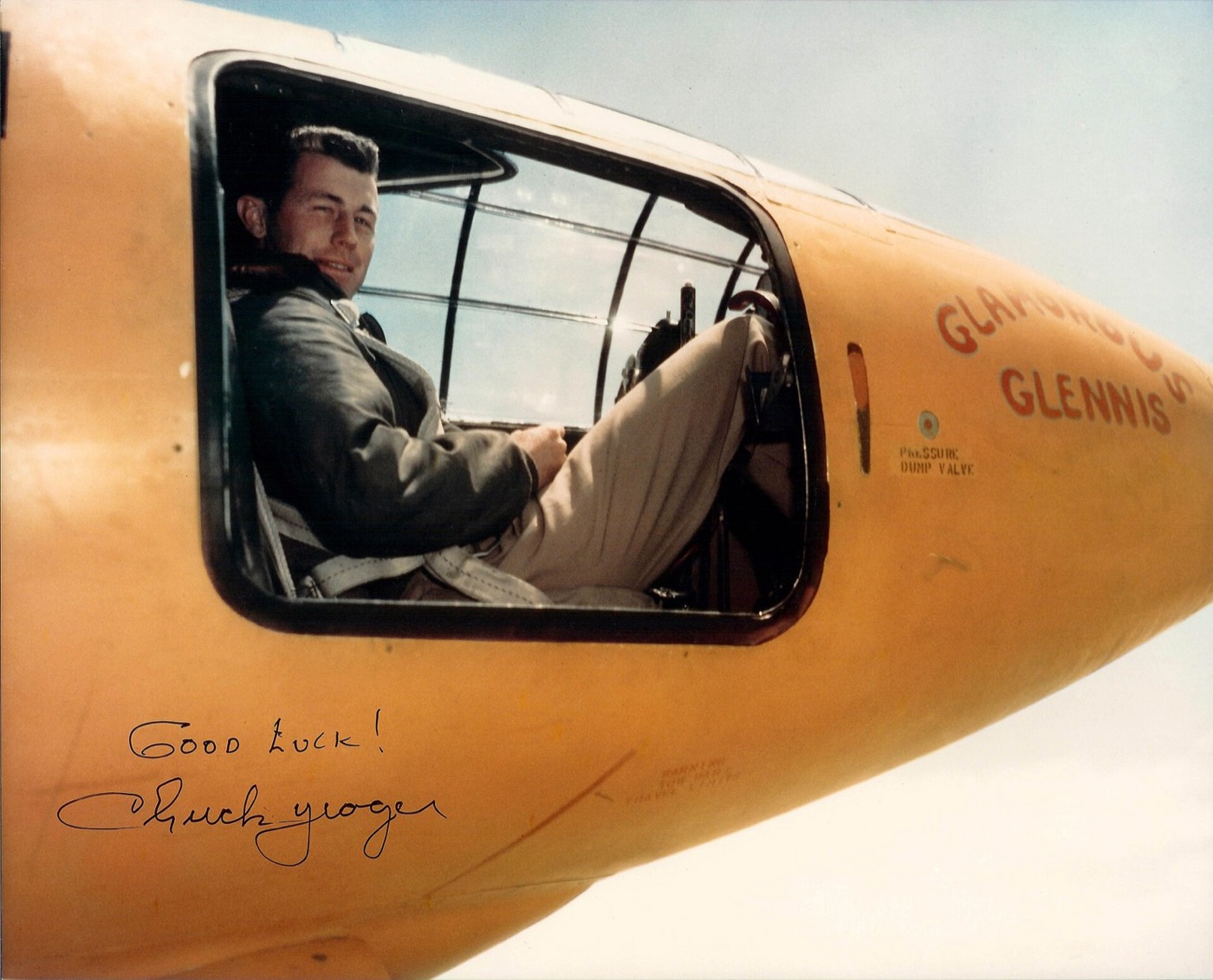
This is Chuck Yeager, an American test pilot, beside the rocket plane Bell X-1. On the fourteenth of October, nineteen forty-seven, he flew it faster than sound. The X-1 was carried aloft under a bomber, dropped, and then its rocket engine fired.
Sound travels through air at a fixed speed. Near the ground that is about seven hundred and sixty miles an hour. It is lower in the cold air high up.
Mach one means exactly the speed of sound. Mach two is twice as fast. The number is named after the Austrian physicist Ernst Mach, and it changes with the temperature of the air.
Why was that speed such a barrier? Because of what an aircraft does to the air in front of it. At low speed, the air simply moves aside. Close to the speed of sound, it cannot get out of the way fast enough.
An aircraft pushes on the air, and every push spreads outwards as a pressure wave at the speed of sound. Once the aircraft is as fast as those waves, they pile up into a shock wave. That shock wave trails behind the aircraft like a cone, and at the ground it is heard as a sonic boom.
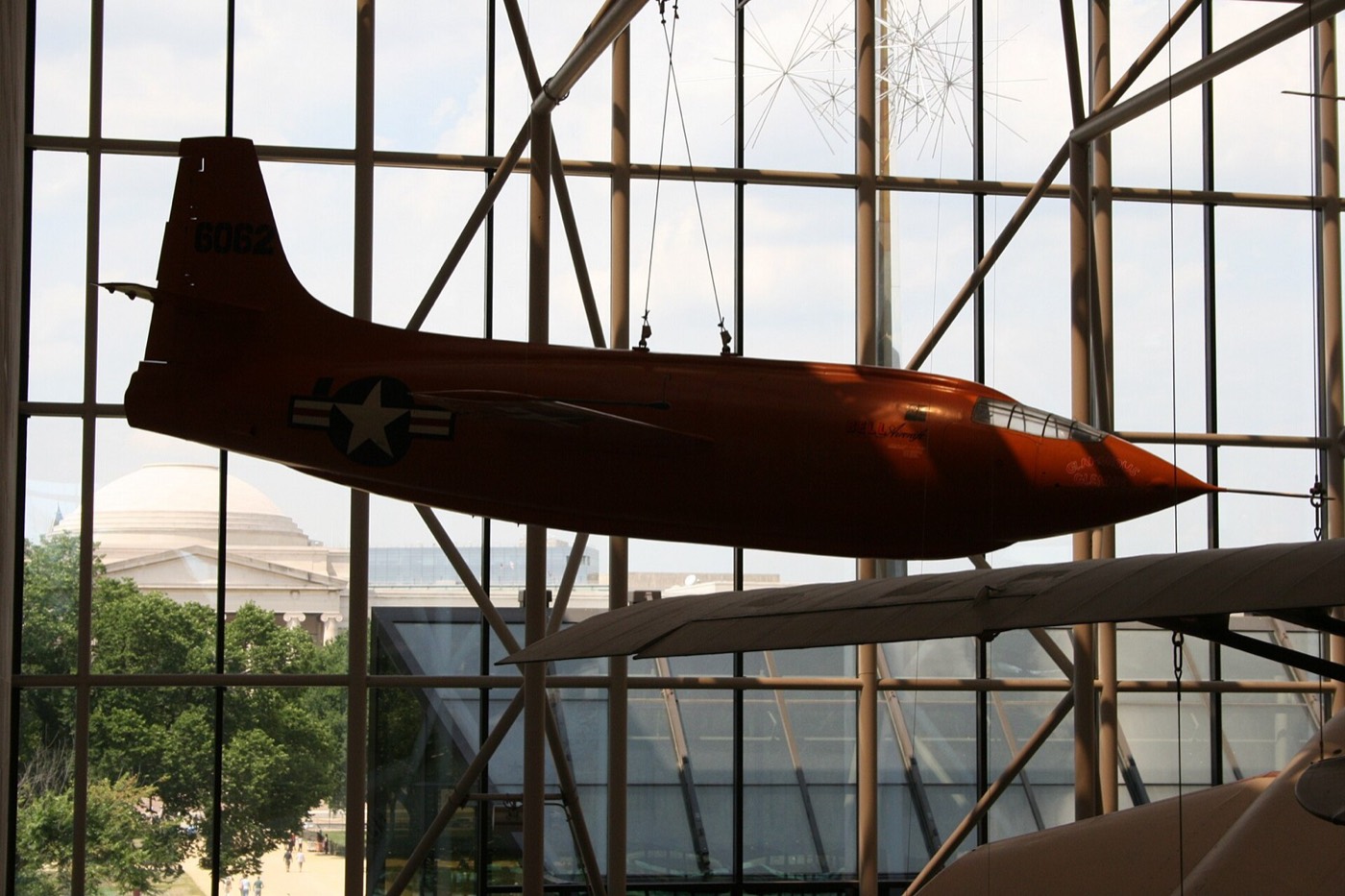
This is the Bell X-1 that Yeager named Glamorous Glennis, on display in a museum. It is small, orange and shaped like a bullet, because a bullet was already known to fly faster than sound. Its lesson was simple. A shaped aircraft can cross the barrier, and the pilot lives.
3. The Race of the Sixties
Twenty years later, three teams wanted to make that a passenger service. The Soviet Union, Britain and France together, and the United States each started a design.
Here is where the three programmes were based. Moscow led the Soviet design. London and Paris shared Concorde, and Washington backed the American one. It was a race between three capitals.
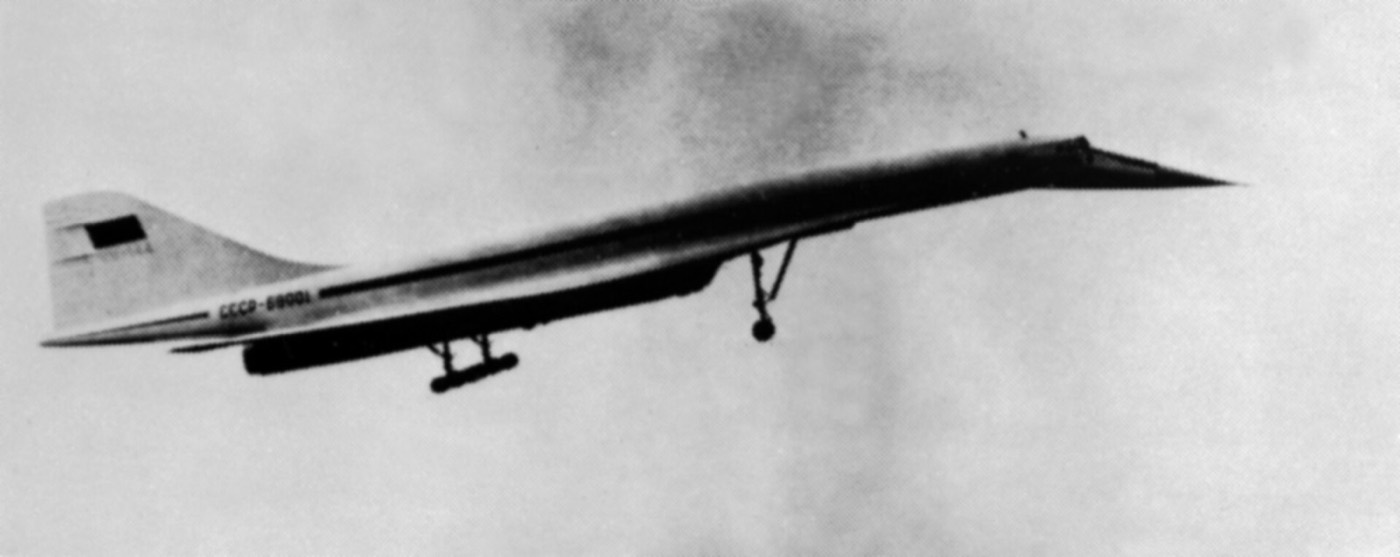
Three dates set the pace. The Soviet Tupolev Tu-one-four-four flew first, on the last day of nineteen sixty-eight. Concorde followed on the second of March, nineteen sixty-nine. The American design was cancelled by Congress in March, nineteen seventy-one.
This is the Tu-one-four-four in flight. It beat Concorde into the air by about two months. It cruised at about twice the speed of sound, and it looked very like Concorde.
There were two Concorde prototypes, one built in France and one in England.
Concorde flew twice that spring. The French prototype went first, and the British one followed about five weeks later. Two countries were building one aircraft, and each was building a share of it.
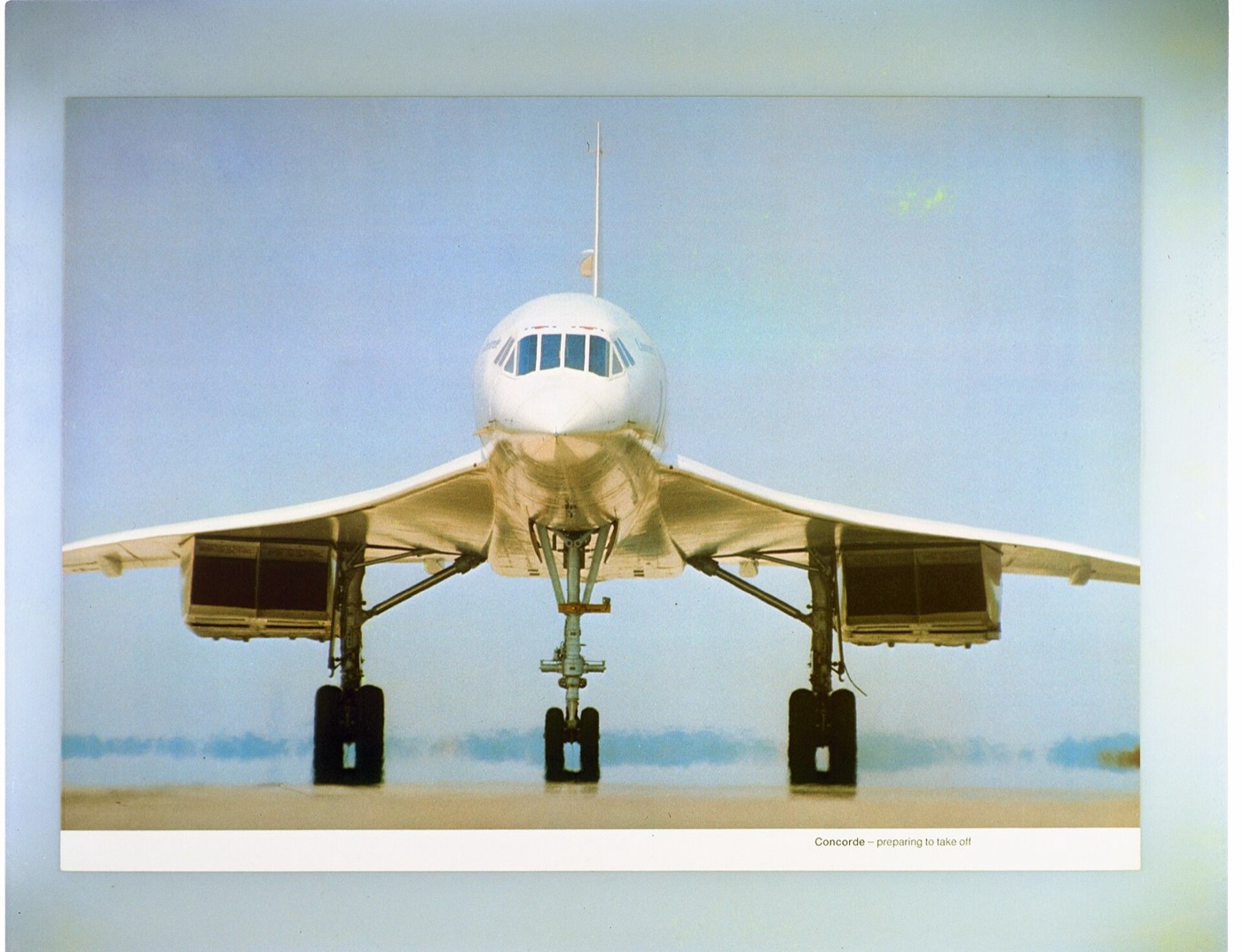
This is a Concorde in the air, in a photograph from the United States National Archives. The narrow, swept wing is called a delta, and it works well at both very high and very low speeds. That shape is why Concorde is so easy to recognise.
The American programme had promised a bigger and faster aircraft. It ended in Congress, where the funding was stopped. Concorde and the Tu-one-four-four were left to carry the idea alone.
4. Into Service
Concorde started carrying passengers on the twenty-first of January. Both airlines opened the same day. British Airways flew from London to Bahrain, and Air France flew from Paris to Rio de Janeiro, by way of Dakar.
These were the first routes. London to Bahrain and Paris to Rio opened the service. Washington followed within months, and New York came later, after a long dispute over noise at the airport there. Moscow to Almaty was the Soviet route.
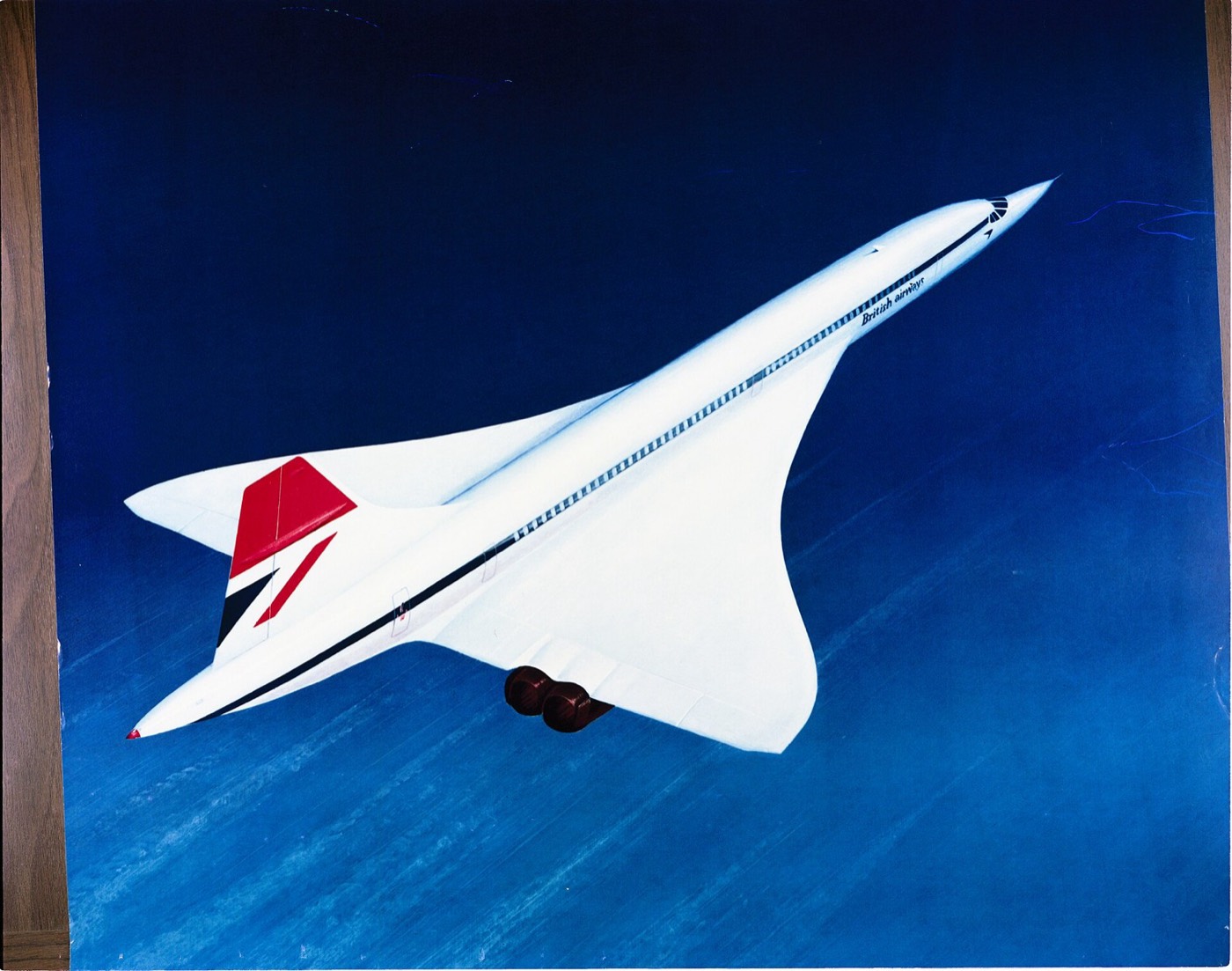
This is a British Airways Concorde on the ground, from the United States National Archives. Behind the passengers it looks like any airliner, but the long thin body carried only about a hundred seats. It was sold to the people who valued time above all else.
The Tu-one-four-four had a very different story. It entered passenger service in the Soviet Union in November of the following year, between Moscow and Almaty. It made only fifty-five passenger flights.
Concorde's first years, and the Tu-one-four-four's only year, fit on one line. Concorde began in nineteen seventy-six. Its route to New York began in nineteen seventy-seven, the same year the Soviet aircraft started flying passengers. The Soviet service ended in nineteen seventy-eight.
The Tu-one-four-four was withdrawn in June, after one of its aircraft crashed on a test flight. It never carried passengers again.
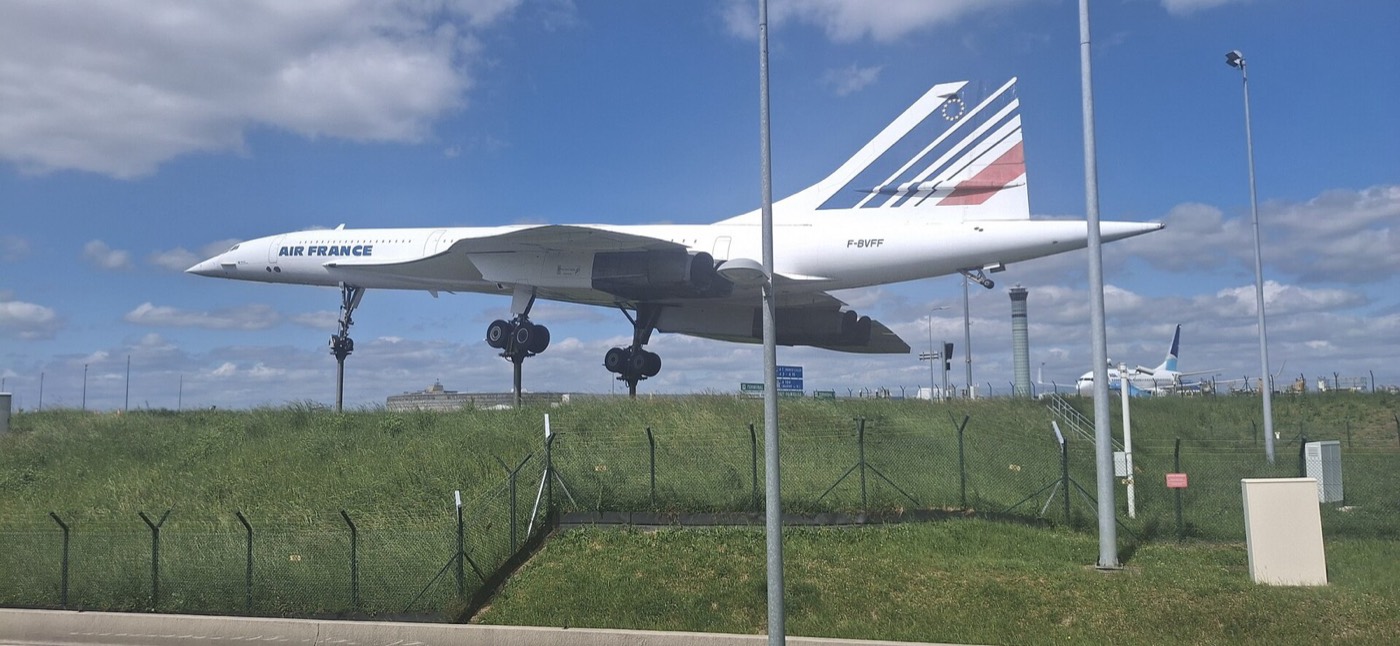
This is an Air France Concorde at Charles de Gaulle airport near Paris. Air France flew seven Concordes, and so did British Airways. Fourteen aircraft in all carried the passengers.
5. The Boom Bans
Concorde could fly at Mach two only where nobody would hear it. Over land, it would drag its boom behind it in a wide track, and the people underneath would hear it as a sudden double bang, like thunder.
The Federal Aviation Administration, or FAA, banned civil supersonic flight over American land in nineteen seventy-three. The rule is called fourteen C F R ninety-one point eight one seven. It applies to every civil aircraft, and it is still in force today.
Here is the route map that resulted. From London and Paris, Concorde could fly at full speed all the way across the water to New York. Over land it had to slow to the speed of an ordinary airliner, so the fast flights stayed over the sea.
So the world's only supersonic airliner was a specialist. It flew a few ocean routes, and it could not grow into a network.
6. The Economics
Concorde was loved, but was it a good business? The answer is more mixed than the legend says.
Only twenty Concordes were ever built, and only fourteen of them served with an airline. The other six were prototypes and development aircraft. Compare that with the thousands of ordinary airliners built in the same years.
Its fuel appetite was the core of the problem. A Concorde burned about four thousand eight hundred gallons of fuel every hour at cruise.
A supersonic aircraft fights the air it is pushing through, and that fight burns fuel. It carried only about a hundred people, so every seat needed a lot of fuel behind it.
That meant high fares, and a small market that would pay them.
In nineteen seventy-seven, on the Washington route, a one-way ticket cost four hundred and thirty-one pounds. In today's money that is a little over two thousand pounds. By the end of the nineteen-nineties, a one-way ticket across the water cost about six thousand dollars. Only a few passengers could afford that.
Yet there was a market. The airlines found that regular passengers thought the fares were higher than they really were, so they raised them.
British Airways' own Concordes earned more than half a billion pounds in profit over two decades. It was not a charity. For one airline, on a small number of routes, the aircraft paid its way.
But a niche is a small business. And the aircraft were ageing.
7. Paris, and the End
On the twenty-fifth of July, two thousand, an Air France Concorde took off from Paris on a charter flight. It never reached the end of its journey.
It was flight four five nine zero. A strip of metal had fallen from another aircraft onto the runway. It burst a tyre, and a piece of the tyre hit the wing tank from beneath. Fuel poured out and caught fire.
The aircraft crashed into a hotel less than two minutes after takeoff. All one hundred and nine people aboard died, and four people in the hotel died too.
The crash killed one hundred and thirteen people. The French accident investigators published their final report in January, two thousand and two. The fuel tank had been punctured from within, by a shock wave from the tyre hitting the wing.
Concorde was grounded, fitted with stronger fuel tank liners, and returned to service in November of two thousand and one. But the attacks of the eleventh of September that year had already emptied the transatlantic market. The two airlines announced the end in the spring, and both retired the fleet before the year was out.
Here are the four dates. The crash came in two thousand. Concorde flew again in two thousand and one. The report followed in two thousand and two, and the last flights came in two thousand and three.
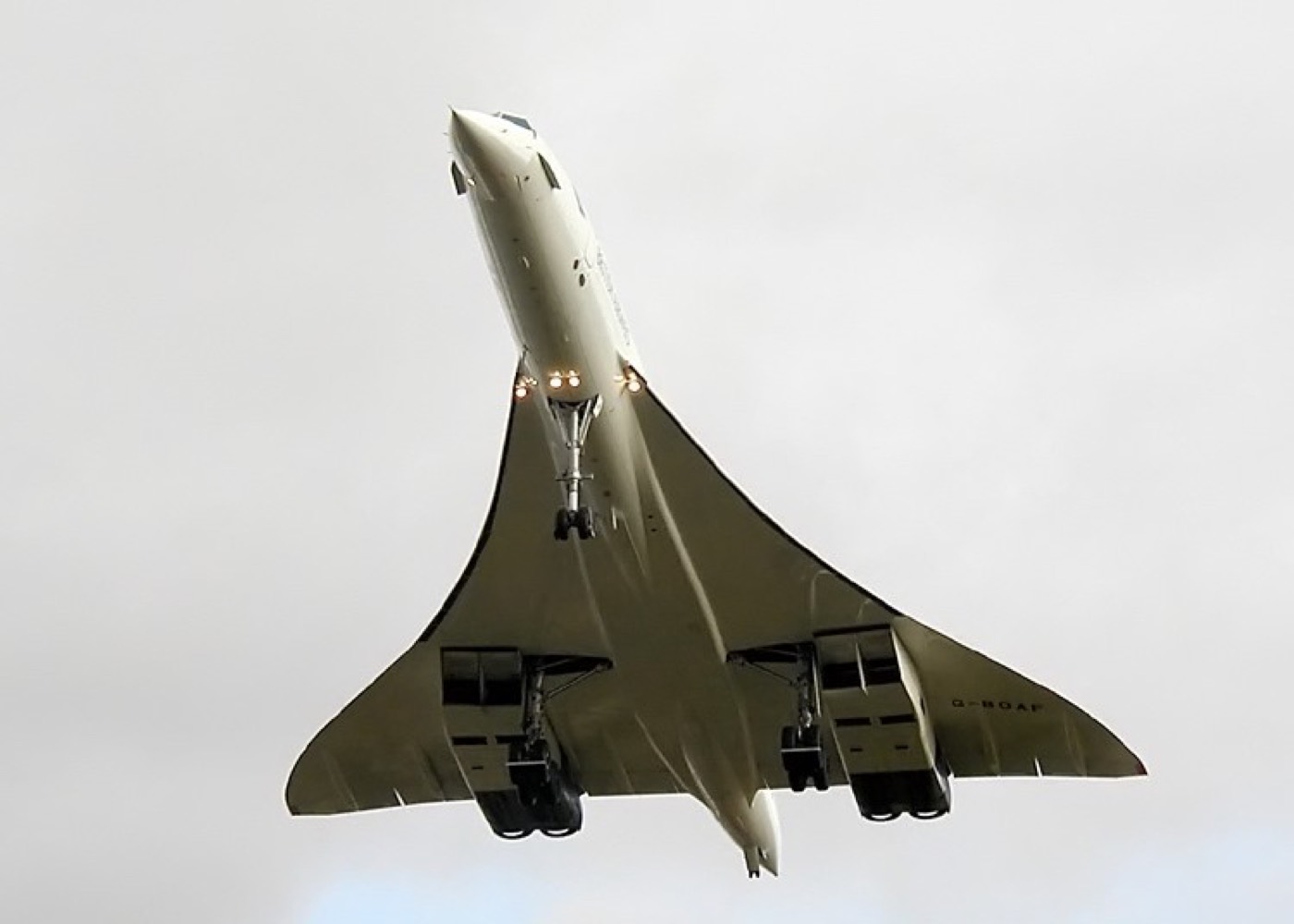
This is Concorde G-B-O-A-F on its very last flight, arriving at the airfield where it was built. British Airways flew the last commercial flights on the twenty-fourth of October. Crowds gathered to watch it land.
That was the end of supersonic passenger flight. Not one aircraft has flown a passenger faster than sound since.
8. The Lost Twenty Years
Why did nobody build a successor? Four reasons come up again and again.
The first is cost. It costs a great deal to design an aircraft that survives Mach two, and few airlines could fill one. The second is noise, and the ban on flying fast over land. The third is fuel, since a supersonic aircraft burns much more per seat. The fourth is regulation, since the rules meant a new design might never be allowed near a city.
Take away the possible customers and the picture is stark. Concorde could fly only between a few big cities. It carried about a hundred people, at high fares. There was no route on which more passengers meant less cost.
In short, the problem was never a lack of ideas. It was that noise, fuel and rules all pushed the same way. Solve only one of them and nothing changes.
9. Boom and the XB-1
Then, a start-up decided to try. Boom Supersonic is an American company in Colorado, and its aim is to build a new supersonic airliner called Overture.
Overture is planned to carry between sixty-four and eighty passengers at Mach one point seven. Boom says more than six hundred routes could suit it. It has about a hundred and thirty aircraft on order and pre-order, from American Airlines, United Airlines and Japan Airlines.
Orders are not aircraft, though. Before it builds Overture, Boom built a small demonstrator called the XB-1.
On the twenty-eighth of January, XB-1 flew at Mach one point one two two, at thirty-five thousand feet. It was the first supersonic flight by a jet built by an independent company. It was a demonstrator with one seat, and no passengers.
Overture needs its own engine, called Symphony. Boom says nearly all of the parts for its first prototype core are being made. Tests were planned for this year, and the first full test cycle was expected in the third quarter. Then would come first flight and certification, around the end of the decade.
So the new wave is real, but early. It has a demonstrator, a plan and some orders. It does not yet have an airliner.
10. NASA's Quiet Thump
The other half of the new wave addresses the boom. Nobody wants to fly over land unless the boom can be made quiet.
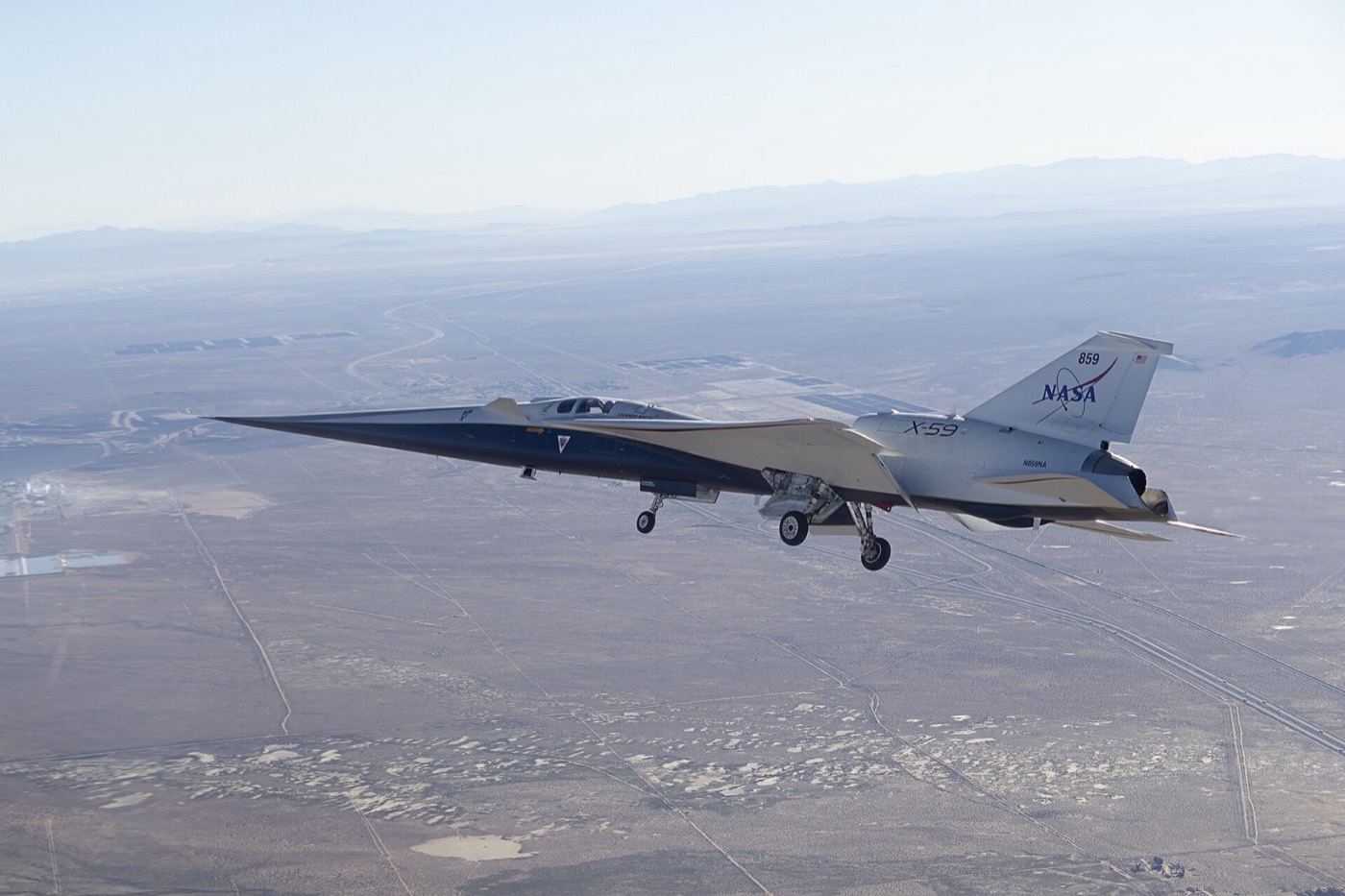
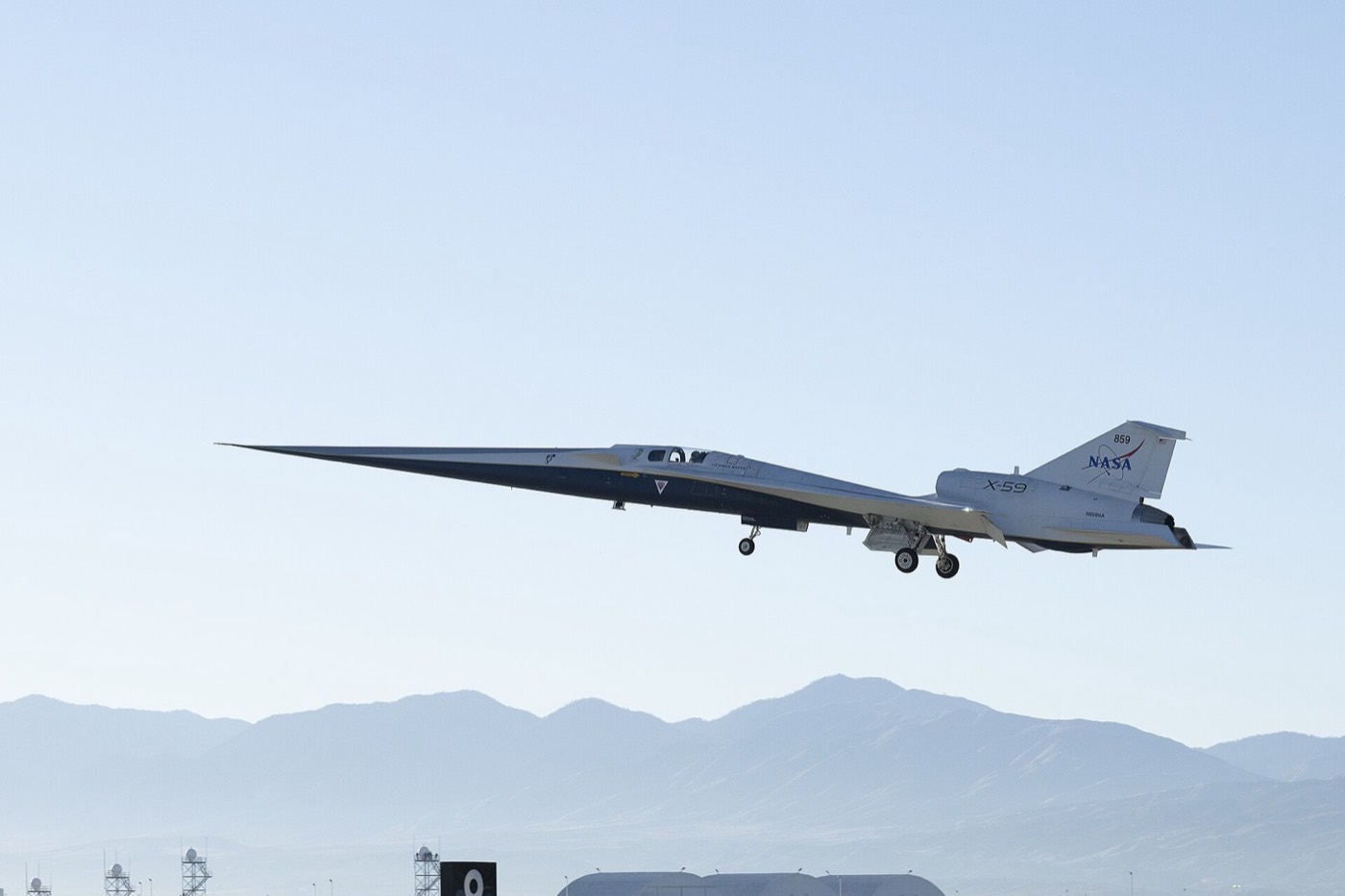
Meet the X-59, NASA's quiet supersonic research aircraft. It is long and thin, with its cockpit set back and no front window. Its shape is designed to spread the shock wave out, so that on the ground it becomes a soft thump instead of a bang.
The X-59 flew supersonic for the first time on the fifth of June. A week later it reached Mach one point four at fifty-five thousand feet. Those are the speed and height NASA plans to use over towns.
This is the X-59 lifting off for its first flight. Months of further testing come next. Then NASA will fly over several American communities, and ask the people underneath what they heard.
That last step matters most. The aircraft is a research tool. Its results will tell regulators how quiet is quiet enough.
11. Rules and Rockets
The rules are also moving, and so, in a sense, are the engines.
In June, two thousand and twenty-five, an executive order told the FAA to repeal the overland ban. The order is number fourteen three zero four. It also asked for a noise standard to replace the ban.
The FAA has answered. On the second of July this year, it proposed a rule to replace the ban.
The proposal would allow civil supersonic flight over land, if the aircraft can show that its boom is quiet enough on the ground. The limit is a tenth of a pound of pressure per square foot, at most. That unit measures how hard the shock wave presses on the ground.
There is a second track. In March, the House of Representatives passed a bill on the same subject by voice vote. It still needs the Senate.
The Supersonic Aviation Modernization Act would make the FAA change its rules within a year. It would also set noise standards by April, two thousand and twenty-seven. If it becomes law, it would back the executive order with a statute.
And the engines and materials are better than in the seventies. Composite materials are lighter and stronger, and computer modelling can shape an aircraft to spread its boom before any metal is cut.
12. Verdict: Comeback or Nostalgia?
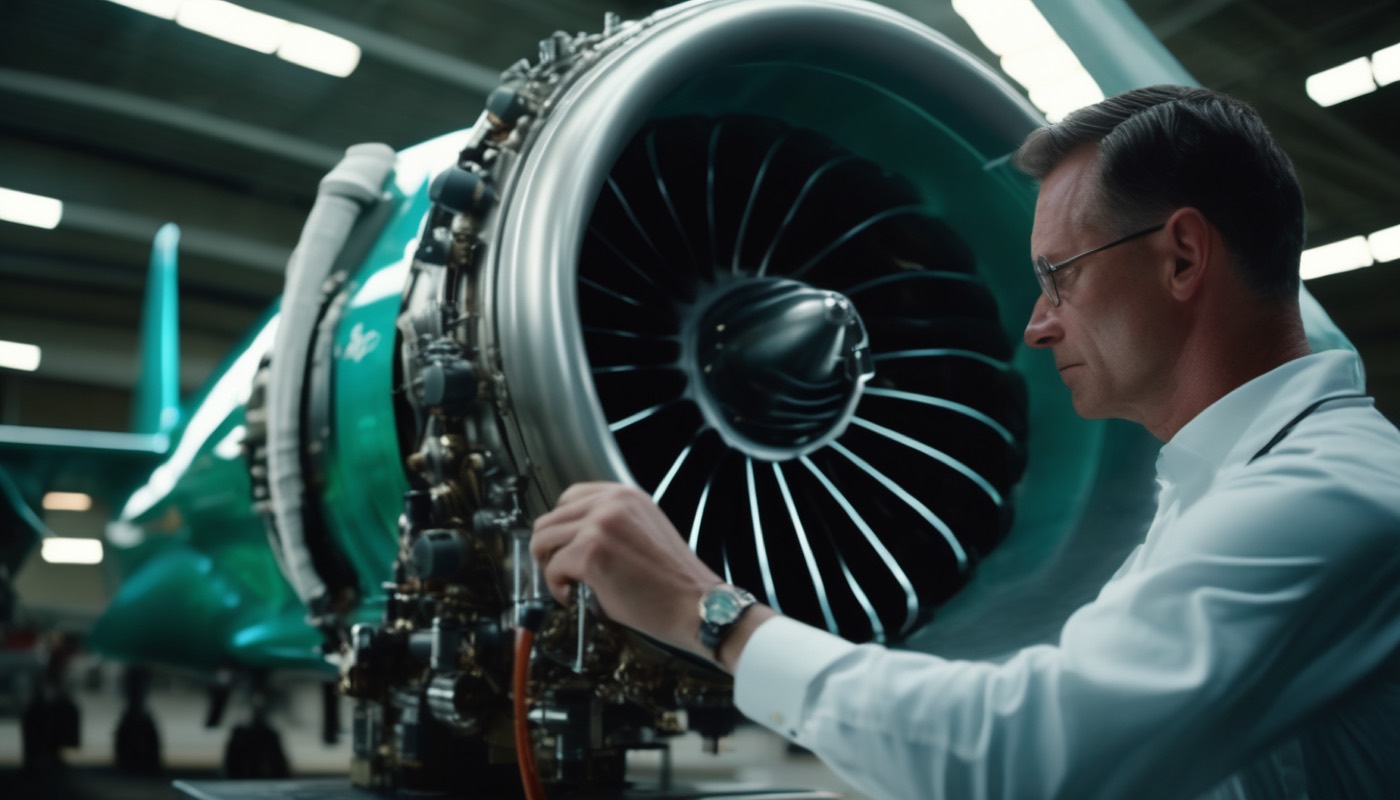
So, is it forwards or backwards?
The case for forwards is real. A demonstrator has already gone supersonic. A quiet-boom aircraft is flying, the rules are being rewritten, and about a hundred and thirty aircraft are on order. Three of the four old reasons, noise, regulation and engines, are being worked on.
The case for backwards is just as real. Overture has not flown, and neither has its engine. No ticket price has been confirmed. And fuel, the fourth old reason, has no obvious fix, because pushing through air at Mach one point seven still burns a lot of it.
My answer is this. The comeback is real, but it is small. It is likely to be a premium service on a few routes, and it will not put supersonic travel in reach of most people. Whether it arrives around the end of the decade, or later, depends on tests that have not yet been flown.
So the verdict is forwards, but slowly. The physics is not a wall, and the rules are opening. What is left is engineering, money and time.
Sources and credits
Photo credits (Wikimedia Commons)
- Chuck Yeager with the Bell X-1 Glamorous Glennis: Jack Ridley, Public domain - https://commons.wikimedia.org/wiki/File%3AChuck_Yeager_X-1_%28color%29.jpg
- Bell X-1 Glamorous Glennis, Smithsonian: Gary Todd from Xinzheng, China, CC0 - https://commons.wikimedia.org/wiki/File%3ABell_X-1_%22Glamorous_Glennis%22_%2810437170016%29.jpg
- Soviet Tupolev Tu-144 in flight: Unknown authorUnknown author, Public domain - https://commons.wikimedia.org/wiki/File%3ASoviet_Tu-144.JPEG
- Concorde, British-French supersonic transport (NARA): Unknown authorUnknown author or not provided, Public domain - https://commons.wikimedia.org/wiki/File%3ACONCORDE_-_BRITISH_FRENCH_SUPERSONIC_TRANSPORT_AIRPLANE_-_NARA_-_17426586.jpg
- British Airways Concorde (NARA): Unknown authorUnknown author or not provided, Public domain - https://commons.wikimedia.org/wiki/File%3ABRITISH_AIRWAYS_CONCORDE_AIRPLANE_-_NARA_-_17448564.jpg
- Air France Concorde at Charles de Gaulle: Mathious Ier, CC0 - https://commons.wikimedia.org/wiki/File%3AAir_France_Concorde_at_CDG.jpg
- Concorde G-BOAF on its last flight, Filton, 2003: Arpingstone, Public domain - https://commons.wikimedia.org/wiki/File%3AConcorde_216_%28G-BOAF%29_last_flight.jpg
- NASA X-59 in flight above the Mojave Desert: NASA Armstrong Flight Research Center / NASA/Lori Losey, Public domain - https://commons.wikimedia.org/wiki/File%3ANASA%E2%80%99s_X-59_in_Flight_Above_the_Mojave_Desert_%28AFRC2025-0168-038%29.jpg
- NASA X-59 lifts off for first flight: NASA Armstrong Flight Research Center / NASA/Carla Thomas, Public domain - https://commons.wikimedia.org/wiki/File%3ANASA%E2%80%99s_X-59_Lifts_Off_for_First_Flight_%28AFRC2025-0168-014%29.jpg


Primary sources
- NASA Quesst mission blogs, 'NASA's X-59 Flies Supersonic for First Time' (8 Jun 2026) and 'Reaches Speed, Altitude for Future Quiet Supersonic Flights' (12 Jun 2026), nasa.gov - first supersonic flight 5 Jun 2026; Mach 1.4 at 55,000 ft on 12 Jun 2026; community overflights next..
- Federal Register, 'Enabling Supersonic Overland Flight', FAA, 2 Jul 2026 (notice of proposed rulemaking) - repeal of 14 CFR 91.817; 0.11 psf limit; comments to 17 Aug 2026.
- Boom Supersonic, 'Boom Supersonic Achieves Supersonic Flight', PR Newswire, 28 Jan 2025 - XB-1 Mach 1.122 at 35,290 ft; Overture 64-80 seats, Mach 1.7, 130 orders and pre-orders..
- CNN, 'The return of supersonic flight hinges on the race to solve one big hurdle', 6 Aug 2026 - Overture, Mach cutoff, passenger flights within about four years.
- BEA (France), final report on Air France Flight 4590, 16 Jan 2002; Wikipedia and Britannica summaries of the same - 109 aboard, 4 on the ground, 113 killed. Summaries.
- Executive Order 14304, 'Leading the World in Supersonic Flight', 6 Jun 2025, whitehouse.gov..
- H.R. 3410, Supersonic Aviation Modernization Act, Congress.gov; Eckert Seamans and AeroTime summaries - House passed by voice vote 24 Mar 2026. Summaries.
Not regulated financial advice.