
Railways: The Comeback Nobody Planned
A freight railroad just promised to spend $3.6 billion in a single year, on infrastructure most people assume is a Victorian relic. This video asks whether that is a one-off bet, or the start of a real reversal after a century in which cars, trucks and planes took almost everything the railway used to carry.
It opens on BNSF's $3.6bn 2026 capital plan (Businesswire, 26 January 2026), then goes back to the 19th-century peak when railways had no real competitor, and traces the two-stage collapse that followed: trucking taking freight from the 1920s on cheap, publicly-funded roads, then cars and air travel taking passengers after 1945, with Britain's 1963 Beeching cuts as the clearest case of a government choosing to close rather than subsidise.
It explains why the United States' railroads nearly died a second death under price-control regulation, and why the 1980 Staggers Act's deregulation - and the mileage it still cost - is the real reason an American freight railroad can make a $3.6bn bet in 2026 at all.
Then the mechanics: track gauge and the 'break of gauge' problem where networks of different width meet; block signalling and how ETCS/PTC tell a train its speed and authority without a human watching every signal; why electrification cuts running cost but needs huge upfront capital; and why freight and passenger trains sharing one track cap each other's capacity.
Then the case for rail on bulk freight - roughly six times less CO2 per tonne-km than road freight (UIRR, citing German Federal Environment Agency data), and US rail's 40% share of freight ton-miles for just 1.9% of transport-sector emissions (AAR/EPA data) - before setting BNSF's plan beside Amtrak's $4.7bn Northeast Corridor funding opportunity (US DOT/FRA, April 2026), Spain's Adif programme (EUR 24.1bn, 2022-2026), and a global rail freight market forecast to grow from $352.9bn (2025) to $550bn by 2035 (Global Market Insights).
It closes by weighing the real pressures pulling capital back to rail - congestion, carbon rules, freight demand - against the real risk that funding fights and construction cost stall the comeback before it is spent.
Every figure is on screen with its source and date.
In these topics
Chapters
- The Billion-Dollar Bet
- When Rail Ruled
- The Truck Took the Freight
- The Car Took the Passengers
- Regulated to Death, Then Deregulated
- How a Modern Railway Actually Works
- Signalling and Why Trains Don't Crash
- Electrification: Why Wires Change the Economics
- Freight and Passengers Fighting for the Same Track
- Why Rail Beats Trucks on Bulk Freight
- The Money Coming Back
- Why Now, and What Could Still Derail It
Video notes
1. The Billion-Dollar Bet
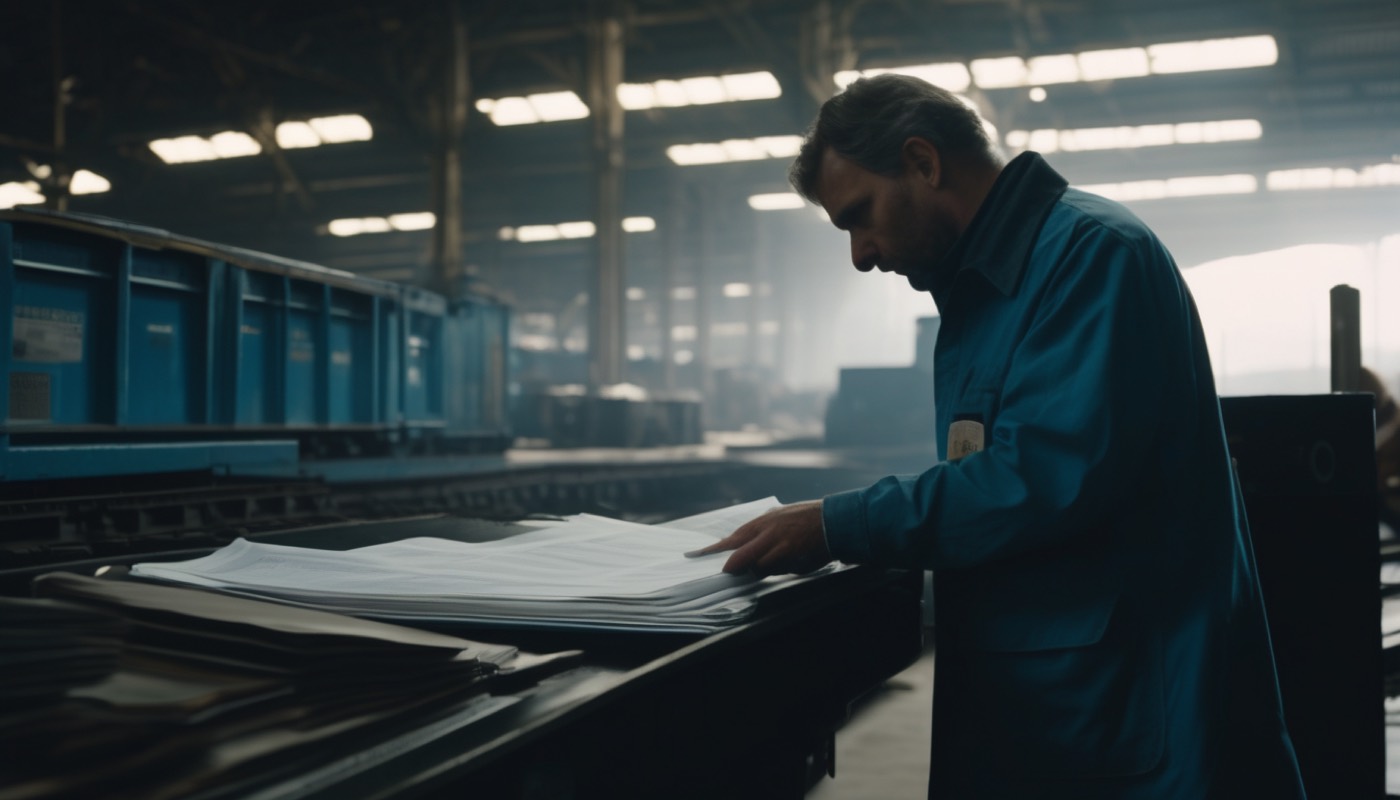
A freight railroad just promised to spend three point six billion dollars in a single year, on track that most people assume is a dying technology.
BNSF Railway announced a three point six billion dollar capital plan for 2026. Two point eight billion of that goes on plain maintenance — replacing worn-out rail and rotten ties. The rest, three hundred and fifty-eight million dollars, goes on new capacity: a planned freight hub near Barstow, California, and a new intermodal facility starting construction near Phoenix, Arizona. An "intermodal" facility is simply where freight gets moved between a train and a truck, in standard shipping containers that fit either one.
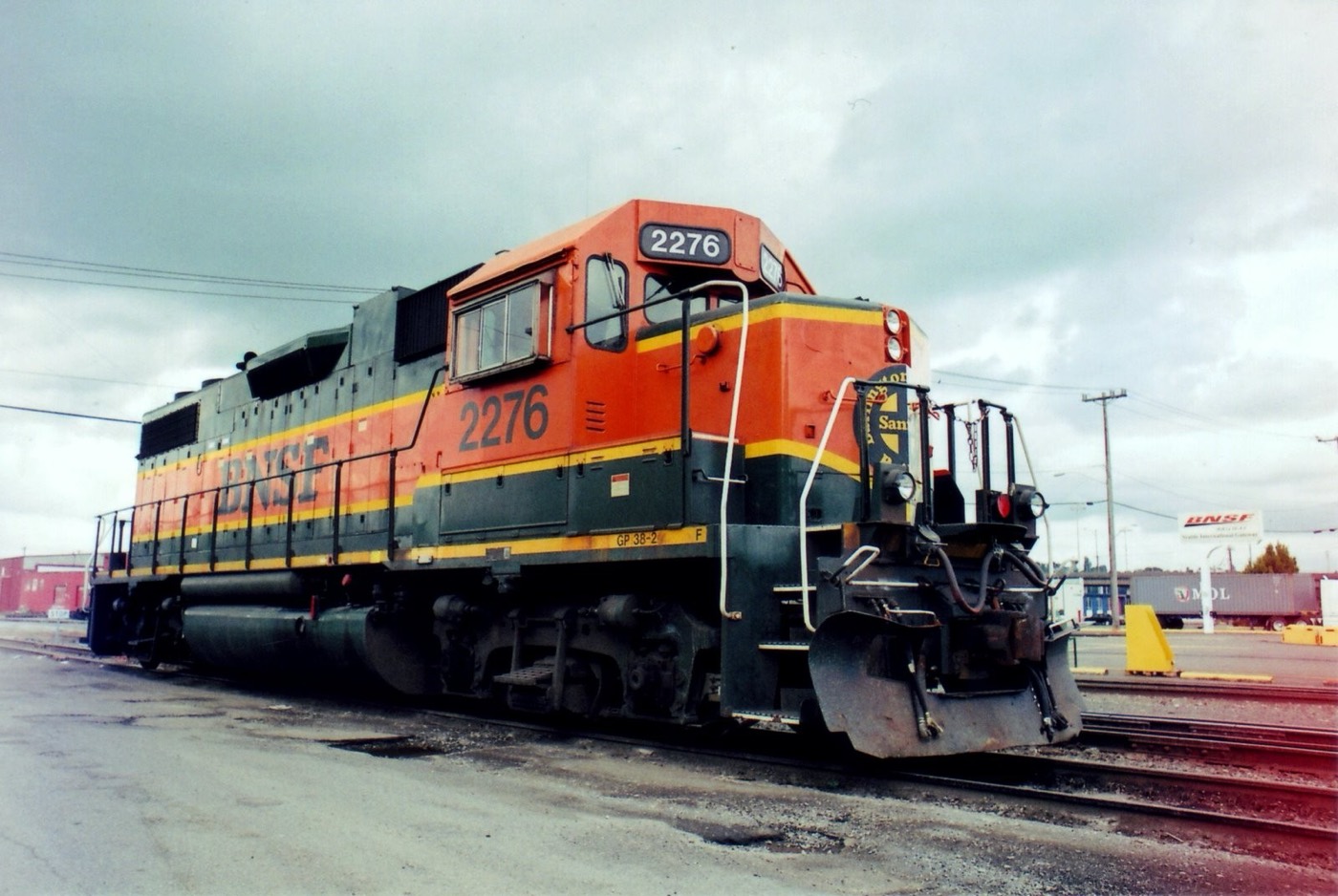
This is a BNSF locomotive at the railway's rail yard in Seattle. It belongs to the same freight railroad that just promised three point six billion dollars in new spending.
That is one railroad, in one country, in one year. It is not an isolated bet, and this video spends the next fifteen minutes explaining why.
Did railways go backwards for a century, pushed aside by cars, trucks and planes — and are they now going forwards again? That is the question this video answers, chapter by chapter, starting with how completely railways once dominated.
2. When Rail Ruled
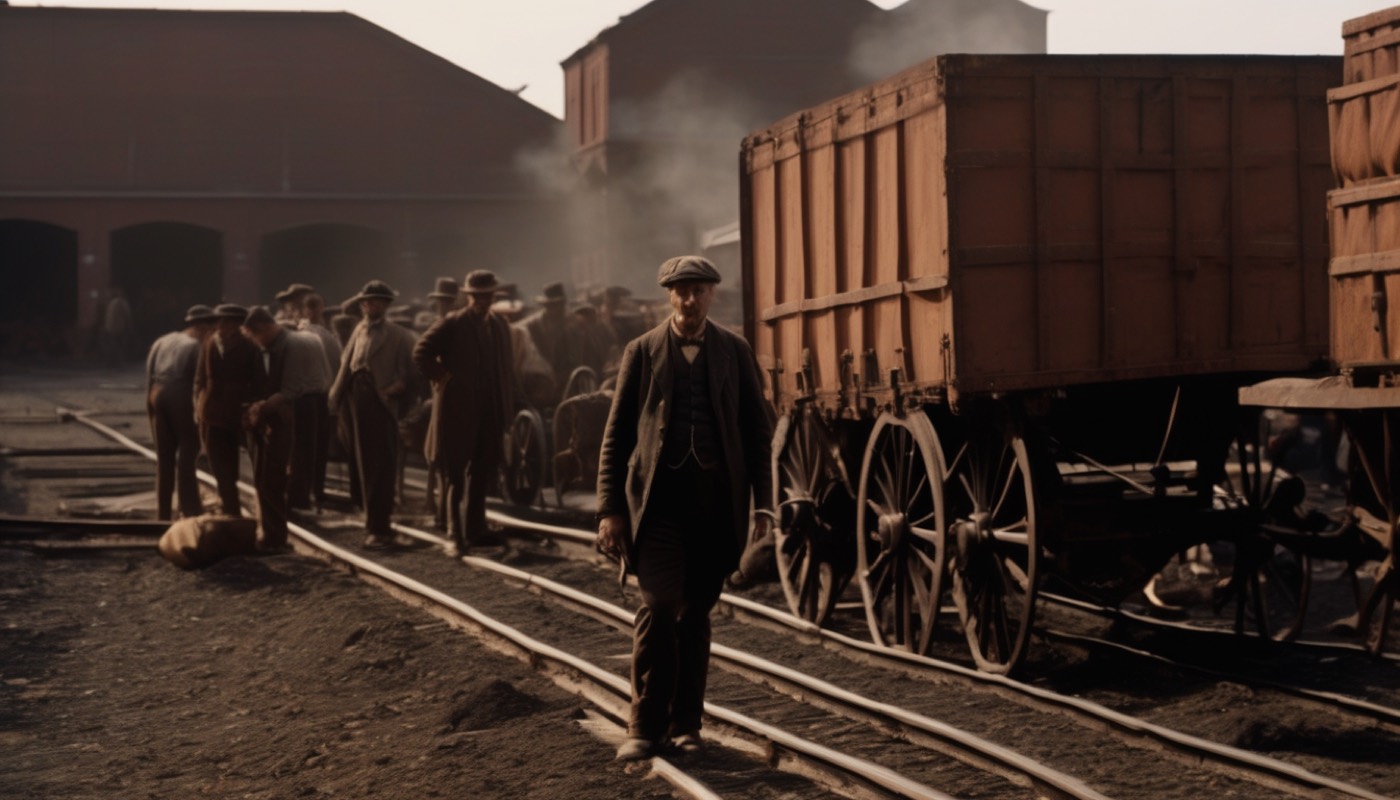
Go back far enough, and there was no real alternative to the railway at all.
The world's first public railway to haul freight behind steam locomotives opened in 1825, linking Stockton and Darlington in the north of England. Within a century, railways were the default way to move almost everything, because no other machine could match a steel wheel on a steel rail for carrying heavy loads cheaply over land.
US route mileage kept climbing for nine decades after that.
US route mileage reached its peak of roughly two hundred fifty-four thousand miles in 1916. No other transport network in the country came close to that scale at the time.
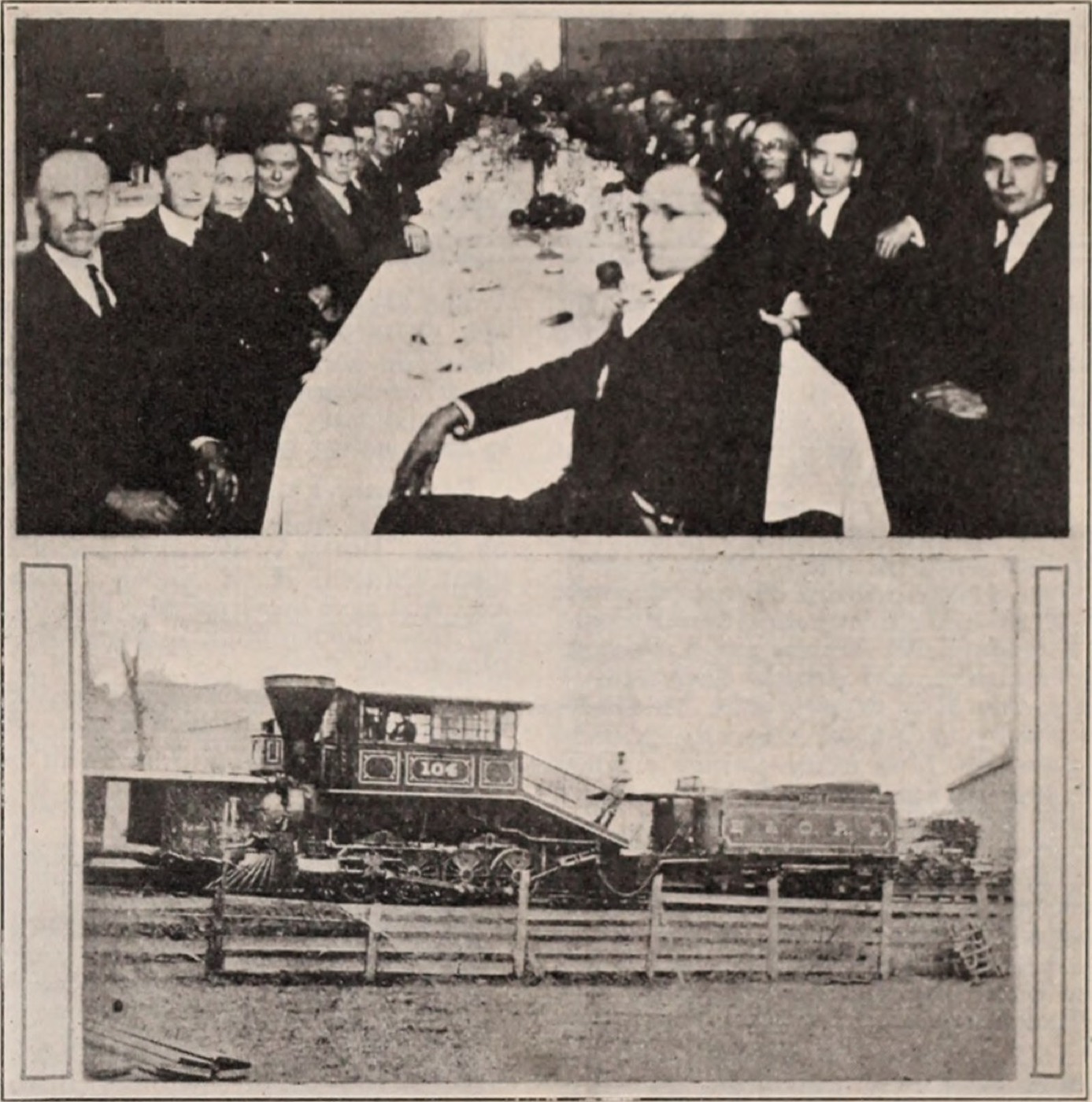
This is a freight yard from that era — the Baltimore and Ohio Railroad in 1920, close to the peak of American rail mileage. Scenes like this were ordinary. Railways carried the grain, the coal, the steel and the passengers that an industrial economy depended on, because almost nothing else could move so much, so far, so cheaply.
That dominance did not last. The next two chapters explain why it ended.
3. The Truck Took the Freight
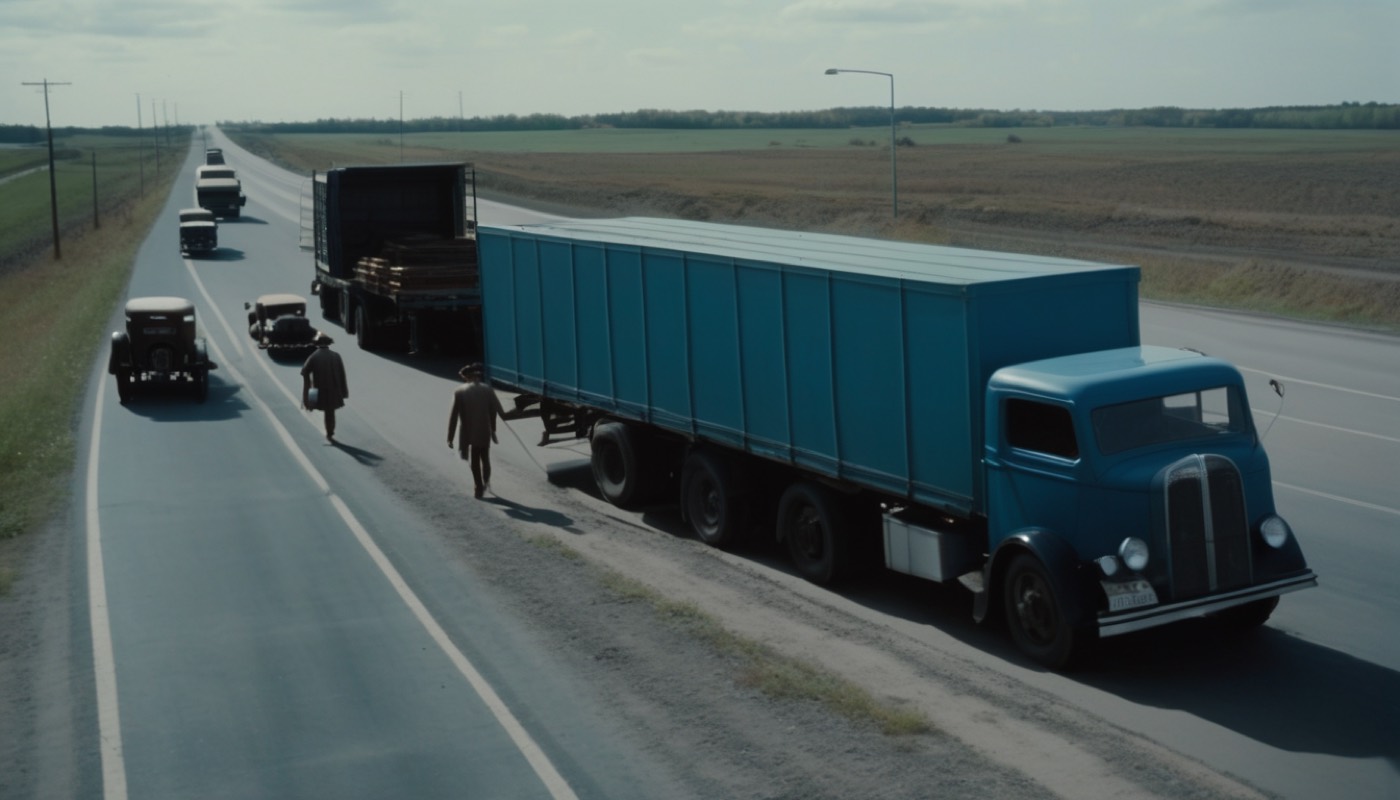
The first challenger to the railway's freight monopoly did not need rails at all — it needed a road, and from the 1920s, more and more of those roads were being built and paid for by someone else.
Government fuel and registration taxes, not the trucking companies themselves, built most of the new paved highway network from the 1920s onward. That let independent truckers undercut railroads on short routes and small loads, because railroads were stuck carrying exactly that traffic at fixed, regulated rates that often lost money.
Over the following five decades, trucking kept taking that smaller, short-haul freight away.
By the 1970s, trucks had captured most of the short-haul and small-shipment freight that railroads had never been able to carry at a profit anyway. Rail still hauled the heaviest bulk loads, but its total share of American freight had fallen steadily for fifty years.
Freight was only half the story. Passengers deserted railways even faster.
4. The Car Took the Passengers
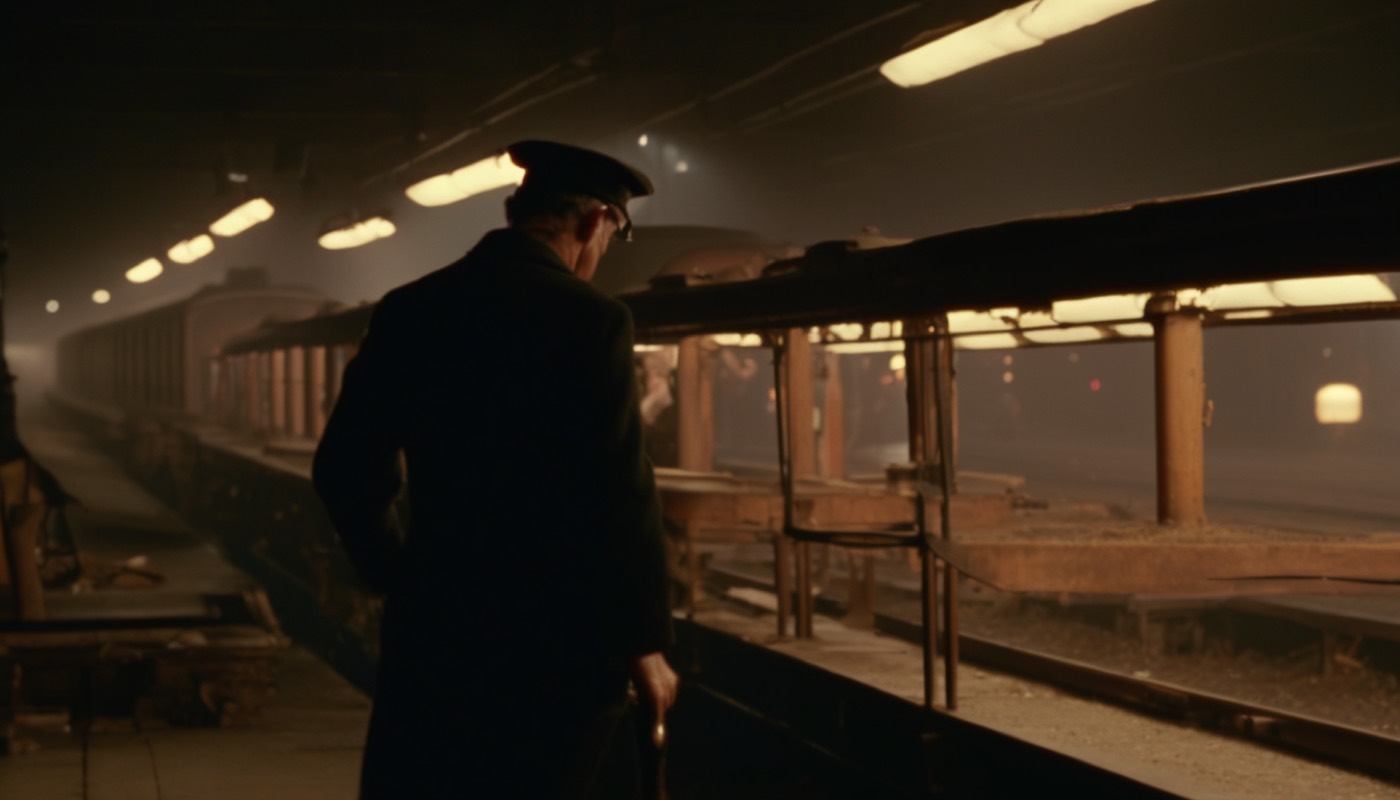
After the Second World War, two machines finished what trucking had started on the freight side — this time on the passenger side.
Mass car ownership spread quickly after 1945, and from the 1950s and 60s, air travel became affordable for ordinary journeys too. Both pulled passengers off trains that had once been the only practical way to travel any real distance.
Governments in several countries responded by closing the railway rather than fighting to keep it.
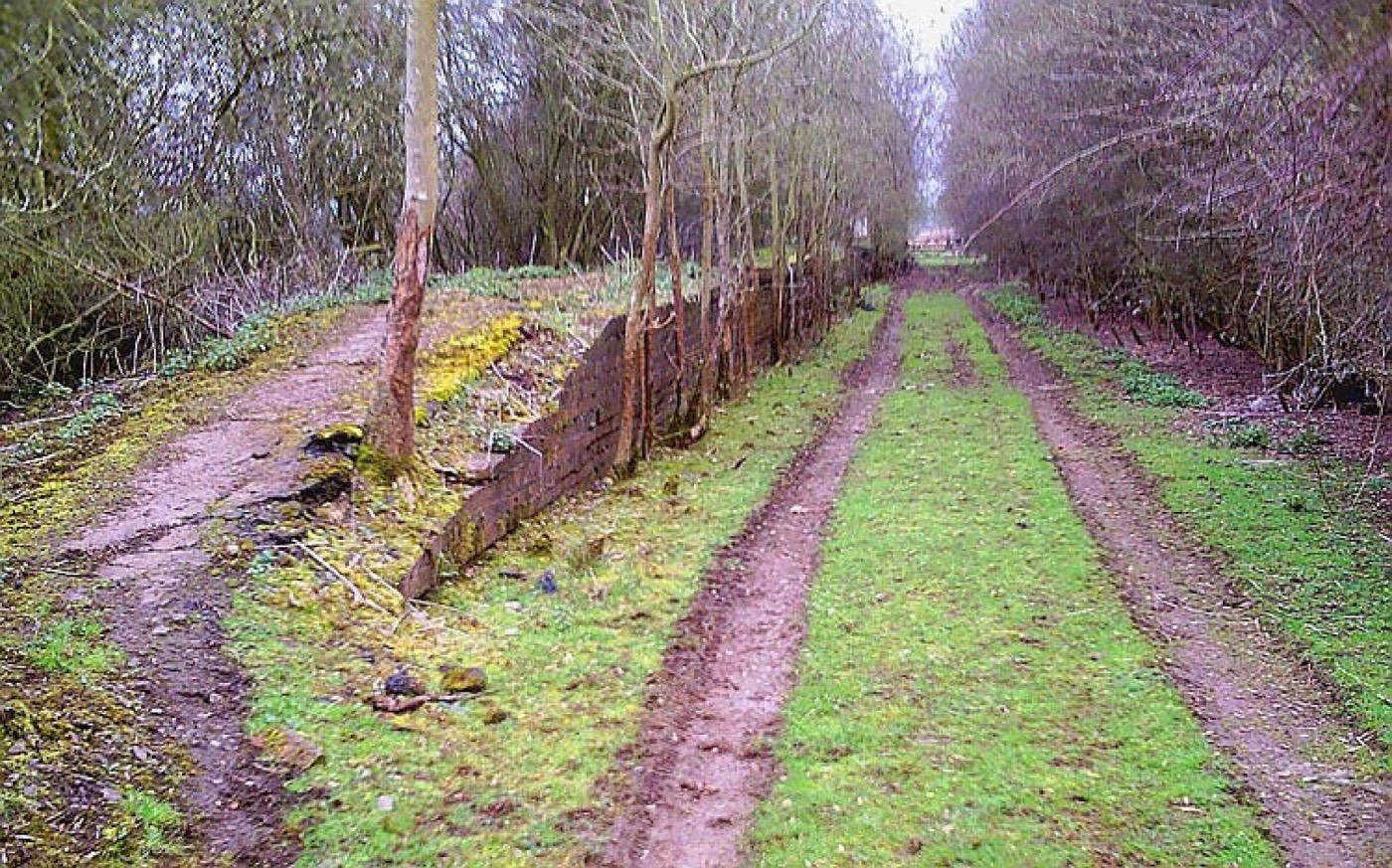
In Britain, a 1963 government report by Dr Richard Beeching recommended closing around five thousand miles of lightly used branch lines. It also recommended shutting more than two thousand stations. Most of those closures happened within a decade. Passenger numbers on the lines marked for closure were falling anyway, and keeping every branch line open was judged to cost more than the traffic on it was worth.
This is Lilbourne station in England, decades after its branch line closed under exactly that programme. Grass and trees have reclaimed a platform where trains once stopped every day. Scenes like this played out across Britain, continental Europe and North America, as railways that cars and planes had made unnecessary were simply left to fall apart.
By the 1970s, in much of the world, both halves of the railway's old business had been taken away. What happened next made the freight side worse before it got better.
5. Regulated to Death, Then Deregulated

Losing business to trucks and cars was bad enough. What came next, in the United States, nearly finished the job.
For most of the twentieth century, the Interstate Commerce Commission controlled US freight-rail prices and routes directly. That left railroads unable to raise rates, drop money-losing routes, or compete properly with the newly deregulated trucking industry. A railroad could be stuck running a route at a loss for decades, by law.
Congress eventually reversed that, and the reversal is why American freight railroads survived at all.
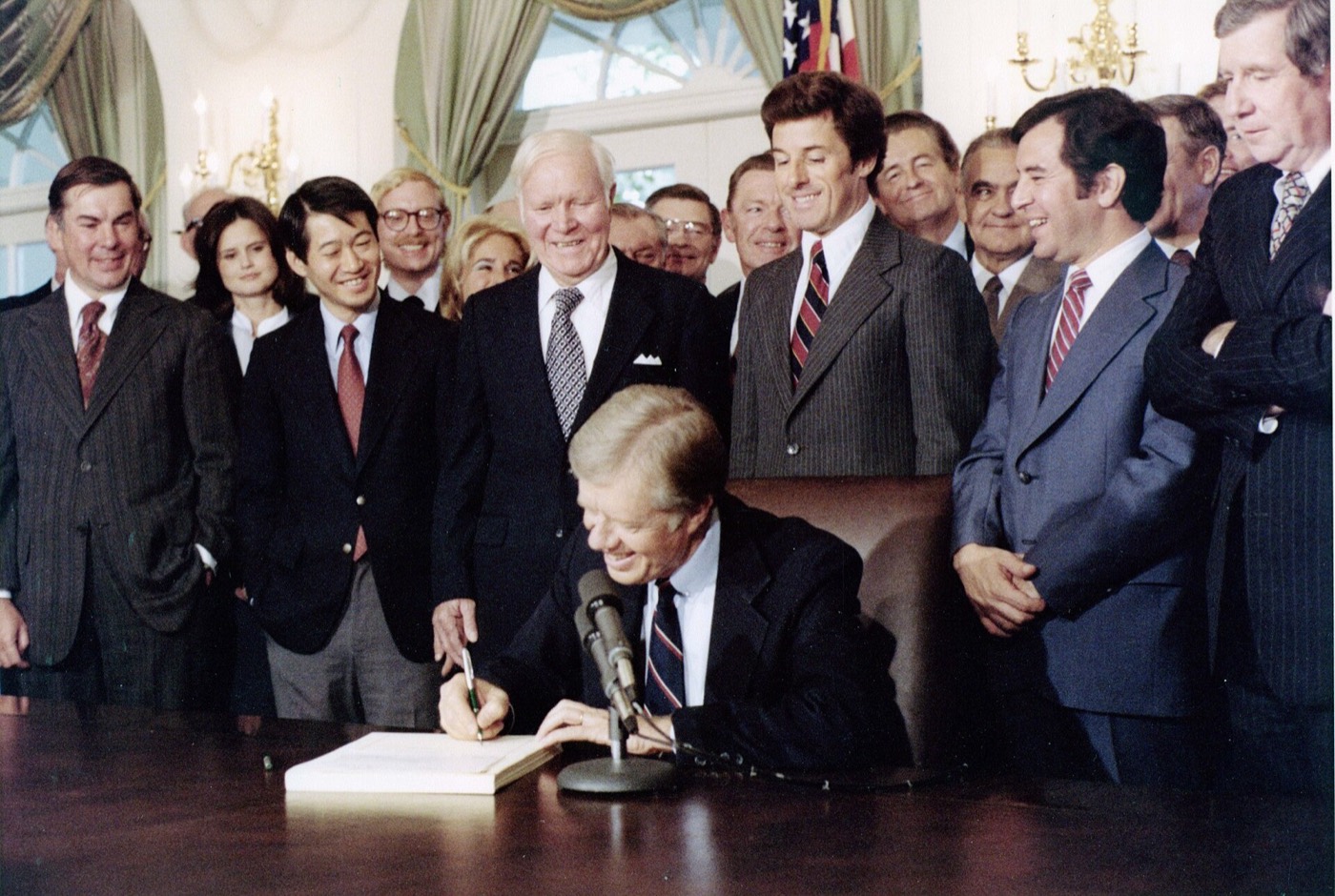
The Staggers Rail Act took effect on the 14th of October 1980, freeing US freight railroads to set their own prices and abandon routes that made no economic sense. Even so, US rail route mileage was still two hundred seventy thousand miles in 1980. By 2012 it had fallen to around a hundred sixty-two thousand miles, as the weakest lines were finally allowed to close. Deregulation did not stop the shrinking. It let the industry shrink to a size that could actually make money, instead of being slowly bankrupted by routes it was forbidden to drop.
That is the moment this video's "backwards" era actually ends, and its slow turn back towards "forwards" begins.
This is the moment itself: President Jimmy Carter signing the Staggers Rail Act into law in October 1980. It is the single most important reason an American freight railroad can still promise three point six billion dollars in new spending, in the way described in chapter one.
Before this video can explain why that money is coming back, it needs to explain what a railway actually is — because "track," "gauge" and "signal" mean something more specific than most viewers assume.
6. How a Modern Railway Actually Works
Strip a railway down to its basics, and it is two steel rails, a fixed distance apart, carrying immense weight on a tiny contact patch of steel wheel.
That fixed distance between the two rails is called the "gauge." Most of the world's railways, about sixty per cent of them, use the same gauge: one thousand four hundred and thirty-five millimetres, known as standard gauge.
The other forty per cent did not all pick the same alternative, and that creates a real problem at some borders.
Russia and the former Soviet states use a broader gauge than standard. So does India. Large parts of sub-Saharan Africa use a narrower one. Where two different gauges meet, freight cannot simply roll from one network onto the other.
That mismatch has a name, and a real cost.
Engineers call it a break of gauge. Every wagon crossing it must either be unloaded and reloaded onto a wagon built for the other gauge, or have its entire wheel assembly swapped out. Both options are slow and expensive, and both still happen today wherever a broad-gauge network meets a standard-gauge one.
Track and gauge keep a train on the rails. The next problem is keeping two trains from occupying the same stretch of rail at once.
7. Signalling and Why Trains Don't Crash
A train cannot swerve and cannot stop quickly, so the entire job of avoiding a crash has to happen before the train ever gets close to danger.
Railways solve that by dividing track into sections called "blocks." A signalling system allows only one train at a time to have authority over any given block, so two trains can never legally be told to occupy the same stretch of rail together.
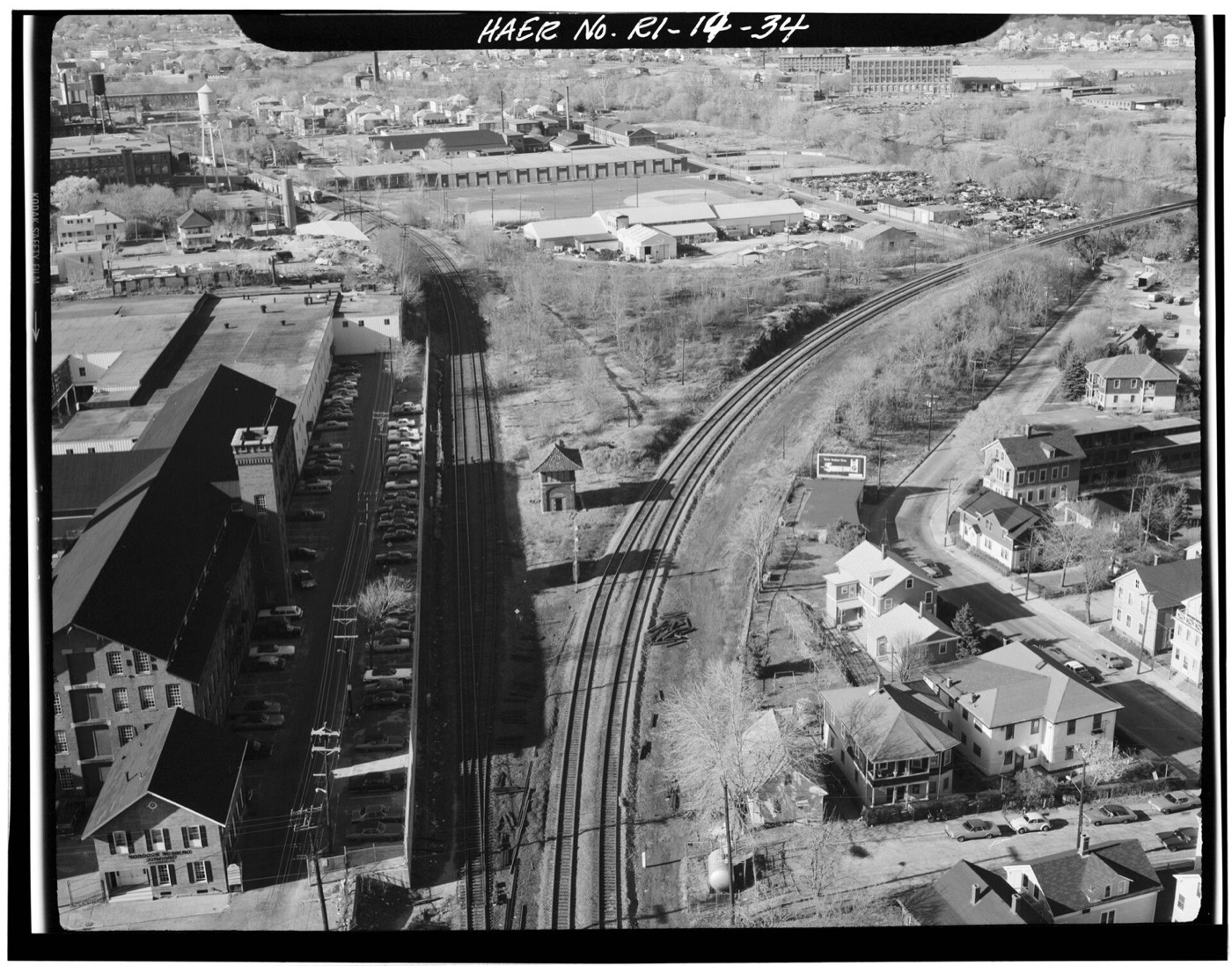
For over a century, a human being enforced that rule from inside a building like this one.
This is a switch and interlocking tower on the former Northeast Corridor in Rhode Island. Inside, an operator physically set signals and track switches by hand, reading train movements and making sure no two trains were ever given the same block at once.
Modern railways increasingly do that job electronically instead.
The European Train Control System, known as ETCS, sends a train's permitted speed and the limit of its authority straight to the driver's cab. Positive Train Control, called PTC in the United States, does the same job on American railways. Neither depends only on a human reading a signal from a passing window.
Signalling keeps trains apart. Electrification changes what it costs to run them at all.
8. Electrification: Why Wires Change the Economics
Most of the world's trains still burn diesel fuel, because the alternative is expensive to build, even though it is cheaper to run.
An electrified railway draws its power from overhead wires, called "catenary," instead of carrying diesel fuel on board. Electric trains cost less to run per mile and produce no exhaust at the point of use, once the wires exist.
That last phrase, once the wires exist, is the whole problem.
Building catenary wires, the substations that feed them, and electric locomotives to run under them all needs a huge amount of money before a single train saves a single gallon of diesel. That upfront capital cost, not the running cost, is why most American freight lines outside a few passenger corridors are still diesel-hauled today.
Electrification is one way railways cut cost per mile. Sharing track with a different kind of train raises cost per mile right back up.
9. Freight and Passengers Fighting for the Same Track
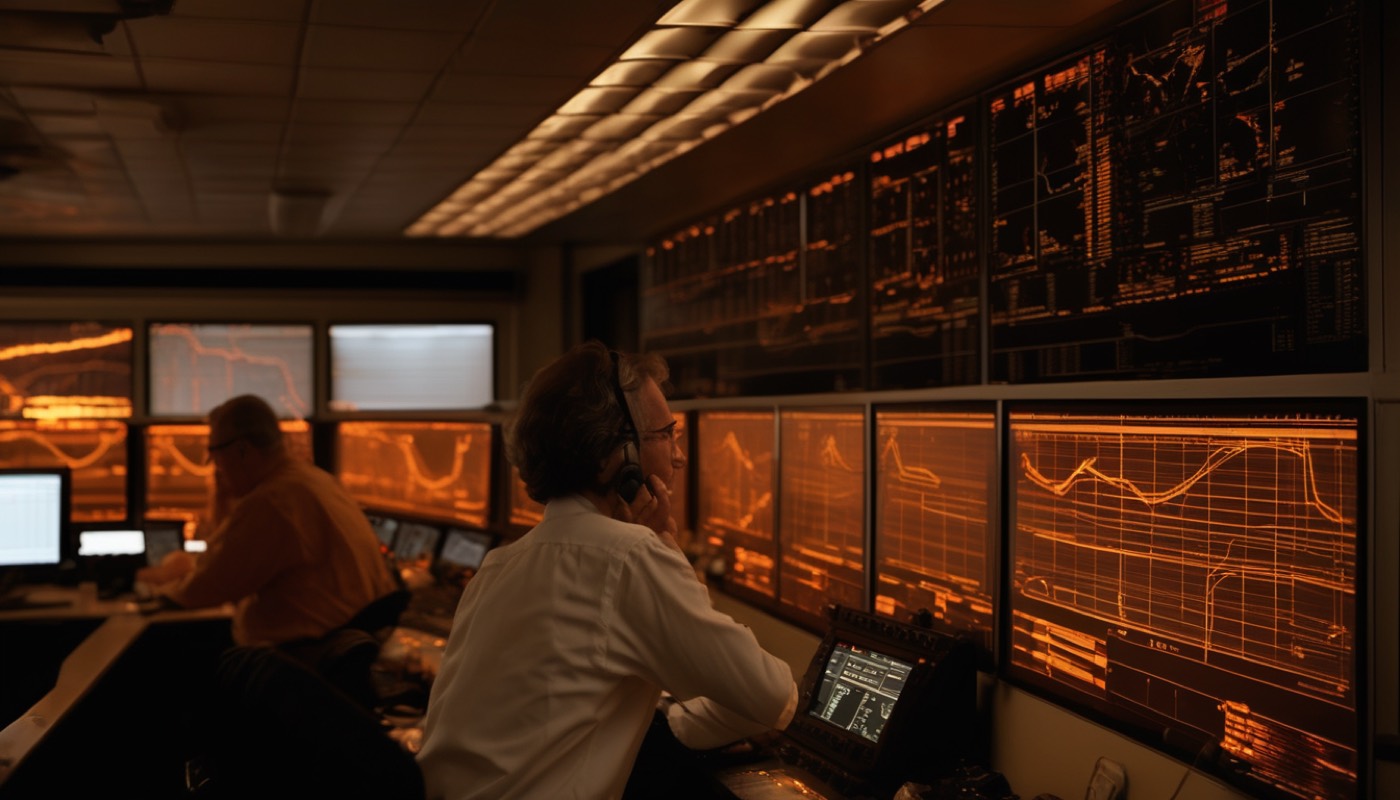
A single track can carry freight trains or it can carry passenger trains well. Carrying both well, at the same time, is much harder than it looks.
A loaded freight train is slow and heavy. A passenger train is fast and light. On one shared track, the fast train must either overtake the slow one, which needs extra track to pass on, or sit behind it and lose time. Either way, the line can carry fewer total trains per day than if only one kind of train used it.
Some countries have simply stopped making that trade-off.
Parts of the European Union have built dedicated freight-only corridors, under the TEN-T network, that remove passenger trains from the line entirely. A freight-only line can run every train at freight speed, with no faster train to get out of the way of, and no capacity lost to the conflict at all.
That capacity fight is one reason rail has struggled against road freight for decades. The next chapter asks whether, bottleneck and all, rail is still the better choice for the heaviest loads.
10. Why Rail Beats Trucks on Bulk Freight
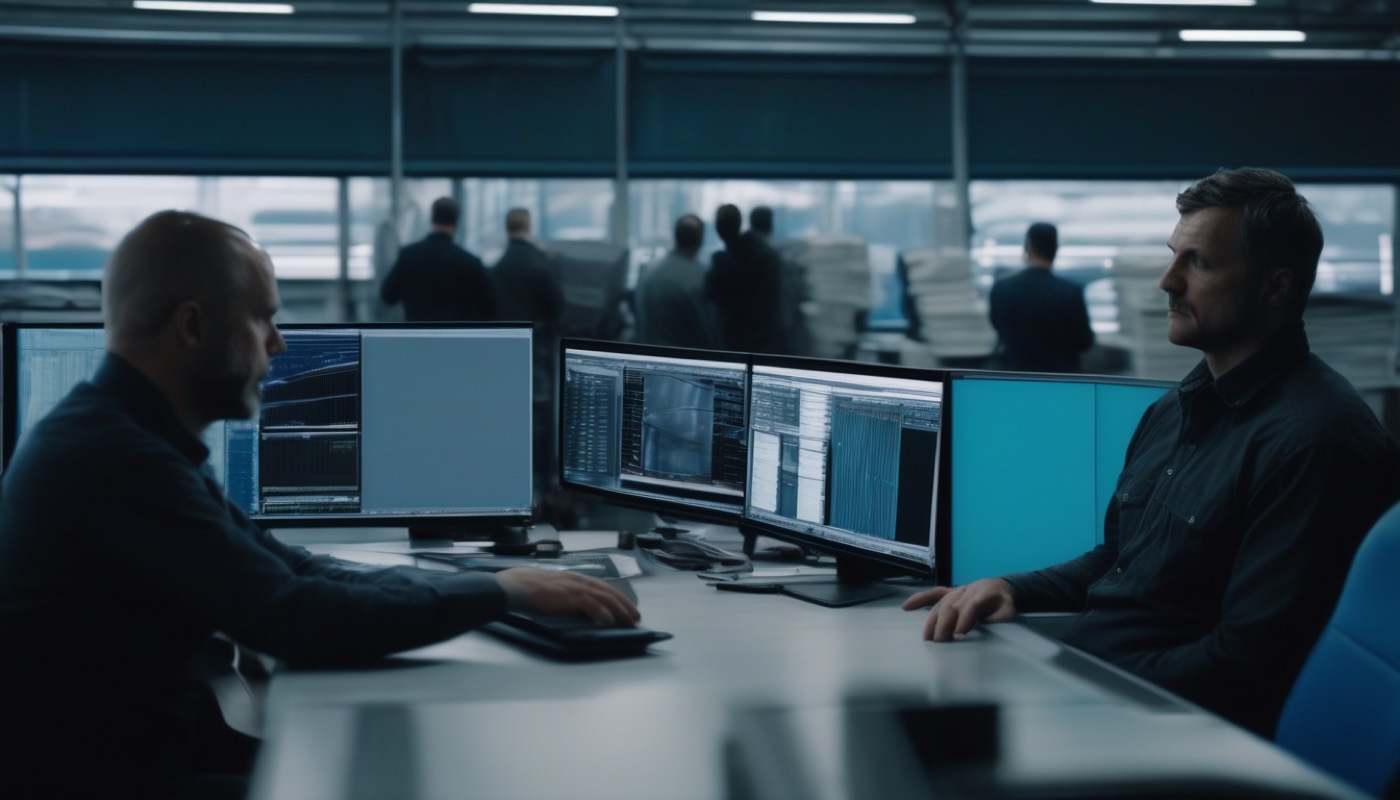
Set the history and the engineering aside for a moment, and ask the plainest possible question: for a very heavy load going a very long way, is a train actually cheaper than a truck?
Economists measure bulk freight in "tonne-miles" — one tonne of cargo carried one mile. It lets a coal shipment and a container shipment be compared on the same scale, however different the cargo.
On that measure, rail's advantage over road is large and consistent.
Germany's Federal Environment Agency calculated that rail freight produces roughly six times less carbon dioxide per tonne-kilometre than road freight carrying the same load the same distance. That gap holds up across most developed rail networks, not just Germany's.
The United States shows the same pattern, at a national scale.
US freight railroads carry around forty per cent of the country's total freight ton-miles — more than any other single mode — while producing only about one point nine per cent of US transportation-sector greenhouse gas emissions. No other freight mode moves that much weight for that little carbon.
That efficiency advantage is the economic argument for rail's comeback. The next chapter shows the money that argument has already attracted.
11. The Money Coming Back
Chapter one's three point six billion dollars was never a single, isolated bet. It is one entry in a much longer list.
The US Department of Transportation opened a four point seven billion dollar funding opportunity for Amtrak's Northeast Corridor in April 2026, aimed at high-priority station work at New York's Penn Station and Washington's Union Station.
Spain is running its own version of the same story, on a similar scale.
Spain's rail infrastructure manager, Adif, is investing roughly twenty-four point one billion euros between 2022 and 2026. More than half of that, about twelve point one billion euros, goes to the ordinary freight and commuter network rather than the high-speed lines most visitors actually ride.
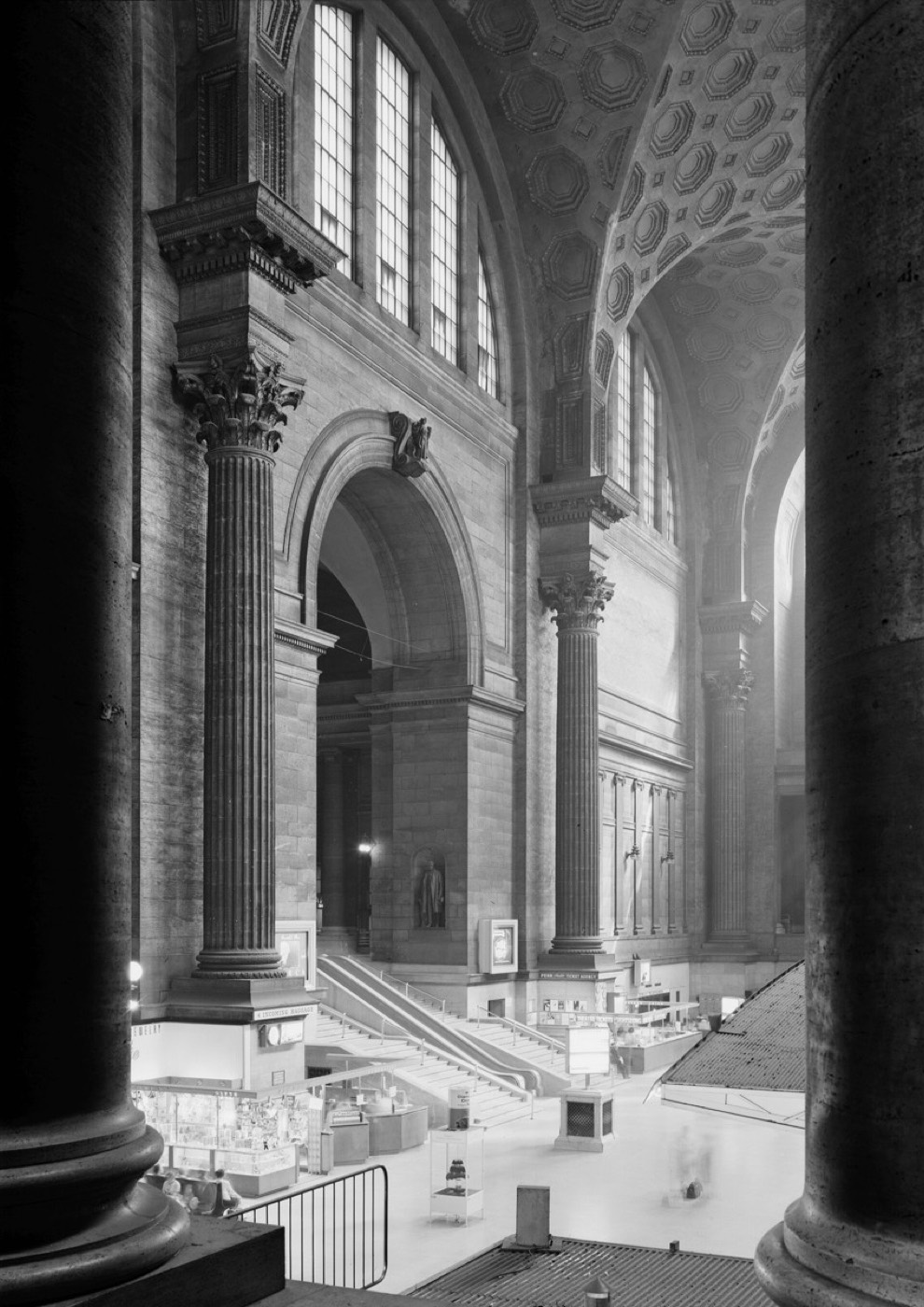
This is the interior of the original Pennsylvania Station in New York, the building the Northeast Corridor money is meant to help restore in spirit if not in stone. A station built to this scale was once simply what a country's busiest railway terminal looked like.
Put the individual projects beside the market data, and a pattern turns into a trend.
The global rail freight market was worth about three hundred fifty-three billion dollars in 2025. Analysts expect it to reach roughly three hundred sixty-seven billion dollars in 2026. By 2035, they expect it to grow further still, to about five hundred fifty billion dollars. That is not one country's spending spree. It is a market, growing.
None of that money is guaranteed to arrive, and the final chapter asks what could still stop it.
12. Why Now, and What Could Still Derail It

Put the last eleven chapters together, and the answer to this video's opening question is not a simple yes.
Three real pressures are pulling investment back toward rail: roads and airports that are running out of room to expand, carbon rules that increasingly penalise the dirtiest freight option, and freight demand that keeps growing regardless. All three favour a mode that still beats trucks on cost and carbon for heavy, long-haul loads.
But none of those pressures guarantees the money actually gets spent.
The Northeast Corridor's four point seven billion dollars was a funding opportunity, not a cheque already written — it still has to survive budget fights in Washington. New track and new electrification both cost enormous sums upfront, the same problem chapter eight described, and that cost can stall a project for years before a single rail is laid.
So the honest verdict is this: the pressure pulling capital back to rail is real, and so is the risk of it stalling before it is spent.
Railways spent a century going backwards, losing freight to trucks and passengers to cars and planes, before deregulation let the surviving network turn profitable again. Now billions of dollars and euros are flowing back toward it, for reasons that have not gone away: cost, carbon and capacity. Whether that money survives contact with real budgets is the question that will decide whether this comeback was ever more than a plan.
That is where this video leaves it — not a verdict already written, but a bet already placed, several billion dollars at a time.
Sources and credits
Photo credits (Wikimedia Commons)
- Signing of the Staggers Rail Act, 1980: White House, Public domain - https://commons.wikimedia.org/wiki/File%3ASigning_of_the_Staggers_Rail_Act_of_1980.jpg
- BNSF Railway locomotive No. 2276, Seattle SODO yard: KurtClark, Public domain - https://commons.wikimedia.org/wiki/File%3ABNSF_2276_at_Seattle_SODO_%28Public_Domain%29.jpg
- Lilbourne railway station, overgrown remains of a closed branch line (England): G-Man, Public domain - https://commons.wikimedia.org/wiki/File%3ALilbourne_railway_station.jpg
- Baltimore and Ohio Railroad freight operations, Baltimore and Ohio Employees Magazine, 1920: Internet Archive Book Images, CC0 - https://commons.wikimedia.org/wiki/File%3AImage_from_page_1080_of_%22Baltimore_and_Ohio_employees_magazine%22_%281920%29.jpg
- Boston switch interlocking tower, Central Falls, RI - Northeast Railroad Corridor (Amtrak route), HAER photo by Jack Boucher: unknown, Public domain - https://commons.wikimedia.org/wiki/File%3ABoston_switch_interlocking_tower._Central_Falls%2C_Providence_Co.%2C_RI._Sec._4116%2C_mp_190.40._-_Northeast_Railroad_Corridor%2C_Amtrak_route_between_CT_and_MA_state_lines%2C_Providence%2C_HAER_RI%2C4-PROV%2C174-34.tif
- Pennsylvania Station, New York - original McKim, Mead & White building, interior waiting room (1962, HABS photo by Cervin Robinson): Cervin Robinson, Public domain - https://commons.wikimedia.org/wiki/File%3APenn_Station_interior.jpg


Primary sources
- BNSF Railway / Businesswire, '$3.6 Billion Capital Investment Plan for 2026', 26 January 2026, corroborated by Railway Track & Structures (rtands.com) and DC Velocity - BNSF's $3.6bn 2026 capital plan: $2.8bn maintenance, $358m expansion/efficiency, Barstow International Gateway and Phoenix intermodal facility.
- Association of American Railroads, 'The Staggers Act of 1980: Key Facts' (aar.org), corroborated against Wikipedia's 'Staggers Rail Act' article and the Cato Institute - the 14 October 1980 effective date and the fall in US rail route mileage from 270,623 miles (1980) to 162,306 miles (2012).
- US Department of Transportation / Federal Railroad Administration, Northeast Corridor Notice of Funding Opportunity, April 2026 (railroads.fra.dot.gov), corroborated by RailwayPro and the AASHTO Journal - the $4.7bn funding opportunity covering New York Penn Station and Washington Union Station.
- RailwayPro, 'Adif to invest EUR 24 billion until 2026', corroborated by Trackopedia and Railway.Supply - Adif/Adif AV's EUR 24.1bn 2022-2026 investment programme, over half (EUR 12.1bn) on the conventional/freight/commuter network.
- Global Market Insights, 'Rail Freight Market' industry report (gminsights.com) - the global rail freight market at $352.9bn (2025), forecast to $366.7bn (2026) and $550bn (2035).
- General historical record on the 19th/20th-century rise and fall of rail traffic (AAR historical mileage data, Bureau of Transportation Statistics, National Railway Museum/Network Rail on the 1963 Beeching report), and on railway engineering (UIC ERTMS/ETCS documentation, FRA Positive Train Control overview, European Commission TEN-T freight corridor documentation, International Energy Agency 'Investment in Railway').
Not regulated financial advice.