
The Robot Warehouse: Who's Really Doing the Picking?
An order goes in, and for a few seconds, nothing about it involves a person. Software checks the stock, plans a route through the building, and creates a job - for a robot, a person, or both. This video explains how much of a modern warehouse now runs that way, and how much still doesn't.
It starts in 2012, when Amazon paid $775 million for Kiva Systems, a small Massachusetts company whose robots carried whole shelves to stationary human pickers. That single acquisition split the industry: Amazon kept the technology for itself, and everyone else had to rebuild it - which is how companies like Locus Robotics and 6 River Systems came to exist.
Then the alternatives: Ocado's 3D grid, where more than 17,000 bots retrieve grocery totes with no conveyor belt in sight; and Amazon's own fleet, which passed one million robots on 1 July 2025, coordinated by a new AI model called DeepFleet that clears its own traffic jams instead of paging a person.
But one job has resisted automation more than any other. Amazon's Sparrow arm can lift whatever sits on top of a bin - what it still cannot reliably do is reach past other items to grab one specific thing, a task Amazon's own chief technologist calls "a really hard job."
Not every bet on this industry has paid off. Shopify paid $450 million for a robot maker in 2019 and sold it for $12.7 million four years later. Zebra Technologies is exiting warehouse robotics altogether. And in December 2025, Kroger paid Ocado $350 million to close three automated warehouses rather than keep running them - the same few months trade press started calling 2026 a 'reckoning' for the sector, a year when vendors must prove reliability with data, not demo videos.
The video closes by counting the robots against the people: a fleet closing in on the size of Amazon's own workforce, average headcount per facility at its lowest in 16 years - and a final pick that, in 2026, still comes down to a human hand.
Educational documentary. Not financial or investment advice.
In these topics
Chapters
- An order goes in
- The cage era: Kiva Systems
- Bring the shelf to the person
- The grid: Ocado's alternative
- Amazon's fleet today
- Why picking still needs hands
- The software layer takes over
- The vendors and customers that didn't make it
- Why 2026 is called a reckoning
- Counting the robots against the people
- What's next: humanoids and edge AI
- So who is doing the picking
Video notes
1. An order goes in
You press buy. For you, that is the whole transaction. For the warehouse that has to fill it, it is the start of a process that runs almost entirely without a person watching.
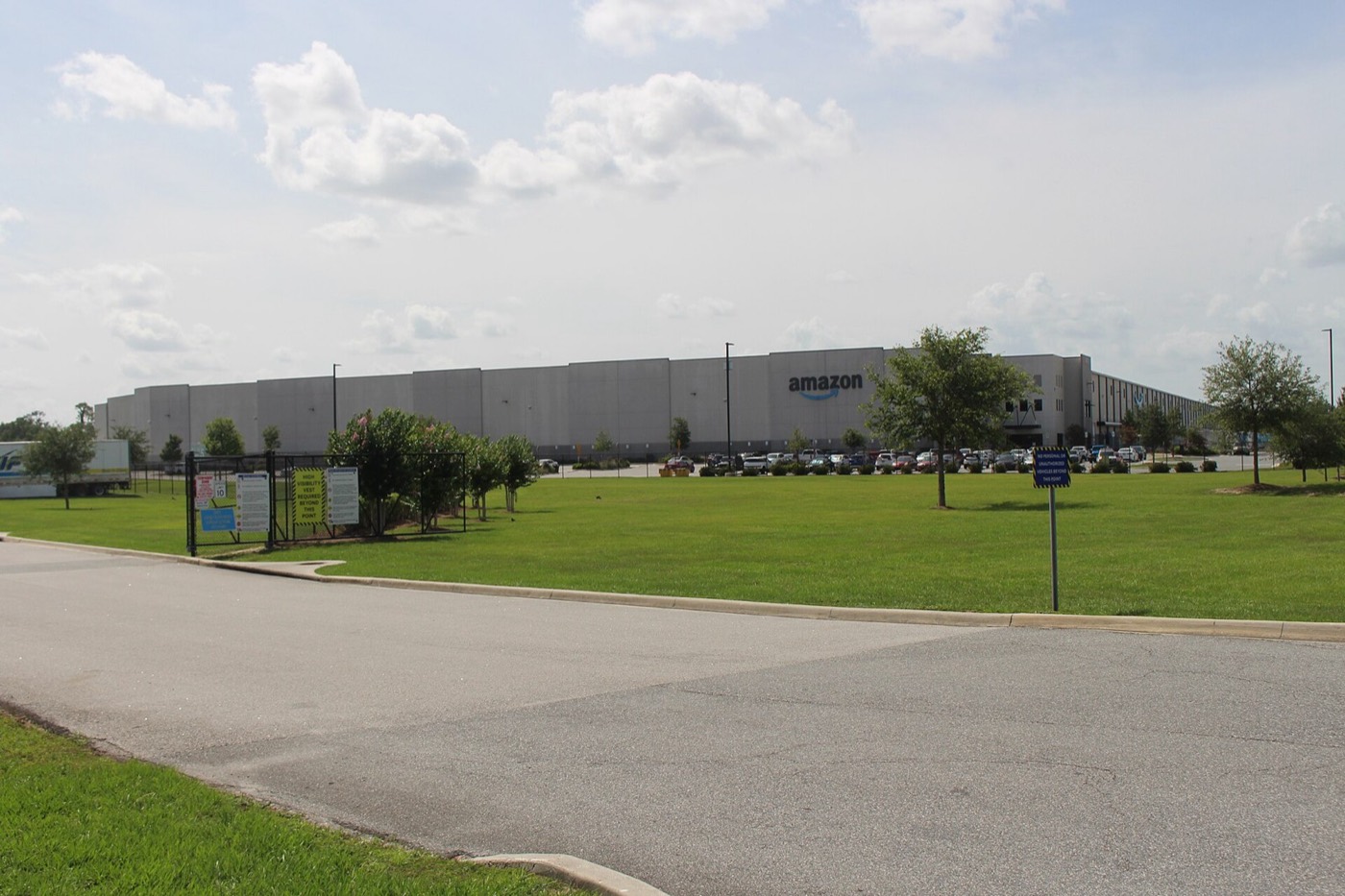
This photograph shows an Amazon fulfilment centre in Ocala, Florida. Inside a building like this one, software has already decided where your order is going before a single employee knows it exists.
The instant your payment clears, warehouse software checks which building holds your item, works out a route through that building, and creates a job — for a robot, for a person, or for both, depending on what the order needs.
Three things happen in the seconds after checkout, all before a human sees the order. The payment clears. The system finds which shelf or storage pod holds your item. And a task is created and sent to whichever worker is closest to that stock, robot or person.
That handoff — deciding who actually does the work — is the question this video keeps coming back to. It starts here, with an order most people never think about twice.
2. The cage era: Kiva Systems
The idea that split this industry in two did not start at Amazon. It started at a small Massachusetts company called Kiva Systems.
Kiva Systems was founded in 2002, in North Reading, Massachusetts. Its robots did something nobody else was doing: instead of sending a person to walk to a shelf, they carried the whole shelf to the person, and waited while the person picked.
That single change was the beginning of warehouse robotics as most people now picture it — pickers standing still, shelves gliding across the floor to meet them.
Amazon agreed to buy Kiva Systems for about seven hundred and seventy-five million dollars in March 2012, in cash — at the time, its biggest acquisition since Zappos. Kiva was later renamed Amazon Robotics, and its shelf-carrying robots became the backbone of Amazon's own fulfilment centres.
Amazon did not license the technology out. It kept it. And that decision — pull the best system in-house rather than sell it — is what split the industry into two camps: Amazon's own robots, and everyone else's.
3. Bring the shelf to the person
One of Amazon's early Kiva customers found that out the hard way.
Quiet Logistics, a warehouse operator in Massachusetts, had been Kiva's first outside customer. In 2014, Amazon ended that arrangement, reserving Kiva's robots for its own warehouses. Quiet's own co-founders responded by building a replacement from scratch.
Bruce Welty and Mike Johnson, Quiet's co-founders, started a new company that same year to build robots that did the same basic job — bringing shelves and storage pods to a stationary picker, a design now called goods-to-person picking, because the goods travel and the person does not.
That company, Locus Robotics, was founded in 2014 and launched publicly in 2015. It is one of several companies — alongside 6 River Systems, covered later in this video — that rebuilt Kiva's basic idea for warehouses that were not owned by Amazon.
The picker in this model still does the final grab, lifting the item out of the tote or bin by hand. The robot's whole job is to save that person the walk.
4. The grid: Ocado's alternative
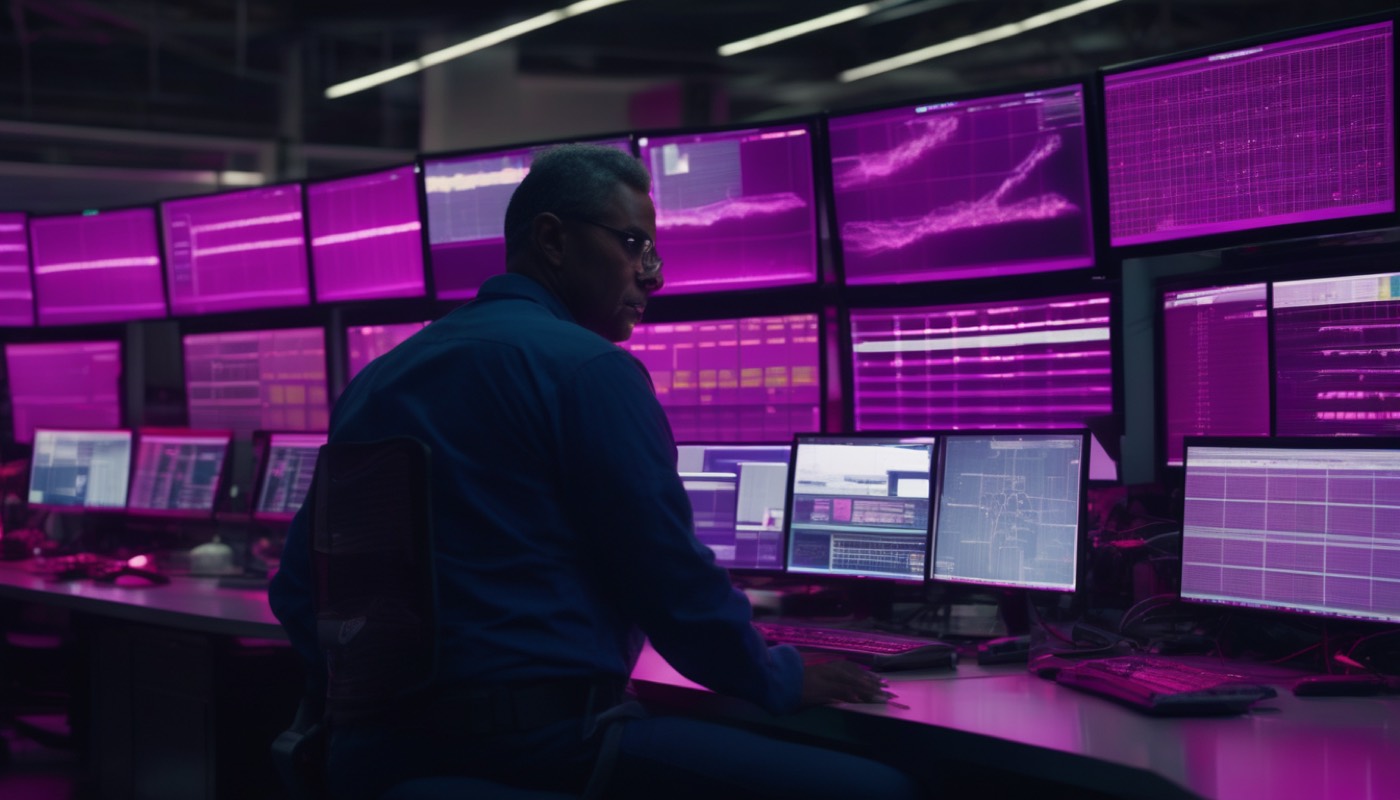
Not every warehouse works this way. The online grocer Ocado tried something more radical: get rid of the shelves and the conveyor belts entirely, and build a grid.
Ocado's system stacks crates of groceries inside a 3D grid the size of a large warehouse, several crates deep. Robots run across the top of that grid, lowering hooks down between the gaps to lift out exactly the crate a customer's order needs, and no conveyor belt is involved anywhere in the building.
More than seventeen thousand of these bots now work across Ocado's automated warehouses worldwide, travelling a combined hundred and fifty-three million kilometres a year. For years, that was proof a warehouse could run almost entirely on machines.
That story has not held up everywhere. One of Ocado's largest American grocery customers has already begun walking away from the model — a story this video comes back to properly in a few minutes, once its vendor failures are laid out together.
5. Amazon's fleet today
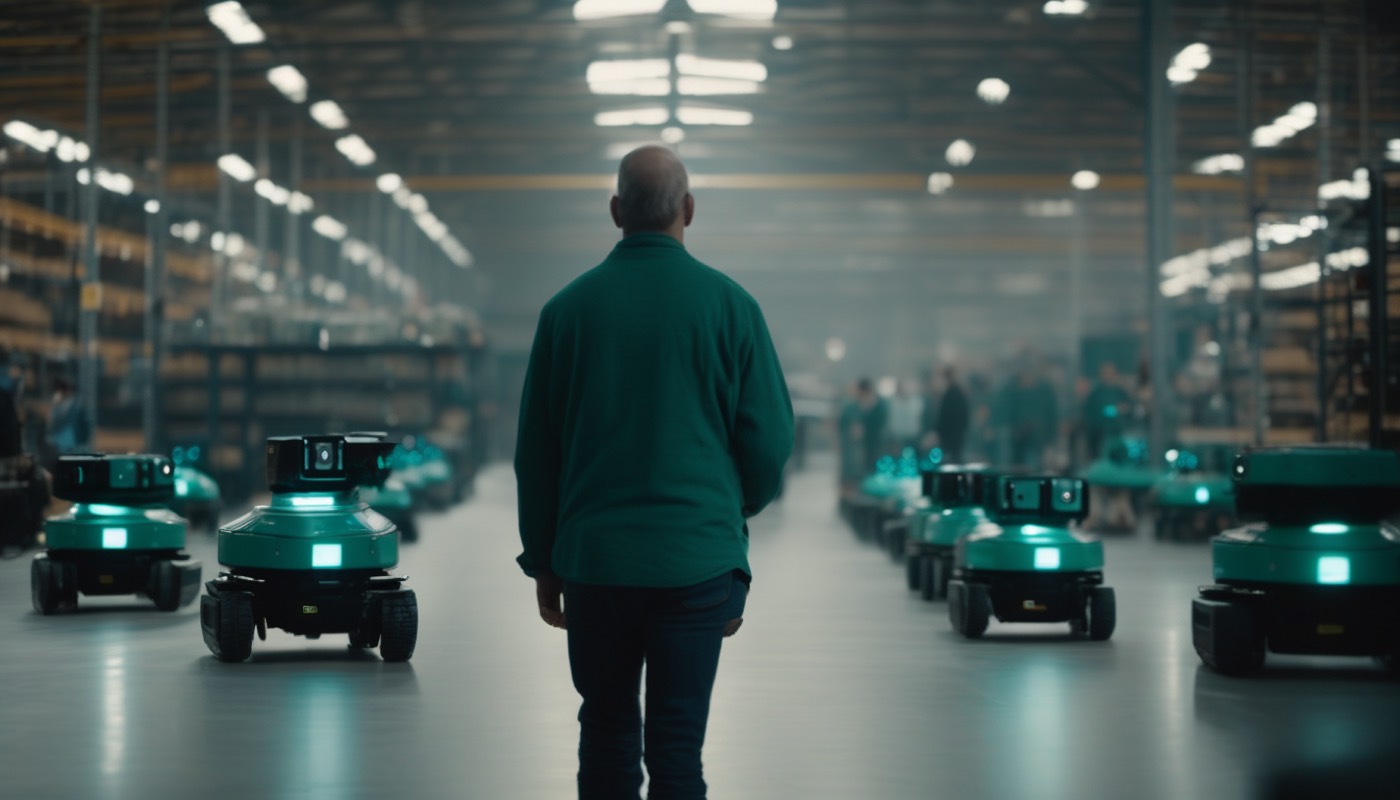
While Ocado was building grids, Amazon kept scaling the shelf-carrying idea it bought from Kiva — and then went further.
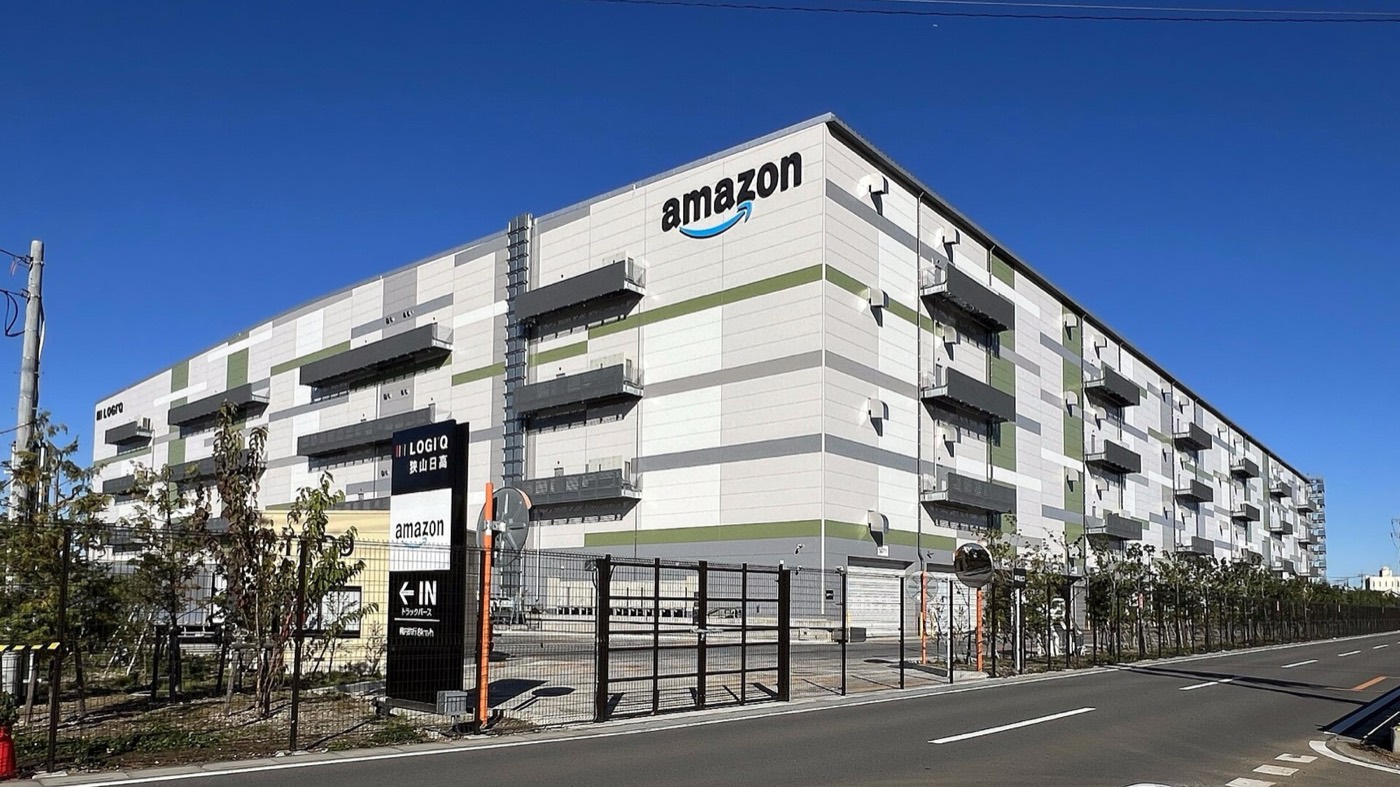
This photograph shows Amazon's fulfilment centre in Sayama Hidaka, Japan. It was here, on the first of July 2025, that Amazon delivered its one-millionth warehouse robot. That was thirteen years after it bought Kiva.
That fleet now spans more than three hundred facilities worldwide, and it keeps growing across several different robot designs doing different jobs.
Amazon's robot history moved in stages. It bought Kiva's shelf-carriers in 2012. Ten years later, in 2022, it introduced Proteus, its first robot able to drive itself around a warehouse floor without a safety cage, working near people directly. In 2025 it passed one million robots and launched an AI model called DeepFleet to coordinate them. And in June 2026, it unveiled a newer, conversational version of Proteus that takes plain-language instructions.
DeepFleet, trained on Amazon's own warehouse data, works like a traffic controller, routing hundreds of robots around each other so fewer of them sit idle waiting for a path to clear.
Amazon says DeepFleet cuts the distance its robots travel by roughly ten per cent. That is a small-sounding number, but it repeats across the whole fleet, on every trip, all day.
None of that fleet does the one job this video keeps circling back to: actually picking a single item out of a bin.
6. Why picking still needs hands
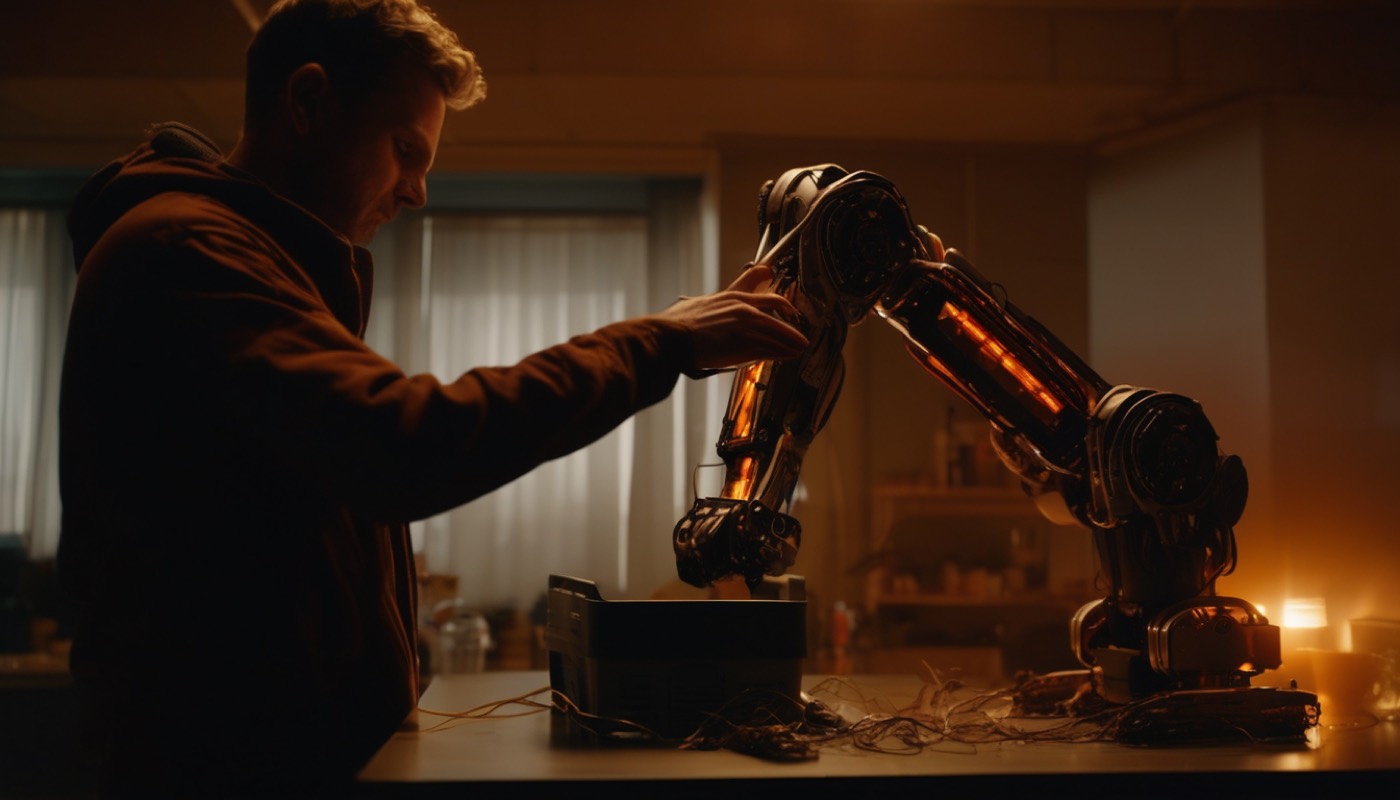
That job belongs to a robot arm called Sparrow, and Sparrow's own limits are the clearest evidence in this whole story that automation has not finished the job.
Sparrow can handle roughly sixty-five per cent of the items in Amazon's catalogue by top-picking — lifting whatever sits on top of a bin. What it struggles with is targeted picking: reaching past other items to grab one specific thing buried underneath them.
Tye Brady, chief technologist at Amazon Robotics, described that second task plainly.
Targeted picking, Brady said, is "a really hard job." A human hand can feel its way past a tangle of packaging without looking twice. A robot arm, working from a camera image, still cannot reliably tell what is safe to push aside and what will fall, or tear, or jam the mechanism.
That gap is not new, and it has not closed as fast as early predictions suggested.
This photograph shows why the gap still matters even at Amazon's most automated sites.
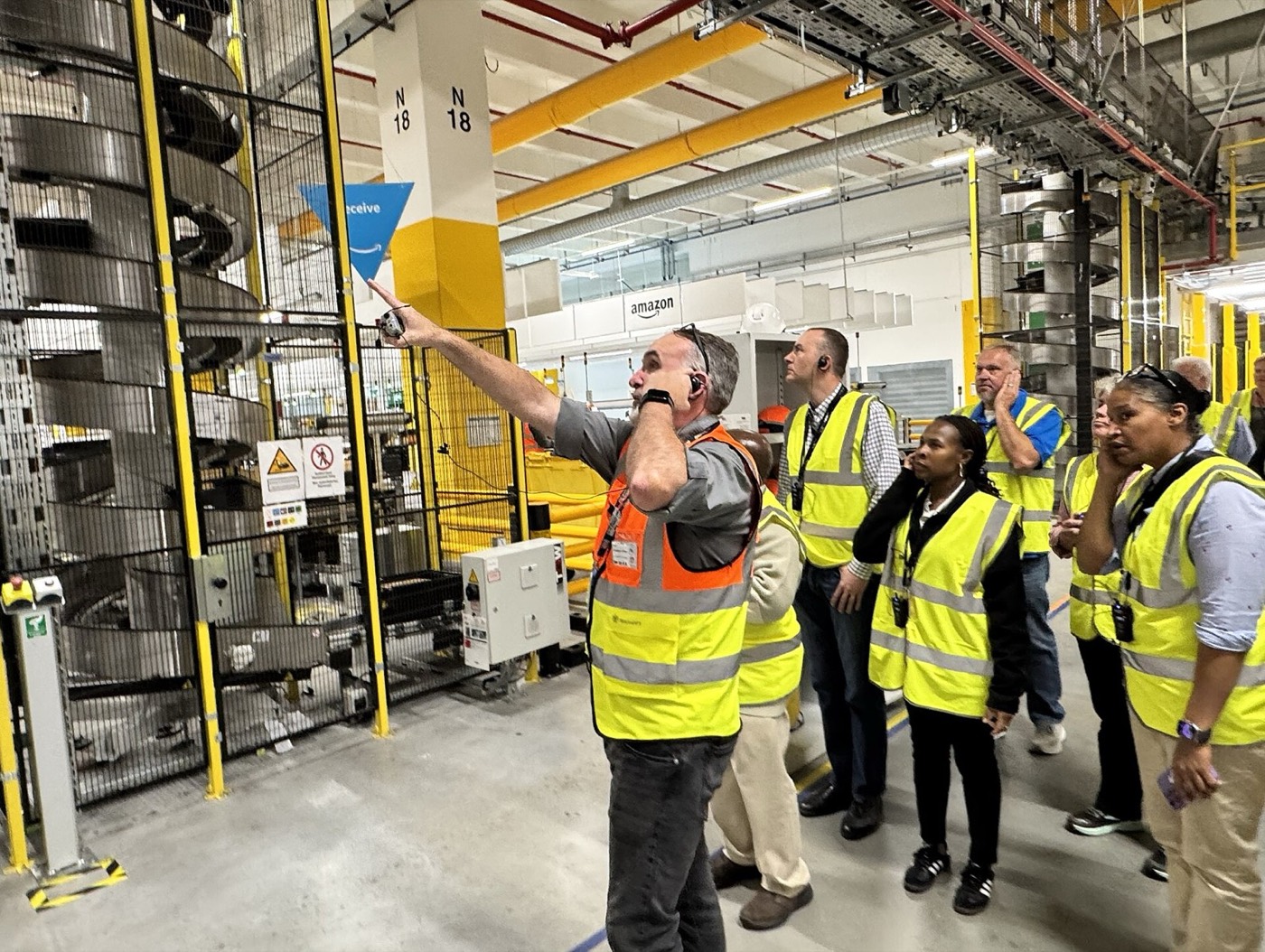
This is the packaging floor of an Amazon fulfilment centre in West Kaiserslautern, Germany. At this one site, more than twenty-three thousand robots work alongside twenty-six hundred human associates — and every one of those robots still hands the final, targeted pick to a person.
In 2019, Scott Anderson, then director of Amazon's robotics fulfilment network, told Reuters that fully automating the processing of a single picked order was still at least ten years away. Amazon has not since said that timeline has moved up.
Whatever a warehouse's robots do everywhere else, the final, delicate act of picking one thing out of a jumble is still, overwhelmingly, done by a person.
7. The software layer takes over
If hands are still needed at the bin, something else has quietly stopped needing a person at all: the decisions about where robots go and what they do when something goes wrong.
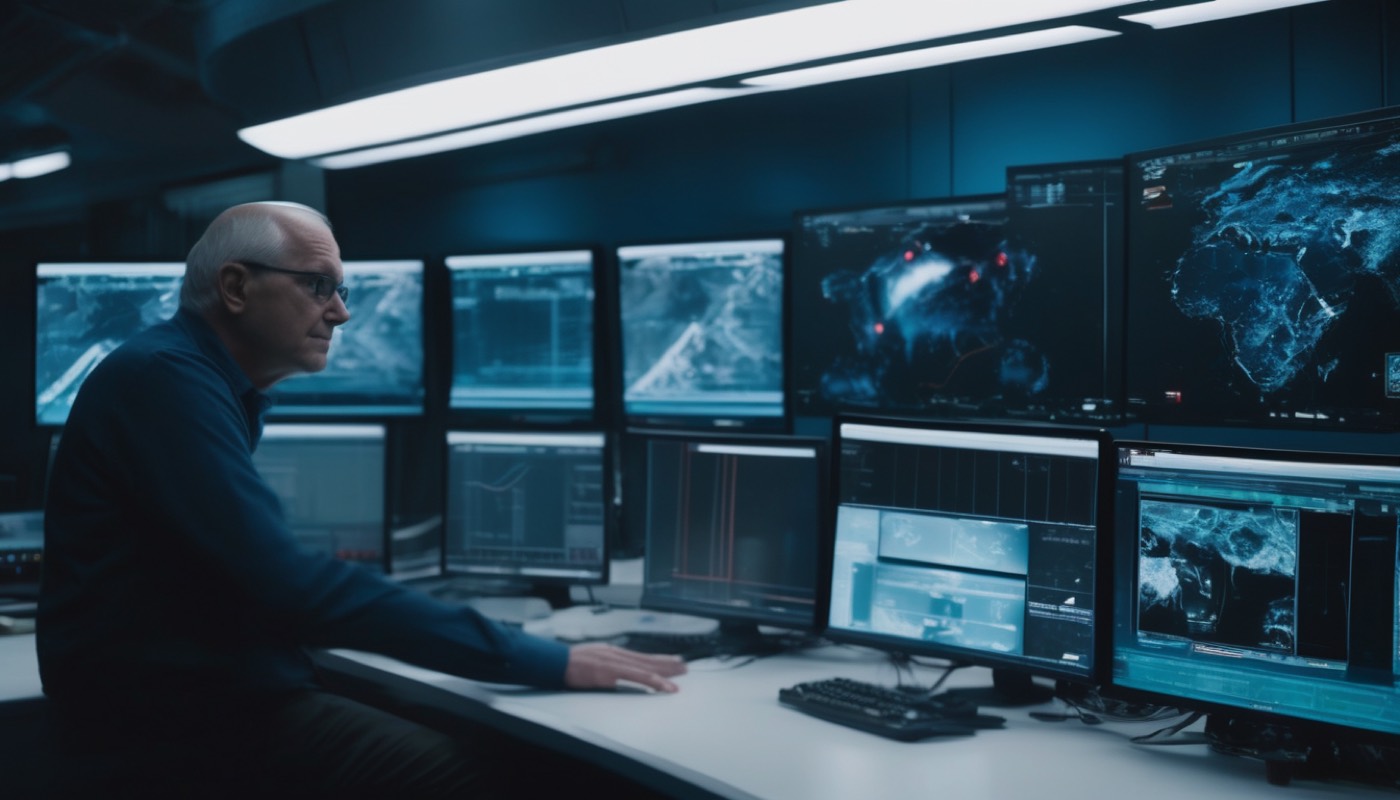
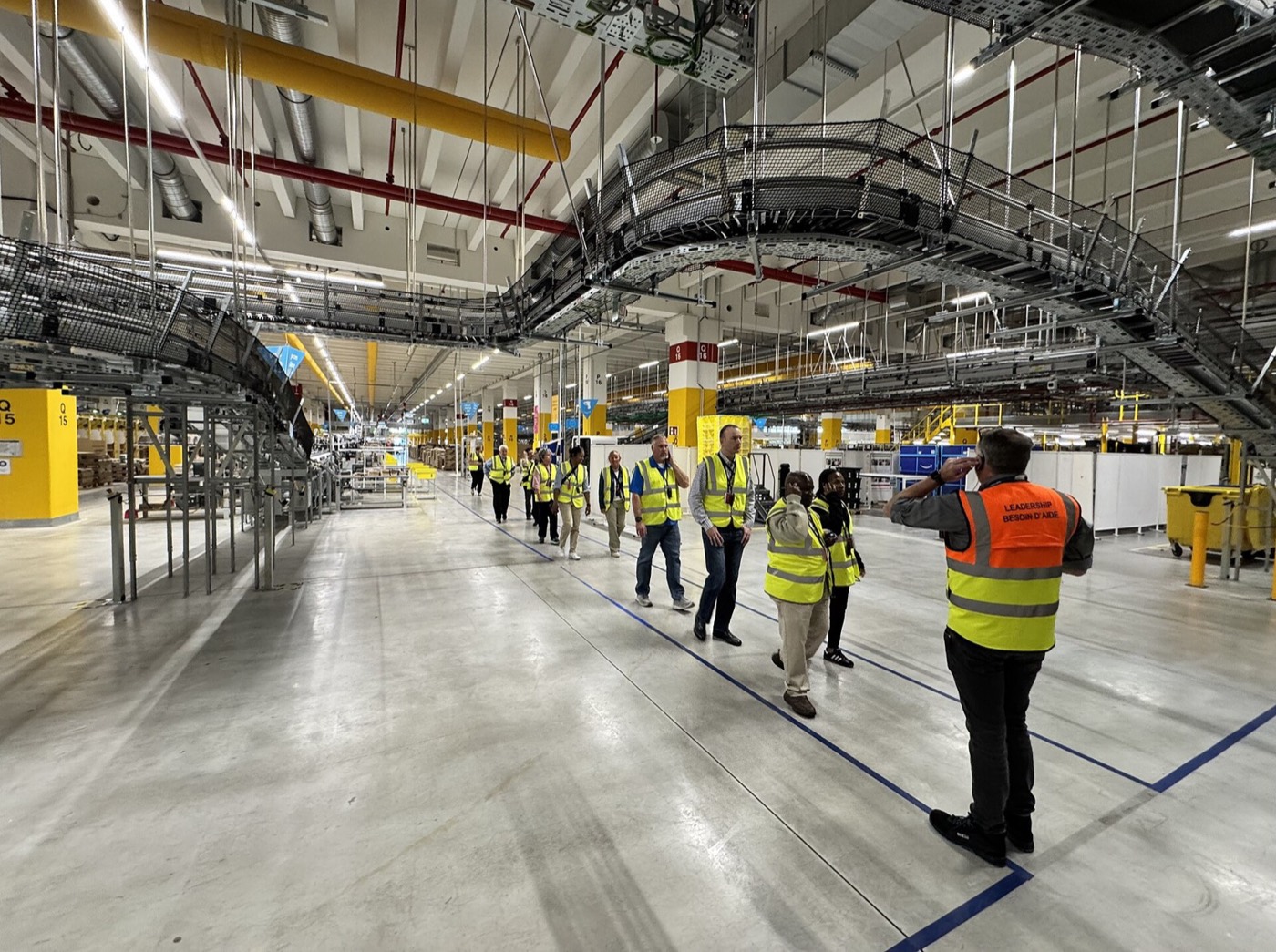
This photograph shows an automated sortation floor inside an Amazon fulfilment centre in Germany. Conveyors like these, and the robots that feed them, increasingly run on routing decisions no person signs off on first.
Older systems used to escalate anything unusual — a jammed robot, a traffic tangle — straight to a human controller. DeepFleet, the model this video described earlier, does more of that clearing itself.
Instead of a person routing around a blockage, DeepFleet predicts the blockage forming and reroutes robots before it happens, the same way traffic software reroutes cars around a jam it has not reached yet.
That shift — from a person clearing exceptions to software clearing them — is easy to miss, because nothing about the warehouse floor looks different. What changed is who is making the small, constant decisions that used to need a human judgement call.
8. The vendors and customers that didn't make it
Not every company betting on this shift survived it. Two stories from the same few months make that plain: one vendor, and one very large customer.
Shopify bought 6 River Systems, maker of the Chuck picking robot, for about four hundred and fifty million dollars in 2019. Shopify then sold that same company to Ocado in 2023 — for just twelve point seven million dollars, a tiny fraction of what it had paid.
Zebra Technologies made a similar bet and got a similar result.
Zebra bought Fetch Robotics in 2021 for two hundred and ninety million dollars. By late 2025, it told regulators it was exiting the warehouse-robotics business entirely, expecting up to eighty million dollars in one-time costs to wind the unit down.
Three warehouses are the clearest sign that even Ocado's model can fail with a real customer. Frederick, Maryland; Pleasant Prairie, Wisconsin; and Groveland, Florida are all Ocado-built automated grocery warehouses that a very large customer decided it no longer wanted.
That customer was Kroger.
In December 2025, Kroger and Ocado announced that Kroger would close those three warehouses, with Kroger paying Ocado three hundred and fifty million dollars as part of winding them down. The closures follow in January 2026, and a previously planned site in Phoenix, Arizona is still going ahead.
A robot maker sold for a fraction of its price, a robot company exiting the business it bought into, and a retailer paying its own automation partner to close warehouses rather than keep running them — three different failures, inside one industry, inside about a year.
9. Why 2026 is called a reckoning
Trade coverage has a word for a year like that: a reckoning.
Erik Nieves, writing in Quality Magazine in January 2026, argued that this year would force warehouse-robotics vendors to prove they can deliver reliably across many sites, with real data. Edited demo videos, the kind the industry had leaned on for years, would no longer be enough.
Even the size of the market these vendors are fighting over is disputed.
One market tracker values the global warehouse robotics market at nine point three three billion dollars for 2025. A separate tracker puts that same year's market at twelve point five two billion dollars instead — a very different number, from an equally serious source.
Two respected trackers, looking at the same industry in the same year, do not agree by billions of dollars — which is itself a sign of how young and how unsettled this market still is, whatever any single vendor claims about it.
10. Counting the robots against the people
Put the fleet and the workforce side by side, and the shift this video has described starts to show up in the numbers that matter to a person with a job at stake.
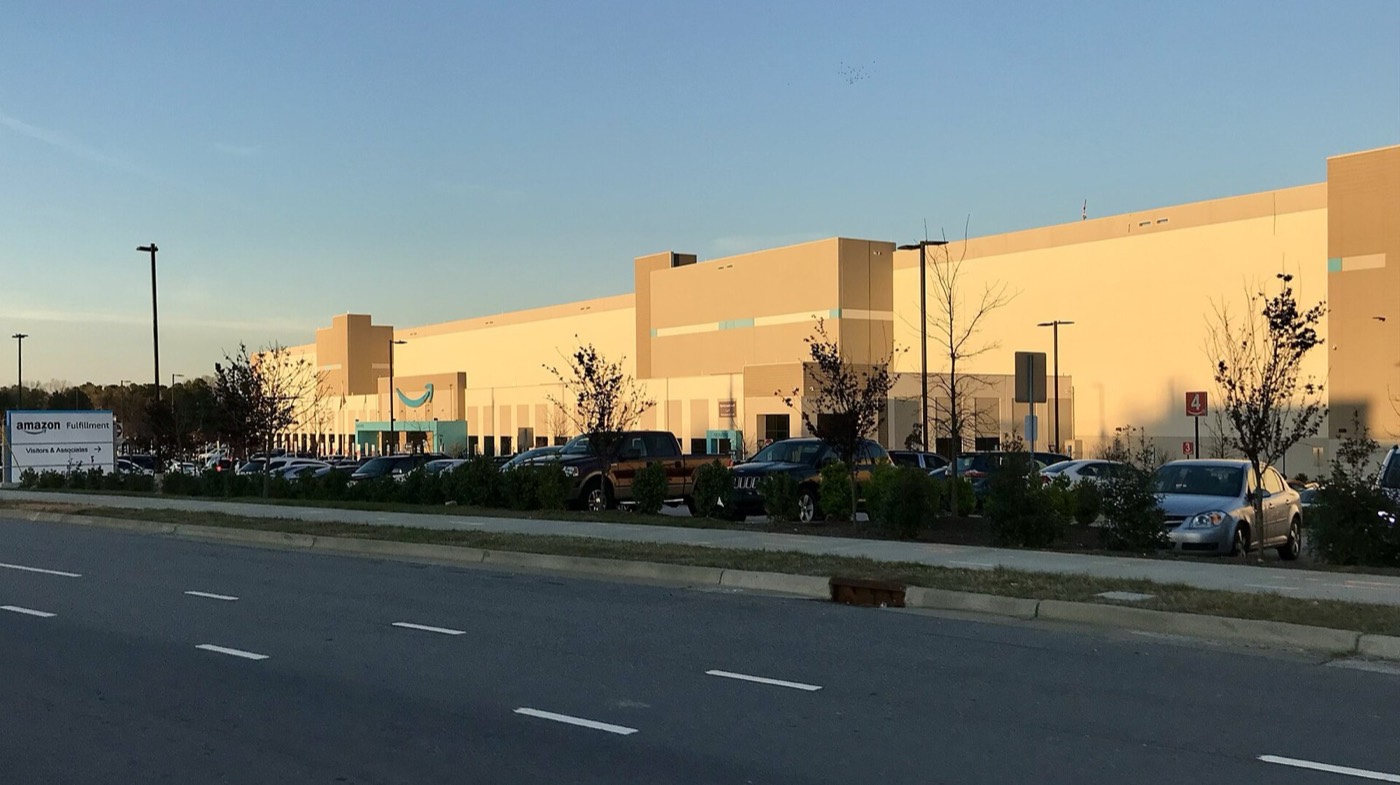
This photograph shows an Amazon fulfilment centre in Garner, North Carolina. Buildings like this one now run on a mix of robots and people that looks very different from a decade ago.
Amazon's robot count has recently passed one million. Its global workforce, by Amazon's own recent filings, was about one and a half million people — still larger, but the fleet is closing the gap fast.
The number of packages an Amazon employee ships each year has climbed sharply since 2015. Back then, it was about a hundred and seventy-five packages a year. Today it is nearly three thousand nine hundred — proof that each remaining worker is doing far more, not proof that fewer workers are needed everywhere.
Average staffing tells a plainer story.
The average headcount at an Amazon facility has fallen to roughly six hundred and seventy people, the lowest figure in sixteen years, even as the buildings themselves have kept getting bigger.
Fewer people, doing more, alongside more robots than ever. That is not a prediction. By Amazon's own numbers, it is already happening.
11. What's next: humanoids and edge AI
The next robots being tested are not carts, arms or grids. They walk on two legs.
Amazon invested in Agility Robotics in 2022 and has since run several pilots of its humanoid robot, Digit, including one observed at an Amazon warehouse in Sumner, Washington, in 2023. Digit stands about five foot nine, and its newest version can lift up to fifty pounds using swappable hands.
Nobody is claiming Digit can do everything a person can do yet.
By the end of 2026, Agility expects Digit to reliably move items such as totes and trays between fixed, familiar spots — a narrow task, not open-ended warehouse work. Amazon's own pilots have so far stayed in research and development settings rather than full production lines.
There is a second shift happening alongside the humanoid trials, and it is quieter. The routing intelligence this video described earlier — DeepFleet, predicting and clearing its own traffic jams — is starting to move off a central server and onto the edge, meaning the calculation happens on the robot itself rather than being sent back and forth to a warehouse's main computer.
Edge processing simply means the robot does more of its own thinking on board, in real time, instead of waiting for an instruction from a central system. That is a small technical change with a large consequence: robots that decide faster, and need a human in the loop even less often than they do today.
12. So who is doing the picking
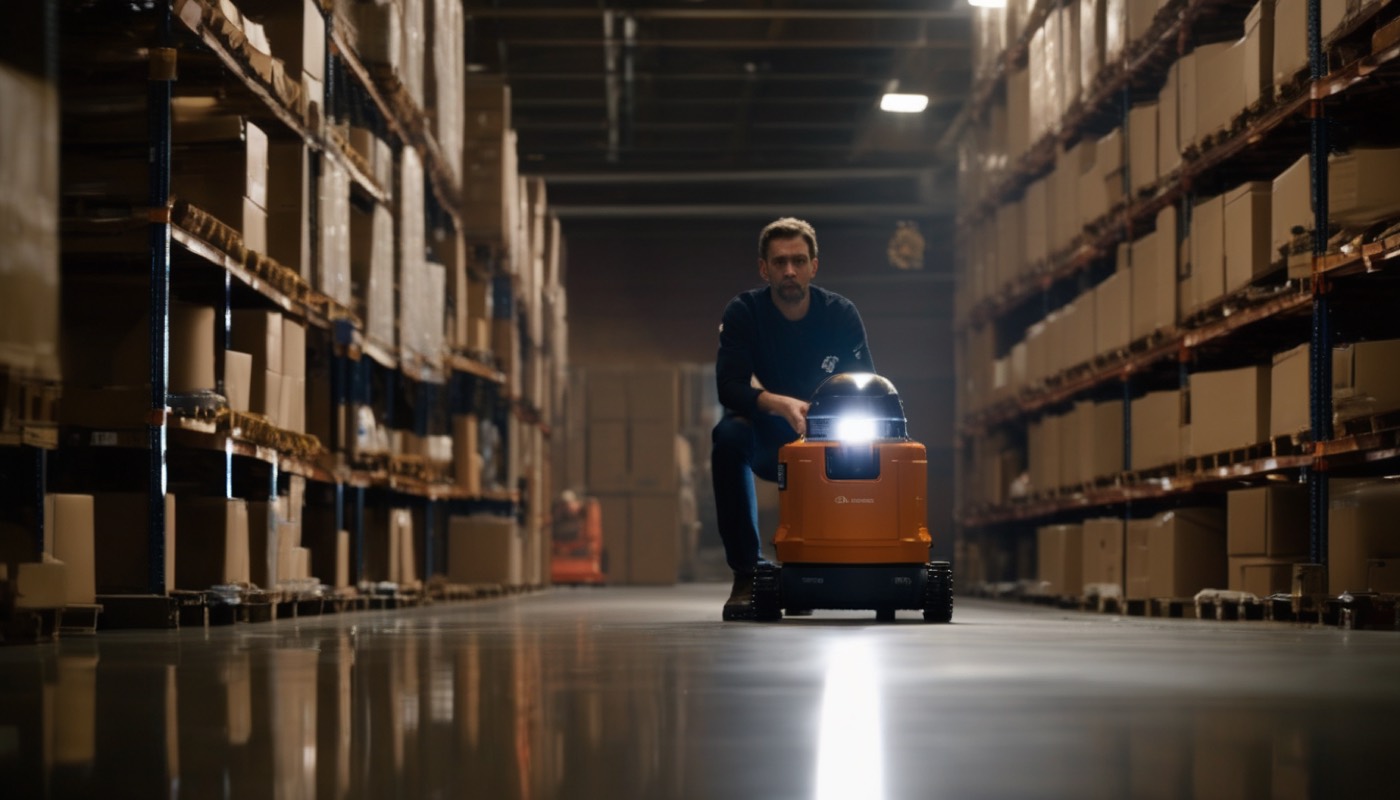
Weigh every chapter of this video against the others, and one pattern holds.
Robots now move nearly everything in a modern warehouse: the shelves, the grid crates, the conveyors, the fleet traffic. What robots still do badly, by Amazon's own account, is reach into a jumble of items and pull out exactly the right one — the single motion a human hand still performs better than any arm Amazon has built.
That is not the story the marketing around this industry usually tells, and it is not the story the failures — a broker's warehouse, a retailer's contract, a robot company's balance sheet — tell either, on their own.
The honest answer sits between the two: warehouses move faster and need fewer people than they did a decade ago, and the final act of picking a specific item still, in 2026, comes down to a person's hand.
Who is doing the picking? Mostly, still, for now, a person — just fewer of them, doing it faster, surrounded by more machines than at any point before.
Sources and credits
Photo credits (Wikimedia Commons)
- Amazon Fulfillment Center, Ocala, Florida (exterior, 2025): Michael Rivera, CC0 - https://commons.wikimedia.org/wiki/File%3AAmazon_Fulfillment_Center%2C_Ocala.jpg
- Amazon Sayama Hidaka Fulfillment Center, Saitama, Japan (exterior, 2023): Asanagi, CC0 - https://commons.wikimedia.org/wiki/File%3AAmazon_Sayama_Hidaka_Fulfillment_Center_2023-11-19.jpg
- Amazon fulfillment center automated conveyor/sortation floor, West Kaiserslautern, Germany (May 2025): U.S. Army 405TH-AFSB by Cameron Porter, Public domain - https://commons.wikimedia.org/wiki/File%3A405th_AFSB_conducts_professional_development_staff_visit_to_Amazon_fulfillment_center_%289079635%29.jpg
- Amazon fulfillment center packaging/processing floor, West Kaiserslautern, Germany - caption notes 23,000 robots alongside 2,600 associates at the site (May 2025): U.S. Army 405TH-AFSB by Cameron Porter, Public domain - https://commons.wikimedia.org/wiki/File%3A405th_AFSB_conducts_professional_development_staff_visit_to_Amazon_fulfillment_center_%289079634%29.jpg
- Amazon fulfillment center, Garner, North Carolina (exterior, 2023): Indy beetle, CC0 - https://commons.wikimedia.org/wiki/File%3AAmazon_warehouse%2C_Garner.jpg


Primary sources
- About Amazon, 'Amazon launches a new AI foundation model to power its robotic fleet and deploys its 1 millionth robot', aboutamazon.com, 1 July 2025 - the 1-millionth-robot milestone, 300+ facilities, and DeepFleet.
- CNNMoney and TechCrunch, Amazon/Kiva Systems acquisition coverage, 19-20 March 2012; Amazon SEC Form 8-K, 20 March 2012 - the $775m Kiva acquisition.
- Contrary Research and FreightWaves, Locus Robotics founding history - founded 2014 by Quiet Logistics co-founders after Amazon reserved Kiva's robots for itself.
- The Robot Report and TechCrunch, Sparrow robot-arm coverage, 2022-2023 - the 65% top-picking figure and Tye Brady's 'a really hard job' quote.
- Fox News and Gizmodo, Reuters-sourced coverage of Scott Anderson (Amazon Robotics), 2019 - the 'at least 10 years away' estimate for full picking automation.
- Wikimedia Commons, U.S. Army 405th AFSB photo caption (Cameron Porter), May 2025.
- The Robot Report, 6 River Systems Shopify/Ocado resale coverage, 2023 - the $450m (2019) to $12.7m (2023) figures.
- Supply Chain 24/7 and The Robot Report, Zebra Technologies warehouse-robotics exit coverage, December 2025 - the $290m Fetch acquisition (2021) and up to $80m exit costs.
- Bloomberg, 'Ocado Gets $350 Million From Kroger for Warehouse Closures', 5 December 2025; Grocery Dive and Chain Store Age, same story - the three named site closures and January 2026 timing.
- Quality Magazine, Erik Nieves, 'Why 2026 Will Bring a Reckoning for Warehouse Robotics', 6 January 2026 - the 'reckoning' framing and one market-size estimate.
- GlobeNewswire / Next Move Strategy Consulting, warehouse robotics market report, 8 September 2026 - a second, disagreeing market-size estimate.
- 247wallst.com / Yahoo Finance, 'Amazon Has Over 1.56 Million Workers and 1 Million Robots', 21 May 2026, citing Amazon's own SEC filings.
- DCVC, GeekWire and Bloomberg, Agility Robotics / Digit humanoid coverage, 2022-2026.
Not regulated financial advice.