
Who Builds the World's Ships, and Why It Matters
China builds most of the world's new ships, and the United States has just paused its port fees on Chinese-built vessels until 9 November 2026. Is Western shipbuilding going forwards again, or has the industry that carries world trade moved too far backwards to recover?
This video starts inside a yard: steel plate, blocks, grand assembly, launch, outfitting and sea trials. It explains why yards cluster with steel mills, engine makers, suppliers, skilled workers and finance, so a yard cannot easily be moved. Then it follows the lead from Britain's Clyde, Tyne and Belfast to Japan in 1956, Korea in the 1970s to 2000s, and China's state-backed climb after 2000.
It sets out the figures now, from Clarksons Research: China took about 72% of new orders in the first half of 2026 and holds about 65% of the orderbook. Then the American answer: the Section 301 port fees, the one-year suspension, the SHIPS for America Act, Korea's MASGA pledge and Hanwha's Philly Shipyard. It ends with the risks of one country building most of the fleet, and what it takes to rebuild an industry.
Estimates are labelled as estimates and company plans as plans. Photos are public domain or CC0, credited on screen.
Educational documentary. Not financial or investment advice.
In these topics
Chapters
Video notes
1. The Ship You Never See Being Made
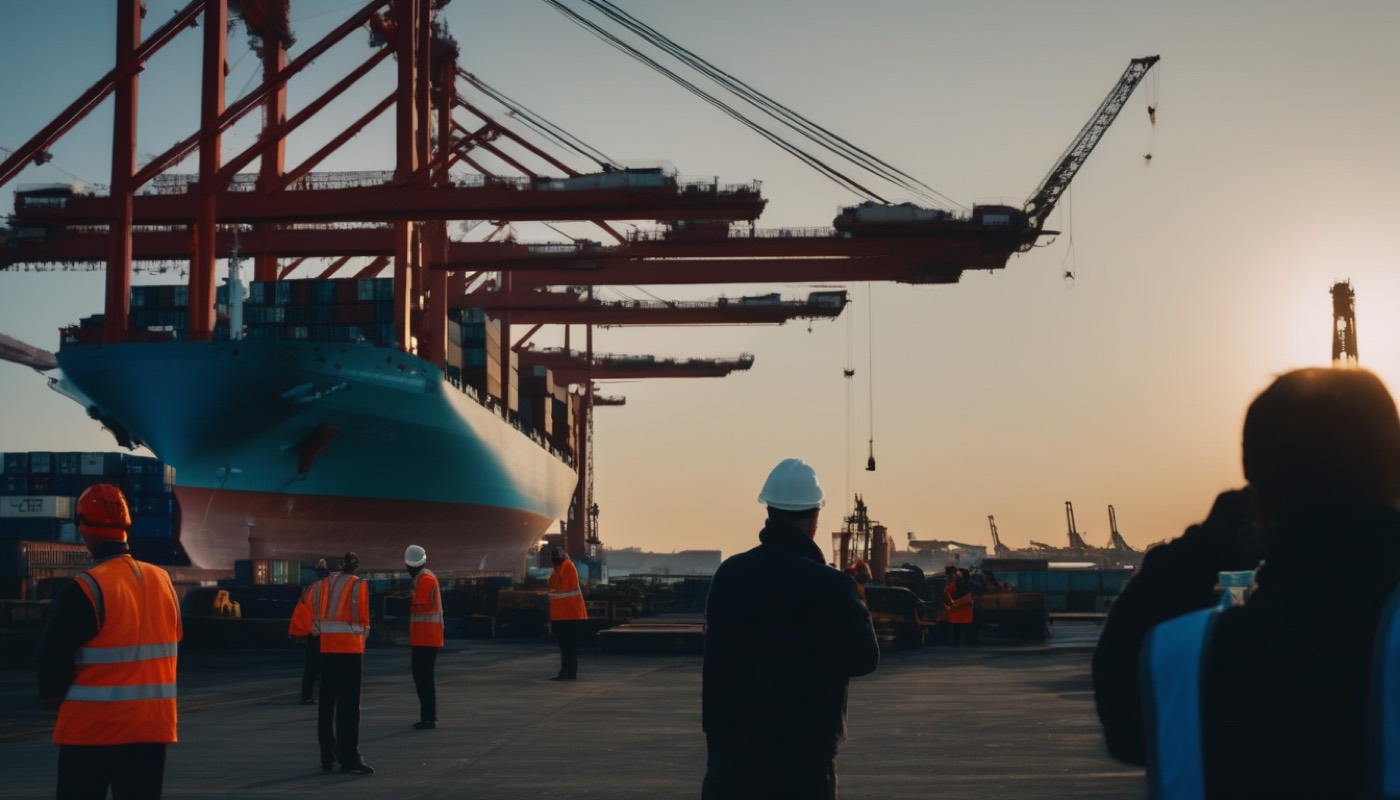
Almost everything around you travelled by ship. The clothes, the phone, the fuel, much of the food. Yet hardly anyone has watched a ship being built, and that is where this story starts.
In the first half of twenty twenty-six, Chinese yards won about seventy-two per cent of the world's new ship orders. That share is measured in compensated gross tonnage, which counts each ship by how much work it takes to build. A complicated gas carrier counts for more than a plain bulk carrier of the same size.
Korea came second, with just under a fifth. Between them, those two countries took nearly all of the orders.
Now add a clock. In October twenty twenty-five, the United States began charging port fees on Chinese-built and Chinese-operated ships. A month later, it paused them.
The pause began on the tenth of November, twenty twenty-five, and it runs out on the ninth of November, twenty twenty-six. After that the fees could return. On the twenty-third of September, a group of trade associations wrote to Washington, asking for the pause to be extended.
This video asks one question. Is Western shipbuilding going forwards again, or has the industry that carries world trade moved too far backwards to recover?
Here is the route. First, how a ship is built, and why yards clump together. Then how Britain, Japan, Korea and China each took the lead. Last, the American answer, and what it would take to rebuild.
2. From Steel Plate to Launch
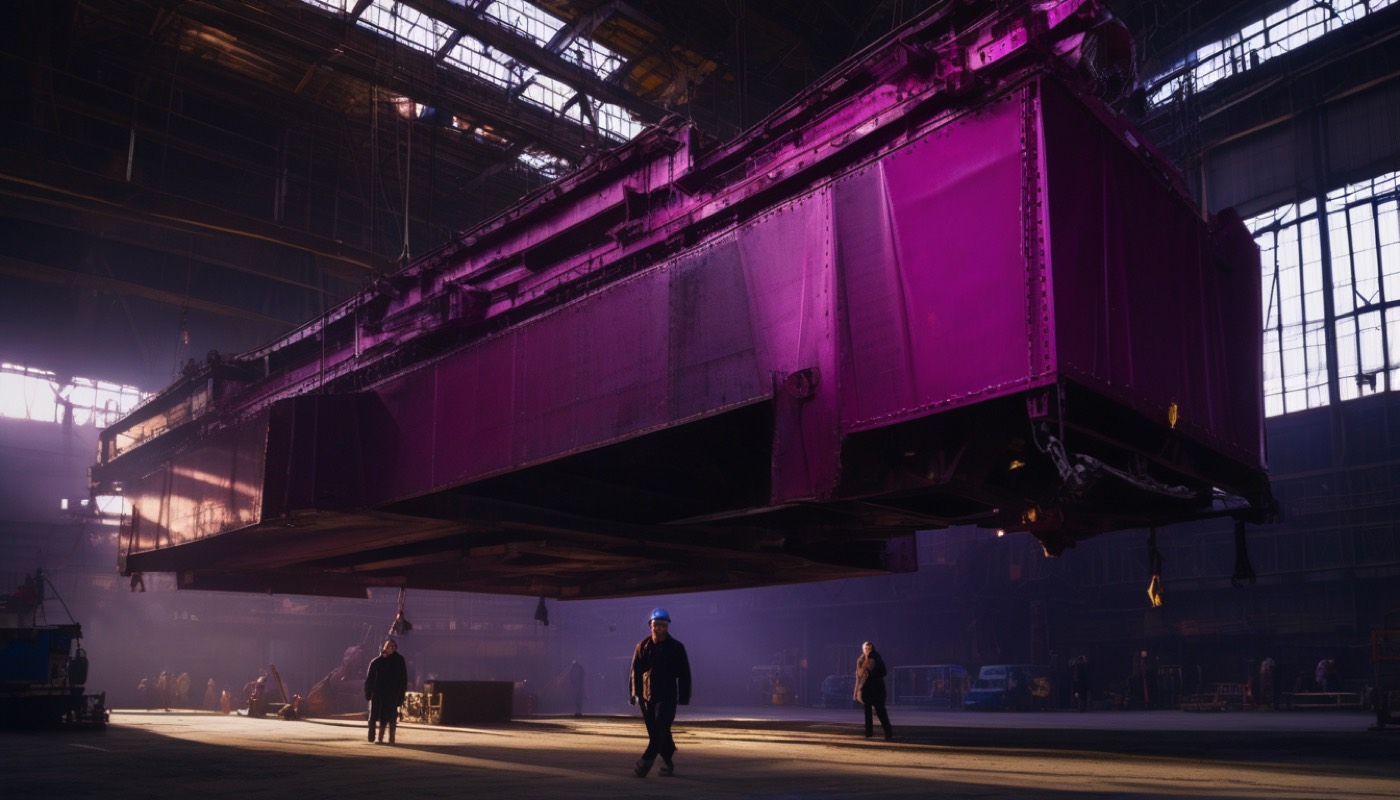
Every ship starts as flat steel. A yard receives steel plate in stacks, and from there the work follows a fixed order.
Here is the whole build in six steps. Machines cut the steel plate to a digital plan. The pieces are welded into blocks, which are large sections of the hull. Cranes join the blocks into one hull, and the hull is launched. Then the ship is fitted out and tested at sea.
The first step is cutting. Computer-controlled machines cut the plate with a very hot gas jet or a laser, and a small error here shows up as a gap much later.
The second step is the block. Small pieces are welded into flat panels, and panels into blocks. Blocks are built in halls, where welders can reach every joint and the weather does not stop work.
The third step is grand assembly, where the blocks meet. Giant gantry cranes, which straddle the work on tall legs, lift each block into place. There the blocks are welded into one hull.
Grand assembly happens in one of two places. A slipway is a sloping ramp, and the finished hull slides down it into the water. A dry dock is a huge basin, where the hull is built inside and then the basin is flooded until the ship floats out. Either way, that moment is the launch.
But a launched hull is only a steel shell with almost nothing inside.
Next comes outfitting. That means fitting the engine, the pipes, the cables and the electrics, and the rooms where the crew will live. Much of the work is still to do after the ship first floats.
The last step is sea trials. The ship goes to sea with the builder's crew and the buyer's inspectors, and every system is tested before the ship is handed over.
Notice how much of this is planned, repeated work. Cutting, welding and lifting are done the same way, ship after ship. A yard that builds many similar ships tends to get faster and more reliable at it, and that habit is hard to buy.
3. Why Yards Cluster
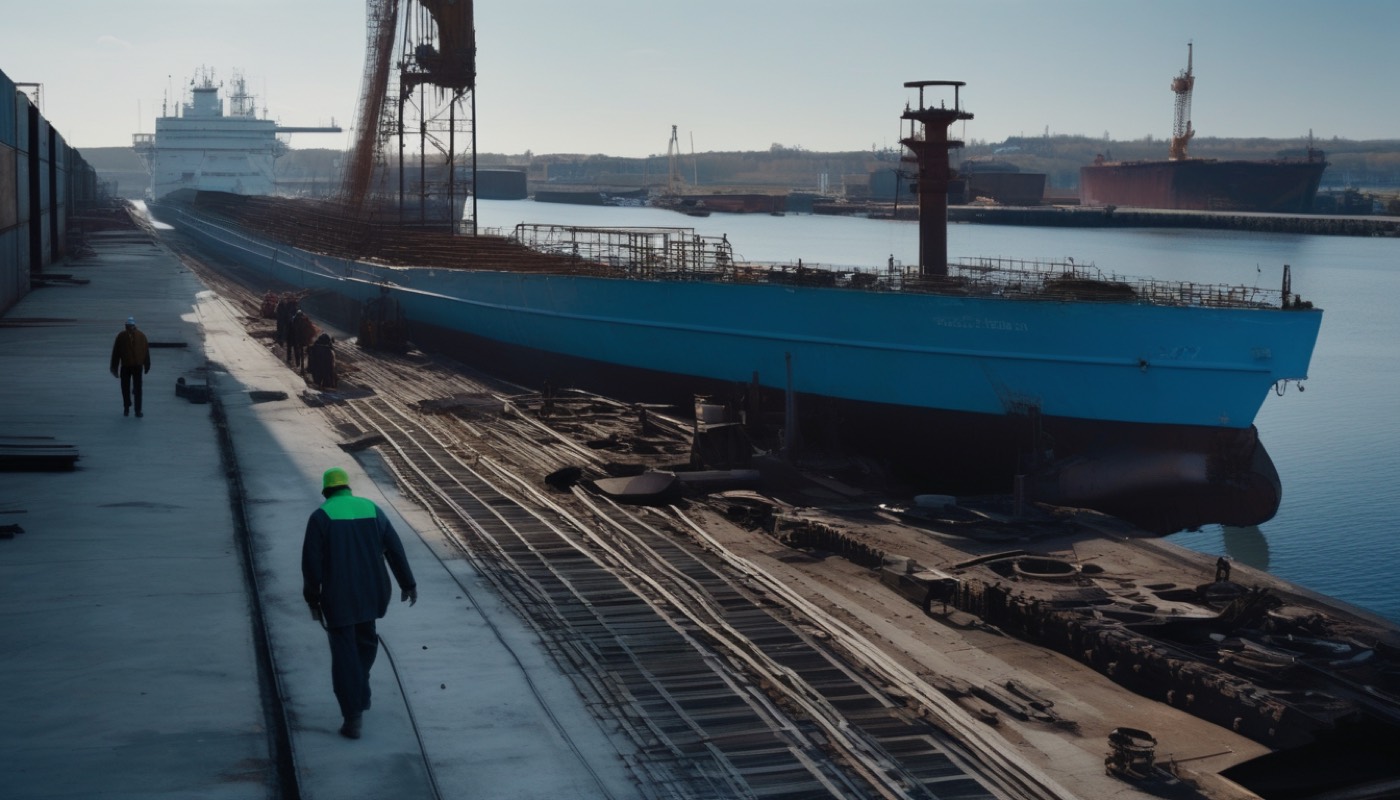
A yard does not stand alone. It sits inside a web of firms, and the web is the real asset.
Start with steel. A ship needs a great deal of plate, so a steel mill nearby saves time and cost. Add the engine makers, and the thousands of smaller firms that supply pumps, cables and valves. Add the welders and designers who know the work, and the banks that lend against ships. Together they form what is called a cluster.
So why not simply move a yard to a cheaper country? Because you would move the yard and leave the web behind.
There is a sign of this in the parts. One analyst cites estimates that China makes about fifty-five to sixty per cent of its specialised ship materials and equipment at home. For Korea and Japan the estimates are much higher, at eighty to ninety per cent.
A mature cluster takes decades to build, and it is slow to copy. That is the problem for any country starting late.
4. Britain's Rise and Fall
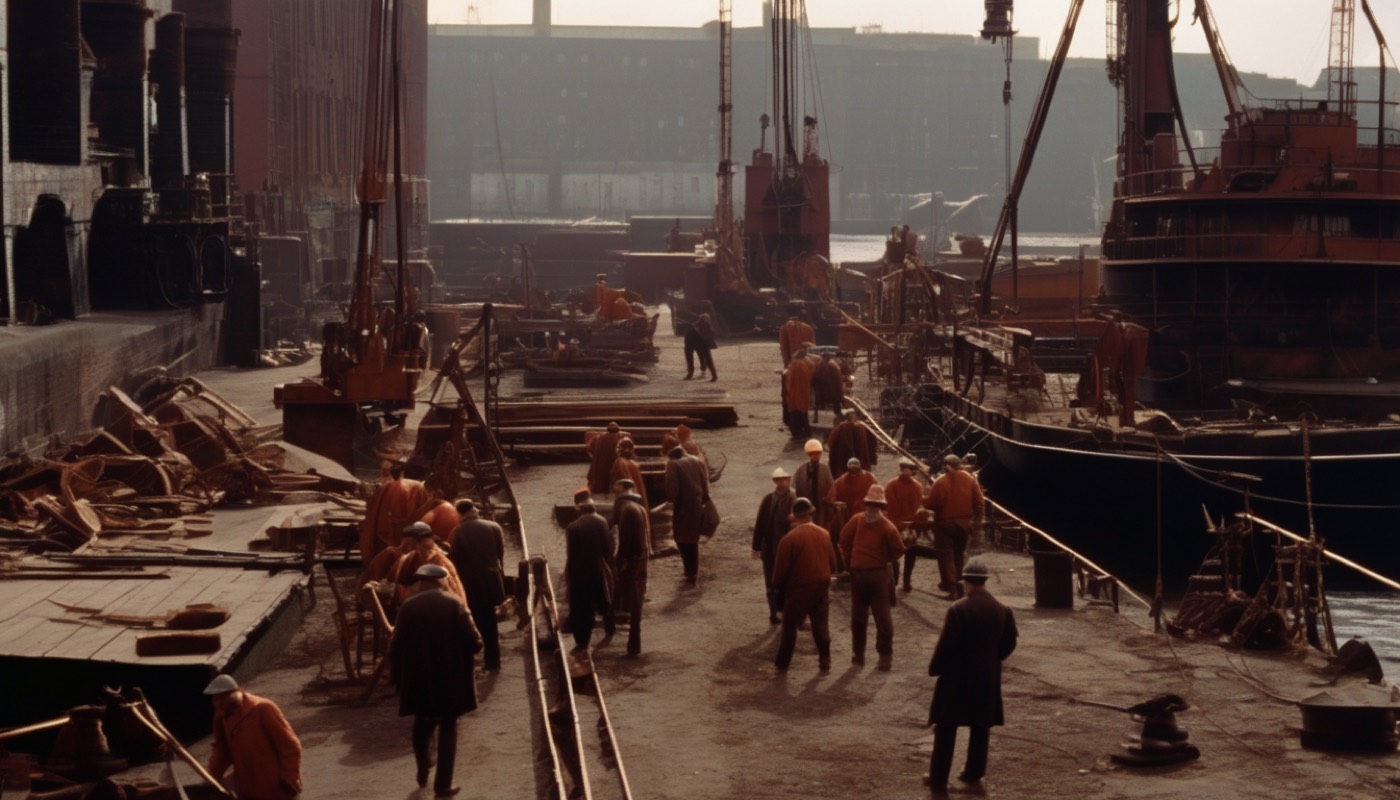
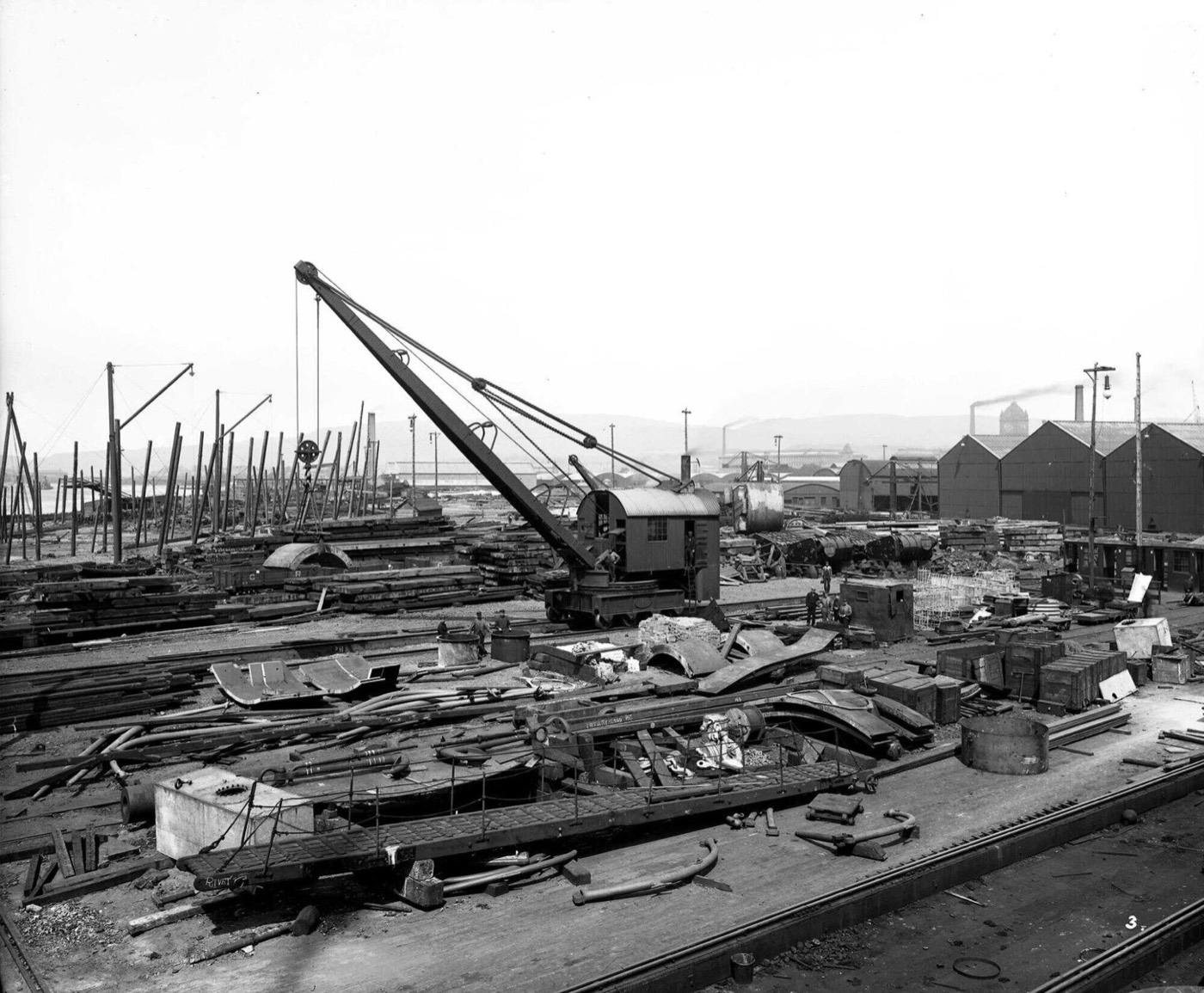
For most of the age of steam, ships meant Britain. Its yards on the Clyde in Scotland, the Tyne in England and at Belfast built the liners, warships and cargo ships of the world.
This photograph shows the West Yard of John Brown and Company at Clydebank, on the Clyde, at the start of the twentieth century. Yards like this built ships for buyers from many countries, and each one drew on a local web of suppliers and skilled workers.
Here are the three great shipbuilding rivers. The Clyde is in Scotland, the Tyne in the north of England, and Belfast is in Northern Ireland. Each grew its own cluster of yards, steel makers, engine builders and workers.
The scale was huge, and the dates show how huge.
In the eighteen nineties, British yards delivered about eighty per cent of the world's new ship tonnage. By nineteen thirteen, the share was about sixty per cent. And in nineteen forty-seven, just after the Second World War, it was still about fifty-seven per cent.
The showpieces were the great liners.
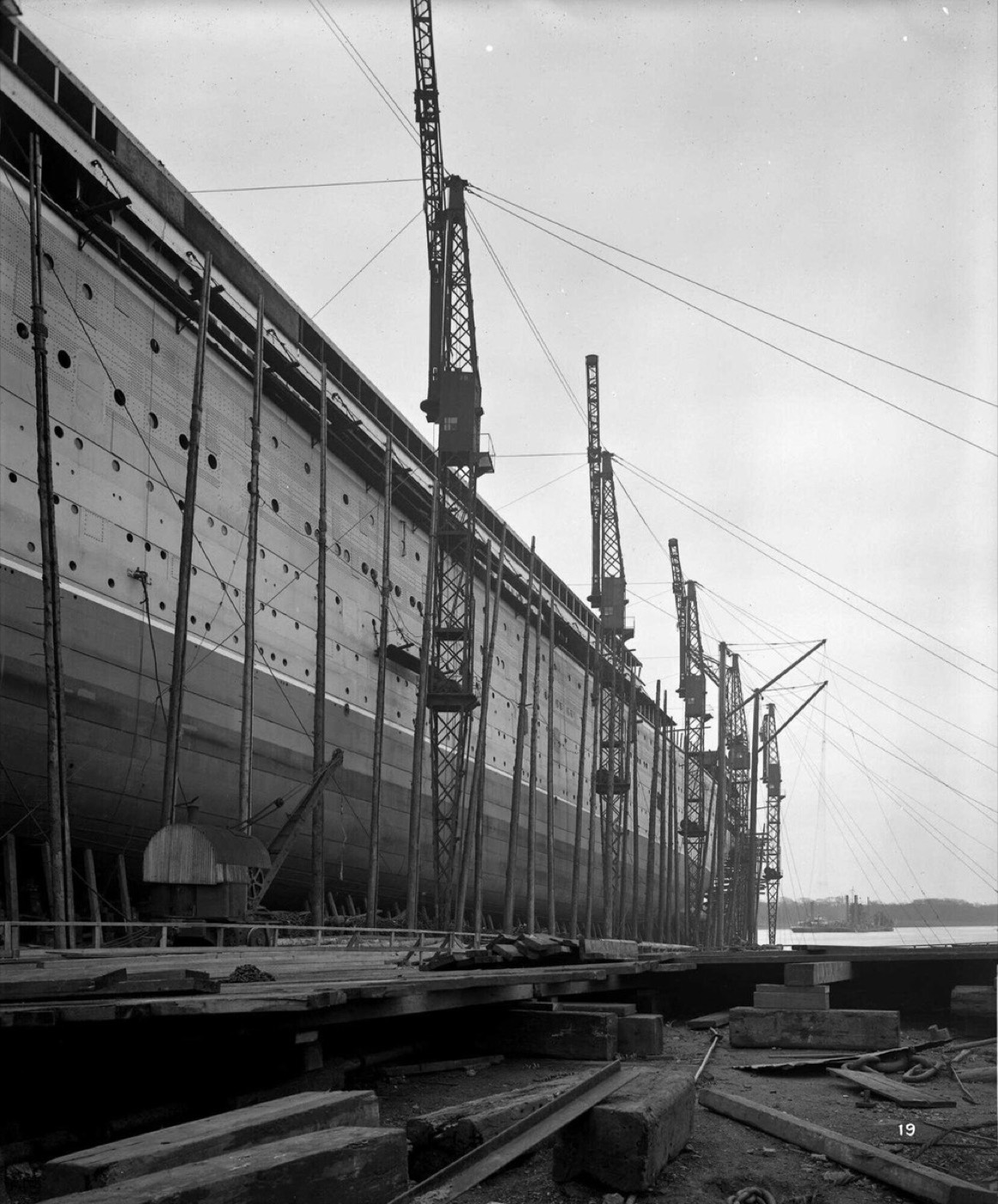
This photograph shows the liner Aquitania at Clydebank, just before her launch. A ship of this size needed a huge slipway, a great deal of steel, and a great deal of skilled work.
Then the world caught up.
Over the ten years to nineteen fifty-seven, British output rose by only about eighteen per cent. World output rose by about three hundred per cent. Britain was still growing, but everyone else was growing far faster.
Why did it fall behind? One analyst points to a system that had made Britain rich: cheap, labour-heavy and flexible. When ships became bigger and more standard, the market wanted factory methods, and Britain found those hard to adopt.
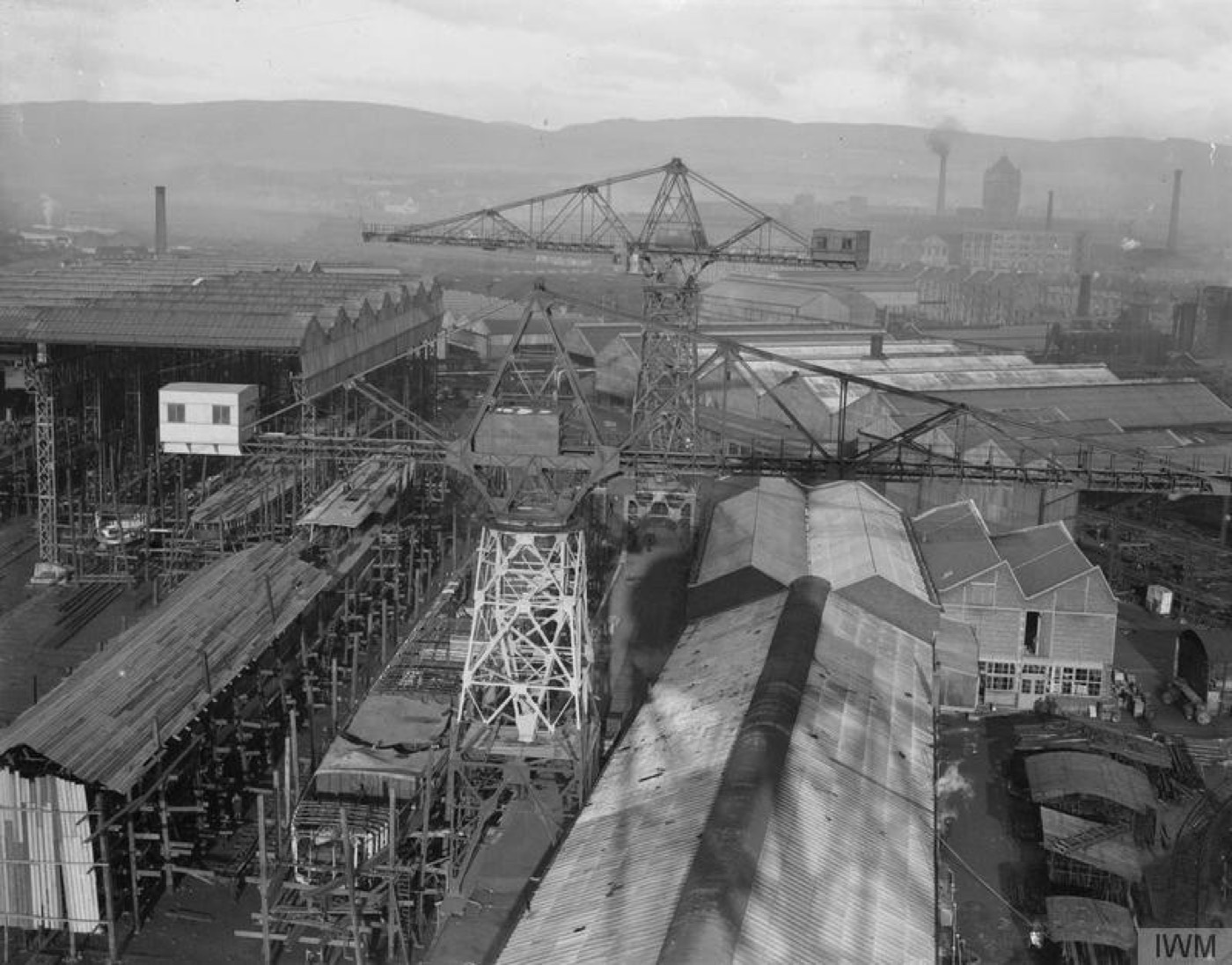
This photograph looks down on a British yard during the First World War. Cranes, sheds and slipways are packed along the water, with little room to grow. That was a real limit later, when ships and blocks got bigger.
Here are the reasons often given. Unions kept rigid rules about who could do which job. Yards were cramped, so they could not grow. Managers were slow to trust welding. Owners preferred contracts that repaid their costs, rather than fixed prices. And profits were not reinvested enough.
The decline was steep.
British output peaked in nineteen seventy-five. Within about a decade it had fallen by nearly ninety per cent. The state took the main yards into public ownership in nineteen seventy-seven, and it did not reverse the fall.
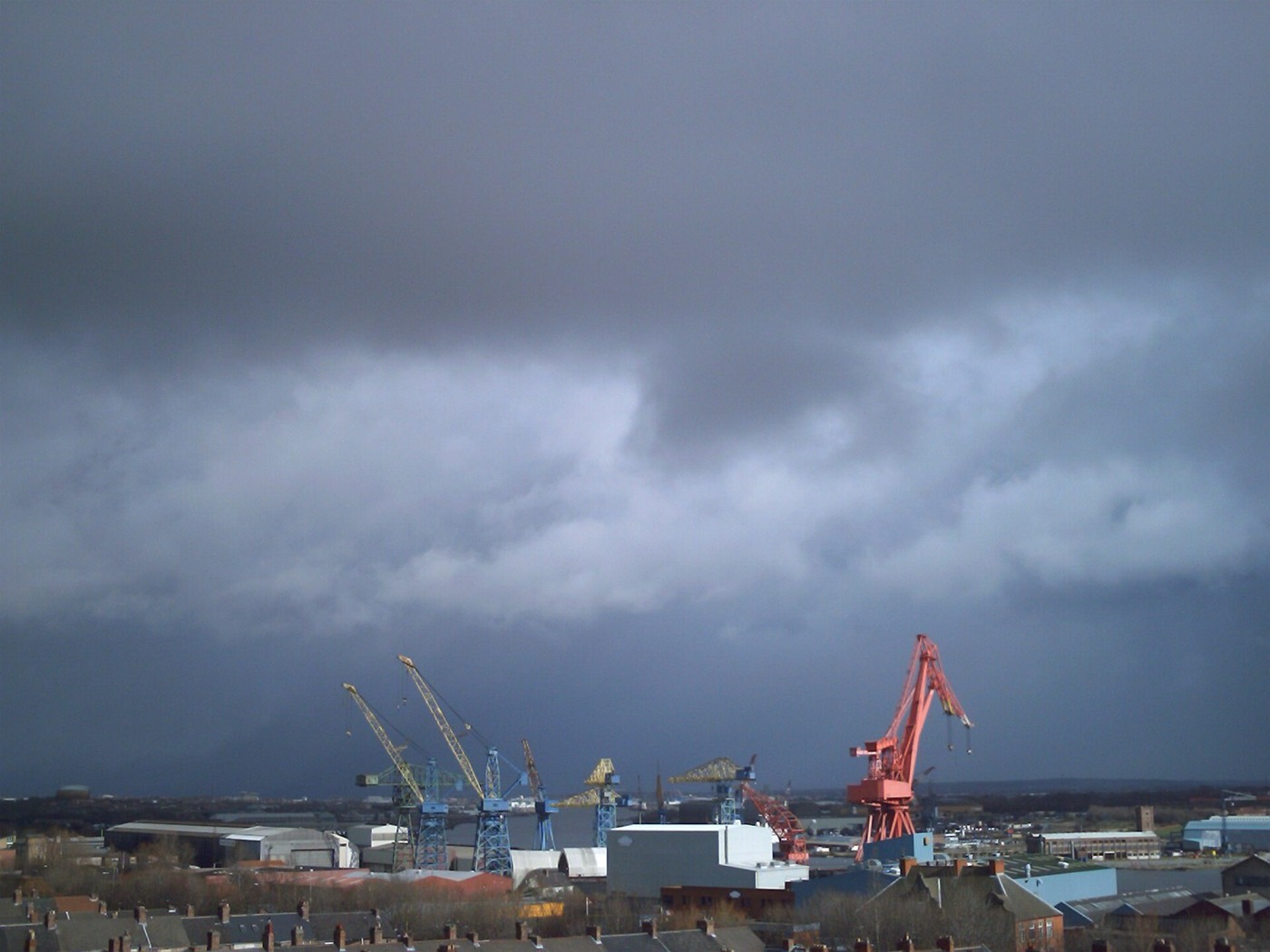
This photograph shows the cranes of the Swan Hunter yard on the Tyne. Today Britain builds almost no large commercial ships, and in the latest two years measured it produced about one hundredth of one per cent of the world's tonnage.
5. Japan, Then Korea
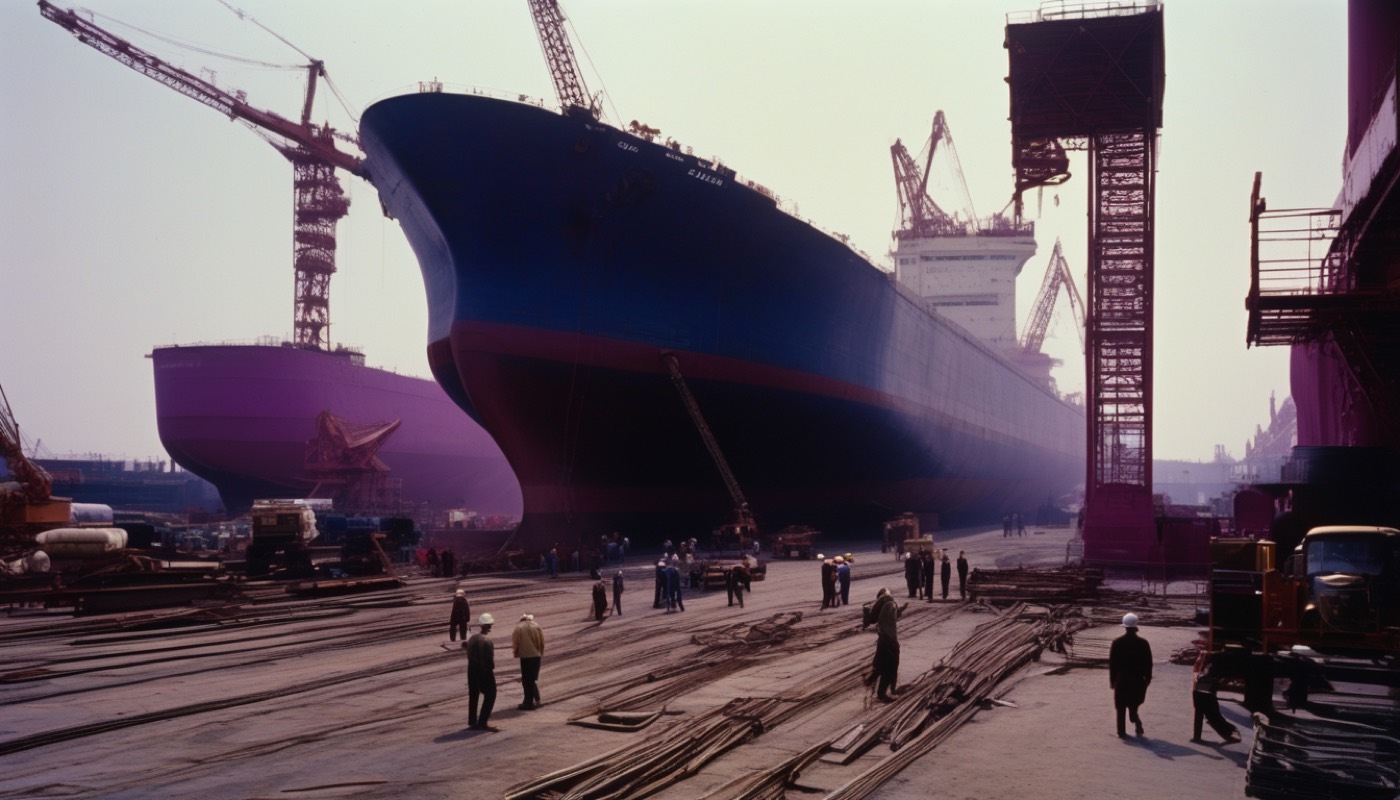

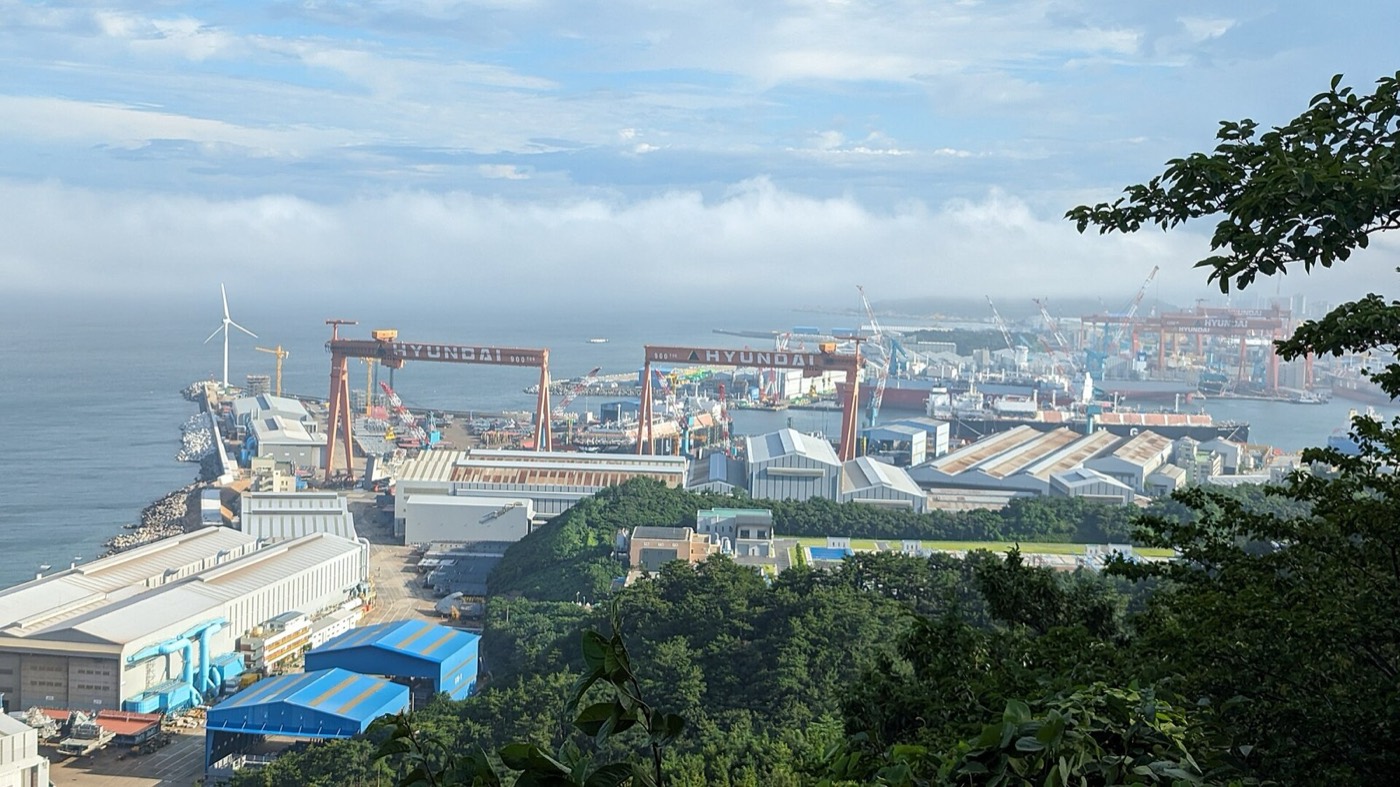
The lead did not vanish. It moved east, first to Japan.
Here are the places that matter in this chapter. Kure and Nagasaki are in Japan. Ulsan is in Korea, where a giant new yard was built from nothing.
In the nineteen fifties, Japan found a better method. Its yards, at Kure in particular, welded ships from large prebuilt blocks, using production controls borrowed from aircraft factories. By the middle of the decade, almost all Japanese ships were welded, up from a fifth in nineteen forty-eight.
This photograph shows the main building of the Mitsubishi shipyard at Nagasaki. Japan's big builders worked to make each step repeatable, so that one yard could turn out ship after ship.
In nineteen fifty-six, Japan overtook Britain as the world's largest shipbuilder. By nineteen seventy, it built nearly half of all the world's ships.
Here is how fast it moved. Japan's welded-block methods spread through the nineteen fifties. Japan passed Britain in nineteen fifty-six. It reached nearly half the world's output by nineteen seventy. In nineteen seventy-two Hyundai began building the Ulsan yard in Korea, and it delivered its first ship in nineteen seventy-four.
Korea's rise was pushed by the state. In the nineteen seventies, the government wanted heavy industry, not just cheap goods, and it supported Hyundai with loan guarantees and new industrial complexes.
This photograph shows the Hyundai Heavy Industries yard at Ulsan. It was built on an empty beach, and its first ship was a supertanker, an enormous vessel for carrying crude oil.
By nineteen eighty-three, that company was the world's largest shipbuilder. Korea held the top place among countries until China overtook it in twenty ten.
Two points stand out. In Korea, the state took on risk that few private firms would carry. And in Japan, the winning idea was a method, welded blocks built to a plan, rather than any single invention.
6. China's Climb
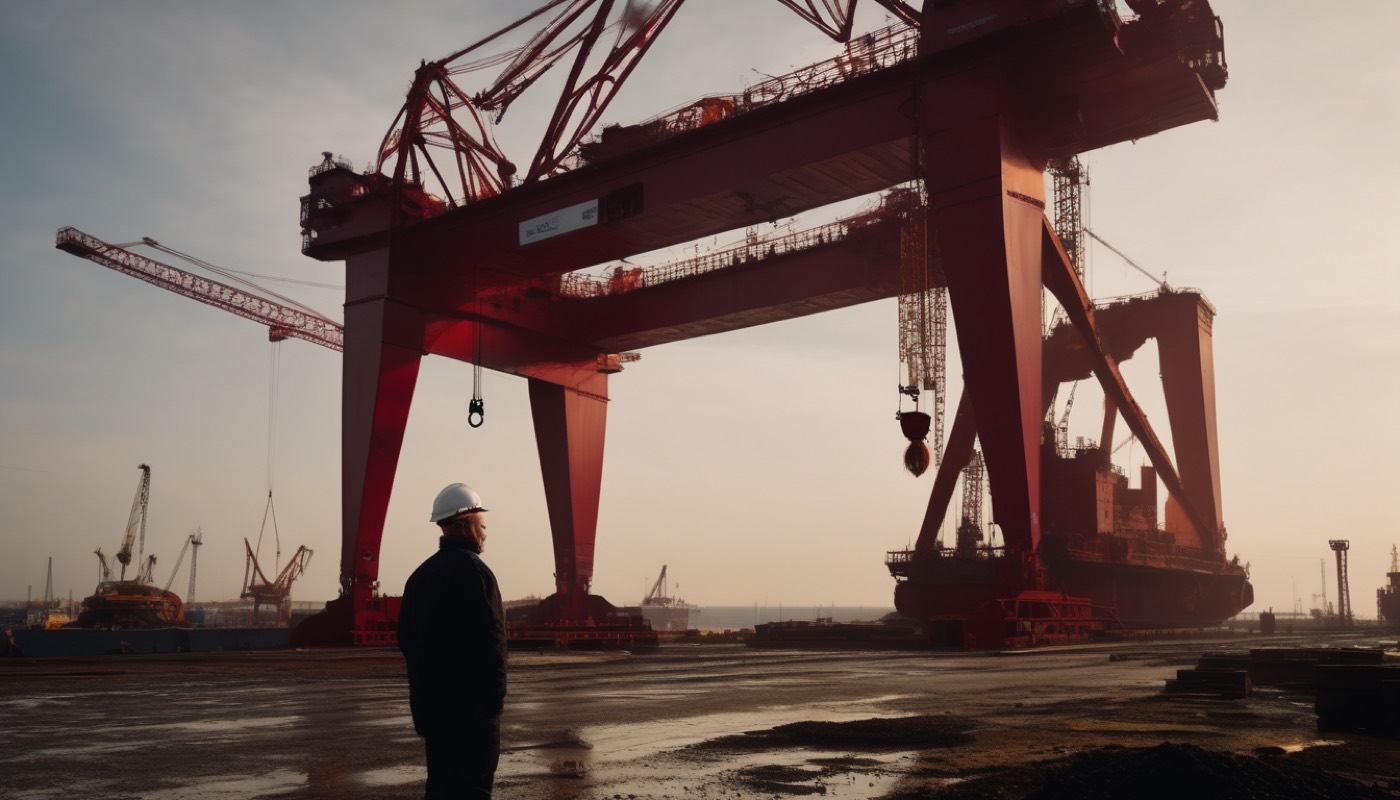
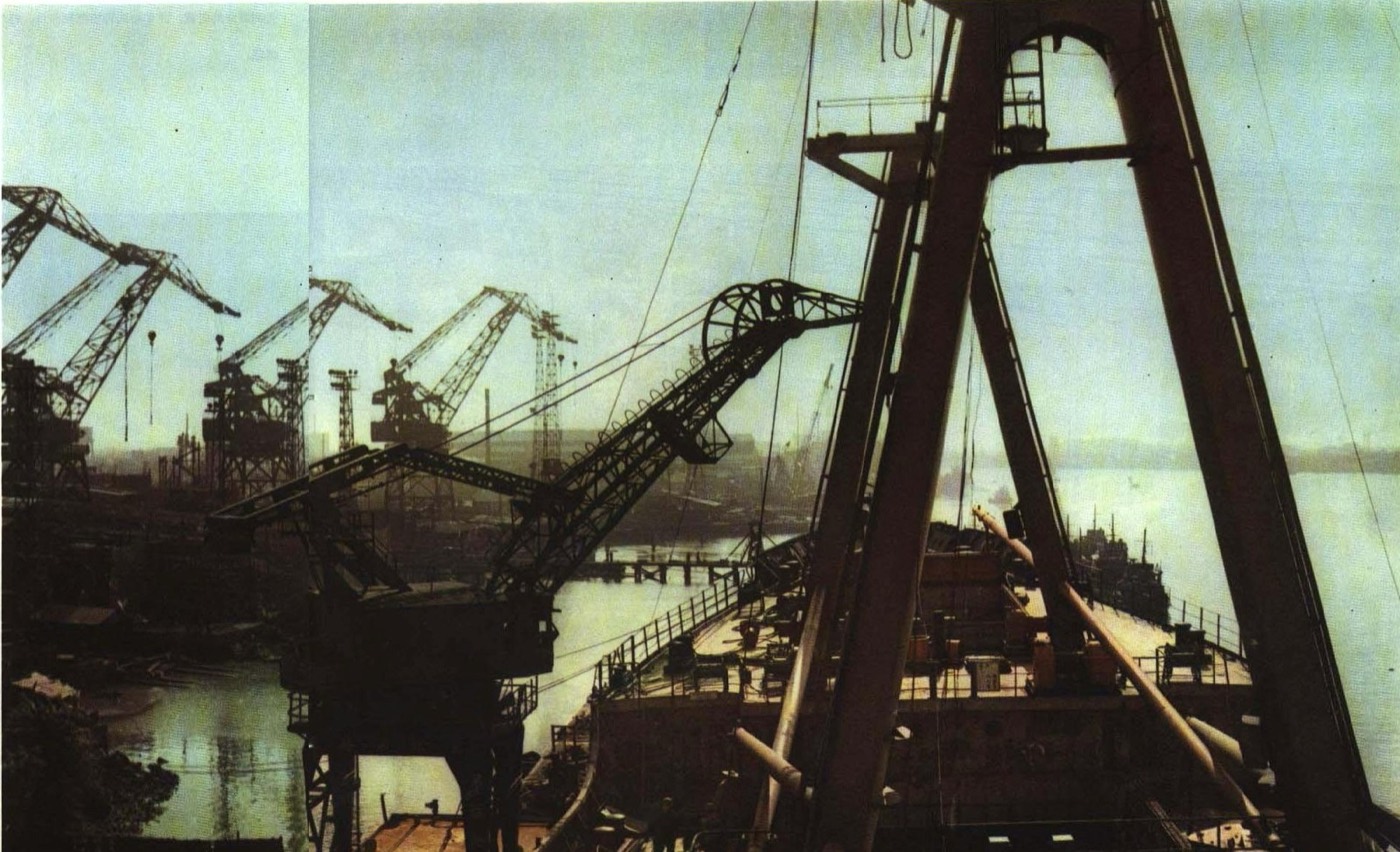
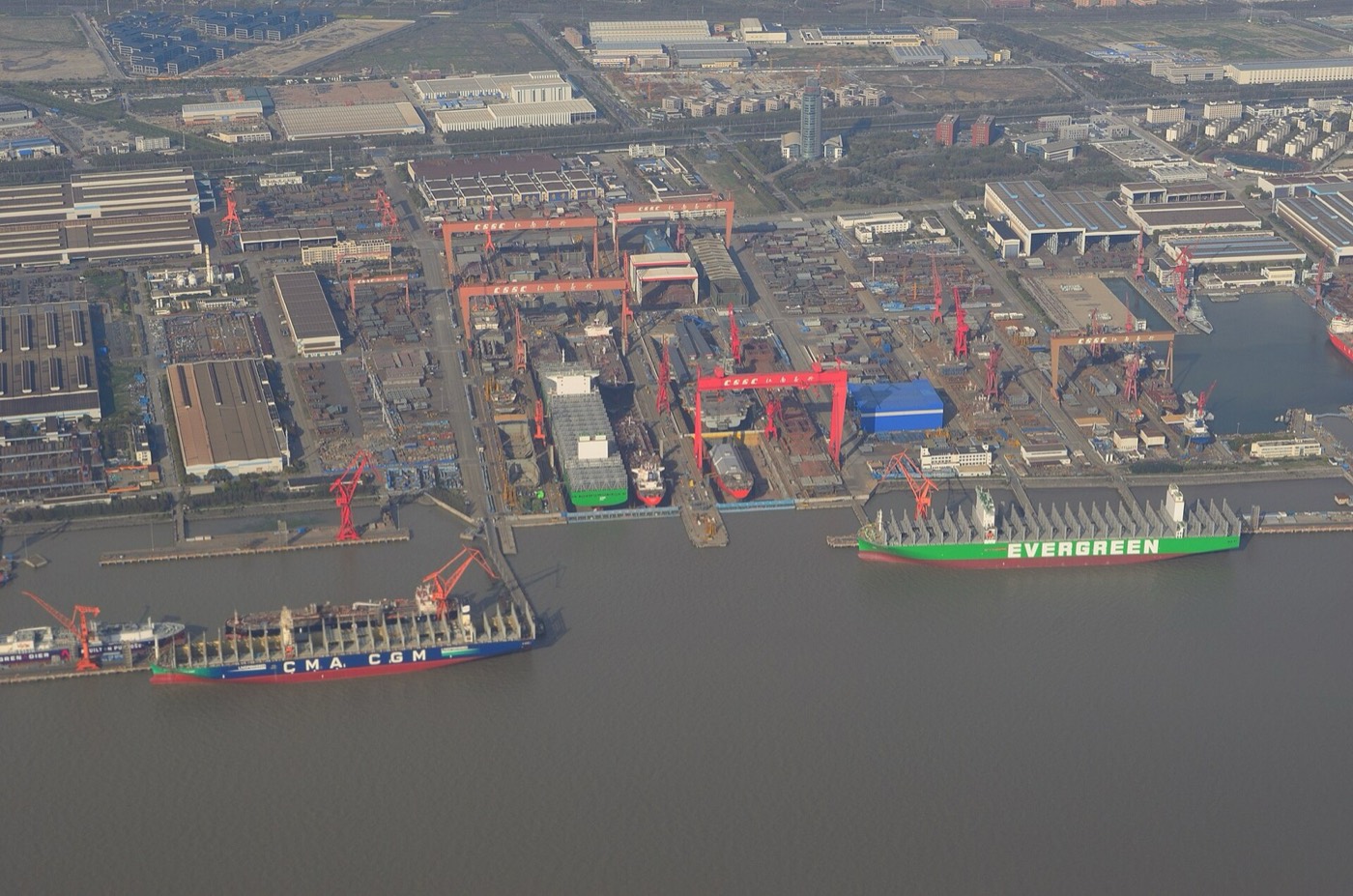
China's rise was planned. In the year two thousand, the Communist Party and the State Council named shipbuilding as a priority. Two years later, the premier said China should become the world's foremost builder.
Here are the dates. Shipbuilding became a priority in two thousand. In two thousand and two, Premier Zhu Rongji set a goal of the top place by twenty fifteen. China hit its output target for twenty ten three years early, in two thousand and seven. It became the largest builder in twenty ten.
China was not new to ships. But its industry was small, and the boom came later.
This is the Jiangnan yard in Shanghai, photographed in nineteen sixty-five. It is a useful contrast with the new yards that China built later, on islands and coasts.
The money came next. One analyst estimates that the state spent about ninety billion dollars between two thousand and six and twenty thirteen. Subsidies covered roughly fifteen to twenty per cent of each ship's cost.
These are estimates, not audited totals. But the picture is clear. The state paid for land, docks and cranes, and it lowered the price of each ship. That let Chinese yards bid low and build big.
This photograph shows the Jiangnan yard on Changxing Island, near Shanghai, where a new yard was built on open land. Space is a big advantage, because a yard that can spread out can lay out its lines for flow.
Add a steel industry at home, and scale did the rest. In twenty twenty-five, China made about fifty-two per cent of the world's crude steel. Scale means many ships of the same kind, which is what makes a yard efficient.
Here is the recipe in short. State plans set the goal. Subsidies cut the cost. Steel from home mills fed the yards. And each yard built many similar ships, so it kept getting better at it.
7. What the Numbers Show Now
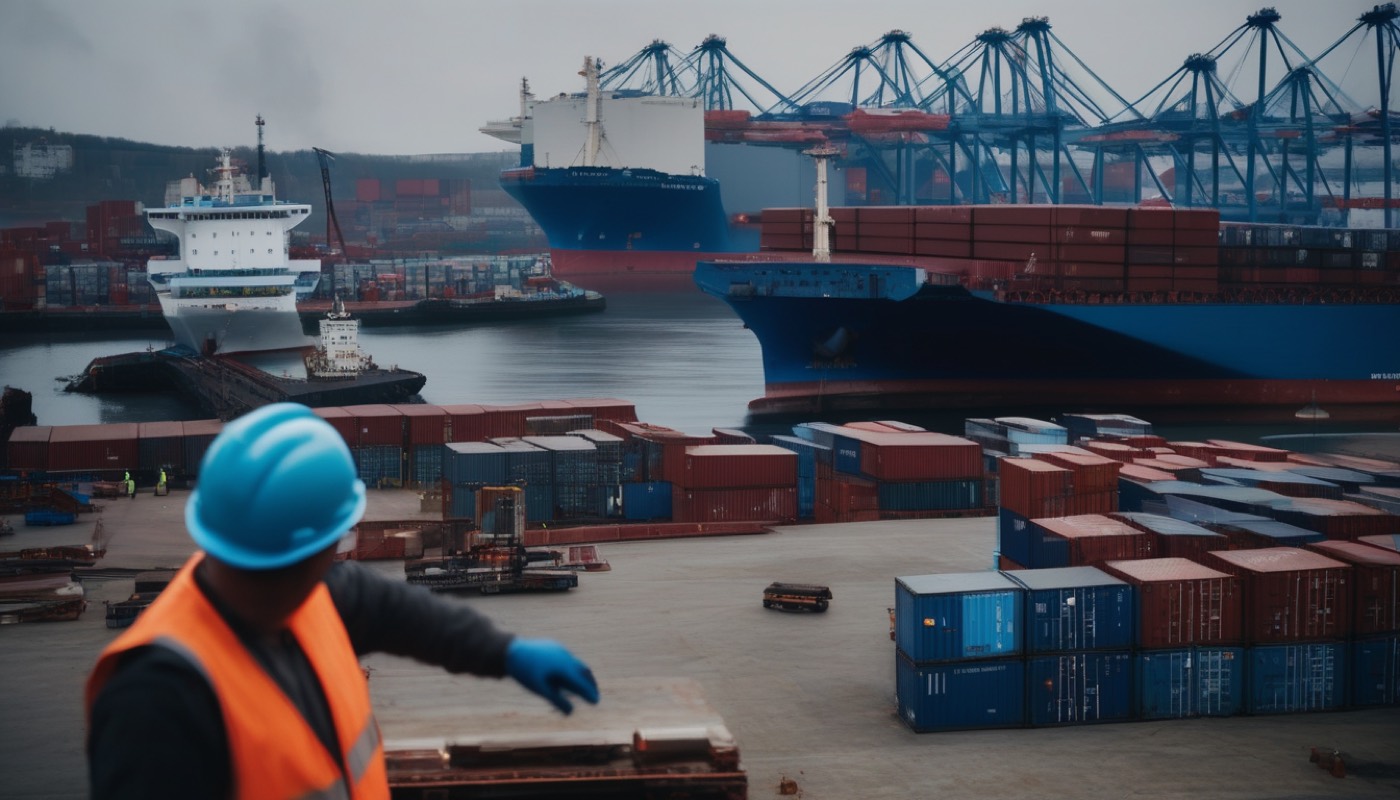
Now to today's numbers. They come from Clarksons Research, the main data source for the industry, as reported in July twenty twenty-six.
China took about seventy-two per cent of new orders in the first half of the year, by compensated gross tonnage. Korea took just under a fifth. In the same six months, China's yards won orders for about eleven hundred ships.
An order is not a delivered ship. The orderbook is every ship that has been ordered but not yet delivered, and it shows what yards will be building for the next few years.
At the end of June, China held about sixty-five per cent of the world orderbook, and Korea about nineteen per cent. Everyone else together held the remaining sixteen per cent.
Yet Korea keeps one important niche.
That niche is liquefied natural gas carriers. LNG is gas chilled until it is liquid, and it needs special ships with insulated tanks. A market analysis says Korea holds about two thirds of the world orderbook for these carriers.
Now look at the West. The United States, in a report dated November twenty twenty-three, builds only about a fifth of one per cent of the world's tonnage.
In the nineteen seventies, the United States built about five per cent of world tonnage. Today only two or three yards build large commercial cargo ships there. One of them, in San Diego, relies mainly on Navy work for its revenue.
8. The US Answer: Port Fees
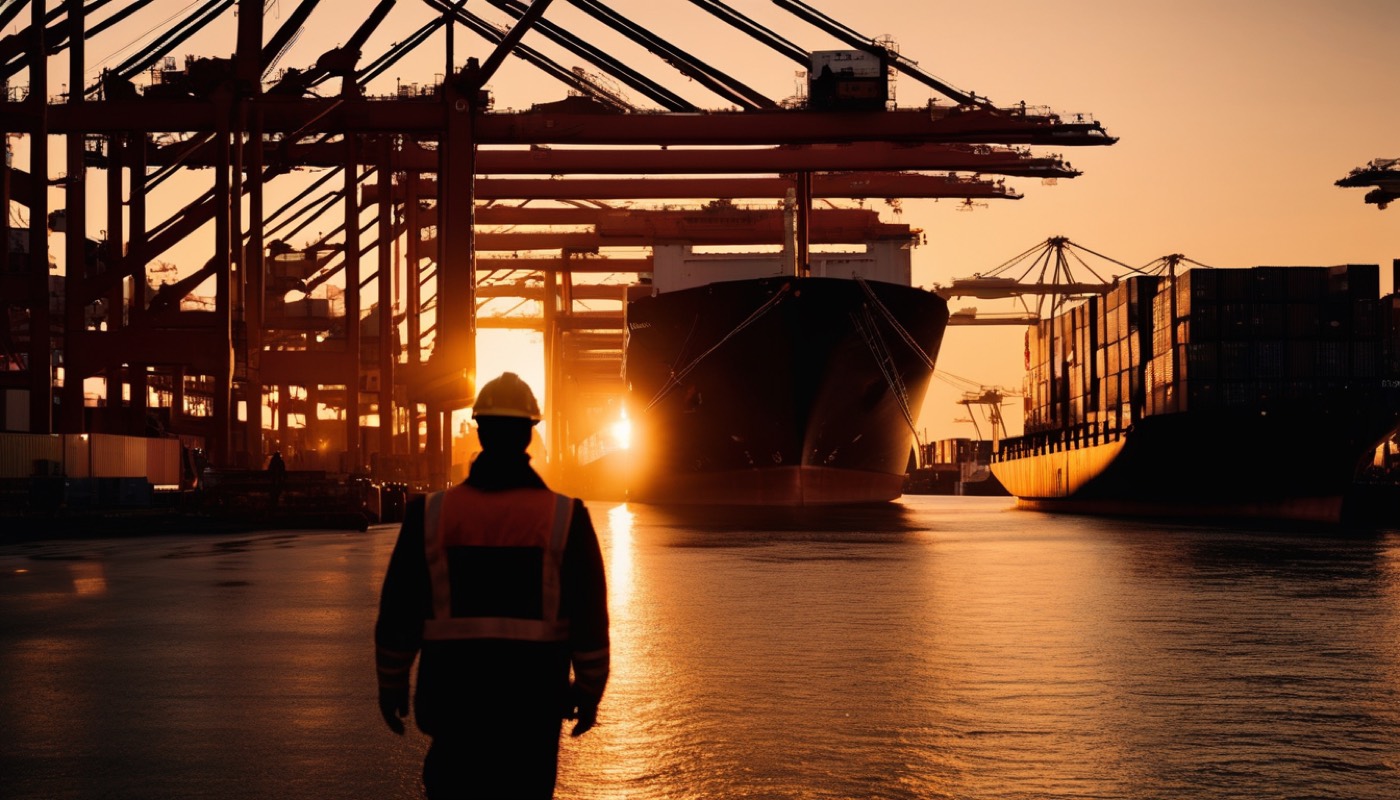
So in April twenty twenty-five, Washington chose a tool it already had.
It used Section 301, a part of American trade law that lets the government act against another country's unfair trade practices. The fees began on the fourteenth of October, twenty twenty-five. Chinese operators would pay fifty dollars for each net ton, and Chinese-built ships owned by others would pay eighteen dollars.
A net ton is a measure of a ship's cargo space, not its weight. For Chinese-built ships, the fee is the higher of the net-ton charge or one hundred and twenty dollars a container.
The fees were meant to rise year by year. By twenty twenty-eight, the operator fee would reach one hundred and forty dollars a net ton. The fee on Chinese-built ships would reach thirty-three dollars a net ton, or two hundred and fifty dollars a container.
Then came a deal. After talks between the two presidents in Korea, the United States suspended the fees for a year, beginning on the tenth of November, twenty twenty-five.
Here is the calendar. The fees started on the fourteenth of October, twenty twenty-five. They were suspended from the tenth of November. On the twenty-third of September, twenty twenty-six, trade groups asked for the pause to be extended. It runs out on the ninth of November.
What did the trade groups say?
Their letter to the trade representative says the fees would add another cost layer to an already strained system. It also says that fees alone are not a strategy for rebuilding American shipbuilding. The real gaps are capacity, workers, and a lack of alternatives.
9. Rebuilding: SHIPS Act and MASGA
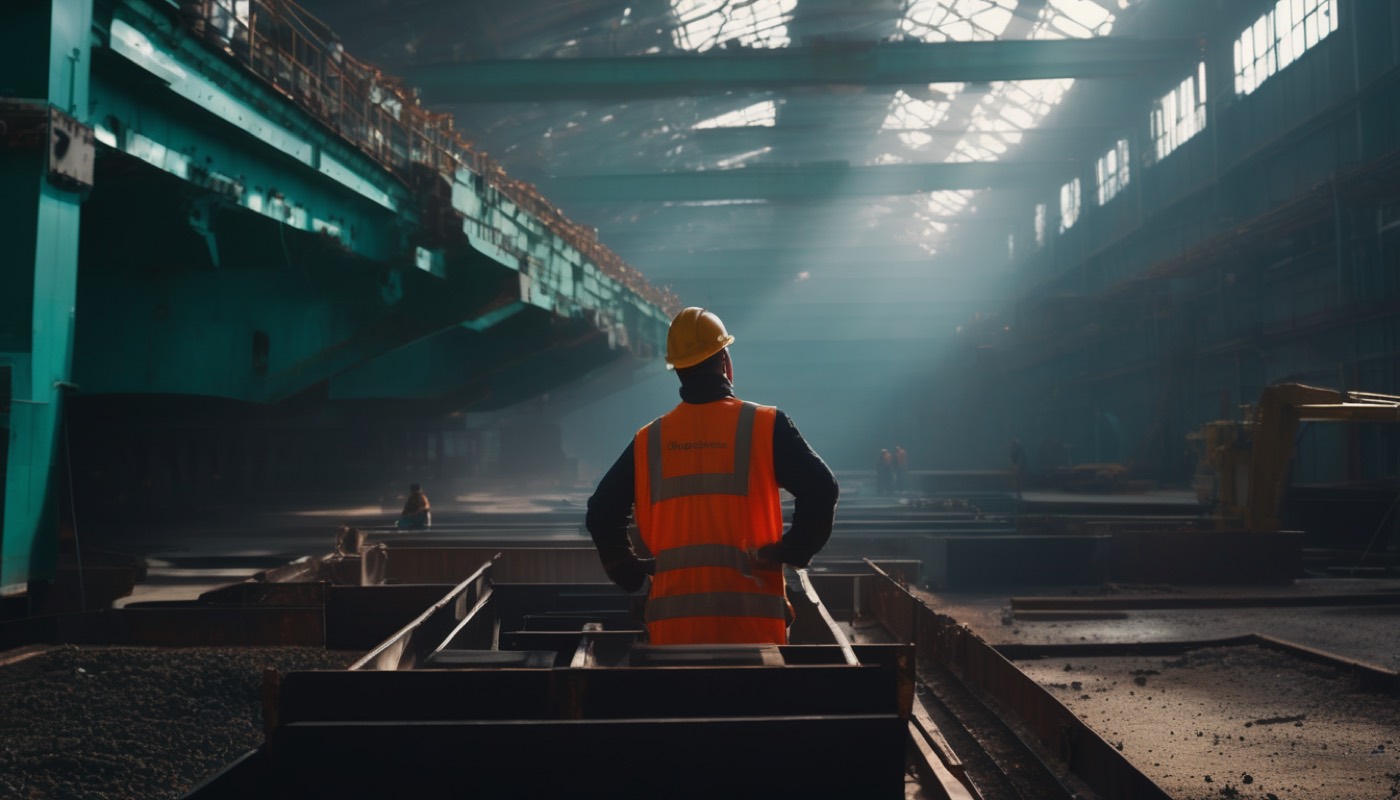
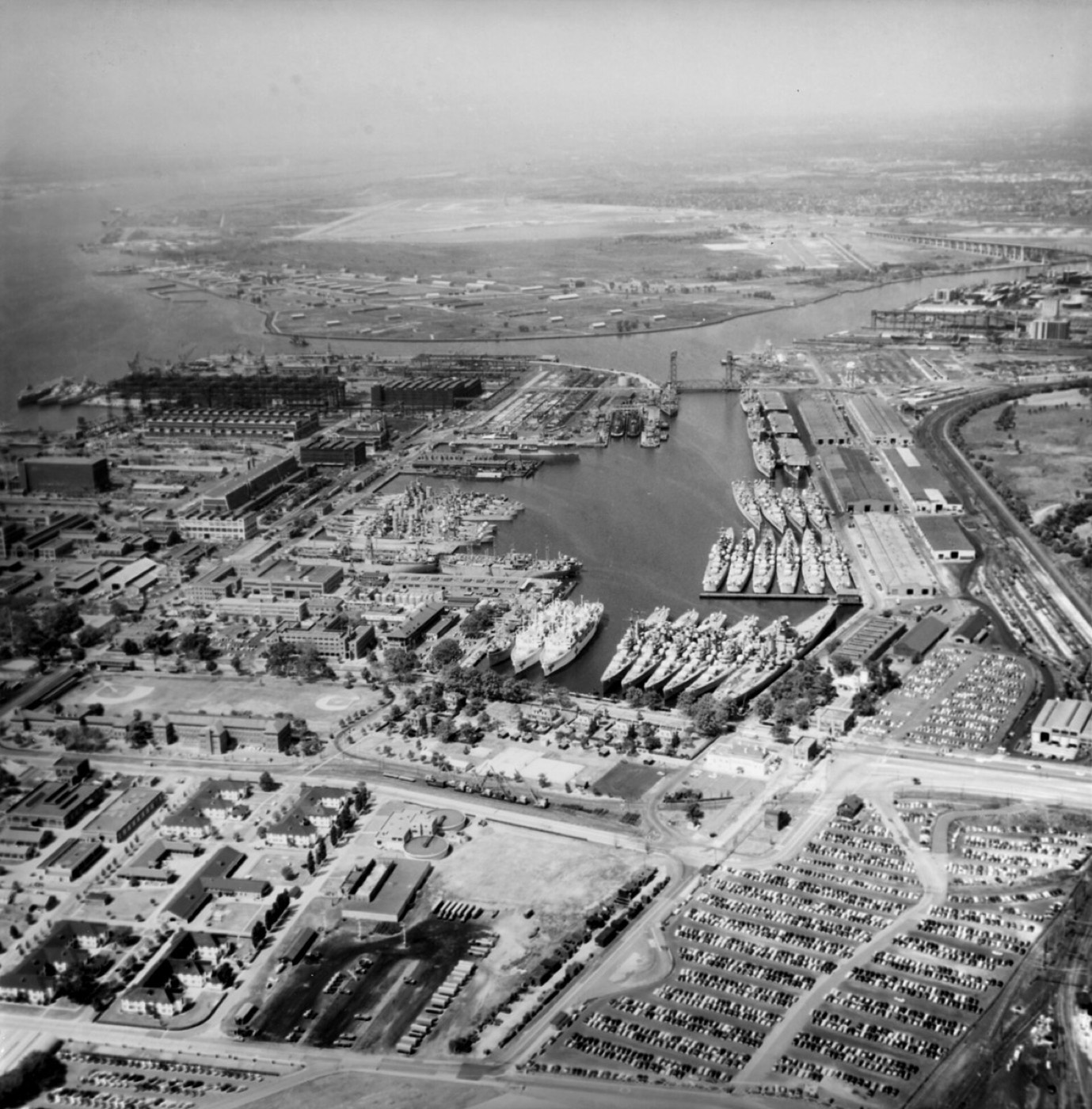
So fees alone cannot rebuild an industry. The other half of the answer is building ships.
This photograph shows the Philadelphia Naval Shipyard reserve basin, from the air in nineteen fifty-five. It is a reminder that the United States once built and kept ships at scale. Part of the same site is now a commercial shipyard again.
The first plan is a law. The SHIPS for America Act would support American ships, ports, shipyards and the maritime workforce.
The bill was first introduced in December twenty twenty-four, and brought back in April twenty twenty-five. As of this video, the Senate version has been referred to committee and has not become law. So it is still a plan, not a fact.
The second plan comes from Korea, and is called MASGA, which stands for Make American Shipbuilding Great Again.
Korea agreed to invest three hundred and fifty billion dollars in the United States. Of that, one hundred and fifty billion dollars is set aside for shipbuilding. A memorandum to put it into practice was signed in May twenty twenty-six.
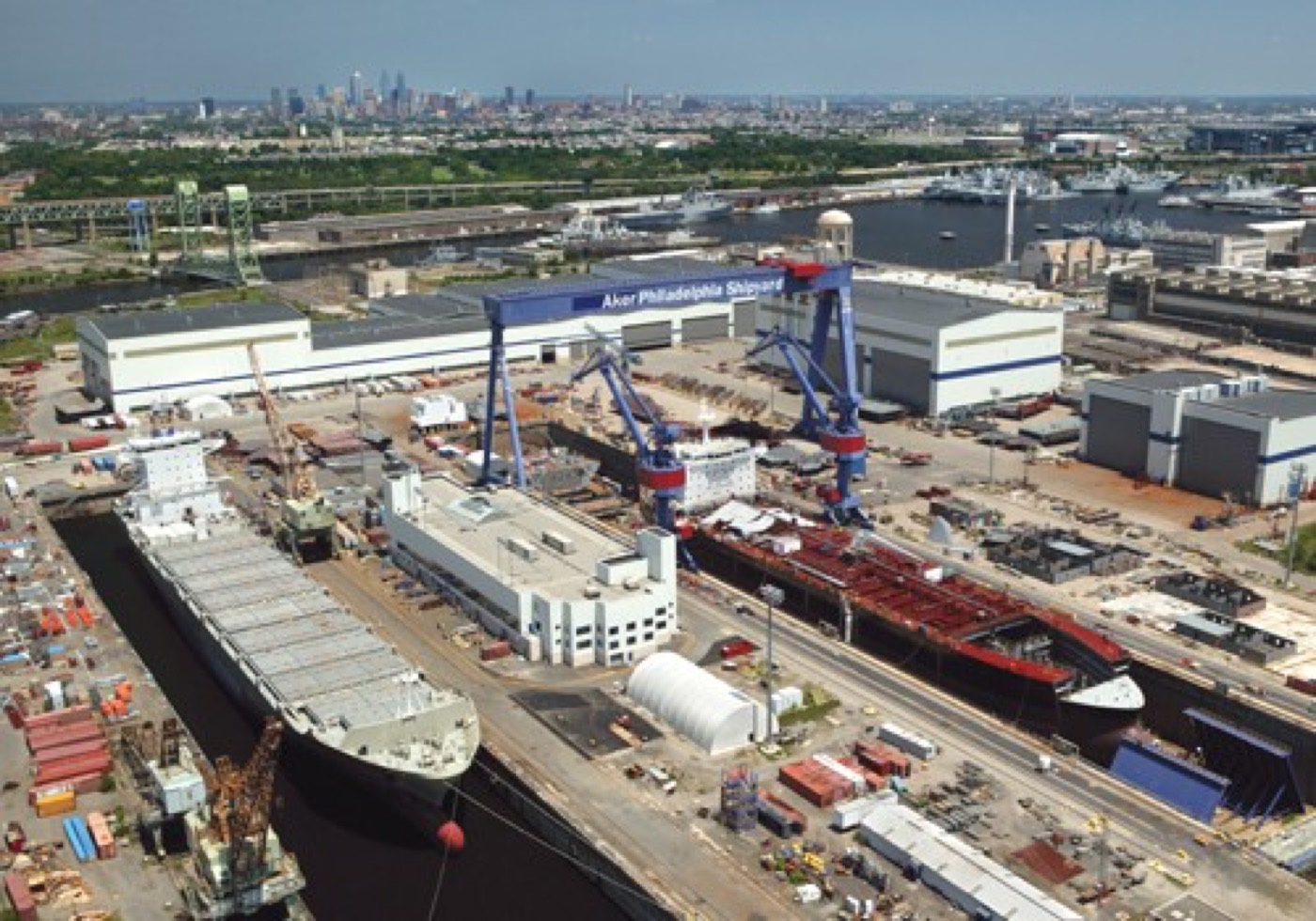
This photograph shows the Philly Shipyard in Philadelphia. In twenty twenty-four, the Korean group Hanwha bought it for about one hundred million dollars. It is one of only a few American yards that build large commercial ships.
Then Hanwha promised more. In August twenty twenty-five, it pledged five billion dollars to add docks and quays at the yard.
Here is what that plan is for. The yard builds fewer than two vessels a year today. Hanwha wants that raised to as many as twenty. That is a target, not a result.
In July twenty twenty-six, the Missile Defense Agency awarded Hanwha's yard about two billion dollars for two missile-tracking ships. The first is due in twenty thirty.
Here are the steps of the plan. The framework came in November twenty twenty-five. The memorandum followed in May twenty twenty-six. A joint council was launched in June. A shipbuilding centre opened in Washington in July, and the missile ships were awarded that same month.
But the limits are real. A yard needs workers, and skilled welders take years to train. It needs suppliers, and most of them are far away. And it needs steady orders, or nobody invests.
Here are the limits, in short. Workers: training takes years, and the programme partners with a local community college. Suppliers: the web of parts makers must grow around the yard. Orders: yards need a steady flow, not one-off contracts.
10. If Capacity Stays in One Country
Suppose nothing changes, and one country keeps building most of the world's ships. What could go wrong?
Here is the map of dependence. Ships built in Shanghai and Ulsan carry goods to Los Angeles and Rotterdam. Most of the world's hulls come from a few Asian yards, and every trade route depends on them.
The first risk is cost. When a trade group warns that fees on Chinese-built ships would ripple across shipping networks, it is admitting how much the world already depends on them.
The trade groups say China-built vessels make up a meaningful share of ocean carrier capacity. So any fee or restriction would not stay narrow, and it would reach exporters and importers alike. That is a risk to prices and to freight rates.
The second risk is speed. If freight demand jumps and yards are full, nobody can add ships quickly, and rates rise.
The third risk is naval. A navy that cannot build or repair ships at home is a navy that can be slowed.
This is an argument, not a measured figure. But the logic is simple. In a long conflict, ships are lost and must be replaced. A country whose yards build almost nothing cannot replace them quickly, and that is the case Washington now makes for rebuilding.
So here are the three risks. One is trade costs, if a single supplier sets the price. Two is freight rates, if new ships cannot be added. Three is naval resupply, if the home yards cannot replace losses.
11. What It Takes to Rebuild an Industry
So can it be done? Look at how long the others took.
Here is the record. Japan took the top place in nineteen fifty-six, after moving to welded blocks in the years from nineteen forty-eight. Korea took eleven years. Ground was broken in nineteen seventy-two, and the largest builder came in nineteen eighty-three. China took ten years. The plan began in two thousand, and the top place came in twenty ten.
Looking at their records, the same four things keep showing up.
The four things are these. Decades of steady orders, so a yard can plan. Skilled workers, trained in the trade. A web of suppliers, close by. And patient money, from a state or a bank that will wait for a return.
None of that can be bought in a year. And the fees, the law and the Korean money are only the start of it.
Here is the verdict on the question. Western shipbuilding is starting to move forwards, with new money and new orders. But one yard and two missile ships do not make an industry. It has moved so far back that recovery is a matter of decades, and only if the orders stay steady.
The pause on fees ends on the ninth of November. Whatever happens then, the ships are still built in the same few places. To change that, the answer is not one law or one fee, but years of steady work.
Sources and credits
Photo credits (Wikimedia Commons)
- Philadelphia Naval Shipyard reserve basin, aerial, 1955: Unknown authorUnknown author, Public domain - https://commons.wikimedia.org/wiki/File%3AAerial_view_of_the_Philadelphia_Naval_Shipyard_Reserve_Basin_on_19_May_1955_%2880-G-668655%29.jpg
- Philadelphia shipyard (Aker/Philly Shipyard) yard view: Tmarinucci (talk) (Uploads), Public domain - https://commons.wikimedia.org/wiki/File%3AAkerAmericanShipping_Yard.jpg
- Hyundai Heavy Industries Ulsan shipyard: Wvdp, CC0 - https://commons.wikimedia.org/wiki/File%3AHyundai_Heavy_Industries_Ulsan_Shipyard_from_Jujeon_Beacon_Mound_-_2023-07-24.jpg
- Jiangnan Shipyard, Changxing Island, Shanghai: Raysonho @ Open Grid Scheduler / Scalable Grid Engine, CC0 - https://commons.wikimedia.org/wiki/File%3AJiangnanShipyardChangxingIsland.jpg
- Jiangnan Shipyard, Shanghai, 1965: 《人民画报》, Public domain - https://commons.wikimedia.org/wiki/File%3A1965-11_1965_%E6%B1%9F%E5%8D%97%E9%80%A0%E8%88%B9%E5%8E%82.jpg
- Mitsubishi Nagasaki shipyard main building: Houjyou-Minori, CC0 - https://commons.wikimedia.org/wiki/File%3AMHI_Nagasaki_Shipyard_Main_Building.jpg
- John Brown West Yard, Clydebank, 1901: Bedford Lemere & Co, Public domain - https://commons.wikimedia.org/wiki/File%3AWest_Yard_at_John_Brown_and_Co_Ltd%2C_Clydebank%2C_1901_RMG_G10548.tiff
- Aquitania before launch, Clydebank, 1914: Bedford Lemere & Co., Public domain - https://commons.wikimedia.org/wiki/File%3AThe_%27Aquitania%27_%281914%29_before_launch_RMG_G10708.tiff
- British shipbuilding in the First World War: Royal Navy official photographer, Public domain - https://commons.wikimedia.org/wiki/File%3AThe_Shipbuilding_Industry_in_Britain_during_the_First_World_War_Q18513.jpg
- Swan Hunter cranes, River Tyne: Martinwguy at English Wikipedia, Public domain - https://commons.wikimedia.org/wiki/File%3ASwan_hunter_cranes_20070319.jpg


Primary sources
- Clarksons Research figures for H1 2026 as reported by Maritime Executive, 8 Jul 2026, and PortNews - China 72% of new orders by CGT (31.00m of 42.95m CGT); orderbook 206.59m CGT, China 134.03m (65%), Korea 38.81m (19%); Korea about two thirds of the LNG carrier orderbook (Wood Mackenzie)..
- USTR, Notice of Modification of Section 301 Action, Federal Register, 13 Nov 2025 (2025-19873) - suspension from 10 Nov 2025 to 9 Nov 2026 (PDF). Fee amounts as summarised by Skuld: $50 per net ton for Chinese operators rising to $140 by 2028; $18 per net ton or $120 per container for Chinese-built ships rising to $33 or $250 by 2028.
- Joint association letter to USTR Jamieson Greer, 23 Sep 2026 (nftc.org) - request to extend the suspension; fees alone are not a strategy for rebuilding US shipbuilding.
- Hanwha, 'Hanwha announces $5 billion Philly Shipyard investment', 27 Aug 2025 - $100m purchase, two docks and three quays, under two vessels a year to up to 20. Stars and Stripes, 21 Jul 2026 - $2bn Missile Defense Agency award, two vessels, first due June 2030.
- Asia Business Daily, 23 Jul 2026, and UPI, 25 Jun 2026 - MASGA: $150bn of a $350bn framework, MOU May 2026, council June 2026, Washington centre 23 Jul 2026.
- Congress.gov and govinfo bill status, S.1541 SHIPS for America Act of 2025 - introduced 30 Apr 2025, referred to committee; first introduced Dec 2024.
- Construction Physics (Brian Potter), 'How the UK Lost Its Shipbuilding Industry', 'How Japan Invented Modern Shipbuilding' and 'How China Became the World's Biggest Shipbuilder' - UK shares and decline dates, Japan 1956, China's plans and estimated subsidies. Secondary source, attributed on screen.
- HD Hyundai Heavy Industries (Wikipedia) - founded 1972, first ship 1974, largest builder 1983. gCaptain, 22 Jan 2011 - China overtakes Korea in 2010.
- worldsteel, 23 Jan 2026 - 960.8 of 1,849.4 Mt crude steel in 2025 (about 52%, calculated).
- Congressional Research Service IF12534, 15 Nov 2023 - US about 0.2% of world tonnage; about 5% in the 1970s; 2-3 yards for large commercial ships.
Not regulated financial advice.