
The Panama Canal Drought and World Trade
The Panama Canal runs on rain. Every ship is lifted up to a lake of fresh water in the middle of the country and lowered back down to the sea, and the water that does the lifting runs out to sea with it. This video explains how that works, why it was built that way, and what happens when the rain fails, as it did in 2023 and again in 2026.
The French began a sea-level canal in 1880 under Ferdinand de Lesseps, builder of Suez. Disease and the terrain defeated them; the Panama Canal Authority records that by May 1889 all activity on the isthmus had ceased. The United States began work in 1904 and took a different approach: dam the Chagres River, lift ships about 26 metres to Gatun Lake, and lower them on the other side. The canal opened on 15 August 1914.
No pumps are used. Locks fill and drain by gravity alone, and the authority has put the fresh water used in each transit at 52 million US gallons, about 200 million litres. The larger Neopanamax locks, opened on 26 June 2016, reuse 60% of their water in side basins. The same lake supplies drinking water to millions of Panamanians.
The canal authority says nearly 3% of global seaborne trade passes through, on 180 routes to 1,920 ports in 170 countries. In 2023 a dry year forced it to cut daily transits from 36 to as few as 22, and to limit ships in the larger locks to 44 feet of draft; more than 160 ships were waiting in August 2023 (US EIA). Limits were lifted by September 2024.
In 2026 El Nino brought drought back. The canal authority cut daily slots to 34 on 3 September and 32 on 15 September 2026, and the draft in the larger locks to 48 feet.
The video also covers the 1977 treaties and the 1999 handover, the 2026 Supreme Court ruling on the Balboa and Cristobal port concession, and the planned Rio Indio reservoir: estimated at USD 1.5-1.6 billion, with construction reported to start in 2028 and about 2,000 people facing resettlement.
Part of the chokepoints series, with Hormuz, Suez and undersea cables. Sources are named and dated on screen.
Educational documentary. Not financial or investment advice.
In these topics
Video notes
1. A shortcut that runs on rain
In September twenty twenty-six, the Panama Canal cut the number of ships it lets through each day, twice in two weeks. Nothing had broken. There simply was not enough rain.
The canal normally offers thirty-six booking slots a day. The canal authority cut that to thirty-four on the third of September, and to thirty-two on the fifteenth. A slot is a reserved place in the day's queue, and a ship without one can wait for days.
That sounds like a strange thing to depend on the weather. It is not a flaw in the design. It is the design.
The canal lifts every ship up and over a hill of fresh water, and then lets it back down. The water that does the lifting comes from rain, stored in a lake in the middle of the country. Each ship that passes spends some of it, and that water runs out to sea.
This video follows that water. First, how the canal came to be built around a lake, and how a lock works. Then who depends on the route. Then the two droughts, in twenty twenty-three and twenty twenty-six, and the plan to stop there being a third.
2. The French attempt
The idea of a canal across this narrow strip of land is centuries old. The first serious attempt to dig one was French.
Ferdinand de Lesseps had already built the Suez Canal, and here he planned the same thing: a channel cut at sea level. According to the canal authority, he dug a ceremonial first spade of earth on the first of January, eighteen eighty. His first construction team landed a year later.
The route ran from Colon on the Caribbean coast to the Pacific side near Panama City, about eighty kilometres. In between lay jungle, swamp, a river that flooded every rainy season, and a ridge of hills. Digging all of it down to sea level turned out to be far beyond what the French could manage.
Disease made it worse. The canal authority says the French workforce passed nineteen thousand in eighteen eighty-four, and yellow fever killed workers from the first rainy season on. By the middle of May, eighteen eighty-nine, in the authority's words, "all activity on the Isthmus ceased".
The French effort had failed. The next attempt would take a completely different approach.
3. A lake in the middle
The United States took over the project, and began work on the fourth of May, nineteen oh four. Its engineers made a different choice. Instead of digging down to the sea, they would dam the Chagres River and lift the ships up to the lake it created.
That lake is Gatun Lake, and it is the heart of the canal. It sits about twenty-six metres above sea level. The canal authority describes the water that lifts the ships, "floats them across the Continental Divide and lowers them again to sea level in the opposite ocean". The Continental Divide is the line of hills that separates rivers draining to the Atlantic from those draining to the Pacific.
The canal opened on the fifteenth of August, nineteen fourteen, when the ship Ancon made the first official transit. A transit is one complete passage from one ocean to the other. It still takes a ship up three steps on one side, and down three on the other.
Those steps are locks, and everything about the canal's water problem starts with how a lock works.
4. How a lock works
A lock is a water lift for ships. It is simple to describe, and it is enormous.
A lock is a concrete chamber with watertight gates at each end. A ship sails in, the gates close behind it, and the water inside is raised or lowered to match the next level. Then the gates ahead open and the ship sails on.
What surprises most people is that nothing is pumped. In the canal authority's words, "No pumps are used at the Panama Canal, the water does its work by force of gravity alone". Water from the lake runs down through tunnels in the lock walls, and up through holes in the chamber floor.
There are three sets of original locks. Gatun, on the Atlantic side, lifts ships in three steps. On the Pacific side, Pedro Miguel has one step and Miraflores has two.
To lower a ship, the chamber is drained. That water keeps running downhill, and eventually out to sea. It is the price of every transit.
5. Every ship pays in fresh water
The canal authority has put a figure on that price. In a statement in two thousand and two, it put the fresh water used in every transit at fifty-two million US gallons. That is about two hundred million litres, for every single ship.
The same lake supplies drinking water. Luis Rovira, who runs water management for the canal authority, said this September that the water "not only makes Panama Canal operations possible but also ensures the supply of drinking water for millions of Panamanians". So in a dry year, ships and people draw on the same reservoir.
The newer, larger locks were built to waste less. They opened on the twenty-sixth of June, twenty sixteen. Beside each chamber are three basins that store water from one filling for the next, and the canal authority says they reuse sixty per cent of the water each time.
Even so, every transit still costs fresh water. And the traffic that pays that cost comes from all over the world.
6. Who uses the route
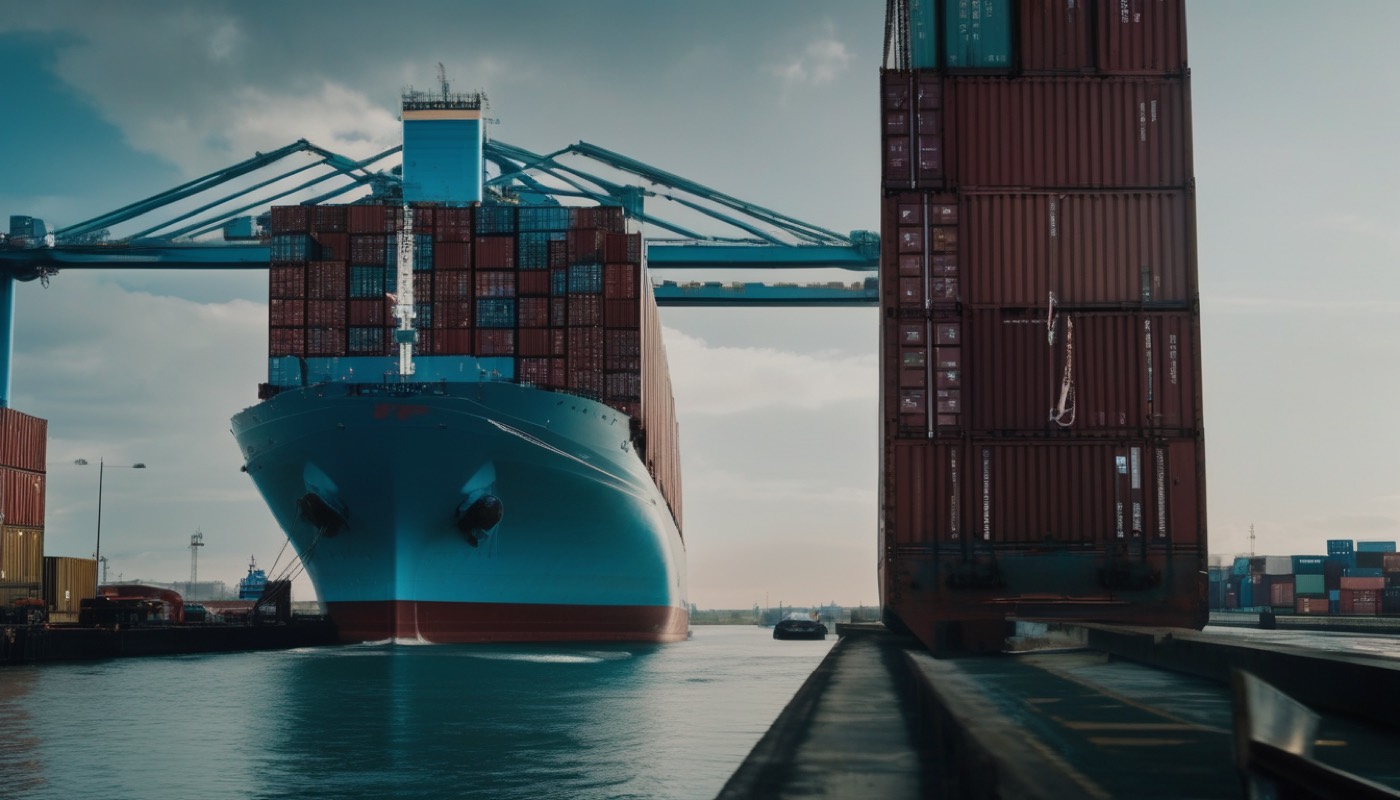
The first ship through the larger locks was the COSCO Shipping Panama. The canal authority says it was just under three hundred metres long, and carried nine thousand four hundred and seventy-two containers, counted as twenty-foot units. Ships built to fit the new locks are called Neopanamax, and those that fit the original locks are called Panamax.
According to the canal authority, nearly three per cent of the world's seaborne trade passes through. It says the canal connects one hundred and eighty shipping routes. Between them, they reach one thousand nine hundred and twenty ports in one hundred and seventy countries.
The busiest routes, the canal authority's annual report shows, run between the east coast of the United States and Asia. The United States Energy Information Administration gives an example: a gas tanker sailing from Houston in Texas to Chiba in Japan.
That voyage usually goes through the canal. In the agency's words, the reason is that "it takes nearly half the time compared with going across the Atlantic and through the Suez Canal". Take the shortcut away and the same cargo has a much longer trip.
7. The dry year
The first warning came in twenty twenty-three, a year with very little rain over the canal's watershed. A watershed is the land that drains into a river or a lake. Here, it is the land that fills Gatun Lake.
With the lake falling, the canal authority started rationing. At the end of July it cut the daily limit to thirty-two ships. By December it was down to twenty-two, against a normal thirty-six.
Ships were also told to carry less. Draft is how deep a ship sits in the water, and the more heavily it is loaded, the deeper it sits. Ships using the larger locks were held to forty-four feet of draft, against a normal fifty, so they had to sail lighter.
Queues built up at both ends. The Energy Information Administration reported more than one hundred and sixty ships waiting in August. Some of the larger ships waited at least seventeen days to get through.
8. Recovery, then a second drought
The rains returned in twenty twenty-four, and the limits were lifted step by step. In the middle of August that year, the larger locks went back to their full fifty feet of draft. Two weeks later, the canal was offering thirty-six slots a day again.
Then, in twenty twenty-six, the drought came back. A weather pattern called El Niño had returned. It is a periodic warming of the tropical Pacific, and it tends to bring dry years to the canal. Steve Paton of the Smithsonian Tropical Research Institute described "a year marked by uncertainty, due to a particularly intense El Niño that continues to strengthen".
In August, the canal authority announced its response. The larger locks' draft would fall to forty-eight feet from the second of September. The daily slots would drop to thirty-four, and then to thirty-two.
A further cut to the draft, planned for October, was postponed on the fourth of September. How far the limits go now depends on the rest of the rainy season.
9. Who runs the canal
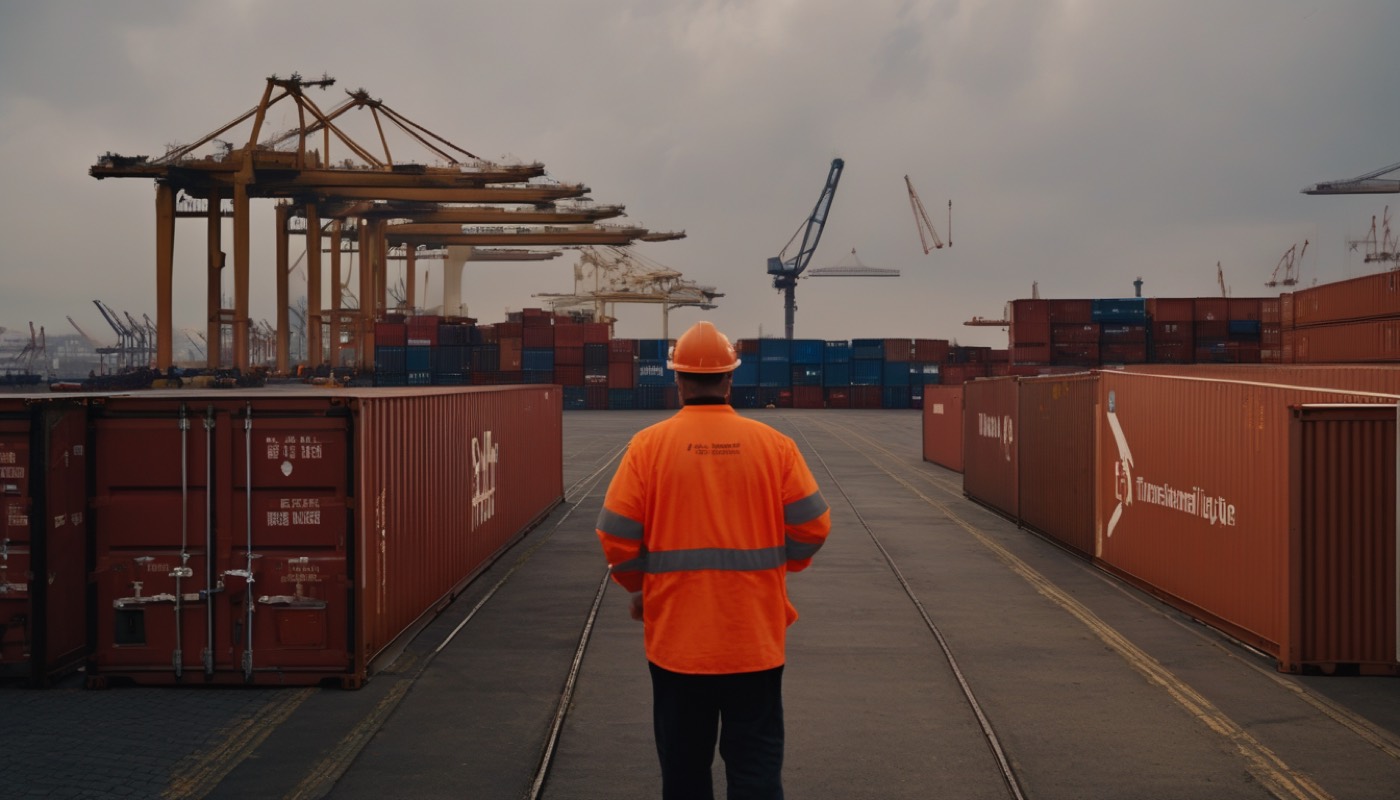
For most of the twentieth century, the United States ran the canal and the land around it. On the seventh of September, nineteen seventy-seven, the two countries signed treaties to hand it over, and to make it permanently neutral. The handover took place on the thirty-first of December, nineteen ninety-nine.
The latest argument has been about two ports, one at each end of the canal. Balboa, on the Pacific side, and Cristobal, beside Colon on the Atlantic, were run by a company owned by CK Hutchison of Hong Kong.
In January twenty twenty-five, in his inaugural address, President Donald Trump said, "China is operating the Panama Canal. And we didn't give it to China. We gave it to Panama, and we're taking it back". The canal itself is run by Panama's own canal authority, and the ports are separate businesses.
At the end of January twenty twenty-six, Panama's Supreme Court declared the ports contract unconstitutional. The Danish shipping group Maersk took over running the terminals on an interim basis. CK Hutchison's company has since filed a claim for two billion dollars in international arbitration.
10. A second lake
The canal's long-term answer to drought is a second reservoir, on the Rio Indio, west of Gatun Lake. Reuters reported this month that it is meant to secure water for the next fifty years, for more than half of the country's people as well as for the canal.
It will not be quick or cheap. Published estimates of the cost range from one and a half to one point six billion dollars. Engineering News-Record reports construction starting in twenty twenty-eight, with the reservoir working by twenty thirty-one.
It also means moving people. Mongabay reports that about two thousand people in thirty-eight communities would have to be resettled, and some have protested. Their homes and farms are in the valley the new lake would fill.
Until then, the canal depends on the rain. Its new administrator, Ilya Espino de Marotta, told Reuters that "September, October and November — those are the three most critical months". She said the rain in those months would decide whether ship numbers are cut further early next year.
The canal was built around a lake because digging to the sea proved impossible. That choice has carried world trade for more than a century. It also means that a shortcut between two oceans still runs, in the end, on rain.
Sources and credits
Primary sources
- Panama Canal Authority (ACP), 'Panama Canal Adopts Additional Measures to Address Reduced Precipitation in the Canal Watershed', 20 August 2026 - Neopanamax slots 9 and Panamax 25 from 3 September 2026; Panamax 23 from 15 September; Neopanamax draft 14.63 m (48.0 ft) from 2 September.
- ACP, 'Panama Canal, Smithsonian and IMHPA Analyze the Impacts of El Nino', 11 September 2026 - quotations from Luis Rovira and Steve Paton.
- Reuters (Elida Moreno), 'Panama Canal finds its water solution, but it's 5 years away', 7 September 2026 - quotation from administrator Ilya Espino de Marotta; Rio Indio to secure water for 50 years for over half the population and the canal; five to six years to complete.
- ACP, 'History of the Panama Canal' and 'The French Canal Construction' - first spade 1 January 1880; first team landed at Colon 29 January 1881; over 19,000 employed in 1884; 'by May 15, 1889, all activity on the Isthmus ceased'; US construction from 4 May 1904; opened 15 August 1914 (SS Ancon); length about 80 km; Gatun Lake 26 m above sea level.
- ACP, statement, 7 March 2002 - 'Vessels transiting the Panama Canal use 52 million gallons of fresh water in every transit.'
- ACP, first water-saving basin filled, 5 February 2016 - three basins per chamber reuse 60% of the water per lockage. ACP, inauguration of the expanded canal, 26 June 2016 - COSCO Shipping Panama, 9,472 TEU, 299.98 m.
- ACP, 'Celebrates 110 Years of Trust and Progress', 20 August 2024 - nearly 3% of global maritime trade; 180 routes, 1,920 ports, 170 countries; Neopanamax draft 50 ft from 15 August 2024. 36 daily transits from 1 September 2024 (PortNews, 17 August 2024, quoting ACP).
- ACP, Annual Report 2025 - main routes US East Coast to Asia.
- US Energy Information Administration, Today in Energy, 31 October 2023 - daily transits cut to 32 on 30 July 2023; over 160 ships waiting in August; Neopanamax waits of at least 17 days; the Houston-Chiba quotation.
- ACP, 15 December 2023 - 22 daily transits (6 Neopanamax, 16 Panamax); planned cuts to 20 and 18 replaced by an increase to 24 from 16 January 2024.
- US Bureau of Transportation Statistics, data spotlight on the Panama Canal - Neopanamax draft restricted to 44 ft against a normal 50 ft in 2023.
- Treaty Concerning the Permanent Neutrality and Operation of the Panama Canal, Washington, 7 September 1977, Article I. ACP history - handover 31 December 1999.
- The White House, 'The Inaugural Address', 20 January 2025 - quotation on the Panama Canal.
- Seatrade Maritime, 30 January 2026 - Supreme Court declares the Panama Ports Company concession unconstitutional; APM Terminals (Maersk) interim operator. IISD, 21 April 2026 - USD 2 billion ICC arbitration claim.
- ENR, 24 August 2026 - Rio Indio USD 1.6 billion; programme manager RFQ; construction 2028, operations 2031. Mongabay, June 2026 - USD 1.5 billion; about 2,000 people in 38 communities to be resettled; protests.
Not regulated financial advice.