
The Suez Canal: The Ditch That Moves the World
A trench one hundred and ninety-three kilometres long, with no locks in it, carries around fifteen per cent of global maritime trade and twenty-two per cent of the world's seaborne container trade. This documentary follows the Suez Canal from the pharaonic canals and the forced labour of the corvee, through Britain's purchase of the Khedive's shares and the eight-year closure of 1967 to 1975, to the Ever Given, the Red Sea diversions of 2023, and the recovery now under way.
Every figure carries its source and date, drawn from the Suez Canal Authority's own published characteristics and targets, UNCTAD, the IMF, the US Energy Information Administration, BIMCO, Lloyd's List, LSEG Shipping Research, the Centre for High North Logistics and contemporary reporting.
Where sources disagree — on the 1869 opening date, on the construction death toll, on the Ever Given settlement — the disagreement is stated rather than resolved.
Educational documentary. Not financial or investment advice.
In these topics
Chapters
- One hundred and ninety-three kilometres of nothing
- Why anyone dug here at all
- A concession, and a company
- Dug by hand
- The machines arrive, and Egypt pays for them
- The seventeenth of November, eighteen sixty-nine
- Britain buys in
- The rules written for it
- Nationalisation, and forty-seven ships on the bottom
- Eight years, and fifteen ships that could not leave
- Clearing a canal nobody could enter
- What a transit actually involves
- The toll
- What actually goes through it
- The New Suez Canal, and the arithmetic of a promise
- Six days in March
- The nineteenth of November, twenty twenty-three
- The long way round
- What it cost Egypt
- Coming back, and what the ditch is worth
Video notes
1. One hundred and ninety-three kilometres of nothing
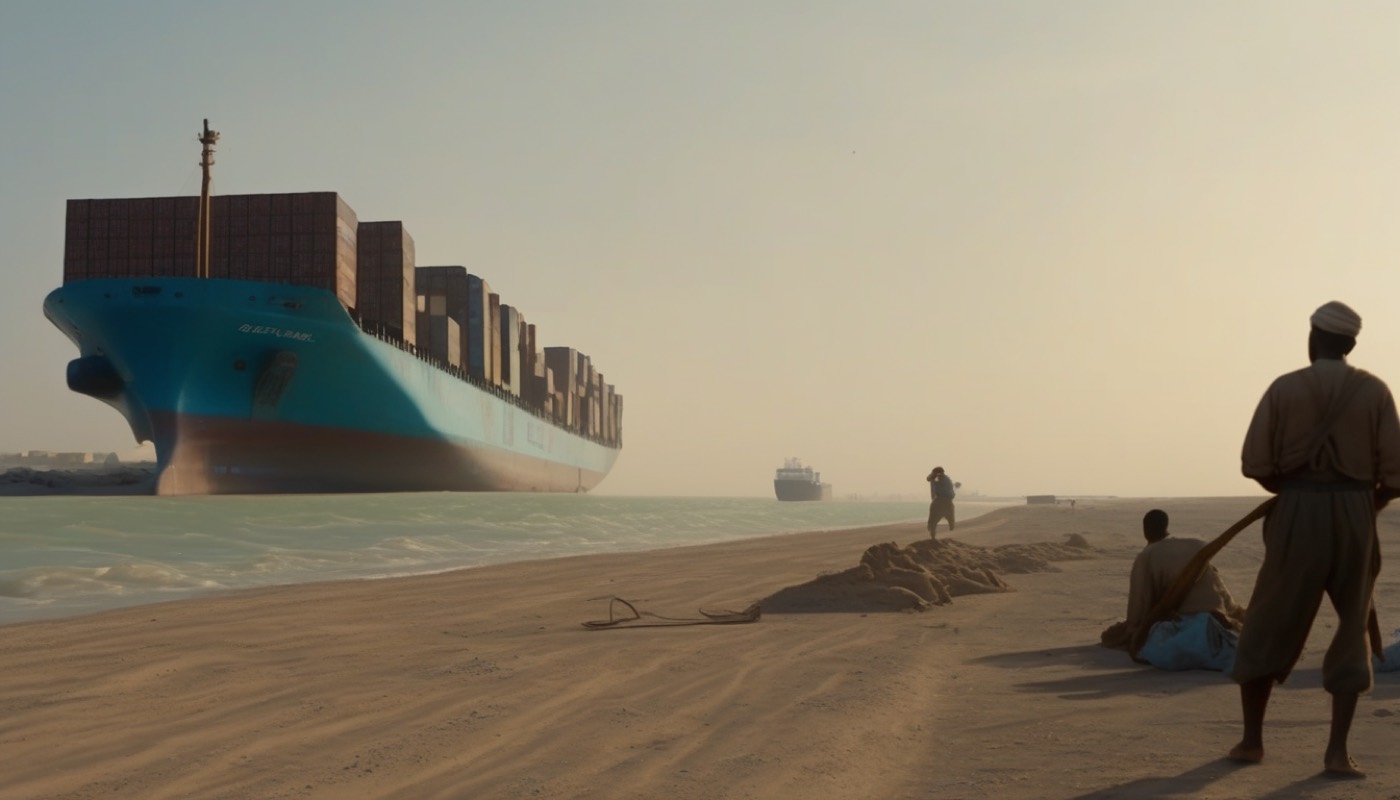
There is a place in Egypt where, if you stand on the right patch of sand at the right moment, a container ship will appear to sail across the desert.
It is not an illusion of heat. It is the Suez Canal, and the ship is passing along a trench cut through flat ground, so low and so narrow that from a few hundred metres away the water disappears entirely and only the hull and the stacked boxes remain, sliding through the dunes.
The trench is one hundred and ninety-three point three kilometres long, according to the Suez Canal Authority's own published characteristics for the canal as configured since twenty fifteen. At its deepest it holds twenty-four metres of water. Measured at a depth of eleven metres it is between two hundred and five and two hundred and twenty-five metres wide.
And it has no locks. None at all. The Mediterranean and the Red Sea sit at close enough to the same level that the water simply runs between them. A ship does not climb through the Suez Canal. It is not lifted, or lowered, or held in a chamber while valves equalise. It just goes.
That is worth holding onto, because it explains a great deal of what follows. A lock canal is a machine, with moving parts that can be maintained, defended and rationed. The Suez Canal is not a machine. It is an absence — a gap where the land used to be.
In March twenty twenty-four, in the middle of the crisis this film ends on, the International Monetary Fund put the canal's normal share of global maritime trade at around fifteen per cent. The United Nations Conference on Trade and Development estimated that in twenty twenty-three, twenty-two per cent of the world's seaborne container trade passed through it.
Roughly one container in five. Through a ditch.
2. Why anyone dug here at all
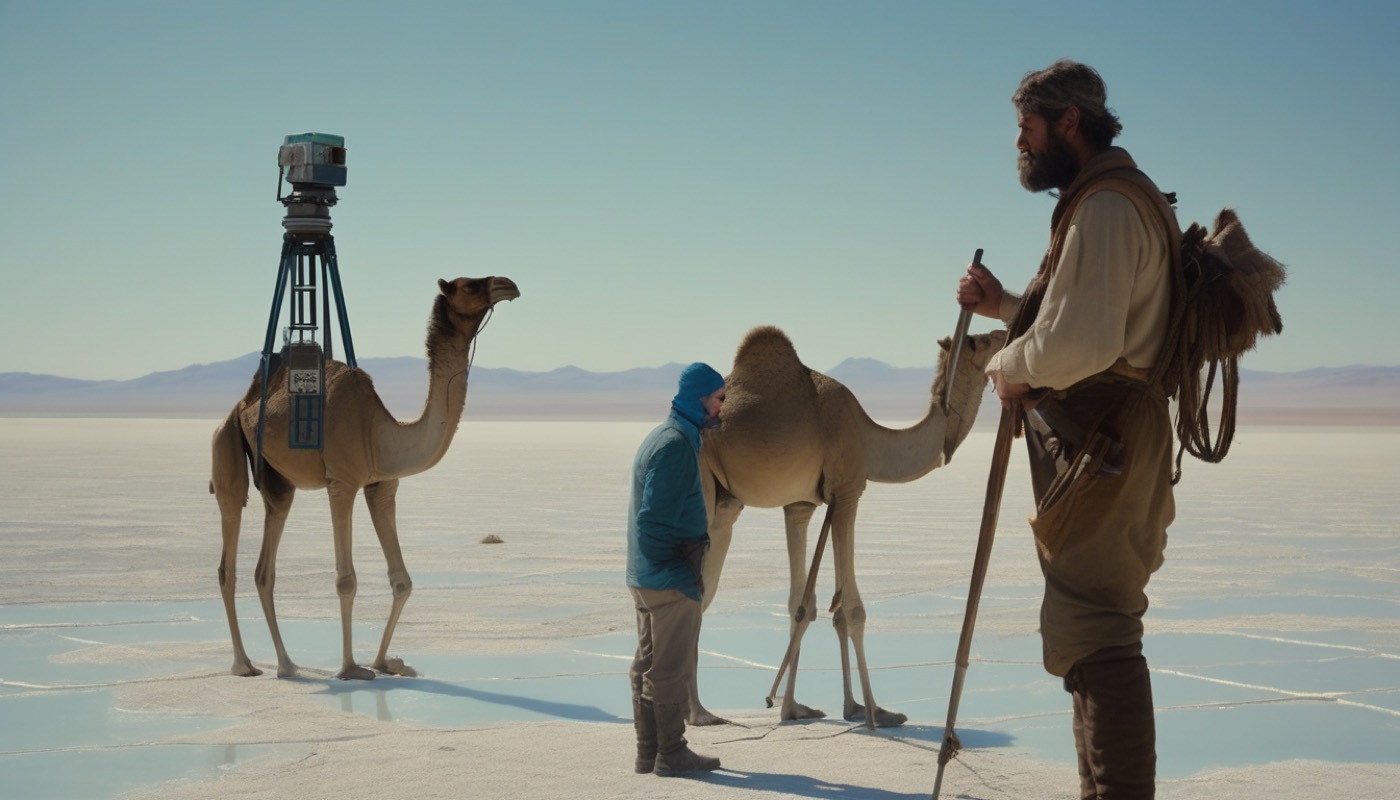
The reason is a hundred and twenty miles of sand, and what sits on either side of it.
Without the canal, a ship going from Europe to Asia must go all the way down the Atlantic, round the southern tip of Africa, and back up the length of the Indian Ocean. The Isthmus of Suez is the thin strip of land that makes that necessary — and it is genuinely thin, genuinely flat, and punctuated by natural depressions that hold water: Lake Timsah, and the Great and Little Bitter Lakes.
People noticed this early. The Egyptian pharaoh Necho the Second, who reigned from around six hundred and ten to five hundred and ninety-five before the common era, is recorded as attempting a canal running west to east through the Wadi Tumilat — not the modern north-south route, but a link from the Nile to the Red Sea. By most accounts he never finished it.
Darius the First of Persia, who reigned from five hundred and twenty-two to four hundred and eighty-six before the common era, did. The sources describe a fully functional canal, wide enough for two triremes to pass one another with their oars extended, taking four days to traverse end to end. Ptolemy the Second reopened it around two hundred and seventy before the common era, adding a navigable lock with sluices.
So the idea is not modern. What is modern is the ambition: not a connection from the river to the sea, which silts up and can be redug, but a permanent cut from one sea to the other, deep enough and wide enough for the largest ships anyone could imagine building.
That required money, political cover, and an extraordinary quantity of human labour. It got all three, and the manner in which it got the third is the part that tends to be left out.
3. A concession, and a company
The man who assembled it was Ferdinand de Lesseps, a French diplomat rather than an engineer, and his instrument was a concession granted by Said Pasha — first in eighteen fifty-four, then confirmed and extended in eighteen fifty-six.
In eighteen fifty-eight the Suez Canal Company was founded on four hundred thousand shares at five hundred francs each. The intention was an international subscription. The reality was that large blocks went unsold: Said Pasha ended up holding roughly two hundred and thirty-seven thousand shares — sixty thousand he had subscribed for, and around one hundred and seventy-seven thousand that no other investor would take.
That detail matters more than it looks. Egypt did not merely host the canal. Egypt was, from the very beginning, the buyer of last resort for a French company's stock — a position that would define the country's finances for the next twenty years, and eventually cost it control of the thing it had paid for.
The pilot study of the eighteen fifties had put the cost at two hundred million francs. The revised plan of eighteen fifty-nine called for the excavation of roughly eighty million cubic yards of earth.
Eighty million cubic yards, in a desert, before the age of mechanical excavation was properly under way. There was, at the start, no fleet of machines capable of that. There were people.
4. Dug by hand
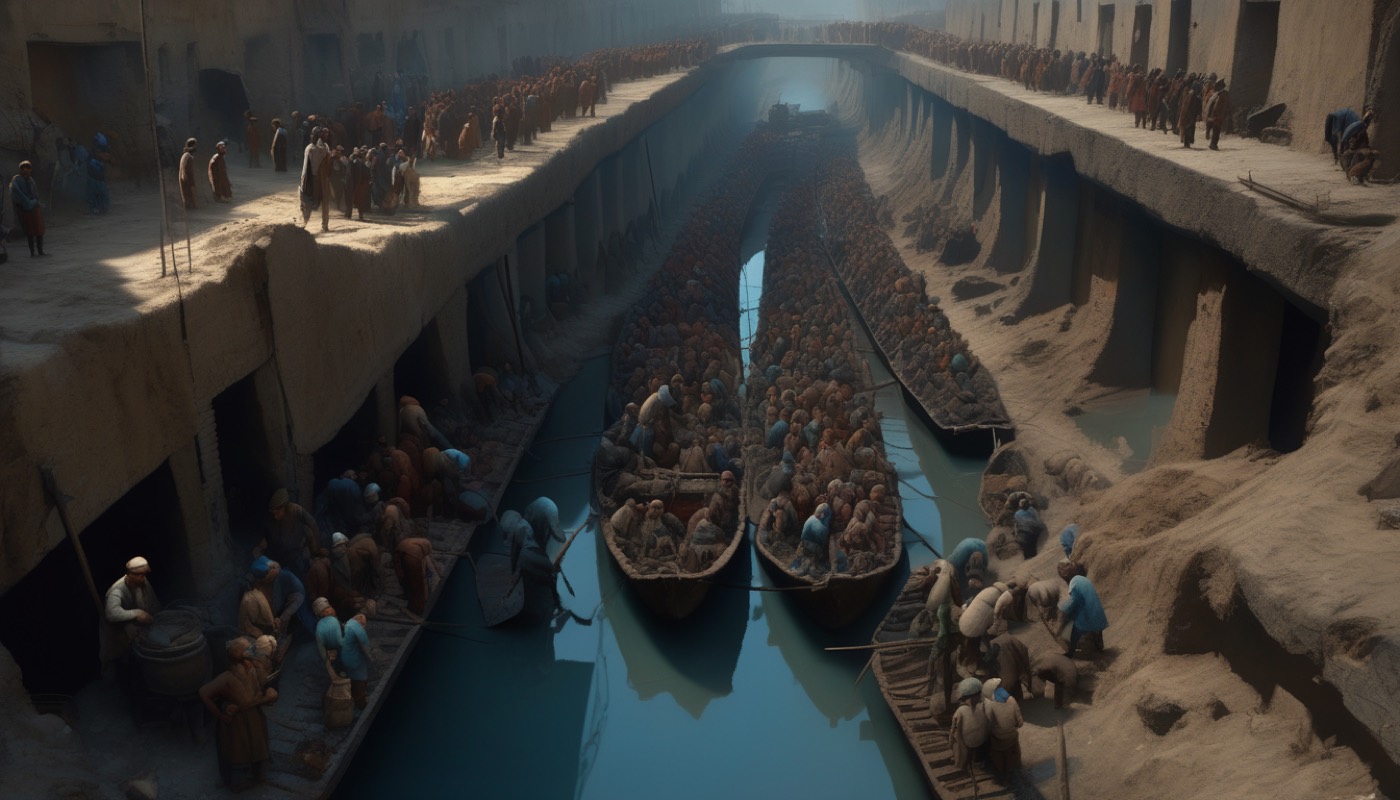
Excavation began at Port Said on the twenty-fifth of April, eighteen fifty-nine.
The labour came through the corvée — a system of compulsory unpaid work owed to the state, which in practice meant Egyptian peasants, the fellahin, being requisitioned from their villages and sent to the isthmus. The historian Caroline Piquet, quoted by the French National Centre for Scientific Research, puts the number mobilised under the corvée between eighteen fifty-nine and eighteen sixty-two at around four hundred thousand.
At the system's height, between eighteen sixty-one and eighteen sixty-four, roughly sixty thousand fellahin were digging the canal by hand at any one time. Across the project as a whole, more than thirty thousand people were at work simultaneously and more than one and a half million were employed in total.
How many died is genuinely unknown, and this film is not going to pretend otherwise.
Piquet's assessment is that tens of thousands of the four hundred thousand mobilised are thought to have died. Gamal Abdel Nasser, nearly a century later, asserted a figure of one hundred and twenty thousand — and Piquet states plainly that there are no accurate archives to support it. Set against both, a Suez Canal Company medical officer reported a death rate of no more than two point four nine per thousand in eighteen sixty-six.
Those three numbers cannot all be right. They are not offered here as a range, because they are not measurements of the same thing: one is a historian's estimate across a period, one is a political claim made in the middle of a nationalisation dispute, and one is a company's own return for a single year, from a company with every reason to report well.
What is not in dispute is the mechanism. The canal's first years were dug by people who had not volunteered, under a legal obligation they could not refuse.
5. The machines arrive, and Egypt pays for them
The corvée ended not through conscience but through arbitration.
Under pressure from Britain, and with the labour system increasingly untenable, the dispute went to Napoleon the Third, whose award in eighteen sixty-four ended the corvée — and simultaneously ordered Egypt to compensate the Suez Canal Company eighty-four million francs for breaking the labour and land agreements it had signed.
Egypt did not have eighty-four million francs. It borrowed nearly one hundred million from the Oppenheim brothers to pay it.
Read that sequence again. Egypt supplied the forced labour. Egypt was then compelled to pay the company for the withdrawal of that labour. Egypt borrowed the money to do so, at terms set in Europe. The canal had not yet opened.
With the corvée gone, the work turned mechanical. Purpose-built dredgers and excavators took over the deep cutting, and the project became one of the earliest demonstrations of what industrial earthmoving could do at scale. It also became far more expensive.
De Lesseps' own final account put the construction cost at eleven million, six hundred and twenty-seven thousand pounds — more than double the original estimate.
On the fifteenth of August, eighteen sixty-nine, the southern dam was breached and the two seas met. The canal was, physically, finished.
6. The seventeenth of November, eighteen sixty-nine
The official inauguration was held on the seventeenth of November, eighteen sixty-nine.
It is worth saying clearly that this date is often reported as the tenth of November. Every source checked for this film — the canal's own history and the company's — gives the seventeenth for the inauguration ceremony, and the fifteenth of August for the physical completion. Where the tenth comes from is unclear; it is simply repeated.
The opening was a spectacle, and the traffic that followed was not. In eighteen seventy, its first full year, the canal handled four hundred and eighty-six transits, carrying four hundred and forty-four thousand metric tons of net tonnage.
Four hundred and eighty-six ships. In a year. Rather more than one a day.
For comparison, and to give the scale of what this thing eventually became: in twenty twenty-three the canal handled twenty-six thousand, four hundred and thirty-four transits, carrying one billion, five hundred and sixty-eight million metric tons — an average of seventy-two ships a day.
But in eighteen seventy it was a very expensive hole in the ground carrying almost nothing, owned by a company whose largest shareholder was a government sliding into insolvency.
That situation had an obvious resolution, and it arrived within six years.
7. Britain buys in
By eighteen seventy-five, Khedive Isma'il Pasha's finances had collapsed under the weight of borrowing — of which the canal was a substantial part. He needed money quickly, and he had one asset the world wanted.
In December eighteen seventy-five the British government bought his block of around one hundred and seventy-seven thousand shares for four million pounds. That gave Britain forty-four per cent of the Suez Canal Company.
The purchase is remembered partly for how it was financed. Parliament was not sitting. The money was advanced by Lionel de Rothschild, through N M Rothschild and Sons, on the British government's word — and repaid within five months.
So within six years of opening, a canal dug through Egyptian territory with Egyptian labour, largely at Egyptian financial risk, had its controlling foreign stake transferred from a French company's Egyptian shareholder to the British state. Egypt kept the sand. Britain and France kept the shares.
Seven years after that, in eighteen eighty-two, Britain occupied Egypt outright. The canal was not the only reason, but it is not possible to tell the story of the occupation without it. A four-million-pound shareholding had become a strategic interest, and a strategic interest had become a garrison.
That is the pattern this film keeps returning to. The canal is a piece of infrastructure that repeatedly converts commercial exposure into political control — and it has done it to several countries, in several directions, over a hundred and sixty years.
8. The rules written for it
If the canal was going to be that important, somebody was going to have to write down what happened to it in a war.
The Convention of Constantinople was signed on the twenty-ninth of October, eighteen eighty-eight, by nine powers: the United Kingdom, the German Empire, Austria-Hungary, Spain, France, Italy, the Netherlands, the Russian Empire and the Ottoman Empire.
Its first article is the one that matters. The canal shall be free and open, to every vessel of commerce or of war, without distinction of flag — and, in the phrase that has been quoted ever since, in time of war as in time of peace.
It is an unusually clean piece of drafting for the period. It is also an unusually good illustration of the gap between a signed instrument and an operating reality, because Britain attached a reservation that left the Convention technically inoperative for sixteen years. It did not actually take effect until the eighth of April, nineteen hundred and four, with the Entente Cordiale.
Sixteen years is not a footnote. It is most of a generation in which the rule everyone cites did not formally apply.
And the Convention has been tested since, repeatedly, by exactly the thing it was written to prevent: a state deciding that its own security outranks the guarantee. Which brings us to the summer of nineteen fifty-six.
9. Nationalisation, and forty-seven ships on the bottom
On the twenty-sixth of July, nineteen fifty-six, Gamal Abdel Nasser announced the nationalisation of the Suez Canal Company.
The response, in October and November, was a military intervention by Britain, France and Israel. The political consequences of that intervention are their own film. The physical consequence was simpler and more immediate: the canal was blocked.
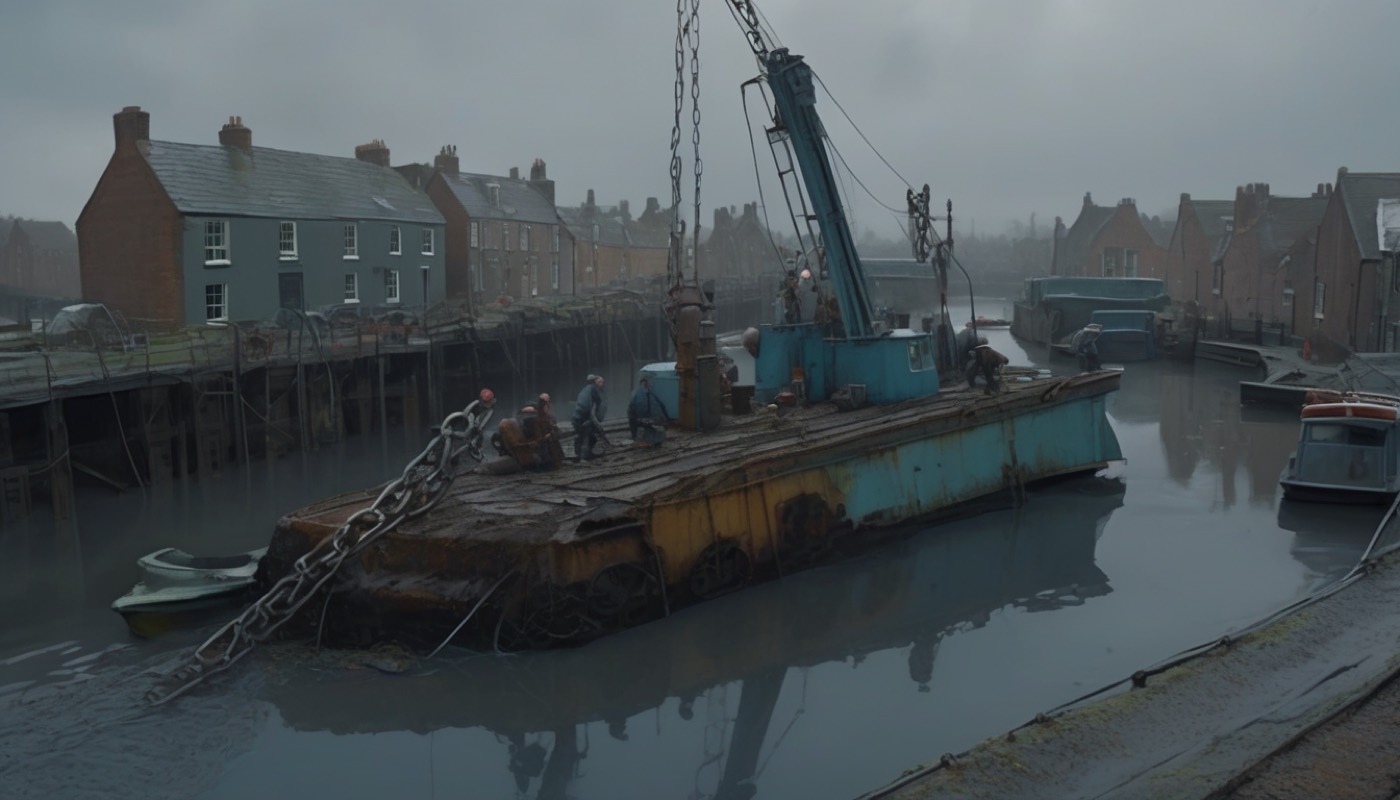
Forty-seven vessels were deliberately sunk in it. Not merchant ships caught by accident — a frigate, dredgers, tugs, floating cranes, floating docks, hoppers and salvage craft, put on the bottom to close the waterway.
The stakes were plain from one figure. At the time, roughly sixty-seven per cent of the oil Europe consumed came through the Suez Canal. Closing the canal was not a gesture. It was a hand on Europe's fuel supply.
Clearance began on the seventh of November, nineteen fifty-six. By the twenty-first of January, nineteen fifty-seven, Anglo-French salvage teams had removed thirteen wrecks totalling nearly seventeen thousand tons, working with a fleet of twelve salvage vessels retained under United Nations operation. British and French ships were passing through again by April nineteen fifty-seven, with final clearance completed on the seventh of May.
Sources disagree on exactly when the canal reopened — some give March nineteen fifty-seven, some April. The honest answer is the spring of nineteen fifty-seven, after roughly five months closed.
Five months was survivable. What happened a decade later was not on that scale at all.
10. Eight years, and fifteen ships that could not leave
The canal closed on the sixth of June, nineteen sixty-seven, at the outbreak of the Six-Day War.
It reopened in June nineteen seventy-five, at a ceremony attended by President Anwar Sadat.
Eight years. The waterway that carried a fifth of the world's containerised trade in our own century sat empty, silted, mined, and lined on both banks by two armies, for eight consecutive years.
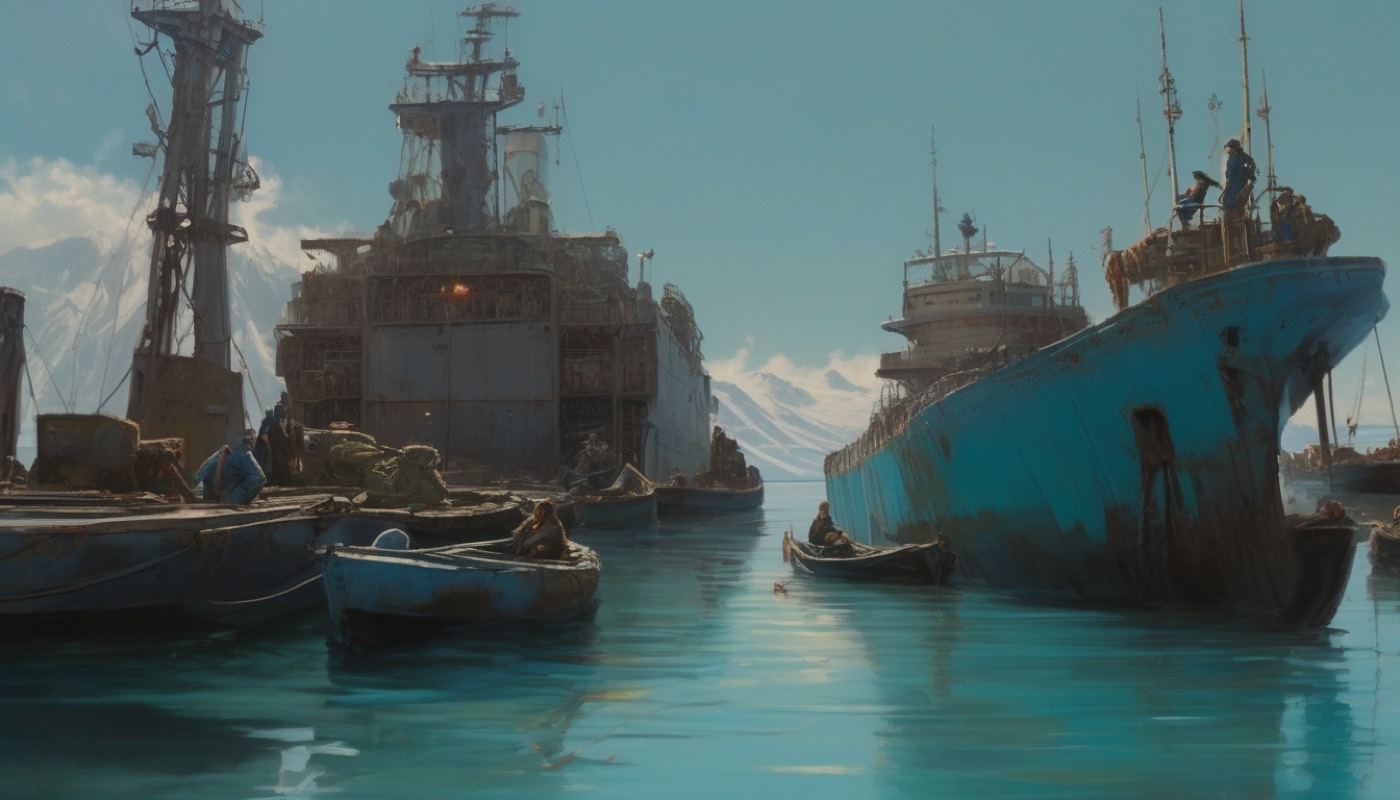
Fifteen ships were inside it when it shut. Fourteen were in the Great Bitter Lake and one in Lake Timsah, and they stayed. They flew the flags of eight nations — West Germany, Sweden, France, the United Kingdom, the United States, Poland, Bulgaria and Czechoslovakia — and they became known as the Yellow Fleet, for the desert sand that settled on them until the hulls changed colour.
In October nineteen sixty-seven the crews of all fourteen Great Bitter Lake ships met aboard the Melampus and founded the Great Bitter Lake Association. Over the years that followed they ran their own postal service, their own sporting events, and a shared rota so that skeleton crews could be rotated home while the ships stayed.
The surviving vessels finally left the Great Bitter Lake by the twenty-fourth of May, nineteen seventy-five. Two of them sailed out under their own power, having been at anchor for eight years.
The cost of those eight years, measured at the time: around one point seven billion dollars a year in lost world trade and higher shipping costs, and around two hundred and fifty million dollars a year in lost Egyptian toll revenue.
11. Clearing a canal nobody could enter
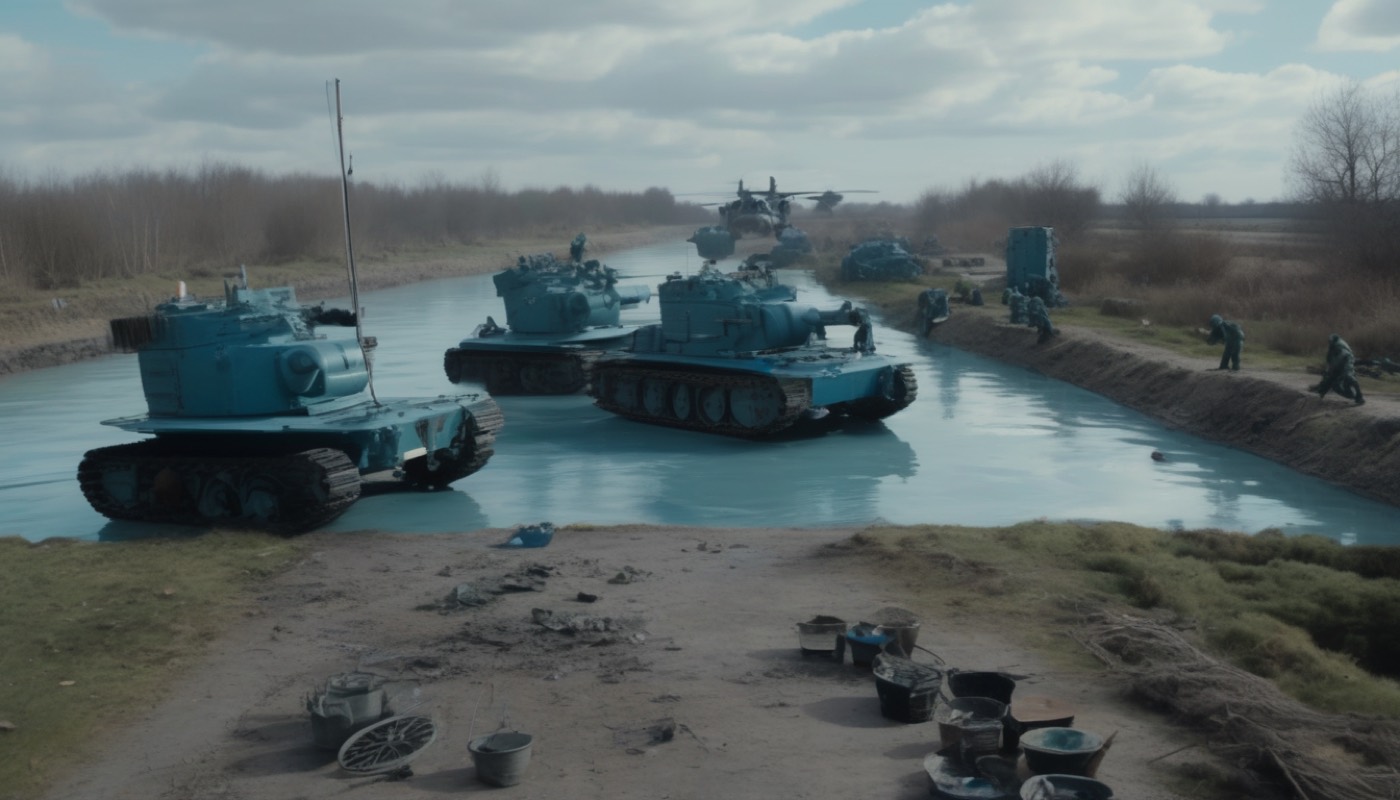
Reopening it was not a matter of unblocking a channel. It was a matter of clearing a battlefield that happened to be a waterway.
Egyptian forces, trained by United States Army explosive ordnance disposal specialists, cleared six hundred and eighty-six thousand land mines from the canal zone, along with thirteen thousand five hundred other pieces of unexploded ordnance. Around one thousand seven hundred Egyptian Army engineers were trained for the work.
Inside the canal itself, roughly seven thousand five hundred items of underwater ordnance were found, with over a thousand more in the harbours and anchorages.
The operations ran in sequence. Operation Nimbus Star, the minesweeping phase, ran from the twenty-second of April to the third of June, nineteen seventy-four. Operation Nimrod Spar, the wreck removal, ran from the twenty-ninth of May to the nineteenth of December, nineteen seventy-four, lifting ten designated wrecks.
It is easy to read those as logistics. They are not. Six hundred and eighty-six thousand mines is a number that describes a decision — the decision, taken by both sides, to make the ground on either side of the world's most important trade route permanently lethal, and to accept that somebody would eventually have to undo it by hand.
Somebody did. And in June nineteen seventy-five the ships came back.
12. What a transit actually involves
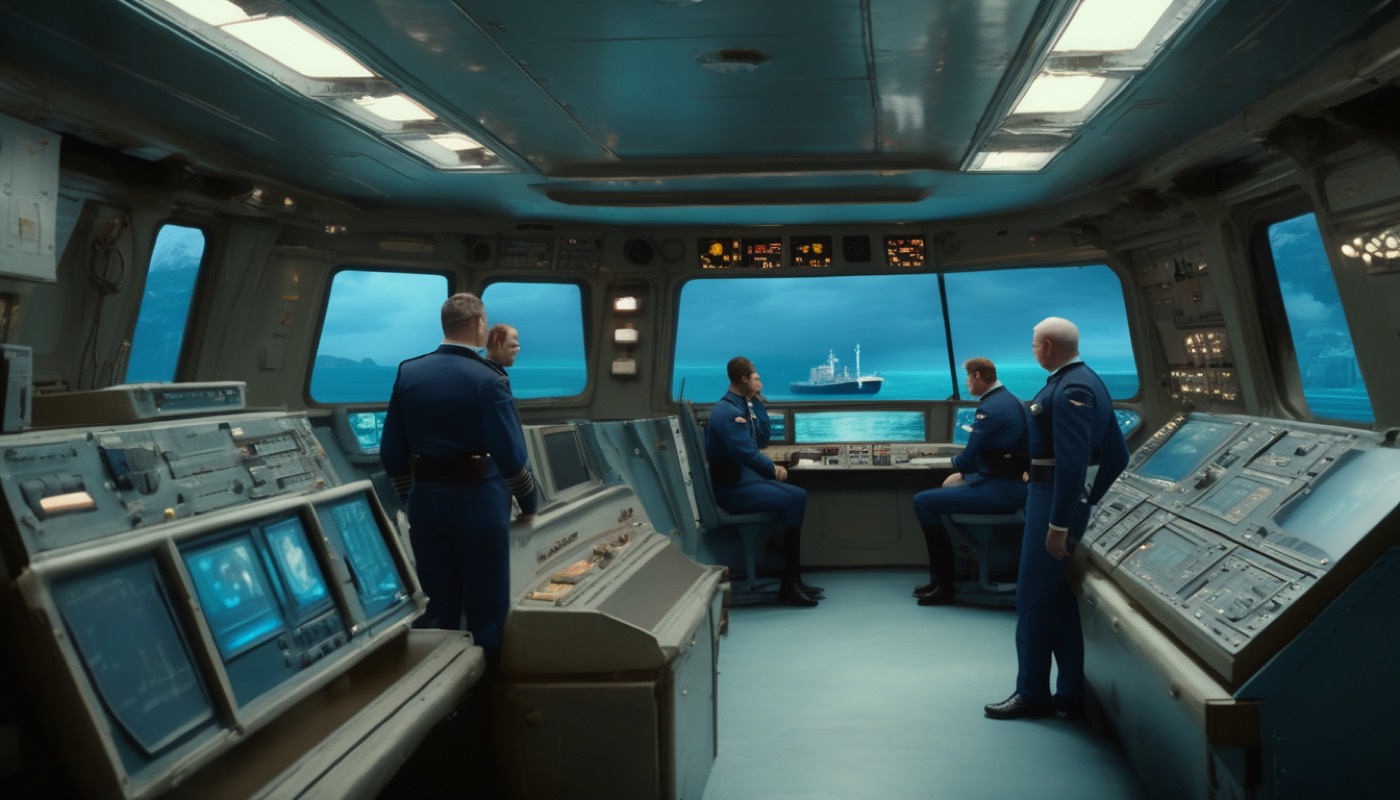
Strip away the history and the canal is an operating waterway with a timetable, and the timetable is stranger than most people expect.
There is no continuous two-way traffic along the whole length. Since nineteen forty-seven the canal has run on convoys: historically one northbound and two southbound convoys a day. Ships gather, enter as a group, and proceed at roughly eight knots — a walking pace for a vessel carrying twenty thousand containers.
A transit takes between eleven and sixteen hours. In the eighteen seventies it took about forty hours; by nineteen thirty-nine it was down to thirteen.
The limits on what can pass are physical and specific. The Suezmax standard permits a maximum beam of seventy-seven point five metres and a maximum draught of twenty point one metres, the latter since the deepening of two thousand and nine. But those two cannot be combined: the canal permits a maximum wetted cross-sectional area of one thousand and six square metres, so a ship can have twenty point one metres of draught at up to fifty metres of beam, or the full seventy-seven point five metres of beam at twelve point two metres of draught. Not both.
Within those limits, the Suez Canal Authority's own figures put the share of the world fleet able to transit fully laden at sixty-one point two per cent of tankers, ninety-two point seven per cent of bulk carriers — and one hundred per cent of container ships.
Every container ship afloat can use it. That single fact is why the container trade is the part that hurt most when the canal became dangerous.
13. The toll
The canal earns its money one ship at a time, and the amounts are large.
When the Suez Canal Authority raised tolls with effect from the first of March, twenty twenty-two — by five, seven or ten per cent depending on carrier type, and only weeks after a six per cent rise that had taken effect in February — the transit cost for a large container ship went from around six hundred and twenty-five thousand dollars to around six hundred and seventy-five thousand.
Six hundred and seventy-five thousand dollars. For eleven to sixteen hours of sailing through a trench.
Ships pay it because the alternative costs more, and that relationship — the toll priced just below the pain of going the long way round — is the entire commercial logic of the canal.
At the peak it worked extraordinarily well. The Suez Canal Authority reported record revenue of nine point four billion dollars for the fiscal year twenty twenty-two to twenty twenty-three, announced by its chairman Osama Rabie on the twenty-first of June, twenty twenty-three, a thirty-five per cent increase on the seven billion of the year before. Measured on the calendar year, the Authority later reported ten point two five billion dollars for twenty twenty-three.
The United Nations Conference on Trade and Development put the nine point four billion dollar figure at two point three per cent of Egypt's gross domestic product.
Two point three per cent of a country's entire economy, from a waterway you can walk across the width of in three minutes.
14. What actually goes through it
The mix matters, because different cargoes reacted very differently to what happened next.
By the United Nations Conference on Trade and Development's twenty twenty-three figures, container ships were twenty-three per cent of transits but forty-three per cent of gross tonnage. Oil tankers were twenty-four per cent of transits and twenty-three per cent of tonnage. Bulk carriers were twenty-eight per cent of transits and nineteen per cent of tonnage.
On energy specifically, the United States Energy Information Administration recorded eight point eight million barrels a day of crude oil and petroleum products moving through the Suez Canal and the parallel SUMED pipeline in twenty twenty-three, up from seven point three million in twenty twenty-two. Liquefied natural gas through the canal ran at four point one billion cubic feet a day in twenty twenty-three.
Hold those numbers. They are the last readings taken before the disruption, and the same series will tell you the size of what followed more clearly than any statement from any government.
Because on the current figures, oil and products through Suez and SUMED fell to four point eight million barrels a day in twenty twenty-four and four point nine million in the first half of twenty twenty-five. Liquefied natural gas through the canal fell to half a billion cubic feet a day in twenty twenty-four.
From four point one billion to zero point five billion. A fall of nearly ninety per cent in a single commodity, in a single year.
We will come to why. First, there is a decade-old promise to examine.
15. The New Suez Canal, and the arithmetic of a promise
On the sixth of August, twenty fifteen, Egypt inaugurated what it called the New Suez Canal.
The works were substantial and genuinely fast. Thirty-five kilometres of new parallel waterway dredged to twenty-four metres, plus thirty-seven kilometres of deepened and widened bypasses — twenty-seven kilometres in the Great Bitter Lakes and ten at Ballah — for seventy-two kilometres of new and improved channel in total. Two hundred and fifty million cubic metres dredged and two hundred and fifty-eight point eight million cubic metres of dry excavation, using forty-five dredgers. It was completed in twelve months including mobilisation, against an original forecast of three years.
It cost eight and a half billion dollars, and Egypt financed it domestically. Investment certificates were sold to Egyptian citizens at twelve per cent interest, in denominations as low as ten Egyptian pounds, against a standard bank rate of nine. Eight billion dollars was raised in eight days. Polling at the time suggested roughly forty-two per cent of buyers used savings they had never previously invested.
Ordinary Egyptians funded it, personally, on the strength of a projection.
That projection, in the Suez Canal Authority's own published words, was thirteen point two two six billion dollars of revenue in twenty twenty-three, up from five point three billion, and ninety-seven ships a day by twenty twenty-three, up from forty-nine.
The actual twenty twenty-three outcome: ten point two five billion dollars, and an average of seventy-two ships a day.
That is a genuine increase. It is also roughly three billion dollars a year short of the promise, in the best year the canal has ever had. An independent estimate at the time, by the engineer Islam Mamdouh, put the genuinely new revenue at two to three hundred million dollars a year — against the government's claim of eight and a half billion.
16. Six days in March
At seven forty in the morning, Egypt Standard Time, on the twenty-third of March, twenty twenty-one, the container ship Ever Given went aground in the southern section of the canal and turned across it.
The ship is three hundred and ninety-nine point nine four metres long, fifty-eight point eight metres in the beam, two hundred and twenty thousand, nine hundred and forty gross tons, with capacity for twenty thousand, one hundred and twenty-four containers. The canal at that point is not four hundred metres wide.
She stayed there for just over six days, refloating at five past three in the afternoon on the twenty-ninth of March.
Over two hundred vessels were waiting at the peak. Around four hundred and fifty had to be cleared once she moved.
The figure everybody remembers is nine point six billion dollars a day of goods held up — five point one billion westbound, four point five billion eastbound. It is worth being exact about where that came from, because it has been repeated ever since as though it were a measurement. It was produced by Lloyd's List, whose data underpinned a calculation written up by Bloomberg and published on the twenty-fifth of March, twenty twenty-one. Lloyd's itself described them as rough calculations. They were derived from the value of goods moving through a canal that normally handled around fifty ships a day.
It is a reasonable estimate of value in transit. It is not a measurement of loss, and the two are not the same thing.
The Suez Canal Authority's own chairman estimated losses to the canal at around one billion dollars. The Authority claimed nine hundred and sixteen million dollars in compensation on the thirteenth of April, reduced during negotiation to around five hundred and fifty million. The Ever Given was released on the seventh of July, twenty twenty-one, after roughly three months of negotiation. The terms were never disclosed.
Six days had produced a three-and-a-half-month legal dispute and a permanent place in the public imagination. It was still, in the end, an accident.
17. The nineteenth of November, twenty twenty-three
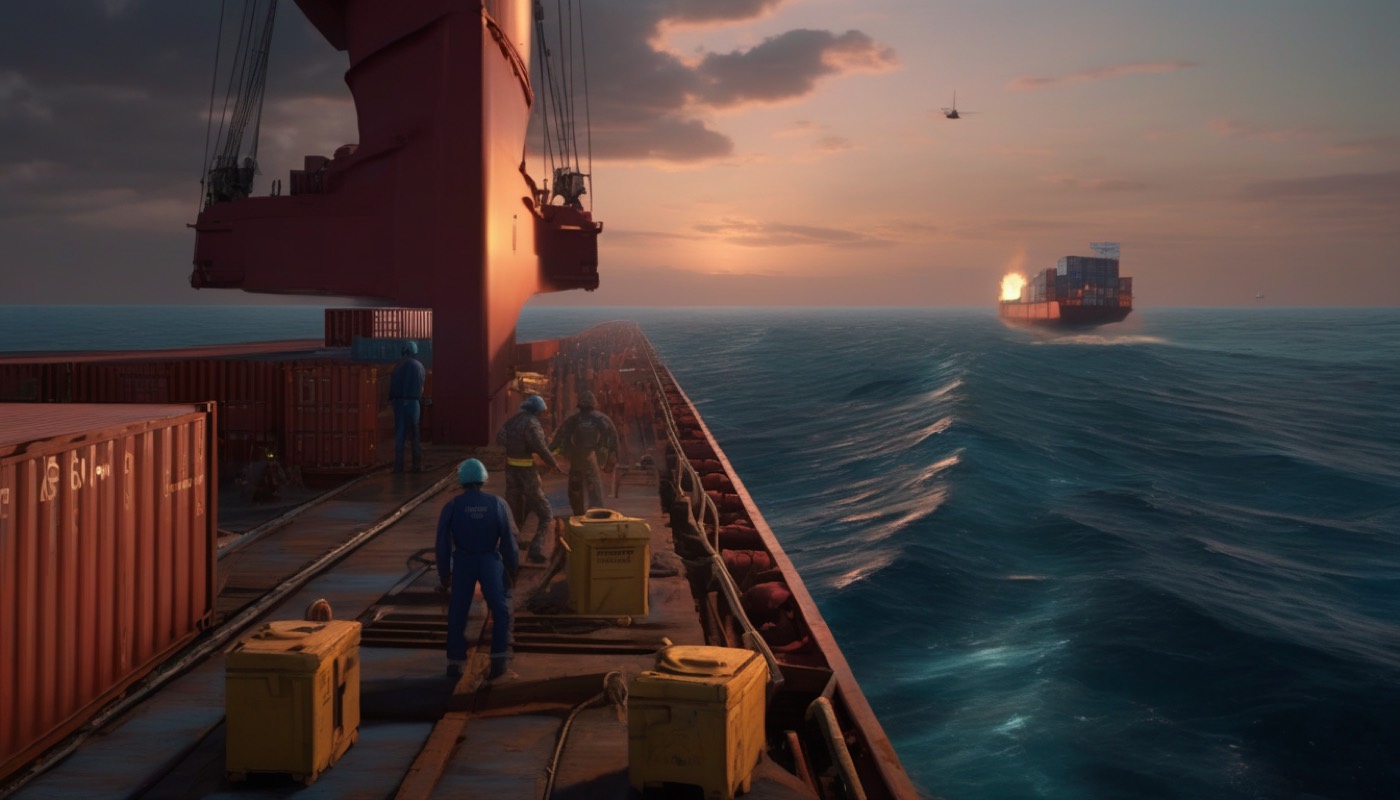
What came next was not an accident.
On the nineteenth of November, twenty twenty-three, Houthi forces landed by helicopter on the car carrier Galaxy Leader and seized it. It was the first of what has since become one hundred and five documented attacks on commercial vessels through to August twenty twenty-six.
Four ships have been sunk: the Rubymar in February twenty twenty-four, the Tutor in June twenty twenty-four, the Magic Seas and the Eternity C within two days of each other in July twenty twenty-five. At least seven seafarers have been killed.
The shipping industry's reaction was not gradual. By the first week of January twenty twenty-four, vessel transits through the canal were down forty-one per cent against a year earlier and trade volume down forty-seven per cent — about two hundred and twenty fewer ships. Ninety per cent of container vessels had already diverted.
By the first half of February twenty twenty-four, container tonnage crossing the canal was down eighty-two per cent year on year. Tonnage entering the Gulf of Aden fell by more than seventy per cent between December twenty twenty-three and February twenty twenty-four. Tonnage routed around the Cape of Good Hope rose sixty per cent. By the eighteenth of February, six hundred and twenty-one container ships had rerouted; by March twenty twenty-four, more than two thousand ships in total had been diverted.
Remember the figure from chapter twelve: one hundred per cent of container ships can physically use the Suez Canal. Within eight weeks, ninety per cent of them had chosen not to.
Capability was never the constraint. Risk was.
18. The long way round
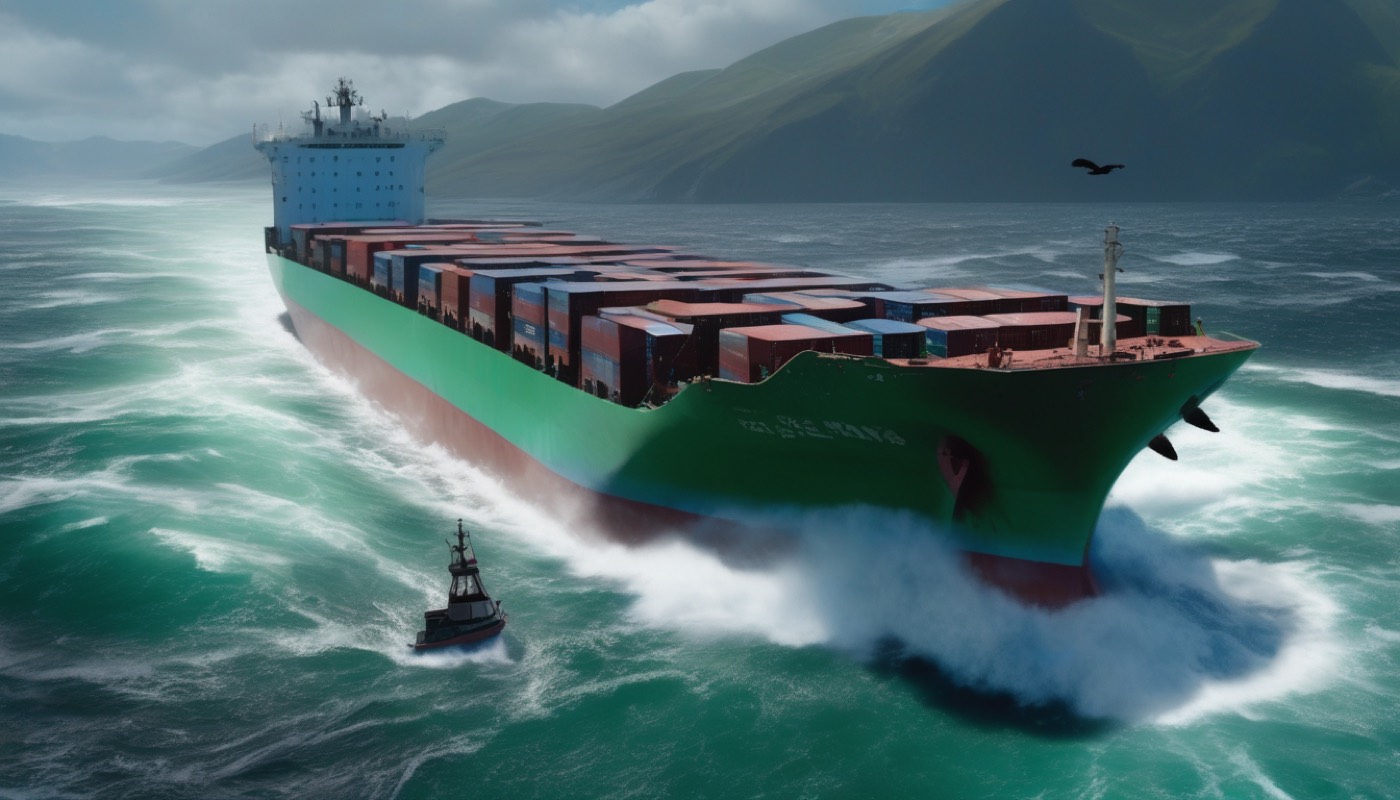
The alternative is the route the canal was dug to abolish.
On the Asia to Europe run, going around the Cape of Good Hope adds three thousand to three thousand five hundred nautical miles — roughly six thousand kilometres — and more than ten days, potentially as much as two weeks.
In proportional terms, the United Nations Conference on Trade and Development calculated that a container ship from Singapore to Rotterdam travels twenty-nine per cent further via the Cape, and an oil tanker from Saudi Arabia to the Netherlands forty-two per cent further. Greenhouse gas emissions per trip from Singapore to northern Europe rise by over seventy per cent.
The operational consequences compound. An India to Europe round trip stretched from fifty-six days to sixty-three, which means the loop needs one more ship in it to maintain the same service.
And it is expensive. LSEG Shipping Research estimated in January twenty twenty-four that the Cape routing cost an Aframax tanker an additional nine hundred and thirty-two thousand, nine hundred and five dollars per voyage, on Asia to north-west Europe — a one hundred and ten per cent increase in total voyage cost, with the voyage lengthening from sixteen days to thirty-two. For a container vessel the equivalent cost increase was put at around thirty-five per cent.
The freight market repriced immediately. A forty-foot container from Shanghai to Rotterdam cost one thousand one hundred and seventy dollars on the spot market at the start of December twenty twenty-three. By the eleventh of January, twenty twenty-four, it cost four thousand four hundred.
Now weigh that against chapter thirteen. The toll was six hundred and seventy-five thousand dollars. The detour cost an Aframax nine hundred and thirty-three thousand. Shipping companies paid the larger number anyway — because the toll is a price, and the Red Sea was a risk, and a risk to a crew is not a line item.
19. What it cost Egypt
Egypt did not choose any of this, and Egypt paid for it.
Canal revenue for calendar year twenty twenty-three was ten point two five billion dollars. For twenty twenty-four it was three point nine nine one billion — a fall of about sixty-one per cent. Transits fell from over twenty-six thousand ships to thirteen thousand two hundred and thirteen, almost exactly half.
President Abdel Fattah El-Sisi put the rate of loss at around eight hundred million dollars a month in March twenty twenty-five. Egypt's Foreign Minister, Badr Abdelatty, gave cumulative Suez Canal revenue losses of ten and a half billion dollars at a press conference on the fourth of July, twenty twenty-six.
The Authority tried to buy the traffic back. In May twenty twenty-five it announced a fifteen per cent discount on transit fees for container ships of one hundred and thirty thousand tons and above, for ninety days, citing a fall in revenue from eight point eight billion to six point six billion dollars.
It did not work quickly. In the first week of twenty twenty-six, with one hundred days having passed without a Houthi attack, the Baltic and International Maritime Council found canal traffic still running sixty per cent below the corresponding week of twenty twenty-three. Every quarter since January twenty twenty-four had seen deadweight tonnage between fifty-one and sixty-four per cent below twenty twenty-three levels. In the fourth quarter of twenty twenty-five, container ship transits were still down eighty-six per cent.
That is the shape of the damage. Not a dip with a rebound, but a step down that held for two years, in a revenue stream worth over two per cent of a country's economy — and one that ordinary Egyptians had personally lent money against in twenty fourteen.
20. Coming back, and what the ditch is worth
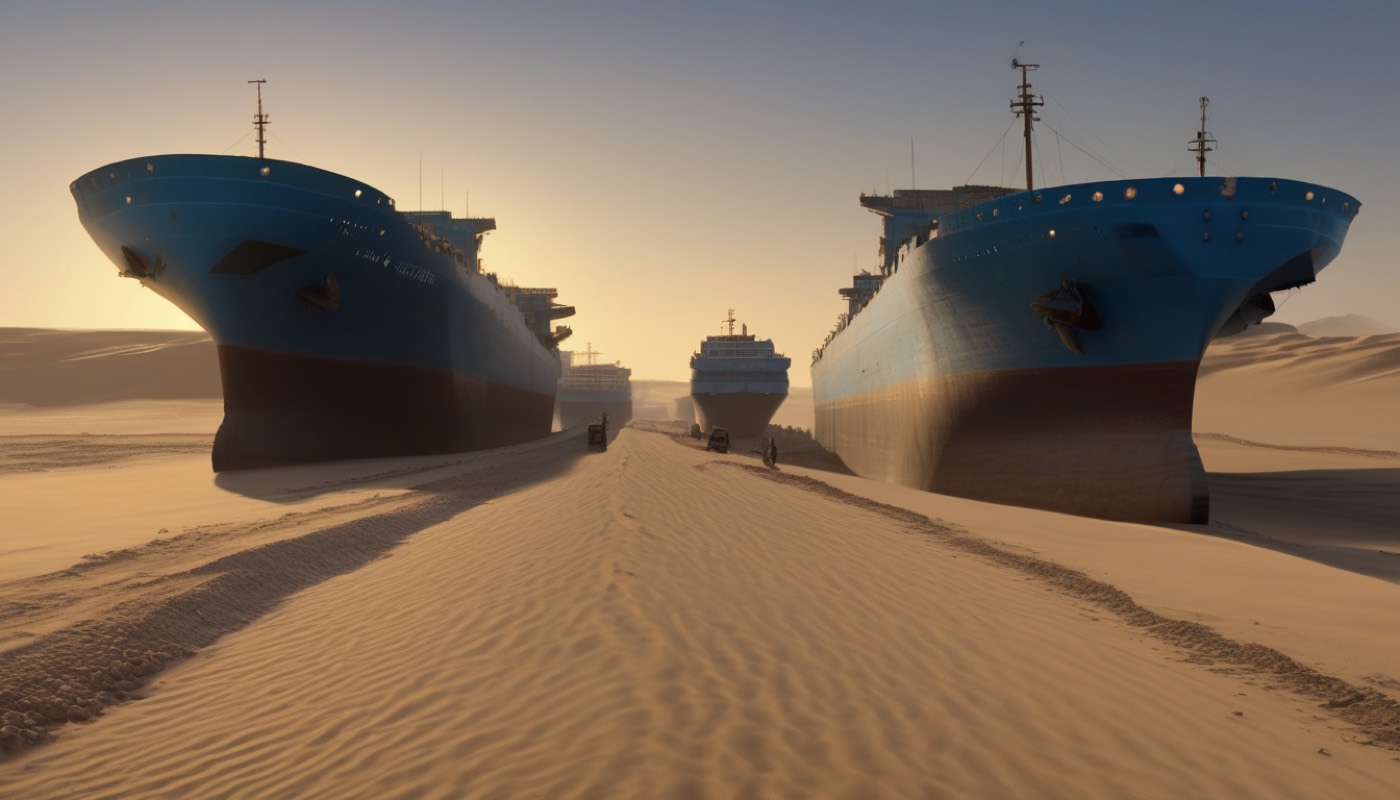
Traffic is returning, and the figures are finally moving the right way.
Suez Canal Authority revenue for the fiscal year twenty twenty-five to twenty twenty-six was four point six seven billion dollars, up twenty-three per cent year on year, with vessel transits up ten per cent and cargo tonnage up twenty-two per cent. Second quarter twenty twenty-six revenue was one point two six billion dollars, up thirteen per cent on the first quarter, from three thousand five hundred and eighty vessels.
The carriers are moving. By the eighteenth of August, twenty twenty-six, Maersk had restored over thirty per cent of its Cape volumes to the trans-Suez corridor, and MSC had begun test transits. On the fifth of September, twenty twenty-six, chairman Osama Rabie reported vessel numbers up forty per cent and dollar revenues up fifty per cent in the second half of the year, projecting full-year twenty twenty-six revenue of five point eight to six billion dollars.
But hold that against the baseline. The canal is currently handling fourteen to fifteen thousand vessels a year, against about twenty-six thousand in twenty twenty-three. Container traffic in the second quarter of twenty twenty-six was still down by around four-fifths.
The alternatives, meanwhile, remain small. The Northern Sea Route ran one hundred and three transit voyages in its twenty twenty-five season, from the thirtieth of June to the seventeenth of November — four and a half months, one hundred and three voyages, against twenty-six thousand four hundred and thirty-four Suez transits in twenty twenty-three. The India-Middle East-Europe Economic Corridor, signed by eight parties at the G20 in September twenty twenty-three, remains a broad declaration of intent with no detailed funding plan, its northern leg paralysed by the war in Gaza.
So the canal's position is intact, and its traffic is not.
One hundred and sixty-eight years ago a company was founded to cut a trench through a hundred and twenty miles of sand. Egypt supplied the labour, then paid to stop supplying it, then sold the shares, then lost the country. It won the canal back in nineteen fifty-six and lost eight years of it in nineteen sixty-seven. It borrowed from its own citizens to widen it in twenty fifteen and missed the promise by three billion dollars a year. And then, with the canal working exactly as designed, the traffic left anyway — not because the ditch failed, but because at the far end of the Red Sea, the sea stopped being safe.
That is the thing worth taking away. The Suez Canal has never once failed as a piece of engineering. Every interruption in its hundred and fifty-seven years of operation has been political, or military, or an accident on a specific afternoon.
The trench is not the fragile part. The trench is just a gap in the land. What is fragile is everything we have agreed to run through it.
Sources and credits
Primary sources
- Suez Canal Authority, Canal Characteristics and New Suez Canal — 193.3 km length, 24 m depth, 205-225 m width at 11 m, 1,006 m2 maximum wetted cross-section, fleet shares of 61.2% / 92.7% / 100%, the 72 km of 2014-15 works, and the published 2023 targets of $13.226bn and 97 ships a day.
- UNCTAD, Impact to global trade of disruption of shipping routes (2024) — 22% of seaborne container trade in 2023, the 2023 traffic composition, the -82% container tonnage fall in February 2024, +60% Cape tonnage, and the +29% / +42% / +70% Cape routing comparisons.
- International Monetary Fund, Red Sea Attacks Disrupt Global Trade (7 March 2024) — ~15% of global maritime trade normally through Suez, -50% canal trade volume in early 2024, Panama at ~5%.
- U.S. Energy Information Administration, World Oil Transit Chokepoints (updated 3 March 2026) — 8.8m b/d oil and products through Suez and SUMED in 2023 falling to 4.8m b/d in 2024; LNG 4.1 Bcf/d in 2023 falling to 0.5 Bcf/d in 2024.
- Britannica, Suez Canal: The economy — 486 transits in 1870, 18,174 in 2018, 26,434 in 2023 at an average 72 a day; transit times of ~40 hours in the 1870s, 13 by 1939, 11-16 today.
- Caroline Piquet, via CNRS News, The Turbulent History of the Suez Canal — ~400,000 fellahin mobilised under the corvee 1859-1862; 'tens of thousands' thought to have died; the 120,000 figure asserted by Nasser is unsupported by archives.
- The Rothschild Archive — the £4,000,000 advanced by Lionel de Rothschild for the Khedive's shares in 1875, repaid within five months.
- Lloyd's List data written up by Bloomberg, 25 March 2021 — the $9.6bn a day of goods held up by the Ever Given, described by Lloyd's itself as rough calculations.
- BIMCO, per chief shipping analyst Niels Rasmussen — Suez traffic 60% below 2023 in the first week of 2026; quarterly deadweight tonnage 51-64% below 2023 in every quarter since January 2024; container transits -86% in Q4 2025.
- LSEG Shipping Research, 25 January 2024 — $932,905 additional cost per Aframax voyage via the Cape, a 110% increase, with voyage time doubling from 16 to 32 days.
- Suez Canal Authority chairman Osama Rabie — record FY2022/23 revenue of $9.4bn (21 June 2023); $449m and 1,315 ships to 8 February 2026; FY2025/26 revenue of $4.67bn, up 23% (28 June 2026); vessel numbers +40% and dollar revenue +50% in H2 2026 (5 September 2026).
- Centre for High North Logistics — 103 Northern Sea Route transit voyages in the 2025 season, 30 June to 17 November 2025.
Not regulated financial advice.